Author: admin

  • Humans in an AI world

    Humans in an AI world

    Key points:

    Like it or not, AI is evolving, and it is cementing its place in education. And the CoSN 2025 Conference is preparing attendees to meet the AI challenge head-on, focusing this year’s conference theme on human leadership in an AI world.

    Register here to attend this year’s conference in Seattle.

    Ken Shelton, an independent consultant, speaker, advisor, and strategist, opens the conference on Monday, March 31 with his keynote, Reimagining Learning with AI: A Path to Empowerment. Shelton will explore the promises and perils of leveraging AI in education and will delve into strategies for maximizing AI’s benefits while addressing its risks, ensuring that AI becomes a tool for true empowerment in education.

    On Tuesday, April 1, panelists Lindsay E. Jones, CEO of CAST, Lindsay Kruse, CEO of All Means All, and Rachell Johnson, director of assistant technology at SCATP, will participate in a general session, Leadership, Not Bystanders, moderated by Sarah Radcliffe, director of Future Ready Learning in the School District of Altoona. Panelists will discuss how can to ensure that no student is overlooked as AI continues to reshape education.

    The closing keynote on Wednesday, April 2, Beyond the Algorithm–Building Trust, Access, and Purpose in AI-Enhanced Education, features Richard Culatta of ISTE + ASCD, Victor Lee of the Graduate School of Education at Stanford University, Pati Ruiz, EdD, of Digital Promise, and Kris J. Hagel of the Peninsula School District. The discussion will focus on ensuring AI enhances, rather than diminishes, human potential in education.

    Workshops include:

    • Student data privacy
    • Generative AI implementation
    • Education leadership in the digital age
    • AI and leadership
    • Organizational change management for digital transformation

    Spotlight sessions cover cybersecurity and physical security, tackling cell phones in classrooms, top edtech trends in 2025, edtech and AI quality indicators, and FERPA.

    Wondering what the CoSN conference has for you?

    Chief Technology Officers 

    • Learn proven strategies for getting the dollars you need to build the infrastructure for today and tomorrow
    • Connect with your peers and build your community of practice
    • Discover how to stretch scarce resources to make the greatest impact on teaching and learning Instructional Technology Directors

    Instructional Technology Directors 

    • Hear about new tools and models for engaging students and personalizing instruction
    • Strategize about how to bridge the gap between the technical and instructional silos
    • Improve your leadership skills and how to scale technology beyond islands of innovation

    Superintendents, District Teams, and Education Service Agencies 

    • Hear from thought leaders on how to create a vision for digital conversion and continuously improving innovative culture in your district
    • Learn tips for breaking down the silos and leveraging technology to enable a 21stcentury school system
    • Share creative and strategic solutions about how to create robust learning environments at school and at home 

    Industry, Government, and Nonprofit Representatives 

    • Understand what is keeping school system technology leaders up at night 
    • Share information on emerging tools and services for learning
    • Learn about better strategies and models for implementing, maintaining, and evaluating technology for learning
    Laura Ascione
    Latest posts by Laura Ascione (see all)

    Source link

  • How market shifts are impacting Chinese agencies

    How market shifts are impacting Chinese agencies

    Since the pandemic, China has experienced a surge in new study abroad companies, particularly in Tier 2 and Tier 3 cities. Consultancies such as Bonard and Sunrise have each confirmed a notable increase in new agency incorporation these past several years.

    However, the total number of students has not recovered as expected post-Covid. This, coupled with the emergence of international education programs in the market, such as foundation courses and 2+2 programs in the public and private sector, has meant that many established study abroad agents are struggling to survive due to rising management costs.

    Consequently, the market looks challenging, increasing the difficulty of student recruitment for foreign institutions that traditionally rely on agencies.

    Challenges for established agencies

    This rapid market expansion has presented challenges for even well-established agencies. Many are struggling to adapt to the changing dynamics. For instance, a prominent agency reported that many of their counsellors are earning minimal salaries due to declining client numbers and difficulties in securing new business. This highlights the increasing pressure on agencies to remain competitive in this rapidly evolving market.

    Fundamentally, the challenges for established agencies arise from cost and revenue pressures. Costs include tax, venue, human resources, and promotions, with human resources and promotion being the most critical.

    Agencies need professional personnel to maintain service standards and capacity in the labour-intensive study abroad industry. Promotion methods have changed rapidly in the past five years. Social media platforms and short-form video platforms have gained prominence, often becoming more important than search engines and other traditional methods.

    Fundamentally, the challenges for established agencies arise from cost and revenue pressure

    Furthermore, these new marketing channels tend to favour personal profiles over organisational accounts. This is largely due to the platforms’ recommendation algorithms. Moreover, many counsellors are not comfortable appearing on camera, despite possessing extensive experience and professional knowledge, they lack the skills and topics to capture audience attention.

    On the revenue side, acquiring customers is even more difficult than in the pre-Covid period. Customers are becoming more price-sensitive and are increasingly willing to work with smaller study abroad studios for personalised services.

    The impact of enhanced information accessibility

    The rise of digital platforms has fundamentally altered the information landscape for prospective students. With readily available information on social media platforms such as WeChat, Redbook, and TikTok, students and parents are now empowered to conduct independent research on universities, read reviews, and even connect with current students.

    This increased access to information has lessened the reliance on traditional agency channels. In some cases, agents also find themselves competing with university marketing and recruitment teams who support students directly.

    The rise of master agents and aggregators

    In response to these market shifts, many established agencies have transitioned to the “master agent” or “aggregator” model. This involves acting as intermediaries between universities and smaller agencies, facilitating student recruitment while generating additional revenue streams. However, this model presents challenges for universities, particularly those with lower rankings.

    Mingze Sang clarifies” “I would refer to aggregators as international university resource-holders or platforms.” Aggregators have existed in China for a while. However, the “risen” aggregators are often new agencies with strong connections to some foreign educators, enabling them to offer special programs. Some aggregators take the stance: “Every university is welcome on my platform. It’s up to you whether you can attract students.”

    The number of agencies and agents is increasing, while the number of students is not growing at the same rate. Therefore, the market is transforming into a resource-driven one.

    Aggregators have existed in China for a while. However, the “risen” aggregators are often new agencies with strong connections to some foreign educators, enabling them to offer special programs

    Currently, many parents and students in China are seeking the best outcomes with the least investment. Consequently, those with strong connections to well-ranking universities and who can provide special programs to students are highly sought after. Regarding the traditional aggregators in China, who have been present for at least 15 years, the competition is even more fierce than among agencies. They are struggling with issues such as commission percentages and counselling services, and are focused on survival rather than growth.

    Evolving student and parent priorities

    The priorities of Chinese students and parents have also undergone significant evolution. While university rankings were once the primary determinant, factors such as career prospects, student experience, and the quality of life in the chosen city are now gaining greater importance. This necessitates a more nuanced and student-centric approach to recruitment.

    Sang observes that the priorities of parents and students are employment after graduation. University rankings remain a key factor influencing their employment decisions. With foreign enterprises departing China and private companies facing challenges, parents often favour employers “in the system,” such as state-owned enterprises, hospitals, and universities. University ranking is crucial for standing out in a competitive job market. Furthermore, parents increasingly inquire about graduation requirements and the difficulty level of graduation.

    Student motivations

    Economic factors are influencing student choices in China. Post-Covid economic challenges have increased demand for international courses offered locally. These programs, offering global qualifications without the necessity of overseas travel, are attractive to many. Transnational education (TNE) programs are becoming more selective, enhancing their reputation and attracting students seeking high-quality international education experiences.

    As Sang notes: “Excellent students are seeking top universities with specialised majors. Average students are seeking top universities regardless of majors. Below average students are seeking degrees, prefer to go abroad as late as possible, and desire special, safe, and affordable services.”

    How universities can navigate the market

    Foreign institutions hoping to maintain a strong presence in China must evolve with the market. The traditional reliance on agencies is no longer sufficient. Instead, universities must:

    • Explore new opportunities beyond agency recruitment, diversifying their approach to attract Chinese students through multiple channels.
    • Invest in TNE partnerships, including 2+2 programs, foundation courses, and collaborations with Chinese universities, which provide direct access to students without heavy reliance on agencies.
    • Develop strong institutional collaborations with international schools in China, positioning themselves as trusted higher education pathways for students already enrolled in globally focused secondary education.
    • Leverage digital spaces effectively by producing compelling, authentic content that speaks directly to students and parents.
    • Enhance student experiences to attract and retain international talent.
    • Embrace innovation through virtual campus tours, interactive Q&A sessions, and personalised communication.

    Sang concludes: “For those well-ranking universities, such as the Australian Group of Eight, focus on ranking, maintain reasonable commissions, and be strict on graduation but not overly harsh on enrolment.

    “For those lower-ranking universities, spend more time engaging with Chinese colleges and universities; as there are thousands of them in China, be flexible when dealing with universities, and rely on a bit of luck.”


    Source link

  • The Right Way to Use Student Loans to Pay for College

    The Right Way to Use Student Loans to Pay for College

    Chris Jennings’ daughter Alessandra is a freshman at a private college in the Northeast. He was surprised by how quickly tuition payments were due. “My daughter said the payment was due in July,” he says. “It was already June.”

    Jennings started researching loans on the internet and found CommonBond, a financial services company that prides itself on offering competitive interest rates, advanced technology and award-winning customer service. He applied online and is a co-signer on his daughter’s loan.

    “I’m setting up my child to succeed,” says Jennings, who’s happy to help pay for his daughter’s education and build her credit at the same time.

    “Don’t panic,” Jennings advises other parents. “College isn’t as expensive as you think it is.”

    Getting started

    The College Board says this year students at a four-year public college are paying an average price of $20,770 for tuition and fees, plus room and board.

    “It doesn’t have to be an overwhelming process,” says Pete Wylie, CommonBond’s vice president of in-school lending.

    Some students apply for and receive grants or merit-based scholarships, both of which don’t have to be paid back. The rest of the expenses are typically covered by loans, which do need to be repaid. Loans can cover the full cost of college including classes, books, room and board. Or students can get a loan to cover just the basics: tuition only.

    Loans are financed year by year. The bills are paid after the student graduates.

    Better standing

    CommonBond was started by students based on their experiences getting student loans. They wanted better customer service and guidance during the process so they created an alternative to traditional lenders.

    “We offer a lot of flexibility,” says Wylie. “We offer 5, 10, 15-year rates and multiple payment options.”

    CommonBond offers loans for undergraduate students enrolled at least half-time for any bachelor’s degree, at more than 2,000 not-for-profit schools. They require students to apply with a cosigner, such as a parent. The cosigner promises to pay the loan balance if the student doesn’t pay.

    After two years of payments after graduation, a student can apply to release the cosigner from the loan. The lender’s loans have up to a 2 percent origination fee, depending on state of residency. There are no prepayment penalties and they offer forbearance to students who encounter economic hardship after graduation.

    Financing a child’s education can benefit others too. CommonBond makes a “Social Promise” that for every loan they fund, they’ll also pay for the education of a child in need in the developing world. Already, almost 10,000 students — many of whom are in Ghana — have had their educations funded through that promise. The company also invites borrowers on an annual trip to Ghana to see its Social Promise in action.

    Planning ahead

    Bruce Dooley has been saving for his son Jordan’s college education since the incoming University of California San Diego freshman was a baby.

    “We wanted to make sure our son is coming out of school debt-free,” says Dooley.

    However, as the cost of college increased, Dooley realized he would need to take out loans to cover the tuition. He plans to pay off the loans in four years.

    Not all parents are as prepared as Dooley but there’s still time to figure out financing.

    “People don’t look at this as a multi-year process,” says Kalman Chany, author of “Paying for College Without Going Broke” and president of Campus Consultants, a financial aid advisory firm.

    He cautions parents that the first year of a student loan — based on family income and qualifying rates — becomes the template for the next few years’ loans.

    “Plan ahead so there’ll be no surprises,” says Chany.

    Research and planning can help families gain a clearer picture of their student loan needs. Then finding the right student loan and loan provider may be easier than initially thought.

    Kristen Castillo, [email protected]

    Source link

  • This week in 5 numbers: Education Department opens probes into over 50 colleges

    This week in 5 numbers: Education Department opens probes into over 50 colleges

    The number of colleges being investigated by the Education Department’s Office for Civil Rights over allegations their programs and scholarships have race-based restrictions. The agency opened the probes after issuing guidance last month that said colleges are barred from considering race in any of their policies.

    Source link

  • Test yourself on this week’s K-12 news

    Test yourself on this week’s K-12 news

    This audio is auto-generated. Please let us know if you have feedback.

    How well did you keep up with this week’s developments in K-12 education? To find out, take our five-question quiz below. Then, share your score by tagging us on social media with #K12DivePopQuiz.

    Source link

  • 10 Trump changes education leaders need to know about

    10 Trump changes education leaders need to know about

    During the first two months of Donald Trump’s second presidency, a flurry of executive orders and other decisions have sent shock waves through the education sector. 

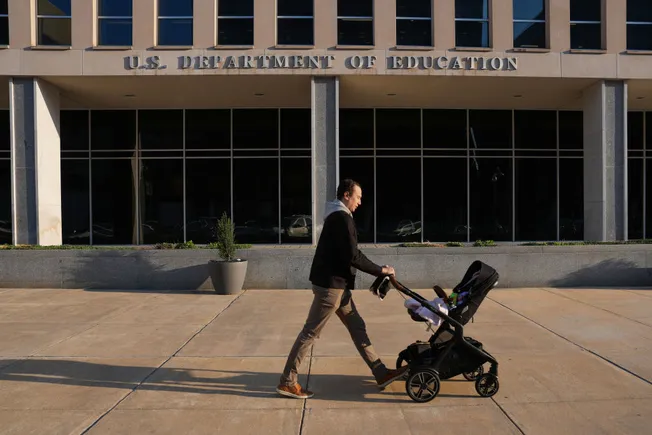
    The weeks leading up to an expected order on the U.S. Department of Education’s future have seen massive layoffs at the agency, the cancellation of research contracts, shifting guidance, restrictions on DEI efforts and more.

    Here’s a recap of Trump actions so far that impact K-12 professionals nationwide. 

    Which topics are you following the closest? What topics would you like to see K-12 Dive report on more? Send us an email at [email protected].

    Source link

  • Pro-Palestinian Journalism Professor Denied Tenure

    Pro-Palestinian Journalism Professor Denied Tenure

    Steven Thrasher, an assistant journalism professor who tried to block police from breaking up a pro-Palestinian encampment at Northwestern University last spring, announced he was denied tenure and will lose his job in August 2026, the end of the next academic year.

    “This has nothing to do with my scholarship or teaching,” Thrasher wrote in a statement he shared on Bluesky. “It is a political hit job over my support for Palestine and for trying to protect our student protesters last year from physical attack, by nonviolently subjecting my own body to assault by the Northwestern Police instead of our students.”

    The incident between Thrasher and campus police came up when Northwestern president Michael Schill went before Congress during a hearing on campus antisemitism. In a June 2024 letter, the House Committee on Education and the Workforce accused Schill of not fully answering members’ questions at the hearing, including about Thrasher.

    Thrasher was suspended from teaching last summer. According to an email from Medill School of Journalism dean Charles F. Whitaker, which Thrasher’s lawyer provided to Inside Higher Ed, the dean initiated disciplinary proceedings in response to complaints about Thrasher’s social media activity and allegedly sexist comments to students, as well as his failure to disclose major course changes and his comments about journalism standards that were “antithetical to our profession.”

    According to Thrasher’s statement, posted Thursday, Whitaker wrote in an explanation of the tenure denial that Thrasher’s teaching was “inadequate with serious concerns reported by some students.” Thrasher said he previously received a “glowing” mid-tenure review in 2023. He also said a university-wide ad hoc faculty committee “exonerated” him after a four-month investigation into issues, including student concerns.

    “I read the situation as a Plan B by Northwestern after Dean Whitaker tried (and failed) to exclude me through the disciplinary process,” Thrasher wrote. “I will appeal this decision at Northwestern and have much more to say.”

    In a statement to Inside Higher Ed, a university spokesperson wrote, “As policy, Northwestern does not comment on personnel matters. The University takes the tenure process very seriously and has adhered to the rules that govern that process. The University has full confidence in the decision-making process of our Medill faculty and dean.”

    Source link

  • Academic Publishers Braced for Slowdown as Trump DEI Purge Bites

    Academic Publishers Braced for Slowdown as Trump DEI Purge Bites

    Academic presses may face a slump in sales as U.S. university librarians become more cautious about buying books related to gender, politics or race in light of Donald Trump’s attack on “woke” research, publishers have warned.

    With the Trump administration seeking to slash what it calls “radical and wasteful” spending on government diversity, equity and inclusion programs, American science agencies have begun cancelling active research projects on transgender populations, gender identity, environmental justice and any studies seen to discriminate on race or ethnicity.

    Peer review panels have also been halted to ensure new grants align with “agency priorities,” with researchers urged to steer clear of diversity-linked language.

    There are now fears that U.S. university libraries might soon be targeted if they are seen to be buying new titles related to politically sensitive areas.

    Nicola Ramsey, director of Edinburgh University Press, told Times Higher Education that the DEI crackdown could significantly impact the global academic publishing industry.

    “If librarians are told they cannot purchase content that references topics on gender, race, sexuality or minorities, sales will be negatively affected due to the nature of our publishing,” said Ramsey who noted the U.S. academic library market is “key for most university presses and other academic publishers as it’s so large and [universities] traditionally have had much bigger budgets.”

    The “real commitment to bibliodiversity” among U.S. university libraries “especially among the Academic Research Libraries” underscored their importance to publishing, she added.

    “Those libraries which had sought to build big collections—with a real commitment to bibliodiversity—might soon have to make difficult decisions on what they can buy,” explained Ramsey.

    The Trump administration’s antipathy toward DEI initiatives was also likely to reduce research related to diversity that might lead to academic books on such subjects, she said.

    “Most academic publishers have been committed in recent years to diversifying our lists, both in terms of author base and research areas [but] this research has relied heavily on federal grant funding, which is being cut from areas connected to DEI initiatives.”

    Some university presses, such as Edinburgh, are still committed to publishing on diverse topics from a range of authors, added Ramsey. “This [crackdown] will not deter our editors from continuing to diversify in our publishing—it’s a fundamental commitment that can’t be swayed by one administration,” she said.

    That need to uphold diversity in publishing was echoed by Anthony Cond, president of the Association of University Presses and director of Liverpool University Press.

    “Many university presses have long histories of publishing on topics that could be construed as DEI. Recent policy announcements make that work more important, not less,” he said.

    “In a challenging higher education sector across several countries, including financial pressure on libraries, the university press focus on values-based publishing will remain an essential component for the bibliodiversity of scholarship.”

    Source link

  • USDA Cancels Hundreds of Journal Subscriptions

    USDA Cancels Hundreds of Journal Subscriptions

    The U.S. Department of Agriculture has canceled nearly 400 of the National Agricultural Library’s roughly 2,000 journal subscriptions, Science reported this week.

    The decision to cancel the subscriptions came at the direction of the Department of Government Efficiency, a new agency led by South African billionaire Elon Musk who donated $288 million to President Donald Trump’s 2024 re-election campaign.

    The eliminated journal titles include any of those published by 17 presses, most of which are affiliated with universities or nonprofit scientific societies, including Cambridge University Press; Oxford University Press; the American Phytopathological Society, and the U.S. National Academy of Sciences, which publishes the Proceedings of the National Academy of Sciences.

    However, the cuts spared journals published by for-profit publishers Elsevier, Springer Nature and Wiley, which collectively accounted for more than half of the library’s journal subscriptions, according to Science’s analysis.

    USDA told staff members Friday that though the agency would consider restoring some of the journals, they were only given hours to submit justifications.

    “Peer-reviewed publications are literally the cornerstones and building blocks of science, and taking these away from scientists at USDA is like you’re building a house and pull out the foundation: Everything else above becomes more unstable,” said Chris Stelzig, executive director of the Entomological Society of America. “USDA scientists are doing this work to protect the American food supply, and it frustrates me that that’s not being recognized here.”

    Source link

  • UC System Freezes Hiring, Bans Diversity Statement Mandates

    UC System Freezes Hiring, Bans Diversity Statement Mandates

    The University of California System’s president announced a systemwide hiring freeze and other “cost-saving measures, such as delaying maintenance and reducing business travel where possible.”

    “Because every UC location is different, these plans will vary,” president Michael V. Drake said in a Wednesday letter to the campuses of one of the country’s largest higher education systems. He said “every action that impacts our University and our workforce will only be taken after serious and deliberative consideration.”

    Drake pointed to a “substantial cut” to the system in the California state budget atop the Trump administration’s disruptive national reduction in support for postsecondary education. He said the administration’s executive orders and proposed policies “threaten funding for lifesaving research, patient care and education support.”

    “The Chancellors and I are preparing for significant financial challenges ahead,” Drake wrote.

    Whenever hiring does resume, UC universities and their components will no longer be able to require that applicants submit diversity statements. Janet Reilly, chair of the UC Board of Regents, said in a separate statement Wednesday that the board directed the system to eliminate such mandates.

    “While the University has no systemwide policies requiring the submission of diversity statements as part of employment applications, some programs and departments have used this practice,” Reilly said.

    Paulette Granberry Russell, president and chief executive officer of the National Association of Diversity Officers in Higher Education, told Inside Higher Ed that, “while I think diversity statements added value on the front end of a search,” it’s far more important to have a structured approach to faculty hiring. She said this approach should eliminate biases and consideration of “non–job-related criteria,” such as accents or lack of eye contact, from the process.

    Diversity statements, she said, are “not the defining factor in whether or not somebody’s going to be successful” if they earn the position.

    Source link