Author: admin

  • Pro-Palestinian Journalism Professor Denied Tenure

    Pro-Palestinian Journalism Professor Denied Tenure

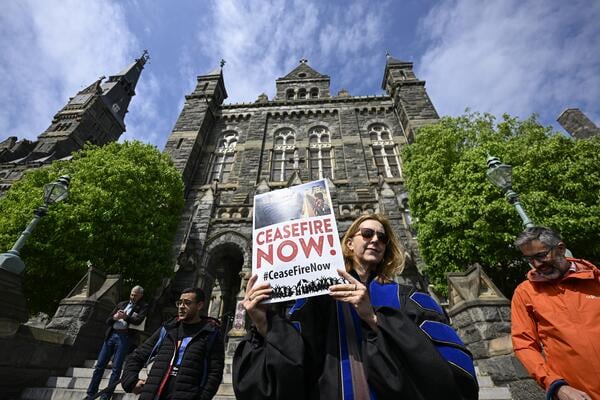
    Steven Thrasher, an assistant journalism professor who tried to block police from breaking up a pro-Palestinian encampment at Northwestern University last spring, announced he was denied tenure and will lose his job in August 2026, the end of the next academic year.

    “This has nothing to do with my scholarship or teaching,” Thrasher wrote in a statement he shared on Bluesky. “It is a political hit job over my support for Palestine and for trying to protect our student protesters last year from physical attack, by nonviolently subjecting my own body to assault by the Northwestern Police instead of our students.”

    The incident between Thrasher and campus police came up when Northwestern president Michael Schill went before Congress during a hearing on campus antisemitism. In a June 2024 letter, the House Committee on Education and the Workforce accused Schill of not fully answering members’ questions at the hearing, including about Thrasher.

    Thrasher was suspended from teaching last summer. According to an email from Medill School of Journalism dean Charles F. Whitaker, which Thrasher’s lawyer provided to Inside Higher Ed, the dean initiated disciplinary proceedings in response to complaints about Thrasher’s social media activity and allegedly sexist comments to students, as well as his failure to disclose major course changes and his comments about journalism standards that were “antithetical to our profession.”

    According to Thrasher’s statement, posted Thursday, Whitaker wrote in an explanation of the tenure denial that Thrasher’s teaching was “inadequate with serious concerns reported by some students.” Thrasher said he previously received a “glowing” mid-tenure review in 2023. He also said a university-wide ad hoc faculty committee “exonerated” him after a four-month investigation into issues, including student concerns.

    “I read the situation as a Plan B by Northwestern after Dean Whitaker tried (and failed) to exclude me through the disciplinary process,” Thrasher wrote. “I will appeal this decision at Northwestern and have much more to say.”

    In a statement to Inside Higher Ed, a university spokesperson wrote, “As policy, Northwestern does not comment on personnel matters. The University takes the tenure process very seriously and has adhered to the rules that govern that process. The University has full confidence in the decision-making process of our Medill faculty and dean.”

    Source link

  • Academic Publishers Braced for Slowdown as Trump DEI Purge Bites

    Academic Publishers Braced for Slowdown as Trump DEI Purge Bites

    Academic presses may face a slump in sales as U.S. university librarians become more cautious about buying books related to gender, politics or race in light of Donald Trump’s attack on “woke” research, publishers have warned.

    With the Trump administration seeking to slash what it calls “radical and wasteful” spending on government diversity, equity and inclusion programs, American science agencies have begun cancelling active research projects on transgender populations, gender identity, environmental justice and any studies seen to discriminate on race or ethnicity.

    Peer review panels have also been halted to ensure new grants align with “agency priorities,” with researchers urged to steer clear of diversity-linked language.

    There are now fears that U.S. university libraries might soon be targeted if they are seen to be buying new titles related to politically sensitive areas.

    Nicola Ramsey, director of Edinburgh University Press, told Times Higher Education that the DEI crackdown could significantly impact the global academic publishing industry.

    “If librarians are told they cannot purchase content that references topics on gender, race, sexuality or minorities, sales will be negatively affected due to the nature of our publishing,” said Ramsey who noted the U.S. academic library market is “key for most university presses and other academic publishers as it’s so large and [universities] traditionally have had much bigger budgets.”

    The “real commitment to bibliodiversity” among U.S. university libraries “especially among the Academic Research Libraries” underscored their importance to publishing, she added.

    “Those libraries which had sought to build big collections—with a real commitment to bibliodiversity—might soon have to make difficult decisions on what they can buy,” explained Ramsey.

    The Trump administration’s antipathy toward DEI initiatives was also likely to reduce research related to diversity that might lead to academic books on such subjects, she said.

    “Most academic publishers have been committed in recent years to diversifying our lists, both in terms of author base and research areas [but] this research has relied heavily on federal grant funding, which is being cut from areas connected to DEI initiatives.”

    Some university presses, such as Edinburgh, are still committed to publishing on diverse topics from a range of authors, added Ramsey. “This [crackdown] will not deter our editors from continuing to diversify in our publishing—it’s a fundamental commitment that can’t be swayed by one administration,” she said.

    That need to uphold diversity in publishing was echoed by Anthony Cond, president of the Association of University Presses and director of Liverpool University Press.

    “Many university presses have long histories of publishing on topics that could be construed as DEI. Recent policy announcements make that work more important, not less,” he said.

    “In a challenging higher education sector across several countries, including financial pressure on libraries, the university press focus on values-based publishing will remain an essential component for the bibliodiversity of scholarship.”

    Source link

  • USDA Cancels Hundreds of Journal Subscriptions

    USDA Cancels Hundreds of Journal Subscriptions

    The U.S. Department of Agriculture has canceled nearly 400 of the National Agricultural Library’s roughly 2,000 journal subscriptions, Science reported this week.

    The decision to cancel the subscriptions came at the direction of the Department of Government Efficiency, a new agency led by South African billionaire Elon Musk who donated $288 million to President Donald Trump’s 2024 re-election campaign.

    The eliminated journal titles include any of those published by 17 presses, most of which are affiliated with universities or nonprofit scientific societies, including Cambridge University Press; Oxford University Press; the American Phytopathological Society, and the U.S. National Academy of Sciences, which publishes the Proceedings of the National Academy of Sciences.

    However, the cuts spared journals published by for-profit publishers Elsevier, Springer Nature and Wiley, which collectively accounted for more than half of the library’s journal subscriptions, according to Science’s analysis.

    USDA told staff members Friday that though the agency would consider restoring some of the journals, they were only given hours to submit justifications.

    “Peer-reviewed publications are literally the cornerstones and building blocks of science, and taking these away from scientists at USDA is like you’re building a house and pull out the foundation: Everything else above becomes more unstable,” said Chris Stelzig, executive director of the Entomological Society of America. “USDA scientists are doing this work to protect the American food supply, and it frustrates me that that’s not being recognized here.”

    Source link

  • UC System Freezes Hiring, Bans Diversity Statement Mandates

    UC System Freezes Hiring, Bans Diversity Statement Mandates

    The University of California System’s president announced a systemwide hiring freeze and other “cost-saving measures, such as delaying maintenance and reducing business travel where possible.”

    “Because every UC location is different, these plans will vary,” president Michael V. Drake said in a Wednesday letter to the campuses of one of the country’s largest higher education systems. He said “every action that impacts our University and our workforce will only be taken after serious and deliberative consideration.”

    Drake pointed to a “substantial cut” to the system in the California state budget atop the Trump administration’s disruptive national reduction in support for postsecondary education. He said the administration’s executive orders and proposed policies “threaten funding for lifesaving research, patient care and education support.”

    “The Chancellors and I are preparing for significant financial challenges ahead,” Drake wrote.

    Whenever hiring does resume, UC universities and their components will no longer be able to require that applicants submit diversity statements. Janet Reilly, chair of the UC Board of Regents, said in a separate statement Wednesday that the board directed the system to eliminate such mandates.

    “While the University has no systemwide policies requiring the submission of diversity statements as part of employment applications, some programs and departments have used this practice,” Reilly said.

    Paulette Granberry Russell, president and chief executive officer of the National Association of Diversity Officers in Higher Education, told Inside Higher Ed that, “while I think diversity statements added value on the front end of a search,” it’s far more important to have a structured approach to faculty hiring. She said this approach should eliminate biases and consideration of “non–job-related criteria,” such as accents or lack of eye contact, from the process.

    Diversity statements, she said, are “not the defining factor in whether or not somebody’s going to be successful” if they earn the position.

    Source link

  • Trump Administration Attempts to Deport, Bar Entry to Scholars

    Trump Administration Attempts to Deport, Bar Entry to Scholars

    Earlier this month, Immigration and Customs Enforcement (ICE) agents arrested Mahmoud Khalil, a green card holder and recent Columbia University graduate, and threatened him with deportation. The Trump administration said Khalil, who is of Palestinian descent, was a national security threat and accused him of terrorist activity for leading student protests at Columbia last year.

    In a public statement to The Guardian, Khalil described himself as a “political prisoner.”

    “The Trump administration is targeting me as part of a broader strategy to suppress dissent,” he said. “Visa holders, green-card carriers, and citizens alike will all be targeted for their political beliefs.”

    That prediction has begun to come true. In the past three weeks, immigration officers have targeted international students they suspected of participating in pro-Palestinian protests, raiding their dorm rooms and revoking their visas. In recent days, the administration’s dragnet has widened to include faculty members, postdoctoral fellows, visiting scholars and researchers.

    At least two of those international scholars were employed by U.S. institutions and in the country on valid work or academic visas. An Indian postdoctoral research fellow at Georgetown University was detained outside his home for alleged pro-Palestinian activity that the administration has yet to specify; and a Lebanese professor at Brown University’s medical school was denied reentry after attending the funeral of assassinated Hezbollah leader Hassan Nusrallah.

    Another case involves an unidentified French scientist, who, according to a statement from the French Minister of Higher Education and Research, was denied entry into the U.S. because of his “personal opinion on the Trump administration’s research policy.”

    Isaac Kamola, director of the American Association of University Professors’ Center for the Defense of Academic Freedom and an associate political science professor at Trinity College in Connecticut, said the administration’s “completely arbitrary” crackdown on foreign scholars threatens academic freedom and undermines the role of U.S. institutions in global research exchange and scholarship networks.

    “I think it’s pretty clear that the administration has decided it’s going to use the force of the state to intimidate faculty and students,” he said. “They’re basically doing a kind of stochastic terrorism.”

    The administration is also targeting international doctoral candidates who participated in pro-Palestinian protests last year, revoking their visas and sending ICE agents to apprehend them.

    Momodou Taal, a British Ph.D. candidate at Cornell University who made national headlines when he overturned an academic suspension for protest activity that would have forced him to leave the country, received a visit from ICE agents on Wednesday. Just days earlier, Taal filed a lawsuit against the Trump administration seeking to block immigration officials from deporting international students for protesting.

    Taal told Inside Higher Ed he’d been expecting a knock on his door since Trump’s inauguration, and that immigration officials were targeting students and scholars for protected pro-Palestinian speech.

    “It goes against the ideals that this country espouses, or at least claims to espouse,” Taal said. “I’ve not been convicted of a crime, I’m not being charged with any crime or accused of any crime. So why should I be living in fear over what I decide to say and the causes I support?”

    Teresa R. Manning, director of policy at the conservative National Association of Scholars, said, “We see it as more an issue of security and safety than an issue of academics or free speech.”

    “The real threat to free speech is the complete leftwing domination of American education,” Manning said. “No conservatives are allowed. That’s the real threat, not our attempt to guard the nation’s security and safety and protect against potential terrorist threats.”

    The White House did not respond to a request for comment Thursday, nor did a spokesperson for ICE. A spokesperson for the State Department’s Bureau of Educational and Cultural Affairs, which oversees and promotes global academic and research exchange, did not respond to a request for comment in time for publication.

    Georgetown Fellow Detained

    On Monday night, immigration officials arrested and detained Badar Khan Suri, an Indian postdoctoral fellow at Georgetown University, outside his home in Rosslyn, Virginia. Suri was in the country on a J-1 visa, a nonimmigrant document meant to promote academic and cultural exchange that is usually reserved for students and scholars; according to his lawyers, Department of Homeland Security agents told him his visa had been revoked.

    A peace and conflict studies scholar, he was at Georgetown’s School of Foreign Service conducting research for his dissertation on the U.S. peace process in Iraq and Afghanistan.

    “If an accomplished scholar who focuses on conflict resolution is whom the government decides is bad for foreign policy, then perhaps the problem is with the government, not the scholar,” Suri’s lawyer Hassan Ahmad wrote in a statement Thursday.

    After his arrest, Suri was first brought to a migrant holding cell in Virginia before being transported to Louisiana, where he’s currently awaiting trial in the same detention center as Khalil, according to Suri’s lawyers.

    Tricia McLaughlin, a spokesperson for the Department of Homeland Security, said in a statement on X that Suri had been detained for “spreading Hamas propaganda and promoting antisemitism on social media,” though she failed to provide any evidence.

    Suri’s wife, a U.S. citizen of Palestinian descent and a graduate student at Georgetown, is the daughter of Ahmed Yousef, former adviser to the late Hamas leader Ismail Haniyeh, The New York Times confirmed. Yousef, who has called the Oct. 7, 2023 Hamas attacks a “terrible error,” told The Times that he left his position a decade ago and that his daughter and son-in-law have no involvement in political activism on behalf of the organization.

    On Thursday, a federal judge in Virginia ordered that Suri be kept in the country until a lawsuit brought by his lawyers is resolved, according to The Washington Post.

    In a post on BlueSky Thursday, Virginia representative Don Beyer wrote that “the arrests of academics like Suri and Mahmoud Khalil are intended to have a chilling effect and discourage the free expression of political views which Trump dislikes.”

    A Georgetown spokesperson told Inside Higher Ed that the university was “not aware of [Suri] engaging in any illegal activity, and we have not received a reason for his detention.”

    “Suri is an Indian national who was duly granted a visa to enter the United States to continue his doctoral research on peacebuilding in Iraq and Afghanistan,” the spokesperson wrote in an email. “We support our community members’ rights to free and open inquiry, deliberation and debate, even if the underlying ideas may be difficult, controversial or objectionable. We expect the legal system to adjudicate this case fairly.”

    Brown Professor Denied Entry

    Media outlets have reported that Rasha Alawieh, an assistant professor of medicine and clinician educator at Brown, was flown out of the U.S. last week despite a court order requiring the government to inform a judge ahead of any deportation. The federal government said Alawieh was returning from Lebanon, where she had attended the funeral of Hezbollah leader Hassan Nusrallah. Officials also said she had deleted “sympathetic photos and videos” of Hezbollah leaders from her phone.

    Alawieh never made it past Boston’s Logan International Airport. On Monday, a DHS spokesperson posted on X that Nusrallah was “a brutal terrorist” and that Alawieh had “openly admitted” attending his funeral and supporting him.

    “A visa is a privilege not a right—glorifying and supporting terrorists who kill Americans is grounds for visa issuance to be denied,” the spokesperson wrote. “This is commonsense security.”

    The White House then reposted DHS’s statement with a photo of President Trump waving goodbye out of a drive-thru window at McDonald’s during a campaign stop.

    Kamola, of the AAUP, said claims of Alawieh’s supposed connections to Hezbollah were “spurious.” One of Alawieh’s lawyers didn’t respond to requests for comment Thursday.

    Asked whether Brown is defending Alawieh’s academic freedom or disciplining her, Amanda McGregor, a spokesperson for Brown, replied only that “Alawieh is an employee of Brown Medicine with a clinical appointment to Brown University.”

    “Such appointments carry a faculty title, though the employment resides with Brown Medicine,” McGregor wrote in an email.

    Interrogated for Anti-Trump Texts

    Meanwhile, foreign academics traveling to the U.S. are being hassled and turned away by border agents.

    Philippe Baptiste, France’s minister of higher education and research, told Agence France-Presse that a French scientist from the country’s National Center for Scientific Research was heading to a conference near Houston, Texas, when the scientist was denied entry and expelled. The minister did not reveal the scientist’s name.

    “This measure was apparently taken by the American authorities because the researcher’s phone contained exchanges with colleagues and friends in which he expressed a personal opinion on the Trump administration’s research policy,” Baptiste said. “Freedom of opinion, free research and academic freedom are values we will continue to proudly uphold.”

    On Wednesday, Baptiste met with counterparts from other European Union nations to discuss “threats to free research in the United States,” according to a post on X.

    As the Trump administration escalates its attacks on foreigners in American academe, international students are increasingly apprehensive about studying at U.S. institutions and scholars worry about attending conferences or accepting fellowships in the country. Kamola said the end result may be the destruction of America’s reputation as a bastion of academic freedom.

    “I think the message is: Everybody who wants to speak about Palestine, everybody who wants to argue that higher education should be more inclusive or diverse, anybody who wants to defend free speech in ways that the current regime finds unacceptable could potentially face retaliation,” Kamola said. “The intention is to not only sow chaos but to sow fear.”


    Source link

  • Financial sustainability in UK higher education: the limits of self-help?

    Financial sustainability in UK higher education: the limits of self-help?

    • Matthew Howling, Principal Associate at Mills & Reeve LLP, and Poppy Short, Partner at Mills & Reeve, reflect on a February round table discussion amongst university leaders chaired by Nick Hillman of HEPI.

    On 26 February 2025, a group of 18 university leaders, advisors and stakeholders met to reflect on how universities can best position themselves in the current financial climate. The meeting was a follow-up to our joint dinner with HEPI on 10 October 2024 at the Royal Society in London. As we remarked at the time, there was a clear desire to continue the conversation, and the fast-paced and content-rich discussion here was a testament to that desire.

    Our theme was the limits of self-help. Given the current financial headwinds, institutions have been restructuring their activities on an unprecedented scale. However, once the severance schemes, asset sales and course closures have come to pass, will these remedies be sufficient to put institutions back on a sound enough financial footing to continue to serve their students and communities for the longer term? The unspoken and yet resounding understanding across the group was that further and more radical changes are needed across the sector to stabilise the situation.

    What is the role of the private providers in helping to improve the financial health of the sector? Several voices suggested that foreign investment could help to save certain British universities and that the sector needs to be less reticent about such investment. Other participants thought that, while foreign investment might work in the context of smaller providers, it was less likely to be successful when dealing with larger, more complex institutions, particularly those that have a legacy of contracts with trade unions and other stakeholders. It is well known that a number of private providers and foreign investors are waiting in the wings to acquire UK degree-awarding powers from distressed higher education providers if the opportunity presents itself. The sector should be prepared to consider its response to this.

    In a recent HEPI poll, when students were presented with a list of 10 options for what could happen if their own higher education institution were to fall over financially, a takeover by a foreign company was the joint least popular option. Foreign investors would have to work hard to tackle these negative perceptions.

    In some ways, the antithesis of self-help is a forced merger. It was noted that, in other jurisdictions, forced mergers are not as uncommon as might be thought. Estonia, France, Germany and Denmark had all experienced forced university mergers. Is this the direction of travel for the United Kingdom? There was a feeling that, in Wales and Scotland, there was a willingness to consider higher education provision on a more holistic basis than in England.

    In terms of state support, it was felt that the sector had to acknowledge government spending pressures. The evidence of cuts to budgets elsewhere (such as foreign aid) strongly suggests that there will be no chance of further increases to the home undergraduate tuition fee in the foreseeable future and despite the need, other forms of financial help are not expected.

    If government funding will not be forthcoming, the other obvious source of funds is existing lenders. Participants observed that, while sector borrowing was high, much of the recent debt taken on by providers was in the form of revolving credit facilities (which provide short-term funds up to a specified limit for a stipulated period of time, all or part of which can be repaid and re-borrowed as required), rather than the term loans that universities have traditionally found more attractive (which provide long-term funds for a specified period of time). There was concern that, in some cases, banks might be considering withdrawing those lines of credit when they come up for renewal. There was also a concern about how many institutions might be relying on revolving credit facilities to satisfy the OfS’s minimum liquidity requirements. There was anecdotal evidence that certain banks were focussing their new lending on higher tariff institutions, partly because of credit risk but also because of the ancillary opportunities to make money from larger institutions. This risks a self-fulfilling cycle of winners and losers.

    It was generally felt that a new Special Administration Regime would make life easier as opposed to harder in terms of access to funds. It is not necessarily about encouraging enforcement by banks. It is highly unlikely that a UK clearing bank would want the adverse publicity associated with enforcing against a UK university (although foreign lenders may be less PR squeamish). However, giving lenders a clear line of sight as to a recovery process, even if not used in practice, may further encourage commercial lending to the sector. 

    Beyond the question of more money, there was a feeling that certain sector skills were lacking to navigate these troubled waters. As one participant put it, transformation expertise was what was needed, not just transformation funds. And how does all this transformation happen at pace?

    Above all, there was a sense that the sector needed to move as one on certain key issues. One example was the increased costs for post-92 institutions associated with the Teachers’ Pension Scheme. Another key area where the sector needs to work together is soliciting the opinion of the Competition and Markets Authority (CMA) on how universities can collaborate without breaching competition law. There were grounds for optimism: the CMA guidance on applying the competition rules to sustainability agreements and collaborations is an example of the CMA taking a proactive approach to assuage concerns that competition law should not hinder legitimate collaboration where this was in the public good. In other areas, such as procurement and shared services, it was felt that there was much that the sector could be doing together to be more efficient and reduce the cost of delivery.

    As an hour of rapid and informed discussion drew to a close, perhaps the overall conclusion was that it is only by acting collectively that the sector can arrive at solutions to allow institutions to truly put their houses in order at an individual level. Universities need to start planning how they will support themselves through this next phase. To survive they will need to mobilise themselves to work at pace to foster local and regional connections to drive forward the priorities for their regions.


    Source link

  • Dr. Marlene Tromp Named University of Vermont’s 28th President

    Dr. Marlene Tromp Named University of Vermont’s 28th President

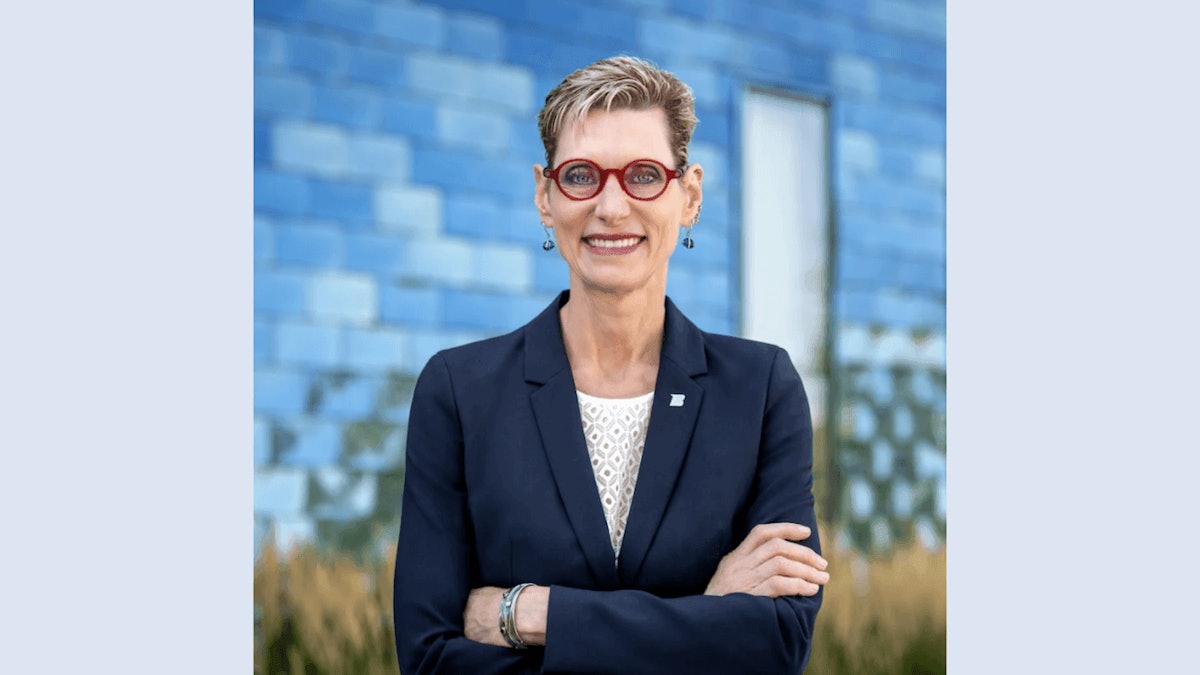
    Dr. Marlene TrompThe University of Vermont (UVM) Board of Trustees has selected Dr. Marlene Tromp as the institution’s 28th president.

    Tromp, who is currently serving as president of Boise State University, will assume her new role later this summer.

    “Dr. Tromp brings with her the experience and ability for great success that will benefit the university, community, and state,” said Cynthia Barnhart, Board of Trustees chair and co-chair of the Presidential Search Advisory Committee.

    A first-generation college student raised in rural Wyoming,Tromp brings nearly 30 years of experience in higher education. During her six-year tenure at Boise State, she successfully navigated the challenges of the COVID-19 pandemic while increasing student enrollment and improving affordability. Under her leadership, the university achieved record graduation rates and philanthropic funding while expanding its research footprint.

    “This is a university that has the power to truly lead the nation and even the world on several fronts,” Tromp said of UVM. “I’m so excited to work with my colleagues, the students, alumni, and friends to improve individual lives and the life of the community.”

    Tromp’s rural background appears to have been a significant factor in her selection.

    “She grew up with the experience of being in a rural state and understanding the importance of the flagship institution to that state, both urban and rural parts of the state. She really demonstrated an ability to connect well with Vermont culture, given that upbringing,” said Ron Lumbra, immediate past chair of the Board of Trustees and co-chair of the search committee. 

    A humanities scholar with a concentration in Victorian literature and culture, Tromp has published nine books and dozens of peer-reviewed papers. Her administrative experience includes serving as campus provost and executive vice chancellor at the University of California at Santa Cruz and vice provost and dean at Arizona State University.

    Senator Patrick Leahy, who met with Tromp during her campus visit, expressed confidence in her leadership abilities.

    “Dr. Tromp seems poised and ready to lead UVM. She clearly understands the impact and responsibilities UVM has in our state,” Leahy said.

    Campus leaders have also voiced strong support for the appointment. Athletic Director Jeff Schulman praised Tromp’s “experience, commitment to excellence and passion for UVM,” while Bill Falls, dean of the College of Arts and Sciences, described her as “an empathetic and collaborative leader.”

    Tromp holds a Bachelor of Arts from Creighton University, a Master of Arts in English from the University of Wyoming, and a Ph.D. from the University of Florida. She currently serves on the NCAA Division I Board of Directors and consults on higher education with the Federal Reserve Board of San Francisco.

    She will succeed Dr. Suresh Garimella, who led UVM from 2019 until October 2024 when he became president of the University of Arizona. Provost Dr. Patricia Prelock has been serving as interim president since Garimella’s departure.

    Source link

  • Maximizing Student Engagement During Live Online Seminars – Faculty Focus

    Maximizing Student Engagement During Live Online Seminars – Faculty Focus

    Source link

  • Product Enhancements from Discovery Education Foster Improved Engagement and Personalization

    Product Enhancements from Discovery Education Foster Improved Engagement and Personalization

    Charlotte, NC — Discovery Education, the creators of essential K-12 learning solutions used in classrooms around the world, today announced a host of exciting product updates during a special virtual event led by the company’s Chief Product Officer Pete Weir. Based on feedback from the company’s school-based partners, these updates make teaching and learning even more relevant, engaging, and personalized for users of Discovery Education products.

    Among the enhancements made to Discovery Education Experience, the essential companion for engaged K-12 classrooms that inspires teachers and motivates students, are:  teachers and motivates students, are:

    • Improved Personalized Recommendations for Teachers: With thousands of resources in Experience, there is something for every classroom. The new Core Curriculum Complements feature in Experience automatically surfaces engaging resources handpicked to enhance school systems’ core curriculum, simplifying lesson planning and ensuring tight alignment with district priorities. Additionally, Experience now offers educators Personalized Content Recommendations. These content suggestions made to individual teachers are based on their unique profiles and preferences, or what is frequently used by other educators like them.
    • An Enhanced AI-Powered Assessment Tool: Originally launched in 2024, this tool is the first in a new suite of AI-powered teaching tools currently under development, and it empowers educators to create high-quality assessments using vetted resources right from within Experience. Educators can now more easily customize assessments according to reading level, question type, Bloom’s Taxonomy, and more – ensuring optimal learning experiences for students. Educators can also review and tailor the questions and, once ready, export those questions into a variety of formats.
    • A New Career Exploration Tool for All Discovery Education Experience Users: Career Connect – the award-winning tool that connects K-12 classrooms with real industry professionals – is now accessible to all Discovery Education Experience users. With this new feature, classrooms using Experience can directly connect to the professionals, innovations, and skills of today’s workforce. Furthermore, Experience is now delivering a variety of new career pathway resources, virtual field trips, and career profiles – building career awareness, inviting exploration, and helping students prepare for their future.
    • A newly enhanced Instructional Strategy Library: To elevate instruction and better support teachers, Discovery Education has enhanced its one-stop-spot for strategies supporting more engaging, efficient, and effective teaching. The improved Instructional Strategy Library streamlines the way educators find and use popular, research-backed instructional strategies and professional learning supports and provides connected model lessons and activities.

    Also announced today were a host of improvements to DreamBox Math by Discovery Education. DreamBox Math offers adaptive, engaging, and scaffolded lessons that adjust in real time to personalize learning so that students can build confidence and skills at their own pace. Among the new improvements to DreamBox Math are:

    • Major Lesson Updates: Based on teacher feedback, Discovery Education’s expert curriculum team has updated DreamBox Math’s most popular lessons to make them easier for students to start, play, and complete successfully. Students will now encounter lessons with updated scaffolding, enhanced visuals, greater interactivity, and added context to ground mathematical concepts in the curriculum and the world they live in.
    • A New Look for Middle School: Middle school students will encounter a more vibrantly colored and upgraded user interface featuring a reorganized Lesson Chooser whose intuitive design makes it easy to identify teacher-assigned lessons from their personalized lesson options. Additional updates will follow throughout the year.
    • New Interactive Curriculum Guide: Discovery Education has strengthened the link between DreamBox Math and school systems’ core instruction with an Interactive Curriculum Guide. Educators can now explore the breadth and scope of DreamBox content by grade and standard to locate, preview, and play lessons, increasing familiarity with lessons, and enhancing targeted instruction. The DreamBox Math team will continue to make updates to standards and curriculum alignments throughout the year.

    To watch a replay of today’s special event in its entirety, and to learn about additional updates to Discovery Education’s suite of K-12 solutions, visit this link.

    “Discovery Education understands teachers’ sense of urgency about closing the achievement gaps highlighted by recent NAEP scores,” said Pete Weir, Discovery Education’s Chief Product Officer. “In response, we accelerated the development and deployment of what has traditionally been our ‘Back-to-School’ product enhancements. The stakes for our students have never been higher, and Discovery Education is dedicated to putting the highest-quality, most effective resources into teachers and students’ hands as soon as possible.”

    For more information about Discovery Education’s award-winning digital resources and professional learning solutions, visit www.discoveryeducation.com, and stay connected with Discovery Education on social media through X, LinkedIn, Instagram, TikTok, and Facebook.    

    eSchool News Staff
    Latest posts by eSchool News Staff (see all)


    Source link

  • What’s driving low levels of full economic cost recovery in research?

    What’s driving low levels of full economic cost recovery in research?

    Media attention has emphasised that the financial issues facing universities continue to worsen. While research is a cornerstone and strength of the sector, it is often regarded as a cost, which leads to scrutiny as part of institutional savings targets. Despite calls to acknowledge the value of research, the focus understandably remains on research costs.

    The focus of universities on the volume and cost of unfunded research, or more accurately, internally funded research, is a question that must be addressed. Institutions are reflecting on and revising internal research allowances as part of their efforts to achieve a more sustainable financial position, as the cross-subsidy from international student fees is no longer as viable as it once was.

    The question of funded research, however, is a different matter. For quite some time, there have been questions about what constitutes the full economic cost (FEC) and how these costs are recovered when projects are funded. Both issues have once again come to the forefront in the current climate, especially as institutions are failing to recover the eligible costs of funded projects.

    As part of the Innovation & Research Caucus, an investment funded by UKRI, we have been investigating why the recovery of UKRI-funded research is often below the stated rates. To put it simply, if the official recovery rate is 80 per cent FEC, why is 80 per cent not being recovered on UKRI-funded projects?

    Understanding under-recovery

    We conducted a series of interviews with chief financial officers, pro vice chancellors for research, and directors of research services across mission groups, the Transparent Approach to Costing (TRAC) group, and various geographic regions. They identified several key reasons why universities are not recovering the funding to which they are entitled.

    Before exploring the causes of under-recovery on UKRI-funded projects, the project aimed to establish the extent to which TRAC data was curated and utilised. Notably, the study found that the data collected for TRAC does not exist within research organisations and would not otherwise be collected in this form if it were not for the TRAC reporting requirement.

    While scrutinising TRAC data was less of a priority when the financial situation was more stable, in many institutions, it is now of interest to the top table and serves as the basis for modelling, projections, and scenario planning. That said, such analysis did not always recognise TRAC’s limitations in terms of how it was compiled and, therefore, its comparability.

    In many of the research organisations consulted, the responsibilities for TRAC, project costing, and project delivery are distinct. Given the growing significance of TRAC data in influencing resource allocation and strategic decision-making, it is essential for research organisations to adopt a more integrated approach to compiling and utilising TRAC data to achieve improved outcomes.

    Drivers of under-recovery

    A wide range of factors explains why the cost recovered at the end of a funding grant is less than anticipated at the point of submission and award. Almost all respondents highlighted three factors as significant in low cost recovery:

    1. Equipment and facilities costs were consistently cited as a factor, including issues associated with allocating and costing overheads and estates. Several institutions highlighted the difficulty in realistically costing equipment and facilities shared between research projects or between research projects and teaching.
    1. Staff under-costing was frequently mentioned, as principal investigators (PIs) underestimated their own and their colleagues’ time commitment to projects. This ineffective practice was driven by a (mis)perception that lower costs will likely improve success rates – despite the emphasis being on value rather than cost within a specific funding envelope.
    2. Inflation has been identified as a factor affecting all cost elements – from staff costs related to pay settlements and promotions to the rising expenses associated with consumables, equipment, and energy. This reveals a growing gap in applications, delivery, and reporting.

    Beyond these top three, the report highlights the implications of the often “hidden” costs associated with supporting and administering UKRI grants, the perennial issues of match funding, and the often inevitable delays in starting and delivering projects – all of which add to the cost and increase the prospect of under-recovery.

    In addition, an array of other contributing factors were also raised. These included the impact of exchange rates, eligibility criteria, the capital intensity of projects, cost recovery for partners, recruitment challenges, lack of contingency, and no cost extensions. While not pinpointing the importance of a single factor, the interplay and cumulative effect were considered to result in under-recovery.

    Addressing under-recovery

    Universities bear the cost of under-recovery, but funders and universities can take several actions to improve under-recovery – some of which are low- or no-cost, could be implemented in the short term, and would make a real difference.

    Funders, such as UKRI, should provide clearer guidance for research organisations on how to cost facilities and equipment, as well as how to include these costs in research bids. Similarly, applicants and reviewers should receive clearer guidance regarding realistic expectations from PIs in leading projects, emphasising that value should be prioritised over cost. Another area that warrants clearer guidance is match funding, specifically for institutions regarding expectations and for reviewers on how match funding should be assessed. We are pleased to see that UKRI is already taking steps to address these points in its funding policies [editor’s note: this link will be live around 9am on Friday morning].

    In the medium term, research funders could also review their approaches to indexation, which could help mitigate the impact of inflation in driving under-recovery, although this is, of course, not without cost. Another area worth exploring by both research organisations and funders is the provision of shared infrastructures and assets, both within and across institutions – again, a longer-term project.

    We are already seeing institutions taking steps to manage and mitigate under-recovery, and there is scope to extend good practice. Perhaps the main challenge to improving cost recovery is better managing the link between project budgets – based on proposal costs – and project delivery costs. Ensuring a joined-up approach from project costing to reporting is important, but more important is developing a deeper understanding across these areas.

    A final point is the need to ensure that academics vying for funding really understand the new realities of cost and recovery. This has not always been the case, and arguably still is not the case. These skills – from clarifying the importance of realistic staff costs to accurately costing the use of facilities to effectively managing project budgets – will help close the cost recovery gap.

    The real FEC of research funding

    The current project has focused on under-recovery in project delivery. The next step is to understand the real cost to research organisations of UKRI grant funding.

    This means understanding the cost of developing, preparing and submitting a UKRI grant application – whether successful or not. It means understanding the costs associated with administering and reporting on a UKRI grant during and beyond the life of a project (think ResearchFish!).

    For more information, please get in touch – or watch this space for further findings.

    The Innovation & Research Caucus report, Understanding low levels of FEC cost recovery on UKRI grants, will be published on the UKRI site later today.

    Source link