Author: admin

  • Publishers Adopt AI Tools to Bolster Research Integrity

    Publishers Adopt AI Tools to Bolster Research Integrity

    The perennial pressure to publish or perish is intense as ever for faculty trying to advance their careers in an exceedingly tight academic job market. On top of their teaching loads, faculty are expected to publish—and peer review—research findings, often receiving little to no compensation beyond the prestige and recognition of publishing in top journals.

    Some researchers have argued that such an environment incentivizes scholars to submit questionable work to journals—many have well-documented peer-review backlogs and inadequate resources to detect faulty information and academic misconduct. In 2024, more than 4,600 academic papers were retracted or otherwise flagged for review, according to the Retraction Watch database; during a six-week span last fall, one scientific journal published by Springer Nature retracted more than 200 articles.

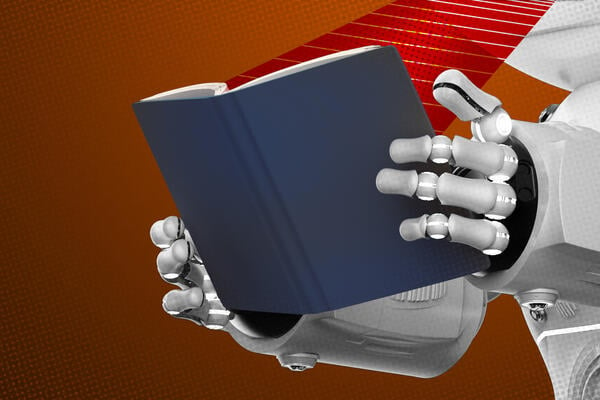
    But the $19 billion academic publishing industry is increasingly turning to artificial intelligence to speed up production and, advocates say, enhance research quality. Since the start of the year, Wiley, Elsevier and Springer Nature have all announced the adoption of generative AI–powered tools or guidelines, including those designed to aid scientists in research, writing and peer review.

    “These AI tools can help us improve research integrity, quality, accurate citation, our ability to find new insights and connect the dots between new ideas, and ultimately push the human enterprise forward,” Josh Jarrett, senior vice president of AI growth at Wiley, told Inside Higher Ed earlier this month. “AI tools can also be used to generate content and potentially increase research integrity risk. That’s why we’ve invested so much in using these tools to stay ahead of that curve, looking for patterns and identifying things a single reviewer may not catch.”

    However, most scholars aren’t yet using AI for such a purpose. A recent survey by Wiley found that while the majority of researchers believe AI skills will be critical within two years, more than 60 percent said lack of guidelines and training keep them from using it in their work.

    In response, Wiley released new guidelines last week on “responsible and effective” uses of AI, aimed at deploying the technology to make the publishing process more efficient “while preserving the author’s authentic voice and expertise, maintaining reliable, trusted, and accurate content, safeguarding intellectual property and privacy, and meeting ethics and integrity best practices,” according to a news release.

    Last week, Elsevier also launched ScienceDirect AI, which extracts key findings from millions of peer-reviewed articles and books on ScienceDirect and generates “precise summaries” to alleviate researchers’ challenges of “information overload, a shortage of time and the need for more effective ways to enhance existing knowledge,” according to a news release.

    Both of those announcements followed Springer Nature’s January launch of an in-house AI-powered program designed to help editors and peer reviewers by automating editorial quality checks and alerting editors to potentially unsuitable manuscripts.

    “As the volume of research increases, we are excited to see how we can best use AI to support our authors, editors and peer reviewers, simplifying their ways of working whilst upholding quality,” Harsh Jegadeesan, Springer’s chief publishing officer, said in a news release. “By carefully introducing new ways of checking papers to enhance research integrity and support editorial decision-making we can help speed up everyday tasks for researchers, freeing them up to concentrate on what matters to them—conducting research.”

    ‘Obvious Financial Benefit’

    Academic publishing experts believe there are both advantages—and down sides—of involving AI in the notoriously slow peer-review process, which is plagued by a deficit of qualified reviewers willing and able to offer their unpaid labor to highly profitable publishers.

    If use of AI assistants becomes the norm for peer reviewers, “the volume problem would be immediately gone from the industry” while creating an “obvious financial benefit” for the publishing industry, said Sven Fund, managing director of the peer-review-expert network Reviewer Credits.

    But the implications AI has for research quality are more nuanced, especially as scientific research has become a target for conservative politicians and AI models could be—and may already be being—used to target terms or research lawmakers don’t like.

    “There are parts of peer review where a machine is definitely better than a human brain,” Fund said, pointing to low-intensity tasks such as translations, checking references and offering authors more thorough feedback as examples. “My concern would be that researchers writing and researching on whatever they want is getting limited by people reviewing material with the help of technical agents … That can become an element of censorship.”

    Aashi Chaturvedi, program officer for ethics and integrity at the American Society for Microbiology, said one of her biggest concerns about the introduction of AI into peer review and other aspects of the publishing process is maintaining human oversight.

    “Just as a machine might produce a perfectly uniform pie that lacks the soul of a handmade creation, AI reviews can appear wholesome but fail to capture the depth and novelty of the research,” she wrote in a recent article for ASM, which has developed its own generative AI guidelines for the numerous scientific journals it publishes. “In the end, while automation can enhance efficiency, it cannot replicate the artistry and intuition that come from years of dedicated practice.”

    But that doesn’t mean AI has no place in peer review, said Chaturvedi, who said in a recent interview that she “felt extra pressure to make sure that everything the author was reporting sounds doable” during her 17 years working as an academic peer reviewer in the pre-AI era. As the pace and complexity of scientific discovery keeps accelerating, she said AI can help alleviate some burden on both reviewers and the publishers “handling a large volume of submissions.”

    Chaturvedi cautioned, however, that introducing such technology across the academic publishing process should be transparent and come only after “rigorous” testing.

    “The large language models are only as good as the information you give them,” she said. “We are at a pivotal moment where AI can greatly enhance workflows, but you need careful and strategic planning … That’s the only way to get more successful and sustainable outcomes.”

    Not Equipped to Ensure Quality?

    Ivan Oransky, a medical researcher and co-founder of Retraction Watch, said, “Anything that can be done to filter out the junk that’s currently polluting the scientific literature is a good thing,” and “whether AI can do that effectively is a reasonable question.”

    But beyond that, the publishing industry’s embrace of AI in the name of improving research quality and clearing up peer-review backlogs belies a bigger problem predating the rise of powerful generative AI models.

    “The fact that publishers are now trumpeting the fact that they both are and need to be—according to them—using AI to fight paper mills and other bad actors is a bit of an admission they hadn’t been willing to make until recently: Their systems are not actually equipped to ensure quality,” Oransky said.

    “This is just more evidence that people are trying to shove far too much through the peer-review system,” he added. “That wouldn’t be a problem except for the fact that everybody’s either directly—or implicitly—encouraging terrible publish-or-perish incentives.”

    Source link

  • International Students Navigate Escalating Threats

    International Students Navigate Escalating Threats

    International students across the country are on edge after a week of arrests, deportations and escalating threats from the Trump administration.

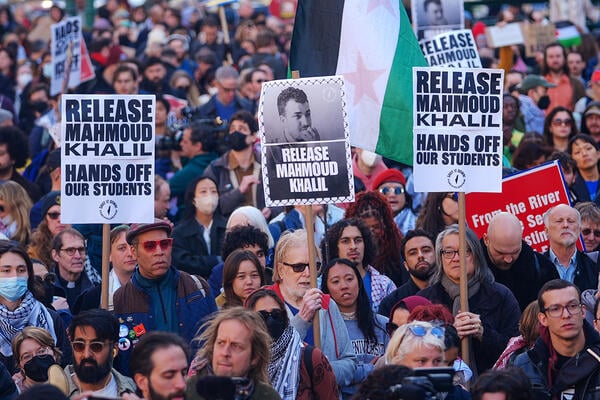
    So far the administration’s sights have been set primarily on Columbia University in New York. On March 8, immigration officials arrested recent graduate Mahmoud Khalil, intending to strip him of his green card and deport him for his role in pro-Palestinian campus protests last year. Over the next week, Department of Homeland Security agents raided students’ dorm rooms, arresting one international student and prompting another to flee to Canada.

    Elora Mukherjee, a law professor at Columbia and director of its Immigrants’ Rights Clinic, said international students have been flocking to the clinic for guidance: on whether their visas could suddenly be revoked, or if they should avoid traveling, delete their social media accounts or move off campus to make it harder for immigration officials to find them.

    She said she’s never seen anything like it.

    “Our clinic has been inundated with requests for legal consultation,” she said. “There is a palpable sense of fear among international students on campus.”

    Mukherjee said she’s been trying to quell international students’ anxieties. But in the wake of what she called an “unprecedented assault on due process, First Amendment rights and basic human decency,” she isn’t sure how.

    “They are worried about what may happen to their student visas. They are concerned that they may not be able to complete their degree programs if they are targeted. They’re wondering how they can make changes to their daily life to reduce the risk,” she said. “I don’t know what I can reassure them of right now.”

    Chief among the threats facing international students is the equation of protest activity and other protected speech with “terrorist activity.” In an interview with The Free Press last Monday, an unnamed White House official said that protesting made Khalil a national security threat, justifying his deportation. That strategy, the official added, is the administration’s “blueprint” for deporting other international students.

    In a post on Truth Social last Tuesday, Trump said that Khalil’s arrest was “the first of many,” calling international student protesters “not students, [but] paid agitators.”

    “We will find, apprehend, and deport these terrorist sympathizers from our country—never to return again,” Trump wrote. “We expect every one of America’s Colleges and Universities to comply.”

    Stephen Yale-Loehr, a retired Cornell University law professor who specializes in immigration law and international students in particular, said ICE officials’ activity at Columbia is the administration’s opening salvo in a battle against two of its most frequently invoked bogeymen: higher education and immigrants.

    “This administration has declared war on immigrants broadly and international students specifically,” he said.

    That war is currently centered on Columbia but is likely to spread across higher ed. On Sunday, Secretary of State Marco Rubio told Face the Nation that the administration plans to continue arresting and deporting international student activists. He added that the government is reviewing and revoking more student visas “every day.”

    It’s not clear if the Trump administration’s argument will hold up in court. If it does, experts say it would give the executive nearly unchecked power to deport noncitizens for disfavored speech, and there’s likely to be a fierce legal battle over that question. But international students have very few legal protections, Yale-Loehr said, and the administration has ample leeway to justify deporting them.

    “International students have the same constitutional rights as citizens, but immigration statutes are very broad and there are many grounds for deportability that could trip you up, even as a green card holder,” Yale-Loehr said. One of those potential grounds, he said, is donating to an overseas charity that the State Department deems suspicious or linked to terrorist activity—as it’s done with many charities for Palestinian children and families affected by the destruction of Gaza.

    “It’s easy for someone to unintentionally or unknowingly violate our immigration laws that way and get put into the deportation process,” Yale-Loehr said.

    When asked whether Columbia would protect current students approached by ICE or detained on campus, a university spokesperson pointed to a statement from earlier this month and said students were encouraged to familiarize themselves with university protocol in such cases.

    “Columbia is committed to complying with all legal obligations and supporting our student body and campus community,” the statement reads. “We are also committed to the legal rights of our students and urge all members of the community to be respectful of those rights.”

    The Trump administration is also considering instituting a travel ban similar to the one implemented during his first administration—except greatly expanded, from seven countries to 43, according to an internal memo circulating among media outlets.

    Some college officials are urging students not to travel until the details of such a plan become clear. On Sunday, Brown University advised its international student community, and any noncitizen staff and faculty, to avoid leaving the country or even flying domestically over the upcoming spring break.

    “Potential changes in travel restrictions and travel bans, visa procedures and processing, re-entry requirements and other travel-related delays may affect travelers’ ability to return to the U.S. as planned,” executive vice president for planning and policy Russell Carey wrote in a campuswide email.

    Jill Allen Murray, deputy executive director for public policy at NAFSA, an association of educators advocating for international students in the U.S., decried the student arrests as authoritarian and said they would have consequences for global views on U.S. colleges.

    “We as a nation hold dear freedom of speech and the right to protest. These are the very values that draw students from around the world to our shores,” Murray wrote in an email to Inside Higher Ed. “Americans and international students alike will certainly view this as an alarming attempt to crack down on freedom of expression.”

    Mounting a Legal Challenge

    Mukherjee said that even for students with longtime visa status or green cards, there are no guarantees. Trump’s invocation of an obscure wartime powers act to justify deporting student protesters, she said, is a “dramatic escalation” in anti-immigrant policy. She’s been cautioning students against appearing at protests or participating in research and academic opportunities abroad.

    The Columbia students aren’t the first to face potential deportation over pro-Palestine protests. Momodou Taal, a British graduate student at Cornell, was suspended for his activism last fall, and a university official told him he may need to “depart the U.S.” if his F-1 visa was subsequently nullified.

    On Sunday Taal filed a lawsuit against the Trump administration challenging two executive orders that empower immigration officials to deport noncitizens whom they determine to be national security threats. He said that threat amounts to unconstitutional repression of free speech.

    “The First Amendment is explicit and clear and extremely lucid in that it’s not protection for citizens alone; it is protection for persons within this country,” Taal told Inside Higher Ed.

    Taal successfully avoided deportation last year, but since his name has been well publicized, he’s been anticipating a knock on his door from ICE for weeks. He said that’s partly why he chose to pursue a legal challenge: to use his own vulnerability to try to protect other international students.

    “I know a lot of people are afraid … and I have had that fear, certainly, that something will happen to me. But I fundamentally reject the idea of sitting and laying in that fear and doing nothing,” Taal said. “This level of oppression is meant to stop people from talking about Palestine. When free speech is attacked, that is not the time to retreat, but rather double down.”

    Taal’s lawsuit joins another challenge to the administration’s deportation strategy. Last week legal advocacy groups filed a petition against Khalil’s arrest, and a federal judge ordered that Khalil be kept in the country while he reviews the case.

    ‘Much Higher Anxiety’

    Even before immigration officials raided dorm rooms, international students, recruiters and the institutions that serve them were anxious about President Trump’s second term.

    Last fall, colleges urged international students who had left for winter break to return to the U.S. before Trump’s inauguration on Jan. 20, fearing a possible travel ban or student visa suspension. Professionals in international student recruiting tell Inside Higher Ed that the crackdown on foreign students has been gradual but is ramping up fast.

    William Brustein, former vice president for global strategy and international affairs at West Virginia University, spent decades in international student recruiting and support. He said that international students in the U.S. have grown increasingly worried in recent years about their freedom to express public opinions, what kind of research they can work on, even their physical safety. Khalil’s arrest, he said, validated and escalated those concerns.

    “It just reinforces the sense of caution they have about what they can say in class, what they can post online, even what they can say in the cafeteria or around campus if someone is listening,” Brustein said.

    Brustein added that colleges have slashed spending on their international support offices, hampering their ability to respond to students’ needs at moments of crisis.

    “Colleges have limited resources, and there’s only so much they can do to help,” he said.

    Free speech restrictions and ICE raids aren’t the only challenges facing international students in the U.S. The Trump administration has promised to clamp down on approvals for new student visas, and Congress recently passed the Laken Riley Act, significantly lowering the threshold for visa revocation.

    Yale-Loehr said that such policies are beginning to manifest at the border. He’s heard stories of students with clearly marked visas in their passports being pulled aside and held for further inspection in airports across the country, some of them turned away by ICE and forced to challenge the decision from abroad.

    “In the past, these students would never have been put into secondary inspection,” Yale-Loehr said.

    Mukherjee said that while international students faced some of the same issues with visa crackdowns and travel restrictions under the first Trump administration, there is no comparison to the repressive tactics currently on display.

    “I’ve never seen a moment where international students are so worried about what may happen to them if they speak out about injustices in our country and across the world,” she said. “It’s an unprecedented time.”

    Source link

  • Democrats Blast McMahon Over Education Department Cuts

    Democrats Blast McMahon Over Education Department Cuts

    Sen. Bernie Sanders, ranking member of the Senate committee that oversees education policy, and 37 Democrats blasted Education Secretary Linda McMahon in a letter Monday, expressing “outrage” and arguing that the “reckless” cuts to her department’s staff last week will be “nothing short of devastating” for America’s students, schools and communities.

    “At a time of massive income and wealth inequality, when 60 percent of people live paycheck to paycheck, millions of Americans cannot afford higher education, and 40 percent of our nation’s 4th graders and 33 percent of 8th graders read below basic proficiency, it is a national disgrace that the Trump Administration is attempting to illegally abolish the Department of Education and thus, undermine a high-quality education for our students,” Sanders wrote.

    The letter noted that less than 24 hours after the reduction was announced, the Free Application for Federal Student Aid temporarily shut down; Education Department workers responsible for fixing it had reportedly been fired.

    Education Department spokesperson Madi Biedermann told the Associated Press that the layoffs didn’t affect employees working on the FAFSA or student loan servicing.

    “They are strategic, internal-facing cuts that will not directly impact students and families,” Biedermann said.

    But top Democratic appropriators, including Sen. Patty Murray of Washington State and ranking member of the House committee Rep. Rosa DeLauro of Connecticut, disagreed. In their own letter Monday, they argued that the cuts would impact students’ daily lives and demanded to know how McMahon will uphold the law with a decimated staff.

    “Firing the people that ensure states, school districts, and institutions of higher education live up to their legal obligations is neither efficient nor accountable,” the lawmakers wrote. “The President’s disregard for appropriations and other laws and the need for stability and productivity in government creates an imperative for the Department to provide accurate, timely responses on its use and planned use of taxpayer resources provided by the laws passed by Congress.”

    Source link

  • The importance of reasonable adjustments

    The importance of reasonable adjustments

    The Equality and Human Rights Commission is the regulator for equality and human rights issues. We intervened in the case of The University of Bristol v Dr Robert Abrahart to provide guidance to the court about the Equality Act 2010. The Act has been in force for over 10 years, so the legal duties contained within it are not new. However, we were concerned that there was confusion about how those duties are interpreted in the higher education sector.

    Natasha Abrahart was 20 years old when she took her own life in April 2018. Her lecturers were aware that she was not well, noting that she did seem to have ‘a genuine case of some form of social anxiety’. However, no reasonable adjustments were made to how she was assessed, and she was still expected to attend oral interviews and participate in a group presentation. The University argued that oral communication was a ‘competence standard’, which is specifically excluded from the reasonable adjustments duty under the Equality Act.

    The definition of disability is broad. Under Section 7 and Schedule 1 of the Equality Act, disability is defined as a physical or mental impairment that has a substantial and long-term adverse effect on a person’s ability to complete daily activities. ‘Long-term’ includes likely to last for more than 12 months. Although Natasha Abrahart suffered from a mental illness, physical conditions are also covered by the Act.

    The court found that the University had indirectly discriminated against Natasha, discriminated against her as a consequence of her disability, and failed to make reasonable adjustments for her. The court also gave guidance to the sector, which we have distilled into our Advice Note.

    The duties on universities are set out in law, which has been in force for approaching 15 years. Further, the duties apply to all students (and staff members) whether they attend university for a single term or for the rest of their student career.

    Three of the key takeaways from the judgment relate to knowledge, evidence and competence standards.

    In relation to knowledge, if one member of staff at a university knows about a student’s disability, then the whole university knows, and the duties not to discriminate take effect. So, if a student only tells the most junior administrator about their disability, and that staff member doesn’t pass the information on, the university is nonetheless bound by the Equality Act.

    With regard to evidence, the judge in the Abrahart case said:

    ‘…what a disabled person says and does is evidence. There may be circumstances, such as urgency or the severity of their condition, in which a court will be prepared to conclude that it is sufficient evidence for an educational institution to be required to take action.’

    This makes clear that it is not appropriate for a university to insist that a disabled student provide a doctor’s letter when the student is clearly severely ill. The duty on the university is to act, even where there is no formal medical diagnosis or evidence. There is no reciprocal duty on the student.

    Competence standards are academic, medical or other standards applied for the purpose of determining whether or not a student has reached a particular level of competence or ability. A student has to reach the standard to show that they have attained the necessary level to pass or proceed on their course of studies. However, the way in which a competence standard is measured is still subject to the reasonable adjustments duty, so adjustments must be made to the method of assessment. The court found that the way in which a student’s level of knowledge or understanding, or the way their ability to actually complete the task is measured, is the method of assessment. It said this is rarely, if ever, a competence standard.

    Our Advice Note provides some guidance on steps universities can take to ensure that they are complying with the Equality Act.

    In addition to complying with the law, there are other potential benefits for institutions in taking those steps. These include providing a better student experience by prioritising student welfare, and reducing pressures on staff. It also allows students to gain valuable experience which will benefit them in working alongside disabled colleagues when they enter the workforce.

    However, alongside the benefits to staff and student wellbeing, there are consequences for failing to comply with Equality Act duties.

    Higher education students may complain to the Office of the Independent Adjudicator for Higher Education (OIAHE) in England and Wales, or to the Ombudsman in Scotland and Northern Ireland. Complaints can result in financial redress and recommendations for improvement. The OIA also publishes annual statements setting out each institution’s performance.

    Students may also bring litigation in the County Court under the Equality Act. This is what Dr and Mrs Abrahart did, and it resulted in the payment of considerable damages to them by the University of Bristol, not to mention the additional costs to the University of defending complex litigation. We anticipate that the spotlight currently shining on this issue may well see an increase in these cases. Litigation can also be reputationally damaging.

    There may be issues about breaches of contract where universities fail to make reasonable adjustments when these have been recommended by the Disability Service. From our perspective, the outcome of any such dispute does not detract from a separate and distinct obligation to comply with the Equality Act 2010, which is a distinct cause of action.

    Of interest to the higher education sector, the Equality and Human Rights Commission may take regulatory action if institutions fail to comply with the Equality Act. We have a range of legal powers, including investigating organisations where we suspect a breach of the Act. As an alternative to an investigation, the Commission can enter into agreements and action plans with organisations to achieve compliance with the law.

    We know that there is a great deal of excellent work taking place across the sector. For example, Oxford University is working on incorporating inclusivity into its teaching practices, with the joint benefits of making the environment more welcoming for disabled students and allowing its Disability Service to act as consultants on the most complex cases. The University of Bristol recently updated its regulations, is undertaking staff training, and continues with its programme of improvement to its wellbeing services. And the Open University has completed a mapping exercise to identify the key ‘crunch points’ faced by disabled students in their education journey and is working to embed robust escalation processes to ensure that adjustments are made when needed.

    Reasonable adjustments could help hundreds of thousands of disabled students across the country reach their potential, and we have to make sure those students can access them. We know that the higher education sector is working hard, with limited resources, to address the issue. As Britain’s equality regulator, we will continue to support the sector as universities adapt to meet their legal duties to disabled students.

    Source link

  • Graduate Student Insights and Perspectives

    Graduate Student Insights and Perspectives

    Facing challenges in enrollment, retention, or tech integration? Seeking growth in new markets? Our strategic insights pave a clear path for overcoming obstacles and driving success in higher education.

    Unlock the transformative potential within your institution – partner with us to turn today’s roadblocks into tomorrow’s achievements. Let’s chat.

    Source link

  • Breaking out of Borgentown – the case for hope in higher education

    Breaking out of Borgentown – the case for hope in higher education

    It started, as so many great conversations do, over coffee.

    On a chilly January day as we swapped tales of small children and shared cultural touchstones, we found ourselves riffing on the Trolls movie (which it turns out we have both seen a painful number of times). In particular, we found ourselves in Borgentown: a drab, grey world of monotony and drudgery, where fleeting joy depends on eating the vibrant, music-loving Trolls.

    There’s an uncomfortable resonance with the current temperature of higher education where we can see the joy and possibility at the heart of education being overshadowed by a grinding sense of the need for survival. The drip-feed of news of more institutions in financial trouble, the dissipation of expectation that the Westminster government would pursue bold action early in its term of office, the existential dread of global geopolitics.

    The sense that the sector desperately needs a fresh vision and plan for the future, combined with unease about whether that vision will ever materialise and where it will materialise from. It’s hardly surprising that even relentless chirpy people like us can sometimes feel a bit…Borgeny.

    Ode to joy

    Mark is an educator and Debbie a policy wonk, but we share the conviction that education should be a joyful act. It is the engineering of possibility, the building of capability, the empowerment of individuals to deliver positive impact in the world. It is an act of creation (and creation by proxy), and any such act is joyous. Done well, policymaking can also be creative and empowering, in the ways it seeks to adjust the conditions for good and desirable outcomes to flourish.

    But the mood in higher education often feels very different. It feels negative and ground down, paralysed, even fatalistic. Educators, long asked to do more with less, feel denied, their good ideas drowned out by demands for managerial efficiency. Meanwhile, leaders are navigating hostile, contradictory, resource-constrained times. The result is a collective energy that’s fraught and disempowered. This is dangerous, because fatalism is a trap.

    Paolo Freire wrote of the ways that fatalism denies people the ability to imagine change. It leaves us believing that what is, is all that ever can be. Education is the opposite of fatalism – it equips us with the power to critically appraise the way things are and to imagine alternatives. Freire said that the primary goal of educators should be to punctuate fatalism with critical hope. And so there is a double tragedy if even educators are deprived of their potential to imagine and enable better futures. Similarly, policymakers at all levels need to take seriously their responsibility to convene, lead, and enable change, lest fatalism set in and undermine the social fabric.

    When we talk to sector colleagues, we see a creeping fatalism that comes with dealing with a proliferation of things that are difficult, not in a stretching or challenging or inspiring way, but in a way that chips away at mental and emotional bandwidth. But we also see lots to get excited about – an underlying energy and continued appetite to engage in imaginative discussion, an empathy for the challenges individuals and teams are facing that is breaking down some of the traditional silos, and a curiosity and openness to finding new ways to solve old problems.

    The higher education sector is going through some tough times. It may not look exactly the same as it does now a decade hence, but it retains an extraordinary capacity to shape its own future. And this is where we think there is scope for some “interdisciplinary” thinking to happen.

    Coming to a website near you

    As Wonkhe’s newest contributing editor, in the months ahead Mark will intentionally explore ideas that seem unachievable on the surface, not to frustrate, but to provoke and to encourage us to see what those ideas tell us about what is possible. We will poke at old orthodoxies – and unsettle some new ones before they sediment fully.

    Are our narratives on how research environments benefit students really compelling (really?)? Is our defensiveness around grade inflation obscuring that classifications are just a really stupid way of signalling talent? And while we’re at that, can assessment be freed from the stranglehold of compliance? Is “belonging” already becoming a hollow buzzword? And what happens if we fully lean into AI rather than mitigating it? We’ll play with the notion of “co-creation” as only currently skimming at the surface of possibility – and explore pedagogy as a device to more authentically deliver civic aspirations.

    In that spirit, we will also have one eye on policy, and the changes that would be needed to policy to help bring new ideas and thinking into being. Imagining different possibilities has to include tackling questions of what concepts like “quality” and “access” mean in the changing higher education landscape, and what they can or ought to mean in the future, what accountabilities and enabling relationships educators, professionals, and institutions should have and how/the extent to which these can be mediated through policy.

    This is not an exercise in naive utopianism, nor is it an attempt to attack the sector. Rather it is an affirmation of the sector’s talent, creativity, and intellectual energy. We want to rally the dreamers, the thinkers, and the doers in education – those who are already innovating, those waiting for permission to dream, and those who believe another world is possible – to prise open the Overton window of what is politically acceptable, and push at the boundaries that various sector sacred cows make appear as if they are set in stone.

    If you share our optimism that there is still plenty of creative energy out there that has yet to be tapped, please bring us your own ideas and imagined futures to contribute to the conversation. As the Borgens learn at the end of Trolls, their potential for joy was inside them all along.

    Source link

  • Future-Proofing Your Higher Education Ecosystem ebook

    Future-Proofing Your Higher Education Ecosystem ebook

    Facing challenges in enrollment, retention, or tech integration? Seeking growth in new markets? Our strategic insights pave a clear path for overcoming obstacles and driving success in higher education.

    Unlock the transformative potential within your institution – partner with us to turn today’s roadblocks into tomorrow’s achievements. Let’s chat.

    Source link

  • Cybersecurity Landscape 2022 [eBook]

    Cybersecurity Landscape 2022 [eBook]

    Cybersecurity Landscape 2022 Ebook

    The number of cyberattacks on educational institutions has grown faster than in any other sector, according to recent research. While all industries face rapidly growing security challenges, higher education is an especially appealing target for cybercriminals. Why is this?

    Download our Higher Ed Cybersecurity Landscape ebook — and check out our updated edition for 2024 — to understand how and why cybercriminals are focused on colleges and universities, as well as actions your institution can take to prevent attacks and safeguard data.

    In this ebook, you’ll learn:

    • Why colleges and universities are targets for hackers
    • Common types of cyberattacks in higher ed
    • The risks and consequences of security breaches
    • Ways to increase your security and prevent attacks

    Don’t let hackers shut your college down. Fill out the form to download our ebook and get tips to keep your school secure in 2022.

    Download Now

    MktoForms2.loadForm(“//087-TII-060.mktoweb.com”, “087-TII-060”, 1379);

    Additional Resources

    The post Cybersecurity Landscape 2022 [eBook] appeared first on Collegis Education.

    Source link

  • Impact of Technology on Student Retention Report

    Impact of Technology on Student Retention Report

    Facing challenges in enrollment, retention, or tech integration? Seeking growth in new markets? Our strategic insights pave a clear path for overcoming obstacles and driving success in higher education.

    Unlock the transformative potential within your institution – partner with us to turn today’s roadblocks into tomorrow’s achievements. Let’s chat.

    Source link

  • Higher Education Cybersecurity Landscape in 2024

    Higher Education Cybersecurity Landscape in 2024

    Facing challenges in enrollment, retention, or tech integration? Seeking growth in new markets? Our strategic insights pave a clear path for overcoming obstacles and driving success in higher education.

    Unlock the transformative potential within your institution – partner with us to turn today’s roadblocks into tomorrow’s achievements. Let’s chat.

    Source link