Author: admin

  • 5 powerful ways to link STEM lessons to real-world applications

    5 powerful ways to link STEM lessons to real-world applications

    Key points:

    “Why are we learning this?”

    This is a question every educator has faced before. To be fair, it’s a valid question. Students are naturally curious, and it’s normal for them to wonder about the knowledge that they’re acquiring. The real issue is how we, as educators, choose to respond to them.

    In my experience, teachers have two standard replies to this question:

    1. They’ll try to explain the subject in detail, which results in a long-winded answer that confuses their students and doesn’t satisfy them.
    2. They’ll argue that the information is important because it’s on an upcoming test, which typically leaves students feeling frustrated and disengaged.

    Either way, the result is the same: Students lose all legitimacy in the lesson and they’re unable to connect with the content.

    If we want our students to engage with the material in a way that’s memorable, meaningful, and fun, then we need to help them discover why it is important. Teachers can accomplish this by introducing real-world connections into the lesson, which reveal how the information that students acquire can be practically applied to real-world problems.

    Without building these connections between the concepts our students learn and real-world applications, students lose interest in what they are learning. Using the strategies below, you can start to build student investment into your classroom content.

    The everyday enigma

    Use everyday items that operate with mystery and frame your lesson around them. Your students’ curiosity will drive them to learn more about the object and how it functions. This allows students to see that the small concepts they are learning are leading to the understanding of an object that they interact with daily. When choosing an item, pick one that is familiar and one that has multiple STEM elements. For example, you could use a copper wire to discuss electrical currents, a piece of an automobile to explore chemistry and combustion, or shark teeth when teaching about animal adaptations and food chains.  

    Interest intersect

    Connect your students’ personal hobbies to the subject matter. For instance, if you have a student who is really passionate about soccer, try having them create a mini poster that connects the sport to the concepts learned in class. This gets them to think creatively about the purpose of content. This strategy has the additional benefit of helping teachers learn more about their students, creating opportunities to build communication and rapport.

    Get an expert

    Invite professionals (scientists, engineers, etc.) to talk with your class. This gives students a first-hand account of how the concepts they are learning can be applied to different careers. If you’re teaching chemistry, consider inviting a nurse or doctor to share how this subject applies to human health. If you’re teaching math, a local architect can expound on how angles and equations literally shape the homes in which students live. Not only does this provide a real-world example of students, but it helps schools connect with their community, creating vital relationships in the process.           

    Problem to progress

    Create an engineering investigation based on a local, real-world problem. For instance, I once knew a music teacher who was frustrated because pencils would regularly fall off his music stands. I challenged my 5th grade students to create a solution using the engineering design process. Not only did they succeed, but the experience allowed my students to see the real-world results of the inventions they created. When students understand that their work can make a tangible difference, it completely changes their relationship with the material.  

    Project-based learning

    Project-based learning is driven by inquiry and student ownership. This allows students to make contributions to the real world through hands-on investigations. What makes these inquiry-focused lessons so useful is that students are the driving force behind them. They choose how to approach the information, what questions to pursue, and what solutions they want to test. This makes the learning intensely personal while taking advantage of students’ natural curiosity, creativity, and critical-thinking skills. If you need a little help getting started, consider using one of these Blue Apple projects from Inquiry Outpost.

    By linking our STEM lessons to real-world experiences, teachers can provide a meaningful answer to the age-old question of, “Why are we learning this?” We can equip our students with the skills to not only navigate everyday challenges but also create positive change within their own communities. So, let’s empower young learners to see the relevance of STEM in their lives, and lay a strong learning foundation that will support them well beyond the classroom.

    Latest posts by eSchool Media Contributors (see all)

    Source link

  • A new era for teachers as AI disrupts instruction

    A new era for teachers as AI disrupts instruction

    This story originally appeared on the Christensen Institute’s blog, and is reposted with permission.

    Key points:

    Picture your favorite teacher from your childhood. He or she may have been great at explaining things, energetic, affirming, funny, or had other wonderful attributes. I remember Mrs. Rider. She was smart and pretty, and showed she really believed in me.

    With this picture in mind that highlights the many wonderful teachers who typify the “sage on the stage” teacher role, you may wonder why Guide School (full disclosure: I’m the founder) prepares teachers and other adults to become “guides” instead of sages. Why not spend our efforts developing more wonderful sages like Mrs. Rider?

    The printing press provides a helpful analogy to answer that question.

    Over time, Disruptive Innovations change how things are conventionally done

    Before the invention of the printing press, books and written materials were primarily produced as handwritten manuscripts. Scribes, often monks or other church officials, painstakingly copied texts by hand using quill pens and special inks to illuminate and decorate each parchment.

    The printing press, invented by Johannes Gutenberg in the 15th century, revolutionized the production and sharing of written knowledge. It allowed for the mass production of books at a much faster rate and lower cost. In short, texts became accessible to a greater number of people.

    But it also meant disrupting the profession of scribes, who suddenly found their work had shifted. Some scribes found new opportunities as proofreaders or editors within the emerging print industry. Others continued to provide handwritten services for personal letters and legal documents. Additionally, a market remained for beautifully handcrafted manuscripts among wealthy patrons who valued calligraphy.

    There’s a parallel between the stories of scribes and conventional teachers. Just as the best scribes produced unique artistry in rare, individually commissioned works, the best teachers create rare but enviable classrooms with well-behaved, deeply motivated, impressively thriving students. Unfortunately, however, many people are left out of these ideal scenarios. Without the printing press, millions of people would have languished without access to printed materials. Without transforming the conventional classroom, millions of students today will continue to suffer from want of effective instruction. That’s because while the conventional system could develop more wonderful, conventional teachers like Mrs. Rider, doing so requires an investment of resources often unavailable to every student in every school across the world. All too often, only those who are lucky or whose families can pay receive the benefits of those investments. 

    Happily, the printing press’s disruption of scribing proved to be an irrefutable boon for the education of humanity. The printing press facilitated the growth of literacy, numeracy, and scientific knowledge by enabling the widespread distribution of printed materials with dependable accuracy and lower costs. It played a crucial role in the Renaissance, Reformation, and Scientific Revolution, allowing for the mass sharing of ideas at unprecedented speed and scale. By the end of the 15th century, millions of copies of thousands of book titles had been printed, marking a dramatic shift in the accessibility of knowledge.

    AI and its potential to disrupt conventional teaching

    Similarly, the rise of AI-powered, online apps for instruction is disrupting the teaching profession. It’s giving rise to a new wave of global knowledge distribution with increasingly dependable accuracy and precision, allowing for mass learning at unprecedented speed and scale.

    When the printing press arrived, the scribe profession did not disappear, but scribes did have to adapt to new roles as their industry changed. Similarly, many conventional teachers will need to adapt to a new role as their role of sage becomes disrupted. 

    Fortunately, this pivot presents a remarkable opportunity for teachers and society at large. For years, experts have identified that students do best when they have personal, individual tutelage to help them learn. Top-down, whole-class, monolithic instruction isn’t working for most students–and observant teachers know that. The shift from sage on the stage to guide on the side of each student is a welcome relief for teachers who see that the conventional approach is broken in that it leaves behind too many students and want a model that allows them to have the individual impact they hoped for when they entered the teaching profession.

    AI frees up teachers’ time to give more individual attention and students’ time for more than foundational knowledge attainment. The Flex blended-learning model, which pairs AI-powered apps with group discussions, real-world projects, individual coaching from guides, and other student experiences, attracts teachers who see its value and want its benefits. Rather than feeling replaced by computer-based instruction, these teachers feel attracted to a clear opportunity to shift their time spent on lectures and embrace the facilitation of a more student-driven learning design for their students.

    Guide School prepares adults who feel called to this new role. The guide profession is different from the conventional teaching profession. It requires different mindsets, skills, and dispositions. But for those well-suited to and trained for the role, it’s a profession with unprecedented opportunities to help youth worldwide develop knowledge and talents to a higher level than ever before.

    Latest posts by eSchool Media Contributors (see all)

    Source link

  • This week in 5 numbers: Education Department puts 60 colleges on notice

    This week in 5 numbers: Education Department puts 60 colleges on notice

    The number of colleges put on notice this week by the Education Department over allegations of antisemitism. The agency warned the institutions via letters that it could take enforcement action against them if it determines that they aren’t sufficiently protecting Jewish students from discrimination, including by providing “uninterrupted access to campus facilities and educational opportunities.”

    Source link

  • HVAC improvements shown to improve student outcomes

    HVAC improvements shown to improve student outcomes

    This audio is auto-generated. Please let us know if you have feedback.

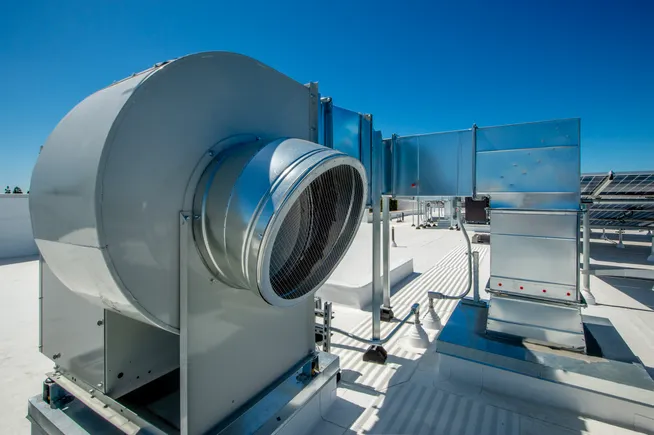
    Facility managers that lead an effort to upgrade their school’s HVAC system can help students miss less school, get into less trouble and perform better on standardized math tests, researchers at the State University of New York at Albany suggest. 

    Attendance improved by 2% and suspension rates dropped by 7% in K-12 schools after they improved their heating and ventilation systems, researchers say in a paper, “The Effects of School Building HVAC System Conditions on Student Academic and Behavioral Outcomes.” 

    Math outcomes improved, too — by 4% after the heating system was replaced and by 3% after the cooling system was replaced. There was a similar improvement in math scores when the heating system was improved.    

    “We conclude that investments made now to improve school HVAC systems can benefit not only student comfort and well-being, but also enhance educational opportunity,” say the researchers, Lucy Sorensen, Moontae Hwang and Marzuka Ahmad Radia of the State University of New York at Albany. 

    The researchers say the improvement in absentee levels likely stems from cleaner air flowing through the system. “Improvements in school ventilation system conditions could reduce the spread of infectious diseases … thereby decreasing missed days of school due to sickness,” they said.  

    The improvement in math performance likely stems from more comfortable room temperatures, which helps aid focus, but it also likely plays a role in fewer suspensions. The authors cite other research beyond K-12 that finds criminal behavior goes down as temperatures improve. 

    “More comfortable temperatures could help to prevent student misbehavior, given the well-known link between, for instance, heat and criminal behavior,” they said. 

    For their findings, the researchers looked at data over multiple years from a building condition survey conducted by the New York State Education Department. The percentage changes in performance are to a standard deviation. The findings were published in November and are available from Brown University’s Annenberg Institute. 

    Source link

  • 3 ways to break down silos between general and special education

    3 ways to break down silos between general and special education

    This audio is auto-generated. Please let us know if you have feedback.

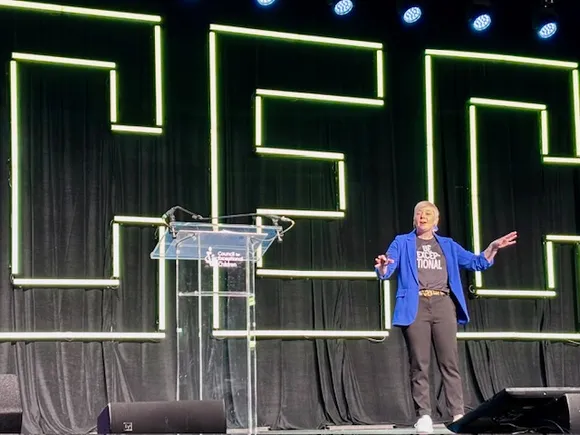
    BALTIMORE — When educators operate with separate goals and don’t engage in authentic collaboration, it creates friction and can ultimately hurt student progress, said Casey Watts, an educator and team leadership expert, in the opening keynote address at the Council for Exceptional Children’s annual convention on Wednesday.

    “I believe that people deserve to be part of collaborative teams that move forward, make an impact together and leave them feeling empowered, inspired and essential,” said Watts, who is also a pre-K-5 instructional coach at Hudson Independent School District in Lufkin, Texas.

    When educators and administrators are siloed, there can be an “us versus them” mentality, she said. “I believe that when we function in silos as educators, we unintentionally create silos in our students.” 

    To dismantle barriers between general and special educators and between teachers and administrators, Watts recommends three core concepts: 

    Have an ‘elevator pitch’

    Maintaining a strong sense of identity and purpose in your work can help eliminate ambiguities and assumptions others have of your role at school, Casey said. This goes for all educators in the school, including special education teachers, general education teachers, counselors, administrators and others.

    To ensure clarity, educators should work on their “elevator pitch,” or a brief summary of their role in the school. “When you create an elevator pitch, what you are essentially doing is pulling people in to become the main character of the story, and you are addressing their pain points, and you’re giving them new narratives for your position, which in essence, is bridging the gaps that exist between us as adults in education,” Watts said.

    In developing their elevator pitches, educators should think about how their role serves others in the school building and the skills they offer to educators and students.

    Engage in authentic collaboration

    Authentic collaboration is easier said than done, Watts said. And some “faux collaborations” can seem promising — such as an offer to share resources and materials — but really don’t break down barriers among educators.

    True collaboration takes courage and vulnerability and can include difficult conversations. It also means using everyone’s strengths and listening to all voices, she said.

    Establishing protocols where each person in the school community is a contributor can help break down silos, Watts said.

    Bring clarity to goals

    When everyone is on the same path, they know where the team is headed and how to get there. But when goals are unclear or the path is uncertain, people can get off track or operate independently, Watts said.

    When that happens, teachers go into their classrooms, close the door and vow to do what’s best for their students. But that can lead to unintentional gaps in student learning.

    “As I work with teams in districts across the nation, I hear so often leaders say ‘our teachers just won’t get on board,’” Watts said. “On the flip side of that, I’m hearing from teachers and staff who are saying the opposite: ‘We just never know what’s going on.’ There are two different narratives at play.”

    A lack of clarity creates unproductive confusion, Watts said. As a result, educators and administrators might lack confidence and feel defeated, frustrated and distrustful, she said.

    Setting out clear goals will boost confidence and capacity in educators, resulting in a collective efficacy, Watts said. That, in turn, will have “a significant impact on student learning,” she said.

    Source link

  • College Applications Rise, Especially From Minority Students

    College Applications Rise, Especially From Minority Students

    The number of students applying to college rose 4 percent this admission cycle, and applicants submitted 6 percent more applications over all, according to a new report from the Common App. 

    The increase was fueled by an especially large spike in the number of underrepresented minority applicants, which rose by 12 percent compared to non-URM applicants’ 2 percent increase. In addition, applicants from families below the median income level rose 8 percent, compared to 3 percent from above the median.

    The increase could reflect the Common App’s addition of more community colleges and open-access institutions to its platform, expanding to include more institutions that primarily serve low-income students.

    One striking finding in the report: Domestic applicant growth exceeded that of international students for the first time since 2019. Domestic applicants increased by 5 percent while the number of international applicants declined by 1 percent.

    In addition, the number of applicants submitting test scores in 2024–25 grew by 11 percent, outpacing nonreporters for the first time since 2021. Some schools began returning to mandatory test requirements this application cycle, abandoning test-optional policies adopted during the pandemic.

    Source link

  • Record Number of U.S. Students Apply for U.K. Undergraduate Degrees

    Record Number of U.S. Students Apply for U.K. Undergraduate Degrees

    A record number of U.S. students have applied to study for undergraduate degrees in the U.K. next year, figures reveal.

    Experts had previously suggested that U.K. institutions might benefit from international students being put off by Donald Trump’s new administration.

    And analysis suggests campuses are already seeing an influx of applicants from the U.S. itself. Figures from the University and College Admissions Service, UCAS, show that 6,680 U.S. students applied to U.K. courses for 2025–26 by the main deadline at the end of January.

    This was a 12 percent increase on the year before and the most since comparable records began in 2006. It surpasses the previous record of 6,670 set in 2021–22 and is more than double the demand in 2017.

    Maddalaine Ansell, director of education at the British Council, said she was “delighted” by the 20-year high.

    “It’s a testament to the quality of U.K. universities that so many people want to study here. Three-year degrees, lower tuition costs and poststudy work opportunities all increase the attractiveness of the U.K. offer,” she said.

    “As well as adding to the vibrancy of their courses, we hope that these students will also take a lasting affection for the U.K. forward into their future careers and stay connected with us for years to come.”

    Almost two-thirds (63 percent) of the applicants from the U.S. were 18 years old, and 61 percent were women.

    The UCAS data covers undergraduate applicants, but separate figures show an uptick in demand at all levels—even before Trump’s second term began.

    Recent Home Office statistics reveal that 15,274 U.S. main applicants were issued sponsored study visas in 2024.

    This was a 5 percent increase on 2023 and also the highest level since at least 2009—despite total visa numbers from around the world falling.

    Recent research by the British Council found that more international students would choose the U.K. over the U.S. as a result of Trump’s return to the White House.

    Although he managed to generate a large swing toward the Republican Party among young voters, those aged 18 to 29 still largely backed Kamala Harris in November.

    In the 78-year-old’s first six weeks in the Oval Office, he has pledged to shut down the Department of Education, block federal funding for institutions that allow “illegal” protests and launched a crackdown on spending on diversity, equity and inclusion programs.

    Universities UK said the increase in demand to study in the U.K. is positive, following a turbulent period for international student recruitment.

    “But it is too early to say whether this is the start of a longer-term trend,” added a spokesperson.

    “What is important now is for universities and government to continue to work together to promote the U.K. as a welcoming destination, and to preserve our competitive offer to international students.”

    Recent data also showed that a record number of Americans applied for U.K. citizenship last year, which immigration lawyers attributed to Trump’s presidential re-election bid and victory.

    Source link

  • Funding Freeze on University of Maine System Lifted

    Funding Freeze on University of Maine System Lifted

    Senator Susan Collins of Maine said the pause on federal agriculture funding for her state’s public colleges and universities has been lifted, WMTW reported Wednesday.

    The Department of Agriculture froze all spending Tuesday as part of an investigation into the institutions’ compliance with Title IX, the federal law that prohibits sex-based discrimination in schools. USDA launched the investigation shortly after a heated exchange between Maine’s Democratic governor and President Trump in late February.

    The state’s flagship institution, the University of Maine, requested clarification Wednesday on the status of USDA’s Title IX compliance review and the extent of the pause. Collins also consulted the Trump administration about the freeze. Relief followed quickly after.

    “This USDA funding is critically important not only to the University of Maine but to our farmers and loggers,” Collins said in a statement. “Now that funding has been restored, the work that the university does in partnership with the many people and communities who depend on these programs can continue.”

    The system has nearly $63 million in active grants from the Agriculture Department and is expecting $35 million to be paid out for ongoing statewide education, research and extension activities, a system spokesperson told Inside Higher Ed.

    “Since our flagship’s founding as Maine’s land grant 160 years ago, funding from USDA has enabled us to strengthen and grow the state’s natural resource economy, sustain rural jobs and communities, and support hands-on 4-H youth development opportunities,” system chancellor Dannel Malloy and University of Maine president Joan Ferrini-Mundy said in a joint statement. “The University of Maine System was thrilled to learn from Senator Collins that the USDA has agreed to lift its plan to temporarily pause our federal funding, which has been an unnecessary distraction from our essential education, research and extension activities that benefit Maine and well beyond.”

    Source link

  • Columbia Sanctions Students Who Occupied Campus Building

    Columbia Sanctions Students Who Occupied Campus Building

    Columbia University handed down sanction decisions for student protesters who occupied Hamilton Hall in April of last year, the university announced in a statement Thursday.

    The sanctions come as the university faces crippling attacks from the Trump administration over its handling of the protests last year, including the loss of $400 million in federal funding, which could lead to mass layoffs and program cuts.

    The university has not released the names of affected students, nor more details about how many will be expelled or suspended.

    The punishments, determined by the university judiciary board, are unusually harsh, ranging from multiyear suspensions and expulsions to temporary degree revocations for graduates, according to the email. While occupying the building—which students renamed Hind Hall in honor of a 5-year-old Palestinian girl killed by Israeli soldiers—students damaged property and broke windows. 

    Last year, only a few of the students who occupied the building were punished, and most remained in good standing with the university, according to documents the university gave to Congress last year. Of the 22 students who occupied the hall, only three received sanctions, the most severe being short-term suspension. At the time, Columbia said the disciplinary process was “ongoing for many students.”

    University spokespeople told Inside Higher Ed that the decisions were the culmination of a months-long investigation. For all other student protests last spring, the judiciary board “recognized previously imposed disciplinary action,” according to the email.

    Last weekend, Columbia graduate and legal U.S. permanent resident Mahmoud Khalil was arrested and threatened with deportation for his role in the pro-Palestine protests. Yesterday, Khalil sued the university, along with Barnard College, for allegedly sharing private student disciplinary records with members of Congress and other third-party groups.

    Source link

  • Layoffs Gut Federal Education Research Agency

    Layoffs Gut Federal Education Research Agency

    Five years after the COVID-19 pandemic first forced schools and colleges into remote learning, researchers, policymakers and higher education leaders may no longer have access to the federal data they need to gather a complete picture of how those disruptions have affected a generation of students long term—or hold states and colleges accountable for the interventions they deployed to address the fallout.

    That’s because the National Center for Education Statistics, the Education Department’s data-collection arm that’s administered surveys and studies about the state of K-12, higher education and the workforce since 1867, is suddenly a shell of itself.

    As of this week, the NCES is down to five employees after the department fired nearly half its staff earlier this week. The broader Institute of Education Sciences, which houses NCES, also lost more than 100 employees as part of President Donald Trump’s campaign to eliminate alleged “waste, fraud and abuse” in federal funding.

    The mass firings come about a month after federal education data collection data took another big blow: In February, the department cut nearly $900 million in contracts at IES, which ended what some experts say was critical research into schools and fueled layoffs at some of the research firms that held those contracts, including MDRC, Mathematica, NORC and Westat.

    Although Trump and his allies have long blamed COVID-related learning loss on President Joe Biden’s approval of prolonged remote learning, numerous experts told Inside Higher Ed that without some of the federal data the NCES was collecting, it will be hard to draw definitive conclusions about those or any other claims about national education trends.

    ‘Backbone of Accountability’

    “The backbone of accountability for our school systems begins with simply collecting data on how well they’re doing. The fact that our capacity to do that is being undermined is really indefensible,” said Thomas Dee, a professor at Stanford University’s Graduate School of Education and research associate at the National Bureau of Economic Research. “One could conceive this as part of an agenda to undermine the very idea of truth and evidence in public education.”

    But the Education Department says its decision to nearly eliminate the NCES and so many IES contracts is rooted in what it claims are the agency’s own failures.

    “Despite spending hundreds of millions in taxpayer funds annually, IES has failed to effectively fulfill its mandate to identify best practices and new approaches that improve educational outcomes and close achievement gaps for students,” Madi Biedermann, deputy assistant secretary for communications at the department, said in an email to Inside Higher Ed Thursday.

    Biedermann said the department plans to restructure IES in the coming months in order to provide “states with more useful data to improve student outcomes while maintaining rigorous scientific integrity and cost effectiveness.”

    But many education researchers disagree with that characterization of IES and instead view it as an unmatched resource for informing higher education policy decisions.

    “Some of these surveys allow us to know if people are being successful in college. It tells us where those students are enrolled in college and where they came from. For example, COVID impacted everyone, but it had a disproportionate impact on specific regions in the U.S. and specific social and socioeconomic groups in the U.S.,” said Taylor Odle, an assistant professor of educational policy studies at the University of Wisconsin at Madison.

    “Post-COVID, states and regions have implemented a lot of interventions to help mitigate learning loss and accelerate learning for specific individuals. We’ll be able to know by comparing region to region or school to school whether or not those gaps increased or reduced in certain areas.”

    Without uniform federal data to ground comparisons of pandemic-related and other student success interventions, it will be harder to hold education policymakers accountable, Odle and others told Inside Higher Ed this week. However, Odle believes that may be the point of the Trump administration’s assault on the Education Department’s research arm.

    “It’s in essence a tacit statement that what they are doing may potentially be harmful to students and schools, and they don’t want the American public or researchers to be able to clearly show that,” he said. “By eliminating these surveys and data collection, and reducing staff at the Department of Education who collect, synthesize and report the data, every decision-maker—regardless of where they fall on the political spectrum—is going to be limited in the data and information they have access to.”

    Scope of Data Loss Unclear

    It’s not clear how many of the department’s dozens of data-collection programs—including those related to early childhood education, college student outcomes and workforce readiness—will be downsized or ended as a result of the cuts. The department did not respond to Inside Higher Ed’s request for clarity on exactly which contracts were canceled. (It did confirm, however, that it still maintains contracts for the National Assessment of Educational Progress, the College Scorecard and the Integrated Postsecondary Education Data System.)

    A now-fired longtime NCES employee who asked to remain anonymous out of fear of retaliation said they and others who worked on those data-collection programs for years are still in the dark on the future of many of the other studies IES administers.

    “We’ve been out of the loop on all these conversations about the state of these studies. That’s been taking place at a higher level—or outside of NCES entirely,” said the terminated employee. “What these federal sources do is synthesize all the different other data sources that already exist to provide a more comprehensive national picture in a way that saves researchers a lot of the trouble of having to combine these different sources themselves and match them up. It provides consistent methodologies.”

    Even if some of the data-collection programs continue, there will be hardly any NCES staff to help researchers and policymakers accurately navigate new or existing data, which was the primary function of most workers there.

    “We are a nonpartisan agency, so we’ve always shied away from interpreting or making value judgments about what the data say,” the fired NCES worker said. “We are basically a help desk and support resource for people who are trying to use this data in their own studies and their own projects.”

    ‘Jeopardizing’ Strong Workforce

    One widely used data set with an uncertain future is the Beginning Postsecondary Students Longitudinal Study—a detailed survey that has followed cohorts of first-time college students over a period of six to eight years since 1989. The latest iteration of the BPS survey has been underway since 2019, and it included questions meant to illuminate the long-term effects of pandemic-related learning loss. But like many other NCES studies, data collection for BPS has been on pause since last month, when the department pulled the survey’s contract with the Research Triangle Institute.

    In a blog post the Institute for Higher Education Policy published Wednesday, the organization noted that BPS is intertwined with the National Postsecondary Student Aid Study, which is a comprehensive nationwide study designed to determine how students and their families pay for college and demographic characteristics of those enrolled.

    The two studies “are the only federal data sources that provide comprehensive insights into how students manage college affordability, stay enrolled and engaged with campus resources, persist to completion, and transition to the workforce,” Taylor Myers, assistant director of research and policy, wrote. “Losing these critical data hinders policy improvements and limits our understanding of the realities students face.”

    That post came one day after IHEP sent members of Congress a letter signed by a coalition of 87 higher education organizations and individual researchers urging lawmakers to demand transparency about why the department slashed funding for postsecondary data collection.

    “These actions weaken our capacity to assess and improve educational and economic outcomes for students—directly jeopardizing our ability to build a globally competitive workforce,” the letter said. “Without these insights, policymakers will soon be forced to make decisions in the dark, unable to steward taxpayer dollars efficiently.”

    Picking Up the Slack

    But not every education researcher believes federal data is as vital to shaping education policy and evaluating interventions as IHEP’s letter claims.

    “It’s unclear that researchers analyzing those data have done anything to alter outcomes for students,” said Jay Greene, a senior research fellow in the Center for Education Policy at the right-wing Heritage Foundation. “Me being able to publish articles is not the same thing as students benefiting. We have this assumption that research should prove things, but in the world of education, we have very little evidence of that.”

    Greene, who previously worked as a professor of education policy at the University of Arkansas, said he never used federal data in his assessments of educational interventions and instead used state-level data or collected his own. “Because states and localities actually run schools, they’re in a position to do things that might make it better or worse,” he said. “Federal data is just sampling … It’s not particularly useful for causal research designs to develop practices and interventions that improve education outcomes.”

    Other researchers have a more measured view of what needs to change in federal education data collection.

    Robin Lake, director of the Center on Reinventing Public Education at Arizona State University, has previously called for reforms at IES, arguing that some of the studies are too expensive without enough focus on educators’ evolving priorities, which as of late include literacy, mathematics and how to handle the rise of artificial intelligence.

    But taking a sledgehammer to NCES isn’t the reform she had in mind. Moreover, she said blaming federal education data collections and researchers for poor education outcomes is “completely ridiculous.”

    “There’s a breakdown between knowledge and practice in the education world,” Lake said. “We don’t adopt things that work at the scale we need to, but that’s not on researchers or the quality of research that’s being produced.”

    But just because federal education data collection may not focus on specific interventions, “that doesn’t mean those data sets aren’t useful,” said Christina Whitfield, senior vice president and chief of staff for the State Higher Education Executive Officers Association.

    “A lot of states have really robust data systems, and in a lot of cases they provide more detail than the federal data systems do,” she said. “However, one of the things the federal data provides is a shared language and common set of definitions … If we move toward every state defining these key elements individually or separately, we lose a lot of comparability.”

    If many of the federal data collection projects aren’t revived, Whitfield said other entities, including nonprofits and corporations, will likely step in to fill the void. But that likely won’t be a seamless transition without consequence.

    “At least in the short term, there’s going to be a real issue of how to vet those different solutions and determine which is the highest-quality, efficient and most useful response to the information vacuum we’re going to experience,” Whitfield said. And even if there’s just a pause on some of the data collections and federal contracts are able to resume eventually, “there’s going to be a gap and a real loss in the continuity of that data and how well you can look back longitudinally.”


    Source link