Author: admin

  • Record Number of U.S. Students Apply for U.K. Undergraduate Degrees

    Record Number of U.S. Students Apply for U.K. Undergraduate Degrees

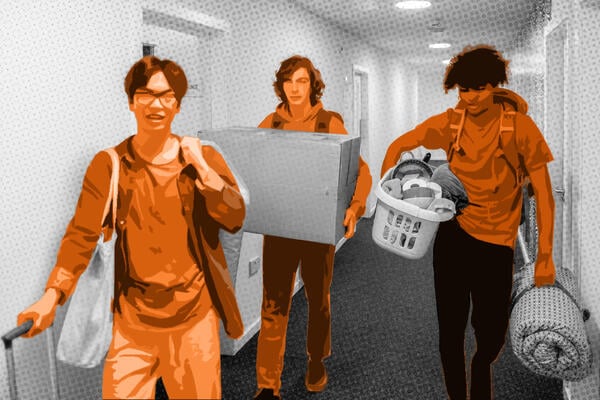
    A record number of U.S. students have applied to study for undergraduate degrees in the U.K. next year, figures reveal.

    Experts had previously suggested that U.K. institutions might benefit from international students being put off by Donald Trump’s new administration.

    And analysis suggests campuses are already seeing an influx of applicants from the U.S. itself. Figures from the University and College Admissions Service, UCAS, show that 6,680 U.S. students applied to U.K. courses for 2025–26 by the main deadline at the end of January.

    This was a 12 percent increase on the year before and the most since comparable records began in 2006. It surpasses the previous record of 6,670 set in 2021–22 and is more than double the demand in 2017.

    Maddalaine Ansell, director of education at the British Council, said she was “delighted” by the 20-year high.

    “It’s a testament to the quality of U.K. universities that so many people want to study here. Three-year degrees, lower tuition costs and poststudy work opportunities all increase the attractiveness of the U.K. offer,” she said.

    “As well as adding to the vibrancy of their courses, we hope that these students will also take a lasting affection for the U.K. forward into their future careers and stay connected with us for years to come.”

    Almost two-thirds (63 percent) of the applicants from the U.S. were 18 years old, and 61 percent were women.

    The UCAS data covers undergraduate applicants, but separate figures show an uptick in demand at all levels—even before Trump’s second term began.

    Recent Home Office statistics reveal that 15,274 U.S. main applicants were issued sponsored study visas in 2024.

    This was a 5 percent increase on 2023 and also the highest level since at least 2009—despite total visa numbers from around the world falling.

    Recent research by the British Council found that more international students would choose the U.K. over the U.S. as a result of Trump’s return to the White House.

    Although he managed to generate a large swing toward the Republican Party among young voters, those aged 18 to 29 still largely backed Kamala Harris in November.

    In the 78-year-old’s first six weeks in the Oval Office, he has pledged to shut down the Department of Education, block federal funding for institutions that allow “illegal” protests and launched a crackdown on spending on diversity, equity and inclusion programs.

    Universities UK said the increase in demand to study in the U.K. is positive, following a turbulent period for international student recruitment.

    “But it is too early to say whether this is the start of a longer-term trend,” added a spokesperson.

    “What is important now is for universities and government to continue to work together to promote the U.K. as a welcoming destination, and to preserve our competitive offer to international students.”

    Recent data also showed that a record number of Americans applied for U.K. citizenship last year, which immigration lawyers attributed to Trump’s presidential re-election bid and victory.

    Source link

  • Funding Freeze on University of Maine System Lifted

    Funding Freeze on University of Maine System Lifted

    Senator Susan Collins of Maine said the pause on federal agriculture funding for her state’s public colleges and universities has been lifted, WMTW reported Wednesday.

    The Department of Agriculture froze all spending Tuesday as part of an investigation into the institutions’ compliance with Title IX, the federal law that prohibits sex-based discrimination in schools. USDA launched the investigation shortly after a heated exchange between Maine’s Democratic governor and President Trump in late February.

    The state’s flagship institution, the University of Maine, requested clarification Wednesday on the status of USDA’s Title IX compliance review and the extent of the pause. Collins also consulted the Trump administration about the freeze. Relief followed quickly after.

    “This USDA funding is critically important not only to the University of Maine but to our farmers and loggers,” Collins said in a statement. “Now that funding has been restored, the work that the university does in partnership with the many people and communities who depend on these programs can continue.”

    The system has nearly $63 million in active grants from the Agriculture Department and is expecting $35 million to be paid out for ongoing statewide education, research and extension activities, a system spokesperson told Inside Higher Ed.

    “Since our flagship’s founding as Maine’s land grant 160 years ago, funding from USDA has enabled us to strengthen and grow the state’s natural resource economy, sustain rural jobs and communities, and support hands-on 4-H youth development opportunities,” system chancellor Dannel Malloy and University of Maine president Joan Ferrini-Mundy said in a joint statement. “The University of Maine System was thrilled to learn from Senator Collins that the USDA has agreed to lift its plan to temporarily pause our federal funding, which has been an unnecessary distraction from our essential education, research and extension activities that benefit Maine and well beyond.”

    Source link

  • Columbia Sanctions Students Who Occupied Campus Building

    Columbia Sanctions Students Who Occupied Campus Building

    Columbia University handed down sanction decisions for student protesters who occupied Hamilton Hall in April of last year, the university announced in a statement Thursday.

    The sanctions come as the university faces crippling attacks from the Trump administration over its handling of the protests last year, including the loss of $400 million in federal funding, which could lead to mass layoffs and program cuts.

    The university has not released the names of affected students, nor more details about how many will be expelled or suspended.

    The punishments, determined by the university judiciary board, are unusually harsh, ranging from multiyear suspensions and expulsions to temporary degree revocations for graduates, according to the email. While occupying the building—which students renamed Hind Hall in honor of a 5-year-old Palestinian girl killed by Israeli soldiers—students damaged property and broke windows. 

    Last year, only a few of the students who occupied the building were punished, and most remained in good standing with the university, according to documents the university gave to Congress last year. Of the 22 students who occupied the hall, only three received sanctions, the most severe being short-term suspension. At the time, Columbia said the disciplinary process was “ongoing for many students.”

    University spokespeople told Inside Higher Ed that the decisions were the culmination of a months-long investigation. For all other student protests last spring, the judiciary board “recognized previously imposed disciplinary action,” according to the email.

    Last weekend, Columbia graduate and legal U.S. permanent resident Mahmoud Khalil was arrested and threatened with deportation for his role in the pro-Palestine protests. Yesterday, Khalil sued the university, along with Barnard College, for allegedly sharing private student disciplinary records with members of Congress and other third-party groups.

    Source link

  • Layoffs Gut Federal Education Research Agency

    Layoffs Gut Federal Education Research Agency

    Five years after the COVID-19 pandemic first forced schools and colleges into remote learning, researchers, policymakers and higher education leaders may no longer have access to the federal data they need to gather a complete picture of how those disruptions have affected a generation of students long term—or hold states and colleges accountable for the interventions they deployed to address the fallout.

    That’s because the National Center for Education Statistics, the Education Department’s data-collection arm that’s administered surveys and studies about the state of K-12, higher education and the workforce since 1867, is suddenly a shell of itself.

    As of this week, the NCES is down to five employees after the department fired nearly half its staff earlier this week. The broader Institute of Education Sciences, which houses NCES, also lost more than 100 employees as part of President Donald Trump’s campaign to eliminate alleged “waste, fraud and abuse” in federal funding.

    The mass firings come about a month after federal education data collection data took another big blow: In February, the department cut nearly $900 million in contracts at IES, which ended what some experts say was critical research into schools and fueled layoffs at some of the research firms that held those contracts, including MDRC, Mathematica, NORC and Westat.

    Although Trump and his allies have long blamed COVID-related learning loss on President Joe Biden’s approval of prolonged remote learning, numerous experts told Inside Higher Ed that without some of the federal data the NCES was collecting, it will be hard to draw definitive conclusions about those or any other claims about national education trends.

    ‘Backbone of Accountability’

    “The backbone of accountability for our school systems begins with simply collecting data on how well they’re doing. The fact that our capacity to do that is being undermined is really indefensible,” said Thomas Dee, a professor at Stanford University’s Graduate School of Education and research associate at the National Bureau of Economic Research. “One could conceive this as part of an agenda to undermine the very idea of truth and evidence in public education.”

    But the Education Department says its decision to nearly eliminate the NCES and so many IES contracts is rooted in what it claims are the agency’s own failures.

    “Despite spending hundreds of millions in taxpayer funds annually, IES has failed to effectively fulfill its mandate to identify best practices and new approaches that improve educational outcomes and close achievement gaps for students,” Madi Biedermann, deputy assistant secretary for communications at the department, said in an email to Inside Higher Ed Thursday.

    Biedermann said the department plans to restructure IES in the coming months in order to provide “states with more useful data to improve student outcomes while maintaining rigorous scientific integrity and cost effectiveness.”

    But many education researchers disagree with that characterization of IES and instead view it as an unmatched resource for informing higher education policy decisions.

    “Some of these surveys allow us to know if people are being successful in college. It tells us where those students are enrolled in college and where they came from. For example, COVID impacted everyone, but it had a disproportionate impact on specific regions in the U.S. and specific social and socioeconomic groups in the U.S.,” said Taylor Odle, an assistant professor of educational policy studies at the University of Wisconsin at Madison.

    “Post-COVID, states and regions have implemented a lot of interventions to help mitigate learning loss and accelerate learning for specific individuals. We’ll be able to know by comparing region to region or school to school whether or not those gaps increased or reduced in certain areas.”

    Without uniform federal data to ground comparisons of pandemic-related and other student success interventions, it will be harder to hold education policymakers accountable, Odle and others told Inside Higher Ed this week. However, Odle believes that may be the point of the Trump administration’s assault on the Education Department’s research arm.

    “It’s in essence a tacit statement that what they are doing may potentially be harmful to students and schools, and they don’t want the American public or researchers to be able to clearly show that,” he said. “By eliminating these surveys and data collection, and reducing staff at the Department of Education who collect, synthesize and report the data, every decision-maker—regardless of where they fall on the political spectrum—is going to be limited in the data and information they have access to.”

    Scope of Data Loss Unclear

    It’s not clear how many of the department’s dozens of data-collection programs—including those related to early childhood education, college student outcomes and workforce readiness—will be downsized or ended as a result of the cuts. The department did not respond to Inside Higher Ed’s request for clarity on exactly which contracts were canceled. (It did confirm, however, that it still maintains contracts for the National Assessment of Educational Progress, the College Scorecard and the Integrated Postsecondary Education Data System.)

    A now-fired longtime NCES employee who asked to remain anonymous out of fear of retaliation said they and others who worked on those data-collection programs for years are still in the dark on the future of many of the other studies IES administers.

    “We’ve been out of the loop on all these conversations about the state of these studies. That’s been taking place at a higher level—or outside of NCES entirely,” said the terminated employee. “What these federal sources do is synthesize all the different other data sources that already exist to provide a more comprehensive national picture in a way that saves researchers a lot of the trouble of having to combine these different sources themselves and match them up. It provides consistent methodologies.”

    Even if some of the data-collection programs continue, there will be hardly any NCES staff to help researchers and policymakers accurately navigate new or existing data, which was the primary function of most workers there.

    “We are a nonpartisan agency, so we’ve always shied away from interpreting or making value judgments about what the data say,” the fired NCES worker said. “We are basically a help desk and support resource for people who are trying to use this data in their own studies and their own projects.”

    ‘Jeopardizing’ Strong Workforce

    One widely used data set with an uncertain future is the Beginning Postsecondary Students Longitudinal Study—a detailed survey that has followed cohorts of first-time college students over a period of six to eight years since 1989. The latest iteration of the BPS survey has been underway since 2019, and it included questions meant to illuminate the long-term effects of pandemic-related learning loss. But like many other NCES studies, data collection for BPS has been on pause since last month, when the department pulled the survey’s contract with the Research Triangle Institute.

    In a blog post the Institute for Higher Education Policy published Wednesday, the organization noted that BPS is intertwined with the National Postsecondary Student Aid Study, which is a comprehensive nationwide study designed to determine how students and their families pay for college and demographic characteristics of those enrolled.

    The two studies “are the only federal data sources that provide comprehensive insights into how students manage college affordability, stay enrolled and engaged with campus resources, persist to completion, and transition to the workforce,” Taylor Myers, assistant director of research and policy, wrote. “Losing these critical data hinders policy improvements and limits our understanding of the realities students face.”

    That post came one day after IHEP sent members of Congress a letter signed by a coalition of 87 higher education organizations and individual researchers urging lawmakers to demand transparency about why the department slashed funding for postsecondary data collection.

    “These actions weaken our capacity to assess and improve educational and economic outcomes for students—directly jeopardizing our ability to build a globally competitive workforce,” the letter said. “Without these insights, policymakers will soon be forced to make decisions in the dark, unable to steward taxpayer dollars efficiently.”

    Picking Up the Slack

    But not every education researcher believes federal data is as vital to shaping education policy and evaluating interventions as IHEP’s letter claims.

    “It’s unclear that researchers analyzing those data have done anything to alter outcomes for students,” said Jay Greene, a senior research fellow in the Center for Education Policy at the right-wing Heritage Foundation. “Me being able to publish articles is not the same thing as students benefiting. We have this assumption that research should prove things, but in the world of education, we have very little evidence of that.”

    Greene, who previously worked as a professor of education policy at the University of Arkansas, said he never used federal data in his assessments of educational interventions and instead used state-level data or collected his own. “Because states and localities actually run schools, they’re in a position to do things that might make it better or worse,” he said. “Federal data is just sampling … It’s not particularly useful for causal research designs to develop practices and interventions that improve education outcomes.”

    Other researchers have a more measured view of what needs to change in federal education data collection.

    Robin Lake, director of the Center on Reinventing Public Education at Arizona State University, has previously called for reforms at IES, arguing that some of the studies are too expensive without enough focus on educators’ evolving priorities, which as of late include literacy, mathematics and how to handle the rise of artificial intelligence.

    But taking a sledgehammer to NCES isn’t the reform she had in mind. Moreover, she said blaming federal education data collections and researchers for poor education outcomes is “completely ridiculous.”

    “There’s a breakdown between knowledge and practice in the education world,” Lake said. “We don’t adopt things that work at the scale we need to, but that’s not on researchers or the quality of research that’s being produced.”

    But just because federal education data collection may not focus on specific interventions, “that doesn’t mean those data sets aren’t useful,” said Christina Whitfield, senior vice president and chief of staff for the State Higher Education Executive Officers Association.

    “A lot of states have really robust data systems, and in a lot of cases they provide more detail than the federal data systems do,” she said. “However, one of the things the federal data provides is a shared language and common set of definitions … If we move toward every state defining these key elements individually or separately, we lose a lot of comparability.”

    If many of the federal data collection projects aren’t revived, Whitfield said other entities, including nonprofits and corporations, will likely step in to fill the void. But that likely won’t be a seamless transition without consequence.

    “At least in the short term, there’s going to be a real issue of how to vet those different solutions and determine which is the highest-quality, efficient and most useful response to the information vacuum we’re going to experience,” Whitfield said. And even if there’s just a pause on some of the data collections and federal contracts are able to resume eventually, “there’s going to be a gap and a real loss in the continuity of that data and how well you can look back longitudinally.”


    Source link

  • Residential Communities Centered on Race, LGBTQ Closed for 2025

    Residential Communities Centered on Race, LGBTQ Closed for 2025

    In the wake of federal and state bans on diversity, equity and inclusion, several colleges and universities are eliminating the option for students to live in culture-based housing starting next fall—a trend that could signal increased attacks on certain student resources that went largely untouched under previous state-level DEI bans.

    The University of Iowa confirmed to Inside Higher Ed that it will be ceasing operations of three of its living-learning communities: All In, for LGBTQ students; Unidos, for Latino students; and Young, Gifted and Black, for Black students. North Carolina State University will also shut down two culture-based dorms—called Living and Learning Villages at NCSU—dedicated to Native American and Black students, as first reported in The Nubian Message, the college’s Black student-led newspaper.

    In both cases, the institutions will no longer offer the residential communities starting next semester. Both NCSU and Iowa are retaining other learning communities focused on academic majors and other interests.

    The cancellations come in the wake of President Donald Trump’s crusade against all things even tangentially related to diversity, equity and inclusion. A Feb. 14 Dear Colleague letter from the Department of Education stated that federal law prohibits the use of race in relation to a variety of campus programs and activities, including housing, going beyond the restrictions set by most statewide anti-DEI legislation.

    In the aftermath of that letter, many universities—including some private institutions and institutions in solidly blue states—began scrubbing words related to DEI from their websites and shuttering DEI offices. But only a handful of institutions have gotten rid of the housing communities, which have often been lauded for strengthening students’ sense of belonging on campus. (Belonging is associated with higher rates of retention and mental well-being, multiple studies have found.)

    A spokesman for the University of Iowa did not say what led to the decision to close the three living-learning communities. Iowa passed legislation last year banning diversity, equity and inclusion offices on college campuses. The university also announced Thursday that it would be permanently shuttering its DEI office, which it had rearranged and renamed to the Division of Access, Opportunity, and Diversity as a result of last year’s legislation.

    NCSU did not respond to Inside Higher Ed’s request for comment but told The Nubian Message that the changes were “part of the university’s ongoing review of compliance with executive actions issued by the federal government and UNC System policy.”

    Another institution, the University of Florida, has removed the option to sign up for any of its nonacademic learning communities for next semester, including those dedicated to Black, first-generation, international, LGBTQ+ and out-of-state students, plus one for students in the arts. According to The Alligator, the university’s student paper, the university also changed language on its housing website from describing the learning communities as “interest-based communities” to “academic-based communities.”

    In an email to the campus community, the institution said the change was related to the university’s housing master plan.

    “The University of Florida’s Housing & Residence Life is unwavering in our commitment to providing community-orientated facilities where residents are empowered to learn, innovate and succeed. As we enter a 10-year Housing Master Planning process, all programmatic offerings are being evaluated to ensure we continue to provide a premiere on-campus living experience,” the message read. “As a result, we are pausing all activities associated with non-academic Living Learning Communities.”

    But some students have expressed concern that the elimination of the communities focused on identity may actually be related to Trump’s anti-DEI push or existing Florida anti-DEI legislation.

    “Cancelling the activities of marginalized LLCs follows a long history of UF stripping protections from vulnerable students,” reads a petition calling on the university to reverse its decision. “It is clear that this latest attack on safe housing is only part of a larger plan to transform the UF campus into a space that is no longer safe for marginalized groups. LLCs will not be the last protection to be targeted.”

    A Best Practice to Support Students

    The Young, Gifted and Black learning community debuted in 2016 in response to a proposal by a group of students, The Daily Iowan, the University of Iowa’s student newspaper, reported at the time.

    The university’s housing website says that students living in YGB “will be challenged to understand the various experiences among the African/Black diaspora, encouraged to learn and develop critical thinking skills outside the classroom, relate your passions to your academics and better Iowa’s Black Community through campus involvement.” Students who live on the floor are also required to take a course on African American culture.

    Sandrah Nasimiyu, an Iowa alumna, lived in the community in the 2019–20 academic year—though, of course, her time there was cut short by the COVID-19 pandemic. Her happiest memories in college took place in the residence hall, she told Inside Higher Ed, from debriefing with her floor mates after a long day of classes to a memorable game night when her friends tried, unsuccessfully, to teach her to play spades.

    “I was already at a [predominantly white institution]. We live in Iowa—I had grown up in the suburbs and really wanted to have some form of community,” she said. “Where you put your head at night, where you’re going to spend the most time, you have to feel comfortable … when I stepped off that floor, I was in an environment I see all the time that wasn’t made for me.”

    Nasimiyu is still friends with several people she met in the brief time she lived there. Sometimes, she recalled, Black students who didn’t live on YGB would tell her that they struggled to make Black friends on campus; Black people make up just 2.8 percent of the student body at Iowa.

    LGBTQ+ and culture-based residence halls have come under fire from conservatives before; in 2023, the conservative campus group Young Americans for Freedom criticized Lavender Living Learning Community, the LGBTQ+ dorm at UF, for “segregating” students and “bombarding” them with leftism because its residents were encouraged to take a course on social justice. Right-wing news sources like Campus Reform and The Daily Caller, too, have discredited affinity housing as segregation.

    But advocates for these spaces have long countered that residents of learning communities are rarely, if ever, required to be a certain race or identity. Jason Lynch, a professor of higher education at Appalachian State University and an expert in housing and residential life, said he saw firsthand that a number of non-Black students lived in the Black residential community when he worked in residential life at a previous institution.

    Beyond that, though, he noted that the communities “are seen as a best practice, a high-impact practice … LLCs are a direct way to combat loneliness and isolation. We’re going to see a rise in mental health [concerns], especially for these minority communities” if these communities vanish.

    Restricting LGBTQ+ Housing

    At the same time that some campuses are doing away with LGBTQ+ affinity housing, others are overhauling inclusive housing in other ways. Florida State University recently came under fire for removing an option on its housing application that allows students to indicate that they would like to live in LGBTQ-friendly housing.

    Unlike the learning communities, this option doesn’t place students in a particular dorm, but rather attempts to pair the student with someone who would be accepting and welcoming of an LGBTQ+ roommate, Marco Lofaso, an FSU student and member of the campus’s Young Democratic Socialists of America chapter, told Inside Higher Ed. LGBTQ+ housing has been available at FSU since 2021.

    But the option was soon reinstated after student backlash—though the university never directly answered why it had been removed, telling the student newspaper, “Florida State University routinely reviews and refreshes campus information and messaging on a regular basis to ensure information is up to date and accurate. During this review, a previously used question was omitted from the returning student housing application for the 2025–26 academic year. A revised version of the question will be included in the new student housing application when it is released Feb. 27.”

    FSU did not respond to Inside Higher Ed’s request for comment.

    The state of Utah also recently passed a law targeting trans students that requires any students who live in gender-segregated housing to live in the housing that aligns with their “biological sex.” However, the law doesn’t prevent institutions from offering gender-neutral housing.

    At least one institution has updated its housing policies to comply with the law, which passed in February. In an emailed statement, a spokesman for Utah State University said that the institution “strives to create a welcoming environment where all students who live on campus are comfortable so they can focus on succeeding in their studies. Consistent with the new law, USU’s sex-segregated housing will be assigned based on an individual’s biological sex at birth.”

    The spokesman added that the university will continue to provide gender-inclusive housing “that meet the needs of all residents and in a manner that treats everyone with dignity and respect.” He did not respond to a question about how the university will determine residents’ biological sexes.

    Source link

  • Greater width and greater depth: changing higher education in an electronic age

    Greater width and greater depth: changing higher education in an electronic age

    • Ronald Barnett is (www.ronaldbarnett.co.uk), Emeritus Professor of Higher Education at the Institute of Education and President of the Philosophy and Theory of Higher Education Society.

    Chris Husbands’ latest HEPI blog is fine so far as it goes but, I suggest, it goes neither wide enough nor deep enough.  Yes, the world is changing, and higher education institutions have to change, but the analysis of ‘change’ has to encompass the whole world (have great width) and also to burrow down into the deep structures of a world in turbulent motion (and so have much depth).

    The current crisis in UK higher education – and especially in higher education in England – has to be set more fully in the context of massive global shifts that directly affect higher education. These are too many to enumerate entirely here, but they include:

    • A hyper-fast world: Theorists speak of cognitive capitalism, but we have already moved into a new stage of electronic capitalism (of which AI is but the most evident feature).
    • Volatile labour markets (disrupting the relationship between higher education and the world of work)
    • A fragmenting state of student being: now, their higher education is just part of an incredibly complex life and set of challenges with which students are confronted
    • Geo-political shifts affecting (and the reduction of) the internationalisation of higher education; and
    • An entirely new complex of human needs (physical, cognitive, social, political, environmental, and phenomenological) for learning to be part of life, ‘cradle-to-grave’. 

    In short, the world is fast-changing not only around higher education but in the depths of higher education in ways not yet fully appreciated.  It is a world that is going through multiple and unimagined transformations, transformations that are replete with conflicts and antagonisms that are both material and discursive. These changes are already having effects on higher education, especially on what it is to be a student.

    Now, students are increasingly part-time (whatever the formal designation of their programmes of study). Moreover, they play out their lives across multiple ecosystems – including the economy, social institutions, culture, the polity, the self, knowledge, learning, the digital environment, and Nature. In the context of these nine ever-moving ecosystems, what it is to be a student is now torn open, fragmented, and bewildering to many. 

    More still, many students of today will be alive in the 22nd century and will have to navigate an Earth, a world, that will exhibit many stages of anxiety-provoking and even possibly terrifying change. Sheer being itself is challenged under such circumstances and, more so, the very being of students. And we see all this in spades in (quite understandable) growing student anxiety and even suicide.

    In this context, and under these conditions, a model and an idea of higher education bequeathed to the world largely from early 19th century Europe (Germany and England) no longer matches the present and the future age for which students are destined.

    Crucially, here, we are confronted by profound changes that are not just institutional and material in that sense, but we are – and students are – confronted with unnoticed changes in the discourse of higher education.  Not just what it means to be a student but the very meaning of student is changing in front of us; yet largely unnoticed. (Is being a student a matter of dutifully acquiring skills for an AI world or is it to set up encampments so as actively to engage with and to be a troublesome presence in world-wide conflicts?)

    Fundamental here is the idea of higher education.  Fifty years ago, some remnants of the idea of the university from 19th century Europe could romantically be held onto. Ideas of reason, truth, student development, consciousness-raising, critical thinking and even emancipation were concepts that could be used without too much embarrassment.  But now, that discourse and the pedagogical goals and relationships that it stood for have almost entirely dissolved, overtaken and trivialised by talk of skills, work-readiness, employability, impact and of using but of being ‘critical’ of AI.

    It is a commonplace – not least in the higher education consultancies and think-tanks – to hear murmurings to the effect that institutions of higher education must change (and are insufficiently changing). Yes, most certainly.  And some signs of change are apparent. In England alone, we see talk of (but little concerted action on) life-long learning, formation of tertiary education as such, better higher education-further education connections, micro-credentials, ‘alternative providers’, shortened degrees, AI and recovering part-time higher education (disastrously virtually vanquished, regretted now by David Willetts, its progenitor).

    These are but some of the adjustments that the large and complex higher education can be seen to be making to the challenges of the age.  But it is piecemeal in a fundamental sense, namely that it is not being advanced on the basis of a broad and deep analysis of the problem situation. 

    Some say we need a new Robbins, and there is more to that idea than many realise. Robbins was a free-market economist, but the then general understanding as to what constituted a higher education and the balance of the Robbins committee, with a phalanx of heavy-weight educationalists, resulted in a progressive vision of higher education. Now, though, we need new levels of analysis and imaginative thinking. 

    Consider just one of the changes into which English higher education is stumbling, that of life-long learning and its associated idea of credit accumulation. Credit accumulation was first enunciated as an idea in English higher education in the 1980s through the Council for National Academic Awards (and there through the efforts especially of Norman Evans and Peter Toyne). But the idea of universities as a site where the formation of human beings for a life of never-ending inquiry, learning and self-formation has never seriously been pursued, either practically or theoretically. 

    Now, life-long learning is more urgent than ever, but the necessary depth and width of the matters it prompts are hardly to be seen or heard.  However, and as intimated, this matter is just one of a raft of interconnected and mega issues around post-school education today.

    As is said, there is no magic bullet here in such an interconnected world. Joined-up progress is essential, from UNESCO and suchlike to the teacher and class of students. The key is the individual institution of higher education, which now has a responsibility to become aware of its multiple ecosystem environment and work out a game-plan in each of the nine ecosystems identified above.

    At the heart of that ecosystem scanning has to be the individual student. Let this design process start from the bottom-up – the flourishing of the individual student living into the C22.  It would be a design process that tackles head-on what it is to live purposefully in a world of constant change, challenge and conflict and what might we hope for from university graduates against such a horizon.  Addressing and answering this double question within each university – for each university will have its own perspective – will amount to nothing less than a revolution in higher education.

    Source link

  • Course-Correcting Mid-Semester: A Three Question Feedback Survey – Faculty Focus

    Course-Correcting Mid-Semester: A Three Question Feedback Survey – Faculty Focus

    Source link

  • Games and their cheat codes can show universities how to unlock new purpose

    Games and their cheat codes can show universities how to unlock new purpose

    I was recently browsing Board Game Geek, an online forum for nerds who like tabletop games, and came across a thread entitled “anyone have a use for the University?”

    This contained a complaint about the board game Puerto Rico. In Puerto Rico, although the University is potentially a very powerful card, it’s considered too expensive and therefore not worth players’ investment – and I couldn’t help being struck by a resonance with real life higher education in the UK.

    Following the recent increase in tuition fees, reports of students perceiving university education as a poor investment of time and money have proliferated. As such, understanding and communicating the value of higher education has become an increasingly pressing concern.

    Value and metaphor

    In 2024, over 1,000 papers were published which mention the value of higher education, going over themes like economic gain, professional and academic experience, networking, “cultural capital”, and a sense of the value that higher education institutions offer to society in general. Authors explore how value is perceived differently by applicants, students, graduates, staff and the public, and by different demographic communities within these groups. Undoubtedly, the value of higher education is multifaceted and complex.

    A powerful way of understanding value is through metaphor. When we use a metaphor, we ascribe the value of one thing to another. For instance, universities are beacons of knowledge positions universities as guiding lights, illuminating the path to progress (or something).

    Some common metaphors ascribed to universities include: universities are innovators that drive progress and create new ideas; universities are catalysts for personal and societal transformation; and universities are providers which supply a skilled workforce to deliver economic growth.

    When metaphors are layered together, they become a narrative – a way of conveying greater meaning through interconnected symbols. Games, as a form of interactive storytelling, take this concept even further. They combine metaphors with player agency, allowing players to actively engage with and shape the narrative. In games, players don’t just passively observe metaphors at work; they inhabit and interact with them.

    The player of games

    Because games are dynamic, this means that universities appear in games only when they are actively doing something: acting on the simulation and changing the outcome for the player. Analysing these dynamics leads to some thought-provoking insights into how universities are perceived as acting on the real world, and therefore what value higher education holds in society.

    Our most familiar metaphors for universities are easily recognisable in games. For example, in strategy games such as Age of Empires, universities are innovators which generate “research points” which can be spent to unlock new things. In city-building games like Megapolis, universities are providers that give the player more resources in the form of workers. In Cities: Skylines, universities are catalysts for growth: once a citizen has attended university their home will be upgraded to higher building levels, and they can get better jobs, which in turn levels up their place of employment.

    To return to Puerto Rico: in the normal rules of the board game, players can “construct” a building (such as a factory or warehouse) but cannot use it until the next “mayor phase” is triggered, at which point they can be “staffed”, and its benefits can be used by the player thereafter. The university card grants the player the ability to both “construct” and “staff” new buildings instantly, without waiting. This significantly speeds up the gameplay for the owner of the card.

    When used in this way, the university card changes the mechanics of the game for the player who can use it.

    Puerto Rico is not alone in this. For example, in Struggle for Catan, the university card allows the possessor to buy future cards more easily by swapping one required resource for any other kind. This has such an unbalancing effect that it changes the game from that point onwards. As one Board Game Geek user puts it:

    When I play with my wife we ban the University to keep it a friendly game […] In a four player game everyone just gangs up on whoever gets the University.

    In both of these games, universities are cheat codes: “a secret password […] that makes something unusual happen, for example giving a player unusual abilities or allowing them to advance in the game.”

    Cheat codes are used by players to create exceptions to the standard game rules everyone else must abide by. Universities change the mechanics of the game and enable players to act in a way that would be otherwise impossible.

    Real-life cheat codes

    The idea of students using universities to gain an advantage is not new. When university strategies talk about “transforming students’ lives”, this is generally what they’re referring to. “Educational gain”, “cultural capital”, “graduate attributes”, and “personal development”, are all facets of the same sort of idea.

    However, I’d argue that using the metaphor of a “cheat code” forces us to see students as active players who are using their experiences agentically and strategically, rather than just passively receiving something. When a player uses a cheat code, they generally have an intention in mind. Using the game metaphor reminds us to see students as individual players, who are interested in developing their own palette of cheat codes for their own personal goals.

    If the value of a university experience for students is in developing and testing cheat codes, then we should be intentionally structuring higher education to teach the most effective “hacks”. As Mark Peace has argued on this site in the past, we mustn’t be complacent about the process by which students “catch” transferrable skills. We need to be much more intentional about how we scaffold the development of these cheat codes, and how we work collaboratively with students to identify the skills they want to build and create meaningful ways to help them develop their own toolbox of cheat codes.

    Without this, there is a real danger that we will return to the original scenario of this article, the forum post bemoaning the high-cost, low-return of the university card in Puerto Rico. We must guard against the “university card” being almost unplayable, because it is too expensive, not flexible enough, or too dated. The challenge to institutions is to ensure our provision is more like the university card in Struggle for Catan: truly game-breaking.

    Thinking about universities in terms of game design invites us to rethink the rules we’re playing by and imagine a world where some rules don’t apply. It’s a reminder that the narratives that shape higher education aren’t set in stone. Players have autonomy and can change the direction of the game. This might mean building a toolbox for life with students – and for us, it means taking a wider look at the system we’re part of. What would it look like to recover our agency and, as Edward Venning puts it on HEPI recently, “recover an assertive self-confidence”? For too long, universities have been stuck playing the game instead of changing the rules.

    Source link

  • Higher education postcard: Oxford Brookes University

    Higher education postcard: Oxford Brookes University

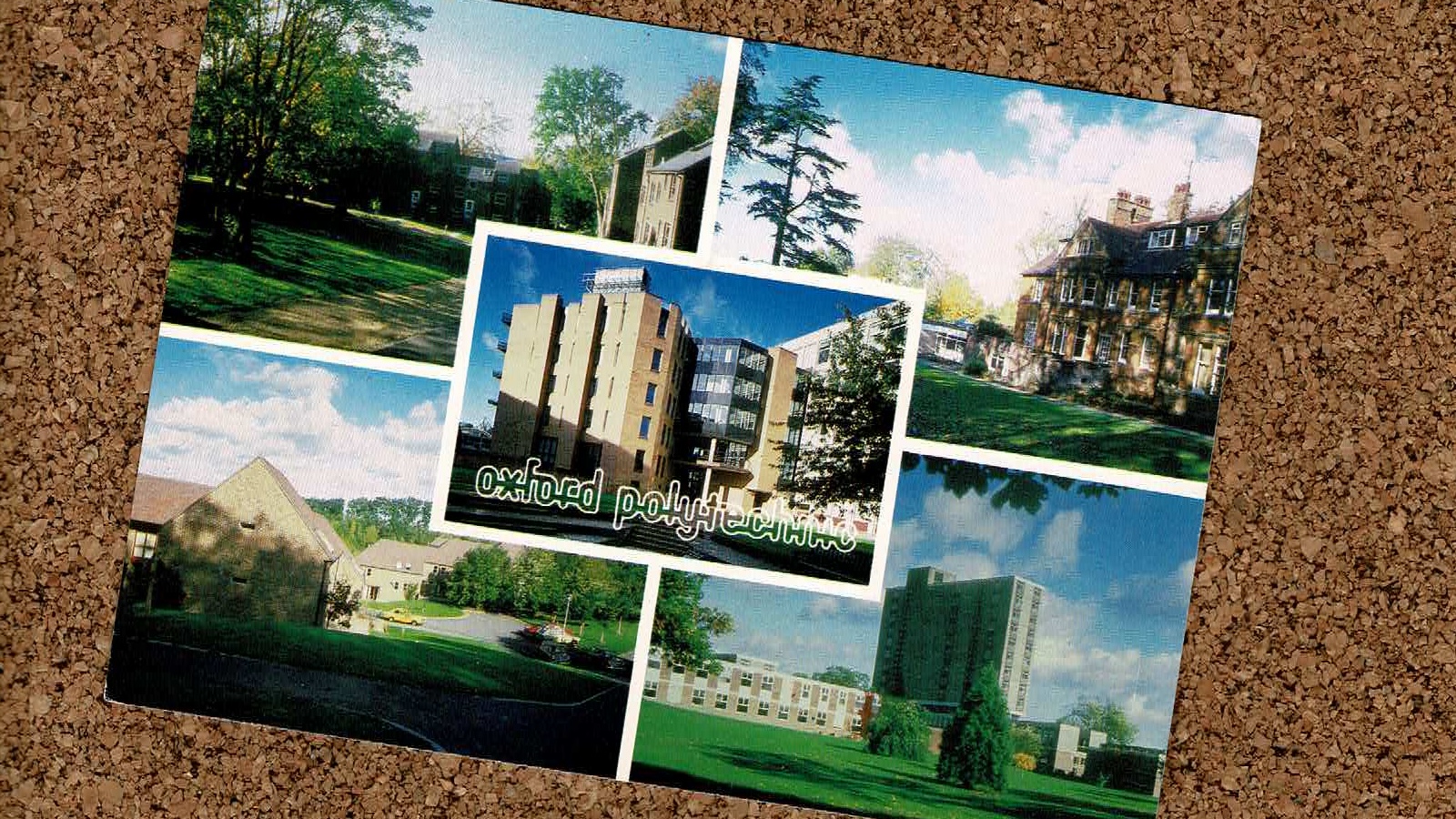
    Greetings from Oxford!

    As reported in the Oxford Times, on 21 March 1865 – which by my count is very nearly 160 years ago – a meeting was held in Oxford. This led to the establishment of the Oxford School of Art, which opened its doors to students on 22 May that year.

    The initial curriculum included freehand drawing, shading in chalk, perspective and model drawing, figure drawing and anatomy, and painting in oil and watercolour. There were separate classes for men, women, and children under 15. Men and children paid two shillings a month (with discounts for larger periods paid up front); women paid four shillings per month. It isn’t clear to me why the fees were different, but as L P Hartley says, “the past is a foreign country; they do things differently there.”

    The school was initially housed on the ground floor of the Taylor Institute, a library for European languages within the University of Oxford. In 1868 or 1870 (sources differ) a school of science was added. But trouble was brewing. John Ruskin, who had recently been appointed as the Slade Professor of Fine Art at the university, did not approve of the way drawing was taught at the Oxford School of Art, and established the Ruskin School of Drawing to address this. The Ruskin School needed space, and so the School of Art and Science was moved to the basement of the Taylor Institute. The Ruskin School of Drawing is now, by the way, the Ruskin School of Art, and is the University of Oxford’s department of fine art. This tells you who won that argument in the long run!

    The move to the basement proved short lived. In 1888 chemistry labs in the Wesleyan school, Witney, were used by the school of science. In 1891 the school was taken over by the city council, following legislative changes enabling local authorities to fund education and to act as trustees, and was renamed the Oxford City Technical School. And in 1894 a new site, at St Ebbe’s in Oxford, was acquired for the school.

    The new site enabled growth in activities – so rapid that in 1899 the government Department of Art and Science declared it inadequate. Needless to say, the school remained on that site for another fifty years, albeit it also occupied other sites across the city.

    We now need to fast forward to 1928 and introduce a new character: John Henry Brookes.

    Brookes had trained as a silversmith, and was a part-time teacher of sculpture at the school. In 1928 he was appointed vice principal of the school of art (the schools of art and science were technically separate organisations); and in 1934 when the schools of art and science were formally merged to form the Schools of Technology, Art and Commerce, Brookes was appointed its first principal, and was to remain in that post until 1956.

    A pressing issue was accommodation, and in 1949 a 25 acre site in Headington was secured for the school. Planning permission was not granted until 1952, having been initially rejected in 1950, and it wasn’t until 1955 that the foundation stone for the new suite was laid. In 1952 a new name was also given: the school became the College of Technology, Art and Commerce. The Headington site was not formally opened until 1963, fourteen years after the site was acquired.

    In 1956 Brookes retired. His impact on the institution was clearly great. The college was once again renamed as the Oxford College of Technology; this and Brookes’ retirement were not, I believe, related events.

    In 1970 the college became Oxford Polytechnic and, in line with national policy which encouraged the amalgamation of smaller specialist colleges into more generalist institutions, it started to expand by incorporation. First came the Lady Spencer-Churchill College – this had been an emergency teacher training college, established in 1947. The Oxford School of Nursing joined in 1988; and in 1992 the Dorset House School of Occupational Therapy also joined the polytechnic. And also in 1992, the polytechnic became a university.

    Oxford Brookes University was the chosen name, in honour of John Henry Brookes. A few of the polytechnics had chosen names to commemorate local people – for example, Liverpool John Moores, Lanchester Polytechnic in Coventry – but I think Oxford Brookes is the only one named for a former principal. If you know different, please do say!

    In 1993 the university acquired Headington Hill Hall, formerly owned by Robert Maxwell, enabling an expansion of the Headington site. And in 2000 Westminster College, a methodist teacher training college, merged with the university.

    Being a university sharing a city with the University of Oxford can’t be easy: comparisons will mostly be tiresome. But here’s a surprising one: Oxford Brookes is arguably the best university in the UK at which to row (as in, propel a boat by oars, not argue) – see, for example, this report on the Henley regatta, 2023. Bet you didn’t know that!

    And here’s a jigsaw of the postcard, which I found more challenging than I expected.

    Happy 160th birthday, Oxford Brookes University!

    Source link

  • Free speech, graduates, student finance

    Free speech, graduates, student finance


    By submitting you agree to our terms and conditions

    Source link