Author: admin

  • Religious Freedom as a Defense for DEI?

    Religious Freedom as a Defense for DEI?

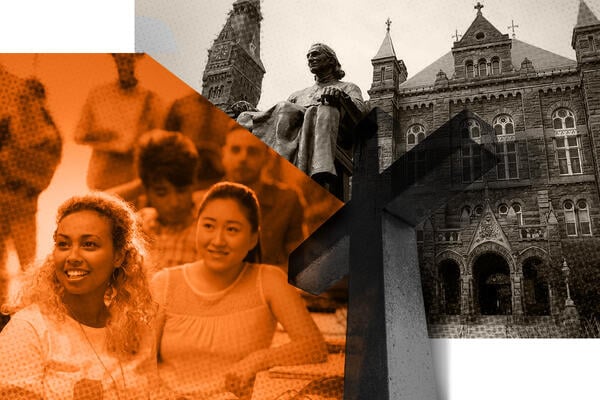
    Last month, amid a Trump administration broadside against diversity, equity and inclusion initiatives, government officials took aim at Georgetown University’s law school.

    “It has come to my attention reliably that Georgetown Law School continues to teach DEI. This is unacceptable,” interim U.S. attorney for the District of Columbia Ed Martin wrote in a letter.

    Martin announced he had launched “an inquiry into this” and asked Georgetown law school officials, “If DEI is found in your courses or teaching in anyway [sic], will you move swiftly to remove it?” He added that students and others “affiliated with a law school or university” that “continues to teach and utilize DEI” would not be hired “for our fellows program, our summer internship” or other jobs.

    Martin’s letter, which was sent on Feb. 17 and quickly became public, prompted shock and outrage, with many observers noting that it was a clear affront to First Amendment rights at Georgetown. It also drew a quick—and pointed—response from the law school.

    Georgetown Law dean William Treanor invoked both the First Amendment and the tenets of Catholic faith in his March 6 response to Martin, noting that the government cannot control curriculum.

    “As a Catholic and Jesuit institution, Georgetown University was founded on the principle that serious and sustained discourse among people of different faiths, cultures, and beliefs promotes intellectual, ethical, and spiritual understanding,” Treanor wrote in a response that soon spread online. “For us at Georgetown, this principle is a moral and educational imperative. It is a principle that defines our mission as a Catholic and Jesuit institution.”

    Given that multiple institutions have already complied with Trump directives to unwind DEI initiatives, despite numerous outstanding legal questions, Treanor’s response stood out as an uncommon example of a university holding its ground. It also raised a unique question for religiously affiliated institutions: Does religious freedom offer a defense against Trump’s attacks on DEI efforts?

    A Faith-Based Defense for DEI

    It might. For decades, faith-based colleges and universities have cited religious freedom in decrying federal meddling in their policies and practices.

    Some institutions have argued in drawn-out legal battles that they’re exempt from federal rules that chafe against tenets of their faith, such as strictures related to gender and sexual orientation. They’ve similarly asserted in court that whom they hire or fire is within their theological purview. Such legal cases often revolve around the concept of church autonomy doctrine, a legal principle protecting the rights of religious institutions to govern themselves—including their internal operations.

    Now, as Treanor’s letter suggests, the same argument could prove a powerful tool for pushing back against the onslaught of anti-DEI directives coming out of the Trump administration. Religious institutions that view diversity, equity and inclusion as core to their faith missions arguably have a layer of legal protection to defend DEI initiatives that their secular peers do not. They could also ostensibly challenge anti-DEI orders in court on religious freedom grounds at a time when the U.S. Supreme Court has displayed a warm disposition toward religious issues.

    “It’s not an unreasonable argument,” said Charles Russo, Joseph Panzer Chair in Education and research professor of law at the University of Dayton, a Catholic—but not Jesuit—institution in Ohio. He emphasized that he was speaking on his own behalf, not the university’s.

    Church autonomy doctrine is based on the idea that “we have the right to run our institutions consistent with what our beliefs are, and we don’t need people from the outside coming out telling us what we believe,” he added. Most DEI efforts are “certainly consistent with Christian values … to help the underprivileged, the downtrodden, the most in need.”

    Jesuit colleges and universities, such as Georgetown, seem the most likely to consider venturing into this legal battleground, given the religious order’s emphasis on social causes. Many Catholic colleges—and Jesuit institutions in particular—were founded to serve burgeoning Catholic immigrant populations. In recent years, Jesuits founded several new institutions designed explicitly to support low-income students; those colleges, like Arrupe College in Chicago, have emphasized efforts to enroll and retain students from underrepresented groups.

    But even if some Jesuit institutions do view DEI as central to their faith, it remains to be seen whether they’re willing to call on their religious identities to fight for it.

    What Religious Colleges Said

    They’re certainly not keen to do so publicly.

    Of the 27 Jesuit universities that Inside Higher Ed contacted for this story, only two responded by deadline. Fordham University declined to comment, while Seattle University sent a link to a past statement from President Eduardo M. Peñalver that noted the institution “does not plan to make any immediate operational changes in response to [a Feb. 14 Dear Colleague letter] and will await new regulations or formal administrative guidance.” He added that resulting guidance will be studied carefully and the university will “either comply in a manner consistent with our Jesuit Catholic values … or—if that proves impossible—consider other legal avenues.”

    The Association of Jesuit Colleges and Universities is also treading carefully.

    “The member institutions of the Association of Jesuit Colleges and Universities share a mission based on long-standing Catholic religious beliefs and values in the Jesuit traditions, which affirm the equal dignity of every human being and of the human family in all its diversity. As noted by the dean of Georgetown Law, we are all ‘founded on the principle that serious and sustained discourse among people of different faiths, cultures and beliefs promotes intellectual, ethical and spiritual understanding,’” an AJCU spokesperson told Inside Higher Ed by email.

    AJCU did not answer specific questions sent by Inside Higher Ed.

    Raymond Plaza, director of Santa Clara University’s Office for Diversity and Inclusion and chair of AJCU’s Diversity and Equity Network, offered a defense of DEI initiatives. Speaking in his personal capacity, Plaza argued that DEI work has been deliberately misconstrued by its critics.

    “DEI is not about divisions or separation, it’s about how can I create a space where people can be their authentic selves and thrive?” Plaza said. “It’s not that this group thrives while the other one doesn’t.”

    He emphasized the need to create an environment where all students feel welcome. “At the end of the day, it’s really about how we build community on our campuses,” Plaza said.

    A review of university DEI pages shows that many Jesuit institutions cite their religious beliefs in support of such initiatives. Some emphasize social justice and inclusion as tenets of their faith.

    “Inspired by the Catholic and Jesuit tradition, our community believes that every human being is a profound gift of God, deserving of both dignity and opportunity,” Creighton University’s website reads. “We thus strive to acknowledge and celebrate diversity at Creighton—building equitable, inclusive, welcoming spaces and relationships that are required for every person to thrive.”

    Some institutions even note their antiracism efforts.

    “At LMU, the goal of diversity, equity, and inclusion is to actively cultivate an anti-racist institutional climate that supports inclusive excellence and fights systemic oppression,” Loyola Marymount University’s website reads, adding that such values are “intrinsic” to their mission.

    But other Jesuit universities appear to have backtracked in the face of Trump’s attacks on DEI.

    The University of Scranton, for example, overhauled its DEI page in recent weeks, removing references to systemic racism and the “historically unfair and unjust treatment of Black, Indigenous, and People of Color,” according to an archived page available on the Wayback Machine.

    Le Moyne University also removed BIPOC references, identity-based resources and an “oath of diversity and inclusion” from its DEI page, an archive on the Wayback Machine shows. Le Moyne officials also told the student newspaper that the university is considering changing the name of its Equity, Diversity, Inclusion and Belonging office due to federal attacks on DEI efforts.

    An Untested Strategy

    Just because Jesuit institutions aren’t openly using religious freedom as a rationale for preserving DEI, it doesn’t mean the idea is without merit, legal and Catholic higher ed scholars say.

    Russo hasn’t seen any religious college call on its faith mission to defend DEI in court—at least not yet. While the idea is “floating around out there, it has not yet made much of a judicial splash,” he said.

    Still, he believes it’s a plausible legal argument that could receive a “strong reception” in the Supreme Court, provided colleges aren’t defending practices that directly butt up against the court’s ruling on race-conscious admissions. He believes the overall message of Treanor’s letter to Martin is “on the mark.”

    “I don’t think anybody would disagree that helping those most in need, however we describe that, is consistent with Christian values,” Russo said.

    Donna Carroll, president of the Association of Catholic Colleges and Universities, agreed equity is a “mission-critical commitment” for most Catholic higher ed institutions.

    “For Catholic colleges and universities, DEI work is a long-held expression of mission and of the Catholic social teaching that anchors it—including a commitment to the dignity of each person, a solidarity with the vulnerable and less advantaged, and a care for the common good,” Carroll wrote to Inside Higher Ed. “All this is foundational to who we are, what and how we teach, and the services that we provide.”

    She sees Martin’s inquiry into Georgetown Law School as a disturbing challenge to academic freedom but isn’t sure if there’s a “threshold that might trigger concern about religious freedom” for Catholic institutions.

    “With so much uncertainty, it is hard to say,” she said. “And such a determination would require sectorwide discussion.”


    Source link

  • The Coalitions We Need to Defend Open Inquiry (opinion)

    The Coalitions We Need to Defend Open Inquiry (opinion)

    For the last few years, many colleges and universities across the country have experienced firsthand attacks on higher education through state legislation targeting diversity, equity and inclusion initiatives. Since 2023, about 120 anti-DEI bills have been introduced across 29 states, and 15 of them have become law.

    These proposed bills and enacted legislation have largely been met with silence from university leaders. But over the past month, as attacks on diversity, equity and inclusion policies rose to the federal level via multiple executive orders and a Dear Colleague letter from the Department of Education, a broad coalition—professional associations in higher education, labor organizations, civil rights groups and elected officials—has filed numerous federal lawsuits challenging their constitutionality, including at least four suits involving educational organizations as plaintiffs. By taking legal action and securing a preliminary injunction against two of the executive orders, these coalitions are breaking the silence of recent years to send a clear message about the legality and harmful consequences of these policy changes for higher education and society.

    As scholars who examine how the law shapes educational policy and organizations, we have closely studied the consequences of anti-DEI bills on faculty members who engage in the very topics implicated by these laws. We’ve learned that these bills restrict research and teaching protected by academic freedom before they’re even enacted. Unintentionally or not, silence from institutional leaders contributes to the suppression.

    To counter this climate of suppression and protect the robust exchange of ideas and open inquiry, we must embrace coalitions like the ones behind the federal lawsuits and urge higher education leaders to unite and speak out to uphold institutional missions and safeguard our democracy.

    Why Silence Does Not Work—and Makes Matters Worse

    In our recently published study, we interviewed 32 faculty members whose research or teaching focused on race at two public institutions in different Republican-controlled states with proposed anti-DEI, anti–critical race theory and anti-tenure bills. Even before these bills took effect—and despite exemptions for research and teaching—we found that many faculty members pre-emptively altered their work in response to the external interference.

    Some removed diversity-related course readings or avoided certain terms like “intersectionality” in their teaching. Others, like Kourtney, a Black tenured faculty member, hesitated to share their research publicly, fearing harassment if it got into the wrong hands. Kourtney described how previously she would disseminate her research widely to make an impact. But now, out of fear, she was more reserved and cautious when sharing her work as to not get “on the radar [of] anyone that could potentially try to stop” her research.

    We also learned that the actions—or lack thereof—of university leaders shaped faculty members’ responses. University leaders’ silence amplified the pressures proposed legislation created. Danielle, a Black tenured faculty member, explained how silence from institutional leaders made “everything harder” and “sent a really loud and clear message” of “not supporting me.” The “glaring silence,” as participants called it, from senior leaders and college deans heightened uncertainty and anxiety, leaving many faculty members feeling isolated and solely responsible for protecting their rights under academic freedom.

    Yet not all university leaders were silent. Some faculty members in our study had supportive college deans and department chairs who conveyed affirmative internal messages. These participants reported that such messages helped them feel supported, empowered and confident in continuing their teaching and research without compromise. Wilson and Michelle both expressed that messages from their deans, messages that emphasized valuing faculty expertise and a commitment to scholarship addressing inequities, made them “feel at the college level like you’re protected” and reinforced their belief in “having academic freedom to be able to teach.”

    It is understandable that leaders hesitate to speak out, given the risk of losing state funding or their jobs. In fact, many faculty members we spoke to, like Megan, understood the challenging circumstances and empathized with their college deans. Megan recalled her college dean saying, “We don’t agree with [the bill], but let’s wait it out. Trying to … draw attention will be worse. Let’s keep our head down.” However, their silence also created a critical void. Cruz, a Latino tenured faculty member, explained how “not saying anything is just as bad, because then the only conclusion that the faculty take … is ‘we’re on our own out here.’”

    As a result, many faculty members of color undertook additional administrative work and legislative advocacy efforts as private citizens to be able to carry on with their research and teaching, making it increasingly difficult for them to advance their careers. Cruz shared how all this additional work and advocacy was “time that they’re not doing scholarship, that they’re not writing grants, that they’re not updating their classes.” For some, the frustration and exhaustion became so overwhelming that they chose to leave their institutions, or higher education entirely.

    Why Coalitions Are Needed to Break the Silence

    Our findings also revealed that support from coalitions of civil rights groups, advocacy organizations and professional associations like the American Association of University Professors helped some faculty members to resist the pressure to change their teaching or research. These groups organized teach-ins virtually or on campus, provided legislative analysis via one-pagers and facilitated legislative organizing efforts.

    Eliot, a white tenured faculty member, described how these coalitions helped foster “some unity,” making “a real difference psychologically” by ensuring members no longer felt isolated but instead felt that “we’re in this together.” By building collective capacity, these coalitions empowered faculty members to defend academic freedom and push back against a climate of suppression—particularly as most participants in our study received little to no guidance or support from university leaders.

    Now, faculty members across the country—many of whom are only beginning to face these challenges—find themselves overwhelmed with uncertainty and fear, pressured to pre-emptively censor their work. However, we’re starting to see the emergence of the coalitions needed to disrupt this climate of suppression.

    The recent lawsuits mark an important step in the defense of robust expression of ideas and open inquiry, but they are just the beginning. Effectively challenging this suppression requires a united front of policy and advocacy organizations, civil rights groups, unions, professional associations, and institutional leaders. Leaders are better positioned to advocate for higher education and respond to emerging threats when working within a coalition, such as Education for All, which has been providing training sessions and strategic guidance to help institutions safeguard their student success programs.

    These coalitions provide crucial support on the ground to help faculty members, administrators and students continue their work while the legal battles unfold. And they can help break institutional silence by offering timely, research-driven guidance on state legislation, executive orders and other emerging state and federal threats—many of which pressure education professionals to unnecessarily restrict or abandon core principles and programs in higher education.

    Jackie Pedota, Ph.D., is a postdoctoral associate at the University of Texas at Austin. Her research examines topics within higher education at the intersection of race, power and organizational change, revealing how organizational dynamics and sociopolitical contexts perpetuate inequities for minoritized campus communities.

    Liliana M. Garces, J.D., Ed.D., is the Ken McIntyre Professor for Excellence in School Leadership at the University of Texas at Austin. Her research examines how law and education policy interact to shape access and opportunity in higher education.

    Source link

  • “AI-Empowered” Site Accuses Yale Scholar of Terrorism Connection

    “AI-Empowered” Site Accuses Yale Scholar of Terrorism Connection

    Yale University suspended an instructor after a news site powered by artificial intelligence accused her of being part of a terrorist group, The New York Times reported.

    The news site, Jewish Onliner, said that the scholar was connected to Samidoun, a pro-Palestinian organization that the United States government has labeled a terrorist organization. Jewish Onliner said Helyeh Doutaghi, who is an associate research scholar at Yale and deputy director at Yale Law School’s Law and Political Economy Project, spoke on panels at events sponsored by Samidoun, according to the Times.

    Doutaghi told the Times that she’s not part “of any organization that would constitute a violation of U.S. law.” Yale put Doutaghi on administrative leave last week and barred her from campus. In a statement to the Times, Yale officials said they take the allegations seriously and are investigating.

    Jewish Onliner bills itself as an “AI-empowered, trusted online hub for insights, actionable intelligence, exposés, and essential updates about issues impacting the Jewish community worldwide,” according to its Substack page. The organization told the Times that humans, not AI, make the final edits on stories.

    Source link

  • Johns Hopkins Plans for Layoffs Amid $800M Cut to Federal Grants

    Johns Hopkins Plans for Layoffs Amid $800M Cut to Federal Grants

    Johns Hopkins University is planning for staff layoffs after the Trump administration canceled $800 million in U.S. Agency for International Development grants for the Baltimore-based institution, The Wall Street Journal reported Tuesday.

    The grants supported a variety of health-related initiatives overseen by Johns Hopkins, including a breastfeeding support project in Baltimore and mosquito-net programs in Mozambique.

    The foreign aid agency was one of the first targets of the Trump administration’s crusade against alleged widespread “waste, fraud and abuse” of federal funding. Secretary of State Marco Rubio said earlier this week that he’s purged 83 percent of USAID’s programs and the remaining contracts will be administered by the U.S. Department of State.

    The $800 million in cuts comes on top of another $200 million Johns Hopkins stands to lose if the National Institutes of Health succeeds in capping indirect research costs at 15 percent. Johns Hopkins is among numerous universities, states and other organizations that have sued the National Institutes of Health over the plan to limit research funding, which a federal judge has temporarily blocked.

    “At this time, we have little choice but to reduce some of our work in response to the slowing and stopping of grants and to adjust to an evolving legal landscape,” JHU president Ronald Daniels wrote in a letter to campus, according to The Baltimore Banner. “There are difficult moments before us, with impacts to budgets, personnel, and programs. Some will take time to fully understand and address; others will happen more quickly.”

    Such drastic cuts to Johns Hopkins—the nation’s largest spender on research and development and the biggest private employer in Baltimore—will reverberate far beyond the campus itself.

    “Johns Hopkins has bet very heavily on a century and a quarter of partnership with the federal government,” Theodore Iwashyna, a JHU critical care physician who is currently overseeing an NIH grant studying at-home care for pneumonia patients, told the Journal. “If the federal government decides it doesn’t want to know things anymore, that would be bad for Johns Hopkins and devastating for Maryland.”

    Source link

  • Study Shows Positive Mental Health for HBCU Students

    Study Shows Positive Mental Health for HBCU Students

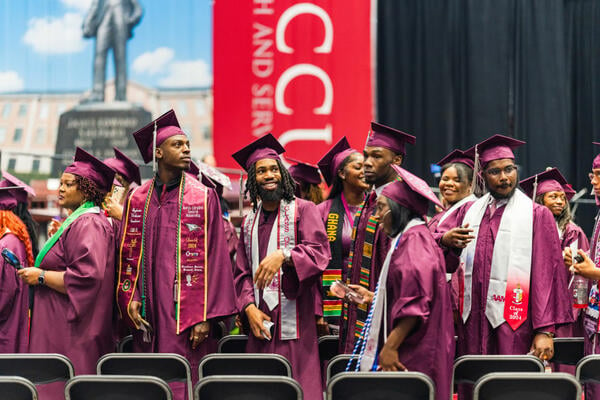
    Students at historically Black colleges and universities and predominantly Black institutions are happier and feel a greater sense of belonging, on average, than both Black students at small, predominantly white institutions and college students over all, according to a new report commissioned by the United Negro College Fund.

    The report, “Community, Culture and Care: A Cross-Institutional Analysis of Mental Health Among HBCU and PBI Students,” utilized findings from two years’ worth of data from the Healthy Minds Study, a large annual survey of college students nationwide, to create what the researchers believe is the most comprehensive analysis to date of HBCU and PBI students’ mental health.

    “HBCUs have a long tradition of being centers of excellence and academic achievement,” said Akilah Patterson, the lead researcher on the study and a Ph.D. candidate in the University of Michigan’s Department of Health Behavior and Health Equity. “But this work also highlights that HBCUs are much more than that. They’re cultivating an environment of affirmation and belonging and support.”

    Among the study’s sample of HBCU and PBI students, 45 percent demonstrated positive mental health according to the Flourishing Scale, a series of eight statements—such as “I am a good person and live a good life”—that are used to determine whether a respondent is “flourishing” mentally. The three statements most commonly selected by students in the sample were “I am a good person and live a good life,” “I actively contribute to the happiness and well-being of others,” and “I am confident and capable in the activities that are important to me.”

    Meanwhile, only 36 percent of college students in general and 38 percent of Black students at PWIs indicated positive mental health. HBCU and PBI students also reported lower rates of anxiety, depression and eating disorders than college students broadly.

    HBCU and PBI students also demonstrated a greater sense of belonging on campus, with 83 percent agreeing with the statement “I see myself as part of the campus community,” while 73 percent of all Healthy Minds respondents said the same. High numbers of HBCU and PBI students reported having close connections with others on campus; 54 percent said they have a social group or community where they feel they belong, and 60 percent said they have friends “with whom I can share my thoughts and feelings.”

    Serena Butler-Johnson, the director of the counseling center at the University of the District of Columbia, a public HBCU, said that those findings seem especially noteworthy as mental health professionals increasingly warn of the dangers of loneliness and isolation, which have been associated with physical harms, like increased risk of stroke. Vivek Murthy, the U.S. surgeon general under former president Joe Biden, declared loneliness a public health emergency in 2023, calling community and connection its “antidotes.”

    Butler-Johnson also noted that the findings tie in with the field of Black psychology, which focuses on Black people’s lives, history and experiences.

    “Black psychology emphasizes community, connection, rituals, traditions, which are all very much part of an HBCU experience, whether it’s homecoming or stepping or band,” she said. “Just in general, the concept of Black psychology is mirrored in the findings.”

    Though the findings did not necessarily show causation between the high rates of belonging and the other positive mental health outcomes of HBCU and PBI students, previous research has linked a sense of belonging with high academic achievement and mental well-being.

    Mental Health Concerns

    Despite the mostly positive findings, the sample did report higher rates of suicidal ideation among HBCU and PBI students (17 percent) than the general student population (14 percent). It also highlighted two areas of stress for many HBCU and PBI students: financial instability and, despite feeling high rates of belonging on their campuses, loneliness. The respondents experienced similar levels of stress (56 percent) to the national sample (55 percent) but higher rates of financial stress; 52 percent said they are always or often stressed about finances, compared to 43 percent of the national sample.

    Butler-Johnson said that HBCUs should take extra steps “outside of the four walls of the therapy room” to address these issues; at UDC, that has included opening a new Office of Advocacy and Student Support, which partners with the counseling center to connect students with financial assistance and case management. UDC’s counseling center also offers informal, nonclinical group meetings where students can drop in and talk with others, no paperwork required, as a way to address loneliness.

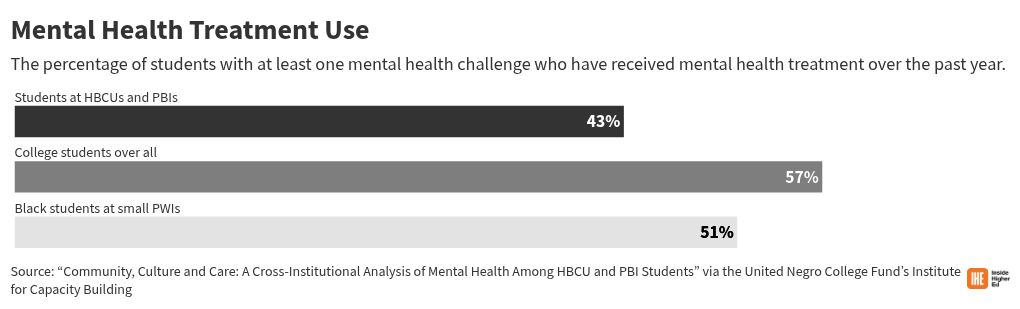
    Another concerning finding: HBCU and PBI students with mental health challenges are significantly less likely to receive mental health support than Black students at PWIs and students over all. The report notes that this could be due to those institutions having fewer resources, leading to less availability of clinicians on campus. The perceived stigma of going to therapy could be a factor as well; while only 8 percent of respondents said they would judge someone else for getting treatment—slightly above the national rate of 6 percent—52 percent said they feared they would be judged if they sought out treatment. That’s 11 percentage points higher than the national sample.

    Patterson said these findings indicate that HBCUs and PBIs are doing an incredibly successful job supporting students’ mental well-being despite barriers like lack of resources and concerns about stigma. And while she said many HBCU students can benefit from traditional counseling, the results indicate that it’s also important to recognize that therapy is “not the be-all, end-all” of mental health support on HBCU campuses.

    “Knowing and providing multiple options for all students is really important,” she said.

    Source link

  • The Leadership Skills Presidents Need Right Now: The Key

    The Leadership Skills Presidents Need Right Now: The Key

    As college presidents face increasing scrutiny from state and national lawmakers, building a strong cabinet-level team is critical, according to Jorge Burmicky, assistant professor in education leadership and policy studies in the School of Education at Howard University.

    Burmicky is one of three researchers who identified the core competencies of the modern college presidency. In a recent episode of The Key, Inside Higher Ed’s news and analysis podcast, Burmicky noted, “There’s always been a lot of pressure to be a college president, but it really has become an impossible job.” 

    A new leader’s ability to assemble a strong team as soon as they start the job will help fill gaps in their individual skill sets, he said. “It’s not if an emergency happens—it’s when it happens, and you have to have a good team that is going to have your back that you trust and can help you in those areas where you don’t feel as confident.”

    College presidents rated trustworthiness as the most important competency for effective leadership in higher education; however, students surveyed for Inside Higher Ed’s annual Student Voice survey ranked presidents among the least trusted people on their campus. 

    Burmicky isn’t surprised by this gap between presidents’ intentions and students’ perceptions. “Presidents work really hard to build trust, and you would think that because they’re working so hard and they value it so greatly that we would see a narrower difference,” he said. “But the reality is that so much of the communication that goes to different constituents varies. We’re in an era when students really want to understand what’s happening right now.” 

    Blame for structural issues that are beyond the president’s control—like the botched FAFSA rollout—often falls at the feet of presidents and other institutional leaders, Burmicky added. “There’s clearly a lot of resentment.” 

    Students are just one group of constituents college presidents must build trust with, however. Declining trust in higher education in general is one of Burmicky’s biggest concerns for the sector. Better communicating how institutions operate would help address public distrust, he said. 

    “We like to point fingers at the president, but the reality is there are [more people] than just the president who make decisions at a university—there’s also the Board of Trustees or the Board of Regents.”

    Listen to the full interview between Jorge Burmicky and Sara Custer, editor in chief at Inside Higher Ed, and find more episodes of The Key here.

    Source link

  • Trump’s Columbia Cuts Start Hitting Postdocs, Professors

    Trump’s Columbia Cuts Start Hitting Postdocs, Professors

    When the Trump administration announced Friday it was cutting about $400 million in grants and contracts from Columbia University, it didn’t specify what exactly it was slashing. But news of the scope of the cuts has begun trickling out of the institution over the past couple of days.

    So far, much of the information about the canceled grants has come via social media, as neither the Trump administration nor the university have provided a comprehensive accounting of what’s being cut. The National Institutes of Health did say earlier this week that it was pulling more than $250 million in grants from Columbia, though the agency wouldn’t share more details. And it’s hard to tell whether specific cuts are part of the $400 million or a continuation of the Trump administration’s general national reduction of federal funding to universities, such as axing grants it deems related to diversity, equity and inclusion.

    On Tuesday, Joshua A. Gordon, chair of the university’s psychiatry department, emailed colleagues to tell them the National Institutes of Health had terminated nearly 30 percent of grants to Columbia’s medical school—including many within his own department.

    “All of our training grants and many fellowships have been terminated,” Gordon wrote in the email, which a postdoctoral research fellow provided Inside Higher Ed.

    Gordon wrote that he’s still working with university administrators “to find out the full extent of these terminations” and that “the institution is committed to identifying the resources that can be brought to bear to support the people and projects affected by the terminations.” He added, “We remain dedicated to ensuring that our trainees and early-career scientists have the support needed to continue their work and achieve their career goals.”

    The Trump administration said this unprecedented $400 million cut was due to Columbia’s “continued inaction in the face of persistent harassment of Jewish students.” More cuts at Columbia and other universities could follow as Trump follows through on his pledge to crack down on alleged antisemitism and punish elite universities. Columbia has more than $5 billion in federal grants and contracts.

    Columbia postdocs and faculty have taken to social media to announce canceled grants, fellowships and funding for Ph.D. students, showing some of the individual impacts on people and research wrought by the Trump administration’s actions. They include nixed training for researchers of depression and schizophrenia and a grant that would’ve provided free mental health resources to K-12 students.

    Sam Seidman, a postdoc and a steward for the Columbia Postdoctoral Workers union, told Inside Higher Ed that, “as a Jew,” it’s “particularly outrageous” to hear the Trump administration justifying the cuts by saying it’s fighting antisemitism.

    Seidman said he found out Monday that his T32 grant, an NIH training fellowship for new scientists, had been canceled. “I certainly don’t feel protected,” he said.

    He said it’s clear the Trump administration doesn’t have an issue with antisemitism or even with Columbia specifically. Its issue, Seidman said, is with “public funding of science and it’s with public funding, period,” adding that “Columbia makes a convenient scapegoat.”

    In an emailed statement, a Columbia Irving Medical Center spokesperson said, “Columbia is in the process of reviewing notices and cannot confirm how many grant cancellations have been received from federal agencies” since Friday.

    The spokesperson said, “We remain dedicated to our mission to advance lifesaving research and pledge to work with the federal government to restore Columbia’s federal funding.”

    In a separate statement Wednesday, interim president Katrina Armstrong, herself a medical doctor, didn’t mention the cuts and instead said she stands by broad principles such as “intellectual freedom” and “personal responsibility.”

    “I have no doubt that the days and weeks ahead are going to be extremely difficult,” Armstrong said. “The best I can promise is that I will never stray from these principles and that I will work tirelessly to defend our remarkable, singular institution.”

    Marcel Agüeros, secretary of Columbia’s chapter of the American Association of University Professors, said, “It’s already looking very grim.”

    Agüeros said it’s a slow process to try to understand how the cuts are affecting such a large and decentralized university. But he said he has learned “it’s not just the kind of classic lab-based biomedical research that’s being impacted.”

    Like Seidman, he said the cuts don’t seem to be about the grants themselves or Columbia. Instead, Agüeros said, it’s “an assault on universities in general” and the concept of peer review that the grants went through.

    “It’s coming for you; it doesn’t really matter where you are or what you research,” Agüeros said

    Cut Off at the Knees

    In its Wednesday statement, the university medical center said that “from pioneering cancer treatments to innovative heart disease interventions and cutting-edge gene and cell therapies, research conducted by Columbia faculty has helped countless people live healthier, longer and more productive lives.”

    Seidman said his NIH grant was for research on family and biological risk factors that predispose kids to develop eating disorders, depression and suicidal thoughts and behaviors. He thinks university higher-ups are trying to find alternative funding but “haven’t been any more specific than ‘we’re looking.’”

    “It’s tragic, I mean these are lifesaving, potentially, interventions,” Seidman said. Yet the researchers developing them have been “cut off at the knees,” he said.

    Gordon Petty, a postdoc in Columbia’s psychiatry department, said his T32 training grant, which has also been canceled, was to study schizophrenia. He said he heard that the department is still dedicated to supporting him, “but it’s unclear where that money’s coming from.”

    Trump’s cuts appear to have also hit Teachers College of Columbia University, which is a separate higher education institution from Columbia with its own board. But it’s unclear if that’s part of the $400 million cut for allegedly not properly addressing antisemitism or part of nationwide cuts to grants perceived as being related to diversity, equity and inclusion. A Teachers College spokesperson said, “We are still sorting through the full impact on the college and will be in touch when we have more to say.”

    Prerna Arora, an associate professor of psychology and education at Teachers College, said she got an email Friday from a deputy assistant U.S. education secretary announcing the cancellation of a five-year Education Department grant. Arora said most of the funds went directly to graduate students training to become K-12 school psychologists serving children in New York City.

    The email, according to Arora, alleged that the grant funded “programs that promote or take part in initiatives that unlawfully discriminate on the basis of race, color, religion, sex, national origin or another protected characteristic” or that “violate either the letter or purpose of federal civil rights law” or “conflict with the department’s policy of prioritizing merit, fairness and excellence in education.”

    “We already have students that are funded under this, and they are at the university and we are in the middle of our admissions cycle for next year,” Arora said. She said, “I’ve spoken to very scared and tearful students” who are afraid of what this means for their training and “for their future.”

    And, beyond the impact on college students, Arora lamented the loss of the grant’s free help to K-12 students and families. “We could’ve helped many children who need this,” she said.

    It’s unclear whether the Trump administration will restore the grants. Education Secretary Linda McMahon said after the announcement Friday that she had a “productive” meeting with Armstrong. Meanwhile, Columbia said in a statement that it’s “committed to working with the federal government to address their legitimate concerns.”

    Agüeros, with the AAUP, said Columbia has already “gone overboard in an attempt to silence any kind of dissent.” Its previous president called in the New York Police Department to remove a pro-Palestinian protest encampment last spring and publicly criticized and revealed investigations into her own faculty in front of Congress.

    “There’s this assumption that if we just go along with things we’ll escape somehow unscathed,” Agüeros said. But he noted the cuts still arrived.

    “What did all of that get us—all of the sort of compliance that was put in place? It got us nothing.”

    Source link

  • Columbia On Edge Following ICE’s Arrest of Former Student

    Columbia On Edge Following ICE’s Arrest of Former Student

    Columbia University remained on edge Wednesday following the Immigration and Customs Enforcement arrest of Mahmoud Khalil, a green card–holding recent graduate who helped lead the pro-Palestinian protests that roiled the campus last spring. A federal judge in New York ruled Tuesday that Khalil could not be deported, but following a procedural hearing on Wednesday, the judge said he will remain in ICE custody in Louisiana for now, CNN reported.

    Hundreds of people took to the streets of Manhattan to protest Khalil’s detention; police arrested 12 protesters outside City Hall Park Tuesday night, charging 11 with disorderly conduct, The New York Daily News reported.

    Meanwhile, faculty at Columbia warned other student protesters to be careful. Stuart Karle, a First Amendment lawyer and adjunct professor at Columbia Journalism School, advised students who are not U.S. citizens to avoid publishing opinions that could attract the attention of the Trump administration, The New York Times reported.

    “If you have a social media page, make sure it is not filled with commentary on the Middle East,” he told students and faculty gathered in Pulitzer Hall.

    “Nobody can protect you,” journalism school dean Jelani Cobb added, according to the Times. “These are dangerous times.”

    During a news briefing Tuesday, White House press secretary Karoline Leavitt said the Trump administration was using intelligence gathered by the Department of Homeland Security to identify people who participated in campus protests, CNN reported. She accused Columbia of holding back information.

    “Columbia University has been given the names of other individuals who have engaged in pro-Hamas activity, and they are refusing to help DHS identify those individuals on campus,” Leavitt said. “As the president said very strongly in his statement yesterday, he is not going to tolerate that and we expect all of America’s colleges and universities to comply with this administration’s policy.”

    Last week, the Trump administration canceled $400 million in grants and contracts over what it claimed was Columbia’s “continued inaction” and failure to protect Jewish students.

    Columbia’s interim president, Katrina Armstrong, released a statement Wednesday reiterating her guiding principles. She wrote, “A great institution, and particularly a great university, depends upon an unwavering commitment to following fair and just processes, no matter the internal and external pressures.”

    Source link

  • How can evolving student attitudes inform institutional Gen-AI initiatives?

    How can evolving student attitudes inform institutional Gen-AI initiatives?

    This HEPI blog was authored by Isabelle Bristow, Managing Director UK and Europe at Studiosity.

    In a HEPI blog published almost a year ago, Student Voices on AI: Navigating Expectations and Opportunities, I reported the findings of global research Studiosity commissioned with YouGov on students’ attitudes towards artificial intelligence (AI). The intervening year would be considered a relatively small time period in a more regular higher education setting. However, given the rapid pace of change within the Gen-AI sphere, this one year is practically aeons.

    We have recently commissioned a further YouGov survey to explore the motivations, emotions, and needs of over 2,200 students from 151 universities in the UK.

    Below, I will cover the top five takeaways from this new round of research, but first, which students are using AI?

    • 64% of all students have used AI tools to help with assignments or study tasks.
    • International student use (87%) is a staggering 27% higher than their domestic student counterparts (60%).
    • There’s a 21% difference between students who identify as female who said they have never used AI tools for study tasks (42%) compared with those identifying as male (21%).
    • Only 17% of students studying business said they have never used it, compared with 46% studying Humanities and Social Sciences.
    • The highest reported use is by students studying in London at 78%, and conversely, the highest non-use was reported by students studying in Scotland at 44%.

    The Top Five Takeaways:

    1. There is an 11% increase from last year in students thinking that their university is adapting fast enough to provide AI study support tools.

    Following a year of global Gen-AI development and another year for institutions to adapt, students who believe their university is adjusting quickly enough remain in the minority this year at 47%, up from 36% in 2024. The remaining 53% of student respondents believe their institution has more to do.

    When asked if they expect their university to offer AI support tools to students, the result is the same as last year – with 39% of students answering yes to this question. This was significantly higher for male students at 51% (up by 3% from last year) and for international students 61% (up by 4% from last year). Once again, this year, business students have the highest expectations at 58% (just 1% higher than last year). Following this, medicine (53%), nursing (48%) and STEM (46%) were more likely to respond ‘Yes’ when asked if they expect their university to provide AI tools.

    1. Some students have concerns over academic integrity.

    When asked if they felt their university should provide AI tools, students who answered’ no’ were given a free text box to explain their reasoning. Most of these responses related to academic integrity.

    ‘I don’t think unis support its use because it helps students plagiarise and cheat.’

    ‘I think AI beats the whole idea of a degree, but it can be used for grammar correction and general fluidity.’

    ‘Because it would be unfair and result in the student not really learning or thinking for themselves.’

    Only 7% of students said they would use an AI tool for help with plagiarism or referencing (‘Ask my lecturer’ was at 30% and ‘Use a 24/7 university online writing feedback tool’ was at 21%).

    1. Students who use AI regularly are less likely to rank ‘fear of failing’ as one of their top three study stresses

    We asked all students – regardless of their AI use – of their top three reasons for feeling stressed about studying the responses were as follows:

    • 61% of all UK students included ‘fear of failing’ in their top 3 reasons for feeling stressed about studying;
    • 52% of all students included ‘balancing other commitments’; and
    • 41% of all students included ‘preparing for exams and assessments’.

    These statistics change when we filter by students who use AI tools to help with assignments or study tasks. Fear of failing is still the highest-ranked study stress. The percentage of respondents who rank fear of failing in their top three study stresses by AI use are as follows:

    • 69% for those who never use AI;
    • 62% for those who have used AI once or twice;
    • 58% for those who have used AI a few times and;
    • 50% for those who use AI regularly.

    Looking at the main reasons students want to use the university’s AI service for support or feedback, this year, ‘confidence’ (25%) overtook ‘speed’ (16%). Female respondents, in particular, are using AI for reasons relating to confidence at 29%, compared to 20% for male students. International students valued ‘skills’ the most at 20%, significantly higher than their domestic student counterparts at 11%.

    1. Students who feel like they belong are more likely to use AI.

    We examined the correlation between students’ sense of belonging in their university community, and the amount they use AI tools to help with assignments or study tasks.

    For students who feel like they belong, 67% said they have used AI tools to help with assignments or study tasks; this compares with 47% for students who do not feel like they belong.      

    5. Cognitive offloading (using technology to circumvent the ‘learning element’ of a task) is a top concern of academics and institutional leadership in 2025. However, student responses suggest they feel they are both learning and improving their skills when using generative tools.

    When asked if they were confident they are learning as well as improving their own skills when using generative tools, students responded as follows:

    • 12% ‘were extremely confident that they were learning and developing skills;
    • 31% were very confident;
    • 29% were moderately confident;
    • 26% were moderately confident; and
    • Only 5% were not at all confident that this was true.

    Conclusion:

    Reflecting on the three years since Gen-AI’s disruptive entrance into the mainstream, the sector has now come to terms with the power, potential, and risks of Gen-AI. There is also a significantly better understanding of the importance of ensuring these tools enhance student learning rather than undermining it by offloading cognitive effort.

    Leaders can look to a holistic approach to university-approved, trusted Gen-AI support, to improve student outcomes, experience and wellbeing.

    You can download the full Annual Global Student Wellbeing Survey – UK report here.

    Studiosity is a HEPI Partner. Studiosity is AI-for-Learning, not corrections – to scale student success, empower educators, and improve retention with a proven 4.4x ROI, while ensuring integrity and reducing institutional risk. Studiosity delivers ethical and formative feedback at scale to over 250 institutions worldwide. With unique AI-for-Learning technology, all students can benefit from formative feedback in minutes. From their first draft to just before submission, students receive personalised feedback – including guidance on how they can demonstrably improve their own work and critical thinking skills. Actionable insight is accessible to faculty and leaders, revealing the scale of engagement with support, cohorts requiring intervention, and measurable learning progress.

    Source link

  • Diversifying medicine by widening participation

    Diversifying medicine by widening participation

    Medicine is an elite profession, traditionally dominated by white, male, middle- or upper-class people, frequently from medical families.

    In 2014, the Medical Schools Council (MSC) created a Selection Alliance (SA), and published Selecting for Excellence (SfE), to address inequities in access to medical degrees in the UK for those from “widening participation” backgrounds.

    Fostering Potential: 10 years on from Selecting for Excellence , published in December of 2024, reports on progress made, with welcome achievements that are testament to the commitment of the community. The report rightly notes that focus on widening access has meant support for diverse students once they commence studies has been neglected.

    Recently, medical student activism – #LiveableNHSBursary , and #FixOurFunding – have highlighted the peculiar funding situation medical students find themselves in , and the financial pressures they experience during their studies.

    Fostering Potential asserts that WP needs to be reconceptualised away from a deficit framing of individuals as lacking ambition or aptitude to excel, to understanding lack of participation as the product of systemic and institutional failures around inclusion. For me, one of the main barriers to success for students from a disadvantaged socio-economic background studying medicine is the degree was designed and developed for a financially comfortable student. Its current structure excludes students from diverse backgrounds, and part of this is financial.

    The earnings gap

    One might argue that the financial hardship experienced by student medics is the temporary cost of what will become a lucrative career. However, once qualified, doctors from a lower socio-economic background will experience an average class pay gap of £3,640. This means their degree is both harder won and less remunerative.

    Current research and initiatives on financial barriers to success mostly treat money as a discernible object that can be quantified. It is a thing we either have enough of, or not; something we earn for ourselves as individuals. Hence proposed solutions tend to focus on maximising individual students’ abilities to earn alongside studies, while recognising that lack of time due to part-time work or caring responsibilities means some students cannot take advantage of extracurricular career development opportunities.

    I find this contradictory and suggest it misses a key point – money is also a relationship; it shapes our experiences of the world far beyond how much we have. It is a condition of success, not a result of it. Developing support for a student from a financially disadvantaged background should be informed by research that explicates how poverty impacts students’ opportunities to learn and exploit the advantages higher education allegedly offers.

    A student’s-eye-view

    I lead a project at Lancaster Medical School called Medicine Success, providing funds to mitigate the hidden costs of a medical degree for students from diverse backgrounds – purchasing a stethoscope, professional attire and funding the compulsory elective.

    Five years of project evaluation data reveal much about the role money plays in students’ sense of belonging and success. A student’s-eye-view of the degree reveals how unexpected its hidden costs are, how difficult it is to cover the cost of living and studying without financial support, and how choices about career development are constrained by cost. Further, the data shows students with scarce resources are keenly aware of how wealth is a vector of exclusion and inequity shaping their experience of the degree differently to their wealthier peers:

    Receiving these funds made a massive difference as it took me by surprise how much of a financial burden studying at university was. It seems that every aspect of it requires you to spend money that you don’t have and I feel at times it’s not all inclusive (2nd year, 2024)

    Their evaluations of the funding show that money transforms our lived experience of the world, and in turn, shapes our thoughts and feelings. They explain how scarcity can impact mental health and mental bandwidth, and the funding alleviates financial anxiety and paid-work commitments so they may focus on their studies.

    But it means more than just being able to afford essentials, it means being able to participate equally and with pride in their degree in comparison to their wealthier peers. This directly impacts self-esteem and addresses feelings of unworthiness or lack of belonging.

    A good example of this is the professional attire fund:

    I know professional attire might not seem serious but not having the right attire when it’s necessary leads me to overthink about how I’m dressed and feeling insecure during sessions. It’s often to the point where instead of focusing on learning I can’t help but to think about my appearance. (1st year, 2020)

    It is well-established that class can be read through a multitude of symbols. Respondents describe how their “lower” social status feels revealed through clothing, making them feel insecure in the learning environment. Students relate having their cheap and tired-looking clothes pointed out to them by peers, others worried about wearing the same outfit every day and what that said about their finances, while some feel that their patients have less respect for their opinion when they don’t present well-dressed. Meanwhile, ill-fitting clothing and shoes also interfere with the ability to focus on studies, causing pain and making long shifts additionally exhausting.

    Widening participation initiatives that focus on belonging from a social, cultural or academic skills perspective miss this crucial element – money. One student articulates a point made repeatedly by many of their peers:

    Funds like these make students like myself feel more heard and seen and gives us the opportunity to come from a lower socio-economic background and not feel as if we don’t belong here simply due to lack of finance. It gives us the confidence and the ability to work hard for what we want as we know there is always support available for students like us. (1st year, 2022)

    Recipients of Medicine Success funding attest that financial support levels the playing field with their more privileged peers in numerous, significant, and yet, subtle ways. Providing financial support is essential to make the learning environment, social activities, and career development accessible to students from all backgrounds. Belonging is in part financial; you can’t participate fully without money.

    Wider Context

    Recent reports show that the government is making a loss on student loans due to higher interest rates . This means private lending institutions are making a profit from the scheme funded by tax-payers and graduate repayments. In Why We Can’t Afford the Rich, Andrew Sayer explains that our current political system “supports rentier interests, particularly by making the 99 per cent indebted to the 1 per cent” , in which wealthy people are less likely to earn money through paid work, but accrue wealth through financial activities. The student loans scheme is one example.

    Higher education is presented as a means of social mobility, while extracting wealth into a financial sector that shores up its and its investors power. It does so by making already poor people pay to access education but without the conditions to participate fully. The promise of breaking the cycle of poverty with a university degree is so powerful that it deflects attention from what is really happening, despite extensive evidence that education has yet to prove itself as a solution to class inequalities. For these reasons, even with WP policies, HE has financial injustice embedded within it, resulting in deleterious effects on students’ mental health, degree experiences and outcomes.

    I see this as an example of “financial trauma,” defined by Chloe McKenzie as “the cumulative effect of being required to experience economic violence, financial abuse, financial shaming, and/or (chronic) financial stress to attain or sustain material safety”.

    Social mobility is a problematic term; it requires individual people to increase their position in an established hierarchy that is itself integral to maintaining socioeconomic inequality. This is why I welcome the MSC’s push to reconceptualise improving participation as a systemic issue, not one focussed on changing individuals to fit into the status quo. At the same time, we must apply this thinking to financial barriers to success, by recognising that money is far from a private issue but a matter of justice.

    Source link