Author: admin

  • More international students find home on US community college campuses

    More international students find home on US community college campuses

    As Thu Thu Htet, “T”, was nearing graduation at her high school in Burma, she knew she wanted to go abroad to study engineering. She wanted to study at the Rochester Institute of Technology in New York State, but didn’t want to spend tens of thousands of dollars a year in tuition, since international students don’t qualify for federal aid. 

    Instead, she decided to start her higher education journey at Monroe Community College, also in Rochester, where tuition is cheaper. T, now in her second semester, has made friends with dozens of other international students at MCC, who have helped her feel less lonely being so far away from family. 

    “There are times where I don’t feel like I fit in. Or I feel alone sometimes. The most important thing is the friends that you have,” she said.

    International student enrolments have surged at US community colleges ever since the pandemic, including this fall. As community colleges host more international students, administrators are looking for ways to make them feel welcome on campuses where most students are local commuters.

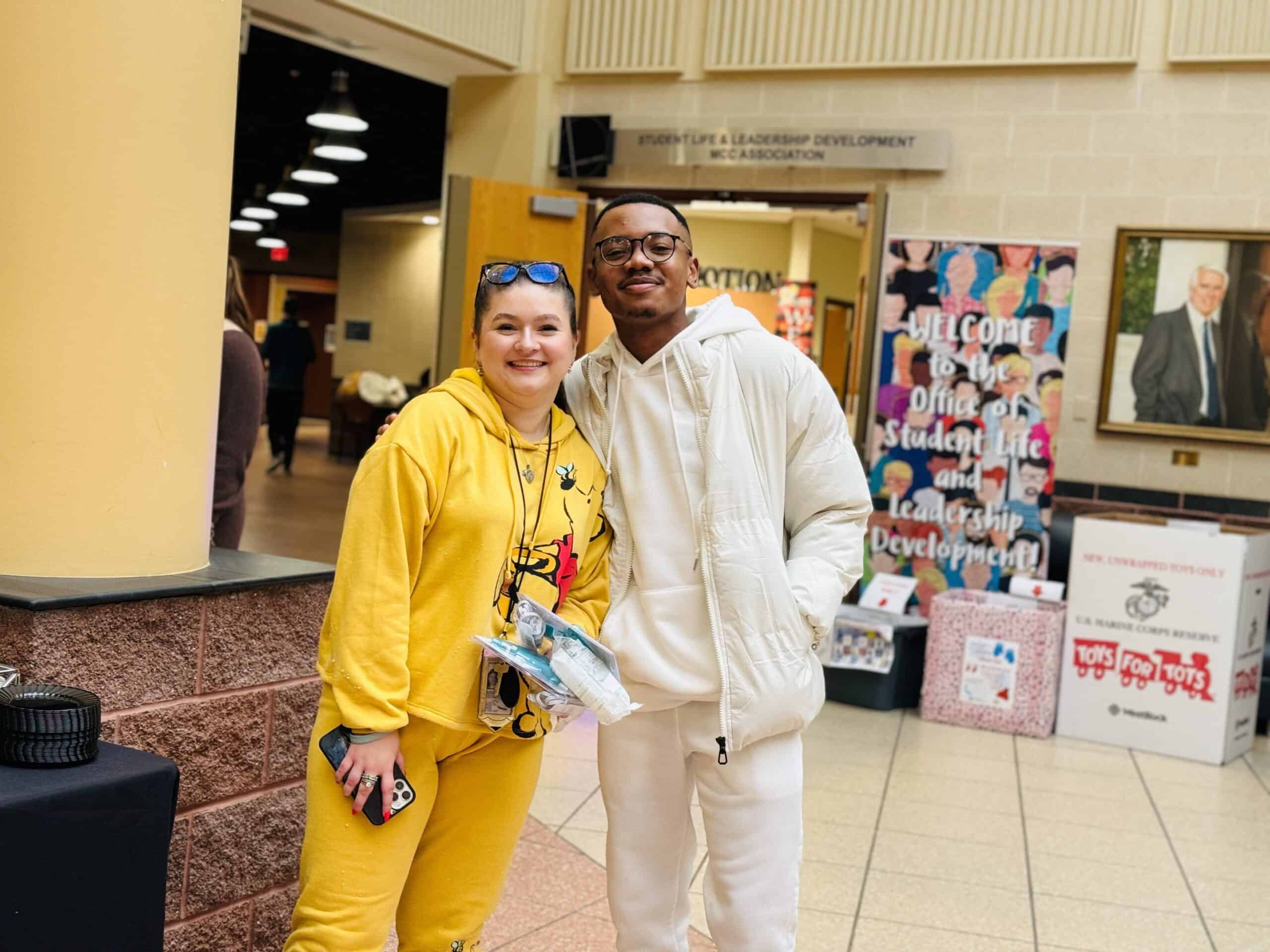
    One way international students at MCC can find support is through campus life. T serves as the president of the Global Union – a student-run club for international students, immigrant students, and anyone interested in learning about other cultures. Through her role, she greets new students, helps them to overcome challenges, and organises events to help them showcase their cultures. 

    “Sometimes, you need to be around people that have the same feeling as yours. When we are in the same club with immigrants, refugees, or other international students, we feel like we fit in with each other,” T said.

    An unexpected increase

    Because of President Trump’s policies, analysts predicted a 15% drop in total international students at American colleges and universities this fall. Experts warned that the Trump administration’s near month-long pause on visa interviews, travel bans, and war against many of the nation’s most prestigious universities would harm enrolment. 

    Instead, this fall’s international student enrolment across all degree programs, including OPT, grew by 0.8%, according to the Student and Exchange Visitor Information System (SEVIS) data that the Department of Homeland Security publishes.

    Community colleges have helped to move the needle. For associate degree programs, international student enrolment increased by 9.1%, with community colleges welcoming nearly 5,500 more students than last year. Meanwhile, enrolment shrunk slightly for master’s programs and hardly changed for bachelor’s programs.

    Rather than choosing not to study in the US this fall, it seems like students are choosing different kinds of degrees or schools. That’s according to Chris Glass, director of Boston College’s higher education program, who recently analysed the latest SEVIS data.

    “If we’re to take this data at face value, the system is far more resilient than the tumultuous headlines would suggest,” Glass previously told The PIE News .

    Based on his analysis, the over 9% growth of international students at community colleges may not be a fluke. Glass argues that international students gravitate toward schools with less political spotlight, more affordable tuition, and access to opportunities after graduation. Community colleges check all of those boxes.

    MCC is hosting more international students now than before the pandemic. This fall, the campus’ international student body grew by 35%, hosting 120 students from over 30 countries.

    MCC’s international recruiting efforts for soccer, baseball, and other sports has helped to draw students from across continents, said Carly O’Keefe, MCC’s assistant director of global education and international services. The current men’s and women’s soccer team roster has a combined 34 international students.

    In addition, unlike many other community colleges, MCC has dorms. For T, attending a college with on-campus dorms was critical, since she had no family or friends in Rochester to live with.

    O’Keefe said international students at MCC bring ideas and culture from across the globe, enriching a campus where most students are local. Some local students – limited by jobs, financial constraints, or family obligations – have never traveled overseas.

    “They’re able to make friendships with people from other countries that they maybe would have never connected with otherwise,” she said.

    Finding a community through campus life 

    The wall of the Global Union office is decorated with dozens of paintings of hot air balloons containing flags, created by students to represent their countries. Colourful cloth flags and souvenirs from across the world fill the room.

    “At the time when I saw the Korean flag, I was so proud,” said Onyu Cha, a first-semester international student from South Korea studying nursing.

    Hot air balloon paintings at Global Union office. Photo: MCC Global Union

    Onyu made friends with other Koreans through campus life and through her sister, who also lives in Rochester. Recently, she and other Korean students went to her sister’s house to cook food for the holiday of Chuseok, a mid-autumn harvest festival often referred to as Korean Thanksgiving. 

    Through her role as the vice-president of the Global Union, Onyu has got to learn about the cultures of other students. Currently, the club is planning for an event to celebrate holidays from across the world, all on one day. That’s similar to last year’s Global Fusion Festival – an event in the campus atrium to celebrate the cultures of all MCC students. It featured African drummers, Ukrainian dancers, and food from across the globe.

    Judichael Razafintsalama – a student from Madagascar who graduated from MCC last May – said serving as the Global Union president allowed him to support his fellow international students.

    Having international students on campus at a community college can be really enriching to a local community

    Dr. Melissa Whatley, William & Mary

    The summer before starting his first year at MCC, Razafintsalama landed in Rochester around 2am. When he got to his dorm, he realised he had no food. The vending machines were empty, the campus’ food services were closed, and he hadn’t set up rideshare on his phone. To get groceries, he walked two hours to a Walmart and back, carrying four bags while jet lagged. 

    Now, international students come together to help the Office of Global Education provide packages of canned food, granola bars and utensils for incoming international students. 

    “We even helped two of our students move into their apartment and make sure that everything is settled after going through what I went through,” Razafintsalama said.

    Razafintsalama said he’s had the chance to teach others at MCC about his country and his culture. Most students he encountered had never met anyone from Madagascar, the island nation off the southeastern coast of Africa.

    “They usually attach it to the cartoon movie,” he said. “It’s great because I can see that people are interested in my country and to see what it actually is like.”

    Supporting international students’ social and housing needs is critical to making them feel welcome, said Dr. Melissa Whatley, an assistant professor of higher education at William & Mary University. Her research group recently released a report on international education at community colleges, finding that 82% hosted international students. 

    Whatley hopes that these colleges are providing international students with campus life opportunities and, if they don’t have dorms, are helping students to find housing.

    “Having international students on campus at a community college can be really enriching to a local community, to the extent that the community is equipped to welcome them,” she said. 

    Concerns over travel ban

    Currently, the US hosts over 1.2 million international students or recent graduates, according to SEVIS data. The dataset doesn’t distinguish between students and graduates working temporarily through Optional Practical Training (OPT). More in-depth statistics will become available once the Institute of International Education publishes its annual report later in November

    However, because of President Trump’s travel ban, some prospective international students have been restricted from studying in the US. That includes Burmese students who didn’t secure a visa before June 9

    MCC has seen an uptick in Burmese students ever since a civil war broke out in the country, interrupting higher education for many students. The war began in 2021 when military forces toppled the country’s democratically elected government. Last spring, MCC still hosted more students from Burma than from any other country, O’Keefe said.

    Now, Burma is among the 12 countries included in Trump’s travel ban, impacting all immigrant and non-immigrant visas. Seven more countries are under a partial travel ban that impacts international student visas.

    As for international enrolments at MCC? “We’ll see how the trends change over the next few semesters. I would be surprised to see such a significant level of continued growth but we can hope things at least stay stable,” O’Keefe said in an email.

    The takeaway from this fall’s enrolment data is that students’ perceptions take a long time to change, said Gerardo Blanco, academic director of the Centre for International Higher Education at Boston College. He previously told The PIE that the 0.8% international student increase revealed in SEVIS records came as a surprise, but that doesn’t mean there won’t be a decline in coming years.

    “I hope the takeaway message is not that the US is invincible, in that even hostile policies towards international students cannot change perceptions,” he said.

    Source link

  • How social mobility in HE can reproduce inequality – and what to do about it

    How social mobility in HE can reproduce inequality – and what to do about it

    by Anna Mountford-Zimdars, Louise Ashley, Eve Worth, and Chris Playford

    Higher education has become the go-to solution for social inequality over the past three decades. Widening access and enhancing graduate outcomes have been presented as ways to generate upward mobility and ensure fairer life chances for people from all backgrounds. But what if the very ecosystem designed to level the playing field also inadvertently helps sustain the very inequalities we are hoping to overcome? 

    Social mobility agendas appear progressive but are often regressive in practice. By focusing on the movement of individuals rather than structural change, they leave wealth and income disparities intact. A few people may rise, but the wider system remains unfair – but now dressed up with a meritocratic veneer. We explore these issues in our new article in the British Journal of Sociology, ‘Ambivalent Agents: The Social Mobility Industry and Civil Society under Neoliberalism in England’. We examined the role of the UK’s ‘social mobility industry’: charities, foundations, and third-sector organisations primarily working with universities to identify ‘talented’ young people from less advantaged backgrounds and help them access higher education or elite careers. We were curious – are these organisations transforming opportunity structures and delivering genuine change, or do they help stabilise the present system? 

    The answer to this question is of course complex but, in essence, we found the latter. Our analysis of 150 national organisations working in higher education since the early 1990s found that organisations tend to reflect the individualistic approach outlined above and blend critical rhetoric about inequality with delivery models that are funder-compatible, metric-led and institutionally convenient. Thus – and we expect unintentionally on part of the organisations – they often perform inclusion of ‘talent’ without asking too many uncomfortable structural questions about the persistence and reproduction of unequal opportunities. 

    We classified organisations in a five-part typology. Most organisations fell into the category of Pragmatic Progressives: committed to fairness but shaped by funder priorities, accountability metrics, and institutional convenience. A smaller group acted as Structural Resistors, pushing for systemic change. Others were System Conformers, largely reproducing official rhetoric. The Technocratic deliverers were most closely integrated with the state, often functioning as contracted agents with managerial, metrics-focused delivery models.   Finally, Professionalised Reformers seek reform through evidence-based programmes and advocacy, often with a focus on elite education and professions.

    This finding matters beyond higher education. Civil society – the world of charities, voluntary groups, and associations – has long been seen as the sphere where resistance to inequality might flourish. Yet our findings show that many organisations are constrained or co-opted into protecting the status quo by limited budgets, demanding funders, and constant requirements to demonstrate ‘impact’. Our point is not to disparage gains or to criticise the intentions of the charity sector but to push for honest and genuine change. 

    Labour’s new Civil Society Covenant, which promises to strengthen voluntary organisations and reduce short-termism, could create opportunities. But outsourcing responsibility for social goods to arm’s-length actors also risks producing symbolic reforms that celebrate individual success stories without changing the odds for the many. If higher education is to deliver genuine fairness, we must distinguish between performing fairness for a few and redistributing opportunities for the many. We thus want to conclude by suggesting three practical actions for universities, access and participation teams, and regulators such as the Office for Students.

    1. Audit for Ambivalence 

    Using our typology, do you find you are working with a mix of organisations, or mainly those focused on individuals? (Please contact us for accessing our coding framework to support your institutional or regional audits.) 

    • Rebalance activity towards structural levers

    Continue high-quality outreach, but, where possible, shift resources towards systemic interventions such as contextual admissions with meaningful grade floors, strong maintenance support, foundation pathways with guaranteed progression and fair, embedded work placements 

    Ask the regulator to measure structural outcomes as well as individual ones, at sector and regional levels. When commissioning work, ask for participatory governance and community accountability and measure that too.

    We believe civil-society partnerships can play a vital role – but not if they become the sole heavy-lifter or metric of success. Universities are well positioned to embrace structural levers, protect space for critique, and hold themselves accountable for distributional outcomes. If this happens, the crowded charity space around social mobility could become a vibrant counter-movement for genuine change to opportunities and producing fairness rather than a prop for maintaining an unequal status quo. 

    In terms of research, our next step is speaking directly to people working in the ‘social mobility industry.’ Do they/you recognise the tensions we highlight? How do they navigate them? Have we fairly presented their work? We look forward to continuing the discussion on this topic and how to enhance practice for transformative change.

    Anna Mountford-Zimdars is a Professor in Education at the University of Exeter.

    Louise Ashley is Associate Professor in the School of business and management at Queen Mary University London.

    Eve Worth is a Lecturer in History at the University of Exeter.

    Christopher James Playford is a Senior Lecturer in Sociology at the University of Exeter.

    Author: SRHE News Blog

    An international learned society, concerned with supporting research and researchers into Higher Education

    Source link

  • Cook up a news story

    Cook up a news story

    Writing is the easy part; everything that comes before that is what’s hard. 

    That’s what News Decoder founder Nelson Graves told us back in 2020. Five years later, with the prevalence of artificial intelligence, this seems more true, doesn’t it? After all, you can just tell AI to write you a story and it will comply. 

    But what’s the point of that? It is one thing if your grade depends on the completion of a paper, and your graduation depends on that grade. Or maybe you can make some money churning out AI-written copy for some website. We won’t argue ethics here. 

    The point of this article, which I am thinking up and typing up word by word with no AI involvement, is to explain why the process of writing is the point. Apple founder Steve Jobs is often quoted as saying the journey is the reward. 

    Graves told us that the best stories emerge from a process that involves doing things that many people find difficult: Introspection, questioning your assumptions and interviewing people. All that seems even more of a challenge these days when it is so easy to tune out your feelings and avoid human interactions by listening to loud music, playing video games or bingeing TV shows.

    Again, why do that when AI could spit it out for you?

    Gather your ingredients.

    Graves, who spent his career writing for the news service Reuters, reminded us that writing is easy once you have the raw goods. That made me think about cooking. 

    Why do people take cooking classes and watch cooking videos when you can buy ready-made meals at Aldi? I often spend an entire afternoon in the kitchen making soup or a stew only to have my family gobble it up in 10 minutes. 

    It is hard to put together a fancy meal at the last minute. But if you have gathered your ingredients — the chopped vegetables, marinated chicken, diced onions and minced garlic — it is easy to toss them into a frying pan where the magic happens. 

    The same goes for a news story. If you have done your research — gathered some data, a timeline of events and information and quotes from interviews — then you are all set to toss them onto a page where the magic happens. 

    Follow a recipe.

    Ask yourself: Why do people become journalists when typically they don’t make much money and often get trolled and harassed — or worse — for what they publish? Many believe in the idea of public service, but really, there is nothing that matches the feeling of having published a great story. 

    It is like the satisfaction you get when the forkful of food goes into your mouth and tastes exquisite and you know you made it. You don’t get that feeling if you bought it ready-made from Aldi.

    People who don’t cook think cooking is hard or painful or not worth the effort. The funny thing is that once someone follows a recipe and makes something really tasty, that often changes the way they think about cooking and they try another recipe another day.

    The writing process is like a recipe. There are common steps journalists often follow. They don’t just open a blank page and start writing. So here is a basic recipe you can follow for just about any news story.

    1. Decide what to cook: This is your story idea. You can start broad: I’m going to make pasta. Then narrow it down to: Maybe a lasagna? Narrow it further, maybe based on the ingredients you already have. I’m going to make a spinach lasagna. So with a story you might start with this: I’m going to do a story about climate change. Then you narrow it: Maybe a story about pollution. Then you narrow it further: How about the factories around me that pollute the air?

    2. Find your ingredients. There are statistics you can get. A law has been proposed. A community group is planning a protest. The industry is coming out with new emissions guidelines. Interviews with advocates and proponents and lawmakers. 

    3. Decide in what order the ingredients go into the pan. For a news story there’s the lead that entices the reader (when you sauté garlic in butter people come into the kitchen salivating). Then there is the meat (we actually call it that in journalism), layered with the other ingredients: quotes, data, relevant events.

    With food, the order things go in is the recipe. In journalism it is an outline. It is an important part of the process. Without a good outline you have a mess of information and you don’t know what to do with it. An outline gives you a clear path to follow. The recipe for your story. 

    4. Put the final touch on the dish. It might be parmesan cheese on top, or garlicky bread crumbs or a drizzle of olive oil or soy sauce. For an article you want to end with a “kicker”: a good quote that sums everything up, maybe. 

    Finesse the flavors.

    What if you get to the end and it isn’t as tasty as you hoped? With cooking you tinker. A little more garlic? More salt or pepper? Yikes! I forgot the mushrooms! 

    In journalism, when the story seems flat you might reach out to one more source or call back one you already interviewed to get a better quote. You might look for a better example to use by doing another news search. 

    This is the revision process. And unlike in cooking, when you revise a story you can move your ingredients around and reorganize your story. Often that makes all the difference. 

    In the end you will have created something good, from scratch. It is a great feeling, even if your family takes 10 minutes to eat that lasagna it took you an hour to make. Even if a reader spends 30 seconds reading that story it took you days to craft. 

    The satisfaction you will feel won’t go away. 


    Questions to consider:

    1. If writing is the easy part, what is the hard part of creating a news story?

    2. What does it mean that the journey is the reward?

    3. Can you think of something you have done from scratch that you could have bought ready-made?


    Source link

  • How colleges can help students affected by SNAP disruption

    How colleges can help students affected by SNAP disruption

    This audio is auto-generated. Please let us know if you have feedback.

    As the longest federal government shutdown in U.S. history drags on, student advocates are urging colleges to step up and support those affected by a loss of food benefits.

    The Supplemental Nutrition Assistance Program, the government’s largest anti-hunger program, supports about 1 in 8 Americans in an average month. And its funding has never before lapsed during a government shutdown.

    However, the Trump administration refused to use emergency funds to sustain SNAP this time, with the U.S. Department of Agriculture in October claiming that “the well has run dry.”

    Last week, two federal judges ordered the federal government to fund SNAP, at least in part, via emergency reserves during the shutdown. Then on Thursday, one of those judges issued another ruling requiring the administration to fully fund the program by Friday.

    But when SNAP recipients will actually receive their benefits is unclear.

    The Hope Center for Student Basic Needs, a resource and policy center at Temple University, estimated that 1.1 million college students are affected by the lapse in SNAP, citing 2024 data from the U.S. Government Accountability Office.

    Colleges seeking to support affected students should expand their services and regularly communicate updates to their campuses, according to a toolkit published by the center.

    Where colleges can make a difference

    The Hope Center warned that the recent court rulings ordering the Trump administration to keep SNAP running with contingency funds will not immediately solve the hunger crisis for recipients, who receive their benefits once a month. 

    “It may take weeks for November benefits to arrive in SNAP recipients’ accounts,” the center’s toolkit said.

    The document, which the center is regularly updating, outlines some programmatic changes colleges can undertake to help mitigate the “damaging effects on student basic needs security during this delay and period of uncertainty.”

    Colleges that have campus food pantries should extend those services’ hours and work to increase the food available, the center said. They should also host donation drives on campus and expand support for emergency aid programs.

    To aid these efforts, the center recommended tapping into alumni networks and advancement campaigns.

    Institutions can offer direct financial assistance to students, such as through grocery gift cards. And campus dining services can provide discounted or free meals for SNAP recipients, the toolkit said. They can also establish or expand programs that allow students to donate unused meal plan dollars.

    At the administrative level, bursars can offer relief by pausing collections on institutional debts or offering waivers to affected students, The Hope Center said. 

    College leaders can also partner with local businesses, asking that the establishments provide discounts or free meals to affected students and their children, the center said.

    While the Trump administration has continued to fund WIC — a federal hunger program specifically for children under age five and women who are pregnant, breastfeeding and recently postpartum — college fathers and students parenting older children are not eligible. 

    However, it may be difficult for colleges to partner with grocery stores to offer affected students a break on their bill.

    The USDA last week warned grocery stores against offering discounts to SNAP recipients amid the lapse in benefits. Doing so without a waiver from the agency could result in the stores losing their ability to accept SNAP funds — a crucial source of income for small grocers and those in low-earning areas.

    Communication confusion

    Throughout the shutdown, the executive branch’s chaotic messaging about SNAP funds has added confusion for students and colleges.

    On Tuesday, after the initial court orders, USDA told state and regional leaders overseeing SNAP said it would fund the program with recipients getting at most 50% of their benefits. The agency then said the following day that they would receive up to 65% of their benefits. Neither update gave a timeline for distribution.

    But President Donald Trump broke from his administration’s message via social media.

    Source link

  • States, districts grapple with declining enrollment

    States, districts grapple with declining enrollment

    This audio is auto-generated. Please let us know if you have feedback.

    Declining student enrollment is plaguing public schools at state and district levels nationwide, with the impact being felt from falling birthrates and expanding school choice programs.

    As preliminary enrollment data for the 2025-26 school year has begun rolling out, school leaders are being forced to plan ahead for some tough decisions over staffing and school consolidations. 

    Significant enrollment declines have been cause for alarm in districts ranging from Texas’ Austin Independent School District and Arizona’s Kyrene School District to Atlanta Public Schools and Florida’s Broward County Public Schools — all of which are considering school closures or consolidations. 

    While K-12 finance researchers have warned of this trend for years, the historic and one-time federal COVID-19 relief funds delayed the inevitable financial challenge for some districts — until now.  

    Here is a look at how the development is affecting selected states and districts.

    Alabama

    Alabama experienced a 0.8% dip in public student enrollment from 720,181 in 2024-25 to 714,358 for the 2025-26 school year, according to data from the Alabama State Department of Education. 

    This marks the state’s steepest enrollment drop in 40 years, Alabama State Superintendent of Education Eric Mackey told an October board meeting. The state’s historic enrollment decline is most likely due to students opting into a new voucher program known as the CHOOSE Act, Mackey said. 

    Another key reason, though, is that some students “just disappeared” and never showed up despite being enrolled in an Alabama public school, he said. Alabama superintendents have told Mackey that it seems a majority of those students who were unaccounted for were Hispanic with unknown immigration statuses, he said.

    Because of the sharp decline in overall student enrollment, Mackey projects that the district will need 500 to 700 fewer teachers by the 2026-27 school year. 

    Over 23,000 students were approved this year to receive an estimated $124 million in education savings accounts through the CHOOSE Act, which allows families to use ESAs to cover private school tuition, fees and other qualified education expenses, according to an Oct. 17 announcement by Alabama Gov. Kay Ivey. 

    West Virginia

    West Virginia’s enrollment has been in steady decline for the last decade. Between 2023 and 2024, the state saw one of the largest public school enrollment drops in the nation, losing 1.7% of its student body, according to a June analysis by the Reason Foundation, a libertarian think tank. 

    Since 2017-18, the state’s public school enrollment has fallen steeply —  from 270,613 students to 241,013 in 2024-25, for a 10.9% decrease, according to the most recently available data from the West Virginia Department of Education

    This decline, along with the expiration of federal COVID-19 aid, an “outdated” state education funding formula and an increasingly popular state school voucher program have contributed to a wave of school closures statewide, according to the West Virginia Center on Budget & Policy. Over 70 West Virginia public schools have closed since 2019, “and more closures are on the way,” the center said. 

    Wisconsin

    In Wisconsin, preliminary unaudited state data reveals that enrollment fell nearly 6%, or by about 46,180 students in September 2025-26 school year compared to the year-over-year counts. After that drop, the state enrolled 759,701 students this school year versus 805,881 in September of 2024-25, according to the Wisconsin Department of Public Instruction.

    One Wisconsin state representative said in September that the number of public school districts in the state — currently at 421 — “is going to have to drop,” The Center Square reported. The legislator, Rep. Amanda Nedweski, added in a press conference that she plans to introduce state legislation by year’s end that would encourage school districts to consolidate as a shrinking population and lower birth rates continue contributing to declining enrollment. 

    Source link

  • Class of 2025 says they see the effects of a tough job market

    Class of 2025 says they see the effects of a tough job market

    This audio is auto-generated. Please let us know if you have feedback.

    The Class of 2025 faced a particularly tough job market, searching for jobs earlier, submitting more applications — averaging 10 applications to the Class of 2024’s six — and receiving fewer offers on average, a National Association of Colleges and Employers study said in a recent report, in partnership with Indeed.

    Graduates were more likely to accept those offers, however, even amid uncertainty; 86.7% of those offered a job had accepted in 2025, compared to 81.2% of 2024 graduates.

    “Compared to earlier classes, they were more likely to say they were unsure about their plans, and more were planning to enter the military, suggesting they were unsure about private-sector employment,” NACE said in an Oct. 30 announcement regarding the report.

    Young workers have been particularly exposed to the changes brought by artificial intelligence tools, some research has indicated. A report from Stanford University noted that early-career workers in AI-exposed fields have seen a 13% relative decline in employment. Those fields included software engineering and customer service, among others.

    Notably, less than a third of students surveyed by NACE said they used AI in their job search, and in a separate survey conducted by the organization, fewer than 22% of employers said they used it in their recruiting efforts.

    Skills-based hiring also appears to still be largely unknown to graduates, NACE said; fewer than 40% of those surveyed said they were familiar with the term, though a little less than half said they were asked to perform a skills assessment as part of their job application.

    Companies previously told Hirevue and Aptitude Research they don’t feel effective at skill validation, still relying largely on resumes and self-reported skills for assessments. The majority of graduates surveyed did participate in what NACE called experiential learning, however, including internships, indicating a cohort that may be interested in learning skills on the job.

    Source link

  • Net tuition rises at colleges, but costs are far below their peaks

    Net tuition rises at colleges, but costs are far below their peaks

    Dive Brief:

    • The average tuition and fees paid by students and their families after aid rose slightly for the 2025-26 academic year but remain well below historic peaks, according to the latest higher education pricing study from the College Board. 
    • At public four-year colleges, net tuition and fees for first-time, full-time students increased just 1.3% to $2,300 from last year, when adjusted for inflation, according to the College Board’s estimates. That figure is down 48.3% from the peak in 2012-2013. 
    • At private nonprofits, net tuition and fees for first-time, full-time students rose 3.7% annually to $16,910 in the 2025-26 year, when adjusted for inflation. By comparison, that’s down 14.6% from the peak for private colleges in 2006-07.

    Dive Insight:

    Despite widespread debate over the cost of college, in real terms those costs have largely decreased for students over the past two decades. Grants from both public and institutional sources can defray those costs and often significantly reduce college sticker prices. 

    In 2024-25, grant aid rose an inflation-adjusted 5.4% to $173.7 billion, according to the College Board. Much of that increase comes from a 19% spike in Pell Grant aid, which went to nearly 1 million more students during the 2024-25 year. Enrollment in the program rebounded and eligibility expanded under the FAFSA Simplification Act. 

    Last year’s 7.3 million Pell recipients still fell well below the program’s height of 9.3 million in 2010-11. Total government spending on Pell, at $38.6 billion in 2024-25, was down about one-fourth from its peak in 2010-11 after inflation. 

    Institutional aid plays a significant role in reducing sticker prices as well, and increasingly so as colleges wrestle with enrollment pressures and competition. Grant aid from colleges made up 33% of the $205.2 billion in total student aid, which includes federal loans, for undergraduates in 2024-25. That’s compared to 23% a decade earlier, according to the College Board study. 

    That has reduced the burden for students. Average student debt for bachelor’s degree recipients in 2023-24 was $29,560, about $6,000 less than it was 10 years prior, according to the report.

    While sticker prices have been rising, adjusting for inflation tempers the price growth. Before inflation, tuition and fees for residents rose 2.9% at four-year public colleges in 2025-26, while sticker prices rose 4% at private nonprofits. After factoring in inflation, those sticker price increases were 1% and 1.4%, respectively. 

    Still, the public often focuses on sticker price, and tuition discounting often muddies the college cost picture. Although tuition discounting often helps colleges recruit students, some experts say high sticker prices can scare off those not attuned to the complexities of college pricing and can distort the public conversation around cost. 

    The College Board also found that college enrollment has rebounded from a pandemic-era dip. Fall enrollment hit 18.9 million students in 2023, up from 18.5 million in 2022 and 18.6 million in 2021. However, that figure is down 9.6% from peak enrollment in 2011. 

    Enrollment pressures are likely to increase amid projected declines in high school graduates in the coming years.

    Source link

  • Understanding how inflation affects teacher well-being and career decisions

    Understanding how inflation affects teacher well-being and career decisions

    Key points:

    In recent years, the teaching profession has faced unprecedented challenges, with inflation emerging as a significant factor affecting educators’ professional lives and career choices. This in-depth examination delves into the complex interplay between escalating inflation rates and the self-efficacy of educators–their conviction in their capacity to proficiently execute their pedagogical responsibilities and attain the desired instructional outcomes within the classroom environment.

    The impact of inflation on teachers’ financial stability has become increasingly evident, with many educators experiencing a substantial decline in their “real wages.” While nominal salaries remain relatively stagnant, the purchasing power of teachers’ incomes continues to erode as the cost of living rises. This economic pressure has created a concerning dynamic where educators, despite their professional dedication, find themselves struggling to maintain their standard of living and meet basic financial obligations.

    A particularly troubling trend has emerged in which teachers are increasingly forced to seek secondary employment to supplement their primary income. Recent surveys indicate that approximately 20 percent of teachers now hold second jobs during the academic year, with this percentage rising to nearly 30 percent during summer months. This necessity to work multiple jobs can lead to physical and mental exhaustion, potentially compromising teachers’ ability to maintain the high levels of energy and engagement required for effective classroom instruction.

    The phenomenon of “moonlighting” among educators has far-reaching implications for teacher self-efficacy. When teachers must divide their attention and energy between multiple jobs, their capacity to prepare engaging lessons, grade assignments thoroughly, and provide individualized student support may be diminished. This situation often creates a cycle where reduced performance leads to decreased self-confidence, potentially affecting both teaching quality and student outcomes.

    Financial stress has also been linked to increased levels of anxiety and burnout among teachers, directly impacting their perceived self-efficacy. Studies have shown that educators experiencing financial strain are more likely to report lower levels of job satisfaction and decreased confidence in their ability to meet professional expectations. This psychological burden can manifest in reduced classroom effectiveness and diminished student engagement.

    Perhaps most concerning is the growing trend of highly qualified educators leaving the profession entirely for better-paying opportunities in other sectors. This “brain drain” from education represents a significant loss of experienced professionals who have developed valuable teaching expertise. The exodus of talented educators not only affects current students but also reduces the pool of mentor teachers available to guide and support newer colleagues, potentially impacting the professional development of future educators.

    The correlation between inflation and teacher attrition rates has become increasingly apparent, with economic factors cited as a primary reason for leaving the profession. Research indicates that districts in areas with higher costs of living and significant inflation rates experience greater difficulty in both recruiting and retaining qualified teachers. This challenge is particularly acute in urban areas where housing costs and other living expenses have outpaced teacher salary increases.

    Corporate sectors, technology companies, and consulting firms have become attractive alternatives for educators seeking better compensation and work-life balance. These career transitions often offer significantly higher salaries, better benefits packages, and more sustainable working hours. The skills that make effective teachers, such as communication, organization, and problem-solving, are highly valued in these alternative career paths, making the transition both feasible and increasingly common.

    The cumulative effect of these factors presents a serious challenge to the education system’s sustainability. As experienced teachers leave the profession and prospective educators choose alternative career paths, schools face increasing difficulty in maintaining educational quality and consistency. This situation calls for systematic changes in how we value and compensate educators, recognizing that teacher self-efficacy is intrinsically linked to their financial security and professional well-being.

    Latest posts by eSchool Media Contributors (see all)

    Source link

  • U.K. University Apologizes to U.S. Scholar Over Publication Ban

    U.K. University Apologizes to U.S. Scholar Over Publication Ban

    Sheffield Hallam University has apologized to a professor whose research into alleged human rights abuses was blocked from publication after political pressure from the Chinese security services.

    In late 2024, a study by Laura Murphy, an American professor of human rights and contemporary slavery at Sheffield Hallam, into forced labor practices Uyghur Muslims allegedly face was refused publication by her institution after a campaign of harassment and intimidation from Beijing, The Guardian and BBC News reported.

    Sheffield Hallam staff working in offices in mainland China faced visits from intelligence officials over the research, while access to the university’s websites was blocked for more than two years, hampering student recruitment, officials say.

    In an internal email from July 2024 obtained by Murphy using a subject access request, university officials said “attempting to retain the business in China and publication of the research are now untenable bedfellows.”

    After taking a career break to work for the U.S. government, Murphy returned to Sheffield Hallam in early 2025 and says she was told by administrators that the university was no longer permitting any research on forced labor or on China, prompting her to start legal action.

    Her solicitor, Claire Powell, of the firm Leigh Day, said that Murphy’s “academic freedom has been repeatedly and unlawfully restricted over the past two years.”

    “The documents uncovered paint an extremely concerning picture of a university responding to threats from a foreign state security service by trading the academic freedom of its staff for its own commercial interests,” Powell added.

    Murphy, who claimed her university failed to protect her academic freedom, has now received an apology and the institution has told her it “wish[ed] to make clear our commitment to supporting her research and to securing and promoting freedom of speech and academic freedom within the law.”

    “The university’s decision to not continue with Professor Laura Murphy’s research was taken based on our understanding of a complex set of circumstances at the time, including being unable to secure the necessary professional indemnity insurance,” a spokesperson for the university added.

    These circumstances relate to a defamation case brought by a Hong Kong garment maker which initiated a libel case against Sheffield Hallam after its name was included in a report into forced labor published in December 2023. A preliminary rule at the High Court in London found the report had been “defamatory.”

    The apology comes months after new free speech laws came into effect in England in August, with the Office for Students’ free speech champion Arif Ahmed warning the regulator would take action if universities bowed to pressure from foreign governments regarding contentious areas of research.

    A U.K. government spokesperson said, “Any attempt by a foreign state to intimidate, harass or harm individuals in the U.K. will not be tolerated, and the government has made this clear to Beijing after learning of this case.

    “The government has robust measures in place to prevent this activity, including updated powers and offenses through the National Security Act.”

    The Chinese Embassy in London told the BBC that the university had “released multiple fake reports on Xinjiang that are seriously flawed.”

    “It has been revealed that some authors of these reports received funding from certain U.S. agencies,” the embassy added.

    Murphy told the BBC she has received funding over the course of her career from multiple U.S. research agencies, including the U.S. National Endowment for Humanities for work on slave narratives, the U.S. Department of Justice for work on human trafficking in New Orleans, and more recently from USAID and the U.S. State Department for her work on China.

    The Chinese Embassy said the allegations of “forced labor” in her reports “cannot withstand basic fact-check.”

    Source link

  • Agentic AI Invading the LMS and Other Things We Should Know

    Agentic AI Invading the LMS and Other Things We Should Know

    Over the past 18 months, I’ve been spending the majority of my time writing and speaking about how I think we can and should continue to teach writing even as we have this technology that is capable of generating synthetic text. While my values regarding this issue are unshakable, the world undeniably changes around me, which requires an ongoing vigilance regarding the capabilities of this technology.

    But like most people, I don’t have unlimited time to stay on top of these things. One of my recommendations in More Than Words for navigating these challenges is to “find your guides,” the people who are keeping an eye on aspects of the issue that you can trust.

    One of my guides for the entirety of this period is Marc Watkins, someone who is engaged with staying on top of the latest implications of how the technology and the way students are using it is evolving.

    I thought it might be helpful to others to share the questions I wanted to ask Marc for my own edification.

    Marc Watkins directs the AI Institute for Teachers and is an assistant director of academic innovation at the University of Mississippi, where he is a lecturer in writing and rhetoric. When training faculty in applied artificial intelligence, he believes educators should be equally supported if they choose to work with AI or include friction to curb AI’s influence on student learning. He regularly writes about AI and education on his Substack, Rhetorica.

    Q: One of the things I most appreciate about the work you’re doing in thinking about the intersection of education and generative AI is that you actively engage with the technology using a lens to ask what a particular tool may mean for students and classes. I appreciate it because my personal interest in using these things beyond keeping sufficiently, generally familiar is limited, and I know that we share similar values at the core of the work of reading and writing. So, my first question is for those of us who aren’t putting these things through their paces: What’s the state of things? What do you think instructors should, specifically, know about the capacities of gen AI tools?

    A: Thanks, John! I think we’re of the same mind when it comes to values and AI. By that, I mean we both see human agency and will as key moving forward in education and in society. Part of my life right now is talking to lots of different groups about AI updates. I visit with faculty, administration, researchers, even quite a few folks outside of academia. It’s exhausting just to keep up and nearly impossible to take stock.

    We now have agentic AI that completes tasks using your computer for you; multimodal AI that can see and interact with you using a computer voice; machine reasoning models that take simple prompts and run them in loops repeatedly to guess what a sophisticated response might look like; browser-based AI that can scan any webpage and perform tasks for you. I’m not sure students are aware of any of what AI can do beyond interfaces like ChatGPT. The best thing any instructor can do is have a conversation with students to ask them if they are using AI and gauge how it is impacting their learning.

    Q: I want to dig into the AI “agents” a bit more. You had a recent post on this, as did Anna Mills, and I think it’s important for folks to know that these companies are purposefully developing and selling technology that can go into a Canvas course and start doing “work.” What are we to make of this in terms of how we think about designing courses?

    A: I think online assessment is generally broken at this point and won’t be saved. But online learning still has a chance and is something we should fight for. For all of its many flaws, online education has given people a valid pathway to a version of college education that they might not have been able to afford otherwise. There’s too many issues with equity and access to completely remove online from higher education, but that doesn’t mean we cannot radically think what it means to learn in online spaces. For instance, you can assign your students a process notebook in an online course that involves them writing by hand with pen and paper, then take a photograph or scan it and upload it. The [optical character recognition] function within many of the foundation models will be able to transcribe most handwriting into legible text. We can and should look for ways to give our students embodied experiences within disembodied spaces.

    Q: In her newsletter, Anna Mills calls on AI companies to collaborate on keeping students from deploying these agents in service of doing all their work for them. I’m skeptical that there’s any chance of this happening. I see an industry that seems happy to steamroll instructors, institutions and even students. Am I too cynical? Is there space for collaboration?

    A: There’s space for collaboration for sure, and limiting some of the more egregious use cases, but we also have to be realistic about what’s happening here. AI developers are moving fast and breaking things with each deployment or update, and we should be deeply skeptical when they come around to offer to sweep up the pieces, lest we forget how they became broken in the first place.

    Q: I’m curious if the development of the technology tracks what you would have figured a year or even longer, 18 months ago. How fast do you think this stuff is moving in terms of its capacities as they relate to school and learning? What do you see on the horizon?

    A: The problem we’re seeing is one of uncritical adoption, hype and acceleration. AI labs create a new feature or use case and deploy it within a few days for free or low cost, and industry has suddenly adopted this technique to bring the latest up-to-date AI features to enterprise products. What this means is the none-AI applications we’ve used for years suddenly get AI integrated into it, or if it has an AI feature, sees it rapidly updated.

    Most of these AI updates aren’t tested enough to be trusted outside of human in the loop assistance. Doing otherwise makes us all beta testers. It’s creating “work slop,” where companies are seeing employees using AI uncritically to often save time and produce error-laden work that then takes time and resources to address. Compounding things even more, it increasingly looks like the venture capital feeding AI development is one of the prime reasons our economy isn’t slipping into recession. Students and faculty find themselves at ground zero for most of this, as education looks like one of the major industries being impacted by AI.

    Q: One of the questions I often get when I’m working with faculty on campuses is what I think AI “literacy” looks like, and while I have my share of thoughts, I tend to pivot back to my core message, which is that I’m more worried about helping students develop their human capacities than teaching them how to work with AI. But let me ask you, what does AI literacy look like?

    A: I think AI literacy really isn’t about using AI. For me, I define AI literacy as learning how the technology works and understanding its impact on society. Using that definition, I think we can and should integrate aspects of AI literacy throughout our teaching. The working-with-AI-responsibly part, what I’d call AI fluency, has its place in certain classes and disciplines but needs to go hand in hand with AI literacy; otherwise, you risk uncritically adopting a technology with little understanding or demystifying AI and helping students understand its impact on our world.

    Q: Whenever I make a campus visit, I try to have a chance to talk to students about their AI use, and for the most part I see a lot of critical thinking about it, where students recognize many of the risks of outsourcing all of their work, but also share that within the system they’re operating in, it sometimes makes sense to use it. This has made me think that ultimately, our only response can be to treat the demand side of the equation. We’re not going to be able to police this stuff. The tech companies aren’t going to help. It’s on the students to make the choices that are most beneficial to their own lives. Of course, this has always been the case with our growth and development. What do you think we should be focused on in managing these challenges?

    A: My current thinking is we should teach students discernment when it comes to AI tools and likely ourselves, too. There’s no rule book or priors for us to call upon when we deal with a machine that mimics human intelligence. My approach is radical honesty with students and faculty. By that I mean the following: I cannot police your behavior here and no one else is going to do that, either. It is up to all of us to form a social contract and find common agreement about where this technology belongs in our lives and create clear boundaries where it does not.

    Source link