Author: admin

  • Florida DOGE Finds Disproportionate Spending at New College

    Florida DOGE Finds Disproportionate Spending at New College

    Photo illustration by Justin Morrison/Inside Higher Ed | Thomas Simonetti/The Washington Post/Getty Images

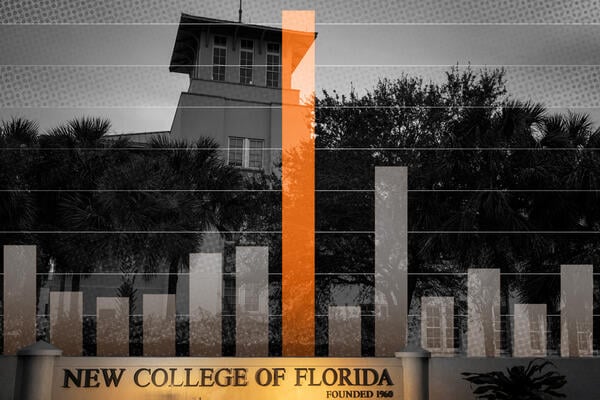
    Nearly three years into a conservative overhaul of New College of Florida, costs are adding up as the operating expenses per student dramatically outpace other State University System of Florida members.

    Data presented at Thursday’s Florida Board of Governors offers the clearest breakdown so far of what New College is spending per student compared to 11 other system members. NCF spent $83,207 per student in fiscal year 2024, the highest among state universities.

    The University of Florida, a major research institution, was the next highest at $45,765 per student, while the lowest was the University of Central Florida at $12,172 per student, according to data compiled by the Florida Department of Government Efficiency.

    New College and UF also had the highest number of administrators per 100 students. New College had 33.3 administrators per 100 students while UF had 26.9. Others in the system ranged from a low of 4.6 administrators per student at UCF to 12.6 at the University of South Florida.

    Silence on Spending

    Now, despite support from Republican governor Ron DeSantis—who appointed a slate of conservative trustees in early 2023 and tasked them with reimagining the small liberal arts college—NCF is facing growing scrutiny over soaring operating expenses from alumni and other community members. But the Florida Board of Governors, which is appointed by DeSantis, had little to say when presented with the numbers at Thursday’s meeting.

    Eric Silagy, who has been the board member most critical of NCF’s spending and has previously pressed college leadership on the matter, was the only one to offer remarks about the disparity. In limited comments, Silagy thanked Ben Watkins, director of the Florida Division of Bond Finance, for the presentation, which he said made university spending clear.

    Now, Silagy said, “there can be no question anymore about what the numbers really are.” He added that Florida’s DOGE data will allow the Board of Governors to “address outliers where it’s not working” and determine how to reach “better outcomes for the students and the taxpayers.”

    Silagy had clashed with NCF President Richard Corcoran, a former Republican lawmaker, on how much New College spends per student in past meetings. Silagy had estimated NCF spent $91,000 per student, while Corcoran initially said the number was closer to $68,000 per head. Corcoran later backtracked, agreeing the figure was between $88,000 and $91,000 per student.

    That spending has ticked up even as critics in the community and state legislature are growing, and as the college saw its place in U.S. News & World Report rankings fall nearly 60 spots since the takeover. The rankings are highly valued by Florida lawmakers and system officials.

    Asked about DOGE’s findings, a New College spokesperson said issues preceded current leadership.

    “Thanks to Governor DeSantis and the Florida Legislature making a bold move to appoint new leadership with clear goals, the impact of New College’s revitalization is already visible with enrollment surpassing 900 students for the first time in history,” New College spokesperson James Miller wrote in an emailed statement to Inside Higher Ed. “As enrollment growth continues to skyrocket, cost-per-student and cost-per-graduate metrics will be one of the lowest of all top liberal arts schools in the country.”

    Other Meeting Notes

    Thursday’s board meeting also included an update from UCF President Alexander Cartwright, who told FLBOG members that the Higher Learning Commission (HLC) had approved the university for initial accreditation, amid an effort to switch accreditors that had been underway since 2023.

    UCF, like other state institutions, sought to switch from Southern Association of Colleges and Schools Commission on Colleges to another accreditor, following a change to state law in 2022 that mandated the switch after state officials clashed with the organization over various issues.

    Cartwright said he received the news from HLC just hours earlier during the meeting.

    State University System of Florida Chancellor Ray Rodrigues credited Cartwright for his work on the effort and criticized the Biden administration for allegedly slow-walking the process.

    Rodrigues argued that the Biden administration “did not want to see reform in the area of accreditation” and “put up barriers and obstacles to states like Florida and universities like UCF” who were seeking to change accreditors while following Department of Education guidelines.

    The Florida Board of Governors also approved a policy change that will now require professors at all state universities to publicly post course materials. The policy will require “universities to post current syllabi for all courses and course sections offered for the upcoming term” at least 45 days before the first day of class. Those materials will then remain online for at least five years.

    That policy change, which has been the subject of recent media coverage highlighting faculty concerns about being targeted for course content, was passed as part of the consent agenda with no public discussion. No faculty members spoke about the policy change during the public comment portion of the meeting despite concerns expressed by professors in recent coverage.

    The board did not take action or discuss a directive from DeSantis late last month to “pull the plug” on hiring workers on H-1B visas at state universities amid concerns that such hires are taking jobs that could otherwise be filled by Floridians. (However, critics have noted such jobs are often highly specialized and hard to fill.) The board plans to consider that directive in January.

    Source link

  • U.K. University Apologizes to U.S. Scholar Over Publication Ban

    U.K. University Apologizes to U.S. Scholar Over Publication Ban

    Sheffield Hallam University has apologized to a professor whose research into alleged human rights abuses was blocked from publication after political pressure from the Chinese security services.

    In late 2024, a study by Laura Murphy, an American professor of human rights and contemporary slavery at Sheffield Hallam, into forced labor practices Uyghur Muslims allegedly face was refused publication by her institution after a campaign of harassment and intimidation from Beijing, The Guardian and BBC News reported.

    Sheffield Hallam staff working in offices in mainland China faced visits from intelligence officials over the research, while access to the university’s websites was blocked for more than two years, hampering student recruitment, officials say.

    In an internal email from July 2024 obtained by Murphy using a subject access request, university officials said “attempting to retain the business in China and publication of the research are now untenable bedfellows.”

    After taking a career break to work for the U.S. government, Murphy returned to Sheffield Hallam in early 2025 and says she was told by administrators that the university was no longer permitting any research on forced labor or on China, prompting her to start legal action.

    Her solicitor, Claire Powell, of the firm Leigh Day, said that Murphy’s “academic freedom has been repeatedly and unlawfully restricted over the past two years.”

    “The documents uncovered paint an extremely concerning picture of a university responding to threats from a foreign state security service by trading the academic freedom of its staff for its own commercial interests,” Powell added.

    Murphy, who claimed her university failed to protect her academic freedom, has now received an apology and the institution has told her it “wish[ed] to make clear our commitment to supporting her research and to securing and promoting freedom of speech and academic freedom within the law.”

    “The university’s decision to not continue with Professor Laura Murphy’s research was taken based on our understanding of a complex set of circumstances at the time, including being unable to secure the necessary professional indemnity insurance,” a spokesperson for the university added.

    These circumstances relate to a defamation case brought by a Hong Kong garment maker which initiated a libel case against Sheffield Hallam after its name was included in a report into forced labor published in December 2023. A preliminary rule at the High Court in London found the report had been “defamatory.”

    The apology comes months after new free speech laws came into effect in England in August, with the Office for Students’ free speech champion Arif Ahmed warning the regulator would take action if universities bowed to pressure from foreign governments regarding contentious areas of research.

    A U.K. government spokesperson said, “Any attempt by a foreign state to intimidate, harass or harm individuals in the U.K. will not be tolerated, and the government has made this clear to Beijing after learning of this case.

    “The government has robust measures in place to prevent this activity, including updated powers and offenses through the National Security Act.”

    The Chinese Embassy in London told the BBC that the university had “released multiple fake reports on Xinjiang that are seriously flawed.”

    “It has been revealed that some authors of these reports received funding from certain U.S. agencies,” the embassy added.

    Murphy told the BBC she has received funding over the course of her career from multiple U.S. research agencies, including the U.S. National Endowment for Humanities for work on slave narratives, the U.S. Department of Justice for work on human trafficking in New Orleans, and more recently from USAID and the U.S. State Department for her work on China.

    The Chinese Embassy said the allegations of “forced labor” in her reports “cannot withstand basic fact-check.”

    Source link

  • The Higher Ed Act Turns 60—And Needs a Refresh (opinion)

    The Higher Ed Act Turns 60—And Needs a Refresh (opinion)

    Sixty years ago, when Congress passed the Higher Education Act (HEA) of 1965, it made a bipartisan promise to the American people: that college opportunity should not be reserved for the wealthy, but made available to anyone willing to work for it. That commitment built the foundation for millions of students to pursue higher education, strengthen the workforce, improve their lives and advance our nation.

    But as we mark another anniversary of the HEA’s enactment, that promise feels increasingly distant. The law that should lay out a steadfast vision for higher education has been left to languish for nearly two decades without a comprehensive review or update. In the interim, the foundational need-based aid programs it created—like the Pell Grant and Federal Supplemental Educational Opportunity Grant programs—are now at the mercy of annual budget battles and political brinkmanship. When thoughtful reform is pushed to the back burner, the result is a student aid system that is fragmented and reactive, rather than strategic and steady. Rather than providing reliable support for students, it introduces instability and mistrust.

    The federal appropriations process, once a vehicle for steady investment in the nation’s priorities, has been weaponized—and students are collateral damage. The current government shutdown, now more than a month and counting, is only the latest reminder of how Congress is failing on its budgetary responsibilities. Congress consistently misses its own deadlines, instead relying on continuing resolutions, short-term fixes and partisan negotiations that leave students, families and the colleges that serve them in a constant state of uncertainty.

    When final budget information is not available until months after the fiscal year begins, students and families suffer. When schools cannot provide reliable estimates of federal, state or institutional aid awards, students are left in limbo and families lose faith that higher education remains a viable pathway to opportunity. That’s not a sustainable or fair system—it’s a symptom of one that’s been overrun by partisanship.

    Instead of prioritizing steady, predictable funding for student aid programs, lawmakers increasingly use appropriations as leverage to extract concessions on policy priorities better addressed outside of the appropriations process, ultimately leading to the threat of a government shutdown for which millions of Americans pay the price.

    But when updating landmark pieces of legislation falls off the list of priorities, it leaves few vehicles for thorough policy reform. FAFSA (Free Application for Federal Student Aid) simplification—the largest overhaul of the financial aid system in decades—was tacked onto an appropriations bill in the final days of the first Trump administration.

    And it’s not just appropriations. Over the past two decades, Congress has used the budget reconciliation process—a tool designed for swift deficit reduction—to make sweeping changes to federal student aid. From the creation of Public Service Loan Forgiveness in 2007 to the elimination of bank-based lending in the student loan program in 2010 to the recent overhaul of repayment plans and new loan limits in 2025, these changes have reshaped the financial aid landscape one policy at a time. This disjointed approach to policy change without comprehensive and considered debate results in confusion, unrealistic implementation timelines, conflicting statutes and unintended consequences, leaving the professionals who must translate policy into practice to manage monumental changes with little warning—and often little or unclear guidance.

    Without question, there are real challenges in higher education that demand congressional action. College prices continue to rise, student loan debt remains a national concern and families are rightly asking whether higher education is still worth the investment. But the place to grapple with those long-term structural, accountability and sustainability issues is through a full reauthorization of the Higher Education Act, not a patchwork of policies layered on top of one another through reconciliation bills, regulatory processes and executive orders.

    The HEA was designed to be reviewed and reauthorized every five years to ensure that student aid programs evolve alongside students’ needs, but the last comprehensive reauthorization took place in 2008. Since then, higher education has changed dramatically, but the law underpinning our financial aid system has not.

    What’s been lost in all this is the chance to step back and evaluate the student aid system as a whole, receive thoughtful input from experts and stakeholders, and pursue a comprehensive, bipartisan approach to address the root issues: how to make college more affordable, adapt to new learning models, streamline student aid delivery and ensure that public dollars are truly serving students’ needs.

    The Higher Education Act was born out of a shared belief that education is a public good—a cornerstone of economic mobility and national strength. As we reflect on the last six decades of progress, it’s clear that the country still believes in the promise of higher education, but trust in the system to deliver on that promise is eroding. What’s missing is the political will to rise above the polarization that threatens to pull us apart and to protect that promise. Congress must return to the thoughtful policymaking that once defined our approach to higher education and reauthorize the law that made opportunity possible for generations of Americans.

    Melanie Storey is president and CEO of the National Association of Student Financial Aid Administrators (NASFAA).

    Source link

  • Higher Ed Feels “Cumulative Exhaustion” of Longest Shutdown

    Higher Ed Feels “Cumulative Exhaustion” of Longest Shutdown

    As the current government shutdown claims the mantle of longest in American history, uncertainty is ratcheting up for faculty, students and their institutions trying to budget for the weeks, months and years ahead.

    Five weeks in, the federal government’s closure has disrupted nearly all aspects of campus life, including research, basic needs support and military-affiliated students’ access to tuition assistance.

    On Monday, North Carolina State University joined a growing list of institutions that have limited spending and faced research disruptions as a result of the government’s inaction. The university said the ongoing shutdown has delayed payment for federally funded research activities worth more than $25 million per month, according to an internal memo reviewed by Inside Higher Ed.

    “To ensure the long-term continuity of our research, we must take steps to preserve the university’s available resources that support our vital research projects,” administrators wrote in the memo to deans, directors and department heads. “Effective immediately, we are directing all colleges and units to limit all non-payroll expenses on federal contract, grant or other award mechanisms.”

    While federal payments remain suspended, federally funded researchers at NC State won’t be able to spend money on new hires, nonessential travel, consulting services, and supplies and materials among other things.

    Meanwhile, it’s still not clear when the government might reopen.

    Health Care in Question

    On Tuesday, Senate Republicans and Democrats failed for the 14th time in 36 days to negotiate an end to the shutdown. Those negotiations have centered on Democrats’ demands—and Republicans’ refusal—to extend enhanced tax credits for health insurance premiums through the Affordable Care Act, which are set to expire at the end of the year.

    Without those subsidies, the cost of health insurance is expected to increase for millions of Americans, including thousands of adjunct professors who don’t qualify for health insurance through their institutions and have only a small margin of discretionary income.

    “In this stalemate, there are no options I have to meaningfully plan for what the next month-and-a-half looks like going into the new year. There’s just no way to get ahead,” said Thomas Moomjy, a lecturer in American Studies at Rutgers University at New Brunswick who buys health insurance through New Jersey’s health care exchange. “I also have to account for the fact that the cost of everything else—electricity, car insurance—is going up, too.”

    But the results of Tuesday’s elections, which saw wins for Democrats in numerous state and local races, may further complicate the path toward reopening the government.

    President Donald Trump blamed Republican losses on the shutdown, emboldening Democrats to double down on their fight to extend the health insurance subsidies. “Donald Trump clearly is feeling pressure to bring this shutdown to an end,” Senate majority leader Chuck Schumer said on the Senate floor Thursday. “Well, I have good news for the president: Meet with Democrats, reopen the government.” So far, Trump has refused such a meeting, insisting that the government reopen prior to any negotiations.

    None of this week’s developments offer hope to college students, or some faculty and staff, who aren’t sure if they’ll be able to afford basic necessities as the shutdown continues.

    “At this point, I just want the government to reopen,” Moomjy said. “I’m not sure that will fix the ACA stuff, but we’re reaching a point of cumulative exhaustion. If this pushes on much further without [Congress] offering something to the American people to say, ‘We at least hear you and can help to lower it in some way,’ then it feels like they’re fighting each other with slogans. The people that are getting hurt are us down on the ground.”

    Basic Needs Insecurity

    Vulnerable Americans also include more than 1 million college students who rely on the federal Supplemental Nutrition Assistance Program (SNAP) to buy food, and who didn’t receive those subsidies as planned on the first of the month.

    On Monday, in response to court orders, Trump agreed to fund half of the program during the shutdown. After Tuesday’s election, he increased it to 65 percent of full funding, though experts say most SNAP recipients will get far less than that once they receive their already-late benefits. Despite those partial concessions, many colleges—which are already grappling with tight budgets as a result of Trump’s ongoing assault on higher education this year—are still scrambling to help their students cope with the partial loss to benefits this month.

    On Thursday, a federal judge ordered the Trump administration to fully fund SNAP.

    Concerns about paying for food, health care and housing during the shutdown are top of mind for students and families, according to an informal survey conducted by the American Council on Education (ACE). And those worries extend beyond students and parents who work in the public sector or receive government assistance directly; 30 percent said their private sector jobs are suffering because of the shutdown.

    “One [parent of a college student] said they work for a private contractor whose budgets partially depend on federal funding. The shutdown has reduced and delayed funding which affects their ability to provide services, earn their regular income and meet their basic needs,” Emmanual A. Guillory, senior director of government relations for ACE, told Inside Higher Ed. “Other [students and parents] said their inability to pay bills is causing strain on their mental health.”

    Disruptions for Military Students

    The shutdown is also directly threatening some students’ ability to stay enrolled at all.

    While civilian students can at least access federal financial aid to cover their tuition during the shutdown, student-veterans and their dependents who rely on military benefits—including Military Tuition Assistance (TA) and the My Career Advancement Account (MyCAA) tuition assistance program for military spouses—to pay for their education are dealing with disruptions and delays to those payments.

    Some institutions, including Austin Peay State University in Tennessee and the online learning behemoth Southern New Hampshire University, are helping military-affiliated students stay on track during the shutdown by allowing them to register without payments or tuition assistance in place.

    According to an SNHU spokesperson, 2,840 undergraduates who receive military tuition assistance were impacted by the shutdown when they started a new term last week. If the government is still closed by the time the next graduate term starts next week, an additional 440 military-affiliated students who have already registered for classes will need waivers from SNHU.

    Disruptions to GI Bill payments—caused by a system failure at the Department of Veterans Affairs and compounded by the shutdown—may also put up to 75,000 survivors and dependents of deceased military veterans at “serious” risk of losing access to post-secondary education subsidies, according to the Tragedy Assistance Program for Survivors.

    Meanwhile, Senate Democrats and Republicans remain at an impasse on resuming government operations.

    Guillory of ACE, who was at the Capitol this week for discussions about implementing the One Big Beautiful Bill Act, said that from what he’s observed “it’s highly unlikely” that a deal to reopen the government will be reached by Friday.

    But whenever it does finally happen, higher education institutions and their students and faculty who have been affected by the shutdown won’t just be able to pick up where they left off.

    “There’s going to be a backlog of things that needs to get done,” Guillory said. “This is pushing everything back and leaving institutions in a place of uncertainty.”

    Source link

  • First-Gen Students More Likely to Drop Out Due to Low GPA

    First-Gen Students More Likely to Drop Out Due to Low GPA

    First-generation students make up half of all undergraduates, but only one quarter of them retain and graduate with a degree.

    A recent study from the National Bureau of Economic Research analyzed first-generation student data against that of their continuing-generation peers to identify gaps in the classroom that may be hindering their success. Researchers found that first-generation students who received lower-than-expected grades in their first term were more likely to leave college entirely compared to their peers who also underperformed but utilized other pathways to continue in higher education.

    The findings point to a need for additional support resources to help first-generation students understand academic recovery opportunities—including course withdrawal and switching majors—to promote persistence to graduation.

    Digging into data: The study relies on transcript data from 145,000 first-year students at Arizona State University from 2000 to 2022, as well as survey data fielded during the 2021–22 academic year.

    Researchers found that parental education is a significant predictor of a student’s academic success, even when controlling for a variety of characteristics, including demographics, household income, major choice and early college performance.

    One distinguishing factor between continuing and first-generation students was their use of academic policies to protect their grades. First-generation students were less likely to change their majors or withdraw from courses, strategies that some students deploy to save their GPAs. They were also less likely to know their peers or turn to family members for support when faced with academic challenges, researchers wrote.

    “First-generation students who encounter negative grade events have about a 40 percent likelihood of dropping out, which is around five percentage points higher than observationally identical continuing generation students who face the same academic setback,” according to the study. “Rather than dropping out, we find that continuing-generation students who face academic difficulties in their first year are more likely to switch majors.”

    Researchers surveyed students to understand how their academic perceptions and outcomes could influence their retention. Results showed that first-generation students were more likely to consider poor grades as detrimental to their success or a signal of their academic failure, which might push them to drop out.

    One example of this was the decision to switch majors. While all students were more likely to switch majors if their first semester grades fell below a 3.0 GPA, continuing-generation students were much more likely to switch their major because of lower grades; first-generation students were more inclined to remain in their major even with poor grades.

    Researchers hypothesized that first-gen students may be less likely to switch majors because they have a less differentiated perspective on major earnings, meaning they expect similar earnings after graduating college regardless of their major. Therefore, poor grades in one major would mean poor outcomes in all fields—not just that particular program.

    Survey Says

    A 2025 Student Voice survey by Inside Higher Ed and Generation Lab found that 55 percent of first-generation students said one of their top reasons for deciding to attend college was to pursue a specific career or profession.

    First-generation students were slightly more likely to say they enrolled to increase their earning potential or to achieve a personal goal, compared to their continuing-generation peers.

    One solution: As part of the study, researchers evaluated Arizona State University LEAD (Learn Explore Advance Design), a program that supports incoming students with lower grades or test scores. LEAD participants complete special first-year courses that focus on durable skills including time management and offer smaller class sizes and more interaction with faculty. The program also has dedicated staff and peer mentors who support incoming students.

    Data shows the program effectively helped students learn to navigate the university; participants had a slightly higher GPA and reported a greater sense of belonging and positive mental health. LEAD students were also more likely to switch majors and less likely to declare an undecided major, signaling to researchers that the program improved students’ cultural capital and flow of information.

    Related Research: First-generation students can be left behind in the classroom because they’re unaware of the “hidden curriculum,” or unspoken norms and processes involved in navigating higher education.

    Similarly, one research project found that first-generation students were less aware of conduct systems and how to interpret the student handbook, which could result in disproportionate disciplinary action.

    Read more here.

    How does your college help first-generation students navigate the hidden curriculum? Tell us more here.

    Source link

  • Talladega College Sells Off Murals

    Talladega College Sells Off Murals

    Talladega College, a historically Black college in Alabama, is selling murals by artist Hale Woodruff to shore up its finances and keep the art publicly accessible.

    The Toledo Museum of Art bought one mural, and three others were jointly acquired by the Terra Foundation for American Art and the Art Bridges Foundation. Two murals that depict the founding of the college and its library will remain on campus, under the college’s ownership. The murals will be reunited at Talladega, likely every six to eight years, and their connection to the college will be highlighted in future exhibitions, The New York Times reported. Art experts estimate the sales are worth about $20 million, a boon for an institution with a $5 million endowment that’s faced recent financial crises, struggling to make payroll in spring 2024.

    The goal of these new arrangements is “to ensure a vibrant future for Talladega by creating a meaningful financial opportunity that better prepares our students for an evolving world,” Rica Lewis-Payton, chair of Talladega’s Board of Trustees, said in a news release from the college. Officials also hope to “expand the profile of Alabama’s first private Historically Black College” and “increase the visibility of Hale A. Woodruff’s extraordinary paintings.”

    Source link

  • Congress Tackles College Cost Transparency

    Congress Tackles College Cost Transparency

    Bill Clark/CQ-Roll Call, Inc/Getty Images

    After passing a sweeping higher ed overhaul in the One Big Beautiful Bill Act, Congress now has its sights set on reforming college cost transparency. In a hearing Thursday, members of the Senate Committee on Health, Education, Labor and Pensions questioned experts on how to make college pricing—and how costs compare to student outcomes—more understandable to families.

    “You don’t buy a car without comparing prices, quality and finance options. The same is true for buying a home. Why can we not do this for higher ed?” asked Sen. Bill Cassidy, the Louisiana Republican who chairs the committee and recently issued a request for information about the cost of higher education.

    The hearing follows a House hearing in September on the same topic—and including one repeat witness, Justin Draeger, senior vice president of affordability for Strada Education Foundation.

    Cost transparency has long been a pain point for both students and institutions, who have attempted to clarify via marketing campaigns, improved price calculator tools and tuition resets that their costs of attendance are often lower than their sticker price would indicate. Students, meanwhile, struggle to find reliable information about the costs of their prospective institutions, leaving them without the financial information they need to decide what institution to attend.

    Now, Congressional Republicans are taking notice—and are tying efforts to improve affordability and cost transparency in with their existing focus on the return on investment for students and taxpayers.

    At Thursday’s hearing, lawmakers and witnesses alike stressed how little information is available to students about the price of college, with research showing that most students overestimate the price of a public college education. Witnesses also brought up parents’ and families’ confusion about aid offer letters, which the Government Accountability Office has found often understate or fail to include the net price students will actually be paying.

    Cassidy stressed the need for transparency as it relates to outcomes and return on investment. Students should be able to compare graduation rates and projected incomes of earning a degree at two different institutions, he said, to give families an accurate picture of what they’re paying for when they pay tuition.

    The two Democratic witnesses, meanwhile, argued that college cost transparency is ineffective without also focusing on college affordability—something that is being worsened not only by increasing tuition costs but also by the larger cost-of-living crisis. Nontuition costs, said Mark Huelsman, Director of Policy and Advocacy at The Hope Center for Student Basic Needs, make up the bulk of the cost of attendance. He added that if student aren’t able to afford food or housing, that can severely impact their ability to succeed in college.

    “I urge this committee not just to find ways to increase clarity, but to do everything in its power to lower the price that students pay,” he said.

    Bipartisan Solutions?

    Legislators pointed toward several potential legislative solutions that they said had support on both sides of the aisle. That list included Cassidy’s College Transparency Act, a bill that would provide more detailed information on costs, academic outcomes and career outcomes of specific programs and majors. Cassidy has championed the bill for years, alongside Sen. Elizabeth Warren, CTA’s other lead author, but Rep. Virginia Foxx opposed the measure when she led the House education committee. Foxx, who ultimately proposed her own effort to track students’ outcomes, resisted CTA due to privacy concerns. Cassidy noted during the hearing that the bill includes strict data security standards.

    Meanwhile, Sen. Jon Husted, an Ohio Republican, also touted his bill with fellow Republican Sen. Tommy Tuberville of Alabama—the Debt, Earnings, and Cost Information Disclosure for Education Act—which would make changes to the Department of Education’s College Scorecard. It would require the resource to include information on average loan amounts in a given academic program, as well as default rates, how long it takes graduates to pay off their loans and how that debt compares to their earnings.

    That information would help prospective students “know exactly what they’re getting themselves into before they make a decision to make a huge, huge investment,” Husted said.

    Witnesses enumerated their own cost transparency wish lists.

    Draeger said, among other things, that the federal government should regulate financial aid offers to use straightforward and standardized language. Huelsman, on the other hand, argued that the “simplest way, and the most powerful way” to make college costs transparent is to make college tuition- or debt-free. He also said that the Trump administration appears to be working against, not toward, cost transparency in higher ed.

    “Many of the bipartisan reforms being discussed today require staffing capacity at the Department of Education that frankly, at this moment, do not exist, including at the Institute for Education Sciences,” he said. “Meanwhile, the Trump administration has worked to dismantle the CFPB, which provides oversight and essential information to borrowers, and conducts essential research on the student loan market. Sadly, the One Big Beautiful Bill Act takes us in the wrong direction on both affordability and transparency.”

    Source link

  • Report: Sticker Prices Inch Up

    Report: Sticker Prices Inch Up

    Photo illustration by Justin Morrison/Inside Higher Ed | Rawpixel

    College sticker prices rose slightly across all sectors for the 2025–26 academic year, according to the College Board’s Trends in College Pricing and Student Aid report, released Wednesday.

    For the 2025–26 academic year, the average published price for tuition and fees at public four-year institutions for in-state students is $11,950, a 2.9 percent increase before inflation over 2024–25 prices. For out-of-state students, public four-year institutions are charging an average of $31,880, up 3.4 percent from 2024–25. Public two-year colleges charge in-district students an average of $4,150, up 2.7 percent from the previous year—though notably, full-time students at community colleges have been receiving enough grant aid to cover their tuition and fees since the 2009–10 academic year. The average published price at private four-year colleges is $45,000, up 4 percent from 2024–25.

    Inflation-adjusted prices at public institutions have been on the decline for a while. Between the 2015–16 and 2025–26 academic years, the average inflation-adjusted tuition and fees at public four-year colleges fell 7 percent, and at public two-year institutions, the average fell 10 percent. At private nonprofit four-year colleges, average inflation-adjusted tuition and fees rose by 2 percent during the same ten-year timeframe.

    Net prices are also down as average student aid packages rise. The average net tuition and fees paid by first-time, full-time students at private nonprofit four-year institutions declined from $19,810 (in 2025 dollars) in 2006–07 to $16,910 in 2025–26. At public four-year institutions, the average net price fell from a high of $4,450 in the 2012–13 academic year to $2,300 for the 2025–26 academic year.

    When the maximum Pell grant award increased from $6,895 in 2022–23 to $7,395 in 2023–24, so too did the number of Pell Grant recipients. Between 2022–23 and 2024–25, the total number of Pell Grant recipients increased by 22 percent to 7.3 million, and total Pell Grant expenditures increased by 32 percent to $38.6 billion after adjusting for inflation.

    Other notable findings include:

    • Total annual student and parent borrowing is up slightly in 2024–25, to $102.6 billion, following a 38 percent decline between 2010–11 ($163.9 billion) and 2023–24 ($101.4 billion).
    • Institutional grant aid for undergraduates increased by 22 percent between the 2014–15 and 2024–25 academic years.
    • As of June 2025, 32 percent of borrowers owed less than $10,000 in federal loan debt. Another 21 percent of borrowers owed between $10,000 and $20,000 in federal loan debt. These groups held 4 percent and 8 percent of the total outstanding federal loan debt, respectively.

    Source link

  • Rural teacher shortages could get worse thanks to Trump’s visa fee

    Rural teacher shortages could get worse thanks to Trump’s visa fee

    by Ariel Gilreath, The Hechinger Report
    November 7, 2025

    HALIFAX COUNTY, N.C.When Ivy McFarland first traveled from her native Honduras to teach elementary Spanish in North Carolina, she spent a week in Chapel Hill for orientation. By the end of that week, McFarland realized the college town on the outskirts of Raleigh was nowhere near where she’d actually be teaching.

    On the car ride to her school district, the city faded into the suburbs. Those suburbs turned into farmland. The farmland stretched into more farmland, until, two hours later, she made it to her new home in rural Halifax County.

    “I was like, ‘Oh my God, this is far,’” McFarland said. “It was shocking when I got here, and then I felt like I wanted to go back home.”

    Nine years later, she’s come to think of Halifax County as home.

    In this stretch of rural North Carolina, teachers hail from around the globe: Jamaica, the Philippines, Honduras, Guyana. Of the 17 teachers who work at Everetts Elementary School in the Halifax County school district, two are from the United States. 

    In this rural school district surrounded by rural school districts, recruiting teachers has become a nearly impossible task. With few educators applying for jobs, schools like Everetts Elementary have relied on international teachers to fill the void. Districtwide, 101 of 156 educators are international. 

    “We’ve tried recruiting locally, and it just has not worked for us,” said Carolyn Mitchell, executive director of human resources in the eastern North Carolina district of about 2,100 students. “Halifax is a rural area, and a lot of people just don’t want to work in rural areas. If they’re not people who are from here and want to return, it’s challenging.” 

    Around the country, many rural schools are contending with a shortage of teacher applicants that has ballooned into a crisis in recent years. Fewer students are enrolling in teacher training programs, leading to a shrinking pipeline that’s made filling vacancies one of the most challenging problems for school leaders to solve in districts with smaller tax bases and fewer resources than their suburban and urban peers. In certain grade levels and subject areas — like math and special education positions — the challenge is particularly acute. Now, some of the levers rural schools have used to boost their teacher recruitment efforts are also disappearing.

    This spring, the federal Department of Education eliminated teacher residency and training grants for rural schools. In September, President Donald Trump announced a $100,000 fee on new H-1B visa applications — visas hundreds of schools like Everetts Elementary use to hire international teachers for hard-to-staff positions — saying industries were using the visas to replace American workers with “lower-paid, lower-skilled labor.” A lawsuit filed by a coalition of education, union, nonprofit and other groups is challenging the fee, citing teacher shortages. Rural schools are also bracing for more cuts to federal funding next year.

    “We’re not only talking about a recruitment and retention problem. We’re talking about the collapse of the rural teacher workforce,” said Melissa Sadorf, executive director of the National Rural Education Association.

    Related: Become a lifelong learner. Subscribe to our free weekly newsletter featuring the most important stories in education. 

    Most of Halifax’s international teachers arrive on H-1B visas, which allow them to work in the U.S. for about five years with the possibility of a green card at the end of that period. About one-third of the district’s international teachers have J-1 visas, which let them work in the country for three years with the possibility of renewing it for two more. At the end of those five years, educators on J-1 visas are required to return to their home countries.

    A few years ago, Halifax County Schools decided to shift from hiring teachers on J-1 visas in favor of H-1B, hoping it would reduce teacher turnover and keep educators in their classrooms for longer. The results have been mixed, Mitchell said, because within a few years, some of their teachers ended up transferring to bigger, higher-paying districts anyway. 

    There are trade-offs for the teachers, too. Mishcah Knight came to the U.S. from Jamaica both to expand her skills and increase her pay as an educator. In the rural North Carolina county, finding transportation has been the biggest challenge for Knight, who teaches second grade. 

    She lacks a credit history needed to buy a car, leaving her reliant on carpooling to work. A single taxi driver serves the area, which doesn’t have public transit, Uber or Lyft. “Sometimes, he’s in Virginia,” Knight said. “It’s lucky when we actually get him to take us somewhere.”

    Being away from family also takes its toll on teachers. Nar Bell Dizon, who has taught music at Everetts Elementary since 2023, had to leave his wife and son back home in the Philippines. He visits in the summer, but during the school year, he sees them only through video calls. 

    “This is what life is — not everything is smooth,” Dizon said. “There will always be struggles and sacrifices.”

    Dizon’s first year in Everetts Elementary School was hard — it took time adapting to a different teaching style and classroom management. Now that he’s in his third year, he feels like he’s gotten his feet beneath him. 

    “When you can build a rapport with your students, things become easier,” Dizon said.

    When her international teachers are able to stay for longer, the students perform better, said Chastity Kinsey, principal of Everetts Elementary. “I know the benefit the teachers bring to the classroom,” Kinsey said. “After the first year or two, they normally take off like rock stars.” 

    Related: Trump’s cuts to teacher training leave rural school districts, aspiring educators in the lurch 

    Trump’s new fee does not address any of the challenges the Halifax district had with the H-1B visa, and it effectively slams the door on future hires. Now, the district will have to rely on J-1 visas to recruit new international teachers, meaning the educators will have to leave just as they’ve acclimated to their classrooms.

    “We just can’t afford to,” Mitchell said of paying the $100,000 fee. Other districts, she said, might turn to waivers allowing them to increase class sizes and hire fewer teachers, among other strategies.

    Since the applicant pool began drying up about a decade ago, the make-up of the district’s teaching staff has slowly shifted to international teachers. 

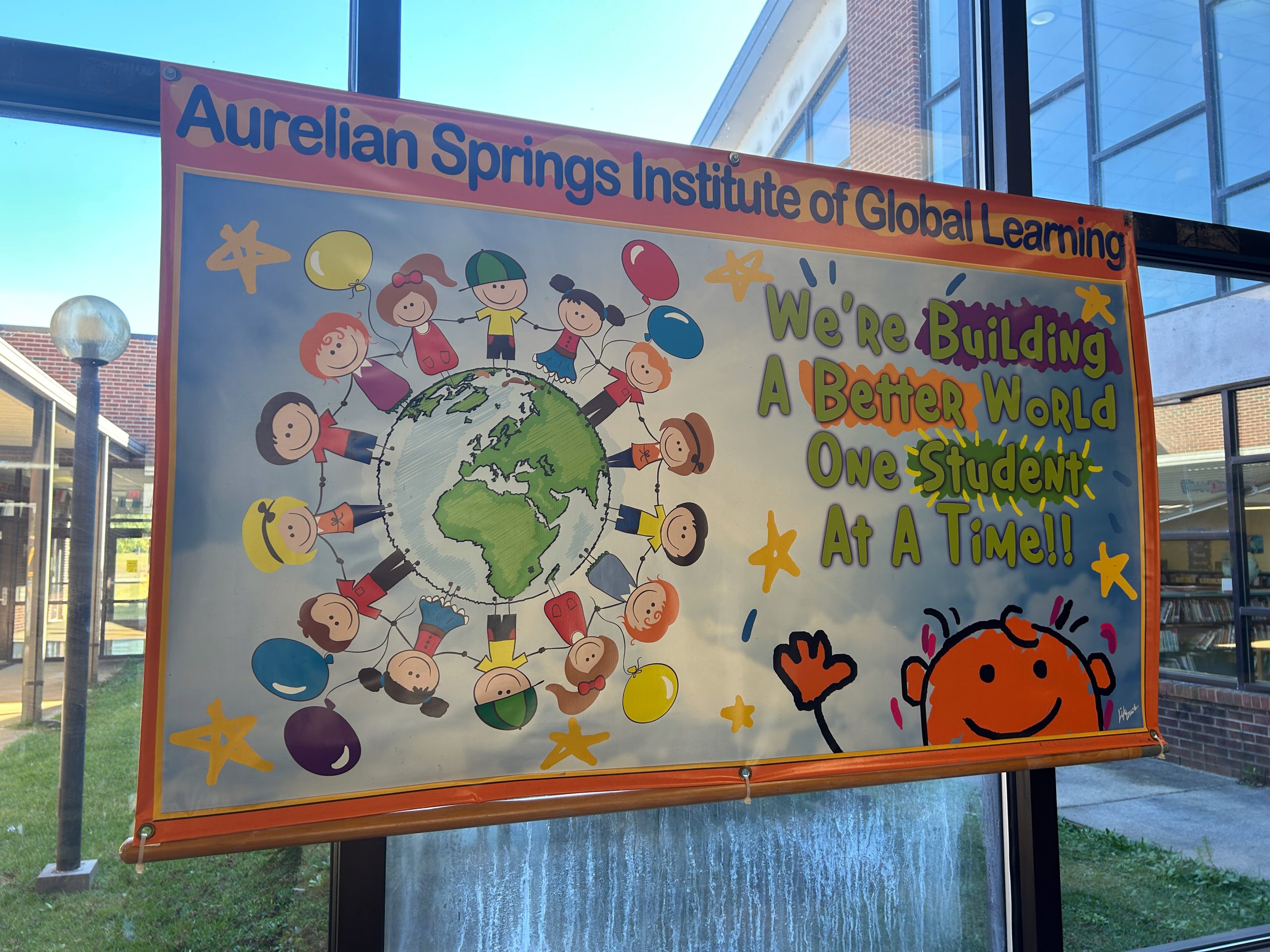
    At the heart of the problem is that when a position opens up, few, if any, citizens apply, said Katina Lynch, principal of Aurelian Springs Institute of Global Learning, an elementary school in Halifax County. 

    When Lynch had to hire a new fourth grade teacher this summer, she received three applications: Only one was a licensed teacher from the U.S.

    Nationally, about 1 in 8 teaching positions are either vacant or filled by teachers who are not certified for the position, according to data from the nonprofit Learning Policy Institute, published in July. In addition to fewer college students graduating with degrees in education, diminished public perception of the teaching profession and political polarization of schools are to blame, school leaders said. In some states, the growth of charter and private school options has made competing for teachers even harder. On top of a widening pay gap between rural and urban districts, it’s a perfect storm for schools in more remote parts of the country, said Sadorf.

    In rural Bunker Hill, Illinois, where more than 500 students attend two schools, some positions have gone unfilled for years. “We’ve posted for a school psychologist for years, never had anybody apply. We posted for a special ed teacher — have not had anybody apply. We’ve posted for a high school math teacher two years in a row,” said Superintendent Todd Dugan. “No applicants.”

    As a result, students often end up with a long-term substitute or an unlicensed student teacher. 

    When teachers do arrive in the district, Dugan works hard to try to get them to stick around. He pairs new teachers with experienced mentors, and uses federal funding to help those who want master’s degrees to afford them. 

    He also formed a calendar committee to give teachers input on which days they get off during the year. “More than pay, having at least a little bit of involvement, control and say in your work environment will cause people to stay,” said Dugan. It seems to be working: Bunker Hill’s teacher retention rate is more than 92 percent. 

    Related: Schools confront a new reality: They can’t count on federal money 

    Schools across the country face the same challenges to varying degrees. Several years ago, the Everett Area School District in southern Pennsylvania would receive 30 to 50 applications for a given position at its elementary schools, Superintendent Dave Burkett said. Now, they’re lucky if they get three or four.

    Last year, the district learned that a middle school science teacher would retire that summer. Just three people applied for the opening, and only one was certified for the role.

    “We offered the job before that person even left the building,” Burkett said. The candidate accepted it, but when it was time to fill out paperwork that summer, the teacher had taken a different job in a bigger district.

    One way Burkett has tried to address the shortage is to hire a permanent, full-time substitute teacher in each of its buildings. If a vacancy opens up that they haven’t been able to fill, the full-time substitute can step in until a permanent replacement is found. The permanent substitute makes more than a traditional sub and also receives health insurance. 

    Sadorf, with the National Rural Education Association, says other ways to help include introducing students to teacher training pathways starting in high school, building “grow-your-own” programs to train local people for teaching jobs, and offering loan forgiveness and housing support.

    Sadorf’s organization is in favor of creating an educator-specific visa track that would allow international teachers to be in communities for longer. The group is also in favor of exempting schools from the $100,000 H-1B fee. “Stabilizing federal support is something that really needs to be focused on at the federal level,” Sadorf said.

    At Everetts Elementary in Halifax County, McFarland, the educator from Honduras, is among the most senior teachers in the school. She has adapted to the rural community, where she met and fell in love with her now-husband. She gets asked sometimes why she hasn’t moved to a bigger city.

    “Education has taken me places I’ve never expected,” McFarland said. “For me, being here, there’s a reason for it. I see the difference I can make.”

    Contact staff writer Ariel Gilreath on Signal at arielgilreath.46 or at [email protected].

    This story about the visa fee was produced by The Hechinger Report, a nonprofit, independent news organization focused on inequality and innovation in education. Sign up for the Hechinger newsletter.

    This <a target=”_blank” href=”https://hechingerreport.org/federal-policies-risk-worsening-an-already-dire-rural-teacher-shortage/”>article</a> first appeared on <a target=”_blank” href=”https://hechingerreport.org”>The Hechinger Report</a> and is republished here under a <a target=”_blank” href=”https://creativecommons.org/licenses/by-nc-nd/4.0/”>Creative Commons Attribution-NonCommercial-NoDerivatives 4.0 International License</a>.<img src=”https://i0.wp.com/hechingerreport.org/wp-content/uploads/2018/06/cropped-favicon.jpg?fit=150%2C150&amp;ssl=1″ style=”width:1em;height:1em;margin-left:10px;”>

    <img id=”republication-tracker-tool-source” src=”https://hechingerreport.org/?republication-pixel=true&post=113282&amp;ga4=G-03KPHXDF3H” style=”width:1px;height:1px;”><script> PARSELY = { autotrack: false, onload: function() { PARSELY.beacon.trackPageView({ url: “https://hechingerreport.org/federal-policies-risk-worsening-an-already-dire-rural-teacher-shortage/”, urlref: window.location.href }); } } </script> <script id=”parsely-cfg” src=”//cdn.parsely.com/keys/hechingerreport.org/p.js”></script>

    Source link

  • From the Classroom to the Career Office: Why Career Readiness Belongs in Every Discipline – Faculty Focus

    From the Classroom to the Career Office: Why Career Readiness Belongs in Every Discipline – Faculty Focus

    Source link