Author: admin

  • Lessons from Australia on how to do R&D consultations well

    Lessons from Australia on how to do R&D consultations well

    Australia’s R&D sector is afflicted by challenges that will be familiar to UK readers.

    The proportion of GDP spent on research is too low. Business adoption and innovation in R&D is too shallow. Collaboration between business and academia is poor. Reliance on international student fees to fund research has rendered the entire system fragile. And the immobility of academics is stymieing the cross-pollination of ideas.

    However, the Australian government has a plan.

    Back in December the Australian government launched its Strategic Examination of Research and Development. At the time I said the review was about

    […]maximising the value of R&D, improving links between research and the real economy, supporting research mobility, advancing national priorities such as growth, growing research intensity, and doing so with due regard to regional distribution, risk, and international competitiveness.

    Bits and pieces

    In effect, unlike the innumerable reviews we have seen in the UK the Australian government is taking a look at the entire research ecosystem. A sensible approach for a system where improving R&D, in whatever form, relies on funding, funders, researchers, institutes, incentives, governments, the private sector, universities, and many actors besides all working in harmony.

    The Australian government has now launched their discussion paper and the potential for a new R&D system is starting to come into view.

    It is interesting that Australia believes the UK as a country to learn from

    Other countries, such as the UK, USA, China, Israel and Singapore, have successfully adopted new strategies for leveraging R&D and innovation for social and economic gain.

    Most impartial observers would not put the UK’s ability to deploy R&D in the same league as the USA and China, the UK’s GDP investment is well behind Israel’s, while Singapore has rapidly grown its financial and manufacturing base in a way the UK has not. However, where there is a shared ambition is the sense Australia hasn’t quite met its potential.

    Tough clear choices

    This consultation is written in a way that UK consultations are not. The starting premise of this discussion paper is that economic growth is predicated on research, research should benefit all of society, and therefore society as a whole should have a say in how research is funded and organised. This isn’t a document which talks down but it has a clarity that brings the sometimes turgid prose of the UK government’s commissions into share relief.

    The below caps off the executive summary and it is hard to imagine this appearing in the UK

    Boosting a focus on R&D will prevent Australia’s slide into mediocrity. It will ensure we will be offered a seat at the international table at which big global decisions are made – because we earn it.

    The UK has a greater research capacity than Australia in many ways but to frame the need to grow research as central to the entire future of the country is a bold thing to do. It’s exciting, and it encourages participation.

    The discussion paper sets out what the Australian government is seeking to achieve through this intervention. It is trying to create a more productive, sustainable, and resilient economy through improving the conditions through which research is created, adopted, and diffused.

    Like their UK counterparts the Australian government cannot resist an extremely complex research diagram with a dizzying array of arrows and pie charts to indicate inter-relationships between government and its partners.

    However, the underlying message is clear. Put in place the right set of regulations, policies and funds to allow a variety of research approaches to grow, have clear feedback loops in place with appropriate measurement, and a range of cultural, social, economic, and knowledge benefits can be realised.

    Trade off

    An important departure from the UK is that the trade-offs between policy choices are made clear. Because UK R&D consultations are often single issue it is too easy to advocate for policies without worrying about the consequences. In one consultation I can ask for the Full Economic Cost of research. In another I can ask for a greater variety of research proposals to be funded. And in another I can ask for an increase in PGR places without reducing money in cost recovery or the funding of programmes. Historically, this has meant that the UK has done some things well but has never looked at everything across the ecosystem all at once.

    The Australian review by contrast makes the trade-offs pretty clear. If funding is spread too thinly across the entire country, and if the country cannot rapidly mobilise private investment, there is clearly a choice to be made on whether to concentrate funding or live with this thin spread. There is a clear choice on whether to try to leverage R&D to prop up traditional industries like mining or shift focus into new and emerging technologies. There are clear links between the need for a more diverse workforce and diversity as a means of meeting the skills gaps within R&D. And it is stark in the lack of alternatives to crowding in more private investment to grow Australia’s R&D economy.

    In all, it feels like a document that aims toward interested observers without patronising the wider R&D community. Its framing is honest with the university sector and makes the challenges the university sector faces clear. For example, it pulls few punches in explaining that while a system of research dependent on student funding allows for great freedom this isn’t an effective way to organise funding and strategy in a coherent way.

    The last bit of the discussion paper is that it tells participants what will happen next. This discussion paper is the start of the analyse stage of the strategy. There will be time to test things out, iterate them, and then decide what will happen. Again, it’s clear, the call to take part is grounded in a shared reality, and the language is clear without being patronising.

    Source link

  • More engineering applications don’t make for more engineers

    More engineering applications don’t make for more engineers

    The latest UCAS data (applications by the January ‘equal consideration’ deadline) suggests a 14 per cent increase in applications to engineering and technology courses.

    It’s the second double-digit surge in two years.

    Good news, right? Sadly, it’s mostly not.

    STEM swing

    The upsurge in interest in engineering can be seen as part of a “swing to STEM” (science, technology, engineering, and medicine).

    As higher education has shifted to a reliance on student debt for funding, many people suspect applicants have felt greater pressure to search for clear, transactional returns which, it may seem, are offered most explicitly by STEM – and, most particularly, by engineering, which is not just STEM, but vocational too.

    Certainly, there’s a keen labour market for more engineers. Engineering UK has suggested the shortfall is around 29,000 graduates every year. According to the British Chambers of Commerce, it’s pretty much the largest skills gap in the UK economy.

    Engineering is also a key driver of the growth that the government is so keen to stimulate, adding £645b to the UK – that’s nearly a whopping third of the entire value of the economy. And – unlike financial services, say – engineering is a powerhouse of regional development as it is spread remarkably evenly throughout the country.

    And it drives that other key government mission, opportunity. An engineering degree confers a higher and more equal graduate premium than almost any other discipline.

    The downside

    So with all these benefits, why is the increase in engineering applications not good news?

    The answer is because it reveals the extent of the lost opportunity: most of these extra potential engineers will be denied places to study, dashing their hopes and the hopes of the country.

    Last year’s rise in applications did not lead to a rise in the number of UK engineering students. Absolute student numbers have more or less stagnated since 2019.

    It used to be that the number of engineering applications broadly aligned with places because it was a highly regarded discipline with great outcomes that universities would expand if they felt they could. The limiting factor was the number of able students applying.

    Now that demand outstrips supply, universities cannot afford to expand the places because each additional UK engineering student represents an ever-growing financial loss.

    Engineering courses are among the most expensive to teach. There are long contact hours and expensive facilities and materials. The EPC estimates the average cost per undergraduate to be around £18,800 a year. Even allowing for top-up funding that is available to many engineering degrees on top of the basic fee income, that leaves an average loss of £7,591 per year.

    It used to be that the way to address such losses was to try to admit more students to spread the fixed costs over greater numbers. That did run the risk of lowering standards, but it made financial sense.

    Now, however, for most universities, the marginal cost of each additional student means that the losses don’t get spread more thinly – they just keep piling up.

    Cross-subsidy

    The only way out is to bring in ever more international students to directly subsidise home undergraduates.

    Although the UCAS data shows a glimmer of hope for recovering international demand, at undergraduate level, there are only a few universities that can make this work. Most universities, even if they could attract more international engineering students, would no longer use the extra income to expand engineering for home students, but rather to shore up the existing deficits of maintaining current levels.

    The UCAS data also show higher tariff institutions are the main beneficiaries of application increases at the expense of lower tariff institutions which, traditionally have a wider access intake.

    What this means is that the increased demand for engineering places will not lead to a rise in engineering student numbers, let alone in skilled engineers, but rather a narrowing of the access to engineering such that it becomes ever harder to get in without the highest grades.

    High prior attainment correlates closely with socioeconomic advantage and so, rather than engineering playing to its strength of driving social mobility, it will run the risk of becoming ever more privileged.

    What about apprenticeships?

    Not to worry, suggests Jamie Cater, head of employment and skills at trade body Make UK, a university degree is not the only option available for acquiring these skills and “the apprenticeship route remains highly valued by manufacturers”.

    That’s small comfort, I’m afraid. The availability of engineering higher apprenticeships suggests competition is even fiercer than it is for degrees and, without the safeguard of fair access regulation, the apprenticeship access track record is poor. (And don’t get me started on drop-outs.)

    This is why I haven’t unfurled the bunting at applicants’ rising enthusiasm for engineering.

    Of course, it is wonderful that so many young people recognise engineering as a fulfilling and forward-looking discipline. An estimated £150m has been spent the last decade trying to stimulate this growth and there are over 600 third sector organisations working in STEM outreach in schools. It would be nice to think this has not been wasted effort.

    But it’s hard to celebrate a young person’s ambition to be an engineer if it’s likely to be thwarted. Similarly, I struggle to summon enthusiasm about kids wanting to get rich as TikTok influencers. Indeed, it’s all the more tragic when the country actually does need more engineers.

    This is why the Engineering Professors’ Council has recently called on the government to plug the funding gap in engineering higher education (and HE more widely) in the forthcoming Comprehensive Spending Review.

    Asking for nearly a billion pounds may seem ambitious, but the ongoing failure to fill the engineering skills gap may well be costing the country far more – possibly, given the importance of engineering to GDP, more than the entire higher education budget.

    Johnny Rich is Chief Executive of the Engineering Professors’ Council, the representative body for UK Engineering academics.

    Source link

  • A sea change in student partnership

    A sea change in student partnership

    A few years back now, someone who worked for one of Scotland’s sector agencies liked to draw a comparison when talking about student-centredness.

    They said that conservation charities passionately place wildlife at the heart of everything they do, but crucially would never put representatives of flora and fauna on committees (imagine the mess).

    Therefore, my erstwhile and esteemed colleague would argue, when institutional leaders proudly claim to be “student-centred” it reveals nothing about how they involve students in shaping their experiences.

    Of course, you can diligently monitor wildlife and use your data to make good decisions, in a manner not dissimilar to learning analytics in education, but the difference is that students can then go on to be a part of conversations in a way that wildlife never can.

    Waterproof papers

    My mind was cast back to this parallel when I saw the recent news that the Scottish Association for Marine Science (SAMS), one of our partners here at the University of the Highlands and Islands (UHI), has put The Ocean on its governing body.

    It’s a move that SAMS’ Director Nick Owens admits “could be seen as trivial or ‘greenwashing’”, and we might imagine other specialist institutions making similar gestures in the disciplines they so richly embody and advance.

    For instance a conservatoire could put “Music” on their board, or an agricultural college “The Land”.

    Nick explains further, however:

    The Ocean is clearly a metaphor in this context and cannot represent itself in human terms.”

    That point is vital because, if we go back to our parallel, SAMS has already gone much further with its other main cause – students.

    Like all constituent parts of UHI and indeed our university overall, SAMS has student membership on its governing body, not to just sit there and wave like the ocean might, or to flap about disruptively like a bird among a wildlife charity’s trustees.

    Instead, we expect of student governors an informed, constructive and active contribution.

    As my colleague Aimee Cuthbert wrote on Wonkhe a year ago, we have a major project that is making that student membership truly effective and impactful across UHI’s complex governance arrangements.

    On a basic level we want to build on national guidelines such as Scotland’s codes of good governance for colleges and universities and support packages such as those from the College Development Network.

    The wet room

    In our own unique context we want to make sure UHI’s governing bodies do not merely talk about students as an abstract concept or worthy concern, and instead have them in the room to provide meaningful input about students’ diverse and complex experiences and the implications for students of the difficult decisions that must be made.

    That means a lot of work with those involved in our governing bodies, exploration of the key issues on our boards’ desks at a time of change, and helping our local officers impact on their individual partner governing bodies while also working together as a team to impact on decisions that are UHI-wide.

    A core part of our project is therefore that very human process of communication – supporting the networking, sharing practice and informal relationship building that makes student governors truly a part of the process in a way that an ocean can’t be.

    So, when someone tells you their institution is student-centred, that’s arguably the very least we might expect, and in isolation such a declaration risks viewing students in the same way that others might view wildlife.

    The Ocean as governor, therefore, is not only a striking metaphor for SAMS’ important mission, but has added power in benchmarking our perceptions of those we claim to be here for – reminding us that there’s a big difference between caring about students and actively involving them as partners.

    Source link

  • 25 (Mostly AI) Sessions to Enjoy in 2025 – The 74

    25 (Mostly AI) Sessions to Enjoy in 2025 – The 74


    Get stories like this delivered straight to your inbox. Sign up for The 74 Newsletter

    South by Southwest Edu returns to Austin, Texas, running March 3-6. As always, it’ll offer a huge number of panels, discussions, film screenings, musical performances and workshops exploring education, innovation and the future of schooling.

    Keynote speakers this year include neuroscientist Anne-Laure Le Cunff, founder of Ness Labs, an online educational platform for knowledge workers; astronaut, author and TV host Emily Calandrelli, and Shamil Idriss, CEO of Search for Common Ground, an international non-profit. Idriss will speak about what it means to be strong in the face of opposition — and how to turn conflict into cooperation. Also featured: indy musical artist Jill Sobule, singing selections from her musical F*ck 7th Grade.

    As in 2024, artificial intelligence remains a major focus, with dozens of sessions exploring AI’s potential and pitfalls. But other topics are on tap as well, including sessions on playful learning, book bans and the benefits of prison journalism. 

    To help guide the way, we’ve scoured the schedule to highlight 25 of the most significant presenters, topics and panels: 

    Monday, March 3:

    11 a.m. — Ultimate Citizens Film Screening: A new independent film features a Seattle school counselor who builds a world-class Ultimate Frisbee team with a group of immigrant children at Hazel Wolf K-8 School. 

    11:30 a.m. — AI & the Skills-First Economy: Navigating Hype & Reality: Generative AI is accelerating the adoption of a skills-based economy, but many are skeptical about its value, impact and the pace of growth. Will AI spark meaningful change and a new economic order, or is it just another overhyped trend? Meena Naik of Jobs for the Future leads a discussion with Colorado Community College System Associate Vice Chancellor Michael Macklin, Nick Moore, an education advisor to Alabama Gov. Kay Ivey, and Best Buy’s Ryan Hanson.

    11:30 a.m. — Navigation & Guidance in the Age of AI: The Clayton Christensen Institute’s Julia Freeland Fisher headlines a panel that looks at how generative AI can help students access 24/7 help in navigating pathways to college. As new models take root, the panel will explore what entrepreneurs are learning about what students want from these systems. Will AI level the playing field or perpetuate inequality? 

    12:30 p.m. — Boosting Student Engagement Means Getting Serious About Play: New research shows students who are engaged in schoolwork not only do better in school but are happier and more confident in life. And educators say they’d be happier at work and less likely to leave the profession if students engaged more deeply. In this session, LEGO Education’s Bo Stjerne Thomsen will explore the science behind playful learning and how it can get students and teachers excited again.

    1:30 p.m. — The AI Sandbox: Building Your Own Future of Learning: Mike Yates of The Reinvention Lab at Teach for America leads an interactive session offering participants the chance to build their own AI tools to solve real problems they face at work, school or home. The session is for AI novices as well as those simply curious about how the technology works. Participants will get free access to Playlab.AI.

    2:30 p.m. — Journalism Training in Prison Teaches More Than Headlines: Join Charlotte West of Open Campus, Lawrence Bartley of The Marshall Project and Yukari Kane of the Prison Journalism Project to explore real-life stories from behind bars. Journalism training is transforming the lives of a few of the more than 1.9 million people incarcerated in the U.S., teaching skills from time management to communication and allowing inmates to feel connected to society while building job skills. 

    Tuesday, March 4:

    11:30 a.m. — Enough Talk! Let’s Play with AI: Amid the hand-wringing about what AI means for the future of education, there’s been little conversation about how a few smart educators are already employing it to shift possibilities for student engagement and classroom instruction. In this workshop, attendees will learn how to leverage promising practices emerging from research with real educators using AI in writing, creating their own chatbots and differentiating support plans. 

    12:30 p.m. — How Much is Too Much? Navigating AI Usage in the Classroom: AI-enabled tools can be helpful for students conducting research, outlining written work, or proofing and editing submissions. But there’s a fine line between using AI appropriately and taking advantage of it, leaving many students wondering, “How much AI is too much?” This session, led by Turnitin’s Annie Chechitelli, will discuss the rise of GenAI, its intersection with academia and academic integrity, and how to determine appropriate usage.  

    1 p.m. — AI & Edu: Sharing Real Classroom Successes & Challenges: Explore the real-world impact of AI in education during this interactive session hosted by Zhuo Chen, a text analysis instructor at the nonprofit education startup Constellate, and Dylan Ruediger of the research and consulting group Ithaka S+R. Chen and Ruediger will share successes and challenges in using AI to advance student learning, engagement and skills. 

    1 p.m. — Defending the Right to Read: Working Together: In 2025, authors face unprecedented challenges. This session, which features Scholastic editor and young adult novelist David Levithan, as well as Emily Kirkpatrick, executive director of the National Council of Teachers of English, will explore the battle for freedom of expression and the importance of defending reading in the face of censorship attempts and book bans.

    1 p.m. — Million Dollar Advice: Navigating the Workplace with Amy Poehler’s Top Execs: Kate Arend and Kim Lessing, the co-presidents of Amy Poehler’s production company Paper Kite Productions, will be live to record their workplace and career advice podcast “Million Dollar Advice.” The pair will tackle topics such as setting and maintaining boundaries, learning from Gen Z, dealing with complicated work dynamics, and more. They will also take live audience questions.

    4 p.m. — Community-Driven Approaches to Inclusive AI Education: With rising recognition of neurodivergent students, advocates say AI can revolutionize how schools support them by streamlining tasks, optimizing resources and enhancing personalized learning. In the process, schools can overcome challenges in mainstreaming students with learning differences. This panel features educators and advocates as well as Alex Kotran, co-founder and CEO of The AI Education Project.

    4 p.m. — How AI Makes Assessment More Actionable in Instruction: Assessments are often disruptive, cumbersome or disconnected from classroom learning. But a few advocates and developers say AI-powered assessment tools offer an easier, more streamlined way for students to demonstrate learning — and for educators to adapt instruction to meet their needs. This session, moderated by The 74’s Greg Toppo, features Khan Academy’s Kristen DiCerbo, Curriculum Associates’ Kristen Huff and Akisha Osei Sarfo, director of research at the Council of the Great City Schools.

    Wednesday, March 5:

    11 a.m. — Run, Hide, Fight: Growing Up Under the Gun Screening & Q&A: Gun violence is now the leading cause of death for American children and teens, according to the federal Centers for Disease Control and Prevention, yet coverage of gun violence’s impact on youth is usually reported by adults. Run, Hide, Fight: Growing Up Under the Gun is a 30-minute documentary by student journalists about how gun violence affects young Americans. Produced by PBS News Student Reporting Labs in collaboration with 14 student journalists in five cities, it centers the perspectives of young people who live their lives in the shadow of this threat. 

    11:30 a.m. — AI, Education & Real Classrooms: Educators are at the forefront of testing, using artificial intelligence and teaching their communities about it. In this interactive session, participants will hear from educators and ed tech specialists on the ground working to support the use of AI to improve learning. The session includes Stacie Johnson, director of professional learning at Khan Academy, and Dina Neyman, Khan Academy’s director of district success. 

    11:30 a.m. — The Future of Teaching in an Age of AI: As AI becomes increasingly present in the classroom, educators are understandably concerned about how it might disrupt their teaching. An expert panel featuring Jake Baskin, executive director of the Computer Science Teachers Association andKarim Meghji of Code.org, will look at how teaching will change in an age of AI, exploring frameworks for teaching AI skills and sharing best practices for integrating AI literacy across disciplines.

    2:30 p.m. — AI in Education: Preparing Gen A as the Creators of Tomorrow: Generation Alpha is the first to experience generative artificial intelligence from the start of their educational journeys. To thrive in a world featuring AI requires educators helping them tap into their natural creativity, navigating unique opportunities and challenges. In this session, a cross-industry panel of experts discuss strategies to integrate AI into learning, allowing critical thinking and curiosity to flourish while enabling early learners to become architects of AI, not just users.

    2:30 p.m. — The Ethical Use of AI in the Education of Black Children: Join a panel of educators, tech leaders and nonprofit officials as they discuss AI’s ethical complexities and its impact on the education of Black children. This panel will address historical disparities, biases in technology, and the critical need for ethical AI in education. It will also offer unique perspectives into the benefits and challenges of AI in Black children’s education, sharing best practices to promote the safe, ethical and legal use of AI in classrooms.

    2:30 p.m. — Exploring Teacher Morale State by State: Is teacher morale shaped by where teachers work? Find out as Education Week releases its annual State of Teaching survey. States and school districts drive how teachers are prepared, paid and promoted, and the findings will raise new questions about what leaders and policymakers should consider as they work to support an essential profession. The session features Holly Kurtz, director of EdWeek Research Center, Stephen Sawchuk, EdWeek assistant managing editor, and assistant editor Sarah D. Sparks.

    2:30 p.m. — From White Folks Who Teach in the Hood: Is This Conversation Against the Law Now? While most students in U.S. public schools are now young people of color, more than 80% of their teachers are white. How do white educators understand and address these dynamics? Join a live recording of a podcast that brings together white educators with Christopher Emdin and sam seidel, co-editors of From White Folks Who Teach in the Hood: Reflections on Race, Culture, and Identity (Beacon, 2024).

    3:30 p.m. — How Youth Use GenAI: Time to Rethink Plagiarism: Schools are locked in a battle with students over fears they’re using generative artificial intelligence to plagiarize existing work. In this session, join Elliott Hedman, a “customer obsession engineer” with mPath, who with colleagues and students co-designed a GenAI writing tool to reframe AI use. Hedman will share three strategies that not only prevent plagiarism but also teach students how to use GenAI more productively.  

    Thursday, March 6:

    10 a.m. — AI & the Future of Education: Join futurists Sinead Bovell and Natalie Monbiot for a fireside discussion about how we prepare kids for a future we cannot yet see but know will be radically transformed by technology. Bovell and Monbiot will discuss the impact of artificial intelligence on our world and the workforce, as well as its implications for education. 

    10 a.m. — Reimagining Everyday Places as Early Learning Hubs: Young children spend 80% of their time outside of school, but too many lack access to experiences that encourage learning through hands-on activities and play. While these opportunities exist in middle-class and upper-income neighborhoods, they’re often inaccessible to families in low-income communities. In this session, a panel of designers and educators featuring Sarah Lytle, who leads the Playful Learning Landscapes Action Network, will look at how communities are transforming overlooked spaces such as sidewalks, shelters and even jails into nurturing learning environments accessible to all kids.

    11 a.m. — Build-a-Bot Workshop: Make Your Own AI to Make Sense of AI: In this session, participants will build an AI chatbot alongside designers and engineers from Stanford University and Stanford’s d.school, getting to the core of how AI works. Participants will conceptualize, outline and create conversation flows for their own AI assistant and explore methods that technical teams use to infuse warmth and adaptability into interactions and develop reliable chatbots.  

    11:30 a.m. — Responsible AI: Balancing Innovation, Impact, & Ethics: In this session, participants will learn how educators, technologists and policymakers work to develop AI responsibly. Panelists include Isabelle Hau of the Stanford Accelerator for Learning, Amelia Kelly, chief technology officer of the Irish AI startup SoapBox Labs, and Latha Ramanan of the AI developer Merlyn Mind. They’ll talk about how policymakers and educators can work with developers to ensure transparency and accuracy of AI tools. 


    Get stories like these delivered straight to your inbox. Sign up for The 74 Newsletter

    Source link

  • Small College America – Profile Earlham College – Edu Alliance Journal

    Small College America – Profile Earlham College – Edu Alliance Journal

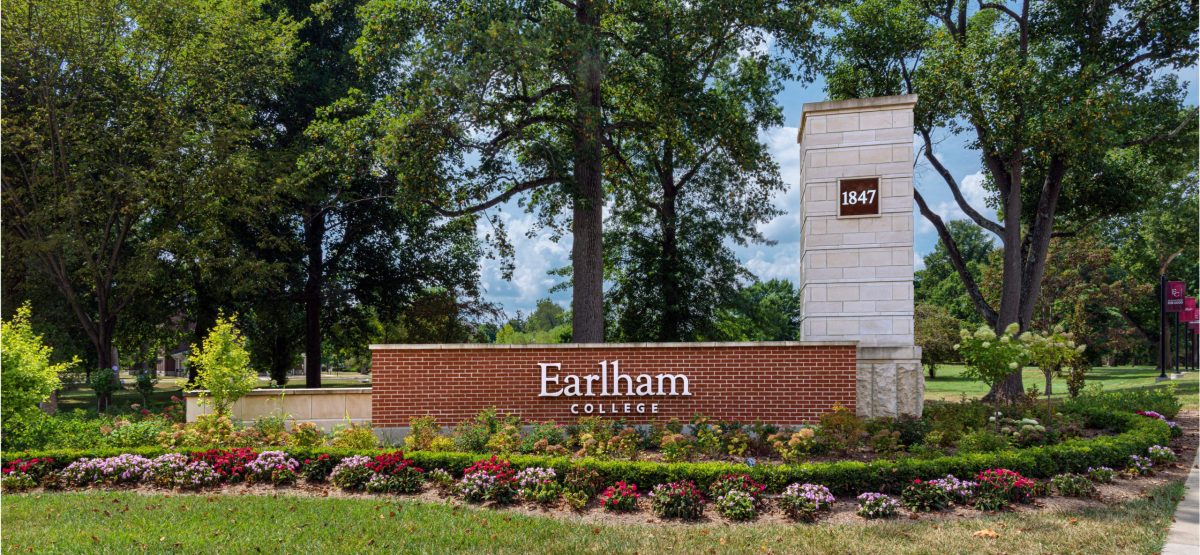
    February 17, 2025, by Dean Hoke: This profile of Earlham College is the second in a series presenting small colleges throughout the United States.

    Background

    Founded in 1847 in Richmond, Indiana, Earlham College is a private liberal arts institution with deep Quaker roots. The college maintains its commitment to principles such as integrity, peace, social justice, and community engagement, which shape both its academic and extracurricular life. Despite its modest size, Earlham has built a reputation for academic rigor, experiential learning, and global perspectives. Dr. Paul Sniegowski, a biologist and former dean of the College of Arts and Sciences at the University of Pennsylvania, has served as President since August 2024.

    For the 2023-24 academic year, U.S. News & World Report estimates Earlham’s total annual cost (including tuition, housing, and other expenses) at $53,930, with an average net price after aid of $25,496.

    Curricula

    Earlham College offers a diverse range of undergraduate programs, with popular majors including Biology, Environmental Science, International Studies, Business, and Psychology. The college places a strong emphasis on interdisciplinary learning, allowing students to engage in cross-disciplinary courses and independent research. The Epic Advantage Program provides students with up to $5,000 in funding for hands-on learning experiences, such as internships, field studies, and international travel.

    The college also offers a 3+2 Engineering Program, where students spend three years at Earlham before transferring to an affiliated university, such as Columbia or Case Western Reserve, to complete an engineering degree. This dual-degree approach combines the benefits of a liberal arts education with technical training, preparing students for careers in engineering, business, and technology fields.

    Strengths

    • Commitment to Experiential Learning – Programs like Epic Advantage provide students with real-world experience, enhancing their competitiveness in the job market.
    • Strong International Focus – Nearly 70% of Earlham students study abroad, and the college has partnerships with institutions worldwide.
    • Small Class Sizes – With a 9:1 student-faculty ratio, Earlham offers personalized attention and mentoring opportunities.
    • Values-Driven Education – Quaker principles of peace, social justice, and ethical leadership are embedded in the curriculum and campus culture.
    • Strong Science and Environmental Programs – The Joseph Moore Museum and expansive natural study areas provide unique hands-on research opportunities.

    Weaknesses

    • Financial Stability Challenges – Like many small liberal arts colleges, Earlham faces financial pressures, including declining enrollment and reliance on tuition revenue.
    • Leadership Continuity – Since 2011, Earlham has had four Presidents and one interim.
    • Limited Graduate Programs – Earlham focuses almost exclusively on undergraduate education, which may limit options for students seeking to continue their studies within the same institution.
    • Limited Name Recognition – Despite its strong academic reputation, Earlham struggles with brand recognition outside the Midwest and higher education circles.

    Economic Impact

    Earlham College is a major economic driver in Richmond, Indiana, and the surrounding region. The college employs hundreds of faculty and staff, supports local businesses, and contributes significantly to the local economy.

    According to the Independent Colleges of Indiana, Earlham College has a total economic impact of $76 million on the state and has created nearly 725 jobs in Indiana. LinkedIn data suggests the college has nearly 9,000 alumni, with 1,400 residing in Indiana and 366 in the Richmond area.

    Through programs like the Center for Social Justice and the Bonner Scholars Program, Earlham students engage in community service projects throughout Richmond. The college also frequently hosts cultural and educational events open to the public, further integrating itself into the civic life of the region.

    Enrollment Trends

    Earlham College has experienced a decline in full-time equivalent (FTE) enrollment over the past decade. In the 2013-14 academic year, enrollment stood at 1,159 students, dropping to 677 students in 2022-23. In the 2024 academic year, undergraduate FTE enrollment was 691.33 in the fall and 620.33 in the spring, reflecting ongoing challenges in retention and recruitment.

    Degrees Awarded by Major

    In 2024, Earlham College awarded 123 undergraduate degrees, including 84 single majors, 18 double majors, and one triple major. The distribution by major category is as follows:

    Alumni

    According to Earlham’s First-Destination Survey Report (2019-23):

    • 28% of graduates continue their education within six months of graduation.
    • 57% are employed within six months.
    • The top five employment industries are Education, Healthcare, Internet & Software, and Research.
    • Nearly 50% of alumni pursue graduate or professional school within 10 years.

    Notable Alumni:

    • Michael C. Hall (1993) – Emmy-nominated actor (Dexter, Six Feet Under).
    • Margaret Hamilton (1958) – NASA software engineer, led Apollo Program flight software development.
    • Michael Shellenberger (1993) – Author and journalist on free speech and environmental policy.
    • Venus Williams (2015) – Former World No. 1 tennis player and Olympic gold medalist.
    • Wendell Meredith Stanley (1926) – Nobel Prize-winning chemist in virus research.

    Endowment and Financial Standing

    Earlham College’s current endowment is $419 million, down from $475 million in 2021. Financial challenges stem from declining enrollment and reduced tuition revenue. In FY 2023, the college reported a net loss of $11.1 million.

    Despite these challenges, Forbes (2024) rated Earlham A- with a 3.499 GPA, signaling relative financial resilience. The college is actively implementing strategic budget adjustments and seeking alternative revenue sources to ensure long-term sustainability.

    Why Earlham Remains Relevant

    In an era where liberal arts colleges must justify their value, Earlham College stands out for its values-driven, experiential education. Its commitment to academic excellence, social responsibility, and global engagement makes it an attractive option for students looking for more than just a degree.

    Earlham’s focus on sustainability, diversity, and international collaboration positions it as a model institution that integrates ethical leadership with practical learning. As higher education continues to evolve, Earlham demonstrates that a small college can have a big impact on both students and the world.


    Dean Hoke is Managing Partner of Edu Alliance Group, a higher education consultancy, and formerly served as President/CEO of the American Association of University Administrators (AAUA). With decades of experience in higher education leadership, consulting, and institutional strategy, he brings a wealth of knowledge on small colleges’ challenges and opportunities. Dean, along with Kent Barnds, are co-hosts for the podcast series Small College America. Season two begins February. 25, 2025

    Source link

  • Embracing a growth mindset when reviewing student data

    Embracing a growth mindset when reviewing student data

    Key points:

    In the words of Carol Dweck, “Becoming is better than being.” As novice sixth grade math and English teachers, we’ve learned to approach our mid-year benchmark assessments not as final judgments but as tools for reflection and growth. Many of our students entered the school year below grade level, and while achieving grade-level mastery is challenging, a growth mindset allows us to see their potential, celebrate progress, and plan for further successes amongst our students. This perspective transforms data analysis into an empowering process; data is a tool for improvement amongst our students rather than a measure of failure.

    A growth mindset is the belief that abilities grow through effort and persistence. This mindset shapes how we view data. Instead of focusing on what students can’t do, we emphasize what they can achieve. For us, this means turning gaps into opportunities for growth and modeling optimism and resilience for our students. When reviewing data, we don’t dwell on weaknesses. We set small and achievable goals to help students move forward to build confidence and momentum.

    Celebrating progress is vital. Even small wins (i.e., moving from a kindergarten grade-level to a 1st– or 2nd-grade level, significant growth in one domain, etc.) are causes for recognition. Highlighting these successes motivates students and shows them that effort leads to results.

    Involving students in the process is also advantageous. At student-led conferences, our students presented their data via slideshows that they created after they reviewed their growth, identified their strengths, and generated next steps with their teachers. This allowed them to feel and have tremendous ownership over their learning. In addition, interdisciplinary collaboration at our weekly professional learning communities (PLCs) has strengthened this process. To support our students who struggle in English and math, we work together to address overlapping challenges (i.e., teaching math vocabulary, chunking word-problems, etc.) to ensure students build skills in connected and meaningful ways.

    We also address the social-emotional side of learning. Many students come to us with fixed mindsets by believing they’re just “bad at math” or “not good readers.” We counter this by celebrating effort, by normalizing struggle, and by creating a safe and supportive environment where mistakes are part of learning. Progress is often slow, but it’s real. Students may not reach grade-level standards in one year, but gains in confidence, skills, and mindset set the stage for future success, as evidenced by our students’ mid-year benchmark results. We emphasize the concept of having a “growth mindset,” because in the words of Denzel Washington, “The road to success is always under construction.” By embracing growth and seeing potential in every student, improvement, resilience, and hope will allow for a brighter future.

    Latest posts by eSchool Media Contributors (see all)

    Source link

  • Community College Leader Dr. Walter Bumphus to Step Down After Transformative Era

    Community College Leader Dr. Walter Bumphus to Step Down After Transformative Era

    Dr. Walter G. BumphusAfter steering America’s community colleges through unprecedented challenges and opportunities, Dr. Walter G. Bumphus announced he will retire as president and CEO of the American Association of Community Colleges (AACC) at the end of 2025, capping a remarkable 15-year tenure that helped reshape higher education access nationwide.

    The announcement marks the end of a chapter for community colleges that saw dramatic shifts in workforce development, educational technology, and the role of two-year institutions in American society. Under Bumphus’s leadership, community colleges strengthened their position as essential providers of affordable education and workforce training, working closely with four presidential administrations to advance their mission.

    “When you look at the landscape of higher education today, you can see Dr. Bumphus’s influence everywhere,” said Dr. Sunita Cooke, who chairs AACC’s board of directors and serves as superintendent/president of MiraCosta College. “He understood that community colleges needed to be at the table for every major conversation about America’s future workforce and educational opportunities.”

    Bumphus’s career, spanning more than five decades, coincided with community colleges’ emergence as critical players in addressing skills gaps and workforce needs. His expertise led to appointments on several high-profile national committees, including the American Workforce Policy Advisory Board and the Department of Homeland Security’s Academic Advisory Council.

    Beyond his policy work, colleagues say Bumphus’s greatest legacy may be the network of educational leaders he helped develop. As the A. M. Aikin Regents Endowed Chair at The University of Texas at Austin, he mentored hundreds of administrators who went on to leadership positions at community colleges across the country.

    His achievements have been widely recognized, including receiving the ACCT Marie Y. Martin CEO of the Year Award and the 2021 Baldridge Foundation’s Award for Leadership Excellence in Education. In 2013, Bumphus was awarded the Diverse Champions award by Diverse: Issues In Higher Education. 

    But Bumphus maintains that the real measure of success lies in the millions of students who have benefited from community college education during his tenure.

    “Every time I meet a graduate who tells me how community college changed their life, I’m reminded of why this work matters so much,” Bumphus said in his retirement announcement. “These institutions are the backbone of opportunity in America, and I’m confident they’ll continue to evolve and serve students for generations to come.”

    His 15-year leadership of AACC stands as the second-longest in the organization’s history. As he prepares for retirement, Bumphus remains characteristically focused on the future: “The work of expanding educational opportunity never ends. I’m grateful to have played a part in it.”

    Source link

  • Education Department cancels $350M in contracts, grants

    Education Department cancels $350M in contracts, grants

    J. David Ake/Getty Images

    The U.S. Education Department has canceled 10 contracts with Regional Educational Laboratories totaling $336 million and a further $33 million of grants to Equity Assistance Centers.

    The decision, announced Friday, appears to be another example of Elon Musk’s U.S. Department of Government Efficiency slashing the department’s activities and of anti–diversity, equity and inclusion activist Christopher Rufo’s continuing influence. The cuts also seem to part of the Trump administration’s crusade against programs that could be considered DEI-related, but it’s unclear what all the canceled contracts and grants were actually for.

    Regional Educational Laboratories, or RELs, have been around for more than a half century. Among other things, they contribute “research on how experiences within the nation’s education system differ by context and student group, thereby impacting outcomes,” according to the website of the Institute of Education Sciences, which administers the 10 RELs.

    On Feb. 10, the Trump administration said it canceled nearly $900 million in Institute of Education Sciences contracts. Then, on Thursday night—in a news release titled “U.S. Department of Education Cancels Additional $350 Million in Woke Spending”—the department announced the severing of the REL contracts.

    “Review of the contracts uncovered wasteful and ideologically driven spending not in the interest of students and taxpayers,” the department said. It said REL Midwest “has been advising schools in Ohio to undertake ‘equity audits’ and equity conversations.”

    But the release didn’t say how much REL Midwest was receiving for that work or further explain what the other canceled contracts were for. The department said in an email Friday that no further information was “cleared for release.”

    President Trump has said he plans to close the Education Department, but the release suggested that these contract cancellations might not be part of a permanent reduction in spending. “The department plans to enter into new contracts that will satisfy the statutory requirements, improve student learning and better serve school districts, state departments of education and other education stakeholders,” the release said.

    The release also said the department “terminated grants to four Equity Assistance Centers totaling $33 million, which supported divisive training in DEI, critical race theory and gender identity for state and local education agencies as well as school boards.” It didn’t hint at restoring this funding.

    The Equity Assistance Centers were originally referred to as the Desegregation Assistance Centers program, according to the Education Department, and help to ensure “that all students have equitable access to learning opportunities, regardless of their child’s race, sex, national origin, or religion.”

    On Thursday afternoon, Rufo, a senior fellow at the conservative Manhattan Institute, posted on X a few examples of what he had telegraphed as “a trove of insane videos, slides and documents from the Department of Education. The whole department functions like a Ponzi scheme for left-wing ideologies.”

    Then, roughly three hours before the department announced the cuts, he posted, “I’m hearing murmurs that the @DOGE team is following my posts about the Department of Education.” About an hour before the announcement, he posted that the department’s “DOGE team has terminated $350 million in federal contracts to the DOE’s ‘regional education laboratories’ and ‘equity assistance centers.’ We expose corruption on X, then DOGE wipes it out in D.C.”

    Rufo didn’t return requests for comment Friday. The Knowledge Alliance, a coalition advancing research that’s critical to solving education problems, said in a news release Friday that the REL contract cancellations continue “the unprecedented assault on learning and evaluation in the U.S. education system.”

    “RELs provide research and technical assistance that is tailored to specific states and communities, helping schools and districts tackle the most pressing challenges they face,” the Knowledge Alliance release said. “Working in close partnership with educators, school leaders and policymakers, RELs help design and implement approaches that meaningfully improve outcomes for everyone in our school communities.”

    Source link

  • OCR halts investigations, switches focus to Trump priorities

    OCR halts investigations, switches focus to Trump priorities

    The U.S. Department of Education’s Office for Civil Rights has paused the majority of its investigations, according to a new report from ProPublica, and shifted focus to new cases related to gender-neutral bathrooms, trans women athletes and alleged antisemitism and discrimination against white students.

    Those cases, in contrast with most historically taken on by OCR, were not launched in response to student complaints, but rather as a result of direct orders from President Donald Trump’s administration. OCR employees told ProPublica that they have been instructed to cancel meetings related to cases opened prior to Trump taking office and to avoid communicating with students, families and institutions involved in those cases.

    One OCR employee who spoke to ProPublica under the condition of anonymity said many of the cases they have been asked to stop investigating are urgent.

    “Many of these students are in crisis,” the employee said. “They are counting on some kind of intervention to get that student back in school and graduate or get accommodations.”

    About 12,000 complaints were under investigation at the end of former president Joe Biden’s term, including 6,000 related to discrimination against students with disabilities, 3,200 related to racial discrimination and 1,000 related to sexual assault or harassment, ProPublica’s analysis of OCR data found.

    Source link

  • Haskell Indian Nations U lays off probationary workers

    Haskell Indian Nations U lays off probationary workers

    Haskell Indian Nations University, a small tribal college in Lawrence, Kan., laid off nearly 30 percent of its faculty and staff to comply with the Trump administration’s directive to shrink the size of the federal workforce. 

    An order came through the Office of Personnel Management Feb. 13 to fire all probationary employees who had not yet gained civil service protection.

    Haskell is one of two tribal colleges funded by the Department of the Interior. As of fall 2022, the institution had 727 full-time students and employed 146 faculty and staff. Local news reports that about 40 probationary employees have been laid off.  

    The Haskell Board of Regents said in a statement that it was “closely monitoring the recent directive from the Office of Personnel Management, which has resulted in the termination of certain probationary federal employees across multiple agencies. At this time, the Board has not received confirmation that Haskell Indian Nations University is exempt from these layoffs.”

    A member of Haskell’s Board of Regents said the layoffs are in “basically every department on campus”—faculty, student services, athletics, IT and more, according to The Lawrence Times.

    The institution has faced recent turmoil, running through eight presidents in six years and being subject to a congressional investigation over failing to address student concerns about sexual assault.

    In December, Kansas Republican senator Jerry Moran and Republican representative Tracey Mann put forward legislation to take the college out of the hands of federal oversight and transfer it to a Haskell Board of Trustees appointed by the tribal community.

    Source link