Author: admin

  • A West Virginia HBCU reviews programs after anti-DEI order

    A West Virginia HBCU reviews programs after anti-DEI order

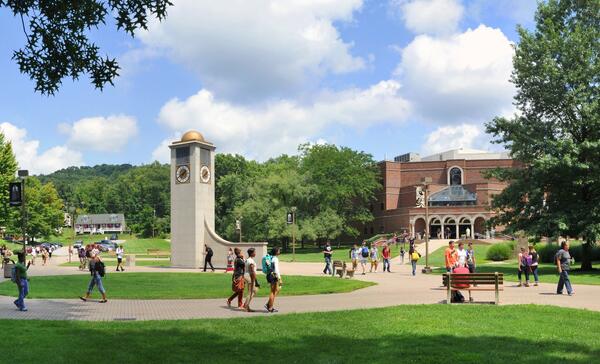
    West Virginia State University has been tasked with reviewing its programs and practices after the state’s governor issued an executive order against diversity, equity and inclusion. While other public institutions in the state have to do the same, West Virginia State University is in a somewhat unique position: It’s a public, historically Black institution with a predominantly white student body. The university serves all, but diversity and inclusion are part of its founding mission.

    Higher ed experts say that while few public HBCUs are openly discussing the issue, West Virginia State isn’t the only such institution that’s undergoing this kind of review process as DEI bans proliferate. Some argue that subjecting HBCUs to these reviews is counterintuitive in light of their historic mission, raising questions about how such institutions will fare in the current state and federal policy landscape.

    West Virginia State launched its review after Governor Patrick Morrisey last month banned state institutions from using “state funds, property, or resources” to “grant or support DEI staff positions, procedures or programs.” He also prohibited mandating DEI statements or any training or programming that “promotes or encourages the granting of preferences based on one person’s particular race, color, sex, ethnicity, or national origin.” The Foundation for Individual Rights and Expression, an advocacy organization for free speech rights, castigated the executive order as overly broad and warned it could limit what’s taught in West Virginia classrooms.

    The executive order also required “all cabinet secretaries and department heads under the authority of the Governor” to complete a report within 30 days, identifying any positions, procedures or programs based in “theories of DEI.”

    In response, West Virginia State University, along with other public universities in the state, submitted a letter outlining diversity-related positions, programs and activities, said Ericke Cage, the university’s president.

    “If there are concerns raised by the governor’s office … then we need to work to negotiate possible resolutions,” Cage said, though he expects it won’t come to that.

    In the letter, the university’s general counsel, Alice R. Faucett, argued that a comprehensive review found no evidence the university engages in or supports “preferential treatment” based on DEI principles.

    At the same time, the response readily acknowledged the university’s history and mission as an HBCU.

    “All procedural practices and programs at WVSU are designed to foster an inclusive and equitable environment,” Faucett wrote. They also “promote fairness and equal access while ensuring no group receives preferential treatment. The University remains dedicated to serving all members of the community, particularly those who have been historically marginalized, as part of its longstanding mission.”

    The letter highlighted some practices and policies that reflect the university’s “commitment to diversity, inclusion and compliance with state directives.” They included annual Title IX trainings, services for sexual assault survivors, campus presentations on human rights law and email messages recognizing Black History Month, Martin Luther King Jr. Day, Women’s History Month and other observances.

    Faucett’s response also noted that the university receives some federal grants and privately funded scholarships with “DEI components,” without offering further detail.

    Felecia Commodore, an associate professor of higher education at the University of Illinois at Urbana-Champaign, said other public universities have taken a similar approach to DEI bans, arguing to state lawmakers that “there’s nothing to reorganize, because we’re not doing what you’re saying.”

    ‘Baked Into Who We Are’

    Though such DEI reviews might seem fraught for an HBCU, Cage believes the university is likely to come out unscathed—and it may even fare better under the governor’s scrutiny than its non-HBCU counterparts. He noted that West Virginia State doesn’t have a DEI office or specific DEI personnel, a detail also highlighted in the university’s response document.

    “When it comes to diversity and inclusiveness, that’s really baked into who we are as an institution as part of our DNA,” Cage said. “At our very core, we are all about being a highly inclusive institution where any student, regardless of their background, can come and get a good-quality education.”

    He also emphasized that WVSU’s student population is majority white. University data from fall 2024 shows white students made up about 72 percent of the roughly 3,200 enrollees, while Black students composed about 10 percent, making it hard to argue the HBCU favors one racial group over another. Nationwide, non-Black students made up 24 percent of enrollment at HBCUs in 2020, compared to 15 percent in 1976, a trend that’s sparked discussion within some of these institutions about how to preserve HBCUs’ legacy while attracting and serving an increasingly broad range of students.

    Commodore pointed out that, in fact, “HBCUs were some of the only institutions that never had race-based admissions.” HBCUs were founded after the abolition of slavery to educate Black Americans at a time when such students weren’t welcome at other higher education institutions.

    For a while, non-Black students “chose not to go to them, but [HBCUs] have been inclusive since their inception,” she said. “If the aim of these reviews of DEI is to ensure that institutions are not discriminating because of race or gender or sex, to ensure that people are not being prioritized or excluded … actually, HBCUs were the model for that.”

    Given that history, Cage theorized HBCUs may not be heavily affected by DEI bans for the same reasons he’s hopeful for his own institution: Diversity and inclusion are intrinsic to how these institutions operate, not housed in a particular office or center. At the same time, they serve all students. Non-HBCUs, on the other hand, have made changes over the years, building up supports and services for students of color, which are now at risk.

    For “predominantly white institutions [that] have not traditionally or historically had that focus on inclusivity, I think it will be a challenge,” Cage said. “It is important for institutions to be welcoming, to provide support systems for diverse students,” and DEI programs were intended to make sure students from underrepresented backgrounds “felt that they were part of the university community.”

    Some non-HBCUs in the state are scrambling to make changes to comply with the executive order. The state flagship, West Virginia University, just a few hours away from WVSU, reported in late January that it would shut down its Division of Diversity, Equity and Inclusion in response to the executive order, a move the governor celebrated as a “win.”

    “This is just the beginning of our effort to root out DEI,” Morrisey said in a video announcement about the division’s demise. “That’s going to happen more and more in the weeks and months ahead.”

    Concerns Remain

    Shaun Harper, University Professor and Provost Professor of Education, Business and Public Policy at the University of Southern California and an opinion contributor to Inside Higher Ed, said it’s become “incredibly pervasive” for public HBCUs to have to conduct reviews of their DEI work as state-level DEI bans spread—even if many HBCU leaders aren’t discussing the issue publicly.

    And such reviews are extra burdensome for HBCUs, he argued.

    “If a predominantly white institution gets that same request, it’s likely a lot easier for them to list their culture centers, their Office of Multicultural Affairs, perhaps the office of the chief diversity officer,” said Harper, who also serves as USC’s Clifford and Betty Allen Chair in Urban Leadership. For HBCUs, it’s “impossible, in fact, to catalog everything that would otherwise qualify in any other context as DEI” because most have majority-Black student populations and gear their programming and services toward their student bodies.

    “It’s really onerous for presidents and their cabinet members and others on their campuses to even attempt to complete this exercise,” Harper added. “It requires enormous sums of their time.”

    Harper doesn’t believe state lawmakers are gunning for HBCUs with anti-DEI bans; it’s more likely they thought very little about how hard it would be for them to list their diversity efforts, he said. Nonetheless, the bans make some public HBCU leaders fear for their state funding if they don’t comply, or if their DEI reviews fail to appease state lawmakers when many don’t have funding to spare.

    Paulette Granberry Russell, president of the National Association of Diversity Officers in Higher Education, said part of the challenge with many DEI bans is their “vagueness” and the “chaos” that can create for higher ed institutions.

    The wording of some laws and executive orders calls into question, what can an HBCU do “to acknowledge, teach, celebrate, promote, its roots?” she said. “Is celebrating a national holiday”—like Martin Luther King Jr. Day—“is that acceptable?”

    Cage said he hasn’t ruled out that some of WVSU’s programs could be at risk—including federal grants with DEI components or privately funded scholarships for students from certain racial backgrounds or geographic areas—as a result either of the governor’s executive order or President Donald Trump’s efforts to root out federal funding for DEI.

    “If those privately funded scholarships are put in jeopardy, or if federal grants are eliminated, there will be a direct impact on our ability to support our students or to advance research and innovation on our campus,” he said. “Our students come to us with a thirst for knowledge, but they also come to us with not a lot of financial resources. I can’t tell you where we would come up with the resources to fill that gap.”

    While the university is reviewing its academic programs as well, Cage said any changes to curricula or academic programming would fly in the face of the university’s accreditation standards, which require a commitment to academic freedom.

    “When it comes to academic freedom and integrity, those are things that we really need to hold the line on,” he said.


    Source link

  • Advice on cultivating an interdisciplinary mindset (opinion)

    Advice on cultivating an interdisciplinary mindset (opinion)

    Graduate students often begin their programs immediately after earning an undergraduate degree. Your excitement over a field—whether it was kindled by reading great books, paying attention to current events, the charisma of inspiring faculty members or attraction to the ideas presented in a course—gets you started on a career track that leads through graduate school. It may therefore feel a little late to start thinking about what you would like to do with your life midway through your graduate program. But in fact, it is an excellent time.

    People are attracted to research for many reasons, including a fascination with problem-solving, puzzles and ideas; a desire to change the future of some problem impacting the human condition; interest in creating and running a research team; or simply an attraction to Sciencia gratia scientiae—knowledge for knowledge’s sake.

    As a Ph.D. student, your research may be focused on the discovery of new principles, or you may focus on the application of existing ideas to solve practical problems. For example, you might focus on influencing policy around polyfactorial problems like poverty or climate impact, designing and testing public health interventions, or defining and implementing best practices in a given field or occupation.

    As you move through graduate school, the real-world problems you are most enthusiastic about may begin to feel out of reach. Research that focuses your thinking on application of existing knowledge to bigger-picture problems may leave you disappointed that you are not out on the frontiers, developing new knowledge. At the same time, your peers who have committed to studying the tiny details of an aspect of a problem may wish they could have more of a personal stake in solving its macroscopic elements, making human lives better and influencing policy makers’ decisions.

    Free Your Mind

    All this raises an intriguing question: How do you build yourself into a scholar who understands a problem at many levels, from atomic to planetary, from femtosecond to geological time scales? Is it even possible—or seemly—for a graduate student to try? Of course it is! You do not have to do every type of work that touches your interests, but it is rewarding to learn about how others are thinking about the things you think about.

    To understand this, try this exercise with your own work. What do we not know about your problem of interest? It does not matter if you work on malaria, Jane Austen or the root causes of poverty. The question works no matter where your interests lie. If you start jotting down answers to that question, you should be able to fill a page with unknowns in less time than it takes you to read this week’s “Carpe Careers” in Inside Higher Ed.

    Stow your list away for a while, for any duration from lunchtime to a month. Later, take it out and reconsider it. Make a page with three sections and separate the mysteries into:

    • Things that you don’t know but believe you can reason your way to a useful hypothesis about;
    • Things that you don’t know, but that are probably in your field’s literature;
    • Things that you don’t know and suspect nobody knows.

    All three of these are interesting lists. You should keep the first one close to you so that you can think about it often. Treat this list like a game. When you would otherwise be playing with your phone, pull out an interesting question and spend a few minutes thinking about how you might solve it, whether with an elegant experiment, brute force or clever analogy. It does not matter much whether you actually pursue any of the ideas that come from list one. Finding ways to solve problems is a core part of your graduate training. Building confidence that many different problems are within your scholarly grasp is invaluable.

    Take your second list to the library or a quiet corner and poke at your field’s literature, and then at the broader literature to see what other people have done. Be expansive as you look. If you work on, say, how vibrio bacteria sense the environment, you already keep up with the cholera literature. But what can you learn about how climate impacts the vibrios by looking for cholera in literature? How many novels have cholera as a plot element? When were they written and who was their audience? What does that literature tell you about who was affected by the disease, and where, and when, and why? What does history tell you about the times the books were written and the times that they portray? What was plumbing like in those times and places, or public sanitation? Do you have enough coffee to think deeper about your interests? Do you have enough time? It is well worth the effort, and helps you get to the fun part: list three.

    Enter the Matrix

    You do not have to be an expert in everything connected to your work. You can gain immeasurably more by becoming part of the vast interconnected thinking that surrounds us all. “If you want to go fast, go alone. If you want to go far, go together,” says the poorly sourced refrigerator magnet quote. To develop traveling companions, develop connections with people who, like you, have interests connected to what you study.

    Promoting interdisciplinary research is important to those who take on complex problems ranging from climate change to human psychology. The logistics of stimulating interdisciplinary research are tough because different fields use different languages to describe problems that they may have in common. Those who think about connected ideas are often not only in different disciplines but in different places, whether that means in different colleges, schools and centers within a university or in different types of institutions beyond academe. Try to count the fields that are interested in poverty, from anthropology to architecture. Think of where people practice those fields: in universities, governments, civil society, international organizations, religious groups and more.

    As a graduate student, you may not have time to find all those whose insights might be valuable to you. But interdisciplinarity is increasingly important to academic institutions. Yours likely has a number of interdisciplinary centers. Find a list of them and take an afternoon to look them up. If there are several centers near you, it is likely that at least one crosses into your area of interest. Sign up for their Listserv and go to their seminars. Put the limits of your field and your position aside. You are not just a grad student or just a relatively new scholar in your discipline. You are a big thinker interested in big problems. Go forward as an equal and make some new connections. It might change your scholarly life.

    Victoria McGovern is the chief strategy officer of the Burroughs Wellcome Fund, a nonprofit funder with a mission to nurture a diverse group of leaders in biomedical sciences to improve human health through education and research. Victoria is a member of the Graduate Career Consortium, an organization providing an international voice for graduate-level career and professional development leaders.

    Source link

  • Florida ends in-state tuition for undocumented students

    Florida ends in-state tuition for undocumented students

    Florida state lawmakers voted on Thursday to get rid of in-state tuition for undocumented students as part of a sweeping immigration bill, The Miami Herald reported.

    Previously, undocumented students who attended high school in the state for at least three consecutive years and enrolled in college within two years of graduating could receive a waiver to pay in-state tuition rates. Now their tuition costs will go up significantly, a particular challenge given that these students can’t receive federal student aid.

    Democratic lawmakers attempted to amend the bill so that undocumented students currently enrolled at public universities could pay in-state rates for the next four years, but the amendment failed in the state Senate.  

    “We wanted to repeal in-state tuition and focus on Floridians,” Governor Ron DeSantis said at a news conference Thursday.

    Source link

  • Education Department cancels $350M in contracts, grants

    Education Department cancels $350M in contracts, grants

    J. David Ake/Getty Images

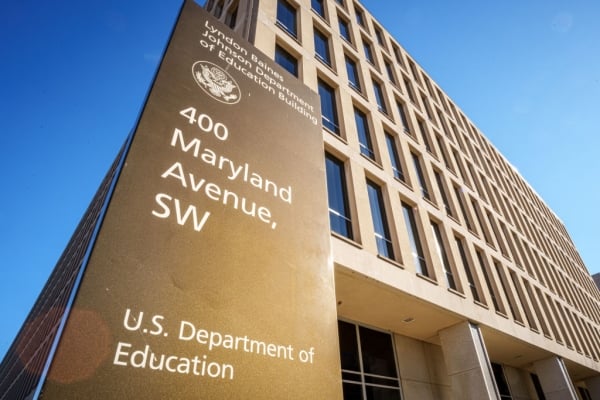
    The U.S. Education Department has canceled 10 contracts with Regional Educational Laboratories totaling $336 million and a further $33 million of grants to Equity Assistance Centers.

    The decision, announced Friday, appears to be another example of Elon Musk’s U.S. Department of Government Efficiency slashing the department’s activities and of anti–diversity, equity and inclusion activist Christopher Rufo’s continuing influence. The cuts also seem to part of the Trump administration’s crusade against programs that could be considered DEI-related, but it’s unclear what all the canceled contracts and grants were actually for.

    Regional Educational Laboratories, or RELs, have been around for more than a half century. Among other things, they contribute “research on how experiences within the nation’s education system differ by context and student group, thereby impacting outcomes,” according to the website of the Institute of Education Sciences, which administers the 10 RELs.

    On Feb. 10, the Trump administration said it canceled nearly $900 million in Institute of Education Sciences contracts. Then, on Thursday night—in a news release titled “U.S. Department of Education Cancels Additional $350 Million in Woke Spending”—the department announced the severing of the REL contracts.

    “Review of the contracts uncovered wasteful and ideologically driven spending not in the interest of students and taxpayers,” the department said. It said REL Midwest “has been advising schools in Ohio to undertake ‘equity audits’ and equity conversations.”

    But the release didn’t say how much REL Midwest was receiving for that work or further explain what the other canceled contracts were for. The department said in an email Friday that no further information was “cleared for release.”

    President Trump has said he plans to close the Education Department, but the release suggested that these contract cancellations might not be part of a permanent reduction in spending. “The department plans to enter into new contracts that will satisfy the statutory requirements, improve student learning and better serve school districts, state departments of education and other education stakeholders,” the release said.

    The release also said the department “terminated grants to four Equity Assistance Centers totaling $33 million, which supported divisive training in DEI, critical race theory and gender identity for state and local education agencies as well as school boards.” It didn’t hint at restoring this funding.

    The Equity Assistance Centers were originally referred to as the Desegregation Assistance Centers program, according to the Education Department, and help to ensure “that all students have equitable access to learning opportunities, regardless of their child’s race, sex, national origin, or religion.”

    On Thursday afternoon, Rufo, a senior fellow at the conservative Manhattan Institute, posted on X a few examples of what he had telegraphed as “a trove of insane videos, slides and documents from the Department of Education. The whole department functions like a Ponzi scheme for left-wing ideologies.”

    Then, roughly three hours before the department announced the cuts, he posted, “I’m hearing murmurs that the @DOGE team is following my posts about the Department of Education.” About an hour before the announcement, he posted that the department’s “DOGE team has terminated $350 million in federal contracts to the DOE’s ‘regional education laboratories’ and ‘equity assistance centers.’ We expose corruption on X, then DOGE wipes it out in D.C.”

    Rufo didn’t return requests for comment Friday. The Knowledge Alliance, a coalition advancing research that’s critical to solving education problems, said in a news release Friday that the REL contract cancellations continue “the unprecedented assault on learning and evaluation in the U.S. education system.”

    “RELs provide research and technical assistance that is tailored to specific states and communities, helping schools and districts tackle the most pressing challenges they face,” the Knowledge Alliance release said. “Working in close partnership with educators, school leaders and policymakers, RELs help design and implement approaches that meaningfully improve outcomes for everyone in our school communities.”

    Source link

  • OCR halts investigations, switches focus to Trump priorities

    OCR halts investigations, switches focus to Trump priorities

    The U.S. Department of Education’s Office for Civil Rights has paused the majority of its investigations, according to a new report from ProPublica, and shifted focus to new cases related to gender-neutral bathrooms, trans women athletes and alleged antisemitism and discrimination against white students.

    Those cases, in contrast with most historically taken on by OCR, were not launched in response to student complaints, but rather as a result of direct orders from President Donald Trump’s administration. OCR employees told ProPublica that they have been instructed to cancel meetings related to cases opened prior to Trump taking office and to avoid communicating with students, families and institutions involved in those cases.

    One OCR employee who spoke to ProPublica under the condition of anonymity said many of the cases they have been asked to stop investigating are urgent.

    “Many of these students are in crisis,” the employee said. “They are counting on some kind of intervention to get that student back in school and graduate or get accommodations.”

    About 12,000 complaints were under investigation at the end of former president Joe Biden’s term, including 6,000 related to discrimination against students with disabilities, 3,200 related to racial discrimination and 1,000 related to sexual assault or harassment, ProPublica’s analysis of OCR data found.

    Source link

  • Haskell Indian Nations U lays off probationary workers

    Haskell Indian Nations U lays off probationary workers

    Haskell Indian Nations University, a small tribal college in Lawrence, Kan., laid off nearly 30 percent of its faculty and staff to comply with the Trump administration’s directive to shrink the size of the federal workforce. 

    An order came through the Office of Personnel Management Feb. 13 to fire all probationary employees who had not yet gained civil service protection.

    Haskell is one of two tribal colleges funded by the Department of the Interior. As of fall 2022, the institution had 727 full-time students and employed 146 faculty and staff. Local news reports that about 40 probationary employees have been laid off.  

    The Haskell Board of Regents said in a statement that it was “closely monitoring the recent directive from the Office of Personnel Management, which has resulted in the termination of certain probationary federal employees across multiple agencies. At this time, the Board has not received confirmation that Haskell Indian Nations University is exempt from these layoffs.”

    A member of Haskell’s Board of Regents said the layoffs are in “basically every department on campus”—faculty, student services, athletics, IT and more, according to The Lawrence Times.

    The institution has faced recent turmoil, running through eight presidents in six years and being subject to a congressional investigation over failing to address student concerns about sexual assault.

    In December, Kansas Republican senator Jerry Moran and Republican representative Tracey Mann put forward legislation to take the college out of the hands of federal oversight and transfer it to a Haskell Board of Trustees appointed by the tribal community.

    Source link

  • An opportunity to reframe the DEI debate (opinion)

    An opportunity to reframe the DEI debate (opinion)

    The U.S. Department of Education’s Office for Civil Rights issued a Dear Colleague letter on Friday that instructs college leaders to eliminate any campus activities that directly or indirectly treat students differentially on the basis of race. Others will rightly push back on the logic of the department’s stated justifications, the absurdity of its timing and the accuracy of its examples, but I want to suggest that campus leaders can also take this as an opportunity to enact real change on behalf of all students.

    This is a moment for campus leaders to reframe the terms of the current debate over the legitimacy of special diversity, equity and inclusion programs by doing the long-needed work of truly decentering whiteness as the normative identity and experience within so many campus curricula and co-curricular programs.

    If we are to truly serve our students regardless of race, and if—as the department’s letter states—we have to put an end to even the subtle ways racial preferences and privileges are attached to seemingly race-blind policies, then watch out. Most campuses have a lot of work to do, and much of it is not going to be to the liking of those who believe that it is DEI programs that make an otherwise level playing field an unfair one.

    What the Dear Colleague letter fails to mention is that the proliferation of DEI activities on campuses came about as a more or less conservative compromise position as the population grew more diverse and as students demanded greater access. In treating Black and other minoritized students as “special,” such programs meet the needs of these students in supplementary ways rather than by ensuring that the core curriculum and student life experience are equally useful, meaningful and available to all. If the department insists that we put an end to all DEI programming, then it will also have to support efforts to ensure that whiteness is not smuggled in as the norm or standard.

    Early in my teaching career, I saw the ways that DEI programs could be used to reinforce white centrality rather than challenge it. Student demands for a more representative and accurate curriculum were met with resistance by senior faculty uninterested in expanding their own spheres of knowledge. Special courses in “women’s history” or “Black studies” became the compromise position. Rather than revising the canon to reflect the needs of a curious student body, rather than incorporating new scholarship into the university’s core, rather than interrogating the biases and histories of the curriculum, new courses and departments were created while the original ones were left intact. This détente (you teach yours and I teach mine) became the model.

    Many of the special programs that the Dear Colleague letter seems to have in mind follow this pattern. They keep in place a curriculum and campus culture firmly centered around the interests and perspectives of white students while offering alternatives on the side. If compromise via DEI activities is no longer an option, then a better solution will have to be found. The diversity of the student body is a fact that will still require a reckoning. Decades of scholarship reveal the many ways whiteness is encoded in supposedly neutral policies and programs, and this will not be magically erased. For many colleges, achieving a campus where white students are not unintentionally given extra opportunities based on their race will require radical change.

    My guess is that the department knows this on some level. Otherwise, why is race rather than sex or religion targeted? A sex-neutral campus would have to do away with single-sex housing and sex-segregated sororities and fraternities. A religiously neutral campus could no longer privilege Christian holidays or values.

    We should absolutely fight against the many overt inaccuracies of the Dear Colleague letter. And we should fight against both overt and covert expressions of racism and white supremacy. But we need not fight on behalf of compromise solutions to the very real problems that inspired our current DEI campus environment. Instead, we can use this unexpected opportunity to pick up where we left off and ensure that every program, every aspect of the curriculum, every student service is designed with the needs of our very diverse student body in mind. We can stop treating the experiences and needs of white students as the default or the neutral.

    What would our institutions look like if normative whiteness were no longer at the center and the need for many of the special DEI alternatives were made moot? Let’s find out.

    Marjorie Hass is president of the Council of Independent Colleges.

    Source link

  • The Timpson university – HEPI

    The Timpson university – HEPI

    • By Richard Brabner, Executive chair of the UPP Foundation and Director of ESG at UPP.
    • Richard is a guest on today’s My Imaginary University podcast with Paul Greatrix, in which he cites James Timpson as one of the inspirations behind his imaginary university. To coincide with the podcast, Richard has penned a review of James Timpson’s book, The Happy Index: Lessons in Upside-Down Management.

    You’re not supposed to have heroes at 40, or at least not admit to as much in the august pages of the HEPI blog. But here’s my confession. I have two and they are both called James.

    The first – James (Jimmy) Anderson, England’s greatest living sportsperson – isn’t relevant for the blog (although surely he deserves recognition from our great universities in the North West?). Instead this blog is about the other James – James Timpson – until recently CEO of Timpson Group and now Lord Timpson, Minister of State for Prisons, Probation and Reducing Reoffending.

    James Timpson is best known for the recruitment of former prisoners, with ex-offenders comprising around 10% of his company’s workforce at any one time. As his journey of employing ex-offenders developed, it led him to become a national figure – championing not just jobs for ex-offenders but prison reform. In 2016, he became the chairman of the Prison Reform Trust, founded the Employment Advisory Board network across the prison estate and, after the general election, became one of the Government’s most eye-catching appointments as the Minister of State responsible for all of this.

    It is his approach as a CEO, though, which offers an interesting perspective for higher education leaders. Not only is the business known for its recruitment policies but for many other progressive measures. He wouldn’t describe it as such, but James Timpson is a business leader known for putting social purpose into action.

    He would steer clear from using the term social value, or the increasingly common ‘purpose-led business’, because he finds corporate jargon maddening. This is one of the many lessons he shares in his book, which offers advice to leaders and would-be leaders on how to create a thriving organisation ‘that puts people first.’ The book – published before he became a Minister – is structured in eight chapters (or, as he calls them, lessons) with various interesting observations included in each. For this blog, however, I have pulled out three key themes which permeate through the book and are highly relevant to our sector.

    1. Happy colleagues = happy students

    University-employee relations are often fraught with tensions and have been riddled with industrial action in recent years – so could a key-cutting business offer a better way forward?  

    We’ve seen the transformative power of treating colleagues with kindness and respect, which then extends to how teams interact with customers. It’s a virtuous circle that can make our shops, and indeed all places of customer service, better for everyone involved.

    The quote above might come across a stating the bleeding obvious or even a little saccharine without the rest of the chapter it is written in, but it is important to put cynicism aside here, because throughout the book – and I would argue its number one focus – is to foster the right colleague experience.

    The idea of focussing on the colleague experience in an era of redundancies and ‘cost transformation’ may be too culturally difficult or simply inauthentic for our sector. But I would argue that the present circumstances make it even more important. At the heart of Timpson’s approach is a very human and empathetic one which respects colleagues’ individual circumstances rather than one which relies on policies and processes.

    Timpson has a Director of Happiness (again, please hold off on your cynicism) whose job revolves around providing support to colleagues confronting crises or challenges in their professional or personal lives. This person helps organise funerals, helps colleagues find somewhere to live and can even unlock financial support when necessary. Whether it is physical fitness, financial wellbeing or mental health, Timpson also offers a comprehensive package of welfare support for employees. Shouldn’t we do this too?

    Strong workplace benefits add to the positive colleague experience. This is not unusual for universities; academics and professional services tend to have great annual leave entitlements and exceptional pensions (compared to the private sector), but again, what comes through from reading The Happy Index is the human and empathetic element to their approach. They offer extra days off for milestones – a grandchild’s birthday or a school concert. They provide chauffeur-driven cars for an employee’s wedding, and they own 19 holiday homes dotted across the UK for Timpson’s colleagues to use for free.

    Much of this approach isn’t new or revolutionary, there are clear similarities with the 19th century quaker businesses, or Percival Perry’s policy of ‘high wages, reduced hours, and extensive corporate welfare’[1] for running Ford’s first factories in the UK. Yet, in an era of private equity financialisation, it is all too rare in the modern age. When Governments talk about universities learning from the private sector it is the likes of Timpson they should be referring to.

    2. Focus and simplicity

    Timpson’s human approach to the colleague experience is aided by simplicity – a value which cuts across the eight lessons in the book. When he writes about data, he says that leaders can become overly reliant on it and lose sight of what really matters. There are only four pieces of data James Timpson really cares about. Daily sales figures, customer service scores, cash flow – and what he describes as The Happy Index. This is a survey they regularly run and track with all colleagues, which asks one simple question: ‘On a scale of 1-10, how happy are you with the support you get from your team?’.

    If Timpson is right in his view that ‘the way colleagues feel reflects the way our customers will feel’, wouldn’t it be fascinating to see if this correlates to higher education? Perhaps universities could post this question each Friday via an app (not dissimilar to innovations like Teacher Tapp) to track colleague satisfaction and then correlate it with student experience data.

    Another relevant piece of advice is to avoid ‘entrepreneuritis’. Timpson says this is an area he struggles with as it is common for entrepreneurs to think they can venture into any business and make it thrive. Yet the pitfalls are as large as the opportunities. This reminded me of much of the evidence for the UPP Foundation Civic University Commission, where we found a huge amount of positive activity, but rarely was it strategic and connected to the needs of the city or region.

    The civic arena won’t be the only part of the university where our sector has to grapple with entrepreneuritis, but fortunately, Timpson offers some common-sense advice for how to test whether diversification is worth the investment, time and effort, based on three questions:

    Will it benefit the company, will the company fit into our culture, and is it going to be more work than it’s worth?

    All of these can be adapted for higher education.

    3. Giving back to get more

    The third theme brings us back to what Timpson is best known for. A ‘Timpson University’ would really lean into progressive recruitment for both academics and professional services colleagues, as well as adopt some of the most creative and impactful social value programmes in the private and public sectors. This shouldn’t be regarded as an act of charity. This is very much enlightened self-interest – James Timpson says that ‘returning citizens are often the most dedicated, honest and hardworking colleagues we can find’. A recruitment policy for colleagues which looks at supporting the most disadvantaged – ex-offenders, people who have suffered homelessness or who are care-experienced; alongside local recruitment (as some universities already do), which targets the poorest neighbourhoods in the region, could be transformational. The additional opportunity for a university, unlike a shoe repair shop, is the symbiotic relationship this approach could have with its widening participation strategy.

    Many universities have programmes to support disadvantaged people into employment, but I’m not sure any are as sophisticated or impressive as Timpson’s. There are clearly challenges, but the book is at its best when it details the journey the business has been through and some of the ways to successfully manage ex-offenders – unsurprisingly, the human approach and a culture which embraces kindness and the support and guidance of colleagues is critical.

    James Timpson’s book is a fascinating insight into running a successful business the right way. It really does show the art of the possible in terms of doing good while making a profit. But there are three weaknesses in a largely excellent read. Pulled together from a collection of Sunday Times articles, at times it can suffer from a lack of coherence. It is quite amusing, for example, to read about the importance of returning to the office on page 160 while finding out about the long-term potential of remote work on page 166. There’s also a little too much positive spin throughout the book. In the section about entrepreneuritis and diversifying income streams all of his examples ended up being successful. It would have been an even better read if he offered examples of real failure. I would have also liked to read more about his views on how the nature of business ownership impacts social value, something which should be explored in greater depth.  

    These are minor criticisms, however. The book offers excellent advice for leaders in any sector – even our universities – on the way to run a successful organisation in the 21st Century.


    [1] Kit Kowol: Blue Jerusalem: British Conservatism, Winston Churchill, and the Second World War

    Source link

  • Motivational Force: Building a Foundation for Student Success – Faculty Focus

    Motivational Force: Building a Foundation for Student Success – Faculty Focus

    Source link

  • Workers are cannibalised by the capitalist class (Nancy Fraser)

    Workers are cannibalised by the capitalist class (Nancy Fraser)

    The world is facing multiple crises simultaneously: Climate change, the rise of authoritarian movements, and the exploitation of labor from the Global South, among others. Professor of philosophy and politics at the New School, Nancy Fraser, says “it can’t be a coincidence” – at the root of it all is capitalism.

    Source link