Author: admin

  • Harvard lays off staff at its Slavery Remembrance Program

    Harvard lays off staff at its Slavery Remembrance Program

    Harvard University last week laid off the staff of the Harvard Slavery Remembrance Program, who were tasked with identifying the direct descendants of those enslaved by Harvard-affiliated administrators, faculty and staff, The Boston Globe reported.

    The work, which was part of the university’s $100 million Legacy of Slavery initiative, will now fall entirely to American Ancestors, a national genealogical nonprofit that Harvard was already partnering with, according to a news release.

    A Harvard spokesperson declined to comment on the layoffs to the Globe.

    The Harvard Crimson first reported the news, noting that the HSRP staff were terminated without warning Jan. 23.

    Protesting the move, Harvard history professor Vincent Brown resigned from the Legacy of Slavery Memorial Project Committee, which was assigned the task of designing a memorial to those enslaved by members of the Harvard community.

    Brown wrote in his resignation letter, which he shared with Inside Higher Ed, that he had recently returned from a productive research trip to Antigua and Barbuda when he “learned that the entire [HSRP] team had been laid off in sudden telephone calls with an officer in Harvard’s human resources department.” He called the terminations “vindictive as well as wasteful.”

    “I hope and expect that the H&LS initiative will weather this latest controversy,” Brown wrote. “I only regret that I cannot formally be a part of that effort.”

    Harvard’s Legacy of Slavery Initiative has repeatedly come under fire since it was announced in 2022. Critics assailed its lack of progress last year. The two professors who co-chaired the memorial committee resigned last May, citing frustration with administrators; the executive director of the initiative, Roeshana Moore-Evans, followed them out the door. Then HSRP founding director Richard Cellini told the Crimson last fall that vice provost Sara Bleich had instructed him “‘not to find too many descendants.’”

    A university spokesperson denied that charge, telling the Crimson, “There is no directive to limit the number of direct descendants to be identified through this work.”

    Cellini was among those fired from the HSRP last week.

    Source link

  • Judge reinstates professor LSU suspended after Trump remarks

    Judge reinstates professor LSU suspended after Trump remarks

    A judge has ordered Louisiana State University to return to the classroom a tenured law professor who says the institution suspended him from teaching after he made comments about Donald Trump and Louisiana governor Jeff Landry in a lecture.

    Donald R. Johnson, a state district court judge, signed a one-page order Thursday putting Ken Levy back in the classroom. The return might be short-lived; Johnson set a hearing for Feb. 10, during or after which he could decide that Levy should again be barred from teaching. The Louisiana Illuminator reported the ruling earlier.

    On Jan. 14, Levy was explaining his course rules to students—including a ban on recording the class. A recording was made nevertheless.

    Levy referenced Landry’s public calls in November for LSU to punish Nicholas Bryner, one of Levy’s fellow law professors, for Bryner’s alleged in-class comments about students who support Trump. Levy said he himself “would love to become a national celebrity [student laughter drowns out a moment of the recording] based on what I said in this class, like, ‘Fuck the governor!’”

    Levy also referenced Trump. “You probably heard I’m a big lefty, I’m a big Democrat, I was devastated by— I couldn’t believe that fucker won, and those of you who like him, I don’t give a shit, you’re already getting ready to say in your evaluations, ‘I don’t need his political commentary,’” Levy said. “No, you need my political commentary, you above all others.”

    Levy’s attorney, Jill Craft, said the university suspended Levy from teaching pending an investigation, though it hasn’t specified which comments allegedly generated student complaints.

    “When people try and censor academic freedom and free speech because they may not like the opinion or the thought, then we no longer have those freedoms,” Craft said.

    LSU spokespeople didn’t return requests for comment Thursday.

    Source link

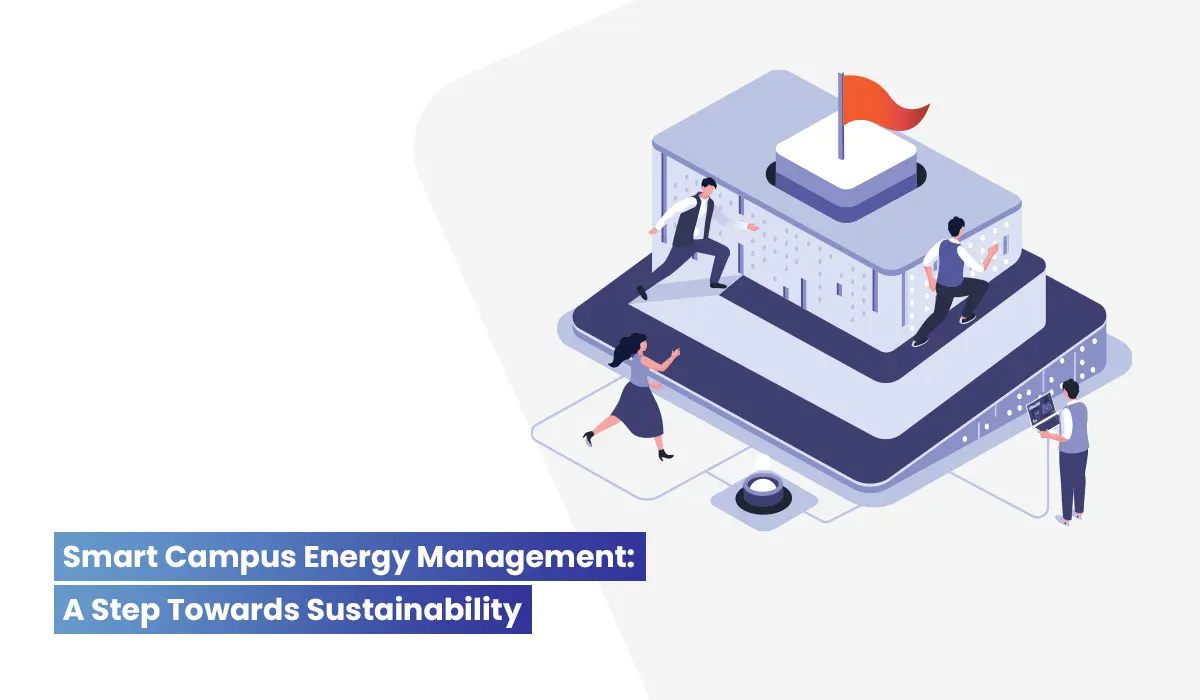
  • Smart Campus Energy Management and Green Campuses

    Smart Campus Energy Management and Green Campuses

    Introduction: How Educational Technology Promotes Green Campuses

    Sustainability is now a requirement, not a slogan, especially concerning educational institutions given the tremendous environmental impact of paper-based systems! Textbooks and administrative paperwork from colleges and institutions contribute to worldwide paper consumption. Panic not, the good news is that technology and smart campus energy management is making a difference.

    Universities may encourage sustainability by using innovation that eliminates waste, conserves energy, and optimizes resources. With the correct tools, becoming green may become the norm. Creatrix Campus’s educational innovations in the form of smart campus energy management are turning campuses into eco-friendly centers while improving efficiency.


    Benefits of Educational Technologies for Eco-friendly Campus Management


    Paperless Classrooms and Administration

    Reducing paper waste is a simple but effective way for institutions to become green. Paperwork is massive in conventional classrooms and administrative systems due to the proliferation of various forms of paper-based documentation. However, campuses may reduce paper use, simplify operations, and save time by moving digital!

    Paperwork is a thing of the past with cloud-based tools for resource optimization that manage student work, grades, and attendance. With a few clicks, students may turn in their work online, instructors can digitally grade and comment, and attendance can be kept tabs. In addition to enhancing efficiency, all of this helps save environment. On top of that, everything is well-organized and simple to find, which simplifies administrative duties.


    Controlling Energy Consumption Using Intelligent Devices

    Energy regulation is crucial to a sustainable campus. Smart campus energy management have increased university energy efficiency. Smart meters, IoT devices, and cloud-based energy management software can analyze energy usage, identify inefficiencies, and reduce carbon footprint on campuses.

    According to a new study out of the National Renewable Energy Laboratory, campuses can save 30% on their energy bills by implementing smart campus energy management solutions. Colleges can significantly reduce their energy use by installing smart lighting, HVAC systems, and energy-efficient equipment.

    Additionally, facilities staff may reduce waste and promote eco-friendly practices across the board by making smarter decisions on energy usage based on data-driven insights. It’s about more than just cutting costs; it’s about making a better, more sustainable future for generations to come.


    Learn to Reduce Carbon Footprint Online

    More than just a convenient way to attend classes, online learning changes the atmosphere. Universities may substantially reduce travel by going digital, reducing traffic, carbon emissions, and cars on the road. Online education reduces carbon footprints by up to 90% compared to on-campus instruction, according to The Global e-Sustainability Initiative.

    But it’s not just about travel cuts!  Online learning minimizes the need for environmentally harmful paper books, handouts, and other materials! Students get to access course materials instantaneously from anywhere, saving resources and giving the planet a respite.

    Students can get degrees from home while protecting the environment—a win-win!


    Sustainable Resource Management

    Building a green campus requires efficient resource management. AI and IoT-powered smart campus energy management systems are changing how universities measure and optimize resource use. Educational institutions may now make smarter judgments about water, electricity, paper, and plastic to reduce waste and save money.

    Real-time data and predictive analytics helped institutions employing smart campus energy management systems cut energy use by 15% reports The International Energy Agency. It’s not just about turning off lights in empty classrooms—it’s about using energy-hungry equipment sparingly and conserving water in dorms and cafeterias.

    Cloud-based technologies and AI-powered analytics help colleges improve their sustainability initiatives and achieve lasting impact! Understanding how and when resources are used helps institutions reduce waste, save money, and promote sustainability.


    Environment Awareness

    Environmental knowledge is crucial to creating tomorrow’s leaders on campuses. Sustainability in the curriculum and green campus projects can teach students to be eco-friendly. This approach may even help students become environmental activists.

    According to a National Environmental Education Foundation research, 79% of students think their institutions should address sustainability, and 67% prefer to work for green companies. University environmental awareness programs teach lifelong habits and educate students to take responsibility for their ecological footprint.


    Remote Collaboration Encouragement

    Carbon footprint reduction doesn’t require face-to-face interaction. Virtual classrooms and cloud-based technology let students and teachers communicate anytime, anywhere, minimizing travel and meetings. Trust us, remote collaboration for group tasks or faculty discussions saves time, cuts travel emissions, and makes their workspace more flexible and sustainable.

    Remote work and collaboration tools reduce travel and their organization’s environmental effect, according to 60% of McKinsey respondents.  


    Data-driven Sustainability Planning

    Sustainability requires educated decisions, not just good intentions. Data helps higher eds design better, more customised sustainability plans. Leveraging AI and IoT for green campus operations aids to analyze real-time energy, waste, and resource allocation data to improve.

    According to a Gartner report, 70% of organizations utilizing data analytics have improved their sustainability initiatives, from waste reduction to energy optimization. Same with universities. Educational technologies let institutions track success, identify areas for development, and make long-term environmental decisions. Data-driven sustainability is a game-changer, not a buzzword.


    Conclusion

    University greening can jump forward with technology. Sustainable, eco-friendly education is possible through paperless classrooms in universities, smart campus energy management, and online learning. By using cloud-based tools for resource optimization, institutions lower their environmental footprint and inspire future leaders.

    Is your organization ready to impact? Greening your campus is easy with Creatrix Campus and its creative solutions. Connect with us.

    Source link

  • UKRI increases PhD stipend by 8 per cent

    UKRI increases PhD stipend by 8 per cent

    Let’s get the headlines out of the way first.

    UKRI is increasing its PhD stipend by eight per cent to £20,780 from 1 October 2025. Wonkhe understands that this will not be funded by a reduction in the overall number of grants but instead forms part of UKRI’s funding settlement for 2025–26.

    Pay

    This means that UKRI will provide a take home income that is equivalent to the take home National Living Wage. This is not the same as the Real Living Wage but it is nonetheless a significant and welcome increase.

    This is the single largest real terms increase of the stipend for funded students since 2003. Given that UKRI supports 20 per cent of doctoral students, and many universities choose to mirror the terms of UKRI, this will undoubtedly have a significant impact on improving the conditions of PGR students.

    There is a sort of unwritten expectation that providers will generally peg their own grants to the levels of UKRI’s. Albeit, as we learn from the accompanying financial analysis that goes with the main report about around one in five students receive an amount above the minimum stipend. However, while half of respondents to a survey on the UKRI stipend indicated that at least 90 per cent of their non-UKRI funded doctoral students received a stipend equivalent to that of UKRI’s minimum level, around one in ten indicated that all of their non-UKRI funded doctoral students receive a stipend lower than UKRI’s minimum.

    The potential implications of this are that some providers will further stretch their already stretched resources in maintaining UKRI’s funding levels, or that some providers will fall behind the UKRI minimum rate for students they fund directly. Prior to today’s announcement providers were generally positive about mooted increases. However, while 72 per cent of respondents say they would increase their own stipends to match the National Living Wage this is lower than the 89 per cent who said they would be very or somewhat likely to increase their own stipends by inflation (and a little higher than the 66 per cent said who said they would be very or somewhat likely to increase their stipend if it was anchored to the Real Living Wage).

    Providers, for their part, stated in interviews that

    Institutions would endorse in principle an increase in line with price inflation (at a minimum) or National Living Wage (which institutions feel, morally, would be preferable) and thought they would be able to match this for university funded stipends. However, for UKRI training grants, were such a raise not accompanied by additional grant funding from UKRI, ROs might need to reduce student numbers in the future to ensure they can continue paying the minimum stipend.

    Providers may see some good news in the increase in the minimum fee for a UKRI student increasing by 4.6 per cent to £5,006.This should mean that providers can recoup a slightly greater amount of funding for their students and like with grants many providers will align their home PGR fees to the UKRI minimum. This is an entirely different question as to whether providers are anywhere close to recouping the actual cost of teaching PGR students.

    Terms

    The funding increase will grab the headlines but the revisions to UKRI’s Standard Terms and Conditions of Training Grant (TGCs) are likely to be as impactful.

    In February 2023 UKRI commissioned Advance HE to carry out a review of its TGCs from an EDI perspective which has been considered alongside UKRI’s own new deal for postgraduate research. There is also a new companion document to the update to the TGCs by the UKRI commissioned Equality, Diversity and Inclusion Caucus (EDICa). In their report EDICa highlighted the impacts of child support on the continuation of studies, the wide variability in disabled students getting the support they need, the inflexibility in moving between full and part-time study, and the considerable time it takes in getting medical evidence for securing adjustments. As the authors state

    However, for many current doctoral training students, the system of support in its current form is entrenching wider inequalities, particularly relating to caring responsibilities, disability and the benefits that may be achieved through change of mode of study.

    This seems to be a message that UKRI has taken seriously.

    The first thing to point out is that UKRI is not a regulator and it is at pains to point this out

    UKRI is not a regulator and while we for the first time are explicit that we expect compliance with consumer law, employment law, Office for Students and Medr regulation (all where applicable), providers remain responsible for their own compliance and regulators for enforcement.

    It feels self evident but the revised terms make it explicit that the role of UKRI is to steer the organisations it funds, and by extension the sector, toward better conditions for PGR students. UKRI will impose conditions on its own grants but it has a wider set of expectations for the sector on improving the conditions for PGRs.

    The reason it is steering not shoving the sector are numerous. Primarily, it has limited powers within HERA but it also acknowledges that it is providers that are best placed to make decisions on their own students. The revision to the terms is the moment where some of the ambitions of the Tickell review have come to life in loosening the conditions and reducing the bureaucracy on student grant funding.

    This new flexibility comes in a number of forms. UKRI has extended the time a student can draw their stipend while on sick leave from 13 to 28 weeks. UKRI is also removing the requirement for students to provide medical evidence when taking medical leave, instead this process will be more closely managed by a students’ provider. This is because obtaining a diagnosis was a barrier to students taking the leave they needed.

    It is in their approach to supporting disabled students where the dynamic of UKRi improving its own conditions while encouraging universities to do likewise comes to light. They note

    We will require that disabled students are offered reasonable adjustments at the earliest opportunity and that the research organisation or provider has a policy to support this. For our part, we will update UKRI’s Disabled Students’ Allowance (DSA) Framework in April 2025.

    Again, the expectation is that providers will not just act reasonably but they will only ask students for evidence of a disability where it is necessary to do so. This is a reflection of EHRC guidance, recommendations of the OfS Disabled Students’ Commission and the Bristol v Abrahart judgement.

    Finally, UKRI is removing restrictions on students moving between full or part-time modes of study. Their view is that providers are better placed to advise on student modes of study, and they may offer additional funding if they wish.

    There are other important measures within here which deserve consideration. Grant funding will include an individual risk assessment when a student is pregnant, breastfeeding or has given birth in the last six months. There is not strong evidence that PGR students are disadvantaged when joining a trade union. And there are still a whole range of challenges in getting support for international students due to the interplay between visa regulations and PGR study.

    In total this feels like the kind of policy change that the sector has been calling for. It is not the kind of public argument, back and forth debate, that has been seen on other culture measures like updating the REF. Instead, it is a considered series of changes to the actual conditions of PGR students that will put more money in their pockets while allowing greater flexibility around: leave, illness, support for disabled students, and mode of study. It is not perfect and the wider pressures PGR students will feel are still acute, but it is a big step forward.

    UKRI has taken an approach which the sector may recognise as reasonable. They have updated their own conditions based on the evidence presented to them, explained where they have chosen not to, and given greater flexibility to providers to do the things they believe are important.

    Source link

  • “How Are You Doing Today?” A Survey for Starting Each Class – Faculty Focus

    “How Are You Doing Today?” A Survey for Starting Each Class – Faculty Focus

    Source link

  • The labour of being a student nurse

    The labour of being a student nurse

    It’s 5:15pm and I’ve just finished an extra shift on placement to meet my required 2300 hours. I haven’t had time to change out of my nursing uniform.

    I had to support a deteriorating patient, a patient who was dying, and a patient that needed a new catheter as an emergency – otherwise they could have died too. And then I remembered I was running late to a board of governors’ meeting.

    I run in and apologise: scrubs on, hair ragged, eyes puffy, pouring the first glass of water I have managed to drink since 8am that morning.

    I explain I need to leave a bit early for patient bedtime calls. People were surprised, and suddenly the focus was away from the agenda and the questions flooded. I began to explain what it is really like to be a student nurse.

    I explained about the unpaid placement hours, dealing with real life patients and people who rely on us in some of their most vulnerable moments. The full time studying, having to work alongside it all and the toll on our mental and physical health. I was just scratching the surface.

    According to the Royal College of Nursing (RCN), more than 32,000 student nurses could drop out of their courses by the next parliament and seven in ten are considering quitting due to financial pressures. Statistics like these don’t surprise me, instead they reflect me and my colleagues’ experiences.

    Ultimately, institutions and governments can’t support student nurses, increase numbers and reduce retention issues if they first don’t understand their experience.

    It’s a full-time job on top of a full-time job

    We are told studying a full-time degree is a full-time job. Many students are now working more hours part- or full-time to fill the gap left by an inadequate student maintenance system, but what about student nurses?

    Student nurses juggle between 37.5 and 48 hours a week of unpaid work placements – and also work part-time jobs because the cost of living is so tough. We see student nurses rely on the free tea and toast in the staff rooms as their only source of nutrition for the day.

    In August I was on a five-day week placement. I had hours I had to make up as I was unable to attend a period of placement earlier that year due to my mum being treated for cancer. For student nurses, every time we encounter a barrier, the first thing we think about is the hours we’ll need to make up.

    We’re not entitled to sick pay, special leave or bereavement when it comes to placement. At the time of writing, I am currently on my ninth straight working day, between placement and my job as a sabbatical officer. My rent is due, my bills need paying – this is survival.

    Is it even worth it?

    It’s understandable that nursing students often feel like they exist in a limbo between the university they’re studying at and their placements. Where the student journey is so different, there needs to be different or specialised support to ensure nursing students can succeed.

    Nursing students don’t have the ability to commit to all the things that enrich the student experience – clubs, societies or volunteering – because they don’t have the time for it.

    It makes many question if they can ever actually just be students.

    In a context of an incredibly challenged health care system, student nurses are being asked to do more and more before they are qualified. As future healthcare professionals who signed up for these degrees because we want to take care of others, we are in positions where we can’t care for ourselves.

    The labour of being a student nurse feels heavy but that’s not to say that there isn’t room to make positive change.

    To universities, talk to your healthcare students, celebrate their differences from other students but acknowledge the challenge it can bring. By understanding them and lobbying on their behalf they’ll feel validated and supported by their institution.

    Looking to the government, with future reform of the NHS on the government’s agenda, how will you look at the whole student nurse journey before focusing on only recruitment? Working with trade unions including the RCN to improve the immediate conditions of student nurses is an important first step to ensure retention.

    This could include student discounts on food in hospital trusts, travel bursaries, and flexible working regulations. In order to increase recruitment in the long term, the government should consider livable bursaries and the introduction of a loan forgiveness scheme.

    It’s important that both the health sector and the higher education sector look after our future NHS and healthcare workforce. Because no matter who you are or where you come from, in yours’ or your loved one’s time of need, we want to always be there to help you.

    We’ll only see progress once there is a joined up approach from universities and government to improve the experience, and that starts with better understanding the labour of being a student nurse.

    Source link

  • What’s New at InsightsEDU 2025? Key Updates You Won’t Want to Miss

    What’s New at InsightsEDU 2025? Key Updates You Won’t Want to Miss

    With InsightsEDU 2025 just around the corner, we’re excited to share some of the key updates and new features coming to this year’s conference, happening February 12-14, 2025 in New Orleans, Louisiana. As the premier conference for higher education marketing and enrollment management, this year’s event promises to be our most engaging yet. Attendees can expect immersive experiences, innovative sessions, and exceptional speakers, all aimed at equipping higher education leaders with the skills and strategies needed to serve today’s Modern Learners. From the welcome reception to our new customized workshop experience, InsightsEDU 2025 is full of exciting opportunities. Read on to see what’s in store!

    This year, we’re embracing the vibrant culture of New Orleans with the Bourbon Street Bash, a celebration that will give attendees the perfect opportunity to unwind, network, and experience NOLA in style. The evening will kick off with a second-line parade, leading attendees through the historic streets of New Orleans to the iconic Bourbon Vieux venue. With a live jazz performance, this event promises to be a memorable way to start an exciting conference experience with the higher ed community.

    For the first time, InsightsEDU is offering a hands-on, interactive workshop led by Dr. Jodi Blinco, Vice President of Enrollment Management Consulting at EducationDynamics.

    The workshop, “Unlocking Enrollment Success: A Customized Consulting Workshop Experience,” is designed specifically for higher education leaders who want to explore the complexities of enrollment models. The workshop provides an opportunity to enhance strategies for attracting, enrolling, and retaining students.

    This session will foster focused discussions, tailored insights, and actionable takeaways, allowing attendees to apply the knowledge gained from the conference directly to their own enrollment strategies.

    This year, we are excited to welcome Po-Shen Loh, an acclaimed entrepreneur, mathematician, and Carnegie Mellon University professor, to the InsightsEDU stage.

    His keynote session, “The Power of Reinvention: Unlocking Innovation to Inspire Action,” will challenge attendees to rethink problem-solving, leadership, and innovation in the ever-evolving higher education landscape. Drawing from his diverse experiences in academia and social entrepreneurship, Po-Shen Loh will explore how institutions can apply startup strategies to innovate and create programs that resonate with students’ needs. His unique experiences throughout higher ed and entrepreneurship make him uniquely qualified to address the conference’s innovative goals and inspire strategies for institutions looking to drive meaningful change.

    Expect to hear from top industry leaders at InsightsEDU, with companies such as EY Parthenon, Slate, Google, Meta, and Reddit, joining to share their expertise in digital engagement, advertising, and marketing strategies. These sessions will help institutions stay ahead of emerging trends, enhance their online presence, and develop strategies to connect with students in innovative ways. Attendees will gain exclusive insights into how leading platforms are shaping the future of student engagement and higher education marketing.

    With RW Jones Agency recently becoming a part of the EducationDynamics team, InsightsEDU 2025 will feature even more expert-led sessions and strategic insights. RW Jones Agency’s expertise in public relations, crisis communications, and higher education marketing is sure to provide valuable perspectives for attendees.

    Here are some of the key sessions featuring RW Jones Agency’s team:

    • A Roadmap to Marketing Transformation: Learn how to implement a marketing maturity model to enhance strategy, optimize resources, and gain real results for your MarCom division. This session will provide insights from experienced professionals who have successfully implemented maturity models to drive impactful results at institutions.
    • A Behavior-Informed Approach to Prospective Student Engagement: Discover how student personas can transform outreach efforts. Building on insights from a recent nationally representative survey of high schoolers, this session explores students’ primary motivations and factors surrounding decision making, offering key insights for higher ed marketers, communicators, and enrollment leaders.
    • Lights, Camera, Connections: How to Produce Compelling Videos That Connect: Join Karolyn Pearson, a former network news producer, and Morgan Aguilar, a former TV reporter, for an exciting session on crafting engaging and authentic visual storytelling to captivate student audiences and enhance your institution’s brand.
    • The Art and Science of Why People Care: Learn how to create audience-centered messaging that aligns with students’ values, increases engagement, and builds lasting relationships while authentically marketing your brand.
    • From Interest to Enrollment: Building Real Student Connections on Social Media: Explore the latest tactics and insights to address an evolving social media landscape and cater to Gen Z and Millennial audiences. This session will explore the latest trends, engagement strategies, and creative tools to foster meaningful interactions on social media that lead to enrollment.

    With an impeccable lineup of sessions, RW Jones Agency’s expertise will provide valuable new perspectives at InsightsEDU 2025, ensuring that attendees leave with actionable strategies to better connect and serve Modern Learners.

    With immersive experiences, groundbreaking discussions, and an incredible lineup of speakers and sessions, this year’s conference is shaping up to be the best one yet. Whether you’re looking to refine your enrollment strategy, explore new marketing tactics, or simply connect with industry leaders, InsightsEDU 2025 is the place to be for higher education professionals.

    We look forward to seeing you at InsightsEDU 2025!

    Source link

  • Podcast: Cuts, applications, campus climate

    Podcast: Cuts, applications, campus climate

    This week on the podcast as news of further redundancies sweeps the sector, we ask how bad things can get before the government will act or the public notice.

    Plus UCAS end of cycle applications data has arrived, there’s a new report on the campus encampments, and there’s data futures news to get across.

    With Alex Stanley, Vice President for Higher Education at the National Union of Students, Eve Alcock, Director of Public Affairs at the Quality Assurance Agency, James Coe, Associate Editor at Wonkhe, David Kernohan, Deputy Editor at Wonkhe and presented by Mark Leach, Editor-in-Chief at Wonkhe.

    Read more

    An early look at 2023–24 financial returns shows providers working hard to balance the books.

    Lessons for leaders from the campus encampments.

    UCAS End of Cycle provider data, 2024.

    Data futures, reviewed.

    Source link

  • Higher education postcard: University of Valladolid

    Higher education postcard: University of Valladolid

    Greetings from old Castile!

    Let’s go back to the thirteenth century, and the Iberian peninsula. The Roman empire had collapsed a few hundred years before; Visigoths had invaded from the north and established kingdoms; the Almohads had invaded from the south; it was a time of political uncertainty, with no peace; but also intellectual ferment.

    Intellectual ferment because universities were being founded across Europe. Universitas – the Latin term – meant a single community, and that’s what made them special. They were sanctioned (mostly) by the Pope, and their members were accountable to the university authorities, not to civil authorities. This was a big deal – it gave freedoms to learn and think, as well as to misbehave and irritate the townsfolk.

    And universities were springing up all over the place (the date in this list is when they were chartered, or gained their papal bull):

    • Bologna, 1158, with origins from 1088, and still going strong
    • Paris, 1200, with origins from 1045
    • Oxford, 1248, but origins from 1096
    • Hilandar, 1198, closed late 1300s, now the Mount Athos monastery
    • Vicenza, 1204–1209
    • Cambridge, 1231, started 1209 by refugees from Oxford
    • Palencia, 1212–1264, and we’ll come back to this
    • Salamanca, 1218, with origins to 1134
    • Padua, 1222, founded by refugees from Bologna
    • Naples, 1224, the first university founded by a monarch, not by the Pope
    • Toulouse, 1229, founded to stamp out heresy
    • Orléans, 1235, teaching law that Paris was forbidden to teach
    • Siena, 1240.

    The Kingdom of Castile – at that time a junior associate of the Kingdom of Leon – was keen to grow and develop. And in 1241 King Alfonso VIII founded the University of Valladolid; his successor Sancho IV granted the university the tax take from the local region, giving it financial security. And in 1346 Pope Clement VI granted a papal bull.

    One account of the foundation of Valladolid has it that scholars leaving Palencia founded the university. It seems that competition closed Palencia: Salamanca had a more successful university, and was nearby, and funds were in short supply. No doubt some of the scholars of Palencia did go to Valladolid after it was founded. At this distance in time, and without documentary evidence, it is mostly conjecture. What is clear is that Valladolid thrived, and Palencia closed. And now Valladolid has a campus in Palencia – the wheel has turned full circle.

    As the Spanish state developed, and as it began to extract wealth from the lands it conquered in the Americas, its universities thrived. Valladolid expanded, with new faculties, and new buildings. The building on the postcard dates from 1716–18, when the university was embarking on a programme of enlarging its estate.

    It’s a grand façade. The statue framed at the top is of wisdom stepping over ignorance. On the four Corinthian columns are statues of the kings who helped develop the university: Alfonso VIII, Juan I, Enrique III and Felipe II. (It seems harsh that Sancho IV didn’t get a statue, but maybe by then local taxes were small beer compared to silver from South America). The statutes on the balustrade represent, allegorically, the early eighteenth century curriculum: rhetoric, geometry, theology, canonic science, legal science, and wisdom.

    But the buildings reflected a glory that was fading. Spain’s universities had not modernized; student numbers fell. Efforts to reform were stalled by the conservative responses to radical and revolutionary thinking and action in France: universities were places for reaction. Post-Napoleon, and as industrialisation spread, Spain’s universities slowly regained their vigour. Valladolid’s student numbers grew.

    Valladolid the city was firmly nationalist leading up to the Spanish civil war of 1936-1939, and although Valladolid was bombed early in the war, the city itself was far from most of the fighting. After Franco’s death and the restoration of democracy to Spain in 1975, a process of reconstruction took place: new statutes were agreed in 1985. Campuses of Valladolid were established in other Spanish cities – for example Burgos gained a faculty of law in 1985, and in 1994 became a university in its own right. (This appears to be a Spanish model of university expansion, which has the benefit of clear academic oversight early on.) You can read the university’s history on its webpages here – it’s been a useful source in compiling this account.

    Notable alumni of Valladolid include:

    • Trinidad Arroyo – first female ophthalmologist in Spain
    • Manuel Belgrano – hero of Argentinian independence, designed of the Argentine flag and the general after whom the ill-fated warship was named
    • Joaquín González – doctor, one of the drafters of the post-independence Philippines constitution in the late nineteenth century
    • Turibius of Mogrovejo – humane and reformist archbishop of Lima, from the time of Spain’s colonization of South America, made a saint in 1726

    And here is a jigsaw of the card for you.

    Source link