While I was working on the manuscript for More Than Words: How to Think About Writing in the Age of AI, I did a significant amount of experimenting with large language models, spending the most time with ChatGPT (and its various successors) and Claude (in its different flavors).
I anticipated that over time this experimenting would reveal some genuinely useful application of this technology to my work as a writer.
In truth, it’s been the opposite, and I think it’s interesting to explore why.
One factor is that I have become more concerned about what I see as a largely uncritical embrace of generative AI in educational contexts. I am not merely talking about egregiously wrongheaded moves like introducing an AI-powered Anne Frank emulator that has only gracious thoughts toward Nazis, but other examples of instructors and institutions assuming that because the technology is something of a wonder, it must have a positive effect on teaching and learning.
This has pushed me closer to a resistance mindset, if for no other reason than to provide a counterbalance to those who see AI as an inevitability without considering what’s on the other side. In truth, however, rather than being a full-on resister I’m more in line with Marc Watkins, who believes that we should be seeing AI as “unavoidable” but not “inevitable.” While I think throwing a bear hug around generative AI is beyond foolish, I also do not dismiss the technology’s potential utility in helping students learn.
(Though, a big open question is what and how we want them to learn these things.)
Another factor has been that the more I worked with the LLMs, the less I trusted them. Part of this was because I was trying to deploy their capabilities to support me on writing in areas where I have significant background knowledge and I found them consistently steering me wrong in subtle yet meaningful ways. This in turn made me fearful of using them in areas where I do not have the necessary knowledge to police their hallucinations.
Mostly, though, just about every time I tried to use them in the interests of giving myself a shortcut to a faster outcome, I realized by taking the shortcut I’d missed some important experience along the way.
As one example, in a section where I argue for the importance of cultivating one’s own taste and sense of aesthetic quality, I intended to use some material from New Yorker staff writer Kyle Chayka’s book Filterworld: How Algorithms Flattened Culture. I’d read and even reviewed the book several months before, so I thought I had a good handle on it, but still, I needed a refresher on what Chayka calls “algorithmic anxiety” and prompted ChatGPT to remind me what Chayka meant by this.
The summary delivered by ChatGPT was perfectly fine, accurate and nonhallucinatory, but I couldn’t manage to go from the notion I had in my head about Chayka’s idea to something useful on the page via that summary of Chayka’s idea. In the end, I had to go back and reread the material in the book surrounding the concept to kick my brain into gear in a way that allowed me to articulate a thought of my own.
Something similar happened several other times, and I began to wonder exactly what was up. It’s possible that my writing process is idiosyncratic, but I discovered that to continue to work the problem of saying (hopefully) interesting and insightful things in the book was not a summary of the ideas of others, but the original expression of others as fuel for my thoughts.
This phenomenon might be related to the nature of how I view writing, which is that writing is a continual process of discovery where I have initial thoughts that bring me to the page, but the act of bringing the idea to the page alters those initial thoughts.
I tend to think all writing, or all good writing, anyway, operates this way because it is how you will know that you are getting the output of a unique intelligence on the page. The goal is to uncover something I didn’t know for myself, operating under the theory that this will also deliver something fresh for the audience. If the writer hasn’t discovered something for themselves in the process, what’s the point of the whole exercise?
When I turned to an LLM for a summary and could find no use for it, I came to recognize that I was interacting not with an intelligence, but a probability. Without an interesting human feature to latch onto, I couldn’t find a way to engage my own humanity.
I accept that others are having different experiences in working alongside large language models, that they find them truly generative (pardon the pun). Still, I wonder what it means to find a spark in generalized probabilities, rather than the singular intelligence.
I believe I say a lot of interesting and insightful things in More Than Words. I’m also confident I may have some things wrong and, over time, my beliefs will be changed by exposing myself to the responses of others. This is the process of communication and conversation, processes that are not a capacity of large language models given they have no intention working underneath the hood of their algorithm.
Believing otherwise is to indulge in a delusion. Maybe it’s a helpful delusion, but a delusion nonetheless.
The capacities of this technology are amazing and increasing all the time, but to me, for my work, they don’t offer all that much of meaning.
Earlier this month, my institution, Southern Methodist University, made headlines by hiring President Jay Hartzell away from the University of Texas at Austin, one of the country’s largest and most prestigious public universities. The move surprised many on both campuses and sent shock waves through higher education.
While I can’t presume to know all the motivations behind President Hartzell’s decision and I don’t speak for SMU, as a faculty member who studies higher education, I believe this moment demands our attention. Many public universities are under serious threat, and private universities need to realize that their future is closely tied to the success of their public counterparts.
For more than a decade, SMU has been my academic home. The campus boasts smart and curious students, dedicated faculty who care about teaching and research, and strong leadership from the administration and Board of Trustees. We’re in the middle of a successful capital campaign and enjoying both athletic success after our move to the Atlantic Coast Conference and a growing research profile.
Yet, even as I anticipate the leadership that President Hartzell will bring to SMU, I can’t ignore the broader context that has made such a move more common and deeply troubling.
Being a public university president in a red state is the toughest job in higher education today.
Public universities in these politically charged environments are under siege. They face relentless ideological attacks from state legislators and are constantly forced to navigate resource challenges from years of underfunding.
Politicians attacking public higher education are not simply questioning the budgets or management—they are attempting to dismantle these institutions. Efforts to reduce tenure protections, anti-DEI legislation and restrictions on what can be taught are all part of a broader effort to strip public universities of their autonomy.
The goal of these attacks is clear: to reduce the influence and authority of public universities and their leaders and undermine the critical role they play in shaping a well-informed and educated workforce and citizenry.
The cumulative effect of these efforts is to make public universities and their leaders less effective in advocating for their missions, students and faculty.
The Short-Term Advantages for Private Higher Ed
In the short term, these challenges facing public universities have opened opportunities for private institutions. With public universities bogged down in political and financial crises, private universities can poach top faculty and administrators, offering them better resources and less political interference.
I don’t fault private universities for capitalizing on these opportunities—they are acting in their own self-interest and in the interests of their own missions, students and faculty.
But I fear that this approach is shortsighted and ultimately damaging to the broader higher education community. At a time when trust in higher education is declining, when the value of a college degree is being questioned and when the public is increasingly disillusioned with the academy, it is vital that we don’t allow attacks on public institutions to further erode public faith in all of higher education.
Why Private Universities Must Stand Up for Public Higher Ed
Private universities are uniquely positioned to advocate for the broader value of higher education and the critical role public institutions play.
First, private universities can use their platforms to champion the ideals of higher education. With public universities under attack from state legislatures and special interest groups, private institutions can and should speak out against the politicization of higher education. Whether through research, advocacy or public statements, private universities can be powerful allies in the fight to protect the autonomy of public institutions.
Second, private universities can advocate for increased public investments in higher education. They can use their influence to urge policymakers to restore funding for public universities and reject anti–higher education policies. At a time of declining public support, private universities can push for policies that ensure all students, regardless of background, have access to high-quality postsecondary education to develop the skills to succeed in today’s economy.
Third, private universities can help bridge the divide between public and private higher education by forming partnerships with public two- and four-year institutions. These partnerships could include joint research initiatives, transfer and reciprocal enrollment programs, or shared resources to expand access and opportunity.
The Time for Action Is Now
In this critical moment for higher education, private universities need to demonstrate leadership—not just for their own interest, but for the interests of the entire industry. If we want to safeguard the unique contributions of both public and private higher education, we need to work together to ensure both sectors thrive.
Now is the time for all those who believe in the transformational power of higher education to stand up and take action. The future of higher education depends on it.
Michael S. Harris is a professor of higher education in the Simmons School of Education and Human Development at Southern Methodist University.
The acting secretary of the Department of Homeland Security on Tuesday rescinded guidance that prevented immigration arrests at schools, churches and colleges.
Since 1993, federal policy has barred immigration enforcement actions near or at these so-called sensitive areas.The decision to end the policy comes as the Trump administration is moving to crack down on illegal immigration and stokingfears of mass deportations.
“This action empowers the brave men and women in [Customs and Border Protection] and [Immigration and Customs Enforcement] to enforce our immigration laws and catch criminal aliens—including murders and rapists—who have illegally come into our country,” acting DHS secretary Benjamine Huffman said in a statement. “Criminals will no longer be able to hide in America’s schools and churches to avoid arrest. The Trump administration will not tie the hands of our brave law enforcement, and instead trusts them to use common sense.”
Advocates for undocumented people have warned that such a policy change was possible, and some college leaders have said they won’t voluntarily assist in any effort to deport students or faculty solely because of their citizenship status, although they said they would comply with the law. On Wednesday, the Justice Department said it would investigate state and local officials who don’t enforce Trump’s immigration policies.
Welcome to year four of the “Beyond Transfer” blog on Inside Higher Ed. We’re humbled by and thankful for the lively and passionate community this has become. We continue to be impressed with the levels of readership, the exemplary work that various authors describe, the connections that are made as people respond to one another’s work and the dedication to students that jumps off the page. We begin 2025 feeling truly grateful to all those working hard every day to ensure fair treatment of students and their learning. Thank you for all you do.
Each year, we kick off the “Beyond Transfer” blog with some reflections on what we’ve learned from you and all our partners on the ground and what that means for the year ahead. We are excited to welcome Sova’s new partner Marty Alvarado to this endeavor. Marty has a long history of leading impactful transfer and learning mobility work, and while she’s new to Sova, her insights have long guided our work.
In 2024, Sova’s transfer and learning mobility team was far-flung and working deeply in many contexts. As a result, we begin 2025 midstride on a variety of fronts:
In states: The Sova team is embedded in truly consequential transfer and learning mobility work in several states. This hard, on-the-ground work includes facilitating state-level, cross-sector leadership tables, providing technical assistance for institutional collaborations, supporting implementation of legislatively mandated reforms and serving as a thought partner to state agencies and system offices in diverse political and governance contexts.
In cross-sector regional collaborations: We’re embedded with P-20 collaborations in a few states, focused on important workforce and community needs such as system-to-system applicability of credit and data interoperability. We’re also moving the needle on mapping and implementing pathways for dual-enrollment students that meet high school graduation requirements, ensure students complete an associate degree and meet the transfer requirements of the bachelor’s programs in the region.
In technology: Sova is also partnering with the American Association of Community Colleges; Zachary Pardos, associate professor of education and director of the University of California at Berkeley’s Computational Approaches to Human Learning research lab; and the Association of Public and Land-Grant Universities to build the AI Transfer and Articulation Infrastructure Network. ATAIN aims to create a network of institutions nationwide using a software platform called CourseWise that will generate AI-informed course equivalencies and provide individualized program mapping and course selection guidance for students.
The new year is a time when people reflect on the year that passed and make commitments for the year ahead. This year, we thought we’d play on that theme by sharing some reflections on the past year and what that means for our team’s commitments in the year ahead.
You may have heard that Merriam-Webster’s 2024 Word of the Year was “polarization,” which Merriam-Webster defined as “division into two sharply distinct opposites; especially, a state in which the opinions, beliefs or interests of a group or society no longer range along a continuum but become concentrated at opposing extremes.” For anyone who lived through the 2024 U.S. presidential election, the selection of this word of the year probably comes as no surprise.
This led us to reflect on a hard lesson we have learned through our transfer and learning mobility work, which is that this, too, is a space that can quickly lead to polarization. So often, we hear blame placed on receiving institutions for not taking enough credits or on sending institutions for not preparing students well enough. We see examples of administration pitted against faculty for control over decision-making related to transfer credits. We even see the needs of transfer students held up against the needs of students who started and stayed at an institution. Sound familiar?
So our first commitment for 2025 is to practice the art of depolarization. What do we mean by that? In many ways, this feels like a recommitment to values we already hold, but (being human) sometimes don’t fully live up to. We will welcome hard conversations. We will actively listen, with the goal of building understanding and empathy. We will begin hard conversations with a reminder to honor the perspectives and expertise of all present. We will focus on the human dimensions of change, which includes recognizing that people bring the beauty of their identities and experiences to the work alongside fear of loss, discomfort with conflict and differing styles. We will actively find ways to include all participants. We will transparently document differing perspectives. We will avoid overgeneralizations and stereotypes. We will remember that we work with educators who care about students and welcome being invited into collaborative problem-solving. And when we fall short of these recommitments, we will be open to others holding us accountable.
Another commitment we have for 2025 is the work of finding and expanding the common ground. This too flows from an interest in depolarization and our shared conviction that common ground exists but can be easily drowned out amid the din of partisan hostility.
We know that transfer touches many learners—in fact, likely more learners than we previously thought. New data from a survey of a nationally representative sample of Americans, conducted in a partnership between Public Agenda and Sova for “Beyond Transfer,” found that four in 10 respondents tried to transfer some type of credit toward earning an associate degree, bachelor’s degree or certificate. Moreover, those respondents shared that their credit transfer journeys took many forms, including seeking credit transfer for military experience, work-based learning and dual-credit courses in high school. Despite their different journeys, many shared the common experience of credit loss, with 58 percent of respondents indicating they had lost some number of credits when transferring. These data points demonstrate there is a large and diverse population of mobile learners that we should bring into the conversation to build awareness of the high incidence of transfer and generate support for policy action.
While there are many contentious issues in higher education—including how to improve affordability and how to address ballooning student loan debt—transfer is an area with bipartisan support that, if we can improve, can generate downstream improvements in other areas, such as completion and affordability.
In the same Public Agenda survey, respondents of all political backgrounds expressed strong support for a variety of policy ideas intended to improve credit transfer. Credit mobility and transfer might well be an issue around which Republicans, Democrats and Independents prove they are capable of agreement and joint action. Improving transfer stands to offer a triple bottom line for learners, institutions and taxpayers:
For learners: Recognizing more of their hard-earned credit is the fair thing to do, and research makes clear it will also advance their success by increasing retention and shortening time and cost to completion.
For institutions: Public appetite for transparency and accountability clearly cuts across political identities, and institutions would be well served by paying attention to this growing appetite and its relationship to the ongoing decline of public confidence in the value of higher education.
For taxpayers: Maximizing the credits earned for students will ensure taxpayer dollars are used to best effect.
As we dive into 2025, we’ll keep working to dial down the finger-pointing and blaming, cut across silos and divides of our own making, and expand the common ground that already exists on transfer. We hope you’ll join us in finding ways to come together across multiple fronts—within institutions and systems, with government and policymakers at all levels, with accreditors and associations—to serve our students. They deserve it.
Want to share your commitments for 2025? Please send your thoughts to [email protected] by Feb. 15. We will synthesize your thoughts and reflect them in an upcoming post.
Universities face a double jeopardy: a changing geopolitical world order and looming financial sustainability issues borne out of an over-reliance on international student fees.
In some cases, it is estimated that up to 70 per cent of a university’s income is based on international fees. The dependence on international income is accentuated by loss of European markets following Brexit.
The cumulative impact of fees, geopolitics, global competition, and domestic tensions around immigration have all added to a complicated picture that requires skilful navigation and innovative ways of working.
There is cause for optimism, though. The Labour government has put universities at the heart of its international relations by making a commitment in their manifesto for universities to lead soft power and influence. The focus from Labour on putting universities at the heart of their mission for economic growth is welcome and recognises the critical role that universities play in developing partnerships internationally.
To rise to this challenge, we need to rethink the way we do things – instead of imperialistic we need to be realistic. We must adopt new models of international collaboration, cognisant of the changing global order, to survive and thrive.
Inspiration from India
According to the latest Census data, Leicester has the largest population of people with Indian ethnicity outside of London. The links between our city and India run deeply through our culture, history, society and economy. What happens in India is relevant to us in Leicester and we can learn from one another.
With this in mind, we have developed a partnership with one of India’s largest healthcare providers, Apollo Healthcare. It is a wide-ranging collaboration that will include the launch of a new joint Centre for Digital Health and Precision Medicine, bilateral higher education courses, and professional pathways that will address skills gaps in the NHS and India.
This model combines shared research strengths for mutually beneficial outcomes that are applicable in both India and Leicester. Making the most of complementary areas of expertise, identifying shared aims, and finding areas of commonality are the key to this more reciprocal international model.
Centre for Digital Health and Precision Medicine
The Centre will harness the research strengths of the partners and the extensive longitudinal patient database of the Apollo Hospitals Group. This will help to deliver improved population health with a global perspective through better disease prediction and prevention, improved and earlier detection, diagnosis and management of multiple acute and long-term conditions in hospital and community settings. It will make a tangible difference to improving the health of communities in India and the UK, including local communities with Indian heritage in Leicester.
In a globalised world, we must recognise that we can’t be the experts in every area of research. Truly two-way partnerships can help us to learn from leading experts overseas, combining our shared research expertise for mutual benefit.
Working across continents with access to large population data also transforms the breadth, depth and quality of outcomes for our research. High volumes of diverse data allow researchers to answer more intricate questions and with greater speed – ensuring that outcomes can be translated into clinical practice sooner.
Data-led and industry backed approach
The importance of data in modern healthcare cannot be underestimated. Researchers at the University of Leicester were the first to identify the disproportionate impact of COVID-19 on ethnic minority communities because of ethnically diverse data available to us in Leicester. We hope this partnership with Apollo will produce equally significant findings, supporting the partners’ shared commitment to inclusive and equitable healthcare.
Another aspect of the partnership which marks it out as distinctive is that it is not just with another university – rather the University is working with an industry partner and the NHS. Apollo will have input into the curriculum – providing relevance in a globalised world – and in partnership with the University Hospitals of Leicester it will help address the shortfall in health professional skills and nurses and doctors. It is unusual for a university to work in partnership in this way with industry and public services – but it speaks to the need for universities to develop new approaches to partnership working that seek genuine change and are not driven by a narrow self-interest in student recruitment.
Genuine partnership
Our partnership is grounded in shared values where the benefits for both institutions as well as their local communities and countries are clearly defined. It represents a new type of international engagement that is mutually beneficial (recognising that many overseas partners have knowledge that is better than ours) – not a colonial attitude. It is grounded in the needs of industry – ensuring that despite changes in politics the skills and research requirements – partnerships will continue to be informed by industry and evolve quickly. It is also, most importantly, based on long term commitments between universities and communities in places that go beyond individual student preference and geopolitical factors. We hope that put together these factors and this new model will be better placed to stand the test of time.
It is vital that universities in the UK adopt similar approaches to further demonstrate our importance and value to the UK – responding to the priorities set out by the Secretary of State for Education for universities to support economic growth at the same time as developing international links and contributing to the prosperity of our local communities.
Delivering new and equitable models of partnership does not come without policy challenges and it is important that we consider them as a sector. We can no longer engage with the rest of the world with a ‘what is in it for me attitude’ or expect that partners will always deal with us on our terms. There are legitimate questions around which legal and governance frameworks are utilised, how research funders can work across multiple countries effectively and equitable funding and commercial arrangements that all require a shift in mindset and policy in the UK.
None of these challenges are insurmountable, though, and they can all be addressed with the right approach. With new models of partnerships that are grounded in shared values and mutually beneficial, we can make a huge difference in the UK and globally.
The new Centre for Digital Health and Precision Medicine will be led by Professor Sir Nilesh Samani from the University of Leicester, also the former Medical Director of the British Heart Foundation, and Dr Sujoy Kar, Chief Medical Information Officer & Vice President at the Apollo Hospitals Group. Its vision is to advance healthcare and its delivery through the development and deployment of digital health and precision medicine solutions using advanced analytics.
As Chief Information Officer, PJ Hemmaway is driving innovation at Manchester to future-proof the university and deliver the best possible day-to-day experience. In this recent interview with Melissa Bowden, Content Writer at Kortext, he shared insights on creating a sector-leading learning environment where everyone can thrive. PJ Hemmaway will be speaking at Kortext LIVE in Manchester on 6 February 2025: you can register here.
Building resilient and flexible systems
The University of Manchester has a bold ambition: to ‘be recognised globally as Europe’s most innovative university’. Since 2022, Hemmaway has been tasked with realising this vision, leading the institution’s digital transformation as Chief Information Officer.
‘As CIO, I have two core aims,’ he says. The first is ‘keeping the operational lights on’ so the university functions effectively now. The second is ensuring ‘we’re future ready – not just for one, three or five years, but for the next fifteen to twenty years’. For Hemmaway, this means making decisions that deliver long-term value, not just quick wins, and taking calculated risks.
Over the last two years, Hemmaway has been implementing several high-level technology strategies, all of which are underpinned by a focus on resilience and flexibility. One project has enhanced digital capabilities by laying ‘foundational building blocks’, such as a new enterprise service management system and a new integration platform, that ‘allow us to streamline workflows and improve access to services that align to our one university theme,’ he says.
Hemmaway’s philosophy of ‘buy, don’t build’ is central to achieving his aims. ‘In the university sector, we’ve got very intelligent people who love to build things,’ he says, ‘but that creates technical debt, skills debt and data debt.’ Instead, he prefers a modular, scalable approach. ‘One of the reasons Manchester’s technology transformation has been so successful is that we’ve been modular and had small pilots – we’ve built on those and we’ve delivered’.
Enhancing institutional intelligence
The next stage of Hemmaway’s digital transformation strategy involves modernising Manchester’s existing data infrastructure. This means replacing older systems, which he prefers to describe as ‘heritage’ rather than ‘legacy’ technology. ‘I’ve got a lot of colleagues who implemented this technology,’ he explains, ‘and it’s part of our heritage as an institution’.
Data is ubiquitous in higher education, yet many universities are still not leveraging it effectively. ‘As a sector, we’re not capitalising on the data we’ve got,’ says Hemmaway, ‘whether it’s research outputs or data from teaching, learning, and professional services ecosystems’.
In response, Hemmaway is keen to foster a culture of data sharing. ‘Gone are the days where we want people to be holding their silos of data,’ says Hemmaway. Instead, by integrating data from multiple sources across the institution and then leveraging analytics tools, the university can benefit from powerful insights into areas like student retention, outcomes and wellbeing.
Bridging the digital divide
People are ‘at the heart’ of Manchester’s strategic plan, with its vision of students and colleagues working together ‘as one connected community’. For Hemmaway, a personal focus on equity and inclusion informs his stewardship of the university’s digital transformation too.
He shares, ‘I come from a humble background but, thanks to my dad, I was very fortunate to have a computer in the late 80s’. When Hemmaway started his career in a bank, this early access gave him an advantage over colleagues who were still unfamiliar with the Internet.
‘It created an imbalance in terms of those that ‘could’ – a digital divide,’ he says. A similar gap is emerging now, with the rapid proliferation of generative AI tools. ‘It is critical to provide equitable access,’ Hemmaway states, ‘otherwise we’re going to see that digital divide again’. But access alone is not sufficient; institutions must help users develop digital confidence too.
As part of this, Hemmaway encourages a risk-based culture of experimentation. ‘Most organisations are risk averse and they lose opportunities,’ he says. Instead, he has been selecting new products – including AI tools – and inviting colleagues to try them out in a trusted and supported environment. Feedback from these trials informs further product development.
Successfully implementing new technology
When asked for advice on technology adoption, Hemmaway emphasises collaboration. ‘My biggest piece of advice is to work with partners’, he says. For him, that means having a network of go-to peers and finding trusted vendors who understand the higher education sector.
Hemmaway is now keen to explore partnering with Kortext, after seeing a demonstration of Kortext fusion – a unified strategic platform developed in collaboration with Microsoft. Following a conference, he was motivated to find a solution built on Microsoft Fabric and ‘I nearly broke my number one principle,’ he jokes. ‘I thought we were going to have to build it, not buy it’.
However, the introduction to Kortext fusion was ‘serendipity’. Going forward, Hemmaway will be working closely with Kortext and Microsoft to explore how the platform can help Manchester to enhance data-driven decision-making and enhance the student experience. He adds, ‘this technology could also help me accelerate my digital-first strategy’, seeing it as a foundation to support flexible and inclusive education with equitable access for all.
The benefits of a unified platform align with Hemmaway’s final thoughts. ‘The world is a complex place,’ he says, ‘and we need to simplify it’. For him, ‘simplification is a number one priority’ for successful digital transformation. Without this, he says, ‘we won’t be efficient, we won’t be flexible, and we won’t have inclusive education in a digital-first environment’.
Join PJ, HEPI Director Nick Hillman and other education and technology expert speakers at a series of three events for HE leaders hosted at Microsoft’s offices in London, Edinburgh and Manchester during late January and early February. Find out more and register your free place here.
LONDON — Participants at one of the world’s largest early childhood conferences late last year were eager to learn from each other, and notably collegial — until one of the final sessions of the event.
During a presentation about artificial intelligence in early childhood, a presenter suggested using an AI program to create artwork based on child prompts. Audience members were horrified. “Have you looked at what impact this might have on their imaginations?” one asked.
The role of artificial intelligence and technology in the early years was a popular topic at the conference, which featured more than 500 educators and experts from 43 countries. As I met with global educators and researchers over the course of several days, a few key themes emerged as ones to keep an eye on in the early childhood space this year:
1.Technology and AI in early childhood
In addition to the controversy over student artwork, presenters highlighted a host of ways they are using artificial intelligence already in early childhood classrooms, in far less controversial ways. These include writing culturally relevant lesson plans, automating report cards and helping translate communication with parents. AI was mostly presented as a way to relieve teachers of more rote tasks.
Apart from the brief flare-up, experts were careful to keep conversations focused on AI as this “smart assistant,” acknowledging that it can’t stand in for a strong, interactive teacher in the early years.
Presenters also highlighted stark differences between how preschool classrooms in different countries are using technology and the cultural gaps in attitudes about technology post-pandemic. Two researchers from University College London East, for instance, described how children in South Korean preschools regularly use nearly a dozen forms of technology, including smart televisions, robots, coding programs, virtual reality technology and tablets. Preschoolers in England, on the other hand, only have access to smart whiteboards at school for the most part, with British early educators reporting more wariness around technology in early ed classrooms.
2. Involving the rights of children — and more play — in early childhood systems
In Ireland, a new approach to early childhood is all about letting kids be kids. The country’s new early childhood guidelines were inspired by the United Nations Convention on the Rights of the Child and emphasize building loving, trusting relationships between children and caregivers. Several other countries, including Japan, Moldova, South Korea and Tanzania are also prioritizing the rights of young children, mainly by trying to bring more play into early childhood classrooms and systems.
3. Countries building out early childhood systems and investing more
Although global investment in early childhood is not at the levels experts would hope for, many are heartened by a few government-led efforts to inject more funding and strengthen standards. In 2018, for example, Saudi Arabia published a new curriculum for its early childhood programs, written in partnership with America’s National Association for the Education of Young Children (NAEYC). The curriculum is part of a larger movement to expand early childhood offerings in the country, including building hundreds of new public early learning programs by 2030 and creating more teacher training programs.
Meanwhile, in Ireland, leaders designated more than 546 million euros in new government funding for early childhood between 2022 and 2024. And in Austria, the government recently committed to provide more than 4.5 billion euros by 2030 to help parents pay for child care.
More on early childhood worldwide
In 2023, I traveled to Canada to see what America can learn from our northern neighbor’s rollout of a new national child care system.
This story by Rachel Cohen for Vox looks at the pros and cons of Germany’s universal child care system and the societal conditions that support that system.
Research quick take
During the 2021-22 school year, 370 preschool students were expelled and nearly 2,700 preschool students received one or more out-of-school suspensions, according to new data from the Department of Education. Black children, and especially Black boys, were disproportionately suspended and expelled. Black boys account for 9 percent of preschool enrollment but represented 30 percent of the suspensions.
A growing number of states are combining early learning programs, like home visiting and child care initiatives, under one agency or department in an attempt to streamline processes and more effectively administer early learning programs, according to a recent report by the Center for American Progress. The report found that consolidating programs into a single agency has helped states move faster when applying for funding, and with sending money out to parents and programs.
Iowa Gov. Kim Reynolds proposed codifying a program that provides free child care to the state’s child care workforce. She also wants to create a fund to raise child care wages through donations from businesses and community members, according to The Gazette.
Hawaii is eyeing charter schools as a way to help expand the state’s free preschool program, reports Honolulu Civil Beat.
This story about preschool trends was produced by The Hechinger Report, a nonprofit, independent news organization focused on inequality and innovation in education. Sign up for the Hechinger newsletter.
The Hechinger Report provides in-depth, fact-based, unbiased reporting on education that is free to all readers. But that doesn’t mean it’s free to produce. Our work keeps educators and the public informed about pressing issues at schools and on campuses throughout the country. We tell the whole story, even when the details are inconvenient. Help us keep doing that.
JOLIET, Ill. — After several challenging and stressful months in the neonatal intensive care unit, Karen Heath couldn’t wait to take her triplet sons home. The boys had been born severely premature at 25 weeks, each weighing a bit over a pound. In the early hours, doctors cautioned they would not survive long. The triplets, thankfully, proved the doctors wrong. But for about three months, Heath was not allowed to hold them, satisfying herself with photos, videos and kisses blown.
The long-anticipated discharge in the early summer of 2019 was joyful, but also rushed and, as Heath recalls it, somewhat cavalier. An hour before release, a physical therapist showed Heath how to help the babies gain strength by gently stretching their legs out. A nurse gave her a quick tutorial on how to use the oxygen tanks they would need for the next couple of months. And Heath gathered together basic necessities and a few mementos: diapers, pacifiers, blood pressure cuffs and tiny hospital bands.
But no one at the hospital, one of Chicago’s largest, told Heath or her husband what she felt would have been the most helpful advice in the long run: The triplets’ low birth weight alone meant they were automatically eligible for what’s known as early intervention services, which can include speech, physical, occupational and other therapies.
“This should have been a conversation way before the boys were even released,” said Heath, who lives in Joliet, a city in the suburbs of Chicago. (She declined to identify the hospital to The Hechinger Report because her children still receive regular treatment there.)
Related: Our biweekly Early Childhood newsletter highlights innovative solutions to the obstacles facing the youngest students. Subscribe for free.
Doctors, and science more broadly, have made astounding gains in their capacity to save the lives of extremely premature babies, defined as those born before 28 weeks. In the 1960s, just 5 percent of premature infants with respiratory distress survived; now it’s about 90 percent.
Despite these encouraging gains, there’s an abysmal record across the country, exemplified by Chicago, of helping these babies after they exit the NICU, particularly with access to the therapies that most reduce their risk of needing intensive, and expensive, special education services as schoolchildren. Many children who receive early intervention do not require special education services in kindergarten, including slightly less than half of those with developmental delays, according to one 2007 study.
“We have so much information on early brain development now,” said Alison Liddle, a physical therapist in Chicago who is part of a team that studied access to early intervention in the city. One of the findings was that the system is difficult for parents to navigate. “Support systems have to catch up. We have a critical window to help families.”
Three of Vasquez’ four children received early intervention services as infants and toddlers. Credit: Camilla Forte/The Hechinger Report
Federal law says children with developmental delays, including newborns with significant likelihood of a delay, can get early intervention from birth to age 3. States design their own programs and set their own funding levels, however. They also set some of the criteria for which newborns are automatically eligible, typically relying on qualifying conditions like Down syndrome or cerebral palsy, extreme prematurity or low birthweight. Nationally, far fewer infants and toddlers receive the therapies than should. The stats are particularly bleak for babies under the age of 1: Just 1 percent of these infants get help. Yet an estimated 13 percent of infants and toddlers likely qualify.
“It’s like people being told at 65 that they are eligible for Social Security and a year later they are not on either Social Security or Medicare,” said Dr. Michael Msall, a neurodevelopmental pediatrician who has led efforts on early intervention access at the University of Chicago’s hospital system and is on the study team. “We’d have riots in the streets.”
The stakes are high for these fragile, rapidly growing babies and their brains. Even a few months of additional therapy can reduce a child’s risk of complications and make it less likely that they will struggle with talking, moving and learning down the road. In Chicago and elsewhere, families, advocates and physicians say a lot of the failures boil down to overstretched hospital and early intervention delivery systems that are not always talking with families very effectively, or with each other hardly at all. “They really put the onus of helping your child get better outcomes on you,” said Jaclyn Vasquez, an early childhood consultant who has had three babies of her own spend time in the NICU.
Hospitals use different processes for educating families about early intervention, which often occurs at an overwhelming time for parents. “That initial connection with the families is tricky because the families tend to be very busy when they take the baby home,” said Dr. Raye-Ann deRegnier, the lead physician on the study and director of the Early Childhood Clinic at Lurie Children’s.
At Lurie and Chicago’s Prentice Women’s Hospital, where deRegnier works, the physical therapists are generally responsible for informing families of early intervention. “I wouldn’t say that happens in every NICU,” she said. “Sometimes it’s discharge nurses, sometimes discharge coordinators, sometimes others.”
Under the current landscape, it’s helpful when physical therapists have conversations with families early and often, deRegnier said. But even when that happens, miscommunications can occur. The doctor said she recently made a point to talk to a mother about early intervention, and the woman said she had never heard of it. Yet the physical therapist had previously had a lengthy conversation with the mother about the program.
In Illinois three years ago, the state’s Legislative Black Caucus urged the creation of demonstration projects at neonatal intensive care units in hospitals, intended to model how to better connect families to services. The state’s General Assembly supported the idea, but no funding was attached to the recommendation, and it has not become a reality.
However, a coalition of therapists and hospital physicians, including deRegnier, has been working on a pilot study that included a look at barriers that families face after they leave the NICU at several of Chicago’s largest hospitals.
Their findings, published in late December, show that only 13 percent of the 60 families — all of them Medicaid eligible and with infants who automatically qualified for early intervention — were receiving those therapies three to four months after discharge. In Illinois, the therapies are overseen by the state’s Department of Human Services and its Division of Early Childhood. While the specific reasons varied, most of it came down to bureaucracy and bad communication, according to the study team.
“When you make the system so difficult to navigate, families give up,” Liddle said. “There were many families just waiting out there for services that they really need.”
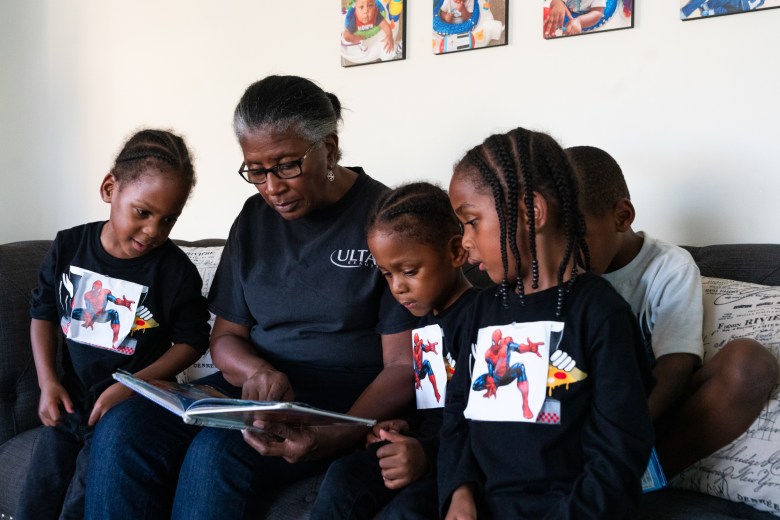
Every weekday afternoon after play time, Karen Heath’s children, including her 5-year-old triplets, read books with their grandmother. Credit: Camilla Forte/The Hechinger Report
By the end of June 2019, Heath’s triplets were all at home along with their 1-year-old brother. Although her husband had to return to work, Heath’s mother was around to help. The family had little idea of how best to support their growth. Doctors had warned her that the boys might never be able to sit up, walk or communicate like other children. “My main focus for so long was on coming home,” she said. “Once we got home, I’m like, ‘Now what?’”
About two weeks after the homecoming, a nurse from the county stopped by to check in on the 6-month-olds. Heath can’t say for sure, but she believes that the woman must have made a referral to early intervention because several weeks later, in August, the family got a call saying that the triplets might be eligible for therapy. By that time, they were more than 7 months old.
Heath leapt at the opportunity, but the process moved slowly after the initial call. In October, when the boys were 9 months, Heath got word that they had been automatically eligible all along because of low birth weight. But it wasn’t until early 2020, after the boys celebrated their first birthday, that the therapy was scheduled to start.
Then the pandemic hit, so the initial physical and developmental therapy sessions with three near-toddlers were all attempted over Zoom. “The boys were uninterested,” their mother recalled. “Try doing therapy on an iPad with triplets and (a toddler) hanging around.”
It wasn’t until the summer, when the children were 18 months, that they got their first in-person therapy. “The hospital should have had something in place so these kids could have gotten the services as soon as they came home,” Heath said. “I really feel like they dropped the ball. No one can blame the pandemic because they came home way before Covid started.”
Family photos, including from her triplets’ lengthy stays in the hospital, line the walls of Karen Heath’s living room. Credit: Camilla Forte/The Hechinger Report
The families participating in the multihospital pilot study had a leg up on Heath: They were at least told about early intervention, with an initial referral made before leaving the NICU. But even that was not enough for most of them to connect successfully with help. A lot of the struggle came down to “logistical and technological barriers,” said Zareen Kamal, a policy specialist in Illinois for Start Early, which advocates on early childhood issues.
The early intervention system in Illinois is decentralized, with 25 coordinating offices across the state. Caseloads are supposed to be capped at 45, but due to underfunding and short staffing, average much higher, with some reports of service coordinators juggling over 100 families. Many of the offices rely on fax for communications, with no statewide electronic system in place. Incoming phone calls to families from the coordinators often register as spam. And most of the offices don’t staff the phones in the evening or weekends, when working parents are most likely to reach out.
All this means that case workers sometimes remove families from their list as “uninterested” when, in fact, the parents are unaware, or unsure how to take the next step.
The state is currently taking steps to ensure equitable access to early intervention, said a spokeswoman for the Department of Human Services in an e-mail. That includes updating the standardized referral form and exploring options for electronic referrals.
“We realize that technology needs to be modernized,” wrote Rachel Otwell, the spokesperson.
That said, phone and fax remain the primary means of communication due to privacy concerns, she said.
Otwell said the agency is engaged in ongoing surveys and focus groups with thousands of early childhood community members. The state has made progress with staffing vacancies in early intervention, she added, and remains focused on “lowering caseloads to recommended levels.”
As the early intervention system currently exists in many cities and states, inequities are baked into every step of the process. Lower-income families are less likely to receive timely referrals, get screened and approved expeditiously, and then connect with therapists available for in-person work. Families with private insurance can often bypass the multistep bureaucratic process by having the therapies covered through those benefits. Studies have shown that Black newborns for a host of reasons, including higher poverty rates and weaker early medical care on average, are five times less likely than white ones to receive early intervention services.
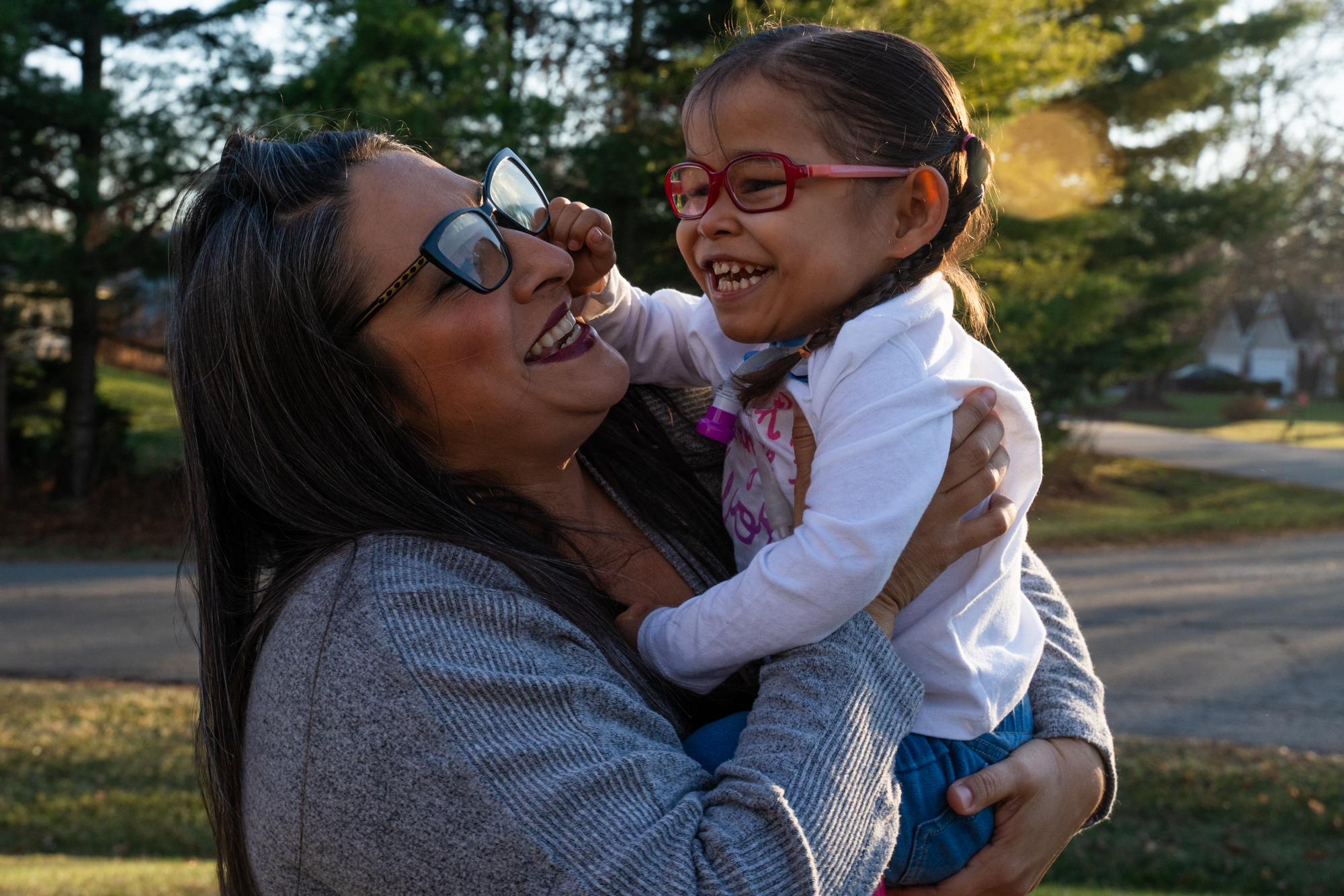
In addition to early exposure to critical therapies, Vasquez says that strong sibling relationships and support has helped her children to thrive. Credit: Camilla Forte/The Hechinger Report
For newborns there is pervasive confusion around who is automatically eligible, even among those who work in the early intervention system, Liddle says. “Some children are turned away from receiving services despite being autoeligible, because they do not show a delay on a specific assessment tool,” she said.
Complicating matters, states have different eligibility criteria: In some states, an infant with lead poisoning or a parent with a mental health diagnosis qualifies for the therapies, whereas in others they do not.
There’s also a disconnect between the medical and early intervention systems, said Msall, the University of Chicago-based physician. His colleagues in NICUs routinely fax referrals over to early intervention, he said, but the information disappears into the ether, with no follow up or technology in place for the physician to know if the connection was made or what an initial evaluation found. DeRegnier agreed that the follow-up process is complicated, partly because families may need to sign a consent form for information to be shared even with physicians.
In a nutshell, families too often have to navigate through the system entirely on their own — with only the most knowledgeable and well resourced likely to find their way to a successful outcome.
Vasquez felt immensely grateful her background as a special education teacher made it easier to supplement the work of overstretched hospital staff when her twin daughters were born at 27 weeks four years ago. The smaller of the two spent over a year so medicated in a Chicago NICU that she was essentially in a medical coma. But as soon as possible, Vasquez and her husband stepped in to help provide some early therapies. Following the advice of hospital therapists, they helped her sit up, roll over, learn to play with toys and regularly gave her full body massages. (She didn’t want to name the hospital because she believes any shortcomings were reflective of systemic issues, not specific to that hospital.)
Then, when the baby was finally released after 19 months in the NICU, Vasquez knew to call early intervention without delay. The family wasn’t more than five minutes into their drive home before she picked up her cellphone and rang them up from the back seat. “There was no second to lose,” said Vasquez, whose work as an early childhood consultant focuses on equity.
Within weeks of arriving home, the baby started upward of a half dozen different therapies, including speech, nutrition and mobility.
Partly because of the quick introduction to therapies, formal and informal, Vasquez’s daughter is thriving today at the age of 4. The girl had to spend only a few months in a self-contained classroom for children with severe disabilities before teachers said she was ready to join the “blended” class. It’s a milestone that seemed unreachable just a couple of years ago.
“After six months (in school), they said she is doing awesome,” Vasquez said. “I was told my child would need a wheelchair by kindergarten. She is running, dancing, chasing siblings, dancing on trampolines — all because of the amount of time we poured into therapies at a very young age.”
Jaclyn Vasquez plays outdoors with her children on a fall weekend afternoon. She says her background in special education made it easier to help with early therapies they needed. Credit: Camilla Forte/The Hechinger Report
Physicians, advocates and families all agree that parents shouldn’t have to wait until leaving the NICU to begin lining up services. The coalition of groups working on the study recommend staff embedded at the hospitals who can help families enroll in early intervention before discharge. Each family who is automatically eligible would also leave the hospital with a legal document entitling them to therapy. “Our ultimate dream is to have the connection between [early intervention] and families be completed before they go home, and have the therapist assigned before they leave,” said deRegnier.
Many advocates also believe that for those babies on an extended stay in the hospital, those therapies should be available in the NICU. “Early intervention is birth to 3 — it shouldn’t matter if you are living in the hospital or at home,” Liddle said. “You are still entitled to those services.”
In Illinois, advocates say they hope to get funding to pilot a program at a few NICUs that would finally create the demonstration sites the Legislative Black Caucus called for years ago. If successful, the model could be expanded statewide. “Even if we are in one or two NICUs and can see how it turns out, that would be helpful,” says Illinois state Rep. Joyce Mason, who chairs the House committee focused on early childhood education.
In the meantime, too many families still find the crucial therapies to be elusive.
Even when Heath’s children finally started in-person therapy, it was limited in scope. The physical therapist, who Heath describes as an “angel,” quickly recognized that they should also be receiving other help as well, including speech and occupational therapy. Yet by the time the family worked through the bureaucratic machinery to get some of those in place, the boys were nearly 3 — close to aging out of early intervention. They received a few months of speech, but never got the occupational therapy they were entitled to.
If they had gotten the therapies earlier, “they would be in a different place at this point,” Heath says. The boys, who were diagnosed with cerebral palsy shortly before their fourth birthdays, struggle with speech and reading skills, in particular, with one of them requiring a device in order to express himself. “If you don’t know them well, it’s hard to understand what they are saying all the time,” Heath says. “If they had gotten all the services right off the bat, they wouldn’t be as far behind.”
Yet the triplets have long surpassed doctors’ early warnings that they might never sit up, walk or reach other developmental milestones. Newly arrived home from school on a clear fall afternoon not long before Halloween, the triplets, now in kindergarten and dressed as Spider-Man for “superhero” day, played exuberantly in a finished basement space. They cried out gleefully while zooming after each other in miniature bumper cars.
Heath is grateful her sons are progressing with the help of school, devoted family and the committed physical therapist, who still works with the boys. But she looks back at their first nine months and laments that, so focused on how to help the babies survive, no one in a vast team of doctors, nurses and social workers thought to discuss how the family could best help them thrive. “There was no next step for my family when we left the hospital,” she said. “It was all on us.”
This story about early intervention services was produced by The Hechinger Report, a nonprofit, independent news organization focused on inequality and innovation in education. Carr is a fellow at New America, focused on reporting on early childhood issues.
The Hechinger Report provides in-depth, fact-based, unbiased reporting on education that is free to all readers. But that doesn’t mean it’s free to produce. Our work keeps educators and the public informed about pressing issues at schools and on campuses throughout the country. We tell the whole story, even when the details are inconvenient. Help us keep doing that.
2024 was a difficult year for UK higher education, particularly in the international arena.
Universities from all parts of the sector struggled to meet their overseas student recruitment targets in an increasingly competitive global market. Some international research collaborations – once encouraged by governments and funding councils – came under tighter scrutiny.
And many campuses were rocked by protests over the conflict in the Middle East. I have touched on the last of these issues in a previous Wonkhe article – but it is worth revisiting in the light of ongoing tensions.
Campus protests
There are wars underway in diverse parts of the world – last year saw serious loss of life in Ukraine, Sudan, Myanmar and Yemen, to name only a few. However, nowhere attracts the attention of staff and students like the invasion of the Gaza Strip which followed the 7 October attack on Israel and the abduction of hundreds of civilian hostages.
Some argue that this is unfair or, at least, disproportionate – why has Israel faced so much criticism when other regimes have committed atrocities against civilian populations with no demonstrations on British campuses? While that is undeniable, it is also true that the Palestinian people in Gaza are enduring a horrendous situation; despite the recent ceasefire, tens of thousands of innocent lives have been lost and hundreds of thousands are still denied access to basic essentials. The anguish and concern expressed by staff and students in response to their plight are surely justified.
During 2024, that concern manifested itself in encampments across 30 or so universities. There were numerous marches, often organised in combination with civic gatherings. The public events tended to focus on demands that the government condemn the Israeli military action and use its influence to stop the war.
On campus, the centre of attention was slightly different, with pressure on university administrations not only to provide financial support for Palestinian scholars but also to disinvest in companies which supplied arms to Israel. This drew on a longer running campaign which argued that any investment in the arms trade is fundamentally immoral. The incoming Labour government’s withdrawal of some export licences has not changed the situation – the issue has become a rallying point for those who feel powerless to alleviate the suffering of innocent people in the war zone.
Formulating a response
The protests have put university managers under considerable pressure. Initially, administrators were reluctant to say anything, being anxious to avoid alienating different groups or to make individuals who had an affiliation with Israel feel under attack. UK senior managers were also aware of the deep divisions on some American campuses – several heads of institutions resigned after making infelicitous statements while navigating between radical student opinion and aggrieved benefactors.
Even so, quite quickly senior managers in British universities began to share ideas and formulate a common position. This generally involved voicing support for academic freedom and freedom of expression while calling on protestors to respect the position of others. There were nuances – some institutions banned flags or outlawed certain contentious slogans; several announced that they would not talk to activists until camps were disbanded. In the face of prolonged disruption, a few resorted to legal interventions to remove tented villages.
For the most part, though, UK universities engaged with all shades of opinion, facilitated peaceful protest and sought to foster rather than stifle debate. The monthly colloquies at meetings organised by Universities UK were supplemented by occasional reflective discussions at events elsewhere.
Like others, the University of Glasgow’s senior management and university court (the governing body) considered the ethical position as well as the politics of the situation. We communicated regularly with the wider community, reached out to activists and met with faith groups, student representatives, civic leaders and national bodies.
A key concern was to ensure that students (especially, in this instance, Jewish and Muslim students and staff) always felt welcome and safe on campus. We were one of the first institutions to call for the release of the hostages and a humanitarian ceasefire. The university issued regular reminders about good conduct but did not rush to take disciplinary action against individuals. When students occupied a building, senior managers met with the leaders; we permitted a peaceful demonstration outside the door of the governing body meeting. In response to Students’ Representative Council (SRC) and trade union demands, we undertook a widespread consultation on disinvestment in the arms trade.
Despite vociferous calls from students and trade unions, Glasgow’s Court voted two-to-one against disinvestment; following a thoughtful discussion, a majority agreed with senior managers that it was morally right for the UK to have a defence sector and that this should be distinguished both from the conflict in the Middle East and from the question of which countries the UK sold arms to. In essence, the Court’s position was unchanged from 2020, when officers were instructed to write to government ministers calling for tighter restrictions on sales to countries which breached international law, or which had poor human rights records.
Towards reconstruction
The decision on disinvestment does not constitute the sum of our response to the situation in the Middle East. Alongside this, we have sought to build on Glasgow’s status as a University of Sanctuary through practical action in support of those suffering in Gaza and other conflict zones.
A key aspect of this was the conference we organised in December, in conjunction with Professor Sultan Barakat of Hamad Bin Khalifa University, on the post-war reconstruction of higher education in Gaza. With most university campuses in the area reduced to rubble, reconstruction might seem like a momentous task, but the event attracted nearly 200 registrations. It drew strong support from UK universities and significant engagement from colleagues based in the Middle East.
The conference delegates heard directly from victims of the conflict. They learned of its disastrous impact and considered academic analyses of aid interventions (often meagre and inadequate) as well as efforts to support students and academics to continue their studies. The attendees engaged in the difficult task of identifying how UK higher education can best support universities in the region to rebuild.
Key messages included the undying hunger of Palestinians in Gaza for higher education, their determination to create a better future and the belief that, with international support, all obstacles to reconstruction can be overcome. Scotland’s former First Minister Humza Yousaf (who gave a moving address in the main Glasgow synagogue following the 7 October attack on Israel) told the conference: “this is not about taking sides – it’s about being pro-humanity.”
The conversation will not cease – we intend to reconvene in Qatar and online in the spring, and to strengthen links with colleagues in key agencies, such as the Council for At-Risk Academics (CARA), who attended the conference. We will continue to draw support from a coalition of interests, including the UCU, whose local representatives actively supported the event.
In the coming semester, we anticipate further protest and vigorous debate at Glasgow over the correct response to the war in Gaza and its aftermath. The situation there remains desperate and the prospects for a lasting peace – for Palestinians, Israelis and Lebanese alike – are still very uncertain. But the events of the past few days should give us hope, and we in the higher education sector should do everything we can to advance the cause of peace and reconstruction. By identifying solutions to age-old problems, sharing our resources and giving practical assistance to colleagues in need, we can help make hope a reality.
Last June the Scottish government set out two proposals for changing up the funding bodies in post-compulsory education, following James Withers’ damning indictment of a “lack of cohesive approach, common purpose, or strategic narrative” in how Scotland’s skills system was organised.
There were two options on the table, and the less drastic reshuffle has prevailed following consultation: the Scottish Funding Council (SFC) will take on all the funding responsibilities from Skills Development Scotland (SDS), which currently handles apprenticeships and training. And the Student Awards Agency Scotland (SAAS) will take further education student support off SFC’s hands, rather than being dissolved as per the other consultation option.
We’ll be left with one funder – SFC – and one student support distributor – SAAS. SDS will still exist, retaining its careers information and guidance roles. It all sounds fairly coherent, when put like that, though open to criticism that it is simply a rejiggling of the funding system component parts (Annex B to the business case presents an exhaustive list of all the possible permutations of changes to the landscape, which some poor civil servant had to go through). Certainly from what we’ve seen, many consultation responses stressed that when it came to funding, the burning question is “how much” rather than “who”.
Whether student support responsibilities stayed with SAAS or became a department of SFC was probably at the end of the day a somewhat moot point, and the Scottish government doesn’t bother to give any particular justification for the decision, besides it being slightly preferred by consultation respondees (44 per cent to 35 per cent). It would likely have been a whole heap of organisational work for little strategic reward.
But let’s not underestimate the overall change that’s going to take place. We’ve now got post-school funding responsibilities all in one place within the SFC, including apprenticeships and other training – a landscape-wide role for new chief executive Francesca Osowska (who starts this week) to get thinking about. It’s a similar tertiary lens to Medr in Wales, and the kind of thing that some commentators on the English system would bite your hand off for. That said, there’s no indication that the Scottish government will think about giving the SFC freer rein to assign funding across the skills system as it sees fit – we’ll still be puzzling over itemised budgets each December covering exactly how much will be spent where, for the foreseeable future.
Legislation to enact the changes will now arrive “in the coming weeks”, with a view to it all being in place by autumn 2026. This may prove ambitious given that there are elections in Holyrood in the interim.
Anyone for new powers?
The consultation also asked for feedback on changes to SFC governance (all largely welcomed by respondents), as well as on “enhanced functions” for the funding council. This wasn’t a set of proposals, but more along the lines of a call for ideas, on issues like the information that those funded need to return to SFC, or the strengthening of data collection processes (respondents unsurprisingly were pro-strengthening rather than anti-strengthening).
But it’s worth thinking about what’s changed since the consultation was launched. The financial situation at various Scottish universities has worsened significantly (meanwhile in England the sector has been hammering its regulator for not having collected more timely financial data). Higher education minister Graeme Dey has explicitly linked possible new powers with the SFC – for oversight and intervention – to its ability to respond to university financial crises.
So in the consultation responses we see “calls for up to date information on the financial sustainability of institutions and skills providers, and the financial health of the skills sector as a whole” – moves here would seem to chime with ministerial thinking. On the question of new powers of intervention, there’s likely to be much more pushback:
A number of fundable education bodies, individuals and others […] did not see any need for additional powers for SFC. These respondents suggested that SFC had all of the powers required for their current role, and that proposed reforms should be implemented before reviewing the need for new powers. This was also linked to a view that implementation of reforms should initially focus on policy and support.
Today’s announcement on the preferred rearrangement of funding bodies is not accompanied by any indication of where government policy is going on powers and duties for the SFC – this will come with the legislation, and then almost certainly be the subject of parliamentary horse-trading during the bill’s passage through Holyrood.