Author: admin

  • College students hedge their bets in a chaotic labor market by double-majoring

    College students hedge their bets in a chaotic labor market by double-majoring

    by Jon Marcus, The Hechinger Report
    November 5, 2025

    After he graduates from the University of Wisconsin-Madison, Drew Wesson hopes to begin a career in strategic communication, a field with higher-than-average job growth and earnings.

    One year into his time at the university, Wesson became more strategic about this goal. Like nearly 1 in 3 of his classmates, he declared a second major to better stand out in an unpredictable labor market.

    It’s part of a trend that’s spreading nationwide, according to a Hechinger Report analysis of federal data, as students fret about getting jobs in an economy that some fear is shifting faster than a traditional college education can keep up.

    “There’s kind of a fear of graduating and going out into the job market,” said Wesson, a sophomore from Minneapolis who is double-majoring in international security and journalism. “And having more skills and more knowledge and more majors gives you a competitive edge.”

    The number of students at UW-Madison who double-major has grown by 25 percent over the last decade, the data show. But double-majoring is also on the rise at private, nonprofit colleges across the country, and at other public institutions, including the University of California, San Diego, and the University of North Carolina at Chapel Hill. 

    Nearly 5.4 million credentials — degrees or certificates — were earned by the 4.8 million college and university graduates in 2023-24, the most recent year for which the figure is available. That means about 12 percent left school with more than one, compared to 6 percent ten years earlier. Academic minors don’t count as a credential and aren’t tracked..

    Related: Interested in innovations in higher education? Subscribe to our free biweekly higher education newsletter.

    “Students are feeling a sort of spiraling lack of control in a very dynamic labor market,” said Rachel Slama, associate director of Cornell University’s Future of Learning Lab, which studies how technology and other innovations are changing education. “They’re probably clinging to the one thing that’s in their control, which is the majors they choose. And they think that more is more.”

    They may be right, according to one of the few studies of this topic, by scholars at St. Lawrence University and Vanderbilt Law School. Students who have one major in business and a second in science, technology, engineering or math, it found, earn more than if they majored in only one of those disciplines, the 2016 study found. 

    Graduates who double-major are also 56 percent less likely to be laid off, have their pay cut or suffer other negative effects in economic downturns, according to another study, released last year by researchers at Ohio State and four other universities. These outcomes show “the importance of diverse skill sets,” the researchers concluded. If there’s a drop in demand for the skills associated with one major, “a double major can pursue a job related to the unaffected major.” 

    At Wisconsin, nearly 6 in 10 students in computer science who pick a second major choose the lucrative discipline of data science; the number of jobs in data science is projected by the Bureau of Labor Statistics to increase 34 percent over about the next 10 years, at salaries that are nearly twice the national average.

    The unemployment rate among new bachelor’s degree recipients is now higher than for workers overall, and at its highest level since 2014, not including the pandemic years, according to the Federal Reserve Bank of St. Louis. That’s partly because artificial intelligence and other factors are transforming what employers need. 

    Nearly half of recent graduates feel underqualified to apply for even entry-level jobs, a survey by the education technology company Cengage Group finds. Only 30 percent say they have full-time jobs related to the fields that they studied.

    Meanwhile, colleges and universities — traditionally slow to transform what and how they teach — are encouraging students to combine majors as a faster way to keep up with changes in the labor market, said Taylor Odle, an assistant professor at UW-Madison who studies the economics of education and the value of credentials in the workforce.

    “Institutions are thinking strategically about how to align their degree programs with industry, and it might be by pairing two things they already have,” Odle said.

    There are other reasons for the rising popularity of double majors. At UW-Madison, for example, one factor propelling the growth is that there are no minors, noted Taylor Odle, an assistant professor there who studies the economics of education and the value of credentials in the workforce.. 

    Double-majoring isn’t easy. It typically means earning more than the usual minimum number of credits required to graduate, on top of extracurricular and other obligations. Wesson, at UW-Madison, for instance, is an officer of student government, a reporter and photographer for the campus newspaper and an honors student.

    Some separate majors have overlapping requirements. Even if they don’t, most universities and colleges charge the same tuition per semester no matter how many courses undergraduates take. So unless a second major extends the number of semesters a student needs to complete required courses, or forces him or her to take additional classes in the summers, double-majoring doesn’t typically cost more or take longer.

    Meanwhile, more students are arriving at college having already knocked off credits by taking dual-enrollment and Advanced Placement classes in high school. 

    About 2.5 million high school students participate in dual enrollment, according to an analysis of federal data by the Community College Research Center at Teachers College, Columbia University. (The Hechinger Report, which produced this story, is an independent unit of Teachers College.)

    This means they have room in their schedules in college for second majors, said Kelle Parsons, who focuses on higher education as a principal researcher at the American Institutes for Research.

    Related: After years of quietly falling, college tuition is on the rise again

    For some students, double-majoring makes more sense than changing majors altogether. About 30 percent of students change their majors at least once, and 10 percent two or more times, according to the U.S. Department of Education. Adding a second major is less drastic than dropping a first one and starting again from scratch, said Patrick Denice, an associate professor of sociology at the University of Western Ontario.

    “If you add a [second] major, you hedge your bets against a changing labor market without losing those credits and that coursework you’ve already earned” toward the first one, said Denice, who has studied why students at U.S. universities pick and change their majors.

    There’s yet another reason students are increasingly double-majoring. Even as they crowd into specialties associated with career opportunities, such as business and health-related disciplines — which together now account for nearly 1 in 3 undergraduate fields of study — some are adding second majors for which they simply have a passion.

    Related: Students can’t get into basic college courses, dragging out their time in school

    “They’re trying to satisfy their parents, who want them to be employed,” said J. Wesley Null, vice provost for undergraduate education and academic affairs at Baylor University, where there were more than twice as many double majors last year than there were in 2014. “But they’re also interested in a lot of interdisciplinary kinds of things. They’ll combine biology with Sanskrit or Chinese. These really bright students have a lot of diverse interests.”

    At the University of Chicago, where the number of double majors has also more than doubled, “I see students committing to one career but wanting to have more breadth,” said Melina Hale, dean of the college. “They’re going and exploring all of these other majors and finding one they love.”

    Double-majoring is also “a great way for students to demonstrate that they know how to think in different ways,” said Hale, herself a biologist who has collaborated with engineers. “If you’re going into a job in finance and have a deep background in history, you’re bringing different ways of approaching problems.”

    Related: To fill seats, more colleges offer credit for life experience

    This way of thinking is pushing still another trend: More students nationwide are earning certificates, which they can get in a matter of months and alongside their degrees, in subjects such as business management. Seventeen percent of bachelor’s degree recipients also finished college with at least one certificate in 2023-24, the National Student Clearinghouse Research Center reports.

    Known as “stackable credentials,” these kinds of certificates “have been talked about for a long time,” said Ryan Lufkin, vice president of global academic strategy at the educational technology company Instructure. “And now there’s really demand for them.” 

    That’s because — like double-majoring and minoring — they make applicants stand out to employers, said Odle, at UW-Madison. 

    Students, he said, “are trying to emphasize their attractiveness in the labor market. They’re trying to cover their bases.”

    Contact writer Jon Marcus at 212-678-7556, [email protected] or jpm.82 on Signal.

    This story about double majors was produced by The Hechinger Report, a nonprofit, independent news organization focused on inequality and innovation in education.

    Data analysis by Marina Villeneuve.

    Sign up for our higher education newsletter. Listen to our higher education podcast.

    This <a target=”_blank” href=”https://hechingerreport.org/students-worried-about-getting-jobs-extra-majors/”>article</a> first appeared on <a target=”_blank” href=”https://hechingerreport.org”>The Hechinger Report</a> and is republished here under a <a target=”_blank” href=”https://creativecommons.org/licenses/by-nc-nd/4.0/”>Creative Commons Attribution-NonCommercial-NoDerivatives 4.0 International License</a>.<img src=”https://i0.wp.com/hechingerreport.org/wp-content/uploads/2018/06/cropped-favicon.jpg?fit=150%2C150&amp;ssl=1″ style=”width:1em;height:1em;margin-left:10px;”>

    <img id=”republication-tracker-tool-source” src=”https://hechingerreport.org/?republication-pixel=true&post=113148&amp;ga4=G-03KPHXDF3H” style=”width:1px;height:1px;”><script> PARSELY = { autotrack: false, onload: function() { PARSELY.beacon.trackPageView({ url: “https://hechingerreport.org/students-worried-about-getting-jobs-extra-majors/”, urlref: window.location.href }); } } </script> <script id=”parsely-cfg” src=”//cdn.parsely.com/keys/hechingerreport.org/p.js”></script>

    Source link

  • Colleges build environmental lessons into degrees

    Colleges build environmental lessons into degrees

    by Olivia Sanchez, The Hechinger Report
    November 5, 2025

    LA JOLLA, Calif. — On a Thursday this fall, hundreds of students at the University of California, San Diego, were heading to classes that, at least on paper, seemed to have very little to do with their majors. 

    Hannah Jenny, an economics and math major, was on their way to a class on sustainable development. Angelica Pulido, a history major who aspires to work in the museum world, was getting ready for a course on gender and climate justice. Later that evening, others would show up for a lecture on economics of the environment, where they would learn how to calculate the answer to questions such as: “How many cents extra per gallon of gas are people willing to pay to protect seals from oil spills?”

    Although most of these students don’t aspire to careers in climate science or advocacy, the university is betting that it’s just as important for them to understand the science and societal implications of climate change as it is for them to understand literature and history, even if they’re not planning to become writers or historians. UCSD is perhaps the first major public university in the country to require all undergraduate students to take a class on climate change to earn their degree. 

    The requirement, which rolled out with first-year students last fall, came about because UCSD leaders believe students won’t be prepared for the workforce if they don’t understand climate change. Around the globe, global warming is already causing severe droughts, water scarcity, fires, rising sea levels, flooding, storms and declining biodiversity; leaders at UCSD argue every job will be affected. 

    And even as President Donald Trump dismisses climate change as a hoax and cancels funding for research on it, other colleges are also exploring how to ensure students are knowledgeable about the subject. Arizona State University began requiring that students take a class in sustainability last year, while San Francisco State University added a climate justice class requirement to begin this fall. 

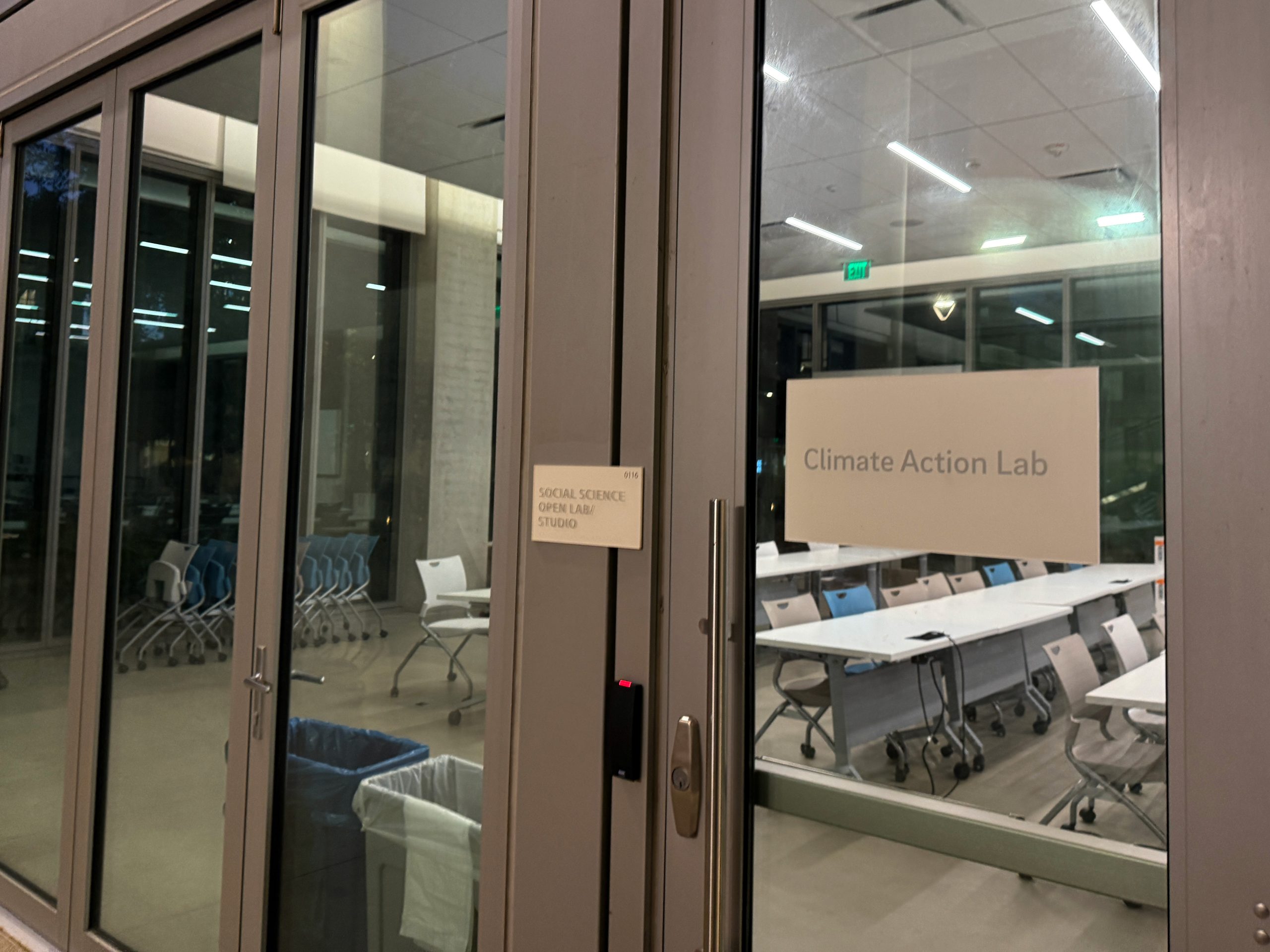
    “You can’t avoid climate change,” said Amy Lerner, a professor in the urban planning department at UCSD. “You can’t escape it in the private sector. You can’t escape it in the public sector. It’s just everywhere.” Students, she said, must be made ready to engage with all of its likely consequences.

    Related: Want to read more about how climate change is shaping education? Subscribe to our free newsletter.

    UCSD, a public university that serves roughly 35,000 undergraduate students, is not demanding that everyone sign up for Climate Change 101. Instead, students can fulfill the requirement by taking any of more than 50 classes in at least 23 disciplines across the university, including sustainable development, the course Jenny is taking. 

    There’s also psychology of the climate crisis, religion and ecology, energy economics, and several classes in the environmental science and oceanography departments, among others. And leaders at the university are working to develop more classes that satisfy the requirement, including one on the life cycle of a computer.

    Bryan Alexander, an adjunct professor at Georgetown University and author of a book on higher education and the climate crisis, said that while colleges have long taught about climate change in classes related to ecology, climatology and environmental science, it’s only been in the last decade or so that he’s seen other disciplines tackle the topic. 

    Climate change, Alexander said, “is the new liberal arts” — and colleges should take it seriously. 

    K. Wayne Yang, a UCSD provost who served on the original group that advocated for the requirement, said every industry and career field will experience the effects of climate change in some way. Health care providers need to know how to treat people who have been exposed to extreme heat or wildfire smoke; psychologists need to understand climate anxiety; and café owners need to know how the price of coffee changes in response to droughts or other natural disasters in coffee-growing regions.  

    Jenny, the senior taking a class on sustainable development, is eager to get answers to a question that has, in their three years as an economics and mathematics major, become difficult not to ponder: How can economic growth be the silver bullet of societal change if it has so many negative consequences for the planet?

    “It’s definitely my hope that this is a class that will teach me something new about how to consider humanity’s path forward without destroying this earth, without destroying each other, without sacrificing quality of life for any person on this planet,” Jenny said. 

    Jenny isn’t subject to the requirement because they entered college before it rolled out. But they said they like the idea of encouraging students to step outside their comfort zones and fields of study and, in many cases, consider their future career paths in the context of the changing climate.

    Other students, like junior Pulido, don’t see a specific link between climate change and their future careers. Pulido, who has spent the last few years working in the visitors center at San Diego’s Balboa Park and aspires to work in museums, said she signed up for the gender and climate justice class simply because it sounded interesting to her. She believes climate change is important, and she’s hoping that taking this class will help give her a better idea of how its role in history and might play into her career.

    Related: How colleges can become ‘living labs’ for combating climate change  

    Colleges are taking different approaches to teaching their students about climate change, with some requiring a course in sustainability, a broad discipline that goes beyond the specific scientific phenomenon of climate change.

    At Arizona State, sustainability classes can cover anything about how human, social, economic, political and cultural choices affect human and environmental well-being generally, said Anne Jones, the university’s vice provost for undergraduate education.

    Dickinson and Goucher colleges have had such requirements since 2015 and 2007, respectively. 

    At San Francisco State University, leaders said they instead chose to require climate justice for all students, beginning with the class of 2029, because of the urgency of understanding how climate change affects communities differently. 

    Students need to understand broader systems of oppression and privilege so that they can address the unequal effects of climate change for “communities of color, low-income communities, global south communities and other marginalized communities,” said Autumn Thoyre, co-director of Climate HQ, the university’s center for climate education, research and action.

    Yang and other UCSD leaders believe that, despite the increased politicization of climate change under Trump, they’ve received little pushback on the new requirement because of the university’s reputation as a climate-concerned institution. (It descended from the Scripps Institution of Oceanography, initially founded in 1903.) But this model may not work as well on other campuses. 

    In communities where people’s livelihoods depend on activities that contribute to climate change, like coal mining or oil production, educators may have to modify their approach so as to not come off as offensive or threatening, said Jo Tavares, director of the California Center for Climate Change Education at West Los Angeles College. 

    “Messaging is so important, and education cannot be done in a way that just forces facts upon people,” Tavares said. 

    Related: One state mandates teaching about climate change in almost all subjects — even PE

    At UCSD, to meet the graduation requirement, a course must be at least 30 percent about climate change: For example, a class that meets twice a week for a 10-week term must have at least six of its 20 sessions be about climate change. And the course syllabus must address at least two of the following four categories: the scientific aspects; human and social dimensions; project-based learning; or solutions.

    The first time Lerner, the urban studies professor, applied for her sustainable development course to count toward the requirement, in July 2024, the committee told her she needed to better explain how the class addressed climate change. It wasn’t enough to simply have “sustainable” in the course name, committee members told her; she had to better articulate the role of climate change in sustainable development, a course she’s been teaching some version of for nearly 20 years. 

    Her students helped her go through the syllabus and identify all the points where she was teaching about how development contributes to climate change, even if she wasn’t explicitly putting those words to paper. After Lerner revised the descriptions of the class topics and made a few additions, the class was approved, she said. 

    On that fall Thursday, Lerner walked around her large glass-walled classroom while discussing development and globalization with the 65 undergraduate students in her sustainable development class. They covered how to balance equity, economy and environment in development, as well as various ways to measure the well-being of societies, including gross national income, food security, birthrate and infant mortality, happiness, fertility, education and lifespan. Lerner peppered her lecture with jokes and relatable examples, asking, for example, how many siblings students had before explaining the role of fertility and birth rate in a healthy society. (One student had 12, but the average was closer to two.)

    Lerner, who now chairs the committee that decides which classes meet the requirement, said most of her students come in with the understanding that climate change is caused by rising levels of carbon dioxide entering the atmosphere, and some have even used an online tool to calculate their own carbon footprints. Often, their education has been focused on the hard science aspect of climate change, but they haven’t learned about what society has experienced as a result of climate change, she said. 

    When she asks them what can be done about climate change, she said, “they’re deer in the headlights.”

    Related: Changing education could change the climate

    Across campus, economics professor Mark Jacobsen teaches a lecture class every Thursday night on the economics of the environment. It meets the climate change requirement, but it also covers a core economics idea, he said: achieving efficiency. 

    Jacobsen is teaching students the formulas and methods they’ll need to answer questions like whether it’s worth it to spend $1 billion now to build renewable energy sources to avoid $10 billion in natural disaster cleanup in 30 years.

    Though Jenny hasn’t taken Jacobsen’s class, this is exactly the type of dilemma they’re worried about. 

    Jenny, a public transit enthusiast so dedicated that they got a commercial driver’s license just to drive for Triton Transit, the campus bus system, said the requirement encourages students to face the climate crisis rather than shy away from it. 

    “It can be easy to kind of put your head down and be like, ‘That is too big for me to think about, and too scary,’” Jenny said. But it’s imperative, they added, that students be “forced to reckon with it and think about it and talk about it, to have that knowledge kind of swirling around in your head.” 

    Contact staff writer Olivia Sanchez at 212-678-8402 or [email protected]

    This story about climate literacy was produced by The Hechinger Report, a nonprofit, independent news organization focused on inequality and innovation in education. Sign up for our climate and education newsletter and for our higher education newsletter. Listen to our higher education podcast.

    This <a target=”_blank” href=”https://hechingerreport.org/climate-change-is-the-new-liberal-arts-colleges-build-environmental-lessons-into-degrees/”>article</a> first appeared on <a target=”_blank” href=”https://hechingerreport.org”>The Hechinger Report</a> and is republished here under a <a target=”_blank” href=”https://creativecommons.org/licenses/by-nc-nd/4.0/”>Creative Commons Attribution-NonCommercial-NoDerivatives 4.0 International License</a>.<img src=”https://i0.wp.com/hechingerreport.org/wp-content/uploads/2018/06/cropped-favicon.jpg?fit=150%2C150&amp;ssl=1″ style=”width:1em;height:1em;margin-left:10px;”>

    <img id=”republication-tracker-tool-source” src=”https://hechingerreport.org/?republication-pixel=true&post=113195&amp;ga4=G-03KPHXDF3H” style=”width:1px;height:1px;”><script> PARSELY = { autotrack: false, onload: function() { PARSELY.beacon.trackPageView({ url: “https://hechingerreport.org/climate-change-is-the-new-liberal-arts-colleges-build-environmental-lessons-into-degrees/”, urlref: window.location.href }); } } </script> <script id=”parsely-cfg” src=”//cdn.parsely.com/keys/hechingerreport.org/p.js”></script>
    Source link

  • Teaching with AI: From Prohibition to Partnership for Critical Thinking – Faculty Focus

    Teaching with AI: From Prohibition to Partnership for Critical Thinking – Faculty Focus

    Source link

  • Northern Ireland can be a testbed for research culture

    Northern Ireland can be a testbed for research culture

    In higher education, talk of “research culture” can sometimes feel abstract. We know it matters, but what does it actually look like in practice – and how do you change it?

    Today, we’re publishing a new report on research culture in Northern Ireland that tries to answer some of those questions. Produced in partnership with CRAC-Vitae as part of the Research Culture Northern Ireland (RCNI) initiative, and supported by the Wellcome Trust, the report draws insights from across universities, government, industry, and the voluntary sector.

    Our aim was to explore how research is experienced in a small but vibrant ecosystem, and to test whether Northern Ireland might offer a different perspective on research culture – one that could be of interest not only here, but to other regions of the UK and beyond.

    Why Northern Ireland, why now?

    Northern Ireland’s research ecosystem is distinctive. Our higher education sector is small but high-performing, regularly punching above its weight in UK and international rankings. We are separated from the rest of the UK by the Irish Sea, but uniquely, we share a land border with the EU – creating opportunities for cross-border collaboration.

    Yet there are challenges too. Levels of innovation and productivity remain lower than in the UK and Ireland overall. Access to research funding is uneven. Career mobility is limited, partly shaped by geography.

    At the same time, research and innovation are high on the policy agenda. The Northern Ireland Executive’s Programme for Government highlights ambitious R&I plans, including the creation of a regional strategy to support key sectors such as cyber security and software, advanced manufacturing and life and health sciences. The appointment of Northern Ireland’s first Chief Scientific and Technology Adviser signals stronger leadership in this space, and with the CSTA shortly bringing the regional R&I strategy forward for consultation, it highlights the significant developments since the report on research culture was commissioned. The Belfast Region City Deal is creating new innovation centres, while a recently published Collaborative Innovation Plan represents a coordinated commitment by Innovate UK, the Department for the Economy and Invest NI to accelerate inclusive and sustainable innovation across the region.

    To harness these opportunities, we need a research culture that enables collaboration across sectors, supports the talent we already have, and makes the region an attractive place for others to come and do research.

    Finding out

    Queen’s University Belfast and Ulster University jointly created RCNI with support from the Wellcome Trust to explore research culture in more depth, and to test interventions that might help address challenges.

    Alongside pilot projects on postdoctoral careers, practice-as-research, and the role of research professionals, we commissioned CRAC-Vitae to examine Northern Ireland’s research ecosystem through survey data (167 responses), interviews (17), and focus groups. The aim was not only to generate evidence specific to our context, but also to explore whether familiar UK-wide challenges looked different – or perhaps more visible – in a small system.

    The findings are grouped into five themes. None of them are unique to Northern Ireland – but they resonate in ways that may feel familiar to colleagues elsewhere:

    Collaboration and coordination. Collaboration is widespread, with 80 per cent of respondents reporting that they had worked with an external organisation. However, qualitative data revealed that collaborations are often informal, relying on personal networks. Smaller organisations can be excluded, and visibility across the system is limited.

    Career pathways and talent development. Career progression is constrained by limited opportunities with 59 per cent of respondents identifying a lack of progression routes. Pathways are often fragmented, and cross-sector mobility remains low, with 52 per cent of respondents reporting difficulty moving between sectors. Talent is underutilised as a result.

    Understanding and communicating the value of research. Research has enormous civic and community benefits, but these are undervalued and misunderstood – limiting recognition and policy impact.

    Reducing administrative burden. Bureaucracy, compliance, and regulatory hurdles disproportionately affect SMEs and non-HE actors, creating inefficiencies and blocking participation.

    Strategic vision and system reform. Stakeholders see a fragmented and opaque system, lacking shared vision and coherence – only 31 per cent of survey respondents agreed there is a shared strategic vision for R&I in NI – a situation compounded by political instability.

    We know this is a small sample and just one piece in a growing evidence base. But it offers useful starting points for further discussion – and perhaps areas where regions could work together.

    Reflections for small regions

    Looking across these findings, a few reflections stand out that may be of interest to other small regions with strong research ecosystems.

    First, proximity can be a strength. The size and concentration of institutions, government, and industry in a defined area creates real opportunities to build effective networks and shared understanding of barriers. In particular, it can help identify and tackle bureaucratic friction more quickly.

    Next, that collaboration is essential – but needs structure. In small systems, personal connections carry weight. That can be a strength, but risks becoming exclusive and unwelcoming to newcomers. Creating formal mechanisms for inclusion is key.

    There’s also work to be done on harnessing existing talent. With only a handful of research-intensive institutions, we need to do more to support and retain the talent we already have. Not every research student or postdoc will have an academic career – but their skills are vital to other sectors and to addressing regional challenges.

    Finally, a joined-up voice matters. A coherent strategic focus and communication plan helps small regions do more with less. Playing to strengths, and presenting a clear message externally, is critical to attracting funding and partnerships. This project, a partnership between Queen’s and Ulster, embodies that.

    These are not answers, but starting points for reflection – and perhaps for collaboration across regions that face similar issues.

    Where could this go?

    We are realistic: these challenges cannot be solved by one project, or even one region. Our next steps will therefore follow a dual approach: influencing system-level reforms through evidence, advocacy, and convening – recognising that changes to policy and funding lie with government and funders – and also testing project-level interventions through pilot projects, generating practical learning that might inform broader reforms.

    The first of these involves a new collaboration with CRAC-Vitae to pilot innovative approaches to tracking the career outcomes of postdoctoral researchers in Northern Ireland. This aligns with our “people first” focus for this project, recognising that our research and innovation ecosystem is nothing without the talent and ideas that populate it.

    If successful, we hope that coordinated career tracking will help identify mobility trends, sectoral destinations, and skill gaps across the R&I workforce – providing the evidence needed to strengthen cross-sector pathways and retain and develop talent within NI’s R&I ecosystem.

    Building on other RCNI work exploring postdoctoral career development, these efforts aim to build a clearer picture of how people move through and beyond the research ecosystem – and how policies and practices can better support their progression.

    Although modest in scale, this pilot will address an area with little existing evidence and may offer a model for others seeking to strengthen mobility and progression across the research ecosystem.

    An invitation to reflect

    So what does this mean for colleagues elsewhere? We don’t claim to have the answers. But we think Northern Ireland’s experience highlights issues that many regions face – and raises questions that might be useful to explore collectively.

    If proximity can be a strength, how do we best harness it? If collaboration relies too heavily on personal networks, how do we make it more inclusive? If we want to value research talent beyond academia, how do we support those careers in practice? And if small regions need a joined-up voice, how do we achieve it without losing diversity?

    Northern Ireland is a small system, but that makes its challenges and opportunities more visible. We hope this report is not only useful here, but a provocation to reflect on how small research ecosystems across the UK – and beyond – might learn together.

    Source link

  • New heights in tertiary partnerships

    New heights in tertiary partnerships

    If we are serious about tackling the challenges posed by the Post-16 Education and Skills white paper, we need to rethink the relationship between our universities, colleges, and local economies.

    This is particularly important for institutions located outside the country’s major cities and conurbations – where the devolution agenda is somewhat more complicated.

    Beyond the city

    We all know that local economies depend on responsive, joined-up skills systems. Together colleges and universities bring proximity to communities and employers, backed up by research, innovation, and regional influence. And this is why meaningful collaboration between them really does matter, whether it is responding to the skills agenda; local devolution; the Lifelong Learning Entitlement; the need for more flexible and inclusive pathways into HE; local innovation ecosystems; and economic regeneration and regional productivity.

    There needs to be sector commitment that a better coordinated and more coherent system is required, particularly if we are to deliver on the government’s renewed national ambition for two-thirds of young people to have a higher-level qualification (Level 4 and above) by the age of 25.

    The UK government’s Post-16 Education and Skills white paper sets out a transformative vision for how universities and colleges should collaborate to build a more integrated and responsive skills system. FE will be encouraged to offer Level 4 and Level 5 courses targeting our regional priority sectors and needs, as identified with our Strategic Authorities through their Growth and Skills Plans. This has implications for universities, who will need to ensure there are pathways from these new courses into the curriculum, and for Local Skills Improvement Plan (LSIP) partners, with whom links will need to be strengthened. In short, we need to work regionally, and locally, to better align our offering with local employer demand and government Industrial Strategy priorities.

    In practical terms this means more employer-responsive co-designed curricula and new flexible pathways to help ensure smoother transitions between FE and HE, perhaps with joint qualifications and credit transfer systems. We must now be co-architects of a skills ecosystem that is agile, inclusive, and economically aligned.

    The case of Exeter

    The University of Exeter and Exeter College have cultivated a strong collaborative relationship over the past 25 years, deepening our partnership through a formal Memorandum of Understanding (MOU) established nine years ago and now in its second iteration. A fundamental driver for the relationship was the realisation that Exeter is an unusual geography in that it is the only UK city in which post-16 education is served solely by one Russell group university and one outstanding tertiary college. This has enabled us to take an experimental approach.

    At the heart of a successful collaboration sits ambition, the need, or even responsibility to drive social mobility and to make a difference to a place. Not just because of a policy, but because when HE and FE collaborate – it creates real synergy and a powerful force for change. The key to success, like most things in life – is people, but not just people, the right people at the right level in both the college and university believing collaboration is important. Dare we say it is also important, as an organisation, to know yourself, and to be clear about the purpose of each organisation – so that competition is minimised or eliminated. If your first thought is to monetise the partnership, it is likely to fail.

    Driving innovation

    Progress in FE-HE collaboration has often either come from more recent innovations such as degree apprenticeships, or through a need to work in new ways to deliver within regional funding streams. As a starting point, universities need to map and understand their local FE landscape to identify potential complementarities in skills provision, learner demographics, and employer relationships.

    This enduring alliance is anchored by high-level commitment and strategic alignment, for example, with senior university leaders actively participating on the college board. Such integration ensures shared vision and governance, shared accountability, and the blurring of traditional boundaries and silos.

    Our partnership here in Exeter extends across multiple initiatives, including joint sponsorship of the Ted Wragg Multi Academy Trust and the Exeter Mathematics School, as well as membership of regional initiatives such as the South West Institute of Technology, reflecting a shared commitment to educational innovation and regional development.

    A key feature of this collaboration is the development of thematic “escalators” – these are best understood as pathways that connect college and university expertise in areas such as digital, sport, and green technologies. They have led to the establishment of pathways from FE to HE and consistent curricula. New escalator activity is now happening in both civil engineering and health. These benefit students by providing levels of certainty and logical routes for progression and boost the local economy by attracting young people from the Devon community, who are more likely to gain employment in our local businesses after they graduate.

    The health escalator is particularly timely, aligning with current government priorities and offering new opportunities for joint programming and research. The sport escalator stands out as a model of success, enabling college HE students (validated by the University of Exeter) to progress athletically by playing for university teams, in partnership with local clubs. These escalators exemplify how the institutions are creating seamless transitions and shared platforms that benefit students, staff, and the wider community.

    Locally owned

    Our escalators began life as labour market tools developed collaboratively by the university, Exeter College, and Exeter City Council, following representation from local employers who had been unable to source the right skills locally for what were good, well-paid positions. This last point is important because this is not just about satisfying employer needs (which is challenging enough), but supporting social mobility, wealth creation, and retention of talent.

    Skills escalators enable FE and HE partners to target existing resources effectively and to identify and fill gaps in provision. Our initial data analytics skills escalator resulted in new FE courses at the college, new postgraduate degrees at the university, and several new degree apprenticeships. So successful was this exercise that we have recently repeated it with two new escalators focused on green skills and social care.

    Such skills escalators play to university strengths, especially their research and knowledge exchange. They also play to genuine FE strengths around employer-responsiveness and rapid curriculum change. You can read more about our skills escalators in the new Universities UK and Association of Colleges report – delivering a post-16 skills system.

    Getting civic

    Given their presence in the Post 16 Skills White paper, it is also worth referencing the role of our civic university agreements (CUAs). These have been around nationally for several years and have even had their own national impact accelerator. But to be truly impactful they need commitment and underlying operational capacity. In Exeter, our CUA brings together the University, Exeter College, the City Council and Royal Devon University Hospital (NHS), with skills, again, as a top priority – helping provide strategic oversight and governance to practical on the ground activity.

    We believe that CUAs, supported by FE-HE memoranda of understanding, can provide the strategic framework for tertiary education to succeed, with escalators helping us to deliver tangible change. But ultimately, an effective tertiary landscape will demonstrate responsiveness, progression, and continuity, and in doing so success will need to be measured through different types of metrics and the rewarding of collaborative labour-market driven provision, and not just individual institutional performance.

    Source link

  • Universities in England can’t ignore the curriculum (and students) that are coming

    Universities in England can’t ignore the curriculum (and students) that are coming

    What has schools policy got to do with higher education?

    The Westminster government has published Becky Francis’s Curriculum and Assessment Review, unveiling what Education Secretary Bridget Phillipson calls “landmark reforms” to the national curriculum.

    Interestingly, the revitalised curriculum is to be a “core part” of how the government will deliver the Prime Minister’s target of two-thirds of young people participating in higher-level learning by age 25.

    The review treats higher education as an explicit destination, not a distant afterthought.

    When it invents a new “third pathway” at level 3, it insists those V Levels must carry higher education credibility and be built so that young people can progress to degree-level study as well as work – hence Ofqual regulation and sector-standard-linked content. In other words, this isn’t a dead-end vocational cul-de-sac – it is designed to be read and trusted by admissions tutors.

    On T Levels, the panel recognises reality on the ground – many universities do already accept T Level learners – but says the acceptance landscape is messy, confusing and poorly signposted. Its answer is that government should keep working with providers and HEIs to promote understanding across the HE sector so applicants know which courses take T Levels and on what terms. The implication for universities is making recognition statements clearer, and aligning them with national guidance as it emerges.

    Why the anxiety about clarity? Because the authors kept bumping into learners who don’t grasp how subject and qualification choices at 16–19 play out later for university admission. That includes confusion introduced by new badge-sets like AAQs and TOQs. It turns out that if you design a landscape that looks like alphabet soup, you shouldn’t be surprised when applicants misread the signposts.

    Bacc to the future

    The EBacc gets a particular dressing-down. It’s true that taking an academic portfolio at GCSE correlates with applying to – and attending – university. But the review finds that EBacc combinations do not boost the chance of getting into the Russell Group, (although the only source for this is a paper from 2018, which doesn’t really come down conclusively against it), and that EBacc’s accountability pull has constrained subject choice in ways that squeeze arts and applied options. For HE, that means any lingering myth that EBacc equals elite-entry advantage gets killed off.

    There’s a financial edge to all this that the review politely doesn’t mention. When the previous government tried to defund BTECs, analysis showed the policy could strip £700 million in tuition fee income from the sector, with catastrophic effects for subjects like nursing, sport science, and computing – some facing 20 per cent recruitment losses. Those shortfalls would land heaviest on lower-tariff universities already wrestling with flat domestic recruitment and collapsing international numbers.

    The stakes for getting pathway reform right are existential for parts of the sector. If V Levels don’t recruit at scale, if T Level recognition remains patchy, and if the “simplification” just creates new barriers for disadvantaged students rather than removing old ones, some universities and programmes will struggle to recruit. The review’s optimism about legibility needs to meet reality – student choice is sticky, established qualifications have brand recognition, and centrally-planned qualification reform has a patchy track record. T Levels attracted just 6,750 students after £482 million of investment.

    As well as all of that, the panel seems super keen to stress the continuing strength of A levels as a pipeline, noting that in 2022/23 some eighty-two per cent of A level learners progressed to higher education by age 19. Whatever else changes, the academic route remains a robust feeder – and universities should expect the report’s other reforms to orbit around, not replace, that core.

    Crucially, the review refuses the tired binary that “vocational” equals “non-HE.” It records evidence that large applied or technical programmes can carry real weight with HE providers – precisely because they demonstrate breadth and depth in a way that can be benchmarked consistently across learners. If you run foundation years or applied degree routes, you are being invited to read these programmes seriously.

    It also acknowledges the contested evidence on outcomes for legacy qualifications like unreformed BTECs while still affirming their role in widening participation. The nuance matters – some qualifications have varied quality and mixed university performance data, yet for those who succeed in HE, BTECs and other AGQs have often been the bridge in. A credible vocational pathway that keeps that bridge open – while simplifying the current maze – is the intended fix.

    Are universities actually ready to make good on these promises? The sector has spent years documenting how BTEC students – despite “equivalent” tariff points – have systematically worse outcomes than A-level students. Arguably, the problem in some providers isn’t the qualification – it’s that first-year curricula and pedagogy remain stubbornly designed around A-level assumptions. Group projects, applied assessment, practical skills – the things BTEC students excel at – routinely get squeezed out in favour of essays and exams that privilege academic writing developed through A-levels.

    So when the review insists V Levels must “carry higher education credibility” and enable progression to degrees, the translation work required isn’t just clearer admissions statements – it’s a more fundamental rethink of how universities teach first-year students, assess them, and support their transition.

    Put together, the narrative runs something like this. Design V Levels to be legible to universities, clean up T Level recognition so applicants aren’t left guessing, stop pretending EBacc is a golden ticket to elite admission, and keep A levels stable, but value applied depth where it’s rigorous.

    And above all, help students understand how choices at 16–19 map to HE doors that open, or close, later.

    What (or who) is coming?

    There are some wider bits of note. The review has things to say about AI:

    …generative artificial intelligence has further heightened concerns around the authenticity of some forms of non-exam assessment… It is right, therefore, that exams remain the principal form of assessment.

    As such, it urges no expansion of written coursework and a subject-by-subject approach to non-exam assessment where it is the only valid way to assess what matters. It also tasks DfE and Ofqual to explore potential for innovation in on-screen assessment – particularly where this could further support accessibility for students with SEND – but cautions that evidence for wider rollout is thin and equity risks from the digital divide are real.

    Digital capability stops being taken-for-granted. Computing becomes the spine for digital literacy across all key stages, explicitly incorporating AI – what it is, what it can and can’t do – and broadening the GCSE so it reflects the full curriculum rather than a narrow slice of computer science. Other subjects are expected to reference digital application coherently, but the foundations live in Computing. Online safety and the social-emotional ethics of tech use sit in RSHE, while the “is this real?” critical discernment is anchored in Citizenship.

    The ambition is a cohort that can use technology safely and effectively, understands AI well enough to question it, and can interrogate digital content rather than drown in it.

    More broadly, English is recast so students study “the nature and expression of language” – including spoken language – and analyse multi-modal and so-called “ephemeral” texts. That builds media-literate readers and writers who can spot persuasion, evaluate sources, and switch register across platforms, backed by a Year 8 diagnostic to catch gaps early. Drama regains status as a vehicle for performance, confidence and talk.

    In parallel, an “oracy framework” is proposed to make speaking and listening progression explicit across primary and secondary – something schools say is currently fuzzy and inconsistently taught. The sector should expect clearer outcomes on expressing ideas, listening, turn-taking and audience awareness, with specific hooks in English and Citizenship.

    Citizenship is made statutory at primary with a defined core – financial literacy, democracy and government, law and rights, media literacy, climate and sustainability – and tightened at secondary for purpose, progression and specificity. The point is to guarantee exposure, not leave it to chance. If implemented properly, you’d expect clearer outcomes on budgeting and borrowing, evaluating claims and campaigns, understanding institutions and rights, and participating respectfully in debate.

    And climate education also steps out of the margins. Expect refreshed content in Geography and Science and an explicit sustainability lens in Design and Technology, with an eye on green skills and the realities of local, affordable fieldwork. The intent isn’t a new silo called “climate” – it’s to make the concepts visible, current and assessed where they logically belong.

    What’s next?

    If this all lands as intended – and that’s a big “if” given implementation timelines and school capacity – universities should expect a cohort that’s been taught to interrogate sources, question AI outputs, and articulate arguments aloud, not just on the page.

    Whether all of this survives contact with reality should be the sector’s real concern. The review’s timeline assumes schools can execute sweeping curriculum reform, embed new pathways, and deliver enhanced oracy and media literacy by 2028 – all while navigating funding pressures, teacher shortages, and the usual chaos of system change. That’s ambitious even in favourable conditions.

    And universities know from painful experience that when school reform stumbles, they inherit the mess. BTECs were supposed to be the accessible applied route, until differential outcomes data revealed the sector hadn’t actually adapted to teach those students effectively. The EBacc was positioned as the passport to elite universities, until evidence showed it just constrained subject choice without improving Russell Group entry. The Francis Review has laudable intentions – genuine pathways, informed choice, rigorous applied options – but intentions aren’t infrastructure.

    If the 2028 cohort arrives at university having been promised that V Levels are “trusted by admissions tutors” but finds patchy recognition, or discovers their oracy training doesn’t translate because seminars still privilege A-level-style discourse, the sector will be cleaning up another policy gap between aspiration and delivery. The review knows this risk exists – hence the repeated insistence on clarity, signposting, and sector cooperation.

    But cooperation requires capacity, and capacity requires resources neither schools nor universities currently have a box full of. Nevertheless, the intent is to send universities young people who can think critically, speak confidently, and navigate complexity.

    Source link

  • UOW offers new ‘critical thinking’ major – Campus Review

    UOW offers new ‘critical thinking’ major – Campus Review

    The University of Wollongong will offer a new Liberal Arts Major to all students from 2026 to foster critical thinking in an age of Humanities course cuts and evolving AI.

    Please login below to view content or subscribe now.

    Membership Login

    Source link

  • Algal bloom expert loses job amid outbreak – Campus Review

    Algal bloom expert loses job amid outbreak – Campus Review

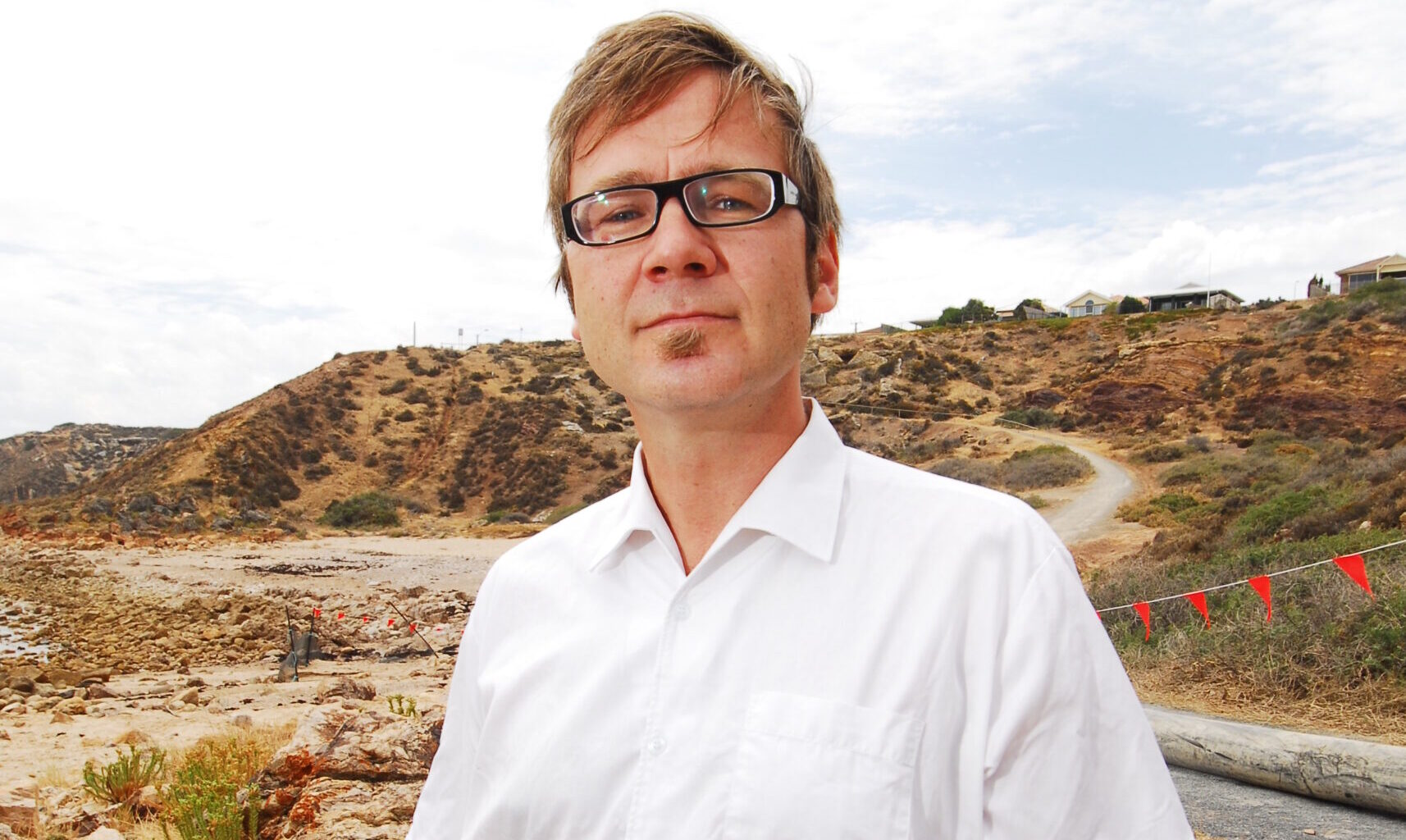
    After nearly three decades researching South Australia’s oceans at Flinders University, a leading algal bloom expert now faces an uncertain future after being told his role is being scrapped under a major restructure.

    Please login below to view content or subscribe now.

    Membership Login

    Source link

  • Clean energy research funds under threat – Campus Review

    Clean energy research funds under threat – Campus Review

    There has been much excitement since Australia signed a landmark agreement with the United States last month to expand cooperation on critical minerals and rare earth elements.

    Please login below to view content or subscribe now.

    Membership Login

    Source link