Author: admin

  • Beyond the Rhetoric: Mexico’s Higher Education Reality with Alma Maldonado Maldonado

    Beyond the Rhetoric: Mexico’s Higher Education Reality with Alma Maldonado Maldonado

    Hi everyone. I’m Alex Usher, and this is the World of Higher Education podcast. If you’re a really faithful listener, you may remember that when the show was in beta and we were fooling around with formats and guests, we did an episode about Mexican higher education and its tribulations under the populist president Andres Manuel Lopez Obrador or AMLO for short.

    Our guest that day was my friend, Alma Maldonado Maldonado, an education researcher at Cinvestav, which is the Center for Research and Advanced Studies of the National Polytechnic Institute. That interview was so brilliant, we turned this podcast into a full-time investigation of higher education developments in various countries around the world.

    Today, Alma’s back with us again to talk about how things have and have not changed in Mexico over the past two years. The big story there is that there’s a new president in town. Last spring, Claudia Sheinbaum became the country’s first ever woman president. One who happens to have a PhD in engineering with a specialty in energy and sustainability.

    You’d think that might be an advantage to a higher education sector, but Scheinbaum comes from AMLO’s Morena party and her instincts seem to be to continue her predecessor’s tradition of attacking higher education as being a dissolute elite enterprise.

    So what does this mean for Mexican higher education? Well, in general, it’s not good. Alma takes us through the implications of Morena’s supermajority in Congress, as well as its early attempts to put fiscal pressure on universities, and its continued fascination with the experimental and kind of shambolic Benito Juarez universities.
    Spoiler alert, there are not a lot of silver linings in this story, either for public or private sector universities in Mexico. But enough from me, let’s hand things over to Alma to explain.


    The World of Higher Education Podcast
    Episode 3.16 | Beyond the Rhetoric: Mexico’s Higher Education Reality with Alma Maldonado Maldonado

    Transcript

    Alex Usher (AU): Alma, almost two years ago, then-President López Obrador had about a year and a half left in his mandate and was essentially at war with the university sector and the scientific community. How did his administration end with respect to higher education? Did anything change? Did things get better or worse in his final months? Were there any significant policy shifts we should know about?

    Alma Maldonado Maldonado (AMM): Hi Alex, thanks for inviting me. It’s a pleasure to be here. Well, I think most things didn’t change. Essentially, everything stayed the same. His rhetoric and narrative against higher education institutions, against graduates from abroad, and especially against UNAM, continued until the end of his term, unfortunately.

    There wasn’t anything that made him change that rhetoric. One reason for this is that he had political capital—he knew his base supported him fully. So, why change something that was working for him? On the contrary, the attacks on universities and the restriction of resources continued right until the end.

    AU: So, nothing was resolved. But earlier this year, there were elections for the presidency and both the Chambers of Deputies and the Senate. Did higher education play any role in that election? Were there significant policy differences between the parties?

    AMM: Not really. Education didn’t feature much in the campaign—similar to what we see in the U.S. It just wasn’t important. There were only a few mentions here and there about education, but in general, it wasn’t a key part of any campaigns.

    What we did see, unfortunately, was this sort of competition around scholarships. One candidate would say, “I’ll offer scholarships for secondary education,” and the other would respond, “Well, I’ll offer scholarships for secondary, but also primary, and even preschool!” That was the extent of the debate around education policy between the two main candidates. I’m not surprised but it was very disappointing because in a country like Mexico, where education can be a major driver of social change, it wasn’t given the attention it deserves.

    AU: The winner of the election was Claudia Sheinbaum of the Morena party, the same party as López Obrador. But she has a somewhat different image—she’s a scientist with an advanced degree from UNAM, a doctorate, I think. Does her presidency signal any kind of shift for higher education?

    AMM: It’s complicated. On paper, yes, she’s better. She has a PhD from UNAM and worked as an academic—one of the few cases where an academic has become president. Not the first, of course, but still, it’s notable.

    She has a pro-science and pro-higher education rhetoric, especially given her background in the student movement at UNAM in the 1980s. She fought alongside people like Emanuel Ordorica, Carlos Simas (her former husband), and Antonio Santos. She wasn’t a leader in that movement, though now some are rewriting history to present her as one.

    Her narrative emphasizes free higher education and the idea that education is a right, not a privilege. But since she took office a few months ago, we haven’t seen much change in terms of the most important issue—financing. It’s clear: follow the money.

    In the initial draft of the national budget, the funding for UNAM and other major universities was cut. Later, the government said, “Oh no, it was a mistake. We didn’t mean to cut the budget. Sorry, let’s fix it.” Imagine—someone who champions free higher education putting universities in that position. It’s a contradiction.

    AU: She has large majorities in both chambers of parliament, so she has significant power to implement her agenda. Why do you think she proposed cuts to education funding initially?

    AMM: Well, because she’s seen as the president of higher education and science. Reducing the budget as her first move would’ve been disastrous for her image.

    But you’re right—she has total control of Congress and the Senate. Right now, she’s focused on other reforms, particularly in the judicial system, and she’s changing a lot of laws. Education isn’t on the map because López Obrador already changed the Constitution’s third article, which governs education. There’s no immediate need for her to revisit it.

    AU: Let’s circle back to the budget cuts. Last month, the proposed budget included a cut of 10 billion pesos—about 500 million U.S. dollars—to higher education, with half of that falling directly on UNAM. There was significant outcry, and she backtracked somewhat. Do we know how this will end up? Will the universities be held whole, or are cuts still coming?

    AMM: They decided to reorganize the budget, but now they’re cutting other areas instead. Unfortunately, that includes initial education and other sectors. They also cut the Senate’s budget, which has caused disputes.

    In terms of higher education, they’ve claimed that funding will remain the same as last year, with a slight adjustment for inflation. But the adjustment is minimal—about 3%—while experts estimate inflation at around 5% but they’re just adding 3%. So, effectively, there’s still less money to spend. There’s less money for infrastructure, materials, and other essentials. Universities are in a slightly better position than they were a few weeks ago, but the situation remains difficult. The contradictions in her policies have drawn a lot of criticism.

    AU: Why was so much of the proposed cut targeted at UNAM? Was it deliberate? Is there animosity toward the university?

    AMM: There’s speculation about that. Some believe it was a punishment for UNAM’s independence, particularly regarding topics like judicial reform. UNAM has maintained a critical stance, which Morena and Claudia don’t like.

    Let’s not forget that one of the first things López Obrador did when he came to power six years ago was to modify the Constitution’s third article, removing university autonomy. When there was backlash, they said, “Oh, it was a mistake. We didn’t mean it.” But there have been many such “mistakes.”

    AU: Going back to AMLO, he also set a goal of increasing enrollment by 1.5 million students while also underfunding institutions at the same time. How did that play out? Did he reach that goal? How did the funding play into the final result?

    AMM: Currently, enrollment coverage in higher education is about 44%—very low compared to other Latin American countries. AMLO’s goal was to reach 50%, but he fell short.

    Now, Claudia Sheinbaum is aiming for 55%. I don’t think that’s realistic. The common system in Mexico is to add 5% on any policy, even if the last one isn’t achieved. To achieve that, they’d need to add about 1.2 million students, which isn’t feasible with the current system.

    The problem is that the educational spaces being created aren’t in the places where students want to go. There’s a clear contradiction between their enrollment goals and actual planning.

    AU: Part of AMLO’s strategy was the Benito Juárez Universities—small, access-oriented institutions in remote areas. You previously described them as “Potemkin institutions.” What’s the current situation? Will Sheinbaum continue with this policy?

    AMM: Yes, she’s continuing the project. But as I’ve said before, it remains very obscure. We don’t know who attends these universities, who teaches there, or what students are learning. I have a student doing their master’s dissertation on these universities, and they can’t get access for research.

    Sheinbaum recently announced plans to open 50 more. But we don’t even know what’s happening with the existing 140—or whether that number is accurate. There have been protests at these universities over issues like unreceived degrees and inadequate resources. I wouldn’t be surprised that Colombia would adopt them because they’re friends of Claudia. The idea is that these institutions could increase 40,000 new spaces. While they’re meant to provide education in remote areas with programs tailored to local communities, they’re not addressing the larger participation gaps.

    AU: We’ve been talking mainly about the public sector, but what about the private sector? Institutions like Tecnológico de Monterrey are highly regarded. How does the disarray in the public sector affect them? Does it make them stronger?

    AMM: I think they are struggling too, but we need to distinguish between the high-prestige institutions and the low-prestige ones. So, let’s start with the high-prestige institutions like Tecnológico de Monterrey or Universidad Autónoma de Guadalajara.

    They are struggling financially, particularly because some scholarships they used to receive for graduate programs have been eliminated. For example, many students in their graduate programs previously got scholarships from the National Science and Technology Council. But now, under the current rhetoric, those scholarships are only being given to students in public institutions.

    This has forced high-prestige private institutions to get more creative with their resources to maintain their programs.

    On the other hand, there are low-prestige private institutions, some of which are as bad as the Benito Juárez Universities. They lack quality, but the government lets them operate because they solve a demand problem. Parents want their kids to attend college, and these institutions offer that possibility, even if the education isn’t great. Families make sacrifices to pay for these degrees because, in their minds, a degree is still a degree.

    And then, in the middle, there are institutions that are more decent in terms of quality. But the big question is: who ensures the quality of these institutions? That’s been a longstanding issue, and it hasn’t improved under the current government.

    AU: It’s a classic trade-off we see in many countries. Alma, we’ve covered a lot of doom and gloom. Are there any bright spots you foresee for 2025?

    AMM: I wish I could say I see more positive things coming, but honestly, I don’t. A big part of my concern is tied to North America and what a Trump presidency could mean for Mexico. If he returns to power, we’re likely to face serious challenges around migration and broader U.S.-Mexico relations.

    It’s really sad that Mexico didn’t take advantage of opportunities to strengthen ties with the U.S. while Biden was in office. There could have been agreements, collaborations, and advancements, but those didn’t materialize.

    In the face of all this, creativity will be key. Maybe we’ll see new programs to support migrants with higher education degrees who end up staying in Mexico. It’s critical that we do better this time than we did during the Dreamers situation. But honestly, I’m not confident that the government is prepared to handle these challenges effectively. So, unfortunately, I don’t see much good news ahead.

    AU: Well that’s a good reminder that international affairs do intrude on higher education affairs sometimes. Alma, thanks for being with us.

    AMM: Thank you very much, Alex.

    AU: And thank you to our excellent producers, Tiffany MacLennan and Samantha Pufek. If you have comments or questions, reach out at [email protected]. Don’t forget to subscribe to our YouTube channel. Join us next week when Michael Shattock will discuss governance in European universities. Bye for now.

    *This podcast transcript was generated using an AI transcription service with limited editing. Please forgive any errors made through this service.

    Source link

  • What a peaceful transition of power looks like

    What a peaceful transition of power looks like

    On 20 January, Donald Trump will take the office of president of the United States for the second time. It remains to be seen how this second term — interrupted by the four-year term of Joe Biden — will play itself out. 

    The first time around, President Barack Obama had left Trump a relatively stable nation and world. Trump’s term proved so disruptive, 41 of his 44 top aides, including his own vice president, refused to back him for a return to office. The next four years are likely to be a bumpy ride.

    Americans have long prided themselves on the peaceful transition of leadership.

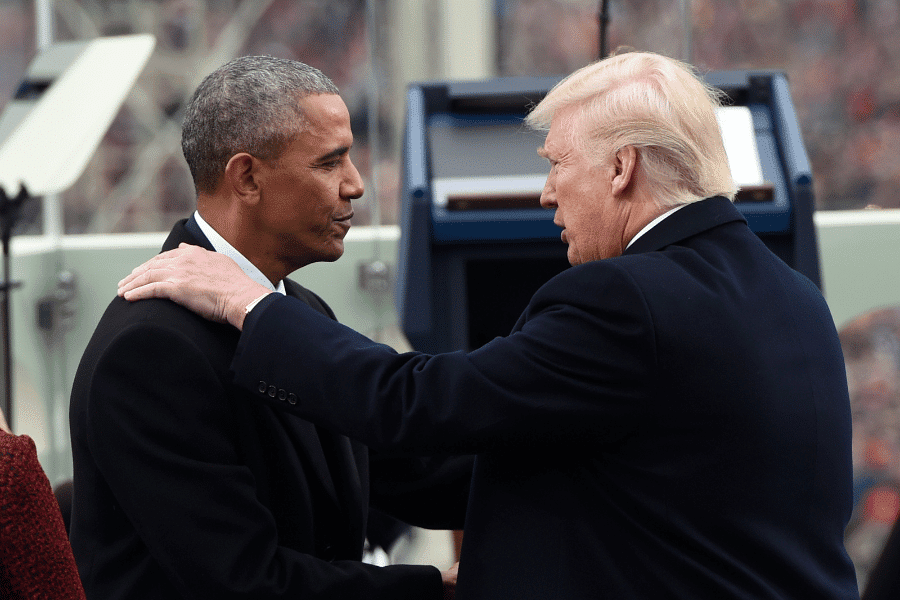
    Traditionally, on the morning of the transfer of power, the outgoing president meets with the incoming president for coffee at the White House, they share a ride to the Capitol, trade places and say goodbye. Trump scorned that tradition by flying home to his Mar-a-Lago club in the state of Florida a few hours before the inauguration.

    Before Trump, outgoing presidents tried to ease the transition by leaving notes offering advice and best wishes to their successors in the top drawer of the desk in the Oval Office. George H.W. Bush’s note to Bill Clinton, with whom he’d waged a bare-knuckles election campaign a few months earlier, was especially gracious. 

    “I wish you well. I wish your family well. Your success now is our country’s success. I am rooting hard for you,” Bush wrote.

    Peaceful transition signals a healthy democracy.

    The tradition of a peaceful transfer of power, which dates back to George Washington, crumbled four years ago when Trump, refusing to accept the voters’ rejection of his bid for another four years of office in the 2020 U.S. election, inspired an angry mob to storm the halls of Congress. Their aim was to block certification of Joe Biden’s election to succeed Trump, something that is generally considered a formality. The would-be insurrection failed.  

    Trump is now poised to again assume the highest office in the United States. To the surprise and disappointment of nearly half the country, he narrowly prevailed over Biden’s vice president, Kamala Harris, in last November’s bitterly contested presidential race. Bowing to tradition and a sense of decency, Harris conceded the election.

    “A fundamental principle of American democracy is that when we lose an election, we accept the results,” Harris said in her concession speech. “That principle, as much as any other, distinguishes democracy from monarchy or tyranny.” 

    The current transfer of power has proceeded peacefully and the inauguration itself is expected to follow the historic norm.

    While the transfer is usually thought to include just a few procedural events and the presidential oath-taking, it consists of much more and begins almost immediately after voters cast their ballots in the fall. 

    Handing over the reins of power

    If the election winner is new to the office of president, they and their team are briefed on issues and challenges they’ll face and undergo background checks to assure their avoidance of conflicts of interest and qualification to handle sensitive information.

    Normally, the focus of a transition is on appointments to top government positions and on policy changes. 

    With the Trump transition, both have been controversial. Some of the people he’s chosen for some of the most critical jobs are far out of the U.S. political mainstream. And some of the policies he says he intends to pursue — a massive nationwide roundup and deportation of illegal immigrants, the annexation of Greenland and a takeover of the Panama Canal to mention a few — are raising alarms in the United States and abroad.

    With the recent passing of former President Jimmy Carter, I can’t help remembering a time of sharp contrast to the one we are in now. 

    The 20th of January 1981 was one of the more memorable days in U.S. history. Carter had lost his bid for reelection in large part because he had been unable to secure the release of 53 U.S. diplomats and citizens who’d been held hostage in Iran for more than a year. He’d been up until 4 a.m. that day trying to sew up a deal for their release.

    It was almost done but still incomplete as he and incoming president Ronald Reagan rode up Pennsylvania Avenue together for the inaugural ceremony in a big black armored presidential limousine known as “The Beast.”

    Front row seat to a presidential transition

    I was one of the newsmen covering Carter that day. So I got a firsthand view of how the transfer of power unfolded. When we reached the U.S. Capitol, one of the television networks aired a report that the hostages had been freed. It was premature. 

    In a final indignity to Carter, the Iranians waited until minutes after Reagan was sworn in to let an Algerian aircraft chartered to bring the hostages home take off.

    What the new president said in his inaugural speech was all but lost in the celebrations over the end of the hostage ordeal. Once the formalities were over, Carter and his entourage — his wife Rosalynn, family members, top aides and a small group of reporters — walked to a small motorcade waiting outside the Capitol building. 

    In place of “The Beast” and a long trail of support vehicles was a small sedan and several vans. We slowly made our way to Andrews Air Force Base in the Maryland suburbs of Washington D.C. where a military transport plane waited to take Carter home to Georgia. 

    Although it was the same plane he’d flown on as president, its radio call sign was no longer “Air Force One.” Now it was identified as “Special Air Mission” followed by the aircraft’s tail number, “Twenty-Seven Thousand.” Reagan was president. Carter was history.

    Before turning south, the plane flew over the White House and dipped a wing. Many aboard were in tears. But the tears turned to laughter when a young Carter aide, Philip Wise, humorously borrowed a line from Dr. Martin Luther King Jr., the martyred U.S. civil rights leader. “Free at last, free at last. Thank God almighty, we are free at last,” Wise shouted.

    Witnessing the most powerful office in the world change hands was like living a real-life version of the storybook “Cinderella” and seeing the coach turn into a pumpkin.

    Having witnessed so many times in so many places where a change at the top was brought about by armed conflict or a military coup, this turnover from Carter to Reagan showed the world the power of a peaceful transition.


    Three questions to consider:

    1. Can you think of a recent changeover from one national leader to the next that wasn’t peaceful?
    2. If a new leader is appointed by the old one without an election, would you consider that a peaceful transition of power?
    3. If you were in an important leadership position, do you think you would find it difficult to step down?


    Source link

  • What could WNMU’s ex-president’s exit package pay for?

    What could WNMU’s ex-president’s exit package pay for?

    Former Western New Mexico University president Joseph Shepard received an exit package that included severance pay of $1.9 million, and a tenured faculty job, with perks adding up to an estimated $3.5 million.

    Photo illustration by Justin Morrison/Inside Higher Ed | skodonnell/iStock/Getty Images | rawpixel

    The controversial exit package for former Western New Mexico University president Joseph Shepard could have funded multiple scholarships, according to one analysis, while the state’s governor says that the money could have helped feed hungry students at the university for a year.

    Judith Wilde, a research professor at George Mason University who studies presidential compensation and contracts, previously told Inside Higher Ed that Shepard’s exit package could have funded 90 scholarships for undergraduate students at Western New Mexico.

    To Governor Michelle Lujan Grisham, a Democrat, the decision to green-light a $1.9 million severance payment to the departing president “demonstrated an appalling disconnect from the needs of our state, where the median income of a family of four is just $61,000.”

    “The amount of money contained in Dr. Shepard’s separation agreement could have addressed food insecurity across the entire WNMU student body for a full year,” Lujan Grisham said in a news release last week.

    The estimated $3.5 million package—including benefits—for a president accused of improperly spending taxpayer dollars has infuriated state lawmakers and led to the resignations of several regents. More fallout is expected as the state attorney general seeks to claw back the severance payment.

    Shepard’s last day as president was Wednesday.

    Shepard, who led the university for 13 years, made a base salary of $365,000 a year. He’s not the only college president to get a generous severance on his way out the door, but compared to deals at other institutions, the agreement is unusually lucrative and will cost the university more than multiple line items in its budget. For example, when Ben Sasse stepped down as president of the University of Florida, he struck a deal to keep his $1 million annual salary through 2028 despite exiting the top job. But UF’s annual budget is just over $5 billion, meaning Sasse’s exit package comprises a tiny fraction of university expenses.

    Comparatively, Shepard’s exit package far exceeds those of other former presidents in his state. Former New Mexico State University system chancellor Dan Arvizu received an exit package valued at between $500,000 and $650,000 when he announced his early departure in 2023, a move both parties referred to as a “mutual separation” amid tensions. In 2016, Bob Frank left the University of New Mexico presidency early amid allegations of bullying, striking a deal for a $190,000-a-year tenured faculty job—down from the $350,000 annual salary initially considered.

    At WNMU, a university that enrolled 3,570 students in fall 2023, Shepard’s total exit package adds up to almost 5 percent of its $74.2 million fiscal year 2024 budget, an Inside Higher Ed analysis found.

    In one of the poorest states in the union, more than half of WNMU’s students receive Pell Grants. A 2023 survey also found nearly 60 percent of college students in New Mexico were food insecure, prompting efforts at Western New Mexico and other colleges to address the issue.

    Shepard’s exit package has roiled lawmakers, particularly in light of the economic challenges in the state and a state investigation that found the outgoing president improperly spent $360,000 in taxpayer money on international travel, splashy resorts and expensive furniture. Had the board elected to fire Shepard without cause, it could have spent roughly $600,000 to cut ties with him. Or the board could have waited for the conclusion of another state investigation, which might have given them cause to fire him without spending any additional money, depending on the findings.

    Instead, regents cut him a $1.9 million check and gave him a tenured faculty job teaching two courses a year with a remote option. Altogether those perks add up to a $3.5 million, Wilde estimated. (WNMU officials said the money was paid for out of reserves.)

    Four out of five WNMU regents have since resigned under scrutiny from lawmakers, including the governor. Attorney General Raúl Torrez also demanded an investigation into Shepard’s “golden parachute” and sought a restraining order to prevent him from accessing the $1.9 million severance payment as the state challenges the contract. However, a judge shot down the request to place a hold on those funds Monday. A legal challenge to the contract is pending.

    ButJohn C. Anderson, an attorney for Shepard, defended the payment as “appropriate” and said that the former president had “worked tirelessly on behalf of Western New Mexico University for nearly 14 years to increase graduation rates, modernize the campus through major renovations and the construction of new facilities, and expand the school’s programs,” among other accomplishments. (Shepard’s legal team also disputed the estimate of $3.5 million but did not provide their own figure.)

    As the legal wrangling continues, Inside Higher Ed took a look at WNMU’s budget to determine how Shepard’s controversial exit package stacks up to spending on athletics, academic support, faculty salaries and other line items in the fiscal year 2024 budget, which was last updated in December. While Shepard has already received a nearly $2 million severance payment, the remainder of his deal will be paid out to him as a tenured faculty member where he’ll initially make $200,000 a year. His salary will be paid for by the business school.

    • WNMU athletics teams—known as the Mustangs—compete on the NCAA Division II level. Western New Mexico University sponsors 13 sports with an athletics budget of $5.4 million.
    • The student services budget at WNMU is $4.5 million. That money is spread across a range of offerings from disability services to funding for special events and student health and well-being.
    • WNMU budgeted $4.4 million for the operation and maintenance of campus.
    • WNMU budgeted $3.9 million in academic support.
    • The student financial aid budget at WNMU was $1.2 million.
    • Shepard’s exit package also surpasses the total faculty salaries for any department at WNMU. The nursing department has 19 full-time faculty members, earning a combined salary of $1.4 million, according to budget documents. Nursing appears to be the largest program at WNMU based on the number of full-time employees listed. Social work is also among the university’s largest programs, with 17.2 full-time faculty members listed earning just over $1 million.

    Source link

  • Illinois guarantees transfer for all state high school grads

    Illinois guarantees transfer for all state high school grads

    Students who graduated from an Illinois high school, no matter where they’re currently enrolled, will soon be guaranteed transfer admission to any University of Illinois system institution—including the University of Illinois at Urbana-Champaign, which has a regular acceptance rate below 50 percent. 

    Illinois’s new policy, set to take effect this fall, builds on its previous transfer guarantee, which applied only to current Illinois community college students. Typical state transfer guarantee programs apply only to those currently enrolled in another state institution; Illinois’s more expansive approach may help bring back former residents who left the state for college.

    To be eligible, students must have graduated from an Illinois high school, earned at least 36 transferable credit hours toward their transfer institution and maintained a minimum 3.0 GPA in all transferable courses. Students will still have to apply, but if they meet the requirements, they’ll be automatically accepted. Admission to specific programs and majors, however, is not guaranteed. 

    Source link

  • Higher ed is not a public good—but it could be (opinion)

    Higher ed is not a public good—but it could be (opinion)

    ogichobanov/iStock/Getty Images Plus

    When 85,000 Cornhuskers all wear red on game day, it’s easy to think of college as something larger than students and professors, classes, research and extracurriculars. Berkeley, Penn State and Michigan each have hundreds of thousands of online followers. Tar Heel nation is, after all, a nation.

    But wearing “college” on our chests does not a polity make. Higher education is not a public good and Americans know it.

    In the plainest sense, public goods aren’t excludable. Think of the air we breathe, interstate freeways and national defense. Everyone is affected by carbon dioxide levels, can travel by open roads and is protected, equally, from foreign threats.

    But when it comes to higher ed, exclusion is the name of the game.

    Admissions offices reject most applicants from selective colleges and create barriers at others. Tuition, even when subsidized, deters those shocked by sticker prices or unable to pay. Courses are controlled by departments, yet some intellectual climates drive students away. Governance, when behind closed doors, excludes parents, students, employers and other stakeholders.

    All told, the labyrinth of exclusionary practices makes higher ed more of a private than public good. We can interpret low public confidence in higher education as reflecting a belief that college is for someone else. Of those who matriculate, two-thirds of new community college students form the same opinion and drop out or enter a broken transfer system. One-third of new B.A. students will drop out or take more than six years to graduate. Once they’re gone, it’s often for good: Only 2.6 percent of stop-outs re-enrolled in the 2022–23 academic year. All told, this has led to a societal “diploma divide”: More people without a college degree voted for Donald Trump’s re-election in 2024 than in 2020.

    Colleges and universities do need to reclaim a place of pride in American society. But instead of ambiguous calls “reaffirming higher education’s public purpose,” why not simply be more public? And deliver an education that is, well, more good?

    My new book, Publicization: How Public and Private Interests Can Reinvent Education for the Common Good (Teachers College Press), argues that educational institutions of any sort—private nonprofit, state-controlled or proprietary—can be more publicly purposed when they meet two criteria. First, they must prepare each generation to sustain the common goods on which American life rests: a vibrant democracy, a productive economy, a civil society and a healthy planet. These are three long-standing aims and one new existential goal, around which colleges and universities can better organize the student experience.

    Second, institutions must themselves operate in ways that are more public than private. To do so, Publicization offers an “Exclusion Test” applicable to six domains—funding, governance, goals, accountability, equity and an institution’s underlying educational philosophy. Colleges and universities can apply the test to these areas and identify where operations can be less exclusionary and therefore more public.

    For example, do policies assume that some students aren’t “college ready,” or do we meet everyone—particularly those impacted by COVID-19—where they are? To what extent do applications create formal and informal hurdles, or do we offer more streamlined direct admission? Are inequitable proxies like Advanced Placement Calculus blocking talented students from admission, or does coursework in more widely relevant areas like statistics matter equally? Are free college plans riddled with eligibility fine print or open to anyone?

    Are courses gated by size, section, time of day and instructor approval, or are they more accessible? Are we mostly catering to young adults or presenting real options for the almost 37 million Americans with some college but no degree? Is federal funding considered a necessary evil, or is Washington engaged as a key stakeholder? Do boards focus narrowly on institutional issues or see themselves as hinges between school and society, mediating higher ed’s role in a democracy? Do we tolerate every private belief or hold ourselves to an epistemology premised on shared evidence and public scrutiny, what Jonathan Rauch calls the “Constitution of Knowledge”?

    As for an experience that’s good, higher ed’s 15-year-old success agenda focuses on access, affordability and student support. These aren’t enough. Quality must join the list, with a particular focus on our technical core: teaching and learning.

    Ask any of the nation’s 1.5 million professors and most will tell you they were not taught how to teach. They are world-class scholars. They serve their institutions. They are committed to students. But hardly any received comprehensive training in effective instruction. This persists despite the fact that most Americans believe the best colleges have the best teaching and evidence that effective instruction leads to more positive mindsets about one’s academic abilities, deeper learning, stronger retention and life readiness.

    As such, it’s no surprise that Richard Arum and Josipa Roksa found, in Academically Adrift (University of Chicago Press), “limited learning on college campuses.” That was in 2010 and not enough has changed, as recent articles in USA Today, The Washington Post, Washington Monthly, Forbes, Deseret News and The Chronicle of Higher Education affirm.

    But change is afoot. The National Academies of Sciences, Engineering and Medicine soon plan to publish STEM teaching standards, a first. Groups like the Equity-Based Teaching Collective have identified policies and practices to promote effective teaching campuswide. Over the past 10 years, the Association of College and University Educators, which I co-founded, has credentialed 42,000 professors in effective teaching at 500 institutions nationwide with proof of positive student impact. Last June’s second National Higher Education Teaching Conference gathered hundreds of higher education leaders and professors to accelerate the teaching excellence movement.

    College as a “public good”? Let’s give the public what it wants and deserves: a good education. In which the “best” colleges aren’t, by definition, the most exclusive. So that at family gatherings, our students tell their voting, poll-taking relatives how much they are learning, how great their professors are and how college is for them.

    Jonathan Gyurko teaches politics and education at Teachers College, Columbia University. His new book, Publicization: How Public and Private Interests Can Reinvent Education for the Common Good, was published by Teachers College Press last March.

    Source link

  • Biden administration discharges $4.5B in loans for Ashford students

    Biden administration discharges $4.5B in loans for Ashford students

    The Education Department is discharging any remaining loans for more than 260,000 borrowers who attended Ashford University and will move to bar a key executive at Ashford’s former parent company from the federal financial aid system, the agency announced Wednesday.

    The agency’s action, totaling $4.5 billion, builds on an August 2023 decision to forgive $72 million in loans for 2,300 former Ashford students after finding that the college repeatedly lied to them about the cost, time requirement and value of its degree program. The discharges through the department’s borrower-defense program are among the largest in the program’s history. Wiping out the loans for Corinthian College students cost the department $5.8 billion, while the discharges for former ITT Technical Institute students totaled $3.9 billion.

    The University of Arizona acquired the predominantly online institution Ashford in 2020 and rebranded it as the University of Arizona Global Campus. At first, the university partnered with Zovio Inc., a publicly traded company that owned Ashford, to run the rebranded entity but decided in 2022 to buy Zovio’s assets. The University of Arizona has since moved to completely absorb the online campus.

    Borrowers who attended Ashford from March 1, 2009, through April 30, 2020, are eligible for relief.

    “Numerous federal and state investigations have documented the deceptive recruiting tactics frequently used by Ashford University,” said U.S. under secretary of education James Kvaal in a statement. “In reality, 90 percent of Ashford students never graduated, and the few who did were often left with large debts and low incomes. Today’s announcement will finally provide relief to many students who were harmed by Ashford’s illegal actions.”

    The Biden administration has forgiven $34 billion via borrower defense for 1.9 million borrowers, the department said.

    But forgiving loans for Ashford students isn’t enough for the department. Officials proposed a governmentwide debarment of Andrew Clark, who in 2004 founded Bridgepoint Education, which later became Zovio. He stepped down in March 2021.

    The debarment would mean Clark could no longer be employed in any role at any institution that receives funding from Title IV of the Higher Education Act of 1965, which authorizes federal financial aid programs, for at least three years.

    “The conduct of Ashford can be imputed to Mr. Clark because he participated in, knew, or had reason to know of Ashford’s misrepresentations,” the department said in a news release. “Mr. Clark not only supervised the unlawful conduct, he personally participated in it, driving some of the worst aspects of the boiler-room-style recruiting culture.”

    The department’s Office of Hearings and Appeals has final say on whether to debar Clark, who can contest the decision.

    Source link

  • New York governor proposes free community college initiative

    New York governor proposes free community college initiative

    During her State of the State address on Tuesday, New York governor Kathy Hochul announced a plan to make community college tuition-free for residents pursuing associate degrees in certain high-demand fields. 

    The program would be open to adults aged 25 to 55 pursuing degrees in nursing, teaching, technology fields and engineering. If enacted, it could take effect as early as this fall and cover tuition, fees and textbook costs for students attending State University of New York and City University of New York community colleges. Hochul also proposed the creation of new apprenticeship programs for similar high-demand jobs. 

    Currently, New York students from families making under $125,000 can attend SUNY and CUNY schools tuition-free, regardless of their degree program. For most of its nearly 200-year existence, all CUNY schools were free for New York residents to attend. That policy was abandoned after the 1976 city financial crisis.

    In recent years, a number of states have enacted free tuition initiatives targeted to midcareer adults and aimed at boosting employment in specific high-demand jobs. Massachusetts’s new MassReconnect program led to a surge in community college enrollment last year, and Michigan enacted a similar plan last summer.

    Source link

  • Leveraging European Partnerships in Medical Education

    Leveraging European Partnerships in Medical Education

    By Ivan Dimitrov, Digital Marketing Expert at Medlink Students.

    The United Kingdom faces a critical shortage of medical professionals, a problem exacerbated by the limited availability of medical school places.

    Each year, thousands of aspiring doctors compete for a finite number of spots, leaving many qualified candidates unable to pursue their dreams of contributing to the healthcare system. This bottleneck not only cuts down individual potential but also intensifies the workforce gap in the UK National Health Service (NHS).

    However, there is hope, as innovative solutions are already being tried out. Additionally, new ideas, like partnerships with reputable European universities, present a unique opportunity to address these challenges while opening new pathways for aspiring medical students.

    The Problem: Limited Medical Education Opportunities in the UK

    UK medical schools are oversubscribed, with only a fraction of applicants securing a place each year. For instance, in 2023, only around 7,000 places were available for about 27,000 applicants, leaving thousands of capable students unable to pursue medical education domestically. Those potential students can afford medical school, but there are no seats available for them in the UK.

    This situation places immense pressure on the healthcare system, which is already grappling with severe understaffing and increased demand. Published data suggests there were 125,572 vacancies (9%) in the NHS between March and June 2023. The broader economy also suffers, as estimates suggest poor health outcomes cost the UK between £30.7 billion to £138 billion annually, depending on the research cited.

    Meanwhile, the demand for medical education continues to rise, with applications increasing by nearly 30% over the last decade. However, this increase remains insufficient to meet demand, even though the workforce has grown by 18% between 2018 and 2022, largely driven by international medical graduates (IMGs)

    Even with the planned expansion of UK medical school places, which is already underway, the demand for healthcare professionals is projected to far surpass supply in the foreseeable future.

    The Obvious Long-Term Solution: Expanding UK Medical Schools

    The most logical long-term solution is to expand the UK’s medical school capacity. This initiative is already underway in various forms, including the addition of new medical school seats and pilot programmes like doctor-degree apprenticeships. However, scaling up these efforts requires significant time, planning, and financial investment, which comes with uncertainty. 

    In the meantime, the NHS faces mounting pressures. Currently, over 25,000 doctors registered with the GMC are aged 60 or older and nearing retirement. Without urgent action to fill this gap, the healthcare system will continue to struggle to meet demand.

    While long-term plans are vital, they cannot meet the immediate need for doctors. This is where short-term solutions, such as leveraging partnerships with European universities, can play a critical role.

    A Policy Proposal: Partnering with European Universities as a Short-Term Solution

    To address the urgent need for more doctors, the UK government can explore strategic partnerships with European medical schools. Such partnerships could alleviate the strain on the domestic system while ensuring students receive high-quality, GMC-approved training abroad.

    Key components of the proposal:

    1. Hand-picked, Accredited Medical Schools

      Partnering with select European universities ensures that students receive an education that meets UK standards. These partnerships would focus on medical schools that offer training recognised by the General Medical Council (GMC), guaranteeing seamless integration into the NHS upon graduation.

      But would this approach cost more? Not necessarily. Tuition for UK medical students is currently capped at £9,250 per year, while many European medical schools charge between €3,000 and €18,000 annually. Factoring in lower living costs across much of Europe, studying abroad could be an affordable alternative for many students.

      Even if the UK government were to subsidise part of the cost (an entirely political decision), the potential savings from addressing workforce shortages and improving public health could far outweigh the expense. With healthcare-related economic losses estimated to be at least £30 billion annually, the return on investment is compelling.

      2. A National Branding Campaign for Medical Education Abroad

      To overcome stigma, the government could launch a branding campaign to highlight the benefits of studying medicine abroad and emphasise the value of returning to serve in the NHS after graduation. Such a campaign would promote healthcare careers and position international education as a prestigious and viable path for aspiring doctors.

      3. Financial Accessibility for Students

      To ensure equitable access, the government could negotiate tuition discounts at partner universities or provide scholarships for a small number of students. This would not only serve as a great motivator but also open opportunities for lower-income students and diversify the future medical workforce.

      Medlink Students is currently taking advantage of this approach by partnering with select universities in the Caribbean to give a broader range of students access to high-quality medical education. 

      Expanding this concept to European institutions could create a broader pool of skilled graduates ready to serve the NHS. This method can also secure a steady influx of motivated students to the partnered medical schools, improving their standings and boosting the local economy.

      4. Return-to-Service Agreements

      To ensure the investment benefits the NHS, students could sign contractual agreements committing to work within the UK healthcare system for a specified period after completing their training. Similar approaches have already been successfully employed in other countries that offer scholarships tied to public service commitments.

      While some may argue that students could break these agreements, existing data suggests otherwise. In 2022, 52% of new doctors joining the GMC register were IMGs, showing the strong appeal of the NHS as a workplace. UK students with familial and social ties at home are even more likely to return.

      Not coming back to the UK to practise would be an extreme exception, not the norm.

      Learning from International Examples

      Many countries have implemented programmes to address medical workforce shortages by partnering with international institutions. For instance:

      • Saudi Arabia: Saudi Arabia encourages students to study abroad with scholarships but requires them to return for mandatory public service. The UK could adopt a similar return-to-service model, ensuring overseas-trained doctors contribute directly to the NHS workforce.
      • Malaysia: Malaysia sponsors students to study in selected universities abroad under agreements prioritising national healthcare staffing. The UK could use this approach to target shortages in high-demand regions or specialities.
      • Singapore: Singapore integrates scholarships, branding campaigns, and competitive salaries to attract and retain healthcare talent. This comprehensive strategy demonstrates how financial incentives and targeted marketing can strengthen the healthcare pipeline.

      These examples demonstrate how well-designed policies can address workforce gaps while maintaining financial and political feasibility.

      What’s in it for European Universities?

      European universities do not face the same capacity constraints as the UK, and many universities actively seek to attract international students.

      Countries like Bulgaria, Georgia, Poland, Hungary, the Czech Republic, and others have long-established medical programmes that cater specifically to international students. These programmes provide high-quality, accredited, and internationally recognised medical education in English.

      These programmes typically run parallel with domestic ones, meaning that an influx of UK students would not displace local applicants but would instead guarantee a steady intake of motivated international students. In fact, many universities are actively expanding their capacity to accommodate more international enrolment to increase revenue and demonstrate their ability to adapt to evolving needs and external pressures.

      This makes partnerships feasible without creating strain on current educational systems. On the contrary, partnering with the UK presents substantial benefits for European medical schools, including:

      • Financial Stability: European universities could benefit from a steady stream of tuition income, particularly if the UK government negotiates direct subsidies or covers part of the costs through scholarships. This model has proven effective for institutions hosting scholarship-funded students from Saudi Arabia and Malaysia.
      • Reputational Gains: Collaboration with the UK and GMC recognition could enhance the standing of partner universities globally, attracting further international students.
      • Economic Impact: Hosting UK students would bring economic benefits to local communities, creating demand for housing, goods, and services.

      Additionally, with the support of specialiсed agencies to assist students in managing their documents and application processes, the influx of students can be efficiently handled. Consequently, implementing partnerships with European medical schools is not only a matter of negotiation but also a viable and realistic political decision for the UK. 

      Conclusion

      By initiating partnerships with European universities, the UK government can expand opportunities for aspiring medical students, reduce NHS workforce shortages, and make the dream of becoming a doctor more accessible to all. This potential policy would not only bridge the current gap but also create a more resilient and inclusive healthcare system for the future.

      While expanding domestic medical school capacity remains essential, international collaboration offers an immediate, cost-effective solution to bridge the gap. By combining political will, financial support, and a focus on equitable access, the UK can turn its healthcare challenges into opportunities for growth and innovation.

    Source link

  • UK universities can support Gaza’s immediate education needs

    UK universities can support Gaza’s immediate education needs

    Since the conflict began in 2023, I have interviewed numerous higher education students and academics, both in Gaza and those displaced elsewhere.

    Their stories are profoundly inspiring and speak to the resilience and determination of a community that refuses to let adversity extinguish its aspirations. For students in Gaza, education is far more than a pathway to personal advancement – it is a fragile lifeline, a stabilising force in the midst of chaos, and a source of hope for the future.

    For academics, their passion for teaching and inspiring the next generation endures, even as universities lie in ruins and teaching becomes a voluntary effort.

    Education cannot wait

    In a region devastated by conflict, young Palestinians – particularly those pursuing critical fields such as medicine, pharmacy, and engineering – demonstrate extraordinary resilience as they strive to continue their education under unimaginable circumstances. For these students, education is not merely a personal milestone; it is a transformative force for the public good, equipping them with the skills needed to rebuild their society and economy. UK universities are uniquely positioned to play a pivotal role in addressing these challenges. Having recently supported Ukrainian students and academics during a time of crisis, they have developed valuable experience and insights into providing meaningful and structured support. The need to act now is pressing, as education cannot wait.

    The immediate priority is access to online resources – lecture recordings, virtual labs, digital textbooks, and open-access courses – that can sustain continuity in education for Gaza’s students, particularly those in fields like medicine and pharmacy. For instance, final-year medical students in Gaza have been unable to graduate due to the ongoing conflict, creating an urgent need for virtual alternatives to traditional clinical training. Palestinian academics have stressed the importance of accessible online lecture materials and virtual labs to ensure these students can complete their education and serve their communities where they are desperately needed.

    For UK universities, supporting these students is not just an act of compassion but a reinforcement of the broader mission of education: to empower, rebuild, and promote peace and stability. Given the logistical and security challenges that make physical attendance in schools and universities nearly impossible, the solution must be digital. UK universities could, for example, create licenses to share lecture materials such as recordings, slides, and lab simulations with students in Gaza.

    Virtual mentorship, remote internships

    Virtual mentorship programmes could also be established, enabling UK healthcare professionals to guide Palestinian medical students through remote internships and online training modules, equipping them with vital knowledge and practical skills. Collaborating with technology partners to provide devices, software, and secure internet access could further bridge the digital divide, ensuring that students can continue their education even amidst displacement.

    This approach could extend to pharmacy and engineering students, who face similar challenges. Pharmacy students could benefit from virtual labs and training programmes, while engineering students could access workshops on sustainable design, structural engineering, and public works – fields critical to Gaza’s rebuilding efforts. These initiatives would not only address immediate educational needs but also help create a pipeline of skilled professionals prepared to contribute to their communities’ recovery.

    Beyond individual training, research partnerships between UK universities and Palestinian institutions could provide both short- and long-term educational support. Establishing an interdisciplinary Centre for Palestine Studies within UK universities, for instance, would create a platform for collaborative research on pressing issues such as public health, environmental sustainability, and renewable energy. These partnerships could amplify Palestinian academics’ voices through joint publications, international conferences, and shared funding opportunities, while providing mentorship and resources that are otherwise inaccessible in Gaza.

    Our educators could also support the economic recovery in Gaza, which requires more than just rebuilding physical infrastructure; it necessitates cultivating an entrepreneurial spirit. UK universities with strong business and social entrepreneurship programmes could offer virtual training, mentorship, and incubator partnerships for Gaza’s students. Skills workshops on sustainable finance, small business management, and social entrepreneurship could empower young Palestinians to rebuild their economy, fostering resilience and independence.

    Beyond education

    However, significant challenges remain, including the reconstruction of homes, schools, and infrastructure. For now, support can only reach those students with access to the internet and devices, such as laptops. In the long term, UK universities should partner with charities, NGOs, and funding bodies such as the Wellcome Trust and the Royal Society to help rebuild Gaza’s educational and healthcare infrastructures. Dialogue with Palestinian colleagues is essential to developing a strategic framework for digitisation and reconstruction that is both practical and impactful.

    Imagine British universities collaborating with Palestinian institutions to create start-up incubators focused on renewable energy, healthcare technology, or sustainable agriculture. These ventures could foster economic independence, create jobs, and lay the foundation for a stronger and more resilient Gaza. Students in Gaza don’t just want access to education – they want the tools to contribute actively to their communities, creating a sustainable future for themselves and their families.

    UK universities now stand at a critical juncture. By extending support to students and academics in conflict zones, they have the opportunity to reaffirm the transformative power of education. Young Palestinians, who continue their studies amidst tremendous adversity, exemplify education’s potential to not only uplift individuals but to rebuild communities.

    The UK’s academic community has long championed education as a force for peace, progress, and the public good. By sharing resources, expertise, and a commitment to equity, UK universities can help rebuild Gaza—not just in physical terms, but in spirit, knowledge, and skill.

    This is a moment for UK universities to step up – for Gaza’s students, for the future of Gaza, and for the enduring promise of education as a beacon of hope and resilience.

    Source link