Each month, CUPA-HR General Counsel Ira Shepard provides an overview of several labor and employment law cases and regulatory actions with implications for the higher ed workplace. Here’s the latest from Ira.
Federal Contractor Vaccine Mandate Blocked Nationwide By Georgia Federal Court, Georgia Universities Testified in Favor of the Injunction
A federal district court judge in Georgia issued a nationwide injunction blocking the Biden administration’s vaccine mandate applicable to all federal contractors (Georgia v. Biden (S.D. Ga., No. 21-cv-00163, 12/7/21)). The mandate was scheduled to go into effective January 4, 2022 and had been the subject of several lawsuits in multiple states attempting to block the mandate.
Georgia was joined by seven states in the litigation. Representatives from Georgia universities testified at the injunction hearing that the mandate would be expensive, onerous and cost them valuable employees who have not yet presented proof of vaccination. The judge ruled that blocking the mandate was not because the vaccine would not be effective in reducing the spread of COVID-19, but rather that President Biden did not have the power to issue such an Executive Order. The judge rued that the mandate went beyond the President’s power to issue orders “addressing administrative and management issues in order to promote efficiency and economy in procurement and contracting.”
College Employee’s Discussion With Coworkers About Institutional Racism Is Basis For Discriminatory Discharge and Retaliation Claims
A federal district court judge recently ruled that a discriminatory discharge and retaliation case, based on the plaintiff’s allegations that he was terminated because he facilitated a discussion of institutional racism among coworkers, states a claim of unlawful discrimination based on race. Prior to discharge, the plaintiff was in charge of the college’s program assisting high school students in danger of dropping out (Debro v. Contra Costa Community College (2021 BL 456753, N.D. Cal. No. 3:20-cv-08876, 11/30/21)).
The plaintiff was given permission in advance to facilitate a discussion of institutional racism among coworkers. Following the discussion, two white subordinates filed race discrimination claims alleging that the plaintiff made them uncomfortable expressing their own views on institutional racism. The plaintiff was subsequently fired by the college after it was concluded that he violated the college’s rules against harassment based on race as he made others uncomfortable expressing their views on institutional racism.
The federal district court judge concluded that the plaintiff’s complaint adequately stated claims of race discrimination in violation of both federal and state law and will move forward to discovery and trial.
Labor Advocacy Group Files Complaint With NLRB Alleging That the NCAA Has Misclassified College and University Sports Players as Student-Athletes as Opposed to Employees
A new advocacy group, the College Basketball Players Association, has filed a complaint with the Indianapolis office of the National Labor Relations Board (NLRB) alleging that the NCAA is violating federal labor law by misclassifying college sports players as student-athletes as opposed to employees. In 2015, the NLRB rejected an attempt by Northwestern University football players to form a union concluding that it would not advance the purposes of U.S. labor law. However, more recently the new NLRB general counsel publicly stated that in her view at least some college athletes are employees. This case could be the vehicle the general counsel may use to bring this issue before the NLRB for review. CUPA-HR will watch this case as it progresses and report on future developments.
Union Collective Bargaining Between Graduate and Undergraduate Student Teachers and Researchers Continues at Some Private Institutions
Harvard University and the United Auto Workers (UAW) union announced an agreement on a new four-year collective bargaining agreement in mid-November just hours before a planned strike by a student employee bargaining unit at the university. The Harvard Graduate Students Union is represented by the UAW and consists of a bargaining unit of 4,500 graduate and undergraduate students who work as teachers and researchers. Details of the new four-year contract were not immediately disclosed or available.
56-Year-Old Baseball Coaching Applicant Loses Age Discrimination Lawsuit Against University Where 31-Year-Old Applicant Was Chosen
The Seventh Circuit U.S. Court of Appeals (covering Illinois, Wisconsin and Indiana) affirmed a summary judgement decision by the trial court in favor of Indiana University South Bend, rejecting the age discrimination lawsuit filed by a 56-year-old applicant because the university hired a 31-year-old applicant. The court concluded that there was no evidence that the plaintiff was discriminated against because of his age (Reinebold v. Bruce (2021 BL 442817, 7th Cir., No. 21-1092, 11/18/21)).
There were 94 applicants for the position of head baseball coach. The university chose 10 applicants for telephone interviews, including the plaintiff. The plaintiff was not among the four chosen from the telephone interviews for a final in-person interview. While the plaintiff had a better career win/loss percentage that the 31-year-old applicant chosen as the new head coach, all four of the telephone interviewers concluded that plaintiff’s presentation was not good, including one interviewer who concluded that the plaintiff’s interview was “One of the worst interviews he had ever experienced.”
The court concluded that one of the interviewer’s remarks to his barber that “We chose the younger applicant” was a stray remark and did not provide evidence of age discrimination.
EEOC Loses Attempt to Invalidate Employer’s Negotiation Defense to an Equal Pay Act Claim Brought By a School District Superintendent Who Was Paid Less Than Her Male Predecessor
The EEOC recently filed a case on behalf of a school district superintendent under the Equal Pay Act alleging that the school district violated the law by paying the new female superintendent less than it paid her male predecessor.
The school district defended, alleging that the female superintendent failed to negotiate a higher salary. The EEOC argued that failure to negotiate a higher salary is not a valid defense to an Equal Pay Act claim. The school district countered that the Supreme Court has never ruled that failure to negotiate a higher salary is not a factor other than sex, and other courts have held that that is a valid factor other than sex in these circumstances. The federal district court judge hearing the case sided with the school district holding that, for now, and subject to further consideration, the EEOC failed to show that the defense could not be raised (EEOC v. Hunter–Tannersville Central School District (2021 Bl 460087, N.D.N.Y. No. 1:21-cv-00352, 12/2/21)). The judge concluded whether or not the defense is valid is a decision for the U.S. Court of Appeals.
On December 13, CUPA-HR and ten other higher education associations sent a letter to United States Citizenship and Immigration Services (USCIS) Director Ur Jaddou requesting the Department of Homeland Security (DHS) extend its previously announced flexibilities on Form I-9 compliance requirements through June 30, 2022. The guidance, which has been extended continuously since March 2020 and was amended on April 1, 2021, permits remote inspection of Form I-9 documents in situations where employees work exclusively in a remote setting due to COVID-19-related precautions.
The guidance is currently slated to expire on December 31, 2021. As such, colleges that have used the remote I-9 accommodation will be required to physically inspect the documents of affected employees no later than three business days once normal operations resume — providing a very limited window in which to inspect the documents of potentially large numbers of employees.
As the current expiration date is problematic, the CUPA-HR letter requests DHS to extend the I-9 flexibility guidance through the spring semester. The letter highlights two major reasons to extend the guidance past its current expiration date: the uncertainty posed by the Omicron variant and the current guidance’s expiration date falling between two major federal government holidays and in the middle of most college and university winter breaks. Given the need for predictability and the wind-down of university operations before the expiration date, the letter also encourages DHS to announce the requested extension on or before December 17, 2021.
Please Submit Your Feedback On the I-9 Process
On a related note, CUPA-HR is requesting your feedback to help our Government Relations team respond to DHS’s Request for Public Input on document examination practices for Form I-9 and the guidance for flexibility created in response to the COVID-19 pandemic. To ensure we can provide the most comprehensive feedback to DHS as possible, please make sure someone from your institution responds to CUPA-HR’s Survey by 11:00 p.m. ET on December 15. All responses will help us finalize the comments we submit to DHS.
On November 24, the Department of Labor (DOL)’s Wage and Hour Division (WHD) issued a final rule implementing President Biden’s Executive Order 14026 (EO), “Increasing the Minimum Wage for Federal Contractors.” The rule increases the minimum wage for federal government contractors for workers who work on or in connection with a covered federal contract to $15 per hour beginning January 30, 2022, and requires the secretary of labor to annually review and determine the minimum wage amount beginning January 1, 2023.
As stated above, the final rule establishes standards and procedures for implementing and enforcing the minimum wage protections of Executive Order 14026. Starting January 30, 2022, all agencies will need to include a $15 minimum wage in new contracts, new solicitations, extensions or renewals of an existing contract, and exercises of an option on an existing contract. Under the EO and final rule, contracts with solicitations issued before January 30, 2022, and entered into, on or between January 30 and March 30, 2022 will be exempt from the wage. If such a contract is subsequently extended or renewed or an option is exercised under the contract, the $15 minimum wage will apply.
Covered Contracts
According to the EO and as finalized in the rule, the $15 minimum wage requirement only applies to the following contracts:
Procurement contracts for services or construction;
Contracts for services covered by the Service Contract Act (SCA);
Contracts for concessions; and
Contracts “entered into with the Federal Government in connection with Federal property or lands and related to offering services for Federal employees, their dependents, or the general public.”
The new minimum wage clause will NOT need to be included in:
Federal grants;
Contracts or agreements with Indian Tribes under the Indian Self-Determination and Education Assistance Act;
Procurement contracts for construction that are excluded from coverage of the Davis-Bacon Act (DBA);
Contracts for services that are exempt from coverage under the SCA; and
Contracts for the manufacturing of materials, supplies, articles or equipment to the Federal Government.
Covered Workers
The WHD defines a covered worker in the final rule as “any person engaged in performing work on or in connection with a contract covered by the EO, and whose wages under such contract are governed by the [Fair Labor Standards Act (FLSA)], the SCA or the DBA, regardless of the contractual relationship alleged to exist between the individual and the employer.” A worker who performs “on” a covered contract is defined as “any worker who directly performs the specific services called for by the contract’s terms,” and a worker who performs “in connection with” a covered contract is defined as “any worker who performs work activities that, although are not the specific services called for by the contract’s terms, are necessary to the performance of those specific services.”
One exemption to the rule’s minimum wage requirement is provided for FLSA-covered workers performing work “in connection with” covered contracts for less than 20 percent of their working hours in a given workweek.
The final rule also clarifies that certain employees who are exempt from the minimum wage protections under the FLSA are also not entitled to the $15 minimum wage protection of the EO and final rule. In an FAQ page on the EO and final rule, the WHD provides “learners, apprentices, messengers and full-time students employed under certificates pursuant to FLSA sections 14(a) and (b)” as examples of individuals who are excluded from the EO’s minimum wage requirements.
Additional Considerations
As mentioned above, the secretary of labor will be granted authority to annually review and increase the minimum wage beginning January 1, 2023. The minimum wage will be increased by the annual percentage increase in the Consumer Price Index for Urban Wage Earners and Clerical Workers to address inflation.
Additionally, the EO and final rule change compensation for tipped employees working on or in connection with a covered contract. Beginning January 30, 2022, such tipped employees must be paid a wage of at least $10.50 per hour. By January 1, 2024, the tip credit must be eliminated for such employees, and they must earn the same minimum hourly rate that other covered employees are entitled to.
CUPA-HR will keep members apprised of any updates and resources to aid institutions as the new minimum wage final rule becomes effective.
Over the past several months, the Biden administration announced and implemented several vaccine and testing mandates for federal workers, federal contractors and private employers. States and business stakeholders quickly responded with lawsuits against the administration’s mandates, which continue to be challenged in courts around the country. To keep CUPA-HR members apprised of the legal challenges, we have detailed below the most recent litigation updates for the federal contractor vaccine mandate, the Occupational Safety and Health Administration (OSHA)’s Emergency Temporary Standard (ETS), and the Centers for Medicare and Medicaid Services’ (CMS) vaccine mandate for healthcare workers — all three of which are on hold pending the various lawsuits’ outcomes.
Federal Contractor Vaccine Mandate
On September 9, President Biden issued Executive Order 14042 (EO), “Ensuring Adequate COVID Safety Protocols for Federal Contractors,” as part of his “Path Out of the Pandemic” plan. The EO tasks the Safer Federal Workforce Task Force with implementing guidance that requires all federal contractors to mandate COVID-19 vaccinations for their employees. The current effective date is January 4, 2022, meaning all covered contractor employees must be fully vaccinated by January 18, 2022. A federal court recently enjoined the government from implementing the EO, however, so it remains unclear when, if ever, the mandate will go into effect.
Numerous lawsuits have been filed against the mandate arguing that the Biden administration does not have authority to require vaccinations, and two federal courts have already issued decisions. On November 30, the U.S. District Court for the Eastern District of Kentucky issued a preliminary injunction against the mandate, stopping enforcement in Kentucky, Ohio and Tennessee only. On December 7, a federal judge at the U.S. District Court for the Southern District of Georgia granted a motion for a nationwide preliminary injunction against the vaccination mandate for federal contractors, halting enforcement for federal contractors in all states. The Biden administration is expected to challenge this decision.
OSHA Emergency Temporary Standard
On November 5, OSHA issued its COVID-19 Vaccination and Testing ETS requiring employers with 100 or more employees to implement vaccination or testing policies for their workers. As it currently stands, the ETS requires covered employers and employees to be fully vaccinated by January 4, 2022. A federal court has enjoined OSHA from implementing the ETS, however, and it remains unclear whether the ETS will be in effect on January 4 or anytime thereafter.
Over three dozen lawsuits were filed against the rule, with at least one in all 12 circuit courts in the country. On November 6, the U.S. Court of Appeals for the 5th Circuit granted an emergency motion to stay the ETS, and on November 12, it extended the stay while it further reviewed the motion for a permanent injunction, ordering OSHA to stop implementation and enforcement of the ETS until further court order. Due to the high volume of cases at various circuit courts, a lottery was held on November 18 to determine which circuit court would hear the case to make a sweeping decision, which the 6th Circuit won, meaning the stay remains in place until the 6th Circuit makes a decision on the motion. It is likely the stay will remain in place until at least December 10; that said, the 6th Circuit can decide to lift the stay before that if it chooses to do so.
CMS Vaccine Mandate for Healthcare Workers
On November 5, the Centers for Medicare and Medicaid Services (CMS) issued a rule requiring healthcare workers in facilities that receive Medicare or Medicaid funds be vaccinated against COVID-19 by January 4, 2022. This rule also has been stayed by federal courts.
Four lawsuits were filed against CMS challenging the agency’s authority to issue the rule. On November 29, the District Court for the Eastern District of Missouri blocked implementation and enforcement in the 10 states that challenged the rule: Missouri, Nebraska, Arkansas, Kansas, Iowa, Wyoming, Alaska, South Dakota, North Dakota and New Hampshire. On November 30, the District Court for the Western District of Louisiana issued a preliminary injunction blocking enforcement of the mandate nationwide, except in the 10 states impacted by the Missouri ruling. Decisions in the two other lawsuits are still pending.
CUPA-HR continues to monitor the ongoing litigation for all of the vaccine and testing mandates and will keep members apprised of any decisions that will impact institutions’ compliance efforts.
It’s Employee Learning Week — a great reminder for employers to showcase their commitment to talent development by highlighting development opportunities available to employees. Whether you’re an HR practitioner in search of professional development ideas for yourself and your HR peers, or you’re looking for ideas to engage and develop other employees at your institution, here are several tools, tips and resources to help you take the next step.
Professional Development Tools for the HR Pro
CUPA-HR Learning Framework — A tool that assists in defining HR practitioners’ knowledge, skills and attributes and then helps create an action plan for growth and set developmental goals. Jump start your development by using the quick start guide, then build your skills further by diving deeper into the framework competencies.
Creating Your Individual Development Plan — A must-have for anyone who wants to map out a strategy for career success in higher ed HR. This free CUPA-HR e-learning course provides an introduction to individual development plans (IDPs) and will guide you through the process of creating your plan, discussing your career with your leaders and implementing your strategy for success. CUPA-HR e-Learning is sponsored by PageUp.
Ideas for the Higher Ed Community
Apart from their own professional development, HR pros often create and help facilitate professional development opportunities for employees at their institutions. Here are some jump-start ideas from the article Optimize Your Hybrid or Remote Work Workforce — Considerations for Higher Ed HR Leaders, featured in the fall issue of Higher Ed HR Magazine.
Encourage managers to use an employee’s development plan to guide regular coaching calls.Gallup suggests ongoing coaching conversations — rather than annual performance reviews — can be of great benefit to both the employee and the employer. These meaningful conversations highlight the organization’s commitment to employee engagement, which can help retain employees for the long-haul. Encourage managers to use employees’ development plans during coaching calls as a guide to the conversation. Setting up the right systems and processes to help employees perform their best from any location is a great operational step, but reorienting managers to think about performance and productivity around outcomes instead is an important strategy.
Get creative with your learning and professional development offerings. William Paterson University’s HR team created a university-wide development program so all 600 non-faculty employees had a chance to participate. Their unique approach to talent development demonstrated institutional support for professional development, provided a platform for employees to engage and collaborate, and inspired additional ways to support employees, such as mentorship programs, goal setting and career advancement. Read more about the program in the special awards issue of Higher Ed HR Magazine to learn how the HR team adapted it to a virtual format — a great alternative for employees working in a hybrid or remote setting!
Here are my top picks for professors, researchers, and grad students like you. I hope these gift ideas inspire you.
Map of readers of The Social Academic blog in 2022
Get my top recommendations for professional development and wellbeing.
Thanks so much for visiting The Social Academic blog. People from 175 countries around the world took time to read this year. I am so grateful for you.
Echo Rivera, PhD brings you a 2 hour masterclass that helps you take your presentation slides from mediocre to memorable. I’ve benefited from Echo’s training myself. I highly recommend it.
How to Design an Award-Winning Scientific Poster course
I got to chat with Tullio Rossi, PhD of Animate Your Science last month about his scientific poster course. I knew I just had to share it with you. Have an engaging poster for your next conference.
Teach the Geek to Speak Society
Neil Thompson knows public speaking is hard. If you’re in STEM, you need to know how to communicate effectively about your research. Get the Teach the Geek to Speak course program with live monthly coaching calls.
Academic and Scientific Writing
Scholarship Success Collective
Lisa Munro, PhD says, “How would you like to have the community support, structure, accountability, and actual writing instruction you need to get your article written and published so you can start helping us think about the world in new ways even if you’re full of crippling self-doubt about your writing and ideas?” Join the Scholarship Success Collective. This workshop runs January 16/17-April 16/17.
The Researchers’ Writing Academy course
Anna Clemens, PhD has a course to help you write clear scientific papers for high-ranking STEM journals. If you’re in the physical, health, life, and earth sciences, this step-by-step system is the only course in scientific writing you’ll ever need.
Write your book with Dr. Jane Jones
A program for women in academia to write your book. Stop staring at a blank page wondering what you’re supposed to write. Build your writing skills and practice with support. Dr. Jane Jones of Up In Consulting is here to help you push through the doubt and uncertainty so you get your book written. Join Elevate because you don’t have to write your book alone.
Teaching
Teaching College Ultimate Bundle Access
Get Norman Eng, EdD’s top resources for engaging students online and offline. This bundle pack of shows you the step-by-step methods you need.
Connecting with the Public and Media
Power Your Research program
Do you want major media coverage? Sheena Howard, PhD shares proven strategies to land features in the L.A. Times, New York Times, Washington Post, and more. Get more visibility for your research.
LinkedIn profile challenge
I’m Jennifer van Alstyne. Join professors around the world in my training to Update Your LinkedIn Profile for Professors and Researchers.
This training helps you have an amazing LinkedIn profile!
Josie Ahlquist, PhD brings you a self-paced course on digital leadership for Higher Education executives. Learn social media strategy to connect with your campus community online.
Academic Careers and Leaving Academia
The Art of the Academic Cover Letter course
Are you applying for academic jobs? Learn how to write a cover letter for your academic job application. Showcase your record and stand out in the academic job market with this course from Karen Kelsky, PhD. If you don’t already have it, The Professor Is In book is a must read. You’ll need it for the course.
PhD Career Clarity Program
Confidently market yourself for the jobs you actually want with Jennifer Polk, PhD’s PhD Career Clarity Program. Dr. Polk has been a career coach for PhDs since 2013.
If you need help getting clarity on your post academic career, this is the program for you. My fiancé loved this program. It may be great for you too!
I’ve met so many professors and graduate students running a business. If you want to build a business on part-time hours Cheryl Lau has 1:1 and Group Coaching programs for you. Psst! Cheryl has been my business coach since December 2022.
Retreats and Conferences
The Grad School Success Summit replays (virtual) FREE
Are you in graduate school? Do you know someone heading to grad school in the new year? This virtual summit has great sessions on school-life balance, wellness, and more. Get ready with a boost of motivation brought to you by Allanté Whitmore of the Blk + In Grad School podcast. You’ll get free access to the replays (including my session on How to Manage Your Online Presence in Grad School).
Books
25 Ways to Say ‘No’ in A Professional Way
Having a difficult time saying ‘no’ in the workplace? Here’s how to communicate in a professional and confident way.
This digital download is from Dr. Monica Cox.
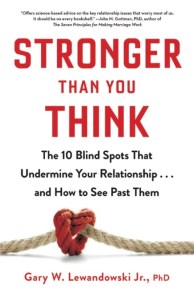
Stronger Than You Think: The 10 Blind Spots That Undermine Your Relationship and How to See Past Them
Whether you’re in grad school, teaching, or in the lab, relationships can be hard. Appreciate the love you have, or find the one you want and deserve. Dr. Gary Lewandowski Jr. is an expert on relationships. This is a book I read last year I think is great for academics. I learned a lot, and hope you enjoy it as much as I did.
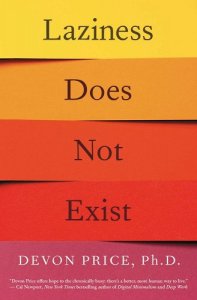
Laziness Does Not Exist
Dr. Devon Price used to believe that productivity was the best way to measure self-worth. Now they dive into the history and origins of the ‘laziness lie.’ It goes back to the Puritans! Most of us feel like we’re not doing enough even though people today do more work than other humans in history. My friends recommended this to me and now I’m sharing it with you!
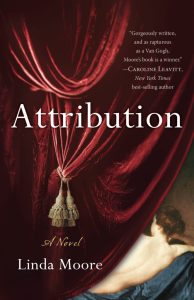
Cate Adamson is working on her doctorate in New York under an impossible, sexist advisor. She struggles until she discovers a hidden painting. Is it a masterpiece? Join Cate’s journey to Spain as she uncovers an art mystery.
PhD Balance is a community creating space for graduate students to openly discuss mental health. Join the community for access to webinars, challenges, and conversation.
The Personal Finance for PhDs Community
Emily Roberts, PhD sets you up for success with your personal finances. From paying down debt to taxes, this community helps PhDs make the most of your money.
Game
Dead Theorists: A Card Game
A satirical card game for philosophers and aspiring academics for 2-4 players.
Other Gift Ideas for Academics
Professional memberships to associations and organizations
Support the academic in your life with an annual membership to a professional organization or association in their field. For graduate students especially, this is a valuable line on their CV that opens their world to new conferences and networking opportunities.
Money towards professional development activities
Help a professor, researcher, or graduate student gain professional development with money for
Conferences
Award submission
Research travel
Working with a coach
Joining a training or course
A spa day
Give the gift of relaxation with a day at the spa. A hot stone massage can help relieve those post-semester grading muscle aches.
A weekend away
Sometimes the best gift is a night away. Take a trip and leave the work behind for the ultimate weekend getaway.
In 1992, as part of its focus on promoting the well-being of people with disabilities, the United Nations called for an international day of celebration for people with disabilities. Held on December 3 each year, International Day of People With Disabilities is a day to recognize and learn from the experiences of those with disabilities and for organizations to show support and take action to create more diverse and inclusive communities.
In recognition of the day, we’re sharing some inspiring articles and blog posts highlighting the work of HR pros to create more inclusive campuses and workplaces.
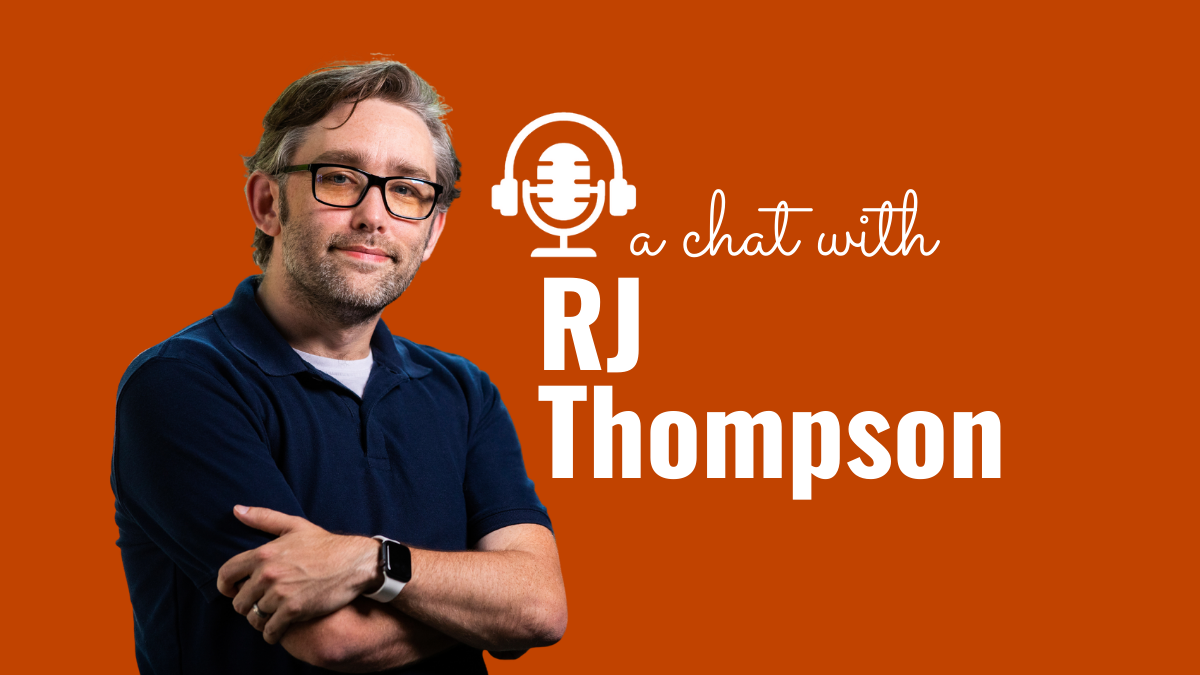
RJ Thompson talks about Higher Education as a professor and marketer
In this featured interview interview, meet RJ Thompson, MFA, the Director of Digital Marketing at the Joseph M. Katz Graduate School of Business and College of Business Administration at the University of Pittsburgh.
Many professors and graduate students aren’t sure what the marketing and communications offices at their universities do. That’s why I invited RJ for this featured interview.
What’s it like to be on the staff side and the faculty side of a university?
Awards and accolades have been helpful for RJ’s career, why to put yourself up for more awards.
Learn how to be more creative, especially if you think you’re not creative at all.
Many professors and researchers have fear or anxiety about sharing their accomplishments.
Do you want to know how to get better students? RJ has a secret to share with you.
RJ’s story is inspiring. From his frankness about what professors can get from being open with university communication teams, to opening up about living with an invisible disability, this featured interview is a can’t miss. Watch, listen, or read the interview below.
Jennifer: Hi everyone, I’m Jennifer van Alstyne. Welcome to The Social Academic. Today we’re recording the new featured interview. Actually this is the last featured interview of 2021. So, welcome RJ Thompson. Could you start us out by introducing yourself?
RJ: Hey, thanks Jen for having me, this is really great! And I’m so glad you saved the best for last.
Yeah, my name is RJ Thompson. I am the Director of Digital Marketing for The Joseph M. Katz Graduate School of Business at the University of Pittsburgh.
And on top of that, I do a number of other things. I do market research. I do graphic design.
I teach graphic design at Point Park University and the Community College of Allegheny County.
And starting next semester, I’ll be teaching in the business school at Pitt, teaching advertising.
So, I’m kind of all over the place.
And if you’re listening or paying attention, you might’ve seen me through the HigherEdSocial group and the Marketing and Communications (MarComm) group by HigherEdSocial. So I’m everywhere.
Jennifer: That’s exactly why I wanted to invite you on this show and why I wanted to feature your interview especially. Because so many professors, grad students, researchers that are connected with universities out there don’t really know what the marketing communications teams at universities do.
And you’re someone who is on both sides of the aisle.
So, could you tell me a little bit about what you do?
What does a higher education marketing and communications professional do?
RJ: Yeah, you know, to your point, it is an unusual divide, especially like between
design and marketing professors
and design and marketing teams
For as many similarities as there are, there’s many differences.
On the staff side, primarily what we do is, we’re a marketing and communications department. Our work includes, promoting
our programs
the business college and its programs to prospective students
so there’s an enrollment piece to that.
There’s also a heavy public relations component where we’re trying to promote the goodwill and works that we’re doing to not just the local, but the greater regional, national and global communities.
And also along with that on the communication side, we’re doing a lot of internal marketing and communications to our students, to the broader university, University of Pittsburgh.
It’s all inclusive. So, if you needed admissions campaign, we’re gonna work with the admissions team to produce that.If it’s for social media, we’re gonna develop out that social strategy plan, but also the ad spends, the ad spend strategy and execution.
If we’re putting together a magazine, alumni magazine, we’ll work with philanthropic and alumni engagement to produce that.
So, we are at the center of all of these deliverables and we collaborate with the different corresponding units to help them get their messaging out and ultimately create value for the students and alumni.
That value manifests as, primarily as
brand reinforcement
brand management
making sure that the reputation of their degree not only maintains but exceeds and grows.
So, that’s really what we do.
And myself as the Director of Digital Marketing, I am responsible for designing and maintaining our web properties be it our primary website, our micro-site, PPC [Pay-Per-Click] campaigns.
I have responsibility to our social media and also our digital advertising. If it’s digital, I own it.
Jennifer: So, it sounds like you’re working with a lot of different teams. You’re working with people across the university and with your own team in order to share good things about the
University
Student
Alumni
Community
And it really takes that kind of all encompassing approach to really communicate the amazing things that universities can do.
RJ talks about leaving his tenured position and how he loves continuing to teach
Jennifer: Now, it’s really interesting that you’re able to do that and also teach. You have this real passion for teaching and really helping students get to the next place in their careers. Let’s talk about your teaching.
RJ: Sure, so the first part of my career, I’ve spent 13 years on the faculty side.
I’ve taught at so many different institutions. The last one that I was at Youngstown State. I was there for seven years. I was tenured faculty.
To make a long story short, the commute from Pittsburgh to Youngstown, it’s about an hour each way. It was really starting to wear down my body.
I missed a lot of time with my daughter who’s six, so, a decent amount of her infancy I missed.
And one of the things that Youngstown is experiencing now is significant brain drain and enrollment decline. If you look at the data, you can kind of sort of see that coming.
So, I got out about in the summer of 2019. That is when I left the university.
HigherEd is my life. It’s where I belong. It’s where I fit. I never want to leave this industry. I always wanna be on the teaching side. I’m loving the staff side.
But unfortunately, when I decided to transition out of Youngstown State University, there weren’t any full time tenure track positions available in Pittsburgh.
I decided to try something new and pursue the staff route and it’s been amazing actually. It lets me do both things, so I get the salary I want with a good work-life balance. As a part of that balance, it also gives me the time to do a lot of
Side teaching
Freelance
Extracurricular stuff.
And, I made this remark to my wife the other day: “I’ve never felt so liberated.”
When you’re on the faculty side, especially when you’re chasing tenure and promotion, you are always doing some kind of peer reviewed research, peer reviewed projects that help you build your reputation, build your bona fides. Those are typically passion projects you don’t necessarily get paid for. They take an extreme amount of time investment. And I felt like I hit a peak at Youngstown State University.
That’s when I switched gears. When I became staff side, I started taking on more practical work, freelance stuff. I started doing more professional development and certifications.
I read a book! Let me be very clear, you would think that that is like, why is that at such an important point? Some faculty don’t have time to read, I never did. I never had time to actually sit down and read a book, be it fiction or non-fiction. So I have time for that now.
And all the other crazy things that I do that you would see on LinkedIn,
getting involved in HigherEdSocial
starting the competitions
painting a mural
being a poll worker
like I’m just checking off the bucket list stuff. And by the way, you’re absolutely allowed to criticize me for having poll worker on my bucket list.
Jennifer: No, I think that’s so exciting and yesterday must have been a good day for you. This interview was recorded live on November 3, 2021, the day after United States elections.
RJ: It was a long. It was long, long day. For sure.
Jennifer: You know, you’ve done so many things and I just, I’m so glad that you came on this The Social Academic to talk about it. Because, even though you’re talking about how much time that took, you’re still teaching. You’re still doing this and keeping this as part of your life.
You’re working with faculty, you’re working with graduate students to tell their stories through some of the marketing work that you do.
I mean, you really are able to do it all.
So, when you talk about liberation, when you talk about the freedom that this job gives you, it sounds like one of the things that you love most is being able to work on all of those things.
Whereas before maybe your focus would only been able to be research as like the main priority.
RJ: Yeah, yeah.
When it comes to liberation, it wasn’t just the ability to do new things and different things, but it was also the ability to explore my creativity in an area that mattered, in something that mattered a lot.
I’ve become disillusioned with freelance work over the past number of years and a lot of it has to do with clients that I call the low hanging fruit. These are typically the clients that want the world on a shoestring budget with a deadline of yesterday. That’s really stressful for a design faculty person chasing tenure and promotion. So I just decided to put that stuff away.
Awards are important to RJ, why to put yourself up for awards too
RJ: When I came to the business school at Pitt, they’ve got such a great marketing team, but they always had limited capacity to really just rip the lid off of it, go for broke and do some really strategic and creative things.
And, they just let me go. That resulted in a profound amount of accolades. Like I was, not to brag, but just to illustrate the point…
The websites I designed for the business school, back-to-back award winner in the Best of American Web Design by GDUSA [Graphic Design USA], which is one of the top…[Jennifer clapping]. Thank you…one of the top periodicals for the design industry.
Being able to meet folks like you and speak at conferences and help #HigherEdSocial build their foundation, it’s just exciting.
Jennifer: Wow, bragging is one thing that I actually wanted to talk with you about because when we first met, you had invited me on onto your podcast and you had mentioned that awards were something that were important to you.
Not only important for you, but important to put your team up for it, to encourage other people to apply for awards.
I love celebrating with you. I see your news on social media, on Facebook, on Twitter. It’s exciting when something good happens to people. I enjoy seeing that and so, I love cheering you on.
Can you tell me more about looking for awards and why that’s important to you?
I’ve been a competitive graphic designer for 25 years
RJ: Yeah, so this is layered.
The first part is, I’ve been a designer for 25 years. I’m 36. I’ve been doing this since I was a kid. And graphic designers tend to be very competitive people.
They need to be because, they’re competing against each other for jobs in industry and industry typically tends to choose the most talented people.
So, I’m fortunate in that I’ve been doing, I’ve been a designer my entire life, and I know all facets of it. I don’t claim to be a master of any of them, but, you need me to animate something, I can do that. You need to do some video, I can do that. I have a Jack of all trades vibe.
Being able to work in the different aspects of design and compete with others is exciting to me.
And what I get out of that is, it’s not necessarily a satisfaction, it’s like a justification. It’s more like, “hey, you know, you said you could do it and you did it.” And you put all of the work in to get to that point.
Accolades were the foundation for RJ’s career
So the Pitt Business website, when I redesigned it, it took 13 months. That’s all I did every day. It was a real labor of love and I was proud of the work. It’s also important to me that when you do a project like that, you don’t ever do it alone.
To reinforce the point that you made about getting people to submit their work, I made sure that my entire marketing team had their names on that project. My marketing team save for my designer, are in their early career. It’s important to get them those accolades because that’s the foundation for the rest of their career.
I would not have been able to get where I am and doing what I’m doing, had I not pursued design competitively. Those accolades got me my next job and my next job and opened up so many opportunities.
It opened up teaching to me, frankly. I won an award for a book I made. A faculty person happened to see it, and they’re like, “you should teach.”
Four months later I got a teaching job.
So, it’s kind of proof positive. There’s the benefits you get from asserting yourself and putting yourself out there as a competitive person, a high performance kind of person. I think that is attractive to a lot of different people.
RJ has cystic fibrosis, an invisible disability
The third part is, I’m a person with an invisible disability. I have a genetic disease called cystic fibrosis.
Had you met me when I was a kid, I was scrawny and frail and sickly. Over the years, I’ve gotten better and now I’m on gene therapy and my symptoms are gone. I’ve made amazing, great strides in my self care.
But I had a doctor tell me once, “you’re not gonna live to see 40.”
I’m 36.
Now, what that doctor doesn’t know is that I’m actually immortal and I’ll never die.
But what that did was that motivated me to shoot for as far and as wide and as fast as towards my goals as I could. I mean, in high school, I was moderate student, average, but when I got to college, I made it a point to like be A’s across the board. I knew that grades would not necessarily matter when I entered the industry. It was more about personal pride and the stakes that I put into performing.
I put all of my effort, all of myself into my work.
Even at the college level, I got awards there that led on to internships at agencies and the like. It’s been a beneficial thing for me.
At the end of my career, I want to be able to say, I didn’t get to everything I wanted to, but the things that I did get to, I did really well at.
And then I can wipe my hands of it and put it away and go build a bird house or something. Whatever retired people do.
I don’t think I’ll retire ever. Even if, you know, once a designer, always a designer, I’ll still be making something.
Building CommCentered, an archive to celebrate Higher Education Marketers
RJ: So, CommCentered is an interesting little story that started with another inventory that I built. One of the things that I like to do is, I like to understand systems comprehensively, holistically, and I like looking at trends and commonalities.
Myself and one of my colleagues, a retired computer science professor, one of the things that we did was we did an inventory of all of the logos of municipalities in America with populations of 10,000 or above.
We collected thousands of logos, thousands, and I put them into an archive. I was able to look at everything and say like, wow, when you look at the 4,000 logos or whatever it is that we found, half of them have a specifically designed brand concept and then the others are municipal seals.
When you start to really narrow the focus, and understand why half was the way that it was,
and the other half, etc, you learn that it came down to a lot of like complex things like
Elected leadership
Municipal governance
Laws
How communities were financed
That was an informative lesson for me because the company I run is called Plus Public. Part of our work is in branding communities. So I wanted to understand why some of these communities don’t have good marketing.
That inventory was very informative with respect to that.
Are you a professor, researcher, or Higher Education staff member communicating publicly for your school? Whether you’re working on marketing and communications at the program, department, college, or university, HigherEdSocial is an amazing professional society you should join. RJ and Jennifer are both official members of the HigherEdSocial Community, join them!
The sense that I was getting was that a lot of these folks did not have a great swell of pride in their work. Even in the little tiny corners of the world that they work, they may not have had a lot of pride in their work because their messaging is very highly overseen.
Their protocols for how to communicate with people and in some cases, especially on the social media side, it’s kind of a thankless job.
I want to celebrate those people. I want to celebrate
The work that they’re doing
How they’re doing it
Why they’re doing it
The concept of having to advertise education is fascinating to me. This is an act that people learn something new every day, whether or not they are trying. That’s just a part of the human experience. So, the fact that we have to advertise it is just really compelling to me.
Taking that concept and then also wanting to be the biggest cheerleader for these people and celebrate their work led to CommCentered.
When you layer in that brand’s inventory for the community brands inventory, I basically did a study where we took all of the institutions, HigherEd institutions in every state and we looked at the commonalities.
Every state has their own set of trends that some correlate to others. Some do not. It’s been really, really informative.
Right now I’m finishing my series of 50 posts on the brands of HigherEd, just for the United States. And I have plans on expanding that globally.
You know, when you told me that this project had suddenly been created, I was shocked because last time we had spoken, you had said that you were gonna be updating your personal website.
We’d actually chatted about it and you had this plan. Then all of a sudden, there was this massive archive, this big website that really can help people around the world understand more about HigherEd Marketing. That can really celebrate their work in a way that the public can see, that each other can see. It was astounding that you’d created this massive project.
And you’re also working on these other things. You have your job, you have your teaching and here you are creating this non-profit project.
I was just so amazed by you. I think my heart grows bigger every time I talk to you, because you’re so generous with what you give to the world.
RJ: Well, thank you for that.
There was one lesson I learned a long time ago is that nothing happens until someone gets excited. Leave it to an advertising guy to say that. But it’s absolutely true, and I believe that wholeheartedly.
Whatever effort I put into something, I hope that it excites people double the effort that I put in.
Fortunately, I kind of have a knack for choosing the right things. Sometimes I don’t, but for the most part I do and it’s always exciting to build community around common threads.
The thing with people in HigherEd, I think most of them would stay and talent would be retained at a higher frequency, at a higher rate, if certain conditions were met relative to just the work, the daily working life and the process and the experience of those types of jobs.
With CommCentered, it was really important to me to not only be a contrast to some of the other HigherEd marketers that you’ll see out there. I didn’t wanna tell people how the work was done. They know how the work is done.
I wanna show them what work was done. The thinking here is a picture’s worth a thousand words.
If you see one logo, or if you see one ad campaign, that’s gonna kick off a spiral of new ideas for the people that are looking at it.
I also have an additional point to that but I think is a propos. On Twitter, on social media, even in the HigherEdSocial groups, there are a ton of people that assert themselves as HigherEd marketing thought leaders. I’ll use the term know-it-alls as positively as possible.
There are a lot of authors that assert their knowledge and wisdom and it’s valuable. But it consistently skews more towards :here’s the roadmap, here’s the foundation, here are some of the strategies. And that’s where it ends.
Okay, well, thank you, I loved reading your 400 page book. The fact that the strategies and the roadmaps are great, but what have people done with it? I wanna see what people have done with it.
CommCentered, I wanna feature the work that people are creating so that they can understand the context or the outputs of those roadmaps and get inspired on their own.
A bad impression of someone else can create something completely original
The last part of this is I love voice actors. This is a really unique hobby of mine. I watch cartoons with my daughter and I’m able to pick out, oh, that’s Rob Paulsen.
Jennifer: You can recognize them.
RJ: I can recognize the voices, even if they are doing a completely different voice. If you listen to some of the podcasts from voice actors, they love their jobs so much because all they do is play. Playing to them is doing a bad impression of someone else. So it’s additive.
For example, if I did…and I won’t do any impressions, I won’t embarrass myself to that degree…But if I did an impression of Christopher Walken, and it was terrible. That’s okay, because I’ve just created a new character, something completely original.
I can intentionally do something bad and create something really good and funny out of it. That was one of the other inspirations behind doing the archive, the logo inventory, featuring, doing assessments on social media ads and all of that stuff.
When I look at your work, or someone else’s work, I judge it. I’m like, damn, that’s a good idea, I really like that. How can I take that idea, if it’s a box, how can I push one side in and rotate it and make it my own? It needs to be malleable.
So, and the last part to that is that concept, that theme is absolutely part and parcel to who I am as a person and how I teach creativity.
That’s kind of the overarching through line of my entire life and career and teaching career too.
Professors and researchers, do you think you lack creativity?
Jennifer: You teach creativity, I really like that. A lot of professors, a lot of graduate students don’t believe they have creativity. It doesn’t matter what field they’re in.
You talk about creativity as something that can be taught. I think that a lot of those people who feel like they don’t have creativity actually do, and maybe they don’t necessarily recognize it in themselves. What do you think about that?
RJ: So there’s kind of an anecdote or a dosh that I share with my students: I can teach you all the software in the world, but if you can’t think creatively, then all of that knowledge is not really useful.
You’re solving problems that are very finite and technical. And dare I say, just kind of binary, yes or no one way or the other.
Creativity is something that can be, you can be born just with this incredible intrinsic creativity, but you have deficits in other areas.
I relay a story to my students where I’ve always been an ambitious, creative person, even when I was like a five-year-old. When I was four or five, I opened up my parents’ typewriter, typewriter, and I made stories. I pinpecked at the keyboard.
Then I moved on to a neighborhood newspaper. Five, six years old doing this. Who does that? I’m sure it does happen. And I’m not saying that I’m special by any means, but it’s at least indicative of how my creativity manifested organically, naturally.
There are some people that feel that they are not creative at all. And to them, I say, you are creative, but you are maybe a different aspect or facet of creativity.
For the most part, the problem is that people don’t understand the steps in which to be creative. One of the things that I teach them is how to solve problems using a creative inquiry. That’s essentially also an aspect of design thinking.
I had mentioned the project, I didn’t tell you what it was that kicked off my teaching career. It was a book called Thompson Design Methodologies. It was all about all about solving problems visually. This is something I deal with with my clients.
If I’m making a logo for you, Jen, what’s one word that you would want your clientele to associate you with? Let’s say, it’s integrity.
What does integrity look like as a box or a shape rather? Is it a rectangle? Is it a triangle?
Is a triangle proportional? Or is it skewed?
If you had to hold it in your hand, how heavy would it be?
What’s the texture?
Ask really abstract questions to fire up the creative parts of their brain and purposely getting them to zag instead of zig
If you’re always zigging on something, you’re always making the same type of choice. If I put you in a box and make you do something different, that is forcing creativity on you, because you don’t know what comes next.
Then as you branch out from there, every decision you make is based on an unknown output. It’s a lot about challenging conventions, challenging your comfort zones. I talk a lot about fear and the boxes of fear and complacency and all that stuff.
Once people start to really understand why they are in the box and they can’t get out of the box, once they start to understand that, they realize that this isn’t like some tried and true foundation for making creativity happen. It’s more of an understanding and recognition of their own hesitancies and character flaws that they perceive that they have to work out of.
It’s more psychological about them as a person and then once you kind of overcome some of those things, solving problems isn’t hard, it’s fun. If you know how to solve those problems, you have a 12 like a step process and your process is built with error and experimentation built into it, then your work becomes more fun.
But the best thing of all is that your work becomes more informed and it’s of a higher quality so much so that you start solving problems unlike anybody else.
When your employer sees help deeply and immersively you understand a problem and how you use that deep immersion to create a unique and amazing and equally immersive solution, they don’t wanna lose you. I could go on and on, but it’s absolutely true.
It’s one of my favorite things about teaching. Seeing people really break out of the box and rise above and into their careers and meeting their self-concept.
This idea of the idealized self-concept. Who are you in your most ideal sense? If you can use these design methodologies, these creative problem solving tactics, you can get closer and closer to that thing.
If your dream for your career has always been to be a director of digital marketing, and then when you get there and it’s like, oh wow, I was able to get there using these tactics and techniques, what do I do next?
Some people may not have envisioned the next thing beyond that ultimate thing. So it’s liberating in that respect too.
Facing backlash from colleagues when sharing good news (and why to share your accomplishments anyway)
Jennifer: One of the things that you brought up while you were just talking was fear and anxiety, and it actually reminded me that I wanted to ask you about that as it relates to awards that you’ve won.
Professors that I work with and people who are in my courses, feel really anxious when talking about their awards on social media, especially sharing it with their department, even internally. There’s a lot of anxiety when it comes to that.
Have you ever experienced any backlash for sharing your awards?
RJ: As a matter of fact, yes. It’s what led me to leave my tenure teaching position. It’s unfortunate that it worked out the way that it did.
One of the things that I dealt with specifically was, I put all of myself into my work. And I believe in my work whole heartedly. When you put me into a position where you basically say, ‘Hey, in order to get tenure and promotion, you have to have peer-reviewed evaluations of your work. Part of that are competitions, juried exhibitions. That’s part of the game. That is the game.’
I made it a point to put all of my effort into playing that game well.
And I did, so much so that I received one of Ohio’s highest honors in art. I received an art award from the governor and I got to meet him and his wife and everything.
What that did was the community that I was in, they celebrated that work. Because the thing that I made that got me that award was ultimately for the Youngstown region. It celebrated them.
But on the faculty level, all that did was breed jealousy and resentment and inferiority complexes shot through the roof. Because I was junior faculty, that was used against me.
Instead of seeing that as an opportunity to build into my energy, collaborate, let’s share our successes together…
Instead what happened was, some of my peer faculty grew resentful. They grew jealous. They use tactics to essentially punish me.
They made sure that my tenure process was hell. On paper I was very tenurable, so, that’s one of the reasons why I got it. But I know that the spirit of celebrating your peers was not there.
A lot of that came back to graphic design was a popular major. The professors that were jealous and resentful of me were not in graphic design. More importantly, they didn’t understand the forest for the trees. I was responsible for bringing a lot of new students to the design program and also those fine art programs.
And I realized that, that summer of 2019, I didn’t wanna leave tenure, I fought so hard for it. But no amount of tenure or promotion was going to be worth the mental stress and anxiety that they would place on me just by virtue of wanting to do my job really well.
Jennifer: Especially when it’s for, in this specific instance, this is for the community, this is something that you were doing for the town of Youngstown.
RJ: Yeah, they basically said I was trying to be a showboat. And I was being obnoxious with…
I’m a marketer.
I understand how branding works. I understand how marketing works. If I’m gonna put all of my effort into something, I wanna make sure that people know about it. There’s nothing wrong with that.
Frankly, for some of the folks that are concerned about, if they’re too timid to promote themselves in their work, I completely get that because of what I went through. And I say to hell with them, rise above it.
If you submit your work to a competition and you get acknowledged, the people in your life, if they’re worth keeping around, they will celebrate your efforts. They will support you.They will champion you. And you will do the same for them in return.
If they don’t do that for you, then you need to consider your place in that community.
Do I want you to leave that community? Absolutely not.
But it is much easier to leave a situation than it is to change an entire community of people that ultimately don’t want you to be successful. They want the successes that you captured for themselves.
And no one wants to be around folks like that. No one grows when resentment breeds eternal like that.
The benefits from an award hopefully exceeds the criticism you get
RJ: If you believe in your work, you put yourself into it completely, and you have some money to spare to put it into a competition or any peer reviewed situation like that, do it. Because the benefits you get from it will hopefully far exceed the criticism that you get.
To give you an example, when I did that work for Youngstown and got the award from the Ohio governor, I had a number of communities knocking on my door saying, we want you to replicate that work here. We’ll pay you a market value for what you do. We’ll defer to your expertise. We just want good work and you’re a proven commodity. Okay, let’s do it, and so we did.
In the case of just to switch gears real quick, in the case of Pitt Business School, it was really important to me that I was given so much freedom and latitude to essentially do what I felt was best from a marketing perspective, from a design perspective. I was able to completely reboot all of our marketing collateral.
I didn’t do it alone, and I wanted people to know in my college that my marketing team, the one I’m on, is the best. We’re the best ones for the job.
I also wanted to tell all the 300 some odd marketers at the University of Pittsburgh that we’re the best marketing team on campus. And we did it two years in a row. When we do that, we say, yeah, we believe in our work enough to do this.
Let us help you. We will do this because we’re colleagues, because we want to see you succeed as well.
So you build a spirit of camaraderie in this community and rising tide lifts all ships. The ultimate goal would be, hey, my marketing team give some advice to all the different colleges at Pitt and maybe they come out with some better looking work and they see increased enrollment and everybody prospers. So, that’s kind of the intent.
Let me just say that, I think for my supervisors, for my marketing team, they like the acknowledgement. It makes them feel good. It builds confidence in their work and it energizes them to do more ambitious work or more involved work.
It’s not just going through the motions anymore, we’re building something. And it’s that paradigm shift that has caused a lot of our success and just good feelings about our jobs.
How professors and researchers can work with universities to better promote their work
Faculty are busy, there are only so many hours in the day
Jennifer: Thanks for sharing that.
Now, I wanted to ask for the professors and researchers out there, what are some ways in which you as a marketing department have collaborated with them to tell their stories?
RJ: You know, I think, I would say first off, and I know many HigherEd marketers can relate to this. There is a perception in a well-founded perception that faculty generally are too busy to participate in marketing efforts. To an extent that is true. And there’s nothing wrong with that because they’re doing their jobs, right? We only have so many hours in the day.
Part of our goal is we want to celebrate our faculty as much as we celebrate the outcomes and career goals of our students. Fortunately, we have very proactive, productive faculty that are doing world changing work. And they understand the value of marketing that, and they work with us to do that. But it doesn’t mean it’s easy,
It’s not often easy to work with your faculty, to get what you need from them.
Build your reputation within the community, faculty, and student body
If you’re a faculty member and you open yourself up to being promoted, the work that you’re doing, you want it to be signal boosted, because that builds your reputation in your
Community
Faculty
Student body
Be open to letting us help you signal boost your work.
We can do some amazing and creative things if you just give us the time of day. Give us a couple hours every week and we will work our asses off for you.
Collaborating with marketing and communication teams takes reciprocal respect
It’s reciprocal and it’s a reciprocal respect and understanding that in order for collaboration to be successful for all stakeholders and all beneficiaries, you gotta put the time in.
And we have a lot of faculty that are writing books, we just won an $800,000 grant from one of our marketing faculty won this massive grant. We wanna put that out into the world, so, let us help you.
If you’re a faculty person, and you’re wondering how to get promoted, work with us. Respect our work. Respect our capabilities. You don’t have to do it alone. We champion our entire community.
I think that is the best way to do it.
And don’t be afraid to shout your accolades from the roof. It’s okay!
Our students want professors that are doing amazing work.
When I was a tenure track, and even still to this day is on the faculty side, I always show real world practical work that I’m doing because it contextualizes the professional experience for my students: “Oh, wow, he’s still doing something. That’s awesome I can learn from him because he’s still in play.”
Let us in, we’ll tell your story and that will create ripple effects all through our marketing.
Learn a secret to getting better students for the classes you teach
There’s also another basic sort of formula here: The more you help us promote you, the better the students you’ll get.
Every faculty person wants better students, every single one. It makes the teaching experience more enriching for them and for us. We don’t necessarily like having to go through the lecture, here’s the homework assignment, go on your merry way. We don’t wanna go through the motions, if we don’t have to. We have a profound amount of knowledge to share.
If we have better students, they’re gonna be more engaged and more interested in learning those little details, those anecdotes from practice or whatever.
It makes faculty feel good about their job and about the work that they do. So, I think that that is an operative sort of thing to think about.
Avoid going through your dean or department chair
Also consider the opposite, you don’t participate, you ignore us. That makes our lives a lot more difficult because we’ve got to track you down. If you don’t respond to us, then we have to talk to the chair or the dean. Then the dean and the chair come down on you. No faculty person really ever wants to talk to their chair or dean. I kid, I kid. But it’s true. It doesn’t have to come to that.
So just work with us and we will do what we can 100%.
Jennifer: I think that’s such an important sentiment. It’s gonna take work on both sides.
You guys have so much expertise, you’re hoping to share with the faculty who wanna promote themselves and promote their research,
I think that’s wonderful. But it sounds like maybe faculty really don’t know what to expect, they don’t know what the potential is for themselves.
So, there are ways for you to celebrate them, but the faculty need to be more open about it in order for you to even be aware of each other.
RJ: So, on that note, one tactic that I’ve taken recently is I’ve added all 125 of our faculty to LinkedIn. I track their profiles because they’re more prone to update their LinkedIn and self-promote versus telling us.
As soon as I see something, it’s going over here, and then I just traffic control the content. And that actually brings in another point where…
Marketing and communication teams what to make it as easy for professors as possible
Hey, faculty, we wanna work with you as much as possible, but guess what? We wanna make the process as easy for you as possible.
If we need you to record a video, we’re gonna script the whole thing, put it on a teleprompter. You come in, spend 10 minutes with us, read it and you’re out.
You have to go teach their classes and depending on your institution and mine, rankings are extremely important. We need our faculty in the classroom, teaching our students well so our rankings go up, so our student body becomes more enriched and we pull in better prospects and everybody wins.
Jennifer: So if faculty are more open about their accomplishments with their marketing teams and more willing to put in some effort, in order to help those marketing teams promote their work, then it can make a big difference for everyone.
The faculty can get better students, the student body can hear more awesome news about their faculty, and it can really reach a larger audience. I see lots of HigherEd posts about professors, about scientists and researchers, being shared with much wider audiences than just the community. It can reach people around the world. So, this is great.
Your university would love if you join Twitter or other social media platforms
RJ: And you know the next step to that is, they see the results and then they decide to be proactive and really participate.
If I could have 125 different Twitter accounts for every single faculty member and they were off and running and doing really well with it, awesome. Oh my God, the marketing ecosystem that would be working with would be profound and huge. And yeah, It would probably be stressful as hell, but we would have 125 of our biggest advocates out there in the world telling other people how good our programs are. You know, and that’s good branding.
But they’re researchers. By virtue of the description of their positions, they’ve gotta be researching. They’ve gotta be teaching and writing grants, and that’s what they do.
Social media doesn’t have to take all of your time. Just a little bit of practice talking about yourself, maybe talking about your research and sharing it publicly is going to make a big difference for you.
“Eventually I hit a wall…this has all been done before,” and persevering through that feeling
Jennifer: RJ, I’m so glad we’ve had all of these conversations. We’ve talked about your work as a director of marketing, we’ve talked about Plus Public, your business. We talked about CommCentered. We talked about what it’s like to be a faculty member at the same time.
Is there anything else that you’d like to share or chat about before we wrap up?
RJ: I’m all over the place with my interests, but they are mostly HigherEd specific. And I walk on both sides of that HigherEd dividing line.
I’m on the staff side and I’m on the faculty. It’s the best place to be as a marketer because it lets me understand what my audiences want. It’s a very organic transition of data and learning. My marketing savvy helps me teach better, because it’s vocal, it’s public speaking, it’s presentation of my PowerPoints and other things.
On the opposite side, I’m learning how to better communicate with my students, but also prospective students, so they they’re mutually beneficial.
With my HigherEd research on CommCentered, now I’m getting some of that research on the faculty side that I can apply to the staff side.
One thing that I’ve been struggling with that I wanted to share was, and maybe some of the faculty listening can understand that. I often say when the muse speaks, listen. It may not always make sense. It may not always be compatible.
I often have these moments where I’ve just got, the gears are turning in my head, it just randomly clicks on and I just start writing ideas down. Like last Saturday, it was a birthday party for one of my daughter’s friends. I was sitting in a Chuck E. Cheese and I’m at a table by myself with a notebook, like a super nerd and ignoring everyone else and I’m writing down pages of notes, just things that are firing through my head. My energy is like, “oh my God, this is so awesome. I think I can do this.”
Then I eventually hit a wall and like, I look at my notes and I’m just thinking like, this has all been done before.
So if you’re out there and like, you feel like you have this energy to like write a book or a series of books or contribute to the knowledge base in a big way, you actually can and you should.
Don’t be afraid of imposter syndrome or that you feel like everything that has been said or done, can be said or done, has already been said or done.
One of the things that I did was, I reached out to a few people and I said, I’ve got this energy, I know what I wanna say and how to say it, but I don’t quite know the format. Alexa Heinrich, our friend in HigherEdSocial, she said, “Everything that can be said or done in accessibility has been said and done.” The difference is her perspective on it. And she recognized that upfront. Learn about making your social media posts more accessible on Alexa’s website.
That was for me really hard to swallow, to accept, because I come from this faculty academic side where original thought is highly coveted and valued, and I just couldn’t quite get there for whatever reason, confidence issues, self-esteem. I just didn’t have a good mentor to help me guide through this process. And Alexa just, she nailed it.
I was feeling really down on CommCentered, because I hadn’t blogged in a while.
And then I talked to Amy Jauman, who’s the Chief Education Officer for the National Institute for Social Media. Who wrote quite literally a book, this thick on social media. And I said, how did you get to that point? She basically said, “oh, I just sat down at the computer and started writing.”
And I’m like screw you, get out of here. I don’t wanna hear it, I don’t wanna hear it.
But she gave me some really great advice, and then I started to turn the gears a little bit and I’m like, okay, CommCentered should be what it already is. It’s a website. It’s active. It’s an archive. It’s the only inventory of HigherEd logos on the internet.
I’ve already checked the boxes, but because of some lack of objectivity or lack of confidence or something, I feel, I felt like it wasn’t original. And sure enough it is.
It’s one of the reasons why you and I connected and we keep circling this conversation.
As I’m starting to get my confidence back…And if, again, if you’re an academic researcher and you hit that wall where you think no one’s gonna care, this is why you have to stay the course and continue on.
Randomly, I got an email from a journalist at the Australian equivalent of The Chronicle of Higher Education. He’s like, ‘Hey, I came across CommCentered, and it is absolutely stunning. No one else, I’ve never seen anyone do anything like this, period.”
All of a sudden my soul left my body and all of the energy that I took from the universe came right back into my body and I started writing those blog posts.
The other parts of his message was, I wanna have you speak on these topics at Australia’s biggest HigherEd conference. And I wanna have you be a panelist. I wanna learn more about that work. So we got the ball rolling. But that’s not where it ends.
Where it ends is to present day where, I looked at his website and all of the articles and I’m thinking, the Marketing and Communications sector of higher education is gigantic. There are over 9,000 universities globally. But there’s no centralized knowledge base for those people.
So now I’m looking at all right, well, CommCentered was just a champion for the work. CommCentered 2.0, can be something else entirely.
What that is just yet, I don’t know, but it could be big on that scale.
So, stay the course, researchers, what you’re doing absolutely has value.
Jennifer: Ah, thank you so much, RJ. I have loved this conversation. Thank you so much for joining me today.
RJ Thompson, MFA is an award-winning marketing and design professional. He is Director of Digital Marketing at the Joseph M. Katz Graduate School of Business and College of Business Administration at the University of Pittsburgh.
Before joining Pitt, RJ was a tenured Assistant Professor of Graphic + Interactive Design in the Department of Art at Youngstown State University. Previous to Youngstown State, RJ taught at Carnegie Mellon University, La Roche University, and Edinboro University of Pennsylvania. Continuing his career in education, RJ has been an Adjunct Professor of Graphic & Interactive Design at Point Park University since 2019 where he was responsible for writing and teaching the interactive design curriculum. In 2020, he began teaching at the Community College of Allegheny County.
Outside of marketing, design, and teaching, RJ is also the Co-Principal and Creative Strategist for +Public, a Pennsylvania-based social enterprise that focuses on cultivating community and economic development impact through the creation of branded communication platforms, creative place-making, and storytelling initiatives for communities-in-revival.
Throughout his career, RJ has received many accolades for his creative works: In 2015, he was one of several recipients of the National Endowment for the Arts “Our Town” grant, valued at $100,000, for the INPLACE (“Innovative Plan for Leveraging Arts & Community Engagement”) project. In 2017, RJ received a “Best of Marketing Award” from the Ohio Economic Development Association for his efforts in rebranding the City of Youngstown, Ohio. In 2018, RJ was accepted into the prestigious Cohort 2 of the National Arts Marketing Project, a program supported by Americans for the Arts and the Pennsylvania Council on the Arts. In 2019, RJ also received a scholarship to join the National Arts Strategies Executive Program in Arts & Culture Strategy through the School of Public Policy at the University of Pennsylvania.
In 2019, RJ was honored with the Ohio Governors Award in the Arts in Community Development, the state of Ohio’s highest recognition in the arts sector. Recently, RJ was the recipient of a certification scholarship from the National Institute for Social Media and received accolades from GDUSA and the University & College Designers Association for “Pitt Business Backstory” and “Business.Pitt.Edu” websites. RJ is presently a board member of the Pittsburgh chapter of the American Marketing Association.
Each month, CUPA-HR General Counsel Ira Shepard provides an overview of several labor and employment law cases and regulatory actions with implications for the higher ed workplace. Here’s the latest from Ira.
Federal Appeals Court Panel Expresses Skepticism Regarding New York City Teachers’ Challenge to the Constitutionality of the New York City Vaccine Mandate for All Public School Teachers
In a case which could have ramifications for public and private college and university vaccine mandates, a group of New York City teachers recently argued that the New York City mandate that all public school teachers have at least one vaccine shot violates their basic rights under the U.S. Constitution. The case was heard by the U.S. Court of Appeals for the Second Circuit, which covers New York, Connecticut and Vermont. The New York City mandate requires all teachers to have at least one vaccine shot in order to continue teaching or be suspended without pay. The mandate allows them to continue to receive benefits during the suspension, but bars them from teaching elsewhere (Maniscalco v. New York City Department of Education (2nd Cir: Argued Oct 14, 2021)). The case is one of dozens across the country contesting the validity of public and private employer vaccine mandates.
The teachers’ counsel argued that teaching is a profession and the vaccine mandate takes away the fundamental right of teachers to teach. One of the federal appeals court judges commented during the argument that she was having difficulty understanding why the mandate was “irrational” as argued by the teachers’ counsel.
Bipolar Teacher Loses Her Disability Discrimination Appeal Following Her Discharge for Violating the School District’s Rules on Sharing Religious Beliefs
In a case having general applicability to the Americans With Disabilities Act termination claims and requests for accommodation brought in the higher education context, the U.S. Court of Appeals for the Sixth Circuit, covering Michigan, Ohio, Kentucky and Tennessee affirmed a school district’s decision to terminate a teacher for inappropriate communication with students during her paid suspension. The appeals court concluded that a reasonable jury could not conclude that the teacher’s misconduct caused her discharge, notwithstanding her diagnosis of suffering from bipolar disorder (Lockhart v. Marietta City Schools (6th Cir., No. 20-4308, 10/15/21)).
The plaintiff was put on paid leave after telling her students that she had a deeply religious experience while shoveling snow in which she lost consciousness, was carried away and now God was speaking through her. She was instructed not to communicate with students while on paid leave. She violated the instruction and sent a student a 12-page letter telling them not to trust school administrators and to “Trust me, I am the one you need to trust. I dearly love you, have they told you they love you?”
The teacher argued that the school district should have accommodated her disability rather than terminate her. The court concluded that the school district was not required to excuse her misconduct during leave and that she repeatedly violated the terms of her administrative leave before even remotely asking for an accommodation request.
Some States May Alter, Change and/or Challenge OSHA’s New Vaccine Rules
Some states, through their respective attorney generals, have signaled that they may contest of try to alter the Occupational Safety and Health Administration (OSHA)’s vaccine mandate. OSHA allows by agreement some 26 states plus Puerto Rico and the U.S. Virgin Islands to adopt their own workplace safety rules. Those states include seven states with Republican attorney generals who have taken the position that a vaccine mandate is “disastrous and counterproductive.” The attorney generals of Alaska, Arizona, Indiana, Kentucky, South Carolina, Utah and Wyoming have written letters to OSHA stating that such a vaccine mandate does not meet the “grave danger” threshold needed to justify such an Emergency Temporary Standard. An additional two states, Texas and Arkansas, have taken steps to avoid a potential OSHA vaccination rule. Numerous challenges have been filed in federal court.
The cases challenging the new OSHA rules will be consolidated for one federal appeals court to rule on. Ultimately, the Supreme Court may step in.
Student Workers at Private University Seek Union Formation and Bargaining Rights Under the National Labor Relations Act
Recently, a student worker organizing committee at Kenyon College filed a petition with the National Labor Relations Board (NLRB) to represent 600 student employees at the Ohio college. The committee is asking the NLRB to conduct a union representation election for the proposed student worker bargaining unit. The current NLRB has apparently abandoned its position to limit union organizing among student workers at private colleges and universities over which the NLRB has jurisdiction.
In March 2021, the then Republican-controlled NLRB abandoned a proposal to block student workers at private colleges and universities form organizing. The NLRB’s current Biden administration appointed general counsel has since publicly backed expanding labor rights for student workers.
Sex Harassment Case for Employee Perceived as Gay Is Headed to Trial Based on Alleged Physical Attacks and Discrimination for Failure to Conform to Sexual Stereotypes
A heterosexual employee who was mistakenly perceived as gay and harassed by a supervisor because of the misperception received the right to proceed to a trial over his sex harassment claim. The trial court cited the Supreme Court decision in Bostock v. Clayton County and following decisions which have interpreted Title VII to protect against discrimination based on sexual orientation, gender identity, and/or failure to conform to sexual stereotypes (Roberts v. Glenn Industrial Group ( 2021 BL 404870. W.D.N.C. No.3:17- cv-00747, 10/21/21)).
The plaintiff complained and the court agreed that the alleged harassment — if proven — was severe and pervasive and included physical assault by his supervisor in which his safety glasses were knocked off and he was put in a choke hold by his supervisor.
On October 26 and November 4, 2021, the House of Representatives passed H.R. 2119, the Family Violence Prevention and Services Improvement Act of 2021, and H.R. 3992, the Protect Older Job Applicants (POJA) Act of 2021, respectively. Both bills passed by a close bipartisan vote — the former by a vote of 228-200 and the latter 224-200 — and are supported by President Biden.
POJA Act
As originally written, the POJA Act amends the Age Discrimination in Employment Act of 1967 (ADEA) to extend the prohibition of limiting, segregating or classifying by employers of employees to job applicants. The bill comes after recent rulings in the Seventh and Eleventh Circuit Courts of Appeals that allow employers to use facially neutral hiring practices, which some have accused of being discriminatory against older workers. As such, the POJA Act amends the ADEA to make clear that the disparate impact provision in the original statute protects older “applicants for employment” in addition to those already employed.
Before the final vote on the bill, the House also adopted an amendment to the POJA Act that would require the Equal Employment Opportunity Commission to conduct a study on the number of job applicants impacted by age discrimination in the job application process and issue recommendations on addressing age discrimination in the job application process.
Family Violence Prevention and Services Improvement Act
The Family Violence Prevention and Services Improvement Act amends the Family Violence Prevention and Services Act to reauthorize and increase funding for programs focused on preventing family and domestic violence and protecting survivors. One provision addressing higher education authorizes the Secretary of Health and Human Services to now include institutions of higher education among the entities eligible for departmental grants to “conduct domestic violence, dating violence and family violence research or evaluation.”
Both the Family Violence Prevention and Services Improvement Act and the POJA Act now face the Senate where passage is uncertain as both require significant support from Republicans to bypass the sixty-vote filibuster threshold.
CUPA-HR will keep members apprised of any actions or votes taken by the Senate on these bills.