Author: admin

  • Dr. Jennifer T. Edwards: A Texas Professor Focused on Artificial Intelligence, Health, and Education: FREE 11th Annual Texas Social Media Conference

    Dr. Jennifer T. Edwards: A Texas Professor Focused on Artificial Intelligence, Health, and Education: FREE 11th Annual Texas Social Media Conference

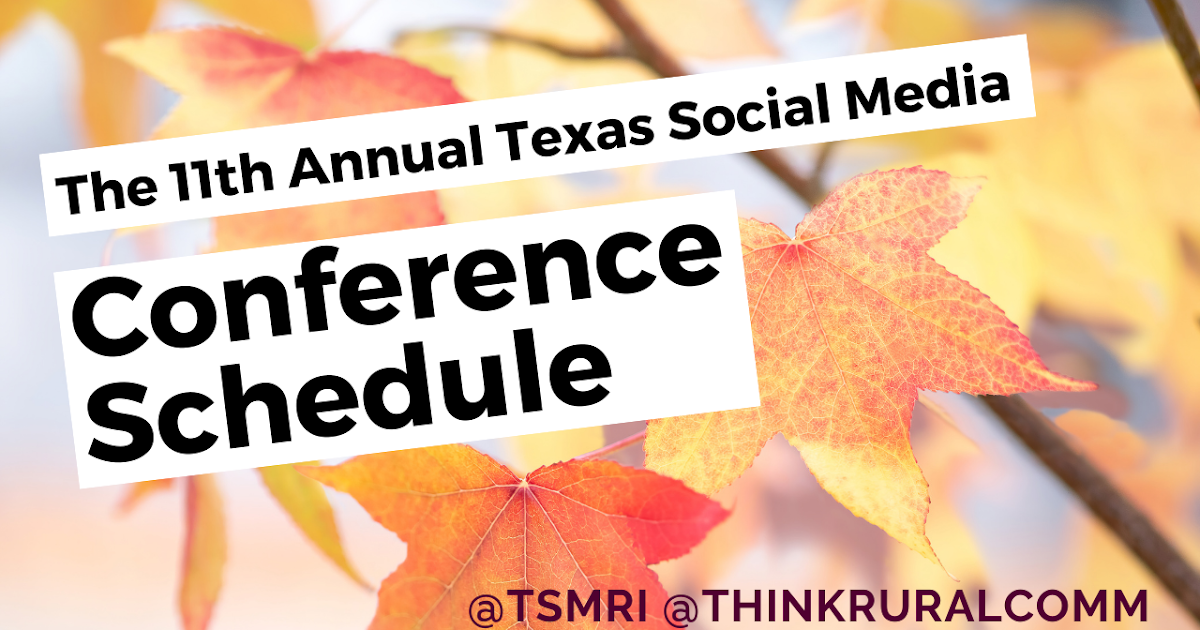
    Yes! I am excited! We are getting back into the training and development mode with the Texas Social Media Research Institute (and the Rural Communication Institute)! Are you looking for a FREE conference focused on social media and rural communication? Check out our conference schedule!

    Tuesday, November 2nd

    5pm – Journal Club (Discussing “Reality check: How adolescents use

    TikTok as a digital backchanneling medium to speak back against

    institutional discourses of school(ing).”

    Thursday, November 4th

    8pm – #TXSocialMedia Twitter Chat – Pumpkin Spice Lattes, Sweater

    Weather, and Autumn/Winter Social Media Outreach Strategies

    Monday, November 8th

    6pm – How Public Health Agencies in the United States in the United

    Kingdom Communicate with their Target Audience During the COVID19

    Pandemic (Presented by: Riley Odom, Megan Mackay, Erin McDonald,

    Bayley Chenault, Sydney Brown)

    8pm – How the Texas Department of Health and Safety and Colorado

    Department of Health and Environment are Communicating about

    Health During COVID19 (Presented By: Halie Hix, Shelby Hargrove,

    Magnolia Dunlap, Michaela Bierman, Steven Duncan)

    Tuesday, November 9th

    5pm – Journal Club – Discussing the article: “We (Want To) Believe in

    the Best of Men: A Qualitative Analysis of Reactions to

    #Gillette on Twitter”

    7pm – How the United States Federal Government and the State of Texas

    Communicate with the Public During the Pandemic (Presented by: Kristi

    Cortez, Jessica Thomas, Kennedy Onuam, Julia Nolen)

    Thursday, November 11th

    3pm – Neurodiversity at Work; Assignment Construction Strategies for

    Creative Thinkers in Online Teams (Presented By: Melanie Mason (University

    of Texas at Arlington)

    8pm – #TXSocialMedia Twitter Chat – Veterans Day and How the Military

    Engages the Public Through Social Media

    Thursday, November 11th

    11:59pm – #TXSocialMedia Undergraduate and Graduate Fellowship

    Applications Due

    Sunday, November 14th

    6:30 pm – How the Louisiana Department of Education and the Texas

    Education Agency are Communicating about Health During COVID19

    (Presented By: Katherine Mitchell, Audrey Morton, Jorge Irizarry,

    Audrey Morton, Morgan Maley, Christina Byrd)

    Monday, November 15th

    7pm – #TXSocialMedia LIVE: Let’s Network Session on Zoom –

    Social Media and Privacy – The Good, the Bad, and the Ugly

    Tuesday, November 16th

    1pm – Connecting & Engaging with Students –

    Presented By: Narissra Punyanunt-Carter & Dr. Ryan Martinez (Texas Tech University)

    3pm – Alzheimer’s (and Rural Health) Community Forum for Tarleton

    Staff and Faculty- Register online: alznct.news/ACF1116

    5pm – Journal Club – Discussing “Small Businesses Still Missing the Boat

    on Social Media and Internet Advertising.”

    Thursday, November 18th

    8pm – #TXSocialMedia Twitter Chat – National Rural Health Day –

    Innovative Ways Rural Residents Can Practice Preventative Care

    7pm – #TXSocialMedia LIVE: Let’s Network Session on Zoom – Innovative

    Ways TikTok Can Be Utilized in Education, Business, and Life

    Saturday, November 27th

    All Day – Use the Hashtag #ShopSmall for Small Business Saturday

    Monday, November 28th

    7pm – #TXSocialMedia LIVE: Let’s Network Session on Zoom –

    Social Media and Health – How Does Social Media Impact Our Health?

    Tuesday, November 30th

    12:30pm – Student-based Resourcing: Responding to Increased Needs as

    a Rural Institution (Presented by: Dr. Lora Helvie-Mason

    & Cameron Ellner, Tarleton State University)

    6pm – How the Texas Department of Health and Human Services

    and the State of Louisiana Department of Health are Communicating

    About Health (Presented By: Averill Hubbard, Zachary Mesa, Dylan

    Antonelli, Olivia Teague, Kyon Barnes)

    7pm – #TXSocialMedia LIVE: Let’s Network Session on Zoom –

    Hooked on Social: Social Media the New Kid’s Toy?

    Are They Becoming Hooked TOO EARLY?

    National Day of Giving – Give to the Rural Communication Institute and

    the Texas Social Media Research Institute

    National Mason Jar Day –

    Highlight Innovative Ways You Can Use Mason Jars

    (Use the #TXSocialMedia and #ThinkRuralComm hashtags)

    Save-the-Date & Call for Proposals

    The 12th Annual #TXSocialMedia Conference & the 3rd Annual Rural

    Communication Conference will be held on Friday, April 22, 2022 in Fort

    Worth Texas. Submit a Proposal – http://www.tinyurl.com/SMCCFP/

    Executive Director of the Texas Social Media Research Institute & Rural Communication Institute
    Source link

  • OSHA Emergency Temporary Standard and CMS Interim Final Rule on Vaccination Requirements Released – CUPA-HR

    OSHA Emergency Temporary Standard and CMS Interim Final Rule on Vaccination Requirements Released – CUPA-HR

    by CUPA-HR | November 4, 2021

    On November 4, the Department of Labor’s Occupational Safety and Health Administration (OSHA) and the Department of Health and Human Services’ Centers for Medicare & Medicaid Services (CMS) issued their highly anticipated Emergency Temporary Standard (ETS) and interim final rule (IFR) setting vaccination requirements for employers with 100 or more employees and healthcare workers, respectively. Under the new policies, covered employers with 100 or more employees, healthcare workers at facilities participating in Medicare or Medicaid, AND federal contractors requiring vaccinations under Executive Order 14042 (EO) will be required to be fully vaccinated — either two doses of Pfizer or Moderna, or one dose of Johnson & Johnson — by January 4, 2022.

    A Fact Sheet announcing the new vaccinations rules provides the following information on the OSHA ETS, CMS IFR and federal contractor vaccination requirements:

    OSHA Emergency Temporary Standard

    In lieu of full vaccination, the OSHA ETS for employers with 100 or more employees (covered employers) also offers the option for unvaccinated employees to produce a verified negative COVID-19 test to employers on at least a weekly basis. OSHA does clarify, however, that the ETS does NOT require employers to provide or pay for tests, but notes that employers may be required to pay for testing due to other laws or collective bargaining agreements.

    The ETS also establishes policies that require covered employers to provide paid time off (PTO) for their employees to get vaccinated and, if needed, sick leave to recover from side effects that keep them from working. Additionally, all covered employers will be required to ensure that unvaccinated employees wear a face mask in the workplace. While the testing and vaccination requirements will begin after January 4, the ETS states that covered employers must be in compliance with the PTO for vaccination and masking for unvaccinated workers requirements by December 5, 2021.

    Importantly, OSHA clarifies in the ETS that the rule will not apply to workplaces already covered by the CMS IFR, as well as the federal contractor vaccination requirement set forth by President Biden’s EO and the Safer Federal Workforce Task Force’s vaccination guidance.

    Healthcare Interim Final Rule

    According to CMS, the IFR requiring full vaccination of healthcare employees applies to employees regardless of whether their positions are clinical or non-clinical and includes employees, students, trainees and volunteers who work at a covered facility that receives federal funding from Medicare or Medicaid. It also includes individuals who provide treatment or other services for the facility under contract or other arrangements. Among the facility types covered by the IFR are hospitals, ambulatory surgery centers, dialysis facilities, home health agencies and long-term care facilities.

    Federal Contractor Vaccination Executive Order

    In an effort to streamline implementation of the vaccination requirements, the Biden administration is also announcing that the deadline for previously issued federal contractor vaccination requirements will be extended to January 4, 2022, setting one deadline across the three different vaccination policies. The vaccine requirement for federal contractor compliance was previously set for December 8, 2021.

    Additionally, as mentioned above, federal contractor employers who may otherwise fall under the OSHA ETS covered employer definition will not be required to follow the rules established under the ETS and must continue compliance with the vaccination guidance and requirements set forth by the EO and Safer Federal Workforce Task Force for federal contractors.

    State and Local Preemption

    Early reports of the rules also state that both the OSHA ETS and CMS IFR make it clear that their requirements “preempt any inconsistent state or local laws, including laws that ban or limit an employer’s authority to require vaccination, masks or testing.” More information is likely to follow.

    Additional information is likely to arise as we learn more from the actual text of the ETS and IFR. CUPA-HR will keep members apprised of all new information.


    Source link

  • Engaging Online Students Though a Zoom-Based Journal Club Experience

    Engaging Online Students Though a Zoom-Based Journal Club Experience

    This year has been an exceptional year for teaching. We are just transitioning out of a COVID19 time period and our students are ready and eager to engage with faculty!

    Before the semester began, I made the decision to travel to a Texas State Park. I realized that I write best papers when I am sitting outside in camping chair, cooking lunch with a foldable cookstove, and surrounding myself with the most amazing bug spray ever.

    So, while I was “in nature”, I thought about some out of the box strategies that I could use for the upcoming semester. One of these strategies was centered around one of my husband’s experiences during his graduate program at Texas A&M University – The Journal Club. Now, keep in mind – I teaching in the Communication Department and journal clubs are primarily held in the science, technology, engineering, and mathematics fields (STEM).

    So, I jumped into the Journal Club game HEAD FIRST and I decided to integrate the experience on my syllabus. My graduate students did not have any experience with a journal club and I had to demonstrate and explain the purpose of the activity. ALL of my students are online and this meant that the best way to explain the journal club was to demonstrate how it works. So, here’s my demonstration video…

    After the students viewed the video, they were able to select the days and the associated articles that they wanted to highlight in the journal club. The students had to present two times and they had to attend at least one session. Each session has two facilitators and they basically divide the article in half. Many of the students have attended more than three sessions. Here are the articles we reviewed this semester…

    Tuesday, August 24, 2021 5pm – 6pm Using a Media Campaign to Increase Engagement With a Mobile-Based Youth Smoking Cessation Program
    Tuesday, August 31, 2021 5pm – 6pm CONTEMPORARY HOUSING DISCRIMINATION: FACEBOOK, TARGETED ADVERTISING, AND THE FAIR HOUSING ACT.
    Tuesday, September 7, 2021 5pm – 6pm Don’t put all social network sites in one basket: Facebook, Instagram, Twitter, TikTok, and their relations with well-being during the COVID-19 pandemic.
    Tuesday, September 14, 2021 5pm – 6pm Fan Engagement in 15 Seconds: Athletes’ Relationship Marketing During a Pandemic via TikTok
    Tuesday, September 21, 2021 5pm – 6pm Online to Offline: The Impact of Social Media on Offline Sales in the Automobile Industry.
    Tuesday, September 28, 2021 5pm – 6pm Innovation in Later Life: A Study of Grandmothers and Facebook.
    Monday, October 4, 2021 11am – Noon Article – TBA
    Tuesday, October 5, 2021 5pm – 6pm Social media information sharing for natural disaster response
    Tuesday, October 12, 2021 5pm – 6pm News on Facebook: How Facebook and Newspapers Build Mutual Brand Loyalty Through Audience Engagement
    Thursday, October 14, 2021 8pm – 9pm Navigating the New Era of Influencer Marketing: How to be Successful on Instagram, TikTok, & Co.
    Tuesday, October 19, 2021 5pm – 6pm TWEET TO THE TOP? SOCIAL MEDIA PERSONAL BRANDING AND CAREER OUTCOMES.
    Monday, October 25, 2021 11am – Noon FASTER, HOTTER, AND MORE LINKED IN: MANAGING SOCIAL DISAPPROVAL IN THE SOCIAL MEDIA ERA
    Tuesday, October 26, 2021 5pm – 6pm Who Posted That Story? Processing Layered Sources in Facebook News Posts.
    Tuesday, November 2, 2021 5pm – 6pm Reality check: How adolescents use TikTok as a digital backchanneling medium to speak back against institutional discourses of school(ing).
    Tuesday, November 9, 2021 5pm – 6pm We (Want To) Believe in the Best of Men: A Qualitative Analysis of Reactions to #Gillette on Twitter
    Thursday, November 11, 2021 8pm – 9pm Small Business Still Missing the Boat on Social Media and Internet Advertising.
    Tuesday, November 16, 2021 5pm – 6pm Chapter 1: Introduction to Social Media for Professional Development and Learning in Physical Education and Sport Pedagogy.

    Overall, it is a great learning experience for them and I will definitely integrate it next year. The students are reflecting about the articles and are highlighting how the articles have implications for many fields. 

    In fact, the Rural Communication and the Texas Social Media Research Institutes are hosting Texas Social Media Conference MONTH in November. You are welcome to attend our Journal Club sessions via Zoom, chat and network with others through our Thursday night Twitter chats, and hear some AMAZING presentations! I will post registration soon. In the meantime, check out the month-long schedule.

    Texas Social Media Month – November 2021 (Draft) by jennifertedwards

    Have any questions? Contact me.

    ***

    Enjoy!

    Check out my book – Retaining College Students Using Technology: A Guidebook for Student Affairs and Academic Affairs Professionals.

    Remember to order copies for your team as well!


    Thanks for visiting! 

    Sincerely,

    Dr. Jennifer T. Edwards
    Professor of Communication

    Executive Director of the Texas Social Media Research Institute 

    & Rural Communication Institute

    Source link

  • Three Examples of Interactive Syllabi (Designed with Open Educational Resources from a University Library)

    Three Examples of Interactive Syllabi (Designed with Open Educational Resources from a University Library)

    Last week, I had the opportunity to present at the Open Education Conference. It was virtual and the content was definitely interesting! 

    My session was held on Monday, October 18 • 3:45pm – 4:25pm and it was titled, “Designing an Interactive OER Syllabus as an Equitable Practice”. 

    During the session, I talked about my interactive OER syllabus and I had the opportunity to network with some amazing colleagues. One of the amazing faculty members from my institution attended as well – shout out to Dr. Trina Geye!

    I am passionate about open educational resources and I like fact that OERs can save students money. This is very important for our Texas college students. Open Educational Resources are equitable resources!

    Here are the notes from the presentation:

    I know some of you are wondering WHY I incorporate OERs instead of textbooks for my courses…. This is why…

    • Day-One Access/No-Cost (Equitable)
    • Easier for the Student
    • Mobile Access
    • Linkable to Canvas
    • Easier for the Professor (Updates/Changes)

    I always emphasize partnering with the library to find additional educational resources. Here are some starting points!

    • Podcast Links
    • Guides from Prior Semesters (Student Approved Work)
    • YouTube Videos
    • Database Article Links
    • E-Books
    • Lib Guides

    As you transition from semester-to-semester, I always recommend this checklist for “refreshing” your OER syllabus:

    • Check Your Links
    • Check for More Relevant Resources
    • Develop a Pre and Post Semester Checklist
    • Integrate Your OER Endeavors with Research

    In fact, here’s a copy of my OER syllabi:

    I also design a syllabus and Canvas tour for my students to help them become more familiar with the content.

    Students in my classes (both graduate and undergraduate students) REALLY enjoy the free resources and they are also “more up-to-date” than a traditional textbook.

    Have any questions about OERs? Contact me.

    ***

    Enjoy!

    Check out my book – Retaining College Students Using Technology: A Guidebook for Student Affairs and Academic Affairs Professionals.

    Remember to order copies for your team as well!

    Thanks for visiting! 


    Sincerely,


    Dr. Jennifer T. Edwards
    Professor of Communication

    Executive Director of the Texas Social Media Research Institute & Rural Communication Institute
    Source link

  • DHS Issues Request for Public Comment on Form I-9 Employment Verification – CUPA-HR

    DHS Issues Request for Public Comment on Form I-9 Employment Verification – CUPA-HR

    by CUPA-HR | October 27, 2021

    On October 26, 2021, the Department of Homeland Security (DHS) issued a Request for Public Input (RPI) “seeking comments from employers, employer organizations, employee groups, and other members of the public on document examination practices for Form I-9, Employment Eligibility Verification.” 

    The RPI is the agency’s next step in determining whether the remote document examination flexibilities that have been in place since the beginning of the COVID-19 pandemic should be continued on a permanent basis. Comments are due on or before December 27, 2021.

    Background

    On March 20, 2020, DHS announced employer flexibility guidance to defer the physical presence requirements associated with Form I-9 for 60 days. The guidance allows for remote inspection of Form I-9 documents in situations where employees work exclusively in a remote setting due to COVID-19-related precautions. For employees who physically report to work at a company location on any regular, consistent or predictable basis, employers are required to use standard I-9 procedures.

    The guidance has been extended continuously throughout the pandemic. Issued on August 31, the latest extension to the flexibility guidance was granted through December 31, 2021, following advocacy efforts from CUPA-HR and other stakeholders who expressed a dire need for DHS to maintain the flexibility in light of surging cases of the delta variant.

    Request for Public Input

    The RPI includes a list of questions grouped into two categories: “Experiences with Pandemic-Related Document Examination Flexibilities” and “Considerations for Future Remote Document Examination Procedures.” As DHS considers winding down the flexibility guidance, the RPI will provide the department with important feedback from employers who have conducted remote inspection and “inform and improve DHS policies and processes” regarding “alternative options to physical document examination that offer an equivalent or higher level of security for identity and employment eligibility verification purposes” moving forward.

    The flexibility guidance has been instrumental to institutions of higher education during the pandemic. As such, CUPA-HR intends to engage our members and submit robust comments in response to the RPI. ​Look for more details and your chance to contribute your feedback in the coming weeks.


    Source link

  • House Passes Bill to Increase Workplace Protections for Nursing Mothers – CUPA-HR

    House Passes Bill to Increase Workplace Protections for Nursing Mothers – CUPA-HR

    by CUPA-HR | October 26, 2021

    On October 22, 2021, the House of Representatives passed H.R.3110, the Providing Urgent Maternal Protections (PUMP) for Nursing Mothers Act. The bill passed by a bipartisan vote of 276-149 and was supported by business groups such as the U.S. Chamber of Commerce and advocacy organizations, including the American Civil Liberties Union.

    As originally written, the PUMP for Nursing Mothers Act amends the Fair Labor Standards Act (FLSA) to expand access to breastfeeding accommodations in the workplace for lactating employees. The bill builds upon existing protections in the 2010 Breaktime for Nursing Mothers Act by broadening breastfeeding accommodations and workplace protections to include salaried employees exempt from overtime pay requirements under the FLSA as well as other categories of employees currently exempt from such protections, such as teachers, nurses and farmworkers. It also clarifies that break time provided under this bill is considered compensable hours worked so long as the worker is not completely relieved of duty during such breaks, and it ensures remedies for nursing mothers for employer violations of the bill.

    Before the final vote on the bill, the House also adopted two additional amendments to the PUMP for Nursing Mothers Act that would:

    • Direct the Government Accountability Office (GAO) to conduct a study on compliance among covered employers, including employee awareness of their rights and proposals to improve compliance; and
    • Direct the Comptroller General of GAO to conduct a study on what is known about the racial disparities that exist with respect to access to pumping breastmilk in the workplace and submit to Congress a report on the results of such study containing such recommendations as the Comptroller General determines appropriate to address those disparities.

    The House-passed bill now moves to the Senate where it is unknown whether or not the bill will garner enough support from Republicans to bypass the sixty-vote filibuster threshold needed to pass.

    CUPA-HR will keep members apprised of any actions or votes taken by the Senate on this bill.


    Source link

  • White House Reviews OSHA’s COVID-19 Vaccination and Testing Emergency Temporary Standard – CUPA-HR

    White House Reviews OSHA’s COVID-19 Vaccination and Testing Emergency Temporary Standard – CUPA-HR

    by CUPA-HR | October 25, 2021

    On October 12, the U.S. Department of Labor Occupational Safety and Health Administration (OSHA) sent their COVID-19 Vaccination and Testing Emergency Temporary Standard Rulemaking (ETS) to the Office of Information and Regulatory Affairs (OIRA). OIRA is the White House office responsible for reviewing regulations and proposed regulations before they are publicly released.

    The ETS — which has not yet been made public — is expected to require private employers with 100 or more employees to “ensure their workforces are fully vaccinated or show a negative COVID-19 test twice a week” and provide paid time off for obtaining or recovering from the vaccination (additional details regarding what is known about the ETS can be found in this CUPA-HR blog).

    What is an ​Emergency Temporary Standard?

    While most federal agencies are required to provide public notice and seek comment prior to enacting new regulations, OSHA may bypass normal rulemaking and issue an ETS if doing so is necessary to protect workers from a “grave danger.” This allows OSHA to issue the ETS without any feedback from impacted stakeholders and require employers to immediately comply with the ETS upon its publication in the Federal Register.

    ​Office of Information and Regulatory Affairs Review

    OIRA is part of the executive office of the president and is required to review significant regulatory actions — those likely to have an annual effect on the economy of $100 million or more — before they are published in the Federal Register or otherwise issued to the public. As the ETS is determined to be “Economically Significant,” an OIRA review is triggered to ensure that it reflects the goals set forth in President Biden’s COVID-19 Plan and to ensure OSHA has carefully considered the benefits and costs of the ETS before it is issued.

    While draft documents under review are not available for public release, it is OIRA’s policy to meet with interested stakeholders to discuss issues on a rule under review. As of October 22, OIRA has convened 68 meetings with outside stakeholders on the ETS and has scheduled meetings through October 25. While CUPA-HR is aware many more additional pending meeting requests (including our own), OIRA has yet to schedule these, and may not. While OIRA review is limited to 90 days, there is no minimum period of review, and given the urgency associated with the ETS it could be issued as soon as this week.

    CUPA-HR will continue to monitor OIRA’s review process and be sure to inform our membership as soon as OIRA review concludes and OSHA issues the ETS.


    Source link

  • Some thoughts on fairness and student loans

    Some thoughts on fairness and student loans

    With the Comprehensive Spending Review due next Wednesday, I thought it might be worth making some general points about student loans (in anticipation of potential changes to repayment thresholds and other parameters).

    I do not think student loans are a good vehicle for redistributive measures.

    As I told a couple of parliamentary committees in 2017, the current redistributive aspects are an accidental function of the decision to lower the financial reporting discount rate for student loans from RPI plus 2.2 percent to RPI plus 0.7. Such a downwards revision elevates the value of future cash repayments and in this case it meant that the payments projected to be received from higher earners began to exceed the value of the initial cash outlay.

    The caveat here: in the eyes of government. That is the government’s discount rate, not necessarily yours. One of the reasons I favour zero real interest rates over other options is that it simplifies considerations of the future value of payments made from the individual borrower’s perspective.

    Originally, student loans were proposed as a way to eliminate a middle class subsidy – free tuition – and have now become embedded as a way to fund mass, but not universal, provision.

    I believe that if you are concerned about redistribution, then it is best to concentrate on the broader tax system, rather than focusing solely on the progressivity or otherwise of student loans. You can see from the original designs for the 2012 changes that the idea of the higher interest rates were meant to make the loan scheme mimic a proportionate graduate tax and eliminate the interest rate subsidy enjoyed by higher earners on older loans. The original choice of “post-2012” student loan interest rates of RPI + 0 to 3 percentage points was meant to match roughly the old discount rate of RPI plus 2.2%. Again, see my submission to the Treasury select committee for more detail.

    I will just set out a few illustrative examples here as to why some of the debates about fairness in relation to repayment terms need a broader lens.

    It is often observed that two graduates on the same salaries are left with different disposable incomes, if one has benefited from their parents, say, paying their tuition fees and costs of living during study so that they don’t lose 9 per cent of their salary over the repayment threshold (just under £20,000 per year for pre-2012 loans; just over £27,000 for post-2012 loans).

    That’s clearly the case.

    But the parents had to pay c. £50,000 upfront to gain that benefit for their child. And it is by no means certain that option is the best use of such available money. Only a minority of borrowers go on to repay the equivalent of what they borrowed using the government’s discount rate, and as an individual you should probably have a higher discount rate than the government. You also forego the built-in death and disability insurance in student loans.

    Payment upfront is therefore a gamble, one where the odds differ markedly for men and women. (See analyses by London Economics and Institute for Fiscal Affairs for the breakdowns on the different percentages of men and women who do pay the equivalent of more than they borrowed.)

    If a family has the £50,000 spare (certainly don’t borrow it from elsewhere), then the following options are likely more sensible:

    • pledge to cover your child’s rent until the £50,000 runs out: this allows student to avoid taking on excessive paid work during study and will boost their disposable income afterwards;
    • provide the £50,000 as a deposit towards a house purchase;
    • even put the £50,000 in a pot to cover the student loan repayments as they arise;
    • etc.

    In two of those cases, you’ll have a useful contingency fund too.

    All strike me as better options than eschewing the government-subsidised loan scheme.

    Moreover, those three options remain in the event of a graduate tax or the abolition of tuition fees.

    That fundamental unfairness – family wealth – isn’t addressed by changing the HE funding system. (I write as someone who helped craft the HE pledges in Labour’s 2015 and 2017 manifestos).

    In many ways, the government prefers people to pay upfront because it reduces the immediate cash demand.  From that perspective, upfront payment works as a form of voluntary wealth taxation (at least in the short-run). Arguably, those who pay upfront have been taxed at the beginning and are gambling on outcomes that mean that future “rebates” exceed the original payment for their children.

    Perhaps this line of reasoning opens up debates about means-testing fees and emphasises the need to restore maintenance grants … but really it points to harder problems regarding the taxation of intergenerational transfers and disposable wealth.

    I am not a certified financial advisor so comments above are simply my opinions. You should not base investment decisions on them.

    Source link

  • HR and the Courts – CUPA-HR

    HR and the Courts – CUPA-HR

    by CUPA-HR | October 20, 2021

    Each month, CUPA-HR General Counsel Ira Shepard provides an overview of several labor and employment law cases and regulatory actions with implications for the higher ed workplace. Here’s the latest from Ira.

    Several States Consider Legislation Aimed at Softening Federal Workplace Vaccine Mandates

    The Arkansas legislature recently passed legislation which would soften the federal employer workplace vaccine mandate. The legislation would allow workers in Arkansas to opt out of the mandate if they show a negative COVID-19 test weekly or present a positive antibody test twice a year. The legislation would bar employers from terminating employees who followed the testing protocol. Ohio and Texas are considering similar legislation. Montana enacted a statute that prohibits employer mandates of shots that are under emergency use authorization and have not cleared final approval.

    State laws which directly conflict with federal statutes are arguably preempted and unenforceable under the U.S. Constitution’s Supremacy Clause. Depending on how the state statute is worded there are gray areas which will be subject to litigation. For example, a state could argue that an employer may well be able to adhere to the state statute and the final Occupational Safety and Health Administration rule depending on how that final rule is written.

    NLRB General Counsel States That Political and Social Justice Advocacy in Black Lives Matter Demonstrations and Demonstrations Opposing Crackdowns on Undocumented Workers are Protected Concerted Activity Under the National Labor Relations Act 

    National Labor Relations Board (NLRB) general counsel stated in a webinar hosted by Cornell University on Wednesday, October 7, that Black Lives Matter protests and demonstrations against crackdowns on undocumented workers are protected under the National Labor Relations Act (NLRA) as protected concerted activity. The general counsel referred to the case the NLRB brought against Home Depot in Minneapolis because it disciplined workers who refused to cease displaying political messages on their aprons at work,  including an employee who was terminated for displaying a “BLM” slogan. The NLRB in that case also accused Home Depot of unlawfully threatening employees with unspecified consequences if they engaged in group activities regarding racial harassment.

    Home Depot has denied any violation of the NLRA and in a statement said it does not tolerate workplace harassment, takes these matters seriously, and is committed to diversity and respect. Home Depot takes the position it has every right to refuse to allow its employees to engage in conduct which will spark conflict and possibly confuse customers. It added it has a right to refrain from allowing its employees to engage in speech in this way while serving customers.

    NLRB General Counsel Asserts That College Athletes are Employees Under the NLRA and Should be Accorded the Right to Unionize and Collectively Bargain

    The top lawyer and general counsel for the National Labor Relations Board (NLRB), Jennifer Abruzzo, asserted in a public memo issued on September 27 that college athletes are employees and should be afforded the right to engage in protected concerted activities, including the right to unionize and collectively bargain. Abruzzo has the authority to bring a test case before the five-member NLRB who have exclusive jurisdiction to decide whether or not college athletes are employees and whether they have a right to unionize and participate in concerted activities protected under the National Labor Relations Act (NLRA). The NLRB does not have jurisdiction of public colleges and universities, only private colleges and universities. However, Abruzzo may attempt to assert jurisdiction over public college athletes under the theory that the National Collegiate Athletic Association (NCAA), which is private, is a joint employer of public college athletes and can negotiate certain minimum guarantees under a collective bargaining agreement. This is an untested legal theory.

    The issue has been under increasing debate, most recently as a result of a Supreme Court decision criticizing the stance of the NCAA in limiting student compensation of athletes on antitrust grounds in NCAA v. Alston. The Supreme Court did not address the issue of whether student athletes are employees under the NLRA. Adding to the controversy is that it is not unusual for a college football coach to earn in excess of $1 million per year.

    CUPA-HR will continue to monitor developments in this area.

    Several Colleges File an Appeal of a Federal Court Decision to Allow Student-Athletes to Proceed to Trial Over Whether They are Employees Under the Fair Labor Standards Act and Therefore are Due Minimum Wage and Overtime Payments

    A federal district court trial judge recently ruled that student-athletes are employees under the federal Fair Labor Standards Act and are therefore entitled to minimum wages and overtime payments. The judge used the same multi-factor approach used in cases where unpaid interns have been successfully sued and were entitled to pursue a claim of minimum wages and overtime payments (Johnson v. NCAA (E.D. Pa. No. 19-cv-19350, 9/29/21)).

    A group of institutions including Cornell, Fordham, Villanova, Layfette College and Sacred Heart University has asked the eastern district of Pennsylvania judge to allow an immediate appeal to the U.S. court of appeals for the third circuit. They want to ask the third circuit to decide: (1) Are student-athletes ever employees of the schools for which they compete?; and (2) If so, under what circumstances are student-athletes considered employees of their schools?

    CUPA-HR will continue to monitor developments in this case.


    Source link

  • The misleadingly named Student Loans Company

    The misleadingly named Student Loans Company

    Why that title?

    Well, the name seems to mislead people into thinking that the provider of student finance is a private institution, potentially making profit out of students, when it is in fact publicly owned.

    There are 20 shares in the SLC: 17 are owned by the Department for Education (which has responsibility for English-domiciled students) and another three, each of those owned by one of the devolved administrations.

    When you want to see what’s going on with student loans you look at government accounts: national, departmental or those of devolved administrations.

    OK. So what’s the point of mentioning this factoid?

    I believe that the misunderstanding about the publicly-owned nature of the SLC contributes to thinking that leads to other confusions, such as those surrounding function of the interest rate in student loans and what the effect of reducing them would be.

    Here’s a former Higher Education minister getting into a pickle in an article that even has the title, “Student Finance? It’s the interest rate, stupid”.

    Let’s leave aside the misunderstandings about the recent ONS accounting changes and concentrate on the claim that reducing interest rates would “address the size of the debt owed itself”.

    The government is looking to reduce public debt, but lowering interest rates would only do this in the long-run, if the loan balances eventually written off were written off by making a payment to a private company to clear those balances.

    As it is, reducing interest rates on loans mean that higher earners will pay back less than they would otherwise and government debt would be higher in nominal terms (all else being equal). (I do support reducing interest rates on student loans, but for different reasons).

    There is probably another confusion here regarding the Janus-faced nature of student debt: it is an asset for government (it is owed to government) and a liability for borrowers. The outstanding balances on borrowers’ accounts are not the same as the associated government debt.

    When the government thinks about public debt in relation to student loans, it is thinking about the borrowing it had to take on in order to create the student loans.

    Imagine that I borrow £10 in the bond markets to lend you £10 for your studies: I have a debt to the markets and an asset, what you owe me. The interest on the former and the latter are not the same and the terms of repayment on the latter are income-contingent so I don’t expect to get sufficient repayments back from you to cover my debt to the markets.

    Student loans are not self-sustaining. It requires a public subsidy – any announcements about loans in the spending review at the end of the month will be about how much subsidy the government is prepared to offer.

    Source link