More universities are signaling opposition to the Trump administration’s compact for higher education, which would require institutions to make changes to their policies and practices in order to receive an unspecified edge in grant funding.
In comments to faculty groups and studentjournalists, a handful of university leaders have made clear that they won’t sign on to the compact in its current form. But those comments don’t amount to a formal rejection of the agreement, several university spokespeople told Inside Higher Ed. Each said that because their institution hasn’t been formally asked to sign, they haven’t officially considered the administration’s proposal.
For instance, at Miami University in Ohio, Provost Chris Makaroff told the University Senate that “right now, there is no appetite to even consider joining it,” according to the Miami Student.
“The administration is totally against it in every way possible, and probably the only way that it would possibly go through is if somehow or another, they threaten to cut off all funding to the university,” Makaroff added.
When asked about those comments and whether that constituted a rejection, Seth Bauguess, the university’s senior director of communications, noted that Miami wasn’t part of the first group of universities asked to sign, so “therefore we have not formally considered it.”
When the administration initially invited nine universities to give feedback on the document, Trump officials sent each institution a signed cover letter and a copy of the agreement. Another three universities were invited to an Oct. 17 White House meeting to discuss the compact.
Beyond those overtures, President Donald Trump wrote on social media platform he owns, Truth Social, that universities that prefer to “return to the pursuit of Truth and Achievement” are “invited to enter into a forward looking Agreement with the Federal Government to help bring about the Golden Age of Academic Excellence in Higher Education.” Officials, speaking on condition of anonymity, told mediaoutlets that the post was an invitation to all colleges to sign on to the compact.
So far, nearly a dozenuniversities have publicly rejected the deal, and White House officials are reportedly planning to update the document in response to the feedback from universities. Only New College of Florida has said that it’s ready to sign, though it hasn’t yet been formally asked. The White House hasn’t said how interested universities can join, but officials have threatened the federal funding of institutions that don’t sign the compact.
Jon Fansmith, senior vice president for government relations and national engagement at the American Council on Education, said the mixed messages from universities likely stem from “the general confusion around how the administration is handling this.”
“Even the statement by New College raises the question of how would anyone actually sign up if they wanted to?” he said, adding that the compact’s terms don’t appear to be final and there’s no form or website where colleges and universities can go to sign it.
Fansmith said he’s not surprised that some campus leaders are seeking to make their concerns clear while not definitively turning down something they haven’t been offered.
“Why pick an unnecessary fight?” he said.
The growing cohort of presidents and leaders speaking out about the compact includes Arizona State University president Michael Crow, who told the State Press on Oct. 24 that the compact is no “longer a viable thing” and that he’s “been trying to guide people in a different direction.”
Crow was invited to the Oct. 17 White House meeting to discuss the compact, which also included representatives from Dartmouth College, the University of Arizona, the University of Kansas, the University of Texas at Austin, the University of Virginia, Vanderbilt University and Washington University in St. Louis. After that meeting, an ASU spokesperson said the university was engaging in dialogue with Trump’s team.
After the State Press published its interview with Crow, Inside Higher Ed followed up to see if “no longer a viable thing” meant “no.”
“It’s important to note that ASU has not been asked to sign the Compact for Academic Excellence in Higher Education,” an ASU spokesperson responded. “So we can’t be ‘reviewing’ or ‘negotiating’ or ‘weighing’ it. ASU has long been a voice for change in higher education, something the university has been pushing for more than 20 years. If the administration looks for new and innovative approaches to serve the needs of the country, ASU is likely one to be consulted. President Crow is happy to share his vision for the future of higher education with anyone, if asked, whether they’re students, parents, alums, members of the public, or the administration.”
But some universities, including Emory and Syracuse, have chosen to reject the compact before receiving a formal ask. And on Thursday, University of Kansas provost Barbara Bichelmeyer told The Kansan, “Fundamentally, there’s no way, with the compact as it is written and sent out to other institutions, that KU could sign that.”
Bichelmeyer also noted that KU wasn’t asked to sign the compact.
Brendan Cantwell, a higher education professor at Michigan State University, said there’s no reason for colleges to say no at this moment.
“The basic tenet of college administration is don’t make a decision until you have to,” he said. “No one is forcing their hand right now … and they don’t want to antagonize the administration, particular donors or state officials. If I wasn’t explicitly invited, I wouldn’t explicitly decline to participate.”
Cantwell added that the president’s social media post and other communications from Trump officials have created a lot of ambiguity, and institutions are using that to their advantage.
“What the president has said, by saying that anyone can apply, but not specifically inviting anyone beyond the 12, has created an opportunity for campuses to message ‘no’ to students and ‘not yes’ to everyone else,” he said.
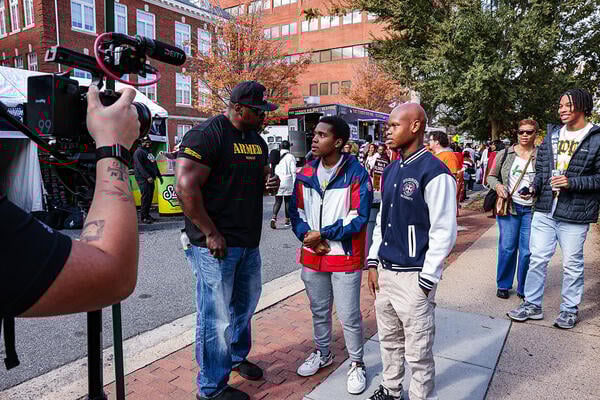
Campus security at Hampton University escorted members of Blexit off the historically Black university’s campus this past weekend after the Black conservative group tried to join homecoming festivities as part of its “Educate to Liberate” HBCU tour. The group claims it was silenced by the university. Hampton leaders say Blexit didn’t follow proper protocols for visiting the campus.
Blexit, which is affiliated with the Charlie Kirk–founded Turning Point USA, planned to visit 10 HBCUs during homecoming events with the goal of “bringing conservative values to life, fostering critical thinking, and sparking powerful conversations on HBCU campuses,” according to Blexit’s website. The group also made stops at Howard University and other campuses, though it canceled a visit to Florida A&M University, promising to announce a new date.
Craig Long, a Blexit member, claimed on Instagram that Hampton University shut down the group’s dialogue with students.
“Instead of celebrating that spirit of open discussion, the university shut it down—claiming we ‘didn’t go through the proper channels,’” Long wrote. “Let’s be honest: this wasn’t about paperwork. It was about politics. We were silenced because we are Blexit—because we stand for Christian values, conservative principles, and independent thought that challenge the mainstream narrative.”
Hampton University leaders pushed back on Long’s description of the incident. They wrote in a statement that Blexit didn’t complete the application to participate in homecoming as a vendor or pay the associated fees. Out of 36 vendor applications submitted, the university approved 18, and Blexit “was among those that did not meet the stated requirements,” according to the statement. Those vendors were notified the week before the event that they would not be allowed on campus. University leaders framed the procedures as a “matter of public safety” to know who’s on campus, with nearly 15,000 people visiting for homecoming.
“Hampton University welcomes organizations and speakers representing a variety of perspectives, provided they follow established protocols,” the statement read. “BLEXIT failed to meet those standards.”
The government has been shut down for a month and Congress remains locked in a stalemate. Students are going hungry, veterans have been deserted and vital research has been left in the lurch. The longer the shutdown drags on, the more harm it will do to higher education.
Most urgently, the USDA will not use emergency funds to help cover the costs of the Supplement Nutrition Assistance Program. More than a million college students who rely on SNAP for their basic needs won’t have that support starting Saturday. Mark Huelsman, the director of policy and advocacy at the Hope Center for Student Basic Needs, said the situation will force students and colleges into “an impossible situation” and could lead to many students dropping out.
The crisis extends beyond food insecurity into student support programs, with the shutdown throwing veterans’ education into limbo. Nobody is answering the GI Bill hotline that thousands of veterans use each month to get information on tuition, eligibility and housing allowances. Staff at Veterans Affairs regional offices are furloughed, putting an end to career counseling and delaying GI Bill claims.
As direct services to students falter, colleges are moving into mitigation mode. Gap funds, meant to serve institutions in these circumstances, are dwindling. Inside Higher Edreported last week that institutions are limiting travel, research and job offers in order to preserve cash while hundreds of millions in research funds are on pause. A training program funded by a grant from the Labor Department is on hold because a federal program officer isn’t at work to approve the next tranche of cash.
Ironically, part of Democrats’ resistance to reopening the government is serving to protect higher ed funding. Democrats are trying to prevent Republicans from clawing back approved funding through the rescissions process, like they did this summer with grants to public broadcasting and USAID. The risk to education funds that don’t align with the White House’s priorities is real. In a potentially illegal move of impoundment, the Department of Education has canceled or rejected funding for at least 100 TRIO programs affecting more than 43,000 disadvantaged students. Last month it reallocated $132 million in funds away from minority-serving institutions to historically Black colleges and universities and tribal colleges.
Meanwhile, the Trump administration—never one to let a good crisis go to waste—is using the shutdown to further gut the Education Department. Most of the department has been furloughed, and 10 days into the shutdown the administration fired nearly 500 more Education Department staff. A federal judge indefinitely blocked the layoffs this week, but the administration will likely challenge the ruling. If the cuts happen, the department will have fewer than half the employees it started with in January. The offices that handle civil rights complaints, TRIO funding and special education will be decimated.
The staff cuts set the stage for Education Secretary Linda McMahon to reiterate her plans to shutter the department. In a post on X two weeks into the shutdown, she said the fact that millions of American students are still going to school, teachers are getting paid and schools are operating as normal during the shutdown “confirms what the President has said: the federal Department of Education is unnecessary, and we should return education to the states.”
“The Department has taken additional steps to better reach American students and families and root out the education bureaucracy that has burdened states and educators with unnecessary oversight,” she added.
Policy experts predict the shutdown will end around mid-November, when enough people feel the pain of not getting a paycheck and start to complain to their senators and representatives. But colleges won’t pick up where they left off. A significant pause in funding derails education journeys for disadvantaged students and throttles valuable scientific research. Subject matter expertise and human resources will be lost through Education Department staffing cuts. Already on the defense after nearly a year of attacks on DEI, academic freedom and research funding by the administration, higher ed will struggle to recover from yet another blow.
By now, it’s obvious that the Trump administration’s efforts to expand Immigration and Customs Enforcement activities go far beyond enforcing federal immigration policy. The near-daily stories of inhumane detainment conditions, open violence against citizens and noncitizens alike, wanton civil rights violations, and purposeful shielding of these abuses from any form of public accountability lay bare that President Trump is now using ICE as a key component for advancing his administration’s hateful agenda.
This context is essential to evaluate why the administration has sung such a different tune with the advertised $60,000 student loan forgiveness offers to new ICE recruits, compared to the normal song and dance about how higher education is evil incarnate. Trump and his political allies didn’t suddenly discover the societal benefits of affordable education, as evidenced by his simultaneous efforts to strip loan forgiveness pathways from those who are deemed obstructors to Trump’s political goals. What’s clear is that federal student loan forgiveness is now a poverty draft, coercing increased ICE and military enlistment from among those experiencing economic desperation.
Weaponizing educational debt to fuel armed forces conscription from lower-income individuals is essentially socioeconomic hostage taking. It deprives people of their agency in choosing whether conscription is truly the career and life pathway they desire by forcing the decision as a survival tactic, especially when nearly half the country is approaching an economic recession deliberately caused by Trump’s policies.
A History of Weaponizing College Affordability
The easiest way for an authoritarian regime to maintain a highly militarized state is to make enlistment the only means of socioeconomic survival for the masses. This is exactly why the Trump administration is promoting student loan forgiveness for ICE recruits while curtailing eligibility for Public Service Loan Forgiveness. By passing the reconciliation bill that nearly tripled ICE’s budget while restricting Pell Grant eligibility for some students and cutting back basic needs programs like food stamps and Medicaid, congressional leaders have identified themselves as active participants in this strategy.
Though Trump’s tactics are an unprecedentedly naked attempt to weaponize student loan relief in the service of authoritarianism, this is a foundational concept in federal higher education policy that he’s taking the opportunity to exploit. The Servicemen’s Readjustment Act of 1944, the first federal educational assistance program for veterans, and most follow-up educational assistance programs were more focused on rewarding military service in already-declared conflicts than using benefits as a recruitment draw.
That shift came with the larger 1960s push to align higher education with the Cold War. California’s Master Plan of 1960 provided an opening for later attacks on college affordability, because it codified into public policy the idea that some types of institutions were worth attending more than others, mainly by segregating various types of educational experiences offered by different institutions. Later in the decade, then–California governor Ronald Reagan slashed public university budgets, in this way punishing students for antiwar protests. Reagan’s camouflaging of draconian education funding cuts as a necessary tool to combat the “filthy speech movement” became the groundwork for today’s deep inequality across all levels of the educational system.
Over the next several decades, federal and state policymakers abandoned their responsibilities to fund public higher education, which has strengthened the ties between college (un)affordability and militarization. In 2022, 20 Republican House members—14 of whom are still in office—wrote a joint letter to then-president Biden expressing concern that his efforts to provide widespread student loan forgiveness would harm the ability of the military to use higher educational benefits as a recruitment tool.
Last fall, 48 percent of 16- to 21-year-olds surveyed by the Department of Defense identified “to pay for future education” as a main reason they would consider joining the armed forces. This was the second-most common reason expressed in the survey, behind only “pay/money.”
Student Loan Forgiveness Is Not Siloed Public Policy
Public policy is rarely siloed into neat categories, and we are now experiencing the widespread consequences of allowing an inequitable and unaffordable higher education system to exist for so long in the United States. Trump isn’t the only federal policymaker endorsing this strategy, but he is the primary beneficiary. The more people willing to join ICE’s march toward martial law or forced to join ICE due to socioeconomic necessity, the easier it is for Trump to fully embrace authoritarianism and stay in power past January 2029.
This is the framing that should be used in every policy conversation about student loan forgiveness moving forward, not just for the offers given to new ICE recruits. These actions are not distinct or separate from the administration’s federalizing of the National Guard, ICE’s vast increase in weapons spending or Trump’s public consideration of invoking the Insurrection Act to deploy more troops to U.S. cities; they’re a vital complement. Ransoming access to an affordable higher education, along with its associated socioeconomic benefits, based on how willing someone is to inflict terror on immigrant communities or any other population that the administration deems undesirable, is a deliberate tactic to build an authoritarian military state.
Ideally, the current scenario facing higher education will end the usual hemming and hawing from policymakers about universal student loan forgiveness or tuition-free higher education being too expensive. Are the cost savings from not offering widespread forgiveness truly worth militarizing the country against the estimated 51.9 million immigrants living in the U.S., including more than 1.9 million immigrant and undocumented higher education students? Is appeasing Trump’s desire to play dictator dress-up so vital that policymakers feel compelled to willingly eradicate recent progress in national college affordability, discourage or outright bar international students from coming to learn in the United States, and shrink the economies of every state and congressional district due to the loss of international students?
State Legislatures Are the Last Line of Defense
The Trump administration is desperate to expand domestic militarization through ICE, as evidenced by advertisements on popular media streaming services and during nationally televised football games, public commitments to keep paying ICE agents as roughly 1.4 million federal workers go without pay during the government shutdown and the elimination or loosening of recruitment and training requirements for new ICE agents in relation to their age, physical fitness and ability to speak Spanish. As the Trump administration through ICE utilizes every available tool to further its authoritarian agenda, policymakers and institutions must use every available tool to combat said authoritarianism.
State legislatures wield vast amounts of legal authority over education policy in comparison to the federal government. However, that authority is useless if states capitulate or are otherwise unwilling to use that authority to protect their education systems and their larger communities.
Efforts like Connecticut’s new statewide student debt forgiveness program, California’s prohibition on campus police departments providing personal student information for immigration enforcement purposes and Colorado’s adoption of a new state law requiring public campuses to limit federal agents’ access to campus buildings are all welcome ways that state policymakers can fight back against ICE.
These efforts must be expanded to more states as ICE continues to ramp up its domestic terrorism and congressional leadership remains content to abandon its constitutional responsibilities to hold the executive branch in check. For institutions, advocates and concerned community members, resources available through the Presidents’ Alliance on Higher Education and Immigration and its Higher Ed Immigration Portal, and from the Immigrant Legal Resource Center, provide essential guidance on how to act in protecting immigrants and their families.
Student loan forgiveness, and the larger concept of an affordable and equitable higher education, could now be a matter of life and death for millions of people. The traditional willingness of policymakers to resist supporting higher education during times of economic surplus, while eagerly cutting educational funding at the first sign of economic distress, has now imperiled American democracy. Every image of ICE committing authoritarian violence is a stark call for policymakers to ask themselves what they value more: the fiscal savings of making no meaningful effort to address the more than $1.6 trillion owed in student debt, or American democracy itself.
Christian Collins is a policy analyst with the education, labor and worker justice team at the Center for Law and Social Policy, a nonprofit organization focused on reducing poverty and advancing racial equity.
Just 27 percent of undergraduates describe their mental health as above average or excellent, according to new data from Inside Higher Ed’s main annual Student Voice survey of more than 5,000 undergraduates at two- and four-year institutions.
Another 44 percent of students rate their mental health as average on a five-point scale. The remainder, 29 percent, rate it as below average or poor.
In last year’s main Student Voice survey, 42 percent of respondents rated their mental health as good or excellent, suggesting a year-over-year decline in students feeling positive about their mental health. This doesn’t translate to more students rating their mental health negatively this year, however, as this share stayed about the same. Rather, more students in this year’s sample rate their mental health as average (2025’s 44 percent versus 29 percent in 2024).
About the Survey
Student Voice is an ongoing survey and reporting series that seeks to elevate the student perspective in institutional student success efforts and in broader conversations about college.
Some 5,065 students from 260 two- and four-year institutions, public and private nonprofit, responded to this main annual survey about student success, conducted in August. Explore the data captured by our survey partner Generation Lab here and here. The margin of error is plus or minus one percentage point.
The story is similar regarding ratings of overall well-being. In 2024, 52 percent of students described their overall well-being as good or excellent. This year, 33 percent say it’s above average or excellent. Yet because last year’s survey included slightly different categories (excellent, good, average, fair and poor, instead of excellent, above average, average, below average and poor), it’s impossible to make direct comparisons.
How does this relate to other national data? The 2024-2025 Healthy Minds Study found that students self-reported lower rates of moderate to severe depressive symptoms, anxiety and more for the third year in a row—what one co-investigator described as “a promising counter-narrative to what seems like constant headlines around young people’s struggles with mental health.” However, the same study found that students’ sense of “flourishing,” including self-esteem, purpose and optimism, declined slightly from the previous year. So while fewer students may be experiencing serious mental health problems, others may be moving toward the middle from a space of thriving.
Inside Higher Ed’s leadership surveys this year—including the forthcoming Survey of College and University Student Success Administrators—also documented a gap between how well leaders think their institutions have responded to what’s been called the student mental health crisis and whether they think undergraduate mental health is actually improving. In Inside Higher Ed’s annual survey of provosts with Hanover Research, for example, 69 percent said their institution has been effective in responding to student mental health concerns, but only 40 percent said undergraduate health on their campus is on the upswing.
Provosts also ranked mental health as the No. 1 campus threat to student safety and well-being (80 percent said it’s a top risk), followed by personal stress (66 percent), academic stress (51 percent) and food and housing insecurity (42 percent). Those were all far ahead of risks such as physical security threats (2 percent) or alcohol and substance use issues (13 percent).
Among community college provosts, in particular, food and housing insecurity was the leading concern, with 86 percent naming it a top risk.
Financial insecurity can impact mental health, and both factors can affect academic success. Among 2025 Student Voice respondents who have ever seriously considered stopping out of college (n=1,204), for instance, 43 percent describe their mental health as below average or poor. Among those who have never considered stopping out (n=3,304), the rate is just 23 percent. And among the smaller group of students who have stopped out for a semester or more but re-enrolled (n=557), 40 percent say their mental health is below average or poor, underscoring that returnees remain an at-risk group for completion.
Similarly, 43 percent of students who have seriously considered stopping out rate their financial well-being as below average or poor, versus 23 percent among students who’ve never considered stopping out—the same split as the previous finding on mental health.
The association between students’ confidence in their financial literacy and their risk of dropping out is weaker, supporting the case for tangible basic needs support: Some 25 percent of respondents who have considered stopping out rate their financial literacy as below average or poor, compared to 15 percent of those who have not considered stopping out.
Angela K. Johnson, vice president for enrollment management at Cuyahoga Community College in Ohio, said her institution continuously seeks feedback from students about how their financial stability and other aspects of well-being intersect.
“What students are saying by ‘financial’ is very specific around being unhoused, food insecurity,” she said. “And part of the mental health piece is also not having the medical insurance support to cover some of those ongoing services. We do offer some of them in our counseling and psychological services department, but we only offer so many.”
All this bears on enrollment and persistence, Johnson said, “but it really is a student psychological safety problem, a question of how they’re trying to manage their psychological safety without their basic needs being met.”
A ‘Top-of-Mind Issue’
Tri-C, as Johnson’s college is called, takes a multipronged approach to student wellness, including via an app called Help Is Here, resource awareness efforts that target even dual-enrollment students and comprehensive basic needs support: Think food pantries situated near dining services, housing transition coordination, childcare referrals, utility assistance, emergency funds and more.
Faculty training is another focus. “Sometimes you see a student sleeping in your class, but it’s not because the class is boring. They may have been sleeping in their car last night,” Johnson said. “They may not have had a good meal today.”
Political uncertainty may also be impacting student wellness. The American Council on Education hosted a webinar earlier this year addressing what leaders should be thinking about with respect to “these uncertain times around student well-being,” said Hollie Chessman, a director and principal program officer at ACE. “We talked about identity, different identity-based groups and how the safe spaces and places are not as prevalent on campuses anymore, based on current legislation. So some of that is going to be impacting the mental health and well-being of our students with traditionally underrepresented backgrounds.”
Previously released results from this year’s Student Voice survey indicate that most students, 73 percent, still believe that most or nearly all of their peers feel welcomed, valued and supported on campus. That’s up slightly from last year’s 67 percent. But 32 percent of students in 2025 report that recent federal actions to limit diversity, equity and inclusion efforts have negatively impacted their experience at college. This increases to 37 percent among Asian American and Pacific Islander and Hispanic students, 40 percent among Black students and 41 percent among students of other races. It decreases among white students, to 26 percent. Some 65 percent of nonbinary students (n=209) report negative impacts. For international students (n=203), the rate is 34 percent.
The Student Voice survey doesn’t reveal any key differences among students’ self-ratings of mental health by race. Regarding gender, 63 percent of nonbinary students report below average or poor mental health, more than double the overall rate of 29 percent. In last year’s survey, 59 percent of nonbinary students reported fair or poor mental health.
In a recent ACE pulse survey of senior campus leaders, two in three reported moderate or extreme concern about student mental health and well-being. (Other top concerns were the value of college, long-term financial viability and generative artificial intelligence.)
“This is a top-of-mind issue, and it has been a top-of-mind issue for college and university presidents” since even before the pandemic, Chessman said. “And student health and well-being is a systemic issue, right? It’s not just addressed by a singular program or a counseling session. It’s a systemic issue that permeates.”
In Inside Higher Ed’s provosts’ survey, the top actions these leaders reported taking to promote mental health on their campus in the last year are: emphasizing the importance of social connection and/or creating new opportunities for campus involvement (76 percent) and investing in wellness facilities and/or services to promote overall well-being (59 percent).
Despite the complexity of the issue, Chessman said, many campuses are making strides in supporting student well-being—including by identifying students who aren’t thriving “and then working in interventions to help those students.” Gatekeeper training, or baseline training for faculty and staff to recognize signs of student distress, is another strategy, as is making sure faculty and staff members can connect students to support resources, groups and peers.
“One of the big things that we have to emphasize is that it is a campuswide issue,” Chessman reiterated.
More on Health and Wellness
Other findings on student health and wellness from this newest round of Student Voice results show:
Mental health is just one area of wellness in which many students are struggling.
Asked to rate various dimensions of their health and wellness at college, students are most likely to rate their academic fit as above average or excellent, at 38 percent. Sense of social belonging (among other areas) is weaker, with 27 percent of students rating theirs above average or excellent. One clear opportunity area for colleges: promoting healthy sleep habits, since 44 percent of students describe their own as below average or poor. (Another recent study linked poor sleep among students to loneliness.)
Many students report using unhealthy strategies to cope with stress, and students at risk of stopping out may be most vulnerable.
As for how students deal with stress at college, 56 percent report a mix of healthy strategies (such as exercising, talking to family and friends, and prioritizing sleep) and unhealthy ones (such as substance use, avoidance of responsibilities and social withdrawal). But students who have seriously considered stopping out, and those who have stopped out but re-enrolled, are less likely than those who haven’t considered leaving college to rely on mostly healthy and effective strategies.
Most students approve of their institution’s efforts to make key student services available and accessible.
Despite the persistent wellness challenge, most students rate as good or excellent their institution’s efforts to make health, financial aid, student life and other services accessible and convenient. In good news for community colleges’ efforts, two-year students are a bit more likely than their four-year peers to rate these efforts as good or excellent, at 68 percent versus 62 percent.
‘It’s Easy to Feel Isolated’
The Jed Foundation, which promotes emotional health and suicide prevention among teens and young adults, advocates a comprehensive approach to well-being based on seven domains:
Foster life skills
Promote connectedness and positive culture
Recognize and respond to distress
Reduce barriers to help-seeking
Ensure access to effective mental health care
Establish systems of crisis management
Reduce access to lethal means
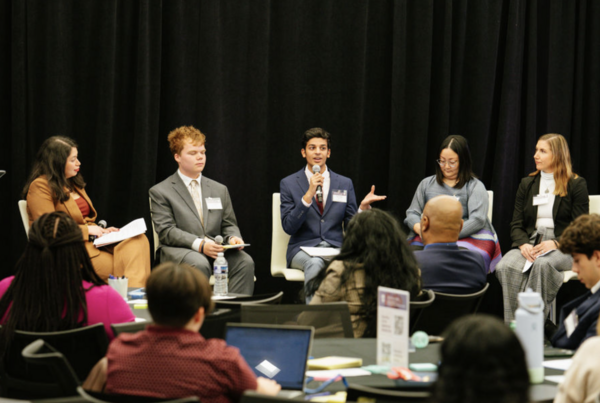
At JED’s annual policy summit in Washington, D.C., this month, advocates focused on sustaining the progress that has been made on mental health, as well as on the growing influence of artificial intelligence and the role of local, state and federal legislation on mental health in the digital age. Rohan Satija, a 17-year-old first-year student at the University of Texas at Austin who spoke at the event, told Inside Higher Ed in an interview that his mental health journey began in elementary school, when his family emigrated from New Zealand to Texas.
“Just being in a completely new environment and being surrounded by a completely new group of people, I struggled with my mental health, and because of bullying and isolation at school, I struggled with anxiety and panic attacks,” he said.
Satija found comfort in books and storytelling filled with “characters whom I could relate to. I read about them winning in their stories, and it showed me that I could win in my own story.”
Satija eventually realized these stories were teaching lessons about resilience, courage and empathy—lessons he put into action when he founded a nonprofit to address book deserts in low-income and otherwise marginalized communities in Texas. Later, he founded the Vibrant Voices Project for incarcerated youth, “helping them convert their mental health struggles into powerful monologues they can perform for each other.”
Currently a youth advocacy coalition fellow at JED, Satija said that college so far presents a challenge to student mental health in its “constant pressure to perform in all facets, including academically and socially and personally. I’ve seen many of my peers that have entered college with me, and a lot of us expect freedom and growth but get quickly bogged down with how overwhelming it can be to balance coursework, jobs, living away from your family and still achieving.”
Rohan Satija, center, speaks at JED’s annual policy summit in Washington earlier this month.
He added, “This competitive environment can make small setbacks feel like failures, and I’d say perfectionism can often become kind of like a silent standard.”
Another major challenge? Loneliness and disconnection. “Even though campuses are full of people, it’s easy to feel isolated, especially as a new student, and even further, especially as a first-generation student, an immigrant or anyone far from home.”
While many students are of course excited for the transition to adulthood and “finally being free for the first time,” he explained, “it comes with a lot of invisible losses, including losing the comfort of your family and a stable routine … So I think without intentional efforts to build connection in your new college campus, a lot of students feel that their sense of belonging can erode pretty quickly.”
In this light, Satija praised UT Austin’s club culture, noting that some of the extracurricular groups he’s joined assign a “big,” or student mentor, to each new student, or “little,” driving connection and institutional knowledge-sharing. Faculty members are also good at sharing information about mental health resources, he said, including through the learning management system.
And in terms of proactive approaches to overall wellness, the campus’s Longhorn Wellness Center is effective in that it “doesn’t promote itself as this big, like, crisis response space: ‘Oh, we’re here to improve your mental health. We’re here to make your best self,’ or anything like that,” he said. “It literally just promotes itself as a chill space for student wellness. They’re always talking about their massage chairs.”
“That gets students in the door, yeah?” Satija said.
This independent editorial project is produced with the Generation Lab and supported by the Gates Foundation.
Major accreditors are following through on their plans to bring new quality checks to the short-term credentialing landscape.
After years of preparation, the Higher Learning Commission is launching a new process to evaluate and endorse short-term credential providers this week, according to a Tuesday announcement from the HLC. The accreditor will be accepting applications for its first cohort of endorsed providers through Jan. 23.
Higher Learning Commission president Barbara Gellman-Danley said in the announcement that HLC’s goal is “to expand the nation’s pool of valuable, HLC endorsed providers, thereby increasing pathways for students to gain the qualifications they need to get ahead and succeed.”
The New England Commission of Higher Education also announced its inaugural cohort of eight recognized noncredit program providers last week, including higher ed institutions and external organizations.
“We know that there are increasing numbers of students enrolled in non-credit programs,” Michaele Whelan, chairperson of NECHE, said in a news release. “There has also been a growing need for quality assurance in this space. NECHE has taken the bold step to address this need and we are excited to expand our work into this area.”
This blog was kindly authored by Dr Hollie Chandler, Director of Policy at the Russell Group. It is the third blog in HEPI’s series responding to the post-16 education and skills white paper. You can find the first blog here, and the second blog here.
When the white paper finally arrived, much of it confirmed the speculation that’s been rife all summer. Namely, that the Government wants a more joined-up skills sector where universities and FE collaborate more, offer a clearer set of pathways for post-16 choices, and widening opportunity for students from disadvantaged backgrounds. There was also a strong focus on quality, presented as a deal for the increase in tuition fees – a step towards financial sustainability that will be significantly undermined by the international levy.
But alongside the paper’s focus on further education and vocational qualifications – most prominently the newly-announced V-levels – there was plenty of recognition for postgraduate skills and the UK’s world-leading research base.
This was a welcome moment of focus for the postgraduate research community. These students are the lifeblood of our research and development ecosystem, but the number of new researchers starting a postgraduate qualification is in decline – decreasing by 10.4% between 2018/19 and 2023/24. If the UK is to become a true world leader in high-growth R&D sectors, then this is a real concern. The government’s own labour market projections show demand for workers educated beyond graduate level will grow 53% by 2035: the biggest increase for any qualification level. So it’s encouraging to see the Government considering how to bolster this vital talent pipeline.
Part of this involves ensuring postgraduate study is more accessible to students from broad backgrounds, as well as increasing opportunities and support for people to use their skills and expertise in research settings. It’s an area that has long been overlooked in widening participation conversations, which is why the Russell Group recently launched a dedicated workstream to consider policies and share best practice. It’s about increasing opportunity, but also about ensuring we harness a wide spectrum of skills, knowledge and perspectives to inform vital research. For this to succeed, the conditions and culture of research must be set up to retain talent through the trickier early-career stages. It’s promising to see commitments to improving conditions, such as parental and medical leave, so postgraduate researcher students have the support they need.
As always, many of the challenges come back to funding. Cost recovery on research is at a historic low, threatening the sustainability and global competitiveness of valuable R&D. Although UKRI commits to funding 80% of the full cost of grants, the reality is UK universities are only receiving 67% of their costs from funders – down from 75% in 2015/16. The Russell Group has previously explored a number of drivers behind this, and the white paper does reiterate some of the useful steps UKRI is taking. This includes making sure equipment is funded at 80% and confirming that matched funding by universities, which increasingly eats into cost-recovery rates, is not required. These are not new announcements – and there’s a long way to go if we’re to reach that 80% funding benchmark – but the government is making the right noises on better understanding cost-recovery challenges and pledging a concerted effort alongside charities, funding bodies and universities to tackle the problem together.
The white paper places significant emphasis on the role of universities in regional economic growth and commits to creating a research system that enables collaboration and supports specialisation. We await further details on the “funding reforms” that will achieve this, but it’s encouraging to see a renewed commitment to dual support research funding and QR, and protecting curiosity-driven research through a new strategic objective for UKRI. We hope this means the government will be looking to address the real-terms decline in QR seen in recent years (down by 16.5% since 2010).
The white paper also confirms that we can expect a review of the HEIF as the Government looks to align it more closely with the growth mission. We know HEIF brings great returns on investment: every £1 invested yields £14.80 at sector-level. Large research-intensive universities deliver an even higher return on investment from their HEIF allocations, as much as £20 once spinout performance is accounted for. We have long called for caps on HEIF to be raised, given its potential. For example, our modelling suggests that tripling HEIF could deliver around £11bn for the economy.
There was no such funding boost indicated in the white paper, but there was recognition of HEIF’s power to generate growth by de-risking innovation, driving technology transfer and building entrepreneurial capacity locally and nationally. However, there are a lot of unanswered questions on how exactly HEIF could be pivoted towards the growth mission.
A major benefit of HEIF, just like QR, is its flexibility. Our universities use it for everything from boosting pre-seed investment capabilities to establishing regional business hubs and empowering student entrepreneurs. It’s natural that the government wants the return on public investment to meet national priorities, but any blanket tailoring of how the fund is spent could impact its regionally specific benefits. It will be important to consult closely with the sector to make sure any review of HEIF enhances how universities contribute to local economies and doesn’t restrict initiatives that are already performing well.
The challenges for higher education and research institutions – both in the UK and in many countries across the world – are acute and immediate.
A combination of funding pressures, changing student demands, the rapid development of AI, international conflict and restrictive visa regimes are necessitating significant change and transformation.
These tough challenges require all those working in higher education to think differently about how we lead, teach, support students and operate. Yet within these challenges lie opportunities for innovation and positive change.
I am three months into the role as chief executive of Advance HE. My recent conversations with many of our members have reinforced the need for us to focus on how we can enhance our support for transformation and change.
Time for a change
I believe that to be successful, higher education institutions need good leadership; effective governance; they should promote excellence in teaching and learning; and embed equality, promote diversity and inclusion. These are the four key pillars of Advance HE’s work and will continue to be so. However, we cannot stand still. Supporting higher education institutions in this difficult and changing context means that Advance HE needs to change and modernise. Our portfolio, programmes and products need regular review, refreshing and revamping, to remain relevant, to be high value and high impact.
There has been excellent work led by Universities UK’s transformation and efficiency taskforce, which set out a number of recommendations and challenges for the sector. Advance HE can play an important role in supporting transformation and change both at a sector level and an institutional level. In the context of financial pressures, changing student needs, international uncertainty and digital developments – we need to be an enhancement agency – a trusted partner for higher education and research institutions.
Supporting enhancement, change and transformation will now be at the heart of what Advance HE does – embedded across our member benefits, our programmes and our consultancy. To help institutions through these challenging times we will apply our expertise, experience and resources to best support enhancement and service improvement, where it is needed.
Collaborating with partner organisations that are supporting transformation and change will be central to our approach. Blending our expertise in leadership development, educational excellence, equality and inclusion, governance effectiveness with the experience of partners that have different but complementary skills and capabilities.
Overall, our focus is primarily on people. We can play a role to enhance capabilities at all levels to lead and manage transformation and change – academics, professionals services, governing bodies.
What we will do
There are three practical steps I am taking now to strengthen our support for transformation and change:
Firstly, we have made supporting transformation and change a core part of our membership offer. We are drawing on the areas where we have deep expertise – leadership development, educational excellence, governance effectiveness – to apply our expertise directly to the most pressing issues facing our members.
For example, the new Educational Excellence Change Academy, a structured virtual six-month programme designed to help higher education staff to lead systemic educational transformation. The programme provides practical support to redesign curriculum to align with workforce needs, reimagine pedagogy to be inclusive, digital, and engaging; and enhancing student support models to strengthen wellbeing and retention.
Additionally, we have launched the Merger Insights and Roadmap, a new resource for navigating institutional collaboration, partnerships and mergers. Drawing on recent case-studies from successful transformations, it considers early option-testing and due diligence through to culture integration and regulatory engagement.
Secondly, later this autumn I will announce a new strategic advisory group who will work with our in-house expert to further enhance our support for transformation and change. We will further evolve our membership offer; review our portfolio of products and services; lead new research to share insights; and bring knowledge and learning from other sectors that have delivered significant transformation. We will also recruit new associates with deep and relevant transformation experience to work with our in-house experts.
Thirdly, we will do more to realise the benefits of Advance HE being a global organisation with an international membership. Our 470 members are from 34 countries – with almost a third of our members outside the UK – in Australia, Ireland, in the Gulf, across Europe, in South-East Asia and beyond. The challenges facing higher education institutions in one part of the world are often mirrored in another. The solutions, approaches and innovations being developed in different contexts can offer fresh perspectives and practical ideas that translate across borders. We will do more to draw on the fact that we have a diverse, global membership to share insights, solutions, and good practice across our membership.
At a time of significant challenge for higher education and research, institutions are increasingly needing to deliver transformational change in the way they operate. Advance HE is committed to supporting people working in higher education to do this successfully.
Senators Bernie Sanders (I-Vt.), Edward Markey (D-Mass.), Jeff Merkley (D-Ore.), Chris Murphy (D-Conn.), Tina Smith (D-Minn.), Elizabeth Warren (D-Mass.), Peter Welch (D-Vt.) and Chris Van Hollen (D-Md.) will hold a press conference to “discuss the Trump administration’s refusal to use a $5 billion emergency Supplemental Nutrition Assistance Program (SNAP) fund.”
What can academic writers do to have a digital presence that shares their writing and helps them connect with people online? Dr. Katy Peplin interviews The Social Academic podcast host, Jennifer van Alstyne in honor of Academic Writing Month (AcWriMo) in November.
Timestamps
0:00 Academic Writing Month (AcWriMo) with Dr. Katy Peplin and Jennifer van Alstyne 2:28 Your online presence is more than just social media 5:02 Cultivating authentic connections online for graduate students and faculty 10:18 Overcoming imposter syndrome and the lasting impact of sharing your story 14:56 Safety and community building online for academics and researchers 22:39 Jennifer van Alstyne’s tips for your personal academic website or research lab website 31:20 Did your university offer you a website? Yay. Keep this in mind 36:44 Aligning your online presence with your personal and professional goals 39:52 Your impact, your writing, your academic life matters 45:17 Build confidence by being intentional about how you show up online 49:09 Increase your impact with strategic approaches to your online presence
Academic Writing Month (AcWriMo)
Jennifer van Alstyne: Yay. I am so excited to talk about academic writing today because this is honestly a love of mine and I don’t do it anymore, but I help academic writers all the time with their online presence. I’m really focused on the digital side. Today I have Dr. Katy Peplin from Thrive PhD, and she’s going to ask me questions for academic writers because next month is academic writing month. Well, before we get to the questions, tell us a little bit about amo.
Katy Peplin, PhD: Okay, so I’m so excited here, but AcWriMo, which is so much more fun to write than it is to say, but is a National Novel Writing Month, which is a sort of longstanding decades old internet tradition at this point where people sign up and try and write 10,000 words of a novel draft in the month of November. There had long been sort of a community around novel writing in that way. Starting the origins of it now are sort of lost to the miss of internet time, but academics have been jumping onto it. I’ve been doing programming for this since 2018, which is quite a few years ago now. But I am really excited because the kind of way that we do it in the Thrive PhD universe, and now I have this great collaborator, Dr. Kate Henry, but we really believe in sort of building a writing practice.
Not necessarily belting yourself to your chair until you write that journal article or that chapter, but thinking about this as a month to intentionally touch in with your writing, touch in with your projects, experiment with things, and build some awareness around that writing practice. Let’s face it, November is the time where the end of the year looms closer and closer. All of these things that felt really far away in September or July when you’re like, “Sure, I’ll have that done by the end of the year,” suddenly become very real at the same time that semesters end and holiday stuff ramps up. Human things are so complicated. And, at least where I am in the northern hemisphere, the daylight goes away very suddenly. There’s just a lot of things that make writing in November even more challenging. I find that it’s been really fun and helpful to provide as much support as we possibly can for free that whole month.
Jennifer: I love it. This is one of the things that we’re creating to be a free resource for people. If you’re watching this and you are an academic writer, you’re friends with or supervise an academic writer, please share it with them. We’re going to be sharing tips, advice, and really the struggles that people sometimes go through when it comes to sharing their writing. So this video is for you. It really is.
Katy: Yes. I’m so excited to be asking you some questions because you’re such a leader and expert in this space.
I would love to just for the academics among us, how do you define an online presence? Because I know that’s one of those things that can feel bigger than it is, but also smaller than it is. What do you include under that umbrella?
Jennifer: I’m so glad you asked this question because I feel like people have a really limited view of what it is to the things that we create about ourselves. “If I don’t have a website, if I don’t have a social media, then I don’t have an online presence.” But that’s not true.
Your online presence is anything that people can find about you online, whether it’s intentionally created by you or not. So that’s Google Search results. Maybe if people ChatGPT get to learn a little bit more about you, what comes up? There’s a lot of ways that we can find what our online presence is, but there’s also a lot of ways that we can be intentional in creating and shaping how people find our story online.
Katy: That’s such a generous way to look at it because I know so many people who are like, I don’t want to be on LinkedIn or I don’t want to be on this platform. I don’t want to be here. I don’t want to be there. All of that makes sense to me. But it also can be what you want it to be. The kind of point is to be intentional about it.
Jennifer: When we think it’s only social media, or only websites, or sometimes even only faculty profile, the thing that we’re often missing is your academic bio. Your bio is ending up on conference websites for journals, for events, programming, maybe fellowships or associations that you’re involved with. There’s so many places where your bio can show up online that it really ends up becoming a massive part of your online presence. People don’t expect that.
Katy: As somebody who has to regularly produce bios about myself and almost always feels some tension about it. Yes. That it’s such a good point that it’s more information about us circulates beyond where we put it on purpose. Right, exactly. Okay.
Cultivating authentic connections online for graduate students and faculty
Katy: What are the benefits that you see of for academics or people in the scholarly space that really do take that step to be intentional and thoughtful about the way that they show up online? What are the benefits that people can see from that?
Jennifer: I think the benefits that people maybe assume that they’re going to see is a lot of reach or maybe a ton of reads on their writing. And that kind of myth is, I mean, it’s not inaccurate. If you share more, people will find you more.
But the truth is that the benefits are really about the more individual connections, the reader who reads your writing and not only understands it and relates to it, but is citing it and helping share it with a larger goal in mind of being part of the research community. When I think about the connections that people are sometimes hoping for online, it doesn’t always equate to the meaningful deep relationships that they really enjoy that have come out of it. So whether that’s research, collaborations, new friends in your field, learning about a new conference or association that maybe you hadn’t heard of before, there’s so many opportunities for connection that we miss because maybe we just don’t think there’s agency in doing that, especially if networking feels uncomfortable to you.
Katy: Yeah, absolutely. I love the sort of way that you’re framing that because I think that for so many of us who reads us or even our H-index or these kind of really concrete data things are the easiest to measure. So we measure them first. But often they not separate from, but not necessarily as meaningful as we might want them to be in terms of the results we’re actually looking for.
Jennifer: To give you an example, so to be honest, I don’t share my academic writing much. I haven’t done academic writing since grad school. When I think about my own academic writing and my experience of sharing it, it’s been very surprising. I shared I’m in medievalist literature, and so when I shared an article that I had published, I was very surprised by the people who were responding to me: people who were not in my field, people who were not academics, people who cared about the literature, but I didn’t know that they did because they weren’t in the kind of environment that I was used to having these discussions in. Even my own experience, even though it’s relatively old now, I think that it was so meaningful for me to see the kind of invitation that my post ended up being that I didn’t expect.
I wasn’t like, “Oh my gosh, eight people are going to go read this article now that I’ve posted it on my personal Facebook.” But that’s what happened. Not only did that happen, but someone was like, “Oh, after I read this article, I brought it back to the grad school class where we’re talking about this book.” So then everyone ended up reading it, and I really thought that I was just posting to brag to be like, “Hey, I got this article out.” Like, you did it. This is great. As a grad student, I was very proud of myself and I wanted to share that feeling with people. While sharing your article can be the intention of your post, it’s also okay if you know what you’re sharing is more like me, like a feeling or the kind of warmth that we feel about our article and about our writing. It’s okay to be open about that even if you think that the people aren’t going to read it.
Katy: I love that so much, and I think that it’s such a brave and kind of generous thing to share because so much of the academic discourse is like I have officially done this important thing and I talk about it with important people and in important stoic ways. And sometimes you really are just like, listen folks, I passed my exams. There’s something so important about sharing authentically. I think that that’s something that academics can miss because in a lot of spaces we have that authenticity gently guided out of us or sometimes with a lot more force than that.
Jennifer: That’s true. Sometimes when my faculty clients we’re working together on social media. It’s pretty rare, but sometimes we’re actually focused on sharing their book or a specific publication or report that they’ve written. When that happens, they think that I’m going to tell them what to do. They think that I’m going to give them: here’s the specific template, we’re going to do all the things. Instead oftentimes we’re just having a conversation. I’m taking notes while we’re talking.
The things that you think already? The things that you want to share about your book already? Are good enough. They don’t need someone else to come in and tell you how to do it. Or what to do or what to say. It’s just that sometimes there’s things that we can add, or tweak, or enhance, because the thing that comes right out of our mouth, sometimes it needs a little bit of revision to help more people understand it.
Overcoming imposter syndrome and the lasting impact of sharing your story
Katy: That leads so beautifully into this question that I have because I tend to work with a lot of early career scholars, so grad students, post-docs, people who are just getting their feet wet. There is this real anxiety about who am I to be sharing about this thing? To your mind, what counts as expertise? What makes this important enough to share? Or do you measure it with something else altogether?
Jennifer: That’s a good question. I don’t think that I measure it, which is maybe the most interesting part of that. I’ll give an example. I had Meg Mindlin, who is an amazing graduate student, here on The Social Academic podcast. She has a very large platform on social media. She shares video. She shares octopus art. She is so cool. And, she has that same kind of feeling like, is this good enough to share? It doesn’t matter how large your platform is. You can still have that imposter syndrome. And frankly, it doesn’t matter where in your career you are. Meg is feeling that as a recent master’s student graduate.
And my clients who are mid-career and senior faculty? Many of them also still feel that way. I would encourage you to recognize that feeling. But maybe still practice it anyway because it might not go away. But you know what always makes it go away?
When my clients and I are doing this live on a call, we have a post, we’re ready to post it, we put it up and they get engagement sometimes while we’re still live. They’re like, “Oh, that’s a relief.” That’s a relief because I was scared about posting it. I did it. I was on the call with you, but now it’s out there and people are seeing it. The act of actually doing it, even if it’s just once or twice for this, even if you feel uncomfortable, it’s good practice. And I would say it’s okay to sit with that discomfort a little bit if you’re talking about something sensitive.
If you’re attracting negative reactions, I think that’s a different consideration. But for the vast majority of the things that you post, there are ways to talk about it that are not necessarily going to invite that kind of negative reaction. I just want people to feel a little bit more open to exploring it.
If you draft a post, hit publish, if it’s about your publication. Hit publish even if you’re not sure. So many of the people that I chat with are like, “Oh yeah, I drafted it, but it didn’t end up published.” Yeah, my hope for you is that it ends up published.
Katy: Oh, what a generous hope. It really reminds me of some of my favorite pieces of writing advice, which almost all boiled down to doing the thing is doing the thing. Writing isn’t necessarily thinking about writing, learning about writing, strategizing about your writing, drafting your writing, writing is writing. I think what you’re saying is sharing and building your presence is about sharing and building your presence. That there’s so much benefit in practice and doing it and learning that way as opposed to trying to perfect it up here first.
Jennifer: The results are long-term. Especially if we’re thinking about, I guess to be specific like a social media platform like LinkedIn, your post goes out today, maybe tomorrow, but that post has potential to reach people next week, next month, next year.
I literally went into my LinkedIn analytics yesterday and was like, wow, some of these posts are from over a year ago and they’re still reaching people this week. It’s surprising, but I think that potential was missed on old Twitter. You could reach a lot of people fast, but when the relevant people missed it the first time, they’re not going to see it later. That potential is possible on a profile like LinkedIn. It means that maybe it’s okay, you put a little bit of energy into your LinkedIn profile, even if you’re not job searching, you’re not doing any of the things like I get it, but LinkedIn can still help you reach all those people when you have something you want to say. It doesn’t have to be all the time.
Katy: As somebody who’s trying to uplevel on LinkedIn at this exact moment, I’m really resonating with what you say because it is this kind of vulnerable. They make it so easy to measure things like likes and metrics and shares, and you’re chasing that dopamine hit. You forget that the post lives beyond that initial kind of chemical brain reaction. It’s helpful to know good or bad that there’s a long tail.
Safety and community building online for academics and researchers
Katy: So I now have as from where you’re sitting, say I’m a graduate student, I’m an early faculty member, I’m even a late faculty member. Goodness knows, we’re all busy. I only have a certain amount of time.
What’s your best pitch for investing some of my precious energy into building this presence when it might not necessarily be something that’s directly measured by my advisor, my chair, my tenure committee, my colleagues? Why do it?
Jennifer: That’s a good question. I think that the advice that I had even a year ago probably would have been different, but I’ve had a lot of graduate students reach out this year because they want a stronger online presence. They don’t have the time, especially mid-career people with family or folks that are in a transition of fields. If you don’t have the time, but you still want an online presence, there’s ways to have that happen. You don’t have to work with me, but just know that there’s people that can help you and that you don’t have to do it yourself. Or, you can do it with a friend. There’s different ways to take back or make better use of some of that time if doing it yourself is not ideal. When you are planning to stay in academia, when you’re planning to have the research thinking projects that you’re working on now, be something that people can engage with long-term.
It’s always a good investment of your time to create your online presence. I would never suggest someone not create an online presence unless personal safety was really at not just the forefront of their minds but could affect their mental health. I’m saying that as someone who has been there before, I’m a survivor of domestic violence. When I left my physically abusive ex-husband, I deleted all my socials. I didn’t have anything. I didn’t want to be found online by anyone. So I’ve been there. But I also know the power of taking that space back and being really intentional about what people find there. Do I literally still worry that my ex-husband is going to email my clients and harass them? Yes, I’m not going to lie. Honestly, that is possible. And so when I think about how I show up online, I am very intentional about who is going to see this, how they can engage with it, and what the potential ramifications are if something goes wrong.
I think about that also right now in terms of protecting my clients when things in America are politically quite volatile for freedom of speech. There’s a lot of things that we can take into consideration in terms of time and energy that are beyond just us, that are a part of the larger world. But when it’s your own time, it doesn’t all have to happen at once. Any small change that you can make for your online presence.
Whether you’re in grad school or early career researcher, or much later on in your academic career, that time and energy makes a difference. Maybe you’re only updating a sentence or two in your bio. Maybe you’re spending a day focusing on creating that LinkedIn profile that you really did not feel like you needed in the past.
There are things that you can do and you have agency in doing, but it doesn’t all have to happen at once. And, it doesn’t have to happen at all if it’s not a goal for you. But for most writers that I talk to, it is a goal at least sharing their writing, sharing their research is a goal. I encourage you to have that online presence, even if it’s not the personal online presence that maybe you see friends or colleagues having too.
Katy: That is such generous advice. I’m so happy to hear you talk about the sort of risk of this because I know that I personally am working with a lot of clients who are afraid not just for their own sort of reputation online, but for the funding of their labs, for the ability to get doxed if they’re studying a thing that somebody finds. I think what you said earlier in kind of our conversation that you have an online presence, whether you work on it or not, that being able to shape things like how I appear on my department website, how I appear in my bios in places that people can access and could potentially freedom of information actor get access to.
All of that information exists online for most of us through these old conference programs, through all of these other things that more and more are being ingested or searchable in maybe ways that weren’t even two years ago. It’s going to happen whether you are intentionally engaging with it or not. This is maybe a moment for people to say, okay, how can I think about these presences and show up in them in a way that accurately represents my research. But also takes into account that “I need to stay safe, my colleagues need to stay safe, my students need to stay safe, and if they’re going to write it, I might as well write it.”
Jennifer: There’s power when we show up online. There is also an invitation for folks who maybe look like us, or think like us, or worry about the same things as us, or care about the same things. There is potential for those people to see the space that you’ve taken online and feel that they can claim some of that too, that they can also create more storytelling, more openness, more connection through what they’re able to share online.
Katy: I think about that with sort of my own presence all of the time because I am pretty open about my mental health struggles on my blog. I am incredibly privileged to do that in a lot of ways because I’m my own boss, so nobody’s going to fire me if I say something. If I can be the one to take on some of that risk and say, “Hey, I had a really crappy mental health day, and here are six ways that I reset,” and knowing that I’m putting that information out for people to encounter it when they need it to? If I can take that risk, then that lets other people take some of that burden off. That’s one of the ways that communities can function really generously is to say, okay, I have this space to take some of this on. Why don’t I host the meeting point for this idea so that you can benefit from it and maybe not have to take that on yourself.
Jennifer: Yeah, I really like that. And for graduate students who are teaching, early career researchers who teaching, is not just a focus for you, but something that you care about your online presence can really help your students. I have a whole article on The Social Academic blog. I feel like there’s so many people who maybe they’re not going to make an online presence for themselves. They’re not going to make an online presence for their writing, even if they want more people to read it. But they will make an online presence if they understand ways in which it helps more people, especially the people they’re teaching or helping mentor. I encourage you, even if you’re not thinking about this for yourself, it’s okay to think about it for other people too. Because sometimes you’re doing it for other people, and it ends up helping all of you. I think that’s really beautiful.
Katy: Yes, please do link that for me and for everybody. I think that’s one of the important ways to sort of think about this is that this nourishes all the way down. Just to give a practical example, I work with a lot of people who are looking for labs to join, looking for advisors, or they’re looking for even job searches and they’re trying to figure out fit. There’s so much information intentionally there and not sometimes that lets people know this is a good fit for me. I would be safe to research here. If you think about it like that, these are secret love letters to help you find the grad students who would be really aligned for you, the collaborations that would be really helpful. Then that can give an incentive where you should make a LinkedIn so that you can have a LinkedIn might not have that same hit.
Jennifer van Alstyne’s tips for your personal academic website or research lab website
Jennifer: Could I give an example of that?
Katy: Yes, please do.
Jennifer: I was working with a PI. We were working on the content for her website pages for the teaching section, and she was kind of wondering, “Should I make this more for the students? Should it be more for people who are evaluating me? I’m not sure who the audience of this page was.” I was like, first of all, let’s make it for the students because I think that’s what’s going to be most helpful. But second, if we can provide a little bit more information for them about your lab, about what it’s like to work with you, it will help them in their future careers.
She had this light bulb moment, which was, “Oh, last time I was looking through applications for people who wanted to join my lab. I noticed that one of the candidates had a specific lab that I had no idea what it was listed in their resume.” And she was like, “I couldn’t find information about it online other than a quick mention on a university website. So I had no idea how the research from this lab related to mine, and I almost passed the graduate student up.” When they met, they actually talked about the lab and had opportunity to see the connection more clearly, but that hesitation that almost stopped her from reaching out to the student to schedule that interview. When I think about the potential that is missed because PIs haven’t taken the chance to have a little bit of a stronger online presence, it can harm your students. I don’t want that to happen. If you have the capacity, if you have the space to think about how you’re showing up online. Or, if you’re a student in that lab that doesn’t have an online presence, can you add a description of it to your LinkedIn profile so people can learn more about it? You have agency, whether that’s inviting or letting your PI know that you would love for them to have a stronger online presence, or trying to find ways to create space for that yourself. You have options.
Katy: Yeah. That makes me sort of lead into this next question, which is writing for an online audience is such a specific skill. Are there ways that you can suggest that people can? Because I know that personally, if somebody said, “Hey, make a website to describe your lab,” I might be like, “I don’t know how to do that,” and sort of push it off because it’s so much harder. What are your top tips for helping people build that skill of writing for this specific context?
Jennifer: Before we can write for the specific contents, we kind of have to know what we want to write. The best resources that I have for folks who are like, “I want to create a website and I’m not sure what goes on it” is: I have one for personal academic websites and one for research lab websites. So there’s an answer for both of you, but it is a long list, a descriptive list of page ideas for your website. There’s so much content that you could add. And, there’s only a handful of that content that probably is most relevant to you. Before you start writing, think about what’s most important for me to share? I will link those articles below as well because they are great resources for anyone who is creating a website, updating a website. If you’re an academic who has that kind of permanent space online, check out these resources because that’s definitely the first place that I would recommend going.
A lot of people get stuck in the writing process. It’s a reason the services that I create really take most of that away, off of the plate of the faculty who I’m working with. So, I end up doing a lot of writing for folks. Sometimes that’s bio writing, which is its own project. Oftentimes, it’s condensing the things that we talk about in interviews and the materials that they’ve sent to me into written website content. But I want you to know that if you are like, “I can design my own website and I don’t really want to do my own writing,” there are still people who can help you with that. So reach out to me and I’ll help connect you with someone who may be able to support you in that process if you’re not wanting to do it yourself.
You can be a very strong academic writer. You can be a very good public speaker. You can be very good at all of these things and still feel like your web writing isn’t where you want it to be. This is not an insult to you. This is not a lack of knowledge or skills or capacity. Oftentimes, it’s much harder to write about ourselves than it is to write about other things. Especially things where, yes, you’re in research, you’re getting all of these inputs, data, places that you can cite and source and organize and reorganize. You are used to spending a lot of time on that. And when you think about spending that same amount of time on writing about yourself? It probably doesn’t feel the same way as you feel about your research. That’s okay. One: it’s okay to seek help.
Two: it’s okay to do it in steps. You could do a one page website first and grow it over time. Three: it’s okay to just publish it. If you’re not sure about your web writing and you maybe want to improve it, but you still want your website up, please, please publish it. Writing can always change over time and your website will 100% change over time. There is almost no one that I’ve ever met that is like, “I made this website once and haven’t touched it since then.” Oftentimes, it’s not going to happen every year, but every once in a while you’re going to notice, “This doesn’t quite feel like me anymore.” Those are things that you can address and change because it’s your space, because it’s your website.
Katy: There’s so much good advice and strategy in there. One of the things that I’m really hearing that is one of the common phrases out of my mouth too is that as academics, we are sort of taught that “writing is forever.” Once it gets published, it’s a thing and it exists and it’s citable. The reality is both about anything that’s kind of online and also in a lot of ways your academic writing, there’s snapshots of your thinking and time. If time changes and your thinking changes, then you get a new snapshot.
Did your university offer you a website? Yay. Keep this in mind
Katy: So many of us carry this kind of really resistance to being like, “I’m not sure that this accurately captures everything.” I can’t tell you: I changed my website five, six times a month because I’m always catching typos or things that didn’t flow or things I want to change or things I want to tweak.
Those things are so much more visible to me than they are to anybody else. I have built a thriving web presence with zero capital letters and many typos everywhere all of the time. That’s just sort of the brain that I have and the way that I show up. I move a little bit faster and break more stuff and have to kind of redo it. There’s something to be said for learning to do a skill and building it in public. A lot of us as academics are really used to learning in private building, in private researching in private and then presenting publicly and having it be really big stakes. I’m so much better of an academic writer because I started publicly writing those skills feed each other in a way that I didn’t expect.
Jennifer: Now, one thing that I want to mention about that is a free tool, especially for graduate students, early career researchers. Owlstown is a free academic website builder. If you are wanting a website and you’re like, “I don’t have website skills, I don’t really want to develop them,” Owlstown can set up your website in like 15-30 minutes. You can have a website today for free that’s easy to update and keep with you and kind of personalize a little bit even over time. I just want you to know that that is an option for you. If you’re wanting a website, you’re not wanting to do it yourself or work with an academic website designer like me, that’s okay. There’s options for you to still have that space online.
Katy: Also to have another sort of low cost plug, I know that my first academic website was hosted through my library at my university. Oftentimes there is somebody in the kind of beautiful war in of resources in libraries that if they don’t know where to do it for free on campus, they can absolutely help you with almost all of those parts.
Jennifer: This is definitely true, but I am hesitant to recommend it to folks. That’s because I have met so many people whose websites just disappeared when their universities decided to stop offering that service.
Katy: Oh, wow, okay.
Jennifer: Sometimes there’s notice, but sometimes there’s not. And so, I just want to be a friend. If you are creating a space on a site that is internal, that’s hosted by your university, yay, I’m so excited for you. Save a copy of all of your text. Save a copy of all your photos just in case. Just in case something goes wrong, I want you to have that so it’s movable to another space if you ever need it.
Katy: Yes. Speaking from people who lose access to their emails all the time, there is real wisdom in being use the university if they’ve got it. But keep a copy for you.
Jennifer: Oh, I feel like when I was in grad student, so much of the advice that was given to me was always use your university email address. This is how people are going to know that you’re legit. But the truth is, I lost access to all of those emails. I have no idea of any of the conversations that were shared, and I did not save them in time in order to keep them. When I think about that loss, that loss of what feels like archive to me, it makes me sad. So when I think about the writing that you do, yes, academic writing is important, public writing is important, anything that you create is important, but so are the emails and conversations that you have if they’re meaningful for you to keep. Yeah, this is kind of all areas of your life. If it’s meaningful for you, try and find a way of saving it.
Katy: Wow. That’s such good writing and information. This is what I find with so many of my conversations with really brilliant people in the academic spaces that we all find the places where everything all connects. One of them is that it just is really important to keep hold of what’s yours, whether that is your data, your information, and if there are ways to keep it personally, then it almost always behooves you to do it because as much as we would like to trust that the Higher Ed institutions are eternal and that our web space and storage will always be there. Goodness knows that things really can shift.
Jennifer: They really can shift. I was actually just hosting for ContentEd Live. It was a 48-hour Higher Education conference. What I found was that there’s so many people who are making very large decisions about things like website, things like technology infrastructure. They’re coming from a top down approach of making decisions that help and improve things for the entire community. Oftentimes they’re making decisions that affect faculty without recognizing some of the loss that can happen when this kind of decision happens. One example (this is not from the conference), but last year I had a client who came to me because his faculty profile. All of a sudden they’d removed all the email addresses from faculty profiles. So the place that was the home for his online presence no longer helped connect media, journalists, or research collaborators with how to actually get in touch with him.
All of a sudden there was this new need for an online presence that allowed for those things. Sometimes when those decisions come down from the top, they really do help everyone. This university got 30+ million SPAM and phishing emails each month. I understand why decisions are sometimes made. But when we don’t have control over them, it means that we need to be aware of what our options are for taking up space outside of those structures. We’re all working towards helping students, helping research, helping facilitate the meaning of Higher Education in the world and how it impacts the real lives of the people who are in it. But if we’re losing access to the things that matter most to us, then sometimes we have to recreate those spaces ourselves.
Katy: Absolutely. There’s something so important as we think about this whole umbrella of an online presence is thinking through what are the most important things for you in this presence? If one of them is “I want outside collaborators to find me, I want to be available for media, I want to be public facing,” then probably where you’re going to spend your time and energy is completely different than “I’m a PI. I want a steady stream of people in my lab who are values aligned and project aligned. They might spend their two or three hours a month completely differently than somebody who has these other kind of options.
Aligning your online presence with your personal and professional goals
Katy: One of the things that I’m sure that you see as well as I do is that people kind of get the advice. You have to have a website, you have to have this, you have to have that. And they don’t really think through, okay, what do I want this project? Because it is a project to do for me. And the more clarity you can have about that, the easier it is to make that project fit the need as opposed to trying to collage seven or eight things because somebody told you they were important.
Jennifer: 100%. Oftentimes I found that actually it may be seven or eight things that are important to you, but there’s a hierarchy for what those things are in terms of your energy, your capacity, what actually fits into your life. Sometimes we’re designing a website that is going to be attractive for media, for podcast invitations, even if that’s not something you’re actively reaching out to. But, the vast majority of our energy is going into explaining the lab and inviting people to explore the projects that you’re doing. I want to encourage people to create intentional time for yourself to think about the people you want to come to your website or to come to visit your online presence. Maybe it’s a LinkedIn profile. Who do you want to come there? How do you hope that they can engage with you? I had one person be like, I just want a repository.
I don’t actually want to engage with people, but I want them to find my writing.” That’s okay too. We just published her website. It is out there and it’s going to be with her for, frankly, a lifetime. Websites can be there with you for your lifetime. They can grow and adapt with you as your goals and needs change. Maybe media, podcasting, is not a goal for you now. But when you’re running a lab in three years, actually it would be great to have your research on a research podcast in your field. How cool would that be to reach only people who are really into the thing that you’re talking about?
Katy: Exciting. That’s pretty cool too. Yeah, I think it just is. So with so many things, the intentionality is key. And a little bit of effort in the front to be like, what am I doing with this? And, why do I want it? Can just pay dividends.
Jennifer: If you don’t want to work through that on your own, reach out. I’m happy to help you with that process. Or, to design your website for you. Whatever feels supportive.
Your impact, your writing, your academic life matters
Katy: Awesome. Are there any other things? I guess my last final question is if you were to kind of sum up the very best thing about working with academics specifically on their online presences (as opposed to micro influencers or content house kids or, I taught digital media, so I’m always like, Ooh, the handlers of famous internet cats). What’s sort of so special about this group that keeps you coming back to this incredibly specific but pretty diverse niche?
Jennifer: I’m really glad you asked about this. This is a question I’ve been thinking of a lot this year. This is the first year in my business where people from outside Higher Education are really like, what are you doing in there? What are you doing? It seems like your industry is imploding. You should consider coming and working over here, go work over there. I’ve had referrals for very large projects that are outside of academia and I don’t want any of them. The people who refer them, they love that about me to be honest, but they keep trying. And when I think about that, it’s really because the researchers, academics, graduate students that I work with, they are each creating meaning in the world. They’re each creating really interesting thinking, writing, teaching. The things that they do are also really varied. So my brain that really likes to be creative in different ways gets to work with people in a lot of different fields.
I get to learn so much from the people that I work with. I get to hear their stories and experiences and I relate to them. Even though I’m not in academia, I only work with academics. I mostly work with individuals. I’m not part of the academic world entirely, but I am supportive of this world entirely. Actually, at the conference yesterday, someone said, “We’re all across universities all around the world. We’re all working towards this hope.” And I thought, oh my goodness. I’m not a Chief Marketing Officer at a university, but I am someone who’s working on the same problem, who’s working towards this same future where research, and education, and teaching, and mentoring, and the service work, and all the things that faculty do for their society, it’s meaningful. And it makes a difference. And it doesn’t have to stay hidden.
I help people make connections that make more meaning and matter in the world for the things that they care about. And yes, I could go do that for a big company. I could go do that for, I don’t know, celebrities if I wanted to. I remember the first time that I actually, I pitched a musician on bio writing and he said yes. And I was like, “Oh wait. I dunno.” I didn’t end up doing that project, but I remember feeling like I can do a lot more. And also I don’t want to explore that, because I love who I work with. I’ve had to build some things into that flexibility to reschedule things. And that does change how I work with people. But it also means that I get to work with exactly who I care about supporting and I love it.
Katy: I got choked up when you talked about the hope because I think that I know. I was on parental leave for about 18 months and I kind of came back to a completely different online landscape. But also a pretty different higher education landscape too. I work with people and I think that appeals to a lot of people who are like, listen, I wouldn’t do this work if I didn’t believe so strongly that someone needed it somewhere.
There’s something so important to me about being a tiny bit of the support that holds up the people who are doing that work. There’s so much. I think about it a lot. I am not the rock that goes in the pond that has the ripples that we can’t even track, but if I can help hold that hand up just long enough so that they can drop it, they did all of the work. But if I could be on the side of the pond cheering and be like, it’s okay to drop it, I love it. I think that that really goes because there’s such a misperception about what academics are or what we’re doing or what we spend our time on. The majority of people are deeply invested in their research because they believe it has the power to change something for someone oftentimes for the better. The more that we can do this important work of being like, this is what happens in this lab, this is why it’s important that we put shrimp on treadmills, and this is why it’s important that I go through these archives and I look at all of these things. The more visibility, I think the more options that we have to change that narrative that we’re all just spending money and brainwashing kids because that’s not it.
Build confidence by being intentional about how you show up online
Jennifer: I think that the hope that I am feeling that I’m working towards, I really felt it yesterday because, so I was hosting (moderating) four keynotes, seven breakout sessions, two Welcome to the Americas. It was two days back-to-back of being host and moderator and I loved it. But I realized at the very last session, the speaker who was so amazing, he was like, “I had recognized you from tv.” And I’m like, “Oh! TV. Am I on TV?” Have I been on TV? I was like, “Wait, ooooh, you mean the conference lobby screen.” And all of the sessions I introduced and led Q&A for. I literally forgot that I was on camera. Many people met me and got to know me over the last two days, even though I didn’t really get to know them as well because they were webinar attendees.
But I’m so proud of my online presence. I’m so proud of what I know they’ll find if they want to connect with me further. That feeling of relief for networking, for sharing something, for putting myself out there in some way is huge. As an introverted person, I dunno, that surprises some people, but I’m very introverted. I spend most of my time at home working from my office here in San Diego. I connect with people online. But part of that connection, I would not feel as comfortable with it if I didn’t feel confident in what people found about me. So if you’re feeling like networking, or sharing your writing, or just being more open about who you are is uncomfortable? Sometimes doing this work upfront is the key to making it feel [sigh of relief].
Katy: Yeah, I absolutely do know. I send out a newsletter every Thursday and I had published a pretty vulnerable one this week about how I had gotten this advice to write every day as a early PhD student, and I pretty much destroyed myself trying to follow it and all of the work that it’s taken me to be like, you know what? I’m an okay writer even though I’ve never had an unbroken writing streak and I’m an okay writer even though I’ve never done 30 days of writing. I woke up, my emails are scheduled to send out at 5:56 AM Eastern time, and I woke up out of a dead sleep at 5:45 and was like, “I should cancel that email. That feels vulnerable, that feels tender. I’m not going to do it.” And I was like: Go back to sleep. The baby is asleep. You should be sleeping.
Then sort of went about my morning and kind of forgot that I had put this thing out there and to thousands of people. When I came back from drop off and breakfast, there were three emails in there that were like, “Thank you for saying this.” This is something I didn’t know. I just remembered how I am never going to be the person who will say that to a stranger on a bus. I probably wouldn’t even have said it live to my students, but if I can take the time to craft it, if I can revise it, if I can think about it, if I can be intentional about it and send it out in this way, I can also connect, I can share, and it doesn’t have to be gate kept. I can do it. This is my email list. People can unsubscribe if they choose not to be interested in this kind of vulnerable share. I wish them well in that particular way. But there’s a power that I didn’t always feel as an academic trying to publish or go to conferences or be in those places that when I control the flow, I can show up in ways that are so much more intentional.
Increase your impact with strategic approaches to your online presence
Jennifer: One of the things you said really brought up something I want to be sure to add to this call, which is that there are so many people who feel like a social media post should be a 10 minute project or less. The truth is that if we’re talking about even your university, even your college, your department, if they have someone who’s in charge of this, they are probably putting a lot more effort, a lot more time into social media posts than you think. This is true for the vast majority of creators on the internet. If you’re seeing something, it’s possible 30 hours went into that one minute short video, like a short vertical video. So I just really want people to consider, yes, your time is precious. Yes, your time is limited. But your words are meaningful. It’s okay to give yourself more time for that social media posts, or revision time for that social media posts, if it’s something that you feel like will help you. You can take more time. You can take as much time as you want. But just don’t let it be so much time that you’re never hitting publish at all.
Katy: Yes. Well, and not to sing the praises of LinkedIn because it’s not really my particular jam, but there is something really beautiful about some of these other, X was so fast and things were so ephemeral. And now there have been sort of algorithm shifts in a lot of different places. But for better or for worse, LinkedIn is one of the places where you don’t necessarily get punished for publishing once every six months, once a year. Definitely not. They do kind of maintain this beautiful archive for you. If you are a person who likes to think about things and likes to be really deliberate and really intentional it, you don’t need to necessarily opt out of all of these things. You can find a project, a place in the sort of online umbrella that meets the tempo that makes you feel safe enough to do it
Jennifer: And meeting the tempo, it makes you feel safe. That’s a really good point. There are people who push themselves to be on social media platforms they think they should be on, but it really doesn’t work for their personalities. And it really doesn’t work for their lifestyle. And sometimes it makes them angry, and frustrated, and even guilty at not having done more of this. When people come to me and they’re feeling like that, I say, “Get rid of it. It’s okay. Stop.” It’s okay to stop. It’s okay to not do it. If you are going to have a platform that I still recommend you have a profile on but you’re not posting it, that’s not what you want to do. LinkedIn is that place. I have a free LinkedIn Profile course that’s great for grad students, researchers, faculty. I have lots of links to drop in the chat after this, but I want you to know that this LinkedIn Profile course exists. It will walk you through step-by-step making that profile because that profile is one of my favorite ways to have an online presence. If you are a graduate student, if you are an early career researcher, this will really help you get connected with people who can inform your career, who can help guide the decision making that you have, especially if you’re open to chatting with them.
Katy: Yeah. Well thank you. This has filled me up top to bottom, just this…
Jennifer: …Has been so good! This is the first time I’ve done this kind of Q&A. love it.
Katy: Okay, good. We’ll keep going. You’re a star at it. Just appreciate star in the making. Thank you so much for having me on and for being willing to spread a little bit of the word about AcWriMo out. If you’re looking for someplace where you want intention around your writing and not necessarily belt yourself to the chair and get it done, Dr. Kate Henry and I we’re your people
Jennifer: Thank you so much. Everyone. Be sure to like subscribe. Hit the notification bell if you want to let get an email next time we go live. Thank you everyone.
Dr. Katy Peplin is the founder of Thrive PhD, a business born out of her own journey through the PhD, and the joys and challenges of being a grad student and a human at the same time. She earned her doctorate at the University of Michigan, with a dissertation centered on animals on film and media. Throughout her degree, she also worked as a teaching consultant at the Center for Research on Learning and Teaching, practiced yoga regularly, and lived with chronic illness and anxiety. These days, she’s super into knitting, colorful water bottles, and helping graduate students around the world treat graduate school like part of their career and life, and not just the holding period before the real stuff begins.