Author: admin

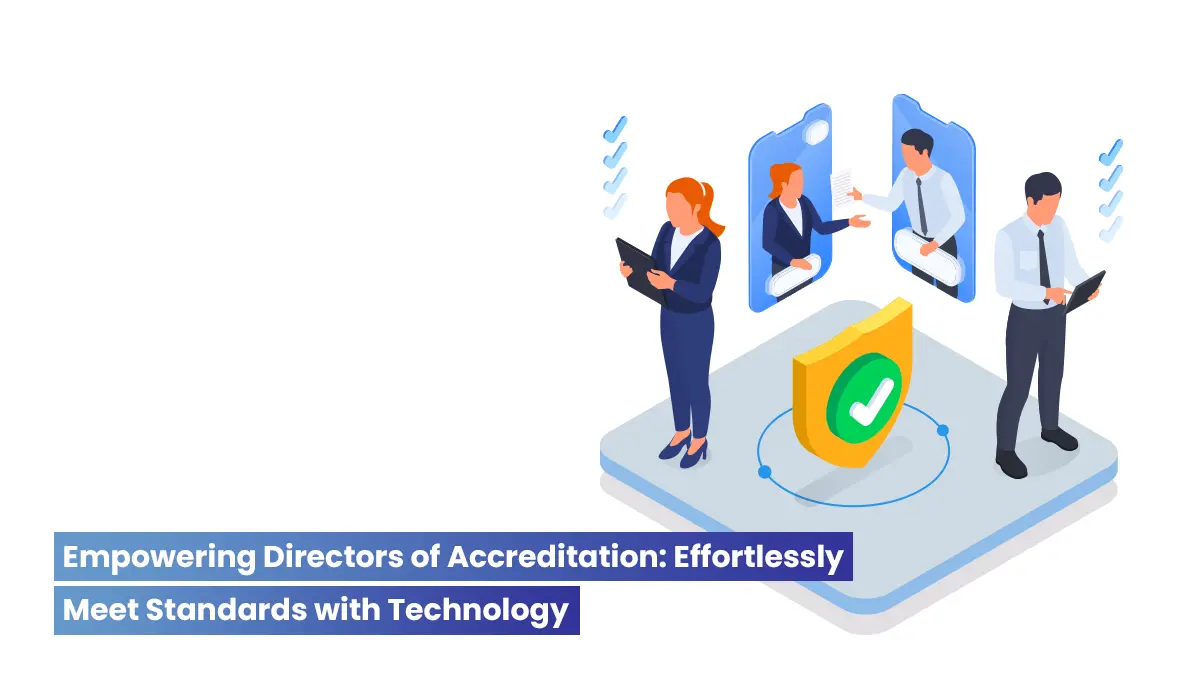
  • Meeting Accreditation Standards for Higher Education with Technology

    Meeting Accreditation Standards for Higher Education with Technology

    Tune In To Our Audio Blog


    Overview – Reimagining Accreditation

    Let’s get into the actual difficulties surrounding accreditation. You Directors of Accreditation are well-versed in the process and are very much aware that accreditation is not a game. It’s not enough to merely do the necessary compliance tasks, is it? Meeting accreditation criteria, establishing your institution’s value, enduring the never-ending audits, and keeping up with changing regulations are all part of it. The stakes are high and the pressure is intense. It remains constant. Traditional methods? They won’t cut it anymore.

    Imagine, though, if the tables could be turned. Envision yourself to use technology to not just complete the certification process, but to turn it into an asset. Think of real-time data, seamless procedures, and openness at every level. It’s time to go beyond the minimum and leverage approval to your benefit. Automating, cloud computing, and utilizing artificial intelligence-powered analytics will not only enhance the reputation of your university but also enhance the efficiency of operations.

    To help Directors of Accreditation use technology to improve institutional standards, ease compliance, and streamline accreditation data administration, we have put together this handbook. This will empower you to make critical decisions.


    A Dynamic Challenge for Directors: Redefining Accreditation

    As Directors of Accreditation, you are aware of the rapidity with which accreditation standards can evolve. Meeting accreditation standards necessitates a more comprehensive examination of student outcomes, diversity metrics, and the degree to which the institution aligns with its own objectives. No longer is it sufficient to simply mark off boxes.

    One of the hardest things to do? The stress that comes from having up-to-date, correct information at your hands. For accreditation reviews to be valid, the proof must be complete and up-to-date, leaving no room for doubt. Still, getting this information can feel like a race against the clock, especially when old methods can’t keep up with how needs change. Here, technology can really make a difference if it is used in the right way.


    Tech-Driven Solutions: Streamlining the Accreditation Journey

    Technology is the game-changer. Think about using AI-powered data analytics to revolutionize your accreditation data management. These smart tools can turn those stacks of paperwork into clear, insightful reports, making the process of proving your credentials not just easier, but a whole lot smarter! No more searching through spreadsheets or endless emails—just clear, usable information that shows your school is following the rules.


    Furthermore, cloud-based accreditation systems are very useful. Consider them as a safe, central location for all of your compliance-related info. It’s possible to get important data from these options, so your team can work together easily whether they’re at the office or traveling. Adopting these technologies doesn’t just keep you current; it sets a new standard for how quickly and clearly the approval process can be done.


    Automation: The Secret to Simplifying Repetitive Accreditation Tasks

    Imagine having more time to work on big-picture projects instead of doing the same old things over and over again. That’s how powerful technology can be in the process of getting accreditation. With the right tools, you can cut down on your work and free up your team to focus on raising institutional standards instead of just checking off tasks.


    Accreditation Data Management and Reporting Automation

    Consider the time used in gathering information and writing up reports for accreditation. Reducing the time and effort required to compile metrics in real-time is possible with automation technologies. As a bonus, you’ll spend less time worrying about mistakes and more time presenting accurate, up-to-date information.


    Smart Templates and Dashboards

    Meeting certain accreditation body criteria calls for customization, which is absolutely important. Smart templates let you quickly construct evaluations, audits, and self-studies that exactly fit what is required. Imagine having customized dashboards right at hand that clearly show your measurements and progress—no more poring over spreadsheets!


    Additional Benefits of Accreditation Data Management Automation
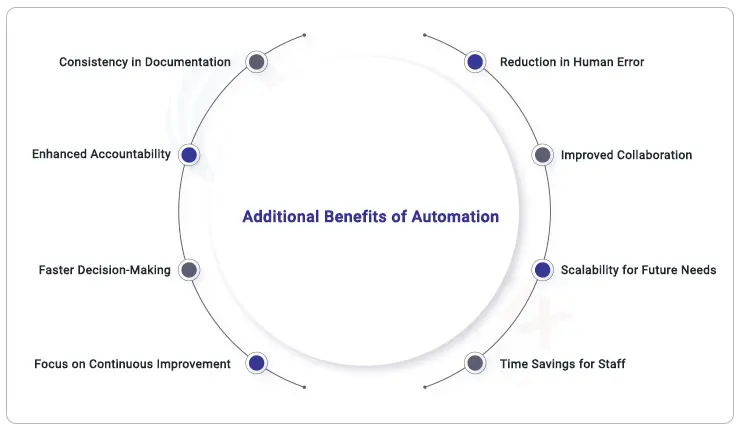
     

    • Maintain accurate, consistent, and up-to-date documentation without the need for manual updates.
    • Maintaining Accountability: A transparent audit trail for all your accrediting operations may be easily created by keeping track of who made changes and revisions.
    • Faster Decision-Making: With real-time insights and easy access to data, your team can make informed decisions quickly, keeping the accreditation process moving forward.
    • Focus on Continuous Improvement: By automating routine tasks, you can spend more time analyzing data and implementing improvements that enhance your institution’s performance and outcomes.


    Building Transparency and Trust Through Technology

    Let’s discuss something absolutely important for modern society: openness. Directors of Accreditation have a special opportunity to use technology to establish confidence among all those engaged in the accreditation process. How can you make this happen?

    Real-time dashboards available for stakeholders

    Imagine having real-time dashboards at your fingertips. These tools let you instantly share your accreditation progress with stakeholders—no more waiting for quarterly updates! With just a glance, everyone can see where you stand, thanks to clear visuals of your metrics, timelines, and benchmarks.

    This degree of openness helps everyone to be responsible as well as promotes teamwork. Trust naturally comes when your stakeholders know you are always trying to meet and surpass accreditation criteria.

    Blockchain for Academic Integrity

    Let’s now explore something somewhat more novel—blockchain technology. Consider blockchain as your new best buddy helping to maintain the integrity of your certification records. Using this technique makes an unchangeable record of all information connected to accreditation. Your accreditation data management is thus not only safe but also transparent and easily verifiable. Imagine being able to assure other stakeholders and accrediting authorities of your absolutely perfect data. Blockchain helps you to reduce the possibility of conflicts over data accuracy and inspires confidence among all the players. This kind of confidence helps to protect the reputation and integrity of your university.

    Enhanced Reporting Capabilities

    Now, let’s be honest: reporting can get draggy unless you trigger the right gear! Imagine being able to quickly and accurately create detailed reports that show your commitment to regulatory compliance and continuous growth. You can easily show accreditation groups how much progress you’re making like you have a superpower. By doing more than just checking off boxes, you’ll be showing that your institution is ready to take on any tasks that come its way. Therefore, why not use that report writing duty as a chance to shine? Using technology can help you stay prepared and make a great impression!

    Joining the Community

    In addition to internal partners, transparency also applies to the public and the rest of the academic community. Sharing your accreditation path will help your university project more professionalism and draw professors and students. Who would not want to be a part of an open and reliable institution?

    Using technology to track your certification procedures and results helps you to identify possible problems before they become serious ones. This proactive strategy lets you act early to maintain everything in line.


    Enhancing the Student Experience While Meeting Standards

    Outcome-Based Education (OBE) and Competency Tracking

    Using technology to track your certification procedures and results helps you to identify possible problems before they become serious ones. Being proactive keeps you on target. Improving the Student Experience While Complying with Outcome-Based Education (OBE) and Competency Monitoring.

    Here’s the stars: your pupils! The right technology will improve their experience and satisfy all needs. This is where Outcome-Based Education (OBE) really shines. Imagine a system that not only makes sure that educational results are in line with accreditation standards but also makes sure that student success is the most important thing. You definitely need to keep track of students’ skills and make sure they get the help they need to do well by using technology.

    Feedback Mechanisms & Surveys

    That’s not all, though! Real-time feedback tools and polls are your secret weapons for improving quality. These resources allow you to ask students for honest opinions, which might reveal where you’re succeeding and where you might need some improvement. Engaging with your students and listening to what they have to say goes beyond simply completing goals for continuous improvement.

    In this way, you make a place where students feel appreciated and supported, and you also show accreditation bodies that you’re dedicated to continuous improvement.


    Preparing for the Future: Tech Trends Directors Should Watch


    EdTech Innovations

    As the Director of Accreditation, it’s important to stay on top of things. Take a look at what next year holds! First, EdTech innovations are coming soon and will supposedly make the process of getting accredited even easier. Consider banking on cutting-edge software that makes data analysis better, streamlines reports, and automates tasks!


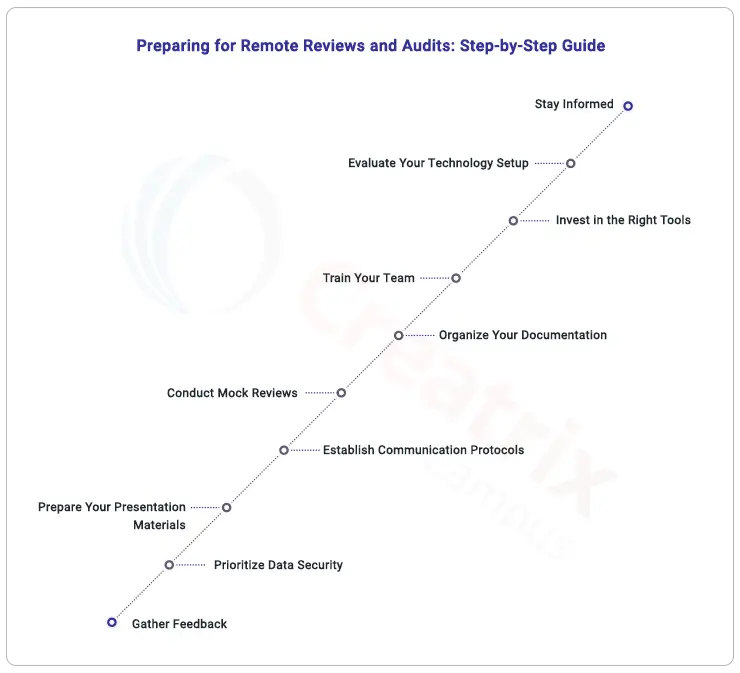
    Being Prepared to Virtual Accreditation Visits

    Next, we’ll go over the basics of preparing for accreditation visits that take place virtually. As more and more things happen online, reviews and audits done from afar are becoming routine. In what ways can you become ready for this change? By acquiring robust technology that facilitates online participation and emphasizes your organization’s achievements. Ensure that all team members are informed about the use of virtual presentation techniques, online document sharing, and video conferencing. Not only will these novel concepts facilitate the acquisition of accreditations, but they will also facilitate collaboration among partners.


    Turn Compliance into a Strategic Advantage with Creatrix Campus Accreditation Platform

    By incorporating the appropriate technology, such as the Creatrix Campus Accreditation platform, Directors of Accreditation can elevate compliance from a mundane obligation to a strategic advantage. This strategy will help you satisfy accreditation criteria and match the main objectives of your institution.

    This is the time to simplify your certification application. Explore the Creatrix Campus platform for a smarter, more efficient way to meet standards. Let’s team to surpass simple compliance!

    Source link

  • The Future of Online Learning Brands

    The Future of Online Learning Brands

    Embracing a “One School” Approach for a Better Student Experience

    Let’s draw a line in the sand. On one side, we have a university campus and its on-ground offerings. On the other side, we have the digital higher education space and the online programs that live within it. 

    Traditionally, this line has been stark and rigid, with universities treating the two modalities as separate entities with dedicated teams, technology, systems, budgets, and strategies. 

    The initial separation was, in part, driven by the perception of online education as a lesser counterpart to its on-ground equivalent. This view may have held some truth in the early stages of digital learning. But the division has come with a cost, as institutions have had to do double the work, which is inefficient. 

    We can all see that significant changes are underway. Traditional educational boundaries are fading, with online learning gaining respect and sophistication. There are online programs that outpace their on-ground counterparts in quality and rigor. We’re looking at a future where traditional, hybrid, and online modalities are integrated, balancing both quality and accessibility. 

    As we leave the comfort of land and head out to sea, embracing a holistic approach is the way forward for universities.

    Separation Comes at a Cost 

    The traditional division between on-ground and online learning modalities increases costs and complicates operations for institutions, weakening their ability to present a unified, powerful brand to prospective students. Here are a few of the pain points: 

    Fragmented Systems

    Multiple Platforms: Utilizing different customer relationship management (CRM) systems, student information systems (SIS), and learning management systems (LMS) introduces inefficiencies. Each platform requires its own set of training, maintenance, and integration protocols. Those protocols often don’t integrate well, either.

    Increased Costs: The need to support various tech stacks and administrative systems significantly drives up operational costs, as resources are duplicated across the board.

    Conflicting Marketing Strategies

    Brand Fragmentation: With separate marketing teams for its on-ground and online programs, an institution risks sending mixed messages to potential students. This can lead to brand dilution and confusion about what the university stands for.

    Measurement Challenges: Disparate strategies make it difficult to track and analyze the effectiveness of marketing efforts. This makes the decisions on where to invest marketing dollars effectively difficult.

    Diluted Resources

    Split Focus: Dividing an institution’s time, talent, and budget between its on-ground and online initiatives means neither receives the full investment needed to thrive. This can result in underperforming programs that fail to meet their potential.

    By managing resources under one unified strategy, universities can maximize the impact of their educational offerings, ensuring that both online and on-ground programs benefit from full institutional support and cohesion.              

    Advances in Online Learning Have Closed the Quality Gap 

    Technology is rapidly advancing, and higher ed is keeping pace with the changes. As institutions become more skilled at applying learning technologies, the following shifts have occurred: 

    Today, online courses match on-ground courses in their rigor and depth and offer the flexibility and accessibility that modern students demand. It’s a win-win. The shift isn’t just about maintaining academic standards; it’s about enhancing them to make education more inclusive and adaptable to students’ varied lifestyles.             

    The Case for a “One School” Strategy 

    As the distinction between online and on-ground academic quality becomes murkier, more universities are beginning to embrace a “one school” strategy. This holistic approach integrates online and on-ground modalities into a single, unified brand, ensuring a seamless and coherent student experience. 

    It’s kind of like how my son doesn’t see the athletics department, student advising, and his faculty members as being on different teams with different budget sources. They all make up one thing — his university and the way it feels to be a student. 

    By operating under a single brand, universities can streamline their processes, unify their messaging, and bolster their identity, enhancing their appeal in a competitive educational market. The unified brand experience provides students with a consistent set of resources and support mechanisms, which proves crucial in building trust and satisfaction.

    The shift toward a one school strategy also aligns with the evolving preferences and expectations of students, particularly their growing desire for flexible learning environments. Modern students increasingly favor hybrid experiences — asynchronous learning modules combined with synchronous meetings. This allows them to manage their schedules while benefiting from real-time interactions. 

    Adopting this approach not only improves the overall experience for students but also positions institutions to more effectively manage their resources, enhance their operational efficiency, and strengthen their academic offerings across the board, redefining the educational experience to be more inclusive and adaptable to today’s learners. 

    Adopting a one school approach helps universities accomplish goals such as the following:

    1. Establish a Unified Systems and Technology Stack

    Currently, the existence of different application systems for different modalities often leads to disparate experiences and management challenges, increasing the risk of students falling through the cracks. A unified technology stack can address these issues, fostering a more integrated and seamless educational environment.

    Using the same CRM and SIS systems across an organization can significantly streamline operations in all areas, from marketing through student retention. This unification not only reduces operational costs but also consolidates institutional data, enabling more effective tracking and support of student activities. 

    2. Create an Integrated Marketing Strategy

    Universities often work with multiple marketing agencies that compete against each other using similar keywords but with slightly different visuals and landing pages. Bad idea. This not only dilutes the marketing efforts but also creates confusion for students who are comparing programs. 

    An integrated approach helps streamline these efforts, ensuring a cohesive, clear marketing message that effectively attracts and retains students.

    3. Align Academic and Enrollment Calendars 

    A particularly troubling symptom of separate identities within a university is differing enrollment calendars for online and on-ground offerings. Online programs typically offer more start dates throughout the year. 

    With a single enrollment calendar, however, universities can eliminate this confusion and simplify the experience for students who might engage in both modalities. Additionally, as faculty members frequently teach in both online and on-ground formats, a unified calendar ensures that all students have equal access to faculty resources, regardless of the learning format. 

    A Note on Organizational … Resistance 

    While the theoretical benefits of integrating online and on-ground educational modalities are clear, the practical implementation can face organizational resistance. This stems from the “this is the way we’ve always done it” mindset, presenting real challenges in terms of system integration and cultural adaptation. 

    Addressing these challenges requires a strategic approach and readiness to tackle potential roadblocks. Here are a few things to keep in mind:

    You Don’t Have to Implement the One School Model Alone

    Starting the journey toward overhauling the outdated model and creating a unified experience can be complex and challenging, but you don’t have to navigate it alone. 

    Archer Education is equipped to empower your institution at every step with our growth enablement approach, offering expert guidance in storytelling, technology, audience insights, and data analytics to support a seamless transition to the one school model. Then, once things are up and running, you’ll have the internal knowledge and capacities you need to cast us out to sea. 

    Contact us to learn more about how we can help you integrate your educational offerings and maximize the potential of your institution.

    Subscribe to the Higher Ed Marketing Journal:

    Source link

  • EdTech for Neurodiverse Students with Autism

    EdTech for Neurodiverse Students with Autism

    Introduction

    Neurodiverse students are encountered more frequently in today’s classrooms. Those with autism represent a particular challenge for schools and families– and edtech may be able to help. Resources for autism education have evolved significantly since FT4T’s 2009 post on this topic.  EdTech products now offer even more effective ways to support students. While trusted resources like Teaching LD, Autism Outreach, and LD Online continue to provide valuable support, new EdTech tools have emerged to offer more personalized, interactive, and efficient methods for helping students with autism thrive. From communication apps to social skills programs, these innovations are changing the way we teach and learn.

    Showcase of EdTech Tools

    Otsimo (Free)

    Otsimo offers access to various educational games designed to make learning engaging and accessible for children with autism. Created with input from educators and families, Otsimo provides language, cognitive, and social-emotional learning games to support children with different needs. Its free open-source augmentative/alternative communication (AAC) tool also helps nonverbal children express themselves.

    Speech Blubs autism edtechSpeech Blubs (Free)

    Speech Blubs is a speech therapy app designed to help children with autism improve their communication skills. It uses fun, interactive videos and activities that engage children in learning sounds, words, and phrases. The app offers a free version with limited access, making it accessible to families and educators.

    StarFall autism edtechStarfall (Free)

    Starfall is a free educational resource that helps children with autism develop literacy and math skills through interactive games and activities. Although it’s not designed exclusively for autism, its simple and engaging format is effective for students with special learning needs.

    ProLoquo2go autism edtechProloquo2Go (Paid)

    Proloquo2Go is a leading augmentative/alternative communication (AAC) app for iPad and iPhone, designed to help non-speaking children and adults express themselves confidently. It uses a large library of over 27,000 symbols to support communication, and its customization options allow users to personalize the app to fit their unique needs. Proloquo2Go also supports language development, offering research-based vocabulary that helps users progress from single words to full sentences.

    SocialExpress autism edtechThe Social Express (Paid)

    The Social Expresss teaches social skills through interactive stories, helping users navigate social situations and learn key skills such as identifying emotions, maintaining eye contact, and reading non-verbal cues. With its engaging animated format, The Social Express makes learning social skills feel like an adventure.

    Classwork autism edtechClasswork (Free and Paid)

    Classwork.com helps educators transform traditional teaching materials into interactive digital formats. This tool is invaluable for adapting lesson plans to meet the diverse learning styles of students with autism, incorporating features like instant feedback and visual aids to enhance understanding and engagement. Additionally, Classwork.com allows teachers to include audio elements, such as recording their own voices, which can provide personalized instructions and support, making learning more accessible and engaging for auditory learners.

    Financial Support and Resources

    While educational tools are important for academic and personal growth, it’s also necessary to acknowledge the financial challenges families may face. DisabilityAdvice.org  https://disabilityadvice.org/ provides resources for navigating Social Security Disability Insurance (SSDI) and other financial support systems, helping families secure a stable future. Teachers can play a key role in supporting families by sharing helpful information about these resources, ensuring that both students and their families have access to the support they need.

    Conclusion

    Educational technology is an important resource in helping students with autism succeed both academically and socially. EdTech tools make learning more accessible and help students develop essential communication and life skills. By incorporating these resources, educators and families can better support the unique needs of each student, giving them the tools and opportunities to thrive in school and beyond.

    Call to Action

    Educators and families are encouraged to explore these technologies and integrate them into their educational strategies. For those needing additional support with financial planning, DisabilityAdvice.org  is a valuable resource.

    Source link

  • APS progressing monitoring shows mixed results from 2024 assessments

    APS progressing monitoring shows mixed results from 2024 assessments

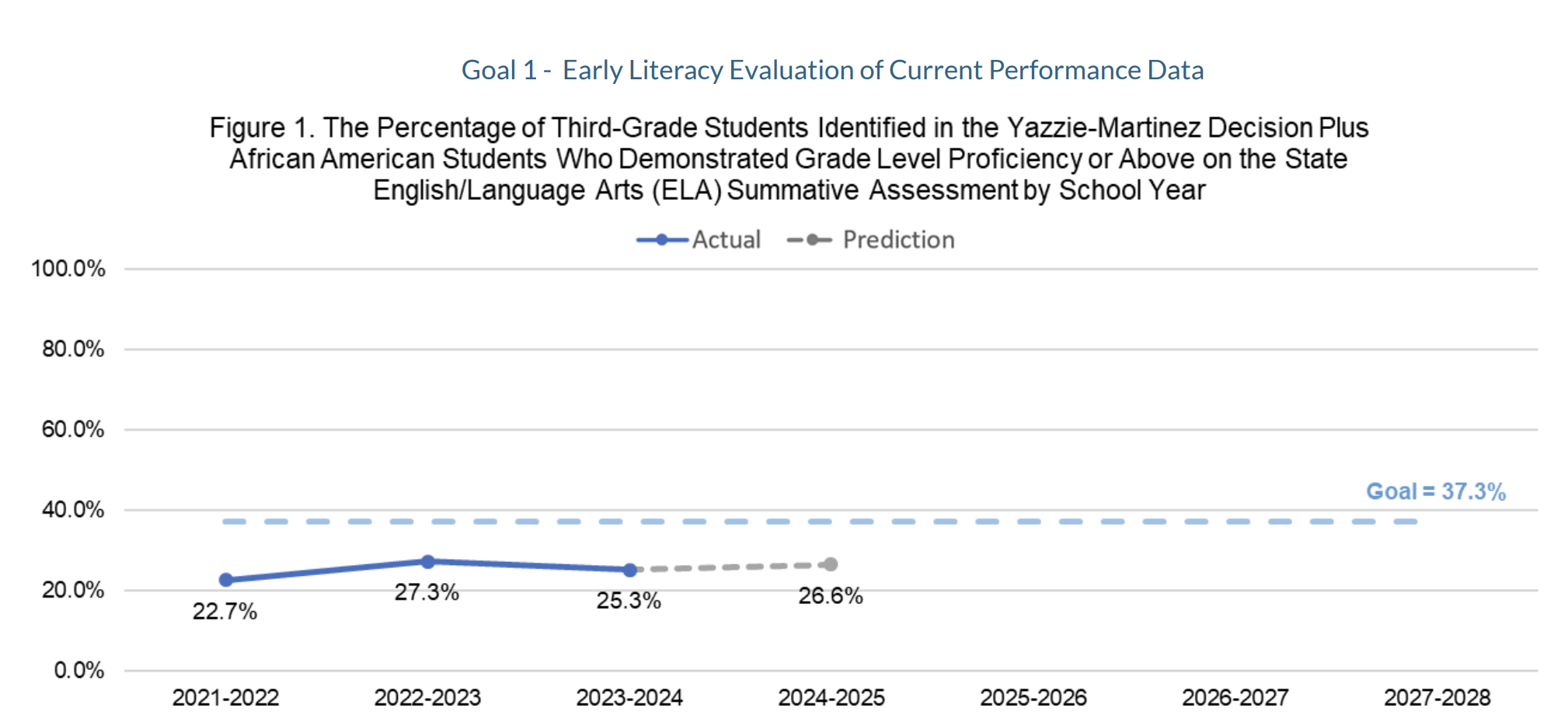
    Last year’s Albuquerque Public Schools third-graders identified in the Yazzie-Martinez decision plus African American students fell short of the reading proficiency goal set by the district in its first year of concerted progress monitoring under a new strategic plan, according to a report released earlier this month.

    APS administrators pointed out during an October 2 school board meeting that these third-graders, identified in the Yazzie-Martinez decision plus African Americans, were kindergarteners during the Covid-19 pandemic, and spent much of that formative year learning online, which served them poorly.

    The review is part of the district’s plan to monitor progress towards the four goals adopted by the APS Board of Education in 2023, aligned with the district’s new Emerging Stronger Strategic Plan. Each of the four goals have interim goals that serve as indicators of progress.

    Goal One of the district’s four overarching goals calls for a 10 percentage-point increase in reading proficiency among that group of third-graders between 2023 and 2028. The interim goal for spring of 2024 was to raise the rate from 2023’s 27.3 to 28.3.

    Instead, last year’s third-graders actually slipped to a proficiency rate of 25.3.

    The district is still devising individualized strategies to catch kids up, officials told board members.

    “Strategic measures moving forward can be summarized by the word specificity,” Antonio Gonzales, deputy superintendent of leadership and learning told the board. This means getting detailed in determining what different subgroups need, for example special education and English language learners students need, and how to provide for those needs.

    “We know that we have a strategy in place, and that’s great. And I believe in the strategy that we have in place. But what this strategy calls us to action on is being specific and specific by student,” Gonzales said.

    APS has not modified its five-year goal, but now predicts that the current year’s proficiency rate for identified third-graders will be 26.6 percent, rather than the 29.3 percent that would keep the district on track to meet the ultimate goal.

    The board also heard reports on two sub-goals, where the news was decidedly better.

    Interim Goal 1.1 focuses on the reading proficiency rates of first graders as measured by Istation formative assessments given at the beginning, middle, and end of the school year. “This interim assessment gives teachers real-time insights into each student’s reading abilities to help inform instruction and provide intervention,” said a slide presentation produced by the district.

    The three-year target for Interim Goal 1.1 is to increase the proficiency rate of first graders in the targeted groups by six percentage points—from 17 percent in 2023 to 23 percent in 2026. Students significantly exceeded that goal last school year, ending the year with a 24.1 percent proficiency rate.

    Interim Goal 1.2 has a three-year target of increasing the percentage of second-grade students identified in the Yazzie-Martinez decision plus African American students who demonstrate grade level proficiency or above as predicted by Istation from 18.3% in May 2023 to 24.3% in May 2026.

    By the end of last school year, 26.3 percent of those students were proficient.

    If these trends hold, it will suggest that the performance of last year’s third-graders was a Covid-related aberration, and that students on the grades that follow are performing significantly better.

    Source link

  • DOL Issues Report on Coercive Contractual Provisions

    DOL Issues Report on Coercive Contractual Provisions

    by CUPA-HR | October 22, 2024

    On October 17, the Department of Labor’s (DOL) Office of the Solicitor (SOL) issued a Special Enforcement Report on “coercive contractual provisions.” The report lists several provisions they have seen included in employment contracts that the department believes “may discourage workers from exercising their rights under worker protection laws.” The report demonstrates recent actions taken by SOL to combat such provisions, but it does not include new enforcement actions against employers that use these provisions.

    In the report, SOL claims the provisions discussed are coercive, violate the law and have significant impacts on the most vulnerable workers. The report details seven types of contractual provisions they find especially concerning:

    1. Contractual provisions requiring workers to waive statutory protections, including those requiring workers to waive their rights to bring claims and recover damages under the Fair Labor Standards Act
    2. Contractual provisions that purport to require employees to agree that they are independent contractors
    3. Indemnification-type provisions and related counterclaims purporting to shift liability for legal violations to workers or other entities
    4. “Loser pays” provisions attempting to require employees to pay the employer’s attorney’s fees and costs if the employees do not prevail in litigation or arbitration
    5. “Stay or pay” provisions, including some training repayment assistance provisions, that purport to require workers to pay damages to their employer for leaving a contract early
    6. Confidentiality, non-disclosure and non-disparagement provisions
    7. Company policies that purport to require workers to report safety concerns to their employer before contacting any government agencies

    The report emphasizes that the Department of Labor is “not bound by private contracts or arbitration agreements between workers and employers” and thus “has a unique role to play in fighting the use of these ‘fine print’ or ‘coercive’ contractual provisions.” It provides examples of cases where the courts have found such agreements unenforceable or where DOL has pursued an injunction in federal court seeking an order blocking one or more contract provisions.

    Importantly, the report is largely a restatement of current law and, for the most part, does not outline new enforcement actions against employers for using these provisions. Instead, the report outlines the work SOL has done recently to fight against the coercive contractual provisions, including cases and amicus briefs filed against employers using such business practices.

    CUPA-HR will continue to monitor for additional resources from the Department of Labor that may impact contractual labor provisions.


    Source link

  • Indiana University Faculty Who Focus on Student Engagement Using Top Hat See 11.5% Decrease in Student Withdrawal Rate

    Indiana University Faculty Who Focus on Student Engagement Using Top Hat See 11.5% Decrease in Student Withdrawal Rate

    Course withdrawals carry significant academic and financial consequences for students and universities. Studies consistently demonstrate that withdrawing from first-year courses can greatly increase a student’s risk of discontinuing their studies, reducing their likelihood of completing a degree (Akos & James, 2020).

    TORONTO – October 22, 2024 – Top Hat, a leading provider of student engagement solutions for higher education, has released the first significant finding in an ongoing research initiative with Indiana University exploring the impact of student engagement leveraging Top Hat on retention and academic outcomes. The study, involving an analysis of hundreds of courses from the Spring, Summer, and Fall semesters of 2023, observed that the use of Top Hat by instructors resulted in an 11.5 percent decrease in the mean student withdrawal rate compared to similar course types without using the platform. In absolute numbers, this would equate to approximately 289 of the sampled Indiana University students continuing their course work during the 2023 academic year. The findings highlight the positive impact of integrating Top Hat into course delivery on student retention, particularly in introductory courses that often have higher drop-out rates.

    The Top Hat platform empowers educators to use frequent low stakes assessments to increase student engagement during lectures through interactive polls, quizzes, and discussions. The use of frequent low stakes assessments have been shown to improve student confidence, academic outcomes and retention (Meer & Chapman, 2014). The principles of active learning can also be extended outside of class through Top Hat Pages, a content editing and personalization tool that enables instructors to create or customize their own interactive learning materials. Every interaction is captured by the platform, providing students with real-time feedback, while empowering faculty with data-driven insights they can use to identify struggling students and improve the impact of their instruction.

    “Indiana University is deeply committed to the success of our students, and the findings from this research demonstrate how the thoughtful integration of instructional technologies has contributed to strengthening our undergraduate retention,” said Gina Londino-Smolar, Ed.D., Teaching Professor at IU Indianapolis. “Implementing active learning and frequent assessment, which have been shown to improve student outcomes, has been an important focus for us and our partnership with Top Hat has been instrumental in enabling us to scale these practices across our institution, ensuring a consistent, high quality learning experience for our students.”

    The study’s primary objective is to evaluate the influence of Top Hat on various student outcomes, with an initial focus on withdrawal rates—a key indicator of student success. The collaborative research project, approved by the Institutional Review Board (IRB), involved analyzing data from thousands of individual courses. From the original large dataset, similar courses based on discipline and level were identified in order to equalize the sample size and undertake a more accurate analysis. After filtering the dataset, 235 unique Top Hat courses were compared against a similar set of 235 unique courses that did not use Top Hat.

    Indiana University began working with Top Hat in 2017 and, based on high rates of faculty adoption, made the decision to offer the platform free of charge to all students by entering into an enterprise license agreement the following year. By addressing concerns around equity, student affordability and ensuring compliance with respect to data privacy and standards for web accessibility, adoption has increased substantially. For the 2023/2024 academic year 1,022 faculty and 51,679 students across more than 1,900 individual courses from all nine IU campuses used Top Hat to enhance learning.

    “This study reinforces the importance of providing faculty with tools that make evidence-based practices, like active learning, easier to adopt,” said Maggie Leen, CEO of Top Hat. “The data speaks for itself—when instructors have access to the tools to support effective teaching methods, it can lead to stronger student engagement and higher persistence. We’re proud to be part of Indiana University’s efforts to increase on-time graduation rates for their students.”

    The 2030 IU Strategic Plan has one pillar dedicated to Student Success and Opportunity with a commitment to student affordability and experience throughout their educational journey to have success in the workplace and beyond. The incorporation of Top Hat to engage students with the course content, reducing withdrawal rates, can be seen as a direct contribution to the pillar for student success.

    Since its founding in 2009, Top Hat has continued to introduce new features to make proven teaching methods more accessible to instructors. Most recently, Top Hat announced the release of Ace, an AI-powered teaching and learning assistant that enables instructors to generate assessment questions and discussion prompts based on their lecture slides and course materials. As a personalized study assistant, Ace allows students to break down challenging concepts, find guidance tackling difficult homework assignments, and create on-demand practice questions they can use to prepare for high stakes assessments. 

    The initial findings will inform both Indiana University and Top Hat’s future strategies for enhancing student outcomes. The research initiative is currently focused on identifying patterns of usage by instructors across disciplines and their impact on student engagement and academic performance. Ongoing analysis is exploring the impact of Top Hat on the academic experience of various student populations, including historically underrepresented groups with a focus on how the platform supports equitable access to learning, improves engagement, and contributes to closing achievement gaps.

    About Indiana University

    Indiana University (IU) is one of the nation’s leading public research universities, with 90,000 students across 930+ academic programs, seven campuses, two regional academic centers and nine School of Medicine campuses. Since 1820, Indiana University has helped students create brighter futures while also driving innovation, from breakthroughs in DNA technology to cancer research to trailblazing cultural programs and resources. IU is home to world-class academics with the country’s largest medical school, the world’s first school of philanthropy, the top-ranked Kelley School of Business and O’Neill School of Public and Environmental Affairs, and the Luddy School of Informatics, Computing and Engineering, the nation’s first school of informatics. The university’s campuses are united by IU 2030, an aspirational vision for a bold and ambitious future focused on student success and opportunity, transformative research and creativity, and service to the state of Indiana and beyond. Learn more at iu.edu.

    About Top Hat

    As the leader in student engagement solutions for higher education, Top Hat enables educators to employ proven student-centered teaching practices through interactive content and tools enhanced by AI, and activities in in-person, online and hybrid classroom environments. To accelerate student impact and return on investment, the company provides a range of change management services, including faculty training and instructional design support, integration and data management services, and digital content customization. Thousands of faculty at 750 leading North American colleges and universities use Top Hat to create meaningful, engaging and accessible learning experiences for students before, during, and after class.

    Contact [email protected] for media inquiries.

    Source link

  • Key Findings from the 2025 Landscape of Higher Education Report  

    Key Findings from the 2025 Landscape of Higher Education Report  

    As higher education navigates demographic shifts, new technologies, and economic challenges, institutions face a complex landscape when optimizing enrollment and meeting the evolving needs of students. The 2025 Landscape of Higher Education Report provides actionable insights that empower educational leaders to improve learning pathways and better serve the Modern Learner.

    Challenges such as the rising education costs have led to increased scrutiny of a college degree’s value, with only 47% of Americans considering it worthwhile without loans. When loans are involved, this number drops to 22%, underscoring the imperative for institutions to adapt to more cost-effective pathways.

    The 2025 Report offers a future-oriented outlook, equipping institutions with data to address gaps and better understand the evolving profile of the Modern Learner. Themes include shifting student preferences, an increased emphasis on career-aligned programs, and the need for more flexible learning pathways. In this article, explore six key findings that are molding students’ educational journeys and how these trends can enable education leaders to adapt.

    Finding #1: Flexible Pathways Drive Enrollment Growth 

    Spring 2024 saw a 2.5% increase in undergraduate enrollment, particularly within community colleges, public institutions, and associate degree-granting baccalaureate institutions (PABs). Graduate programs also saw enrollment increases, with a 3% rise. The highest areas of growth occurred among private, for-profit four-year institutions. These trends indicate a growing demand for flexible learning pathways that accommodate different student preferences and career aspirations.

    The age profile of part-time students has shifted as well, with the median age of part-time undergraduate students decreasing by nearly 2% across all sectors since Spring 2020. The shift was most pronounced at public two-year institutions, which saw a 4.2% decrease, and private accredited bachelor’s programs, which experienced a 2.8% decrease. As the age of part-time students continues to trend younger, it reaffirms that age is no longer a reliable predictor of learning modality. Furthermore, these shifting demographics emphasize the importance of embracing a Unified Enrollment Strategy that engages with Modern Learners based on their preferences and behaviors to meet them where they are with the right message, in the right place at the right time.

    Finding #2: Modern Learners are Prioritizing Practical Skills and Career Outcomes

    The emphasis on practical skills and career-readiness is reshaping Modern Learners’ educational preferences. With nearly half of Americans questioning the value of a traditional college degree, the demand for flexible, affordable, and industry-aligned options is growing rapidly. Apprenticeships have emerged as an appealing pathway for Modern Learners, offering paid opportunities for hands-on learning and gaining practical skills without the burden of taking on additional debt. 

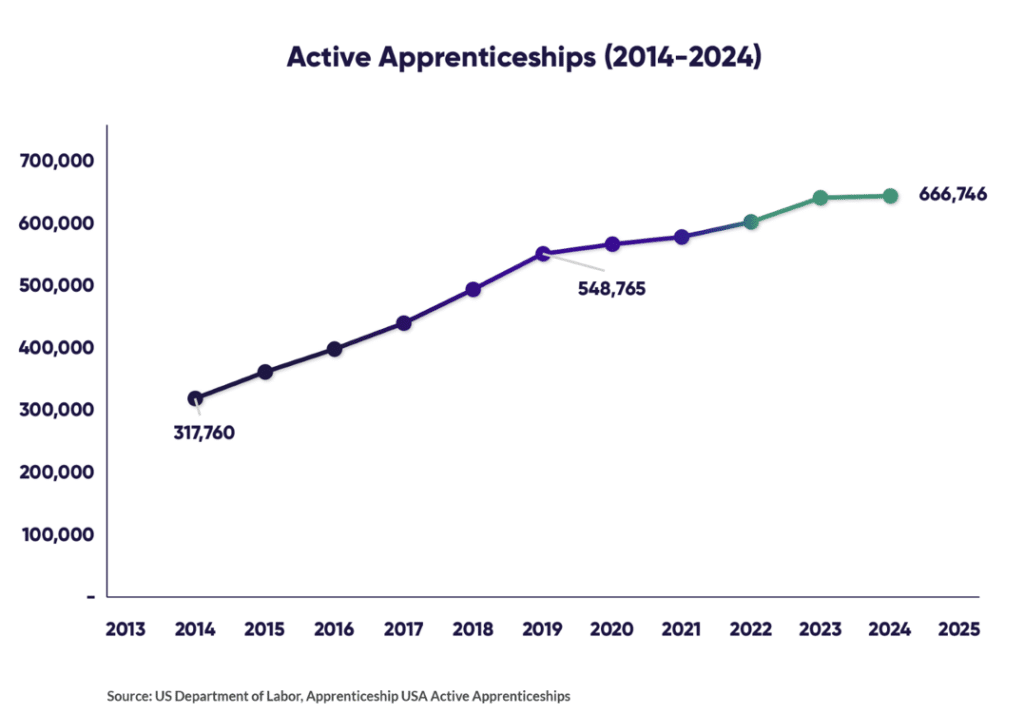
    Over the past decade, the number of apprenticeships in the U.S. has more than doubled, from approximately 317,000 to 640,000. Sectors such as Construction and Public Administration have led this growth with 34.5% and 22.4% increases, respectively. High-growth fields like Healthcare, Finance, and Technical Services present additional opportunities for expanding apprenticeship programs, aligning well with workforce demands and students’ increasing preference for practical, job-ready experience.  

    Despite apprenticeships’ increasing appeal, accessibility poses a challenge. While 75% find apprenticeships appealing, only 29% find them accessible. Geographic location, program availability, and a lack of awareness remain barriers that can prevent students from participating. Institutions can remove these barriers through strategic partnerships with industry leaders to expand opportunities, integrate practical skill-building in program curriculums, and market available programs to raise awareness. These efforts not only meet the demands of Modern Learners by providing them with relevant skills, but also enable employers to recruit qualified candidates, making apprenticeships valuable for both higher education and the economy.

    Finding #3: Student Demand for Alternative Credentials Continues to Rise 

    Much like apprenticeships, the rising demand for alternative credentials like certificates further underscores the shifting preference towards more flexible and affordable learning pathways. As students continue to seek programs that offer practical skills and immediate benefits for their careers, certificates have increasingly become an attractive alternative to traditional degree paths. With the cost of higher education on the rise, Modern Learners are turning to certificate programs as a focused and affordable way to gain relevant skills for their desired career industries.

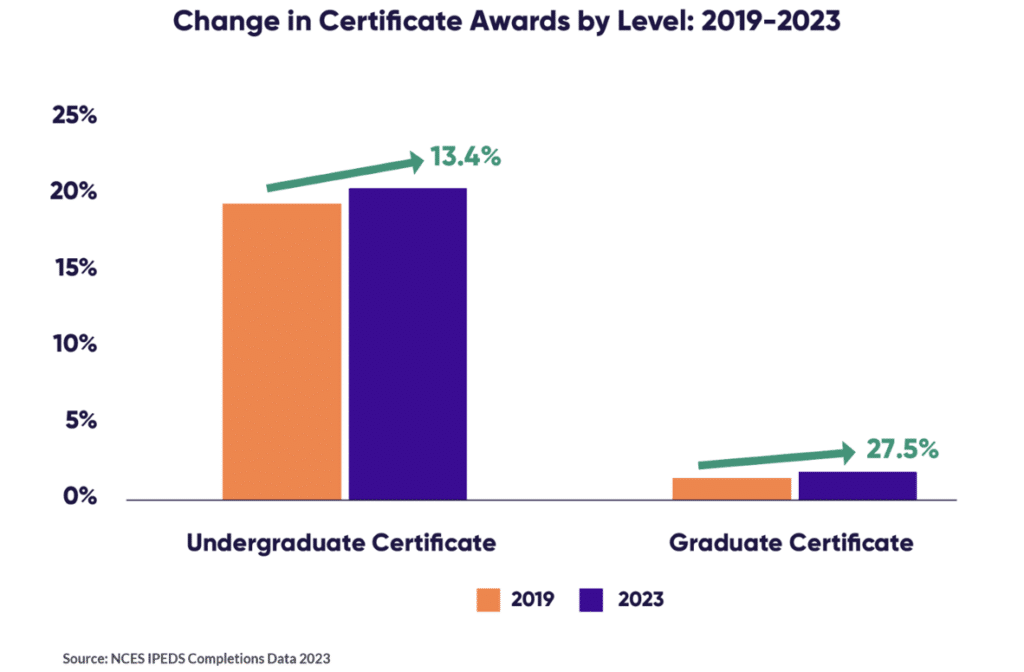
    Spring 2024 saw significant growth in certificate enrollments, with graduate programs seeing a nearly 10% increase and undergraduate certificates growing by nearly 4%. This growth reinforces that Modern Learners are increasingly prioritizing education opportunities that yield a high return-on-investment. Institutions can capitalize on this interest by expanding certificate offerings and making them more accessible to students through diverse modalities, competitive pricing, and aligning programs with job demands.  

    Finding #4: Dual Enrollment Programs Gain Momentum Among High School Students

    Dual Enrollment programs are becoming increasingly popular pathways, as more young learners seek flexible avenues for higher education. The popularity of these programs aligns with the growing trend of younger students engaging in part-time studies, demonstrating a trend towards more adaptable educational modalities. Dual enrollment has increased over 10% over the last year alone, adding approximately 100,000 students and accounting for nearly 28.1% of undergraduate enrollment increases. This growth presents a crucial opportunity for institutions to leverage this interest as they develop enrollment strategies going into 2025.

    Finding #5: The Some College, No Credential (SCNC) Population Presents a Growing Opportunity for Re-Engagement

    The Some College, No Credential (SCNC) population, now at 36.8 million and growing by 2.9% from the previous year, represents a significant opportunity for enrollment growth. With re-enrollment rising by 9.1% in the 2022-2023 academic year, institutions have a chance to attract students who left before completing their degrees.

    Understanding the educational preferences of SCNC students is key to tailoring outreach and support services. Popular fields of study for this group include Business and Liberal Arts at the bachelor’s level, Liberal Arts and General Studies for associate degrees, and Health professions and Business for undergraduate certificates. These areas indicate a clear demand for programs that offer clear pathways to employment. To effectively engage this population, institutions should focus on building accessible options that allow students to build upon previously earned credits, prioritize transfer credits, and offer support that enables students to advance in their chosen career fields.

    Finding #6: International Student Enrollment Boosts Institutions’ Global Appeal

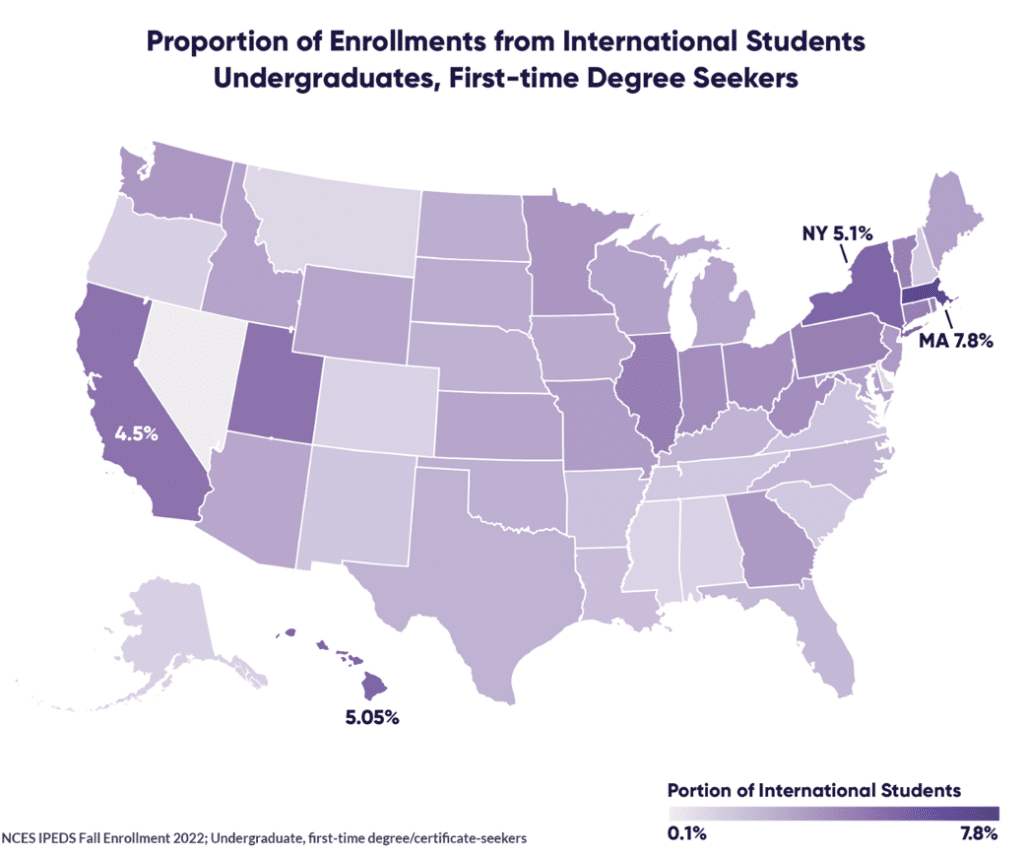
    The growing population of international students enrolled at U.S. schools presents a valuable opportunity to enhance universities’ presence and grow enrollments.  These students comprise of a significant share of enrollments, particularly in Massachusetts, Hawaii, New York, and California, where they account for 4.5% to 7.8% of the student population. Most undergraduate international students are enrolled within the public sector, underscoring its position to support higher education on a domestic and international scale.

    To maximize the benefits of international student enrollment, institutions should focus on strategies that attract and retain international students while providing support services tailored to their unique needs. By integrating a comprehensive enrollment and student support system with resources like language assistance, housing support, and financial aid, institutions can boost their global appeal, create more culturally diverse campuses, and enhance their enrollment by positioning themselves as a top choice for students worldwide.

    Looking Toward 2025

    The findings from the 2025 Landscape of Higher Education Report demonstrate both the challenges and opportunities shaping the future of higher education.

    As institutions look ahead, the ability to attract and retain students across a range of educational paths requires a holistic approach to enrollment and student support services. By focusing on creating accessible, cost-effective, and relevant learning opportunities, institutions can position themselves for success in 2025 and beyond, while meeting the diverse needs of Modern Learners and driving sustainable enrollment growth.

    For more insights and actionable strategies, download the full 2025 Landscape of Higher Education Report and see how your institution can stay ahead of the curve.

    Source link

  • It’s mid October, PED. Where is the data?

    It’s mid October, PED. Where is the data?

    Last month on September 19, the Public Education Department presented to the Legislative Education Study Committee slide decks showing preliminary, high-level results of the state’s spring assessments, promising that detailed data would be forthcoming soon thereafter.

    A month has passed and the PED has released nothing further. No district- or school-level data files or presentations. Not even a press release. The school year is one-quarter over and the public is being kept in the dark about the state of New Mexico’s schools?

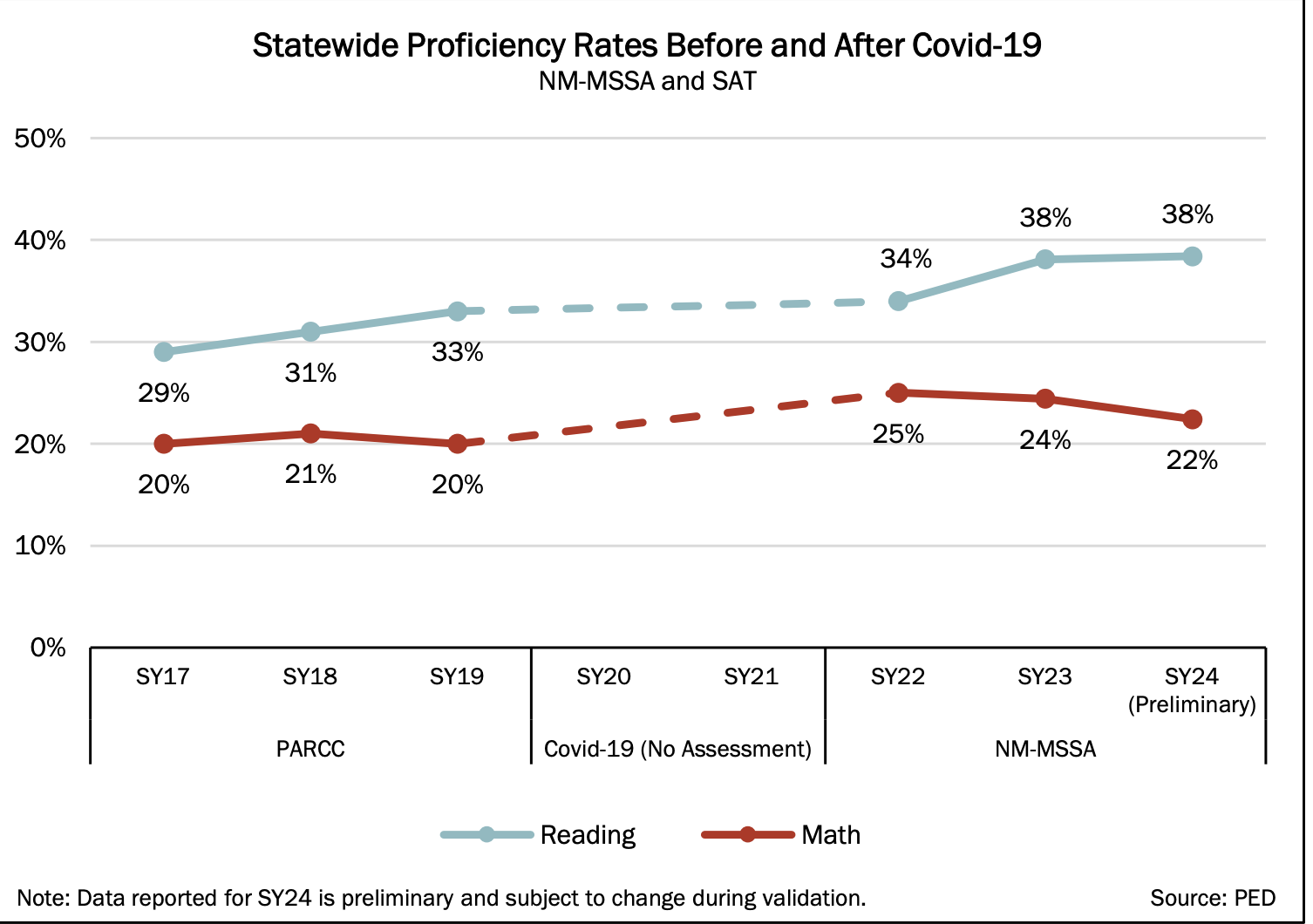
    Repeated outreach by New Mexico Education to the PED has been met with silence. The one PED data slide presented showed that statewide, there was incremental improvement in reading – from 38 percent proficient in 2023 to 39 percent proficient in 2024, a decline in math (from 24 percent proficient to 23 percent), and a three percentage-point increase in science (from 34 percent to 37 percent).

    A companion presentation by LESC staff contained richer data, but also showed different proficiency rates than the PED deck – reading at 38 percent proficient and math down to 22 percent proficient.

    The LESC deck also contained some graphs that merit a deeper dive, which is impossible unless and until PED releases the data files. For example, the achievement gaps between economically disadvantaged and non-economically disadvantaged students in English Language Arts closed significantly statewide. 

    This occurred both because economically disadvantaged students’ ELA scores increased by five percentage-points (and nine percentage-points since 2022), and because more affluent students saw their ELA scores decline by five percentage-points.

    Ideally, gaps should close because those on the lower end are making big gains, not because those at the higher end are dropping.

    Without detailed data, it is not possible for researchers to dive in to determine why and where these changes are occurring.

    National education researcher Chad Aldeman recently wrote on his Substack blog that this practice of hiding or delaying data has become a nationwide trend among state education departments.

    “Here we are in pumpkin spice / decorative gourd season, and half the states still have not released their results yet,” Alderman wrote. “To put it colloquially, this is too damn slow! Summer is the key here—it’s the time when parents and educators could actually do something about the results. By the time fall rolls around, kids are already back in school and they’ve moved on to the next grade. Teachers have already written their lesson plans for the year….

    …“When it comes to releasing their results, too many states are putting parents last,” Aldeman wrote. “This game of telephone is also unnecessary in today’s modern world. Most state assessments are now administered on computers and can be scored instantaneously. Private testing companies like the ACT and SAT promise to deliver results in 2-4 weeks.”

    According to Aldeman’s research, last year the PED didn’t release its data until mid-November, which ranked New Mexico 45th out of the 50th states. 

    Will this year be any different?

    Source link

  • Top 10 Challenges Faced by Principals: Staffing & Engagement

    Top 10 Challenges Faced by Principals: Staffing & Engagement

    Tune In To Our Audio Blog


    Principals are facing challenges each day toward improving student achievement on campus. Every principal face some of the biggest frustrations to control student behavior, recruiting teachers and staff, promoting personalized learning, improving teaching effectiveness, student retention, parent support, and more. 


    Technology integration translates into enhanced student achievement

    21st-century classrooms strengthen tech-savvy teachers with the most advanced cloud, mobile, and digital technologies to teach and interact with students using videos, chat, notifications, social media, and email messaging. Creating future-ready classrooms and higher education institutions with the use of cutting-edge augmented reality systems in the classroom can enrich the learning process and improve student achievement.

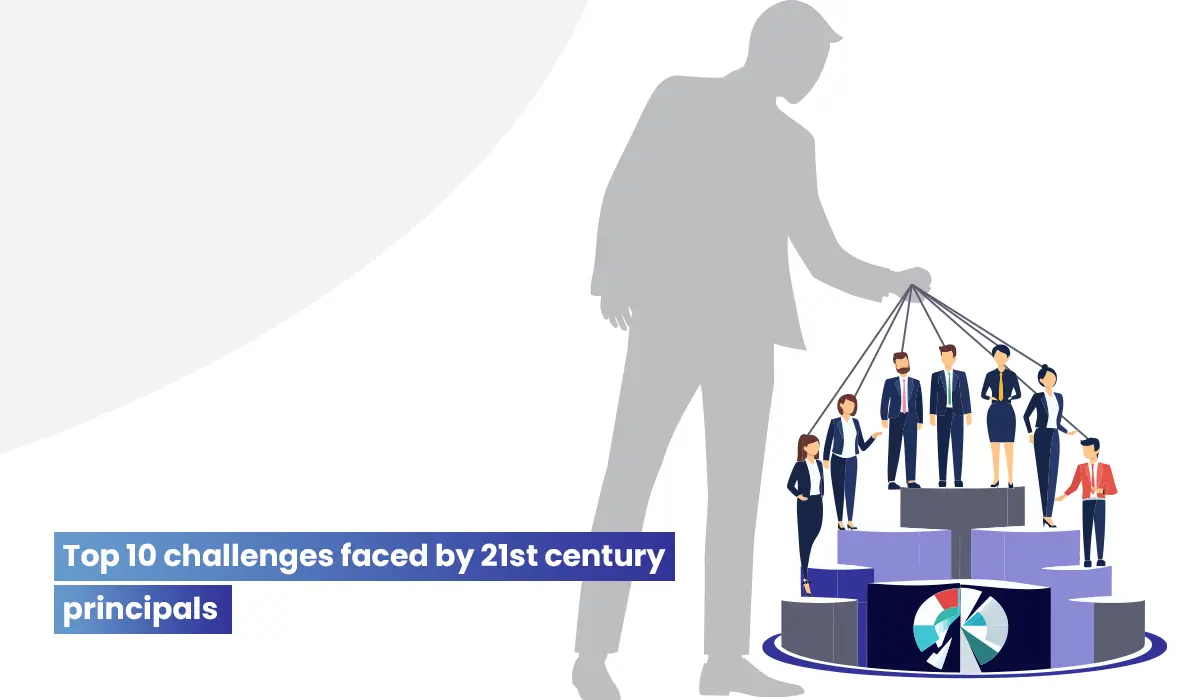
    Principals are faced with complex and difficult challenges to turn around the campus with academic underperformance. Here is a list of the top 10 challenges and successful strategies to promote student growth and success.   


    1.  Paperwork

    Paperwork and forms are one of the biggest frustrations of principals. Eliminate paperwork and automate data collection processes through online forms and applications for admission, course evaluations, and more to reach out to more students in a positive manner.


    2.  Decision-making

    Principals’ decisions and strategies are critically important to institutional performance. They are accountable for high levels of student achievement. In order to accomplish the high expectations, administrators have to analyze data through dashboards and reports to identify factors related to student enrollment, retention, and success. There is clear evidence through insightful reports that the attributes of the institution such as admission, enrollment, attendance, discipline, grades, fee collections, etc. determined those outcomes.     


    3.  Scheduling 

    Classroom teachers, staff, and students report scheduling problems with principals. Cognitive reframing of scheduling with an automated timetable system enables instructors to manage class schedules across multiple courses, faculty and rooms for different time periods. Innovative scheduling can help alleviate conflicts in manual scheduling and place substitutes for teachers in order to maintain continuity of instruction. 


    4.  Recruitment

    Recruiting competent teachers who are capable of teaching all student populations is at the core of the problem. In successful institutions creating an advanced student admission system with real-time application tracking, online assessments, and an automated ranking system always identified the talented and sensitive teachers who demonstrated competency, will, and commitment to implement innovative and high-quality education programs and deliver excellence for all learners.  


    5.  Faculty Evaluation

    Teachers are vulnerable individuals who are struggling to align instruction and assessments to the learning context of a diverse student population. Creating instructions in innovative ways and building flexibility in the curriculum will be easier for students to rest with the teacher. Using a faculty evaluation system, creating faculty peer evaluation reviews through online surveys will benchmark teaching effectiveness. Based on the evaluation feedback score, training and improvement action plan for the benefit of faculty can be chalked out to improve teaching performance and cohesiveness. 


    6.  Attendance & Discipline 

    Principals perceive student absenteeism and misconduct are a major concern. Educational institutions can improve class attendance and improve students’ poor academic records using RFID and Biometric based attendance tracking systems to monitor student movements in real-time. Maintaining order and discipline and controlling violence, vandalism, bullying, racism, etc. in the campus using sophisticated discipline trackers that will capture incidents from mobile devices and notify authorities in real-time and ensure student safety.     


    7.  Curriculum Design 

    Principals are faced with the critical task of teaching a curriculum that is comprehensive and more encompassing. Curriculum mapping software provides the technology tools for executing changes in the curriculum design and syllabus. Principals and teachers can create customized outcome-based education that will map competencies, graduate attributes, and standards to improve learning outcomes. Students can develop skills and competencies that is aligned with course outcomes. 


    8.  Student outcomes

    One of the biggest factors that stood out is related to student achievement. Principals want to promote learning and see better student outcomes. With cutting-edge academic planning tools, administrators can create a personalized learning plan with goals and tasks linked to lessons to meet the precise requirement of students, which can improve learning outcomes and ensure student success. Using online assessments including assignments, tests, quizzes, and surveys will be of great help to students and teachers alike. Using online and mobile devices, teachers can measure students’ progress in real-time and share the results with parents through instant notifications via email and SMS alerts.  


    9.  Parental Involvement

    One of the biggest frustration faced by principals is that parental involvement is lacking to support the institution’s effort toward improving student achievement. Parents also have to take joint responsibility for the poor grade of their children. Using real-time status notifications for events, meetings, grades, fee collection, attendance, and discipline via web and mobile devices can improve interactions between teachers and parents and close the achievement gap.


    10.  Communication & Collaboration

    Principals and staff spend so much energy on building relationships with students, teachers, and staff. Powerful communication tools like discussion forums, chat, messaging and social media will have a positive impact on the institute community and promote collaborative learning.

    Source link

  • 5 Ways to Advocate for Your Students During The U.S. Election

    5 Ways to Advocate for Your Students During The U.S. Election

    Election Day in the U.S. is just around the corner. On top of carrying multiple academic and employment responsibilities, some students will also be voting for the first time. Others, such as those from marginalized or historically underrepresented populations, may be overwhelmed with what the election results could mean for them. In the lead up to Election Day, a healthy dose of empathy will be essential in ensuring students have a chance to fulfill their civic duty—and the opportunity to consider its consequences.

    Being flexible with due dates, considering students’ wellbeing and ensuring learners are armed with the resources needed to vote are the most important things you can do as Election Day nears. Read on to learn how professors advocated for their students during the 2020 election—and how you can do the same.

    Consider making November 4 and 5 free of assignments (or even classes)

    Exams can cause some students a great deal of stress and anxiety. Lillian Horin, Biological and Biomedical Sciences PhD student at Harvard University, urges educators to keep BIPOC students in mind when scheduling high-stakes tests.

    Consider swapping your exams or problem sets (Psets) with a trip to the ballot box. Jacob Light, Economics PhD student at Stanford University, writes that this simple gesture may allow students to exercise their civic duty.

    Other students like Anna-Sophia Boguraev, Bioengineering PhD student at Harvard Medical School and MIT, say that TAs have the power to amplify student concerns and requests—none of which should be ignored.

    If your assignments can’t wait, build in flexibility and timeliness

    Self-paced learning can allow students to visit the polls and complete coursework at a time that works for them—so says Jesse Fox, Associate Professor of Communication at Ohio State University.

    Election Day can also be a good opportunity to let students catch their breath in your course. Give students a chance to study and review material that they haven’t had a chance to look over, suggests Scott Grunow, Instructor in English and Religious Studies at the University of Illinois at Chicago.

    Should your institutions provide little leeway in your assessment choices, at least incorporate real-time events into your discussions. Derek Bruff, Associate Director, Center for Teaching Excellence at the University of Virginia, notes that relating course content to the election can help students see the value of what they’re learning.

    Real-time political events and policy proposals can make for discipline-specific conversations. This also allows students to apply what they’ve learned in your class to the real world, as Andrea Gomez Cervantes, Assistant Professor in the Department of Sociology at Wake Forest University, proposes.

    Mobilize your students to show up at the polls

    Gen Z students are motivated to vote. In the 2018 midterm elections, the student turnout rate increased by 20 percent compared to the 2014 midterms.1 Ensure students are equipped with the resources to vote as soon as possible, writes Wendy Christensen, Sociology Professor at William Paterson University.

    Similarly, ask students about their voting plans. Consider working with your class to ensure they know where to go on November 5, suggests Margaret Boyle, Associate Professor of Romance Languages and Literatures at Bowdoin College.

    Ensure your voter registration information and resources appeal to all students, regardless of what political party they support. Meghan Novisky, Assistant Professor of Criminology at Cleveland State University, emphasizes the importance of using non-partisan guidelines.

    Some scholars like Sara Wheeler-Smith, Associate Professor of Management at Manhattan College, even plan to offer a grading incentive for visiting the polls.

    Incorporate guest lectures and learn from your colleagues

    Navigating election week with students in mind might be an unfamiliar undertaking. Consider leaning on faculty at your institution for support, writes Heather Mayer, Director of Educational Technology at Everett Community College.

    Some students may be undecided voters, while others may have missed the presidential debates. Incorporate forms of debate in your classroom—with the support of scholars from other institutions, as Yujin Jung, Political Sciences PhD student at the University of Missouri, plans to do.

    Keep in mind the importance of mental and physical health

    Check-ins with students have gained new meaning in the midst of an election. Andrea Kelley, Sociology Professor at the University of Michigan, tends to her students’ socioemotional needs before assigning readings and lectures.

    Election Day can come with a range of emotions for many students. Cate Denial, Distinguished Professor of American History, Chair of the History department, and Director of the Bright Institute at Knox College, removes the expectation for students to pay attention and participate in class.

    References

    1. Thomas, N. et al. (2018). Democracy Counts 2018: Increased Student and Institutional Engagement. Tufts University. https://idhe.tufts.edu/sites/default/files/DemocracyCounts2018.pdf

    Tagged as:


    Source link