Is your website’s organic traffic dipping lower each month? You’re not alone. Search behavior is undergoing its biggest transformation in decades, one powered by AI-driven tools that are rewriting the rules of how people find and consume information.
Instead of clicking through pages of search results, users now get instant, conversational answers from AI chatbots or search engine summaries. Google’s own Search Generative Experience (SGE) is a clear response to this shift, generating AI summaries directly in search results. The effect? A surge in zero-click searches, where users get what they need without ever visiting a website.
For higher education marketers, this new landscape poses a serious challenge. Prospective students can now learn about programs, tuition, and campus life straight from AI assistants, without setting foot on your website. If your school’s content isn’t being surfaced in these AI summaries, you risk losing both visibility and leads.
But here’s the good news: SEO isn’t dead, it’s evolving. By adapting your strategy to align with how AI engines interpret and present content, you can protect and even expand your organic reach.
In this article, we’ll unpack how AI-driven search and SEO evolution are reshaping student discovery, and what steps you can take to optimize for both traditional search and the emerging world of Generative Engine Optimization (GEO). Ready to future-proof your visibility? Let’s get started.
Today’s Student Search Reality
Today’s prospective students have more ways than ever to find information, and they’re not just typing into search bars. They’re talking to AI tools. Voice assistants, chatbots, and platforms like ChatGPT are now part of everyday research habits. In fact, 54% of U.S. teens say it’s acceptable to use ChatGPT to explore new topics for school, a clear sign that AI is becoming a mainstream source of information. When future students want to know, “What are the best business programs in Canada?” or “How do I apply for scholarship X?”, they expect an instant, conversational answer, not a list of links.
Search engines are evolving to meet that expectation. Google’s Search Generative Experience (SGE) now delivers AI-generated overviews for nearly 47% of search queries, compiling snippets from multiple sites into a single summary. While convenient for users, this means fewer clicks for everyone else. According to Ahrefs, when an AI overview appears, the top organic result sees an average 34.5% drop in click-through rate.
This “zero-click” behavior has been building for years. By 2020, nearly 65% of Google searches ended without a single click, and AI summaries are accelerating that trend. In the past year alone, zero-click searches rose from 24.4% to 27.2%, with many results pulling directly from Google-owned platforms like Maps and YouTube.
Why SEO Still Matters in the Age of AI
Does SEO still matter in the age of AI? With AI tools answering questions directly on search pages, it’s a fair question to ask: The short answer is absolutely. But it’s no longer SEO as usual. Even as AI search evolves, organic SEO remains the foundation of online visibility for schools. Roughly 91% of organizations still report significant marketing gains from SEO.
Here’s why: AI depends on SEO. Google’s generative AI and similar systems pull information from optimized web pages, especially those already ranking high. One study found that 75% of pages featured in AI Overviews also appeared in the top organic results. Translation? Ranking well still boosts your odds of being cited by AI.
That said, SEO must adapt. Keyword stuffing is out; intent-based, high-quality content is in. Strong metadata, logical structure, and mobile-friendly design improve both SEO and user experience. Consistent, credible content also builds authority and trust, signals that matter to both Google and AI.
SEO Best Practices for Today’s Search Landscape
Search has changed, but the fundamentals of SEO haven’t disappeared. What’s different is how you apply them. The same pillars still matter: high-quality content, logical site structure, and credible backlinks, yet the way they’re interpreted by search engines and AI systems is evolving. To remain visible, your strategy must adapt. Here’s how.
1. Develop High-Quality, Intent-Focused Content
Content remains the cornerstone of SEO, and in the AI era, its importance has only deepened. Search engines and large language models now evaluate depth, clarity, and user intent more than ever. Each page should have a clear purpose and directly answer the kinds of questions your audience is asking.
Rather than thin content that skims the surface, build comprehensive, easy-to-scan pages that explore a topic fully, from program overviews and admission requirements to career outcomes and FAQs. This makes your content valuable to both users and AI systems, which pull key points from authoritative pages to construct summaries.
Freshness also counts. Adding new articles, student stories, or data-driven insights at least once a month signals that your site is active and relevant. High-quality, well-structured content written in your audience’s language (not overstuffed with keywords) naturally attracts both clicks and citations in AI-driven results.
Example: Excel High School maintains an active blog of expert tips and student success stories tailored to common questions from students and parents. The blog’s content is written in an easy-to-scan format with conversational titles (e.g., “Is Online Private High School Right for Your Child?”) and highlights like “Student Success Spotlight” profiles. These posts directly address the audience’s concerns (such as comparing online school vs. homeschooling) with depth and clarity. The school publishes new articles frequently (covering online learning tips, college prep, etc.), showing a commitment to fresh, high-quality content. By focusing on topics parents and students are asking, and answering them in detail, Excel High School naturally earns both user engagement and citations in AI-driven results.
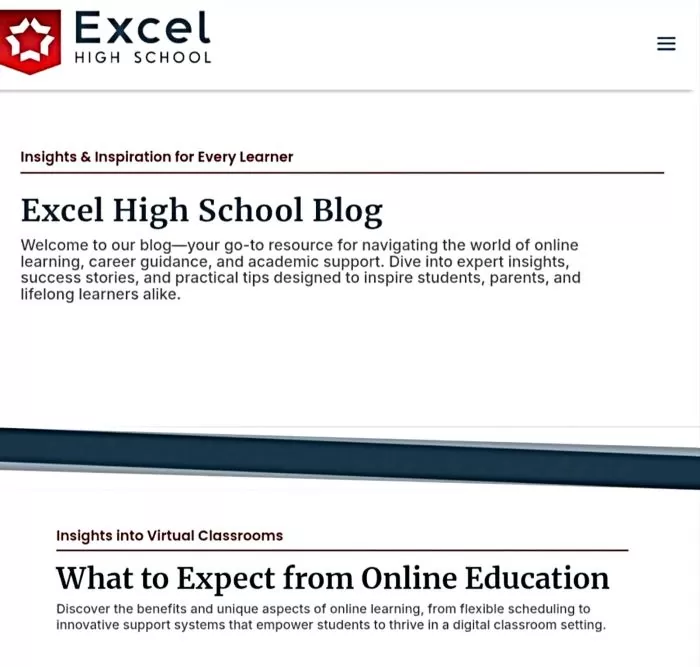
Source: Excel High School
2. Embrace Semantic SEO and Long-Tail Keywords
Today’s algorithms understand context, relationships, and intent, not just keywords. That’s where semantic SEO comes in. Instead of creating isolated posts, organize your content around topic clusters: a central pillar page supported by subpages that dive deeper into related areas such as courses, career paths, and student experiences.
This approach demonstrates expertise and gives both users and search engines a clear content map. It also increases your chances of ranking for multiple queries and being cited in AI-generated answers.
Don’t neglect long-tail keywords, the natural, conversational queries people use with voice and AI search. Phrases like “What is the best MBA program in Canada for working professionals?” signal specific intent. Use these as subheadings or FAQs to capture users who speak their searches out loud. The more your content mirrors natural language, the more relevant it becomes to AI assistants and human readers alike.
Example: The University of Cincinnati demonstrates semantic SEO by incorporating FAQ sections and natural long-tail queries into its content. In a blog post about an Interdisciplinary Studies degree, the page concludes with a Frequently Asked Questions section that uses the exact questions prospective students might ask, such as “Is interdisciplinary studies a good degree?” and provides a concise answer. These Q&A subheadings (which include conversational phrases like “Can I teach with an interdisciplinary studies degree?”) act as long-tail keyword targets. The surrounding content is organized in a hub-and-spoke model (overview, deeper career paths, then specific FAQs), reinforcing contextual relationships. This strategy not only improves human readability but also helps AI systems easily extract direct answers to niche voice queries.

Source: University of Cincinnati
3. Optimize Content Structure and Metadata
A clear structure benefits both your audience and AI models. Use descriptive “Heading 2s; H2s” and (Heading 3s; H3s) to organize content logically.
For example: “Overview,” “Curriculum,” “Faculty,” “Admission Requirements,” and “FAQs.” This hierarchy improves readability, crawlability, and the likelihood that an AI engine will lift your text as a cited answer.
Equally important are your title tags and meta descriptions. Keep title tags concise and front-load the main keyword. Write meta descriptions that summarize the page with clarity and value. For instance:
“Explore the curriculum, admission requirements, and career outcomes of our Business Management Diploma, all in one place.”
Example: Great Bay CC’s program pages use a logical, repeatable structure that benefits both users and crawlers. Each certificate or degree page is segmented with descriptive headings such as “Overview,” “Curriculum,” “Admission Requirements,” “Outcomes,” and “Faculty.” For example, the Biotechnology Certificate page clearly presents these sections in order. A visitor can jump straight to Admission Requirements or Outcomes, and an AI can quickly identify which paragraph addresses which subtopic. This structured hierarchy (implemented via heading tags) improves crawlability and the likelihood of content being featured as rich results. Notably, each section is labeled in plain language (“Curriculum Outline,” “Admission Requirements”) so both search engines and prospective students instantly know what information follows. Even Great Bay’s site listings show these section labels, underscoring how metadata and structure align.
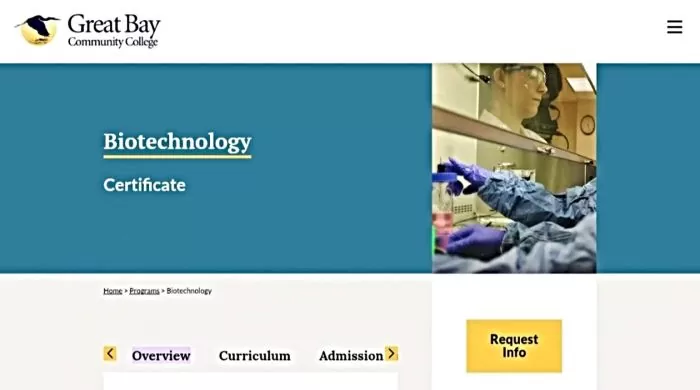
Source: Great Bay Community College
Even though Google may generate its own snippet, a strong description improves click-through rates and shapes how AI interprets your page.
Finally, optimize images with alt text and use descriptive anchor text for internal links. These seemingly small steps provide search engines with more context and make your pages more accessible, a win for both humans and machines.
4. Enhance Site Experience and Technical SEO
A technically healthy, user-friendly site is the foundation of all SEO. With mobile-first indexing, Google prioritizes mobile performance, and that’s crucial given how students search. Most Gen Z users browse on phones and rely heavily on voice assistants.
Ensure your pages load quickly, your navigation is intuitive, and your layout adapts smoothly to smaller screens. Use HTTPS, repair broken links, and maintain clean sitemaps and robots.txt files so your content can be crawled and indexed without friction.
Engagement also matters. Multimedia such as videos, infographics, or virtual tours can keep visitors on your site longer, signaling value to Google. Include captions or transcripts to make these assets indexable and accessible. Ultimately, fast, secure, and engaging sites don’t just rank better. They retain attention, a metric both search engines and AI models consider indicators of trustworthiness.
Example: Otis College provides a real-world example of technical and UX improvements elevating SEO. In June 2024, Otis unveiled its newly redesigned website. The responsive design ensures that whether a prospective student is on a phone or a laptop, the pages render correctly and quickly, a key factor now that Google uses mobile-first indexing. Otis also streamlined site structure (e.g., more logical menu categories and internal links), which helps web crawlers index the site efficiently.

Source: Otis College
5. Leverage Local SEO for Geo-Specific Queries
Local search remains vital for institutions with multiple campuses or regional presence. Students often search with geographic intent, “colleges in Ontario biology program,” and Google tailors results accordingly.
Start by optimizing your Google Business Profile for each location: include up-to-date contact info, hours, and descriptions. Encourage authentic student reviews, as strong ratings can improve local visibility.
Create location-specific landing pages. For example, “Toronto Campus: Programs and Student Life” includes city or neighborhood references naturally within the text. Consistent local citations (accurate listings of your name, address, and phone number across directories) reinforce credibility and help you rank in local results.
These efforts support traditional SEO and feed data to AI systems, generating regional recommendations. When someone asks, “What’s the best college in Toronto for healthcare programs?” your optimized profile improves the odds of being mentioned.
Example: Humber College, which has multiple campuses in Ontario, optimizes for local search by creating dedicated location-specific landing pages. For example, its North Campus page welcomes users with localized content: a description of the campus setting in Toronto, highlights of on-campus amenities, and most critically, the full campus address and transit details prominently shown. The page naturally weaves in the city name (“Toronto”) and neighborhood context (adjacent to the Humber River, etc.), which improves its relevance for queries like “colleges in Toronto with residence”. The inclusion of a map link and transit routes not only helps users but also counts as structured local information that search engines can parse. Furthermore, Humber’s site encourages local engagement by listing “Nearby Toronto Attractions” near the bottom, referencing landmarks like the CN Tower and Royal Ontario Museum. These geo-references strengthen Humber’s local SEO signals.
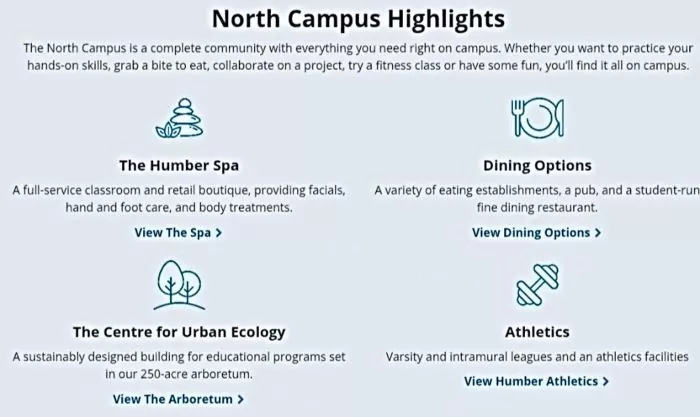
Source: Humber College
GEO Best Practices: Optimizing for AI-Driven Search Results
What is Generative Engine Optimization (GEO), and how does it differ from traditional SEO? The rise of Generative AI in search has created a new SEO frontier known as Generative Engine Optimization (GEO): the art of making your content discoverable, understandable, and quotable by AI-powered tools like Google’s Search Generative Experience (SGE), Bing Chat, ChatGPT, and others. While traditional SEO aims to improve rankings on a results page, GEO focuses on helping AI models use your content effectively in their generated answers. In essence, GEO extends SEO principles into a new space where machines summarize.
Unlike standard search results, AI overviews read and synthesize multiple sources to provide a direct, conversational response. To stay visible in this landscape, your content must be structured, authoritative, and AI-readable. Below are the essential GEO strategies to strengthen your position in AI-driven search.
1. Create Answer-Focused Content
Generative models extract concise, relevant passages to address user queries. The easier you make it for them to identify answers, the better your visibility. Structure sections in Q&A format or include an FAQ block with clear, scannable responses.
For example, if a user asks, “How much does it cost to attend your business diploma program?” an AI engine should easily find a line that reads:
“Tuition for the Business Diploma program is $X per year.”
This direct, declarative format makes your content quotable. Blogs framed as questions, such as “What Can You Do With a Psychology Degree?” often perform well in both AI summaries and voice search.
In other words: anticipate and answer the questions students are asking. If your institution doesn’t address them on its website, someone else, or the AI itself, will. The goal is to become the source AI systems trust to provide accurate, concise information about your programs and services.
2. Maintain Authority and Accuracy
AI models are built to prioritize credibility. They prefer information from authoritative, verifiable sources, and that means your content must demonstrate expertise.
Start by creating in-depth, well-researched resources that cite reliable references such as government data or industry reports. For example, a blog citing official labor statistics on graduate employment rates signals trustworthiness to both users and AI. Include bylines and author bios to show content expertise and keep your facts up to date.
Accuracy and consistency matter more than ever. If one page says your nursing diploma is two years and another says three, AI systems will hesitate to use either. Review and update your website regularly to maintain coherence across all mentions of tuition, program length, and admissions details.
Finally, use citations within your text where appropriate: “According to the Canadian Nurses Association, nursing graduates will see 7% job growth by 2030.” Such phrasing reinforces reliability and gives AI models clear attribution patterns to replicate.
Be the source worth quoting. In the AI era, your brand’s authority is built not just through backlinks but through data integrity and factual precision.
3. Implement AI-Friendly Schema Markup
Structured data, or schema markup, is the hidden language that helps search engines and AI systems understand your content. By tagging key elements of your pages (program names, events, FAQs, how-to steps), you make it easier for machines to extract and display your information accurately.
Use the FAQ schema and QAPage schema for question-based sections, the Course schema for program descriptions, and the Event schema for open houses, deadlines, and campus events. These schemas enable AI to pull details like:
“The next Open House is on October 15 at 10:00 AM.”
Schema can also help voice assistants through Speakable markup, which identifies which parts of your content are ideal for being read aloud.
Why it matters: Google’s SGE and Bing Chat frequently rely on structured data to identify authoritative responses. When your content is tagged properly, you make it easier for AI systems to find and quote your material verbatim.
Even if you’re not a developer, there are tools and generators for creating JSON-LD schema code for FAQs, events, and courses. Implementing this markup bridges the gap between human-readable content and machine understanding, boosting both traditional SEO and GEO performance.
4. Diversify Content Formats and Channels
AI doesn’t just read websites; it pulls data from across the web, including YouTube, LinkedIn, Reddit, and other platforms. That means your visibility in AI search improves when your content ecosystem extends beyond your main site.
Repurpose your strongest content into multiple formats. For instance, transform a blog on “Tips for Successful College Applications” into a YouTube video, an infographic, and a short LinkedIn post. Transcripts from your videos, captions on social media, and consistent keyword use across platforms all increase your digital footprint.
AI models often reference content from high-engagement communities. After seeing an AI summary, users frequently validate information through YouTube reviews or Reddit discussions. Being active and consistent on these platforms helps your brand appear wherever AI or your audience looks for confirmation.
When your messaging is aligned across channels, you build “community proof.” This type of engagement-driven validation strengthens how AI interprets your trustworthiness. The takeaway? Don’t let your best content live in isolation. Let it circulate. The wider your reach, the greater your chance of inclusion in AI-generated results.
5. Welcome AI Crawlers and Monitor Mentions
Just as you optimize for Googlebot, ensure your site welcomes legitimate AI crawlers. Tools like GPTBot (used by OpenAI) and similar agents from Anthropic, Perplexity, or Google can index your content for inclusion in their AI-generated answers.
Check your robots.txt file to confirm these crawlers aren’t unintentionally blocked. Allowing access means your pages can be referenced when users query AI assistants.
Once you’re visible to AI crawlers, start tracking how your content appears in AI-generated results. Emerging SEO analytics tools can now identify when your site is mentioned within AI overviews or cited in chat responses. Pay attention to referral traffic from sources like bard.google.com or chat.openai.com. These indicate clicks coming from AI-powered experiences.
While the volume of AI referral traffic is still relatively low, it’s expanding fast. Some studies report tenfold growth in a single year. And because these users arrive after seeing your content recommended by an AI model, they’re often high-intent visitors; individuals seeking more detail, verification, or enrollment information.
Track which pages attract this traffic and which topics generate it. This data can guide your next content updates and show where you’re already succeeding in GEO.
Measuring Your Progress and Adjusting Course
Implementing a strong SEO and GEO strategy is only half the battle. The other half is knowing whether it’s working. In an AI-driven search environment, measuring success means tracking both traditional SEO metrics and new signals that reflect your visibility within AI-generated results. Here’s how to evaluate progress, interpret your data, and refine your strategy over time.
Use the Right Analytics and Tools
Start with the essentials. Google Search Console remains your most valuable tool for understanding organic performance. It reveals which queries trigger your site, your average ranking position, impressions, and click-through rates (CTR). Pay attention to the relationship between impressions and clicks: if impressions stay steady or rise while clicks decline, you may be seeing the effects of zero-click searches, where users get answers directly from AI overviews or snippets.
Google Analytics (GA) complements this by providing insight into user behavior after they arrive. Track organic traffic volume, session duration, bounce rates, and key conversion events such as brochure downloads, form submissions, or virtual tour signups. If you notice a dip in organic traffic that aligns with the rollout of a new AI search feature, that correlation is important. GA’s referral data can also highlight hits from sources like chat.openai.com or Bing’s chatbot, small but growing indicators of AI-driven referrals.
Beyond free tools, platforms like Ahrefs and SEMrush are invaluable for deeper competitive and keyword insights. Ahrefs can show when a keyword’s results page includes an AI overview or featured snippet, while SEMrush offers comparative content analysis to identify what competitor pages are doing differently, such as using schema markup or answering queries more directly.
Finally, experiment with emerging platforms like Keyword.com’s AI Overview Tracker or similar products that monitor how often AI overviews appear for your target keywords. If your budget allows, these new metrics can help quantify your AI visibility, not just your search ranking.
Key Metrics to Watch
- Organic Rankings:
Continue monitoring rankings for your high-priority queries. For instance, “[Province] business diploma” or “[Your College] admissions.” If your positions hold steady but traffic drops, AI summaries could be diverting clicks. A sharp fall in rankings, meanwhile, may signal a technical or algorithmic issue that needs attention. - Click-Through Rate (CTR):
In Search Console, compare CTR trends for your top-ranking pages. A consistent decline, say, a drop from 5% to 3% at the same rank, may indicate that an AI box is capturing user attention. Studies show that when AI overviews appear, the top organic result can lose up to one-third of its clicks. If this pattern matches your data, consider optimizing content to appear within the AI-generated summary, not just beneath it. - Zero-Click Indicators and Dwell Time:
You can’t directly measure zero-click searches, but a combination of high impressions and low CTR is a clear proxy. Focus on dwell time or average session duration for those who do click through. Recent findings suggest that although fewer users click from AI-heavy results, those who do are more engaged, viewing multiple pages or staying longer on-site. If your analytics show longer sessions for specific queries, that’s a sign your content is effectively deepening the user journey beyond what the AI overview offers. - AI Referral Traffic:
Check GA for referral traffic from AI platforms like bard.google.com, bing.com/chat, or chat.openai.com. While numbers may be modest now, early adopters are seeing these referrals increase quickly, in some cases by tenfold year-over-year. Each click from an AI platform often represents a highly motivated user seeking further detail or validation. Treat these as premium leads and track how they behave once on your site. - Conversion Metrics:
Ultimately, your goal is engagement: inquiries, applications, and conversions. Even if top-of-funnel traffic decreases, conversion rates may improve as AI filters out casual browsers and sends you high-intent visitors.
Research suggests that users who click after an AI overview view roughly six pages per session, similar to traditional searchers but with greater purchase or enrollment intent. Monitor lead form submissions, email signups, and other goal completions closely; steady or rising conversions amid lower traffic mean your strategy is targeting the right audience.
Adjusting Your Strategy
Analytics are only useful if they lead to action. Once you’ve identified which queries or pages are underperforming, adjust your approach based on the data.
If a critical keyword consistently generates an AI overview that excludes your content, create a new page or update an existing one to address that question directly, complete with schema markup and concise Q&A formatting. Conversely, if you notice certain pages repeatedly mentioned in AI summaries or drawing high engagement, double down: expand those topics, interlink related content, and promote them across your channels.
SEO and GEO are iterative disciplines. As AI search behavior evolves, so must your content. Make small, data-informed adjustments regularly rather than waiting for major overhauls.
Stay Ahead of Algorithm and AI Changes
Search engines are transparent, to a point, about major changes. Monitor updates from Google’s Search Central Blog, follow industry analysts, and participate in professional SEO communities to stay informed about algorithm shifts and AI integration.
For instance, during the Google March 2025 Core Update, industry data revealed a 115% increase in AI-generated overviews across queries. Knowing such patterns can help you anticipate traffic fluctuations and explain them internally before panic sets in. It also allows you to update your content proactively for new features, such as AI-generated “Education Q&A” boxes or visual search summaries.
Gather Qualitative Feedback
Not all insights come from dashboards. Pay attention to what prospective students and your admissions team are saying. If applicants mention, “I saw on Google that your program offers…”, check if that information is accurate. AI summaries sometimes simplify or misrepresent data. When they do, it’s your cue to clarify the information on your site so the AI can correct itself over time.
Listening to these real-world interactions helps bridge the gap between technical optimization and student perception. Remember: algorithms change constantly, but student questions about cost, programs, and outcomes remain remarkably consistent.
Partner with HEM to Make the Most of The AI Revolution
The rise of generative AI marks a turning point in search, but not the end of organic visibility. Like every major evolution in digital marketing, this shift calls for adaptation, not abandonment. The institutions that will stand out are those that embrace innovation while staying grounded in authenticity.
How can schools and marketers protect their organic traffic as AI-driven search evolves? To thrive, higher education marketers must blend SEO fundamentals: relevance, structure, and authority, with AI-era tactics like structured data, conversational formatting, and ongoing performance tracking. The goal isn’t just to rank; it’s to become the source AI trusts when answering students’ questions.
By creating genuinely useful, clearly structured content and continually measuring what works, your school can remain visible and credible, even as zero-click searches grow. Remember: AI hasn’t changed what students want, only how they find it. Keep listening, refining, and sharing real stories that resonate. In doing so, you won’t just survive the search revolution, you’ll lead it.
Frequently Asked Questions
Question: Does SEO still matter in the age of AI?
Answer: With AI tools answering questions directly on search pages, it’s a fair question to ask: The short answer is absolutely. But it’s no longer SEO as usual. Even as AI search evolves, organic SEO remains the foundation of online visibility for schools. Roughly 91% of organizations still report significant marketing gains from SEO.
Question: How can schools and marketers protect their organic traffic as AI-driven search evolves?
Answer: To thrive, higher education marketers must blend SEO fundamentals: relevance, structure, and authority, with AI-era tactics like structured data, conversational formatting, and ongoing performance tracking. The goal isn’t just to rank; it’s to become the source AI trusts when answering students’ questions.
Question: What is Generative Engine Optimization (GEO), and how does it differ from traditional SEO?
Answer: The rise of Generative AI in search has created a new SEO frontier known as Generative Engine Optimization (GEO): the art of making your content discoverable, understandable, and quotable by AI-powered tools like Google’s Search Generative Experience (SGE), Bing Chat, ChatGPT, and others.