Author: admin

  • Return to Learn Day 2024 – by Sharon Connor – ALL @ Liverpool Blog

    Return to Learn Day 2024 – by Sharon Connor – ALL @ Liverpool Blog

    Storm Lillian might have been causing chaos across the North West, but nothing could dampen the spirits of everyone involved in this year’s Return to Learn Day. For the second year running, the team at Go Higher invited potential mature learners to experience a full day of talks and tours on campus.

    The day was (high) kicked off on a musical note, with Dr Freya Jarman (below left) leading listeners through the history of the multiple meanings of singing high notes in Western music. Covering everything from Tiny Tim to Barbara Streisand, our visitors quickly warmed to the topic and were keen to share their own insights and experiences. We hardly had time to pause for breath, before Heather Johnston from Sydney Jones Library delivered an informative talk on KnowHow, the University of Liverpool’s skills support service. Go Higher and KnowHow work closely together all year round; we know that many mature students may not have written anything vaguely academic for many years, and may never have used a referencing system – the Study Skills team at Go Higher are there to support your learning throughout the whole course, and KnowHow provide the university wide support for both undergraduate and postgraduate students.

    Lunch provided an enjoyable opportunity for guests to chat informally with not only professional services and teaching staff, but also current and former Go Higher students. Peer support plays a major role in the success of Go Higher, not only within a year group, but more widely as a mentoring system for students to continue that contact even after they have started their undergraduate studies.

    The University of Liverpool is the only university in England with an Irish Studies Department, and Dr Sean Haughey outlined the degree course content, as well as reminding us of just how many Go Higher students decide to study with this close and supportive department. Sean also gave us a taste of the sort of lecture students might expect, asking just how divided society is now in Northern Ireland. Combining contemporary cultural references such as Derry Girls, with recent government polls on schooling opportunities, Sean suggested that social attitudes towards mixed communities are far more positive than are often put forward by politicians and the press.

    Thankfully rain had stopped by mid afternoon, and although it was still too wet to take the campus tour, attendees were welcomed for a guided tour at the iconic Victoria Gallery and Museum in Ashton Street. https://vgm.liverpool.ac.uk/  Our on campus bookstore, Blackwells, kindly offered attendees a discount for any purchases made on the day.

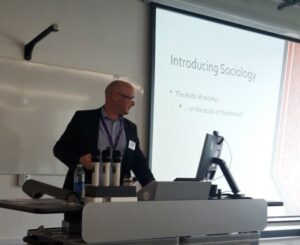
    The afternoon was completed by a lecture from Go Higher’s sociology lecturer, Dr David Ellis (left), who discussed his research in a talk titled ‘Towards a Sociology of Debt: Cultural Change in Britain and Beyond’. David explored the deregulation of banking by the Conservative Party in the 1980s, and the impact that it is still having today. A major point of discussion was what constituted ‘credit’ and how it differed from ‘debt’. There were so many comments and questions following this that we reached the end of the day before we knew it.

    Just in time for visitors to leave, the sun came out – but we hope to see many of them return as students in September.

    White Rabbit image by John Tenniel, from the Project Gutenberg edition of Alice In Wonderland (public domain).


    Source link

  • for Generative AI Integration into Education – Sovorel

    for Generative AI Integration into Education – Sovorel

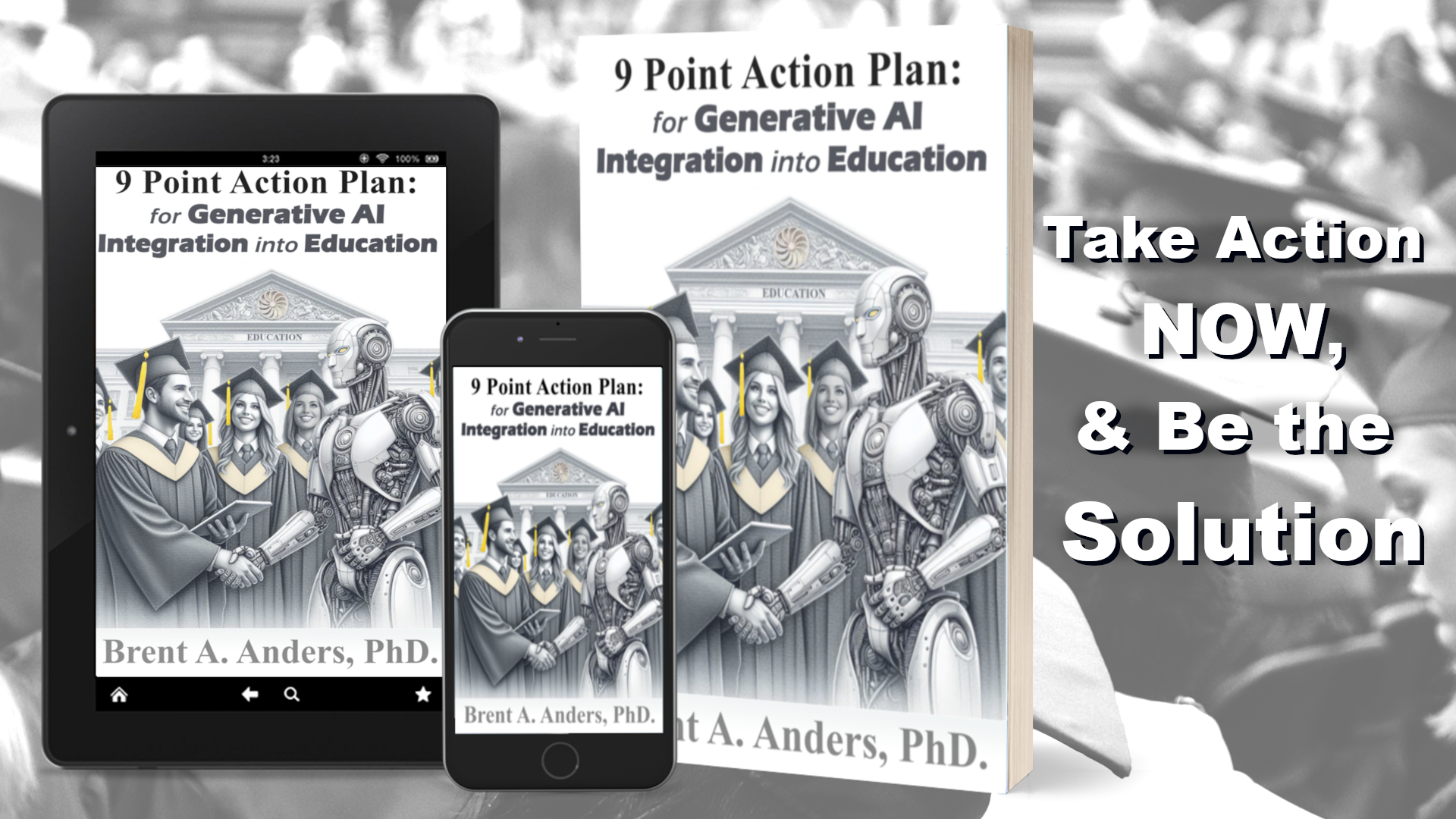
    I’m very happy and excited to share that I have released a new book that is geared specifically to helping universities, as well as all educational institutions, with the very important topic of generative AI integration into education. This is a vital process that higher education and all places of learning need to address in order to become and stay relevant in a world that so filled with AI. All of us in academia must develop AI Literacy skills in order to fully develop these skills within our students. If educational institutions do not integrate this important process now, then they will not be properly setting up their students for success. This book specifically provides an action plan to help educational institutions be part of the solution and to better ensure success.

    Here is a video trailer for the 9 Point Action Plan: for Generative AI Integration into Education book:

    Table of contents for the 9 Point Action Plan: for Generative AI Integration into Education book that is now available as an ebook or printed book at Amazon: https://www.amazon.com/Point-Action-Plan-Generative-Integration/dp/B0D172TMMB

    TABLE OF CONTENTS

    1. Chapter 1: Institutional Policies
      • Examples
      • Policy Examples
      • Implementation
    2. Chapter 2: Leadership Guidance on Utilization of Generative AI
      • Examples
      • Michigan State University Example
      • Yale University Example
      • Template Example: Leadership Guidance on Generative AI in Education
      • Implementation
    3. Chapter 3: Training
      • Faculty Training
      • Staff Training
      • Student Training
      • Examples
      • American University of Armenia Example
      • Arizona State University Example
      • Other Examples
      • Implementation
    4. Chapter 4: Generative AI Teaching & Learning Resources
      • Examples
      • University of Arizona
      • American University of Armenia
      • The University of California Los Angeles (UCLA)
      • Implementation
    5. Chapter 5: Outside Information/Confirmation
      • Bring in an Outside Speaker, Presenter, Facilitator
      • Examples
      • Obtain Employers’/Organizations’ Views & Ideas on Needed AI Skills
      • Implementation
    6. Chapter 6: Syllabus AI Use Statement
      • Examples
      • Tuffs University Example
      • Vanderbilt College of Arts and Science
      • American University of Armenia Example
      • Implementation
    7. Chapter 7: Strategic Plan Integration
      • Components of a Good Strategic Plan and AI Considerations
      • Environmental Analysis
      • Review of Organizational Vision/Mission
      • Identification of Strategic Goals and Objectives
      • Key Performance Indicators
      • Integration of AI Literacy into the Curriculum
      • Example: White Paper: Integration of AI Literacy into Our Curriculum
    8. Chapter 8: Integration Observation and Evaluation
    9. Chapter 9: Community Outreach
      • Example Benefits of Community Outreach
      • Implementation
    10. Chapter 10: Conclusion and Call to Action
    11. Glossary
    12. References
    13. Additional Resources

    As with all of my books, please reach out if you have any questions. I can be found on LinkedIn and Twitter. I also respond to all comments placed this blog or through YouTube. Please also join the Sovorel Center for Teaching and Learning Facebook page where I post a lot of updates.

    Source link

  • Achieving work-life balance (or is that even possible?) – Teaching in Higher Ed

    Achieving work-life balance (or is that even possible?) – Teaching in Higher Ed

    A friend and colleague asked me about how to achieve work-life balance and what tools are best for doing that. Let’s just say I got a bit energized by her question that I recorded a video for her and sent her some key points from what I shared. If you’re wondering about these same questions, check out the comments for a link to the video I sent to her, which is now on my YouTube channel.

    RESPONSE

    I appreciate you reaching out with your concerns about achieving a more effective work-life balance and integrating tools like Microsoft Planner with your team. Here are some insights and recommendations based on what you’ve shared, which I share in more detail in the video:

    View Work-Life Balance as a Journey: Rather than seeing work-life balance as a fixed destination, it’s more helpful to view it as an ongoing journey. This perspective allows for flexibility and adaptation, acknowledging that some days or weeks might be more challenging than others.

    Incorporate Consistent Tools and Habits: To achieve effective work-life integration, it’s crucial to not only have the right tools but also to establish consistent habits that make the use of these tools part of your daily routine. Just as I shared in my video, using apps like Calm for meditation has helped me manage stress and maintain productivity through structured breaks like the Pomodoro technique.

    Maintaining Flexibility in Tool Usage: It’s okay to step away from certain tools occasionally. What’s important is returning to them when you realize they bring balance and peace to your life. This adaptability is key in managing not just tasks but also your mental well-being.

    Implement Practical, Routine-Based Strategies: Strategies such as a weekly review can dramatically reduce feelings of being overwhelmed and improve your organizational habits. Scheduling regular check-ins on your progress can guide you in managing your workload without feeling inundated.

    Choose and Stick to Appropriate Technologies: The effectiveness of any tool depends on it being integrated thoughtfully into your day-to-day activities. My experience with tools like Raindrop for bookmarking and Zotero for academic references emphasizes choosing technologies that fit seamlessly with your workflow. Also, avoiding frequent changes in your toolset helps in building a routine that you and your team can rely on.

    Continuous Commitment to Your Tools: Commit to your tools unless there’s a compelling reason to change. This consistency will help not only you but also your team in becoming more proficient with the technologies adopted and ultimately, more cohesive and functional as a unit.

    VIDEO

    Remember, the key to integrating any new tool or process effectively into your work-life system relies heavily on consistent usage and the development of supportive habits around it.

    Source link

  • The TRAP Test to Spot AI Deepfakes and How to NOT Be Deceived – Sovorel

    The TRAP Test to Spot AI Deepfakes and How to NOT Be Deceived – Sovorel

    Everyone needs to develop AI Literacy skills in order to use AI properly and increase effectiveness/efficiencies, yet another vital part of AI Literacy is to develop critical thinking and awareness skills to avoid being deceived by synthetic data such as AI created deepfakes. Cyber Magazine, an international news source, expressed the importance of this issue by stating:

    Deepfakes are inevitably becoming more advanced, which is making it harder to spot and stop those that are used with bad intentions. As access to synthetic media technology increases, deepfakes can be used to damage reputations, fabricate evidence and undermine trust.

    With deepfake technology increasingly being used for mal-intent, businesses would do well to ensure that their workforce is fully trained and aware of the risks associated with AI-generated content. (Jackson, 2023)

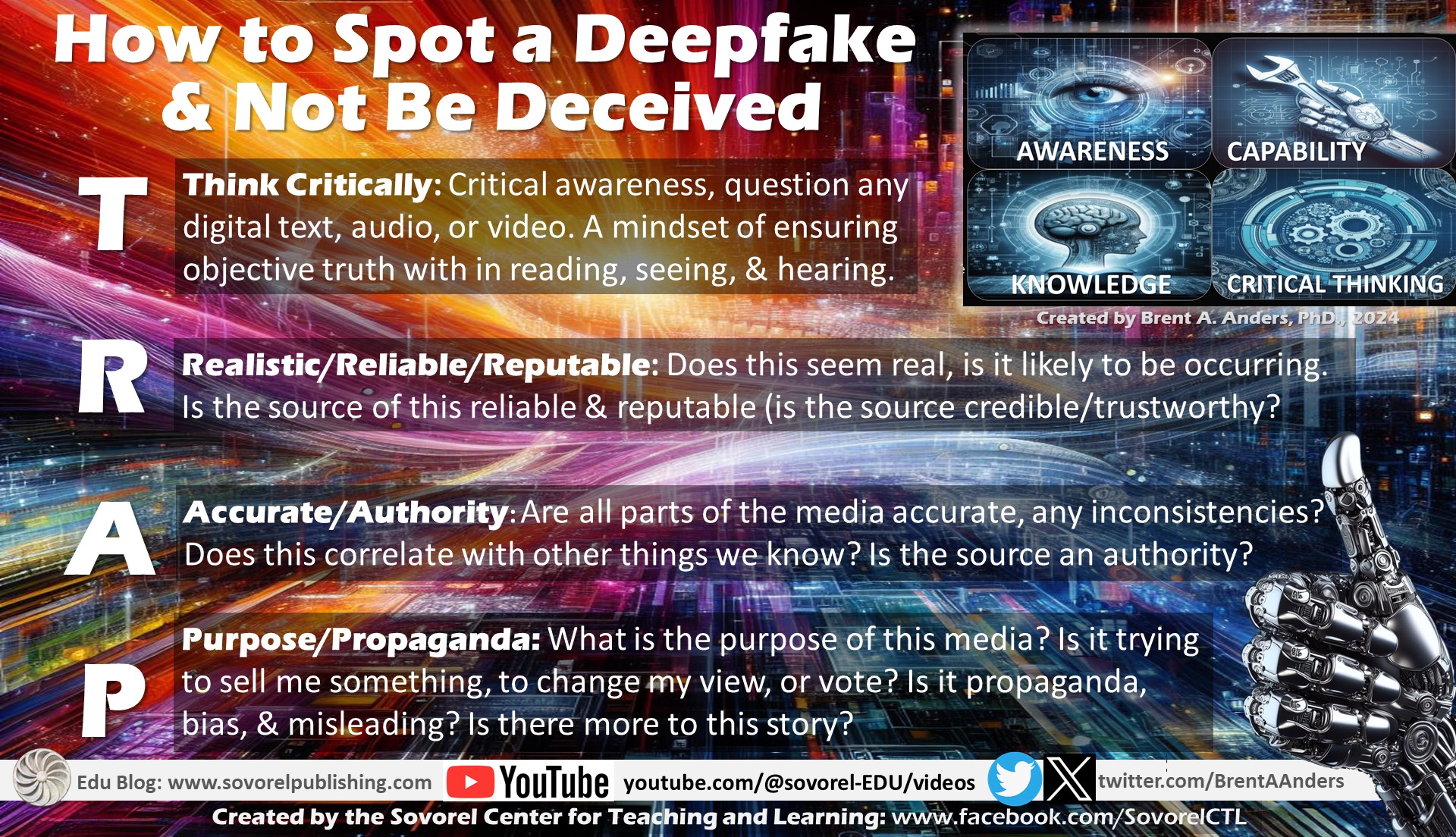
    To address this important issue I have created the TRAP test:

    T: Think Critically. All of us must now have a critical awareness and mindset when using any type of digital media since all digital media can now be easily manipulated and created with generative AI. When encountering any digital text, images, audio, or video we need to realize that it might not be real and it might be trying to manipulate our perception. We need to use the TRAP test to ask further questions to help ensure that we are getting the object truth.

    R: Realistic/Reliable/Reputable: When using digital media or viewing a video, we need to ask ourselves the question “does this seem real and is it likely to occur?” We must also consider whether or not the source of the information is reliable and if it is coming from a reputable source. Is it from an official source, a well known news source, a government agency, or established organization? Always check the source.

    A: Accurate/Authority: Check to see if all parts of the digital media are accurate. As an example, if watching a video, are all parts accurate and consistent. Are there any issues with the eyes, the background, or the light sources? Is it similar and consistent with other videos, images, or text? Additionally, has the media been released or authenticated by an authority? These questions must be verified and answered to help ensure validity and accuracy.

    P: Purpose/Propaganda: When reviewing any digital media we must ask ourselves, “what is the purpose of this media? If the answer is that they are trying to get your money or to sway your vote in an election then you should be extra sure that the information is completely truthful. Ask yourself if the digital information presented is simply just propaganda, full of bias and misleading. Be sure to ask if there is more to the story that you are reading/watching.

    Using the TRAP test and asking these questions will help to prevent everyone from being scammed and/or deceived. Students, faculty, and everyone must develop AI Literacy skills like these.

    All aspect of this defined AI Literacy are important (Anders, 2023), but Awareness and Critical Thinking are key in developing the proper mindset to use the TRAP test. This is something that must be continually developed and used in order to ensure its greatest effectiveness.

    All of us in academia must work to ensure that student and everyone else develop these skills to use AI in the right way and be able to properly spot AI deepfakes and avoid being deceived. Please share this information with colleagues, students, family, and friend; especially the elderly who can at times be even more vulnerable. Together we make a major difference and improve our new world filled with AI.

    A video describing the TRAP test is also available on the Sovorel Educational YouTube channel:

    “How to Spot a Deepfake and NOT Be Deceived” (Anders, 2024)

    Please share your thoughts and comment below:

    References

    Anders, B. (2023). The AI literacy imperative: Empowering instructors & students. Sovorel Publishing.

    Jackson, A. (2023, October 13). The rising tide of deepfakes as AI growth cause concern. Cyber Magazin, Technology: AI. https://cybermagazine.com/technology-and-ai/the-rising-tide-of-deepfakes-as-ai-growth-cause-concern

    Source link

  • White House Approves Title IX Final Rule — Rule Release Imminent – CUPA-HR

    White House Approves Title IX Final Rule — Rule Release Imminent – CUPA-HR

    by CUPA-HR | April 12, 2024

    On April 10, the White House Office of Information and Regulatory Affairs (OIRA) announced it had concluded review of the Department of Education’s (ED) final rule to amend Title IX. OIRA review is the final step in the regulatory process, and we expect the ED will issue the final rule any day now. We will send another alert as soon as ED publishes the final rule.

    The ED released the text of the proposed rule on June 23, 2022, though the Federal Register did not officially publish the proposal until several weeks later on July 12, 2022. The agency received over 240,000 comments in response, including CUPA-HR comments seeking clarification on the overlaps between the ED’s proposal with institutions’ existing obligations to address employment discrimination. CUPA-HR also joined comments led by the American Council on Education.

    The Federal Government’s Fall 2022 Regulatory Agenda had set the target release date of the final rule for May 2023, but the Department had to further delay that timeline to review all comments submitted in response to the proposed rule and address them in the final rule. Most recently, the ED indicated a March 2024 release of the final rule in the Fall 2023 Regulatory Agenda.

    CUPA-HR plans to hold a timely webinar on the final rule after publication. In the meantime, CUPA-HR will keep members apprised of additional updates on the Title IX final rule, including completion of the review and publication of the rule.


    Source link

  • Collateral Damage of the Rankings Obsession

    Collateral Damage of the Rankings Obsession

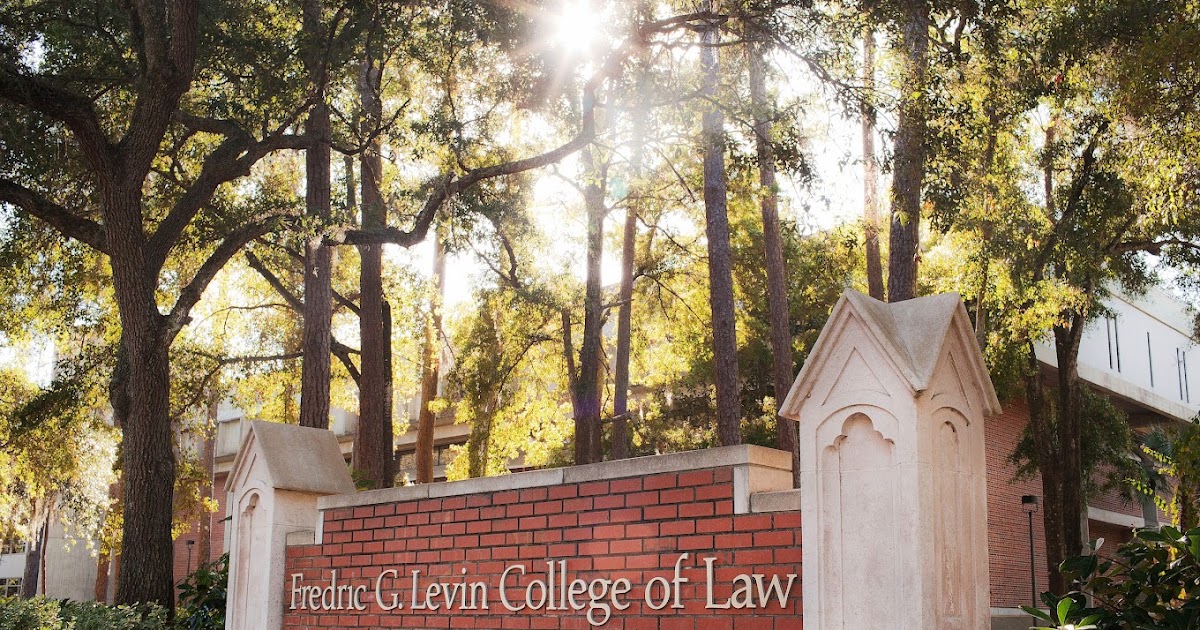
     UF Law slide from 21 to 28 in the US News Law School Rankings. Twenty-eight is not so bad and it, at least, avoids the dreaded 30. (I don’t mean to imply these rankings mean anything except to some University Presidents and law school deans on the make.)

    So why the slip? It’s actually pretty simple. US News began factoring in bar passage rate on which UF Law has historically done miserably given the caliber of students admitted. (Schools with nominally less capable students put UF to shame.)  The reasons UF underachieves is likely due to a number or reasons: a very high curve, students taking many hours of non graded courses often in tangential subjects, very few required bar courses and so on. 

    Since passage has been a problem for decades, why wasn’t it address before? That too has an easy answer. The ranking obsession of the Laura Rosenbury administration  and, I think, her chief benefactor Provost Glover,  did not deem it a pressing matter. Why? Because when only  rankings count and not whether graduating students can pass a bar exam, why worry about it. 

    Don’t get me wrong. I do not know if there is a correlation between passing the bar and succeeding as an attorney. I do know passing the bar is definitely correlated with being permitted to practice law and, there can be no “success” if you can’t get through the door. 

    So, UF is left with the collateral damage caused by a Dean who put self promotion ahead of duty to the students. In fact, I am told that that policy actually exasperated the bar passage issue. When confronted with “splitter students” — those with high LSAT and not comparable GPAs, the policy was to give the nod to the high LSAT students.  Yes, those would be the very bright ones who are likely over confident and lack the work ethic to pass the bar. Seems like a dumb policy but not when you realized that UF thought it did better in the rankings with this policy — that is, until bar passage counted.

    Of course, there is no accountability. Rosenbury is off to Barnard where she continues a policy that personally served her interests at Florida of limiting free speech. If this does not ring a bell, check it out in the Times. Presumably, that policy is also because it pleases those who are higher up.

    Source link

  • White House Approves DOL Overtime Rule – Rule Release Imminent – CUPA-HR

    White House Approves DOL Overtime Rule – Rule Release Imminent – CUPA-HR

    by CUPA-HR | April 11, 2024

    On April 11, 2024, the White House Office of Information and Regulatory Affairs (OIRA) announced it had concluded review of the U.S. Department of Labor’s (DOL) final overtime pay rule. The rule is expected to increase the minimum salary threshold for the executive, administrative and professional (EAP or white collar) employee exemptions to overtime pay requirements under the Fair Labor Standards Act (FLSA) regulations. OIRA review is the final step in the regulatory process, and we expect DOL will release the final rule any day now. We will send another alert as soon as the final rule is released.

    On April 4, 2024, CUPA-HR’s president and CEO, government relations team and board members met with officials from DOL and OIRA to express our concerns with the September 2023 proposed rule. The proposal sought to increase the threshold from its current level of $35,568 annually to $60,209 — a nearly 70% increase. DOL also proposed increasing the salary threshold automatically every three years to the 35th percentile of weekly earnings of full-time salaried workers. Finally, DOL proposed that all employers would need to implement these changes within 60 days of the final rule’s release.

    During our OIRA meeting, CUPA-HR reiterated the concerns that were addressed in our comments submitted in November 2023. The comments made the following four recommendations for DOL to consider prior to issuing a final rule:

    1. DOL should not update the salary threshold at this time.
    2. If DOL implements an increase, it should lower the proposed minimum salary threshold and account for room and board.
    3. DOL should not implement automatic updates to the salary threshold.
    4. DOL should extend the effective date of any final rule implementing a higher salary threshold.

    We expect lawsuits challenging the final rule are forthcoming. CUPA-HR will keep members apprised of all updates related to the overtime regulations. Once the new regulations are released, we will plan and share registration information for a webinar. We will also provide an update for members who attend the spring conference in Minneapolis next week.


    Source link

  • A Game Changing App for Faculty Researchers!

    A Game Changing App for Faculty Researchers!

    Consensus – A Game Changing App for Faculty Researchers

    Today, I started to utilize a new AI app for my research. This app, Consensus, is a game changer for faculty researchers. I wish that I had this app in graduate school – it would have definitely made life easier!

    Step 1 – Here are some screen shots of the software. You can type a question in the box (yes, a question) and the system does the work. Yes, the work that you would usually have to do!

    Step 2 – Then, AI does the rest. You receive AI-powered answers for your results. Consensus analyzes your results (before you even view them) and then summarizes the studies collectively.

    Step 3 – You can view the AI-powered answers which review each article for you.

    *I would also encourage you to review the article independently as well.

    Step 4 – View the study snapshots! Yes, a snapshot of the population, sample size, methods, outcomes measured, and more! Absolutely amazing!

    Step 5 – Click the “AI Synthesis” button to synthesize your results. Even better!

    Step 6 – Use the “powerful filters” button. You can view the “best” research results by: a) population, b) sample size, c) study design, d) journal quality, and other variables. 

    I plan to make a video soon, but please take a look at this video to discover exactly how Consensus can help you in your research! 

    ***

    Check out my book – Retaining College Students Using Technology: A Guidebook for Student Affairs and Academic Affairs Professionals.

    Remember to order copies for your team as well!


    Thanks for visiting! 


    Sincerely,


    Dr. Jennifer T. Edwards
    Professor of Communication

    Executive Director of the Texas Social Media Research Institute & Rural Communication Institute

    Source link

  • HR and the Courts — April 2024 – CUPA-HR

    HR and the Courts — April 2024 – CUPA-HR

    by CUPA-HR | April 9, 2024

    Each month, CUPA-HR General Counsel Ira Shepard provides an overview of several labor and employment law cases and regulatory actions with implications for the higher ed workplace. Here’s the latest from Ira.

    Dartmouth Refuses to Bargain With Men’s Basketball Team Union

    As the next chapter in the Dartmouth College men’s basketball players union dispute, Dartmouth has refused to bargain with the union elected to represent the players. The men’s basketball team voted 13-2, in a National Labor Relations Board-supervised election, to be represented in collective bargaining negotiations by the Service Employees International Union Local 560. The election was conducted after the NLRB regional director ruled that the student-athletes were employees under the National Labor Relations Act and therefore were entitled to an NLRB-supervised election as to whether they wanted a union to represent them. Dartmouth stated, “While we continue to negotiate in good faith with multiple unions representing Dartmouth employees, our responsibility to future generations of students means we must explore all our legal options for challenging the regional director’s legal error.”

    This action will likely lead to the NLRB filing unfair labor practice charges against Dartmouth. Dartmouth can defend on the grounds that the student-athletes do not meet the NLRA definition of employees. If the NLRB again rejects this argument, the case will be reviewable by a federal court of appeals with jurisdiction over this matter.

    Tufts Professors Charge That Fundraising Part of Their Salary Violates Their Tenure Contract

    A state of Massachusetts appellate court ruled that tenured faculty at Tufts University School of Medicine must pursue more discovery concerning their claim that the university’s requirement that they fundraise to pay for a significant part of their salary violates their tenure contract (Wortis v. Trustees of Tufts College (Mass., No. SJC-13472, 3/14/24)). The medical school professors claim that the fundraising requirement violates their contractual rights to academic freedom and to economic security.

    The allegations include the college nearly halving the salary and lab space of some of the professors who did not meet the fundraising requirement. The court sided with the college on the professors’ lab space claim, concluding that altering lab space did not threaten a professor’s economic security. The court concluded, however, that tenure is “permanent and continuous” once granted, and it would seem a “hollow promise” without a salary commitment of strong protections. Nonetheless, the court concluded that the tenure documents are ambiguous on “economic security” and more discovery is necessary to flush out the meaning of the tenure documents as they pertain to the college’s significant reductions of salary and full-time status alleged here.

    University Baseball Coach’s Reverse-Discrimination Claim Dismissed, But Retaliation Claim Proceeds to Jury Trial

    A White baseball coach’s reverse-discrimination claim against St. Edward’s University was dismissed. The coach claimed that he was fired after two separate investigations concluded that he did not discriminate against two Black baseball players. However, the federal trial court judge ruled that his retaliation claim that he was discharged because he complained about reverse discrimination should proceed to trial (Penders v. St. Edward’s University (2024 BL 90254, W.D. Tex., No. 1-22-CV-178 – DAE, 3/18/24)).

    While the investigations were ongoing, the university reviewed a tape submitted by one of the complaining players which evidenced the coach cursing at the player. While the university concluded that incident did not involve discrimination by the coach, it told the coach that his values were not in line with the school’s values and that he would be terminated at the end of the season.

    The coach alleged that the decision to terminate him at the end of the season was illegal and demanded another meeting with his lawyer present. The university allegedly responded a couple of hours later terminating the coach immediately. The judge ruled that the coach’s claim that his termination was “illegal” was protected activity and a jury could conclude that the termination, in close proximity to his protected activity, was an unlawful retaliation against the coach for raising his legal claim.

    School Board Prevails in Race Discrimination and Defamation Lawsuit Brought by Former Track Coach

    Maryland’s Anne Arundel County school board won summary judgement, after a judge dismissed a discrimination case brought by a former track and cross-country coach who was fired after a verbal and physical altercation with a student. The federal court dismissed the coach’s discrimination claims after review of the incident, which was recorded on video, concluding that the plaintiff exercised poor judgement in his actions, which violated school policy, and presented no evidence of discrimination or more favorable treatment of comparators (Daniels v. Board of Education of Anne Arundel County (2024 BL 77797, D. Md. No. 1:22-cv-03057, 3/8/24)).

    The federal court judge rejected the plaintiff’s argument that his conduct was justified because he also served as a substitute school security officer, concluding that his actions still violated school policy. The court also dismissed the plaintiff’s defamation claims, holding that the school board’s statements to a local news blog, including that the plaintiff had been suspended while an investigation was taking place, were not false.

    Several States Pass Ban on Anti-Union Captive-Audience Meetings — Employer DEI Training Is a Target in Conservative-Leaning States

    Five states have passed employer bans on anti-union captive-audience speeches (New York, Connecticut, Maine, Oregon and Minnesota) and such legislation has been introduced in nine additional states (California, Washington, Alaska, Colorado, Illinois, Maryland, Vermont, Massachusetts and Rhode Island). Business groups in Minnesota and Connecticut have initiated litigation challenging these state bans.

    As a federal matter, the NLRB has not ruled that such captive-audience meetings violate the NLRA. However, the NLRB’s general counsel has taken the position publicly that such captive-audience meetings violate employees’ federal labor rights.

    At the same time, conservative-leaning states such as Florida have enacted restrictions on employer diversity, equity and inclusion training. The 11th U.S. Circuit Court of Appeals (covering Alabama, Florida and Georgia) has struck down part of the Florida DEI restriction on First Amendment grounds. Separately, about six states, according to Bloomberg, require anti-discrimination training, including sex harassment training, as a matter distinct from DEI training. It is important to keep up with these matters according to the latest developments in the individual states in which your institution is operating.


    Source link

  • CUPA-HR Participates in OIRA Meeting on FLSA Overtime Rule – CUPA-HR

    CUPA-HR Participates in OIRA Meeting on FLSA Overtime Rule – CUPA-HR

    by CUPA-HR | April 9, 2024

    On April 4, CUPA-HR’s government relations team, President and CEO Andy Brantley, and four national board members met with officials at the Department of Labor (DOL) and the Office of Information and Regulatory Affairs (OIRA) to discuss the upcoming overtime regulations to increase the minimum salary threshold. During the call, the group expressed CUPA-HR’s broad concerns with the rule, as well as the specific challenges implementation of the new rule could create for different types of institutions in various areas of the country.

    On March 1, DOL sent the final rule to update the Fair Labor Standards Act overtime regulations to OIRA for review. As previously noted, the OIRA review marks one of the last steps required before DOL can publish the final rule for public viewing. While the rule is at OIRA, the text and details of the final rule are not public, but interested stakeholders are able to request meetings with the administrator to discuss the proposed changes.

    During the meeting, Andy Brantley and Bailey Graves from the CUPA-HR government relations team reiterated the concerns that were addressed in CUPA-HR’s comments submitted in November 2023. The comments made the following four recommendations for DOL to consider prior to issuing a final rule:

    1. DOL should not update the salary threshold at this time.
    2. DOL should lower the proposed minimum salary threshold and account for room and board.
    3. DOL should not implement automatic updates to the salary threshold.
    4. DOL should extend the effective date of any final rule implementing a higher salary threshold.

    Brantley and Graves were joined by CUPA-HR Board Chair Jami Painter, Chair-Elect Robyn Salvo, and board members El pagnier Hudson and Kristi Yowell, who discussed the impact of these potential changes on employee exempt/nonexempt status and employee morale and benefits. They also discussed the impact of the rule on higher education’s efforts to offer competitive wages to employees, the difficulties of having employees in areas with different costs of living, and the impact this rule could have on an institution’s ability to provide student services.

    Looking Forward

    It is unknown when the final rule will clear OIRA review and be published for public viewing. OIRA review typically lasts 30-60 days, and OIRA meetings are currently set through April 11. However, the Biden administration has incentive to move quickly to publish the final rule in order to avoid the rule being overturned via legislation if Republicans win Congress and the White House in the November election.

    The final rule will also likely face legal action once it is published, which could delay the effective date or stop the rule from going into effect in its entirety. CUPA-HR will keep members apprised of when the final rule clears OIRA review and is published, as well as any legal challenges that may arise.


    Source link