On October 22, 2021, the House of Representatives passed H.R.3110, the Providing Urgent Maternal Protections (PUMP) for Nursing Mothers Act. The bill passed by a bipartisan vote of 276-149 and was supported by business groups such as the U.S. Chamber of Commerce and advocacy organizations, including the American Civil Liberties Union.
As originally written, the PUMP for Nursing Mothers Act amends the Fair Labor Standards Act (FLSA) to expand access to breastfeeding accommodations in the workplace for lactating employees. The bill builds upon existing protections in the 2010 Breaktime for Nursing Mothers Act by broadening breastfeeding accommodations and workplace protections to include salaried employees exempt from overtime pay requirements under the FLSA as well as other categories of employees currently exempt from such protections, such as teachers, nurses and farmworkers. It also clarifies that break time provided under this bill is considered compensable hours worked so long as the worker is not completely relieved of duty during such breaks, and it ensures remedies for nursing mothers for employer violations of the bill.
Before the final vote on the bill, the House also adopted two additional amendments to the PUMP for Nursing Mothers Act that would:
Direct the Government Accountability Office (GAO) to conduct a study on compliance among covered employers, including employee awareness of their rights and proposals to improve compliance; and
Direct the Comptroller General of GAO to conduct a study on what is known about the racial disparities that exist with respect to access to pumping breastmilk in the workplace and submit to Congress a report on the results of such study containing such recommendations as the Comptroller General determines appropriate to address those disparities.
The House-passed bill now moves to the Senate where it is unknown whether or not the bill will garner enough support from Republicans to bypass the sixty-vote filibuster threshold needed to pass.
CUPA-HR will keep members apprised of any actions or votes taken by the Senate on this bill.
On October 12, the U.S. Department of Labor Occupational Safety and Health Administration (OSHA) sent their COVID-19 Vaccination and Testing Emergency Temporary Standard Rulemaking (ETS) to the Office of Information and Regulatory Affairs (OIRA). OIRA is the White House office responsible for reviewing regulations and proposed regulations before they are publicly released.
The ETS — which has not yet been made public — is expected to require private employers with 100 or more employees to “ensure their workforces are fully vaccinated or show a negative COVID-19 test twice a week” and provide paid time off for obtaining or recovering from the vaccination (additional details regarding what is known about the ETS can be found in this CUPA-HR blog).
What is an Emergency Temporary Standard?
While most federal agencies are required to provide public notice and seek comment prior to enacting new regulations, OSHA may bypass normal rulemaking and issue an ETS if doing so is necessary to protect workers from a “grave danger.” This allows OSHA to issue the ETS without any feedback from impacted stakeholders and require employers to immediately comply with the ETS upon its publication in the Federal Register.
Office of Information and Regulatory Affairs Review
OIRA is part of the executive office of the president and is required to review significant regulatory actions — those likely to have an annual effect on the economy of $100 million or more — before they are published in the Federal Register or otherwise issued to the public. As the ETS is determined to be “Economically Significant,” an OIRA review is triggered to ensure that it reflects the goals set forth in President Biden’s COVID-19 Plan and to ensure OSHA has carefully considered the benefits and costs of the ETS before it is issued.
While draft documents under review are not available for public release, it is OIRA’s policy to meet with interested stakeholders to discuss issues on a rule under review. As of October 22, OIRA has convened 68 meetings with outside stakeholders on the ETS and has scheduled meetings through October 25. While CUPA-HR is aware many more additional pending meeting requests (including our own), OIRA has yet to schedule these, and may not. While OIRA review is limited to 90 days, there is no minimum period of review, and given the urgency associated with the ETS it could be issued as soon as this week.
CUPA-HR will continue to monitor OIRA’s review process and be sure to inform our membership as soon as OIRA review concludes and OSHA issues the ETS.
With the Comprehensive Spending Review due next Wednesday, I thought it might be worth making some general points about student loans (in anticipation of potential changes to repayment thresholds and other parameters).
I do not think student loans are a good vehicle for redistributive measures.
As I told a couple of parliamentary committees in 2017, the current redistributive aspects are an accidental function of the decision to lower the financial reporting discount rate for student loans from RPI plus 2.2 percent to RPI plus 0.7. Such a downwards revision elevates the value of future cash repayments and in this case it meant that the payments projected to be received from higher earners began to exceed the value of the initial cash outlay.
The caveat here: in the eyes of government. That is the government’s discount rate, not necessarily yours. One of the reasons I favour zero real interest rates over other options is that it simplifies considerations of the future value of payments made from the individual borrower’s perspective.
Originally, student loans were proposed as a way to eliminate a middle class subsidy – free tuition – and have now become embedded as a way to fund mass, but not universal, provision.
I believe that if you are concerned about redistribution, then it is best to concentrate on the broader tax system, rather than focusing solely on the progressivity or otherwise of student loans. You can see from the original designs for the 2012 changes that the idea of the higher interest rates were meant to make the loan scheme mimic a proportionate graduate tax and eliminate the interest rate subsidy enjoyed by higher earners on older loans. The original choice of “post-2012” student loan interest rates of RPI + 0 to 3 percentage points was meant to match roughly the old discount rate of RPI plus 2.2%. Again, see my submission to the Treasury select committee for more detail.
I will just set out a few illustrative examples here as to why some of the debates about fairness in relation to repayment terms need a broader lens.
It is often observed that two graduates on the same salaries are left with different disposable incomes, if one has benefited from their parents, say, paying their tuition fees and costs of living during study so that they don’t lose 9 per cent of their salary over the repayment threshold (just under £20,000 per year for pre-2012 loans; just over £27,000 for post-2012 loans).
That’s clearly the case.
But the parents had to pay c. £50,000 upfront to gain that benefit for their child. And it is by no means certain that option is the best use of such available money. Only a minority of borrowers go on to repay the equivalent of what they borrowed using the government’s discount rate, and as an individual you should probably have a higher discount rate than the government. You also forego the built-in death and disability insurance in student loans.
Payment upfront is therefore a gamble, one where the odds differ markedly for men and women. (See analyses by London Economics and Institute for Fiscal Affairs for the breakdowns on the different percentages of men and women who do pay the equivalent of more than they borrowed.)
If a family has the £50,000 spare (certainly don’t borrow it from elsewhere), then the following options are likely more sensible:
pledge to cover your child’s rent until the £50,000 runs out: this allows student to avoid taking on excessive paid work during study and will boost their disposable income afterwards;
provide the £50,000 as a deposit towards a house purchase;
even put the £50,000 in a pot to cover the student loan repayments as they arise;
etc.
In two of those cases, you’ll have a useful contingency fund too.
All strike me as better options than eschewing the government-subsidised loan scheme.
Moreover, those three options remain in the event of a graduate tax or the abolition of tuition fees.
That fundamental unfairness – family wealth – isn’t addressed by changing the HE funding system. (I write as someone who helped craft the HE pledges in Labour’s 2015 and 2017 manifestos).
In many ways, the government prefers people to pay upfront because it reduces the immediate cash demand. From that perspective, upfront payment works as a form of voluntary wealth taxation (at least in the short-run). Arguably, those who pay upfront have been taxed at the beginning and are gambling on outcomes that mean that future “rebates” exceed the original payment for their children.
Perhaps this line of reasoning opens up debates about means-testing fees and emphasises the need to restore maintenance grants … but really it points to harder problems regarding the taxation of intergenerational transfers and disposable wealth.
I am not a certified financial advisor so comments above are simply my opinions. You should not base investment decisions on them.
Each month, CUPA-HR General Counsel Ira Shepard provides an overview of several labor and employment law cases and regulatory actions with implications for the higher ed workplace. Here’s the latest from Ira.
Several States Consider Legislation Aimed at Softening Federal Workplace Vaccine Mandates
The Arkansas legislature recently passed legislation which would soften the federal employer workplace vaccine mandate. The legislation would allow workers in Arkansas to opt out of the mandate if they show a negative COVID-19 test weekly or present a positive antibody test twice a year. The legislation would bar employers from terminating employees who followed the testing protocol. Ohio and Texas are considering similar legislation. Montana enacted a statute that prohibits employer mandates of shots that are under emergency use authorization and have not cleared final approval.
State laws which directly conflict with federal statutes are arguably preempted and unenforceable under the U.S. Constitution’s Supremacy Clause. Depending on how the state statute is worded there are gray areas which will be subject to litigation. For example, a state could argue that an employer may well be able to adhere to the state statute and the final Occupational Safety and Health Administration rule depending on how that final rule is written.
NLRB General Counsel States That Political and Social Justice Advocacy in Black Lives Matter Demonstrations and Demonstrations Opposing Crackdowns on Undocumented Workers are Protected Concerted Activity Under the National Labor Relations Act
National Labor Relations Board (NLRB) general counsel stated in a webinar hosted by Cornell University on Wednesday, October 7, that Black Lives Matter protests and demonstrations against crackdowns on undocumented workers are protected under the National Labor Relations Act (NLRA) as protected concerted activity. The general counsel referred to the case the NLRB brought against Home Depot in Minneapolis because it disciplined workers who refused to cease displaying political messages on their aprons at work, including an employee who was terminated for displaying a “BLM” slogan. The NLRB in that case also accused Home Depot of unlawfully threatening employees with unspecified consequences if they engaged in group activities regarding racial harassment.
Home Depot has denied any violation of the NLRA and in a statement said it does not tolerate workplace harassment, takes these matters seriously, and is committed to diversity and respect. Home Depot takes the position it has every right to refuse to allow its employees to engage in conduct which will spark conflict and possibly confuse customers. It added it has a right to refrain from allowing its employees to engage in speech in this way while serving customers.
NLRB General Counsel Asserts That College Athletes are Employees Under the NLRA and Should be Accorded the Right to Unionize and Collectively Bargain
The top lawyer and general counsel for the National Labor Relations Board (NLRB), Jennifer Abruzzo, asserted in a public memo issued on September 27 that college athletes are employees and should be afforded the right to engage in protected concerted activities, including the right to unionize and collectively bargain. Abruzzo has the authority to bring a test case before the five-member NLRB who have exclusive jurisdiction to decide whether or not college athletes are employees and whether they have a right to unionize and participate in concerted activities protected under the National Labor Relations Act (NLRA). The NLRB does not have jurisdiction of public colleges and universities, only private colleges and universities. However, Abruzzo may attempt to assert jurisdiction over public college athletes under the theory that the National Collegiate Athletic Association (NCAA), which is private, is a joint employer of public college athletes and can negotiate certain minimum guarantees under a collective bargaining agreement. This is an untested legal theory.
The issue has been under increasing debate, most recently as a result of a Supreme Court decision criticizing the stance of the NCAA in limiting student compensation of athletes on antitrust grounds in NCAA v. Alston. The Supreme Court did not address the issue of whether student athletes are employees under the NLRA. Adding to the controversy is that it is not unusual for a college football coach to earn in excess of $1 million per year.
CUPA-HR will continue to monitor developments in this area.
Several Colleges File an Appeal of a Federal Court Decision to Allow Student-Athletes to Proceed to Trial Over Whether They are Employees Under the Fair Labor Standards Act and Therefore are Due Minimum Wage and Overtime Payments
A federal district court trial judge recently ruled that student-athletes are employees under the federal Fair Labor Standards Act and are therefore entitled to minimum wages and overtime payments. The judge used the same multi-factor approach used in cases where unpaid interns have been successfully sued and were entitled to pursue a claim of minimum wages and overtime payments (Johnson v. NCAA (E.D. Pa. No. 19-cv-19350, 9/29/21)).
A group of institutions including Cornell, Fordham, Villanova, Layfette College and Sacred Heart University has asked the eastern district of Pennsylvania judge to allow an immediate appeal to the U.S. court of appeals for the third circuit. They want to ask the third circuit to decide: (1) Are student-athletes ever employees of the schools for which they compete?; and (2) If so, under what circumstances are student-athletes considered employees of their schools?
CUPA-HR will continue to monitor developments in this case.
Well, the name seems to mislead people into thinking that the provider of student finance is a private institution, potentially making profit out of students, when it is in fact publicly owned.
There are 20 shares in the SLC: 17 are owned by the Department for Education (which has responsibility for English-domiciled students) and another three, each of those owned by one of the devolved administrations.
When you want to see what’s going on with student loans you look at government accounts: national, departmental or those of devolved administrations.
OK. So what’s the point of mentioning this factoid?
I believe that the misunderstanding about the publicly-owned nature of the SLC contributes to thinking that leads to other confusions, such as those surrounding function of the interest rate in student loans and what the effect of reducing them would be.
Let’s leave aside the misunderstandings about the recent ONS accounting changes and concentrate on the claim that reducing interest rates would “address the size of the debt owed itself”.
The government is looking to reduce public debt, but lowering interest rates would only do this in the long-run, if the loan balances eventually written off were written off by making a payment to a private company to clear those balances.
There is probably another confusion here regarding the Janus-faced nature of student debt: it is an asset for government (it is owed to government) and a liability for borrowers. The outstanding balances on borrowers’ accounts are not the same as the associated government debt.
When the government thinks about public debt in relation to student loans, it is thinking about the borrowing it had to take on in order to create the student loans.
Imagine that I borrow £10 in the bond markets to lend you £10 for your studies: I have a debt to the markets and an asset, what you owe me. The interest on the former and the latter are not the same and the terms of repayment on the latter are income-contingent so I don’t expect to get sufficient repayments back from you to cover my debt to the markets.
Student loans are not self-sustaining. It requires a public subsidy – any announcements about loans in the spending review at the end of the month will be about how much subsidy the government is prepared to offer.
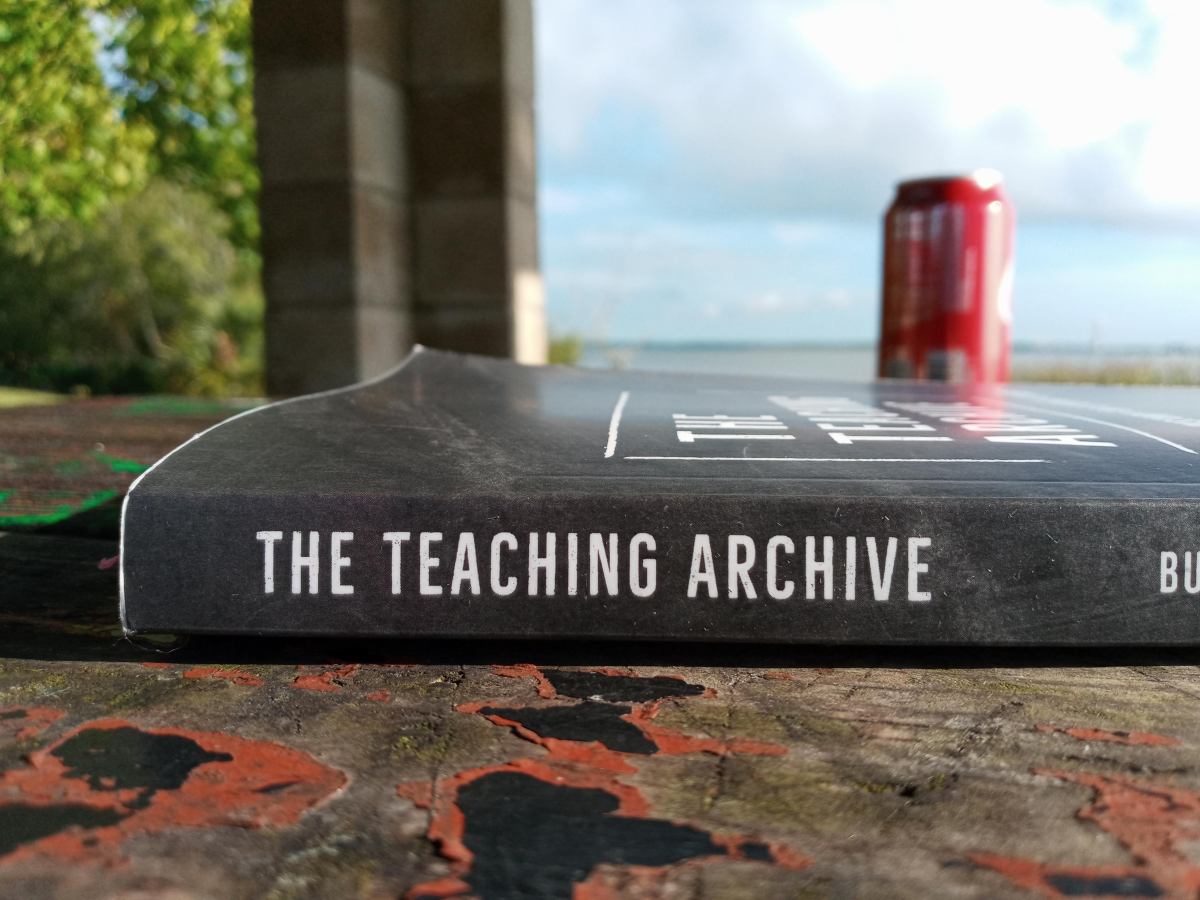
In The Teaching Archive: A New History for Literary StudyDr. Rachel Sagner Buurma, Associate Professor of English at Swarthmore College, and Dr. Laura Heffernan, Associate Professor of English at the University of North Florida, turn to archives from the actual classrooms of major literary critics of the past century to see what the available course documents tell about the history of the teaching of literature. This approach contrasts with existing histories, such as Gerald Graff’s Professing Literature, which are based on archives of published works about teaching rather than archives of teaching itself. While this book will naturally interest literature teachers most, I think that Buurma and Heffernan’s methods and findings have wider implications across academia. Every discipline has a pedagogical past to learn from and a future to archive for. One of the most surprising findings in the book is that landmark works of literary scholarship often had tangible roots in classrooms. Seeing this documented helps us better appreciate that the classroom is a site of disciplinary scholarship in its own right. I’m grateful to Buurma and Heffernan for this fascinating historical work and for responding to my questions over email.
CORRIGAN: I’m interested in the origin of the project. What prompted you to turn to archives of actual classrooms? What gave you the idea that you might find a different history of literary study there than what has previously been found based on archives of scholarly publications?
BUURMA & HEFFERNAN: Well, the project really began as an attempt to investigate how the New Critics actually taught. We had both heard New Critical pedagogy invoked over and over again as the foundation for how literary scholars teach, even if they are practicing historicism in their scholarship. And mentioning the New Criticism immediately brought to mind the familiar image of a professor leading students in a close reading of a single poem on a page. But what, we wondered, was this imaginary of the New Critical classroom predicated upon? New Critics wrote *about* teaching in their major works: Cleanth Brooks’s The Well Wrought Urn, for example, begins with a classroom scene in which the student senses the aesthetic value of Wordworth’s Westminster Bridge sonnet but needs to have that native critical judgment nurtured and amplified and modeled by the teacher through practices of closely attending to not just what the poem says but how he says it. But how did Brooks actually teach?
So we started there, and luck had it that Brooks’s papers at the Beinecke Library at Yale included transcriptions of not just his lectures but his students’ comments and questions from his Modern Poetry course (he had planned to publish a book of his lectures, and these complete transcripts were to be the basis). So, we were able to get a real sense of the ups and downs of his classroom hour; the kinds of unexpected queries he fielded from students; the historical facts he included or even misreported; and the ways that the sheer time that he spent on certain poems (like Marianne Moore’s “Poetry,” which he deemed a “failure”) belied a different kind of literary valuation at work than his stated theoretical account of what makes good poems good.
From there, we saw that there was a lot to be learned—indeed a whole other disciplinary narrative—by witnessing how scholars taught alongside what they wrote. We went to see, in the same spirit, how other foundational formalist critics including Eliot and Richards taught in their classrooms. But we also began to wonder and investigate what kinds of teaching were happening in other kinds of institutions in these same moments. Scholarly publications—particularly those manifestoes or arguments over how we should teach or read or research—tend to overrepresent figures at elite institutions. So looking at teaching instead gives us back a sense of the much bigger field of practice in these eras.
CORRIGAN: Early in the book, you stress that your book is a history of teaching—not an endorsement of how the particular teachers in your study taught (p. 17). But as I read, I kept finding things these teachers were doing really creative and interesting, such as Edith Rickert having her students create visual representations of elements of style in a text (p. 99). Were there times in your research where you thought, “Oh, that is good teaching” or even “I’m going to use that in my classroom”?
BUURMA & HEFFERNAN: Yes—and we think it’s actually a testament to how creative and interesting and maybe above all experimental literature teaching has been—we weren’t looking for model practices or assignments, but so much of what we came across seems worth stealing for our own classrooms, even though we try hard in the book to point out that we’re not holding up these figures as examples of Great Teachers or—what would be even less useful—suggesting that somehow teaching in the past used to be better and that we need to return to some previous, unfallen state of literature teaching! Because we don’t think that at all. In fact, one of the things that prompted us to write the book in the first place was knowing how hard we were working to learn to teach well in our own classrooms, how much time we were spending inventing new courses and assignments and little strategies for solving problems we ran into in the classroom, and how we saw that—despite omnipresent messages in higher ed about how bad college and university teaching is!—most of our colleagues and friends in the profession were working hard at being engaged, effective teachers and were often using really inventive methods to help their students learn. And we realized that no matter how many professors of literature were doing that, somehow engaged, effective teaching was always being framed as exception or unusual, and not the norm—and the norm, despite what we saw in our everyday professional lives, was always framed as this boring unengaged research who hating being in the classroom and just droned on to a lecture hall of bored students. So we thought that it was likely that if the present of teaching looked very different than official stories about it, there was a good chance that the past of teaching would look very different as well, if we could figure out how to find it.
And like you, other people also seem to have found the practices we document in the book useful. In his review of the book, Ben Hagen writes that:
The Teaching Archive is not a “How To” guide, yet Buurma and Heffernan acknowledge that “some of the past teaching [they] describe seems new and exciting now” (17). I can confirm that reading and rereading The Teaching Archive is pedagogically generative. This past semester (Spring 2021), inspired by the example of Spurgeon, I asked graduate students to create personal indexes of The Norton Anthology of Theory and Criticism. As we learn in chapter one, Spurgeon’s 1913 Art of Reading course did not conclude with an academic research paper but led students “just [up to] the point where [they] would begin to write a research paper,” working slowly through a process of studying, note taking, and “coordinat[ing] information into knowledge” (30, 31). Index-making, according to Spurgeon, is far from a “banal scholarly practice[]”; it is, rather, a “thoughtful” activity that “encode[s]” the values and perspectives of any given indexer—“recording this and not that, subordinating one point to another” (36). Building an index of a text, or an anthology, reveals networks of ideas as well as chains of citations and references, “set[s] of strands that you can reorder and reconnect” (36). This research emphasis on note taking and indexing—not paper writing—encourages students to make something and also to acquire a personal hold on obscure or difficult material; moreover, this activity leaves students (including mine, I hope) with a surviving record of what mattered to them in their studies, an organized set of data that they can “then recompose . . . into the shapes of [later] interpretations and arguments” (37).
CORRIGAN: One practical takeaway from your book might be an encouragement for teachers to more carefully archive our teaching materials. You mention, for instance, how rare it was to have “meticulously preserved” teaching notes like those of Caroline Spurgeon (p. 25). Do you document your own teaching any differently now that you’ve written this book?
BUURMA & HEFFERNAN: Haha, no! We should but we don’t, really. We always mean to take good notes about a class—what worked and what didn’t—but fail to do so nearly every term. (Josephine MIles, one of the poet-scholar-teachers we write about, jotted a very short and charming version of this end-of-term notes-for-next-time in one of her English 1A notebooks, which simply read: “Kill error + model style / Rouse C’s / Personal confs before midterms.”) Our teaching documents themselves are well stored because they’ve been made in word processors from the beginning. And of course, that big archive is keyword searchable—we’ve both had the uncanny experience of discovering a document of teaching notes on a relatively obscure text that we were looking up to cite or read for the first time (no kidding!).
CORRIGAN: On a related note, it strikes me that, just as your book was coming out, the pandemic forced so many teachers to do some pretty intensive archiving by making all aspects of our courses available electronically in various online, remote, and hybrid formats. Of course, intentionally online courses existed before the pandemic. But the scale we just saw was unprecedented. Do you have any thoughts on what this past year or so of teaching under these conditions might mean for cultivating “the teaching archive” going forward?
BUURMA & HEFFERNAN: Well, one thing we worry about is how much of that archive now exists within Learning Management Systems. Canvas, for example, is set up to encourage you to build out your “How to Revise a Thesis” handouts or your introductory notes on a novelist within the platform itself rather than linking to or embedding external documents. Feedback, too, often happens within the LMS. Laura, for example, has had to be really mindful about all of this because she saw how much of her own teaching record was disappearing from her personal computer—she’d go to write a recommendation letter for a former student and realize she had no record of the students’ work or her feedback on it to access. And another thing we worry about is the extent to which universities have tried to capture intellectual property in individual instructors’ courses in the chaos of everything going remote; we probably don’t even yet know to what extent this has happened at various universities. That’s an issue that faculty and faculty unions are paying more and more attention to, we think, but there aren’t really uniform practices or policies around this yet—and of course, many people don’t have a union and then advocacy for faculty around this issue can end up getting lost, or happening in piecemeal ways.
But you’re right that all of those issues and attendant dangers aside, there are a lot of exciting possibilities for what we might be able to know about teaching during this moment because of how much of it was happening remotely and has left more traces than usual—video recordings and transcripts and probably millions of hours of voicethreads and video assignments and blog posts and text chats. And we also noticed that more instructors were entering into the classrooms of instructors at other institutions. The two of us, for example, recorded lectures together, podcast style, for one of Laura’s UNF classes earlier this year, and we saw many other visits and guest lectures being organized on social media during that time. This kind of growing awareness of what’s going on not just within your colleagues’ classrooms but across different kinds of institutions seems really, really promising to us because it could serve not just as a foundation for stronger subfield scholarship but potentially also a foundation for the kind of cross-institutional labor organizing that disciplinary formations will need to nurture more and more.
CORRIGAN: Your history of literary study focuses on the teaching of “major literary scholars” (p. 3), in part so that you can contrast their writing about the discipline with their teaching of the discipline and in part (I’m imagining) because major scholars are the ones most likely to have their papers archived. But I’m curious, do you have any guesses about how different your history might look if it had been possible or practical to look at an even broader range of teachers—especially the great majority who are not major literary scholars, not well known at all?
BUURMA & HEFFERNAN: Yes—we focus on major literary scholars for exactly the reasons you describe, but part of what we found is that research is happening in tandem with teaching for everyone, whether they are writing major critical monographs, editing important collections, and publishing widely read public writing or not. This is partly because teaching itself requires research—when we prepare to teach classes, most of us find ourselves reading scholarly articles, tracking down new sources and texts, and searching out how peers past and present have taught a given text, topic, or course. All of that is literary studies research, even though we might not always recognize what we do when we prepare classes as research, and even though there’s no way to put that work down as research on a cv or make it count as research in an annual review. So we’re hopeful that we’ve written a history that opens up to the work of the great majority you mention.
CORRIGAN: I love your observation that most of literary studies takes place in classrooms. You write, “literary value seems to emanate from texts, but is actually made by people. And classrooms are the core site where this collective making can be practiced and witnessed” (p. 6). When we teach, we’re not transmitting literary studies to students for later. We’re doing literary studies with them right now. That feels revolutionary. What might change, would you guess, if more of us who teach literature consciously adopted this stance—that our courses are not about the discipline, they are the discipline?
BUURMA & HEFFERNAN: We’ve thought about this question a lot. We think it’s an insight that a lot of teachers understand, in a tacit way, through their practice. For example, there’s a line in our introduction just past what you quote here that reads, “The answer to the question, ‘Did I miss anything last week?’ is ‘Yes, and you missed it forever’” that REALLY resonated with readers. People shared that excerpt on Twitter more than any other part of the book. Because we all do know that what we’re doing in these classrooms is much more than content transfer—we’re creating knowledge!—but it’s relatively rare to see that insight ratified within the institutions in which we work, and so it’s difficult for teachers to really keep hold of it as a conscious insight about our everyday work. And if we could really hang on to the fact that we are actually creating literary value in our classrooms, we think we’d not only see new differences AND new connections to the work of other disciplines, but we’d also have a better sense of how literary studies is in some ways distinct—and so perhaps we’d be more consistent at describing and claiming the expertise we exercise in our teaching, and thus better equipped to advocate for the conditions we need in order to do that teaching well.
Because if it’s rare for the institutions in which we work to ratify (or even be able to get out of the way of) that insight, it’s even rarer to have the kind of labor this teaching entails valued by those institutions. In her “Money on the Left” podcast appearance about her book, The Order of Forms, Anna Kornbluh pointed to just this section of The Teaching Archive:
But people need time for teaching. And that means that they need small class sizes, they need workable loads, and they need the ability to have preparation that involves reading new things and changing their course syllabi all the time and like genuinely encountering and making ideas happen in the classroom. There’s this line in Rachel Buurma and Laura Heffernan’s book, The Teaching Archive, about how like in the humanities you deal with students saying like, “I couldn’t make it to class, what did I miss?” And they say, “You missed everything and you missed it forever.” Because we make the knowledge happen in that haptic, collaborative, and dynamic moment of mutual determination of meaning. That is what you missed. So I think we need time for research driven teaching and research generative teaching. And what we also know is that it is just emphatically and empirically good for students, about small class sizes, about a lot of individual attention, about a lot of dynamic kind of evolution of what’s on the syllabus, and a lot of in-person collective work.
Thank you to all who attended the CUPA-HR Annual Conference and Expo in person and virtually this week! It was wonderful to welcome new and familiar faces, celebrate CUPA-HR’s 75th anniversary, and explore outstanding sessions with so many of you.
For those who weren’t able to attend, here are three conference takeaways you can put to use wherever you are.
The Power of Kindness — Opening keynote and host of the Netflix series, “Kindness Diaries,” Leon Logothetis shared some of his experiences travelling the world fueled only by the kindness of strangers. “Kindness,” said Logothetis, “is simply a portal into human connection.” Overwhelmed by all the work to be done to support your institution’s workforce? Logothetis offered this advice: “To change the world, start by changing one life.” Who can you connect with and invest in at your institution? How can you use the power of kindness to make a difference in their life?
Birds and Frogs — Tuesday’s keynote speaker, David Epstein, spoke about the data supporting the value of generalists in a world increasingly focused on specialization. During his presentation, he offered an insightful message on how organizations can adapt successfully to change. Epstein used the example of birds and frogs; frogs are down on the ground, seeing all the granular details while the birds soaring above have a broader view of the big picture. Epstein asserted that we need both of these types of people to enhance our campus “ecosystems,” and should actively seek them out.
Ubuntu: I am because we are — Shola Richards topped off the conference with his energetic and inspiring message about the African concept of Ubuntu, which means “I am because we are.” Richards encouraged HR pros to use the spirit of Ubuntu in our various units and teams back on campus and to recognize that we will go a lot farther together than we will if we go alone — no matter how small we feel (“be the mosquito, tiny but impossible to ignore”) or how difficult the situation (“be the buffalo, and run toward the storm”).
We can’t wait to hear about the projects, initiatives, conversations and connections sparked by this year’s conference. Be sure to save the dates for our Virtual Spring Conference, April 19-21, and our 2022 Annual Conference, taking place October 22-24 in San Diego! Registration details coming soon.
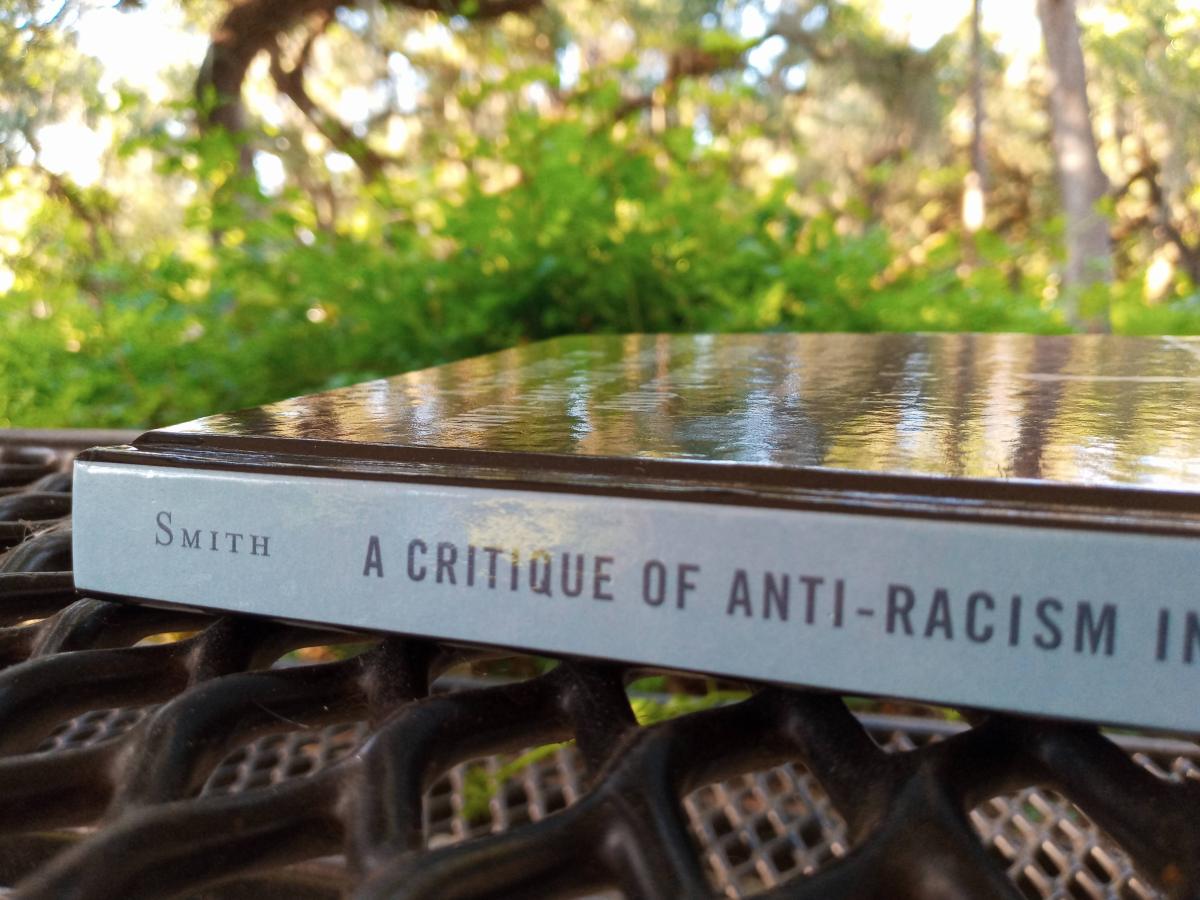
I sat down with Dr. Erec Smith, Associate Professor of Rhetoric and Composition at York College, to discuss his book A Critique of Anti-Racism in Rhetoric and Composition: The Semblance of Empowerment (Rowman and Littlefield 2019). While Erec, to be clear, opposes racism itself, he also opposes the forms of antiracism he believes constitute the current antiracism movement in writing studies. To be equally clear, I disagree strongly with most of Erec’s take. With one key exception: I agree with Erec about the value, the vital necessity, of disagreement itself.
In the preface, Erec writes: “I can only tell you that I seek truth and justice and I write this book solely from that interest. I genuinely hope people will read, engage, and critique it to their heart’s content. I want to know why they agree or disagree with my conclusions. One of the main motivations for this book is to encourage a productive and generative approach to disagreement and discourage attempts to silence, shut down, or shame others into submission” (viii).
My own desire to engage disagreement productively is specifically why I read Erec’s book and why I asked him to have this conversation with me. Now, I don’t think that all disagreements are automatically productive to engage with–and the topic of antiracism seems to draw more than its share of counterproductive ones. Indeed, when we reached the end of our talk, I felt uncertain about just how productive ours disagreement had been. (And Erec may well have felt likewise.) But nonetheless, I think, I hope, I want to believe, that the work of disagreeing together is and can be an important aspect of being and becoming more effectively antiracist. So this conversation is one effort at that, and, disagreements aside, I’m grateful to Erec for participating with me.
If you see the role of disagreement in antiracism differently, well, I’d love to talk with you about that.
David Watson once wrote that the answer to the question as to whether universities were in the private or the public sector was “yes”.
He suggested that universities most resembled BAE Systems: a private company with a host of public contracts. Back in 2011, the Coalition white paper on HE opened by trumpeting “Higher education is a successful public-private partnership: Government funding and institutional autonomy.”
It was always the aim of second round of public sector reform (“Privatisation 2.0”) to create an education market that could be regulated like public utilities in the UK. And so the recent spate of collapses amongst energy “suppliers” prompted me to think about Watson’s comments through the lens of bankruptcy.
Last summer’s announcement from the Department for Education of an HE “Restructuring Regime” (HERR) was badged as a Covid-related, “last resort” and outlined general principles covering possible government support pre-bankruptcy.
Consistent with earlier statements regarding its approach to the orderly exit of “unviable institutions”, the opening sections of the HERR made things clear:
§4 The Regime does not represent a taxpayer-funded bail-out of the individual organisations which make up the higher education sector. It is not a guarantee that no organisation will fail – though current students would be supported to complete their studies, either at that institution or another.
Providers approaching DfE for support will be considered on a case-by-case basis, to ensure that there is a sound economic case for government intervention, with loans to support restructuring coming from public funds as a last resort.
There, a “clearing house” was even established to distribute around 2000 affected students to alternative courses at different providers.
HERR made the priorities clear for its case by case consideration of whether to lend to an institution that had exhausted all other options and ‘would otherwise exit the market’:
the interests of students;
value for money;
maintenance of a strong science base;
alignment with regional economies;
support for “high quality courses aligned with economic and societal needs”.
Elaborating on the last of those, the 2020 document unsurprisingly picked out “STEM, nursing and teaching”. In sum, an institution in difficulties would be required to show that:
(i) it had a plan for future sustainability;
and (ii) that its collapse ‘would cause significant harm to the national or local economy or society’.
Alongside those points, it is worth recognising that it will be easier for the government to be sanguine about the disappearance of smaller institutions in areas that are otherwise well covered by universities (e.g. London).
Those that would be offered help will still find the “Regime” a deeply unpleasant experience: they mean it when the write about a “last resort”.
A bankrupt university will prove a bigger problem than an energy provider. But it is clear that the government will aim along those lines, such that a university bankruptcy will not be like a local authority issuing a “section 114”.
One should therefore reject any idea that financial deficits do not matter for universities.
Like private companies they face cash constraints. They can support an excess of expenditure over income so long as the cash outflow can be absorbed by cash reserves. When the latter are exhausted and debts cannot be settled as they fall due, then the institution will fall over without outside support.
Popular critiques of austerity and theories about governments and money might have misled people here.
As Watson noted, his answer about BAE Systems would make a lot of people uncomfortable. It’s even more discomforting to think that the government might view universities more like Igloo, Symbio, Enstroga et. al..
UPDATE – 7th October
By coincidence, DfE has just announced the closure of the “Regime” to “new applicants” with a deadline of 31 December 2021. They aim to move all applications “to a conclusion” by July 2022. This decision reflects the fact that HERR was a pandemic measure, but, as I outlined above, the process and criteria set out there do give some indications as to how the department and regulatory bodies will approach bankruptcies in general.
I started producing weekly Teaching in Higher Ed podcast episodes in June of 2014. Since that time, a new episode has aired each week. This is something that I’m both proud of – yet a little horrified that I have got a streak going that may not be sustainable (or make sense) in the long run. As of today (October 2), I also have another streak going… I’ve closed my Apple Watch rings for 334 days straight. That means I’ve done at least 30 minutes of cardio, stood for at least a minute for 12 hours, and burned at least 440 calories during the day. I’m thinking it might be healthy if I were to not focus as much as I have been on maintaining either of these streaks and give myself a bit of a break. But I plan on sticking with them both (if I can) at least until the end of 2021.
A few years ago, Dave and I switched hosting companies for our podcasts. That’s why, instead of this being a list of the top 21 episodes of all time, I’m sticking with the top 21 since 2019. Someday, I might go back and combine the data from before the switch and now. However, for now, I’m keeping it simple.
Top 21 of the Most Listened to Episodes since 2019
Episode 324 – Teaching Effectively with Zoom with Dan Levy (2020)
Episode 309 – Hyflex Learning with David Rhoads (2020)
Episode 263 – Recipes for Effective Teaching with Elizabeth Barkley (2019)
Episode 320 – How to Be Together in Learning Online with Jesse Stommel (2020)
Episode 258 – Paying the Price with Sara Goldrick-Rab (2019)
Episode 316 – Designing for the Uncertain Fall with Maria Andersen (2020)
Episode 254 – Stop Talking, Start Influencing with Jared Horvath (2019)
Episode 291 – Learning Myths and Realities with Michelle Miller (2020)
Episode 314 – Culturally Responsive Online Teaching with Courtney Plotts (2020)
Episode 295 – Online Engagement Through Digital PowerUps with Travis Thurston (2020)
Episode 256 – Creating Wicked Students with Paul Hanstedt (2019)
Episode 296 – Toward Cruelty-Free Syllabi with Matthew Cheney (2020)
Episode 273 – Engaging Learners in Large Classes with Bonni Stachowiak (2019)
Episode 264 – Serving Hispanic Students with Melissa Salazar (2019)
Episode 271 – The Missing Course with David Gooblar (2019)
Episode 269 – Removing Learning Barriers with Universal Design for Learning (UDL) with Jennifer Pusateri (2019)
Episode 290 – The Productive Online and Offline Professor with Bonni Stachowiak (2020)
Episode 282 – Using Challenges to Motivate Learners with Mike Wesch (2019)
Episode 277 – Intentional Tech with Derek Bruff (2019)
Episode 253 – Spaces and Places (and Nudges) with José Bowen (2019)
Episode 259 – Intentional and Transparent Assessment with Natasha Jankowski (2019)
Other Popular More Recent Episodes
Here are some other more recent popular episodes from 2021: