Author: admin

  • ASU Receives $50M Gift to Develop Energy Institute

    ASU Receives $50M Gift to Develop Energy Institute

    Arizona State University has received a $50 million donation to launch the Global Institute for the Future of Energy, a collaboration between its Julie Ann Wrigley Global Futures Laboratory and the Thunderbird School of Global Management that seeks to promote education and innovation regarding energy production and use.

    The gift comes from Bob Zorich, who earned his master’s degree in international management in 1974 from Thunderbird’s predecessor, the American Graduate School of International Management.

    “ASU has long been a pioneer in building bold, pragmatic solutions for the future,” said Zorich, founder and managing partner of the Texas-based private equity firm EnCap Investments. “President Michael Crow has taken a visionary and action-oriented approach to positioning the university as a leading center for research, educational excellence and global influence. For these reasons, I was excited to fund the formation of this energy institute at ASU because of the university’s unique ability to scale and reach a global audience.”

    Zorich’s gift will help the institute recruit a chair and staff and start developing curriculum for students, executives and the public. In the second year, the institute aims to launch a fellowship and executive-in-residence program, as well as a series of public programs, including lectures, summer camps and a global energy conference.

    In addition, some of the funds will support Energy Switch, a point-counterpoint show on Arizona PBS that brings together experts from government, NGOs, academe and industry to debate energy-related topics.

    “Energy is central to nearly every facet of our daily lives, and we have to prepare now for an evolving energy future,” Crow said in a statement. “With the rapid growth of AI and other fast-moving innovations, we have a responsibility to ready the next generation of energy leaders and solutions. Bob Zorich’s visionary investment will empower our global understanding of energy, our vital literacy and how we can work together to develop the best paths forward.”

    Source link

  • What Did the University of Virginia Agree To?

    What Did the University of Virginia Agree To?

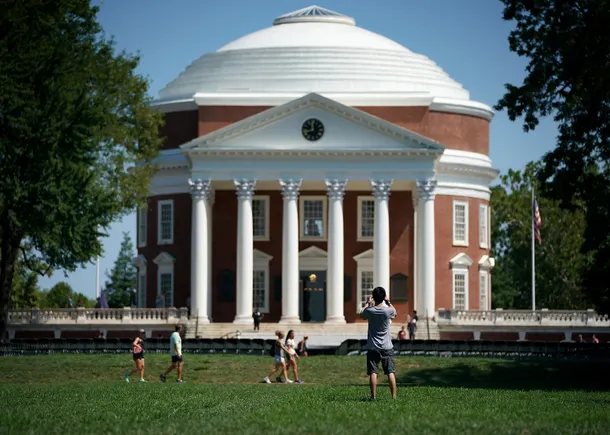
    In agreeing to follow sweeping guidance from the Department of Justice earlier this week, the University of Virginia committed to eliminating all DEI programming and adhering to the Trump administration’s broad interpretation of the Supreme Court’s 2023 decision banning race-conscious admissions policies.

    The nine-page DOJ memo, released in July, also bans the participation of transgender athletes in sports and the use of “ostensibly neutral proxies” for race, like geographic location. It came just three months after a federal court struck down a similar directive from the Department of Education and was viewed by many policy experts as even more wide-reaching and restrictive. The guidance hasn’t yet faced a legal challenge.

    Attorney General Pam Bondi originally wrote in the memo that the provisions outlined were a list of “non-binding suggestions” designed to “minimize the risk of [legal] violations.” But now, at least for UVA, it has become obligatory “so long as that guidance remains in force and to the extent consistent with relevant judicial decisions.” Failure to comply could risk the university’s federal funding.

    Under the agreement, the DOJ says it will temporarily pause all pending civil rights investigations, but if at any point Trump officials determine the flagship institution is making “insufficient progress toward compliance,” the DOJ reserves the right to resume investigation, pursue enforcement actions or terminate federal funding. In the meantime, UVA will be required to provide “relevant information and data” to the agency on a quarterly basis through 2028.

    “So if [UVA] feels confident that they can comply, then this could be a good outcome for the school. The investigations are closed and they don’t admit liability,” said Scott Goldschmidt, a partner and civil rights specialist at the law firm Thompson Coburn LLP. “But if there is any issue, or the government sees otherwise, then all bets are off, and they could be in a worse position than when they signed the agreement.”

    In Goldschmidt’s view, it’s all a part of the DOJ’s effort to encourage colleges to accept “their interpretation of law” without facing a legal challenge.

    “It was nonbinding,” he said of the guidance, “which is, again, why it’s so interesting that UVA seemed to pre-emptively comply with this over the summer and now has turned it into mandatory guidance by this agreement.”

    Starting in April, the DOJ used a series of letters to accuse UVA officials of actively attempting to “defy and evade federal anti-discrimination laws.” By early June, experts say, the assistant attorney general pressured former UVA president James Ryan to resign. Still, in the wake of the Justice Department’s pressure campaign, the institution’s interim president, Paul Mahoney, rejected the Trump administration’s even more sweeping “Compact for Academic Excellence in Higher Education” last week.

    UVA is just the latest institution to cut a deal with the Trump administration, though unlike those previous agreements, the public university won’t have to pay anything. This is also the first agreement to be made that deals primarily with the Justice Department’s guidance and diversity, equity and inclusion rather than alleged mishandling of antisemitism on campus.

    As other colleges and universities face related investigations, this deal could become a new framework for the administration and how it negotiates to bring higher education to heel.

    So, here’s a look at three key aspects of the agreement.

    1. Ending What Trump Calls Segregation and Preferential Treatment

    The July directive set four core standards for the universities and provided a broad but nonexhaustive list of examples for each.

    First, the DOJ requires the university to eliminate any practices in admissions, hiring or programming that Trump deems “preferential treatment” based on race, sex, religion or “other protected characteristics.” This could include identity-based scholarships, affinity groups or support programs; hiring or promotion practices that prioritize one specific group over another; or designating certain spaces on campus for students of a particular identity.

    Then, officials added in the memo that the use of purportedly neutral characteristics, like geographic location and cultural competency, are also prohibited as they can be used as “substitutes” for protected characteristics and are therefore “unlawful proxies.”

    The department cited essay prompts that suggest applicants write about “overcoming obstacles” as an example, despite the fact that the Supreme Court explicitly said in its ruling on affirmative action that college applicants could still write about their experiences with racism, sexism or religious discrimination so long as universities did not use them to re-establish “the regime we hold unlawful today.”

    The memo also lists segregation and training that officials say promotes discrimination as violations of civil rights law, citing as examples race-based training sessions like “Black caucuses” and “white ally meetings” and measures for selecting contracts that prioritize female-owned businesses.

    But what UVA is required to do under the guidance could change depending on court decisions.

    2. Not Infringing Academic Freedom

    In the text of the agreement and various materials distributed by UVA, university officials appear to intentionally reinforce that these restrictions on admissions, hiring and extracurricular programing will not impede the university’s right to academic freedom.

    “The U.S. does not aim to dictate the content of academic speech or curricula, and no provision of this agreement, individually or taken together, shall be construed as giving the United States the authority to dictate the content of academic speech or curricula,” the sixth point of the agreement reads.

    Mahoney’s statement to the UVA committee, as well as a frequently asked questions page on the UVA website, emphasized similar points, saying that no “external monitor” would be involved and that UVA will address any compliance concerns raised by the DOJ independently.

    “Importantly, [the agreement] preserves the academic freedom of our faculty, students, and staff,” Mahoney wrote. “We will also redouble our commitment to … free expression, and the unyielding pursuit of ‘truth, wherever it may lead,’ as Thomas Jefferson put it.”

    This differs from the more recent Compact for Academic Excellence in Higher Education, which would require an institution to restrict employees from expressing political views on behalf of the institution and shut down departments that “punish, belittle” or “spark violence against conservative ideas.”

    3. Pausing Liability but Keeping the University Vulnerable

    The second line of the agreement makes it clear that the document is not “an admission, in whole or in part” and that UVA “expressly denies liability with respect to the subject matter of the investigations.”

    So, as long as UVA complies with the DOJ memo, the investigations will be closed and the university will no longer be at risk of having to pay a multimillion-dollar settlement fee or losing federal financial aid. But Goldschmidt from Thompson Coburn emphasized that such a scenario is “a big if.”

    “If the DOJ at any point finds that UVA did not comply, then everything gets reopened, and all the potential issues, penalties, etc. that could come from a federal civil rights investigation would fall back down on the institution,” he explained.

    And given that the DOJ’s memo is “the most aggressive document that we’ve seen reinterpreting Title VI civil rights laws,” Goldschmidt said, the risk is even greater. So while UVA has already made its decision, he suggested that other universities think it through before they do the same.

    “Schools would really want to think hard and deep about whether there is any wiggle room,” he said, “because the consequences of violating the DOJ’s memo are so strong.”

    Article was updated to reflect a clause in UVA’s agreement that the university is bound by the guidance so long as it remains and consistent with relevant judicial decisions.

    Source link

  • Rethinking Leadership Development in Higher Ed (opinion)

    Rethinking Leadership Development in Higher Ed (opinion)

    Higher education is in the midst of a crisis of confidence that has long been building. In this time of volatility, complexity and uncertainty, the steady hand of leaders matters more than ever. Yet academia does—at best—a very uneven job of preparing academic leaders for steady-state leadership, much less for times when the paradigm is shifting. This moment is creating an opportunity to reconsider how we prepare leaders for what will come next.

    Why Is Leadership So Uneven in Higher Ed?

    A primary reason lies in how we select and develop leaders. In academia, searches for department chair, dean and provost often emphasize top-level scholarly and research credentials and only secondarily consider an individual’s experience, perspective and ability to influence and motivate others to support shared missions. Academics in general do not respond well to directives: They expect to be persuaded, not commanded. Additionally, it is often only after being hired that those in formal positions of authority are provided with leadership-development opportunities to help foster those interpersonal skills—too late for foundational growth.

    These approaches to recruiting formal leaders are rooted in flawed assumptions about how leadership works. True leadership is not about commanding compliance but about shaping unit culture through influence. Many leaders fail by not understanding the difference. An effective leader is a person of strong character who can build trusting relationships with others; these skills take time to develop and usually take root even before a person assumes a leadership role.

    Another important reason that leadership in higher ed is uneven arises from conceptualizing leadership as a “heroic” individual endeavor. The same skills that help a formal leader to be successful—such as understanding the alignment of their actions with the unit’s mission; strong communication skills, including listening; the ability to navigate conflict, negotiation and conflict resolution; and formulating and articulating clear collective goals— are equally crucial for others to exercise to be fully engaged participants.

    Leaders with formal roles and titles play a crucial role in promoting a productive and collegial culture. At the same time, they do not do so alone: It is equally important that participants who are not in formal administrative roles are also seen (and see themselves) as central in shaping these environments, and that they are aware of how their own actions and interpersonal dynamics contribute to their working and learning experiences.

    In short, leadership responsibility is not limited to administrators. There are layers of formal leadership roles embedded inside departments and schools, visible whenever faculty members and staff take on responsibilities for shared governance and advisory roles; lead team research or manage grant portfolios; and select (hire), supervise, evaluate and mentor colleagues and other early-career individuals. These faculty and staff are leaders, too, whether or not they see, accept or internalize those roles.

    When leadership is viewed simply as an individual attribute rather than a process that emerges from the relationships among people in teams, organizations miss the opportunity to develop cultures of excellence that support integrity, trust and collaboration at all levels. Thus, we argue that leadership ought to be understood as an ongoing process of character development and a responsibility shared by all members of an organization—not something that can be addressed in a one-off workshop, but as an integral dimension of the work.

    The Foundations of Leadership: Influence Before Authority

    Rather than framing leadership as something only people with formal authority do, a more productive model is to view leadership as influence. By influence we mean modeling the behaviors we seek to share and promote in our groups so that we can better shape the way we solve problems collectively. Leadership is not in essence a position; it is contributing to an ongoing process of shaping culture, norms and behavior within a unit.

    Social psychology shows that we influence each other constantly. The more time we spend with people, the more we become like them and vice versa. This means that bad habits can spread as easily as good ones. When everyone is given an opportunity to develop good habits, they are more likely to spread throughout the community. Our character affects how we influence others. We are much more likely to be influenced by a person who demonstrates integrity and curiosity than we are by someone who is demanding and unwilling to listen.

    Here are some areas of practice for developing better influence:

    • Self-awareness and self-management: Focusing on oneself first helps individuals identify their strengths and areas for growth, while encouraging them to recognize and respect their roles and responsibilities in the current situation. Understanding oneself, one’s values, habits and motivations, is foundational to recognizing how we affect and are affected by those around us.
    • Conflict resolution: Healthy debate is foundational to innovation and growth. Developing strong conflict-resolution skills contributes to increased perspective-taking, depersonalizing disagreement and yielding more effective discussion and problem solving.
    • Decision-making: Understanding how we make decisions, and more importantly how heuristics influence and bias our decision-making, can help people slow down to make more ethical and effective decisions.

    Opportunities for influence are available to everyone, not just those in formal leadership roles. Early-career faculty, staff and students can cultivate influence by setting examples for collaboration, through ethical behavior and by contributing to collective problem-solving. Leadership is not centrally about having authority over others; it is about shaping an environment in which ethical decision-making, respect and shared purpose flourish.

    Reimagining Leader Development in Higher Ed

    Now more than ever, individuals need support in managing their careers with integrity and purpose—aligning their personal values and goals with those of their institutions. Leadership development should not be viewed as a costly add-on. In fact, it can be integrated into the everyday fabric of academic life through accessible and scalable methods, including:

    • Peer-learning cohorts that provide space for discussion and reflection on leadership challenges.
    • Guided personal reflections on workplace dynamics, communication and decision-making.
    • Structured mentoring programs that cultivate leadership skills through real-world interactions.
    • Deliberative conversations around such themes as research ethics, authorship and collaboration to build trust and integrity within teams.
    • Conflict-resolution training embedded in routine professional development activities.

    Our experience at the National Center for Principled Leadership and Research Ethics shows that even modest efforts—like those above—can spark essential conversations between mentors and mentees, improve communication, and positively influence both unit climate and individual well-being. To support this work, we offer a free Leadership Collection—an online collection of tools, readings and practical exercises for anyone seeking to lead more effectively, regardless of their title or career stage.

    When leadership development is embraced as a core part of academic life—not just a formal program or a luxury for a few—it can become a catalyst for healthier, more purpose-driven institutions.

    Conclusion: Leadership Development as a Cultural Foundation

    Reserving leadership-development programming only for when people reach formal leadership roles is a missed opportunity to develop broader and more inclusive working cultures. Such cultures emerge from the relationships among the members of a group. Building better relationships starts with personal growth, self-awareness and emotional intelligence for each member. Taking responsibility for one’s own professional growth and for one’s influence on others is also an important kind of leadership.

    True leadership, therefore, is not about directing others but about fostering environments in which good habits, strong ethics and meaningful engagement flourish. If universities want to build sustainable cultures of excellence, in which leadership is no longer an individual endeavor but a shared commitment to collaboration, they should start embedding it in professional development and routine practice for all. As uncertainty prevails, budgets are cut and people are navigating deep change, now is the moment to reconsider how we shape leaders in higher education.

    Elizabeth A. Luckman is a clinical associate professor of business administration with an emphasis in organizational behavior and director of leadership programs at the National Center for Principled Leadership and Research Ethics at the University of Illinois at Urbana-Champaign.

    C. K. Gunsalus is the director of NCPRE, professor emerita of business and research professor at the Grainger College of Engineerings Coordinated Sciences Laboratory at the University of Illinois at Urbana-Champaign.

    Nicholas C. Burbules is the education director of NCPRE and Gutgsell Professor Emeritus in the Department of Education Policy, Organization and Leadership at the University of Illinois at Urbana-Champaign.

    Source link

  • Oral Exams and “MTV Unplugged”

    Oral Exams and “MTV Unplugged”

    Oral exams are making a comeback, and I’m mostly here for it.

    A few weeks ago, we had a faculty professional development day on campus. One of the sessions was devoted to faculty greatest hits, defined loosely as teaching techniques that people are proud of and were willing to share with their colleagues. The session was terrific over all, but the one I haven’t been able to stop thinking about was from a professor who decided to fight AI-enabled cheating by giving oral exams.

    For context, the class in which he started using oral exams was conducted over Zoom. That made it particularly difficult to prevent students from accessing unauthorized sources during tests. When the apparent cheating hit a level he hadn’t seen before, he resorted to oral exams to force students to rely only on themselves.

    He reported that the exams took about 15 minutes per student, so with a relatively small class, the logistics weren’t prohibitive. As he told it, it became clear quickly which students had mastered the material and which were just lost.

    Oral exams aren’t exactly a new technology, but they have a new appeal. Readers of a certain generation may remember MTV Unplugged. It was a concert show in which performers had to use only nonelectric instruments. Stripped of synthesizers and Auto-Tune, some musicians thrived and some really struggled. (I remember my roommates and I laughing ourselves silly at Duran Duran’s effort on Unplugged. By contrast, Nirvana’s was so good that the performance came out later as an album.)

    Oral exams are similar; when the student doesn’t have any of the usual crutches, you get a cleaner sense of what they actually know. Now that the illicit crutches are ubiquitous, forcing students to unplug is more useful than ever.

    I’ll admit breaking into a cold sweat at the memory of my own oral exams in grad school, but those were long, high-stakes and conducted by a group. In retrospect, though, part of what made that so difficult was that I’d never had an oral exam up to that point. I hadn’t had any practice. And if I’m being honest, the professors hadn’t had much practice, either. That was a hell of a time to start.

    From the administrative side, I can imagine a few potential concerns with oral exams. I’m hoping that my wise and worldly readers can help.

    The first and most basic one is that most of us don’t have much experience designing oral exams. I’ve never seen a workshop on design principles for orals. (They may exist, but I’ve never seen or heard of one.) To be fair, most of us were never taught how to construct written exams, either, but at least most of us have experience there. In the absence of serious attention to ways to construct oral exams, I’d have a concern about validity.

    The second is about grade appeals. If the exam is lost to history, how does a student reasonably contest a grade? I don’t mean to encourage appeals, but there needs to be some way for a student to press a case when they feel wronged. Presumably the exams could be recorded, but there, too, we’d need serious and enforced rules governing access to the recording and when it would need to be deleted.

    Finally, there’s a basic issue of stage fright. A student freezing up could be clueless, or they could be paralyzed with fear. It would be a shame to fail a student who actually knows their stuff because they got nervous and went into vapor lock. Presumably this issue would fade if oral exams became a lot more common, but the first wave is likely to run into this one repeatedly. Test anxiety is bad enough for written exams; combine it with stage fright and some capable students will struggle.

    Still, none of these strike me as dispositive.

    Wise and worldly readers, have you found ways to ensure that oral exams are well designed? How do you handle recording? And what do you do about student stage fright? I’d love to hear at deandad (at) gmail (dot) com. Thanks!

    Source link

  • Dennis A. Mitchell | The EDU Ledger

    Dennis A. Mitchell | The EDU Ledger

    Dr. Dennis A. MitchellDennis A. Mitchell has been appointed Dean of the Columbia University College of Dental Medicine and Senior Vice President of the Columbia University Irving Medical Center. 

    A renowned clinician, researcher, and administrator,  Mitchell joined the Columbia faculty in 1991 and has since devoted much of his career to strengthening both the faculty and student experience and fostering an inclusive campus climate. He is a professor of Dental Medicine (Community Health and Periodontics) at CUIMC and recently served as Senior Advisor for Inclusion and Belonging. 

    Mitchell earned his DDS from the Howard University College of Dentistry and completed his general dentistry residency training at Harlem Hospital. He obtained his MPH degree in executive health services management at the Columbia Mailman School of Public Health. 
     

    Source link

  • Specialist arts institutions are not a luxury; they are the crucibles of Britain’s creative future

    Specialist arts institutions are not a luxury; they are the crucibles of Britain’s creative future

    This blog was kindly authored by Professor Randall S Whittaker Principal and CEO Rose Bruford College.

    London’s creative industries are not a cultural accessory; they are an economic engine. Around one in seven jobs in the capital sits within the creative industries, and if you include creative roles embedded across other sectors, that figure rises to nearly one in five. Almost a third of all UK creative businesses are based in London.

    The UK’s creative success is no accident. It rests on a delicate, interdependent education ecosystem: specialist arts institutions; research hubs; and universities that together generate not only talent but innovation, identity and national soft power.

    That ecosystem is under pressure. Rising costs, uneven funding, and the new fashion for mergers, the proposed “super university” being the latest example, are driving a wave of consolidation.

    Why “super universities” miss the point

    When two generalist universities merge, their academic portfolios may blend. When a small, practice-led arts institution is absorbed, it rarely blends; it dissolves. Studios become seminar rooms. Ensemble training becomes optional. Niche disciplines disappear in the name of efficiency. Scale rewards the generic; creativity thrives in the specific.

    The Kent–Greenwich merger, planned for 2026, is being hailed as a pragmatic response to sector-wide financial stress. On paper, such consolidations look neat: shared back-office functions, pooled estates, a single regional brand. But higher education is not a spreadsheet exercise.

    It’s understandable that, given Rose Bruford College’s geography — located between Kent and Greenwich — and a financial position that has been challenging but is now improving, some might assume that joining a “super university” is the logical next step.

    Yet that assumption misunderstands what specialist colleges contribute. Rose Bruford’s strength lies precisely in what cannot be merged: its scale, its agility, its ensemble ethos, its craft-specific research culture, and its proven industry connectivity. The College’s recovery — from stabilised finances to a UKRI-funded research project and multiple national awards for both performance and technical excellence — shows that independence is not indulgence; it is impact.

    The question is not whether Bruford can survive outside the merger, but whether the creative industries can afford to lose what institutions like Bruford uniquely provide. When specialist institutions disappear, we do not gain efficiency; we lose an entire mode of creativity.

    There are, of course, examples where partnership has protected identity: the Royal Birmingham Conservatoire operates as an associate faculty of Birmingham City University, retaining its governance and character while sharing infrastructure. That balance, autonomy with alignment, is the exception not the rule. For most specialist creative institutions, a merger could mean absorption, not collaboration.

    From curtain call to crucible

    It remains true that it is a curtain call for the old, exclusionary model of time-intensive training that shuts out those without privilege or flexibility.
    What must be defended now is the right of specialist institutions to re-imagine rigorous training on equitable, sustainable terms.

    Specialist creative higher education is not a conveyor belt. It is a crucible.
    To mistake it for a “skills pipeline” is to misunderstand its purpose. Specialist higher education institutions are not service departments for the creative industries; they are cultural forces — sites of disruption, experimentation and social imagination.

    Graduates from these environments do not merely enter the creative industries; they redefine them. They found new companies, invent formats, challenge hierarchies, and expand who gets to tell Britain’s stories.

    Research, re-imagined

    Specialist arts institutions do not reject research; they redefine it. Practice is their laboratory. Performance, design and experimentation are their methodologies. Rose Bruford’s recently UKRI-funded research project exemplifies how specialist providers drive national innovation, producing knowledge that moves from rehearsal rooms to public discourse, from artistic experiment to policy impact.

    The power of the specific

    The reach of this work is visible every night on screens and stages.

    • Jessica Gunning, BAFTA, Emmy and Golden Globe winner for Baby Reindeer, trained at Rose Bruford.
    • Bernardine Evaristo, Bruford alumna and Booker Prize winner, saw her novel Mr Loverman adapted for television and a Women’s Prize Outstanding Contribution Award, recognising her “transformative impact on literature and her unwavering dedication to uplifting under-represented voices”.
    • Stephen Graham and Hannah Walters, who met as Bruford students, co-starred in Adolescence — proof that specialist institutions forge lifelong creative partnerships.
    • Sir Gary Oldman, Slow Horses, began his journey at Bruford and continues to define British performance worldwide.

    Excellence extends far beyond the spotlight. At the Profile Awards, lighting design alumni Jessica Hung Han Yun, Sarah Readman, and Joshua Pharo, together with Joshie Harriette, all received national recognition. Hung Han Yun — also an Olivier Award winner for My Neighbour Totoro — shows how specialist training produces innovators whose artistry is both technical and conceptual. These achievements prove that excellence in production crafts is not ancillary to the arts; it is integral to Britain’s creative leadership.

    Diversity and student choice

    A healthy higher-education system depends on difference, in mission, in method, in who it serves.

    If independent specialist higher education institutions disappear, the UK’s higher-education landscape flattens. The sector loses, not only training for performers and designers, but the pedagogical diversity that keeps higher education alive, the alternative modes of learning that reach students who may not thrive in traditional university structures.

    For students, the consequences are immediate. Choice collapses from a landscape of craft pathways to a handful of broad “creative-arts” degrees. The student who might have trained as a lighting designer, scenographer or community-theatre facilitator is left with a single, generic option. In a system obsessed with “student choice”, consolidation removes the very choices that matter most — about identity, craft and form.

    GuildHE’s recent Championing a Diverse Higher Education Sector manifesto underscores this point. It highlights the extra costs of small-class teaching and industry-standard facilities that specialist colleges cannot cross-subsidise, and calls for direct funding, reform of research and knowledge-exchange thresholds, and capital investment to secure the sector’s future. These are not indulgences; they are the practical conditions for diversity itself.

    Funding reform is an investment in inclusion

    What specialist institutions seek is not indulgence — and not simply more money to do the same thing. They seek resources that enable transformation: sustainable workloads, flexible modules, hybrid teaching, and equitable access, without sacrificing rigour.

    As GuildHE notes, funding architecture must recognise that small specialist colleges cannot offset studio-based costs in the way comprehensive universities can. Reforming those systems is how government can genuinely champion diversity rather than merely declare it.

    Starving specialist institutions into mergers is not efficiency; it is slow erasure.

    A national imperative

    Britain’s creative industries are a cornerstone of the economy and of international reputation. Yet the institutions that make that possible are treated as optional extras.

    If independent, practice-led institutions vanish, we lose not only talent pipelines but the laboratories of imagination, the incubators of diversity, and the ability to renew what British creativity means.

    Specialist creative institutions are not relics of the past. They are the crucibles of the future — where risk is rehearsed, difference made visible, and new worlds imagined into being. Fold them into super universities, and the loss will not be obvious at first.
    But over time, our screens, our stages and our stories will all start to look the same. And by then, it will be too late.

    Source link

  • Unlocking Learning Potential with Concept Maps – Faculty Focus

    Unlocking Learning Potential with Concept Maps – Faculty Focus

    Source link

  • Unlocking Learning Potential with Concept Maps – Faculty Focus

    Unlocking Learning Potential with Concept Maps – Faculty Focus

    Source link

  • A university system reliant on international students has an obligation to understand them

    A university system reliant on international students has an obligation to understand them

    It is becoming difficult to ignore potential tension between the internationalisation of higher education and plans to cut net migration. Recent UK government policies, such as the reduction of the graduate visa from two years to 18 months, could have severe consequences for universities in Scotland.

    Scottish government funding per home student has not kept pace with inflation. To compensate for the subsequent gap in resources, universities have become more dependent on international enrolments.

    In addition, Scotland faces specific demographic challenges. By 2075, the number of working aged Scots is predicted to fall by 14.7 per cent and, without migration, the population would be in decline. Encouraging young people to remain after graduation could help to balance the ageing population. However, although the Scottish government favours a more generous post-study visa route, this is not supported by Westminster.

    Ability to adjust

    Rhetoric around internationalisation tends to emphasise positive factors such as increased diversity and cross-cultural exchange. Yet, as an English for Academic Purposes (EAP) practitioner, I have long been concerned that learners from diverse linguistic backgrounds are often viewed through a lens of deficiency. There is also a risk that their own needs will be overlooked in the midst of political and economic debate.

    To better understand how students’ sense of identity is affected by moving into new educational and social settings, I carried out interview-based research at a Scottish university. Like other “prestigious” institutions, it attracts a large number of applicants from abroad. In particular, some taught master’s degrees (such as those in the field of language education) are dominated by Chinese nationals. Indeed, when recruiting postgraduate interviewees, I was not surprised when only two (out of 11) came from other countries (Thailand and Japan).

    My analysis of data revealed typical reasons for choosing the university: ranking, reputation and the shorter duration of master’s courses. Participants described being met with unfamiliar expectations on arrival, especially as regards writing essays and contributing to discussion. For some, this challenged their previous identities as competent individuals with advanced English skills. These issues were exacerbated in “all-white” classes, where being in the minority heightened linguistic anxiety and the fear of being judged. They had varied experiences of group work: several reported – not necessarily intentional but nonetheless problematic – segregation of students by nationality, undermining the notion that a multi-national population results in close mixing on campus.

    In a survey administered to a wider cohort of respondents on a pre-sessional EAP programme, the majority agreed or strongly agreed when asked if they would befriend British people while at university.

    However, making such connections is far from straightforward. International students are sometimes criticised for socialising in monocultural groups and failing to fully “fit in”. However, the fatigue of living one’s life in another language and simultaneously coping with academic demands means that getting to know locals is not a priority. At the same time, research participants expressed regret at the lack of opportunity to interact with other nationalities, with one remarking, “if everyone around me is Chinese, why did I choose to study abroad?” Some encountered prejudice or marginalisation, reporting that they felt ignored by “fluent” speakers of English. Understandably, this had a detrimental effect on their ability to adjust.

    Different ways to belong

    To gain different perspectives, I also spoke with teachers who work with international students. EAP tutors believed that their classes offer a safe space for them to gain confidence and become used to a new way of working. However, they wondered whether there would be a similarly supportive atmosphere in mainstream university settings. Subject lecturers did not invoke phrases such as “dumbing down”, but several had altered their teaching methods to better suit learners from non-Anglophone backgrounds.

    In addition, they questioned whether internationalisation always equated to diversity. One commented on the advantages of having a “multicultural quality”, but added that it “has to be a mix” – something which is not possible if, like on her course, there are no Scottish students. Another mentioned that the propensity to “stick with your own people” is not a uniquely Chinese phenomenon, but common behaviour regardless of background.

    A few academics had noticed that most Chinese students take an attitude of, “I’m doing my (one-year) master’s and maybe then I have to move back to China.” Chinese students are less likely than some other nationalities to apply for a graduate visa, suggesting that their investment in a degree abroad is of a transactional nature.

    The majority of survey respondents indicated that they would adapt to a new way of life while living abroad. However, during my last conversation with focal interviewees, I uncovered different levels of belonging, ranging from, “I feel like I’m from Scotland”, to “my heart was always in China”, to “I don’t have any home.” Participants generally viewed their stay as temporary: in fact, all but the Japanese student (who accepted a job in the US) returned to their home country after graduation. Although they described their time in Scotland in mostly positive terms, some were disappointed that it had not provided a truly intercultural experience.

    Meltdown

    It is clear that universities in Scotland have become overly reliant on international tuition for their financial sustainability. At the same time, there is conflict between the devolved administration’s depiction of Scotland as outward looking and welcoming, and the reality of stricter migration policies over which it has no control.

    Discourses which position international students as outsiders who add to high immigration numbers could deter some from coming. If they are seen only as economic assets, their own cultural capital and agency might be neglected. It is also important to problematise the notion of “integration”: even my small study suggests that there are different ways of belonging. No group of learners is homogeneous: even if they come from the same country, individual experiences will differ.

    To navigate the current financial crisis, Scottish universities need to do everything possible to maintain their appeal. With elections being held next year, higher education policy will continue to be a key area of discussion. At present, there are no plans to introduce fees for home students, making revenue from international tuition all the more essential.

    However, at a time of global uncertainty, taking overseas students for granted feels enormously unwise. Instead, it is crucial to ask how they can be made to feel like valued members of the academic community. The answer to this question might be different for everyone, but engaging with students themselves, rather than relying on unhelpful assumptions, would be a start.

    Source link

  • Higher education postcard: London South Bank University

    Higher education postcard: London South Bank University

    On 12 May 1888 the London Evening Standard reported as follows:

    A meeting is to be held at the Mansion House at twelve o’clock, on June 8, to consider the projected South London Polytechnic Institutes. It is stated that Lord Salisbury, Lord Rosebery, and Sir Lyon Playfair have agreed to be present in order to lend their support to the scheme.

    We’ve met Sir Lyon Playfair before – sometime secretary to the Department of Science, he advised on the question of a maritime school for Southampton, which ultimately became Southampton Solent University. Lord Rosebery and Lord Salisbury were both eminent politicians, Salisbury a Tory, Rosebery a Liberal. In 1888 Salisbury was Prime Minister. Rosebery would be Prime Minister soon too – he succeeded Gladstone in 1894, the following year being replaced himself by Salisbury. Clearly the support of these figures was significant. But what was going on?

    Enter Mr Edric Bayley. Bayley was a solicitor living in Southwark: partner at a local practice, he was becoming a man of some substance. In 1892 and 1895 he was elected as a member of the London County Council, representing Southwark West for the Progressive Party. Prior to that, in 1887, he had established a group – the South London Polytechnic Institutes Council or, in some accounts, Committee. This sought to use funds under the control of the Charity Commissioners to create technical and recreative institutes in New Cross, Borough and Battersea. This seems to have been the scheme referred to in the Evening Standard article. In 1888 the Charity Commissioners agreed to match funds up to £150,000 for this scheme. And do the game was most definitely afoot.

    The New Cross institute became Goldsmiths College; the Battersea one became Battersea Polytechnic and in due course the University of Surrey.

    The Borough story goes like this. In 1890, anticipating success, buildings were purchased: these had previously been the base of the British and Foreign School Society; the South London Polytechnic Institutes (Borough Road Site) Act 1890 authorised the purchase. In 1891 sufficient funds had been raised to proceed with the overall scheme, and an act of Parliament passed to create a legal basis for the new institutions. And in 1892 Lord Rosebery opened the polytechnic. His speech was notable for suggesting that by forbidding smoking in the new polytechnic, they would be unable to compete favourably with public houses. And that the structures against dancing and dramatic performances similarly might be too severe.

    It’s worth looking at this extract from his speech – reported in The Globe of Friday 30 September 1892. Not only because it gives a lovely flavour of Rosebery’s speech-making, but also for the slight hint, maybe, of Johnsonian populism.

    The polytechnic was a technical and recreative institute, which means that as well as technical courses, it also had a gymnasium, and offered facilities for clubs and so on. Obviously as long as they weren’t dramatic or involved dancing. The model was the People’s Palace in the east end, which became Queen Mary College. And that’s a story for another time.

    And so the Borough Polytechnic Institute started to do what it did, which was to educate people. Very successfully too, with the National Bakery School, for example, being an early innovation.

    In 1970 the Borough Polytechnic Institute became the Polytechnic of the South Bank, and incorporated a number of other institutions: the Brixton School of Building, the City of Westminster College, and the National College of Heating, Ventilating, Refrigeration and Fan Engineering. In 1975, when education colleges were being brought into existing HEIs, the Battersea College of Education and some of the provision at Rachel MacMillan College of Education joined the polytechnic.

    In 1987 the polytechnic shuffled its name, becoming the South Bank Polytechnic. In 1992 it became South Bank University and in 2003 it became London South Bank University.

    Finally, here’s a jigsaw of the card. It’s unposted, which means I can’t be sure of the date, but it looks to be pre-World War One.

    Source link