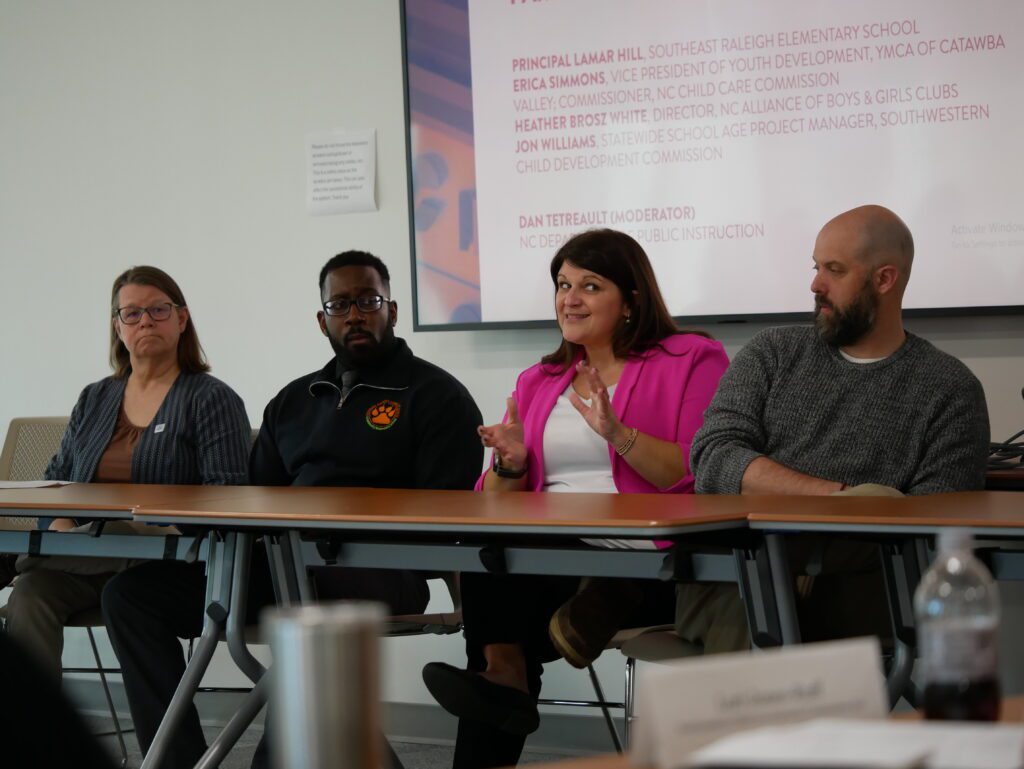
Education Minister Jason Clare has explained to his colleagues exactly how his proposed new education body would steward the tertiary education sector.
Please login below to view content or subscribe now.
Membership Login

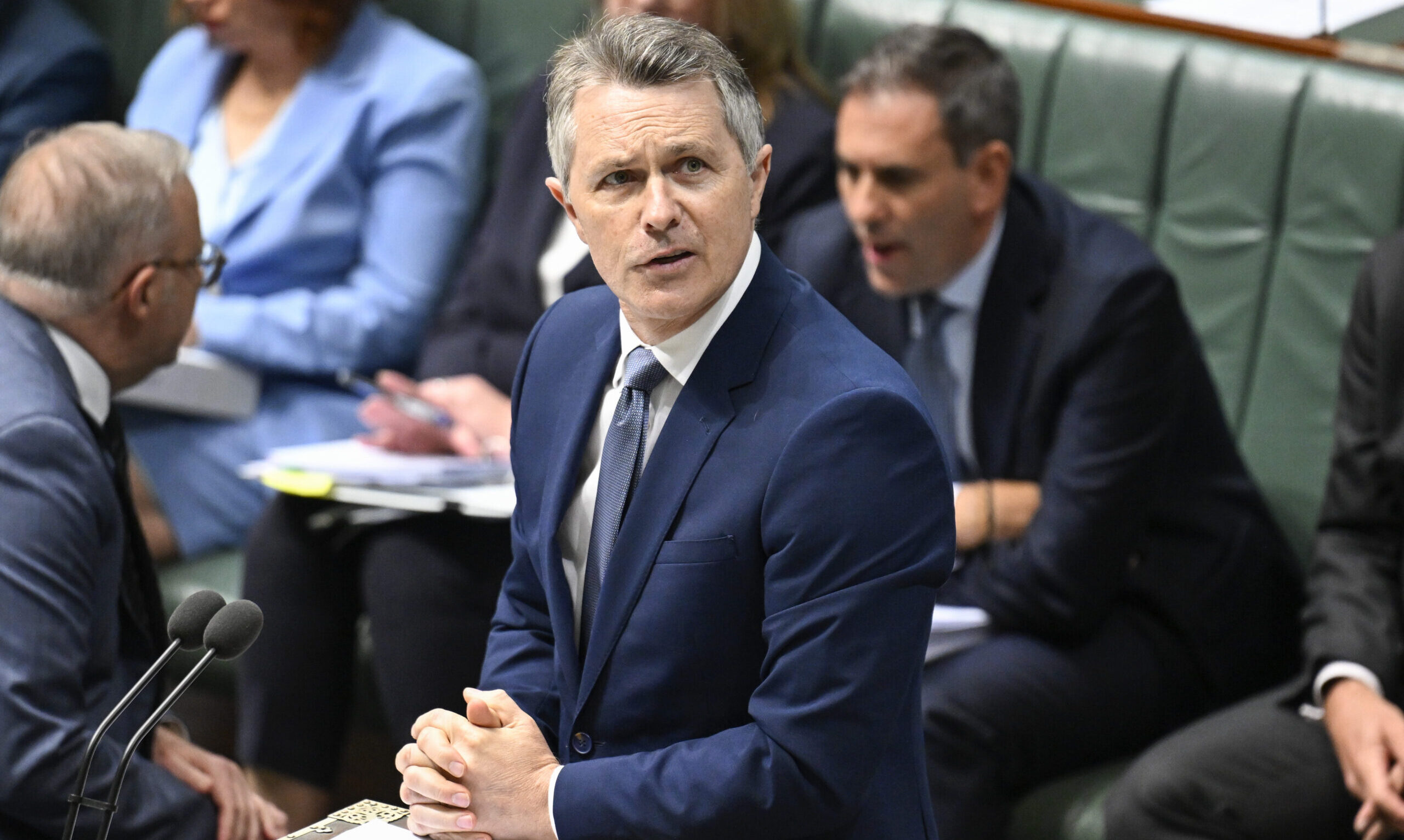
Education Minister Jason Clare has explained to his colleagues exactly how his proposed new education body would steward the tertiary education sector.
Please login below to view content or subscribe now.
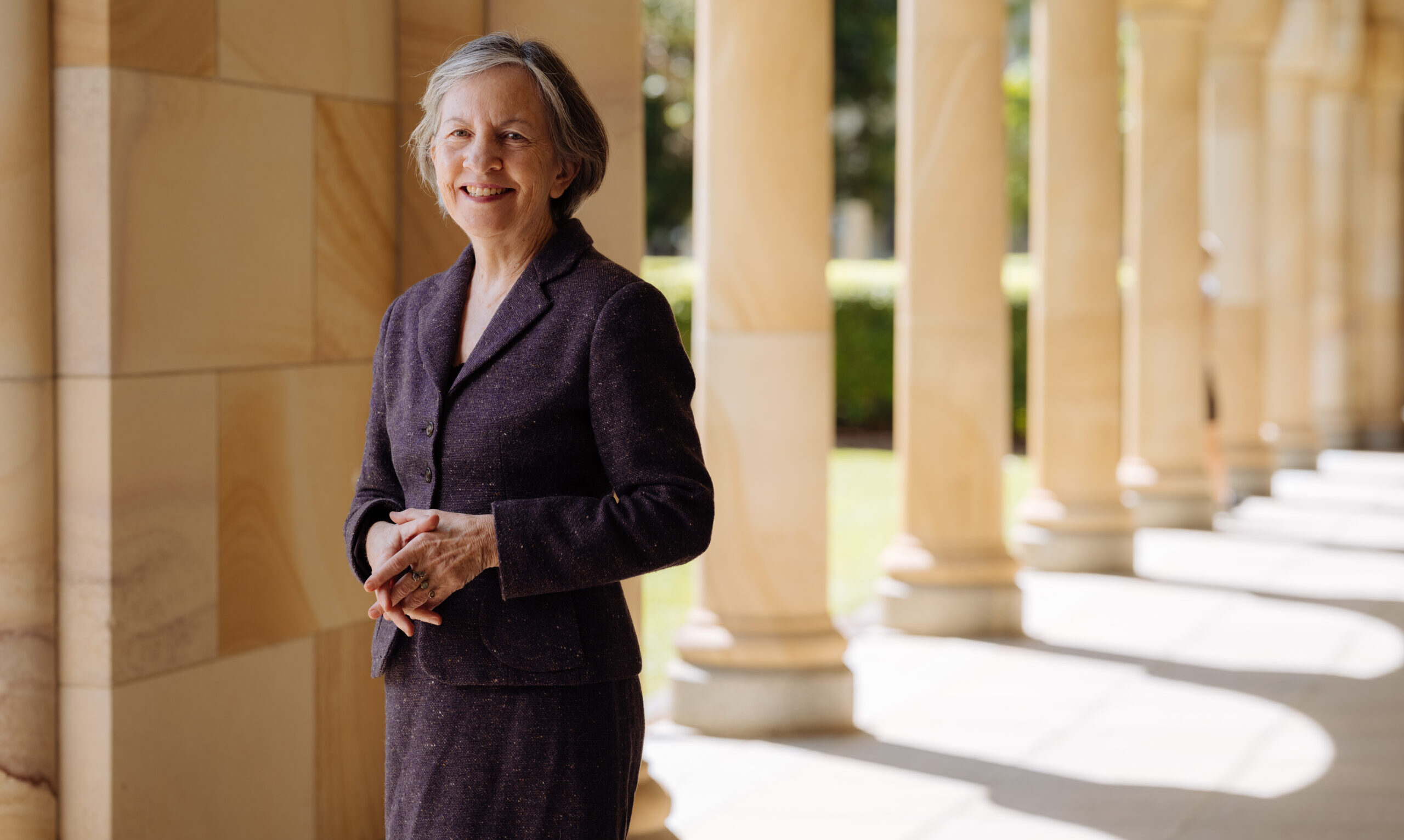
The University of Queensland (UQ) has announced Emeritus Professor Mary O’Kane will be its next chancellor, the first female to take up the position.
Please login below to view content or subscribe now.
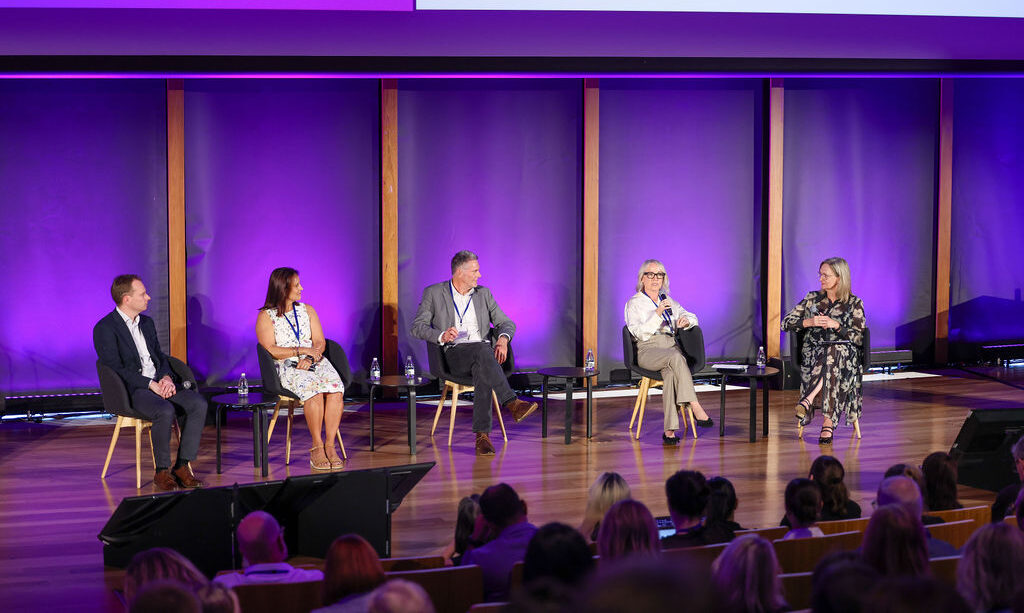
A panel of experts, led by University of Technology Sydney deputy-vice-chancellor Kylie Readman, discussed the importance of online learning in the latest episode of HEDx.
Please login below to view content or subscribe now.

Within the big visions presented in the Post-16 Education and Skills White Paper, a specific element of the academic standards landscape has found itself in the spotlight: external examining.
Within a system predicated on the importance of academic freedom and academic judgement, where autonomous institutions develop their own curricula, external examining provides a crucial UK-wide, peer-led quality assurance mechanism supporting academic standards.
It assures students their work has been marked fairly and reassures international stakeholders degrees from each UK nation have consistent academic standards.
So when a Minister describes the system as “inward-focused” and questions its objectivity and consistency, as Jacqui Smith did at Wonkhe’s Festival of Higher Education, the sector needs to respond.
External examiners typically review a sample of student work to check that marking criteria and internal moderation processes have been correctly applied and therefore that it has been graded appropriately. They comment on the design, rigour and academic level of assessments, provide external challenge to course teams, and identify good practice and innovation. External examiner reports are escalated through the relevant academic governance processes within a provider, forming a foundation for critical self-reflection on the institution’s maintenance of academic standards.
Education policy may be devolved, but the systems and infrastructure that maintain academic standards of UK degrees are UK-wide: external examiners frequently examine institutions across UK nation borders. Indeed, the system is also embedded in the Republic of Ireland, with Irish providers drawing some of their external examiners from the UK pool, of which England is the largest source. The system is also intertwined with the work of PSRBs. External examiner reports are often used by PSRBs in their own assurance and accreditation processes, with some PSRBs appointing and managing external examiners directly.
Scepticism of the system is not new. Over the last quarter of a century, there have been periodic reviews in response to critiques. The most recent of these system reviews was undertaken by QAA in 2022 in partnership with UUK, Guild HE and what is now the Quality Council for UK Higher Education.
The review compiled insight from a survey across 44 institutions and over 100 external examiners and senior quality professionals, roundtables with 170 individuals from across the sector, in addition to workshops with PSRBs and students.
It surfaced the importance of the system in maintaining the reputation of UK degrees through impartial scrutiny and triangulation of practice, especially when we know that international audiences view it as an important extra layer of assurance.
And institutions value the critical friendship provided, and the challenge to course teams which is not always achieved through other routes. External examiner feedback is consistently seen as important in enhancing teaching delivery and assessment practices, as well as upholding due process and internal consistency.
But our review also revealed thorny problems. The roles can be ambiguously defined, leading to confusion about whether examiners are expected to audit processes, assess standards, or act as enhancement partners. Standards can be interpreted and applied inconsistently – and institutional approaches to examiner engagement, training, and reporting can differ widely. Examiners often reported inadequate support from their home institutions, poor remuneration, and limited recognition for their work.
To respond to these problems, QAA developed external examining principles, and guidance on how they should be implemented. These principles represented a UK-wide sector agreement on the role and responsibilities of external examiners, bringing a consistent and refreshed understanding across the nations.
Given its embedded, UK-wide nature, the Westminster government will need to tread carefully and collaboratively in any “review” of the system. A unilateral choice to ditch the system in England would have significant implications. It would impact upon the experience and currency of the pool of external examiner expertise available across the rest of the British Isles, and would undermine the network of general reciprocity on which the system (like that for the peer review of research) is based.
It would also impact those PSRBs whose accreditation requirements rely on external examiner reports, and in some cases the ability to appoint their own external examiners to courses. To mitigate these risks, work should focus on further strengthening the system to address the English minister’s concerns. This should be sector-led.
St Mary’s University Twickenham’s recent degree algorithm report demonstrated that sector-led initiatives into these topics do lead to changes within institutional practice; their decision to review their algorithm practice in 2021 was in response to QAA’s work on the appropriate design of degree algorithms, done in conjunction with UUK and GuildHE through the UK Quality Council.
Using the same model, the Westminster government could work through the UK Quality Council to instigate a sector-led UK-wide review by QAA of how well the 2022 External Examining principles have been implemented across the sector since their creation. This would identify barriers in implementing the principles and surface where further work is needed. The barriers may be as simple as a lack of awareness, or might reveal more systemic challenges around an institution’s ability to encourage independent externals to follow a standardised approach.
This review could result in updating the principles or proposing more radical solutions to address the system’s weaknesses. Crucially, this mechanism would incorporate the devolved governments and funder regulators, ensuring any changes are done with them, not despite them.
The apparent link between external examining and concerns over grade inflation must also be interrogated. QAA’s 2022 research found that only a third of external examiners were asked by institutions to comment on degree algorithms, and indeed further conversations with quality professionals suggested that it was not perceived as appropriate for external examiners to pass comments on those algorithms. Either that needs to change, or the sector needs to demonstrate that scrutinising external examining in response to grade inflation concerns is like changing the curtains because the roof is leaking.
If the core Government concern really is grade inflation, then perhaps another sector-led progress review against the UK sector’s 2019 Statement of Intent’could be in order. This could look at the sector’s continued engagement with the guidance around producing degree outcome statements, the principles for effective degree algorithm design, and the outcome classification descriptors in the frameworks for higher education qualifications to address broader concerns around grade inflation in a way that is truly UK wide.
One nation’s government extricating itself from these interwoven, mutually reinforcing systems risks undermining the whole thing. It would be another enormous and eminently avoidable risk to the UK-ness of a sector that continues to be seen as one entity to anyone outside of the hallowed halls of domestic higher education policy.
The best way therefore to preserve the continuation of a system that is deeply valued by institutions across the UK is for the sector to lead the critical self-reflection itself, identify its value and merits, and address its weaknesses, preventing a painful fracturing of the ways that academic standards are maintained across the UK.
This will ensure that degrees awarded by institutions in each UK nation remain trusted and comparable. As a result, governments, students, and international stakeholders can continue to have confidence in the standards of UK degrees.

The depressing thing about the contemporary debate on the quality of higher education in England is how limited it is.
From the outside, everything is about structures, systems, and enforcement: the regulator will root out “poor quality courses” (using data of some sort), students have access to an ombuds-style service in the Office for the Independent Adjudicator, the B3 and TEF arrangements mean that regulatory action will be taken. And so on.
The proposal on the table from the Office for Students at the moment doubles down on a bunch of lagging metrics (continuation, completion, progression) and one limited lagging measure of student satisfaction (NSS) underpinning a metastasised TEF that will direct plaudits or deploy increasingly painful interventions based on a single precious-metal scale.
All of these sound impressive, and may give your academic registrar sleepless nights – but none of them offer meaningful and timely redress to the student who has turned up for a 9am lecture to find that nobody has turned up to deliver it – again. Which is surely the point.
It is occasionally useful to remember how little this kind of visible sector level quality assurance systems have to do with actual quality assurance as experienced by students and others, so let’s look at how things currently work and break it down by need state.
Continuation data and progression data published in 2025 reflects the experience of students who graduated between 2019 and 2022; completion data refers to cohorts between 2016 and 2019; the NSS reflects the opinions of final year students and is published the summer after they graduate. None of these contain any information about what is happening in labs, lecture theatres, and seminar rooms right now.
As students who have a bad experience in higher education don’t generally get the chance to try it again, any useful system of quality assurance needs to be able to help students in the moment – and the only realistic way that this can happen is via processes within a provider.
From the perspective of the student the most common of these are module feedback (the surveys conducted at the end of each unit of teaching) and the work of the student representative (a peer with the ability to feedback on behalf of students). Beyond this students have the ability to make internal complaints, ranging from a quiet word with the lecturer after the seminar to a formal process with support from the Students’ Union.
While little national attention has been paid in recent years to these systems and pathways they represent pretty much the only chance that an issue students are currently facing can be addressed before it becomes permanent.
The question needs to be whether students are aware of these routes and feel confident in using them – it’s fair to say that experience is mixed across the sector. Some providers are very responsive to the student voice, others may not be as quick or as effective as they should be. Our only measure of these things is via the National Student Survey – about 80 per cent of the students in the 2025 cohort agree that students’ opinions about their course are valued by staff, while a little over two-thirds agree that it is clear that student feedback is acted upon.
Both these are up on equivalent questions about five years ago, suggesting a slow improvement in such work, but there is scope for such systems to be reviewed and promoted nationally – everything else is just a way for students to possibly seek redress long after anything could be done about it.
The value of a degree is multifaceted – and links as much to the reputation of a provider or course as to the hard work of a student.
On the former much the heavy lifting is done by the way the design of a course conforms to recognised standards. For more vocational courses, these are likely to have been set by professional, statutory, and regulatory bodies (PSRBs) – independent bodies who set requirements (with varying degrees of specificity) around what should be taught on a course and what a graduate should be capable of doing or understanding.
Where no PSRB exists, course designers are likely to map to the QAA Subject Benchmarks, or to draw on external perspectives from academics in other universities. As links between universities and local employment needs solidify, the requirements set by local skills improvement plans (LSIPs) will play a growing part – and it is very likely that these will be mapped to the UK Standard Skills Classification descriptors.
The academic standing of a provider is nominally administered by the regulator – in England the Office for Students has power to deregister a provider where there are concerns, making it ineligible for state funding and sparking a media firestorm that will likely torch any remaining residual esteem. Events like this are rare – standards are generally maintained via a semi-formal system of cross-provider benchmarking and external examination, leavened by the occasional action of whistleblowers.
That’s also a pretty good description about how we assure that the mark a graduate awarded makes sense when compared to the marks awarded to other graduates. External examiners here play a role in ensuring that standards are consistent within a subject, albeit usually at module rather than course level; it’s another system that has been allowed (and indeed actively encouraged) to atrophy, but it still remains the only way of doing this stuff in anything approaching real time.
Collaborating internationally, or even studying internationally, often requires some very specific statements around the quality of provision. One popular route to doing this is being able to assert that your provider meets well-understood international standards – the ESG (standards and guidelines for quality assurance in the European Higher Education Area) represent probably the most common example.
Importantly, the ESG does not set standards about teaching and learning, or awarding qualifications – it sets standards for the way institutional quality assurance processes are assessed by national bodies. If you think that this is incredibly arm’s length you would be right, but it is also the only way of ensuring that the bits of quality assurance that interface with the student experience in near-real-time actually work.
Quality enhancement – beyond compliance with academic standards – is about supporting academic staff in making changes to teaching and learning practice (how lectures are delivered, how assessments are designed, how individual support is offered). It is often seen as an add-on, but should really be seen as a core component of any system of quality assurance. Indeed, in Scotland, regulatory quality assurance in the form of the Tertiary Quality Enhancement Framework starts from the premise that tertiary provision needs to be “high quality” and “improving”.
Outside of Scotland the vestiges of a previous UK wide approach to quality enhancement exists in the form of AdvanceHE. Many academic staff will first encounter the principles and practice of teaching quality enhancement via developing a portfolio to submit for fellowship – increasingly a prerequisite for academic promotions. AdvanceHE also supports standards which are designed to underpin training in teaching for new academic staff, and support networks. The era of institutional “learning and teaching offices” (another vestige of a previous government-sponsored measure to support enhancement) is mostly over, but many providers have networks of staff with an interest in the practice of teaching in higher education.
In England, the Office for Students operates a deficit model of quality assurance. It assumes that, unless there is some evidence to the contrary, an institution is delivering higher education at an appropriate level of quality. Where the evidence exists for poor performance, the regulator will intervene directly. This is the basis of a “risk based” approach to quality assurance, where more effort can be expended in areas of concern and less burden placed on providers.
For a system like this to work in a way that addresses any of the needs detailed above, OfS would need far more, and more detailed, information on where things are going wrong as soon as they happen. It would need to be bold in acting quickly, often based on incomplete or emerging evidence. Thus far, OfS has been notably adverse to legal risk (having had its fingers burned by the Bloomsbury case), and has failed (despite a sustained attempt in the much-maligned Data Futures) to meaningfully modernise the process of data collection and analysis.
It would be simpler and cheaper for OfS to support and develop institutions’ own mechanisms to support quality and academic standards – an approach that would allow for student issues to be dealt with quickly and effectively at that level. A stumbling block here would be the diversity of the sector, with the unique forms and small scale of some providers making it difficult to design any form of standardisation into these systems. The regulator itself, or another body such as the Office for the Independent Adjudicator (as happens now), would act as a backstop for instances where these processes do not produce satisfactory results.
The budget of the Office for Students has grown far beyond the ability of the sector to support it (as was originally intended) via subscription. It receives more than £10m a year from the Department for Education to cover its current level of activity – it feels unlikely that more funds will arrive from either source to enable it to quality assure 420 providers directly.
All of this would be moot if there were no current concerns about quality and standards. And there are many – stemming both from corners being cut (and systems being run beyond capacity) due to financial pressures, and from a failure to regulate in a way that grows and assures a provider’s own capacity to manage quality and standards. We’ve seen evidence from the regulator itself that the combination of financial and regulatory failures has led to many examples of quality and standards problems: course and modules closed without suitable alternatives for students, difficulties faced by students in accessing staff and facilities due to overcrowding or underprovision, and concerns about an upward pressure on marks from a need to bolster continuation and completion rates.
The route through the current crisis needs to be through improvement in providers’ own processes, and that would take something that the OfS has not historically offered the sector: trust.
The Public Health Resonance Project at the University of Hawaiʻi at Mānoa collaborated with a talented artist to create illustrations to better share their research. Have you incorporated art into your research communications?
The Public Health Resonance Project at the University of Hawai‘i at Mānoa “amplifies unique attributes and deep connections across regionally and culturally relevant physical activities for health promotion and community wellness, locally and globally.”
Art and illustration can enhance how you share your research. Collaboration between the Public Health Resonance Project and a talented artist included feedback from the whole team to ensure the illustrations were culturally relevant to the research. “It was necessary.”
This episode features
The episode on Art and Design to Share Your Research Story felt so special. It’s the 1st time these collaborators have all come together on video 🎧🎙️✨
I love that I got to design their website and bring us together for this conversation. We talk about the research, art, and share 3 beautiful new illustrations with you.
There’s many ways to be more visual with your research such as data visualization, illustration, comics, science art, photography, video. I love that the PH Resonance Project found an artistic partner in Sunnu Rebecca Choi.
I hope this video inspires you. Save this post for later. You may not have 32m 5s to watch or listen today. But save it even if you just have a hint of ‘I want art for my research’ and you’re unsure how you’ll get there.
A dream I have is that more research groups, labs, and centers invest in collaborating with talented artists like Rebecca. These partnerships can help people around the world engage with (and share) research that’s meaningful to them. And also I love art.
Omg if this post (or the video) inspires you to reach out to an artist about working together? Please share it with me, I would love that! 🥹
Before we dive into the interview, I have a quick story to share with you about recording. Or, you can skip right to the interview.
My computer crashed right in the middle of our recording 💻😱
I’m freaking out. My desktop computer light is blinking red at me like a danger sign. When I try to cycle the computer on the fan goes crazy.
The podcast episode going live today? There was a moment there I thought it wasn’t gonna happen. When I finally made it back on, maybe 10 minutes later, I was delighted to find my guest happily chatting away. When I went back to watch the recording, they were so cute. “Oops! Looks like our host has dropped off,” and then right back to their conversation about art and research.
We were able to complete our recording. But this episode needed a bit more.
We had high resolution art to share. There was a story in there that needed attention to bring out 🎨✨️
And thank goodness I sought help. I soon learned my own audio/video? Parts of my solo video were unusable. Super lagged.
Luckily, I have a talented husband I’ve been teaming up with for his professor dad’s art focused YouTube channel. I love that Matthew can help.
The video is finally ready for you. Thank you!
Technical problems may happen 💯
Have you worried about something going wrong with your computer too? Things may go wrong with tech, but I hope it doesn’t for you! 🫶
Every time something goes wrong, I get anxious about my own unsurity of what comes next. People are often kind and understanding. When I’m the one experiencing technical issues, it feels like a huge deal and inconvenience to people. I have to remind myself: When I’m on the other side of that? I always understand. It’s super relatable. I can’t envision myself getting mad, angry, or hurt but someone else’s technical glitch. If your computer crashes in the middle of our meeting, I’ll totally get it too.
I wanted to share this story with you because for a moment there? It felt like this podcast episode may not happen. But it did. We made it happen. I’m so happy / relieved. I’m proud to share it with you 👋😄
Subscribe to The Social Academic blog.
The form above subscribes you to new posts published on The Social Academic blog.
Want emails from Jennifer on building your online presence? Subscribe to her email list.
Looking for the podcast? Subscribe on Spotify.
Prefer to watch videos? Subscribe on YouTube.
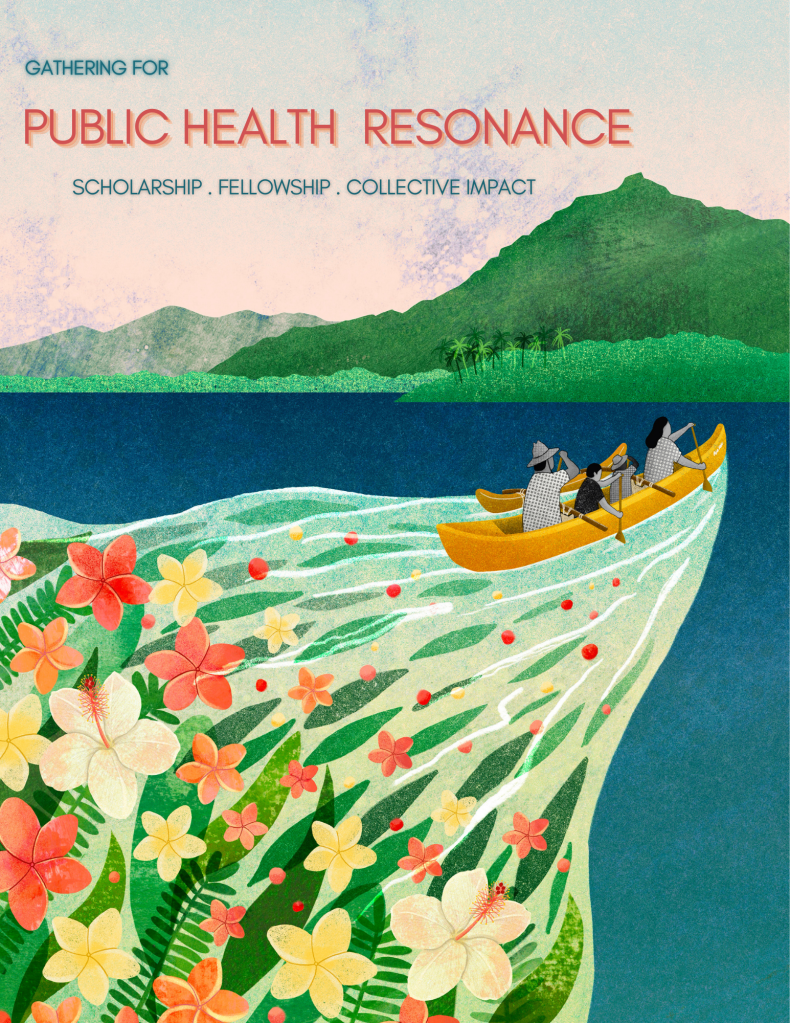
The special 2024 logo was designed by Sunnu Rebecca Choi.
Tetine: Rebecca, we love you so much. I’m so excited to meet you in real life.
Rebecca: Thank you. I was really looking forward to meet you guys, all.
Tetine: You’re like our artistic hero, so it’s so fun to have an opportunity to do this. Thank you, Jennifer for making it happen.
Jennifer: Wait, Tetine. How did you first find Rebecca? How did you first connect?
Tetine: Oh yeah, so I have it in my slides.
Jennifer: Oh, you do? Okay. Show me your slides.
Yeah, yeah yeah! As a team, this is kind of our first time all meeting live and I’m so excited that we’re all here together. Tetine, why don’t you start us off. Would you please introduce yourself and tell people a little bit about your research?
Tetine: Sure. Aloha. I’m Tetine Sentell. I’m a Professor here at the University of Hawaiʻi at Mānoa in Public Health. I’m the department chair of public health and I am one of the co-founders of the Public Health Resonance Project, which is a really exciting, interdisciplinary, collaborative synthesis of literature, engagement with literature, dissemination of literature project we’ve been doing now for several years that this team has assembled as part of, and I’m just been so grateful to be part of that. And it’s really about sharing opportunities for strength-based public health promotion, especially around culturally and regionally relevant physical activity and how that’s meaningful to people as individuals, as families, as communities, and as collectives.
Jennifer: What are some examples of those culturally relevant activities? Just so people have an idea.
Tetine: So in Hawaiʻi, some examples would be hula, spearfishing, outrigger canoe paddling, for instance. And then of course, in many other places there are resonance and activities from culturally relevant dance, folk dances, regional relevant dances, practices in the water, practices in the land.
Jennifer: Esme, would you introduce yourself?
Esme: Sure. My name is Esme Yokooji. I’m a Master’s of Public Health student at UH Mānoa, and I am the graduate research assistant on this project. I’m in the NHIH or Native Hawaiian and Indigenous Health specialty at UH. And, in my free time, I am someone who participates in these activities. I do Okinawan dance. I like to volunteer in ʻĀina doing things like Kalo planting and just conservation and restoration work in our natural habitats here in Hawaiʻi. That’s what initially drew me to this project is just the real life connection and seeing how community engages with these things. So mahalo for having us.
Jennifer: Rebecca, you are coming here from London. This is fun. London, Hawaiʻi, and I’m in San Diego. Rebecca, tell me a little about your journey as an artist.
Rebecca: Hi, my name is Sunnu Rebecca Choi. I’m an illustrator and printmaker based in London, but I’m originally from South Korea, lived in Canada and United States and now ended up in London somehow. And then I used to be a fashion designer in New York and Toronto, but then I decided to change my career, become an illustrator. Right now I’m specializing in editorial illustration as well as children’s book illustration, mostly focusing editorial illustration wise, mostly focusing on medical scientific as well as psychologies. And I work with a lot of different university magazines as well.
Jennifer: Thank you. So everyone listening knows, I did design the website [for the Public Health Resonance Project]. I had so much fun doing this project because there are so many visual elements to all of those activities and to the people who are engaging with them. This is about people.
Tetine: I am so happy to be here because we’ve been working on this international, collaborative project for so many years, and one of the things we really wanted to do was make it so beautiful and really make it so it could be disseminated and shared in ways that inspire and engage and delight people. And so I developed this logo as we began consolidating and thinking about disseminating in collaboration with some partners, and in particular with my husband and all who helped build it. So thank you, Craig. It was a meaningful logo. We felt it was really important. I have this slide here to really show we were inspired by the Hawaiian colors and the deep ocean from the shore to the sunset, and really thinking about the levels of influence and the social ecological model, which is our theoretical influence in the background from a public health perspective and thinking about the ripple effects and the waves that grow and build and move across. And really thinking about the place to connect the project and the connections and the links, the ripples, the reflections.
We had this endowed chair and this opportunity, and so I was really reflecting and thinking about this and this absolutely beautiful art came in my alumni magazine. Can you see how beautiful that is? It’s so pretty. I even have the one I pulled out of my alumni magazine and it was Rebecca’s artwork and it was so beautiful and it really had the feeling of what we were thinking about of these reflections, of these perspectives. You can see it has a lot of depth and story to the artwork as well as just being so peaceful and beautiful and meaningful. And so that’s how I found the artwork and had no idea how to engage with artwork or what to do in this particular way if it was contractable through a university through our funds. But anyway, just cold emailed through the link in the website and she has a beautiful website if you’ve seen it. And through that started a conversation that has just been really so fruitful and so exciting and just I’m so honored to be part of this. And in collaboration also with Esme and others who’ve really helped support and build the artwork into spaces that we can use it for all the things we wanted to do.
Jennifer: That is amazing. I’m so happy that we had a chance to hear that kind of origin story because I feel like there’s so many possibilities that we just don’t know exist as researchers, as academics, even as artists. What can we do to better connect and help shape our ideas together? Rebecca, how did you feel when Tetine first reached out? Is this a kind of project that you’ve done in the past?
Rebecca: No, actually it was really interesting because I haven’t really worked with other universities before. So was it, what university?
Tetine: Middlebury.
Rebecca: Yeah, Middlebury Magazine. That was my first alumni magazine that I worked with, university. And then when Tetine emailed me I was like, “Oh, I actually didn’t know it was released already.” That’s how I knew that magazine has been issued. Yeah, so that was really interesting. And then since then I’ve been working with a lot of universities in United States, so that opened a new opportunity for me as well.
Jennifer: And so I’m curious Tetine, what about art helps bring the community together? Why invest in this kind of visual element?
Tetine: Of course, art inspires us, engages us, pulls us in, makes us think, is important to us as humans, as people in the world. But I also think in academia we do a lot of intricate, thoughtful, engaged practices and activities that often are not accessible because they’re deep inside words and publications, sometimes even behind paywalls. And I think there is a lot of intricacy and story in even peer-reviewed academic journal papers, much less the smaller summaries of them. View open access resources from the PH Resonance Project.
And so it just felt like this was such an opportunity relative to the work, work now, to disseminate and to share it, to think about how it’s helpful, how it’s good for mental health, how it’s engaging, how it’s good for physical health, how it’s good for strength. All that was sort of built in the background of how to share out, this was so important to disseminate in communities and to people. And then with that joy, right. This is a strength-based activity. It’s a thing that brings people together, makes them happy, makes them joyful, connect with each other. And I think that’s one of the things art can do. It felt like such a nice synergy and such an amazing opportunity to really tie all those things together.
Jennifer: You brought up joy, and that’s something that I really get not just from the beautiful illustrations that have been customized to represent different activities that the project is researching, but also in the new version of the logo, in the thoughtfulness of how it all comes together through, you have created brochures, event flyers, like physical things and materials to help people engage in person. And that artwork also creates that same warmth and feeling online. Rebecca, I’m curious about your process working on what feels like something really representative of community. What was that process like for creating the artwork for this project?
Rebecca: The process-wise, whenever I receive a brief, I start with the research. Understanding how each activity is carried out, what equipment is used, and learning about the cultural context, from coding to landscapes. And that process helped me make the imagery as accurate and respectful as possible. Also, every time I create the illustration, my goal was to highlight public health at the community level, showcasing people coming together, whether it’s a mother and a child, a family, or a wider community group. I wanted the artwork to capture the moment and that sense of connection and shared care. I believe illustration has the power to bring people closer and help them resonate more deeply with the subject matter. And I think that was my main goal in creating those illustrations. Usually, when I’m working on the brief, I come up with three different concepts or ideas for each illustration.
Whenever, if I’m working on the canoe activity, I come up with three different composition or concept or focusing on something different for each illustration for the client to choose from. And that’s how I start creating the art. And then once we decide which concept we are going to go with and then I go render the illustration, my rendering process is quite interesting because I’m a printmaker as well. I create all the textures using printmaking techniques, either monoprinting, etching, or any kind of things that I can get hands on and I scan them in. And then in terms of the final illustration, I use Procreate on iPad and then bring all the textures together on iPad. So it’s a mix of digital and analog process.
Tetine: That’s why it’s so tactile. It’s like you can really feel it even through the internet. It’s really beautiful that way.
Esme: I felt the same way though. When I first saw the illustrations, I was like, “Oh, it’s almost like it’s painted on washi paper.” Like watercolor on washi. It’s so beautiful.
Rebecca: I will sometimes use the watercolor and washi or, accurate. So in my studio I have bunch of papers with all different kinds of textures and colors, which I can just use on any kind of illustration.
Esme: That’s so cool.
Tetine: It is. It’s so beautiful. I just love how it all works together and it really has such a feeling about it. Your work is so specifically you, but then you’re also using it so collaboratively to share other people’s vision, which is not an easy thing to do, I think as an artist, and I really appreciate the collaborativeness with which you’ve approached this, these. The first one as the initial one, as thinking about how to share and showcase what we were trying to do. And then very specifically in a regional context and an actual, it’s a specific way, it’s a specific bay you’re coming into and the landscape like you mentioned, and the practice and the movement and the arms, and then really thinking about who is in the canoe and what they’re wearing. And then as we have thought about it for the other resonating activities, to be willing and offer the opportunity for us to really be in collaborative conversation, even as the artwork is pretty far along to be like, “Oh no, we’ve gotten comments from our community members that this isn’t correct or we need to fix this.” I’m just so grateful for that.
Rebecca: Yeah, it was really, really interesting learning process for me as well because I knew about, briefly know about samba or Tongan, but I didn’t really specifically know about their clothing or how it works and how the body moves, things like that. So for me, it was a really, really good opportunity to learn about different activities as well.
Tetine: And I think that’s actually, exactly the project. In the sense that each one has not only resonance across, but these unique, very specific pieces of engagement, the land with the ocean with movements particular, with stories and songs and clothing from the community and care. And so the opportunity to showcase that and to showcase that very specifically about, in place for people doing it with each other as families and as communities, not specifically as, not as a show, but as a practice in community. And that has been really important. And as we share and tell the story of the artwork, that’s a really important piece of the, of our sharing of what you’ve been doing as well. Aloha.
Esme: I also want to say, Rebecca. I used to work in Heʻeia at the fish pond that kind of portrays that bay. And it was so funny because when we had the first kind of in-person activity, it actually took place in Heʻeia, but in the back of the valley. And it was so wonderful because when we showed the work to the people that are participating, they’re like, “Oh, that’s, Heʻeia, that’s here. They were able to instantly recognize from the art. And I think that, even people that weren’t affiliated with the project, were interested and curious. And I think the art was a big draw, seeing a place, recognizing it, feeling properly represented. So I just wanted to say thank you for that. That was so wonderful.
Rebecca: Yeah, also thank you for all the feedback that Tetine gives. Also, all our illustrations were reviewed by experts and that’s how we can actually get a correct imagery and then representative of the place as well.
Tetine: Yeah, and I’ll just say the funders of this, the endowed chair that I hold that has allowed this opportunity, it’s from a family enterprise and it’s all been in the background. I mentioned my husband helping with this. There’s a lot of family connections because Mele [Look], my beloved colleague who has done this project with me, certainly has helped connect to some of the cultural and regional experts, but in particular on the Heʻeia ridgeline, her husband Scott is a geologist, and he was like, “This ridge line is not correct. You have to go down. It happens like this, not like that.” And he drew a line for the ridge line so it was proper. That’s the level of detail and actually cultural consultation and regional consultation that’s been possible through this collaborative project.

Jennifer: It sounds like a lot of people were involved in the art making, and that’s something that’s probably really unexpected for folks who are listening to this. So it was the two of you as well as it sounds like experts?
Tetine: Yeah, yeah yeah. As Rebecca mentioned, we had the brief, we have a conversation, and then she would send three sort of options of things. And then those three options we would run by people who practice those activities, who work in the region, who engage in the practice. That certainly included my colleague Mele, who’s been part of this all along in every way, but also, exactly, people who paddle for the paddling one, people who participate in wild skating for the ones you’ll see in a minute we’ll talk about, and people who do samba, people who do Tongan dance. And so exactly this. So out of the three that we’ve chosen one to go with, and that one is really prioritized. Community, that it’s about being with family or being with others to do practices that bring people joy together, collaboratively in their real lives. That this is about, sometimes they are ceremonies at a wedding or at a party with a community, but they’re not about a show. They’re about a practice together in community.
And so that’s always been the background of the activities we’ve been showcasing. But then from those and from the one we’ve chosen, then she does a more developed artwork. And then from that more developed artwork, that’s where we really are like, okay, well this color or this clothes or this line or this is not how the arm would be, or this is not the exact proper direction of the canoe relative to the shoreline. That level of detail has been really important and part of the iterative conversation. And then we go back to consult and come back. So it’s a very iterative process.
Jennifer: When you started the project, did you know how long it would take to produce art using all of this feedback?
Tetine: For me, that is kind of how the process of most of the work that I do works, where there’s a lot of, we work a lot with community and in practice and public health is about that. I would say for me, not a surprise, but I did feel really bad for Rebecca. I felt it was a lot to ask the artist to engage in sort of the academic consultation process at that level of detail. But she was a really good sport about it.
Rebecca: It was very interesting because I also, I do longer projects or shorter projects. Usually the book projects are very long. Sometimes it lasts from three months minimum to one year or more than one year. But then editorial projects usually ends within two weeks. I think this project was in between, I guess.
Jennifer: I appreciate that. And for folks who are listening, if you’re considering working with an artist asking about their timeline, but also considering who you need to bring into the conversation for that art is helpful upfront so that you can talk about it together.
Tetine: Could I just add to that exact thing, which is that because of this project being so specific about culture and place and about those practices, it was vital and we couldn’t have done it otherwise. Because if the artwork for the practice doesn’t make sense to the people participating, we shouldn’t do that artwork at all, right? And so that was built into this. I could imagine other scenarios where you wouldn’t need quite such level of detail because maybe you’d be talking about just a feeling or something to connect with this, but this was so vital that we have that level of detail
Jennifer: Esme, as someone who is using the art to create flyers and other kinds of, I would say marketing materials, but is it marketing materials?
Esme: Well, I would say my background is also in organizing, and that was where I had most of my social media, video editing experiences actually in making, for lack of a better word, propaganda. But kind of trying to inculcate people and inform them, somewhat a combination of educational materials. And I think the goal of this project is, Tetine spoke on, is just to shine a light and a spotlight on these different activities, on these different researchers, on the work that they’re doing and its value. I think for me, what I’ve really enjoyed about being a part of this team is how much Tetine specifically stresses the importance of cultural competence and humility. And I think that understanding how specific everything is, understanding how tailored it is, really conceptualizing who our audience is, who’s going to be benefited by our materials, is something that’s really important to me, specifically being in Native Hawaiian and Indigenous Health. Because I think having more culturally tailored interventions or even having more culturally tailored messaging, having artwork that is accurate that people can recognize, that immediately draws them in I think is really valuable and important. It’s been truly really fun, honestly, to make materials and just experiment with the different kinds of things, whether it’s making a video intro or editing a logo for a flyer or collaborating on a poster or any manner of things. It’s been a joy.
Jennifer: Tetine, what would you like folks to know about, okay, there’s so many people out there who are like, “I do want a website. I do want to have beautiful artwork for my events. I do want these things, but I don’t know if it’s worth my time as the PI [Principal Investigator].” You are the decision maker here. And so I’m curious, what made you know that this was worth it for you in terms of your energy?
Tetine: Yeah, I mean, I think it is a conundrum of academic practice these days actually. This how we engage in the PR of the work we do in a sort of dissemination campaign. Generally, people do so much valuable work that they don’t [promote] because of their own demands of academia. They don’t have the time, capacity, support system to help be sharing that out. I guess I would advocate not for this to be something that individuals need to do only because it isn’t something an individual can do only. I was able to pull this together by the amazing collaboration, by being fortunate to have, hold this endowed chair and being senior enough in my own career that the publication process or grant making process was not the only thing I really needed to prioritize relative to my own goals of my academic, what I wanted to do with my career.
And so it has been actually a joy and an honor to be part of this collaboration, to keep building it, to keep growing it, to engage in sharing it out. Like as Esme is saying and dissemination materials might be one of the terms I might want to use for some of the things we’re doing to think about how we’re sharing out and why. What we want to do is think about how to build in the opportunity for innovative ways in which we showcase the work we do in academia and in art being one of the fundamental ways in which we can share out. And then the art being collateral, like Esme is mentioning and we’ve talked about. And that, Jennifer, is one of the great skills that you hold is how we share out the beautiful work that an artist achieves in collaboration with us, like Rebecca is doing. Then in YouTube and LinkedIn, or in community, and handouts and flyers. How do we do that? That’s certainly not something we learn in graduate school, but in the background is all this important work that deserves to be showcased.
Jennifer: Ah, wonderful. Are there slides that you did not share that you want to be sure to get into the video? Is there anything else that we should be sure to talk about today?
Esme: Only that I think from what I’ve experienced, because a lot of what I do specifically focuses on Indigenous Health and what did this Project was specifically trying to reach and elevate and focus on communities that have historically been marginalized, experienced disparity. But coming from the perspective of how is culture a source of strength, how is connectivity to land and to heritage a source of strength? And I think that using art is something that reinforces that message because a lot of times Indigenous Arts and Traditions, whether it’s storytelling or even hula, is considered an art form as well as a physical activity has been marginalized. So using art as a means to tell these stories and amplify these messages feels so right and is a source of resonance for me anyway. And engaging in this work.
Rebecca: So much of this project, the process was about discovery for me as well. Through this collaboration, I learned so much about the diverse cultural backgrounds behind each brief. And also me as a Korean Canadian based in London, I have so much different cultural diversity within me as well. So it was really valuable experience for me to work on those illustrations and artistically it also encouraged me to explore new colors and compositions that I never used before as well. So finding ways to express not just the activities itself, but the joy and vitality that shines through them while highlighting the connection between people, community and nature, was really, really enjoyable working on this brief.
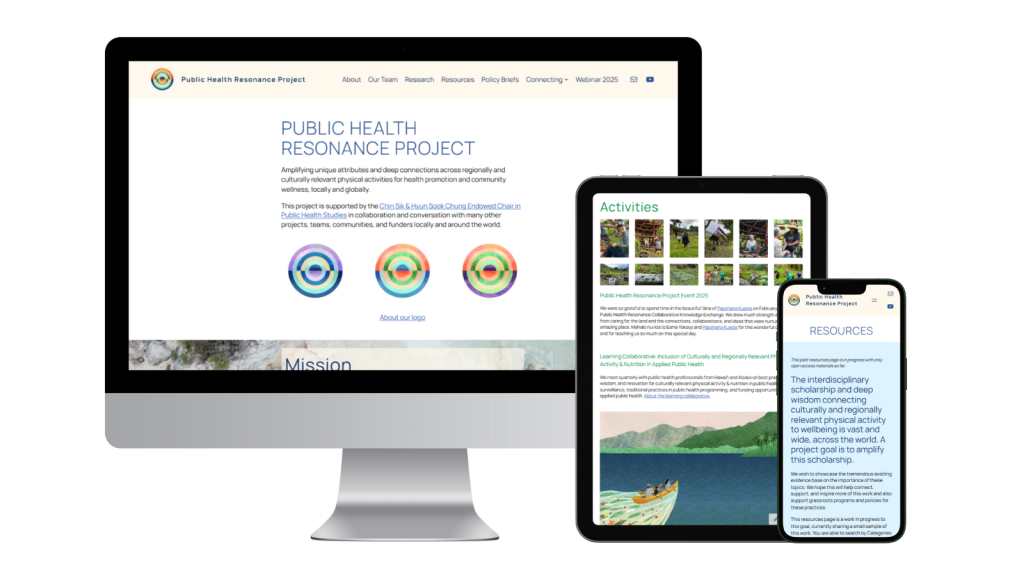
Jennifer: Well, I’m very excited for the art to come. I’ve never had such beautiful art packaged, ready for me to consider for a website design. I felt really honored to be able to work with the thoughtfulness that I could tell everyone who was involved with this project put into the creation of these art pieces. And there’s new ones that I guess they’re maybe going to be premiered on this video if they’re not on the website first, and I’m very excited to share them with all of you. So Tetine, let’s do your slides.
Tetine: This was the beautiful artwork we talked about before that I was inspired by. And then this is exactly like, to showcase both the artwork itself and then the artwork, the initial one we’ve been talking about so much, the one, the paddling, the outrigger canoe paddling one, you can see the family, you can see Heʻeia in the background. And then you can also see how we used the artwork as a piece of the story we were telling, which was that we were doing various gatherings over the world, essentially, last year. And that we were thinking about, this was something, we had note cards, we had a poster, we had small business card size handouts to really share and tell the story about what we were doing. So the new artwork includes resonances specifically with this one. This is based in Hawaiʻi and our community here. And then we wanted to really think about how this resonated in other places.
So this is wild skating in Scandinavian lands. And we had feedback, for instance, specifically here in this one about the trees that actually from our Swedish colleagues said no one would ever go out without a helmet. And so we put a helmet on the child because we were like, that makes sense. That’s the cultural practice. Same with the backpack and the way she’s holding her poles. That the backpack, they were like, we’d never go out into the wilderness without some sort of backpack or something to be safe. So again, really thinking about how communities engage in these practices in real life versus what you might see on a tourist brochure. That was really important to us. Again, you can see the mom and her child. And then really, dance is a really important culturally and regionally relevant community, relevant practice, again, all over the world.
And so dance, a lot of the research is in dance specifically for so many different pieces of staving off dementia, Parkinson’s, community wellness, mental health. And so here we have our Tongan dance example we talked about earlier, and the samba dance example with input, in collaboration from colleagues from Tonga and Brazil, specifically talking about what this might look like in practice and what this might be like. And so for instance, in the samba one, at first we had these very elaborate headdresses and activities and our colleagues said, well, certainly we do that in Carnival and something, but that’s not what you would see in a community. That’s a special event for a different type of piece. And so if you want to think about how people would do these practices in real life, in community, it would be more casual like this. And same, we talked a lot about in the Tongan example about the clothes, what that might look like, how people would be engaged, what would be respectful, what would be expected, that this is a bit of a dressy event, but also a family event and what that might look like and how the arms are, the stories being told with the hands and the arms and the motions and what music would be relevant.
You can see in the background a lot of those conversations. The last thing I just wanted to highlight is, as we talked about earlier, we have different logos to go with each one. Because the resonance is across, and the first one really started with the Hawaiian sunset and colors. And then you can see these colors in the background are from some of these other places as well. So highlighting that resonance across that, we really want to think about the colors and the schemes, in terms of people’s communities and specific places. Which is to share, we really talked about this, and I know I think Jennifer, you have an example, but just how we’ve been able to engage in our own activities and practices using this artwork because of Esme’s skillset as well. And because of the capacities and the conversations, including with you, Jennifer, and the website. How to share out and showcase the conversations we’ve had with so many wonderful experts across the globe. And this really is just such a tremendously collaborative project. And so that’s really been a great joy of this project as well, is how to all the strengths and experiences and skillsets that people bring to the table together, really thinking about where we showcase that and how to do that in the most beautiful, respectful, exciting, engaging way possible.
Jennifer: Yay. Thank you so much for recording this with me. I feel like you were all so excited to talk that it really is going to make for an engaging episode for people, and I really hope that it inspires other folks to consider collaborating with an artist or even reaching out to Rebecca because you’re such a valuable resource for people. I love how much attention that you give to not just what needs to be communicated, but who it’s communicating with and who needs to be involved in the process. It’s just beautiful. Thank you all for being here today. Yeah. Anything else before we wrap up?
Tetine: No, but thank you, Jennifer. You’re a great visual communicator also, and I’m just really grateful for all the expertise you’ve brought to the story of the Public Health Resonance Project and the capacity to share it out as well. Those are skillsets I didn’t have and didn’t have access to either, and really have been grateful for that as well. Just thank you and again, for bringing us all together for this great opportunity. This is a great joy. It’s been a great joy to meet and a great joy to meet Rebecca, to have Esme here, who’s just been a joy as well. And Jennifer, thank you for all that you do for us as well. You also are a great joy!
Esme: Thank you so much.
Jennifer: Yay!
Subscribe to The Social Academic blog.
The form above subscribes you to new posts published on The Social Academic blog.
Want emails from Jennifer on building your online presence? Subscribe to her email list.
Looking for the podcast? Subscribe on Spotify.
Prefer to watch videos? Subscribe on YouTube.
A special thank you to my husband, Dr. Matthew M. Pincus, for his editing and storytelling support with this episode. If you need help with a video, reach out to him at [email protected]
Get stories like this delivered straight to your inbox. Sign up for The 74 Newsletter
For the first five years of children’s lives, many families are experiencing child care challenges — which have been at the center of discussions among the NC Task Force on Child Care and Early Education since Gov. Josh Stein established the group in March.
But gaps in child care do not disappear once children start kindergarten. Finding affordable, high-quality child care solutions for school-age children should be part of the state’s continuum of care, advocates and providers told the task force Monday.
“The parents I work with don’t experience child care as a 0 to 5 situation,” said Beth Messersmith, task force member and campaign director of MomsRising’s North Carolina chapter. “They experience it as a 0 to 12 situation, or older.”
Many families need care before and after the school day and during the summer months in order to work and keep students safe and engaged. However, four in five students in North Carolina do not have access to the out-of-school care they need, according to a report from the national Afterschool Alliance.
Students, including young children, are instead spending time unsupervised. About 3% of K-5 students, 11% of middle school students, and 34% of high school students spend an average of 5.7 hours without adult supervision per week, according to the same report.
Providers shared their struggles to serve children despite high demand and the benefits children, families, and businesses see when out-of-school care is accessible. After-school programs face many of the same challenges as child care programs. And some child care programs serving children before kindergarten also serve school-age children when school is out of session.
Families need care that works with their schedules and engages students in activities that support them academically and socially, said Elizabeth Anderson, executive director of the North Carolina Center for Afterschool Programs, a nonprofit under the Public School Forum of North Carolina. That requires funding, workforce supports, transportation, and creative partnerships, Anderson and a panel of providers said.
“The more we can create a spectrum of opportunities for birth through grade 12, the more that children and families in our state are going to recognize the positive economic impacts of those investments,” Anderson said.
The governor’s task force will release a report by the end of December with recommendations on how the state should expand access to high-quality, affordable child care. Stein formed the group earlier this year as pandemic-era child care funding ran out and advocates across the state and country called for consistent public investment to meet families’ needs.
The state legislature did not allocate new funding for child care this year and did not pass a new comprehensive budget. Some new funding, though lower than advocates’ and state officials’ requests, was included in budget proposals from Stein’s office and the House and Senate, but those proposals were not ultimately passed.
The main child care legislation that was passed made regulatory changes to loosen staffing requirements and allow providers to serve more children in classrooms with appropriate space and teacher-to-child ratios.
The task force will meet again in February, though a date is not yet set. Ahead of next year’s short session, members on Monday discussed what role the group should play in moving policy solutions forward, including six recommendations in the group’s interim report released in June:
As the state faces many funding requests, federal funding uncertainty, and slim tax revenue, members said more legislators need to be aware of the state’s child care crisis and why it’s relevant to the state’s economy and future.
“Maybe we have some more work to do around actually educating and engaging members of the General Assembly to get this on their radar and build more champions,” said Susan Gale Perry, CEO of Child Care Aware of America and task force member.
Funding to address issues of access, quality, and affordability is needed, members said, and considering existing funding streams rather than new ones might be more politically feasible in the short term.
“Certain proposals about, ‘Let’s just go raise taxes,’ are probably not going to be something that is going to get across the aisle agreement, but it does create the opportunity to looking at areas where tax rates are already set, or certain revenue streams are already existing,” said Mary Elizabeth Wilson, task force member and the Department of Commerce’s chief of staff and general counsel.
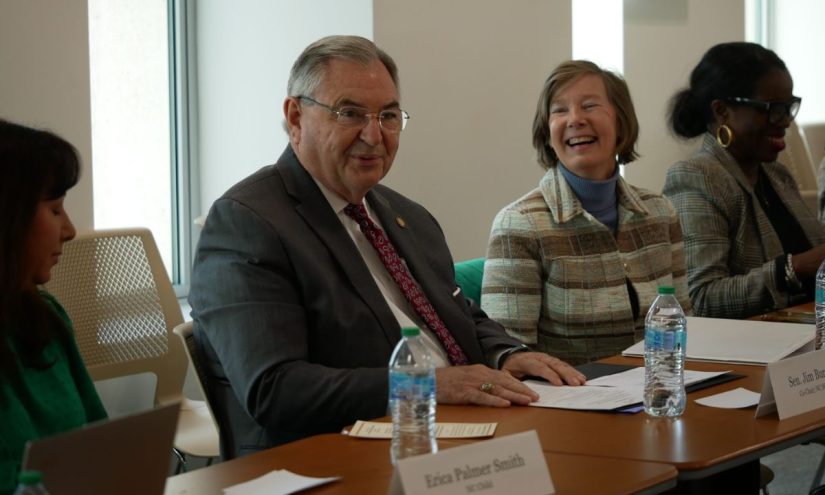
Sen. Jim Burgin, R-Harnett, who chairs the task force along with Lt. Gov. Rachel Hunt, said he and other legislators will be introducing legislation that would double the tax rates on sports gambling.
“If it’s for the children, everybody needs to support it,” Burgin said. “And I don’t believe in gambling … I’m doing it because we need the money.”
Child care fixes would also increase tax revenue, said Erica Palmer-Smith, executive director of nonprofit NC Child and task force member.
“(The generated revenue) would more than cover the overall cost that we would need to put in in the long run to fix the child care system,” Smith said.
Many families either do not have an after-school program nearby, do not have transportation to programs, or cannot afford programs, Anderson said in a presentation to the group Monday.
In 2025, 188,295 children participated in after-school programs, but 664,362 additional children would have if they had access, according to the presentation.
Programs are funded through a mix of private grant funding, public funding, and parent tuition. The two biggest funding sources are from the federal government: the Child Care Development Fund, which funds child care subsidies for young children and school-age children up through 12 years old, and 21st Century Community Learning Centers through the Department of Public Instruction.
After-school programs exist in all different types of facilities — community-based organizations, schools, faith-based organizations, and child care centers and home-based programs. Anderson described these programs as “folks stepping in to fill the gap between 3 and 6 and between May and August.”
Students benefit when they access out-of-school programs, she said. In the case of the 21st Century Community Learning Centers, 72% improved their attendance in the 2023-24 school year, 75% of students had decreased suspensions, and 90% improved their overall engagement in school.

Anderson said the skills employers are seeking align with those that children are gaining from after-school programs, like problem-solving, teamwork and collaboration, communication, and leadership.
“We know that our after-school programs are an important place where children get to interact with one another and interact with mentors and positive adult figures that help them build these skills, which ultimately help them to become more successful, independent earners in the future,” she said.
Like child care programs in the early years, after-school programs not only help children, but allow parents to work. In a survey from the national report, 91% of parents said these programs help them be able to keep their job.
Families face particular challenges in the summer months. A national survey from LendingTree of more than 600 parents found this year that 66% of parents who seek summer care struggle to afford it, and 62% had taken on debt to pay for summer care.
Anderson said more conversations on child care should extend beyond the early childhood period. She pointed to research from the University of California that found educational and occupational attainment improvements were higher when children had access to both early care and education and out-of-school care once they entered school.
“It is something that parents need and want,” she said. “I think that we talk a lot about what happens for children birth to 5, but a child does not turn 5 years old and suddenly not need opportunity.”
North Carolina is one of 23 states that does not have state level funding for after-school care, Anderson said. Anderson and panelists said funding is needed to retain teachers, increase access, provide transportation, and help families afford care.
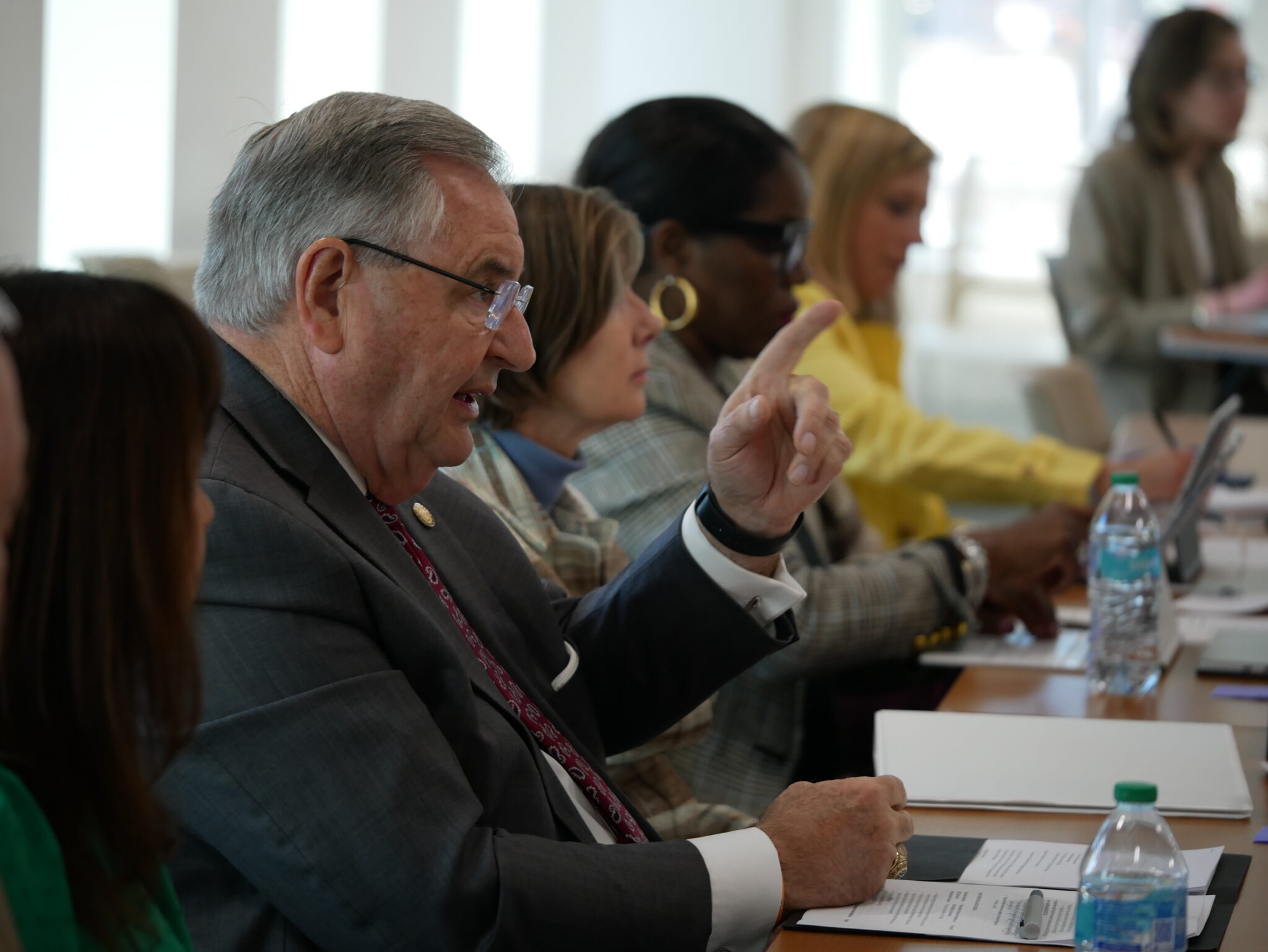
Jon Williams, manager of the statewide School-Age Initiative at the Southwestern Child Development Commission, is focused on increasing the quality of out-of-school care across the state. He said the transient nature of school-age professionals disrupts consistency for children, families, and programs. A burdensome orientation process creates challenges for owners and directors constantly onboarding new people.
Williams said business training for after-school program directors would be helpful. Many have educational backgrounds and lack the business expertise to be successful in a challenging environment.
“They don’t have that financial background that is needed to run a business, and that creates a lot of financial instability,” Williams said. “If they don’t know how to orient or get new staffing in, that creates a huge problem.”
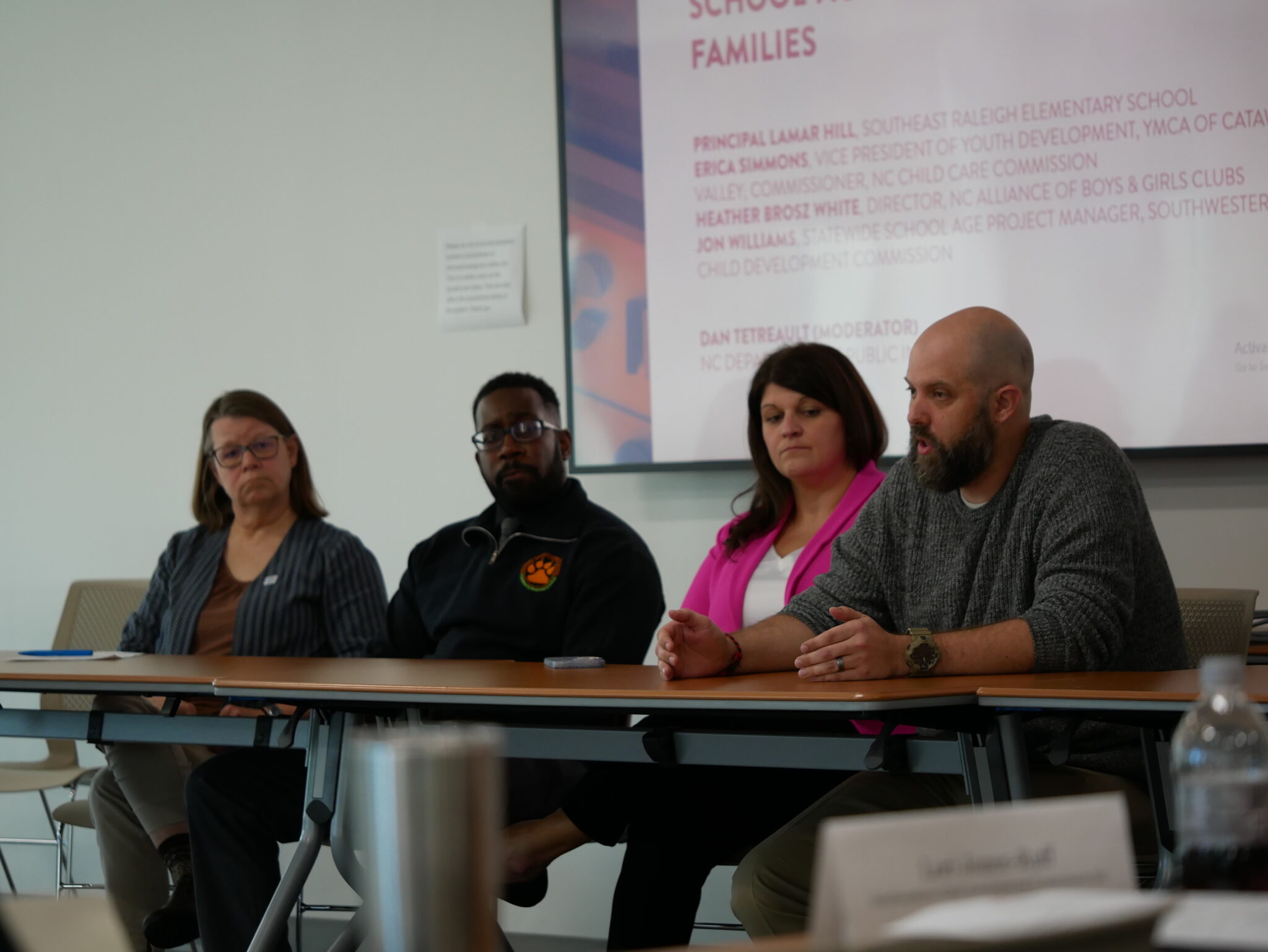
A policy change that several panelists and task force members raised as a need is to align the eligibility requirements for child care subsidies across age groups. Right now, families who earn less than 200% of the federal poverty line are eligible for child care subsidies when their children are 5 years old or younger. But for school-age children, the threshold lowers: families must make less than 133% of the poverty line.
That disrupts care for families whose children need after-school care going to kindergarten or for families with multiple children of different ages who would prefer to send all of their children to one program.
A statewide subsidy floor, which is one of the policy priorities of the task force, would also help school-age care providers, said Erica Simmons, vice president of youth development at YMCA of Catawba Valley.
The floor would raise the per-child rate that child care programs receive to the state’s average rate. In cases where programs receive more than the average rate, they would continue receiving the same amount.
“(The floor) would make it a little more equitable,” Simmons said.
She said it costs similar amounts to provide care at her licensed programs in rural and urban communities. But the subsidy rates are much lower in rural areas.
“We have the same requirements for staff, we have the same programming requirements,” she said. “There’s no difference in the amount that we spend per program as an organization. However, there is a very big difference in what we are able to capture for subsidy. So there’s a big funding gap.”
Williams said there was a gap of $8,000 for one program just last month between the cost of services and the subsidy reimbursement. Annually, some programs in her network accrue around $100,000 in funding gaps for caring for children through subsidy.
Programs also receive subsidy payments retroactively. Changing the timing of funding could relieve some of the financial burden from programs, Williams said.
“I get paid via subsidy after I provide the services, and that’s a huge problem if I’m already in the red,” he said.
“… When we think about the mental health of our administration and our directors, that just adds fuel to the flame,” Williams said. “And it creates another gap, a 30-day gap, where I can say, ‘I can’t do this anymore,’ and then that care drops off. So we have to rethink how we get that money out in the state. We have to rethink the rates at which they are given.”
Panelists also shared that liability insurance rates have risen drastically. Williams said her program’s rates have increased by 44% over the last year, a trend among child care providers overall. A 2024 survey from the National Association for the Education of Young Children (NAEYC) found 80% of respondents saw their liability insurance costs increase in the last year and 62% reported difficulty finding or affording it.
The task force has been split up into three subgroups which have been studying how to move toward the group’s six recommendations.
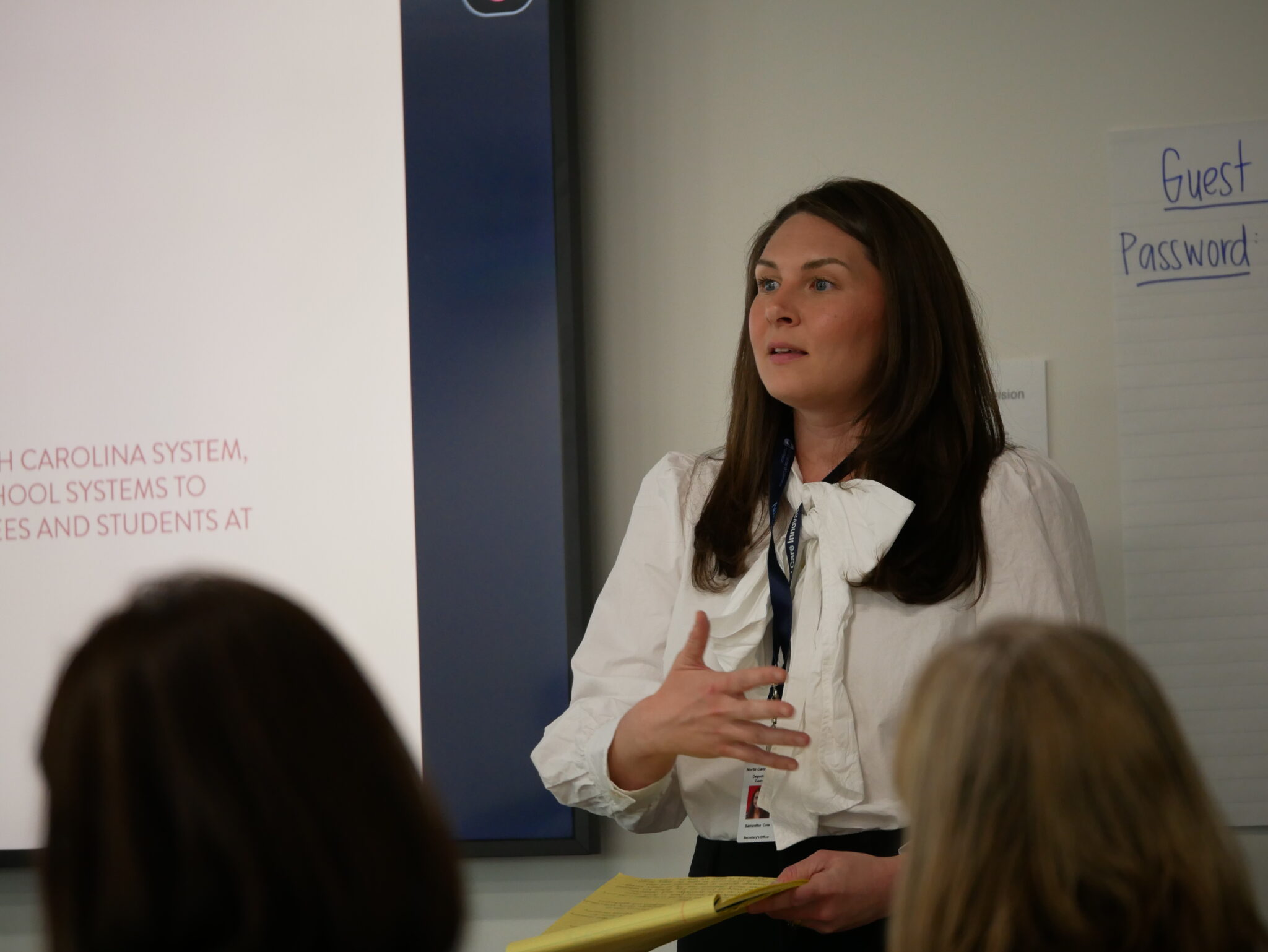
Samantha Cole, child care business liaison at the Department of Commerce, said a subgroup focusing on expanding child care access for public employees has looked at models across K-12, community college, and UNC-system schools to create child care solutions.
They studied on-campus early learning models at Buncombe County Schools’ Learning Labs, North Carolina A&T University’s Child Development Laboratory, and the Regional Center for the Advancement of Children at Haywood Community College.
“We really see that there have been a lot of successes that have come about in these three examples and others, but they’re hyperlocalized,” Cole said. More external communication is needed for other campuses to understand how and why peer institutions are offering child care.
Madhu Vulimiri, senior advisor for health and families policy for Stein’s office, said the subgroup focused on workforce compensation and supports has been studying strategies to ensure early childhood teachers have access to non-salary benefits like health insurance.
They have studied the possibility of adding early childhood teachers as an eligible population for the State Health Plan, subsidizing ACA marketplace premiums through state dollars, and educating early childhood providers about the recently launched Carolina Health Works, which offers options for groups of small businesses.
The group is also studying how existing workforce supports like TEACH scholarships, child care academies, and apprenticeships could be more seamlessly tied together to strengthen the early childhood profession. They have requested that the Hunt Institute create a map to demonstrate what supports are available in what counties.
“That will help us see more holistically, where do we have resources and where are there gaps, and help us hopefully target future resources that we might have to expand those statewide,” Vulimiri said.
The third group, which is focused on financing, has been studying several states’ approaches to endowments and other funding mechanisms for child care, including Nebraska, Connecticut, Arizona, Montana, and Washington, D.C. They aim to develop a paper that weighs the options for North Carolina and analyses costs and benefits of each.
This article first appeared on EdNC and is republished here under a Creative Commons Attribution-NoDerivatives 4.0 International License.
Did you use this article in your work?
We’d love to hear how The 74’s reporting is helping educators, researchers, and policymakers. Tell us how
Get stories like this delivered straight to your inbox. Sign up for The 74 Newsletter
This story was originally reported by Ebony JJ Curry of The 19th. Meet Ebony and read more of their reporting on gender, politics and policy.
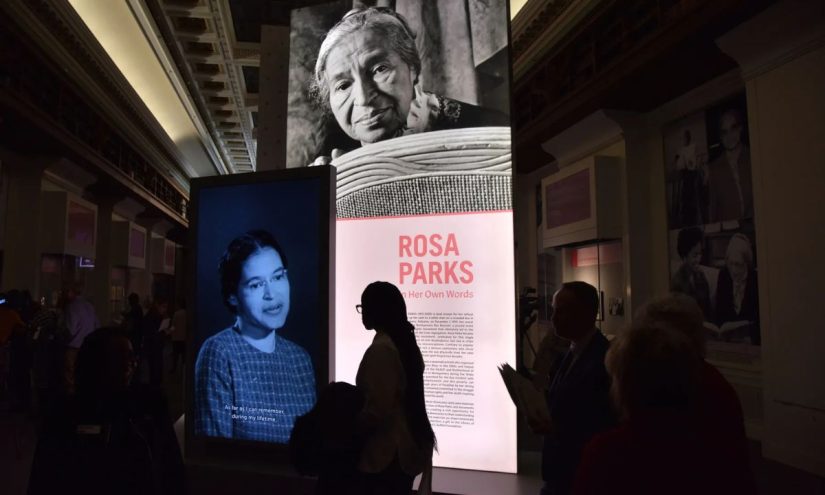
Seventy years have passed since Rosa Parks refused to surrender her seat on a Montgomery bus, and yet the country still tries to shrink her into that single moment — a tired seamstress who’d simply had enough.
Detroit, the city where she chose to continue her life, insists on remembering her differently. Not as an icon frozen in time, but as a Black woman whose lifelong organizing stretched from sexual violence cases in rural Alabama to open housing fights on Detroit’s west side.
That fuller story — truth beyond the myth — is exactly what the Rosa Parks Scholarship Foundation has fought to tell for 45 years.
The Rosa Parks Scholarship Foundation (RPSF) has awarded more than $3 million in scholarships to more than 2,250 high school seniors since its founding by The Detroit News and the Detroit Public Schools (DPS) in 1980.
“Most people actually don’t know the story of Rosa Parks,” said Dr. Danielle McGuire, RPSF board member, historian and author of “At the Dark End of the Street”, whose research permanently shifted how historians write about Parks and the civil rights movement. “She’s so much more interesting, so much more radical, and so much more involved in all kinds of things that we forget about. We keep her stuck on the bus in Montgomery in 1955.”
According to Kim Trent, a Detroit civic leader and former board president, the foundation, created through a racial discrimination lawsuit settlement involving Stroh’s Brewing Company, became one of the rare instances where federal accountability for racism produced long-term investment in Black futures.
A judge, DPS and The Detroit News agreed the money should honor Parks — who was living in Detroit and working for Rep. John Conyers at the time — by funding scholarships for Michigan students devoted to service and social change.
It is a statewide program, reaching students from Detroit to Grand Rapids to rural school districts where scholarship dollars often determine whether higher education is possible at all.
That framing makes her legacy active, not ceremonial.
“As part of her family, I feel grateful to be able to work together with my fellow board members to keep fighting for more opportunities to continue to provide scholarships,” said Erica Thedford, Parks’ great-niece and a foundation trustee. “I think Auntie Rosa would be extremely proud of what the Foundation has been able to achieve.”
The numbers tell one story — more than 1,000 scholars, millions awarded, forty $2,500 scholarships each year — and the essays tell another. Applicants must identify a modern social issue and explain how they would confront it using principles Parks embodied: discipline, non-negotiable dignity, community before self.
“Reading the essays of the students who apply is a great reminder that each person doing one act, no matter how small, creates a stronger network of love and kindness,” Thedford said. “Some of these students come from extreme hardship and still find the time and resources to volunteer at food banks, shelters… Some even take it upon themselves to be the organizer of ways to help the less fortunate at their schools.”
The award is one-time, not renewable, yet its impact stretches across decades.
“Once you become a Rosa Parks Scholarship Foundation recipient, you are a Rosa Parks Scholar for life,” Thedford said. “These students are now part of a network of people who root for each other, and that kind of support system is important.”
Trent knows that firsthand: She was a Parks Scholar herself when she graduated from Cass Tech High School.
“I received the scholarship in 1987,” she said. “Ironically, not only did I get it, but my best friend… also received the same scholarship. And then her son got the scholarship like 30 years later.”
Trent said the scholarship’s origin mirrors Parks’ life — created in response to injustice and sustained through community action.
“It’s one of those rare occasions where something beautiful grew out of an instance of racism and oppression,” Trent said.
Over the years, some Parks Scholars attended community college. Others enrolled at flagship universities. All had to articulate how their education would serve a community beyond themselves.
Some, like Emmy-winning actor Courtney B. Vance, who’s from Highland Park, Michigan, went on to shape national culture. Others are now attorneys, educators and nonprofit leaders across the state.
“What gets lost in what she did is the reason she did it,” Trent added. “It wasn’t just so she could sit on a bus. It was because she was trying to open up opportunity for people who had been denied opportunity.”
That is the heartbeat of the foundation’s lineage.
Parks was not simply resisting segregation. She was rejecting the entire machinery that kept Black women from safety, education and economic autonomy.
McGuire’s research highlights how Rosa Parks was investigating sexual violence cases long before #MeToo, defending Black girls like Recy Taylor, whose voices were dismissed in courtrooms and newspapers. She worked alongside the NAACP on equity cases. When she left Alabama under threat of death and moved to Detroit, she became the neighbor who knew everyone’s children, the church member who attended every meeting, the woman who collected information and names and needs.
“She was the person in the neighborhood who knew all the kids, who worked in almost every community organization you can imagine, to make life better for her people,” McGuire said. “The scholarship foundation is an example of that — just one of many.”
Every year, nearly 400 applicants encounter that fuller history — the Parks who fought for open housing in Detroit, who believed in Black self-determination, who, as McGuire notes, “never stopped fighting for equality and justice for people who didn’t have a voice that was being heard.”
That is not accidental. It is by design.
“We ask our applicants to become familiar with Rosa Parks and the tactics and strategies she used to make changes in her community and how they will do the same,” McGuire said. “I think it gives them hope. It links them to a tradition and a history of hope and change.”
This anniversary of Parks’ arrest arrives as school boards strip Black history from K-12 classrooms and as scholarship programs for marginalized students come under attack. Thedford sees the foundation’s work as a refusal.
“During this time, when we are hearing of funding being pulled from schools and programs that are needed to serve our youth, the Foundation is able to continue its provision of funds,” she said.
McGuire is blunt about what that represents:
“No matter how hard people try to cancel the past, the past is very much alive,” she said. “Rosa Parks’ history gives us so much honesty about America… and studying her is paramount to getting through any difficult time.”
Seventy years later, the lesson remains unchanged: Rosa Parks did not fight for a place to sit, she fought for the generations who would rise. Today, those students are still applying, still studying her strategies, still refusing to yield.
This story was originally published on The 19th.
Did you use this article in your work?
We’d love to hear how The 74’s reporting is helping educators, researchers, and policymakers. Tell us how

Join HEPI for a webinar on Thursday 11 December 2025 from 10am to 11am to discuss how universities can strengthen the student voice in governance to mark the launch of our upcoming report, Rethinking the Student Voice. Sign up now to hear our speakers explore the key questions.
This blog was kindly authored by Dr Adam Matthews, Senior Research Fellow at the University of Birmingham.
Skills have dominated the policy and political discourse in recent years. In a recent HEPI blog, Professor Ronald Barnett observed how the education policy world has been dominated by the language of skills, whilst academic discourse has focused on education and knowledge. Professor Barnett argues that these two discourses are speaking past each other, disconnected and polarising.
In this blog I look at how skills have come to dominate policy, political and institutional discourse, present some speculations and provocations as to why this might be, and call for precision in language when it comes to knowledge and skills policy. Here, in both simple and more philosophical terms, we are looking at discursive binaries which are concerned with doing (skills) and knowing (knowledge) in higher education.
The 2025 Post-16 Education and Skills whitepaper is clear in its opening:
Skills are at the heart of our plan to deliver the defining mission of this government – growth.
The skills turn in policy and political discourse has, in many cases, sidelined or muted knowledge. This is not the case in academic literature. The Oxford Review of Education, recently published a special issue Knowledge crises and democratic deficit in education.
Where does this then leave many universities who are, and have been for centuries producers, co-producers and distributors of knowledge? Burton Clark summed up a universities’ core mission well in 1983:
If it could be said that a carpenter goes around with a hammer looking for nails to hit, then a professor goes around with a bundle of knowledge, general or specific, looking for ways to augment it or teach it to others. However broadly or narrowly we define it, knowledge is the material. Research and teaching are the main technologies.
This is despite many universities starting life in the 20th century as civic institutions with a focus on the training of professions. Immanuel Kant described these two sides as a Conflict of the Faculties in 1798. In The Conflict of the Faculties, Kant argues that universities contain a necessary tension between “higher” faculties that serve the state’s skills needs and train professionals, and the “lower” faculty of philosophy, which must remain autonomous to pursue knowledge through free inquiry.
The Post-16 Education and Skills Government white paper, uses the word ‘skills’ 438 times and ‘knowledge’ just 24 times. So, what has happened to knowledge in higher education? Professor Barnett thinks that there is something else going on other than the traditional liberal (education and knowledge) and vocational (skills) polarisation.
With all of this in mind, I was interested in how universities described their teaching practice in the 2023 TEF submissions (a corpus of 1,637,362 words and 127 qualitative provider submissions). The pattern of a focus on skills continued. Across the whole corpus, in total, ‘skills’ was used 4,785 times, and ‘knowledge’ 1284 times – that means that skills trumped knowledge by a ratio of 3.7.
I wondered if it made a difference about the type of institution. We might think large, research-intensive universities would be more interested in knowledge in educational terms or, be more balanced on knowledge and skills. So, I divided those numbers up by institution type using the handy, KEF classifications.
| Cluster | Skills (per thousand) | Knowledge (per thousand) | Ratio difference |
| All | 4785 (2.92) | 1284 (0.78) | 3.7 |
| ARTS (Specialist) | 648 (2.28) | 220 (0.77) | 2.9 |
| STEM (Specialist) | 384 (4.27) | 89 (0.99) | 4.31 |
| E (Large broad disciplines) | 1243 (2.94) | 350 (0.82) | 3.55 |
| J (Mid-size teaching focus) | 411 (2.74) | 109 (0.72) | 3.77 |
| V (Very large, research-intensive) | 745 (3.28) | 184 (0.81) | 4.05 |
| M (Smaller with teaching focus) | 672 (2.9) | 197 (0.85) | 3.41 |
| X (Large, research-intensive, broad discipline) | 682 (2.93) | 135 (0.58) | 5.05 |
As shown above, the pattern holds – skills are being written about more than knowledge. Institutions in the clusters X and V (large and very large, broad-discipline and research-intensive) show the widest disparity in the balance between knowledge and skills (with the balance in favour of skills). This is surprising as these are the institutions, one might think are more interested in knowledge production alongside and integrated with education.
Taking a slightly different line of inquiry, the shift does not appear to be drawn within political party lines. In 2022, Minister for Skills, Apprenticeships and Higher Education, Robert Halfon spoke at the Times Higher Education Conference as Minister for Skills, Apprenticeships and Higher Education (no ‘knowledge’ in his job title) and used the word ‘knowledge’ just once.
At the turn of the century, the political discourse was dominated by knowledge and a knowledge economy, and then Prime Minister, Tony Blair claimed in 2002 that this was the route to prosperity:
This new, knowledge-driven economy is a major change. I believe it is the equivalent of the machine-driven economy of the industrial revolution.
This was just as the internet became accessible to all and globalisation dominated, promising an opening up and democratising of knowledge. As we enter the AI revolution, why have skills become the dominant policy and political narrative? Skills-based or knowledge-rich curricula debate has been linked to the emergence of AI technologies.
Ideologically, knowledge and skills have produced dividing lines in education systems politically. Moreover, knowledge and skills are hotly contested in binary terms in schooling.
In 2016, the Conservative Party held that knowledge was the route to economic growth, arguing that higher education played a key part in achieving success as a knowledge economy. In the same year, the UK voted to leave the European Union, kicking off a decade of political instability, coinciding with political orders being disrupted globally.
During the liberal consensus of the Blair to Cameron era, governments in England aimed to keep taxes low and markets open, whilst expanding the nation’s knowledge capabilities through graduates and research. They had a broad faith in the benefits of growing knowledge and stimulating enterprise, rather than shaping the economy. They also expected communications technologies to empower citizens in a climate of open debate.
Now, as we enter 2026, the pendulum has swung firmly toward skills dominating policy and political discourse. Rather than swinging between the two polarising discourses, it is important to develop a practical coherence between skills and knowledge.
Professor Barnett calls for a rebalancing in debates, our language and our practice. Surely, it’s reasonable for educators, students, researchers, policy makers and politicians to expect higher education to consider doing (skills) and knowing (knowledge) as equals rather than sides to be taken. It can be argued that separating these two very human capabilities is not possible at all. However, Skills England have developed a new classifications for skills which could prove useful but needs careful integration with higher education curriculum, knowledge production and pedagogy.
The question of why the pendulum has swung towards skills at this current moment, I can only speculate and offer provocations to be picked up in the HEPI blog and beyond:
Knowing (knowledge) and doing (skills) should be at the heart of economic growth, social change and flourishing societies and not two binaries to be fought over. Precision in the language we use to make these cases needs to be sharpened and made clearer in order to avoid confusion and aid policy and practice.
Last night was our daughter’s dance recital. She is 11 and in middle school now, and the performance combined the middle school and the upper school. It was such a delight to see all these performers come together, and I kept being reminded of so much of what I’ve learned about learning and teaching through the experience of watching them.
In James Lang’s book Small Teaching, he tells a story about small ball. I don’t know a lot about baseball, and I probably know more about baseball from reading the description Jim has of something called small ball than I know about anything else in the sport. That may not be true, but that’s how it feels, often. Perhaps that’s because his book has meant so much to me and this idea of small ball, where you focus on the basics.
I may get some of this wrong because I am not picking up the book and going back and referencing it at this exact moment. Sometimes I feel like I know the book by heart. But Jim talks about just this idea of: now we’re going to run the bases, or now we’re going to hit the ball, and all the things. Those fundamental skills—those things we want to cultivate. James Lang doesn’t say this, but as a set of Lego pieces so that we can achieve enormous heights and something beyond perhaps what even the teacher might have imagined possible. That’s possible when we first start with the basics: those fundamental building blocks.
And while I don’t know a lot about baseball, I do know a fair amount about dance. I spent 11 years of my life, for example, taking ballet lessons. Our version of small ball in a ballet class was the warm-up. I still can vividly picture the barres that would be brought out. Some were affixed to the walls permanently in the studio, but others would be placed out in the middle of the room. They were in varying heights, and you would come in and select where you wanted to stand. Where you chose had to do with your place in the room as well as the height of the barre appropriate for you.
Dancers of all levels would come together—whether this was something they did professionally or as a hobby—and we would begin with pliés and relevés in first position, second position, third position, and so on. This became a culture. A practice. It was a small ball experience. It was necessary to warm up our bodies together and move in unison like that, with the music guiding our pace and tempo.
Then we would move the barres out and get ready for the floor routines. As I reflected on these memories of ballet class, I am reminded that each time I smell a cigar while walking in our neighborhood, I think there must be someone nearby who smokes one occasionally. Our ballet teacher used to smoke cigars, and I’m always reminded of him—which, the juxtaposition of smoking and ballet always cracks me up to this day. Certainly a lot has changed about smoking as I share these words with you in the year 2025, thank goodness.
As I reflect back on our daughter’s concert, I think about the ways in which rehearsals help shape us. It’s the process of getting ready for that performance. And as we’re getting ready, we do different kinds of rehearsals. Sometimes they’re in costumes, sometimes not. Sometimes we wear makeup, sometimes not. Sometimes the lights are there, changing the dynamics of what the performers can and can’t see and where the visual emphasis gets placed for those watching.
Some early rehearsals are more what are called blocking—just getting familiar with the space. When we move our bodies to one part of the space, what will that experience be like? Some of this I’m drawing from my background in theater, where you do dry run-throughs that are blocked and you learn how you’re going to move about the stage. Anytime I do a speaking engagement, I try my best to get some time in the space where I’ll be sharing, doing some blocking of my own. I try never to be a high maintenance person, so I seek to build upon the strengths of the existing space and how I might draw on it to engage people during the time we’ll have together.
Another aspect of their performance last night was the student and faculty collaboration. I reveled in the differing levels that came together. Some of the faculty have been professional dancers and choreographed many of the routines. But you also had middle school and high school performers who choreographed their own pieces. That was so delightful to see.
Even in the group performances, you would have standout performers—those who do this seven days a week. Our daughter’s friend goes to lessons and rehearsals and performances seven days a week. It is a huge focal point of her life and their family. Our daughter’s dancing is solely reliant on what they do during the school day at this point. But in the group performances, they are able to pull together the unique strengths of each performer and create something that is invisible to the audience—because they all reach a certain level of high-quality expectations.
Then those who can do, in some cases, acrobatic flips or pirouettes with four rotations, as opposed to the beginners who can do just one—what a delight it is to see differing levels come together in synergistic ways. Their differences become assets rather than flaws, thanks to talented choreography, commitment to rehearsing, and the drawing out of one’s unique strengths.
This morning, while reflecting on all of this, I came across a video of a couple of dancers I’m not familiar with. The Instagram algorithm “knows” me well and will feed me videos I enjoy. These performers are dancing the Lindy Hop.
I did the Lindy Hop in my 20s and loved it so much that I would go to multiple group lessons—usually three or four each week. I would take at least one private lesson each week, and then I would go out dancing one or two nights a week. I had an annual pass to Disneyland and would go there by myself, take the tram in by myself, not knowing whether I would see anyone I knew—just to be around the dancers and to hope I would get a chance to dance with others. It was such a special time in my life. I would go to sleep at night and dream. That’s how much the Lindy Hop meant to me.
I don’t come across it as much these days. It seems West Coast Swing has taken over more of the dance world I used to be part of. So anytime Lindy Hop comes across my screen, I will definitely want to watch what’s happening.
Many of these dances—including the Lindy Hop—have a basic eight count. As you become more practiced, you’re able to let the music change things up. Much swing music has what are called breaks, where a measure shifts and varies the pattern. The dancers and the music create such amazing playfulness and interaction. It is so fun to watch.
A song with lots of breaks in it is Shiny Stockings, sung here by the great Ella Fitzgerald:
In the U.S., as well as many other countries, there are swing dance competitions. I don’t see many Lindy Hop competitions anymore, but I still enjoy Jack and Jill competitions. A lead’s and a follow’s names get drawn from a hat, and a DJ plays a song they’ve never heard. I love watching Jack and Jill competitions because of the improvisational nature of them.
The Lindy Hop dance I saw this morning looked similar—though these dancers clearly dance together regularly and this wasn’t a competition but a demo. It didn’t appear to be fully choreographed. I could see subtle moments where the follower responded to the lead in real time. To an untrained eye, these steps would look 100% planned. But because I know the context—likely a camp or workshop in Spain—I can pick up on the improvisational clues.
I’ve started following Nils and Bianca on YouTube and look forward to watching many more of their dances in their back catalog. Their demo of Hey Baby from Rock That Swing 2018 is a delight and I’m confident that there’s so much good dancing coming my way in the future, via Nils and Bianca’s channel. In case you didn’t believe me earlier when I said that they weren’t performing, here’s another example of what it looks like when they are: Good Rockin’ Daddy – Etta James – Stuttgart 2022.
As I think back on last night’s very planned dances at our daughter’s recital and this morning’s emergent dance, I’m struck by how emblematic all of this is of teaching. The rehearsals, the planning, the choreography—and finally the performance—enable us as educators to respond to the emergent, the uncertain.
Mia Zamora on Episode 475 talked about planning for that—how to create structure such that we have equipped ourselves for all of the unexpected. She says on that episode:
Intentionality and listening are important qualities for facilitation.
I love how Mia and so many others help us consider the ways in which our intentionality, our planning, our putting structure around teaching and learning can help create communities ready to come together and navigate the unknown. Way back on Episode 218 Alan Levine shared about courses as stories. He and Mia co-taught the Net Narratives class together and used ‘spines’ as a metaphor for how they structured that class for the emergent.
Randomly (or perhaps not), Alan writes about fractals in a recent post, as it relates to the emergent. He quotes an OEGGlobal colleague in a Slack post as writing:
In everyday language, especially in adrienne maree brown’s Emergent Strategy, fractal refers to the idea that:
“How we are at the small scale is how we are at the large scale.”
If you want organizations, communities, or movements to be compassionate, equitable, and connected, those qualities need to show up in the small day-to-day interactions, too.
So: small patterns = big impact.
Alan goes on to describe how fractals inspired the structure of ds106, a course (and ongoing community) designed from its roots to be open, center on digital storytelling, and creating community.
I’ll let you go read Alan’s post to discover more of his thoughts on the emergent, but for now, all I can help but think of is wondering if Alan saw this video clip of Hasan Minhaj talking to a 13-year-old math genius (Suborno Isaac Bari) about fractals.
Ever since initially viewing the clip, I have had a growing curiosity about fractals, knowing practically nothing about them before that moment. I am also reminded of how difficult (impossible?) it is to measure learning, just like trying to accurately measure a coastline.
Or measure just how good a dance recital was…