Author: admin

  • UVA, Dartmouth Reject Trump Compact

    UVA, Dartmouth Reject Trump Compact

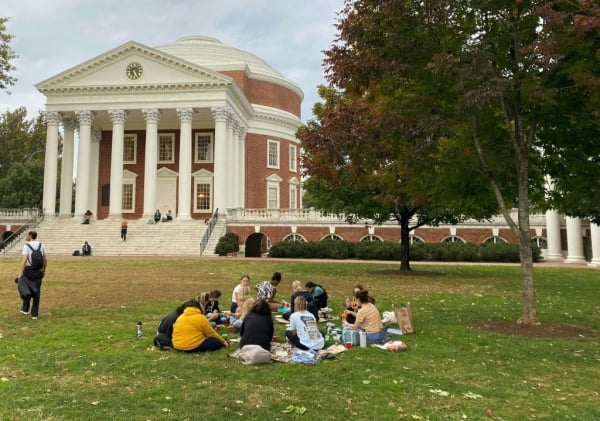
    The University of Virginia and Dartmouth College have become the latest higher ed institutions to publicly reject the Trump administration’s “Compact for Academic Excellence in Higher Education.” Now just three of the nine institutions that the federal government originally presented with the document have yet to announce whether they will sign.

    UVA announced Friday that it opposes the offer of yet-unrevealed special funding benefits in exchange for signing the compact. The statement came the day of an on-campus demonstration urging university leaders not to sign. Dartmouth unveiled its response Saturday morning. Both rejections came despite the universities attending a meeting Friday with White House officials about the deal.

    “As I shared on the call, I do not believe that the involvement of the government through a compact—whether it is a Republican- or Democratic-led White House—is the right way to focus America’s leading colleges and universities on their teaching and research mission,” Dartmouth president Sian Leah Beilock wrote in a message to Education Secretary Linda McMahon, which the president also shared with her community.

    “Our universities have a responsibility to set our own academic and institutional policies, guided by our mission and values, our commitment to free expression, and our obligations under the law,” Beilock wrote. “Staying true to this responsibility is what will help American higher education build bipartisan public trust and continue to uphold its place as the envy of the world.”

    Beilock hasn’t been a publicly outspoken opponent of Trump; at a Heterodox Academy conference in June, she said, “It’s really a problem to say just because the administration, with many things that we all object to, is suggesting something inherently means it’s wrong.” But she also said back then that “we shouldn’t have the government telling us what to do.”

    In a message Friday to McMahon, also shared with the community, UVA interim president Paul Mahoney wrote that “the integrity of science and other academic work requires merit-based assessment of research and scholarship. A contractual arrangement predicating assessment on anything other than merit will undermine the integrity of vital, sometimes lifesaving, research and further erode confidence in American higher education.”

    The compact asks colleges to agree to overhaul or abolish departments “that purposefully punish, belittle, and even spark violence against conservative ideas,” without further defining what those terms mean. It also asks universities, among other things, to commit to not considering transgender women to be women; reject foreign applicants “who demonstrate hostility to the United States, its allies, or its values”; and freeze “effective tuition rates charged to American students for the next five years.”

    In exchange for these agreements, the White House has said signatories would “be given [funding] priority when possible as well as invitations to collaborate with the White House.” But the administration hasn’t revealed how much extra funding universities would be eligible for, and the nine-page compact doesn’t detail the potential benefits. The compact, as well as a Thursday statement from the White House, can also be read as threatening colleges’ current federal funding if they don’t sign.

    Mahoney told McMahon that his university agrees “with many of the principles outlined in the Compact, including a fair and unbiased admissions process, an affordable and academically rigorous education, a thriving marketplace of ideas, institutional neutrality, and equal treatment of students, faculty, and staff in all aspects of university operations.”

    “Indeed,” Mahoney wrote, “the University of Virginia leads in several of these areas and is committed to continuous improvement in all of them. We seek no special treatment in exchange for our pursuit of those foundational goals.”

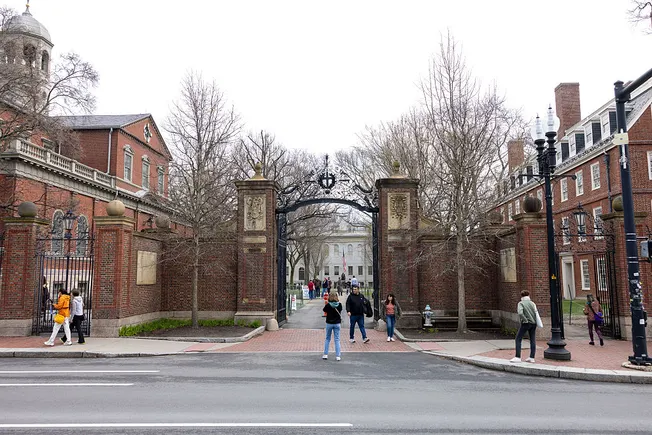
    The decisions make UVA the fifth and Dartmouth the sixth of the nine initial institutions presented with the deal to publicly turn it down. UVA is also the first public university and first Southern institution to reject it. The Massachusetts Institute of Technology was the first of the nine to turn it down, on Oct. 10, followed by Brown University and the Universities of Pennsylvania and Southern California.

    UVA’s rejection of the compact comes after the Trump administration successfully pressured then–UVA president James Ryan to step down in June. The Justice Department had demanded he step down. The UVA Board of Visitors voted to dissolve the university’s diversity, equity and inclusion office in March, but multiple conservative alumni groups and legal entities complained that Ryan failed to eliminate DEI from all corners of campus.

    A coalition of groups opposed to the compact, including the UVA chapter of the American Association of University Professors, praised the rejection in a Friday news release.

    “Today’s events demonstrate the power of collective organizing and action to defeat tyranny,” the statement said. “We hope that we serve as an example to the other public universities that received the ‘Compact’—the University of Texas, Austin, and the University of Arizona—giving them the courage and clarity not to buckle.”

    UVA faculty groups had overwhelmingly urged university leaders to reject the compact. And hundreds of demonstrators showed up to the anticompact rally Friday on the UVA campus in Charlottesville, Cville Right Now reported.

    Alongside Arizona and UT Austin, Vanderbilt University also hasn’t revealed its decision. But after MIT announced its refusal of the compact, Trump offered it to all U.S. colleges and universities to sign.

    White House officials met Friday with some universities about the proposal. The Wall Street Journal reported that UVA, Dartmouth, Arizona, UT Austin and Vanderbilt were invited, along with universities that weren’t part of the original nine: Arizona State University, the University of Kansas and Washington University in St. Louis.

    White House spokesperson Liz Huston compared the compact in a statement to efforts from former presidents George Washington, Abraham Lincoln, Teddy Roosevelt and John F. Kennedy, who she said “called on our universities to be of greater service to the nation.”

    “President Trump has called on universities to do their part in returning America to its economic and diplomatic successes of the past: a nation of full employment, pioneering innovations that change the world, and committed to merit and hard work as the ingredients to success,” she said, adding the administration hosted “a productive call” with several universities. 

    A White House official said UVA and the other seven invited universities participated in the call.

    “They now have the baton to consider, discuss, and propose meaningful reforms, including their form and implementation, to ensure college campuses serve as laboratories of American greatness,” Huston said. 

    Source link

  • UVA the Fifth University to Reject Trump Higher Ed Compact

    UVA the Fifth University to Reject Trump Higher Ed Compact

    Daxia Rojas/AFP via Getty Images

    On a day of campus demonstrations urging officials to reject the Trump administration’s “Compact for Academic Excellence in Higher Education,” the University of Virginia announced Friday that it opposes the president’s offer of yet-unrevealed special funding benefits in exchange for signing.

    “The integrity of science and other academic work requires merit-based assessment of research and scholarship,” interim president Paul Mahoney wrote in a message Friday to Education Secretary Linda McMahon, which he shared with the university community. “A contractual arrangement predicating assessment on anything other than merit will undermine the integrity of vital, sometimes lifesaving, research and further erode confidence in American higher education.”

    The compact asks colleges to agree to overhaul or abolish departments “that purposefully punish, belittle, and even spark violence against conservative ideas,” without further defining what those terms mean. It also asks universities, among other things, to commit to not considering transgender women to be women; reject foreign applicants “who demonstrate hostility to the United States, its allies, or its values”; and freeze “effective tuition rates charged to American students for the next five years.”

    In exchange for these agreements, the White House has said signatories would “be given [funding] priority when possible as well as invitations to collaborate with the White House.” But the administration hasn’t revealed how much extra funding universities would be eligible for, and the nine-page compact doesn’t detail the potential benefits. The compact, as well as a Thursday statement from the White House, can also be read as threatening colleges’ current federal funding if they don’t sign.

    Mahoney told McMahon that his university agrees “with many of the principles outlined in the Compact, including a fair and unbiased admissions process, an affordable and academically rigorous education, a thriving marketplace of ideas, institutional neutrality, and equal treatment of students, faculty, and staff in all aspects of university operations.”

    “Indeed,” Mahoney wrote, “the University of Virginia leads in several of these areas and is committed to continuous improvement in all of them. We seek no special treatment in exchange for our pursuit of those foundational goals.”

    The decision makes UVA the fifth of the nine initial institutions presented with the deal to publicly turn it down. It’s also the first public university and first Southern institution to reject it. The Massachusetts Institute of Technology was the first of the nine to turn it down, on Oct. 10, followed by Brown University and the Universities of Pennsylvania and Southern California.

    UVA’s rejection of the compact comes after the Trump administration successfully pressured then–UVA president James Ryan to step down in June. The Justice Department had demanded he step down. The UVA Board of Visitors voted to dissolve the university’s diversity, equity and inclusion office in March, but multiple conservative alumni groups and legal entities complained that Ryan failed to eliminate DEI from all corners of campus.

    A coalition of groups opposed to the compact, including the UVA chapter of the American Association of University Professors, praised the rejection in a Friday news release.

    “Today’s events demonstrate the power of collective organizing and action to defeat tyranny,” the statement said. “We hope that we serve as an example to the other public universities that received the ‘Compact’—the University of Texas, Austin, and the University of Arizona—giving them the courage and clarity not to buckle.”

    UVA faculty groups had overwhelmingly urged university leaders to reject the compact. And hundreds of demonstrators showed up to the anti-compact rally Friday on the UVA campus in Charlottesville, Cville Right Now reported.

    Dartmouth College and Vanderbilt University also haven’t revealed their decisions. But after MIT announced its refusal of the compact, Trump offered it to all U.S. colleges and universities to sign.

    White House officials met Friday with some universities about the proposal. The Wall Street Journal reported that UVA, Arizona, Dartmouth, UT Austin and Vanderbilt were invited, along with universities that weren’t part of the original nine: Arizona State University, the University of Kansas and Washington University in St. Louis.

    White House spokesperson Liz Huston compared the compact in a statement to calls from former Presidents George Washington, Abraham Lincoln, Teddy Roosevelt and John F. Kennedy, who she said “called on our universities to be of greater service to the nation.”

    “President Trump has called on universities to do their part in returning America to its economic and diplomatic successes of the past: a nation of full employment, pioneering innovations that change the world, and committed to merit and hard work as the ingredients to success,” she said, adding the administration hosted “a productive call” with several universities. 

    A White House official said UVA and the other seven invited universities participated in the call.

    “They now have the baton to consider, discuss, and propose meaningful reforms, including their form and implementation, to ensure college campuses serve as laboratories of American greatness,” Huston said. 
    Source link

  • University of Rochester student expelled after speaking out about harassment will lead orchestra in concert to affirm free expression

    University of Rochester student expelled after speaking out about harassment will lead orchestra in concert to affirm free expression

    ROCHESTER, N.Y., Oct. 20, 2025 — A former doctoral conducting student at the Eastman School of Music who was silenced after reporting harassment by a faculty member is standing up for herself in the way she knows best — by conducting a classical music concert in support of free expression. 

    Rebecca Bryant Novak will conduct a volunteer orchestra at the Hochstein School of Music Performance Hall in Rochester, N.Y., on Thursday, Nov. 20, in a concert sponsored by the Foundation for Individual Rights and Expression, our first-ever classical music concert in support of free speech. The evening will feature Beethoven’s Fidelio Overture and selections from Shostakovich’s Symphony No. 5 — two works that faced censorial pressure in their own time and which emphasize the timeless connection between civil liberties and artistic expression. 

    The event will also feature internationally acclaimed violinist Lara St. John, praised by The New York Times as “a high-powered soloist.” 

    For Bryant Novak, who was expelled from the University of Rochester earlier this year after filing a complaint against one of her professors at Eastman, the evening will provide her not only with an opportunity to create wonderful music but to send a message to the school that she will not be intimidated into silence.

    “All I’ve wanted since I came to Eastman was to become a conductor and share my appreciation for great music with others,” Bryant Novak said. “I’m looking forward to doing so this evening — while reminding Eastman that I’m not going away.”

    Shortly into her first semester as a doctoral student in fall 2023, Bryant Novak complained about behavior by a professor who she said made sexist comments.

    After a yearlong investigation, a panel of faculty and administrators agreed that the professor had indeed violated Rochester’s harassment policy and that Eastman’s Title IX coordinator had mishandled her complaint.

    Despite all this, Eastman allowed the same school authorities to retain oversight of Bryant Novak’s academic trajectory — with one official telling her that the school restricted her performance times because of her complaint against the professor. 

    When Bryant Novak complained, Eastman did nothing. As a result of the alleged retaliation, Rochester opened a second investigation into Eastman’s mishandling of the situation in December 2024, and Bryant Novak publicly disclosed the university’s new investigation in a Substack article on Feb. 10.

    Two weeks later, Eastman abruptly expelled Bryant Novak, citing a failure to make academic progress, even though the school never showed that she met that criteria. In doing so, the school ignored its written policy that calls for students to be given ample notice if they are in danger of falling short of academic standards.

    FIRE is calling on Rochester President Sarah C. Mangelsdorf to immediately reinstate Bryant Novak and ensure that she is able to complete her doctorate under the oversight of Eastman faculty and officials who are not already subject to investigation for misconduct in her case. And we’re not alone. Over 800 members of the public have signed on to our Take Action campaign telling Mangelsdorf to heed the call.

    In any case, Bryant Novak won’t be banished from the conductor’s podium. We hope to have you join us for “Outspoken: Music for Free Speech,” an evening championing the right to free expression — hers and yours.

    The concert is free and open to the public. To attend, RSVP here to reserve your spot.

    The Foundation for Individual Rights and Expression (FIRE) is a nonpartisan, nonprofit organization dedicated to defending and sustaining the individual rights of all Americans to free speech and free thought—the most essential qualities of liberty. FIRE educates Americans about the importance of these inalienable rights, promotes a culture of respect for these rights, and provides the means to preserve them.

    CONTACT
    Karl de Vries, Director of Media Relations, FIRE: 215-717-3473; [email protected]

    Source link

  • Harvard’s operations lost $112.6M in FY25 amid Trump’s pressure campaign

    Harvard’s operations lost $112.6M in FY25 amid Trump’s pressure campaign

    This audio is auto-generated. Please let us know if you have feedback.

    Dive Brief:

    • Harvard University reported a $112.6 million net operating deficit in fiscal 2025, its first shortfall since the pandemic and the largest that the private nonprofit has racked up since 2011. 
    • The deficit — a steep decline from last year’s surplus of $45.3 million — shows the toll the Trump administration’s financial war against the institution has taken on its finances.
    • Despite its fiscal challenges this year, Harvard remains the country’s richest university. At $82.4 billion, its total assets grew 7.3% year over year in fiscal 2025, thanks to donations and strong investment returns.

    Dive Insight:

    Harvard’s financials show strains from federal disruptions, with revenue from federal support dropping 8.4% to $628.6 million in fiscal 2025, which ended June 30. 

    Even by the standards of our centuries-long history, fiscal year 2025 was extraordinarily challenging,” Harvard President Alan Garber said in a message accompanying the financial statements

    But the report understates the extent to which the Trump administration has tried to hurt the university as it pushes Harvard to enter a potentially expensive and far-reaching settlement. 

    The attacks began this spring with the cancellation of research grants over allegations that the Ivy League institution failed to protect students on campus from antisemitism. 

    In April, it froze $2.2 billion of Harvard’s grants and contracts after the university declined a settlement that would have given the federal government unprecedented say in academic operations

    In a Thursday Q&A, Harvard Chief Financial Officer Ritu Kalra described an “abrupt termination of nearly the entire portfolio of our direct federally sponsored research grants.” That included $116 million in reimbursement for money Harvard already spent that “disappeared almost overnight.” 

    The Trump administration has threatened and attempted to do much more. The administration has also tried through multiple maneuvers to block Harvard’s ability to enroll international students, who make up a little over a quarter of its student body. 

    A federal court overseeing Harvard’s litigation against the government has paused or blocked the above efforts, but the Trump administration has either filed or promised appeals over those decisions.

    President Donald Trump’s government has also sought to weaken Harvard’s patent rights by licensing them out through an obscure regulatory process never used by the federal government before and. Additionally, it has threatened Harvard’s access to federal student aid if the university does not comply with an expansive data request about undergraduate admissions. The administration further sought a $500 million settlement to resolve investigations into the university, a proposal Garber dismissed.

    All of that has come amid rising costs for the university and many others in the country. In fiscal 2025, Harvard’s total operating expenses rose 5.7% to $6.8 billion. 

    And starting in 2026 the university expects a tax bill on its endowment amounting to around $300 million a year going forward, after Republicans’ passed a massive spending package this year, which increased taxes on wealthy college endowments

    That means hundreds of millions of dollars that will not be available to support financial aid, research, and teaching,” Kalra said. 

    To navigate the choppy, uncertain financial waters, Harvard has laid off employees, frozen hiring, kept salaries flat and slowed spending on new projects. Going forward, Garber said that Harvard has intensified efforts to expand its revenue pool and is “examining operations at every level of the University as we seek greater adaptability and efficiency.”

    Endowment distributions and current-use gifts comprise 46% of its operating budget, far outpacing funds that the university receives from tuition or sponsored research.

    Source link

  • New York City sues Education Department over Title IX funds

    New York City sues Education Department over Title IX funds

    This audio is auto-generated. Please let us know if you have feedback.

    Dive Brief:

    • New York City sued the U.S. Department of Education on Oct. 15 over the federal agency’s decision in September to terminate $47 million in federal funding for 19 magnet schools. The department severed the nation’s largest school system from discretionary grant funding after the agency found the New York City Department of Education violated Title IX when it set transgender-inclusive bathroom and locker room policies. 
    • In an unprecedented measure, the Education Department, in a Sept. 16 letter, gave New York City Public Schools a short timeline of just three days to agree to overhaul its Title IX policies in response to the Education Department’s Office for Civil Rights decision.
    • The lawsuit seeks to stop the defunding of the Magnet School Assistance Program, meant to help with desegregation and that primarily serves low-income Hispanic and Black students. OCR said in its letter to New York City that funding the grant is “no longer in the best interest of the Federal Government.”

    Dive Insight:

     Abruptly discontinuing Magnet School Assistance Program funds threw “into chaos and uncertainty” the future of the magnet schools as well as the 7,700 students who attend them, according to the lawsuit. The lawsuit claims the cuts have also led to “the complete disruption” of the magnet schools’ specialized programming. 

    The Trump administration already sought to zero-out the program entirely in its proposed fiscal year 2026 budget. That, however, would require congressional approval.

    The legal challenge filed in the U.S. District Court for the Southern District of New York escalates the fight between school districts and the Trump administration over its civil rights enforcement measures. 

    “With this lawsuit, New York City Public Schools is fighting back against the U.S. Department of Education’s attack on our magnet program and transgender and gender expansive students,” said New York City Public Schools Chancellor Melissa Aviles-Ramos in an Oct. 16 statement. “U.S. DOE’s threat to cut off tens of millions of dollars in magnet funding unless we cancelled our protections for transgender and gender expansive students is contrary to federal, state, and local law, and, just as importantly, our values as New York City Public Schools.”

    Districts are increasingly opting to take the administration to court in response to its federal funding threats, rather than comply with the department’s demands. Those demands often include adopting “biology-based” definitions of “male” and “female,” and in some places run against state law that require inclusive policies for transgender people.

    Two large Northern Virginia school districts, for example, were among the first to sue the administration in late August after the agency decided the districts violated Title IX by allowing transgender students access to sex-segregated facilities aligning with their identities. Fairfax County and Arlington County school boards collectively have on the line $190 million, which the districts use to fund school meals for low-income students; services to students with disabilities, homeless students; and English learners, among other activities. 

    In these cases, the administration issued Title IX violations after very brief investigations, and provided recipients with 10 or less days to respond — as opposed to the usual 90-day timeline. 

    Source link

  • Parents, advocates alarmed as Trump leverages shutdown to gut special education department

    Parents, advocates alarmed as Trump leverages shutdown to gut special education department

    Two months after Education Secretary Linda McMahon was confirmed, she and a small team from the department met with leadership from the National Center for Learning Disabilities, an advocacy group that works on behalf of millions of students with dyslexia and other disorders. 

    Jacqueline Rodriguez, NCLD’s chief executive officer, recalled pressing McMahon on a question raised during her confirmation hearing: Was the Trump administration planning to move control and oversight of special education law from the Education Department to Health and Human Services?

    Rodriguez was alarmed at the prospect of uprooting the 50-year-old Individuals with Disabilities in Education Act (IDEA), which spells out the responsibility of schools to provide a “free, appropriate public education” to students with disabilities. Eliminating the Education Department entirely is a primary objective of Project 2025, the conservative blueprint that has guided much of the administration’s education policy. After the department is gone, Project 2025 said oversight of special education should move to HHS, which manages some programs that help adults with disabilities. 

    But the sprawling department that oversees public health has no expertise in the complex education law, Rodriguez told McMahon.

    “Someone might be able to push the button to disseminate funding, but they wouldn’t be able to answer a question from a parent or a school district,” she said in an interview later. 

    For her part, McMahon had wavered during her confirmation hearing on the subject. “I’m not sure that it’s not better served in HHS, but I don’t know,” she told Sen. Tim Kaine, D-Va., who shared concerns from parents worried about who would enforce the law’s provisions.

    But nine days into a government shutdown that has furloughed most federal government workers, the Trump administration announced that it was planning a drastic “reduction in force” that would lay off more than 450 people, including almost everyone who works in the Office of Special Education Programs. Rodriguez believes the layoffs are a way that the administration plans to force the special education law to be managed by some other federal office.

    Related: Become a lifelong learner. Subscribe to our free weekly newsletter featuring the most important stories in education. 

    The Education Department press office did not respond to a question about the administration’s plans for special education oversight. Instead, the press office pointed to a social media post from McMahon on Oct. 15. The fact that schools are “operating as normal” during the government shutdown, McMahon wrote on X, “confirms what the President has said: the federal Department of Education is unnecessary.”’

    Yet in that May meeting, Rodriguez said she was told that HHS might not be the right place for IDEA, she recalled. While the new department leadership made no promises, they assured her that any move of the law’s oversight would have to be done with congressional approval, Rodriguez said she was told. 

    The move to gut the office overseeing special education law was shocking to families and those who work with students with disabilities. About 7.5 million children ages 3 to 21 are served under IDEA, and the office had already lost staffers after the Trump administration dismissed nearly half the Education Department’s staff in March, bringing the agency’s total workforce to around 2,200 people. 

    For Rodriguez, whose organization supports students with learning disabilities such as dyslexia, McMahon’s private assurances was the administration “just outright lying to the public about their intentions.”

    “The audacity of this administration to communicate in her confirmation, in her recent testimony to Congress and to a disability rights leader to her face, ‘Don’t worry, we will support kids with disabilities,’” Rodriguez said. “And then to not just turn a 180-degree on that, but to decimate the ability to enforce the law that supports our kids.”

    She added: “It could not just be contradictory. It feels like a bait and switch.”

    Five days after the firings were announced, a U.S. district judge temporarily blocked the administration’s actions, setting up a legal showdown that is likely to end up before the Supreme Court. The high court has sided with the president on most of his efforts to drastically reshape the federal workforce. And President Donald Trump said at a Tuesday press briefing that more cuts to “Democrat programs” are coming.

    “They’re never going to come back in many cases,” he added.

    Related: Hundreds of thousands of students are entitled to training and help finding jobs. They don’t get it

    In her post on X, McMahon also said that “no education funding is impacted by the RIF, including funding for special education,” referring to the layoffs. 

    But special education is more than just money, said Danielle Kovach, a special education teacher in Hopatcong, N.J. Kovach is also a former president of the Council for Exceptional Children, a national organization for special educators.

    “I equate it to, what would happen if we dismantled a control tower at a busy airport?” Kovach said. “It doesn’t fly the plane. It doesn’t tell people where to go. But it ensures that everyone flies smoothly.”

    Katy Neas, a deputy assistant secretary in the Office of Special Education and Rehabilitative Services during the Biden administration, said that most people involved in the education system want to do right by children.

    “You can’t do right if you don’t know what the answer is,” said Neas, who is now the chief executive officer of The Arc of the United States, which advocates for people with intellectual and developmental disabilities. “You can’t get there if you don’t know how to get your questions answered.”

    Families also rely on IDEA’s mandate that each child with a disability receives a free, appropriate public education — and the protections that they can receive if a school or district does not live up to that requirement.

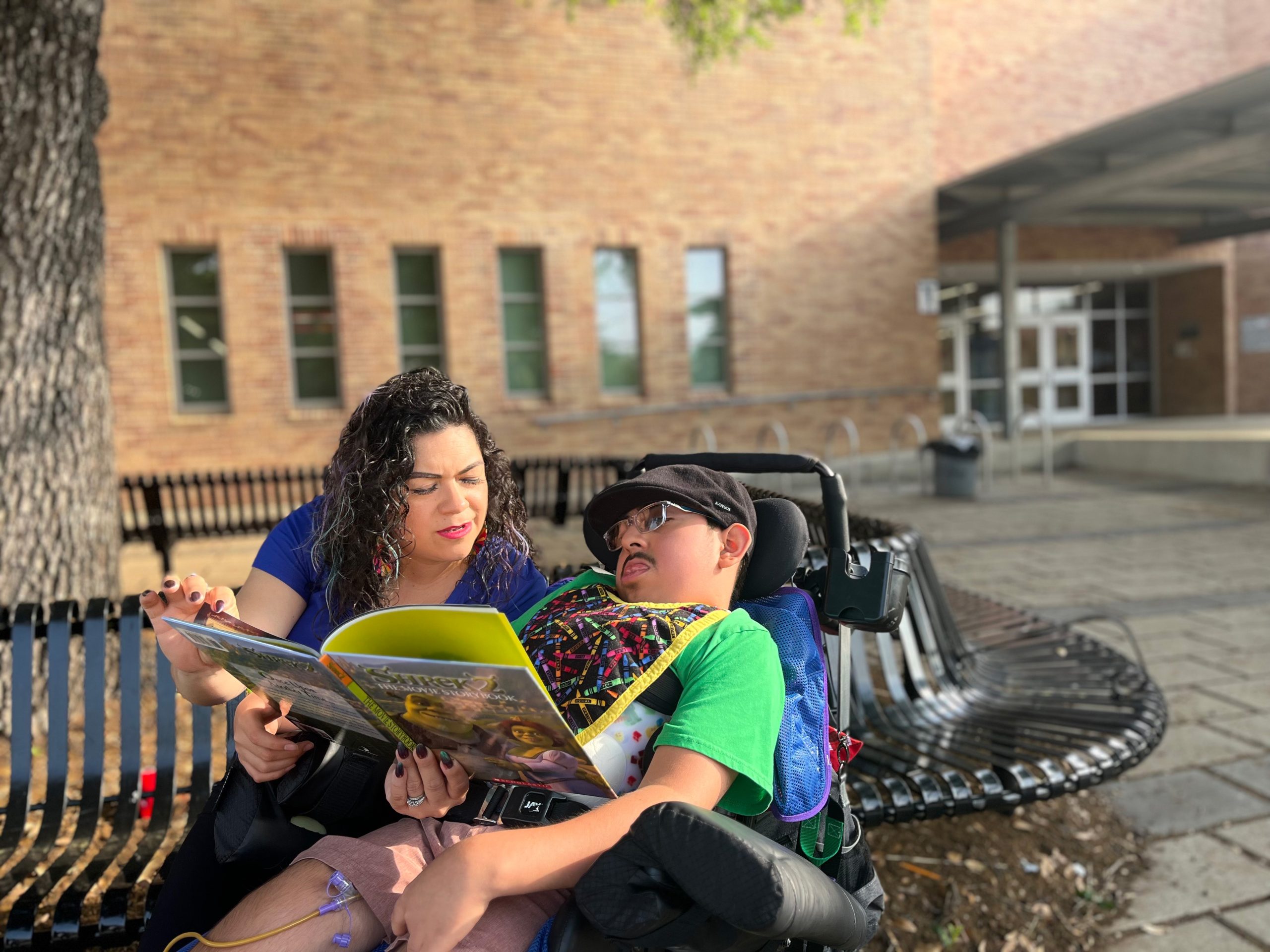
    Maribel Gardea, a parent in San Antonio, said she fought with her son’s school district for years over accommodations for his disability. Her son Voozeki, 14, has cerebral palsy and is nonverbal. He uses an eye-gaze device that allows him to communicate when he looks at different symbols on a portable screen. The district resisted getting the device for him to use at school until, Gardea said, she reminded them of IDEA’s requirements.

    “That really stood them up,” she said.

    Related: Trump wants to shake up education. What that could mean for a charter school started by a GOP senator’s wife

    Gardea, the co-founder of MindShiftED, an organization that helps parents become better advocates for their children with disabilities, said the upheaval at the Education Department has her wondering what kind of advice she can give families now.

    For example, an upcoming group session will teach parents how to file official grievances to the federal government if they have disputes with their child’s school or district about services. Now, she has to add in an explanation of what the deep federal cuts will mean for parents.

    Voozeki Gardea, who attends school in the San Antonio area, uses an eye-gaze communication device with the assistance of school paraprofessional Vanessa Martinez. The device verbalizes words and phrases when Voozeki looks at different symbols. Credit: Courtesy Maribel Gardea

    “I have to tell you how to do a grievance,” she said she plans to tell parents. “But I have to tell you no one will answer.”

    Maybe grassroots organizations may find themselves trying to track parent complaints on their own, she said, but the prospect is exhausting. “It’s a really gross feeling to know that no one has my back.”

    In addition to the office that oversees special education law, the Rehabilitation Services Administration, which is also housed at the Department of Education and supports employment and training of people with disabilities, was told most of its staff would be fired.

    “Regardless of which office you’re worried about, this is all very intentional,” said Julie Christensen, the executive director of the Association of People Supporting Employment First, which advocates for the full inclusion of people with disabilities in the workforce. “There’s no one who can officially answer questions. It feels like that was kind of the intent, to just create a lot of confusion and chaos.”

    Those staffers “are the voice within the federal government to make sure policies and funding are aligned to help people with disabilities get into work,” Christensen said. Firing them, she added, is counterintuitive to everything the administration says it cares about. 

    For now, advocates say they are bracing for a battle similar to those fought decades ago that led to the enactment of civil rights law protecting children and adults with disabilities. Before the law was passed, there was no federal guarantee that a student with a disability would be allowed to attend public school.  

    “We need to put together our collective voices. It was our collective voices that got us here,” Kovach said.

    And, Rodriguez said, parents of children in special education need to be prepared to be their own watchdogs. “You have to become the compliance monitor.” 

    It’s unfair, she said, but necessary. 

    Contact staff writer Christina Samuels at 212-678-3635 or [email protected].

    This story about special education was produced by The Hechinger Report, a nonprofit, independent news organization focused on inequality and innovation in education. Sign up for the Hechinger newsletter.

    The Hechinger Report provides in-depth, fact-based, unbiased reporting on education that is free to all readers. But that doesn’t mean it’s free to produce. Our work keeps educators and the public informed about pressing issues at schools and on campuses throughout the country. We tell the whole story, even when the details are inconvenient. Help us keep doing that.

    Join us today.

    Source link

  • White House to Meet With Universities Regarding Compact

    White House to Meet With Universities Regarding Compact

    Brendan Smialowski/AFP/Getty Images

    After four universities rejected the Trump administration’s compact for higher education, the White House is planning to meet Friday afternoon with the remaining five that have yet to respond.

    A White House official confirmed plans of the meeting to Inside Higher Ed but didn’t say what the purpose of the gathering was or which universities would attend. Nine universities were asked to give feedback on the wide-ranging proposal by Oct. 20.

    The virtual meeting will likely include May Mailman, a White House adviser, and Vincent Haley, director of the White House’s Domestic Policy Council, according to a source with knowledge of the White House’s plans. Mailman, Haley and Education Secretary Linda McMahon signed the letter sent to the initial nine about the compact.

    So far, the Massachusetts Institute of Technology, Brown University, the University of Pennsylvania and the University of Southern California have publicly rejected the deal. Dartmouth College, the University of Arizona, the University of Texas at Austin, the University of Virginia and Vanderbilt University haven’t said whether they’ll agree to the compact. Trump officials have said that the signatories could get access to more grant funding and threatened the funding of those that don’t agree.

    After USC released its letter rejecting the proposal, Liz Huston, a White House spokesperson, told the Los Angeles Times that “as long as they are not begging for federal funding, universities are free to implement any lawful policies they would like.”

    Following the first rejection from MIT last Friday, President Trump posted on Truth Social that all colleges could now sign on. The White House has said that some institutions have already reached out to do so.

    The source with knowledge of the White House’s plans said that the meeting “appears to be an effort to regain momentum by threatening institutions to sign even though it’s obviously not in the schools’ interest to do so.”

    The Wall Street Journal reported that Arizona State University, the University of Kansas and Washington University in St. Louis were also invited. According to the Journal, the goal of the meeting was to answer questions about the proposal and to find common ground with the institutions.

    Former senator Lamar Alexander, a Tennessee Republican and trustee at Vanderbilt, wrote in a Wall Street Journal op-ed that the compact was an example of federal overreach akin to previous efforts to impose uniform national standards on K–12 schools.

    “Mr. Trump’s proposed higher education compact may provoke some useful dialogue around reform,” he wrote. “But the federal government shouldn’t try to manage the nation’s 6,000 colleges and universities.”

    Inside Higher Ed reached out to the remaining five institutions as well as the new invitees, but they haven’t responded to a request for comment or to confirm whether they’ll attend the meeting.

    Source link

  • White House Meets With Universities Regarding Compact

    White House Meets With Universities Regarding Compact

    After four universities rejected the Trump administration’s compact for higher education, the White House met Friday with some universities about the proposal. 

    A White House official confirmed plans of the meeting to Inside Higher Ed but didn’t say what the purpose of the gathering was or which universities would attend. Nine universities were asked to give feedback on the wide-ranging proposal by Oct. 20.

    The virtual meeting planned to include May Mailman, a White House adviser, and Vincent Haley, director of the White House’s Domestic Policy Council, according to a source with knowledge of the White House’s plans. Mailman, Haley and Education Secretary Linda McMahon signed the letter sent to the initial nine about the compact.

    So far, the Massachusetts Institute of Technology, Brown University, the University of Pennsylvania and the University of Southern California have publicly rejected the deal. Dartmouth College, the University of Arizona, the University of Texas at Austin, and Vanderbilt University haven’t said whether they’ll agree to the compact. UVA said late Friday afternoon that it wouldn’t agree to the proposal.

    The Wall Street Journal reported that Arizona State University, the University of Kansas and Washington University in St. Louis were also invited. According to the Journal, the goal of the meeting was to answer questions about the proposal and to find common ground with the institutions.

    Inside Higher Ed reached out to the universities, but none confirmed whether they attended the meeting.

    The nine-page document would require universities to make a number of far-reaching changes from abolishing academic departments or programs that “purposefully punish, belittle, and even spark violence against conservative ideas” to capping international undergraduate enrollment at 15 percent. Institutions also would have to agree to freeze their tuition and require standardized tests for admissions, among other provisions.

    Trump officials have said that the signatories could get access to more grant funding and threatened the funding of those that don’t agree. The Justice Department would enforce the terms of the agreement, which are vague and not all defined.

    After USC released its letter rejecting the proposal, Liz Huston, a White House spokesperson, told the Los Angeles Times that “as long as they are not begging for federal funding, universities are free to implement any lawful policies they would like.”

    Following the first rejection from MIT last Friday, President Trump posted on Truth Social that all colleges could now sign on. The White House has said that some institutions have already reached out to do so.

    The source with knowledge of the White House’s plans said that the meeting “appears to be an effort to regain momentum by threatening institutions to sign even though it’s obviously not in the schools’ interest to do so.”

    Former senator Lamar Alexander, a Tennessee Republican and trustee at Vanderbilt, wrote in a Journal op-ed that the compact was an example of federal overreach akin to previous efforts to impose uniform national standards on K–12 schools.

    “Mr. Trump’s proposed higher education compact may provoke some useful dialogue around reform,” he wrote. “But the federal government shouldn’t try to manage the nation’s 6,000 colleges and universities.”

    A Joint Warning

    The American Council on Education and 35 other organizations warned in a joint statement released Friday that “the compact’s prescriptions threaten to undermine the very qualities that make our system exceptional.”

    The organizations that signed requested the administration withdraw the compact and noted that “higher education has room for improvement.” 

    But “the compact is a step in the wrong direction,” the letter states. “The dictates set by it are harmful for higher education and our entire nation, no matter your politics.”

    The letter is just the latest sign of a growing resistance in higher ed to the compact. Faculty and students at the initial group of universities rallied Friday to urge their administrators to reject the compact. According to the American Association of University Professors, which organized the national day of action, more than 1,000 people attended the UVA event. 

    And earlier this month, the American Association of Colleges and Universities released a statement that sharply criticized the compact. The statement said in part that college and university presidents “cannot trade academic freedom for federal funding” and that institutions shouldn’t be subject “to the changing priorities of successive administrations.” Nearly 150 college presidents and associations have endorsed that statement.

    The joint statement from ACE and others, including AAC&U, was a way to show that the associations, which the letter says “span the breadth of the American higher education community and the full spectrum of colleges and universities nationwide,” are united in their opposition.

    “The compact offers nothing less than government control of a university’s basic and necessary freedoms—the freedoms to decide who we teach, what we teach, and who teaches,” the statement reads. “Now more than ever, we must unite to protect the values and principles that have made American higher education the global standard.” 

    But not everyone in the sector signed on. 

    Key groups that were absent from the list of signatories include the Association of Public and Land-grant Universities, the Association of American Universities, the American Association of State Colleges and Universities, the National Association of Independent Colleges and Universities, Career Education Colleges and Universities, and the American Association of Community Colleges.

    Inside Higher Ed reached out to each of those groups, asking whether they were invited to sign and, if so, why they chose not to do so. Responses varied.

    AAU noted that it had already issued its own statement Oct. 10. AASCU said it was also invited to sign on and had “significant concerns” about the compact but decided to choose other ways to speak out.  

    “We are communicating in multiple ways with our member institutions and policymakers about the administration’s request and any impact it might have on regional public universities,” Charles Welch, the association’s president, said in an email.

    Other organizations had not responded by the time this story was published.

    Jessica Blake contributed to this article.

    Source link

  • India embraces UK unis, says Southampton VP after Starmer-Modi meet

    India embraces UK unis, says Southampton VP after Starmer-Modi meet

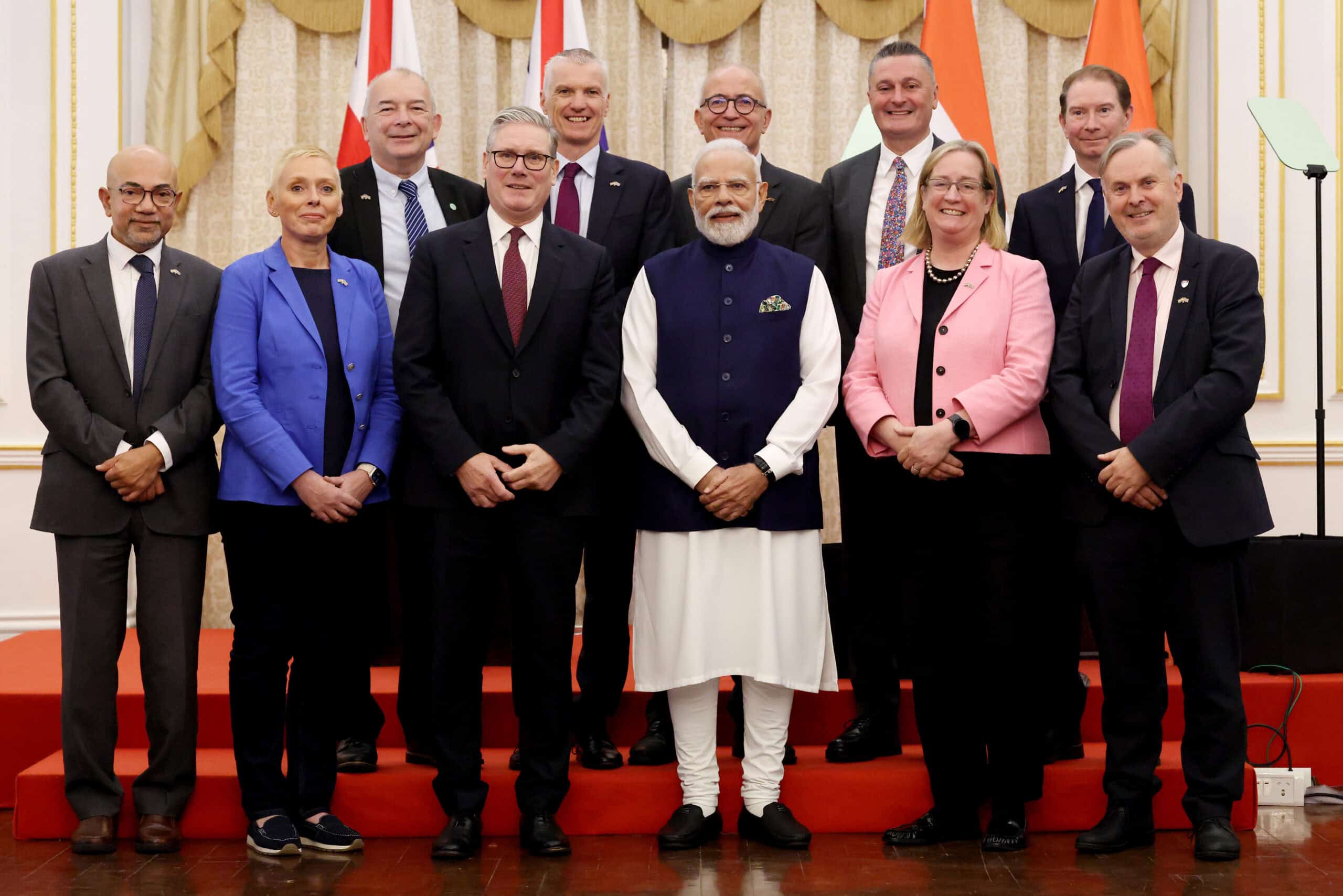
    He was part of a 126-member UK delegation to India led by UK Prime Minister Starmer, which included entrepreneurs, cultural leaders, and university VCs, to celebrate the landmark trade deal between the two countries.

    “The presence of all nine UK universities with a Letter of Intent (LoI) or Letter of Acceptance (LoA) is a major achievement for the UK HE sector, surpassing approvals from all other countries,” said Atherton, in a chat with The PIE News.

    “UK universities have embraced the new regulations and India has embraced UK universities. All nine universities met with Prime Minsters Modi and Starmer during their joint press [conference], which celebrated the campuses and highlighted their contribution to the growth and development of higher education in India.”

    Though Starmer has insisted that visa routes for Indian workers and students are not part of the broader trade deal, expanding overseas offerings for students to study in India was a key aim of the trip.

    Major UK universities, including Coventry, Queen’s University Belfast, Surrey, Bristol, York, Aberdeen, Lancaster, and Liverpool, are set to launch campuses by 2026 across GIFT City, Mumbai, and Bengaluru. Southampton is the only functional campus so far, opening in August with 120 students in its inaugural cohort.

    The presence of all nine UK universities with a LoI or LoA is a major achievement for the UK HE sector, surpassing approvals from all other countries
    Andrew Atherton, University of Southampton

    India’s growing demand for higher education, projected at 70 million places by 2035, presents opportunities for UK institutions, particularly as cautious immigration policies shape study abroad choices among Indian students.

    Both countries are also set to deepen education ties through the Vision 2035 framework, with an annual ministerial dialogue to review qualification recognition and promote knowledge-sharing via platforms like the UK’s Education World Forum and India’s National Education Policy (NEP).

    The University Grants Commission (UGC), India’s higher education regulator, introduced relaxed rules in 2023 for foreign universities to open branch campuses in India. While initial interest was slow, many institutions are now actively exploring opportunities, according to Atherton.

    “When the NEP first talked about international campuses in India there was some debate and activism about whether international universities would apply,” said Atherton.

    “With nine from the UK and three from Australia and one from the US, the policy has proven its ability to engorge international universities to set up campuses in India.”

    Source link

  • India embraces UK unis, says Southampton VC after Starmer-Modi meet

    India embraces UK unis, says Southampton VC after Starmer-Modi meet

    He was part of a 126-member UK delegation to India led by UK Prime Minister Starmer, which included entrepreneurs, cultural leaders, and university VCs, to celebrate the landmark trade deal between the two countries.

    “The presence of all nine UK universities with a Letter of Intent (LoI) or Letter of Acceptance (LoA) is a major achievement for the UK HE sector, surpassing approvals from all other countries,” said Atherton, in a chat with The PIE News.

    “UK universities have embraced the new regulations and India has embraced UK universities. All nine universities met with Prime Minsters Modi and Starmer during their joint press [conference], which celebrated the campuses and highlighted their contribution to the growth and development of higher education in India.”

    Though Starmer has insisted that visa routes for Indian workers and students are not part of the broader trade deal, expanding overseas offerings for students to study in India was a key aim of the trip.

    Major UK universities, including Coventry, Queen’s University Belfast, Surrey, Bristol, York, Aberdeen, Lancaster, and Liverpool, are set to launch campuses by 2026 across GIFT City, Mumbai, and Bengaluru. Southampton is the only functional campus so far, opening in August with 120 students in its inaugural cohort.

    The presence of all nine UK universities with a LoI or LoA is a major achievement for the UK HE sector, surpassing approvals from all other countries
    Andrew Atherton, University of Southampton

    India’s growing demand for higher education, projected at 70 million places by 2035, presents opportunities for UK institutions, particularly as cautious immigration policies shape study abroad choices among Indian students.

    Both countries are also set to deepen education ties through the Vision 2035 framework, with an annual ministerial dialogue to review qualification recognition and promote knowledge-sharing via platforms like the UK’s Education World Forum and India’s National Education Policy (NEP).

    The University Grants Commission (UGC), India’s higher education regulator, introduced relaxed rules in 2023 for foreign universities to open branch campuses in India. While initial interest was slow, many institutions are now actively exploring opportunities, according to Atherton.

    “When the NEP first talked about international campuses in India there was some debate and activism about whether international universities would apply,” said Atherton.

    “With nine from the UK and three from Australia and one from the US, the policy has proven its ability to engorge international universities to set up campuses in India.”

    Source link