Author: admin

  • The Black Box Problem: Why Cameras Matter in the Online Classroom – Faculty Focus

    The Black Box Problem: Why Cameras Matter in the Online Classroom – Faculty Focus

    Source link

  • The Black Box Problem: Why Cameras Matter in the Online Classroom – Faculty Focus

    The Black Box Problem: Why Cameras Matter in the Online Classroom – Faculty Focus

    Source link

  • The REF helps make research open, transparent, and credible- let’s not lose that

    The REF helps make research open, transparent, and credible- let’s not lose that

    The pause to reflect on REF 2029 has reignited debate about what the exercise should encompass – and in particular whether and how research culture should be assessed.

    Open research is a core component of a strong research culture. Now is the time to take stock of what has been achieved, and to consider how REF can promote the next stage of culture change around open research.

    Open research can mean many things in different fields, as the UNESCO Recommendation on Open Science makes clear. Wherever it is practiced, open research shifts focus away from outputs and onto processes, with the understanding that if we make the processes around research excellent, then excellent outcomes will follow

    Trust

    Being open allows quality assurance processes to work, and therefore research to be trustworthy. Although not all aspects of research can be open (sensitive personal data, for example), an approach to learning about the world that is as open as possible differentiates academic research from almost all other routes to knowledge. Open research is not just a set of practices – it’s part of the culture we build around integrity, collaboration and accountability.

    But doing research openly takes time, expertise, support and resources. As a result, researchers can feel vulnerable. They can worry that taking the time to focus on high-quality research processes might delay publication and risk them being scooped, or that including costs for open research in funding bids might make them less likely to be funded; they worry about jeopardising their careers. Unless all actors in the research ecosystem engage, then some researchers and some institutions will feel that they put themselves at a disadvantage.

    Open research is, therefore, a collective action problem, requiring not only policy levers but a culture shift in how research is conducted and disseminated, which is where the REF comes in.

    REF 2021

    Of all the things that influence how research is done and managed in the UK HE sector, the REF is the one that perhaps attracts most attention, despite far fewer funds being guided by its outcome than are distributed to HEIs in other ways.

    One of the reasons for this attention is that REF is one of the few mechanisms to address collective action problems and drive cultural change in the sector. It does this in two ways, by setting minimum standards for a submission, and by setting some defined assessment criteria beyond those minimum standards. Both mechanisms provide incentives for submitting institutions to behave in particular ways. It is not enough for institutions to simply say that they behave in this way – by making submissions open, the REF makes institutions accountable for their claims, in the same way as researchers are made accountable when they share their data, code and materials.

    So, then, how has this worked in practice?

    A review of the main panel reports from REF 2021 shows that evidence of open research was visible across all four main panels, but unevenly distributed. Panel A highlighted internationally significant leadership in Public Health, Health Services and Primary Care (UoA 2) and Psychology, Psychiatry and Neuroscience (UoA 4), while Panel B noted embedded practices in Chemistry (UoA 8) and urged Computer Science and Informatics (UoA 11) to make a wider shift towards open science through sharing data, software, and protocols. Panel C pointed to strong examples in Geography and Environment Studies (UoA 14), and in Archaeology (UoA 15), where collaboration, transparency, and reproducibility were particularly evident. By contrast, Panel D – and parts of Panel C – showed how definitions of open research can be more complex, because what constitutes ‘open research’ is perhaps much more nuanced and varied in these disciplines, and these disciplines did not always demonstrate how they were engaging with institutional priorities on open research and supporting a culture of research integrity. Overall, then, open research did not feature in the reports on most UoAs.

    It is clear that in 2021 there was progress, in part guided by the inclusion in the REF guidance of a clear indicator. However, there is still a long way to go and it is clear open research was understood and evidenced in ways that could exclude some research fields, epistemologies and transparent research practices.

    REF 2029

    With REF 2029, the new People, Culture and Environment element has created a stronger incentive to drive culture change across the sector. Institutions are embracing the move beyond compliance, making openness and transparency a core part of everyday research practice. However, alignment between this sector move, REF policy and funder action remains essential to address this collective action problem and therefore ensure that this progress is maintained.

    To step back now would not only risk slowing, or even undoing, progress, but would send confused signals that openness and transparency may be optional extras rather than essentials for a trusted research system. Embedding this move is not optional: a culture of openness is essential for the sustainability of UK research and development, for the quality of research processes, and for ensuring that outputs are not just excellent, but also trustworthy in a time of mass misinformation.

    Openness, transparency and accountability are key attributes of research, and hallmarks of the culture that we want to see in the sector now and in the future. Critically, coordinated sector-wide, institutional and individual actions are all needed to embed more openness into everyday research practices. This is not just about compliance – it is about a genuine culture shift in how research is conducted, shared and preserved. It is about doing the right thing in the right way. If that is accepted, then we would challenge those advocating for reducing the importance of those practices in the REF: what is your alternative, and will it command public trust?


    This article was supported by contributions from:

    Michel Belyk (Edge Hill University), Nik Bessis (Edge Hill University), Cyclia Bolibaugh (University of York), Will Cawthorn (University of Edinburgh), Joe Corneli (Oxford Brookes University), Thomas Evans (University of Greenwich), Eleanora Gandolfi (University of Surrey), Jim Grange (Keele University), Corinne Jola (Abertay University), Hamid Khan (Imperial College, London), Gemma Learmonth (University of Stirling), Natasha Mauthner (Newcastle University), Charlotte Pennington (Aston University), Etienne Roesch (University of Reading), Daniela Schmidt (University of Bristol), Suzanne Stewart (University of Chester), Richard Thomas (University of Leicester), Steven Vidovic (University of Southampton), Eric White (Oxford Brookes University).

    Source link

  • Universities don’t seem to understand how power dynamics on campus are abused

    Universities don’t seem to understand how power dynamics on campus are abused

    I can’t be the only person to have been shocked that 1.5 per cent of respondents to OfS’ NSS extension on harassment and sexual misconduct said they’d been in an intimate personal relationship with a member of university staff in the past year.

    Nor, notwithstanding the sampling issues, can I have been the only one to have been alarmed that of those relationships, 68.8 per cent said that the staff member was involved with their education or assessment.

    A few weeks ago now over on LinkedIn, former Durham psychology prof and harassment and sexual misconduct expert Graham Towl triggered a bit of debate.

    Having asserted that, to his knowledge, no university had initiated an outright ban on intimate personal relationships between staff and students, a whole raft of respondents appeared to tell him he was wrong – at least when it came to their university.

    So I checked. And sadly, whatever their perceptions, almost all of said contributors were mistaken. There’s plenty of strong discouragement, a lot of bans where there’s a supervisory relationship, but not a lot of policies that actually respond to what students want – which is for university to be one of the few settings where they’re not pestered for sex.

    Anna Bull’s work on professional boundaries couldn’t be any clearer, really. Two studies surveying students about staff-student relationships show that the vast majority of students – at least 75 per cent – are uncomfortable with teaching staff having sexual or romantic relationships with students.

    The research examined both “sexualized interactions” (such as dating or romantic relationships) and “personal interactions” (like adding students on social media or drinking with them). Notably, there were no differences in attitudes between undergraduate and postgraduate students, suggesting that different policies for different levels of study may not be justified.

    Women students were considerably more uncomfortable than men with both sexualized and personal interactions from staff, no doubt reflecting their heightened awareness of potential sexual harassment and intrusion. Black and Asian students also reported greater discomfort with personal interactions than white students, which researchers linked to preferences for greater professionalism and concerns about culturally inappropriate settings like pub meetings.

    The findings point towards establishing clear professional boundaries in higher education to create a more inclusive and comfortable learning environment for diverse student groups. So why hasn’t that happened?

    Power imbalance

    Since August 1st, the Office for Students (OfS) has required universities to implement one or more steps that could make a “significant and credible difference” in protecting students from conflicts of interest and abuse of power in intimate personal relationships between relevant staff members and students.

    While a complete ban on those relationships is deemed to meet this requirement, it is not mandatory – providers can alternatively adopt other measures such as requiring staff to disclose relationships, managing academic interactions to prevent unfair advantage or disadvantage, ensuring students can report harassment through alternative channels, and providing appropriate training on professional boundaries.

    If providers choose not to ban relationships, they have to actively manage any actual or potential conflicts of interest. Conversely, if they do implement a ban, breaches must result in disciplinary action through usual processes, including the possibility of dismissal.

    The policy must apply to “relevant staff members” – those with direct academic or professional responsibilities for students, including lecturers, supervisors, personal tutors, and pastoral support staff. And OfS expects providers to regularly review their approach based on evidence of prevalence, consultation with students, and the effectiveness of measures in place, adjusting policies as necessary to ensure student protection.

    That’s the bare minimum – but save for that stuff on “training on professional boundaries”, the problem has always been that it partly misses the point. Both OfS’ Condition E6 and several of the policies I’ve read since August 1st seem to suggest that intimate personal relationships between staff and students are somehow inevitable, or will just “happen”.

    But someone has to initiate them. Is it really too much to ask that higher education will be a space where students can get on with their lives without that initiation? Apparently it is.

    And if we’re looking more broadly at the professional boundaries that students think should exist, I can say with some confidence that they’re barely addressed at all in the policies I’ve seen.

    Between August 1st and October 16 this year, I’ve been using the odd break to search for what universities in England have done, or continue to do, in this space via what is supposed to be an easy-to-find “single source of information” on harassment and sexual misconduct. The difficulty in finding information in some cases is a different article, and in some cases searches might have surfaced old policies or rules that have since been updated.

    But having reached York St John University down the alphabetical list, I think I can now say what I can see. And it’s pretty disappointing.

    Ban or regulate?

    A clear minority of English universities now operate we might define as a total “ban” – prohibiting intimate relationships between staff and students, allowing only excluded pre-existing relationships, and making breach subject to disciplinary sanction up to dismissal.

    Those operating a ban between relevant staff members and students have moved decisively beyond the traditional “discourage and disclose” model, recognising that a prohibition sends a clearer message about acceptable professional conduct than a register that implicitly frames relationships as permissible if declared.

    But the vast majority of providers continue to run hybrid disclosure-and-mitigation regimes. These typically prohibit relationships where staff have direct academic, supervisory or pastoral responsibility whilst requiring declaration elsewhere so conflicts can be managed.

    Some variants include mandatory disclosure forms, formal HR records, automatic removal of responsibilities, and explicit disciplinary consequences. Weaker implementations rely on cultural expectations of disclosure with what read like vague enforcement mechanisms.

    Definitional inconsistencies and structural complexities

    Policy complexity and inconsistency remain significant compliance risks. E6’s definition of “relevant staff member” extends beyond academic roles to include pastoral advisers, complaints handlers, and security personnel, yet plenty of policies restrict prohibitions to “teaching” or “supervisory” staff. That narrower scope risks under-compliance, particularly given the condition’s emphasis on addressing “direct professional responsibilities” broadly conceived.

    The challenge is then compounded by the increasingly blurred boundaries of contemporary academic work. Academic casualisation means many staff occupy ambiguous positions – postgraduate students who teach undergraduates, visiting fellows with limited institutional attachment, or part-time lecturers working across multiple institutions. Hybrid roles complicate traditional staff-student distinctions and create enforcement challenges that policies rarely acknowledge explicitly.

    Similarly, institutions vary widely in defining “intimate personal relationship.” Some focus narrowly on romantic and sexual connections, whilst others encompass emotional intimacy or even brief encounters. The definitional variation undermines the sector’s ability to provide consistent protection – and creates real confusion for staff and students moving between institutions.

    Disciplinary frameworks

    E6 explicitly requires that breaches of relationship bans be actionable under disciplinary codes with the possibility of dismissal. Many policies use hedged language – “may be subject to disciplinary processes” – without clearly linking to dismissal procedures. This vagueness reads like a compliance gap, given the condition demands visible enforceability rather than implied consequences.

    More fundamentally, some universities fail to integrate relationship policies with their harassment and sexual misconduct frameworks, treating consensual relationships as a separate administrative matter rather than a safeguarding issue. The siloed approach risks missing the connection between power abuse in relationships and broader patterns of misconduct.

    Meanwhile, even where I found the “single comprehensive source of information”, there were publication gaps. Multiple providers either don’t publish any staff-student relationship policies or fragment them across HR documents, safeguarding procedures, and harassment frameworks. It makes it impossible for students to locate the unified information that E6 demands.

    And even where policies exist, they often read as HR-focused documents with limited student-facing clarity. E6 expects providers to communicate that students can report misconduct within relationships, will not be penalised for participating in permitted relationships, and will be protected from retaliation. Few policies include explicit student-facing assurances on these points – they’re largely staff-facing. Students won’t know what they can and can’t expect.

    Maybe it’s the lack of student engagement. E6 encourages providers to gather evidence, review complaints data, and consult students when setting policy. Very few institutions mention regular review cycles or evidence of student consultation in developing their approach. Over the past two weeks, just two of the 35 SUs I’ve spoken to have been shared the institution-level NSS extension prevalence data. Sigh.

    Transition and review

    The core critique of disclosure regimes – that they prioritise staff honesty over student protection and create implicit permission for advances – remains pretty much unaddressed by the sector. Most universities retain register-based systems that focus on “managing conflicts of interest” once relationships exist, rather than preventing the harm that may occur from approaches themselves.

    Policies typically frame concerns in managerial language around “professional integrity,” “institutional reputation,” and “fairness in assessment.” Staff-centric discourse contrasts sharply with student-centric concerns about discomfort, vulnerability, and psychological harm. The regulatory emphasis on conflict management appears to miss the fundamental critique that the proposition itself, regardless of outcome, can damage students’ academic confidence and sense of safety.

    While many policies acknowledge “power imbalances,” they operationalise the idea narrowly through formal supervisory relationships. Few grapple with the diffuse cultural authority that academic staff wield as gatekeepers to disciplinary knowledge, professional networks, and career opportunities. It suggests that universities don’t know how power operates in their own environments, particularly for students from underrepresented backgrounds who may be more dependent on staff endorsement and support.

    The evidence that women, Black, Asian, and LGBTQ+ students are disproportionately uncomfortable with boundary-crossing receives pretty much no acknowledgement in institutional policies. The absence of intersectional analysis by definition means that universal policies may systematically under-protect the most vulnerable student populations, despite E6’s emphasis on safeguarding.

    Technology and boundaries

    Both academic research and common sense tells us that contemporary academic relationships increasingly develop through digital channels that traditional policies struggle to address. Social media connections, informal messaging platforms, and online collaboration tools blur the boundaries between professional and personal communication in ways that very few of the policies I’ve seen acknowledge explicitly.

    More broadly, the policies on offer are poorly equipped to address subtle forms of grooming and boundary erosion. Most frameworks deal with binary outcomes – either declared relationships to be managed, or clear breaches to be disciplined – but offer little on the grey areas where inappropriate behaviour develops incrementally through seemingly innocent interactions.

    The research evidence on grooming pathways – special attention, informal meetings, personal communications, boundary-testing compliments – finds limited reflection in the material. Where policies do address professional boundaries, they typically focus on practical arrangements (meeting locations, communication channels) rather than the relational dynamics that create vulnerability to exploitation.

    It’s a gap that is particularly significant given evidence that students often recognise exploitation only retrospectively, after the power dynamic becomes clear. Policies designed around consent at the time of relationship formation do nothing to address the temporal aspects of harm recognition.

    Reporting barriers and trust

    Despite E6’s emphasis on accessible reporting, most universities have not fundamentally addressed the structural barriers that deter students from raising concerns. Few policies guarantee independent reporting channels or provide concrete protections against retaliation beyond general misconduct language. The asymmetry of consequences – where students risk academic and career damage whilst staff face at most employment consequences – receives little institutional acknowledgement.

    This trust deficit is compounded by the limited evidence of truly independent support systems, particularly at smaller and specialist institutions. Students in performing arts, agriculture, PGRs in general – all are characterised by intense staff-student interaction often face the thinnest protection frameworks despite arguably facing the highest risks of boundary-crossing.

    And miserably inevitably, to read the policies you’d think that staff in professional placement settings, years abroad, sports coaching, franchised provision and students’ unions don’t exist. Either those developing the policies have a limited understanding of the contemporary student experience, or have thought about the complexities and placed them in the “too difficult” pile for now. Or maybe it’s that the bulk of policies read like HR policies and have been developed with the university’s own employed staff in mind.

    There’s no doubt that the regulatory intervention has successfully prompted some policy development across the sector, but on the evidence I’ve seen so far, the translation from policy text to cultural change remains incomplete.

    Whether E6 delivers meaningful protection for students will depend on how universities implement the frameworks in practice, whether they address the underlying trust, power, and vulnerability dynamics that create risks, and how effectively they navigate the complex economic and cultural pressures that shape contemporary academic life.

    They’ll also depend on universities proving the regulator wrong by actively deciding to do the right thing, rather than deciding that the bare minimum derived from the checklist will do.

    Source link

  • Higher education postcard: Ashridge | Wonkhe

    Higher education postcard: Ashridge | Wonkhe

    We looked a few weeks ago at Philip Stott College; this week we’ll go to the Bonar Law Memorial College, its rival and successor, and see what happened there.

    Earlier in my career, when I worked at what is now City St George’s, I was obliged to visit Ashridge in my official capacity. A magnificent stone building, with wonderful medieval fireplaces and mullioned windows; the childhood home of Elizabeth I, rich in history.

    Except, of course, that Ashridge House was built in the early nineteenth century. All of that history took place at Ashridge Priory, which stood on the same site but was demolished in 1803. And Ashridge House is now grade I listed, with its grounds grade 2 listed. It’s a fake, but it’s a glorious fake.

    It was built under the auspices of John Egerton, 7th Earl of Bridgewater. He was a descendent of Thomas Egerton, Lord Keeper of the Great Seal and Lord Chancellor of Elizabeth I and James VI and I, and also of Francis Egerton, 3rd Duke of Bridgewater and a canal magnate. And when complete it eventually passed into the Brownlow family, who in 1921 sold the house and the grounds to the National Trust.

    It was bought by Urban H Broughton. Broughton was a civil engineer, who in 1884 went to the USA to promote a hydro-pneumatic sewerage system. He clearly did well there, promoting the system at the 1893 World Fair in Chicago, and in 1895 being hired by oil tycoon Henry Rogers to instal the system in his home community. And there he met Cara Leland Duff, Rogers’ widowed daughter. Sparks flew; they married. And, years later, he returned to Britain with his family, a rich man. He became a personage in society, a Conservative MP, and he was just about to be ennobled when he died.

    Before he did this, however, he gave Ashridge House to the Conservative Party to be used as a staff college.

    And so the Bonar Law Memorial College was born. Its original trustees were a roll-call of the Conservative party’s great and good: Stanley Baldwin MP, John Colin Campbell Davidson MP, Baron Fairhaven, John William Beaumont Pease, Viscount Hailsham, Neville Chamberlain MP, Viscount Astor, Col. John Buchan (he of The Thirty-Nine Steps), Viscountess Bridgeman, and Lady Greenwood, amongst others. The Leader and Chaiman [sic] of the Conservative and Unionist Party were trustees ex officio. It was named for Andrew Bonar Law, Prime Minister from 1922 to 1923.

    The Bonar Law Memorial College opened in 1929; it became known as a college of citizenship. During WW2 it was used as a field hospital. And it seems that its time as a Conservative college was not without tensions between the Conservative party and the college. Which is probably inevitable: the periodicity of vicissitudes in politics is, I claim, shorter than the periodicity of change in ideas and curricula.

    By 1954 the political nature of the college was coming to an end. By an Act of Parliament – the Ashridge (Bonar Law Memorial) Trust Act 1954 – the college became non-partisan, and known as the Ashridge Management College. It seems that the charitable aims were focused on the UK and the Commonwealth, meaning that the Ashridge (Bonar Law Memorial) Trust Act 1983 was necessary to enable the college to recruit students from countries outside the Commonwealth.

    In the 1990s Ashridge was validated by City University – which was how I got to go there – but then gained its own degree awarding powers. And rightly so. In 2015 it became part of Hult International Business School and now hosts executive education.

    The card is undated and unposted but judging by the cars parks out front I would guess stems from the 1950s, after it had become Ashridge. Here’s a jigsaw of the card – it’s a really tricky one this week!

    Source link

  • Indiana Censors Newspaper, Fires Adviser

    Indiana Censors Newspaper, Fires Adviser

    First Amendment advocates are condemning Indiana University’s decision this week to suspend print publication of the Indiana Daily Student, a move that comes after administrators fired its adviser for allegedly rejecting demands to censor the student newspaper.

    The Foundation for Individual Rights and Expression called the decision “outrageous,” while officials at the Student Press Law Center cast the move as a classic case of censorship. Editors at the newspaper say they want to work with the university to address the issue but pledged “to resist as long as the university disregards the law.”

    “Any other means than court would be preferred,” wrote IDS editors Mia Hilowitz and Andrew Miller in an op-ed Wednesday.

    The decision is the latest flare-up between student journalists and institutions. Earlier this year, Purdue University ended its partnership with the student paper, citing “institutional neutrality.” The move also echoes Texas A&M University’s unilateral decision in 2022 to end its student newspaper’s print edition.

    The IDS editors first brought attention to the firing of Director of Student Media Jim Rodenbush in a Tuesday op-ed. They accused IU of ousting Rodenbush after he refused to follow directions from administrators to censor a homecoming edition of the newspaper. Administrators reportedly told Rodenbush the newspaper was only to contain information about homecoming and “no traditional front page news coverage.” But when he resisted, and editors at the Indiana Daily Student pressed Media School administrators for clarity, Rodenbush was fired.

    A termination letter shared with Inside Higher Ed and signed by Media School dean David Tolchinsky accused Rodenbush of a “lack of leadership” and inability “to work in alignment with the University’s direction for the Student Media Plan,” which he called “unacceptable.” Tolchinsky added that Rodenbush “will not be eligible for rehire at Indiana University.”

    The termination letter sent to Jim Rodenbush.

    After Rodenbush was ousted, administrators canceled publication of the newspaper, citing a plan adopted last year that outlined a shift for the student newspaper from print to digital platforms.

    “In support of the Action Plan, the campus has decided to make this shift effective this week, aligning IU with industry trends and offering experiential opportunities more consistent with digital-first media careers of the future,” Tolchinsky wrote in an email to student editors obtained by Inside Higher Ed.

    Indiana administrators deny that the university censored the paper, despite telling the student publication not to publish news. IU officials say that the newspaper retains full editorial control.

    Accelerating a Shift

    In a statement shared with Inside Higher Ed and attributed only to an IU spokesperson, officials wrote, “Indiana University Bloomington is committed to a vibrant and independent student media ecosystem.” The statement added that the shift from print to digital is geared toward “prioritizing student experiences that are more consistent with today’s digital-first media environment while also addressing a longstanding structural deficit at the Indiana Daily Student.”

    Chancellor David Reingold also pointed to the action plan in his statement, noting that “the campus is completing the shift from print to digital effective this week.” He added that the decision “concerns the medium of distribution, not editorial content,” and IU upholds “the right of student journalists to pursue stories freely and without interference.”

    Tolchinsky, President Pamela Whitten and members of the Board of Trustees did not respond to requests for comment from Inside Higher Ed. IU did not answer specific questions sent by email.

    Although Indiana officials have denied censoring the student newspaper, some officials were concerned about the optics of shutting down coverage, according to the Indiana Daily Student.

    When Rodenbush pushed back on the directive to censor the newspaper in a Sept. 25 meeting, Ron McFall, assistant dean of strategy and administration at the Media School, reportedly asked, “How do we frame that, you know, in a way that’s not seen as censorship?”

    McFall did not respond to a request for comment from Inside Higher Ed.

    ‘Textbook Case of Censorship’

    Rodenbush told Inside Higher Ed in a phone interview that he was surprised by his firing and open to exploring all legal options. He also cast the happenings at IU not as a business decision but pure censorship.

    “This is a textbook case of censorship,” Rodenbush said.

    He also disputed the notion that what happened was part of a shift to a digital product. In fact, Rodenbush argued, that shift largely already happened when university administrators decided last year to scale back the publication of the print edition from weekly to seven editions across the spring semester. Those seven printings were special editions, Rodenbush said, given that those “are generally our biggest revenue generators.” Special editions this year have been printed as supplemental sections, or essentially inserts into the regular editions of the paper.

    Prior to the fall semester, Rodenbush said, he never heard concerns from administrators about that practice until they objected to publishing the homecoming edition as an insert in the regular newspaper in September. When asked to ban news coverage from the homecoming edition, Rodenbush told Media School administrators, including Tolchinsky, he “wasn’t going to participate in censoring the paper,” which he said led to his firing.

    Hilowitz and Miller, the IDS editors, also disputed the notion that the cancellation of the print publication, which was communicated to them by Tolchinsky, was anything but censorship.

    “IU decided to fire Jim Rodenbush after he did the right thing by refusing to censor our print edition. That was a deliberate scare tactic toward student journalists and faculty. The same day, the Media School decided to fully cut our physical paper, fully ensuring we couldn’t print news. We’re losing revenue because of that decision,” they wrote in a joint emailed statement.

    The duo accused IU of trying to “irrationally justify” censorship as a “business decision.”

    Mike Hiestrand, senior legal counsel at the Student Press Law Center, told Inside Higher Ed that IU’s actions amount to content-based censorship and are “a clear violation of the First Amendment.”

    Asked to weigh in on IU’s response, Hiestrand commented, “No censor wants to be called a censor,” but “that’s clearly the case.” He added that being told not to publish certain information is “as content-based an action of censorship as you can get.” In an interview at a media conference in Washington, D.C., with hundreds of student journalists and advisers in attendance, Hiestrand said that there has been a sense of shock and outrage from attendees over the situation.

    “I think there’s shock that this happened here. We have strong laws that protect against this,” Hiestrand said.

    Free Speech Under Fire

    The censorship flap comes amid broad criticism of the state of free expression at IU, which FIRE ranked as one of the nation’s worst institutions on campus speech. Of 257 universities, FIRE ranked IU at 255 in its free speech rankings.

    IU has seen a flurry of campus speech controversies since Whitten became president in 2021.

    Whitten, who is also facing allegations that she plagiarized parts of her dissertation, has been accused of retaliating against a professor for criticizing her and stifling academic freedom. Under her leadership, IU has also imposed broad restrictions on campus speech in the wake of 2023 student protests and attempted to bar faculty who took buyouts from criticizing the university.

    Amid censorship concerns at IU, FIRE sent a letter to Whitten, released a statement and launched a national petition.

    “Censoring a student publication after it reported on a university’s dismal record on free speech isn’t just a stunning display of lack of self-awareness, it’s a violation of the First Amendment,” FIRE student press program officer Dominic Coletti said in a statement. “If Indiana University is embarrassed about its terrible showing in the College Free Speech Rankings, it should put down the shovel and start caring more about its students’ constitutional rights than its own image.”

    Indiana’s Student Government Association also condemned IU’s handling of the matter.

    The university’s chapter of the American Association of University Professors urged administrators to reconsider their decisions to fire the adviser and cut the print edition, saying the situation further deteriorates IU’s commitment to free speech.

    “In refusing to be cowed by demands to voluntarily abrogate constitutionally protected rights, Director Rodenbush and the Indiana Daily Student have indeed shown themselves out of alignment with a University Administration that has consistently silenced dissenting voices with a seeming disregard for First Amendment protections,” the chapter said in a statement.

    This latest controversy is also gaining national attention from big-name donors such as Mark Cuban, the billionaire entrepreneur and IU alum. Cuban, who previously donated money to support the Indiana Daily Student, called out administrators in a post on X.

    “Not happy. Censorship isn’t the way,” Cuban wrote Wednesday. “I gave money to [the] IU general fund for the IDS last year, so they could pay everyone and not run a deficit. I gave more than they asked for. I told them I’m happy to help because the IDS is important to kids at IU.”


    Source link

  • Judge halts layoffs of federal employees — for now

    Judge halts layoffs of federal employees — for now

    This audio is auto-generated. Please let us know if you have feedback.

    On Wednesday, a federal judge ordered the Trump administration to immediately stop the mass firing of federal employees during the government shutdown. 

    The Trump administration cannot issue any additional reduction-in-force notices, and it cannot enforce the notices already issued, according to the ruling from Judge Susan Illston of the U.S. District Court for the Northern District of California. 

    The temporary block follows a Sept. 30 lawsuit filed by two unions — the American Federation of Government Employees and the American Federation of State, County and Municipal Employees — against the U.S. Office of Management and Budget for violating the law when OMB Director Russ Vought threatened a mass firing of federal workers during a shutdown. 

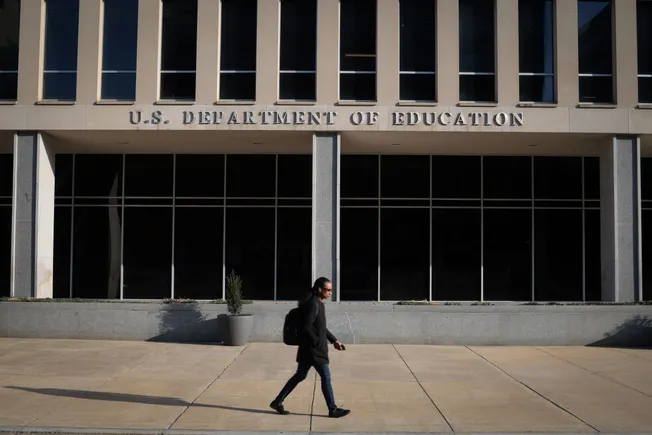
    For the second time this year, the Trump administration on Oct. 10 laid off a significant number of staff in the U.S. Department of Education, as part of President Donald Trump’s broader effort to abolish the agency. 

    The first round of RIF notices at the Education Department came in March, leading the agency to get entangled in multiple lawsuits that challenged the legality of those firings. 

    Before Trump took office on Jan. 20, the department had 4,133 employees. In March, that dwindled to 2,183. The number of staff then dipped further to an estimated 2,000 after the Oct. 10 firings, which also impacted other federal agencies nearly two weeks after a federal shutdown began after lawmakers failed to reach an agreement on the federal budget.   

    Meanwhile, U.S. Education Secretary Linda McMahon said in a X post on Wednesday that schools are operating as normal despite the government shutdown, which confirms that the U.S. Department of Education is “unnecessary.”

    “The Department has taken additional steps to better reach American students and families and root out the education bureaucracy that has burdened states and educators with unnecessary oversight,” McMahon wrote. “No education funding is impacted by the RIF, including funding for special education, and the clean CR [continuing resolution] supported by the Trump Administration will provide states and schools the funding they need to support all students.”

    Here’s a timeline of events leading up to the agency’s latest round of RIFs and the continued downsizing of the federal education footprint.

    • March 11, 2025

      The Education Department announced a massive reduction in force, with plans to slash nearly half of its workforce, impacting all divisions within the federal agency — some “requiring significant reorganization,” according to McMahon.

      The cuts, along with previously accepted employee “buyouts,” reduced the department’s headcount from 4,133 when Trump was inaugurated Jan. 20 to approximately 2,183 — affecting over 1,900 employees.

    • March 12, 2025

      As part of the Education Department’s mass downsizing of its staff, the agency also shuttered seven of its 12 civil rights enforcement offices. The seven closed offices of the Education Department’s Office for Civil Rights oversaw half of the nation’s states, impacting nearly 60,000 public schools and over 30 million K-12 students.

      The Trump administration also informed all seven Office of Educational Technology employees in an email that their positions and office were being “abolished” as the Education Department announced massive layoffs across the agency the day prior.

    • March 20, 2025

      President Donald Trump signed an executive order calling on McMahon to “take all necessary steps to facilitate the closure of the Department of Education,” marking the boldest push from the president to shut down the agency since its establishment under the Carter administration over four decades ago.
    • April 14, 2025

      A lawsuit was filed against the Trump administration over its significant downsizing of the Education Department’s Institute of Education Sciences in March. The lawsuit from the American Educational Research Association and the Society for Research on Educational Effectiveness said the layoffs made it impossible for IES to carry out education research.

      A similar lawsuit disputing the IES cuts was filed by the Association for Education Finance and Policy and the Institute for Higher Education Policy on April 4 in federal court.

    • April 17, 2025

      Despite massive layoffs that left the Education Department with a skeleton crew in charge of administering and analyzing the Nation’s Report Card, the agency said the assessment will continue as planned in 2026.
    • June 18, 2025

      A federal judge ordered the Education Department to reinstate all laid-off Office for Civil Rights employees for the time being, saying the layoffs and shuttering of seven regional offices had rendered the remaining staff “incapable of addressing the vast majority of OCR complaints.”
    • July 14, 2025

      The U.S. Supreme Court allows the Trump administration to carry on with its efforts to lay off nearly half the Education Department’s staff as lower courts weigh in on the layoffs’ legality in New York v. McMahon.
    • July 15, 2025

      Management of key federal workforce development programs began shifting from the Education Department to the U.S. Department of Labor under an interagency agreement signed in May, both agencies announced.
    • Aug. 19, 2025

      Following a federal judge’s order directing that the Education Department be restored to “the status quo,” the agency said it plans to bring back more than 260 Office for Civil Rights staff who were cut as part of the March reduction in force, and it will be returning groups of employees to the civil rights enforcement arm in waves every two weeks from Sept. 8 through Nov. 3.
    • Sept. 29, 2025

      The 1st U.S. Circuit Court of Appeals overturned a lower court’s order requiring the Education Department to restore the Office for Civil Rights to the “status quo,” which also allowed the department to move forward with plans to cut half of its OCR staff as litigation proceeds.
    • Oct. 1, 2025

      The federal government enters the first day of its shutdown as Congress remains at a funding impasse for fiscal year 2026. During the shutdown, the Education Department planned to furlough about 95% of its non-Federal Student Aid staff for the first week, according to a Sept. 28 memo from U.S. Education Secretary Linda McMahon.

      The Trump administration’s Office of Management and Budget issued a memo a week before that threatened mass firings of federal employees if a government shutdown occurs, according to a Sept. 30 lawsuit filed by labor unions against OMB.

    • Oct. 10, 2025

      The Trump administration issued reduction-in-force notices throughout the federal government, including at the Education Department where court filings show 466 Education Department employees were impacted by the layoffs. Most of the employees at the Office of Special Education Programs — where staffing had remained fairly stable — were laid off as part of the department’s second wave of RIF notices this year, according to several special education professional organizations.

      The latest RIFs also reached Education Department offices that oversee civil rights, student achievement supports, budgeting services, school safety, postsecondary education and more, according to the American Federation of Government Employees, a union representing more than 2,700 Education Department employees.

    • Oct. 15, 2025

      A federal judge ordered the Trump administration to cease any mass firings of federal employees initiated during the government shutdown. The temporary block came in response to a lawsuit filed by two federal employee unions against OMB over the office’s threats to initiate mass firings ahead of the Oct. 1 shutdown.

      Judge Susan Illston of the U.S. District Court for the Northern District of California said the administration’s issuance of reduction-in-force notices to over 4,000 employees throughout the federal government during the shutdown is illegal, exceeds the administration’s authority and is arbitrary and capricious.

    Source link

  • University of Pennsylvania rejects Trump’s higher education compact

    University of Pennsylvania rejects Trump’s higher education compact

    This audio is auto-generated. Please let us know if you have feedback.

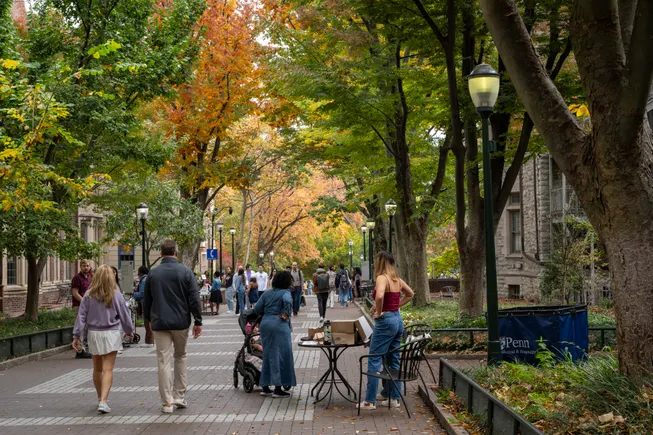
    The University of Pennsylvania on Thursday became the third institution to publicly reject the Trump administration’s sweeping higher education compact that promises priority for federal research funding in exchange for policy changes. 

    In an online message, Penn President J. Larry Jameson said he informed the U.S. Department of Education that the university “respectfully declines” to sign the compact. 

    “At Penn, we are committed to merit-based achievement and accountability. The long-standing partnership between American higher education and the federal government has greatly benefited society and our nation. Shared goals and investment in talent and ideas will turn possibility into progress,” he said. 

    Jameson also provided the agency feedback, as requested by the Trump administration, “highlighting areas of existing alignment as well as substantive concerns.” But he did not expand on why the university rejected the compact in his message. Penn did not provide more information about the concerns he mentioned in responding to a request for comment Thursday.

    The Ivy League institution follows the Massachusetts Institute of Technology and Brown University in rejecting the administration’s offer. Those institutions raised concerns that the proposed compact would infringe on their independence and freedom. 

    The compact’s wide-ranging terms include freezing tuition for five years, placing caps on international enrollment, changing or eliminating campus units that “purposefully punish” and “belittle” conservative viewpoints, and requiring undergraduate applicants to take standardized tests. 

    Although federal officials initially invited nine high-profile institutions to sign the compact, President Donald Trump appeared to extend that invitation to all colleges in a recent social media post. Neither the White House nor the U.S. Education Department immediately responded to a request for comment Thursday. 

    Pennsylvania Gov. Josh Shapiro praised Penn’s move in a statement Thursday, saying the university “made the right decision to maintain its full academic independence and integrity.”

    “The Trump Administration’s dangerous demands would limit freedom of speech, the freedom to learn, and the freedom to engage in constructive debate and dialogue on campuses across the country,” Shapiro said.

    As governor, Shapiro is a nonvoting member of Penn’s board, but he has wielded that influence at the private university as few of his predecessors have, according to The Chronicle of Higher Education. 

    He said Thursday that he had “engaged closely with university leaders” on the Trump administration’s compact.

    Shapiro isn’t the only Democratic lawmaker in Pennsylvania who has raised concerns about the compact. Two state representatives have also moved to bar colleges that receive state funding from signing the proposed agreement.

    Penn’s rejection of the compact comes after the university cut a deal with the Trump administration earlier this year to restore some $175 million in suspended research funding. Federal officials had cut off the funding over Penn’s prior policies allowing transgender women to compete in women’s sports. 

    Under that deal, struck in July, Penn agreed to adopt the Trump administration’s interpretation of Title IX, the civil rights law barring federally funded institutions from discriminating on the basis of sex. 

    The university also agreed to award athletic titles to cisgender women on Penn’s swimming team who had lost to transgender women, according to the Education Department. And the university said it would send personal apology letters to affected cisgender women.

    Source link

  • Act now: Condemn Indiana University’s censorship of student media

    Act now: Condemn Indiana University’s censorship of student media

    TAKE ACTION

    On Oct. 14, Indiana University abruptly fired Director of Student Media Jim Rodenbush after he refused to enforce unconstitutional content restrictions on the student paper the Indiana Daily Student. The very next day, IU ordered IDS to halt print publication.

    This illustrates why IU ranked dead last among public universities — and third-to-last overall — in FIRE’s 2026 College Free Speech Rankings. Firing a student media adviser for refusing to censor a student newspaper, then banning print editions of that paper, sends a message that would chill even the most courageous young journalist: Cover stories we don’t like, and you’ll lose your ability to print — and your faculty support.

    What did the Indiana Daily Student do to provoke this reaction?

    They used their front page to attack IU’s track record on free speech, citing IU’s suspension of the Palestine Solidarity Committee and IU’s ranking as the worst public university in the nation for free speech. In the wake of these stories hitting newsstands, administrators summoned Rodenbush to a meeting to discuss “expectations” for what belongs in the paper. 

    IU’s Media School instructed the student paper to publish an edition exclusively devoted to homecoming flattery with “no other news at all.” When Rodenbush stood his ground, administrators then said they “lost trust” in his leadership — and immediately fired him.

    But public universities can’t order students to publish puff pieces. They can’t shut down newspapers for coverage that makes administrators uncomfortable. And they can’t fire advisers who refuse to play the censorship game. 

    Firing Rodenbush and banning the paper are textbook First Amendment violations that IU claims are part of a digital-first media strategy. But that’s a smokescreen. Cutting the print edition and removing a longtime adviser after critical coverage isn’t a strategy. It’s retaliation. And it’s illegal.

    IU is failing its students, its faculty, and the Constitution it is bound to uphold. FIRE is demanding that IU reverse the print ban, offer Rodensbush reinstatement, and make a public commitment to restore student press freedom on campus.

    Stand with us and tell IU President Pamela Whitten to end this censorship crusade.

    Source link

  • Act now: Condemn IU’s censorship of student media

    Act now: Condemn IU’s censorship of student media

    TAKE ACTION

    On October 14, Indiana University abruptly fired Director of Student Media Jim Rodenbush after he refused to enforce unconstitutional content restrictions on the student paper the Indiana Daily Student. The very next day, IU ordered IDS to halt print publication.

    This illustrates why IU ranked dead last among public universities — and third-to-last overall — in FIRE’s 2026 College Free Speech Rankings. Firing a student media adviser for refusing to censor a student newspaper, then banning print editions of that paper, sends a message that would chill even the most courageous young journalist: Cover stories we don’t like, and you’ll lose your ability to print — and your faculty support.

    What did the Indiana Daily Student do to provoke this reaction?

    They used their front page to attack IU’s track record on free speech, citing IU’s suspension of the Palestine Solidarity Committee and IU’s ranking as the worst public university in the nation for free speech. In the wake of these stories hitting newsstands, administrators summoned Rodenbush to a meeting to discuss “expectations” for what belongs in the paper. 

    IU’s Media School instructed the student paper to publish an edition exclusively devoted to homecoming flattery with “no other news at all.” When Rodenbush stood his ground, administrators then said they “lost trust” in his leadership — and immediately fired him.

    But public universities can’t order students to publish puff pieces. They can’t shut down newspapers for coverage that makes administrators uncomfortable. And they can’t fire advisers who refuse to play the censorship game. 

    Firing Rodenbush and banning the paper are textbook First Amendment violations that IU claims are part of a digital-first media strategy. But that’s a smokescreen. Cutting the print edition and removing a longtime adviser after critical coverage isn’t a strategy. It’s retaliation. And it’s illegal.

    IU is failing its students, its faculty, and the Constitution it is bound to uphold. FIRE is demanding that IU reverse the print ban, offer Rodensbush reinstatement, and make a public commitment to restore student press freedom on campus.

    Stand with us and tell IU President Pamela Whitten to end this censorship crusade.


    Source link