Category: admissions

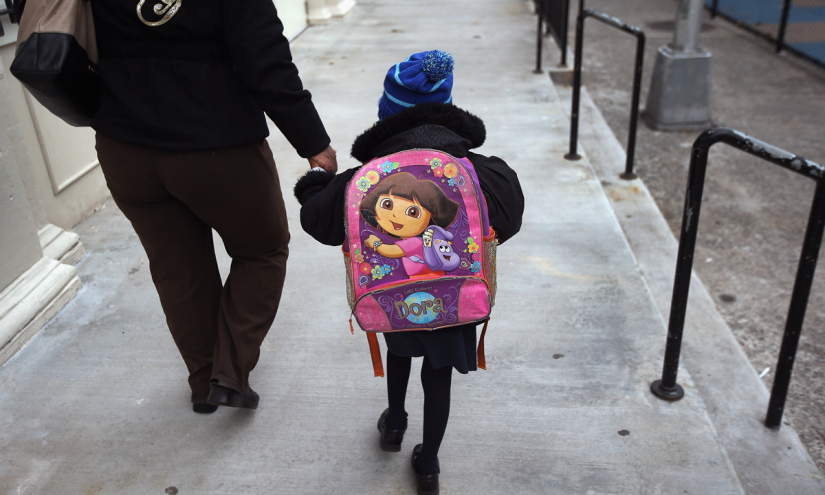
  • School Admissions Anxiety Hits Parents of Young Children, Too – The 74

    School Admissions Anxiety Hits Parents of Young Children, Too – The 74

    A few factors have made selecting an elementary school particularly challenging in recent years. For one, there are simply more schools for parents to pick from over the past few decades, ranging from traditional public and private to a growing number of magnet and charter programs. There are also new policies in some places, such as New York City, that allow parents to select not just their closest neighborhood public school but schools across and outside of the districts where they live.

    As a scholar of sociology and education, I have seen how the expanding range of school options – sometimes called school choice – has spread nationwide and is particularly a prominent factor in New York City.

    I spoke with a diverse range of more than 100 New York City parents across income levels and racial and ethnic backgrounds from 2014 to 2019 as part of research for my 2025 book, “Kindergarten Panic: Parental Anxiety and School Choice Inequality.”

    All of these parents felt pressure trying to select a school for their elementary school-age children, and school choice options post-COVID-19 have only increased.

    Some parents experience this pressure a bit more acutely than others.

    Women often see their choice of school as a reflection of whether they are good moms, my interviews show. Parents of color feel pressure to find a racially inclusive school. Other parents worry about finding niche schools that offer dual-language programs, for example, or other specialties.

    Navigating schools in New York City

    Every year, about 65,000 New York City kindergartners are matched to more than 700 public schools.

    New York City kindergartners typically attend their nearest public school in the neighborhood and get a priority place at this school. This school is often called someone’s zoned school.

    Even so, a spot at your local school isn’t guaranteed – students get priority if they apply on time.

    While most kindergartners still attend their zoned schools, their attendance rate is decreasing. While 72% of kindergartners in the city attended their zoned school in the 2007-08 school year, 60% did so in the 2016-17 school year.

    One reason is that since 2003, New York City parents have been able to apply to out-of-zone schools when seats were available. And in 2020, when the COVID-19 pandemic began, all public school applications moved entirely online. This shift allowed parents to easily rank 12 different school options they liked, in and outside of their zones.

    Still, New York City public schools remain one of the most segregated in the country, divided by race and class.

    Pressure to be a good mom

    Many of the mothers I interviewed from 2015 through 2019 said that getting their child into what they considered a “good” school reflected good mothering.

    Mothers took the primary responsibility for their school search, whether they had partners or not, and regardless of their social class, as well as racial and ethnic background.

    In 2017, I spoke with Janet, a white, married mother who at the time was 41 years old and had an infant and a 3-year-old. Janet worked as a web designer and lived in Queens. She explained that she started a group in 2016 to connect with other mothers, in part to discuss schools.

    Though Janet’s children were a few years away from kindergarten, she believed that she had started her research for public schools too late. She spent multiple hours each week looking up information during her limited spare time. She learned that other moms were talking to other parents, researching test results, analyzing school reviews and visiting schools in person.

    Janet said she wished she had started looking for schools when her son was was 1 or 2 years old, like other mothers she knew. She expressed fear that she was failing as a mother. Eventually, Janet enrolled her son in a nonzoned public school in another Queens neighborhood.

    Pressure to find an inclusive school

    Regardless of their incomes, Black, Latino and immigrant families I interviewed also felt pressure to evaluate whether the public schools they considered were racially and ethnically inclusive.

    Parents worried that racially insensitive policies related to bullying, curriculum and discipline would negatively affect their children.

    In 2015, I spoke with Fumi, a Black, immigrant mother of two young children. At the time, Fumi was 37 years old and living in Washington Heights in north Manhattan. She described her uncertain search for a public school.

    Fumi thought that New York City’s gifted and talented programs at public schools might be a better option academically than other public schools that don’t offer an advanced track for some students. But the gifted and talented programs often lacked racial diversity, and Fumi did not want her son to be the only Black student in his class.

    Still, Fumi had her son tested for the 2015 gifted and talented exam and enrolled him in one of these programs for kindergarten.

    Once Fumi’s son began attending the gifted and talented school, Fumi worried that the constant bullying he experienced was racially motivated.

    Though Fumi remained uneasy about the bullying and lack of diversity, she decided to keep him at the school because of the school’s strong academic quality.

    Pressure to find a niche school

    Many of the parents I interviewed who earned more than US$50,000 a year wanted to find specialty schools that offered advanced courses, dual-language programs and progressive-oriented curriculum.

    Parents like Renata, a 44-year-old Asian mother of four, and Stella, a 39-year-old Black mother of one, sent their kids to out-of-neighborhood public schools.

    In 2016, Renata described visiting multiple schools and researching options so she could potentially enroll her four children in different schools that met each of their particular needs.

    Stella, meanwhile, searched for schools that would de-emphasize testing, nurture her son’s creativity and provide flexible learning options.

    In contrast, the working-class parents I interviewed who made less than $50,000 annually often sought schools that mirrored their own school experiences.

    Few working-class parents I spoke with selected out-of-neighborhood and high academically performing schools.

    New York City data points to similar results – low-income families are less likely than people earning more than them to attend schools outside of their neighborhoods.

    For instance, Black working-class parents like 47-year-old Risha, a mother of four, and 53-year-old Jeffery, a father of three, who attended New York City neighborhood public schools themselves as children told me in 2016 that they decided to send their children to local public schools.

    Based on state performance indicators, students at these particular schools performed lower on standard assessments than schools on average.

    Cracks in the system

    The parents I spoke with all live in New York City, which has a uniquely complicated education system. Yet the pressures they face are reflective of the evolving public school choice landscape for parents across the country.

    Parents nationwide are searching for schools with vastly different resources and concerns about their children’s future well-being and success.

    When parents panic about kindergarten, they reveal cracks in the foundation of American schooling. In my view, parental anxiety about kindergarten is a response to an unequal, high-stakes education system.

    Bailey A. Brown, Assistant Professor of Sociology, Spelman College

    This article is republished from The Conversation under a Creative Commons license. Read the original article.

    Source link

  • Helping students to make good choices isn’t about more faulty search filters

    Helping students to make good choices isn’t about more faulty search filters

    A YouTube video about Spotify popped into my feed this weekend, and it’s been rattling around my head ever since.

    Partly because it’s about music streaming, but mostly because it’s all about what’s wrong with how we think about student choice in higher education.

    The premise runs like this. A guy decides to do “No Stream November” – a month without Spotify, using only physical media instead.

    His argument, backed by Barry Schwartz’s paradox of choice research and a raft of behavioural economics, is that unlimited access to millions of songs has made us less satisfied, not more.

    We skip tracks every 20 to 30 seconds. We never reach the guitar solo. We’re treating music like a discount buffet – trying a bit of everything but never really savouring anything. And then going back to the playlists we created earlier.

    The video’s conclusion is that scarcity creates satisfaction. Ritual and effort (opening the album, dropping the needle, sitting down to actually listen) make music meaningful.

    Six carefully chosen options produce more satisfaction than 24, let alone millions. It’s the IKEA effect applied to music – we value what we labour over.

    I’m interested in choice. Notwithstanding the debate over what a “course” is, Unistats data shows that there were 36,421 of them on offer in 2015/16. This year that figure is 30,801.

    That still feels like a lot, given that the University of Helsinki only offers 34 bachelor’s degree programmes.

    Of course a lot of the entries on DiscoverUni separately list “with a foundation year” and there’s plenty of subject combinations.

    But nevertheless, the UK’s bewildering range of programmes must be quite a nightmare for applicants to pick through – it’s just that once they’re on them, job cuts and switches to block teaching are delivering increasingly less choice in elective pathways than they used to.

    We appear to have a system that combines overwhelming choice at the point of least knowledge (age 17, alongside A-levels, with imperfect information) with rigid narrowness at the point of most knowledge (once enrolled, when students actually understand what they want to study and why). It’s the worst of both worlds.

    What the white paper promises

    The government’s vision for improving student choice runs to a couple of paragraphs in the Skills White Paper, and it’s worth quoting in full:

    We will work with UCAS, the Office for Students and the sector to improve the quality of information for individuals, informed by the best evidence on the factors that influence the choices people make as they consider their higher education options. Providing applicants with high-quality, impartial, personalised and timely information is essential to ensuring they can make informed decisions when choosing what to study. Recent UCAS reforms aimed at increasing transparency and improving student choice include historic entry grades data, allowing students, along with their teachers and advisers, to see both offer rates and the historic grades of previous successful applicants admitted to a particular course, in addition to the entry requirements published by universities and colleges.

    As we see more students motivated by career prospects, we will work with UCAS and Universities UK to ensure that graduate outcomes information spanning employment rates, earnings and the design and nature of work (currently available on Discover Uni) are available on the UCAS website. We will also work with the Office for Students to ensure their new approach to assessing quality produces clear ratings which will help prospective students understand the quality of the courses on offer, including clear information on how many students successfully complete their courses.”

    The implicit theory of change is straightforward – if we just give students more data about each of the courses, they’ll make better choices, and everyone wins. It’s the same logic that says if Spotify added more metadata to every track (BPM, lyrical themes, engineer credits), you’d finally find the perfect song. I doubt it.

    Pump up the Jam

    If the Department for Education (DfE) was serious about deploying the best evidence on the factors that influence the choices people make, it would know about the research showing that more information doesn’t solve choice overload, because choice overload is a cognitive capacity problem, not an information quality problem.

    Sheena Iyengar and Mark Lepper’s foundational 2000 study in the Journal of Personality and Social Psychology found that when students faced 30 essay topic options versus six options, completion rates dropped from 74 per cent to 60 per cent, and essay quality declined significantly on both content and form measures. That’s a 14 percentage point completion drop from excessive choice alone, and objectively worse work from those who did complete.

    A study on Jam showed customers were ten times more likely to buy when presented with six flavours rather than 24, despite 60 per cent more people initially stopping at the extensive display. More choice is simultaneously more appealing and more demotivating. That’s the paradox.

    CFE Research’s 2018 study for the Office for Students (back when providing useful research for the sector was something it did) laid this all out explicitly for higher education contexts.

    Decision making about HE is challenging because the system is complex and there are lots of alternatives and attributes to consider. Those considering HE are making decisions in conditions of uncertainty, and in these circumstances, individuals tend to rely on convenient but flawed mental shortcuts rather than solely rational criteria. There’s no “one size fits all” information solution, nor is there a shortlist of criteria that those considering HE use.

    The study found that students rely heavily on family, friends, and university visits, and many choices ultimately come down to whether a decision “feels right” rather than rational analysis of data. When asked to explain their decisions retrospectively, students’ explanations differ from their actual decision-making processes – we’re not reliable informants about why we made certain choices.

    A 2015 meta-analysis by Chernev, Böckenholt, and Goodman in the Journal of Consumer Psychology identified the conditions under which choice overload occurs – it’s moderated by choice set complexity, decision task difficulty, and individual differences in decision-making style. Working memory capacity limits humans to processing approximately seven items simultaneously. When options exceed this cognitive threshold, students experience decision paralysis.

    Maximiser students (those seeking the absolute best option) make objectively better decisions but feel significantly worse about them. They selected jobs with 20 per cent higher salaries yet felt less satisfied, more stressed, frustrated, anxious, and regretful than satisficers (those accepting “good enough”). For UK applicants facing tens of thousands of courses, maximisers face a nearly impossible optimisation problem, leading to chronic second-guessing and regret.

    The equality dimension is especially stark. Bailey, Jaggars, and Jenkins’s research found that students in “cafeteria college” systems with abundant disconnected choices “often have difficulty navigating these choices and end up making poor decisions about what programme to enter, what courses to take, and when to seek help.” Only 30 per cent completed three-year degrees within three years.

    First-generation students, students from lower socioeconomic backgrounds, and students of colour are systematically disadvantaged by overwhelming choice because they lack the cultural capital and family knowledge to navigate it effectively.

    The problem once in

    But if unlimited choice at entry is a cognitive overload problem, what happens once students enrol should balance that with flexibility and breadth. Students gain expertise, develop clearer goals, and should have more autonomy to explore and specialise as they progress.

    Except that’s not what’s happening. Financial pressures across the sector are driving institutions to reduce module offerings – exactly when research suggests students need more flexibility, not less.

    The Benefits of Hindsight research on graduate regret says it all. A sizeable share of applicants later wish they’d chosen differently – not usually to avoid higher education, but to pick a different subject or provider. The regret grows once graduates hit the labour market.

    Many students who felt mismatched would have liked to change course or university once enrolled – about three in five undergraduates and nearly two in three graduates among those expressing regret – but didn’t, often because they didn’t know how, thought it was too late, or feared the cost and disruption.

    The report argues there’s “inherent rigidity” in UK provision – a presumption that the initial choice should stick despite evolving interests, new information, and labour-market realities. Students described courses being less practical or less aligned to work than expected, or modules being withdrawn as finances tightened. That dynamic narrows options precisely when students are learning what they do and don’t want.

    Career options become the dominant reason graduates cite for wishing they’d chosen differently. But that’s not because they lacked earnings data at 17. It’s because their interests evolved, they discovered new fields, labour market signals changed, and the rigid structure gave them no way to pivot without starting again.

    The Competition and Markets Authority now explicitly identifies as misleading actions “where an HE provider gives a misleading impression about the number of optional modules that will be available.” Students have contractual rights to the module catalogue promised during recruitment. Yet redundancy rounds repeatedly reduce the size and scope of optional module catalogues for students who remain.

    There’s also an emerging consensus from the research on what actually works for module choice. An LSE analysis found that adding core modules within the home department was associated with higher satisfaction, whereas mandatory modules outside the home department depressed it. Students want depth and coherence in their chosen subject. They also value autonomous choice over breadth options.

    Research repeatedly shows that elective modules are evaluated more positively than required ones (autonomy effects), and interdisciplinary breadth is associated with stronger cross-disciplinary skills and higher post-HE earnings when it’s purposeful and scaffolded.

    What would actually work

    So what does this all suggest?

    As I’ve discussed on the site before, at the University of Helsinki – Finland’s flagship institution with 40,000 students – there’s 32 undergraduate programmes. Within each programme, students must take 90 ECTS credits in their major subject, but the other 75 ECTS credits must come from other programmes’ modules. That’s 42 per cent of the degree as mandatory breadth, but students choose which modules from clear disciplinary categories.

    The structure is simple – six five-credit introductory courses in your subject, then 60 credits of intermediate study with substantial module choice, including proseminars, thesis work, and electives. Add 15 credits for general studies (study planning, digital skills, communication), and you’ve got a degree. The two “modules” (what we’d call stages) get a single grade each on a one-to-five scale, producing a simple, legible transcript.

    Helsinki runs this on a 22.2 to one staff-student ratio, significantly worse than the UK average, after Finland faced €500 million in higher education cuts. It’s not lavishly resourced – it’s structurally efficient.

    Maynooth University in Ireland reduced CAO (their UCAS) entry routes from about 50 to roughly 20 specifically to “ease choice and deflate points inflation.” Students can start with up to four subjects in year one, then move to single major, double major, or major with minor. Switching options are kept open through first year. It’s progressive specialisation – broad exploration early when students have least context, increasing focus as they develop expertise.

    Also elsewhere on the site, Técnico in Lisbon – the engineering and technology faculty of the University of Lisbon – rationalised to 18 undergraduate courses following a student-led reform process. Those 18 courses contain hundreds of what the UK system would call “courses” via module combinations, but without the administrative overhead. They require nine ECTS credits (of 180) in social sciences and humanities for all engineering programmes because “engineers need to be equipped not just to build systems, but to understand the societies they shape.”

    Crucially, students themselves pushed for this structure. They conducted structured interviews, staged debates, and developed reform positions. They wanted shared first years, fewer concurrent modules to reduce cognitive load, more active learning methods, and more curricular flexibility including free electives and minors.

    The University of Vilnius allows up to 25 per cent of the degree as “individual studies” – but it’s structured into clear categories – minors (30 to 60 credits in a secondary field, potentially leading to double diploma), languages (20-plus options with specific registration windows), interdisciplinary modules (curated themes), and cross-institution courses (formal cooperation with arts and music academies). Not unlimited chaos, just structured exploration within categorical choices.

    What all these models share is a recognition that you can have both depth and breadth, structure and flexibility, coherence and exploration – if you design programmes properly. You need roughly 60 to 70 per cent core pathway in the major for depth and satisfaction, 20 to 30 per cent guided electives organised into three to five clear categories per decision point, and maybe 10 to 15 per cent completely free electives.

    The UK’s subject benchmark statements, if properly refreshed (and consolidated down a bit) could provide the regulatory infrastructure for it all. Australia undertook a version of this in 2010 through their Learning and Teaching Academic Standards project, which defined threshold learning outcomes for major discipline groupings through extensive sector consultation (over 420 meetings with more than 6,100 attendees). Those TLOs now underpin TEQSA’s quality regime and enable programme-level approval while protecting autonomy.

    Bigger programmes, better choice

    The white paper’s information provision agenda isn’t wrong – it’s just addressing the wrong problem at the wrong end of the process. Publishing earnings data doesn’t solve cognitive overload from tens of thousands of courses, quality ratings don’t help students whose interests evolve and who need flexibility to pivot, and historic entry grades don’t fix the rigidity that manufactures regret.

    What would actually help is structural reform that the international evidence consistently supports – consolidation to roughly 20 to 40 programmes per institution (aligned with subject benchmark statement areas), with substantial protected module choice within those programmes, organised into clear categories like minors, languages, and interdisciplinary options.

    Some of those groups of individual modules might struggle to recruit if they were whole courses – think music and languages. They may well (and across Europe, do) sustain research-active academics if they could exist in broader structures. Fewer, clearer programmes at entry when students have least context, and more, structured flexibility during the degree when students have expertise to choose wisely.

    The efficiency argument is real – maintaining thousands of separate course codes, each with approval processes, quality assurance, marketing materials, and UCAS coordination is absurd overhead for what’s often just different permutations of the same modules. See also hundreds of “programme leaders” each having to be chased to fill a form in.

    Fewer programme directors with more module convenors beneath them is far more rational. And crucially, modules serve multiple student populations (what other systems would call majors and minors, and students taking breadth from elsewhere), making specialist provision viable even with smaller cohorts.

    The equality case is compelling – guided pathways with structured choice demonstrably improve outcomes for first-in-family students, students of colour, and low-income students, populations that regulators are charged with protecting. If current choice architecture systematically disadvantages exactly these students, that’s not pedagogical preference – it’s a regulatory failure.

    And the evidence on what students actually want once enrolled validates it all – they value depth in their chosen subject, they want autonomous choice over breadth options (not forced generic modules), they benefit from interdisciplinary exposure when it’s purposeful, and they need flexibility to correct course when their goals evolve.

    The white paper could have engaged with any of this. Instead, we get promises to publish more data on UCAS. It’s more Spotify features when what students need is a curated record collection and the freedom to build their own mixtape once they know what they actually like.

    What little reform is coming is informed by the assumption that if students just had better search filters, unlimited streaming would finally work. It won’t.

    Source link

  • We need to talk about high-tariff recruitment behavior

    We need to talk about high-tariff recruitment behavior

    There’s a storm brewing in UK higher education and, if we’re honest, it’s been brewing for a while.

    We all know the pattern. Predicted grades continuing to be, well, predicted. Students stacking their UCAS applications with at least one high-tariff choice. Those same high-tariff universities making more offers, at lower grades, and confirming more students than ever before.

    Confirmation charts that had us saying “wow” in 2024 are jaw-dropping in 2025 and by 2026 we’ll need new numbers on the Y axis just to keep up.

    [Full screen]

    On their own, you could shrug and rationalise these shifts: post-pandemic turbulence, demographic rises and dips depending on where you regionally look, financial pressures. But together? Here’s your perfect storm.

    Grades remain overpredicted because schools and colleges know universities will flex at offer stage and, in all likelihood, at confirmation. Universities flex because grades are overpredicted, and because half-empty halls of residence don’t pay the bills. Students expect both to continue, because so far, they have.

    This is not harmless drift. It’s a cycle. And it’s reshaping the market in ways that don’t serve students, teachers, or institutions well.

    What’s really at stake

    Sure, more students in their first-choice university sounds like a win. But scratch beneath the surface and the consequences are real.

    For students, it’s about mismatched expectations. That ABB prediction might have got you a BCC place confirmed, but the reality of lectures and labs can feel a whole lot tougher. The thrill of “getting in” can be followed quickly by the grind of “catching up” and not everyone has the support infrastructure available to bridge the gap.

    For schools and teachers, it’s a lose–lose. Predict realistically and you risk disadvantaging your pupils against those down the road with a more generous hand. Predict optimistically and you fuel the cycle, while the workload and stress keep piling up.

    For universities, tariffs are being squeezed like never before. If ABB, BBB, and BCC are all getting the same outcome, what does “high-tariff” even mean anymore? And what happens to long-term planning if your recruitment strategy rests on quietly bending standards just a little more each year?

    And for the sector as a whole, there’s the reputational hit. “Falling standards” is a headline waiting to be written, at a time when the very value of HE is under political scrutiny, that’s not the story we want to hand over. It doesn’t matter how nuanced the reality is, because nuance rarely makes the cut

    How long can we keep this up?

    The uncomfortable truth is the longer we let this run, the harder it’ll be to unravel. Predictions that don’t predict. Offers that don’t mean what they say. A confirmation system that looks more like a safety net than a filter. Right now, students get good news, schools celebrate, universities fill places. everyone’s happy…until they’re not.

    We all know the ideas that surface. Post-qualification admissions. Post-qualification offers. The radical stuff. I’m not convinced they’re coming back, that ship feels well and truly sailed after multiple crossings.

    Sector-wide restraint sounds great in theory. But let’s be real, who’s going to blink first at a time when most of the sector is unlikely to welcome a restraint on numbers of entrants.

    And then there’s regulation. Hard rules on entry standards, offers, or tariffs. Politically tempting, practically messy, and likely to create more problems than it solves. Do we really want government second-guessing how universities admit students? I’m not sure we do.

    None of this is easy. But pretending nothing’s wrong is also a choice and, in both the short and long-term, not a very good one.

    Time for a proper conversation

    Please don’t take this as a “booo, high-tariff unis” article. These are some of the best institutions in the world, staffed by incredible people doing incredible work. But we can’t ignore the loop we’re stuck in.

    Universities want stability. Teachers want credibility. Students want fairness. Right now, we’re not giving any of them what they need. Because if offers don’t mean what they say, and predictions don’t accurately predict, what exactly are we asking applicants to believe in?

    Unless we start having the grown-up conversation about how predictions, offers, student decision making and confirmation intertwine and interact, the storm will keep building.

    We often see and hear about specific mission groups having their own conversations about admissions, recruitment-type topics but, very rarely, do you see or hear anything cross-cutting in the sector which I think is a missed opportunity. Anyone want to make an offer?

    Source link

  • Access and Aftermath: What Racial Quotas Changed in Brazil’s Universities with Luiz Augusto Campos

    Access and Aftermath: What Racial Quotas Changed in Brazil’s Universities with Luiz Augusto Campos

    Brazil exited the age of slavery 135 years ago. It remains a multi-racial society today. But for much of the twentieth century, Brazil suffered an enormous bout of amnesia. From being one of the last societies on earth to give up slavery, it immediately began touting itself as a place where colour did not matter, that it was a post-racial society.

    But then about 30 years ago, things changed. Race — or more accurately race and inequality — became a much more prominent subject of debate, and various measures were brought in to lessen racial inequality. In higher education, however, Brazil did not however take the path of “affirmative action” as the United States did. Instead: it went the route India did with respect to caste: hard, fixed numerical quotas.

    Today we’re going to look at how that this policy has worked out, and joining me to do so is Luiz Augusto Campos: He’s a professor of sociology and Political science at the State University of Rio de Janeiro, and he’s co-editor of a recent book on quotas in Brazilian higher education called O impacto das cotas: Duas decadasde acao affirmativano Ensino superior brasileiro. We had a great discussions about how Brazilian admissions quotas came to be and how they have change higher education. Of particular interest to me is that these quotas were imposed in some of the country’s most elite institutions — and how the arrival of quotas has managed to make policies of free tuition at elite institutions much less regressive.

    But enough from me: over to Luiz.


    The World of Higher Education Podcast
    Episode 4.7 | Access and Aftermath: What Racial Quotas Changed in Brazil’s Universities with Luiz Augusto Campos

    Transcript

    Alex Usher (AU): Luiz, before we start talking about quotas in higher education, let’s paint a picture of race in Brazil. Like the United States, Brazil was a colonial slave state—one where emancipation didn’t happen until 1888. But for a long time, there was a kind of myth that Brazil had become a post-racial society, one where people didn’t see race. So, what are the politics of race like in Brazil, and what’s changed over, say, the last 50 years?

    Luiz Augusto Campos (LAC): That’s true, and I can say that almost everything has changed in recent years. At the beginning, Brazil was portrayed as a racial democracy—the idea that people in Brazil don’t see race and that there’s no racism. It’s complicated to understand how a country that was completely slave-based in the past could create this myth.

    The myth was actually quite successful in the sense that most Brazilians used to believe it. It’s connected to how people viewed our history of slavery. In the past, people used to say that Brazilian slavery was a kind of soft slavery compared to other countries. Historians now show that’s not true, but that was how people saw it.

    It was also tied to the myth of miscegenation—the idea that every Brazilian was of mixed race. And if everyone was mixed race, there was supposedly no place for racism, because you couldn’t practice racism against someone who was mixed, as everyone was.

    But after 50 or 60 years, this national myth started to change—first because of the rise of the Black movement, which began to call out racism in Brazil, and later because of data on racial inequality. We’ve historically had very good data on race in Brazil—it’s a kind of legacy from the 18th century, through censuses and demographic records.

    Those numbers began to show that, despite this idea of racial democracy, racial inequality remained deeply entrenched in Brazil, right up until the end of the 1990s. I think those two things—the activism of the Black movement and the hard data—really contributed to changing people’s belief in the myth of racial democracy.

    AU: Just to be clear, when you talk about data on race, how is race classified? I don’t think it’s just white and Black, right? How does that work?

    LAC: It’s changed over time, but we generally work with five racial categories. Even today, the Brazilian census is quite good. When a census worker comes to your house, they’ll ask you to identify your race using one of five options: Black, Brown, White, Yellow—which refers to Brazilians of Asian descent—and Indigenous.

    That last category isn’t meant for people with distant Indigenous ancestry, but rather for those who actually live within Indigenous communities.

    AU: Within higher education, how did race historically affect access? How big were the participation gaps between racial groups prior to the introduction of quotas?

    LAC: The differences were huge. At the beginning of the 1990s, about 70 percent of students in public higher education were white. And it’s important to note that Brazil has both a public and a private higher education system.

    AU: Right—and even though the private system is larger, the public system is the more selective and prestigious one. That’s where people want to go, correct?

    LAC: Exactly. The private system is much bigger, but the public system is more selective, higher quality, and more prestigious.

    At the start of the 1990s, around 70 percent of enrollments in the public system were white students. That was a real injustice, because the public system is completely tuition-free. So essentially, the government was collecting taxes from the majority of the population—who are largely Brown, Black, and poor—and using that money to fund the education of white students, who mostly came from middle- and upper-class backgrounds.

    AU: Let me just ask—if about 70 percent of students in public higher education were white, how did that compare to the population as a whole?

    LAC: In Brazil, the population has usually been about half white and half non-white. At the beginning of the 1990s, around 57 percent of people self-identified as white, but they made up about 70 percent of students in public universities.

    It’s interesting, though, because racial classification in Brazil has also shifted over time—the proportions of people identifying as white, Black, or Brown have changed. But to answer your question directly, today less than 50 percent of students in public higher education are white. Black and Brown students now make up the majority in the public system.

    AU: Let’s think about how we got there. In the 1980s and 1990s, as you said, racial politics started to change across Brazil. People realized this wasn’t really a racial democracy. How did quotas become the tool for achieving racial justice, rather than affirmative action as practiced in the United States at the time?

    LAC: It’s a really complex process—and not one that was carefully planned.

    First, we had the earliest proposals coming from the Black movement, mostly from an important Black leader in Brazil who was a congressman at the time. He introduced several bills for affirmative action, most of them based on quotas, though they included other ideas as well—such as direct financial support for Black Brazilians and other measures. But the core idea of quotas was already there in the early 1980s.

    After that, we saw the rise of a movement creating preparatory courses for university entrance exams. In Brazil, admission to public universities is based on a standardized test, and these prep courses were designed by Black activists to help Black, Brown, and low-income students prepare for it.

    The first actual quota policy began at my own university—the State University of Rio de Janeiro—at the beginning of the 2000s. Interestingly, the counselor who approved the quota system was from a right-wing party. He wasn’t necessarily a racial justice advocate; he was just a politician looking for proposals to champion, and this was one he decided to push through.

    From that point onward, other universities began to adopt and replicate the model. Today, Brazil likely has the largest racial quota system in the world.

    AU: So, how did we go from a situation in the 1980s and 1990s, where a few institutions were experimenting with quotas, to a point where the federal government actually mandated them for all federal universities in 2012? What led up to that decision, and how does the current quota system work?

    LAC: It’s a complex story. In the beginning, there was fierce opposition to quotas in Brazil. Even intellectuals and public figures who had long supported anti-racist efforts criticized the quota system when it was first proposed.

    At the same time, there were also important groups supporting these policies, but the federal government initially stayed on the sidelines. During Lula’s first two terms, he was personally supportive of such initiatives, but because the topic was so controversial, his government took a cautious approach. They said, “We need to wait—this is a divisive issue,” and chose not to sponsor a national quota bill for higher education at that stage.

    However, during Lula’s broader reform of the higher education system, the government did introduce incentives for universities to adopt diversity policies. And for many institutions, quotas were simply the most practical approach—bureaucratically, they’re straightforward to implement. You just reserve a certain percentage of seats, and that’s it.

    The Black movement also played a critical role. Activists developed strategies and frameworks to encourage universities to adopt quotas, and because Brazilian universities enjoy a high degree of autonomy, many were able to introduce these policies on their own.

    AU: My understanding is that the quota system is actually a kind of two-level structure. The main rule is that 50 percent of students must come from public secondary schools, and then within that, there are race-based quotas that vary depending on the region—since, I assume, the racial makeup of Brazil isn’t homogenous across the country.

    LAC: Exactly. First, it’s important to understand that Brazil’s quota system is primarily socioeconomic. The first criterion is that 50 percent of students admitted to public universities must come from public schools. On average, public schools in Brazil are of lower quality than private schools. You don’t pay to attend them, but the quality is generally weaker.

    Within that 50 percent, there’s another socioeconomic division: 25 percent of seats are reserved for students from lower-income backgrounds, and 25 percent for students from higher-income backgrounds who still attended public schools.

    Then, inside those categories, there are racial quotas. And as you said, the racial proportions vary by state, depending on the local population.

    AU: It’s now been a couple of decades since quotas were first introduced, and 13 years since the federal law came into effect. You mentioned earlier that there’s been a significant narrowing of racial access gaps. How substantial has that change been?

    LAC: In terms of access, it’s very significant. Today, we can say that Brazilian universities are truly Black and Brown universities. If you visit a campus in Brazil now, you’ll see far more Black and Brown students than in the past.

    That said, there are still limits and challenges. While the public higher education system has changed dramatically in both racial and socioeconomic terms, it remains quite small compared to the private sector. In the 1990s, the public system made up almost half of Brazil’s entire higher education system. Today, it accounts for only about 20 percent.

    AU: What about graduation rates? It’s one thing to get into university, but as you mentioned, students from public secondary schools might not have had the same preparation. Has the system been able to adjust to ensure that racial minorities are graduating at the same rate as white students?

    LAC: In terms of graduation, the rates are quite similar. Black and Brown students now graduate at roughly the same rate as white students. But there are still differences because, even with quotas, access isn’t evenly distributed across all majors.

    AU: So, there’s still stratification within the system.

    LAC: Yes, exactly. Because racial quotas exist within the broader socioeconomic quota, the share of seats reserved for Black and Brown students ends up being about half of their proportion in the overall Brazilian population.

    As a result, in some programs—especially in the less selective ones—you might see 50 or 60 percent of students identifying as Black or Brown. But in the most selective fields, like law or engineering, that number drops to around 20 percent.

    It’s also important to note that not all quota seats are filled. Universities sometimes introduce additional requirements or special exams that can limit how these racial quotas are implemented in practice.

    AU: Based on your overview of quotas and their results, is there anything you think could be improved in the system?

    LAC: Yes, there’s quite a lot that could be improved. We have a new law from 2023 that made some small but important updates to the 2012 legislation. It’s a good law—I think it corrected several issues—but there are still many areas that need attention.

    First, data access. In Brazil, getting access to racial data is actually harder today than it used to be. This is partly due to new data protection laws that were meant to regulate big tech companies, but in practice they’ve ended up restricting academic research instead. So, access to race-related data for research is now much worse than before.

    Second, the admissions system itself is extremely complicated. Students take a national standardized exam—the ENEM—to apply for higher education. Through this unified system, they can choose from roughly 6,000 different programs across the country.

    Within that, there are multiple overlapping quota categories. Besides the main racial and socioeconomic quotas, there are additional ones—like for students with disabilities—which exist inside the broader categories. Altogether, there are around 16 groups, and combining all of them within a single national admissions platform makes it very difficult to fill every quota properly.

    So, while the policy framework is strong, the system still has a lot of complexity and operational challenges that need to be addressed.

    AU: And what do you think the future holds for quotas in Brazilian higher education? Is there a limit to how far quotas can help narrow the access gap? And can you imagine a future in which quotas wouldn’t be needed anymore?

    LAC: I can imagine that future—and I hope for it. I think we’re all working toward a world where quotas are no longer necessary. But for now, they’re still very much needed.

    At the moment, the quota system itself isn’t under serious attack. What is under pressure, though, is public higher education—and really the higher education system as a whole. There’s a growing discourse, mostly from the far right, claiming that higher education isn’t necessary, that people should simply “work hard” instead.

    Public universities, in particular, have become targets. Critics accuse them of being useless or of being dominated by the far left, which simply isn’t true.

    To answer your question directly, I’d say the quota system in Brazil is quite stable right now. But the institutions that sustain it—especially public universities—are facing challenges. Looking ahead, I think the next step is to expand affirmative action beyond higher education, into other areas like the labor market and public institutions, where access for Black and Brown Brazilians remains limited.

    AU: Luiz, thank you so much for being with us today.

    LAC: Thank you. It’s my pleasure.

    AU: And it just remains for me to thank our excellent producers, Sam Pufek and Tiffany MacLennan, and you, our readers and listeners, for joining us. If you have any questions about today’s episode or suggestions for future ones, don’t hesitate to contact us at [email protected]. Next week is a break week—but after that, we’ll be back with another fascinating conversation. Bye for now.

    *This podcast transcript was generated using an AI transcription service with limited editing. Please forgive any errors made through this service. Please note, the views and opinions expressed in each episode are those of the individual contributors, and do not necessarily reflect those of the podcast host and team, or our sponsors.

    Source link

  • Kamehameha Schools’ Admission Policies May Face Legal Challenge – The 74

    Kamehameha Schools’ Admission Policies May Face Legal Challenge – The 74


    Get stories like this delivered straight to your inbox. Sign up for The 74 Newsletter

    A conservative mainland group whose lawsuit against Harvard University ended affirmative action in college admissions is now building support in Hawaiʻi to take on Kamehameha Schools’ policies that give preference to Native Hawaiian students.

    Students for Fair Admissions, based in Virginia, recently launched the website KamehamehaNotFair.org. It says that the admission preference “is so strong that it is essentially impossible for a non-Native Hawaiian student to be admitted to Kamehameha.”

    “We believe that focus on ancestry, rather than merit or need, is neither fair nor legal, and we are committed to ending Kamehameha’s unlawful admissions policies in court,” the website says.

    Kamehameha’s Board of Trustees and CEO Jack Wong said in a written statement that the school expected the policy would be challenged. The institution — a private school established through the estate of Princess Bernice Pauahi Bishop to educate Hawaiians — successfully defended its admission policy in a series of lawsuits in the early 2000s. The trustees and Wong promised to do so again.

    “We are confident that our policy aligns with established law, and we will prevail,” the statement said.

    The campaign also drew criticism from the Office of Hawaiian Affairs, established in the late 1970s for the betterment of Native Hawaiians. OHA’s Board of Trustees called it an “attack on the right of Native Hawaiians to care for our own, on our own terms.”

    “These attacks are not new — but they are escalating,” the trustees said in a written statement. “They aim to dismantle the hard-won protections that enable our people to heal, rise, and chart our future.”

    Several groups have tried and failed in the past to overturn Kamehameha’s admissions policy. Federal courts, siding with Kamehameha, have ruled that giving preference to Native Hawaiians helps alleviate historical injustices they faced after the overthrow of the Hawaiian Kingdom in 1893.

    In the 2006 decision upholding Kamehameha Schools’ admissions policy, a 9th Circuit Court of Appeals panel pointed to longstanding challenges Native Hawaiian students have faced in schools. 

    “It is clear that a manifest imbalance exists in the K-12 educational arena in the state of Hawaiʻi, with Native Hawaiians falling at the bottom of the spectrum in almost all areas of educational progress and success,” Judge Susan Graber wrote in the majority opinion. 

    These disparities persist. Just over a third of Native Hawaiian students in public schools were proficient in reading in 2024, compared to 52% of students statewide. Less than a quarter of Native Hawaiian students were proficient in math.

    The state education department has also fallen short of providing families with adequate access to Hawaiian language immersion programs, according to two lawsuits filed against the department this summer. The Hawaiian immersion programs are open to all students, not just those of Hawaiian ancestry.  

    Moses Haia III, a lawyer and former director of the Native Hawaiian Legal Corp., said that improving outcomes for Hawaiian students is Kamehameha’s primary reason for existing. He said this new challenge appears to be based on ignorance of Hawaiʻi’s history.

    “Ultimately, what I see is these people being uneducated,” Haia said of the mainland group. “Not knowing the history of Hawaiʻi, not knowing the reasons for Kamehameha’s existence, and just once again trying to push Hawaiians into this box… and wanting to be on top.”

    Past Challenges 

    The U.S. Supreme Court ruled in 1976 that private schools can’t discriminate based on race in a case called Runyon v. McCrary, which involved Black school students trying to gain admission to private schools that had yet to integrate non-white students.

    An anonymous student sued Kamehameha in 2003, invoking the 1976 ruling and alleging that the school’s policy of giving preference to Hawaiian children was discriminatory. The case eventually landed in the 9th U.S. Circuit Court of Appeals.

    A majority of the appeals court judges sided with Kamehameha. They used a part of the Civil Rights Act that prohibits discrimination in the workplace as a legal framework for looking at the admissions policy.

    Judge Graber wrote that a preference for Native Hawaiian students “serves a legitimate remedial purpose by addressing the socioeconomic and educational disadvantages facing Native Hawaiians, producing Native Hawaiian leadership for community involvement, and revitalizing Native Hawaiian culture, thereby remedying current manifest imbalances resulting from the influx of western civilization.”

    But it was a narrow victory for Kamehameha, an 8-to-7 vote. Dissenting judges wrote that admitting mostly Hawaiian students didn’t create a diverse student body; others said that the policy was clearly discriminatory.

    The anonymous student appealed to the U.S. Supreme Court. But Kamehameha entered a $7 million settlement with the student and their mother before the court decided whether to take up the case.

    While the settlement safeguarded the admission policy from a ruling by the nation’s highest court it also meant lawyers punted the issue.

    Another group of anonymous students challenged the admissions policy a few years later and again took that case to the Supreme Court. But the court declined to take up that case in 2011.

    Students for Fair Admissions previously brought two landmark cases against Harvard and the University of North Carolina, arguing that the two schools’ race-conscious admissions policies discriminated against Asian American and white applicants. The Supreme Court ruled in 2023 that colleges cannot use race as a factor in their admissions, although the decision didn’t specify what this could mean for K-12 schools.

    Last fall, the number of Black students enrolled at both universities fell, although some researchers cautioned that colleges might not see the full impact of the Supreme Court ruling until a few admissions cycles have passed. 

    The challenge to Kamehameha Schools’ admissions policies comes amid national pushback on efforts to promote diversity in schools. In February, the U.S. Department of Education said any colleges and K-12 schools using race-based practices in hiring and admissions could lose federal funding, although a court subsequently prevented the department from enforcing those requirements. 

    Kamehameha receives no funding from the federal government, according to its tax filings. The school, which is the state’s largest private landowner, has assets valued at about $15 billion.

    This story was originally published on Honolulu Civil Beat.


    Get stories like these delivered straight to your inbox. Sign up for The 74 Newsletter

    Source link

  • New Data Highlights Demographic Shifts in College Admissions Prior to Enrollment

    New Data Highlights Demographic Shifts in College Admissions Prior to Enrollment

    Title: College Enrollment Patterns Are Changing. New Data Show Applicant and Admit Pools Are Too.

    Authors: Jason Cohn, Bryan J. Cook, Victoria Nelson

    Source: Urban Institute

    Since 2020 the world of higher education has changed drastically. Higher education has seen the effects of COVID-19, the end of race-conscious admissions, significant delays in student awards from the new FAFSA, and changing federal and state policy towards DEI.

    The Urban Institute, in collaboration with the Association of Undergraduate Education at Research Universities, University of Southern California’s Center for Enrollment Research, Policy, and Practice, and in partnership with 18 institutions of higher education aimed to fill data gaps seen in potential shifts in racial demographic profiles of students who applied for, were admitted to, and enrolled in four-year IHEs between 2018-2024.

    The data analysis found that trends in applicant, admit, and enrollee profiles varied greatly by race and ethnicity. Despite differences in data trends, all IHEs found an increase in the number of students who chose not to disclose their race or ethnicity in 2024.

    The analysis found substantial changes to Black applicant, admit, and enrollee data. Among Black students at selective institutions (defined by an acceptance rate of below 50 percent) there were differences between 2023 and 2024 of the share of applicants (8.3 percent to 8.7 percent) and admits (6.6 percent to 5.9 percent). This is contrasted further due to the differences between the share of Black applicants and admits between 2021 to 2023, which stayed relatively consistent.

    The analysis took note of a change in trends for White students as well. White students represented the only student group that consistently made up a larger share of admits than applicants (six to nine percentage points larger); despite the fact that White students demonstrated a consistent decrease in applicant, admit, and enrollee groups since 2018.

    The analysis concludes that ultimately more data is needed at every point in the college admissions process. Enrollment data gives limited insight into the very end of the process and if more data is gathered throughout a student’s journey to college, then we can better grasp how all different types of students are interacting with higher education.

    Read the full report here.

    —Harper Davis


    If you have any questions or comments about this blog post, please contact us.

    Source link

  • Behind the scenes at UCAS on level 3 results day

    Behind the scenes at UCAS on level 3 results day

    In Cheltenham they call it “UCAS Christmas” and it’s not hard to see why. Months of preparation, a whole lot of expectation riding on a single day, highs and lows of emotion, and more snacks than you can shake a stick at.

    Level 3 results day at UCAS HQ has the kind of jittery manic energy that comes when a lot of people have been anticipating this day for months, and half of them have been up since 2.00am the night before. By the time I arrive, the marquee moment – the national release of admissions decisions into 700k-plus inboxes at 8.00am – has passed without a hitch and the main business of Clearing, fielding queries from anxious applicants (and their parents), is under way.

    Nerve centre

    At the heart of the building sits Joint Operations Centre, or JOC for short, a room humming with the quiet buzz of people making sure the right things are happening. Courteney Sheppard, UCAS head of operations, explains that today, most UCAS people who have decision-making power on results day convene in this one space so that if anything happens that needs speedy resolution the right person is on hand. Those with deep subject expertise are housed temporarily in the office next door, ready to jump in to address issues as they arise.

    All along one wall there are massive screens – at least twenty and probably more like thirty, all monitoring different data in real time. One screen simply shows the current time (because in the critical two minutes before 8.00am release there are actions that are coordinated to the second); others track web traffic, database capacity, maximum wait times for calls, social media traffic, applicant behaviours, and much more besides. Opposite the screens is a flipchart where there are already a ream of jotted notes about ways to improve for next year.

    It’s easy to underestimate the logistical and technological challenge facing UCAS on results day but consider how rare it is for any system to have to cope with close to simultaneous login of every possible user. All over the country at 8.00am on the dot applicants’ UCAS results portal goes live and they can login to see whether they have secured their preferred course and higher education institution. Simultaneously they receive an email from UCAS with the same information. And, I’m told, UCAS creates a static web page for each and every applicant with the same information so that if there is any delay at all in getting into the portal, even of only a few seconds, the applicant can be redirected to the information they are looking for.

    “The 8 o’clock moment is always hairy,” says Lynsey Hopkins, UCAS director of admissions. “The preparation is incredible, and takes months, because there are so many moving parts. The tech is really complex and is getting more so all the time. You always worry that if any applicant wasn’t able to see their outcomes that could ramp up their anxiety on one of the highest stakes and most stressful experiences of their young lives.”

    But getting information on admissions decisions out to applicants is only the beginning. The vast majority – in fact the highest number on record this year – will have a place confirmed at their first choice of institution. Most of those will segue seamlessly into celebrating and looking forward to taking up their place. But a substantial number will pass through Clearing – and not only because they have been unlucky enough not to receive an offer from their preferred institution. Some applicants’ plans will have changed since they made their application through UCAS and will wish to decline their place in favour of a different option; others don’t even start applying until the Clearing period. Where UCAS holds data on applicants’ previous choices and qualifications the system will suggest possible matches for applicants to help them begin to sift their options.

    “The largest group of people in Clearing are those who have actively put themselves there,” says Ben Jordan, UCAS head of strategy. “Clearing doesn’t have negative connotations among young people at all – it’s just a brand.”This year 92 per cent of all higher education providers are offering courses through Clearing, and there are more than 30,000 courses available, offering an enormous degree of choice to applicants.

    Holding hands

    In theory, applicants contact institutions directly, and once they have secured an offer, are able to update their applications via their UCAS portal and have the application confirmed by the institution, without active intervention from UCAS. In practice, many applicants still need help and support from the central admissions service.

    Over in the “west wing” there’s the traditional call centre staffed by a mixture of UCAS’ customer service team, volunteers from across the business, and temporary staff, all sporting UCAS t-shirts, headsets and query cards they can wave to summon a senior staff member to help them answer the more complicated questions. On a normal day, UCAS has 50-60 people working on customer services; today it’s around 200.

    It’s not uncommon for calls to simply consist of an applicant saying, “My UCAS portal says I got in. Did I get in?” To which the correct answer is, “Yes, you got in, hurray!” Job done to everyone’s satisfaction. But it’s much more likely that applicants have more complicated questions – predictably many lose their login information, don’t fully understand the process, and generally need a bit of hand-holding at a stressful time.

    “We don’t just handle questions, we handle emotions,” says Jordan Court, customer call handler. “There can be so much riding on this day for applicants, they can get so anxious, it’s understandable they can sometimes lose the ability to deal with administrative stuff.” Every call handler, especially those volunteering receive detailed training, with a strong focus on emotional intelligence. “We tell people, ‘Imagine how you would want your child or your sibling to be treated’” says Courteney. “Nine of ten times what people want from the call is reassurance or validation, especially if they’re not able to get support from a school or college.”

    While the calls come in steadily, in this day and age much of the queries are via social media or the UCAS chatbot, Cassy, which is able to resolve the more transactional questions, reducing the overall call load by around 30 per cent. Some issues require intervention: Jordan is able to resolve one query by noticing from a screenshot that an applicant is trying to access his UCAS portal via a web browser that has been designed for gamers – advising the applicant to try again with a more mainstream browser.

    Without fail, everyone I speak to talks in glowing terms about their experience of being “on the phones” for Clearing. It’s clearly a formative experience for many UCAS staff, giving them a strong sense of purpose and of the importance of the work they do to connect applicants to higher education, as well as occasionally throwing up useful insight about how to improve the applicant experience.

    Lines to take

    Elsewhere in the building Jo Saxton, UCAS chief executive, is fielding media appearances and questions alongside minister for skills Jacqui Smith, who has the day before recorded a special message of congratulations to applicants from UCAS’ very own professional recording studio.

    UCAS director of data and analysis Maggie Smart talks me through the extraordinary process of data analysis that underpins the talking points everyone is reading in the morning papers. As a voluntary signatory to the UK Statistics Authority’s code of practice for statistics, Maggie is responsible for making sure that anything UCAS says about what the data indicates should be verifiable with actual data published on its website.

    Results day for the UCAS data team starts at 11.00pm the night before, capturing live operational data at 12.01am, wrestling it into a format that is publishable as public data, creating different datasets to inform governments in each of the UK Nations, and analysing the key insights that will inform the press release and briefing to the senior team until 5.00am. The press release covering the agreed talking points is signed off and released at 7.00am.

    Following results day the team will track and publish daily Clearing data, updating the public dashboards by 11.00am each day. One innovation for this year will be publication of weekly data on use of the “decline my place” function, seeking to understand more about which applicants are more likely to take up that option.

    In recent years the media around results day has presented something of a mixed picture, with celebratory stories of achievement and advice on securing a university place mixed with more critical queries of the value of higher education. For UCAS, engagement with stakeholders in government and in media is partly about giving confidence in the robustness of the system and partly about landing messages about the continued importance of higher education opportunity, in line with the emphasis on breaking down barriers to participation in UCAS’ recently published strategy.

    In its next strategic period, UCAS will focus on the 250k-odd individuals who register for UCAS but never get to the point of making an application. Understanding the experiences, hopes and aspirations of that cohort will help to inform not just UCAS, but the whole HE sector on how to meet the needs of those of that cohort that could potentially benefit from higher education.

    Given the complexity of the policy landscape for HE it’s invigorating to spend a day with people who share a core belief in the power of higher education to change lives, of which Ben Jordan is possibly one of the most heartfelt. As the policy narrative on access to university takes on a more regional and skills-led flavour, Ben argues that the enormous diversity of the higher education offer needs to be better understood so that students can truly appreciate the breadth of the options they have.

    “I’ve seen purpose-built factories, I’ve seen racing car courses on university campuses,” he says. “These days the majority of applicants aren’t those with just A levels, it’s a much more mixed picture, and it’s so important that they understand not only what is opened up or closed off by the choices they make but how much higher education has to offer them. It’s our job to get that message out.”

    This article is published in association with UCAS.

    Source link

  • So who says we don’t have post qualification admissions already?

    So who says we don’t have post qualification admissions already?

    In February 2022, then Secretary of State for Education Nadhim Zahawi told Parliament the Johnson government’s decision on post-qualification admissions.

    Clear as a welcome school bell, he stated “we will not be reforming the admissions system to a system of PQA at this time”.

    But who says that we don’t already have PQA?

    Admissions reform by stealth

    The “Decline My Place” button introduced by UCAS instead of Adjustment basically introduced PQA anyway. The only reason we haven’t noticed is that we were not, then, very focused on undergraduate home numbers. How things change.

    Let’s think about JCQ results day 2025. Let’s say I work at an institution in the Russell Group with good recruitment opportunities for UG home and some uncertainties (I enjoy understatement) about postgraduate international numbers. And let’s say I decide to make hundreds more spaces available than previously planned earlier in the cycle.

    But let’s also say that my colleagues further north, west and east do the same. I have a wonderfully smooth confirmation, accepting lots of well qualified and soon-to-be happy young people. I arrive on results day less stressed and tired than usual which is just as well because all hell breaks loose.

    From 8:00am until 1:00pm I am frantically confirming Clearing places and, I’m hitting refresh on our numbers forecast every 5 minutes. My blood pressure is rising as is my cake consumption (the renewable energy of choice for any self-respecting Admissions Office). I am desperately trying to work out if our gains are ahead of our losses.

    That’s because hundreds (more?) of our nurtured, valued and cultivated unconditional firm offer-holders have hit a button at UCAS and declined their place to go elsewhere. On top of this, for the first time in 2025, some who are still conditional have released themselves too. Fine, I hear you say – If you haven’t processed a decision you deserve to lose the student. But several of these students are still awaiting results (excluded from the requirement that Decline My Place is only for those with a complete set of Level 3 results).

    You may well ask where the problem is here.

    A better offer

    Well, these particular students are from schools and colleges where we have a partnership. Several have been on long-term aspiration-raising enrichment programmes with us for over two years. We have invested all we can in their (everyone must have one) journey. It’s just that they’ve had “a better offer”.

    This may be an offer from an institution in London where “our” student has been offered a big financial incentive, and which grew its Clearing intake from zero to 200 in two years. An offer from a delightful campus in the Midlands where “our” student will be very happy and which would not have been an option when only 45 Clearing places were available – but now there are 500. An offer from an exciting and vibrant institution in the north which can take “our” student for Economics – a real surprise as spaces are not often available for a subject like that, but then this university grew its Clearing intake from 200 to 885 over the last two cycles.

    These are all real examples from last year. Companies may well have to say that past performance is no guarantee of future results, but we wouldn’t select on the basis of predicted grades if it wasn’t to some degree – now would we?

    Personally I have always been in favour of PQA in theory. It is just that the jeopardy I enjoy about admissions doesn’t quite extend to the levels of uncertainty I predict for the few days after 14 August 2025. I wonder how many members of the UCAS Board and how many vice chancellors realise that there is, in a theoretical model that may very well be tested this summer, every possibility that every single firm accept that we have all secured, conditional or unconditional, melts on or before Results Day.

    They can all, with absolutely no controls (apart from a quick call to UCAS if you are still conditional) decline their place and go to the pub to celebrate “trading up”. If that isn’t PQA what is? I need another cake.

    Source link

  • The power of pre-arrival student questionnaires

    The power of pre-arrival student questionnaires

    If you knew more about your incoming student body what would you do to change your pre-arrival, arrival and orientation, and induction to study practices?

    For example, if you knew that only 30 per cent of your incoming undergraduate students had experience of accessing learning materials in a school/college library, what library resource sessions would be provided on entry? Lack of library experience is exacerbated by the fact that since 2010, over 800 public libraries have closed in the UK.

    If the course and IT team knew that over one-third of new postgraduate taught students had limited or no experience of using a virtual learning environment, what enhanced onboarding approach could be adopted?

    If you knew that 12.4 per cent of undergraduate and 13.5 per cent of postgraduate taught students decided to study at a university closer to home due to the cost of living crisis, what teaching delivery pattern and support would you put in place for students who have a long commute?

    If you knew for 43.7 per cent of UG and 45.4 per cent of PGT respondents, their attendance in their last final year of study was 80% or below due to 34.6 per cent of undergraduates and 25.0 per cent of postgraduate taught students experiencing mental health and wellbeing issues, what support would you put in place?

    And if you knew that at undergraduate level, male respondents stated they were three times more likely to use sports facilities compared to mental health services, how could you promote mental health and wellbeing through sports?

    All of these examples are taken from previous iterations of pre-arrival questionnaires (PAQs), run at various universities around the UK.

    A lack of knowledge

    As a rule we know very little about the prior learning experiences, concerns, worries, and expectations of university study of our incoming students. It is an area where limited work has been undertaken, and yet it is such a critical one if we are to effectively bridge the transition from secondary to tertiary education.

    We have no idea about the different experiences of our incoming students by student characteristics, by region, or by type of institution. If we did, would institutions continue to be weighed, measured and judged in the same way as is currently the case?

    Through my (Michelle’s) own learning journey as a mature, working-class, mixed-race female whose parents had no educational aspirations for me, when I finally went to do a degree at a polytechnic, I struggled to get the support I needed especially in terms of learning how to learn again after a five-year study break.

    I was treated exactly the same as my 18-year-old classmates who had come straight from school. Assumptions were made that I should know and remember how to learn, and this was made very clear in negative feedback . But as we know, learning at school and college is different to university, and if you have been out of education for a while it can be a daunting experience reengaging with how to learn.

    In the various roles I have undertaken and through the creation of my whole university integrated student experience model (SET model), I recognised that to enable effective change to happen not only in the learning sphere but also the support one, we needed data to understand where and how to make change. So over 20 years ago, I started creating and undertaking pre-arrival academic questionnaires (PAQ) at undergraduate and postgraduate taught level to get insight into different prior learning experiences and how these may impact on concerns, worries and expectations of higher education.

    Purpose of the PAQ

    NSS metrics are informative but it is only a snapshot of the university experience of those that made it nearly to the end of their degree. It does not reflect the voice of incoming students, and it does not provide any real time indication of what kind of support new students need.

    The PAQ (formerly called the “entry to study survey”) is a powerful tool. Results can challenge change the assumptions of staff and university leaders, in terms of what they think they know about their incoming students. As with the postgraduate taught and postgraduate research experience surveys (PTES and PRES), the questions evolve to take into account of a changing environment, and the impact it has on our students (including things like Covid-19 and the cost of living crisis).

    The PAQ also provides a meaningful course activity early on. It gets students to reflect on their learning, both on their past learning journey and expectations of university study. Students answer a range of questions across six sections that cover prior learning experiences, concerns on entry, how they expect to study at university, identifying what they see as their priorities in the coming year, their strengths and weaknesses, and expected university study outcomes. As it is delivered as a course activity, students engage with it.

    Within three weeks of the PAQ survey closing, students get the headline findings along with relevant support and advice. This shows them that they are not alone regarding prior learning experiences, any concerns or worries they may have, and they know that their voice has been listened to.

    The information gleaned from the PAQ helps inform every area of a university’s work from Access and Participation Plans to recruitment, orientation and induction to study to policy and support.

    A national pilot

    In September 2025, AdvanceHE and Jisc, funded by the Office for Students will commence the first of two annual waves of a national pilot in England, using the UG and PGT PAQ work I have undertaken at the University of East London and other institutions The aims and objectives include:

    • To establish consistency in how the sector collects and acts upon information from students upon arrival around their learning styles, expectations, challenges and requirements.
    • To drive dedicated activity at the local level to close the gap between expectations, requirements and the actual experience upon arrival.
    • To provide robust data-led evidence to enable institutions to address inconsistencies in how different groups of students (for example by social background, qualification type, geography and demographics) begin their learning and develop a platform to progress to good outcomes.
    • To create a fuller understanding across the sector of the Pre-arrival experience, providing evidence for wider policy making and cross-sector activity.
    • To support providers in delivering a range of practical outcomes across different student groups, including improved wellbeing and belonging, improved continuation and attainment. Earlier and preventative intervention should further contribute to higher progression to further study or employment.

    The questions in the PAQ contribute valuable insights and knowledge that align with the themes in the University Mental Health Charter.

    How can you get involved in the National PAQ Pilot

    Participating is free of charge (although a Jisc Online Surveys licence is required). As a benefit of participation, participants will receive fast turnaround results, detailed benchmarking reports, resources to boost participation and an invitation to an end-of-cycle dissemination conference.

    In return for free participation, institutions are asked to proactively distribute and promote their survey at course level, drive transformation activity on the back of the results and develop a case study for each year of participation.

    We are currently welcoming expressions of interest as we look to confirm participation with a representative sample of 20-30 institutions in each year of the pilot. Please complete the survey form with your expression of interest by the end of April 2025, and we will be in touch soon.

    To raise specific questions or to set up a dedicated discussion please contact [email protected] or [email protected].

    Source link

  • The secret life of university applicants

    The secret life of university applicants

    In Spring 2023, 150 students from humanities and social sciences at our university stepped up to share something deeply personal -their reasons for pursuing higher education.

    Through brief, heartfelt recorded monologues, they opened a window into what university truly means to them.

    We ended up with nearly 160 pages of raw, unfiltered transcripts. Inspired by the power of verbatim theatre, where authentic dialogue bridges the gap between characters and audience, we have curated a collection of student voices.

    These firsthand accounts cut through the cliches narratives often associated with university life. Instead, they reveal the real stories, struggles, and aspirations driving students forward in today’s complex world of higher education. This is their voice, their truth, shared directly with you.

    Going to university was the scariest and the best thing

    From “screaming at the back of the car” and “crying tears of joy” to “relief” and “apprehension”, we got a glimpse into the rollercoaster of emotions students felt when they got their university acceptance letters.

    For most, it was the first big decision of their adult lives, and it was not an easy one. One student said:

    …going to university was the scariest and the best thing, the best decision, that I’ve made so far in my 19 years of existence.

    Another felt the decision to enter higher education was made:

    …not with trepidation as a reasonable person [but] with courage and self-assuredness that only ignorance and youth can bestow in such abundance.

    Dealing with such conflicting emotions is rarely simple. So, it is not a surprise that some of the surveyed students thought about dropping out, especially in their first year. They found their degrees “boring” or “very difficult” or wondered “was the amount of work something I was prepared for?”

    I’d rather pursue a passion… than end up working a job

    A recurring thread in many students’ reflections during this study was the dilemma between entering the workforce immediately or pursuing higher education. No doubt pursuing higher education is largely viewed as the “only option towards a better paying career” and a “comfortable job without a lot of physical demands”.

    While some of them questioned whether university “is worth all the debt”, most agreed that the skills acquired through higher education are crucial for getting “further in life” and earning “more than the minimum wage”.

    But their testimonies revealed other considerations that go beyond material gains and jobs prospects.

    In our survey, students made it loud and clear – it is also about the love and passion for what they do. “Studying what I truly love”, “something I’d enjoy studying every single day of my life”, and chasing that “passion and interest to grow as a person” often took priority, leaving material gains or “just getting into a certain job” in the background.

    Just working a job for working sake didn’t feel like a good use of my time.

    Students, while contemplating their future, felt that:

    …university does feel like a good safety net to hop into… [the] perfect avenue to give myself more options to explore different careers.

    We also saw several students entering higher education determined to “dig, dig, dig [to find out their] passions”.

    More than rankings

    For some students, university felt like a “clear, logical” move toward their career goals. For others, it was more than a decision – they felt it was “compulsory” or even a personal “duty”.

    There were also students who approached their university pursuits with less conviction.

    I didn’t have anything else to do, so I ended up going to university.

    I was not ready for the 9 to 5 life.

    When else in my life would I be able to just decide to move away [from home] and receive funding from the government to help me?

    Some expected higher education to create for them “a pathway towards finding some meaning in my life”. Others choose their university because its name was the same “as my great grandmother’s”.

    As we see when it comes to university studies, students bring a whole mix of ambitions to the table. So, it is no surprise that choosing a subject or a university is a deeply personal issue influenced by several factors.

    Among these, university rankings often emerged as a decisive factor. Many students associated high rankings with better career prospects, with one stating:

    …it is a lot more important where the university stands in ranking over what degree you’re doing.

    Another shared:

    I wouldn’t have been able to live with myself if I hadn’t at least tried [to enter an Oxbridge institution]

    …highlighting the importance for them of the prestige tied to certain universities. This sentiment was echoed by another student who observed:

    …people were looked down on if they didn’t apply to Oxford and Cambridge.

    However, it is worth noting that some students in our sample cautioned against making decisions based solely on rankings. They acknowledged that prioritising rankings over programme suitability can lead to dissatisfaction.

    I realised that I can’t force myself to like a subject or excel in a subject that I don’t enjoy.

    …one student reflected, emphasising the importance of choosing a programme aligned with personal interests and strengths. Others recognised that decisions “purely because of rankings,” without considering the nature of the programme, may result in regret, as students risk enrolling in courses they ultimately dislike.

    Reading through the transcripts, it became clear that students do not make their choices in a vacuum. Instead, they are influenced by a network of factors, including family, friends, mentors, and the vast array of information available online. These influences collectively shape the way students see their future and guide their decisions.

    Family, as expected, is a primary source of influence and will be discussed in detail in a separate section. Friends, however, also play a significant role. As one student shared:

    …it feels like you are doing something big with your friends [from which you] didn’t want to be left out.

    Mentors were another important factor. One student explained:

    …before coming to university, I spoke to people who were in the positions that I wanted to be in,”

    …highlighting the impact of role models on their decisions. Additionally, many students turned to platforms like YouTube for guidance. One student described their process, saying:

    I watched so many videos… YouTube videos on people’s experiences in different towns from Manchester to London to Liverpool, to Bristol to Birmingham.

    This underscores the significant role of online content in shaping their choices.

    Surveyed students also highlighted factors such as facilities, location and the associated lifestyle as significant influences on their university decisions. One student remarked that it was more important studying in London than having a good university ranking.

    Since all students surveyed for this project were studying at a London institution, their comments frequently referenced the “dynamic lifestyle” of London, described as “the place to be” where “everything is happening”.

    For many, being in London was about more than academics. It was about the opportunity to “see new things […] and explore different cultures”, “take part in so many events”, live in a place which is “buzzing 24/7” where they can “randomly, spontaneously […] see Wicked”, reflecting the unique cultural vibrancy that London offers.

    Prospective students were looking for everything that matters to them, and this highlights the importance of providing students with proper guidance to navigate wisely the labyrinth of educational choices.

    Several students commented on the importance of universities’ open days. Initially perceived as an “excuse to have a day off school”, one student recounted that it was during an open day that university became a “real option” for them.

    Surveyed students express enthusiasm for these events, describing them as the “first actual experience” and an opportunity to “envision my new life”. During these visits, they engaged with current students and staff, feeling “the passion within the department”.

    More importantly, they feel heard. As one student remarked:

    [I got the opportunity] to talk about things that interested me with someone that was interested in hearing my perspective.

    University has given me the space to explore who I am as a person.

    To these students, university was the bridge to adulthood. It was for them the place to find “freedom” and “independence” – two words frequently encountered in the transcripts of their recordings.

    They leave home with some apprehension, that is true, but they embrace it. And they “love that element of university”, are “really excited for the independence that university promised”, and “do not regret it”. Many viewed university as the opportunity to “learn how to live life without living with your parents”. It is striking to see so many young people eager to learn

    …important life skills such as cooking, cleaning, and shopping.

    University has given me the space to explore who I am as a person.

    Expressions such as “get out of my shell”, “without hiding in the closet”, and “without feeling scrutinised by my parents” frequently appeared in the monologues. Moving away to study at university provided a unique opportunity to embrace independence.

    As one student put it, university offered the chance to “do what I wanted to do, how I wanted to do it, exactly when I wanted to do it”. Several of the students in this study deliberately chose universities far from home, often making these decisions “without telling my parents”.

    For the young individuals in this study, university is seen as more than just an academic journey. It represents a transformative space for personal growth. It is described as a place to “grow as a person in terms of independence, but also experiences”.

    Students also view university as a setting that provides the “freedom and encouragement to be myself, fully and unapologetically, both personally, professionally, and creatively”.

    You have to go to university… it’s what we expect you to do

    While friends, mentors, and lifestyle factors shape many aspects of students’ choices, family remains a key part of the narrative. From these monologues, we see its role as both inspiring and constraining.

    Constraining in that students appear to enter higher education out of guilt or obligation to their families.

    One student mentioned pursuing higher education studies due to “the cultural aspect and expectation within my family”, another to make “the family proud and happy despite not sharing the sentiment”, and another simply because it is “what my family wanted me to do anyway, so… I just end up doing it”.

    The desire to enter higher education was coerced by a feeling that otherwise they would have “wasted everything that my parents have done for me”, and “disappoint them”, and that “would have been the worst thing”.

    Prior academic attainment of family members was also sometimes perceived as limiting students’ choices. In terms of degree choice, students mentioned that families with a background in certain fields “wouldn’t agree with me exploring [other] degrees” and “I feel like my parents just don’t understand that there are opportunities outside of this field”.

    Other students whose families had completed higher education claimed that their decision to join university was so that they would not be the “odd one out” or to prove that ”they are not dumb”, and that their intellectual ability reflects “somehow that of my family’s or my post-code’s”.

    My mum always wanted me to have a lot more. More choice in my life and so university really allows me that.”

    Family can also serve as a source of power and inspiration, fueling students’ academic journeys. Many said their family’s academic achievements and backgrounds inspired them to join university and choose specific subjects.

    One student cited the “admiration” for their grandfather’s life and job as “primarily the reason” to choose their subject. Another passionately spoke of wanting to “follow my parents’ first steps”. Another enthusiastically praised their parent’s commitment “to spend whatever they have saved in their lives to afford what they think is important” for their children.

    It was been fascinating to see what university meant for students whose family did not attend university. To them university was the opportunity to “take advantage of opportunities many of the members of my family didn’t have”, as “it was just seen as something unattainable for us of this economic class, race and learning difficulties”.

    The dialogues shared within families hold immense power. In these intimate moments, life altering decisions often take shape. A student recalled their mother’s wisdom:

    …university is not just about getting that qualification […] It’s personal worth. And once you have that education, no one can take it away from you.

    Another reflected on the life-story of their mother, her unfinished studies, and the aspirations that span generations:

    Oh child, you know when you graduate, it’s going to be like I’m graduating as well […] which I guess is true because the amount of support that I had from my mum and my family has been like insane.

    I can go to university so I can get one step closer to my dreams.

    For some of the students surveyed, university was more than a path to knowledge – it was a journey for recognition, a way to overcome societal barriers, and to “fulfil [their] dreams in life”.

    One student said their studies will help them reach “the standing in society” they think they deserve, and will allow them “to be taken more seriously”. A student with a disability told us it is a means to “overcome low expectations that people in the society have for people like me”.

    For this student, it is their “liberation mechanism” to “escape the oppression that I felt I was facing and move my life towards a more success-oriented trajectory”.

    In their testimonies, students expressed dreams of becoming Supreme Court judges, CEOs, working in politics or international organisations. They acknowledged that without university education, as one student said,

    …I just didn’t have the confidence to dream big

    …I do feel proud when I say hey, I’m a [. . . ] student. It’s kind of nice when people are like, wow!

    Reading the transcripts felt like tuning into the unfiltered thoughts of students standing at the crossroads of their academic and professional lives. Their stories form a vivid tapestry of dreams, ambitions, and doubts about joining university each one unique, each one unfiltered.

    Our aim was not to evaluate their motivations or rank the importance of the influences they shared with us. Instead, we gave space for their voices to be heard. Because listening to these stories matters.

    It reveals the beautiful complexity behind their decisions and helps us understand them better. And perhaps, it will inspire us to create a learning environment that truly supports them, one that meets them where they are and helps them get where they are going.

    We would like to thank Lyubomir Vasilev for valuable research assistance and helpful comments and discussion. Financial support for this project was provided by the Queen Mary University of London’s Westfield Fund for Enhancing the Student Experience. Authors: Dr. Emmanouil Noikokyris, Reader in Economics and Finance Education, School of Economics and Finance, Queen Mary University of London; Emanuela Nova, Strategic Project Manager, School of Economics and Finance, Queen Mary University of London

    Source link