Category: Africa

  • The mining of sand scars Kenya’s land

    The mining of sand scars Kenya’s land

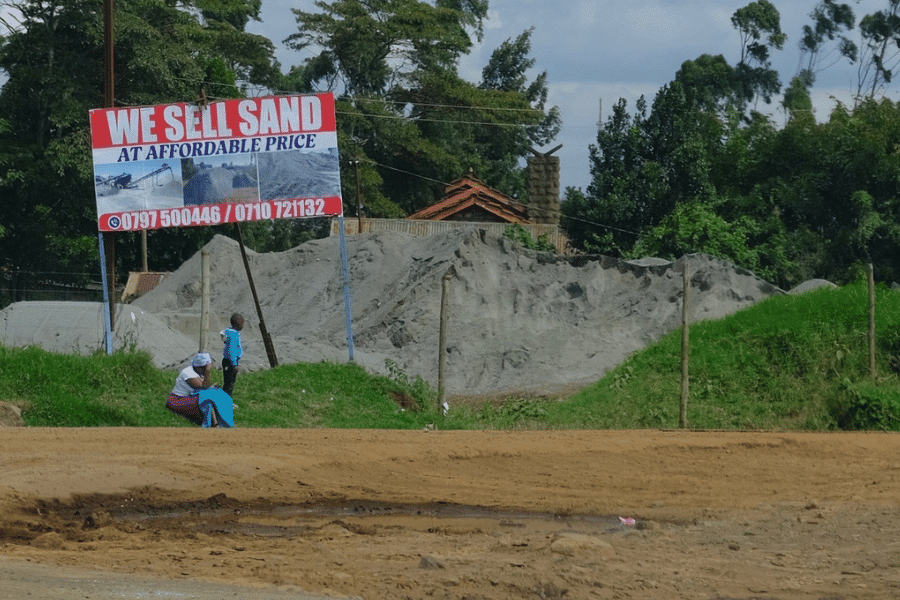
    From space, Kenya’s sand-mining crisis is starkly visible. Satellite images reveal scars gouging riverbeds throughout its historic Rift Valley and fully extending border to border, west to east, from the shorelines of Lake Victoria to the Indian Ocean. 

    These growing scars tell the story of the nation’s booming construction sector and of a largely unregulated trade: sand harvesting.

    Sand is the world’s second-most consumed natural resource after water. It fuels construction booms globally, including in Kenya, where urban expansion and large infrastructure projects have surged. Yet sand is also among the most illegally trafficked natural commodities.

    In Kenya alone, around 50 million metric tonnes of sand worth roughly US$600 million are extracted each year, mainly for expansion of the nation’s capital, Nairobi, and major infrastructure projects. Yet the true cost of this extraction, particularly illegal operations, is far higher in terms of environmental degradation and human impact.

    “The scale of environmental crime related to sand harvesting is significant but poorly understood,” says Dr. Willis Okumu, a senior researcher at ARIN Africa, an organization dedicated to sustainable management of natural resources and environmental governance. 

    A multinational problem

    Okumu describes Lake Victoria — Africa’s largest lake by area, bordering Tanzania and Uganda as well as Kenya — as a convergence point for environmental crimes. These include illicit sand harvesting, charcoal burning and timber smuggling, facilitated by weak enforcement across bordering countries.

    Illegal sand harvesting strips riverbanks and lakeshores. It weakens soil structures, causes landslides and floods and devastates aquatic habitats. River systems feeding into Lake Victoria have suffered badly, threatening fisheries crucial to local livelihoods.

    These operations cause severe environmental impacts. Unregulated extraction weakens riverbanks, disrupts ecosystems, and significantly increases risks of flooding and deadly landslides. 

    River ecosystems, including those around Lake Victoria, suffer profound damage. Aquatic habitats and biodiversity are severely disrupted, jeopardizing livelihoods that rely on fishing and farming. Communities struggle with declining water quality and availability that are directly tied to unregulated sand extraction.

    In Mombasa, a city in southeastern Kenya along the Indian Ocean, unregulated sand extraction has altered river flows. This has disrupted irrigation systems, making it harder for farmers to grow food in a region already hit by drought.

    Sand loss and social ills

    Socially, the consequences are equally dire. The United Nations Environment Programme reports that “sand extraction and its trade are fuelling a myriad of social issues in Kenya, with violence and deaths related to sand trade widely documented.” School dropouts, teenage pregnancies and drug abuse spike as impoverished youth turn to illegal sand mining for quick income.

    Communities in the Rift Valley face a difficult trade-off: short-term survival through sand work or long-term sustainability. In Nakuru County, uncontrolled sand extraction has left homes exposed to erosion and collapse. Residents report that land beneath their feet is quite literally disappearing.

    Consolata Achieng, of Asieko Village in Nakuru County, told a local news reporter that all the land surrounding her property had been sold off to harvesters over the last eight years. “We were assured that harvesting had stopped but we still see workers and lorries every day,” she said. “A lot of people live around here and have nowhere to go. This is the place we call home.”

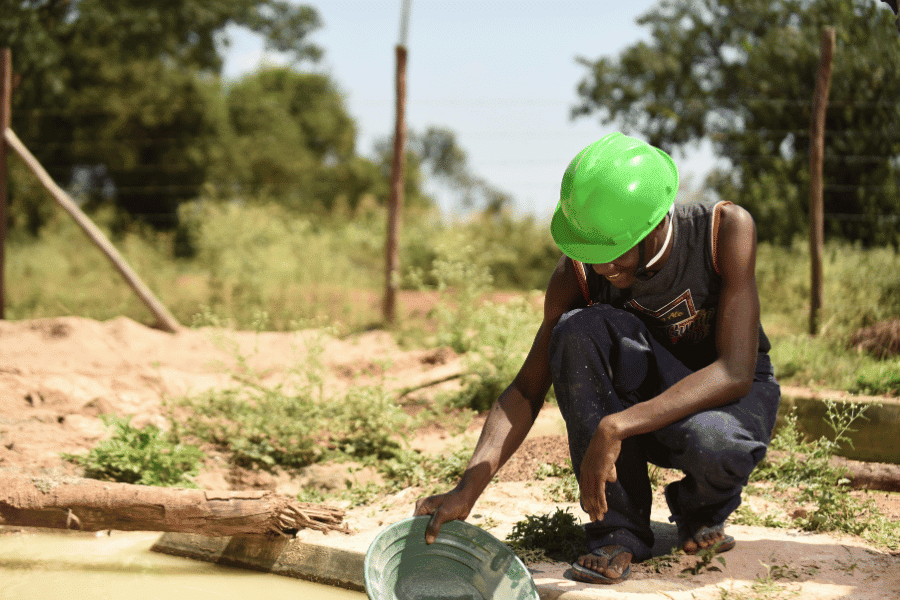
    Communities can also find themselves caught between environmental concerns and lack of alternatives. “All you need is a spade,” noted one senior Kenyan civil servant, highlighting how easy it is to mine sand. Labourers, including school-aged children, work in dangerous pits for low wages. 

    The lucrative nature of sand mining has attracted organized criminal groups that exploit the resource with impunity. Violent confrontations have occurred between cartels and local communities attempting to protect their resources, leading to injuries and fatalities.  

    These organized crime groups — known locally as “sand cartels” — are central to the illegal trade, often operating under the protection of corrupt state officials, enabling them to bypass regulations and continue illegal activities. 

    Countering illegal mining requires coordinated efforts

    According to ENACT Africa, a program that focuses on addressing transnational organized crime in Africa, weak co-ordination among law-enforcement agencies across borders allows such networks to thrive. Violent confrontations have occurred between cartels and local communities attempting to protect their resources, leading to injuries and even deaths. 

    Efforts to regulate the industry have largely failed due to corruption and ineffective governance. In a UNEP Global Sand Analysis report, a senior official bluntly observed: “All you need to do is pay,” reflecting systemic bribery and regulatory capture, which occurs when a government agency that was created to act in the public’s interest ends up serving the interests of the industry it’s supposed to be regulating. 

    UNEP has warned that sand is becoming dangerously scarce. It advocates for stronger global regulations, regional co-operation and alternative construction materials such as crushed rock and recycled debris.

    In Kenya, sand isn’t just used locally. It’s also smuggled to neighbouring countries and, allegedly, to international markets — further complicating enforcement.

    However, there are signs of hope. Kenyan authorities have created specialized investigative units in the Mining Police Unit to crack down on illegal extraction. Officials are also piloting new tools, such as satellite tracking and GPS monitoring of trucks, to improve oversight.

    Protecting the land

    Some counties are fighting back. In West Pokot county, authorities recently launched new sand-harvesting policies to control extraction and protect the environment. 

    In Makueni County, the government implemented a comprehensive sand regulation act that has significantly reduced illegal activities and environmental damage within its jurisdiction. When the county lifted its decade-long ban on commercial sand mining to boost revenue, the move sparked concern among residents, who fear the return of water shortages and environmental degradation.

    The persistence of illegal sand mining underscores the need for robust enforcement of regulations, community engagement and the promotion of alternative construction materials to reduce reliance on natural sand resources. 

    Without urgent and co-ordinated action, Kenya faces continued ecological destruction and intensified community conflicts. As Okumu emphasized, transparent governance and meaningful community participation are critical. “With currently poor public participation, rehabilitation work rarely follows in Kenya’s land-based sand mining projects,” he said, underscoring the critical need for reform.

    Research across Africa shows a consistent pattern: profits flow to powerful players, while environmental costs fall on the poorest. Labourers risk their lives in collapsing pits. Farmers and fishers lose the very resources they rely on.

    “We are running out of time,” Okumu said. “Without immediate regional action, environmental damage from sand harvesting will become irreversible, devastating ecosystems and the communities dependent upon them.”


    Questions to consider:

    1. Why is sand so valuable?

    2. How are countries like Kenya trying to stop the mining of sand?

    3. Can you think of ways concrete and cement are used near you? Could you think of alternative materials?


    Source link

  • What stories can teach us about the world

    What stories can teach us about the world

    In a time of widespread misinformation, disinformation, fake news and outright lies throughout the world, many people are wondering what the truth really is and how to find it.

    In Africa, it is embedded in the power of story.

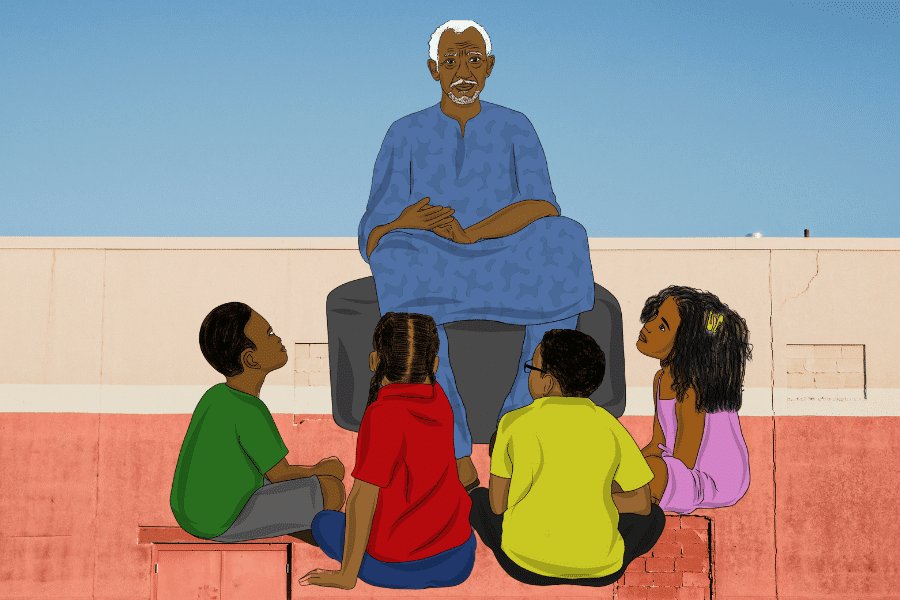
    “The oral tradition has always been a hallmark of West African culture for generations long before colonization, and so storytellers have been the truth tellers,” said Dr. Geremie Sawadogo, a World Bank talent manager and storyteller, who, as a child growing up in Burkina Faso, would gather with his family to listen to story hour on national radio every Tuesday evening.

    David Thuku, an executive coach and storyteller in Nairobi, Kenya, agreed. “Stories are a very structured system of managing life and giving knowledge about such things as governance, values, laws, social sciences and medicine. Medicine men, for example, would tell people which plants to use for different illnesses,” Thuku said.

    “They also taught us morals and our code of acceptable behaviours,” Sawadago added. For many, they are a form of timeless, universal truth.

    African stories can come in many different forms: two- to three-hour speeches, long monologues, oral renditions, poems, sayings, proverbs, fables, folklore tales, visual language, songs and even dance.

    Source link

  • Can France accept its past as an oppressor?

    Can France accept its past as an oppressor?

    The captives were taken to a centre where masked Algerian informers picked out suspected rebels. “Those were detained, interrogated, with a lot of violence. The rest were released.”

    Worse followed. Kihn was on guard duty when he first saw a suspect being tortured with electricity from a hand-cranked generator. “It was unbearable. The man was yelling, jerking around. I had tears in my eyes,” he said, his eyes filling again as he re-lived the moment.

    When he was discharged, no one in his village wanted to hear his war stories, so for decades he clammed up. But memories, nightmares and panic attacks kept tormenting him. When he was 70, a film-maker cajoled him into an interview. He later wrote a book and found a measure of relief.

    Kihn, disgusted by his experiences, would not touch his military pension. Instead, he and some other former soldiers send the money to local NGOs in Algeria.

    “What we need is recognition of the truth,” he said. “Yes, we were criminals in Algeria.”

    France has tried to turn the page, but the past will not die.

    It took France until 1999 to recognise formally that its struggle in Algeria had been a “war,” even though it had mobilised up to two million conscripts for “operations to restore order” against the independence-seeking fighters of the Front de Libération Nationale (FLN).

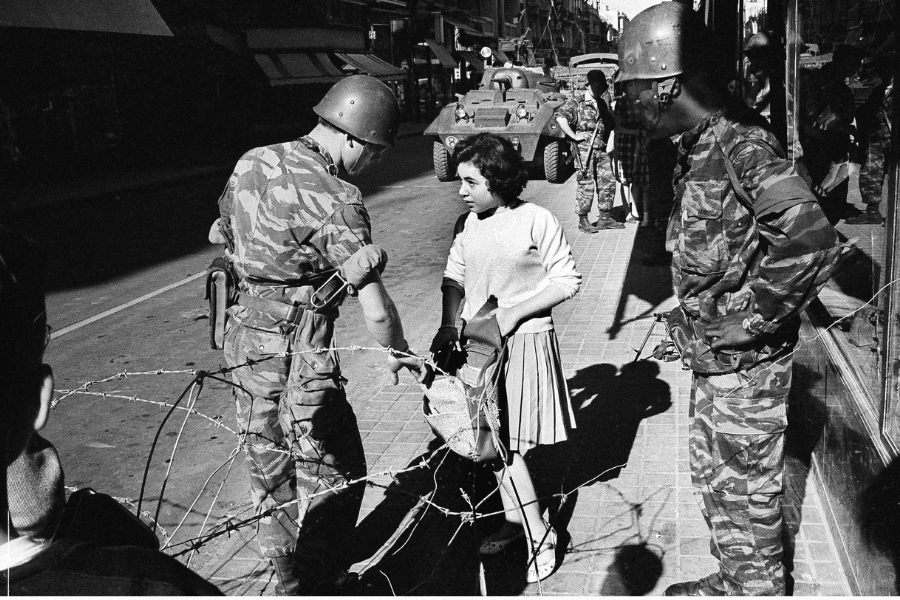
    The French campaign led to widespread torture, the forced displacement of two million civilians to cut the FLN from its rural base and countless summary executions and “disappearances.”

    The FLN was ruthless, too, terrorising French and Algerian civilians and eliminating its political rivals and eventually factions within its own ranks.

    The conflict, which brought violence to both sides of the Mediterranean, exposed deep divisions within France, toppled the country’s Fourth Republic and raised the spectre of civil war.

    After President Charles de Gaulle set Algeria on course for independence with a 1961 referendum, some French die-hards formed the Organisation de l’Armée Secrète (OAS), an armed group that mounted bomb attacks and assassinations, including at least one attempt to kill the French leader.

    OAS members eventually benefited from sweeping post-war amnesties. France sought to draw a veil and forget, but the past refused to die.

    Keeping the past alive

    Suzy Simon-Nicaise, 67, who heads one of the main associations of pieds-noirs, is determined to preserve a particular vision of the lost world of French Algeria, its culture, history and lifestyle.

    In her memory, it was a cosmopolitan place where Europeans mixed freely with Muslims based on mutual respect, where the French colonists had promoted development from the ground up.

    France, she concedes, may have committed some “not very glorious” deeds early on in its conquest of Algeria. “But Algeria did some things that were just as unbearable, if not more so,” she said.

    At a memorial event in Perpignan, Simon-Nicaise, wearing a dress as bright as her red hair, recounted a massacre of pieds-noirs in the mainly European city of Oran on July 5, 1962, the day Algeria became independent.

    She said 700 to 1,200 people were killed that day while French troops, in their barracks since the ceasefire in March, stood by with orders not to intervene. An exact toll has never been established. Macron, in his address to the pieds-noirs this year, said “hundreds” had died.

    Simon-Nicaise’s family had planned to stay on after independence, but an Algerian friend working with her father warned them to leave urgently, advice driven home by a French official who told her father that his name was on an FLN death-list. The family raced to the port with four suitcases.

    Around 800,000 pieds-noirs, the vast majority of the Europeans living in Algeria, also voted with their feet, believing their only choice was “la valise ou le cercueil (the suitcase or the coffin).”

    The French government had not anticipated such an exodus, and the flood of new arrivals met a chaotic and chilly reception.

    “We were treated worse than foreigners,” Simon-Nicaise said, recalling how she, then five, and her family were put up in a holiday village. “My family was crying, and everyone else was dancing the twist.”

    Later, her family had to share a cramped, squalid apartment with another family in Le Havre. Simon-Nicaise went to school there, where she heard a classmate declare: “Don’t talk to her. She’s a dirty pied-noir.”

    France’s rejected allies in Algeria

    If the pieds-noirs were mostly unwelcome in France, the harkis — Algerians who had served with the French military were doubly so. De Gaulle had rejected any idea of taking them in, effectively abandoning tens of thousands of men and their families to FLN vengeance.

    Nevertheless, up to 90,000 harkis made it to France, many helped by their French commanders. They were consigned to grim army camps behind barbed wire, most of them for many years.

    “There were no toilets, one washbasin for 10 families,” said Abdelkrim Sid, who was six on arrival and spent the next 15 years with his sprawling family in isolated camps.

    His father, like many other harkis, was later put to work in forestry settlements on the minimum wage but never fully integrated into the wider economy.

    “My father was a spahi (cavalryman). He really believed in France,” said Sid at the bleak Rivesaltes camp near Perpignan.

    In Rivesaltes, a museum now commemorates successive waves of inmates dumped there from 1939 onwards, among them refugees from the Spanish civil war, Gypsies and Jews interned by the wartime Vichy régime, German prisoners of war and then harkis.

    Sid, a burly retired truck-driver, says he can’t forget how shamefully the harkis were treated in the camps, which he likened to pens for animals.  “It was as if we had the plague.”

    Troubled identity

    The war deeply marked the Algerian diaspora, swelled by migration that also drew in Moroccans and Tunisians whose labour was in demand as the French economy revived after World War Two.

    North Africans today make up the bulk of France’s estimated 5-6 million Muslim citizens, roughly 8% of its total population, the biggest ratio in any European country.

    France, which prides itself on its principle of laïcité, which makes the secular state neutral towards religion, has found it difficult to come to terms with its Muslim minority. The complex relationship is made no easier by mutual mistrust that has lingered since the colonial venture in Algeria.

    Magyd Cherfi has tried hard to integrate in his native France, with outward success as a musician and songwriter, a devotee of French literature and an author in his own right.

    Yet as he explained at a café in a mostly Arab quarter of Toulouse, the city where he grew up, he has never felt fully accepted as French. Ironically, he knows that many in the deprived milieu of his childhood resent him as a traitor to his origins.

    “It’s as if being French is a mountaintop. You climb and climb, and it’s never far enough,” he said.

    “In the street, they ask, ‘Oh, where are you from?’ That means you are not French, because if you are, no one asks that question.”

    Cherfi’s father, a building worker, fled to France after four of his brothers were killed fighting in the maquis, or underground, during the Algeria war. “He only told us fragments of what happened then, about bad things the French did to his family, girls raped, cousins killed, imprisoned, tortured.”

    So Cherfi grew up with an uneasy sense of difference from his French chums because France had been the enemy in Algeria. Yet when his parents decided to stay in France, when he was about 15, they told him, “You must respect the French. They give us work. They feed us.”

    He admires much of what France offers, notably freedom and secularism, but says it fails to honour its own principles when it comes to its non-white citizens.

    “That’s the big rip-off of the republic. France is unable to build a narrative that is anything other than exclusively white. We barely exist in French history,” he said.

    “So France is still sausages, accordions, traditions, villages, and now, with millions of Muslims here, you feel they cling to this even more. So it’s quick, get out the accordions!”


    Questions to consider:

    • What was Algeria’s relationship to France before it gained independence in 1962?

    • How were the post-war experiences of the pieds-noirs and harkis similar and different?

    • Why do you think it took until 1999 for France to recognize the conflict over Algeria as a war?

    • What would you do to improve the integration of France’s Arab/African-origin citizens?


    Source link

  • Can regional leaders help bring peace to DR Congo?

    Can regional leaders help bring peace to DR Congo?

    Critics abroad and in Congo accuse DRC president Tshisekedi and his government of being distant, corrupt and ineffective and continually failing to meet promises or even talk to the rebels. 

    “I am exhausted with Tshisekedi’s governance,” said one Congolese citizen.

    There have been strong and repeated accusations by the United Nations and others that the M23, which is now part of the broader Alliance Fleuve Congo (AFC), receives both funding and tangible support from Rwanda and its army, that it has been responsible for excessive violence — including reports of rape in a Goma prison last week — and that it has benefited from the increasing control of lucrative mineral mines in the region.  

    A multinational push for peace

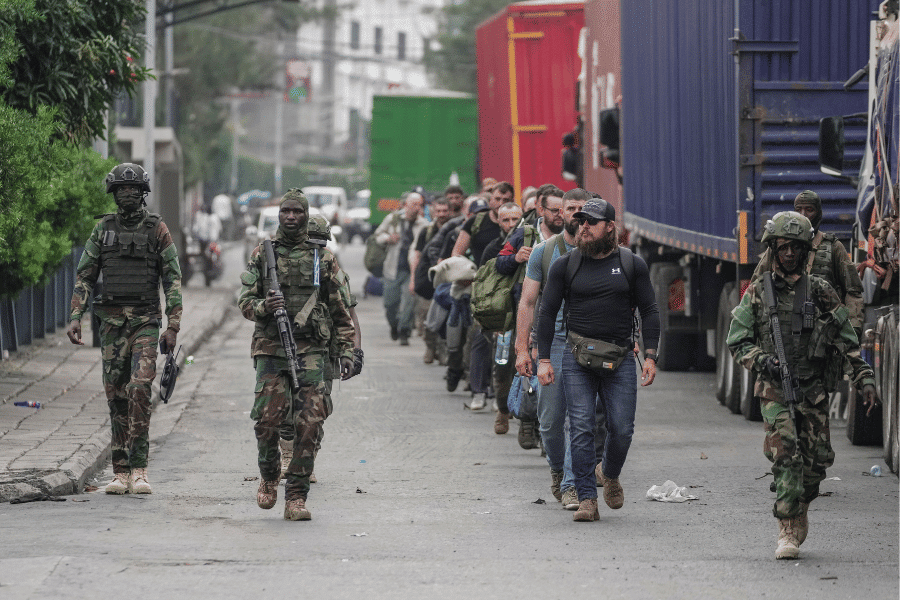
    The actual truth is much more complex, nuanced and difficult to distinguish, especially given the direct involvement of national army soldiers on the ground, not just from the DRC and Rwanda but from other countries, such as Burundi, South Africa and Tanzania. 

    There are also about 14,000 UN peacekeeping forces in the region, as well as more than 100 other militia groups and even mercenaries from Eastern Europe. Rwanda recently ensured the safe repatriation of 300 of them back to Romania.

    And then there are powerful political and business leaders in the United States, Europe, Russia and China who somewhat cynically want to ensure the continued supply of precious minerals — such as cobalt, coltan and tantalum — for their cars, cellphones and computers. 

    On a more personal level, I live with my Rwandan wife and young son in a newly-built house just south of Rwanda’s capital city of Kigali, which lies only 150 kilometres away from the current conflict zone and which has been repeatedly threatened by DRC president Tshisekedi and leading government officials.

    Just last week, Rwanda’s ambassador to the UN in Geneva, James Ngango, accused the DRC of amassing a stockpile of weapons — including rockets, kamikaze drones and heavy artillery guns — that are pointed straight at Rwanda.

    Fears that violence will cross borders

    My wife Merveille — whose father and three brothers may well have been murdered by some of the current FDLR militia fighters in eastern DRC — still has nightmares about them possibly attacking or even taking back Rwanda.

    A Rwanda security expert texted me that the threat to “attack Rwanda immediately” was real before the M23 rebels took over Goma and there are still concerns about large weapon stockpiles in South Kivu province. He added that if the M23 can now secure the regional capital of Bukavu and the nearby Kavumu airport “all security risks against Rwanda will be reduced/mitigated.”

    This will allay our personal concerns but we are still worried about the security of some close friends in Goma, who fell silent for five whole days after the M23 rebels took control of their city in late January but thankfully got back in contact right after power and WiFi service were restored.

    Daily life in Goma has returned to something like normal over the last week or so but the nighttime is different.

    One of our friends texted me on Tuesday: “Safety in Goma is degrading day in, day out. Getting armed looters at night. From this night alone we register more than seven deaths. A friend was visited as well. He let them in and his life was spared and his family. He said this morning that it was hard to determine their identity because they had no military uniforms but we all suspect they are they are the Wazalendo or prisoners who escaped from Munzenze prison. They come in to steal, rape and kill who ever shows resistance.”

    The Wazalendo — meaning “patriots” or “nationalists” — are a group of irregular fighters in North Kivu province, who are allied with the Congolese army and opposed to the M23.

    Our friend in Goma said that he still has enough security in his house but when asked about the potentially revitalised multilateral peace process, he said: “I am actually speechless right now, I don’t know what to think about all this. So much has happened.” 

    The weekend summit’s joint communiqué did call for an immediate end to the violence and for defense ministers to come up with concrete plans for sustainable peace measures, such as the resumption of “direct negotiations and dialogue with all state and non-state parties,” including the M23 that DRC president Tshisekedi has long tried to resist.

    Observers see this as a positive sign and there are renewed hopes — along with lingering doubts after so many earlier failed initiatives — that this unusual and timely degree of coordinated Africa-based action and support at the highest levels could mean that the fighting, killing and disruption may wane soon and a long-lasting, peaceful solution can be reached.

    In the words of the sadly-departed Rabbi Lord Jonathan Sacks of the UK: “The greatest single antidote to violence is conversation, speaking our fears, listening to the fears of others, and in that sharing of vulnerabilities, discovering a genesis of hope.”


    Three questions to consider:

    1. Why is the situation in Eastern DRC so difficult to sort out?
    2. Think of a time when you, someone you knew or someone you respected used “direct negotiations and dialogue” to achieve a positive outcome to a challenging problem.
    3. What would you say or do if you were one of the regional African leaders trying to achieve a sustainable, non-violent solution to the Eastern DRC crisis?


    Source link