The Association for the Study of African American Life and History (ASALH) will convene its annual conference in Atlanta from September 24-28, 2025, bringing together Black leaders, academics, educators, and community members during what organizers describe as a “critical hour” for Black history and education.
TDr. Stephanie Y. Evanshe conference, themed “African Americans and Labor,” comes as educational institutions nationwide face mounting pressure over diversity, equity, and inclusion initiatives, and as several states have enacted legislation restricting how race and racism can be discussed in classrooms.
The conference will feature several prominent voices in African American studies and social justice, including Pulitzer Prize-winning historian Dr. Edda Fields-Black and scholar-activist Dr. Ibram X. Kendi. Labor organizer Chris Smalls, who led the successful effort to form the first independent union at an Amazon warehouse in the United States through the Amazon Labor Union, will headline the Friday John Blassingame Luncheon.
Other featured speakers include historians Drs. Peniel Joseph, Maurice Hobson, Stephanie Evans, and Joe Trotter Jr., along with civil rights leaders Ambassador Andrew and Andrea Young and Rev. Jamal Bryant.
A key component of the conference programming will address current challenges facing educators and institutions seeking to teach Black history. Specialized sessions will provide guidance to librarians, teachers, and community organizers on establishing Freedom Schools and teaching Black history “in the current challenged national environment.”
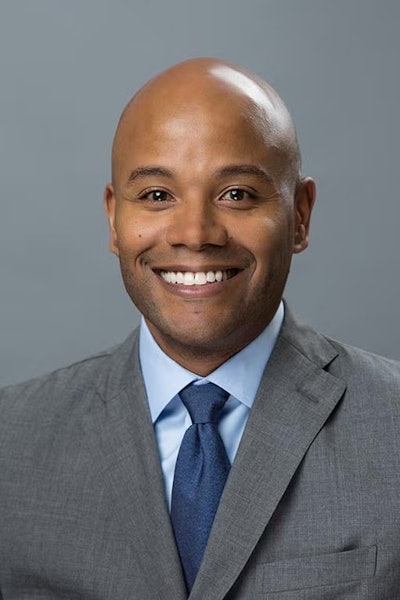
Dr. Peniel JosephThe Wednesday plenary session, “The Fire Now!,” will specifically examine how budgets and policies are “Undermining Preservation of the African American Experience,” featuring experts from the National Parks Conservation Association, Trust for Public Land, and the U.S. Department of the Interior.
“Our goal is to make as many of the activities free and accessible to the public as possible,” organizers announced, with Wednesday sessions, plenaries, film festival screenings, poster sessions, and vendor exhibits offered at no charge.
Thursday’s plenary, “Towards a Theory of Liberation: The State of Black Radicalism Today,” will feature scholars Drs. Charisse Burden-Stelly, Gerald Horne, Akinyele Umoja, Joy James, and Ashley Howard examining contemporary Black liberation movements.
Friday’s session will honor the scholarship of historian Dr. Joe William Trotter Jr., a leading expert on African American labor history and urban studies.
A Saturday luncheon titled “An Unusual Emphasis on Scholarship: Carter G. Woodson, Omega Psi Phi, and the Power of Black History” will explore the legacy of ASALH’s founder and the role of Black Greek letter organizations in preserving African American history.
Registration for the ASALH Conference is open, with both free and ticketed events available. The annual gathering represents one of the premier venues for African American historical scholarship and community engagement in the United States.
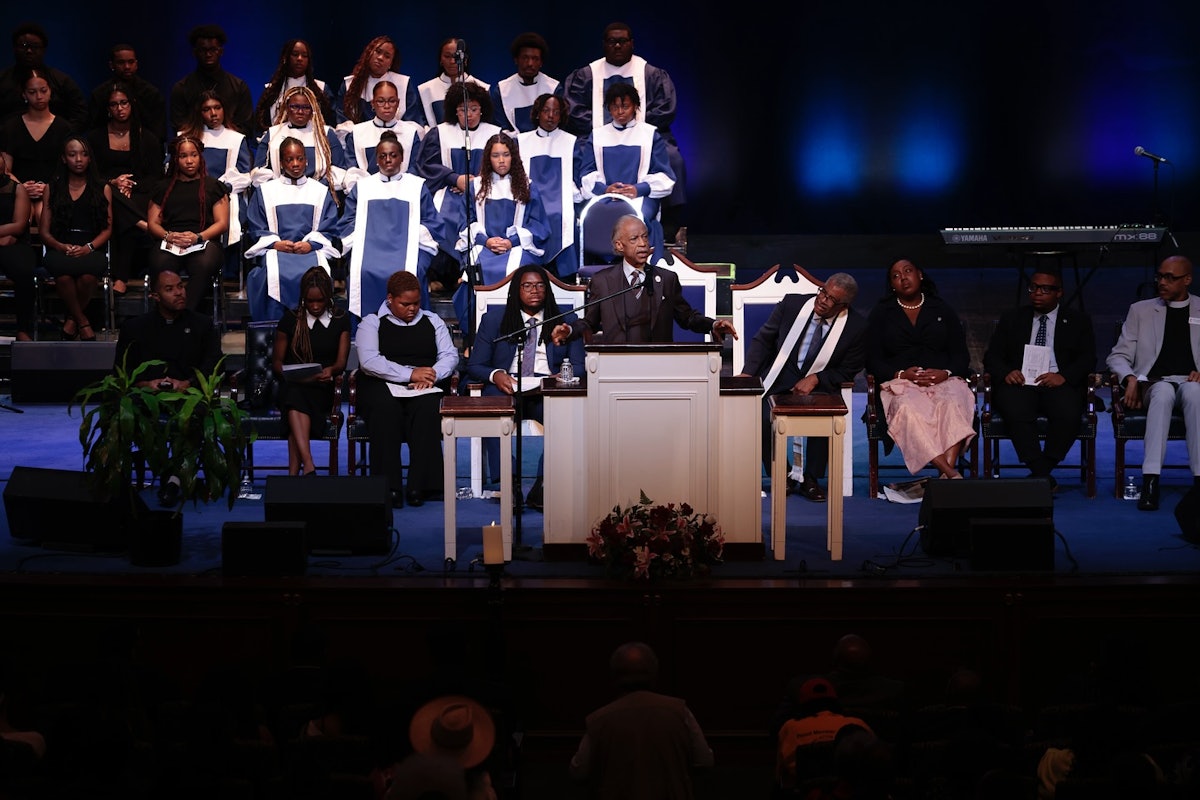
The gospel choir’s voices echoed through Cramton Auditorium, their blue and white robes swaying as they filled Howard University’s historic venue with spiritual melodies. Just a week after classes resumed at the prestigious HBCU, Rev. Al Sharpton took the stage to deliver a sermon that was equal parts spiritual guidance and a political rallying cry.
Reverend Al Sharpton meets with Howard University students ahead of Thursday’s March on Wall Street. Speaking to a packed auditorium days before the August 28th anniversary of the historic 1963 March on Washington, the National Action Network founder urged the Howard community to “stand up to the giants” of inequality and injustice while announcing a bold strategic shift for this year’s commemoration.
Rather than gathering in the nation’s capital this year, Sharpton announced that thousands of demonstrators—including college students from across the country—will converge on New York’s financial district this Thursday for a March on Wall Street, starting at 10 a.m. at the African Burial Ground and marching directly to Wall Street.
“The real people that are deferring the dream are on Wall Street,” Sharpton told the audience. “They’re the ones that are financing the moves for redistricting and robbing us of our right to vote and representation. So rather than come to Washington, we said, ‘We going to Wall Street this year, where they do business.’”
Using the biblical story of David facing Goliath as his central theme, Sharpton challenged the congregation to confront contemporary challenges with biblical courage.
The prominent civil rights leader was particularly pointed in his political criticism of President Donald J. Trump and his attacks on diversity, equity and inclusion and U.S. cities led by Black mayors.
Sharpton delivered some of his harshest criticism when addressing attempts to sanitize American history, particularly regarding slavery. He expressed outrage at what he described as efforts to downplay historical injustices.
“The fact that they are threatening institutions,” Sharpton said, his voice rising. “Can you imagine? It’s almost unthinkable to me that they’re saying that we are going through the Smithsonian Museum to make sure that they are in line with the feelings of one man at history.”
Sharpton said that he was incensed by suggestions that historical narratives should be altered and he chided the president who claimed that the museums focus too much on “how bad slavery was.”
In one of the sermon’s most powerful moments, Sharpton shared his family’s connection to slavery, describing how genealogical research in 2007 revealed that his great-grandfather had been enslaved on a South Carolina plantation owned by the late Senator Strom Thurmond’s ancestors.
“My great grandfather was a slave,” he told the audience. “And it occurred to me for the first time that my name Sharpton is really the owner’s name of my great grandfather. I don’t know my name, and you don’t know your name.”
Now, Sharpton added, is the time for Americans—particularly students—to fight back against the assault on history.
“If we are afraid to stand up, then we are not deserving of those that stood up and gave their lives so we could have a life worth living,” he said.
Howard University students, led by senior Tabia J. Lee, president of the school’s National Action Network chapter, will bring a delegation to participate in Thursday’s march. The student involvement, she said, represents Sharpton’s challenge that young people take a broader leadership role in today’s social justice movements.
Howard students noted that Sharpton’s visit to campus came as Howard University faces its own transition, with Dr. Ben Vinson announcing his resignation last week as president and former president Dr. Wayne A.I. Frederick returning to lead the storied institution on an interim basis.
Throughout the nearly hour-long address, Sharpton wove together themes of personal faith, historical memory, and political action. He reminded the audience of their ancestors’ resilience.
“Do you know when they walked off that plantation in 1863? After being in slavery 246 years, they had no money because they worked for no wages. They had no education; it was against the law for them to read or write… All you had is God.”
The March on Wall Street, he said, represents more than just a protest location change—it’s a strategic pivot toward confronting economic inequality at its source. And he challenged the college students to take their stand.
“Do you know in ’63 when they marched here in Washington? They were still segregated. They didn’t have the Civil Rights Act until ’64. People rode the bus all night, had chicken sandwiches in a paper bag, because there wasn’t a restaurant that would serve them on the way. Had to go in the woods to use the bathroom because they couldn’t use a rest stop, but they came anyhow,” he said. “And here you are, 60 years later, eating at any restaurant you want, checking into any hotel you want, living in any community you want, and somebody got to beg you to stand up? How broke down have we got?”
In a July 7 court filing, the Internal Revenue Service (IRS) announced that churches can now endorse political candidates without losing their tax-exempt status. This news follows over seven decades since the Johnson Amendment, a U.S. tax code provision that prohibited non-profit organizations and churches from intervening in political campaigns.
Religion, American public life, and Black church studies scholars argue that this moment marks a significant erosion of the separation of church and state.
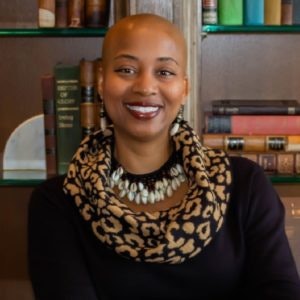
Dr. Valerie Cooper“Both the government and the church are incredibly powerful institutions,” says Dr. Valerie Cooper, an associate professor of religion and society and Black church studies at Duke Divinity School and senior fellow at the Center for Theological Inquiry (CTI). “While it is important for citizens to be able to bring their religious convictions to their civic life, there is a concern, for me, as a person who loves the Christian church, about churches selling out for government power and losing their ability to be a prophetic voice.”
Since 1954, only one house of worship has lost its tax-exempt status for violating this amendment.
“The law has not changed, but the interpretation has,” says Dr. Corey D.B. Walker, Dean of Wake Forest University’s School of Divinity and a professor of the humanities. “What the IRS has said is that they’re not going to bring any cases for churches violating the Johnson Amendment.”
According to Cooper, “conservative churches, particularly, white evangelicals, have been after this for years, if not decades,” she says in an interview with Diverse. “There are hot-button issues, and they’ve distributed information doing everything short of endorsements.”
The issue has caught the attention of civil rights leaders like the Reverend Al Sharpton who said that the issue has to be studied carefully to ensure that “it does not create a double-edged sword.”Dr. Corey D.B. Walker
“We cannot have a system in which right-wing congregations may endorse political candidates and others of a different political persuasion remain under scrutiny and lead to a situation that is not beneficial to all,” says Sharpton, the founder and president of National Action Network (NAN).
Sharpton, and NAN’s Board Chairman Reverend Dr. W. Franklyn Richardson, have convened a Zoom call with Black pastors and legal experts to explore the pros and cons of the decision
Scholars of African American religion and religion in American public life have been tracking this movement for decades as well, says Walker.
“That danger the founders of the nation saw, that’s also the danger that we saw,” he says. “One of the real and understated issues that this new interpretation brings is that partisan political actors can now fund whatever limit they want into religious bodies to then instill and support particular political ideologies and projects, and that’s the danger of continually eroding the line between church and state.”
Cooper, who was the first African American woman to earn tenure at Duke Divinity School in 2014, examines the ways religion does or does not impact other existing structures, like racism or inequality.
“I’m not just a religious scholar,” she adds. “I’m a religious person, and so I’m concerned about what appears to be a kind of political intervention.”
Cooper says this kind of engagement could end with churches compromising their principles for political reasons.
“Almost exactly a year before his assassination, Martin Luther King Jr. gives us a speech/sermon where he comes out against the Vietnam War, and many people in the Civil Rights Movement were horrified by this choice, because Johnson had been such an ally,” she says. “But King really felt that it was his obligation to speak prophetically and according to his faith, not according to what was maybe even wise political policy.”
Cooper questions how this new development might impact church leaders’ ability to speak prophetically in the present day.
“What does that mean? Does that mean that the pastor is then no longer free to speak, even to call out the candidate, if he or she stops doing what is in the interest of the church,” she asks.
Walker says that he is concerned about making absolute claims on public life that bypass shared beliefs, languages, and common frameworks.
“So, the question becomes, what is the Court of Appeal when individuals are discriminated against, such as our LGBTQ brothers and sisters, or when individuals find themselves without funding for public schools because public school funding has been funneled into private religious schools,” he says. “What happens when you have reproductive rights no longer supported because reproductive rights are seen as anathema to God?”
Walker adds that this development blurs the lines between churches and families.
“Churches, congregations, religious bodies and worship are not the same as families discussing politics,” he says. “Families belong in the private sphere, so the idea that a worship service and a sermon are the same as a family in their living room discussing politics begs the question, what logic is operative at this moment?”
Cooper believes that this intervention on churches will impact everyone, even those who fought to remove the restrictions of the Johnson Amendment.
“If people begin winning elections at the cost of the health and vitality of churches, we have not won anything,” she says.
Texas Congresswoman Jasmine CrockettIn a powerful address that wove together civil rights history with present-day challenges, U.S. Representative Jasmine Crockett (D-Texas) delivered an impassioned commencement speech at Tougaloo College’s graduation ceremony on Sunday, urging graduates to embrace their purpose in continuing the fight for progress.
Standing on the historic grounds of the private Mississippi HBCU—once a sanctuary and launch pad for the Civil Rights Movement—the Congresswoman reflected on the paradoxical nature of the moment: that in 2025, her very presence as a speaker remained controversial.
“As I stand here in this safe space, still only one of the few places that an institution can invite me to speak… to think about the fact that people have to be fearful of having a sitting member of Congress come and address their graduates tells us that we still got a lot of work to do,” she told the graduates.
Drawing parallels between past and present struggles, she reminded the audience that Tougaloo was one of a few places in Mississippi where Dr. Martin Luther King Jr. could speak during the Civil Rights Movement. Now, decades later, she noted the irony of similar limitations placed on Black voices in positions of power.
“The president of the United States having a temper tantrum that strips funding because I’m Black and I’m proud should not be something that we are dealing with in 2025,” she stated, her voice rising with conviction.
The Congresswoman, who acknowledged working multiple jobs during her own college years, spoke candidly about personal struggles and the fatigue that comes with fighting systemic barriers. Invoking the refrain from the gospel song “I Don’t Feel No Ways Tired,” she encouraged graduates to persevere despite exhaustion.
“I just can’t give up now. I’ve come too far from where I started from,” she recited, asking graduates to reflect on their own journeys through college—the multiple jobs, the stepping away and stepping back in—all while excelling despite the challenges.
Her message anchored in both acknowledgment of weariness and the necessity of continued struggle, themes particularly relevant at an institution with Tougaloo’s civil rights legacy. The college was home to the “Tougaloo Nine,” students who organized sit-ins at segregated libraries, and alumni like Anne Moody and Memphis Norman, who participated in the historic Woolworth’s lunch counter sit-in in 1963.
“Sitting in these very classrooms is just as much of a protest as Anne and Memphis pulling up to Woolworths in 1963,” she said, emphasizing how education remains an act of resistance.
The Congresswoman warned graduates about attempts to erase this history, not just from textbooks but through policies targeting diversity initiatives and institutions serving Black communities. “Jim Crow never died,” she declared. “He just lied in wait.”
She shared personal experiences of being labeled “ghetto” and “unqualified” despite her impressive credentials—modern versions of racial epithets—connecting these attacks to historical patterns of undermining Black achievement and institutions.
Looking to the future, she issued a direct challenge to the graduates.
“If you are waiting on somebody to come and save you, they are not coming,” she warned. “You are the person that you’ve been waiting on.”
Reminding them that every significant social justice movement has been led by young people, she noted that she is now older than Medgar Evers, Dr. Martin Luther King Jr., and Malcolm X were when they were assassinated.
“Your moment is not in the future. Your moment is now,” she urged. “This country is relying on each and every one of you to walk into your purpose and to walk in greatness with your head held high.”
The Congresswoman’s speech resonated deeply with the graduates and assembled families at Tougaloo, an institution that has persisted in its educational mission despite historical and ongoing challenges.
“She was dynamic and passionate,” said Rose Lucas, whose niece was among the more than 120 undergraduates to receive their diploma. “At a time when so many of our politicians are afraid to speak out against the injustices in Washington, I am encouraged by the Congresswoman’s passion and commitment.”
As Crockett concluded with a call to action, she left the new alumni with a poignant message about belonging.
“There are people that are going to tell you that there is not a table in which there is a seat for you, but I am here to remind you of Montgomery and those folding chairs.”
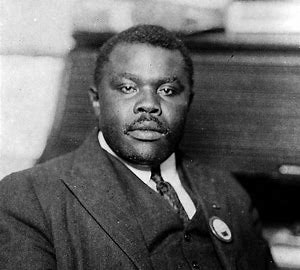
In one of his final acts as president, Joe Biden granted a posthumous pardon to Marcus Mosiah Garvey Jr., the influential civil rights leader and founder of the UniversalMarcus Garvey Negro Improvement Association (UNIA), clearing his name of a 1923 mail fraud conviction that many have long viewed as unjust.
The pardon, announced just before the Martin Luther King Jr. holiday, came after years of advocacy from Howard University School of Law professors and students, led by Professor Justin Hansford, who worked closely with Garvey’s son, Dr. Julius Garvey.
“In the words of Dr. Martin Luther King, Marcus Garvey was ‘the first man of color in the history of the United States to lead and develop a mass movement,’” said Hansford, who published Jailing a Rainbow: The Unjust Trial and Conviction of Marcus Garvey last year. “He was convicted of mail fraud in a trial widely recognized as a miscarriage of justice.”
The pardon effort gained significant support from 21 members of Congress, primarily from the Congressional Black Caucus, who urged Biden to “honor his work for the Black community, remove the shadow of an unjust conviction, and further your administration’s promise to advance racial justice.” Last year, Diverse featured a podcast on the subject.
Garvey, Jamaica’s first national hero, was convicted in 1923 on one count of mail fraud related to his role as president of the Black Star Line shipping company. He received the maximum sentence of five years imprisonment and a $1,000 fine.
The UNIA founder was a pioneering advocate for human rights and Pan-Africanism, building a movement that reached 6 million members across 40 countries.
The presidential pardon marks the end of a century-long struggle to clear Garvey’s name. Previous attempts included congressional hearings in 1987 led by Representatives John Conyers and Charlie Rangel, who introduced resolutions to exonerate him.
The exoneration comes 84 years after Garvey’s death in 1940, affirming his innocence and recognizing his significant contributions to civil rights and human rights advocacy worldwide.

 Dr. Peniel Joseph