Category: Analysis

  • Taking Intermittent Quizzes Reduces Achievement Gaps & Enhances Online Learning – The 74

    Taking Intermittent Quizzes Reduces Achievement Gaps & Enhances Online Learning – The 74

    Inserting brief quiz questions into an online lecture can boost learning and may reduce racial achievement gaps, even when students are tuning in remotely in a distracting environment.

    That’s a main finding of our recent research published in Communications Psychology. With co-authors Dahwi Ahn, Hymnjyot Gill and Karl Szpunar, we present evidence that adding mini-quizzes into an online lecture in science, technology, engineering or mathematics – collectively known as STEM – can boost learning, especially for Black students.

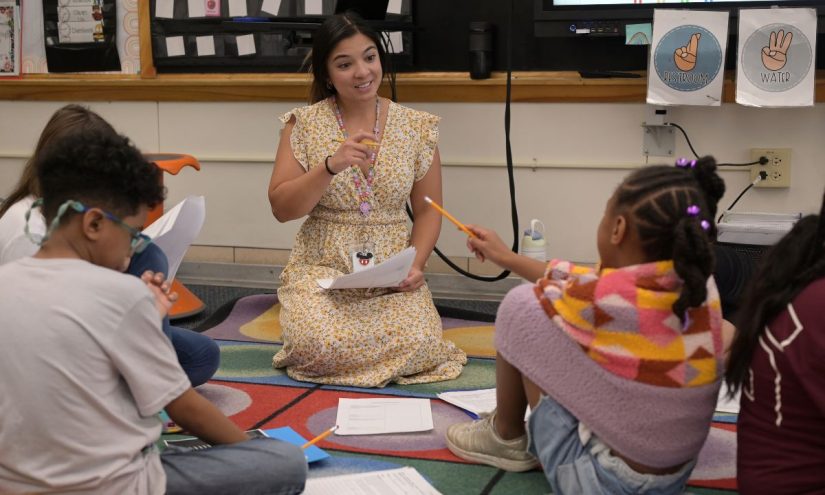
    In our study, we included over 700 students from two large public universities and five two-year community colleges across the U.S. and Canada. All the students watched a 20-minute video lecture on a STEM topic. Each lecture was divided into four 5-minute segments, and following each segment, the students either answered four brief quiz questions or viewed four slides reviewing the content they’d just seen.

    This procedure was designed to mimic two kinds of instructions: those in which students must answer in-lecture questions and those in which the instructor regularly goes over recently covered content in class.

    All students were tested on the lecture content both at the end of the lecture and a day later.

    When Black students in our study watched a lecture without intermittent quizzes, they underperformed Asian, white and Latino students by about 17%. This achievement gap was reduced to a statistically nonsignificant 3% when students answered intermittent quiz questions. We believe this is because the intermittent quizzes help students stay engaged with the lecture.

    To simulate the real-world environments that students face during online classes, we manipulated distractions by having some participants watch just the lecture; the rest watched the lecture with either distracting memes on the side or with TikTok videos playing next to it.

    Surprisingly, the TikTok videos enhanced learning for students who received review slides. They performed about 8% better on the end-of-day tests than those who were not shown any memes or videos, and similar to the students who answered intermittent quiz questions. Our data further showed that this unexpected finding occurred because the TikTok videos encouraged participants to keep watching the lecture.

    For educators interested in using these tactics, it is important to know that the intermittent quizzing intervention only works if students must answer the questions. This is different from asking questions in a class and waiting for a volunteer to answer. As many teachers know, most students never answer questions in class. If students’ minds are wandering, the requirement of answering questions at regular intervals brings students’ attention back to the lecture.

    This intervention is also different from just giving students breaks during which they engage in other activities, such as doodling, answering brain teaser questions or playing a video game.

    Why it matters

    Online education has grown dramatically since the pandemic. Between 2004 and 2016, the percentage of college students enrolling in fully online degrees rose from 5% to 10%. But by 2022, that number nearly tripled to 27%.

    Relative to in-person classes, online classes are often associated with lower student engagement and higher failure and withdrawal rates.

    Research also finds that the racial achievement gaps documented in regular classroom learning are magnified in remote settings, likely due to unequal access to technology.

    Our study therefore offers a scalable, cost-effective way for schools to increase the effectiveness of online education for all students.

    What’s next?

    We are now exploring how to further refine this intervention through experimental work among both university and community college students.

    As opposed to observational studies, in which researchers track student behaviors and are subject to confounding and extraneous influences, our randomized-controlled study allows us to ascertain the effectiveness of the in-class intervention.

    Our ongoing research examines the optimal timing and frequency of in-lecture quizzes. We want to ensure that very frequent quizzes will not hinder student engagement or learning.

    The results of this study may help provide guidance to educators for optimal implementation of in-lecture quizzes.

    The Research Brief is a short take on interesting academic work.

    This article is republished from The Conversation under a Creative Commons license. Read the original article.


    Source link

  • Spirit of adventure – meet the Nepalese study abroad guides

    Spirit of adventure – meet the Nepalese study abroad guides

    Nepal has long been synonymous with the legendary ‘Sherpa’ mountain guides, skilled in helping international travellers explore the Himalayas.

    There is also however, a more recent tradition of local education guides helping their compatriots to seek out adventure and opportunity through study abroad.

    In the past, this demand favoured Australia as a study destination, but since the Albanese government introduced increased visa restrictions, that demand has increasingly turned to alternative destinations like the US, France, Japan and the UK.

    According to ONS data, more than 9,000 study visas were issued to Nepalese students studying in the UK as of March 2024 but the true number is undoubtedly higher in the year since.

    The PIE News visited Franklin International, a leading local agent, to better understand the factors supporting growth.

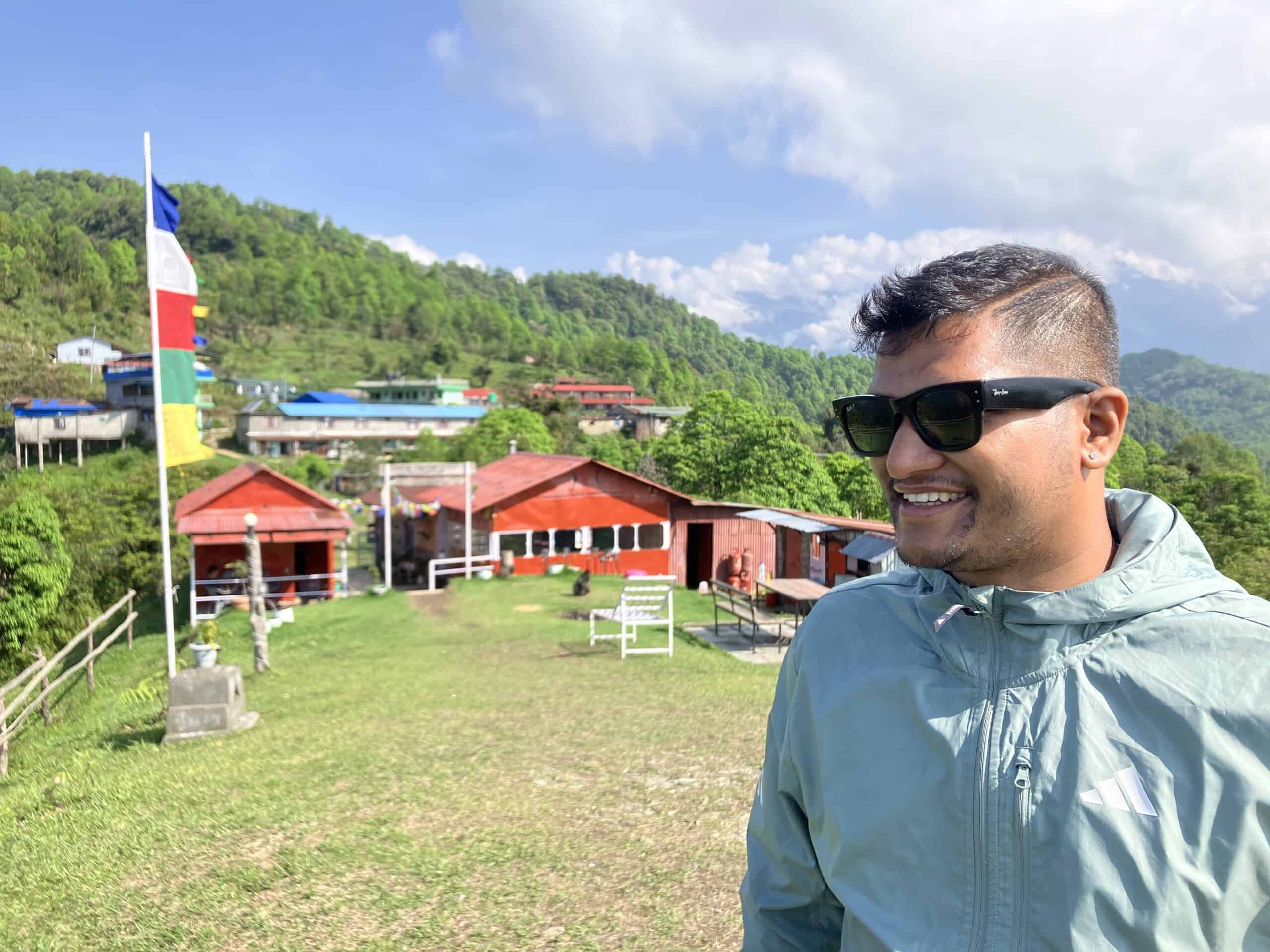
    Away from the chaotic streets of Kathmandu, where thousands of agent offices operate within a square mile in a district known as ‘Putalisadak’, Franklin International has chosen instead to base its national headquarters in the foothills of peaceful Pokhara.

    Here we find an operation that feels more like a family than an agency. There aren’t any cut-outs of Big Ben; instead, they favour a comfortable working atmosphere for staff and students.

    There is an office full of people diligently running document checks, taking calls, and running webinars with their prospective students across Nepal.

    I meet a team packing for a 17-day tour of the country to meet applicants face-to-face – giving them a chance to outline important next steps and reassure family members.

    There are entire rooms of people dedicated to supporting universities like the University of Roehampton and the University of East London, for whom they facilitate close operational relationships that deliver hundreds of compliant student enrolments.

    “The UK demand is still in its infancy,” company CMO and co-founder, Deepak Khadka tells me.

    “The number of students applying has grown rapidly, but the knowledge about the UK process is limited among most people,” he continues.”There are too many agents looking for short-cut commission – so we have had to build a system in partnership with British universities to focus on the compliance checks they need.”

    This is a price-sensitive market, with only 15-20 universities offering financially viable course options. This has created a unique bubble where large numbers of students are following each other to the same university in each intake. Word of mouth is a key driver of demand.

    This volume has, in turn, triggered an explosion in Nepalese agent activity as the potential for high commission levels is clear.

    At a higher education event in Kathmandu, The PIE met teams of young friends, often still in their 20s or early 30s, keen to get involved and cash-in on prospective students from their neighbourhoods.

    “We have a choice to make in Nepal,” explains Khadka. “We either compete as agents, or we try and work together to best support the students.”

    Having completed his doctorate in agent supply chains from UWS, his understanding of the Nepalese market is crucial.

    “We try to act as supportive guides for these other guys. They have so much energy and ambition – but we must make sure the professional compliance is water-tight when processing applications,” he tells The PIE. “We have the expertise to do this correctly. We call this the Official University Representative network to convey that message.”

    Khadka is keen to stress that he and his fellow agents care far more about the students they work with than pitting themselves against one another.

    “I care about Nepal’s future. We don’t want to make the same mistakes as other countries or regions,” he says.

    “We want our young people to succeed in their study abroad adventures – and I would rather work together for a better system, than get drawn into a territorial battle. We are proud that this model is being recognised by our UK partners and local officials here.”

    Overseas education agencies must have government approval to operate in Nepal, leading to conflict over online aggregator models trying to undercut this licensing.

    I care about Nepal’s future. We don’t want to make the same mistakes as other countries or regions
    Deepak Khadka, Franklin International

    Local protocol can be complicated as students need to obtain a ‘No Obligation Certificate’ from the government to study abroad, and many turn to government-backed student finance options to prepare their budgets.

    Vidhi Mistry, head of international operations for the University of Roehampton, explains her approach to the market: “In Nepal, when there are thousands of agents, it’s not about being everywhere. A university doesn’t need to work with every agent.

    “A right partnership is about aligning values, intent and quality that prioritises reputation and longevity. Agents can elevate the sector or dilute it. Exclusivity when earned and aligned isn’t a restriction, it is a strategy for sustainable growth [in a chaotic market].”

    The PIE spoke to Sajan, a Nepalese student who has an offer to study at the University of West Scotland London campus. He explained his reasoning for working with an agency.

    “I have friends already at UWS London and they love it. I didn’t need help with choosing which university or course I wanted, but I had to make sure my finances and visa are processed correctly,” he says. “My father and I have been guided to understand my required budget and each step of the process. I am very grateful.”

    With the UK government announcing future plans to tighten visa issuance for countries linked to asylum claims, and to clamp down on universities linked to poor compliance metrics – it is important the Nepal market doesn’t grow too fast, too soon.

    Strong demand will undoubtedly bring greater competition, so only time will tell if universities and agents can get regulate themselves to realise the opportunity.

    Source link

  • Why History Instruction is Critical for Combating Online Misinformation – The 74

    Why History Instruction is Critical for Combating Online Misinformation – The 74

    Can you tell fact from fiction online? In a digital world, few questions are more important or more challenging.

    For years, some commentators have called for K-12 teachers to take on fake news, media literacy, or online misinformation by doubling down on critical thinking. This push for schools to do a better job preparing young people to differentiate between low- and high-quality information often focuses on social studies classes.

    As an education researcher and former high school history teacher, I know that there’s both good and bad news about combating misinformation in the classroom. History class can cultivate critical thinking – but only if teachers and schools understand what critical thinking really means.

    Not just a ‘skill’

    First, the bad news.

    When people demand that schools teach critical thinking, it’s not always clear what they mean. Some might consider critical thinking a trait or capacity that teachers can encourage, like creativity or grit. They could believe that critical thinking is a mindset: a habit of being curious, skeptical and reflective. Or they might be referring to specific skills – for instance, that students should learn a set of steps to take to assess information online.

    Unfortunately, cognitive science research has shown that critical thinking is not an abstract quality or practice that can be developed on its own. Cognitive scientists see critical thinking as a specific kind of reasoning that involves problem-solving and making sound judgments. It can be learned, but it relies on specific content knowledge and does not necessarily transfer between fields.

    Early studies on chess players and physicists in the 1970s and ’80s helped show how the kind of flexible and reflective cognition often called critical thinking is really a product of expertise. Chess masters, for instance, do not start out with innate talent. In most cases, they gain expertise by hours of thoughtfully playing the game. This deliberate practice helps them recognize patterns and think in novel ways about chess. Chess masters’ critical thinking is a product of learning, not a precursor.

    Because critical thinking develops in specific contexts, it does not necessarily transfer to other types of problem-solving. For example, chess advocates might hope the game improves players’ intelligence, and studies do suggest learning chess may help elementary students with the kind of pattern recognition they need for early math lessons. However, research has found that being a great chess player does not make people better at other kinds of complex critical thinking.

    Historical thinking

    Since context is key to critical thinking, learning to analyze information about current events likely requires knowledge about politics and history, as well as practice at scrutinizing sources. Fortunately, that is what social studies classes are for.

    Social studies researchers often describe this kind of critical thinking as “historical thinking”: a way to evaluate evidence about the past and assess its reliability. My own research has shown that high school students can make relatively quick progress on some of the surface features of historical thinking, such as learning to check a text’s date and author. But the deep questioning involved in true historical thinking is much harder to learn.

    Social studies classrooms can also build what researchers call “civic online reasoning.” Fact-checking is complex work. It is not enough to tell young people that they should be wary online, or to trust sites that end in “.org” instead of “.com.” Rather than learning general principles about online media, civic online reasoning teaches students specific skills for evaluating information about politics and social issues.

    Still, learning to think like a historian does not necessarily prepare someone to be a skeptical news consumer. Indeed, a recent study found that professional historians performed worse than professional fact-checkers at identifying online misinformation. The misinformation tasks the historians struggled with focused on issues such as bullying or the minimum wage – areas where they possessed little expertise.

    Powerful knowledge

    That’s where background knowledge comes in – and the good news is that social studies can build it. All literacy relies on what readers already know. For people wading through political information and news, knowledge about history and civics is like a key in the ignition for their analytical skills.

    Readers without much historical knowledge may miss clues that something isn’t right – signs that they need to scrutinize the source more closely. Political misinformation often weaponizes historical falsehoods, such as the debunked and recalled Christian nationalist book claiming that Thomas Jefferson did not believe in a separation of church and state, or claims that the nadir of African American life came during Reconstruction, not slavery. Those claims are extreme, but politicians and policymakers repeat them.

    For someone who knows basic facts about American history, those claims won’t sit right. Background knowledge will trigger their skepticism and kick critical thinking into gear.

    Past, present, future

    For this reason, the best approach to media literacy will come through teaching that fosters concrete skills alongside historical knowledge. In short, the new knowledge crisis points to the importance of the traditional social studies classroom.

    But it’s a tenuous moment for history education. The Bush- and Obama-era emphasis on math and English testing resulted in decreased instructional time in history classes, particularly in elementary and middle schools. In one 2005 study, 27% of schools reported reducing social studies time in favor of subjects on state exams.

    Now, history teachers are feeling heat from politically motivated culture wars over education that target teaching about racism and LGBTQ+ issues and that ban books from libraries and classrooms. Two-thirds of instructors say that they’ve limited classroom discussions about social and political topics.

    Attempts to limit students’ knowledge about the past imperil their chances of being able to think critically about new information. These attacks are not just assaults on the history of the country; they are attempts to control its future.

    This article is republished from The Conversation under a Creative Commons license. Read the original article.

    Source link

  • There is declining trust in Australian unis. Federal government policy is a big part of the problem

    There is declining trust in Australian unis. Federal government policy is a big part of the problem


    As we head towards the federal election, both sides of politics are making a point of criticising universities and questioning their role in the community.

    Please login below to view content or subscribe now.

    Membership Login

    Source link

  • HEDx Podcast: Penn State chancellor Dan Greenstein – Episode 152

    HEDx Podcast: Penn State chancellor Dan Greenstein – Episode 152

    Pennsylvania State University chancellor emeritus Dan Greenstein joins Martin Betts to discuss his varied career and how it impacts his work today.

    The chancellor has held roles at the University of Oxford, the University of California, the Gates Foundation and Boston Consulting.

    He explains the recruitment platform that facilitated the university’s major mergers and what front office systems transformed student experience and institutional sustainability.

    Do you have an idea for a story?
    Email [email protected]


    Source link

  • Across All Ages & Demographics, Test Results Show Americans Are Getting Dumber – The 74

    Across All Ages & Demographics, Test Results Show Americans Are Getting Dumber – The 74


    Get stories like this delivered straight to your inbox. Sign up for The 74 Newsletter

    There’s no way to sugarcoat it: Americans have been getting dumber.

    Across a wide range of national and international tests, grade levels and subject areas, American achievement scores peaked about a decade ago and have been falling ever since. 

    Will the new NAEP scores coming out this week show a halt to those trends? We shall see. But even if those scores indicate a slight rebound off the COVID-era lows, policymakers should seek to understand what caused the previous decade’s decline. 

    There’s a lot of blame to go around, from cellphones and social media to federal accountability policies. But before getting into theories and potential solutions, let’s start with the data.

    Until about a decade ago, student achievement scores were rising. Researchers at Education Next found those gains were broadly shared across racial and economic lines, and achievement gaps were closing. But then something happened, and scores started to fall. Worse, they fell faster for lower-performing students, and achievement gaps started to grow.

    This pattern shows up on test after test. Last year, we looked at eighth grade math scores and found growing achievement gaps in 49 of 50 states, the District of Columbia and 17 out of 20 large cities with sufficient data.

    But it’s not just math, and it’s not just NAEP. The American Enterprise Institute’s Nat Malkus has documented the same trend in reading, history and civics. Tests like NWEA’s MAP Growth and Curriculum Associates’ i-Ready are showing it too. And, as Malkus found in a piece released late last year, this is a uniquely American problem. The U.S. now leads the world in achievement gap growth.

    What’s going on? How can students here get back on track? Malkus addresses these questions in a new report out last week and makes the point that any honest reckoning with the causes and consequences of these trends must account for the timing, scope and magnitude of the changes.

    Theory #1: It’s accountability

    As I argued last year, my top explanation has been the erosion of federal accountability policies. In 2011 and 2012, the Obama administration began issuing waivers to release states from the most onerous requirements of the No Child Left Behind Act. Congress made those policies permanent in the 2015 Every Student Succeeds Act. That timing fits, and it makes sense that easing up on accountability, especially for low-performing students, led to achievement declines among those same kids.

    However,  there’s one problem with this explanation: American adults appear to be suffering from similar achievement declines. In results that came out late last year, the average scores of Americans ages 16 to 65 fell in both literacy and numeracy on the globally administered Program for the International Assessment of Adult Competencies. 

    And even among American adults, achievement gaps are growing. The exam’s results are broken down into six performance levels. On the numeracy portion, for example, the share of Americans scoring at the two highest levels rose two points, from 10% to 12%, while the percentage of those at the bottom two levels rose from 29% to 34%. In literacy, the percentage of Americans scoring at the top two levels fell from 14% to 13%, while the lowest two levels rose from 19% to 28%. 

    These results caused Peggy Carr, the commissioner of the National Center for Education Statistics, to comment, “There’s a dwindling middle in the United States in terms of skills.” Carr could have made the same comment about K-12 education —  except that these results can’t be explained by school-related causes.

    Theory #2: It’s the phones

    The rise of smartphones and social media, and the decline in reading for pleasure, could be contributing to these achievement declines. Psychologist Jean Twenge pinpointed 2012 as the first year when more than half of Americans owned a smartphone, which is about when achievement scores started to decline. This theory also does a better job of explaining why Americans of all ages are scoring lower on achievement tests.

    But there are some holes in this explanation. For one, why are some of the biggest declines seen in the youngest kids? Are that many 9-year-olds on Facebook or Instagram? Second, why are the lowest performers suffering the largest declines in achievement? Attention deficits induced by phones and screens should affect all students in similar ways, and yet the pattern shows the lowest performers are suffering disproportionately large drops.

    But most fundamentally, why is this mostly a U.S. trend? Smartphones and social media are global phenomena, and yet scores in Australia, England, Italy, Japan and Sweden have all risen over the last decade. A couple of other countries have seen some small declines (like Finland and Denmark), but no one has else seen declines like we’ve had here in the States.

    Other theories: Immigration, school spending or the Common Core

    Other theories floating around have at least some kernels of truth. Immigration trends could explain some portion of the declines, although it’s not clear why those would be affecting scores only now. The Fordham Institute’s Mike Petrilli has partly blamed America’s “lost decade” on economic factors, but school spending has rebounded sharply in recent years without similar gains in achievement. Others, including historian Diane Ravitch and the Pioneer Institute’s Theodor Rebarber, blame the shift to the Common Core state standards, which was happening about the same time. But non-Common Core states suffered similar declines, and scores have also dropped in non-Common Core subjects.

    Note that COVID is not part of my list. It certainly exacerbated achievement declines and reset norms within schools, but achievement scores were already falling well before it hit America’s shores.

    Instead of looking for one culprit, it could be a combination of these factors. It could be that the rise in technology is diminishing Americans’ attention spans and stealing their focus from books and other long-form written content. Meanwhile, schools have been de-emphasizing basic skills, easing up on behavioral expectations and making it easier to pass courses. At the same time, policymakers in too many parts of the country have stopped holding schools accountable for the performance of all students.

    That’s a potent mix of factors that could explain these particular problems. It would be helpful to have more research to pinpoint problems and solutions, but if this diagnosis is correct, it means students, teachers, parents and policymakers all have a role to play in getting achievement scores back on track. 


    Get stories like these delivered straight to your inbox. Sign up for The 74 Newsletter

    Source link

  • HEDx Podcast: Student empathy is critical for success – Episode 148

    HEDx Podcast: Student empathy is critical for success – Episode 148

    Founder and chief executive of degree management ed-tech Stellic Sabih Bin Wasi used his own student experience of interacting with university systems to improve the student experience.

    His platform, adopted by 70 universities, is designed to bring together academic planning, advising and scheduling so his peers can better “work out the complexity of higher education.”

    Do you have an idea for a story?
    Email [email protected]


    Source link