

Category: Black History Month

  • Black History Month: African Americans and Labor

    Black History Month: African Americans and Labor

    Reading Time: 3 minutes

    This February 2025, we’re honoring Black History Month. The 2025 theme is “African Americans and Labor,” emphasizing the impact Black Americans have made through various working roles.

    We’d like to recognize the significant contributions of three Black educators who helped shape the future of higher education, breaking down barriers and inspiring generations of learners and educational leaders.

    Mary McLeod Bethune

    Mary McLeod Bethune is regarded as one of the most significant Black educators and civil rights activists of the 20th century. The daughter of formerly enslaved parents, Bethune believed education was key to opening the doors of opportunity for Black Americans. She founded the Daytona Normal and Industrial Institute for Negro Girls in Daytona, Florida, in 1904, serving as president of the school. The school was eventually combined with the Cookman Institute for Men in 1923 (other sources cite 1929), merging to form the Bethune-Cookman College, Bethune becoming the first Black woman to serve as a college president. The college was one of the few institutions where Black students could seek a college degree. And as of fall 2023, Bethune-Cookman University enrolled 2,415 undergraduate students.

    Mary McLeod Bethune, Schomburg Center for Research in Black Culture, Photographs and Prints Division, The New York Public Library. (1940 – 1949).

    Kelly Miller

    Kelly Miller was a groundbreaking educator, mathematician and writer, becoming the first Black man to attend Johns Hopkins University for post-graduate study. He would go on to eventually join Howard University’s faculty as a mathematics professor, helping found the American Negro Academy in 1897, the first organization for Black scholars and artists.

    Miller introduced sociology to Howard’s curriculum in 1895, becoming the first person to teach the subject at the university. Eventually becoming dean of Howard’s College of Arts and Sciences in 1907, he worked to add new natural and social science courses, transforming the curriculum. Due to his tireless recruitment efforts across the south, student enrollment tripled during his first four years in that position.
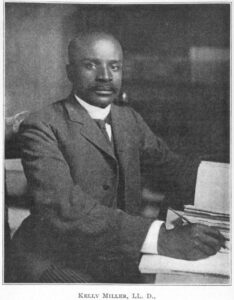
    Kelly Miller.
    Kelly Miller, LL.D. Schomburg Center for Research in Black Culture, Jean Blackwell Hutson Research and Reference Division, The New York Public Library. (1904).

    Mary Jane Patterson

    Becoming the first Black woman to receive a bachelor’s degree when she graduated from Oberlin College in 1862, Mary Jane Patterson quickly established herself as trailblazer. She devoted her career to education, teaching at the Institute of Colored Youth, now known as Cheyney University, eventually becoming the school principal at the Preparatory High School for Colored Youth, the first U.S. public high school for Black Americans. The Mary Jane Patterson Scholarship was established in 2019, which aims to support post-baccalaureate students who are interested in teaching in urban classrooms.
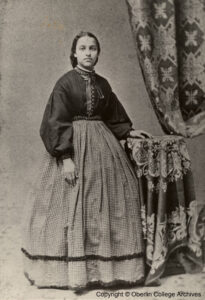
    Mary Jane Patterson
    Mary Jane Patterson, first Black woman to be granted a bachelor’s degree in the U.S. (Oberlin College, 1862). Photo retrieved from Oberlin College Archives.


    During this Black History Month 2025, we celebrate the contributions of these three Black educators whose accomplishments continue to ring out throughout higher education today.

    If you’re interested in history content for your course, we encourage you to browse our history catalog.
    Source link

  • 4 Ways HR Pros Can Support DEI During Black History Month and Beyond – CUPA-HR

    4 Ways HR Pros Can Support DEI During Black History Month and Beyond – CUPA-HR

    by CUPA-HR | February 2, 2022

    “Black History Month is an opportunity to understand the stories of Black Americans as something more than a history of racism and strife. It’s a time to recognize their undeniable impact on our country and culture.” – BestColleges.com

    Since 1976, U.S. presidents have officially designated February as Black History Month. This month-long celebration of the historic contributions of the Black community is the legacy of historian and scholar Carter G. Woodson, who worked tirelessly to reform the way Black history is taught in schools.

    Today, higher ed institutions recognize and honor Black History Month in myriad ways, but the work required to create and sustain equality, an inclusive workplace culture and a sense of belonging on our campuses is ongoing.

    The CUPA-HR resources listed below provide insights and tools to help individuals and institutions build on their understanding of the issues and take action to bring about change. The current 21-Day Equity Habit Building Challenge, in particular, offers a one-of-a-kind opportunity to learn from institutions that are making meaningful strides in this work.

    • Participate in a 21-Day Challenge. The concept of the 21-day challenge was introduced several years ago by diversity expert Eddie Moore, Jr. to create greater understanding of the intersections of race, power, privilege, supremacy, oppression and equity. There are several challenges to choose from:
    • Watch the on-demand webinar, Measurements That Matter: Using HR Data to Advance DEI Goals. In this webinar, presenters from the USC Race and Equity Center shared their insights and strategies for increasing diversity in campus workforces. You’ll learn what types of data to collect, how to use that data to get a better sense of your institution’s workforce diversity gaps and how to provide equitable responses to any issues uncovered.
    • Add DEI resources to your toolbelt. Explore the Diversity, Equity and Inclusion Toolkit (CUPA-HR members-only resource). Here you’ll find resources, trainings, policies, forms and templates, and much more to help support your institution’s DEI efforts.
    • Watch the recording of the virtual town hall, Partners in Justice, We Will Not Be Silent! This discussion features voices from our higher ed HR community and explores what it means to move beyond existing DEI initiatives to create real systemic and cultural change at our colleges and universities.

    Throughout the month, take time to dive into one or more of these resources (individually or with a group) and explore new ways to take action now and throughout the year.


    Source link