At a recent roundtable discussion of university leaders convened by HEPI with Elsevier, the focus was the concept of the Fourth Generation University. If first-generation universities focused on teaching, second-generation universities on research, third-generation universities on knowledge exchange, then fourth-generation universities combine all those things for the express purpose of addressing real-world challenges. Rather than universities beavering away and occasionally ‘throwing something out there,’ commented one roundtable guest, the idea is to link university delivery to specific goals in partnerships with other agencies.
‘It is tempting in a time of financial crisis in the UK university sector to withdraw into core activities’ continued the discussion contributor, ‘when in fact the opposite is needed – bold steps into more explicit civic engagement.’ One former head of a medical school said that he had never been asked what society needed of his institution. Fourth Generation Universities, conversely, link their work to health priorities and any number of other pressing public concerns. They respond head-on to the UK Secretary of State for Education, Bridget Philipson’s Five Priorities for Universities outlined in her letter to vice-chancellors in autumn 2024, especially number two about economic growth and number three about civic roles. In addition, the Government has stated that it will be publishing a document this summer setting out some plans for higher education reform.
Elsevier is at the heart of developments, establishing a Fourth Generation University global community and a basket of metrics to analyse progress. Eindhoven University of Technology is a trailblazer in the field, and early adopters in the UK include the Universities of Newcastle, Swansea, Aston and Strathclyde, among others. Robert Jan-Smits, recently retired president of the executive board of Eindhoven University of Technology (TUE), and also former Director General of Research and Innovation at the European Commission, offers his reflections on the initiative which, he states, might not suit every institution.
One HEPI and Elsevier roundtable participant who has analysed and encouraged university civic engagement across the UK explained that the three components for success were strong leadership, strong relationships and a strong sense of intentionality. He cautioned that the country is divided in terms of public engagement: swaths of the country never or seldom set foot on a university campus, nor have knowledge of higher education’s work and impact. A chorus of university leaders at the discussion acknowledged their need to do more in terms of better serving and communicating with such groups. University-speak and the dreaded sector acronyms should be banned!
There are plenty of success stories of universities acting as anchor institutions in their regions. Many boast start-up business support, science and innovation parks and strategic collaboration with regional authorities. Others address skills shortages, health inequalities, local transport deficits and low university participation rates. They are all important employers and many serve local, national and global communities simultaneously. Cybersecurity and defence projects which bring together industry and academia, often from multiple institutions, are in ever-increasing demand. One discussion participant reminded the group that some higher education institutions, such as Coventry University, had been set up with civic goals in mind, while another said that resource and planning were needed to develop the right ecosystems and infrastructure in which Fourth Generation Universities can thrive.
While there could be pockets of resistance, most academics can be persuaded that if their students’ job prospects are improved and their own research sharpened, the aims of Fourth Generation Universities are worthwhile. Fully integrating the student voice was key, with a special mention for Arts and Humanities graduates whose storytelling capabilities should be deployed to showcase the positive impact of Fourth Generation initiatives.
One roundtable contributor advised that the UK should take note of what is happening in American universities in terms of heated anti-intellectual rhetoric and huge funding cuts since the start of Donald Trump’s second administration. People need to see the ‘tangible impact’ of universities and understand the connections between their lives and the Academy as a bulwark against aggression.
Attention around the table turned to the recent UK local elections in which a relative political newcomer, Reform, made huge strides. Those universities working in partnership with councils now controlled by Reform reported positive early engagement and an understanding among new councillors of the importance of the success of their local universities. Meanwhile, when it comes to national politics, higher education policy is not seen as a vote-winner.
Perhaps if universities could make their impact on the economy better known, the sector could garner more strategic attention from the government, not least to support the growth agenda. One guest suggested posing a counterfactual: ‘What if there were no, or far fewer, universities? What would the impact be on the economy?’ Another speaker referenced the trend in Australia of universities reporting outcomes like how much growth and employment they had delivered. UK funding systems such as Higher Education Innovation Funding (HEIF) and the Research Excellence Framework (REF) could be developed to better incentivise Fourth-Generation initiatives. The gathered group also remembered that developing more rigorous and consistent methods to measure both the private and public benefits of universities, including social and civic outcomes, was a key priority in Universities UK 2024Opportunity, Growth and Partnership: a blueprint for change. The metric frameworks being developed by the Fourth Generation University global community could provide a basis on which to start.
From publican to professor, fishmonger to founder, cabbie to the cabinet, Fourth Generation Universities need to make sense, deliver outcomes and foster a sense of shared endeavour in a turbulent world.
Today on the HEPI blog, we explore the discussions at a recent HEPI roundtable with Elsevier on the topic of the Fourth Generation University – which combines teaching, research and knowledge exchange.
You can read a full write-up of the roundtable, by HEPI’s own Director of Partnerships, Lucy Haire, at this link – or read on for a discussion of relational infrastructure by Sarah Chaytor.
Sarah Chaytor is Director of Strategy & Policy and Joint Chief of Staff to the UCL Vice-Provost, Research, Innovation & Global Engagement.
At a recent HEPI roundtable dinner with Elsevier to discuss how universities could strengthen their regional and civic contributions, there was a rather sobering discussion of the ‘low stock’ of universities amongst both government and the public.
This was in the context of an ongoing, international discussion about the concept of ‘fourth generation’ universities. These are defined as ‘global universities that are fully integrated in their local innovation ecosystem with the aim of tackling worldwide societal challenges and driving regional economic growth.’
We are well-versed in our sector on the economic benefits of universities and well-practiced in trumpeting these to ourselves and to government. Yet at the same time, there is a growing evidence base on the disconnect between the British public and universities. Reports from UPP/HEPI and from Public First suggest a significant lack of awareness amongst many citizens of how universities positively affect their daily lives or contribute to the places they live. As someone working in university research, I am particularly concerned by public attitudes to research and development (R&D) – important work done by CaSE on public perceptions of R&D has found that a significant majority of people think that that ‘R&D doesn’t benefit people like them’ or feel neutral or unsure about R&D’s impacts.
I’m not sure that, as a sector, we have fully grasped how serious this is. It cannot be a state of affairs that we simply shrug our shoulders at. As CaSE has observed: ‘This is a precarious position for a sector that receives substantial public investment.’ We risk undermining the ‘social compact’ that exists between universities and the public – that is, the basis on which we receive public funding (especially for R&D) is our ability to make a broader contribution.
I conclude from this that the focus over the past 20 years or so on universities’ economic contribution doesn’t cut through to those citizens who feel that the economy simply doesn’t work for them. Making universities part of an abstract and disconnected concept of economic growth is of no interest to people worried about access to housing, cost of living or the state of their local high street. It also overlooks the multifaceted ways in which universities are contributing to places across the UK, from providing jobs to sports facilities to cultural institutions to working with community groups to undertaking the research that can save lives or tackle pressing challenges.
I think we need to focus more on how universities can make human connections and articulate their research benefit in human terms. To draw from Peter Kyle’s framing of innovation, we need to show how universities are putting their considerable assets and resources to use for the public good. From a research perspective, this requires us to think about the purpose of knowledge and how we connect knowledge to communities across the country. In particular, we need to work much better to build trusted relationships that enable us to understand the needs of communities and citizens around the country and ensure that we are demonstrably meeting these.
For me, that starts with taking much more seriously the need to invest in the ‘relational infrastructure’ that can support those connections. Put simply, relational infrastructure is the people, structures and processes that support universities to connect with other parts of society. At its core are people – people who build and maintain relationships, who manage processes and structures for engagement, who keep connections going between specific projects and funding periods.
In my own world of academic-policy engagement, this relational infrastructure is the crucial ‘glue’ which underpins a whole host of interactions, projects, and exchange of ideas. It supports ways of working with policymakers that are about long-term partnership and collaboration rather than one-off transactions. (More on this in the final report from the Capabilities in Academic Policy Engagement project.)
We know that universities can tell a powerful story about their civic contribution – as the Civic University Commission noted, universities are ‘hugely important to the economic, social, cultural and environmental wellbeing of the places in which they are located’. This concept is echoed in the idea of the ‘fourth generation’ university. But perhaps we have focused too much on shiny projects and initiatives, and not enough on the simple relational approaches which underpin successful and long-term engagement and meaningful partnerships.
Relational infrastructure is all too easy to overlook or to take for granted. It rarely appears in business cases or exciting new project proposals. But it is one of our most precious assets and should be actively cultivated. This requires institutions to acknowledge the need for long-term investment and to recognise that, whilst it will deliver dividends for universities, these will not necessarily arise a short time-frame or via our ‘usual’ metrics. What relational infrastructure will deliver is deep and meaningful connections with other parts of society, which enable universities to put their research (and other) assets to public good use.
It’s time to take our responsibility to develop and maintain relational infrastructure seriously – it is the route to rebuilding our relationship with wider society.
By Tamsin Thomas, Senior Strategic Engagement Manager, Duolingo English Test.
The English language proficiency of international students is once again under the microscope. Heightened scrutiny is being driven by media coverage of international admissions, including The Times and BBC Radio 4’s File on 4, as well as the new immigration white paper. The Home Office is currently tendering for an English test for immigration purposes and has also undertaken a review of university English testing arrangements.
There are growing questions about how UK universities assess English proficiency, which tests are accepted, and what governance arrangements are in place to ensure that students have the level of English they need to succeed. These are valid and necessary discussions.
But it’s also true that much of the debate is happening without lived experience. Most contributors to this conversation — from media commentators to admissions professionals and policymakers — have never sat a high-stakes English language test themselves, certainly not as an entry requirement for studying in another country. That gap matters.
How Do International Students Currently Meet English Language Requirements?
UK universities have built robust and nuanced systems for assessing English proficiency, shaped by decades of global engagement. These typically fall into three broad categories:
Secondary school qualifications: Many countries offer high school-level English that meets UK university entry standards. For example, iGCSEs, the IB, Hong Kong’s HKDSE, or Germany’s Abitur are often accepted without additional testing.
Standardised English proficiency tests: Many international students – especially those from countries where English is not the primary language of instruction – take tests like IELTS, TOEFL, or the Duolingo English Test (DET) in addition to their school diplomas.
Evidence of prior study in English: If a student has completed at least three years of education in English at the tertiary level, this can meet requirements under a “Medium of Instruction” policy.
In countries like India and Nigeria, the situation is more complex. Both operate parallel education systems – some in English, others in regional languages. Students with strong English scores in the Indian Standard XII (CBSE, ISC) or the West African WAEC are often accepted without further testing. Graduates of other boards may need to take a test.
These frameworks are diverse by design – reflecting the deep, often country-specific, relationships and expertise UK universities have developed over time.
While the media sometimes focuses on the small minority of international students whose English may fall short, it’s worth remembering that perfection is not the benchmark. Most international students meet entry requirements – and universities have systems in place to support language development throughout the degree. After all, only a small percentage of UK students get a Grade 9 in GCSE English, and developing academic English skills is part of what universities train students to do. Language proficiency exists on a spectrum – the question isn’t whether students are fluent on entry, but whether they have the foundation to succeed.
What Happens When a New Test Enters the Market?
As a relatively new entrant to this space, the Duolingo English Test – now accepted by over 40 UK universities – has seen firsthand how institutions evaluate and onboard new tests.
Typically, the process reflects a practical need to expand the range of tests, paired with a careful scrutiny process – usually via committee:
Recruitment teams identify a test that meets student demand or addresses market access barriers.
Admissions teams assess delivery method, validity, and the external evidence base.
English-language colleagues evaluate whether the test provides evidence that students can succeed academically on campus.
Compliance teams consider immigration implications and policy compatibility – is the test secure?
Tests are often accepted provisionally, with performance tracked for one to two years, however long it takes to build up enough data to make an informed decision. Institutions benchmark outcomes against long-accepted credentials: Do the score thresholds align, and are there heightened compliance risks?
The process is rarely quick, but it is thorough.
What Does Good Governance Look Like?
While most UK universities use similar criteria for test evaluation, governance structures vary. In some institutions, decisions sit with dedicated English policy working groups; in others, with international admissions committees. Sometimes responsibility is split between professional services and academics. In others, it’s entirely devolved to professional services.
This variation isn’t necessarily a problem but it does mean there’s no single ‘sector-wide’ process for evaluating or monitoring English tests.
As an online test provider, one gap that has always seemed under-discussed is the practical reality of actually taking a test. If you’re a student in Afghanistan, where crossing borders is difficult and test centres don’t operate, how are you supposed to prove your English proficiency? If you’re a mobility-impaired test taker in a country without inclusive building regulations, how do you sit a test at all? The global distribution of test centres is far from comprehensive.
Join the Conversation — Enter the DET University Challenge
Here’s the challenge: put yourself in an international student’s shoes. Could you meet your own university’s English language entry requirements?
The DET University Challenge 2025 invites UK university staff – whether English is their first language or not – to sit an English proficiency test similar to those taken by millions of international students each year.
The Challenge offers a practical, engaging way for staff to experience a process usually reserved for students. It’s a prompt for reflection – and yes, maybe a little fun along the way.
At a time when English requirements are under increasing public, political, and policy scrutiny, there’s real value in taking a closer look at the systems we rely on – and at how they feel from the other side.
So: do you have what it takes to meet your university’s English language entry requirements?
The DET University Challenge is open until 31 May 2025 with participants able to win up to £5,000 in prize money for their university or a designated Higher Education access charity. Terms and conditions apply.
Reaching today’s college and university students, most of whom belong to Generation Z, requires more than a digital presence. It requires cultural fluency, authenticity, and a deep understanding of how this generation engages with the world.
Gen Zs, typically identified as those born between 1997 and 2012, are the first true digital natives. They’ve grown up with smartphones, social media, and streaming content, not as novelties, but as fixtures of daily life. According to Pew Research, nearly 95% of teens have access to a smartphone, and more than half report being online almost constantly. These habits carry into their post-secondary years, where connectivity is an expectation, not a luxury.
But modern college and university-age students aren’t always just online. They’re also highly discerning. They value transparency, social impact, and personalization. They’re quick to recognize inauthentic messaging and even quicker to disengage from it. For colleges and universities, this creates both a challenge and an opportunity: traditional, one-dimensional advertising methods, such as flyers or general announcements, may not cut it anymore, but the right strategy can foster a lasting connection and institutional trust.
This blog post offers a comprehensive guide to understanding and effectively advertising to college students against this backdrop. From leveraging digital platforms to embracing values-driven storytelling, we’ll explore the strategies that resonate with Gen Z and how institutions can adapt to meet them with relevance and respect.
Let’s begin by exploring why this age group deserves special attention.
Why Marketing to College Students (18–24) Matters
Let’s start with a simple truth: the 18–24-year-old demographic is one of the most important audiences for higher education marketers today.
Why? Because this isn’t just the age when students choose a school. It’s when they start forming lasting opinions about the institutions they trust. The connections you build now can influence enrollment, but they also shape alumni engagement, word-of-mouth referrals, and long-term brand loyalty.
Here’s the part that matters: Gen Z is different.
They’re not just digitally connected, they’re digitally fluent. According to a study, young adults between 18 and 24 now spend an average of four hours per day online, much of it on platforms like TikTok, YouTube, and Instagram.
That means your message is competing with algorithmically curated, visually captivating, and instantly engaging content. If your campaign doesn’t speak their language, it likely won’t even register.
And here’s where it gets even more interesting: Gen Z is highly influenced by their peers. One study found that 44% of Gen Zers make purchasing or participation decisions based on influencer recommendations, not traditional ads.
What does that mean for your institution? If students don’t see your message reflected in the voices and platforms they already trust, you’re missing out. Not just on visibility, but on credibility.
We’ve already seen this in action. Consider how Lancaster University in the UK leveraged TikTok to promote its online open days. By collaborating with student ambassadors to create a series of in-feed ads, the campaign achieved over 10 million impressions and more than 90,000 clicks, significantly boosting engagement and interest in their programs.
Advertising to college students is not just about being seen. It’s about being relevant, responsive, and real. When you create campaigns that feel native to their world, not imposed on it, you don’t just attract attention. You build trust.
Where and How to Reach Students in 2025
Reaching college students today is as much about being present as it is about being present in the right places. To effectively connect with this digitally native audience, a multi-channel approach that blends online platforms with on-campus touchpoints is essential.
Where can I advertise to college students? Effective channels include social media platforms (Instagram, TikTok, YouTube, Snapchat), on-campus signage, email and SMS campaigns, and peer networks such as student clubs and organizations. Let’s explore the most impactful channels:
1. Social Media Platforms
Social media is the heartbeat of student communication. Platforms like TikTok, Instagram, Snapchat, and YouTube are where students spend a significant portion of their time. TikTok has become a vital recruiting tool, with two-thirds of teenagers using the platform, making it essential for colleges to have a presence there. Paid advertising and organic content (stories, reels, challenges) on these platforms can yield high engagement.
Example: Oxford University (UK) shared a series of TikTok videos featuring current students offering advice to incoming first-year “freshers,” creating authentic, peer-to-peer content that resonated strongly with its student audience.
When students are researching colleges or looking up information, they often turn to search engines and video platforms. Running targeted search ads ensures your college’s offerings appear when students are actively seeking information. On YouTube, short, engaging pre-roll ads can capture attention. Just remember to keep them concise and relevant.
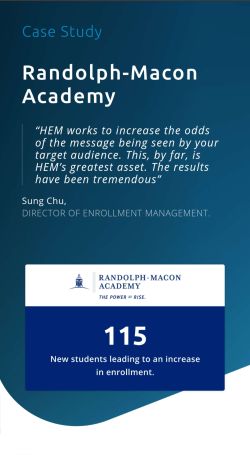
Example: Randolph-Macon Academy (R-MA) launched an aggressive Google Search ad campaign targeting families seeking strong academics during the COVID-19 pandemic. The effort paid off, R-MA saw tremendous results, enrolling 115 new students from May to August 2020 (boosting overall enrollment) and even doubling their summer school enrollment despite the disruption.
Don’t underestimate the power of physical presence when advertising at colleges. Traditional channels like campus bulletin boards, posters in dorms or the student union, campus newspaper ads, and flyers still have value, especially for promoting campus events.
Modern twists on these include digital signage (screens around campus displaying announcements) and QR codes on posters that students can scan for more info or to RSVP. Being visible where students live and study helps keep your message top-of-mind.
4. Email and Text Alerts: Direct and Personal Communication
Email remains a staple for official communication, and when crafted well, it can be an effective tool for reaching students. Concise, visually appealing newsletters about upcoming opportunities can capture attention.
Additionally, SMS/text message alerts are highly effective for timely announcements, as most students will see a text immediately. Always ensure you have permission to text students and use this channel sparingly to avoid overcommunication.
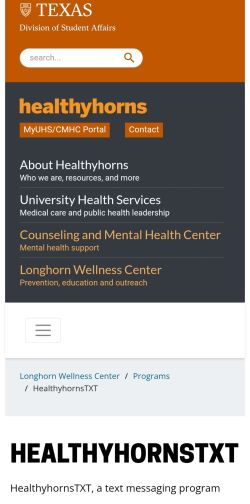
Example: The University of Texas at Austin runs a program called HealthyhornsTXT through its wellness center, sending students 2–3 text messages per week with health tips, stress-management advice, notices of campus wellness events, and motivational reminders. The messages are written in a friendly, encouraging tone by health educators (e.g., nudging students to take a stretch break or stay hydrated in the Texas heat) and often include interactive elements like a monthly giveaway to sustain engagement.
5. Student Organizations and Influencers: Leveraging Peer Networks
Peer influence is powerful. Partnering with student organizations, clubs, or Greek life groups can amplify your message. Engaging student ambassadors or micro-influencers, students with a following in specific niches, can promote your message authentically among their peers.
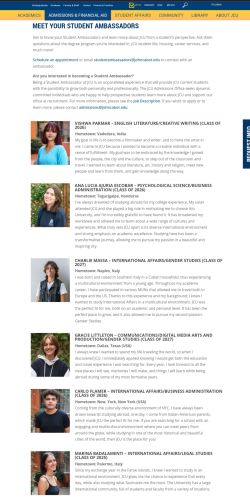
Example: John Cabot University (JCU) in Rome, Italy has a robust student ambassador program: current students are heavily involved in orientation, campus tours, event planning, and peer mentoring, serving as friendly points of contact for prospects. JCU’s website even features profiles and contact info for each ambassador, portraying an approachable, relatable face to prospective students.
By integrating these channels, your advertising efforts can effectively surround students in multiple contexts: online, in class, around campus, and on their phones. The key is to maintain cohesive messaging across platforms, ensuring that whether a student sees a flyer in the cafeteria or a story on Instagram, the campaign feels unified and relevant.
Current Trends in Digital and Social Media Marketing
To reach today’s college students effectively, your digital marketing must evolve as quickly as their online habits. Trends shift fast; what worked last semester might be outdated today. Here are the top strategies driving real engagement right now:
1. Short-Form Video & Challenges
TikTok and Instagram Reels continue to dominate student attention. Quick, relatable videos, like day-in-the-life clips or student-led challenges, are easy to share and resonate with Gen Z’s short attention span. Schools that lean into this format are seeing higher reach and better engagement.
2. Authentic Influencer Content
Students trust peers over polished promotions. That’s why institutions are turning to student ambassadors for social takeovers, Q&As, or vlog-style content. These collaborations feel more like honest advice than advertising, and they build credibility.
3. Interactive & User-Generated Campaigns
Interactive content invites students to participate rather than just consume. Polls, quizzes, and contests on social media are very effective. For example, using Instagram Stories to let students vote on a homecoming theme engages them in decision-making.
User-generated content campaigns are also trending. A classic approach is to encourage students to post with a specific hashtag (perhaps showcasing school spirit or their favourite study spot) and then reshare those posts. These social media campaign examples for students turn your audience into content creators, which increases engagement and provides authentic material to repost on official channels.
4. Personalized, Geotargeted Ads
Digital tools now allow you to tailor messages by interest, location, or academic background. For example, promoting a coding event to computer science majors or a concert to students living on campus ensures your outreach hits the right audience at the right time.
5. Ephemeral & Live Content
Instagram Stories, Snapchat updates, and livestreams offer real-time, behind-the-scenes access to campus life. Their temporary nature creates urgency, while the live format allows two-way interaction that deepens student connection.
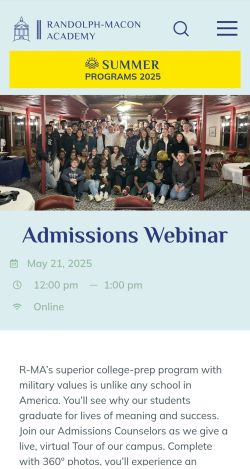
Example: Randolph-Macon Academy (RMA) hosts live virtual campus tour webinars to reach prospective families who cannot visit in person. RMA’s admissions team leads a live-streamed 360° campus tour followed by an in-depth Q&A presentation. This event is promoted through the school’s website and communications, allowing attendees worldwide to experience the campus in real time and ask questions, effectively extending the open-house experience beyond geographic limits.
Gen Z students care about social impact. Campaigns that highlight sustainability efforts, diversity, or local community involvement often outperform generic promotions, so long as the message is genuine. Authenticity matters.
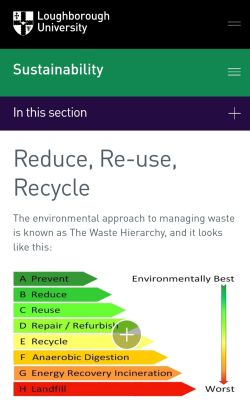
Example: Loughborough University (UK) provides a strong example with its “War on Waste” campaign – a bespoke sustainability initiative aimed at reducing waste and increasing recycling across campus buildings. Branded messaging around “Reduce, Re-use, Recycle” and visual prompts appeared throughout Loughborough’s facilities, encouraging students to adopt greener habits as part of campus life.
Staying on top of these trends ensures your message feels relevant, not recycled. Institutions that tap into these behaviours, without straying from their core identity, tend to gain more trust, attention, and traction from the student audience.
On-Campus Advertising Strategies That Still Work
While digital platforms dominate student attention, on-campus advertising still holds power, especially when promoting local events or building community awareness. The key is in making it modern, visible, and relevant. Here are five effective ways to do it:
1. Posters & Digital Billboards
Traditional posters still work, but now they come with upgrades. Many campuses feature rotating digital billboards in high-traffic spots like cafeterias or libraries. These can display videos, animations, and even repurposed TikToks. For printed posters, bold visuals and a QR code make it easy for students to scan and act instantly.
Example: San Diego State University (SDSU) employs a range of on-campus media to reach students: from digital signage screens in student centers to pole banners along walkways, and even a large marquee visible from a nearby freeway, all broadcasting campus events and messages
By strategically placing dynamic content in high-traffic areas, SDSU ensures students are constantly aware of upcoming activities and campus news.
Setting up a table in the student center or quad is a direct way to interact with students. Staff it with friendly student volunteers or staff, and have a clear call-to-action: whether it’s to promote a new program, a survey, or an event. Freebies (swag like T-shirts, stickers, snacks) are a timeless tactic; students love free stuff, and a branded item keeps your college or event in mind later. This face-to-face engagement can complement your online ads for colleges by giving a personal touch.
3. Campus Media Channels
Student-run newspapers, newsletters, and radio stations offer trusted, student-authored spaces to advertise. Sponsoring a segment or placing a well-designed ad in a campus magazine ensures your message lands where students are already tuned in.
4. Residence & Academic Buildings
Bring advertising into the spaces students frequent daily. Many residence halls allow posting on community boards or digital displays in lobbies. Similarly, academic buildings often have screens or boards for department-related notices; work with different departments to promote relevant opportunities (like a speaker event hosted by the business school should be advertised in the business building). Tailoring your message to the location can increase its relevance
5. Guerrilla Campaigns
Some of the most memorable campaign examples for students have been unconventional. Think flash mobs, chalk art on sidewalks, or pop-up experiences. A college could organize a quick flash mob dance in the dining hall to draw attention to an upcoming cultural festival, for example. Or use sidewalk chalk to create a path of clues leading to a secret prize location as part of a scavenger hunt campaign.
These fun stunts naturally get students talking (and posting on social media) because they break the monotony of campus life. Just be sure to get any necessary permissions from campus authorities beforehand.
When done right, on-campus efforts amplify your digital campaigns. If, for instance, a student sees a poster in the dorm, gets a text reminder, and then spots a student-led story on Instagram, it all clicks. That kind of message reinforcement is what turns curiosity into action.
How to Advertise Events to College Students
Promoting student events, whether it’s a club meeting or a major campus concert, requires clear, timely outreach across multiple channels. The goal isn’t just awareness; it’s attendance.
A pertinent question for education administrators then is: How can I market to 18 – 24-year-olds effectively? Utilize mobile-first, interactive, and values-aligned content. Focus on authenticity, relevance, and peer-driven engagement. Short-form video and tailored messaging yield the highest response.
Here’s how to get students to show up and spread the word.
1. Use a Multi-Channel Strategy
Start with a Facebook or event page, then promote it on Instagram, TikTok, Twitter, and email. Post countdown teasers, behind-the-scenes clips, and physical flyers across campus at least 1–2 weeks in advance. Repetition across platforms helps the message stick.
2. Lead with a Strong Hook
What makes the event worth attending? Free food? A headline performer? Networking opportunities? Whatever it is, make that the focal point on posters, email subject lines, and social captions. Students need a clear reason to care.
3. Tap Into Peer Networks
Encourage club members and student leaders to promote the event on their socials. Authentic, peer-shared content builds trust. Add a campaign hashtag and invite early adopters to post excitement-building previews like setup photos or teaser videos.
4. Leverage Campus Infrastructure
Ask professors to announce the event in relevant classes. Use the school’s app, email newsletter, events calendar, and even push notifications if available. A well-placed promo video from a student government leader can go a long way.
5. Simplify Signups
Use one-click links, QR codes on posters, and RSVP buttons that send reminders. Don’t make students dig for info; friction lowers turnout. Keep access to details and registration as effortless as possible.
On the day of the event, keep the buzz going. Add a selfie booth or branded hashtag display to encourage attendees to share their experience. When others see the fun they missed, they’ll be more inclined to show up next time. The right event marketing doesn’t just boost attendance, it builds momentum.
Creative Campaign Ideas to Spark Student Engagement in 2025
The best campaigns tap into real student life, encourage participation, and reflect your campus culture. Here are five proven and adaptable campaign ideas to consider:
1. ‘Day in the Life’ Video Series
Feature different students taking over your social channels, athletes, international students, first-years, to show authentic campus life. Promote each one in advance, save them to highlights, and repurpose the content for YouTube or digital signage. It’s both engaging and a valuable tool for prospective students.
2. Hashtag Challenge
Launch a branded hashtag (e.g., #MyCampusStory or #[Mascot]Pride) and invite students to post around a fun theme like favourite study spots or campus traditions. Offer prizes, reshare standout entries, and build a content library that feels both organic and community-driven.
3. Scavenger Hunt Campaign
Blend physical and digital by hiding QR codes or clues across campus during orientation or homecoming. Ask students to share their progress on social media using your hashtag. Offer swag for completion and a grand prize for added excitement, great for both visibility and participation.
4. Student Spotlight Series
Celebrate students with weekly features, short videos, or graphics showcasing their achievements, hobbies, or contributions to campus life. Share these across platforms to boost morale internally and show prospective students the real impact of your community.
In a nutshell, what’s the best way to promote events to college students? Use a multi-channel approach, emphasize the event’s value, and simplify registration. Build excitement through social proof, timely reminders, and on-site digital engagement strategies.
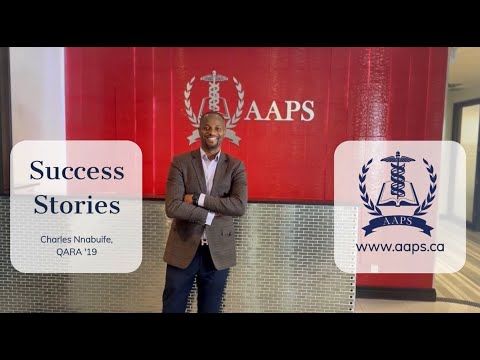
Example: The Academy of Applied Pharmaceutical Sciences (AAPS) in Toronto leverages student voices on social media by regularly sharing student and alumni success stories. This allows prospective students to envision themselves achieving similar goals, essentially seeing “people like me” thriving at the school.
Host timely, student-friendly events like a “Puppy Zone” during finals or a “Throwback Thursday” music party in the quad. Pair each with a livestream and pre-event polls or trivia to boost anticipation and extend reach to virtual audiences.
Keep it student-led, authentic, and relevant. Bring students into the planning process, they know what’s trending and what will spark interest. These ideas promote as well as create memorable experiences that students want to share.
Best Practices for Student Advertising
To ensure your marketing is both effective and respectful, consider these key principles:
Prioritize authenticity: Use real student voices and visuals. Avoid overpromising or overly polished messaging.
Optimize for mobile: Assume your content will be viewed on smartphones. Use vertical video, fast-loading pages, and concise layouts.
Maintain consistency: Align visual identity and messaging across platforms to reinforce recognition.
Respect timing: Be mindful of academic calendars and daily student rhythms. Avoid campaign launches during exam periods.
Gather feedback: Use polls or post-event surveys to measure effectiveness and refine future campaigns.
Adhere to campus policies: Ensure you comply with posting rules, privacy regulations, and student consent protocols.
Do you want to master the nuances of marketing to college students?
Contact Higher Education Marketing for more information.
Twitter: Reaching college students today requires more than visibility; it demands relevance. Learn how modern higher ed marketing leverages short-form video, student influencers, and personalized campaigns to make a lasting impact.
Facebook: Higher education advertising is evolving. Discover how to engage Gen Z through integrated campaigns that reflect their values, prioritize authenticity, and foster connection, both online and on campus.
LinkedIn: From social media to digital signage, today’s institutions are reimagining how to connect with students. Explore the most effective strategies for student-centred marketing in 2025.
Frequently Asked Questions
Question: Where can I advertise to college students?
Answer: Effective channels include social media platforms (Instagram, TikTok, YouTube, Snapchat), on-campus signage, email and SMS campaigns, and peer networks such as student clubs and organizations.
Question: How can I market to 18 – 24-year-olds effectively?
Answer: Utilize mobile-first, interactive, and values-aligned content. Focus on authenticity, relevance, and peer-driven engagement. Short-form video and tailored messaging yield the highest response.
Question: What’s the best way to promote events to college students?
Answer: Use a multi-channel approach, emphasize the event’s value, and simplify registration. Build excitement through social proof, timely reminders, and on-site digital engagement strategies.
***HEPI and the UPP Foundation will host a free webinar on 4 June at 1pm on service learning, how universities can integrate community service with academic studies. Register for your place here.***
This HEPI blog was authored by Isabelle Bristow, Managing Director UK and Europe at Studiosity. Studiosity is AI-for-Learning, not corrections – to scale student success, empower educators, and improve retention with a proven 4.4x ROI, while ensuring integrity and reducing institutional risk.
During September 2020, Studiosity launched the Professor Tracey Bretag Prize for Academic Integrity – an annual commitment to those who are advancing the understanding and implementation of academic integrity in the higher education sector, in honour of Tracey’s work as a researcher in the field of educational integrity.
Tracey was one of the world’s leading experts on academic integrity, founding the International Journal for Educational Integrity and serving as Editor-in-Chief of the Handbook of Academic Integrity. She spoke widely and publicly on the importance of universities taking a strong stand on educating their students about academic integrity and enforcing the rules with vigour and strong sanctions.
Tracey also came to work alongside the team at Studiosity, providing advice, guidance, and sharing her research at events. When asked for her permission to create an annual Academic Integrity award named in her honour, this was Tracey’s response:
I am so deeply honoured by your suggestion that I am almost speechless. Thank you so much for coming up with such a fabulous idea, and especially for putting it in my name. … Thank you again for this incredible recognition of my very small contribution to the field of academic integrity. As I work hard every day to try to demonstrate the type of bravery I’ve always advocated, this certainly gives me a great deal of comfort.
Tracey prematurely passed away on 7 October 2020. In February 2021, she was honoured posthumously with a Career Achievement Award from the Australian Awards for University Teaching.
Entrants over time – a five-year overview
Looking at the Award’s previous entries, we can see a clear shift in how institutions approach educational integrity:
from a more broad-based education about what constitutes misconduct in 2020;
towards more specialised training of large student groups;
to a significant pivot in 2023 towards integrity projects that address the challenge of AI – specifically led by assessment redesign and the use of whole-institution frameworks.
Another change over time is certainly who and where integrity nominations are coming from – there are more dedicated institutional units for managing educational integrity now in 2025 than we saw in 2020-2021.
Tracey earned a great deal of respect globally for her evidence-based, systemic, and students-first approaches to educational integrity. It is fitting that these approaches are gaining interest and momentum in higher education at this moment. We look forward to seeing another year of evidence-based nominations, and thank our Academic Advisory Board for their time and energy once again in judging.
Feeling inspired?
As senior leadership look for ways to ethically embed generative AI within their institutions, academic integrity – the original owner of the AI acronym – is paramount. And so for this year’s prize submissions, the expectation is that the 2025 shortlist will acknowledge gen-AI as part of the challenge, show evidence of impact, and help answer the question: How can the sector keep educational integrity, humanity, and learning at the heart of the student experience?
Last year, the University of Greenwich won the UK prize for their initiative ‘Integrity Matters: Nurturing a culture of integrity through situational learning and play’. Staff there designed an interactive e-learning module (available to all education institutions under licence) designed to raise awareness of academic integrity. You can learn more here.
Sharon Perera, Head of Academic and Digital Sills who led the initiative said:
We are thrilled to have been awarded the Tracey Bretag prize for advancing best practice and the impact of academic integrity in higher education. Thank you Studiosity for championing this in the sector.
At the University of Greenwich our goal is to raise awareness of the academic conventions in research and writing and to create a culture of integrity. We are doing this through our student communities – by sharing best practice and learning about the challenges we face in the GenAI era.
Academic integrity is at greater risk than ever in the age we live in, and we need to work together to celebrate integrity and authenticity.
While sharing your initiative is for the good of the sector and a personal recognition of your tireless efforts to protect and nurture academic integrity – the prize also comprises a financial reward! You can enter this year’s prize here – nominations close 30 May. Evidence might be at the level of policy, implementation, measured student or staff participation, and/or other evidence of behaviour.
In recent years and months, the UK has seen considerable debate over immigration policy, with proposed changes that could make studying here less attractive for prospective students.
The report’s findings present a striking varied picture. On one hand, it reaffirms the UK’s position as a leading global study destination, with one in seven respondents stating the UK’s high-quality education and globally recognised universities were their main motivations for studying here. For three in four students, the UK was their first-choice destination. Students are also attracted by the shorter course lengths, multicultural environments and post-study work opportunities offered through the Graduate Route.
Alongside this positive narrative, the report reveals a deeply challenging reality for many students once they arrive. Half of the international students we surveyed reported struggling with poor mental health during their time here, a statistic that will resonate with academic and professional services staff who see students day in, day out.
Living costs are also having a direct impact on student wellbeing, with monthly expenses (excluding tuition fees) averaging £1,402 and rising to £1,635 for students in London. For many, studying in the UK means short- and medium-term financial hardship and consignment to long-term debt. Over 30 per cent of postgraduate taught students rely on bank loans or credit cards. One in five worries about money all the time. Those most affected by financial stress are also more likely to report poor mental health.
Despite these pressures, current visa rules prevent international students from pursuing freelance work or self-employment, even in areas where their skills are in high demand. These restrictions are not only impractical but risk undermining both the student experience and the UK’s wider economic priorities.
Barriers to belonging
Just as concerning are the social barriers many students face. One in three international students reported they had experienced racism while in the UK. While 94% reported feeling safe and welcome on campus, that sense of belonging often didn’t extend to the wider community, with only 73% stating they feel safe and welcome in the UK more generally. These experiences can leave lasting impacts and send the wrong message to future students weighing up their study options against other international destinations.
Ultimately, these findings highlight a simple reality: the UK remains a top choice, but we cannot take that status for granted. Negative public rhetoric, which sometimes labels international students as a ‘problem’, ignores evidence that they contribute billions to our economy, volunteer in our local communities and improve our universities’ teaching and contribute to our world-leading research. International students are our peers, colleagues and future leaders. Therefore, it’s important we balance any concerns about immigration with the fact that international students are part of our future.
A roadmap for reform
This report centres students’ experience of studying here and sets out a roadmap for meaningful change. At a national level, we are calling on the Government to:
Freeze visa application fees and the Immigration Health Surcharge;
Allow greater flexibility in term-time work and permit self-employment and freelance work during study; and
Conduct a cross-departmental impact assessment on how immigration policies and public messaging affect the international student experience.
These policies are essential if we want to keep the UK globally competitive.
Shared responsibility across the sector
But change cannot come from Westminster alone. Universities and higher education sector bodies must also act. We’re asking universities to consider:
Fixing international students’ tuition fees at the point of entry;
Providing equitable access to hardship funds with clear eligibility criteria;
Delivering culturally competent mental health support that truly meets students’ needs;
Call on employers and careers services to better understand the Graduate Route and provide more tailored advice and job opportunities for international students; and
Adopt UKCISA’s #WeAreInternational Student Charter as a framework to improve the international student experience.
Working together for a welcoming UK
Our report is a call to action. We invite government ministers, MPs and Peers, and university leaders to work with their students’ unions to engage with the report’s findings and work collaboratively on solutions. The APPG for International Students and UKCISA have helped amplify the student voice; now we ask on all stakeholders to join the conversation and implement evidence-based policies.
By Huw Morris, Honorary Professor of Tertiary Education at the Institute of Education, UCL’s Faculty of Education and Society, and Richard Watermeyer, Professor of Education at the School of Education, University of Bristol.
Over the weekend, HEPI blogged on the possible consequences for universities and students of a new UK / EU agreement – see here.
The financial challenges currently facing UK universities, as revealed by last week’s report from the Office for Students, have focused attention among university leaders, government policy makers and media commentators, as well as higher education staff and students, on four things:
What has received less attention are variations between universities in the number of students recruited in general and international students in particular, as influenced by perceptions of institutional quality, and the wider incomes and costs of this provision. It is these things which impact on institutional margins, their surpluses and losses, and determine their longer-term financial sustainability. Most importantly, there are very big differences between universities when assessed by these measures. With a HM Treasury Spending Review and a Department for Education Higher Education White Paper expected imminently, it is these wider institutional economics and financial management issues which are the focus of this article.
Higher Education Statistics (HESA) data reveals a very mixed pattern of financial activity and performance among the 302 higher education institutions that filed accounts for 2022/23, the last year for which full records are available. Income from all sources, including tuition fees, research funds, government grants, endowments and other miscellaneous sources for these organisations, has ranged from £84,000 at the Caspian School of Academics to £2.5 billion at the University of Cambridge. Despite such wide variance, 88 institutions are responsible for over 80% of the income; within this group, the 24 members of the UK’s Russell Group of research-intensive universities account for the lion’s share (47.3% despite attracting only 25.8% of total student numbers). This mismatch between volume and income is explained by the financial margins of course provision.
The costs universities incur are similar. Salaries for academic, professional services and support staff vary, but national pay bargaining and pension arrangements mean that the differences are not great. Meanwhile, the costs of campus buildings per square metre and the unit costs of equipment are similar. So, while there are significant differences in the number of staff, size of university estate and scale of expenditure on equipment, most institutional leaders are alert to the key metrics that help to marshal these aggregate costs. The big difference in costs is in supporting research activity, with the Transparent Approach to Costing (TRAC) data revealing £4.6 billion a year of unfunded activity. This is a measure of the research activity undertaken by university academic staff, which is not supported by research funds and appears to be undertaken within hours nominally allocated to other things, such as teaching and administration. It is this and related figures that the Minister of State for Skills is referring to when she challenges universities to be more transparent with the information they provide on their use of public money.
At a UK level, information on this activity is not hard to find. Table C.1.2. of the OECD’s Education at a Glance reveals that the UK has a higher level of expenditure on research and development per HE student than the US, despite very much lower levels of Gross Domestic Product per capita. The proportion of unfunded research activity varies considerably between institutions and is lowest among Russell Group universities and highest among institutions that are seeking to increase activity from a lower base.
What is understood by most university leaders, but less commonly by policymakers and the media, is the vital role of operating margins in determining whether a university is financially sustainable. The role of margins is best illustrated by comparing two fictional universities.
University A is a large research-led institution that offers a wide range of courses to home and overseas students. In 2021/22, in keeping with the average Russell Group university, one third of its students were recruited from overseas and its position in the Chinese Academic World Ranking of Universities (AWRU) – and to a lesser extent the QS and THE World rankings – enabled the university to charge fees of £80,000 for its MBA programme, £60,000 per year for its Medicine degree to overseas students, and £20,000 per year for its doctoral programme. These high fees and the large volume of students applying for a limited number of places generated sufficient margins (gross surplus) to subsidise the costs of the less remunerative courses for home students in subject disciplines such as English Literature where the full-time undergraduate degree fee is £9,535 per year. This was important because the cost of these courses with the higher charging courses for international students was typically twice the £9,535 per full-time student income earned from UK students, not least because of the costs of the providing time and resources for staff research in these disciplines where there was no grant income to support this activity. These funds also provided the financial resources to underpin some of the research work of academic staff and their professional services colleagues.
The picture is less rosy at University B, a large former polytechnic, with a much lower ranking in international league tables and which is consequently less competitive in attracting Chinese international students. Instead, University B is dependent on recruiting first-generation international students; students typically from less wealthy families, unable to afford the premium fees charged at University A. At University B, the fee for an MBA is £20,000, although this is often discounted and then diluted by recruitment agency fees. The high sticker price and subsequent use of discounting is used because the advertised fee is a marker of quality and the discount fee is used to draw the student in by adjusting the amount to what they can afford and flattering them into believing the university wants them for their talents. University B does not have a Medical school and so a comparator fee is not available, but the fee for an international student on a science and technology degree is £18,000. When diluted by agents’ fees and discounted prices, this fee may drop below the costs of provision. Finally, the PhD course fees of £5,000 per year only cover half the running costs in order to attract students who will help to boost external assessments of the research undertaken by this university.
Figure 1. Course prices and costs compared
The net effect of the combination of different course prices and costs at University A and University B is that the former is making significant gross surpluses and the latter is making significant gross losses. It is important to note that this pattern of surpluses and losses is also evident in the financial performance of other university services, including, for instance, franchise courses in the UK and overseas, student accommodation, conference facilities, catering and other services. This is because the prices charged by institutions with less auspicious reputations and league table positions are lower than those of their competitors, but the costs are similar.
There are also issues associated with capital requirements (the need for funding to pay for the renewal and replacement of buildings and other assets) and risk exposure (the extent to which future activity is certain and predictable). The number of young British people wanting to study at UK universities has historically been predictable, and while there has been competition between universities, this competition has rarely led to institutional failure. Institutions may have got smaller, closed courses, and on occasion merged, but they have not been forced into insolvency. Such relative assurance may wane in future as risks rise and the need to renew and replace buildings and other capital assets grows.
We might, for instance, reasonably anticipate increased risk associated with international student recruitment where geopolitical and concomitant financial volatility impact the inward migration of students into UK universities. While we have already witnessed the inhibitory effects of visa rule changes, we can reasonably expect exchange rate fluctuations and changes to the proclivity of overseas governments to fund students studying in the UK to further increase these risks. In the medium term, a requirement to maintain a high ranking in international university league tables, as corresponding justification for high fee charges, compels sizable financial investment in buildings, equipment, and staff to maintain the research performance.
Assessment of university performance in the AWRU, QS and THE World University rankings is dependent on research performance measured by citations and, in the case of the QS and THE specifically, the reputation of the institution in the eyes of senior leaders in other universities and the opinions of employers. These ratings are influenced by past rankings and impressions of campus quality. In the long term, maintaining these league table positions is likely to become more demanding for three reasons.
First, the drive by governments in many other countries to create their own ‘world-class’ universities leads to an increase in the costs of competing and a consequent decline in margins.
Second, the growing prominence of philanthropy and alumni giving looks set to make up an increasing proportion of the funding of highly ranked institutions, though this is less of a feature in UK higher education. In the USA, for example, higher education endowment is around $800 billion and is growing by 150% per year. Endowments now account for 50% of the income of Harvard University and a very sizeable proportion of the income of other Ivy League and American research-led institutions. Of course, whether this remains the case in the face of challenges from President Trump’s new administration remains to be seen.
Finally, in the longer term (10 to 30 years), it seems reasonable to predict that developing countries in the Global South will develop their own higher education provision, and the number of young people travelling overseas to study will reduce, as is being encouraged by the China-Africa 100 University plan and similar initiatives.
The lessons of this analysis for institutional leaders and their governing bodies and councils are that they should broaden their focus to consider the operating margins on all their activities, (that is, teaching, research, accommodation, conferences, room and equipment hire) as well as the investment requirements to maintain this performance in the medium to long term. Without engaging in these types of analysis, the risks of cashflow problems will grow and the longer-term sustainability of these institutions will be jeopardised.
The lesson for governments is that they should look at the real costs of different courses and focus the funding that is made available through student loans and grants on those activities which will provide the greatest sustainable private and public benefit in the long run. This means aligning the funding with future needs, as defined by assessments in the NHS Workforce plan and the analyses by Skills England, Local Skills Improvement Plans and the UK shortage occupation list and, where this is not the case, subject areas where it seems probable that the student loans will be repaid. If institutions wish to fund programmes that fall outside these lists, then they can subsidise these courses with surpluses made from other activities. The issues outlined above also mean that the pressures facing institutions are different, and it is probably beyond the capability of the Department for Education and the Office for Students to oversee the transitions that will be needed in many of the 452 higher education institutions in the UK. To handle these changes will require additional leadership, management and governance resource and ideally greater local and regional stewardship for most institutions.
By Pete Moss, Business Development Director at Ellucian.
As resourcing pressures grow, the need for efficiencies in the UK higher education sector is well-known. Not only is every university reviewing its costs, systems and processes, but Universities UK too has set up a new Transformation and Efficiency Taskforce under Sir Nigel Carrington to accelerate solutions through collaboration.
The old adage, ‘don’t reinvent the wheel’ seems apt when thinking about shared services in UK higher education. In the USA, there is already a range of shared systems in operation in the university sector. While they differ on detail, they share the objective of saving money through strategies like systematisation, which can mean joining forces in a limited way, or full systems’ integration under one oversight. Forbes’ education writer, Derek Newton, explains in a report for education technology giant Ellucian, that ‘the benefits of system coordination or more complete integration are abundant and accessible, which helps explain the national trend in the direction of larger, more cohesive systems in higher education.’
Newton’s report, based on several weeks of interviews with US university experts and those going through change programmes, explores university systems’ consortia on the East and West coasts and everywhere in between, spanning private, non-profit and public institutions. Collaborations involve any or all of data sharing, regulation and compliance processes, course and resource management, procurement and cybersecurity. Even some competitor institutions have found ways to collaborate. The scale is eye-watering: California’s Community Colleges alone serve 2.1 million students, which is roughly the same size as the UK’s undergraduate population in its entirety.
Back in the UK, one voice which is critical to any efficiency drive is that of the Academic Registrar (AR). Most ARs lead teams at the coal face, delivering the best student experience that they can. Their insights are crucial to success both at an institutional and at a national level.
Ben Rogers, an experienced UK Academic Registrar, reflects below on the concept of collaborative models.
‘Higher education in the UK has been undergoing significant transformation. New initiatives, such as Degree Apprenticeships and Micro-credentials, have begun to reshape how institutions deliver education, particularly in terms of the skills and flexibility that they offer to more diverse and dynamic student body students as well as to employers.
Degree Apprenticeships combine academic study with workplace learning and require universities to collaborate closely with industry partners. Micro-credentials, on the other hand, offer short, targeted learning opportunities to individuals who want to upskill or reskill without committing to a full degree. Both models demand flexibility, responsiveness and innovation in educational delivery, all of which can be supported by a strong, unified IT infrastructure.
However, the current state of IT services in many UK universities is often bespoke and highly esoteric. Many institutions have their own systems which can lead to inefficiencies and inconsistent user experiences. The lack of standardisation often creates additional administrative burdens and can hinder new initiatives like the deployment of AI within their infrastructure.
This is where collaborative IT services can play a pivotal role. The concept of collaborative IT services refers to the practice of consolidating technology infrastructure, applications and support across multiple institutions.
The potential benefits of collaborative IT services for universities are significant. Firstly, collaborative IT services can provide a streamlined, consistent experience for students and staff. A centralised IT platform could allow students enrolled in Degree Apprenticeships to access both their academic materials and workplace-related resources through a single portal. Similarly, Micro-credential learners could benefit from a unified system that offers easy access to course content, assessment tools, and progress tracking, regardless of which institution or provider is delivering the learning.
Collaborative IT services can also enhance the flexibility and scalability of universities’ offerings. The rapidly changing nature of the job market, particularly in sectors such as technology, healthcare, and engineering, demands that universities are agile and can, for example, rapidly design and adopt new programmes. These systems can also help universities maximise their resources. By pooling their technology investments, universities can take advantage of economies of scale, leading to cost savings that can be reinvested. This is particularly important at a time of tightening budgets and has happened already in other parts of the world such as in the conglomerate universities in North America and Sweden.
However, the transition to new ways of working is not without its challenges. For many universities, particularly those with long-established IT systems, the process of moving to a shared infrastructure can feel like a monumental undertaking. But the challenges, whether at a technical, policy or behavioural level, can be overcome by a sensible change programme.
There are several steps that universities can take to ensure a successful transition. The first is to build strong relationships with the educational technology providers (especially providers with expertise in this area) to understand what is possible. The second is to build a strong case for change. Institutions must recognise that, to stay competitive and relevant in the face of new educational initiatives, they must embrace collaboration and innovation. Collaborative IT services offer the opportunity to enhance the student experience, streamline processes, save institutional money, and improve educational delivery. There is a strong rationale here to think about a future roadmap which brings all institutions up to speed over time.
The adoption of collaborative IT services in UK universities is a critical step towards realising the full potential of new educational initiatives. In the long run, collaborative IT services will not only improve the delivery of education but also contribute to the development of a more agile, adaptable, and future-ready higher education sector in the UK.’
While the US and UK higher education systems differ as outlined in HEPI’s report on the subject, they can still learn from one another when it comes to collaborative systematisation. Ultimately, they share the need to be efficient, agile, student and researcher-focused and ultimately the best that they can be.
Lucy Haire, Director of Partnerships at HEPI, also contributed to this piece.
Last week, I arrived back in London on a high. I’d spent five weeks in India with British colleagues promoting the benefits of U.K. higher education in seven cities. My audience was some of the most talented and entrepreneurial young people in the world, and they have plenty of choices about where to follow their dreams. But I know from my decade as Chair of the U.K. National Indian Students and Alumni Union (NISAU) that British education is an extraordinary opportunity for Indian students and their host country. It’s a win-win if ever there was one in talent, skills, investment and friendship. And all this was topped off with the announcement of the long-awaited India-UK trade deal. We were filled with possibility.
Yet as soon as I stepped off the plane, I was faced with a barrage of news stories about the UK Immigration White Paper. Would all our hard work be put at risk? Surely we would not jeopardise the Graduate Route Visa so vital to Indian graduates and hard-won by many, including Indian students and alumni.
So now the White Paper is published, what is our take on it?
The Graduate Route
First, let’s be clear. Our worst fears were averted. NISAU genuinely welcomes the Government’s decision to retain the Graduate Route and acknowledges the significant engagement that has taken place with stakeholders across the sector. NISAU has worked extensively over the past decade — and particularly intensively in the last year — with policymakers across all major political parties, including many now in government, to advocate for the continuation of this essential route.
Of course, there are still worries. Any change is worrying when witnessed from thousands of miles away. So while we are relieved that the Graduate Route has been preserved — albeit with a modestly reduced duration — we urge that its implementation, and that of the wider reforms, be approached with care, clarity, and collaboration. Getting this right will shape the UK’s standing as a top destination for global talent in the years ahead.
Why should we worry about a white paper on immigration?
But here’s the rub. Many of us feel the UK’s worries about immigration are being applied inappropriately. International students are a distinct, high-contribution, temporary category of migration. They fund their own education, power innovation in universities, sustain local economies and build enduring bilateral ties between the UK and countries around the world.
They (we) should be celebrated, not treated through the same policy lens as other forms of migration. Doing so risks undermining one of the UK’s most globally admired assets: its higher education sector.
Universities, too, are one of Britain’s most powerful strategic assets. They drive regional growth, advance global research, and help produce the high-skilled workforce the country urgently needs. Supporting them — and the students who choose them — must remain a national priority.
It’s an old argument, but worth repeating because it’s true. International students bring enormous benefits to the UK — to our high streets, workplaces, and campuses. They contribute billions to the UK economy each year, and the fees they pay help sustain vital subjects like Engineering and Medicine — courses which are essential to Britain’s long-term prosperity and global competitiveness.
International students also create employment and support domestic skills through their impact on the wider economy and the cross-subsidy they provide for UK teaching and research.
The White Paper talks about impact. But any local impact assessment or review of the domestic skills landscape should begin here — with a recognition that the presence of international students uplifts opportunities for UK nationals, not competes with them. And so we reiterate, no matter how often this request is dismissed, international students must be taken out of the net migration targets for purposes of robust policymaking and to ensure future efforts to reduce regular forms of migration don’t endanger this huge benefit.
Home thoughts from abroad
The White Paper was aimed, naturally, at a domestic political audience, but the world was listening. International communication must be extensively managed and properly executed — proactively and urgently — especially during this peak recruitment period. Panic must not be allowed to set in among current and prospective students. Immediate clarity is needed on who is affected and how.
It’s easy to forget what this takes, and GREAT campaign funding, which promotes campaigns like Study London, has already been cut by 41%. How will the great stories we should be telling about global education reach the right students in an appropriate way?
Think of the impact of our recent debates on Indian students, the largest users of the Graduate Route. For 70% of Indian students, a strong post-study work offer is the single most important factor in deciding where to study abroad. The ability to gain significant international work experience is critical. As we told the Migration Advisory Committee, work is not the same as work experience.
What we need now are proactive, student-focused communications, delivered by those who understand how to engage students effectively. NISAU has already started evidence-based communications. We stand ready to scale our role in partnership with UK stakeholders, but we must be quick. Rumours and bad actors must not be allowed to shape the UK’s story and, as Mark Twain said, a lie will fly around the whole world while the truth is getting its boots on. So we encourage a joined-up national communications effort, led by government and supported by trusted sector voices like NISAU, to ensure international students receive accurate, timely and reassuring guidance.
Skills and Immigration Alignment
Here we see real opportunity. We strongly support the Government’s move to align immigration policy with domestic skills development. This is not new to us. NISAU has long championed this principle. Our advocacy has enabled productive sectoral dialogue, including at our 2024 and 2025 national conferences, where we specifically advanced the case for better integration of immigration, training pipelines and national workforce planning. Now we look forward to working with stakeholders to ensure these reforms drive opportunity, not exclusion. International students and graduates should be part of this thinking, not passive recipients.
Tighter Regulation of Agents
We should be afraid, though, of naming and fixing problems. NISAU has spent nearly a decade calling for tighter regulation of education agents, so we are pleased to see this now reflected in government policy. We, of all people, see the cost of this being done badly.
However, implementation is everything. We urge clarity and accountability in the system, and ask for specific answers to:
What is the penalisation mechanism for misconduct by agents?
How can universities transparently share information on agent breaches?
What channels will be created for students to report agent wrongdoing safely and easily?
So we recommend the following actions to ensure transparency and integrity:
A sector-wide cap on agent commission to ensure that student interests are prioritised over volume incentives.
Mandatory publication by universities of agent appointment processes and the fees paid to each agent, after every intake.
Immediate monitoring of potential oligopolistic aggregators in the agent market, whose dominance may compromise student choice, competition, and accountability.
Agent reform must centre student welfare, market integrity, and institutional accountability.
Talent Route Enhancements
And finally, we welcome the strengthening of the Global Talent, Innovator Founder, and High Potential Individual routes. These are important to the UK’s economic ambitions, especially in strategic sectors such as AI, deep tech, and life sciences. But talent does not always arrive ready-made. It is nurtured — often from within our international student community.
International graduates are a strategic talent pool that can help meet the UK’s workforce gaps, drive innovation in small and medium enterprises (SMEs) and build globally competitive businesses. Retaining them through structured graduate-to-founder pathways is not just in students’ interests — it is in Britain’s. We therefore urge:
A seamless pipeline between student, graduate, and entrepreneurship routes.
The right for students to start businesses while studying.
A bespoke international graduate start-up pathway, enabling the UK to tap into a future generation of founders, many of whom could otherwise take their innovation elsewhere.
Supporting graduate outcomes must also become a central focus across the UK higher education sector. A recent survey revealed that only 3% of international graduates found employment through their university careers service, highlighting a clear opportunity for improvement in how students are supported beyond the classroom.
This is not only a challenge for international students; domestic students, too, require more tailored and effective career support to meet the evolving demands of today’s job market.
NISAU has long championed the need for improved careers provision, including through regular engagement with universities and stakeholders, and as a central theme at both our 2024 and 2025 national conferences. At a plenary session during our 2025 conference in February, we demonstrated how the absence of structured university-led careers support has given rise to an unregulated ecosystem of social media ‘careers coaches’ — many of whom charge students significant fees, often without delivering meaningful outcomes. We recognise that many universities are already taking meaningful steps to enhance the student experience and graduate outcomes. From employability hubs to expanded industry partnerships, we welcome and encourage these efforts — and believe they can be further amplified through shared best practice, consistent investment, and greater collaboration with student-led organisations such as NISAU.
The White Paper on Immigration is challenging on skills. We call for a sector-wide paradigm shift — one that places measurable, inclusive, and industry-informed employability support at the heart of the student experience and ensures that students are not left to navigate their futures unsupported or exploited.
There is much more to say. We are concerned about a lack of clarity on graduate-level jobs and the financial impacts of all these changes on the universities that attract global students in the first place. Nor do we want to be seen only as investors. The ‘best and the brightest’ are not necessarily the ‘rich and the richest’.
We urge that any levies or associated costs placed on universities be ring-fenced for reinvestment into student support, careers, and compliance infrastructure, rather than passed on to students. Global education is changing. International students are discerning, strategic, and have options. If the UK offer weakens, the best talent will go elsewhere. The UK at the moment has a competitive advantage — that advantage must be protected through consistency, clarity, and commitment to the student experience. Let’s secure a UK that remains open, ambitious and globally competitive in higher education and in so many other ways.
Student retention remains one of the biggest challenges in higher education, with dropout rates continuing to concern institutions worldwide. For colleges and universities today, student retention in higher education has evolved into something far more holistic than it once was.
Recent data underscore the scope of the problem: roughly one in four undergraduates will leave college without completing a degree. For example, data from the Australian Department of Education shows that nearly 25% of higher education students who began in 2017 had not completed their programs by 2022. The United States reports a comparable figure, with NCES data showing first-year retention rates for full-time undergraduates averaging around 75% to 78%, indicating an attrition rate of approximately 22–25%.
Our targeted email marketing services can help you attract and enroll more students.
Discover how we can enhance your recruitment strategy today!
Behind these statistics are myriad reasons. Financial pressures, mental health struggles, and a lingering sense of disconnection (exacerbated by post-pandemic-era remote learning) are among the top factors driving students to leave.
This early departure is not just a personal setback for students (many of whom incur debt without obtaining a credential) but also a serious concern for universities. Every student lost represents a missed opportunity to fulfill someone’s potential and a significant cost to the institution in lost tuition and wasted recruitment efforts. It’s no surprise, then, that in 2024/25 the conversation around student success has zeroed in on retention, keeping those first-year students engaged to graduation.
Amid these challenges, colleges and universities are exploring new ways to support students beyond the classroom. Interestingly, one of the most powerful tools is quite ordinary: email. While often associated with marketing departments or alumni fundraising, email communication has proven to be an unsung hero in student retention strategies. Done right, regular digital touchpoints – from welcome emails and deadline reminders to check-ins and newsletters – can nurture a sense of belonging and keep students from “falling through the cracks.” This blog post explains how.
What Is the Meaning of Student Retention?
Student retention refers to an institution’s ability to keep students enrolled continuously, usually from one academic term to the next, until they complete their program. Retention in higher education means the same as student retention, but in the context of colleges and universities. It typically refers to the percentage of students who return each year and progress toward graduation. It’s often measured as the inverse of dropout or attrition rates and serves as a key indicator of institutional effectiveness and student satisfaction.
But while the metric is important, it doesn’t tell the whole story. Retention intersects with numerous aspects of the student experience, including:
Academic preparedness and performance
Emotional and mental well-being
Financial stability and support
Social integration and sense of belonging
Clarity around future goals and career pathways
In short, high retention signals that a school is providing the tools and environment students need to thrive. Low retention often suggests systemic gaps that need attention, whether in support services, communication, or curricular alignment.
When schools understand the deeper “why” behind retention patterns, they can begin building strategies to support students in more intentional and effective ways.
Why Do Some Students Stay and Others Leave?
Understanding college student retention means examining both barriers and motivators that influence whether a student chooses to continue or withdraw. Here are some of the most common reasons students make that decision:
1. Academic Challenges
A student who feels unprepared for their coursework or overwhelmed by expectations may quickly disengage. This can be especially true for first-generation students or those entering a competitive academic environment without sufficient support.
What helps: Proactive emails that demystify academic expectations, offer success tips, and highlight tutoring resources early in the term can make a real difference.
Example:At the vocational education level, Oconee Fall Line Technical College (OFTC) in Georgia provides a good example of communication-driven retention support. OFTC employs dedicated Retention Specialists who monitor student progress and intervene when issues arise.
Using an internal early-alert system, the college flags at-risk students (such as those with irregular attendance or missing assignments) and initiates proactive outreach. Retention staff then reach out to students, often via college email or phone, to check in and connect them with help. This includes emailing a student about available tutoring when they struggle academically, or discussing solutions if a student is considering withdrawal.
2. Lack of Community or Belonging
The feeling of being “invisible” on campus can be just as impactful as academic performance. Students who don’t feel they belong are significantly more likely to leave, particularly during their first year.
What helps: Targeted emails that invite students to join clubs, attend welcome events, or connect with peers can foster a stronger sense of connection.
Example:AAPS circulates an official newsletter to share recent happenings in the pharmaceutical field and celebrate student achievements. Students consent to having their names and photos featured in these newsletters. This practice personalizes communications and recognizes student accomplishments. This targeted content helps build a sense of community and keeps current students motivated to persist in their programs.
Source: AAPS
3. Financial Stress
Tuition fees, housing costs, and daily expenses can make the college experience financially unsustainable for many students. Some may not even know what aid or resources are available.
What helps: Email reminders about scholarships, payment plans, emergency aid, or financial counseling empower students to seek help before small issues become major obstacles.
Example: In London, City, University of London runs City Cares, a dedicated support programme for vulnerable student groups – including those estranged from family, or young adult caregivers. A key element of City Cares is consistent personal communication: staff send regular check-in emails and updates to these students to see how they are doing and offer help.
Students in the program have a designated staff contact whom they can reach by email or phone for one-to-one support. City Cares also provides practical resources like bursaries, housing assistance, and priority access to opportunities, all communicated through targeted outreach.
4. Unclear Career Direction
Students who lose sight of how their studies connect to real-world opportunities often lose motivation. Without a sense of purpose, continuing can feel pointless.
What helps: Emails that highlight internship opportunities, alumni career paths, and academic-to-career connections help students stay focused and inspired.
5. Personal and Mental Health Struggles
From stress and anxiety to family emergencies or health issues, life challenges can derail even the most motivated students.
What helps: Compassionate, well-timed emails from student services that highlight wellness resources, counseling services, and peer support groups remind students they are not alone.
Example: DCC uses digital content to address student well-being, which is crucial for retention. A blog post on the college’s site, shared via email and social media, discussed how emotional well-being impacts learning, noting that a student’s mental health influences “focus, engagement, social interactions, and overall academic success.” By openly guiding mental health, DCC shows students and parents that the college cares about more than academics.
In each of these cases, the common thread is communication. When institutions deliver the right messages at the right moments, they can provide reassurance, guidance, and pathways forward, all of which contribute to stronger retention outcomes.
How Email Marketing Supports the Entire Student Journey
Email marketing is not just about promotion. In the context of higher education, it is a structured communication framework that allows institutions to be consistently present for their students, especially when automated and segmented based on academic year, behavior, or demographic indicators.
The first year is foundational. It’s where impressions are formed, habits are developed, and questions abound.
Effective first-year campaigns include:
A welcome series that introduces campus leaders, outlines what to expect, and provides a friendly tone of engagement
Resource emails such as “How to Book Time With an Academic Advisor” or “Top Study Spots on Campus”
Surveys and wellness check-ins asking students how they’re doing and connecting them to specific supports based on their responses
Invitations to student orientation events, campus fairs, and mentorship programs
This early outreach reduces anxiety and builds a relationship of trust. When students know they can expect relevant, useful information in their inbox, they are more likely to engage with their institution in meaningful ways.
Example: John Cabot University (JCU) has made student retention a priority through robust student services and outreach. The university’s communications team uses segmented email lists to target different student groups – first-year degree seekers, study-abroad students, etc.
Upon arrival, all first-year students receive a series of orientation emails with tips on navigating campus life in Rome, introductions to support offices (counseling, academic advising), and invitations to community-building events. This email nurturing continues throughout the year. JCU’s focus on student engagement reflects its ongoing commitment to retention, with email outreach playing a key role in fostering community and support.
Sophomore and Junior Years: Momentum and Direction
The second and third years of college can be challenging. Students may experience mid-degree fatigue, uncertainty about their major, or a lack of motivation.
Email campaigns that support these years often focus on:
Important academic milestones, such as major declarations, registration deadlines, or capstone requirements
Career development, including internship announcements, networking events, or resume-building resources
Personal development opportunities, like study abroad, research assistantships, or leadership training
Wellness and retention-focused campaigns that flag disengaged students and prompt follow-up from advisors.
By continuing to communicate thoughtfully during this middle phase, institutions can ensure students maintain their momentum and receive targeted interventions before problems escalate.
Example:Southern Methodist University’s (SMU) Office of Student Success & Retention created the “Don’t Ghost SMU” initiative to re-engage students who stop attending without formally taking a leave. Each term, the university identifies “ghosters” – undergraduates who are neither enrolled for the coming term nor on an official leave of absence. The retention team then reaches out to these students three times via email and text message to ask about their plans and encourage them to re-enroll. Students who respond and decide to return are provided with one-on-one support to facilitate their re-entry.
Students approaching graduation often face a new set of stressors—final projects, job applications, and the pressure of “what comes next.” At this point, communication becomes about both support and celebration.
Senior-focused email strategies may include:
Step-by-step graduation guides that include deadlines for forms, fees, and ceremonies
Invitations to career prep workshops, mock interviews, or job search bootcamps
Highlight reels of student accomplishments or alumni stories to boost morale and confidence
Communications from deans or student leaders congratulating seniors and offering final words of encouragement
Example: NeuAge’s digital content provides career advice and skill-building tips as part of the institution’s ongoing commitment to graduates’ success. NeuAge also promotes free online workshops and webinars (often via LinkedIn and email) led by industry experts, giving current students and recent grads extra opportunities to network and upskill.
Best Practices for Retention-Focused Email Campaigns
If your institution wants to maximize the impact of email on student retention, consider the following best practices:
1. Segment Thoughtfully
A one-size-fits-all email won’t resonate across a diverse student body. Tailor content based on class year, academic discipline, or unique identifiers like international status or first-generation background. The more relevant the message, the more likely it will be read and acted on.
2. Use Automation With Intention
Automated emails shouldn’t feel robotic. Use your CRM to trigger messages based on behavior (like missed assignments or low engagement), but personalize them with the student’s name and relevant links or contacts. Automation should make the student feel seen, not surveilled.
3. Focus on Value
Each email should offer something of clear value: a helpful tip, a timely reminder, a story that inspires. Avoid sending messages just to fill space in a calendar. If the email doesn’t help the student succeed, it probably shouldn’t be sent.
Example: ENSR (a Swiss international school) maintains high transparency with parents through regular digital bulletins. The school posts and emails information on upcoming events. For instance, parents receive notices about scheduled parent-teacher meetings, ski trips, and even windsurfing camp well in advance. ENSR’s online parent info page archives these communications, noting what was sent when.
Track engagement data: open rates, click-throughs, and unsubscribes, and use this to inform future messaging. If a subject line isn’t working or a campaign doesn’t drive traffic, revise your approach. Feedback and responsiveness are key to any long-term strategy.
5. Collaborate Across Departments
Retention is not the sole responsibility of academic advising or marketing. Develop integrated campaigns that align messaging across departments, including career services, financial aid, and student wellness, so students receive cohesive, coordinated communication.
Why Email Marketing Belongs in Your Retention Strategy
Email marketing offers something uniquely powerful: it meets students where they already are, with messages that can be scheduled, targeted, and personalized at scale. When done well, it brings a human touch to institutional processes, building relationships that motivate students to stay engaged.
More than a tool for reminders or promotions, email can:
Prevent students from slipping through the cracks
Foster emotional connection and institutional pride
Reinforce the idea that success is not only expected, but supported
Ultimately, when students feel informed, included, and inspired, they are more likely to persist through challenges and complete their degrees. And that’s the heart of any successful retention strategy. Would you like to work on effective strategies for greater Higher Ed Student Retention?
Our targeted email marketing services can help you attract and enroll more students.
Discover how we can enhance your recruitment strategy today!
Frequently Asked Questions
Question: What is the meaning of student retention?
Answer: Student retention refers to an institution’s ability to keep students enrolled continuously, usually from one academic term to the next, until they complete their program. Retention in higher education means the same as student retention, but in the context of colleges and universities.
Question: What is retention in higher education?
Answer: Retention in higher education means the same as student retention, but in the context of colleges and universities. It typically refers to the percentage of students who return each year and progress toward graduation. High retention in higher ed indicates that students are staying enrolled and on track to finish their degrees.
Question: What are the reasons for student retention?
Answer: Students are more likely to be retained (stay in school) when key needs are met. Common reasons for strong student retention include effective academic support (so students don’t fall behind), a sense of belonging on campus (feeling connected to peers and the school), financial stability or aid (relieving tuition stress), and clear personal motivation or goals (seeing the value of their degree). Essentially, when students feel supported academically, socially, and financially – and they believe their education will benefit them – they are far more likely to stay through graduation.