
Category: Blog

  • Using UGC and Authentic Storytelling For Education Marketing

    Using UGC and Authentic Storytelling For Education Marketing

    Reading Time: 9 minutes

    Today’s schools need to get creative to promote their programs in a way that resonates with prospects. To spur action from your audience, you need to build trust, create engagement, and foster an emotional connection. How do you do that with so many other schools competing for the spotlight? One of the most effective strategies for making a strong impression on your audience is combining user-generated content and authentic storytelling. 

    These methods allow your institution to showcase real experiences, highlight student voices, and differentiate itself from competitors in an increasingly crowded educational landscape. Keep reading to discover the unique advantages of these effective education marketing tactics, get actionable insights into how to use them to reinvent your marketing plan, and examine real examples for inspiration.

    Struggling with enrollment?

    Our expert digital marketing services can help you attract and enroll more students!

    What Is User-Generated Content (UGC)?

    User-generated content refers to any content, such as testimonials, social media posts, blogs, and videos, created by students, alumni, faculty, or other stakeholders rather than your institution itself. By leveraging UGC, you can present an unfiltered, genuine representation of student life and success. This makes your marketing feel more authentic and increases engagement and reach across digital platforms.

    Why is user-generated content important in marketing? UGC is created by your students and alumni; it is perceived as more trustworthy than traditional promotional materials. Prospective students are more likely to trust and engage with content created by their peers rather than content crafted solely by an institution. This credibility makes UGC a powerful tool for increasing enrollment and engagement.

    The Unique Advantages of User-Generated Content in Education Marketing

    A key user-generated content advantage is its ability to build trust. When prospective students see real stories from current students or alumni, they develop a connection to your institution. This sense of authenticity makes them more likely to inquire about programs and ultimately enroll.

    Another advantage is the ability to foster engagement across digital platforms. Content created by students, such as Instagram stories, TikTok videos, or blog posts, generates far higher engagement than traditional ads. People love sharing their experiences, and prospective students love seeing real perspectives from peers who have been in their shoes.

    A major user-generated content advantage is cost-effectiveness. Instead of investing heavily in producing marketing materials, you can encourage students and alumni to share their stories organically. This reduces costs and enhances your reach, as UGC spreads naturally through networks.

    Another reason why user-generated content is important in marketing is its adaptability across multiple platforms. UGC can be repurposed into social media campaigns, website testimonials, video promotions, and email marketing efforts. This versatility allows you to maintain a steady stream of fresh, compelling content.
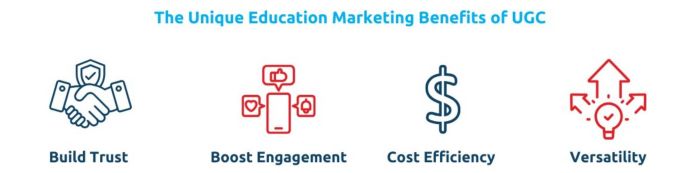
    Image 2Image 2

    Source: HEM

    What Is Authentic Storytelling in an Educational Marketing Context?

    Authentic storytelling goes beyond traditional marketing materials to craft compelling narratives highlighting real student and faculty experiences. Instead of relying solely on promotional messages, this approach uses emotion, relatability, and personal journeys to engage prospective students.

    What is the power of storytelling in education? Authentic storytelling is powerful because it transforms abstract institutional values into relatable, real-world experiences. It allows prospective students to see themselves in your stories, making their decision-making process more personal and impactful. This approach humanizes your institution and strengthens your brand identity.

    One of the best ways to incorporate authentic storytelling into your marketing strategy is by featuring in-depth student and alumni stories. A compelling blog could follow the experiences of an international student adjusting to life in a new country while studying at your institution. A video series could showcase students discussing their educational journey, including their challenges and triumphs. By doing this, you create content that is informative and emotionally engaging.

    The Advantages of Authentic Storytelling in Education Marketing

    Unlike traditional promotional content, authentic storytelling builds emotional connections that influence student decision-making. By sharing real experiences from your students and faculty, you provide prospects insight into your institution’s culture, values, and impact.

    One of the greatest advantages of authentic storytelling is its ability to make your institution’s messaging more relatable. Instead of generic promotional materials, prospective students see real-life success stories, challenges, and personal growth journeys, helping them visualize their own future at your school.

    Another unique benefit is the ability to enhance brand trust and credibility. People connect with stories, not advertisements. By showcasing genuine experiences through student interviews, alumni journeys, and behind-the-scenes campus life, your school appears more transparent and welcoming. This approach fosters a deeper connection with your audience, making them more likely to engage with your institution.

    Authentic storytelling also strengthens retention and alumni relations. When students feel emotionally connected to your institution through compelling narratives, they are more likely to remain engaged throughout their education and beyond. Alumni who feel valued through storytelling initiatives often become ambassadors for your school, further enhancing your brand reach.

    Image 3Image 3

    How Your School Can Leverage User-Generated Content and Authentic Storytelling

    Building a marketing strategy around user-generated content and authentic storytelling requires a proactive approach. Instead of simply encouraging students to share their experiences, you need to create opportunities for engagement, provide platforms for their voices, and consistently highlight their stories. By doing so, you ensure that the content generated aligns with your school’s brand and messaging while maintaining the authenticity that makes it so powerful.

    Encourage Student-Generated Social Media Content

    One of the best ways to integrate UGC into your marketing strategy is by motivating students to share their experiences on social media. Encourage them to document campus life, extracurricular activities, and classroom experiences.

    For example, your university might launch an Instagram challenge where students post their favorite campus spots with a branded hashtag. Similarly, a career college could create a TikTok trend showcasing student projects or daily routines in their training programs.

    Example: This video, posted by a UCLA student, is a free promotion for the school’s dining hall. She is making a relatable joke about the proverbial ‘freshman fifteen,’ an expression for the weight gain that tends to occur in the first year of college. The creator credits the delicious food at UCLA for her freshman fifteen, and this is not the only video of its kind on her page. Satisfied students eager to share their experiences are invaluable for generating compelling UGC. Encourage students to use specific hashtags for their UGC as this creator did (#ucla #dininghall, etc).

    @ronigrush

    If you didn’t gain freshman 15 I hate you #ucla #dininghall #food #foodtok #icecreamday #collegelife #freshmanyear #freshman15

    ♬ Dance You Outta My Head – Cat Janice

    Source: TikTok

    Feature Student and Alumni Testimonials

    Prospective students value hearing from those who have already walked the path they are considering. Featuring student and alumni testimonials on your website, in promotional videos, and on social media channels provides relatable insights into your programs.

    An example of effective testimonial use is a nursing college that records short video interviews with recent graduates discussing their experiences and career outcomes. These testimonials provide compelling, relatable stories that reinforce the value of your school’s programs.

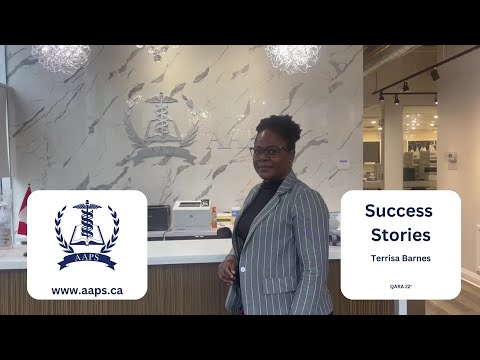
    Example: AAPS regularly posts alumni video testimonials highlighting each graduate’s unique background, career goals, and how the institution supported the attainment of their objectives. Here, Teresa Barnes describes how the Quality Assurance and Regulatory Affairs program at AAPS helped her to find success as a Medical Writer. Your alumni community is probably full of careerists who are proud of their achievements and are excited to talk about their journey. This is an excellent opportunity for effective brand storytelling.
    YouTube videoYouTube video

    Source: Academy of Applied Pharmaceutical Sciences | YouTube

    Develop Long-Form Content With Authentic Storytelling

    Creating blog posts or video documentaries featuring students’ journeys can be a powerful way to engage prospects. A compelling blog could follow a student during an internship and how the experience shaped their career aspirations. This approach showcases your school’s opportunities while telling a relatable story that resonates with other students considering similar paths.

    Additionally, long-form content allows for in-depth storytelling that goes beyond surface-level promotions. A well-written blog post could feature a student reflecting on their academic journey, describing their challenges, the mentors who guided them, and the personal growth they experienced. Similarly, a video series might document a student’s transition from their first day on campus to their graduation, providing prospective students with a complete picture of what they can expect.

    Example: Blogs remain a relevant way to tell your school’s story and give your student body a voice. Here, Algonquin Careers Academy tells the story of one of their dental assistant graduates. By publishing a blog post that features a student interview, the message is personable, inspirational, and authentic. Try to infuse personality into your long-form content whether you choose to blog, post videos, create a newsletter, or all three.
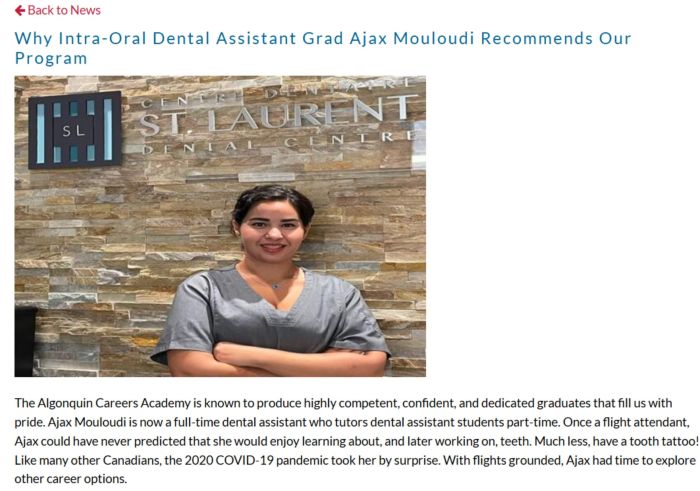
    Image 4Image 4

    Source: Algonquin Careers Academy

    Highlight Behind-The-Scenes Content

    Showcasing the day-to-day experiences of students, faculty, and staff makes your institution feel more welcoming and accessible. A behind-the-scenes video series might follow a day in the life of a student in a culinary arts program, walk viewers through a school event, and showcase hands-on learning experiences and interactions with industry professionals.

    An effective example comes from business schools that share faculty-led discussions, giving students an inside look at the classroom environment before they apply. This storytelling adds authenticity and provides a window into your school’s culture and academic strengths.

    Example: Here, the American Musical and Dramatic Academy showcases its open house event, building anticipation for prospects and providing useful information about what they can expect from the event. Behind-the-scenes videos are easy to film, effective for humanizing your brand, and excellent ways to inform your audience in an engaging, easy-to-digest format.

    @amdaofficial

    Get a behind the scenes look at AMDA student life during our open house events! #amdacollege #collegelife #collegeopenhouse #collegetok #nyclife

    ♬ Canyons – Official Sound Studio

    Source: AMDA College | TikTok

    Run UGC Contests and Campaigns

    To increase engagement, your school can launch user-generated content campaigns that incentivize participation. This could include video challenges, photo competitions, or student-run social media takeovers. For instance, a digital marketing diploma program might host a competition where students submit real-world marketing campaign ideas, with the winner featured on your school’s website and social media pages. This not only showcases student talent but also strengthens your brand’s credibility.

    Example: Seguin High School showcases the artistic talent of one of their students who had won an art contest. Not only is this an excellent way to instill well-deserved pride and support in your students, but it is also a great way to humanize your school brand and display your strong community.

    Image 5Image 5

    Source: Seguin High School | Instagram

    Get Support as You Elevate Your Education Marketing Strategy

    In today’s highly competitive and interconnected world, attracting qualified student prospects online is essential to a successful recruitment strategy. Schools and universities must implement innovative and authentic marketing techniques, leveraging user-generated content and authentic storytelling to connect with their audiences on a deeper level. Working with a marketing agency specializing in education marketing can be a game changer for your results. 

    For over 15 years, Higher Education Marketing has crafted successful digital marketing strategies for schools worldwide. Our deep understanding of education marketing allows us to design multichannel campaigns that drive engagement and enrollment. We provide  tailored services, including:

    • Content Marketing
    • Search Engine Optimization (SEO)
    • Social Media Marketing
    • Paid Advertising Campaigns

    Partner with us to harness the power of storytelling in education and leverage the benefits of user-generated content to drive real engagement. Contact us today to explore how our expert digital marketing solutions can transform your student recruitment efforts and enhance your institution’s online presence.

    Struggling with enrollment?

    Our expert digital marketing services can help you attract and enroll more students!

    Frequently Asked Questions

    Question: Why is user-generated content important in marketing? 

    Answer: UGC is created by your students and alumni; it is perceived as more trustworthy than traditional promotional materials. Prospective students are more likely to trust and engage with content created by their peers rather than content crafted solely by an institution.

    Question: What is the power of storytelling in education? 

    Answer: Authentic storytelling is powerful because it transforms abstract institutional values into relatable, real-world experiences. It allows prospective students to see themselves in your stories, making their decision-making process more personal and impactful. This approach humanizes your institution and strengthens your brand identity.



    Source link

  • OfS free-speech absolutism allows abuse, harassment, and bullying

    OfS free-speech absolutism allows abuse, harassment, and bullying

    • By Professor Sasha Roseneil FAcSS PFHEA, Vice-Chancellor and President of the University of Sussex.

    On 26 March 2025, after a three-and-a-half-year long, deeply flawed, investigation into freedom of speech and academic freedom at the University of Sussex, the Office for Students issued the unprecedently high fine of £585,000, and decreed a form of free-speech absolutism as the new golden rule for universities.  Henceforth, it would appear that universities can only control a very narrowly defined version of unlawful speech that ignores our broader legal and ethical obligations to students and staff. It is an unworkable and highly detrimental decision for the whole higher education sector.

    The investigation was initiated in October 2021 in the context of protests against gender-critical philosopher Professor Kathleen Stock, around the time that she decided to resign from her position at Sussex. Much of the media and public reaction to the OfS’s decision has seen it as vindication of Kathleen Stock, and indeed the OfS itself gives as a reason for publishing the decision, that it would be ‘likely to make Professor Stock feel vindicated and may also vindicate her in public perception’. Indeed, the only person interviewed in the investigation was Kathleen Stock. This is despite the OfS acknowledging that it did not have the power to act on behalf of any individual, and that it has not investigated the circumstances relating to Kathleen Stock.

    Many commentators also regard the outcome as vindication of the gender-critical beliefs that Kathleen Stock professed during her time at Sussex and since. But again, the investigation was not a judgement in the toxic disputes about sex and gender, and the identities and rights associated with each. It is not the OfS’s role to make such judgements – in its own words it is ‘viewpoint neutral’ – just as it not the role of a university, or a Vice-Chancellor, to do so.

    Universities are arenas in which the most controversial ideas of the day are contested – and recent years have seen waves of protest and unrest on campuses across the world about a number of fiercely disputed issues. It is the job of university leaders to facilitate and contain that contestation so that it serves to advance the purpose of universities – the education and development of students and the advancement of knowledge and understanding. Continual efforts to promote and protect overlapping but not identical liberties – freedom of speech and academic freedom – are vital in this. So too are actions to ensure the absence of intimidation and bullying, and to create inclusive, supportive, and respectful learning and working environments, in which people of diverse backgrounds, beliefs and identities can succeed as individuals and come together in productive dialogue, however vehemently they might disagree. Indeed, the exercise of academic freedom and freedom of speech depends on this. Freedom of speech cannot mean the ability to shout the loudest or to abuse and frighten less powerful opponents into silence.

    The OfS’s has just made this work of universities infinitely harder, if not impossible. The single short offending document identified by the OfS, on which the weight of its findings rest, was designed to protect the welfare of trans and non-binary staff and students, a student group the OfS itself identifies as at particular risk in relation to access to and participation in higher education. When adopted at Sussex in 2018 – around the same time as at many other universities across the country – thinking about how best to support trans and non-binary people within universities was just beginning, and gender-critical beliefs had not yet been recognised as ‘protected philosophical beliefs’ under the 2010 Equality Act.   

    If the OfS is ‘viewpoint neutral’, its findings about a policy statement seeking to support trans and non-binary staff and students must be understood to apply to all staff and students – whatever their beliefs and identities. A thought experiment helps make the point: replace the trans and non-binary people with whose protection the offending document is concerned with members of other minoritised and marginalised groups – Jewish, Black, Muslim or Gypsy, Roma and Traveller people, disabled people, or lesbians and gay men, for instance.

    The implications of the OfS decision are wide ranging and highly corrosive of attempts to create diverse, inclusive, and equal working and learning environments, and threaten university autonomy. Under the OfS’s ruling, it would seem that universities cannot seek to prevent our curricula from relying on or reinforcing stereotypical assumptions about (for example) Jews or Black people, because to do otherwise could limit lawful speech. Universities cannot, from now on, remove antisemitic or racist propaganda from campus unless what it says is unlawful – again, extremely narrowly defined. And universities should not discipline anyone who engages in abuse, harassment or bullying unless that abuse, harassment or bullying meets the legal definition of harassment or hate speech – even if it breaches a range of other duties and obligations.

    In effect, the decision implies that universities cannot have policies that aim to reduce abuse, bullying and harassment – whether motivated by transphobia, antisemitism, homophobia, Islamophobia, racism, or sexism – beyond simply reproducing existing restrictions in law (which restrictions the OfS appears not to understand – for example, it does not appreciate that abuse, bullying and harassment are restricted by the Public Order Act 1986).

    It is, I fear, a charter that risks giving free rein to antisemitic, anti-Muslim, homophobic, racist, sexist, and anti-trans speech and expression in universities, as long as it stays just on the right side of the law.

    Moreover, the decision could be significantly at odds both with the wider legal obligations of universities in relation to equalities, and with the OfS’s own regulatory expectations regarding equality of opportunity for students, the quality and standards of the academic experience, and the soon to be introduced requirement to take steps to protect students from harassment and sexual misconduct.

    The OfS’s regressive and dangerous decision threatens the cohesion and governability of each of England’s diverse and vibrant universities, and it must be set aside. Today Sussex is publishing our pre-action protocol letter, which sets out the grounds of our legal challenge. I invite the OfS to respond positively, and to become a regulator that seeks collaboration and open dialogue with universities rather than punishment.

    Source link

  • 10 things universities can learn from mergers in the FE sector

    10 things universities can learn from mergers in the FE sector

    • James Clark is a Managing Director at Interpath Advisory, the UK’s largest independent Restructuring and professional advisory firm. James is co-lead of Interpath’s Education Team and has advised on over 20 mergers and potential mergers in the FE and HE sectors. In this blog, James explains 10 things universities can learn from mergers in the FE sector.

    Few people connected with the sector would contest that higher education institutions are coming under increasing pressures: a reduction in overseas students due to visa changes, inflationary pressures caused by macroeconomic factors and government policy, increased competition via alternative routes for 18+ students and plain and simple population patterns.

    Many of these headwinds were experienced by further education (FE) colleges not that long ago, and many would agree these have not vanished completely. The Area Review process, led by the FE Commissioner, sought to remove inefficiency across sixth forms and colleges – as this author would put it (admittedly in crudely simplistic terms) – by taking colleges that are half full, removing excess capacity and leaving fewer college groups which are full. Is it time for higher education (HE) to follow suit? Is it inevitable that HE will do so, though perhaps not on the scale seen in the Area Review process? Should we be seeing more mergers, more economies of scale, and more collaboration to navigate the gales?

    I’m not suggesting FE and HE are directly comparable. But they are both in the business of education, both have people at the heart of their institutions (on a major scale), both manage big cost bases and both suffer from similar issues around competition and government policy. So are there things that higher education institutions can learn from a major upheaval started in FE in 2015?

    10 things we can learn from FE mergers

    1. Are the cultures of the merging institutions aligned? One of the major obstacles to mergers (which either create an upfront barrier or mean that post-merger difficulties arise) is that the institutions have very different values and cultures. Existing relationships may help parties understand whether they are a good fit for each other. Management teams contemplating mergers would help themselves by reaching out and starting a dialogue or by increasing the frequency of their catch-ups.
    2. Understand the regulatory landscape. Navigating the regulatory landscape and remaining compliant with educational policy is complex and will be breaking new ground for many management teams. Knowledge of precedents and other case studies will be helpful. Advisor relationships are helpful here. A number of advisors, both in the financial space and legal space, emerged as market leaders during the Area Review process.
    3. Understand your stakeholders and take them on a journey. Banks, governing boards, the Department for Education, the Office for Students, pension scheme trustees. Do not underestimate the different angles each will be coming from. Each will want to know ‘what’s in it for me?’ and care will be needed to ensure each stakeholder feels supported by the merger. Poor communication and a lack of engagement could lead to opposition and unwanted obstacles.
    4. Agree a governance structure at an early stage. Effective and committed leadership is essential for a smooth transition. Conflicts in governance will create unnecessary barriers from the off. Successful mergers I have worked on have had Chairs who have worked together from the off – being like-minded, especially in the desire for success, to leave a legacy and preserve for the next generation has been key,
    5. Grip & Control. Create a steering committee. Set milestones and deadlines and be held to account. Clearly identify what’s on the critical path. If planned well, mergers typically happen on 1 August. Delays to the process could see management teams having to manage critical parts of the merger in term time. Many of the mergers I have worked on have had turnaround directors managing the process.
    6. Don’t assume the plan ends on day 1 of the merger. A 100-day post-integration plan will also be required, with dedicated resource to deliver operational control, as well as the expected benefits of the merger. Failure to plan for this could result in significant operational disruption, for example, if administrative, curriculum support, and IT systems need to be merged. The Area Review process made the 100-day plan part of its requirement for merger support.
    7. Clearly understand the rationale for the merger. Educational improvement? Cost savings? Revenue protection? This may then determine your chosen merger partner.
    8. Crunch the numbers and make sure it stacks up financially. Exploring and delivering a merger will not be cheap, with significant input from legal and financial advisors required, both before, during, and post-integration. Ensuring tangible benefits can be secured from a merger is crucial. Again, those successful mergers involved specialist financial personnel, often interims with expertise in education, to examine the potential benefits prior to the merger.
    9. First mover advantage. Don’t leave it too late to determine that a merger is right, or even essential to your survival. Be front-footed – the more time given over to the proposed merger, the smoother the process will be, and the more optimal the decisions made.
    10. A merger might not be right, but other structures may be available.  Whilst a number of FE institutions decided to abandon merger plans, this gave the institutions time to properly examine their long-term strategy, their cost base, and other potential “alliance-type” shared services models.

    Some would argue that the FE mergers have provided an opportunity for a reset, benefitting from a huge Government funding pot. Many (and not without great leadership) have successfully turned around the fortunes of financially and educationally stumbling colleges.

    One beacon that shines for me, which I had the pleasure of supporting, is the merger of Telford College of Arts and Technology and New College Telford. Within a short period of time, its financial health was upgraded to Outstanding, and its Ofsted upgraded to Good. A remarkable turnaround and testament to a focused and forward-thinking management team and governing body that, when faced with the task, grabbed it with both hands and drove it hard.

    Source link

  • Lunchtime Reading: Will having more male teachers as role models solve ‘the boy question’?

    Lunchtime Reading: Will having more male teachers as role models solve ‘the boy question’?

    • Mark Roberts is an English teacher and Director of Research at Carrickfergus Grammar School. He is the author of several books, including Boys Don’t Try? and The Boy Question, both published by Routledge.

    Spurred on by the huge response to the TV series ‘Adolescence’, Bridget Phillipson MP, Secretary of State for Education, has this week called for more male teachers to act as role models for disaffected boys.

    As a teacher who has been writing about issues with boys and education for many years, I’m delighted to see an increased focus on the debate about how best to support boys in school.

    Yet, while the idea of male teachers as role models is an alluring one, the plan is deeply flawed. Even if we can persuade lots of men to take up the call to arms to rescue our boys, there’s little evidence to suggest that the plan will work.

    The case for more male teachers

    Just as we have pushed more girls into STEM professions, we should be pushing more boys into HEAL (Health, Education, Admin and Literacy) professions. As I wrote in my book The Boy Question (2021):

    Seeing more men in teaching roles, and especially in primary settings, would help change attitudes towards both education and society at large. It would probably encourage more boys to consider teaching as a possible future career  option for themselves.

    But, in the rush to save boys from Tate and his ilk, we need to ask a key question: Will more men in teaching actually make a difference? In the age of the manosphere, would more male teachers help shift boys’ attitudes? And, from the perspective of participation in higher education, would these new recruits help improve their academic outcomes?

    The problem with male teachers as role models

    Unfortunately, there are numerous problems with the role model plan:

    1. Men are reluctant to go into teaching

      Given the relatively low pay, workload expectations and lack of status, attracting men into teaching is a challenging prospect. Efforts to recruit 6500 new teachers already look dubious, with only 200 more trainee teachers signing up in 2024/25. Without a plan to tackle negative perceptions of teaching as a career prospect, the idea is doomed from the start.

      2. Nobody can agree on what a male teacher role model looks like

        Cushman (2008) surveyed 250 New Zealand primary school principals to discover what qualities they were seeking in male teachers[i]. The principals had a long list of often contradictory desirable qualities, including outstanding sporting prowess. Research by Brownhill (2014) listed 65 different role model requirements[ii]. Meeting this idealised checklist is a big ask for any individual. Pupils, parents and politicians would also have their own role model requirements. Is any one man capable of being all those things, all the time, to all stakeholders? And even if these Supermen are capable of all this, are they also equally confident talking about misogyny as talking about algebra or Shakespeare?

        3. Children very rarely view teachers as role models

        Even if teachers were willing to try and adopt the position of idealised male teacher, there’s little evidence to suggest that boys would see them as father figures. Bricheno & Thornton (2007) found that between the age of 10-16, boys named relatives as their ‘most important role models’. Compared to 32% of young people who said they looked up to a parent, a mere 2.4% of students identified a teacher as a role model. [iii]

        4. There’s little evidence to suggest boys learn better with male teachers

        One key reason given for more male role model teachers is the suggestion that disaffected boys will respond better to teachers of their own gender. But the evidence doesn’t stack up. A 2010 study by Lam et al. of nearly 5,000 Grade 4 students in Hong Kong found no evidence that boys improved their reading when taught by men[iv]. In 2008, Carrington et al. found no teacher gender effect on attainment data and pupil attitudes in British primary schools[v]. In the same year, Marsh et al. found ‘little or no evidence’ to support the idea that boys will be more motivated by male than female teachers in secondary maths, science and English classes’[vi]. I could go on. While I welcome any efforts to recruit more male teachers, we shouldn’t expect this to lead to better results for boys.

        5. It judges female teachers unfairly

        Many of the calls for more male teachers come from voices bemoaning the ‘feminisation’ of schools. Such voices believe that female teachers are incapable of providing guidance for boys and helping them become productive members of society. This deficit model is frankly insulting to the many thousands of female teachers doing a wonderful job of educating boys in often challenging circumstances.

        Rather than getting distracted by the male role model debate, we should focus on fully supporting teachers to help boys succeed academically and get the grades required to, should they wish, enter higher education. Because that, above all, will make the biggest difference to boys’ lives.


        [i] Cushman, P. (2008) ‘So what exactly do you want? What principals mean when they say ‘male role model’’, Gender and Education, 20:2, pp. 123–136.

        [ii] Brownhill, S. (2014) ‘‘Build me a male role model!’ A critical exploration of the perceived qualities/characteristics of men in the early years (0–8) in England’, Gender and Education, 26:3, pp. 246–261.

        [iii] Bricheno, P., & Thornton, M. (2007) ‘Role model, hero or champion? Children’s views concerning role models’, Educational Research, 49:4, pp. 383–396.

        [iv] Lam, Y.H., Tse, S.K., Lam, J.W.I., & Loh, K.Y.E. (2010) ‘Does the gender of the teacher matter in the teaching of reading literacy? Teacher gender and pupil attainment in reading literacy in Hong Kong’, Teaching and Teacher Education, 26, pp. 754–759.

        [v] Carrington, B., Tymms, P., & Merrell, C. (2008) ‘Role models, school improvement and the ‘gender gap’ – Do men bring out the best in boys and women the best in girls?’ British Educational Research Journal, 34, pp. 315–327.

        [vi] Marsh, H., Martin, A., & Cheng, J. (2008) ‘A multilevel perspective on gender in classroom motivation and climate: potential benefits of male teachers for boys?’ Journal of Educational Psychology, 100, pp. 78–95.

    Source link

  • One Step Beyond: A View from a School

    One Step Beyond: A View from a School

    • Sarra Jenkins is Director of Future Pathways at Loughborough Grammar School.

    HEPI’s recent report, One Step Beyond, offers an excellent analysis of an important topic – how ready are students for higher education? The findings are in many ways heartening, with students surveyed at university saying they wanted more PSHE (personal, social, health and economic) education around, for example, finance and life skills, more careers education and more academic skills. I say it is heartening as, while these areas are all incredibly important, they are not always areas students recognise the importance of while at school.

    Of course, each student’s experience is unique. Their needs, background, and context will shape their readiness for higher education. But what are the challenges for schools within these findings?

    Careers Education

    One Step Beyond identifies that 44% of students would have liked more support with careers pathways, and recommends a one-to-one interview at 16 with a careers expert. This recommendation is also included in the Gatsby Benchmarks, so what’s the challenge? There are two resulting issues here. Firstly, there is a dearth of careers advisers in the UK. The Labour Government pledged to recruit 1,000 new careers advisers, which would be welcomed. However, training takes time and resources, and careers advisers are poorly paid within the education sector for what is a Level 6/7 role. Therefore, schools may be forced to outsource the provision of such interviews, at a notable cost.

    The second issue is the question of whether one interview is enough. As teenagers research their possible options, differing pathways open and interests evolve. Often, when I ask students who had experienced a one-off, one-to-one interview about its usefulness, their responses were very mixed. I am fortunate in being able to meet students regularly and build up a relationship with them, which allows for deeper and more meaningful guidance. One interview is better than none, but having trusted adults who the students know can allow for more open and honest conversations.

    Life Skills

    The report also identified that students wanted more ‘life skills’. A Children’s Commissioner report into PSHE identified that a majority of 16-17-year-olds had received lessons in staying safe online, puberty, healthy eating, drugs and alcohol, emotional wellbeing, mental health, relationships and staying safe. Like the HEPI report, however, it also identified learning about finances as an area for improvement. To be clear, this is also included in the PSHE Association’s Programme of Study for Key Stage 1-5 PSHE.

    The challenge can be in delivery here. The HEPI report identifies a focus on the ‘knowledge-rich’ curriculum under Gove. This can lower the profile for lessons like PSHE, especially if schools are strapped for time. Similarly, the PSHE Association identify the importance of lessons being ‘planned and taught by trained, knowledgeable and engaged specialists’. However, teachers are trained firstly in their subject. Whilst they may be required to deliver PSHE, and hopefully supported in doing so, it may well not be an area of expertise.

    Additionally, the Govian reforms and the introduction of measures like the Progress 8, plus academic entry requirements to higher education, place a heavy emphasis on grades. This can become a focus for schools, teachers, parents and students alike. However, ‘life skills’ are not – and arguably should not be! – assessed in a similar manner. Perhaps more so than academic subjects, students are also likely to have a hugely varied background in ‘life skills’. So the need for considerable differentiation in a subject that can lack the profile it deserves can make engagement a challenge.

    Academic Skills

    The HEPI report references a high volume of assessments resulting in ‘teaching to the test’, perhaps at the expense of academic skills such as academic writing and independent inquiry. However, Leora Cruddas was right to point out in the webinar on the report that skills do not exist without knowledge domains. Indeed, even if one was doing little more than ‘teaching to the test’, to do so, a teacher would be engaging with academic skills.

    My own subject of Politics has three key assessment objectives that are assessed – knowledge and understanding, analysis and logical chains of reasoning, and evaluation and substantiated judgments. These skills are academic skills, and we use the vehicle of A Level Politics for students to engage within them. Issues can occur however when students silo this knowledge. Despite, for example, similar assessment objectives occurring in A Level English, my colleague and I routinely lament students’ ability to use their skills in an inter-disciplinary manner. This is a similar problem noted in the transition from university to work.

    If it is therefore necessary to have knowledge domains in order to be able to develop skill attributes, one way in which we can highlight this to students is by interrogating the assessment objectives. I often say to my own students, ‘I wouldn’t send you on to a rugby field without knowing the rules, why would I send you into an exam without knowing the rules?’. In this case, the rules are the assessment objectives, and I want my students not to be able to blindly carry them out, but to know what analysis or evaluation is and what it looks like in academic writing.

    This is more challenging for skills not assessed; oracy and independent study are not assessment objectives in many subjects and therefore embedding the teaching of these skills is harder. Hopefully, this is something that may be seen in the upcoming curriculum review.

    Conclusion

    The HEPI report raises many important issues; if students are to thrive in higher education, they need good advice along the way and a malleable set of skills to give them the confidence to succeed in their initial stages. Hopefully, some of these issues will be addressed in the upcoming curriculum review. Ideally however, they need to include methods of resourcing and engagement to run alongside reviewed content for the widest impact in schools.

    Source link

  • Building Bridges: Enhancing employability through practically-based higher education

    Building Bridges: Enhancing employability through practically-based higher education

    In the last few weeks we have heard the worrying news that the number of young people aged 16 to 24 not in education, employment or training (NEET) in the UK is close to one million. This is almost 300,000 higher than the same period in 2021 when the UK was contending with the scarred job market after Covid-19.

    The reasons for this trend are multi-faceted, including factors such as mental health issues and insecure and poor employment opportunities. However, in the face of a difficult and competitive job market, universities have their role to play in bridging this divide between higher education and the workplace.

    The need for innovative approaches to bridge this divide by enhancing graduate employability and addressing employer demands for work-ready graduates has never been more pressing. Recent research by the Edge Foundation, in collaboration with UCL’s Institute of Education, sheds light on the transformative potential of practically-based higher education models.

    The research took a case study approach using qualitative methods, looking at two post-92 higher education institutions in England, which included collecting empirical data using semi-structured interviews with a range of stakeholders from the two universities, including members of the senior leadership teams, teaching staff, other professionals and students. In this blog, I will go on to discuss some of the key findings from this research, including some of the challenges and opportunities for universities.

    Supporting employability through collaboration

    The creation of new staff roles has been pivotal in driving the employability agenda. These roles focus on developing opportunities such as placements, mentorships, and employer engagement, while traditional academic roles are evolving to integrate practical, work-focused elements. This holistic approach ensures that curricula are not only theoretical but also aligned with real-world applications.

    Industry partnerships play a crucial role in this effort. By involving industry advisors in curriculum design and creating spaces for students to engage directly with professionals through projects and networking, universities are building a meaningful ecosystem that bridges theory and practice. These collaborations enhance students’ employability and foster sustainable partnerships between education and industry.

    Creating effective learning spaces

    Diversifying learning spaces, both formal and informal, is important to ensure that students are not only taught subject-specific expertise but also equipped with the skills to effectively apply such knowledge in real-world contexts. From practical lab work and virtual simulations to client-facing projects and digital tools, these approaches provide students with hands-on, career-relevant skills. Broader assessment methods – like portfolio work, project-based evaluations, and even film development – align better with employer expectations, allowing students to showcase critical thinking, creativity and applied knowledge.

    Students highlighted how these methods built their confidence – often cited as a key attribute for career success. Exposure to professionals through guest lectures, career fairs and mentorship programmes was particularly impactful in empowering students to navigate the complexities of their future careers.

    In the case study universities, confidence building and the development of transferable skills were further integrated into the curriculum through interpreting and tailoring practice to the sector that is relevant to individual students. Therefore, all courses were developed and updated in line with students’ ‘pathway to professionalism’.

    Yet this is manifested differently for different disciplines to ensure it is relevant and closely links the theory to practice. For example, in the business school at one of the case study universities, students establish a LinkedIn profile and begin to form professional networks through it whilst at university.

    By contrast, the professional landscape exists very differently in arts and media, with professional networks being established in different ways. Students in arts are taught the skill of networking in person and conversational skills. Activities in this discipline have included practice dinner parties with the aim to collect others’ business cards. The activities in these two examples are vastly different, but both help build the social capital of the student, which has the most currency for their industry.

    The challenges and opportunities ahead

    While we witnessed in our case study universities a promising shift towards a practical and collaborative model, challenges remain. Employer engagement, for example, can be fragmented when universities rely on individual academic links without coordinated efforts. Listening to employers as equal partners and ensuring mutual benefit is critical for sustained collaboration.

    Universities must also balance top-down initiatives with bottom-up innovation, ensuring that work placements and experiences are meaningful and adaptable. Structured dialogue and collaboration between all stakeholders—students, educators and industry partners—are vital to refining these opportunities.

    A vision for the future

    As the job market evolves, the traditional academic model must adapt to meet the demands of employers and the aspirations of students. Practically-based HE models offer a pathway to achieving this balance, ensuring that graduates are not only knowledgeable but also work-ready. In today’s dynamic and rapidly changing workplace, employability is no longer confined to the domain of careers service teams. Instead, it has become a strategic priority embedded across all disciplines and interwoven into teaching and learning. The findings shed light on how universities are reimagining employability as a broader part of their agenda, through fostering collaborations and creating innovative pathways between academia and the workplace.

    Furthermore, this research explores how universities can integrate theory and practice to better prepare graduates for the workforce. By fostering collaboration between academia and industry, these models not only enhance employability but also empower students with the confidence and skills needed to thrive in a dynamic job market. As students pursue diverse goals through their education, universities are tasked with striking a balance between career-focused preparation and academic enrichment. By embedding employability throughout the curriculum and fostering collaboration across industries, higher education institutions can empower students with the skills, confidence, and connections they need to succeed.

    Source link

  • Free speech and the University of Sussex 

    Free speech and the University of Sussex 

    • Naimat Zafary is a PhD researcher at the University of Sussex and a former Afghan Chevening Scholar.

    There are times, as a scholar from another country, that events in your adopted home catch you off guard. The fears of those around you are so far removed from your own experience that you are baffled by them. Sometimes, this simply demands that you learn more about the society and culture around you or chalk up different perspectives to the rich experience of a global education. 

    At other times, though, there is a desire to share with your colleagues your own thoughts about an issue, especially when you think others are at risk of undervaluing the freedoms and advantages they have. This week was one of those times. 

    First a bit about me. I came to this country at a moment of deep crisis. An Afghan accepted for a prestigious Chevening Scholarship, I had been excited by the opportunity to study at the top university in the world for international development and to gain knowledge that I could put to use in my home country. 

    But even as I packed my cases, the unimaginable happened. The US withdrew its forces and the Taliban entered Kabul. As fearful Cheveners worried whether they would or would not be granted a place on the last flights from the chaotic airport, I gathered my family. I was permitted a small rucksack as I turned my back on my family home and car, my library where local children had studied, and gathered my loved ones for the two-day journey through hell to the airport perimeter fence. When a British soldier finally recognised us and saw my name on the list, he lifted us over the wall and to safety. I kissed his shoulder and wept. 

    From there, we sat on the floor of a military cargo ship and flew to an asylum hotel in London, safe at last from the Taliban, who would see us as a threat for our academic links to the UK and deep commitment to education for all, including women and girls. And so, it was I travelled by train for my first class at my academic home and inspiration, University of Sussex. 

    What I found in Sussex could not have contrasted more profoundly with what I left behind. Sussex has been ranked 1st in the world for Development Studies for seven consecutive years in the QS World University Rankings. And here was a global community of men and women dedicated to the highest standards of education and using academic rigour and debate to acquire knowledge which would benefit not only the immediate community of Brighton but the wider world. 

    My wife Saima and my daughters were also inspired by the women leaders who surrounded me. While former female colleagues and family members in Afghanistan were being barred from education and being driven behind burqas and closed doors, their voices silent, I was at an institution led by a courageous and principled woman committed to supporting diverse perspectives from across the world. I expressed my views in the classroom, at conferences and seminars, and in print without fear of brutal consequences. Sussex has given a platform to voiceless Afghan girls, whereas, in Afghanistan, asking a question about girls’ education is banned; Sussex made sure to value our voices and let us speak with wider audiences.

    This was truly free speech. I was gifted the ability to challenge the accepted norms of government and aid agencies, and in turn, my own ideas were challenged daily by my fellow students, my supervisor, my community. I learned and grew to appreciate the diversity of thought and background which typified the world I had entered. 

    So how do I respond to the idea that a place that has been to me and many hundreds of Chevening scholars from across the globe has been such a haven for free enquiry and open expression has been fined for a breach of free speech? 

    I understand that the issues and debate that led to this circumstance predate the leadership of the institution I have entered. I appreciate that there are deeply held views and profound concerns at play and that the ability to speak without fear of harassment or intimidation is core to educational exchange. 

    But I also know that the commonly held stereotype of my institution in some parts of the media is very wide of the mark. Those who have, like me, known the cost of true tyranny understand that places like Sussex are the very antithesis of that and an antidote to it. And so, I offer my voice and support to the university and community that not only welcomed me but encouraged me to challenge and be challenged in the pursuit of truth and global justice. It is a proud tradition and we undervalue it at our cost. 

    Source link

  • Adolescence and Boys will be Boys – time for concrete action

    Adolescence and Boys will be Boys – time for concrete action

    Having been involved in the world of men and boys’ issues (chairing charities, running campaigns, trying to get policy change) for a long time, the last few weeks have been potentially game-changing. We saw the Centre for Social Justice report Lost Boys, Netflix’s Adolescence and the Boys will be boys policy report from Nick Hillman and me for this Institute.

    I felt that the Netflix programme raised serious issues facing some, not all, of our teenage boys, albeit it felt a little tick boxy in places (Tate – tick, Incels – tick, dad not around all the time – tick). I felt a little uneasy about how the dad was portrayed (leaving home at 6am and coming home at 8pm as if it was his fault and it was all his choice). Being the eldest son of a van driver, I am somewhat sensitive to negative portrayals of working-class dads doing the best they can to keep the lights on for their families.

    The report Nick and I wrote highlighted the continuing gender gap between male and female teenagers going into higher education. We estimate it is half a million over a decade with no sign of any change on the horizon, given the main predictor is an attainment gap in school. Boys remain behind girls at every level. Therefore, they are not getting the grades and as a consequence, are not taking enough of the exams to qualify.

    The main commonalities between both are that these issues have been hidden in plain sight. The issues raised by Adolescence about disengaged boys, negative influencers and their impact have been known for a long time. The same is true of the gender attainment gap. It shouldn’t, like last years’ Post Office Scandal drama, take TV to bring these to the fore.

    The main difference between our report and the ensuing debate about Adolescence is what comes next.

    We offered a range of policy solutions from schools taking up boy-positive principles to more male teachers and role models. Plus, there should be an increased focus on gender disparities in Access and Participation Plans, a Minister for Men and Boys and re-opening the Select Committee inquiry on boys’ attainment. Many more as well.

    What has been missing with regard to Adolescence at a national political and education level is the lack of commitment for concrete action. More male teachers and role models, came the welcome call from Sir Gareth Southgate. But there was no commitment from anyone to act. The Prime Minister said he was concerned and would look at it, but he made no pledge on action or what that would look like. There was also no huge push on tackling the problems boys have, only talking about the problems boys cause. But of course, tackling the problems boys have reduces the problems some boys cause – to themselves and others, including women and girls.

    My fear is that the media and political agenda will move on as it always does and nothing will change. The higher education attendance gap will remain, 150 plus teenage boys will die by suicide every year, well over 6,000 boys will continue to be excluded from school and 250,000 young men will still be unemployed.

    The higher education sector needs more boys to do well, so more go to higher education, and they do better when they are there. Our economy and society depend on it, too. The lesson from both Adolescence and Boys will be boys is that a continual lack of concrete action will no longer do.

    Source link

  • Teachers need support to understand what’s needed in the UCAS personal statement

    Teachers need support to understand what’s needed in the UCAS personal statement

    Our recent paper found substantial misalignment between state-school teachers and university admissions staff on what makes a high-quality UCAS personal statement.

    In our study, 409 state school teachers were presented with ten paragraphs from UCAS personal statements and asked to select between two pieces of feedback. One ‘correct’ feedback was provided by an admissions tutor, and the one ‘incorrect’ feedback was supplied by another teacher. These paragraphs and feedback were all real-world examples derived from Steven Jones’ (2016) study, used as part of Causeway Education’s pre-training programme for state school teachers.

    We found:

    • There was significant misalignment between teachers and admissions staff. In only 56.5% of cases did teachers select the ‘correct’ feedback response.
    • There are a number of pervasive myths regarding the UCAS personal statement. Teachers had a dual tendency to:
    1. Advise for the incorporation of personal content that aimed to demonstrate a holistic view of the student rather than course-related competencies; and
    2. Suggest reducing content that demonstrated course-related knowledge and skills.

    To give one example, teachers were presented with the paragraph below and asked to choose between two pieces of feedback: (1) Strong reasons backed up by detailed examples; and (2) Too much detail; doesn’t give a sense of the student as an individual. The first of these is from an admissions tutor and the second from a teacher in Jones’ (2016) work.

    My main reason for wanting to study Japanese is because I enjoy studying complex grammar rules to see how languages come together. This is why I chose to undertake Latin at A-Level as I enjoy translating pieces of complex texts. Analysing writers techniques in presenting ideas and characters is also interesting, in particular how Tacitus in Annals I, presents Tiberius as an unsuitable emperor by often comparing him to his father Augustus, an emperor who was deemed ‘an upholder of moral justice’.

    In 58.4% of cases teachers selected the first ‘correct’ answer, and 41.6% selected the ‘incorrect’ second answer.

    These findings should not be interpreted as a criticism of teachers. In the context of studies finding a considerable lack of transparency on how universities use the UCAS personal statement (Fryer et al., 2024), the burden of responsibility for misalignment falls primarily on universities. Without clear and transparent guidance, this misalignment between teachers and admissions staff is inevitable.

    There is an important opportunity to address this situation, as many universities will currently be in the process of updating their public-facing guidance in response to the upcoming UCAS personal statement reform. The shift to three short questions for the 2025-26 application cycle and the corresponding need to update guidance present universities with an opportunity to address and counter the misalignments noted in our paper.

    To support this goal, our paper contains a table of key implications (Table 5, pp.14-15), which can be downloaded directly from this link.

    We hope this is of practical use to admissions staff in updating and developing guidance on the UCAS personal statement. We contend that this new guidance, alongside transparent explanations of how the personal statement is used in selection decisions, is crucial to enable UCAS’s reform to widen participation and address inequalities.

    This blog is based on a paper ‘Investigating the alignment of teachers and admissions professionals on UCAS personal statements’ by Tom Fryer, Anna Burchfiel, Matt Griffin, Sam Holmes and Steven Jones. Due to its time-sensitive nature, the paper has been published as a preprint, and therefore has not yet been subject to peer-review.    

    The table summarising the implications for public-facing guidance is available for download here.  

    Source link

  • So now will the government take the chainsaw to HE regulation?

    So now will the government take the chainsaw to HE regulation?

    The Prime Minister recently declared that Britain has ‘too much regulation and too many regulators’ before the shock announcement to abolish the world’s biggest quango, NHS England. Since December, the Government has been fighting a war against red tape, which it believes is hindering economic growth. University Alliance, and I suspect most of the higher education sector, has some sympathy with the PM on this – at least when it comes to higher education regulation. I cannot remember a meeting in the past several years when the burden of regulation was not brought up as a key source of the sector’s woes.

    We need to be clear here that regulating higher education is important. The recent Sunday Times coverage alleging serious fraud in the higher education franchised provision system is testament to that, and it is right that the government and the regulator continue to act robustly. The question, then, is less whether higher education needs regulating at all, but rather whether the right regulators are regulating the right activity in the right way. It should be perfectly possible to have a tough regulator that prevents fraud and acts in the student interest while also reducing duplication in the system and focusing in on the areas of highest risk.

    The sheer volume of external regulatory demand placed upon our sector goes well beyond the well-documented teething problems with our fledgling regulator, the Office for Students (OfS). To outside observer Alex Usher of Canada’s Higher Education Strategy Associates, it appears extreme:

    ‘Canada has no REF, no TEF, no KEF. We have nothing resembling the Office for Students. External quality assurance, where it exists, is so light touch as to be basically invisible. This does not stop us from having four or five universities in the Global top 100, eight in the top 200, and twenty or so in the top 500.’

    The volume of regulatory requirements is even higher for vocationally oriented and professionally accredited provision, which is the lifeblood of Alliance universities. In addition to the OfS, courses which provide access to the so-called ‘regulated professions’  are also overseen by a wide range of Professional, Statutory and Regulatory Bodies (PSRBs), each with their own requirements. PSRBs have wide authority over course content, assessment, and quality assurance, with formal reaccreditation required every three to six years on average.

    In some cases, particularly in the sphere of healthcare education, multiple PSRBs can have some degree of authority over a single course. For example, an undergraduate degree course in Occupational Therapy must meet the requirements of the OfS, the Health and Care Professions Council (HCPC) and the Royal College of Occupational Therapists (RCOT). Often, these different processes and requirements overlap and duplicate one another.

    If this seems excessive, it is nothing compared to the requirements imposed upon degree apprenticeships. Not only are they regulated by the OfS and likely PSRBs given their vocational nature, but they are also subject to the fiendishly complex funding assurance review procedure of the Education and Skills Funding Agency (ESFA)  as well as in-person Ofsted inspections at least every 5 to 6 years that can take up to a week. A recent UA report on healthcare apprenticeships found that this means they are more expensive to deliver than traditional degrees.

    The problem of regulatory burden in higher education has been continually flagged by sector bodies and by the House of Lords Industry and Regulators Committee, which called for a Higher Education Data Reduction Taskforce. Despite this, the issue has been mostly ignored by policymakers, bar a few small initiatives. It does not feature in any of the Government’s higher education reform priorities, although the Education Secretary is asking universities to become more efficient and the OfS expects them to take ‘rapid and decisive action’ to avoid going bust.

    With 72% of higher education providers facing potential deficit by 2025/26,  it is a mystery why the higher education sector – an acknowledged engine of economic growth – appears to have been left out in the cold while this unexpected reprise of the bonfire of the quangos is being lit. To our knowledge, neither the PM nor the Chancellor have called on higher education sector regulators to demand a cut in the cost and burden of regulation as they have done for others.

    Universities are rightfully subject to robust regulation, but the current regime is disproportionate, diverting dwindling resources away from teaching, student services and research. In the absence of more funding, cutting the cost and burden of regulation would go a long way. The establishment of Skills England, with its convening power and wide-angle, long-focus lens, should be used meaningfully to cut bureaucracy for degree apprenticeships while maintaining quality. Responsibility for monitoring the quality of degree apprenticeships should be given back to the OfS rather than Ofsted, and the ESFA audit process should be simplified. The OfS should also make a public commitment to cut the cost and burden of its regulation and work more closely with other sector regulators and PSRBs to avoid overlap and duplication.

    At a time when the Chancellor has urged ‘every regulator, no matter what sector’ to enact a ‘cultural shift’ and tear down the regulatory barriers that are holding back growth, cutting the cost of regulation in higher education should be a top priority.

    Source link