This blog has been kindly written for HEPI by Professor Sir Chris Husbands, who was Vice-Chancellor of Sheffield Hallam University between 2016 and 2023, and is now a Director of Higher Futures, working with university leaders to lead sustainable solutions to institutional challenges.
The scale of the funding challenge in higher education is widely known, though almost every week brings news of fresh challenges and responses. Real term funding for undergraduate teaching in 2025 is close to 1997 levels – levels which led the Blair government to introduce £1,000 top-up fees. Some commentators have argued that the scale of the challenge now is as great as the 1981 cuts in government funding for universities, which reduced spending on universities by 15%, and saw Salford University lose 44% of its income.
As contemporary funding challenges have intensified, growth options have become more difficult:
international student numbers have either stalled or declined;
undergraduate growth, although evident, has not tracked demographic trends;
the Office for Students has identified persistent optimism bias in the sector’s funding projections; and
competitive pressures are multiplying.
In many countries, flexible for-profit providers are growing fast, especially in professional and post-graduate education. Many of these are backed by funds with deep investment pockets; some UK for-profit providers are growing very quickly and the expansion of private provision in Germany, France and Canada has been remarkable. In summary, the funding challenge is not only real but increasingly profound.
Institutional responses to these challenges have been extensive. Almost all universities are now undertaking significant change programmes. There have been major strides in revising operating models, especially for professional and support services, and the impact has been significant. On the other hand, although portfolio reviews are widespread, there have been fewer developments in reshaping business models for teaching and research, though some do exist. Core delivery arrangements largely remain based on a two-semester or three-term model. Staff-student ratios which, as the King’s College Vice-Chancellor Shitij Kapur has repeatedly emphasised are low by international standards, have not been significantly shifted. Undergraduate study remains relatively inflexible. Module sharing and simplified credit transfer arrangements remain small scale. Estate use has not been significantly intensified. All this suggests that individual institutions are finding it difficult to look at the challenge strategically with an eye to the longer term shape, size, structure and nature of the university. There is a lot happening in individual change plans, but probably not enough. Without a secure and sustainable core academic model, institutions will be forced into repeated restructurings, which will not be comfortable for them or for the sector more generally.
This is the background to the important Jisc-KPMG report Collaboration for a sustainable future, which was the subject of a this week’s HEPI / Jisc webinar. For all the evidence of individual institutional change, the report argues that a collaborative approach is needed to secure sustainability and reshape the sector. Institutions need to find ways to work together, in back-office functions, in professional services and perhaps in academic delivery. The report acknowledges that there are technical difficulties to overcome, including the requirement to pay VAT on shared services and the need to navigate competition law, though these need to be genuinely tested in practice, but it also argues that the deeper barriers to effective collaboration are cultural.
The ingrained habit of individual autonomy, even and perhaps especially in non-competitive services (as Nick Hillman reinforced, no one chooses their undergraduate degree based on the university’s finance system) is a major barrier to significant change. Moreover, the report acknowledges that collaboration and shared service arrangements are unlikely to deliver cost savings in the short-term – and just now a good deal of thinking in the sector seems to be shaped by Keynes’ dictum that ‘in the long-run we are all dead’. Institutions are caught between the economic realities of the funding challenge and the cultural challenges of collaboration.
In Four Futures, my HEPI paper published in June last year,I argued that the financial and funding circumstances which produced the sector we have no longer exist. Government is unwilling or unable to pay for the sector most university leaders would like. I argued that there were some policy choices for higher education, and that the sector will almost certainly be different in the future. There are public policy questions here, but there are also questions and challenges for institutions. That means strategic choices for leaders, with universities being much clearer about the things they can do well, and do well sustainably, and building different relationships with other institutions. Leadership matters. As the Jisc / KPMG report observes:
Given the current trajectory, there is a window of opportunity for institutions to act now and help drive this forward before they are compelled into action by necessity.
Competition over the past decade has undoubtedly delivered benefits, and we should not understate those, especially in estate investment, student experience, teaching quality and research performance. But competition has also delivered homogeneity, duplication and overlap, and that needs to change. And for that, as the Jisc / KPMG report identifies, the leadership culture needs to change. Hyper-competitiveness has driven institutionally focused leadership behaviours and associated performance indicators, targets and rewards. But there have been different leadership assumptions in higher education in the past, and other sectors have grappled with the challenge of changing leadership culture. The most successful school improvement initiative of the past generation was London Challenge, in which the performance of schools across the capital was significantly raised. One of the most important shifts was a cultural one, persuading headteachers to think not about ‘my school’ but about ‘[all] our children’: success across the system was a leadership challenge for all.
The Jisc / KPMG Report is strong on the potential for collaboration to shape the future of the system, though it also makes painful reading on the challenges which have bedevilled this in the past. In the current context, government is unlikely to provide additional funding. The private sector could no doubt provide standardised sector-wide services, but the risks of a single supplier for key services are enormous. If government is not the solution, if the private sector is not the solution, if the status quo is not sustainable, the answer must be imaginative and engaged leadership which is not simply about ‘my institution’ but also about ‘our future’.
This week’s HEPI / Jisc webinar on ‘Competition or collaboration? Opportunities for the future of the higher education sector’ can be watched back here.
Artificial intelligence (AI) is revolutionizing student recruitment, offering tools to meet the growing demands of efficiency and personalization. As higher education institutions face shrinking pools of applicants and increased competition, the ability to deliver targeted, meaningful engagement is more critical than ever. AI not only enhances how a college or university understands prospective students but also how it interacts with them at every stage of the enrollment journey.
Leveraging AI for Data-Driven Decision Making
At the core of these advancements are customer relationship management (CRM) systems like TargetX and Outcomes, which centralize student data and lay the groundwork for AI-driven insights in higher education. By integrating AI with CRMs, institutions can unlock the potential of their data to deliver smarter, more effective recruitment strategies. However, the key lies in leveraging AI to augment human effort, not replace it.
Analyzing Data for Actionable Insights
Enrollment marketing thrives on data, and AI enables institutions to transform raw information into meaningful insights. With centralized student data in place, AI tools can:
Identify high-value prospects | Predictive modeling analyzes behaviors, such as frequent visits to financial aid resources or high engagement with email campaigns, to identify students with the greatest likelihood to enroll.
Discover growth markets | AI uncovers patterns in geographic and demographic data, highlighting regions or populations with untapped enrollment potential. For example, data analysis might reveal an increasing interest in online programs among working professionals.
Enhance segmentation | AI’s ability to analyze large datasets allows institutions to refine audience segmentation, enabling hyper-targeted campaigns tailored to specific student profiles.
Prescriptive Strategies for Recruitment
AI doesn’t just interpret data—it help enrollment management professionals generate actionable strategies to optimize recruitment efforts:
Financial aid optimization | By evaluating a student’s financial profile and likelihood to enroll, AI can recommend targeted aid packages that maximize yield.
Campaign personalization | AI suggests tailored outreach strategies, such as sending event invitations to students interested in specific programs or nudging inactive prospects with relevant content.
Continuous improvement | Enrollment marketing campaigns benefit from AI-driven feedback loops that analyze performance data and recommend iterative improvements for future campaigns.
Enhancing the Student Journey with AI
AI in the Exploration Phase
Most prospective students begin their college search online, making search engines a critical touchpoint. AI has significantly altered how search engines present results, directly impacting recruitment efforts:
AI-enhanced search results: Tools like Google Bard or ChatGPT increasingly offer conversational responses, summarizing key information without requiring users to click on external links. For instance, a search for “top nursing programs” might yield an AI-generated list, bypassing institutional websites.
Adapting to AI-driven search: To stay competitive, institutions should create conversational, Q&A-style content optimized for AI algorithms. Structured data and schema markup can enhance visibility, ensuring accurate representation in AI-driven search results.
Personalization Across the Enrollment Journey
Personalization is no longer a luxury—it’s an expectation. AI enables enrollment marketers to deliver individualized experiences to potential students:
Dynamic content | Emails, ads, and landing pages can dynamically adjust based on a student’s preferences or behaviors. For example, prospective engineering students might see content highlighting research opportunities, while transfer students encounter information about credit evaluations.
Real-time engagement | AI-driven tools monitor student interactions and trigger timely responses. If qualified students visit a program-specific webpage multiple times, marketers can automate follow-up emails with relevant resources or event invitations.
Guiding Students Through Key Milestones
AI supports students by providing actionable, personalized guidance throughout the recruitment process:
Next-best actions | AI-driven solutions can recommend tailored next steps, such as completing an application, scheduling a virtual campus tour, or exploring scholarship options. These nudges keep students engaged and on track.
Proactive assistance | AI can analyze behavior patterns to identify potential barriers, such as incomplete applications, and prompt intervention. For instance, a student frequently visiting pages about financial aid might trigger outreach offering a one-on-one consultation.
Navigating the Limitations of AI
The Irreplaceable Value of Human Connection
While AI excels at data analysis and automation, human interaction remains indispensable:
Fostering relationships | Admission counselors play a vital role in addressing nuanced questions, providing reassurance, and building trust during critical decision-making moments, all of which support student success.
In-person engagement | Face-to-face interactions, whether through campus tours, phone calls, or personalized advising sessions, create memorable experiences that AI cannot replicate.
Challenges in AI-Generated Content
AI-generated content, while efficient, has limitations that institutions must navigate carefully:
SEO considerations | Search engines prioritize high-quality, original content with human authorship. Over-reliance on AI-generated text can harm visibility and credibility.
Authenticity matters | Prospective students value content that reflects institutional expertise and culture, reinforcing trust and engagement.
Striking a Balance Between Technology and Humanity
AI should enhance, not replace, human efforts. While AI handles initial outreach and data-driven recommendations, human staff focus on relationship-building and addressing complex inquiries. This synergy ensures a recruitment strategy that is both efficient and personal.
Supporting the Institutional Mission
AI is reshaping student recruitment, offering powerful tools to analyze data, personalize engagement with the right student each time, and optimize strategies. However, its limitations underscore the importance of human connection and authentic communication. By leveraging an AI-driven recruitment strategy, institutions can enhance recruitment efforts and support student success while staying true to their mission of fostering meaningful connections with prospective students.
Jess Lanning began her career in higher education at a private university where she served as director of enrollment marketing on a record enrollment team. Over her decade-long career, she has focused on strategizing and implementing digital marketing campaigns as a senior vice president of strategy and senior partnership manager for higher education-specific agencies. In these roles, she served undergraduate, adult, and graduate audiences across the verticals of paid social, search engine marketing, search engine optimization, conversion rate optimization, digital PR, and user experience. Jess now serves as a Director of Digital Strategy at Liaison and we are very lucky to have her!
The Government have opened a consultation on the regulation of franchise provision, proposing that all franchisees (delivery partners) with more than 300 students should be regulated by the Office for Students (OfS). Smaller providers will not need to be regulated; larger providers that the OfS does not register in time will not be able to access student finance.
Regulating delivery partners is a positive step forward and the sector should welcome the Government’s proposals. Indeed, my colleagues and I called for just such a move in a recent HEPI report. But whether these proposals will work in practice depends on at least three different aspects of implementation: registration; quality; and duplication of regulation.
Registration
The Government propose delivery partners will need to have successfully registered with the OfS by September 2027 for their 2028/29 courses to be designated for student finance. In theory, given the Government’s final approach will be confirmed in the summer of 2025, delivery partners ought to have two years in which to meet the OfS’s conditions of registration.
However, the practice is likely to be very different. The OfS advise its timescale for registering a new provider is in the range of 41-to-50 weeks, implying delivery partners would need to apply no later than September 2026. But controversially the OfS have temporarily closed applications for registration and changes to the category of registration, including acquiring Degree-Awarding Powers and University Title. Applications are expected to reopen in August 2025, but the OfS is keeping this under review. When applications do reopen, the OfS will stagger recommencing existing cases. It is likely to face an influx of new applications too. Moreover, the sector’s financial pressures, which forced the temporary closure in the first place, will not have gone away. So, there is a very real concern that the OfS will be unable to admit franchisees to the Register quickly enough.
The consequences of not registering a larger delivery partner in time are potentially catastrophic. Even though existing students would retain access to student finance, some delivery providers would simply be unable to continue operating. This kind of failure would be catastrophic for students and for some franchisors (lead partners). If implemented in the wrong way, the Government’s proposals would simply introduce new and equally serious concerns for the financial sustainability of institutions.
There is an alternative, and one which would give stability to students and institutions. The OfS could open a new section of the Register for delivery partners – a probationary register – with more limited initial conditions of registration. This would enable the OfS to meet the Government’s intended timeframe and, critically, start engaging with delivery partners early, setting and agreeing action plans, for example. Delivery partners would then need to move from the probationary register to the full Register within a defined period – two years, for instance.
Quality
Many delivery partners operate in geographic and demographic cold spots. As the Minister for Skills, Baroness (Jacqui) Smith, puts it in the consultation:
good quality franchising has the potential to help more students access higher education, reaching areas under-served by other providers and tailoring delivery models to meet diverse needs.
At my University, delivery partners typically recruit an under-served population segment: 95% are mature entrants; two-thirds are from IMD quintiles 1 or 2. These partners therefore serve a striking demographic intersection. We know that continuation rates across the whole sector are affected by these factors: the OfS data dashboard indicates they suppress continuation rates by 8 percentage points and 5 percentage points respectively. Assuming these factors are independent, the probability of a mature entrant from quintiles 1 or 2 continuing is around 71%, much lower than the OfS threshold.
Registering with the OfS rightly involves an assessment of quality and standards, but the OfS’s current model of quality is too rigid for those operating within such niche demographics. To assess delivery partners, the OfS will need to reconsider carefully how it approaches quality.
Duplication of Registration
The Government’s proposals also include another element which is welcome, that which seeks to remove duplicate regulation. Where a delivery partner is already regulated, state-funded schools or further education colleges, for example, the Government proposes they would not also need to register with the OfS.
There are questions here too about the detail of implementation. Is it right, for example, that those Police and Crime Commissioners who are also delivery partners, need no further regulation in respect of quality and standards? But mostly what is worrying about this aspect of the proposals is the suggestion that delivery and lead partners should both be accountable for delivery. This seems straightforwardly an area of duplicated regulation and it is not clear how it would work in practice. Instead, the OfS should consult with delivery and lead partners to identify those aspects of delivery appropriate for dual accountability and those to which either the lead or the delivery partner will be held accountable.
Summary
In sum, the sector should welcome these proposals. The Government has clearly listened to the argument that franchise provision, when done well, brings many benefits, and has endorsed that position. There is still a need for a robust, sector code of practice; and the implementation of the Government’s ideas will be critical. But if it continues to listen during the consultation phase we should have every expectation that good quality franchise provision will continue to be supported and the concerns of stakeholders properly addressed.
Artificial intelligence is influencing every aspect of the higher education experience, from recruitment strategies to long-term student success. Community college, undergraduate, and graduate programs use advanced analytics to predict outcomes, optimize operations, enhance decision-making, and improve the student experience. However, the opportunities and challenges associated with using AI in higher education require careful strategic planning. By understanding AI’s evolving role in enrollment management and retention, higher education leaders can now support students and strengthen institutional outcomes more effectively than ever.
Insights include practical tips about AI technology, such as:
Applying AI Strategically
Institutions that apply AI tools thoughtfully have the ability to improve processes and results in areas including admissions, student success, and retention. From innovative yield strategies to predictive analytics tailored for community colleges and grad schools, AI is already driving better outcomes by providing higher education institutions with roadmaps for achieving institutional goals and improving student outcomes.
Addressing AI Challenges and Ethical Considerations
While the widespread adoption of AI tools in higher ed promises advancements in innovation, efficiency, and the management of student data, it also introduces complex challenges and ethical dilemmas that demand attention. From concerns about data privacy and algorithmic bias to questions surrounding accountability and the societal impact of automation, the rapid rise of AI tools in higher education institutions requires thoughtful, responsible oversight. As the whitepaper explains, that involves exploring the nuances of AI development and implementation, examining the ethical principles at stake, and creating frameworks that prioritize fairness, transparency, and the well-being of individual students and the institutions that serve them.
Achieving Data Readiness
Data readiness is essential for strategic enrollment management, allowing colleges and universities to harness AI to make informed decisions that drive success. For starters, creating a data-informed institution involves navigating the overwhelming influx of information to uncover actionable insights while building data literacy among every key stakeholder on campus. By achieving data readiness, educators can align their efforts with student learning needs, improve outcomes, and create a sustainable path forward.
It seems like everyone is talking about artificial intelligence and its potential to redefine not just student learning, but the future of higher education itself. But how well do you understand and speak the language of AI? Although much of the language that now informs conversations about innovation and success wasn’t familiar to most people just a few years ago, it’s now mission critical for you and your peers to begin learning how to embrace AI literacy.
Envisioning the Future of AI in Higher Education
As its capabilities and applications grow in the years ahead, AI will continue to provide new opportunities for colleges and universities to enhance decision making, streamline operations, emphasize academic integrity, and provide predictive insights that guide future strategies. The ongoing integration of AI throughout higher education will apply new scientific insights to holistic application evaluation, personalized student communications, and enrollment workflow automation, among other endeavors.
The future of AI in education promises even more sophisticated tools to come, which will further personalize and secure the admissions process. Looking ahead, one thing is clear: Today’s higher education leaders have an unprecedented opportunity to foster greater student success and institutional growth by embracing AI as a tool to help inform their decisions.
Degree Apprenticeships (DAs) were launched in 2015, as a novel work-based learning route to obtaining a degree. On their introduction, then Prime Minister David Cameron said they would ‘give people a great head start, combining a full degree with real practical skills gained from work and the financial security of a regular pay packet’. Since then, they have taken the higher education sector by storm. Their growth has been the key factor in the expansion of higher apprenticeships from 43,800 starts in 2015/16 to 273,700 in 2023/24, a rise from 4.8% to 35% of all apprenticeships. They have stimulated innovative models of delivery and new and productive relationships between employers and providers. Former Skills Minister Robert Halfon remarked that ‘Degree Apprenticeships’ were his ‘two favourite words in the English language’.
The government needs to consider a more systematic approach that serves to rationalise the way that employers are supported to offer a wide range of work-based opportunities. As Edge has identified in other programmes, such as T Levels or plans to provide universal work experience through the government’s Youth Guarantee, DAs are restricted by the number of employers willing to engage. We repeatedly heard evidence of the difficulties ‘resource-poor’ employers had in engaging with the design of apprenticeship standards and participating fully in collaboration with providers. As one SME told us contributing to the design and development of a DA ‘doesn’t give me any benefit now, and I’m impatient’.
The government needs to develop a coherent strategy for DAs with a particular focus on support for SMEs, including improved awareness of levy transfer schemes. Involvement in DAs is often based on being ‘in the know’ and contacts with providers and local authorities. In our ‘Learning from the past’ stream of work, we reviewed Education Business Partnerships, as an example of intermediary organisations, noting both their strengths and shortcomings, which could inform effective initiatives for supporting employers.
Reducing complexity
With the creation of Skills England, the government should take the opportunity to review and simplify the process of design, delivery and quality assurance for DAs, and ensure regulatory elements work together. DAs currently draw in a large number of bodies including the OfS, IfATE, regulatory bodies, professional bodies and Ofsted. Providers told us that this had created a complex landscape of ‘many masters’ where lines of accountability are blurred and innovation is stifled. Providers described ‘overregulation’ as limiting ‘our ability to go off-piste’, and while the process could be constructive, providers were unconvinced of its added value. ‘Does that add to the quality?’ one provider asked. ‘I don’t think it necessarily does’.
Skills England’s remit includes shaping technical education to respond to skills needs, and its incorporation of IfATE has already begun. As a first exercise, it could review the regulatory requirements to remove any duplication and contradictions and then consult with the sector to devise a simpler, clearer mechanism for providers to report.
Increasing flexibility
These difficulties meant that, while we found examples of excellent integration of academic learning and the workplace, concerns persisted as to the vocational relevance and obsolescence of learning, particularly in fast-moving sectors such as IT and mental health provision. One employer involved in delivery said they told their apprentices: ‘we have to teach you this so you get through your apprenticeship, but actually in practice that is not the way it’s done any longer’.
In other countries, such as the Netherlands, a proportion (up to 20-25%) of an apprenticeship standard is kept flexible to be agreed between the employer and provider so that it can take better account of the current and changing situation in that particular industry, location and employer – such flexibility could be piloted in the UK.
…without compromise
The government’s commitment to adapting the levy into a ‘Growth and Skills Levy’, offers opportunities to improve DA delivery. Diversification was not a major consideration for the majority of employers when recruiting, though we certainly did hear evidence from those with a strong sense of their social corporate responsibility. As one SME put it:
there are too many people in the IT industry that are like me. So we’re talking middle-aged white guys. […] Now, DAs allow people who don’t necessarily, wouldn’t consider getting into this industry from a variety of backgrounds, creeds, colours…
We recommended in our Flex Without Compromise report that the government should take a measured approach to levy reform to minimise the risk that a broadening of scope diminishes the opportunities available particularly for younger people and newer entrants to the labour market. It should consider modelling the impact of differentiating levy funding available for DAs by either or both age and staff status, and diversification of the workforce. This could be a powerful mechanism to encourage employers to focus DA opportunities on younger people and on new recruits but would need to be considered carefully to allow for continued expansion of DAs.
These initiatives might help address existing challenges and enhance the efficacy of Degree Apprenticeships in fostering equitable access and meeting the needs of learners and employers.
The idea of a growth corridor between Oxford and Cambridge announced today is not new. Our region was fortunate with the announcements today: being ready, and in the right place at the right time armed with a good piece of policy background from Public First and Rachel Wolf.
While it has had many changes of name and cast, the idea of connecting this region has been around for at least 25 years. The idea has waxed and waned as it has acted as the poster child for Coalition, Tory and now Labour governments. It is estimated the Corridor could boost the economic contribution of the region by up to £78 billion, so has formed the centrepiece of the speech on growth given by Chancellor, Rachel Reeves. The Chancellor is going for growth in the Oxford-to-Cambridge Growth Corridor (formerly known as the Corridor, Arc, Region and now Corridor) with the ingredients of world-class companies with world-class talent and research and development.
It may even feel as if the Arc Universities Group – ‘working together towards inclusive and sustainable economic growth in an area of designated national economic significance’ – was formed in 2018 in anticipation of such a moment. This is a very long-term project which promises to bear fruit in 30-to-50 years. Universities are able to understand and span such timeframes. My own involvement, for a mere seven years, is transitory and many others have come and gone.
The universities in our region, and the relationships that they enjoy with industry and others, have played a pivotal role. There are several reasons for this, including:
We have been able to act as the honest broker and use our convening power to bring together people and conversations.
There has been a lot to learn as we face adaptive and existential challenges and these are the stock of universities.
We are largely independent in our actions, able to tell it how it is, free from the pressures of the electoral cycle or the vicissitudes of policy change.
The region, like many others, hosts a great diversity of institutions. The missions of our members are complementary in their offering.
There is significant scale and influence with universities often being the biggest employers. With the benefit of money from the Higher Education Innovation Fund (HEIF), we have been able to act quickly and take risks that others have not and we have been able to hold the space while other processes catch up.
We have developed a great interface with industry and the private sector.
Partnerships: Perhaps the most valuable outcome of working in the wings for so many years is the alliances that have been formed between actors. We have formed a strategic alliance with East West Rail, with the private sector and with the sub-regional transport body, as well as the pan-regional partnership.
More recently we have cemented the relationship between universities and the private sector, in the formation of the Supercluster Board.
As our Chair, Alistair Fitt, the Vice-Chancellor of Oxford Brookes University and Chair of the Arc Universities Group, has reflected:
This region hosts a great diversity and scale of universities. Together we offer a wide range of key contributions: globally renowned research brilliance, the powerhouse of skills provision provided by cutting edge teaching, world-class knowledge transfer and commercialisation. Our universities, working in close partnership, in alliance with others – particular the private sector – are organised into the Arc Universities Group. We stand ready for the challenge. We welcome the oversight and experience that the leadership of Sir Patrick Vallance brings to the region, and we look forward to helping deliver the Chancellor’s aspirations for growth.
The Supercluster Board (SCB) has been formed to ensure the UK can achieve its ambition to become a science and technology superpower. The SCB comprises a group of globally recognised scientific enterprises, investors and world-leading universities alongside the local enterprise partnerships, all of which have a vested interest in the region and will seek to work constructively with a wide range of stakeholders, including the UK Government, to deliver on the ambition for the Oxford-Cambridge Growth Corridor.
There is significant representation on this new group, with four university representatives on the main board, including Alistair Fitt, and with an expert panel comprising all the vice-chancellors or their near proxy. It is the private sector voice that has succeeded in landing the message about the region’s potential with Rachel Reeves.
I’m grateful to the many colleagues who have kept the faith. It is not always been easy, especially given the recent financial constraints, but the future looks promising and we can be greatly encouraged by the Chancellor’s recognition of the potential. The next challenge will be to see how we all deliver under the sudden power of the spotlight that will inevitably follow the announcements.
Liaison, a leader in education technology and data-driven solutions, is excited to announce the release of its 2025 Intelligent Names Degree Intent Scores. These advanced scores represent a transformative leap in identifying adult learners nationwide with the highest potential for pursuing a degree.
The 2025 Degree Intent Scores are powered by cutting-edge data science, advanced modeling techniques, and insights from a national survey conducted in late 2024. Combined with responses from Liaison’s extensive consumer database of over 260 million Americans, this enhanced model offers unparalleled precision and reach into the adult learners market.
Recent testing using a national dataset of graduate program applicants showed a 20% improvement in predicting applicant activity within the highest intent band when comparing the new intent scores to the original. Similarly, an analysis of a national dataset of bachelor’s degree seekers found that Liaison’s Bachelor’s Degree Intent model accurately identified 91% of degree seekers under the age of 25 in the top two quintiles. These findings underscore the model’s remarkable accuracy, effectiveness, and value for higher education institutions.
“The 2025 Degree Intent Scores mark a major milestone in our mission to connect educational institutions with adult learners who are ready to take the next step in their academic journeys,” said Dr. Mark Voortman, Chief Data Scientist at Liaison. “By leveraging large-scale data and state-of-the-art modeling techniques, we’ve significantly enhanced our ability to help institutions identify adult learners most likely to pursue degree opportunities in the near future.”
The updated scoring model empowers colleges, universities, and other education providers with deeper, data-driven insights to refine recruitment strategies, enhance student engagement, and achieve enrollment goals more effectively.
With video consumption accounting for nearly 83% of global internet traffic and popular platforms like Instagram, YouTube, TikTok, and Facebook prioritizing video content, video marketing has become indispensable for educational institutions aiming to boost visibility and enrollment.
To stay competitive in today’s market, you’ll need to harness the potential of video advertising effectively. This comprehensive guide explores the power of video marketing for schools, the types of video content that work best for student recruitment, strategies for success, and solutions to common challenges.
Struggling to stand out in a crowded market?
Boost Enrollment with Engaging Short Videos
The Power of Video Ads
Video ads have revolutionized student recruitment strategies. With the average attention span of viewers shrinking to just eight seconds, video offers a uniquely engaging way to capture attention and convey key messages.
Prospective students, especially from Generation Z, respond favorably to videos that are authentic, visually appealing, and emotionally resonant. Institutions that embrace this medium can benefit in several ways.
Source: HEM
Are you ready to start seeing the benefits of video marketing for schools in your strategy? Reach out to learn about our short-form video services
The Rise of Video Content
The prevalence of mobile devices has played a crucial role in video’s dominance. Roughly 75% of video consumption now takes place on smartphones, which means that optimizing video content for mobile viewing is no longer optional.
How can you ensure that your videos perform well on mobile devices? Optimize videos for vertical viewing on social media stories, reels, and TikTok where many of your prospects spend time each day.
Videos resonate because they combine auditory and visual stimuli, making it easier to communicate complex ideas quickly. From showcasing campus life to highlighting academic achievements, videos allow your institution to tell compelling stories that resonate with viewers on an emotional level.
Video is also uniquely positioned to address the challenge of dwindling attention spans. Short, visually rich content quickly captures the viewer’s interest and sustains it by combining engaging visuals with concise messaging.
Platforms such as TikTok, with its bite-sized, highly engaging format, demonstrate the power of video to connect with younger audiences effectively. On platforms like YouTube, longer-form videos offer opportunities to dive deeper into campus life, academic programs, or institutional values.
Engagement metrics further underscore the importance of video. Social media algorithms prioritize video content, leading to higher visibility and better engagement rates.
Studies consistently show that video posts receive significantly more likes, shares, and comments than static posts. This increased interaction enhances the institution’s online presence and builds a stronger connection with potential students by inviting them to engage directly with the content.
Finally, video content creates a multisensory experience that helps prospective students visualize themselves at the institution. When students see themselves participating in activities, walking the campus, or enjoying the community, they are more likely to form an emotional connection that influences their decision-making process.
Example: Here, UC Berkeley shares a short, interesting interview-styled video, optimized for vertical video apps. When choosing a video format and editing your video, be sure to keep your viewer’s short attention span in mind.
To fully leverage video advertising, it’s important to understand the different types of videos that resonate with your audience. Each type serves a unique purpose, allowing schools to communicate effectively across various platforms.
Hype Promo Videos
Hype promo videos are ideal for generating excitement around major announcements, such as launching a new program or an upcoming campus event. These high-energy videos grab attention with dynamic visuals and captivating music, making them perfect for social media platforms where scrolling speeds are fast.
While shorter clips work well for platforms like Instagram and TikTok, longer versions can be hosted on the institution’s website or YouTube channel to provide a more comprehensive overview.
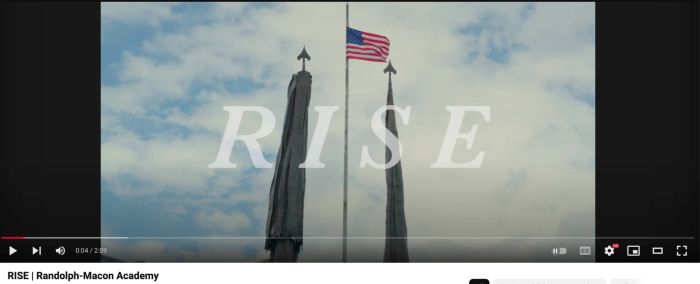
Example: Randolph-Macon Academy uses high-quality footage, eye-catching editing, and epic music to tell a compelling story about the student life experience they offer. Hype promo videos are an excellent avenue for visual storytelling.
Source: Randolph – Macon Academy | YouTube
User-Generated Content
User-generated content (UGC) is a game-changer for student recruitment. Content created by current students, alumni, or ambassadors exudes authenticity, which prospective students highly value.
Whether it’s a student documenting their day on campus or an alumnus sharing their career journey, UGC builds trust and fosters a sense of relatability. Institutions can encourage student participation by offering incentives like branded merchandise or featuring contributors prominently on official channels.
Example: This UGC video from Cumberland College is authentic and appeals to the desires of a specific Gen-Z audience particularly as the popularity of online careers grows. Throughout your UGC campaign, be sure to focus on highlighting genuine experiences to differentiate the content from a traditional ad.
Limited budgets should never deter institutions from producing impactful video content. If you’re wondering how to create video ads on a limited budget, look no further than a modern smartphone. Capable of capturing high-quality footage, you can create professional-looking videos without expensive equipment.
Simple strategies like natural lighting, stabilizing the camera, and adding subtitles can elevate production quality. Starting small with test videos allows for refinement over time, paving the way for a more robust video marketing strategy.
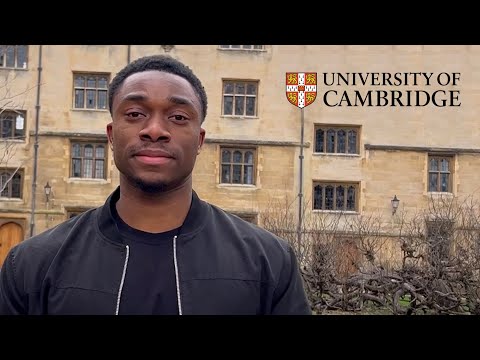
Example: Video marketing for schools doesn’t always have to involve highly produced footage. As long as the quality isn’t compromised, and the results are just as engaging, all you really need to get started is a modern smartphone with a decent camera and some creative ideas. Video marketing is heavily trend-driven, particularly on platforms where short-form videos are popular. For your DIY videos, do preliminary research, taking note of the trends that viewers are responding to.
Source: Cambridge University | YouTube
Strategies for Effective Video Content
Creating effective video ads requires more than just compelling visuals. Institutions must adopt a strategic approach to ensure their content aligns with their goals and resonates with their target audience.
Focus on Quality Over Quantity
Every video should reflect the institution’s values, strengths, and mission. To ensure consistently high-quality video content, schools can implement several strategies.
First, create clear production guidelines that include lighting, sound, and framing recommendations. These guidelines can help amateur creators, such as students contributing user-generated content, maintain a professional standard.
When relying on user-generated content (UGC), provide participants basic training or tip sheets on capturing footage. Encourage contributors to use stable tripods, proper lighting, and minimal background noise to enhance video clarity. Offering editing support or simple tools to enhance UGC—such as branded filters or overlays—ensures that the final product aligns with the institution’s brand identity.
Consistency in quality also comes from pre-production planning. For example, institutions can create storyboards or scripts for key content themes, ensuring each video maintains a cohesive narrative. Review processes are equally critical; assigning a designated team or individual to review and approve content before publication allows schools to catch inconsistencies and errors early.
Investing in scalable tools, such as video editing software or mobile apps, allows schools to polish videos before posting. Paired with these efforts, periodic feedback sessions with creators can help refine content over time. A single high-quality video can generate more engagement and drive more conversions than a series of poorly produced clips.
Segment Videos by Topic
Educational institutions cater to diverse audiences, each with unique interests and priorities. By creating topic-specific videos, schools can address these varying needs effectively. For instance, one video might highlight academic programs, while another focuses on student life or campus facilities.
This segmentation ensures prospective students receive information tailored to their interests, enhancing engagement and encouraging further exploration.
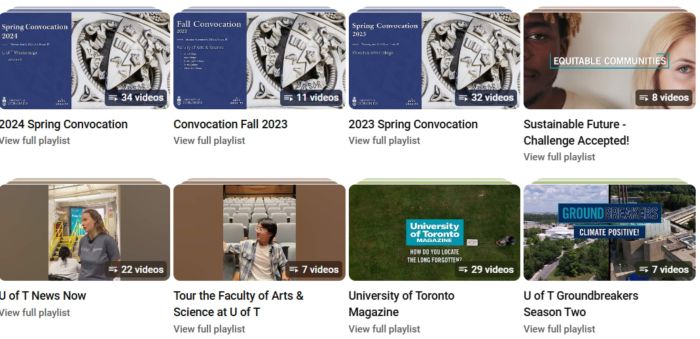
Example: Organize your videos into playlists to make it easier for viewers to find what they’re looking for as the University of Toronto did on their YouTube page in the image below.
Source: University of Toronto
Showcase Real Success Stories
Nothing resonates more deeply than genuine success stories. Featuring interviews with current students, alumni, or faculty members allows institutions to highlight real-world outcomes and the impact of their programs.
These narratives provide relatable insights that prospective students can envision for themselves, making the institution’s offerings more tangible and aspirational.
To create compelling success story videos, schools should start by identifying standout students or alumni whose journeys reflect the institution’s values and strengths.
Conduct interviews in visually appealing settings, such as iconic campus locations, to give viewers a sense of place. Incorporate diverse voices and experiences to ensure the stories resonate with a wide audience.
Actionable strategies include integrating authentic visuals, such as clips of the featured individual participating in classes, engaging in extracurricular activities, or achieving milestones in their careers. Pair these visuals with concise, heartfelt narratives that emphasize personal growth and accomplishments.
For consistency and quality, schools can create a structured framework for storytelling. This might include opening with a brief introduction, highlighting the challenges or goals the individual faced, and concluding with their achievements and future aspirations. Encourage participants to speak naturally, as unscripted moments often feel more genuine and relatable.
Additionally, amplify the impact of these stories by embedding them into broader marketing campaigns. Share snippets on social media, include them in email outreach, or feature them prominently on the institution’s website. This multi-channel approach ensures that success stories reach prospective students at various touchpoints, enhancing their overall effectiveness.
Boost Engagement with CTAs
Every video should include a clear and compelling Call-To-Action (CTA). CTAs are the bridge between engagement and action, guiding viewers to take the next step in their journey with the institution. To craft effective CTAs, schools should focus on clarity and relevance. For instance, a video showcasing campus life might end with an invitation to “Book a Campus Tour,” while a testimonial video could encourage viewers to “Apply Today and Start Your Journey.”
The placement and timing of CTAs are equally important. CTAs placed at the end of a video often drive action most effectively, as viewers are already immersed in the content. However, mid-video CTAs can also be used strategically in longer videos to re-engage audiences who may drop off before the end. Interactive elements like clickable links or embedded forms can make CTAs even more effective by reducing friction for viewers.
Customization of CTAs based on the platform is another key strategy. On YouTube, a CTA might take the form of a video overlay or end screen, while Instagram could use stickers or swipe-up features. These platform-specific approaches ensure that the CTA feels natural and intuitive to the viewer.
Finally, measuring the success of CTAs is critical. Schools can track metrics such as click-through rates, conversions, and engagement to refine their approach over time. A/B testing different CTA phrasing or formats can also provide valuable insights into what resonates most with prospective students. With these strategies in place, CTAs can transform passive viewership into active interest and tangible results.
Overcoming Challenges in Video Marketing
Despite its benefits, video marketing comes with its own set of challenges. Educational institutions must address these hurdles to maximize the impact of their campaigns.
Privacy and Legal Compliance
Privacy concerns are paramount when creating promotional content involving students. Institutions should implement consent forms and adhere to relevant regulations to ensure that all video materials comply with legal requirements. Transparency in this process not only safeguards the institution but also builds trust with stakeholders.
Maintaining Brand Cohesion
Consistency is key to building a strong brand identity. To achieve this, schools should develop a brand style guide that outlines visual and messaging standards for all video content. This ensures that every video aligns with the institution’s overall branding, reinforcing recognition and credibility.
Generating Fresh Content
Keeping content fresh and engaging can be a challenge, especially for institutions with limited resources. One solution is to develop themes or “content buckets,” such as academic achievements, campus events, or faculty highlights. This approach provides a structured framework for content creation, making it easier to maintain a steady flow of new material.
Leveraging Stock Footage
For institutions with constrained budgets, stock footage offers a cost-effective alternative to original video production. By customizing stock footage with branded elements like logos or text overlays, schools can create visually appealing content that feels authentic and aligned with their messaging.
Enhancing Impact with Professional Elements
While authenticity is critical, incorporating professional touches can elevate video quality and make content more impactful. Techniques like using green screens, investing in studio settings, and optimizing videos for mobile viewing can significantly enhance production value.
Additionally, tailoring content for specific platforms—such as LinkedIn for professional audiences or Instagram for visual storytelling—ensures maximum reach and engagement.
Building Trust Through Authenticity
Authenticity is the cornerstone of effective video marketing. Overly polished advertisements can sometimes feel impersonal, while genuine, unscripted content fosters emotional connections.
Videos that highlight real student experiences, showcase unfiltered moments, or provide behind-the-scenes glimpses into campus life resonate deeply with prospective students, making them more likely to consider the institution.
Cost-Effectiveness and ROI
Video marketing doesn’t have to break the bank. User-generated content, in particular, offers a highly cost-effective way to create engaging videos. Encouraging students and alumni to contribute content not only reduces production costs but also enhances relatability.
When paired with strong CTAs, video ads often outperform other formats in generating conversions, making them a high-ROI investment for student recruitment campaigns.
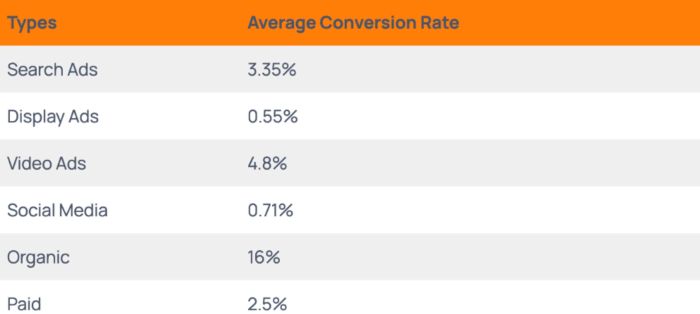
Example: Pictured below are the average conversion rates of various traffic sources. Second only to organic traffic (referring to visitors that complete a desired action after finding your institution through unpaid search results), video marketing boasts a high 4.8% conversion rate making it a worthy investment.
Source: Business Dasher
In review, what are the best video marketing strategies for schools? Creating effective video ads requires you to go beyond compelling visuals. Schools need to adopt a strategic approach to ensure their content aligns with their goals and resonates with their target audience.
This includes focusing on quality over quantity by creating visually appealing and professional videos that reflect the institution’s values. Schools should also segment their video content by topic to cater to the diverse interests of their prospective students, ensuring each video delivers targeted and relevant information.
Leveraging real success stories is another impactful strategy, as these narratives provide relatable and aspirational insights. Institutions should also craft clear and engaging calls-to-action (CTAs) that guide viewers toward the desired next steps, such as applying or signing up for a campus tour.
Ensuring consistency in quality, brand cohesion, and authenticity while addressing privacy concerns and optimizing for platform-specific formats will further enhance the effectiveness of video ads. By combining these strategies, you can create videos that capture attention and drive meaningful engagement and conversions.
Video ads are transforming digital marketing strategies for schools. Embracing this powerful medium can significantly amplify your reach, foster emotional connections, and drive enrollment. From leveraging user-generated content to creating high-quality promotional videos, the strategies outlined in this guide provide a roadmap for success.
Don’t get left behind as marketing trends evolve. Institutions that prioritize video marketing will be better positioned to connect with the next generation of students and thrive in an increasingly competitive landscape. The time to invest in video ads is now and we can help you get started.
Struggling to stand out in a crowded market?
Boost Enrollment with Engaging Short Videos
Frequently Asked Questions
Question: How to create video ads on a limited budget?
Answer: Look no further than a modern smartphone. Capable of capturing high-quality footage, you can create professional-looking videos without expensive equipment. Simple strategies like using natural lighting, stabilizing the camera, and adding subtitles can elevate production quality.
Question: What are the best video marketing strategies for schools?
Answer: Creating effective video ads requires you to go beyond compelling visuals. Schools need to adopt a strategic approach to ensure their content aligns with their goals and resonates with their target audience.
As the higher education sector starts to plan its next budget cycle and many may need to make savings, there is a concern about the impact of any cuts on students and how this could negatively affect their university experience and performance.
Universities are bound to look at a range of options to save money, especially given the stormy operating context. But one less-often highlighted aspect of university finances is the cost (and benefit) of the additional financial support universities devote to many of their students. Through cash, vouchers and other means, many universities provide financial help to support with the costs of living and learning.
Using Universities UK’s annual sector figures as one indicator, roughly 5% of universities’ overall expenditure has gone towards financial support and outreach, equivalent to around £2.5 billion. Although some of this money will inevitably not go directly to students themselves, this is still a significant amount of spending.
There are, naturally, competing tensions when it comes to considering any changes to targeted financial support. With significant financial pressures on students, exacerbated by the cost-of-living crisis, there is always a very justifiable case for more money. However, with the significant financial pressures universities are facing, there is an equally justifiable case to control costs to ensure financial sustainability. Every university has to manage this tension and trade-offs are inevitable when understanding just how much financial support to give and to whom.
In many respects, the answers to those questions are partially governed by Access & Participation Plans, with the clear intention that these financial interventions really change student outcomes. However, properly measuring those outcomes is incredibly difficult without a much deeper understanding of student ‘need’ – and understanding these needs comes from being able to identify student spending behaviour (and often doing this in real-time).
It always amazes me that some APPs will state that financial support ‘has had a positive impact on retention’ and some quite the opposite and I think part of this is a result of positioning financial support from the university end of the telescope rather than the student end.
Understanding real and actual ‘need’ helps to change this. Knowing perhaps that certain groups (for example Asylum Seekers or Gypsy, Roma, Traveller, Showman and Boater students) across the sector will have similar needs would be helpful and data really help here. Having, using, and sharing data will allow us to draw a bigger picture and better signpost to where interventions are most effectively deployed so those particular groups of students who need support are achieving the right outcomes.
Technology is at hand to help: Open Banking (for example) is an incredible tool that not only can transform how financial support can be delivered but also helps to build an understanding of student behaviour.
Lifting the bonnet and understanding behaviour poses additional questions, such as: When is the right time to give that support? And what form should that support take?
I am a big proponent of providing financial support as soon as a student starts. When I talk to universities, however, it is clear that the data needed to identify particular groups of students are not readily available at the point of entry and students’ needs are not met. Giving a student financial support in December, when they needed it in September, is not delivering at the point of student need, it is delivering at the point where the university can identify the student. I think there is a growing body of evidence that suggests the large drop off in students between September and December is, in part, because of this.
Some universities in the sector give a small amount of support to all students at the start of the year, knowing that by doing so they will ensure that they can meet the immediate needs of some students. But clearly, some money must also go to those who do not necessarily need it.
However, and this is where the maths comes in, if the impact of that investment keeps more students in need at university, then I would argue that investment is worth the return. And the maths is simple: it really doesn’t take many additional students to stay to have a profoundly positive impact on university finances. Thus it is certainly worthy of consideration.
To me, this is about using financial support to drive the ultimate goal of improving student outcomes, especially the retention of students between September and December, which is when the first return is made, where the largest withdrawal is seen and where the least amount of financial support is given.
As to the nature or format of support: of course, in most cases, it is easier to provide cash. However, again, this is about your investment in your student, and, for example, if you have students on a course with higher material and resource costs, or students who are commuting, then there is an argument to consider more in-kind support and using data to support that decision.
Again, I am a proponent of not just saying ‘one size fits all’. Understanding student need is complex, but solutions are out there. It is important to work together to identify patterns of real student need and understand the benefits of doing so.
My knowledge draws on JS Group’s data, based on the direct use of £40 million of specialist student financial support to more than 160,000 students across 30 UK universities in the last full academic cycle.
The real positive of this is that everyone wants the same goal: for fewer students to withdraw from their courses and for those students to thrive at university and be successful. We need to widen the debate on how financial support is delivered, when, and in what format to draw together a better collective understanding of student need and behaviour to achieve that goal.
This blog is by Jo Johnson, Executive Chairman of FutureLearn, a Member of the Council of the Dyson Institute of Engineering and Technology and a Visiting Professor of King’s College London. He served as Universities and Science Minister under David Cameron, Theresa May and Boris Johnson.
There’s plenty to like about the Office for Students’ proposed new five year strategy, now out for consultation and being debated in Parliament on the 30 January.
Best of all, to my mind, is that the Teaching Excellence Framework is at the heart of the regulator’s new integrated approach to quality. Given the interests ranged against it, few would have put money on the TEF making it to the tenth anniversary of the Green Paper that made the case for it.
We’re a long way from 2017 when ‘abolish TEF’ was Labour policy – the new Government and the OfS deserve credit for recognising that if it didn’t exist, they would surely be designing something very much like it.
There is, however, one major problem with the regulator and that’s the OfS’s failure to support the innovation vital to our success as a knowledge economy.
Competition and choice were enshrined in the General Duties of the new regulator, in the very first lines of the Higher Education and Research Act (2017), with an importance second only to the need to have regard to institutional autonomy.
Which is why the recent decision to ‘pause’ applications to the Register and for Degree Awarding Powers (DAPs) from new entrants, so the OfS can focus on the financial sustainability of some woebegone incumbents, is a shockingly poor one.
It pains me to see the OfS give up on supporting start-ups and with such an embarrassingly weak justification for doing so.
A few trailblazers – including the Dyson Institute of Engineering and Technology, the New Model Institute for Technology and Engineering, the London Interdisciplinary School and The Engineering & Design Institute: London – have in recent years managed to acquire their own DAPs, highlighting in their different ways the value that new providers can bring.
Such are the procedural barriers to entry the OfS has erected that new entrants invariably have to take on expensive consultants who advise them to shape themselves as much as possible in the cookie-cutter mould of existing institutions.
I said that this pause was a shocking decision. In fact, it is sadly all too predictable.
As Independent Higher Education has been saying to anyone who will listen, OfS service standards for those seeking registration or DAPs have long been lamentable, promises of better performance have not been kept (despite a hike in OfS fees) and this pause and warning of a ‘staggered’ (ie even worse service) approach to re-opening in the future represents a new low.
There seems always a ready excuse for the OfS not focusing on innovation and deprioritising this part of its statutory duties – first it was the task of getting existing providers on the Register, then the COVID maelstrom and now the need to deal with the financial troubles of some providers paying the price for weak financial management and poor governance.
This is a worrying pattern – and, given that new providers recruit more than most from disadvantaged and underrepresented groups, it will also, if it persists, make it harder for the new Government to achieve its ambitions for widening participation and access to higher education.
I cannot imagine the pause would withstand legal challenge if tested.
That might well become necessary.
For there is reason to fear the pause will become semi-permanent.
That’s because there is no sign that financial pressures on institutions will have abated by August, when the OfS says it will start to gradually re-open the window for applications for registration and DAPs. Indeed, there is every chance, unless the government commits to annual inflationary increases in tuition fees, that a number of providers will be much further up the creek by then than they are now.
As I say, the OfS is under a statutory obligation, set out in the Higher Education and Research Act, to support choice and innovation in provision.
It’s not a perfect analogy, but imagine Ofgem, which has similar duties to enable competition and innovation, refusing to allow in new suppliers of renewable energy. Or Ofcom turning away broadband start-ups. Surely, that would be unthinkable. For that matter, how is this pause consistent with Sir Keir Starmer, Rachel Reeves and the business secretary urging watchdogs to tear down the regulatory barriers that hold back economic growth, the ‘absolute top priority for the Government’?
It’s surely the opposite.
And, of course, the real irony is that freezing the OfS Register and DAPs in aspic will probably worsen financial sustainability rather than promote it.
Telling the world that the regulator is so snowed under with handling institutional failure that it can’t do the rest of its job sends a dismal message to international students, to the institutions bringing diversity to the sector and to investors interested in supporting English higher education.
The OfS should hit the unpause button.
If it won’t do that, then it must at the very least during this period of pause make clear that it will be open for business for m&a (ie entities needing to transfer DAPs and UT from ailing institutions) that prevents financial risks from crystalising.
The risk otherwise is that institutions at risk of failure cannot seek timely OfS approval for the transfer of their DAPs / UT to white knights that want to come to their rescue.
How would that be in the student interest?
The OfS should be able to walk and chew gum, especially as it sets its own resource envelope, in agreement with DfE, through the level of fees that it charges those it regulates.
If it can’t work out how to multi-task and really has to redeploy staff to financial sustainability, it should first deprioritise some of the newer headline-grabbing conditions of registration it has imposed in response to ministerial whims du jour, before it walks away from the actual statutory duties given to it by Parliament.
Finally, failure to discharge the responsibilities Parliament has given it should be a source of considerable embarrassment to the OfS given the turf war that it has waged over the quality function.
The long pause raises real questions about the sustainability of the OfS’s refusal to appoint a new quality body to take on the role played by the Quality Assurance Agency after it was de-designated in March 2023.
If the OfS can’t promptly resume one of the most important duties given to it in HERA, it should run a quick process to find a new Designated Quality Body, so that some other organisation can get on with it.