Category: Blog

  • 2025 Education Marketing Strategies for Success

    2025 Education Marketing Strategies for Success

    Reading Time: 8 minutes

    Education marketing is poised for a transformative shift in 2025. As technological innovations accelerate and global competition intensifies, schools, colleges, and universities must adopt strategies that meet the evolving expectations of prospective students.

    If you’re new to educational marketing or administration, you may benefit from a working definition of the topic we’re exploring. What is education marketing? Education marketing promotes educational institutions, programs, and services to prospective students, their families, and other stakeholders.

    It involves creating targeted campaigns that address the unique needs, aspirations, and challenges of prospective learners. At its core, education marketing is about building trust, showcasing value, and creating meaningful connections that align an institution’s offerings with the goals of its audience.

    This blog, inspired by insights from the webinar Staying Ahead in 2025: Top Education Marketing Strategies for Success, explores the key trends and actionable strategies to help educational institutions thrive in this dynamic environment. Let’s explore!

    Struggling with enrollment?

    Our expert digital marketing services can help you attract and enroll more students!

    Great Expectations: What Prospects Are Looking for in 2025

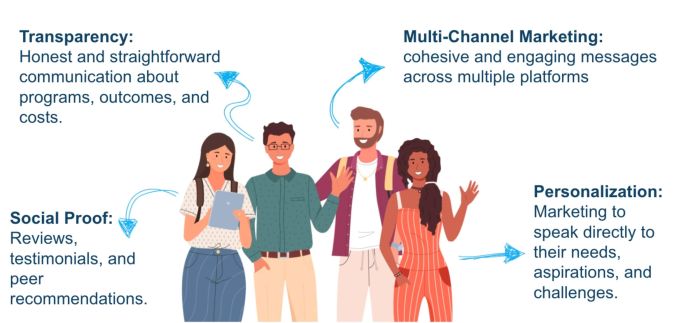
    Prospective students in 2025 demand education marketing efforts that resonate with their individual aspirations, challenges, and goals. Personalization has become a non-negotiable element of successful marketing, requiring institutions to deliver tailored messages across diverse platforms. Students value authenticity and transparency, seeking honest communication about program costs, outcomes, and career prospects.

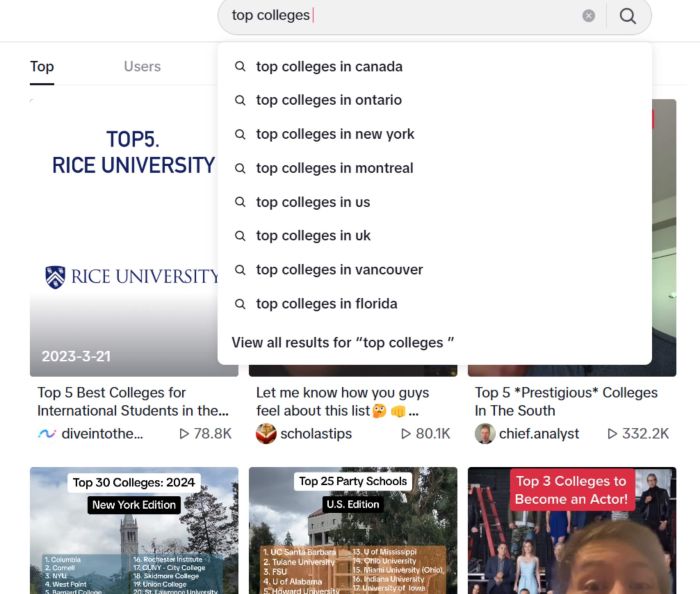
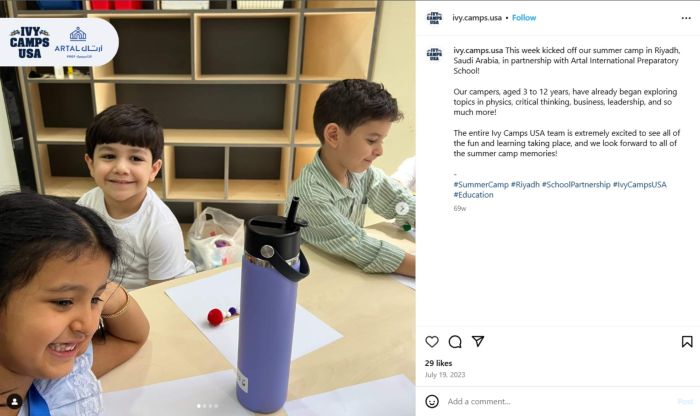
    Social proof is more influential than ever. Reviews, testimonials, and user-generated content (UGC) have become vital tools in building trust and credibility. Institutions that effectively showcase authentic student experiences on platforms like TikTok, Instagram, and YouTube can connect with audiences on a deeper level, cutting through generic promotional noise.

    With over 70% of initial student engagement occurring online, a robust digital presence is critical. Schools with interactive websites, active accounts, and engaging virtual events stand out in an increasingly competitive global market. The ease of accessing information about institutions worldwide has raised the stakes, emphasizing the need for innovative and standout marketing strategies.
    HEM Image 2HEM Image 2

    Source: HEM

    Are you seeking strategies for a future-oriented education marketing plan? Reach out to learn about our specialized digital marketing services! 

    Leveraging AI for Personalization and Automation

    Artificial intelligence (AI) is revolutionizing education marketing by enabling personalized and efficient communication. In 2025, institutions will be using AI-driven tools to deliver highly targeted content and streamline engagement processes.

    AI-powered email marketing has proven to boost open rates and increase revenue per email by analyzing prospective student data. Dynamic segmentation, which groups students based on behaviours like website visits and social interactions, allows institutions to craft campaigns aligned with individual journeys.

    Example: Putting prospects into groups based on their site usage as pictured below is the first step in dynamic segmentation. What comes next? Program your CRM system to update segments as prospects progress through the enrollment process, and finally, use automation tools (ideally integrated into your CRM program) to send follow-up messages after interactions like webinar attendances or program page visits. Amidst many competitors, you must stay fresh in the minds of your prospective students.

    HEM Image 3HEM Image 3

    Source: HEM

    Chatbots are emerging as indispensable tools for managing routine inquiries. Capable of handling up to 80% of these interactions, chatbots provide instant, tailored responses that improve lead-to-application conversion rates. From guiding students to specific program pages to assisting with application processes, chatbots reduce administrative strain while enhancing user experience. For international students, multi-language support ensures inclusivity and accessibility.

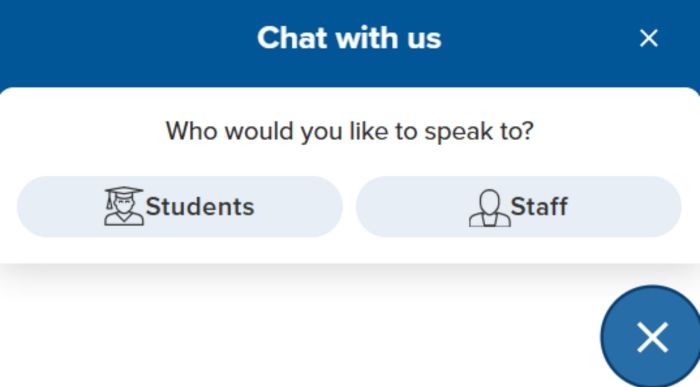
    Example: Use Chatbots intentionally like the University of Windsor did below. Site visitors are asked with whom they would like to connect and are sent to a page where they can select the right person to meet their needs. This allows for a customized, self-directed experience.
    HEM Image 4HEM Image 4

    Source: University of Windsor

    Predictive analytics, another AI-driven innovation, enables institutions to anticipate prospective student needs. By analyzing past behaviors, institutions can proactively craft campaigns that address concerns and guide students toward enrollment.

    By analyzing historical data such as website interactions, email engagement, and application trends, predictive analytics identifies patterns that signal a prospective student’s likelihood to take specific actions, such as submitting an application or attending an open house. 

    This technology allows institutions to craft highly targeted campaigns that address common concerns, deliver timely follow-ups, and provide personalized recommendations. Predictive analytics can be applied across various channels, including email marketing, chatbot interactions, and digital advertising platforms, making it a versatile tool for improving enrollment outcomes and optimizing the student journey.

    Optimizing Digital Advertising Strategies

    Digital advertising is an essential component of education marketing, and in 2025, precision and creativity will define success. Institutions are refining their pay-per-click (PPC) campaigns and leveraging video ads to capture attention and drive conversions.

    Precision targeting through platforms like Google Ads and Meta Ads ensures relevance. Long-tail keywords and geo-specific targeting help align campaigns with user intent, making them more effective. For example, phrases like “best nursing programs in Toronto” resonate more with prospective students than generic terms such as ‘nursing programs’ or ‘nursing school’. 

    Video content continues to dominate as the preferred format for engagement. Authentic, short-form videos featuring user-generated content are especially effective. These videos highlight program features, campus life, and success stories, building trust and fostering emotional connections.

    Engaging carousel ad formats are also gaining traction, offering a visually dynamic way to present multiple aspects of an institution in a single advertisement. By showcasing different programs, campus highlights, or student testimonials in a swipeable format, carousel ads keep prospective students engaged longer. These ads are particularly effective on platforms like Instagram and Facebook, where interactive content drives higher click-through rates and engagement. 

    Example: Static ad images are more likely to be skipped. Carousel ads are an attention-grabbing format that incites curiosity. Valuable, relevant, and short-form copy as pictured below works well as it keeps attention while imparting information your audience cares about.

    HEM Image 5HEM Image 5

    Source: Concordia University

    Remarketing strategies are proving invaluable for re-engaging prospective students. Dynamic ads tailored to past interactions, such as revisiting previously explored programs, help institutions stay top-of-mind and boost conversion rates. Platforms like TikTok provide creative opportunities to connect with younger audiences, further enhancing reach and engagement.

    Navigating Changing Search Landscapes

    The rise of AI-powered search engines like Google Gemini and ChatGPT is reshaping how users seek information. These tools prioritize conversational content and direct answers, requiring institutions to adapt their SEO strategies to maintain visibility.

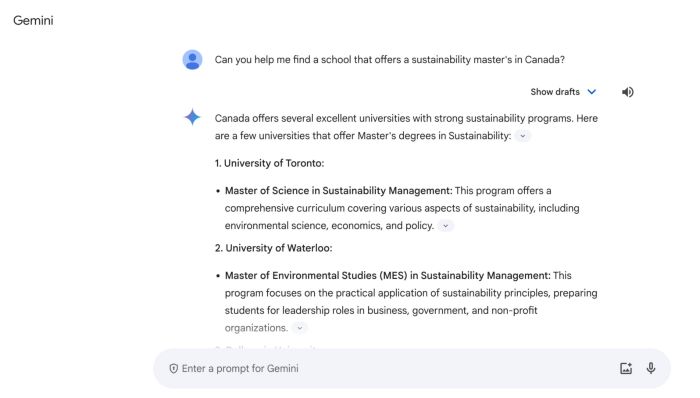
    Example: Incorporating conversational, question-based phrases as pictured below helps your site show up in search results. This is particularly relevant as AI, which favors concise answers, emerges as one of the most transformative education marketing trends. Try to add relevant, on-topic questions that your prospects are likely pondering into site content seamlessly. Then add the answer to that question. This boosts your chances of being featured in “People Also Ask” and other types of rich results.

    HEM Image 6HEM Image 6

    HEM Image 7HEM Image 7

    Source: Gemini

    High-quality, question-based content is essential for meeting the needs of AI-driven search engines and enhancing user experience. Institutions are optimizing FAQ pages to provide comprehensive, conversational answers to prospective students’ most common questions. 

    For example, detailed FAQ sections that include interactive components, such as collapsible menus or embedded videos, help address a wide range of inquiries efficiently. This approach not only supports AI-driven search tools like Google Gemini (Formerly Bard) and ChatGPT but also caters to user expectations for clear, straightforward information.

    Voice search optimization further complements this strategy. With 58% of users relying on voice search daily, content must include natural, long-tail keywords that align with how people speak. For instance, crafting answers to questions like “What’s the cost of a nursing program in Toronto?” ensures visibility in voice and conversational search queries. Together, these strategies create a seamless path for students to access the information they need, whether browsing through AI-enhanced search results or engaging directly with an institution’s website.

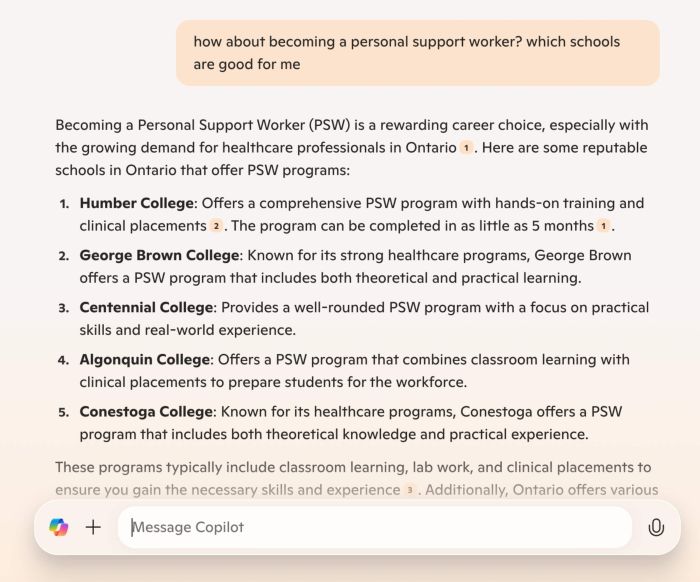
    Example: AI tools like Copilot pictured below offer user-friendly, well-structured answers to education-related questions, guiding prospective students effectively to your institution.
    HEM Image 8HEM Image 8

    Source: Copilot

    Local SEO remains a powerful driver of inquiries. Enhancing Google Business Profiles, incorporating location-specific keywords, and encouraging positive reviews are key strategies. Schema markup further boosts visibility by creating rich search results, such as event listings and review stars, that attract clicks and engagement.

    Practical Strategies for 2025

    Content remains central to education marketing success, but its format and delivery are evolving. High-quality, SEO-optimized content that directly addresses student questions is crucial. Institutions are increasingly adopting visual and interactive formats, such as infographics, videos, and quizzes, to create engaging and shareable content.

    Marketing technology plays a pivotal role in streamlining operations. CRM systems and automated email tools enable institutions to automate routine communications, such as application reminders and follow-ups. This ensures timely interactions while freeing up resources for strategic initiatives.

    Mautic is a cutting-edge CRM and marketing automation solution tailored specifically for the education sector. Built on the robust Mautic platform, HEM has enhanced this system to address the unique challenges and opportunities faced by educational institutions. 

    By enabling streamlined lead management, Mautic by HEM allows schools to segment, manage, and follow up with prospects efficiently, enhancing both cost-effectiveness and operational efficiency.

    With Mautic, your school can supercharge your marketing efforts through automated email campaigns, customizable forms, and seamless workflows. The platform’s out-of-the-box custom reports provide deep insights into admissions efforts, helping schools track team productivity and the progress of leads through the enrollment funnel. 

    Tools for automated SMS and email follow-ups, meeting bookings, and calls empower teams to nurture leads effectively, turning prospects into enrolled students. Designed to simplify complex tasks and enhance collaboration, Mautic is the ideal solution for schools looking to elevate their student recruitment strategies.

    In an era of rapid technological advancements, agility is essential. Institutions must regularly monitor campaign performance, experiment with new platforms, and stay informed about industry innovations. Being prepared to pivot strategies allows institutions to adapt to changing audience preferences and platform updates.

    The Road Ahead

    In summary, What will education marketing look like in 2025? In 2025, education marketing will focus on data-driven, personalized, transparent, and multi-channel strategies to engage students effectively. When you embrace AI-driven tools, optimize digital advertising, and adapt to evolving search landscapes, your school can navigate the complexities of a highly competitive market.

    As the digital-first generation redefines expectations, educational institutions have a unique opportunity to deliver value and build trust at every stage of the student journey. The strategies outlined here provide a comprehensive roadmap for success, ensuring your school sees results in 2025 and beyond.

    Struggling with enrollment?

    Our expert digital marketing services can help you attract and enroll more students!

    Frequently Asked Questions

    Question: What is education marketing? 

    Answer: Education marketing promotes educational institutions, programs, and services to prospective students, their families, and other stakeholders. 

    Question: What will education marketing look like in 2025? 

    Answer: In 2025, education marketing will focus on data-driven, personalized, transparent, and multi-channel strategies to engage students effectively.


    Source link

  • Universities aren’t entitled to autonomy. They have to earn it

    Universities aren’t entitled to autonomy. They have to earn it

    By Edward Venning, Managing Partner at Six Ravens Consulting.

    Not for the first time, an interventionist Secretary of State stands ready to help English universities. Not surprisingly, every item in her agenda – from regional engagement to business models – will place conditions of ‘wide-scale reform’ upon universities.

    We should reasonably worry. Not because of Bridget Phillipson, but because we have traded away our self-determination for years.

    The debate about autonomy has a certain monotheistic quality. Everyone agrees autonomy is the rock upon which knowledge is built, while vigorously sinning against it. Different governments tie finance to reform, as with Phillipson, or attempt the oxymoron of regulating academic freedom. Meanwhile, universities accept cash with strings attached from government, major donors and international students. Government generally cops the blame for this too, while we appeal to inalienable protections in the Higher Education Reform Act (HERA).

    But autonomy is not absolute or inviolable. It is not determined by functional independence or private status. It is a behaviour. It comes from actively managing a complex web of power relationships and trade-offs while protecting our control over key functions. It is built through organisational design, concerned with incentives, accountability and dynamic relationship management. The more robustly we design, the less likely our autonomy will be tested.

    As nations have found throughout history, autonomy is far from inalienable. Anton Muscatelli points out that this complex negotiation requires constant attention and re-calibration. It must be promoted through the active management of three forces:

    • to comply with state direction and societal expectation;
    • to conform with sector and industrial norms; and
    • to copy each other’s strategies.

    The three forces are not in themselves good or bad for autonomy. A minimal level of regulation protects the student interest. Good standards add value. Some strategies deserve emulation. They are forces for good to the extent to which we use them to improve our engagement with the world. These forces become toxic through neglect, uncritical or anticipatory compliance and inept execution.

    And our approach to university autonomy could certainly do with an upgrade. The defensive case is given a thorough outing by James Tooley and John Drew, in Cry Freedom: The regulatory assault on institutional autonomy in England’s universities (2024). In this entertaining beasting of the Office for Students, they draw invidious comparisons between what the regulator is supposed to do and what it actually does. They devastate Susan Lapworth’s claim that institutional autonomy can be overridden. Only a lawyer might improve (or rebut) their analysis of regulatory overreach, even if the reader wonders what, short of class action, would induce DfE and OfS to accept their recommendations.

    The sector shackles itself

    Equally, a fair-minded judge would accept that the sector’s supine approach to autonomy undermines their case for change. Our surrender of autonomy to the state for money is part of a wider readiness to sell the pass in exchange for benefit.

    No one can blame the government (or indeed any major industry or donor) for offering a Faustian pact. It is in their nature to seek control. Nor should universities be blamed for seeking patronage from the state, the market or indeed non-state actors. No one, as Jo Johnson recently argued in his report about the China question, would seriously suggest universities should disengage from the world. Instead, we need a robust, dynamic framework for engagement, exerting maximum self-determination in some areas while accepting constraints in others.

    It is worth remembering that HERA busies itself with a single dimension of autonomy. This is founded on the precept of the ‘self-critical, cohesive community of scholars’. While of central importance, academic autonomy is one of four dimensions of autonomy recognised by the European University Association. The other three dimensions (organisational, financial and staffing) represent the soft underbelly of autonomy, absent the legitimacy of the academic.

    We lack the toolkit to recognise and manage trade-offs across all four of the EUA’s dimensions. Regulatory interest in academic freedom is a clear-cut incursion on academic autonomy. The same is true of staff and student demands to end relationships with Israeli universities. Pressure on non-academic autonomy is often ostensibly internal. The University and College Union’s (UCU) Four Fights, #MeToo and Black Lives Matter have all successfully targeted the non-academic dimensions of autonomy. In fact, there is almost always a dynamic connection between internal and external forces. After all, the 1968 protests began with the right of male and female students to sleep together and ended by permanently altering university governance.

    Away from the academic space, autonomy is lost in less obvious ways.

    For example, universities cede considerable organisational autonomy through voluntary commitments to a wide range of charters, benchmarks and league tables. But each external assurance scheme concedes executive room for manoeuvre. Almost worse for a knowledge institution, they concede expertise to a third party. The schemes are regressive because they create a planning burden that small institutions cannot service. And the goalposts move without our input – all assurance schemes ratchet their criteria over time. Sometimes this means that compliance may seem tantamount to wishful thinking. Even critics get confused. At one point, the last government was simultaneously asking universities to leave some schemes (such as Stonewall’s famous Diversity Champions Programme and Athena Swan) and adopt others (such as the International Holocaust Remembrance Alliance (IHRA) definition of anti-semitism).

    Ganging up

    Autonomy can be defined as a type of managed interdependence. It is possible to collaborate with third parties and still maintain self-determination. Indeed, this may be the only way most universities can achieve the scale necessary to confront the most monumental tasks.

    Active, relational autonomy is central to effective partnership with government, industry and civil society in complex, interconnected challenges. For example, some of the biggest bets in biotech and STEM have been made as joint ventures.

    At the operational level, control over admissions and technology is rightly seen as foundational, and yet we are content for UCAS and Jisc to manage critical processes and infrastructure. Meanwhile, numerous universities have spent millions trying to build a proprietary full-stack online learning offer, while Silicon Valley spends billions on the same task. Arguably, our autonomy is weakest when we go it alone.

    This will become increasingly pressing as stressed universities contemplate the possibility of forced merger. What mechanisms will sustain their autonomy, identity and distinctiveness in the arms of a bigger institution?

    As shown by Gill Evans, much of the sector used to operate within much larger non-academic organisations, such as local government. Even the most autonomous parts of the sector were interdependent. The collegiate traditions of Oxford and Cambridge demonstrate how shared governance protects autonomy while enabling scale. Royal Charters were mostly awarded to institutions which were (then or subsequently) members of a bigger university. Group structures and formal partnerships between institutions provide varying degrees of freedom to their constituent parts, above a critical threshold of autonomy. These arrangements distribute risk and create safety in numbers, mitigating the hierarchy that makes some institutions more vulnerable than others.

    Asserting autonomy

    The sector needs more muscular collective action. Individual institutions struggle to resist pressure from regulators, funders and other stakeholders. A stronger sector voice could help establish red lines while engaging constructively with reform agendas.

    As argued in my recent debate paper, the overall ability of the sector to exert its autonomy is low compared to other sectors. This has several solutions. We need to establish a strong, leadership body across the tertiary ecosystem, robustly managing the big picture on resource distribution and regulatory burden. We need more sophisticated uses of corporate form, not just the blunt instrument of M&A. But above all, we need to recover an assertive self-confidence.

    Let’s be inspired by the private sector and our own history. The original English universities were guilds, muscular and monopolistic in behaviour. Commercial autonomy is not abstract or passive, nor does it derive in a mystical way from the capitalist impulse. It is a self-generating, assertive precondition for entering the market. If universities cannot make a positive case for self-determination, and are not inclined to exercise it, we cannot expect the government of the day – or anyone else – to respect our autonomy. Instead, we need dynamic, structured engagement with external and internal forces. Autonomy will be the result.

    Source link

  • The value of having a National Learning Framework incorporating school, college and higher education

    The value of having a National Learning Framework incorporating school, college and higher education

    By Michelle Morgan, Dean of Students at the University of East London.

    In the UK, we have a well-established education system across different levels of learning including primary, secondary, further and higher education. For each level, there is a comprehensive structure that is regulated and monitored alongside extensive information. However, at present, they generally function in isolation. 

    The Government’s recent Curriculum and Assessment Review has asked for suggestions to improve the curriculum and assessment system for the 16-19 year study group. This group includes a range of qualifications including GCSEs, A-levels, BTECs, T Levels and apprenticeships. The main purpose of the Review is to

    ensure that the curriculum balances ambition, relevance, flexibility and inclusivity for all children and young people.

    However, as part of this review, could it also look at how the different levels of study build on one another? Could the sectors come together and use their extensive knowledge for their level and type of study, to create an integrated road map across secondary, further and higher education where skills, knowledge, competencies and attributes (and how they translate into employability skills) are clearly articulated? We could call this a National Learning Framework. It could align with the learning gain programme led by the Office for Students (OfS).

    The benefits of a National Learning Framework

    There would be a number of benefits to adopting this approach:

    • It would provide a clear resource for all stakeholders, including students and staff in educational organisations, policymakers, Government bodies, Regulators and Quality Standard bodies (such as Ofsted, the Office for Students and QAA) and business and industry. It would also help manage the general public perception of higher education. 
    • This approach would join up the regulatory bodies responsible for the different sectors. It would help create a collaborative, consistent learning and teaching approach, by setting and explaining the aims and objectives of the various types of education providers.
    • It would explain and articulate the differences in learning, teaching and assessment approaches across the array of secondary and further education qualifications that are available and used as progression qualifications into higher education.  For example, A-Levels are mainly taught in schools and assessed by end-of-year exams. ‘Other’ qualifications such as BTEC, Access and Other Level 3 qualifications taught in college have more diverse assessments.
    • It would help universities more effectively bridge the learning and experience transition into higher education across all entry qualifications.  We know students from the ‘Other’ qualification groups are often from disadvantaged backgrounds, which can affect retention, progression and success at university as research highlights (see also this NEON report).  Students with other qualifications are more likely to withdraw than those with A-Levels. However, as this recent report Prior learning experience, study expectations of A-Level and BTEC students on entry to university highlights, it is not the BTEC qualification per se that is the problem but the transition support into university study that needs improvement.
    • It would also address assumptions about how learning occurs at each level of study. For example, because young people use media technology to live and socialise, it is assumed the same is the case with learning. Accessing teaching and learning material, especially in schools, remains largely traditional: the main sources of information are course textbooks and handwritten notes, although since the Covid-19 Pandemic, the use of coursework submission and basic virtual learning environments (VLEs) is on the increase.
    • If we clearly communicate to students the learning that occurs throughout each level of their study, and what skills, knowledge, competencies and attributes they should obtain as a result, this can help with their confidence levels and their employability opportunities as they can better articulate what they have achieved.

    What could an integrated learning approach across all levels of study via a National Learning  Framework look like?

    The  Employability Skills Pyramid created for levels 4 to 7 in higher education with colleagues in a previous university where I worked could be extended to include Levels 2/3 and apprenticeships to create a National Learning Framework. The language used to construct the knowledge, skills and attribute grids used by course leaders purposely integrated the QAA statements for degrees (see accompanying document Appendix 1) .

    By adding Levels 2 and 3, including apprenticeship qualifications and articulating the differences between each qualification, the education sector could understand what is achieved within and between different levels of study and qualifications (see Figure 1).

    Key stakeholders could come together from across all levels of study to map out and agree on the language to adopt for consistency across the various levels and qualifications.

    Integrated National Learning Framework across Secondary, Further and Higher Education

    Alongside the National Learning Framework, a common transition approach drawing on the same definitions across all levels of study would be valuable. Students and staff could gain the understanding required to foster successful transitions between phases.  An example is provided below.

    Supporting transitions across the National Learning Framework using similar terminology

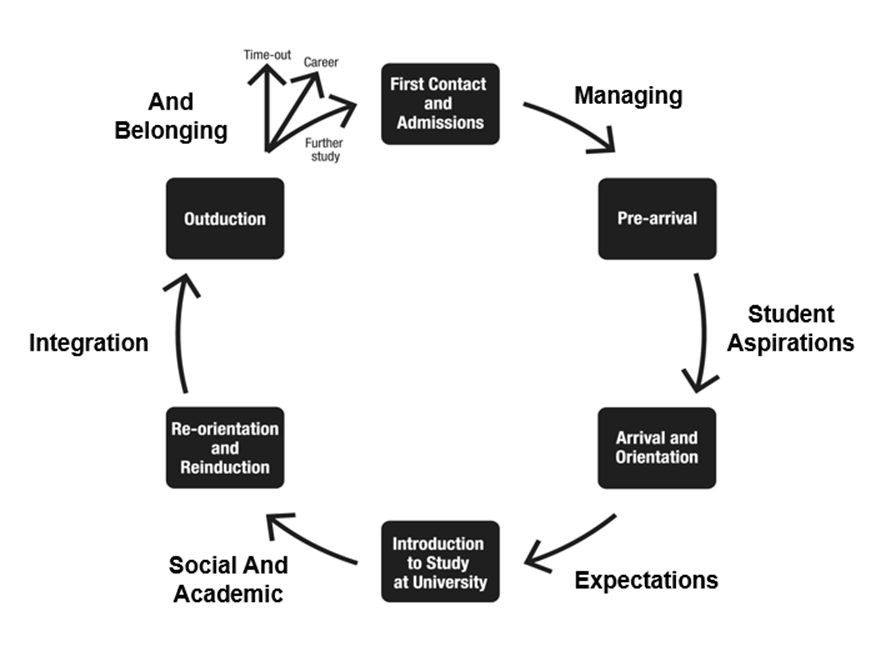
    The Student Experience Transitions (SET) Model was designed to support courses of various lengths and make the different stages of a course clearer. It was originally designed for higher education but the principles are the same across all levels of study (see Figure 2). Students need to progress through each stage which has general rules of engagement. The definitions of each stage and the mapping of each stage by length of course are in the accompanying document in Appendix 2.

    Figure 2: The Student Experience Transitions Model. Source: Morgan 2012

    The benefits for students are consistency and understanding what is expected for their course. At each key transition stage, students would understand what is expected by reflecting on what they have previously learnt, how the coming year builds on what they already know and what they will achieve at the end.

    Taking the opportunity to integrate

    The Curriculum Review provides a real opportunity to join up each level of study and provide clarity for all stakeholders. Importantly, a National Learning Framework could provide and help with the Government’s aims of balancing ambition, relevance, flexibility and inclusivity for all learners regardless of level of study.

    Appendices

    Source link

  • Universities and the Teachers Pension Scheme: the time for change is now

    Universities and the Teachers Pension Scheme: the time for change is now

    Welcome back. The HEPI blog is now up and running again on a daily basis, landing in your inbox at 6:30am. (The pieces we ran over the break are available here.) If you are not already subscribed, you can sign up at the bottom of this page.

    Spaces are still open for our in-person Symposium with CBDU on Thursday 16th January: you can register here.

    Today’s piece is by Jane Embley, Chief People Officer, Northumbria University and Professor Tom Lawson, Deputy Vice-Chancellor and Provost, Northumbria University.

    The end of the Universities Superannuation Scheme (USS) pensions dispute in the summer of 2023 was the source of much relief in the sector. University employees in the scheme saw both their pension benefits restored to the levels they had been before the USS valuation of 2017 and a reduction in their contributions (from January 2024) from 9.8% to 6.1%. Employers could reverse the significant liabilities that had previously been skewing their financial statements and their contributions to USS were reduced from 21.6% to 14.5%. The Financial Times declared that ‘the cost to UK universities of providing pensions for employees is poised to fall by hundreds of millions of pounds after the sector’s main retirement plan swung into surplus after more than a decade of being in deficit’.

    But for many institutions the great pensions crisis was not over: indeed it had only just begun. For at least 80 universities, USS is not their main pension scheme, because those that gained university status through the 1992 Higher Education Act are required to offer Teachers Pension Scheme (TPS) to their academic staff. This includes institutions like Northumbria University, which has significantly developed its research intensity over the last decade and seeks to compete with other research intensives. The disparity in the costs of TPS and USS means that competition is no longer on a level playing field.

    Northumbria has more than 200 staff who are members of USS, but all of those have joined the university as existing members of that scheme. All other academic colleagues must be enrolled in TPS and cannot, at present, voluntarily become members of USS. Indeed those who join as members of USS also retain a right to be enrolled in TPS if they wish. Around 50 modern institutions employ some members of USS however the underlying requirement to make TPS available to university-employed academic staff is the same.

    Since 2023 the cost of TPS to both employees and employers has significantly diverged from USS. While employers’ contributions to the two schemes tracked one another closely until October 2019, they then began to diverge radically when TPS employer contributions rose to 23.68% while USS was at 21.1%. But in April 2024 the gulf between the two schemes became a chasm – TPS contributions rose by 5% to 28.68% as USS employer contributions went down to 14.5%.

    The difference in percentage terms is stark. But when you start to think about the financial cost for institutions it is all the more so. The pension cost (to employers) for a typical academic salary of £57,500 is £8,300 per annum for USS. For a TPS employee, it is £16,500. At an institutional level that means that for every 1000 staff earning this salary in TPS, the annual cost is £8.2 million greater than if those same employees were members of USS. For a professor earning £85,000 the difference is as much as £12,000 per full-time colleague. As Northumbria’s experience shows, these are additional costs being carried in one part of the sector for essentially the same staff.

    The situation is compounded by the nature of TPS as a scheme. Unlike USS, employers have no say in how the TPS is run and have no levers to keep employer (and indeed employee) contributions down. This is simply a cost handed down to universities by the Treasury. But unlike schools, to which the Treasury through the Department for Education provides additional funding to cover TPS cost increases, universities receive no relief and simply have to absorb these costs into their already stretched budgets. And unlike schools in the independent sector, which were permitted to stop offering TPS to new staff, universities are obliged to continue to offer TPS – whatever alternatives they can develop for their staff.

    The impact of this is extraordinary. It essentially means that in one part of the sector, it costs employers the same amount in on-costs to employ 503 staff as it costs to employ 1000 staff elsewhere. Quite apart from the burden this places on institutions, it is deeply anti-competitive.

    What then is to be done? The path forward is beset by problems. Unless there is legislative change, modern universities will be required to continue to make TPS available to all academic colleagues and, it bears repeating, will continue to have no say at all in the running of the scheme.  

    Of course, one option is to do nothing, but the finances of the sector mean the status quo is extraordinarily difficult to justify. Doing nothing embeds an unfairness that makes the government’s stated priorities for university reform more difficult to achieve. To put it crudely, it costs more for some institutions than others to employ academic staff, and as that resource is derived (at least in part) from student fee income then those institutions will require more students to fund the salaries of staff. For every 1000 staff earning £57,500 it would require all of the fees from 859 additional UK undergraduate students just to fund the difference in employer pension contributions.

    Institutions can employ new colleagues via subsidiary companies in order to give themselves the freedom to offer more affordable pensions to new employees. But this approach has many potential pitfalls. It would not help to reduce the costs in relation to existing staff, so would be slow to have any impact, and in any case it remains unclear what the status of such employees is according to HESA – which could among other things impact the ability of individuals to make a contribution to future REF exercises with the attendant implications for future funding. Employment through a subsidiary, even with all terms and conditions being the same but being out of scope for recognition within the REF, is also likely to be a less attractive prospect for employees.

    It seems likely that until solutions are found, many institutions might find themselves having to rethink their ability to participate in national collective pay bargaining. With higher pension costs and higher National Insurance contributions, it may be necessary, for now at least, for institutions to take control of salary increases to contain the total costs of employment. This is not an attractive option, but it is hard to think of any others that would be as swift and effective in containing cost increases, although of course it would come with its own industrial relations challenges.  

    Ultimately all institutions value their academic staff immensely and we want to provide access to attractive pension schemes. However, the lack of institutional control over which pension scheme can be offered, and the high, fixed nature of the employer contribution to TPS (which is not directly linked to any improvement in benefits for the individual) cannot be sustained. The timing of the current challenge could also not be worse. Institutions are grappling with a whole range of financial pressures, and as a consequence dealing with TPS remains in the ‘too hard’ box for many, not least because we genuinely cannot find the solutions without some form of intervention. But as the sustainability of institutions becomes all the more scrutinised, and as the sector needs to find financial efficiencies to address the concerns expressed by the Secretary of State for Education earlier in 2024, we do urgently need to find a way forward.

    Obliging institutions to continue to offer TPS places greater financial constraints on precisely those universities that might do the most to widen access and give greater opportunity to those from disadvantaged backgrounds as per the government’s priorities. It is an obvious unfairness that some of students will go to institutions where it is substantially more expensive to employ staff than in other institutions that are more traditionally regarded as elite. The time is now to remove this inbuilt, and presumably unintended, unfairness and end the obligation upon modern universities to offer TPS. If that happens individual institutions and the sector as a whole can begin to chart a path to a more sustainable position in the future.

    Source link

  • Engagement and wellbeing analytics: the whole is greater than the sum of the parts

    Engagement and wellbeing analytics: the whole is greater than the sum of the parts

    By Rachel Maxwell, Principal Advisor at Kortext.

    Data at the heart of student support

    A successful and integrated framework for academic support that is built around students comprises three core elements: data, theory and people. The university ‘ethos’ around student support frames the collection and use of data that in turn are both interpreted and used by staff to collaboratively design meaningful interventions with students to support engagement, wellbeing and academic development. The data proxies used to support academic engagement are proven and well-established (see Foster and Siddle, 2019; Rimmington, 2024; University of Essex, 2023). Data proxies for wellbeing are more embryonic in nature and it is less clear how to effectively use both data sets effectively to maximise the overall impact on student success.

    Mental health matters

    That the sector, if not the country, is facing an unprecedented crisis in the mental health of young people is well established. Underreporting or non-disclosure of issues masks the true scale of the picture, and the increasing severity of those issues imposes an additional layer of complexity and resource for higher education providers to address.

    Ways to address the crisis, using student data, are therefore logical and essential, but also unclear. The Jisc Core Specification for Student Engagement Analytics identifies five wellbeing data points that indicate risks to retention and continuation alongside six more traditional student engagement data points. The inclusion of wellbeing analytics is an essential part of a whole provider approach to supporting student success alongside access and participation activity or the embedding of the University Mental Health Charter from Student Minds. Successful initiatives can now be shared via TASO’s Student Mental Health Evidence Hub.

    The evaluation of an Office for Students mental health and analytics project at Northumbria University concluded that student wellbeing can be accurately predicted and can provide operational value to intervention models within student support in addition to students requiring academic support identified through engagement or learning/learner analytics. And while poor mental health is likely to evidence itself in non-engagement, not all non-engagement is indicative of a wellbeing risk.

    … but it’s complex

    Universities grappling with the thorny issue of accurately identifying students who are struggling and need support with their mental health will naturally be considering whether the Northumbria approach can be successfully transferred and scaled up within their own settings. Answering this question is particularly important in the case of initial non-disclosure or subsequent development of mental health issues, particularly given the fairly significant caveats associated with the project:

    • Data cleanliness, accuracy and availability is essential – but it was only possible following a decade-long data and digital transformation project at the university
    • Over 800 data variables were reviewed alongside dynamic data from relevant systems and associated student support facilities
    • Human decision-making by mental health and wellbeing experts remains central, to ‘see’ the person behind the risk rating, avoid potential ‘blind spots’, false positives and ‘misses’, and, crucially, to understand how an individual’s mental health is actually impacting their university experience
    • Although deemed successful, the Northumbria project has not (yet) resulted in a deliverable service.

    The whole is greater than the sum of the parts

    The Kortext student engagement analytics product, StREAM, provides an effective comparison point with early work to turn wellbeing indicators into effective data proxies suitable for risk determination.

    One critical difference is that StREAM can effectively identify risk with an average of 90% accuracy based on data drawn from just 2 core systems – the VLE and the student record. However, identification of the causes of disengagement comes only through meaningful conversations with students, based both on their data and on contextual information about personal and demographic circumstances. It is important that the significance of those circumstances is explored collaboratively with the student at a relevant time to determine subjective impact, rather than presuming risk in advance.

    In light of the mental health crisis, effective, holistic student support requires the use of analytics based on both engagement and wellbeing to provide frontline staff with a richer picture of their students. This approach will also enable universities to demonstrate that they have discharged their legal responsibilities to their students as fully as possible. Waiting until a possible mental health situation is starting to manifest in a student’s engagement data may be seen as too late and potentially too risky, being reliant upon all staff members to identify and act upon risk at the precise moment the student starts to disengage with their learning. While the need to provide ongoing information, advice and guidance to all students has long been identified as good practice, tailoring that messaging based on predictive and unsubstantiated subjective risk requires handling with care.

    What next for health and wellbeing analytics?

    Deploying engagement and wellbeing analytics together across an institution is complex. One size will not fit all in terms of using one approach to achieve dual objectives (retention/continuation and wellbeing), nor will the approach be the same across all institutions. More research is required to explore a range of questions, including:

    1. How many of the students identified as being ‘at risk’ by an engagement analytics system require mental health support?
    2. How many of those who don’t (at least initially) disclose a mental health condition, were subsequently identified as having low or no engagement by an engagement analytics system?
    3. Would the use of the wellbeing analytics proxies identify the same group of students as having mental health concerns as those picked up by an engagement analytics system and, following a conversation, be appropriately categorised as having a mental health concern?
    4. What level of confidence can be placed in each data set in terms of identifying the right students and, critically, doing so at the right time?
    5. Can the wellbeing data points inform the development of a mental health algorithm, when such data points are not easily reduced to a 1 or 0?
    6. What are the policy implications of a combined approach – both across the sector and within institutions – to demonstrate that a university has actively and meaningfully met their legal responsibilities for all students?
    7. How can ‘prior knowledge of a possible risk’ be combined with near real-time data in a student analytics platform to pinpoint an acute mental health situation and support early intervention?

    Here at Kortext, we are interested in undertaking in-depth research with universities and others to explore these questions and find ways to use both data sets to support successful academic outcomes and a healthy student population. If you’re interested, please let us know here: www.kortext.com/stream/contact

    Source link

  • The Evolution of the Traditional Admissions Funnel: Adapting to a New Era

    The Evolution of the Traditional Admissions Funnel: Adapting to a New Era

    The traditional admissions funnel has long served as a trusty blueprint for ushering prospective students from initial interest to enrollment. But times, they are a-changin’. Technological leaps, shifting student expectations, and newfangled marketing strategies have all conspired to transform this once-straightforward model. So, let’s dive into how the admissions funnel has evolved and what these changes spell out for colleges and universities.

    From Linear to Non-Linear Journeys

    Gone are the days of the straight-line path from prospect to enrollment. The old funnel—prospect, inquiry, application, admission, acceptance, enrollment—was neat and tidy. Today, the student journey is a lot more like a hopscotch game. Prospective students zigzag through stages, start an application, go back to gathering info, and flip-flop on decisions multiple times before finally enrolling. This behavior calls for admissions teams to be nimble and ready to pivot at a moment’s notice.

    The Digital Revolution

    The rise of digital tech has turned the admissions process on its head. Now, online platforms, social media, and virtual tours are the main highways for students discovering and engaging with colleges. Virtual events, webinars, and interactive content are must-haves to grab the attention of today’s digital-savvy students. To keep up, institutions need to master digital marketing and create a seamless online experience.

    Today’s students expect nothing less than personalized communication and experiences. With advanced data analytics, colleges can track student interactions and preferences, tailoring their outreach and engagement efforts. This means sending targeted messages, recommending specific programs, and offering personalized content that hits home with individual students. Such a personalized approach strengthens connections and boosts conversion rates.

    Increased Emphasis on Early Engagement

    Early engagement is now a cornerstone of the modern admissions funnel. Building relationships with prospective students well before the application stage is critical. This involves nurturing leads through meaningful interactions from as early as middle school. Colleges are investing in long-term outreach programs, summer camps, and pre-college initiatives to establish and maintain connections throughout the student journey.

    Focus on the Student Experience

    The student experience has become a pivotal factor in the admissions process. Prospective students are seeking more than academic offerings; they want institutions that align with their values, offer a supportive community, and provide opportunities for personal growth. Colleges need to showcase their unique campus cultures, highlight student success stories, and emphasize holistic support services to attract and retain students.

    Adapting to Changing Demographics

    Demographic shifts, like increasing diversity and the rise of non-traditional students, demand that colleges adapt their recruitment strategies. Institutions are developing more wide-ranging marketing campaigns and creating pathways for adult learners, transfer students, and international applicants. Understanding and addressing the unique needs of these diverse populations is crucial for staying competitive in today’s landscape.

    There you have it—the modern admissions funnel is a dynamic, digital, and personalized journey. Colleges and universities that embrace these changes and adapt their strategies will be the ones that thrive in this new era.

    We do NOT recruit and retain students when they understand us (the institution). We recruit and retain when students see we understand who they are.


    Mondy Brewer, Ph.D., brings over 30 years of diverse experience in higher education, having held key leadership positions in admissions, marketing communications, and student success. He has also served as an Assistant Professor of Leadership in Business. In addition to his consulting work specializing in enrollment management, he currently serves as AVP – Enrollment Strategy at Liaison. Dr. Brewer holds a Doctorate in Leadership with a focus on higher education administration. His doctoral research explored the engagement of first-generation college students, offering insights into the institutional support mechanisms that promote their success.

    Source link

  • Challenging climate hypocrisy in higher education learning and teaching 

    Challenging climate hypocrisy in higher education learning and teaching 

    By Dr Adrian Gonzalez (@AGonzalez05) Senior Lecturer in Sustainability and Director of Learning and Teaching, Department of Environment and Geography at the University of York.

    Climate hypocrisy in Higher Education

    The climate crisis and global attempts at strengthening the sustainable and low-carbon transition is arguably the most critical issue we face and there is clear evidence to show strong Higher Education (HE) support for this twin approach. However, HE, particularly in the Global North, faces increasing scrutiny and critique over its implementation of the sustainability agenda. This has led to accusations of greenwashing, in which universities (willingly or perhaps erroneously) overmarket and/or underdeliver their sustainability policies, and climate hypocrisy, where an internationalist agenda frames student recruitment (the drive towards overseas markets), research activities and partnerships. For example, in UK tertiary education (further education and higher education), the largest sources of travel emissions are student flights, but there has been limited focus on the emissions stemming from learning and teaching, particularly fieldtrips, which this post is keen to reflect on.

    Destination long haul; Higher Education residential undergraduate student fieldtrips

    Outdoor education, particularly fieldtrips, offer a wide array of learner benefits and can be integral to different undergraduate programmes such as Geography, Earth and Environmental Sciences (GEES), archaeology, history and classics. However, the competitive UK higher education market has helped generate an internationalisation of undergraduate fieldtrips which are now used as a critical marketing tool to attract prospective students, who as ‘consumers’, are increasingly keen on knowing where these trips go to inform applications. For example, a brief internet search of UK GEES departments shows undergraduate trips heading to exotic locations such as the Amazonia region, Colombia (BSc Environmental Science), Bahamas (BSc Ocean Science and Marine Conservation) and Malawi (BA Human Geography). 

    Climate hypocrisy is evident here; students are studying programmes that acknowledge and grapple with the climate crisis and the need for transformational structural changes, yet at the same time will be enrolled on degrees that facilitate long-haul international learning opportunities without significant acknowledgement or reflection of the environmental impacts. Whilst there is no reliable publicly available data on the level of carbon emissions generated by GEES and other subject fieldtrips in UK higher education, I can give an indication by drawing on a case study of the department I work in.

    Department of Environment and Geography, University of York

    The department runs a wide variety of one-day and residential fieldtrips across its undergraduate and postgraduate programmes. It is the undergraduate residential trips that, owing to their design, have particularly significant carbon emissions and were made the focus of the subsequent investigation. Until 2022-2023, the department ran several residential fieldtrips that encompassed both UK and overseas destinations for its four undergraduate programmes (BSc Environmental Science; BSc Physical Geography and Environment; BSc Environment, Economics and Ecology; BA Human Geography and Environment). 

    I used the University of York’s carbon calculator, which draws upon the UK government’s Department for Environment, Food and Rural Affairs greenhouse conversion factors to calculate the carbon emissions stemming from travel and accommodation and the offsetting requirements. The table below shows the residential fieldtrips and carbon emissions from travel (including coach and flights where relevant) and accommodation on a per-person and 50-person basis. For four 50-person trips, this generated 108,521.85 kg CO2e (or 109 metric tonnes rounded up), equating to a carbon offsetting cost of £3,437.97 for the Department on an annual basis.

    Table 1: Department of Environment and Geography, University of York fieldtrips up to 2022-2023

    What does this total figure equate to? A good comparison is the Stockholm Environment Institute (SEI), an international non-profit that focuses on environment and development challenges and employs 170 staff working across several international regional centres. At the time of these fieldtrips operating, SEI’s 2020 annual report indicated that its air travel emissions were almost 550 metric tonnes CO2e (in 2019). So these department fieldtrips made up the equivalent of almost 20% of the total air travel emissions of a major international research organisation.

    Conclusion: a call to action

    These figures indicate the scale of the socio-environmental impacts caused and the urgent need for UK higher education learning and teaching operations, particularly in GEES given the subject areas, to be seen as ‘walking the talk.’ There have been recent efforts to address this issue through the work of the RGS-IBG who have developed a list of voluntary principles to guide geography fieldwork, including the adoption of ‘sustainable fieldtrips’ which acknowledge the need to recognise and justify the resulting carbon impacts. Whilst it is positive to see 31 institutions signed up, this is less than half of the UK GEES departments and does not incorporate any wider disciplinary commitments. 

    This article raises a call to action for all learned institutions and UK HE departments operating residential fieldtrips to adopt sustainable fieldtrip principles and operations. Without system-wide change, climate hypocrisy remains unchallenged in UK higher education learning and teaching. 

    To support academic staff and departments, several steps towards sustainable fieldtrips can be taken:

    • Conduct a carbon audit of fieldtrips to ascertain the impacts as undertaken at the Department of Environment of Environment and Geography, University of York
    • Using this data, consider revising long-haul fieldtrip locations to relevant localised destinations that can be reached through low carbon (i.e. no flights) transport; 
    • Publish the carbon costs on the department or university website to support wider debate and discussion of sustainable fieldtrips;
    • Implementing sustainable fieldtrips can lead to multiple Equity, Diversity and Inclusion (EDI) benefits, particularly around accessibility and inclusivity. Use this opportunity to review and seek to strengthen the EDI agenda. 
    • Disseminate best practice guidance through research and conference outputs;
    • Lobby learned institutions to adopt sustainable fieldtrip principles that align with those adopted by the RGS-IBG;

    Through these steps, UK higher education can begin to create a more holistic, robust and transparent sustainability and decarbonisation agenda. 

    However, these actions cannot happen in isolation or nullify wider critical discussions around the UK HE sustainability agenda. One of the most significant discussion points is the impact of international students studying in the UK, a country which is the second most popular study destination in the world. Whilst these students provide significant economic benefits to the UK economy (£41.9 billion between 2021/22) and are vital to the UK higher education business model (one in six universities get over a third of their total income from overseas students), the carbon footprint far surpasses the UK higher education fieldtrip contribution. A 2023 report from 21 UK further education and higher education providers concluded that student flights accounted for 2.2 metric tonnes of CO2e or 12% of total emissions, whilst globally, student mobility is estimated to generate at least 14 megatones of Co2e per year (14 million metric tonnes). It is clear therefore that in the UK context, there is an urgent need for a robust policy debate on UK higher education funding and student mobility, otherwise the sector’s decarbonisation agenda will remain only partially addressed through sustainable fieldtrips. 

    Source link

  • How to Recruit Undergraduate Students Who Persist

    How to Recruit Undergraduate Students Who Persist

    Key Takeaways:

    • Today’s undergraduate enrollment and recruitment strategies should be data informed and personalized, prioritizing quality over quantity.
    • “Flipping the funnel” shifts the focus from mass marketing to building meaningful, tailored connections with students, ensuring better matches and higher retention rates.
    • Student personas and data analytics enable institutions to craft targeted messaging that resonates with individual student goals.
    • Liaison’s tools empower colleges to use predictive analytics, real-time engagement, and tailored outreach to attract and retain students who are well-suited to their programs.

    For today’s higher education institutions, attracting the right students is more important than reaching a high volume of applicants. Traditional enrollment models that rely on casting a wide net and filtering through broad pools of applicants are no longer enough. Colleges and universities must instead adopt data-informed, personalized strategies that focus on quality over quantity.

    Liaison’s suite of advanced tools makes this possible, offering data-focused insights, real-time engagement capabilities, and tailored outreach options. This approach not only streamlines recruitment but also ensures a stronger match between students and their chosen programs, leading to higher yield and retention rates and ultimately providing a more fulfilling educational journey.

    Flipping the Funnel: Moving From Volume to Value

    Historically, institutions have used a “funnel” approach to undergraduate admissions and recruitment, beginning with a large pool of prospective students and narrowing the field. But with today’s intensified competition, this model is proving less effective. Rather than expanding the top of the funnel by acquiring more student names, “flipping the funnel” is a strategic approach that begins with the end goal in mind: enrolling and retaining the students who will thrive at your institution.

    Flipping the funnel shifts the focus from raw numbers to meaningful connections. Instead of mass marketing, this approach encourages institutions to recruit based on the distinct needs, goals, and interests of each student cohort. Just as each program or field has unique strengths, each student brings unique aspirations and potential. This customized outreach means that a prospective engineering student, for instance, might receive information about hands-on lab opportunities, while a fine arts student sees highlights of campus studios and faculty profiles. Liaison’s Enrollment Marketing and CRM solutions facilitate this tailored approach, allowing schools to reach specific audiences on digital platforms with messages that resonate with individual student interests.

    Building Student Personas to Enhance Targeting

    Understanding how to recruit undergraduate studentswho are likely to succeed and remain engaged throughout their academic journey requires a clear understanding of those students. Creating detailed student personas—representations of ideal applicants based on real data—lets institutions tailor their outreach with pinpoint accuracy. For example, Liaison’s CRM solutions facilitate this process by analyzing key data points such as academic background, geographic location, and behavioral insights, helping teams identify the students most likely to flourish and stay enrolled.

    With clear student personas in mind, institutions can deliver customized messaging that aligns with students’ priorities. For example, a prospective first-generation student may be most interested in affordability and support services, while a STEM-oriented applicant might respond better to information about research facilities and career pathways. Crafting communications based on these personas enhances engagement and strengthens student bonds from the beginning. By sending recruitment messages that truly speak to students’ goals, institutions foster a sense of belonging, which in turn improves retention and satisfaction rates.

    Utilizing Data Analytics for Personalized Interactions

    Data analytics has become an essential tool for individualizing outreach to connect with the right students with the right message at the right time. Real-time data enables institutions to track student responses, identify prospective students’ preferences, and adapt strategies based on what works best. Liaison’s AI solutions are designed for this agile approach, allowing institutions to monitor interactions and adjust their recruitment efforts dynamically throughout the enrollment cycle.

    With predictive and prescriptive analytics, schools can employ advanced tactics like retargeting, which reconnects with students who may have previously shown interest but haven’t yet committed. By capturing students’ attention during “micro-moments” as they browse social media or search online, institutions can stay relevant and timely in their communications. This data-informed approach—using Liaison’s Enrollment Marketing and digital services—increases enrollment numbers and forms trust with students by providing content that aligns with their journeys. The result? Stronger engagement and a greater likelihood of success.

    Transforming Enrollment With Data-Informed Precision

    In higher education, student recruitment requires a thoughtful, data-centered approach that emphasizes quality over quantity and personalization over generalization. By leveraging tools like Liaison’s Enrollment Marketing, TargetX, Outcomes, Search, and Othot, institutions can move beyond traditional methods and create recruitment strategies that attract students who are well-suited to their programs. By creating tailored recruitment strategies aligned to student cohort needs, you inspire students with a stronger sense of belonging and deeper engagement throughout the enrollment cycle. That, in turn, drives long-term success on your campus.

    To discover how Liaison’s technology solutions can transform your recruitment practices, reach out to us today. Our team is ready to help you implement data-backed, individualized outreach strategies that benefit your institution and future students alike. Contact us for a demo or a consultation to see how Liaison’s tools can elevate your enrollment efforts!


    About the Author

    Craig Cornell is the Vice President for Enrollment Strategy at Liaison. In that capacity, he oversees a team of enrollment strategists and brings best practices, consultation, and data trends to campuses across the country in all things enrollment management. Craig also serves as the dedicated resource to NASH (National Association of Higher Education Systems) and works closely with the higher education system that Liaison supports. Before joining Liaison in 2023, Craig served for over 30 years in multiple higher education executive enrollment management positions. During his tenure, the campuses he served often received national recognition for enrollment growth, effective financial aid leveraging, marketing enhancements, and innovative enrollment strategies.

    Source link

  • Looking back at HEPI’s most controversial reports – including an unexpected one from 2024

    Looking back at HEPI’s most controversial reports – including an unexpected one from 2024

    HEPI Director, Nick Hillman, starts 2025 by looking back at some HEPI controversies from the last decade.

    New Year’s Day marked the first day of my twelfth year at HEPI. Over that time, I’ve had a hand in publishing (and writing) over 200 reports. None has stoked controversy for the sake of it, but neither have we shied away from publishing things that people feel need to be said even if they might be deemed by some to be controversial.

    Fortunately, just four (that’s under 2%) of these pieces have flared into major rows. That’s about one report every three years or so on average, which doesn’t feel too bad a record for think-tank land. If we were in the business of stoking controversy for the sake of it, then it would be fair to say we are not very good at it.

    Most people understand the role of think tanks is to make people think, whether they agree with them or not. Indeed, HEPI was founded as an offshoot of HEFCE in the early 2000s because it was felt there were things that should be said but which an official arms-length body could not easily say, with the overarching goal of speeding up the policymaking process

    Some reports we were initially a little nervous about putting out have been accepted at face value without getting anyone too hot under the collar. (A recent one of this ilk looked at the experience of trans and non-binary students.) But more intriguingly, those HEPI reports that have been deemed controversial have not generally been the ones I thought in advance would be.

    And each one is now seared on my mind.

    A UKIP Licence

    The first of these, published back in 2015, proposed a National Licence to give everyone with a UK Internet Protocol address access at no upfront charge to past and present academic research. The associated backend costs were designed to be covered by government payments to publishers.

    FE lecturers and some health professionals welcomed the idea wholeheartedly, as they tended to think better access to the latest and past research would help them do their jobs. However, the more headbanger-ish element of the open-access world thought it outrageous that free access might be limited, at least initially, only to those in the UK. They also disliked the fact that publishers would continue to receive material payments.

    As you would have needed a UK IP address to benefit from the National Licence and as the UK Independence Party was then riding high, the critics amusingly caricatured the paper as a ‘UKIP’ idea. Less amusingly, one academic called for it to be withdrawn, only to rescind this when it was suggested that this might be illiberal – before changing his mind once more and calling again for a ban.

    The paper is still available but the National Licence idea has not made any progress and the major challenge of poor access to academic output for those without institutional log-ins (including policymakers, not to mention think-tank staff…) remains. 

    Boys to Men

    The second controversial piece – produced in 2016 – was on the education of boys, who fall far behind girls in our education system. This, sadly, also remains a big problem that no government has gripped (though it’s not too late for the current Government to do so). Our paper was condemned, for example by the then leadership of the National Union of Students (NUS), for emphasising sex rather than class.

    At the time, I said the report seemed to have been treated like an embarrassing relative who sits in the corner at family gatherings spouting politically incorrect nonsense.

    In response to such condemnation, we pointed out that it is possible to be worried about more than one issue at a time and that, as disadvantaged girls tend to do a little better than disadvantaged boys, sex seems one important factor to consider alongside all the others when assessing outcomes.

    The challenges in this area are perhaps a little better understood these days than they were a few years ago – thanks to excellent work from people like Richard Reeves, a Brit who is now the President of the American Institute for Boys and Men and who has written an whole book on the topic and who recently spoke at a really good Bright Blue event on the issue). So when we return to the topic, as we would like to do early in 2025, perhaps it will be less fraught.

    Grammar schools for all

    The third row was predictable. It occurred six years ago, on the back of a HEPI piece by the right-of-centre policy wonk Iain Mansfield. He defended grammar schools and their impressive record in getting BAME (Black, Asian and Minority Ethnic) pupils into the most selective universities, such as the University of Cambridge.

    This paper (like the one on the National Licence) appeared in HEPI’s Debate Paper series, which is more polemical in its approach than HEPI’s other papers, for we knew it might stoke a row. Yet after publication of Iain’s paper, which had gone through our regular peer-review process as with all full-length HEPI papers, one well-respected expert in the sociology of education working at a Russell Group university declared HEPI should ‘disband’.

    However, most of the opposition to Iain’s paper was classier. Unlike other – more ideological – think tanks, we invariably encourage people who disagree with something we have published to write for us too. So we encouraged the critics to gather together under two Oxford academics to produce a strong HEPI paper of their own that responded to Iain’s work in the form of a series of essays. 

    In their respective pieces, Iain and his critics were largely focusing on different issues – Iain looked mainly at access to selective higher education on leaving grammar school and the collection of essays concentrated mainly on how grammar school systems tend to work against the interests of those who are shut out from them. While the debate was angry in parts, it was properly evidence based and therefore very illuminating.

    As someone who lives in part of the country where nearly all children still take the 11+, I found the discussion usefully educational and took something from both sides. Iain as the initial protagonist and someone who thrives on intellectual debate certainly welcomed it.

    Helping postgraduate parents

    The row in 2024, in contrast, came as a complete surprise. It was prompted by a HEPI Policy Note on the lack of childcare support for parents who are early career researchers.

    The paper, written for HEPI by the GW4 group of universities in England and Wales, was based on the personal testimonies of postgraduate parents. It argued that postgraduate parents should become entitled to the same support that is available to undergraduate parents:

    the current approach does not provide the right incentives to support social mobility through education. Extending the current undergraduate Childcare Grant to postgraduate students would seem a logical first step to support the most economically disadvantaged.

    The paper also explained that the authors knew their proposals would not solve all the problems faced by postgraduate parents:

    While GW4 acknowledges that this would not be a panacea for all postgraduates, extending the support to those with the greatest need would be a welcome first step to ensure parity of policy.

    So the authors also floated going further:

    A future step such as expanding the 30 free hours, so that childcare does not continue to be a barrier to the reskilling and career progression opportunities that postgraduate studies can provide, is worthy of consideration if the ambitions of the R&D People and Culture Strategy are to be delivered.

    This seemed a relatively uncontroversial conclusion, not least because it was in tune with HEPI’s earlier uncontested work pointing out how postgraduate researchers often fall through the gap between student support and employee benefits. Moreover, all our other work on improving the lives of early career researchers had been widely welcomed; in 2024 alone, this included a collection of essays with the British Academy and a study of the career progression of Black early-career academics with the Society of Black Academics and GatenbySanderson.

    So we assumed that, if only we could secure engagement with its contents, then the HEPI / GW4 Policy Note calling for modest improvements in the support for postgraduate parents in England would also land on fertile soil. Yet the outcry from a small number of those who read it and who thought it did not go far enough was extraordinary.

    Playing the ball not the person

    The process for putting a paper of this sort together takes months and, during this time, we had lots of fascinating conversations about whether the proposals should be bolder, whether or not we should argue that England should simply and immediately copy the generous arrangements in Wales (even though Wales is better funded thanks to the Barnett formula) and which arm of the state should have responsibility for childcare support for postgraduates. The wording about better short-term arrangements only being a ‘first step’ reflected these discussions.

    Although the Policy Note was not my work, I used my social media channels to help publicise it and so drew much of the ire from academics on X / Twitter. Initially, I was asked why we wanted to block people from ‘feeding our families’. Later, and after I had pointed out this criticism seemed not to be based on a close reading of the actual paper, I was called ‘unhinged’ and accused of ‘misogyny’ and ‘everyday sexism’. One message about the report was tagged with ‘VAWG’, which I learnt stands for ‘violence against women and girls’. Remember, our paper proposed introducing – not restricting or abolishing – childcare support for postgraduate parents, and with a focus (initially) on the poorest ones most in need.

    Anyone serious about helping postgraduates should surely avoid the sort of attack that only serves to deter people from becoming involved in policymaking in the first place. At HEPI, we will always have the back of anyone who writes for us (irrespective of whether individual members of HEPI staff personally agree with them or not), but people are still bound to be put off if they find their peers prefer to play the person not the ball the minute they arrive on the pitch.

    Put simply, not everyone is able to respond to attacks in the wonderful way that the Cambridge academic Dr Ally Louks has been doing so effectively in recent weeks. Perhaps we could all learn something useful from her.

    Policymaking is hard…

    Successful policymaking is hard. It relies on lots of people putting their heads above the parapet to light a better way. HEPI wants to encourage debate across the whole range of higher education policy issues, but that needs a conducive environment in which to flourish. If we really are serious about producing a better environment for postgraduate students – and as our work consistently shows, HEPI certainly is – then we need a constant stream of new ideas, persuasive papers and open debate.

    At HEPI, we remain committed to encouraging a positive environment and, as a think tank publishing 35+ reports a year plus a daily blog, we rely on sourcing lots of good content, ideally from those at the coalface – and irrespective of whether they have written for policymakers before.

    So just as we have encouraged those who want to go further than we proposed in the GW4 / HEPI report on postgraduate parents to write an alternative piece for us (currently without success), we also encourage others to make it their New Year’s Resolution to write for HEPI. If you are even mildly tempted, our Instructions for Bloggers can be found here and our Instructions for Authors are here.

    Source link

  • How to Create an Education Marketing Plan for 2025

    How to Create an Education Marketing Plan for 2025

    Reading Time: 9 minutes

    It’s 2025! Now is the perfect time to reevaluate your strategies and set a fresh, bold new vision for your institution’s success. This year, education marketing will continue to evolve rapidly, and staying ahead means adapting to the latest trends, technologies, and audience expectations. Keeping this in mind as you follow the 4 stages of the marketing planning process will help you boost your school’s digital marketing campaign results. 

    What are the 4 stages of the marketing planning process? Follow these steps: Analyze, plan, implement, and control. The advice we’re sharing today is applicable during each of these phases.

    As a school marketer or administrator, you have the opportunity to refresh your education marketing plan, making it more dynamic, personalized, and impactful. This guide will walk you through actionable steps to rethink your approach and leverage the tools that will define success in 2025. Let’s get started!

    Struggling with enrollment?

    Our expert digital marketing services can help you attract and enroll more students!

    Evaluating 2024’s Performance to Shape 2025 Goals

    How do you create a marketing plan for education? Any successful education marketing plan involves a data-driven evaluation of the previous year’s performance, an analysis of current digital marketing trends, and a targeted investigation into what your particular audience needs.

    To start your school’s reimagined marketing plan, conduct an honest evaluation of the previous year’s performance. Begin by reviewing their analytics from 2024, identifying what strategies brought the most engagement, where the most valuable leads originated, and what channels seemed underutilized. Metrics such as lead-to-enrollment conversion rates, social media engagement trends, and website traffic sources can illuminate what strategies resonated most effectively with prospective students and parents.

    To make this evaluation productive, a methodical approach should be applied. Your team can organize findings by categorizing successful campaigns, unexpected successes, and areas where they fell short. This allows you to use data to guide your decisions. This data-driven assessment will form a solid foundation for crafting strategies that are both visionary and practical in 2025.

    HEM Image 6HEM Image 6

    HEM Image 8HEM Image 8

    Source: HEM

    Example: Digital marketing audits such as the one we completed for one of our clients are an excellent way to reflect on last year’s performance and enter the new year with a data-informed plan. Our digital marketing audits include traffic insights, keyword rankings, and personalized suggestions for optimizing your school site. This provides a solid starting point to creating a marketing plan that drives results.

    Do you need support as you create a new digital marketing plan for your school? Reach out to see how our digital marketing services can help

    Reimagine How You Engage with Prospective Students

    In 2025, your audience expects you to meet them where they are. To stay relevant, you need to embrace a digital-first strategy that prioritizes engagement over promotion. Emerging technologies like augmented reality (AR) and virtual reality (VR) can bring your campus to life for prospective students, offering immersive experiences that go beyond static images or videos.

    HEM Image 5HEM Image 5

    Source: University of Western University

    Example: This AR campus tour, complete with 360º images, audio guidance, and detailed written descriptions of your campus as Western has done is a convenient, immersive way to share your school with prospects. Take full advantage of new technology when creating an education marketing plan. Though not as revolutionary as AR and VR, social media is another tool you should never neglect when creating a school marketing campaign.

    Social media is where the most authentic connections happen, especially on platforms like TikTok and Instagram. But the key to standing out in 2025 will be authenticity. Think about how you can use short-form videos to showcase real student experiences, faculty achievements, or day-in-the-life snapshots. Consider hosting live Q&A sessions or interactive events to foster direct engagement. The more you humanize your institution, the stronger the connection you’ll create with your audience.

    Leverage Artificial Intelligence for Smarter Marketing

    Artificial intelligence (AI) has moved beyond being a buzzword—it’s now a vital part of successful marketing. This year, take advantage of AI to transform how you interact with prospective students. Predictive analytics, powered by AI, can help you understand student behavior and target your campaigns with unprecedented precision. You can predict the types of students most likely to enroll, what they care about, and how they prefer to engage with your school.

    Chatbots are another way AI can streamline your communication. Today’s chatbots don’t just answer basic questions—they guide prospective students through complex processes like application submission or program selection. You can also use AI to personalize your outreach efforts, crafting content tailored to each prospect’s unique interests and behaviors. AI provides efficiency and more; it helps you create an experience that feels relevant and meaningful.

    Make Accessibility and Inclusivity a Priority

    Your prospective students come from diverse backgrounds and circumstances, and they expect your marketing to reflect that. In 2025, it’s more important than ever to create campaigns that are accessible to everyone. Take a close look at your website and digital content. Is it optimized for screen readers? Does it work seamlessly on mobile devices? These small adjustments can make a big difference in how inclusive your institution feels to prospective students.

    Inclusivity also means speaking to the values your audience cares about. Highlighting diversity, equity, and inclusion initiatives on your campus can help students see themselves as part of your community. International students, in particular, will appreciate content that acknowledges their unique needs, whether it’s visa support, language resources, or cultural events. By showing that you’re committed to creating an inclusive environment, you’ll build trust and strengthen your brand.

    HEM Image 4HEM Image 4

    Source: Syracuse University |  Instagram

    Example: Here, Syracuse University demonstrates its commitment to diversity and inclusion with a dedicated office for championing these principles. On its Instagram page dedicated to its Office of Diversity and Inclusion, Syracuse University provides updates on how it fosters acceptance and respect in meaningful, action-oriented ways. 

    Adapt Your SEO Strategy for the Future of Search

    Search engine optimization (SEO) is evolving, and your strategy needs to keep pace. In 2025, the way people search for information is increasingly conversational. With voice search growing in popularity, you need to focus on optimizing for natural language queries. Prospective students are asking questions like, “What’s the best school for me in New York?” or “How can I study abroad in Italy?” Tailoring your content to match these queries will make it easier for them to find you.

    Video SEO is also a critical area to watch. Platforms like YouTube and TikTok are now major search engines for younger audiences. By creating engaging video content and optimizing it with descriptive titles, tags, and captions, you can expand your reach significantly. Don’t forget to prioritize user experience—your website should load quickly, look great on mobile, and provide intuitive navigation.

    HEM Image 3HEM Image 3

    Source: TikTok

    Example: As you create your 2025 SEO strategy, don’t underestimate the importance of video SEO on platforms such as TikTok and YouTube. Your young prospects are searching for information about schools in an easy-to-digest, engaging format. This means that video platforms the perfect place for you to make your first impression on them. 

    Stay Ahead with Innovative Advertising Strategies

    If paid advertising is part of your student recruitment strategy, now is the time to rethink how you’re using it. Interactive ads—featuring live polls, quizzes, or even augmented reality filters—can capture attention and drive engagement. Streaming platforms and connected TV are also gaining traction as advertising spaces, giving you new ways to reach prospective students and their families.

    Retargeting campaigns will be even smarter in 2025, thanks to AI. Imagine delivering ads that dynamically adjust based on a prospective student’s previous interactions with your website or social media. These personalized ads feel more relevant, increasing the chances of conversion. At the same time, new privacy regulations mean you’ll need to adopt ethical, transparent practices when handling user data. Building trust with your audience will be just as important as getting their attention.

    Use Data to Continuously Improve

    Marketing isn’t static—it’s an ongoing process of learning and refining. This year, make data-driven decision-making the backbone of your strategy. Use your analytics tools to track key metrics like website traffic, social media engagement, and lead conversions. What’s working? What’s falling flat? By identifying education marketing trends and adjusting your approach in real time, you can ensure that your efforts are always aligned with your goals.

    Predictive analytics can help you go even further by forecasting future trends and identifying areas for growth. For example, if your data shows that a specific program is generating high interest but low conversions, you can adjust your messaging to address potential concerns. The more you rely on insights, the more effective your campaigns will be.

    HEM image 2HEM image 2

    Source: Google Analytics

    Example: In 2025, analytics tools will continue to be essential for making informed decisions about your school’s digital marketing strategy. As you can see in the example above, Google Analytics provides information about traffic volume and sources, audience demographics, and user behavior for your site. 

    Showcase Your Brand’s Values Through Partnerships

    Students in 2025 want more than just a degree—they want to join a community that aligns with their values. Highlighting your partnerships with industry leaders, alumni, and global institutions can help reinforce your school’s credibility and reach. Think about how you can collaborate with partners to launch new initiatives, co-host events, or create content that appeals to your target audience.

    For international students, partnerships with schools abroad or study-abroad programs can be particularly compelling. Promoting these opportunities shows that you’re forward-thinking and globally minded, which can resonate with students looking for diverse and enriching experiences.

    HEM Image 1HEM Image 1

    Source: Instagram | Ivy Campus USA

    Example: Partnerships are a highly effective way to demonstrate your institution’s commitment to continuous academic enrichment for students. Here, Ivy Campus USA announces a partnership with Artal International Preparatory School that offers young students unique skills. Try forging partnerships that can provide valuable and unique learning opportunities for your prospects. 

    Anticipate What Students Will Want in 2025

    The next generation of students expects your institution to care about issues that affect them directly such as mental health, career development, and sustainability. Incorporating these priorities into your marketing campaigns can help you stand out. Highlight your mental health resources, career placement rates, and green initiatives. Transparency is key—students and their families want clear, honest information about tuition costs, scholarships, and program outcomes.

    By anticipating their needs and addressing them upfront, you can create a marketing plan that not only attracts attention but builds trust.

    Create a Seamless Multi-Channel Experience

    Your audience moves seamlessly between platforms, and they expect your marketing to do the same. Whether someone is exploring your website, scrolling through Instagram, or attending a virtual open house, they should encounter consistent messaging and visuals that reinforce your brand. In 2025, it’s critical to ensure that all your channels work together to provide a unified experience.

    Real-time engagement will also be a game-changer. Live events—like virtual Q&A sessions or webinars—offer opportunities to connect directly with prospective students and answer their questions. By creating these interactive moments, you can leave a lasting impression and strengthen their connection to your school.

    By embracing new technologies, prioritizing inclusivity, and building campaigns that reflect the values of modern students, you can create a strategy that resonates deeply and drives real results. The new year is your opportunity to reimagine what’s possible, and with the right approach, you’ll not only meet your goals but exceed them.

    We’re here to help!

    Struggling with enrollment?

    Our expert digital marketing services can help you attract and enroll more students!

    FAQ

    What are the 4 stages of the marketing planning process?

    Follow these steps: Analyze, plan, implement, and control.

    How do you create a marketing plan for education?

    Any successful education marketing plan involves a data-driven evaluation of the previous year’s performance, an analysis of current digital marketing trends, and a targeted investigation into what your particular audience needs.

    Source link