(Or, why students get the halls they want but can’t afford rather than the ones they don’t and can.)
David Tymms is a strategic advisor at QX Global.He previously held roles at London School of Economics as Director of Residential Services and at iQ Student Accommodation as Commercial Director.
Student Numbers
The number of full-time university students has grown rapidly in recent years according to the Higher Education Statistics Agency (HESA), rising by nearly a quarter in the last half decade to 2.36 million in 2022/23. Figures have risen most for students who are typically the main drivers of purpose-built student accommodation (PBSA) demand. Since 2014/15, the number of full-time international students has risen 81%. As a result, core demand – first-year UK undergraduates, international undergraduates and all postgraduates – now accounts for 61% of the UK’s full-time student population, adding additional pressure on the sector to deliver purpose-built housing.
Unmet core demand (‘000s)
Source: JLL; HESA
Changing wealth profiles
In recent years, there has been a significant increase in participation rates from lower-income households as widening participation strategies begin to bear fruit and tuition fees continue to fall in real terms (the recent inflation uplift notwithstanding). Despite considerable noise about access to HE in the UK, data shows the two lowest quintiles of household wealth have seen the highest rates of growth in student numbers over the last five years, with the figure from the most deprived quintile rising an impressive 29% between 2018/19 and 2022/23. In that same period, the number from the least deprived quintile grew by just 2.4%. International patterns are also changing as growth from China slows and lower-income students from the Indian sub-continent and elsewhere come to the fore.
Full-time domestic students by household wealth, England
Source: JLL; HESA
The Decline in Applications
Nevertheless, new hurdles seem set to slow several years of unabated growth, particularly for international students. Visa restrictions introduced in January 2023 bar most from bringing their families to the UK while Nigeria, recently the third largest international student cohort in the UK, faces a currency crisis that may continue to impact applications in years to come. Sponsored study visa applications from January to October 2024 (350,700) were 16% lower than for the same period in 2023. With the Universities and Colleges Admissions Service (UCAS) also reporting a small fall in undergraduate applications, the various data sets point to a tough period ahead for UK HE.
New Build PBSA Viability
PBSA, in common with other real estate sectors, has been heavily squeezed by rising construction, raw material, financing and regulatory costs, including the new Building Safety Act. Today, delivery in all but the highest value markets (min. £200pw+) remains, at best, challenging and in most cases unviable, thereby excluding many university towns and cities.
University of Bath PBSA Study
So what does this changing student demography and tightening development viability mean for PBSA, where falling levels of new scheme openings have resulted in a record core demand level of 61%?
Jones Lang Lasalle (JLL) worked with a group of business students at the University of Bath to better understand the PBSA priorities of those studying in the UK.
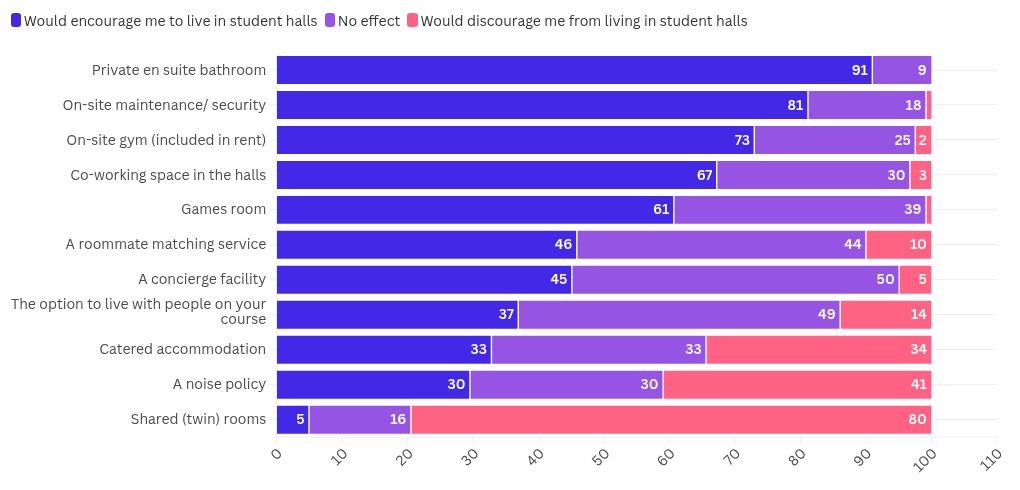
How would the following affect your decision in choosing student halls?
Source: JLL; University of Bath
The research demonstrates that students still prioritise a single occupancy room with en suite bathroom. Twin rooms scored very poorly and only one third of students actively favoured catered accommodation. The results also confirm that students prefer ‘cluster flat’ accommodation types over studios and smaller apartments (4-6 sharers) over large. However, only 29% are prepared to pay more than £200pw.
University Partnerships – The Opportunities and Challenges
So how does the sector square the circle of delivering more viable – and thus affordable – room types given the clear evidence of students’ perceived priorities? Twins, non en suites, larger cluster flats and catered accommodation all provide potentially many more beds per land parcel. The Bath survey and other research, including by Student Crowd, is clear that these remain unpopular with students so we should be unsurprised developers and operators of ‘direct let beds’ generally build to these perceived priorities.
Historically, one approach to increase PBSA density, and thus viability, has been university partnerships. This route sees occupancy either partially or completely de-risked for the accommodation provider. However, developing university partnerships can be challenging given the financial constraints in HE, the balance sheet treatment of such agreements and currently volatile student numbers. The Office for Students (OfS) recently forecast that 72% of institutions could have a deficit in 2025/26. Nevertheless, recent examples such as Unite Group’s deal with University of Newcastle and Urbanest’s with UCL, amongst others, show these challenges can be overcome, although examples are rarer for post-92 institutions. As Martin Blakey concluded in his recent HEPI Blog – Student Accommodation after 2024 and the Need for Strategic Realignment – ‘growth in student numbers no longer necessarily equates with the need for additional PBSA student bed spaces as has been the case over the last 20 years: future needs are changing and future accommodation provision cannot, for a whole variety of reasons, be more of the same’.
Conclusions
The ‘direct let’ operators of PBSA, who dominate the UK market, face a challenging period ahead as they wrestle with development viability in all but a handful of markets and where their standing assets in some locations are becoming overpriced. If the PBSA sector does not evolve, it risks forcing the fast-growing, lower income, domestic student population into different rental sectors (or to commute) and potentially damaging access to UK universities from emerging middle-income countries.
This blog could not have been produced without the kind assistance of Marcus Dixon and Karl Tomusk at JLL.
Search engine optimization (SEO) is essential for improving your school’s online visibility, ensuring that when local families search for educational options, your school is among the first they see. SEO helps your website rank higher in search engine results, making prospective parents more likely to find you before other schools in your area. SEO gives your school a competitive edge in reaching families who are actively seeking information on local educational options.
Knowing the value of SEO, most people ask how to do SEO for a school? To begin implementing SEO, schools can focus on three primary areas: On-page SEO, technical SEO, and Local SEO. In this blog, we’re focussing on local SEO.
An optimized online presence is crucial for K-12 schools to attract and engage prospective families within their local communities. By focusing on Local SEO, schools can increase their visibility in search engine results, connect with families nearby, and build trust as a leading choice for local education. With our 15 years of experience driving results for schools like yours, we know the unique challenges K-12 schools face in reaching prospective parents and students. This guide will walk you through the essential strategies to enhance your school’s local SEO, even if you’re new to search engine optimization.
Struggling with enrollment?
Our expert digital marketing services can help you attract and enroll more students!
Understanding Local SEO for K-12 School Websites and Why It Matters
Local SEO optimizes your school’s website and online presence to rank higher in local search results. This optimization specifically targets potential families searching for schools in your area, making it an essential component for K-12 schools looking to expand their visibility.
When someone searches “best private school near me” or “elementary school in [City],” the results that appear are influenced by local SEO practices. Google and other search engines analyze local relevance factors such as your school’s address, the presence of local keywords, online reviews, and overall domain authority to decide which websites to show at the top. Mastering local SEO for K-12 schoolwebsites can make a difference in being found online by families in your community.
Are you trying to implement effective digital advertising for parents of students? Reach out to learn more about our digital marketing services.
Claiming and Optimizing Your Google My Business Profile
What is the most effective strategy for local SEO? One of the most powerful steps you can take when marketing to K-12 students’ families in your area is to claim and optimize your Google My Business (GMB) profile. This profile is essential for local SEO because it provides search engines and families with critical information about your school, such as its location, contact information, and operating hours.
Begin by verifying your school’s GMB profile. When editing the profile, ensure all details are accurate, including the school’s name, address, phone number, website URL, and a brief description of the school’s values and offerings. Google also allows you to add photos, which can be a fantastic way to showcase your school’s facilities, activities, and unique educational experiences. Families browsing through profiles will be drawn to authentic visuals, which can help them feel connected to your school before they even step foot on campus.
Adding relevant categories (e.g., “Elementary School” or “Private School”) and attributes to your GMB profile increases your chances of appearing in local searches specific to your school type. Regularly update your GMB profile with fresh photos, events, and posts, as Google favors active profiles, enhancing your school’s local SEO ranking.
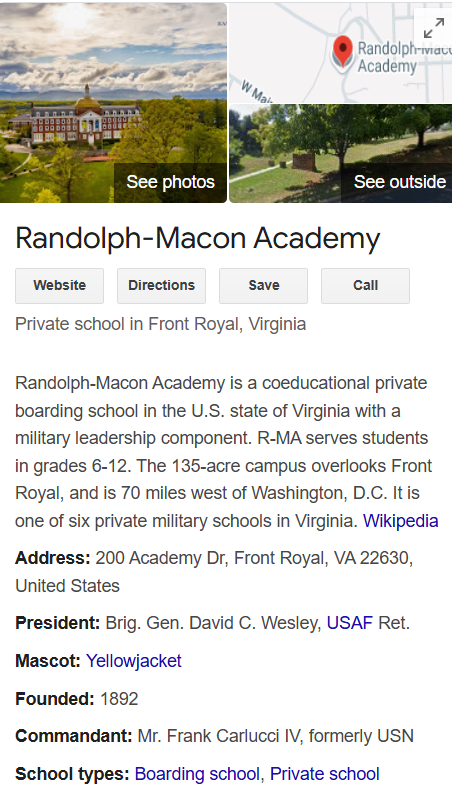
Example: This is how Google presents your institution to searchers when you create and optimize your Google My Business account. Your GMB profile provides critical information about your institution in an easy-to-consume layout.
Source: Randolph-Macon Academy | Google
Optimizing Your Website for Location-Based Keywords
Your website’s content should reflect keywords families might use when searching for schools in your area. Instead of generic phrases like “top K-12 school,” incorporate keywords that feature your location, such as “top K-12 school in [City]” or “private high school in [Suburb].” These location-based keywords help search engines understand that your school serves families in a specific area, increasing your chances of appearing in relevant searches.
Consider adding a dedicated “Location” or “About Our Community” page that details your school’s surrounding area, landmarks, or neighborhoods. This page could highlight the community values and amenities available, reinforcing that your school is embedded within the local community. Mentioning nearby cities, neighborhoods, or districts can also strengthen your local SEO, especially for families who want their children to be educated within specific geographic boundaries.
Each page of your website should also include the school’s full name, address, and phone number (often referred to as NAP – Name, Address, Phone Number) in a consistent format. Placing your NAP details in the footer ensures they appear across the entire site, building user trust and Google’s confidence in your school’s legitimacy and location.
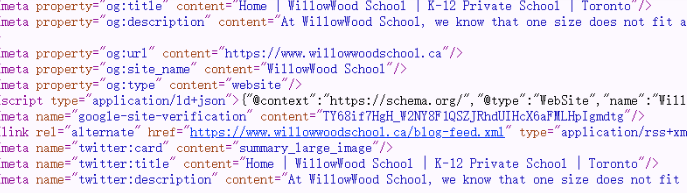
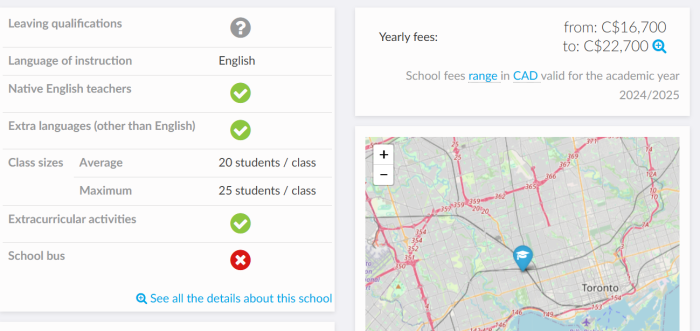
Example: WillowWood School’s metadata uses the title WillowWood School | K-12 Private School | Toronto. In your metadata, include your school’s city to rank for location-based searches.
Source: WillowWood School
Creating High-Quality, Locally Relevant Content
Content marketing is an excellent way to boost your school’s visibility in search results. Develop blog posts, articles, and resource pages that speak to local concerns, events, and topics families in your area care about. Writing blog posts on subjects like “Why Choose a Private School in [City]” or “The Benefits of Small Class Sizes in [Neighborhood] Schools” can help attract local searches and establish your school as a knowledgeable voice within the community.
Another powerful content idea is to publish posts about school events, open houses, and seasonal programs like summer camps. These posts can generate interest from families looking for activities within your area, leading to higher engagement on social media platforms.
Local content can also come as testimonials and success stories from parents and students within the community. Encourage current families to share their experiences and post their stories on your blog or testimonials page. Positive testimonials boost your school’s reputation, and add keywords and phrases that resonate with other families in your area.
Example: Here, Nanjing International School shares culturally and geographically relevant content on its YouTube channel, helping it to attract prospects. When creating content, particularly visual, highlight your school’s location and discuss any advantages it offers students.
Source: Nanjing International School | YouTube
Encouraging Positive Online Reviews
Online reviews play an important role in local SEO, particularly for schools. Families considering your school will likely check online reviews to gauge what other parents and students think of your programs, culture, and overall quality. Reviews posted on Google, Yelp, Facebook, and niche educational sites help build trust and credibility while boosting your local SEO ranking.
One way to encourage reviews is by setting up an easy process for parents to leave feedback. After key events like open houses, school performances, or parent-teacher meetings, follow up with an email inviting parents to share their experience on Google or other review sites. Always respond to reviews in a timely, professional manner, whether positive or negative. This responsiveness shows that your school values feedback and is engaged with its community, which search engines recognize positively.
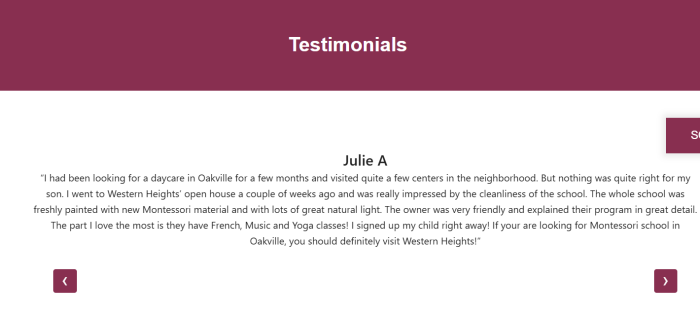
Example: Western Heights Montessori School’s website displays several positive reviews. These personal and specific reviews highlight the school’s unique selling points. When encouraging parents to write reviews, try to prompt them toward a similar result.
Source: Western Heights Montessori
Building Citations and Directory Listings
Citations, or mentions of your school’s name, address, and phone number on other websites, are a key component of local SEO. Citations help search engines confirm your school’s existence and location, ultimately building your website’s authority. Common places for citations include online school directories, community websites, and local educational resources.
Research reputable, relevant directories specific to education or your geographic area, and ensure your school’s information is listed accurately. Local chambers of commerce, community pages, and educational sites often provide directory listings or profiles where your school can be featured. Each additional citation strengthens your local SEO, contributing to a greater chance of appearing in local search results.
Example: This is GLCT’s listing on the International School Database. By appearing on directories like this, you’re expanding your online presence, making it easier for prospects to find your school.
Source: Great Lakes College of Toronto | International School Database
Building Local Backlinks
Backlinks, or links from other websites to your school’s website, are essential for establishing credibility in SEO. Local backlinks are even more valuable, as they signal to Google that your school is an authority in the community. Consider contacting local organizations, libraries, businesses, or news outlets that could mention or link to your school.
For example, if your school partners with local businesses for community events, ask them to link to your website in their event descriptions. Participating in community service projects or sponsoring local events can provide backlink opportunities. Press releases about notable achievements or events at your school, published on local news sites, can generate valuable backlinks.
Implementing Schema Markup
Schema markup is a form of structured data that helps search engines understand specific information on your website. For K-12 schools, schema can highlight important details such as your school’s name, location, contact information, and even specific features like tuition or grade levels offered.
Adding schema markup helps Google better understand the context of your website, often leading to enhanced search result displays with additional information like ratings, contact details, or event dates. Schools that use schema have a competitive advantage in local search results, as this markup can make your listing stand out.
For example, implementing schema to highlight upcoming events, open house dates, or application deadlines allows families searching for local school options to identify important details quickly. Schema markup may require technical assistance, but it’s worth considering to boost your local SEO efforts further.
Tracking and Adjusting Your Local SEO Strategy
After implementing these local SEO practices, tracking your progress is essential. Use Google Analytics and Google Search Console to monitor key metrics such as organic search traffic, click-through rates, and the keywords driving traffic to your site. These insights can help you understand which strategies are working and where adjustments are needed.
Regularly updating and refreshing your website’s content, profile listings, and SEO practices is vital to staying competitive. Local SEO is an ongoing process, and search engine algorithms frequently change, so periodically revisiting and refining your strategy can ensure your school continues to attract and engage the local community effectively.
Implementing local SEO for your K-12 school’s website may initially seem complex, but by focusing on the essential practices we’ve discussed today, you’ll soon see its value. By investing in local SEO, you’re building a more robust digital foundation and positioning your school as a valuable resource in your community.
Struggling with enrollment?
Our expert digital marketing services can help you attract and enroll more students!
FAQs
How to do SEO for a school?
To begin implementing SEO, schools can focus on three primary areas: On-page SEO, technical SEO, and Local SEO. In this blog, we’re focussing on local SEO.
What is the most effective strategy for local SEO?
One of the most powerful steps you can take when marketing to K-12 students’ families in your area is to claim and optimize your Google My Business (GMB) profile.
As the year draws to a close, we are once again excited to celebrate your commitment to equitable, personalized and AI-rich learning. We’re thrilled to unveil this year’s Top Hat Graded: our annual report that looks at how you and your students used our engagement platform and Ace, our AI-powered teaching and learning assistant, to your advantage. Let’s dive in.
Giving new meaning to student engagement
Click on target. Multiple choice. Fill-in-the-blank. It’s clear you wanted to shake up the standardized quiz this year. We’re honored to be along for the ride! You created more than 9.6 million multiple choice questions and 1.7 million long answer questions this year. But that’s not all. You also designed more than 985,000 fill-in-the-blank questions using our interactive platform. Our engaging formative assessment questions helped students stay focused before, during and after class when tackling their homework. Simply put, more questions posed meant more reason for students to complete their readings and attend class.
We also recognize that a good debate or small group discussion can help students shape their understanding of a new topic. While Gen Z might call it a vibe check, we’re filing this under your commitment to giving every student an equal voice. You created more than 509,000 discussions this year—interspersed within your lectures, readings and assignments. In turn, more than 147,000 discussions were used by students to assess their comprehension along the way.
Harnessing AI for good in the higher ed classroom
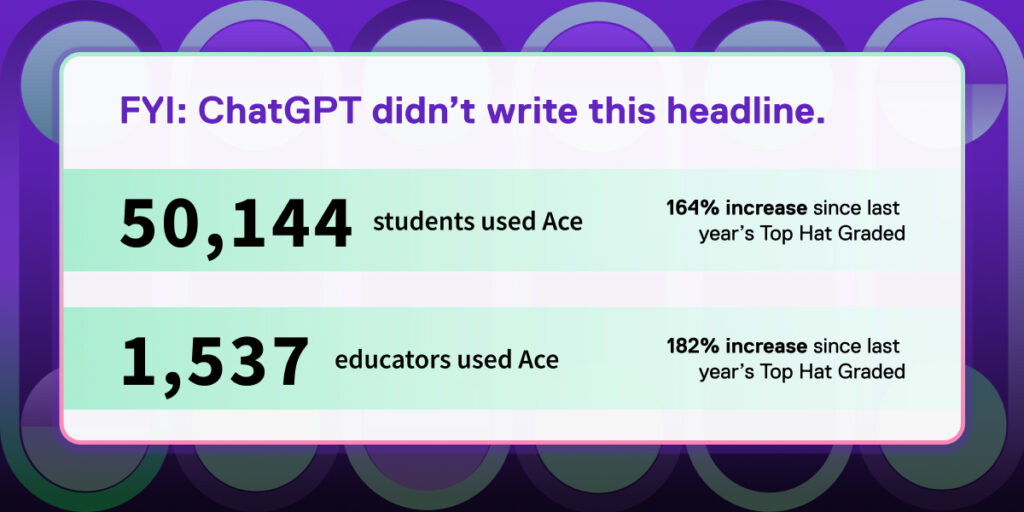
Artificial intelligence has, once again, been a hot topic in higher education. This past year, you viewed Ace under a refreshing light. More than 50,100 students relied on Ace for course-specific study assistance and AI-powered practice quizzes. In turn, learners also received immediate feedback rooted in the context of their course to guide their future studying efforts.
Now, let’s turn to you. More than 1,500 of your fellow faculty members used Ace this past year. Educators especially valued being able to add AI-generated questions into their slides using our Lecture Enhancer feature. Not only do our AI-powered features for educators save time during the question creation stage, Ace generates hints and explanations that allow students to identify their own misconceptions. Even better, we’ve charted a 182 percent increase in Ace usage among professors since our 2023 summary—speaking to the benefit of incorporating AI into the classroom.
Using Ace to spark active learning and higher-order thinking
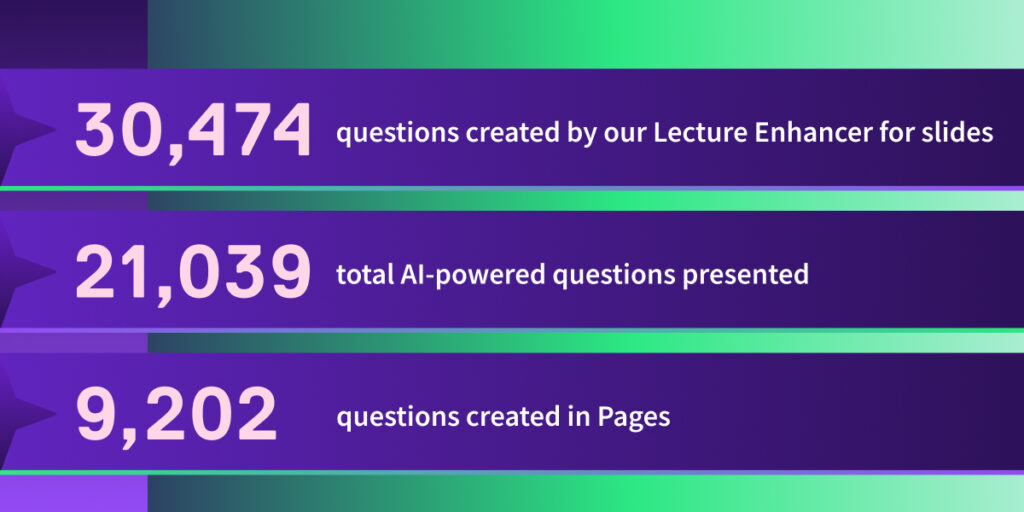
Once again, you found a way to assess student comprehension without the extra time commitment. You created more than 30,400 questions using Ace’s Lecture Enhancer. Whether you wanted to drill into students’ understanding of mitosis in your biology course or Victorian architecture in your art history class, Ace offered tailored questions in response to the context of your material. Faculty also designed more than 9,200 questions using Top Hat Pages. That meant students were given yet another opportunity to assess their learning during textbook readings and homework.
We thank you for your investment in AI-powered, active learning for every student. We wish you a successful start to the new semester!
For school administrators and marketers, the decision to integrate new communication tools is often met with the challenge of identifying which platform can better serve their specific needs. Regarding messaging apps, WeChat and WhatsApp are two powerful contenders that have proven effective for educational marketing, but which one is right for your school audience?
Both platforms offer distinct advantages, and understanding the nuances of each can help you decide which will deliver the most impact in your communication and marketing strategy. Let’s explore the key differences between WeChat vs. WhatsApp marketing, how each platform works, and which is best suited for various school audiences.
Struggling with enrollment?
Our expert digital marketing services can help you attract and enroll more students!
Understanding WeChat
WeChat is widely known for its dominance in China. Why do people use WeChat? WeChat is an all-in-one app that combines messaging, social media, payments, and mini-programs. It makes daily tasks—from chatting with friends to shopping, paying bills, and even scheduling appointments—easily accessible in one place. It’s the go-to platform for seamless communication and convenient, integrated services for users in China and the broader Chinese-speaking community.
WeChat has become a critical hub for creating a complete digital ecosystem for schools looking to recruit international students from China or engage with Chinese-speaking communities. It can be thought of as Facebook, WhatsApp, PayPal, and LinkedIn all rolled into one.
Reach out to us for customized, enrollment-boosting digital marketing services.
WeChat’s Audience and Features
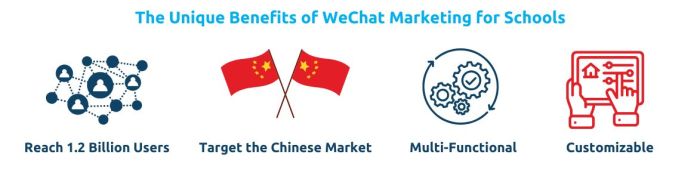
WeChat has a massive user base, with about 1.3 billion active users, most of whom are in China and other parts of Asia. If your school targets international students from China or aims to increase engagement with Chinese-speaking parents and alumni, WeChat offers an unparalleled platform to achieve this. With its unique ability to facilitate multi-channel communication, schools can create official accounts, push content, and even handle application processing directly through the app.
WeChat’s “Mini Programs” allow schools to build customized features like event registration systems, virtual tours, and interactive alumni networks. This level of customization allows schools to create tailored experiences for their Chinese audience that go far beyond what other platforms offer.
Another significant feature of WeChat is WeChat Pay, allowing students and parents to seamlessly handle tuition fees, donations, and event payments. For Chinese families, integrating WeChat Pay within the platform removes any friction in making payments, which can be a major selling point in their decision-making process.
In terms of content, WeChat Articles are a powerful tool for pushing long-form content directly to followers, keeping them updated on the latest news from your school. Whether it’s a blog about your curriculum or updates on on-campus events, WeChat Articles allow you to connect with your audience through in-app content distribution, creating an easy flow between information sharing and engagement.
Source: HEM
Marketing Opportunities on WeChat
For schools interested in targeted advertising, WeChat offers some incredibly detailed advertising opportunities. With WeChat Moments Ads, you can reach specific demographics and showcase your school’s brand through native-style ads that appear in a user’s feed, similar to Facebook’s sponsored posts. This form of advertising is especially effective for brand awareness and reaching prospective students.
WeChat also supports group marketing, where schools can create exclusive groups for prospective students or alumni. These groups can foster discussions, share news, and create a sense of community that strengthens engagement and boosts enrollment.
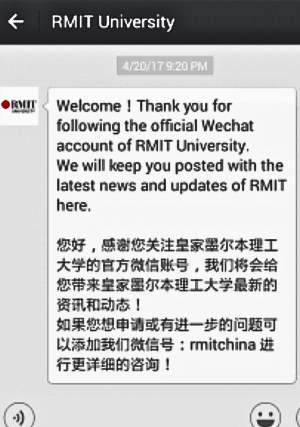
Source: RMIT University | WeChat
Example: WeChat Groups allow you to address up to 40 prospects at once, making them a valuable tool for sharing important news and updates, as RMIT University does here.
The significant advantage of WeChat is its complete ecosystem—it allows schools to build an end-to-end digital experience without requiring users to leave the app. Everything from content marketing to customer service and payments can happen within this one platform, making it a powerful choice for schools targeting Chinese-speaking communities.
Understanding WhatsApp: Streamlined Communication and Global Reach
While WeChat dominates in China, WhatsApp is the global king of messaging apps, with over 2 billion users worldwide. WhatsApp is particularly strong in Europe, Latin America, Africa, and Asia, offering schools a streamlined and simple way to engage with their audience across various countries. Its ease of use and widespread adoption make it a highly effective tool for schools aiming to communicate quickly and efficiently with diverse audiences.
WhatsApp’s Audience and Features
Why is WhatsApp useful in education? WhatsApp’s audience is significantly more diverse than WeChat’s, and it’s widely used across many different countries, making it ideal for schools looking to attract international students from multiple regions. WhatsApp’s primary strength is its ability to simplify direct communication between schools, students, parents, and alumni.
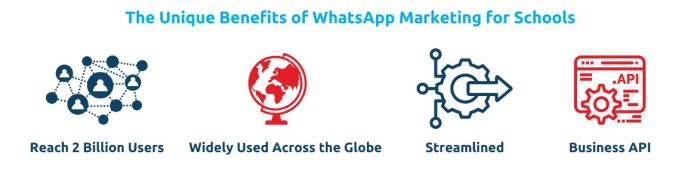
WhatsApp’s Business API allows schools to create official business profiles, enabling quick interactions with current and prospective students through text, voice messages, and video calls. This personal touch can be a considerable advantage, especially when engaging with younger audiences who prefer fast, mobile-friendly communication.
Unlike WeChat, WhatsApp’s functionality is more streamlined, focusing on core communication services such as text, voice, and video messaging. This makes it a great tool for schools that want to keep communication direct without the added complexity of an all-encompassing ecosystem.
WhatsApp also allows for group communication, where you can create student, faculty, or special interest groups that foster collaboration. Schools can leverage WhatsApp groups to send updates, event reminders and even provide quick support for administrative issues. It’s also widely used for parent-teacher communication, allowing teachers to quickly inform parents about their child’s progress or upcoming events.
Source: HEM
Marketing Opportunities on WhatsApp
WhatsApp may not have the comprehensive advertising ecosystem that WeChat offers, but it does excel in personalized engagement. For schools that rely heavily on maintaining personal connections with prospective students and families, WhatsApp offers a unique ability to build these relationships through its messaging features.
One highly effective approach is using WhatsApp for direct recruitment campaigns. Schools can reach out to prospective students, answer queries, and guide them through the application process all within the app. This personal touch can often be more effective than formal emails or less personal communication methods, especially when converting prospective students into enrollees.
Another significant advantage of WhatsApp is its support for status updates—a feature similar to Instagram Stories, where schools can post time-sensitive updates or content that will disappear after 24 hours. This allows schools to engage their audience with dynamic content reflecting real-time campus events or application deadlines.
WhatsApp is also owned by Meta (Facebook). For this reason, it offers seamless integration with Facebook, making it a powerful tool for educational marketers and administrators. This connection allows schools to leverage Facebook’s vast advertising network to directly reach prospective students, parents, and alumni on WhatsApp.
By integrating WhatsApp with Facebook’s ad campaigns, you can create targeted messaging that leads users straight into WhatsApp chats. This provides a convenient way for prospects to ask questions, receive guidance, and engage with admissions. This integration enhances lead generation efforts, enables personal interaction, and smooths the communication process, strengthening the overall impact of your school’s digital marketing strategy.
Additionally, WhatsApp’s integration with WhatsApp Web means that schools can easily manage communications via desktop, streamlining the process of answering student queries or sending mass updates to a group of contacts.
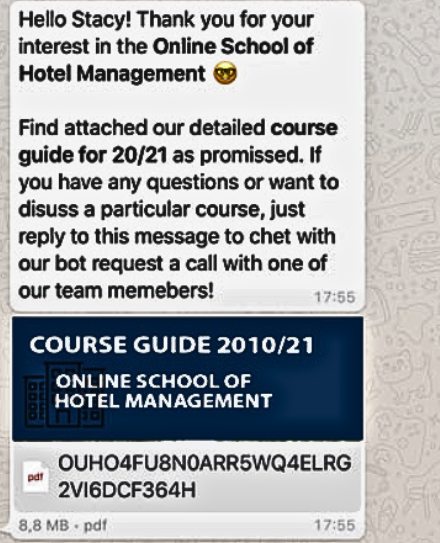
Source: Online School of Hotel Management | WhatsApp
Example: Here, the Online School of Hotel Management responds directly to a potential student who has reached out with a question. WhatsApp streamlines your school’s communication with students, guiding them down the admissions funnel in a personalized manner.
WeChat vs. WhatsApp: Which Platform Suits Your School?
What is the difference between WeChat and WhatsApp? In review, they serve different purposes and audiences. WeChat is a multifunctional app primarily used in China, offering a comprehensive ecosystem that includes messaging, social media, payments (WeChat Pay), and even mini-programs for custom features like event registration or virtual tours. It’s ideal for schools targeting Chinese-speaking students and parents, providing an all-in-one solution for communication and engagement.
On the other hand, WhatsApp is more streamlined, focusing on direct messaging, voice, and video calls. It has global appeal, especially in Latin America, Europe, and Africa. It’s perfect for schools that want to maintain personal, direct connections with students and families worldwide through simple, efficient communication. Choosing between WeChat and WhatsApp largely depends on your school’s audience and your communication goals. Here’s a deeper dive into how each platform aligns with specific audience types and regions.
If Your School is Targeting Chinese Students or Families
If your school focuses on recruiting students from China or engaging with Chinese alumni and parents, WeChat is, without a doubt, the best choice. WeChat’s cultural relevance within China makes it indispensable for schools looking to build long-term connections with this audience. Its ability to integrate payment systems, post long-form content, and offer an all-in-one solution for admissions, tuition, and engagement puts WeChat miles ahead regarding Chinese student recruitment.
In addition to the functional advantages, Chinese students and families will expect your school to be present on WeChat. It’s a platform that they trust and are familiar with, and being active on WeChat signals your school’s commitment to engaging with this audience in a culturally relevant way.
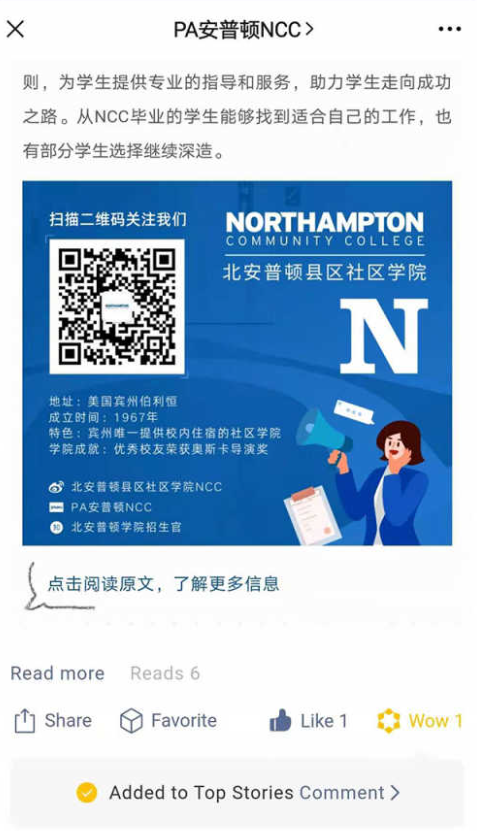
Source: Northampton Community College | WeChat
Example: This WeChat ad for Northampton Community College provides the institution’s Chinese name, the QR code leading to their landing page, account IDs for Weibo, Youku, and Zhihu, and a CTA. By following this structure, you can make your institution easily accessible to students and families in China.
If Your School is Targeting Global or Multicultural Audiences
WhatsApp is a far better choice for schools casting a wider net and needing to reach global audiences, particularly in regions like Latin America, Europe, Africa, and South Asia. Its universal appeal and ease of use make it ideal for communicating with students from diverse backgrounds. WhatsApp is especially useful for managing international recruitment efforts across multiple countries, as it’s a platform that students and families worldwide are likely already using.
In these regions, WhatsApp provides a more personal touch. Its focus on direct communication allows you to build meaningful connections with prospective students, making them feel valued and supported throughout the admissions process. WhatsApp is the right platform if your school prioritizes fast, personal interactions with a broader international audience.
If Your School Needs a Comprehensive Marketing Ecosystem
For schools ready to invest in a comprehensive marketing system to manage everything from social media engagement to payments, WeChat is the platform to choose. Its versatility allows schools to build custom mini-apps within the platform, offering a wholly branded experience for students and parents. WeChat’s ecosystem also allows for a more immersive marketing experience, making it an excellent choice for schools looking to create long-term engagement.
If Your School Prioritizes Simplicity and Personal Communication
On the other hand, if your school values simplicity and needs a platform that prioritizes direct, fast communication over elaborate marketing systems, WhatsApp is the better choice. It’s the platform for schools that want to keep communication simple, efficient, and highly personal. WhatsApp excels at building authentic relationships for student recruitment, parent communication, or handling alumni relations on a more personal level.
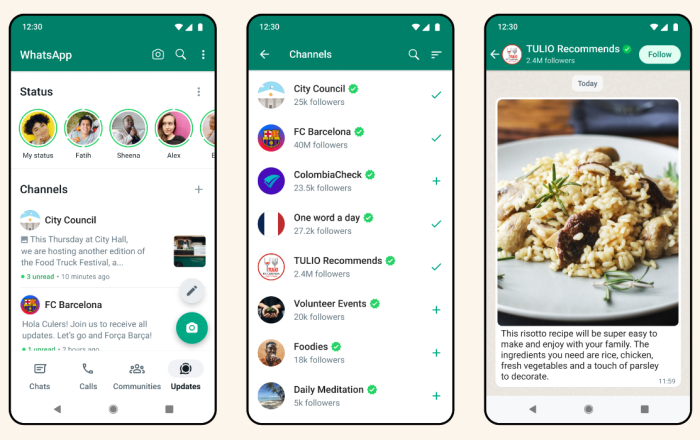
Source: WhatsApp
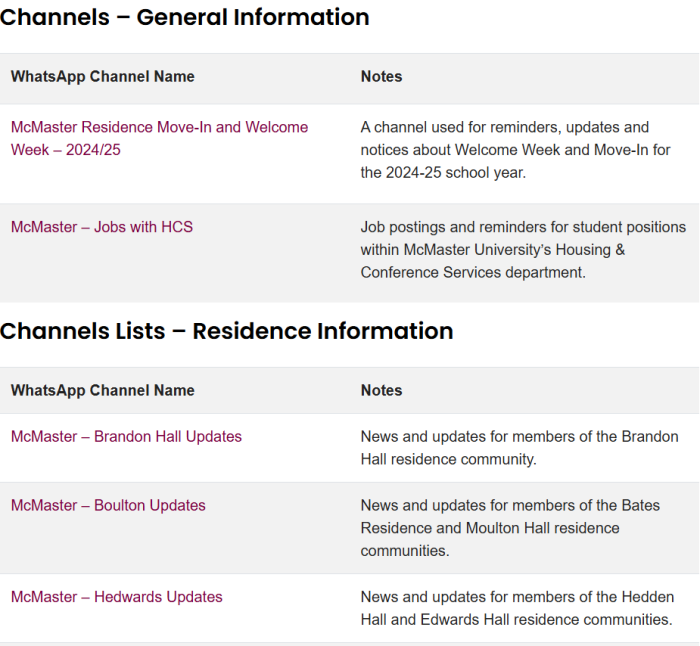
Source: McMaster University
Example: McMaster University shares a list of WhatsApp Channels for its students. McMaster shares casual, authentic, and personable content on its various channels, as pictured above.
Final Thoughts: Aligning Your School’s Needs with the Right Platform
Ultimately, the decision between WeChat and WhatsApp should come down to the specific needs of your school and the audience you’re trying to reach. If you focus on connecting with Chinese-speaking students and parents, WeChat provides an all-in-one marketing and communication solution that can’t be matched. However, WhatsApp is a strong contender if your school aims for global reach and personal, straightforward communication. Its simplicity, ease of use, and popularity worldwide make it a go-to platform for schools that want to maintain direct and personal connections with students, parents, and alumni across different countries.
Combining Both Platforms for Maximum Impact
It’s also worth considering that you don’t necessarily have to choose one. Many schools benefit from using both platforms to target specific audience segments. For instance, if your school is engaged in global recruitment but also targets Chinese students, you can use WhatsApp to maintain personal, direct relationships with your broader international audience while leveraging WeChat’s extensive ecosystem to cater to your Chinese audience.
Integrating WeChat and WhatsApp into your school’s communication and marketing strategy can tailor your approach to suit each audience’s preferences, delivering a more personalized and culturally relevant experience. Whether it’s the seamless payment options and immersive marketing experiences on WeChat or the personal, text-based interactions on WhatsApp, using both platforms strategically can maximize your reach and impact.
Action Steps for Implementing WeChat or WhatsApp for Your School
Once you’ve decided which platform (or platforms) fits your school’s audience, it’s time to take action. Here’s how you can get started:
Define Your Audience Segments: Start by identifying which segments of your audience would best respond to WeChat and which would benefit more from WhatsApp. To tailor your strategy, consider cultural preferences, regional habits, and communication styles.
Create Official Accounts: Whether you’re using WeChat or WhatsApp, setting up an official business account is crucial. For WeChat, this includes creating an official account to publish content, integrate payments, and offer customer service. For WhatsApp, create a business profile with key contact details and a direct line for inquiries.
Build Content for Engagement: On WeChat, use Mini Programs, Articles, and Moments Ads to create a holistic marketing ecosystem. For WhatsApp, focus on conversational marketing, using messaging to engage students directly and build trust through personalized communication.
Train Your Marketing Team: Ensure your team is well-versed in each platform’s features. WeChat’s ecosystem is more complex, so consider investing in training to maximize its potential. For WhatsApp, focus on conversational marketing strategies and direct engagement best practices.
Track and Optimize Performance: Both platforms provide analytics that can help you measure engagement and refine your approach. Use these insights to optimize your marketing campaigns and improve communication with your audience.
Conclusion: Choosing the Best Tool for Your School
When deciding between WeChat and WhatsApp, the key is to align the strengths of each platform with your school’s audience and communication goals. WeChat is ideal for reaching Chinese-speaking students and creating an immersive, all-in-one experience, while WhatsApp maintains direct, personal connections with a global audience.
By understanding the unique features of both platforms and strategically implementing them, your school can enhance its communication strategy, foster better relationships with students and parents, and ultimately drive more successful recruitment efforts. Whether you choose one platform or integrate both, the right tool will help you reach your school’s target audience more effectively, ensuring your message is heard loud and clear.
Struggling with enrollment?
Our expert digital marketing services can help you attract and enroll more students!
FAQ
Why do people use WeChat?
WeChat is an all-in-one app that combines messaging, social media, payments, and mini-programs. It makes daily tasks—from chatting with friends to shopping, paying bills, and even scheduling appointments—easily accessible in one place. It’s the go-to platform for seamless communication and convenient, integrated services for users in China and the broader Chinese-speaking community.
Why is WhatsApp useful in education?
WhatsApp’s audience is significantly more diverse than WeChat’s, and it’s widely used across many different countries, making it ideal for schools looking to attract international students from multiple regions. WhatsApp’s primary strength is its ability to simplify direct communication between schools, students, parents, and alumni.
The rapid growth of the internet and social media have created a thriving online space for prospective students to explore educational offerings. It has also paved the way for a vibrant market that educational institutions can explore to attract students and boost their enrollment numbers.
Yet, even as these opportunities arise, schools still have to find the best ways to reach prospective students and their families. To make the most of these opportunities and properly engage the students using these platforms, today’s schools must master Multi-Channel Marketing.
At HEM, we know all about Multi-Channel Marketing and the value it brings to schools. We have over 15 years of experience in education marketing to draw from, so we know the strategies that give the best results. In this blog post, we’ll explore the basics and essentials of multi-channel marketing in higher education.
The information contained here will help schools create and implement an effective and comprehensive multi-channel marketing strategy. This strategy will help them boost visibility, increase engagement, and ultimately drive enrollment growth.
Struggling with enrollment?
Our expert digital marketing services can help you attract and enroll more students!
Understanding Multi-Channel Marketing in Higher Education
What is multi-channel marketing? Multi-channel marketing refers to the practice of reaching out to, and marketing educational offers to prospective students, using platforms/channels like social media, email, websites, and paid ads. Each channel serves a unique purpose, allowing institutions to create engaging interactions that resonate with students.
So why is multi-channel marketing important in education marketing? Multi-channel marketing helps schools reach prospective students, on the platforms they use most, with content that helps promote their educational offerings and boosts enrollment.
Today’s students are digital natives exposed to a lot of information from an unlimited supply of sources daily. Educational institutions must, therefore, maintain a presence across these platforms while tailoring content to their interests and needs.
Digital marketing for schools calls for a specific type of approach. This approach helps schools establish connections and strengthen their brand identity, turning initial curiosity into commitment.
The Importance of Consistency Across Channels
The importance of consistency in messaging with multi-channel marketing can not be overemphasized. When an institution provides a unified message across the board, it reinforces its identity and creates a seamless experience for students. When their messaging aligns, it builds their credibility and makes their message clear enough for the target audience who can, in turn, see the institution as genuine and reliable.
Key Channels and Their Specific Strategies for Multi-Channel Marketing for Higher Education
We start by asking – what is a multi-channel marketing strategy? It is an action plan that aims to reach and engage an audience via multiple channels. For education marketing, it is a set of plans to help schools become more visible and accepted by prospective students.
To create an effective multi-channel marketing strategy, schools should leverage the unique benefits that each platform contributes to the marketing effort. While it is important to maintain a consistent core message across these platforms, it is equally important to tailor approaches for each specific channel. Here’s how your school can achieve this across different platforms.
Social Media
Schools can use social media platforms like Instagram, Facebook, and LinkedIn to build strong connections with prospective students. They can showcase campus life and academic programs through short videos, student testimonials, and campus photos as part of efforts to show glimpses of the day-to-day experience for students. Also, they can share relatable stories and other behind-the-scenes content.
Platforms like TikTok and Instagram which focus on short-form videos can also be used to target younger audiences. Schools can explore this social media space where prospective students thrive. There, they can engage them in authentic, meaningful conversations and sell their offers to this audience.
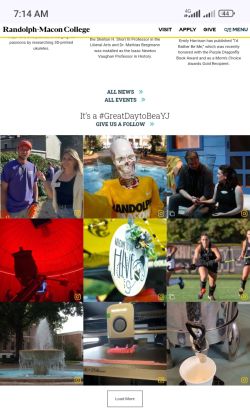
Example: Randolph Macon College splatters social media images of students partaking in school events across their website. Clicking on any of these pictures will lead you to the social media posts from which the image was culled. These posts show what student life is like at the college.
Paid advertising, most notably via Pay-Per-Click advertising and social media ads, helps schools reach highly targeted audiences based on location, interests, and online behaviours.
While your social media ads highlight the lifestyle aspects of campus life and depict an ideal college experience, search ads should be geared toward academic programs and rankings. This makes it easier for institutions to reach the right audience at the right time. The focus here should be on creating clear, compelling calls-to-action (CTAs) like “Apply Now” or “Request Info.”
In addition, students who have previously visited the school’s site or engaged with their social media content can be targeted with “retargeting ads.” This is so the schools remain top of mind when they make a decision.
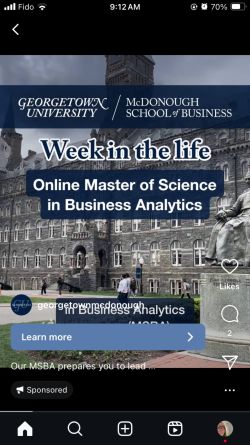
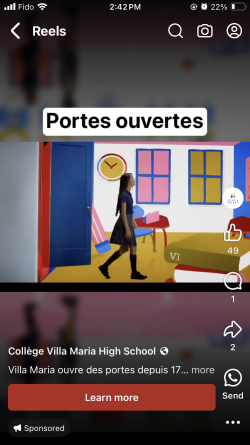
Example:This photo, culled from Instagram shows a sponsored “Week in the Life” post curated by students of Georgetown University/McDonough School of Business’s MSC in Business Analytics program. The post provides information about the university’s Online Master of Science in Business Analytics program and invites them to learn more with a boldly visible CTA.
Source: Georgetown University | School Instagram
Content Marketing
Institutions can use blogs, videos, and downloadable guides as a resource for selling their offerings to prospective students. They can post informative blog posts like “How to Choose the Right Major” or “Tips for Applying for Financial Aid” and, in the process, answer the questions that prospective students ask and help them make well-informed decisions.
Video content, shown via virtual tours, student testimonials, and even faculty introductions also provide valuable insights into what the campus environment and overall student experience look like.
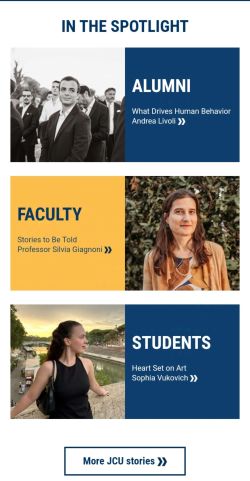
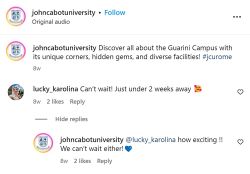
Example: Here, John Cabot University allows visitors to its website to explore stories, and events, from its alumni, students, and faculty. You can learn important information from these sources from a place of trust and first-hand experience.
A good SEO strategy for education marketing plays a key role in shaping how students find schools’ websites online. An optimized, well-designed website that contains relevant information and is easy to navigate can make a huge difference in a student’s SEO experience. By focusing on optimizing key pages that contain relevant information, these schools can steer prospective students toward the information they need.
This information may range from details on specific programs and campus events to admission requirements and tuition fees. Another important tip is to make the website mobile-friendly to cater to students who now research schools from their phones.
Video Marketing
Many schools today are increasingly switching to platforms like YouTube, Instagram Reels, and TikTok to create and showcase video content about their offerings online. Video Marketing for schools uses contents that go from ‘‘day-in-the-life” snippets of current students to tours of facilities and highlights of extracurricular activities.
This type of content bridges the gap between browsing and visiting in person by offering glimpses into the campus experience.
Email Marketing
Email Marketing offers a means for schools to deliver personalized, targeted messages directly to the inboxes of prospective students. This strategy proves particularly effective for keeping leads warm and sharing detailed information about programs, events, and application tips.
Thankfully, schools can now use automation tools to set up drip campaigns that direct students through the enrollment process. This way, they can furnish students with the right content at the right time during each stage of their decision journey.
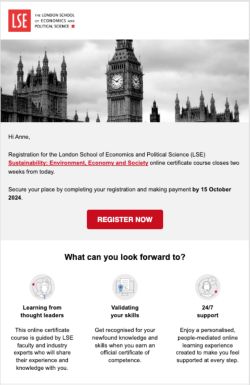
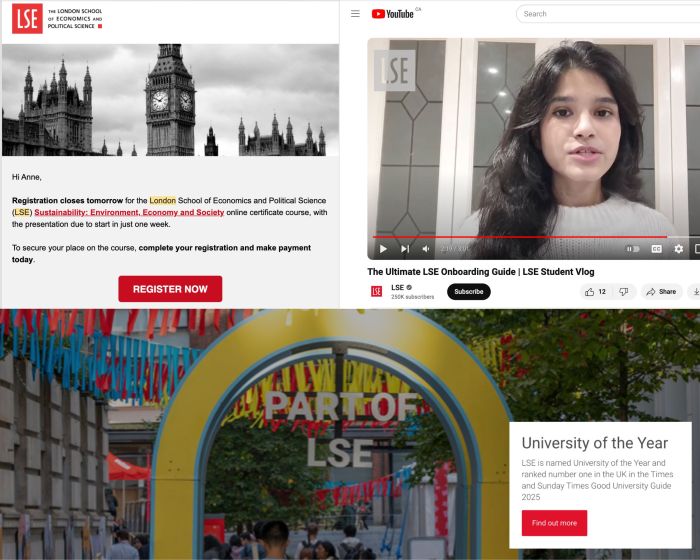
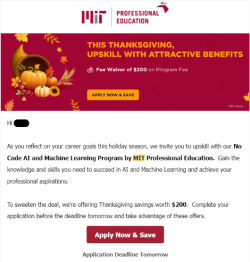
Example: Here, The London School of Economics and Political Science delivers a personalized email to a prospective student. The email contains registration information and encourages the student to take immediate action with a clear CTA.
Source: London School of Economics
Review Platforms
Finally, review Platforms like Google Reviews or other sites that rank colleges. Positive reviews and testimonials from current students and alumni offer social proof that others have had positive experiences with the school. The reverse is also true.
As a prospective student, you’ll most likely be encouraged by and trust a school more if you come across these positive reviews on the school’s website. If you find thoughtful responses to negative feedback, you may interpret it as a commitment to growth and student satisfaction.
Mapping The Student Journey
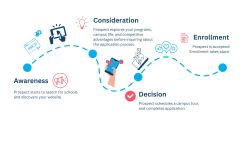
To enjoy the benefits of Multi-Channel Marketing efforts, schools must understand the various stages of the student journey. Each phase calls for a different approach and set of strategies to engage with and make meaningful connections with students.
Source: HEM
Awareness Stage
This stage is the beginning of the student’s journey where they are exploring their options and just starting to research potential schools. Schools aim to build visibility and introduce their unique qualities to students at this stage, mostly using social media, blog content, and paid ads.
Consideration Stage
In this stage, students tend to compare their options while also seeking specific information on programs, costs, and campus life. FAQs, financial aid guides, virtual campus tours, and other content that can answer their questions provide value at this stage.
Also, schools can use emails and retargeting ads to provide extra reminders and insights, emphasizing why they may be the best choice.
Decision Stage
The decision stage is the stage where students are set to take action, from filling out applications to scheduling campus visits. At this critical juncture, clear calls to action can help speed up the enrollment process.
Schools can embed these CTAs directly in blog posts and landing pages to capture leads and increase conversions. They should also provide straightforward application instructions, important deadlines, and information on securing financial aid at this stage.
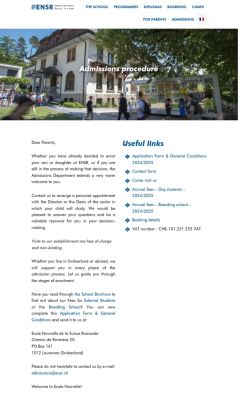
Example: ENSR, shown below, provides links to application forms, contact forms, and tuition information to students who click on the “Apply to ENSR” menu. The next page opens up to a welcome page and caters to students who may have decided to apply to the school.
At this stage, the students have decided to attend the institution, so it is now the institution’s prerogative to maintain that connection. Schools may use such onboarding processes as welcome emails, orientation materials, and pre-arrival checklists to help students prepare for their first day on campus.
This way, the schools can ease their new students and in the process, receive commendation and long-term loyalty from the students.
Channel-Specific Strategies For Education Marketing
While schools should aim to be consistent with the core message of their marketing, there’s value in using tailored approaches for each channel they seek to engage students with. For instance, if you were promoting a university open house, you could implement a multi-channel campaign with the following strategies:
Social Media Ads: Short, engaging videos on Instagram and Facebook could showcase a vibrant campus environment and invite students to attend the open house.
Email Marketing: Personalized emails sent to prospective students at various stages of the admissions funnel could provide detailed event information and even offer one-on-one consultations.
PPC Ads
Google Ads targeting students actively searching for open houses or virtual tours could ensure the campaign reaches the right audience.
Landing Page
A dedicated landing page featuring event details and a user-friendly registration form could simplify the sign-up process and increase conversions.
With such a strategic approach, educational institutions can boost event attendance and applications, creating a more engaging and impactful marketing campaign.
Tracking and Measuring Success
Here are some of the key tools that schools can use to ensure the effectiveness of their Multi-Channel Marketing efforts.
Google Analytics: Thiscritical tool helps in tracking website traffic, user behaviour, and conversions across various digital touchpoints. It helps schools identify the channels driving the most traffic and leads so they can adjust their strategies accordingly.
Customer Relationship Management (CRM)
Schools can use platforms like Mautic, Hubspot, or Salesforce, to track individual students interacting across multiple channels. This helps to ensure that there’s consistent follow-up on choices made by the students.
Social Media Analytics: With tools like Facebook Insights and Instagram Analytics, schools can track engagement, reach, and follower demographics to understand which content types resonate most with their audience.
For example, Facebook Insights highlights post reach, allowing schools to identify top-performing content, while Instagram Analytics provides data on story interactions and audience behaviour.
Leveraging these insights, schools can refine their social media strategies, focusing on content that maximizes visibility and engagement with prospective students.
Email Marketing Platforms: Platforms like Mailchimp and Constant Contact enable tracking of open rates, click-through rates, and conversions. They then help to offer insights into how well email campaigns are working.
PPC Campaign Trackers: Use tools like Google Ads and Facebook Ads Manager to monitor clicks, impressions, and conversions. This helps you assess the quality of traffic your paid ads are driving to your school’s websites.
How To Synergize Email, Social Media, Blog Posts, and Paid Ads for Maximum Reach and Engagement
As a school keen on reaching and engaging prospective students, you need to build a cohesive approach that unifies your social media, ads, and blog posts. Here’s how to achieve this.
Create a Unified Campaign Calendar
This is most often the first step towards aligning content across your different platforms. It helps create a connection between the channels you use, so prospective students who explore these channels can always get a clear picture at all times.
You can launch a blog post to introduce a topic, push it further with social media snippets, and proceed to send emails that buttress the message and call for action.
Example: The marketing calendar of one of HEM’s client schools, revealing clear and coordinated schedules for content, social media, email marketing, and paid advertising across several platforms.
Source: HEM
Drive Traffic from One Channel to Another
Students should be moved to visit your other platforms when they check out one of them. One trick is to add links (that lead to a blog post) to a CTA you insert somewhere in a social media post. You can also add social sharing buttons to email newsletters so people who read them can help spread your content.
Use Consistent Branding and Messaging Across Platforms
How can schools build their brand reputation? Schools can build their brand reputation by providing consistent messaging and visuals across the various platforms used in engaging students. The same logos, colours, and taglines should be used across emails, social media posts, blogs, and ads. If you’re promoting an event on different platforms, use the same visuals and phrasing across the board so people can recognize them immediately.
Example: Observe how The London School of Economics and Political Science maintains consistent visuals across their email, YouTube, and website platforms.
Source: London School of Economics
Leverage Audience Segmentation
Segment your audience to deliver tailored content that students at various stages can relate to. You may send unique emails to seniors and juniors or target social ads based on location. Also, reach parents who make key decisions on issues regarding K-12 education and create content that appeals to them and their kids.
Optimize Content Based on Platform Performance
Keep tabs on your engagement across channels to refine your approach when necessary. So, if your Instagram posts highlighting student success stories perform well, you can use that type of content in emails and add to achieve similar results.
Use Automation to Simplify Cross-Platform Synergy
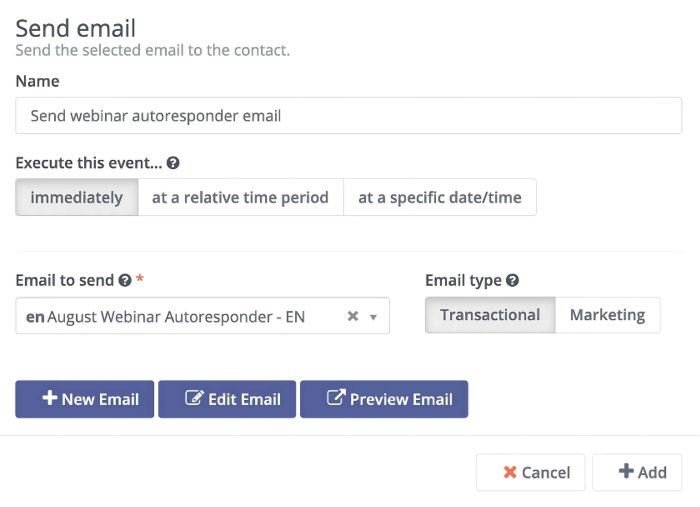
Schools can simplify their content and create consistent messaging across channels using automation tools. An example is the use of automated email sequences to respond to brochure downloads, which can help engage students without manual follow-ups.
Using Automation to Streamline Multi-Channel Engagement
Automation tools, when used in education marketing, can integrate platforms and personalize messaging. This then makes it easier to reach out to prospective students. Here are a few of such tools for schools to consider using:
Customer Relationship Management (CRM) Systems: Schools can use good CRM systems like HubSpot and Mautic to store student information, automate follow-ups, and score leads. This can help admission teams prioritize their student engagement strategies and avoid missing opportunities.
Email Marketing Platforms: With platforms like MailChimp and Hubspot, you can create automated emails that are set off by specific behaviours or actions online. An example is where students receive a follow-up email with more program details when they download a brochure. This helps you sustain and maximize student engagement with minimal oversight.
Social Media Scheduling Tools: Scheduling tools like Hootsuite and Buffer allow you to post across platforms in advance so you can more consistently and promptly drive engagement.
Automated Workflows: Here are several automated workflows, with examples, that schools can use.
→ Triggered Emails Based on Behaviour: These types of emails are automatically sent when a prospective student clicks a link, downloads content, or visits a specific webpage. For example, a prospective student who downloads a program brochure from your website could automatically get a follow-up email offering more details about the program and campus tours, or webinar invites. Another reminder will be sent to the student a couple of days later if they fail to click the link even after opening it.
→ Remarketing on Social Media: Here, students who have not taken action having already shown interest are re-engaged. You can use this strategy if, for instance, a student doesn’t complete an inquiry form after visiting your school’s admissions page. In this case, you can automatically display ads (for a Facebook or Instagram remarketing campaign) that remind the student of application deadlines or show student success stories.
Nurturing Long-Term Leads with Automated Drip Campaigns:Automated drip campaigns help schools follow up on students who are yet to make a decision, by using (for example) a series of pre-written emails sent at specific intervals. As an example, it can involve a school sending periodic emails with useful content, like “What Makes Our University Stand Out,” and “Tips for Completing Your Application” to students who fill out inquiry forms without immediately applying.
Automated Lead Scoring: This is an automated process that assigns a score to each prospective student based on their interactions with your marketing content. This helps to prioritize high-interest students for personal outreach. You can assign higher scores to, say, a student who downloads your school’s brochure and opens three newsletters. This then alerts the admissions team to reach out to them more intently.
Data-Driven Decision-Making with Analytics: Analytics tools like Google Analytics 4 provide insights into what’s working across your channels and allow you to refine your marketing focus. Track metrics like website traffic and conversion rates to make data-driven marketing decisions. This way, you can make informed adjustments and improve student recruitment.
Final Thoughts
As the prospects in education marketing become even more complicated, schools must master and develop the right strategies for Multi-Channel Marketing to thrive. This involves fully understanding the student journey, coordinating campaigns, leveraging diverse platforms, and making data-driven decisions, among other things discussed here.
Ultimately, the successful implementation of multi-channel marketing relies on consistency, strategic planning, and leveraging the unique strengths of each platform. Begin by understanding your audience and their journey, and use the tools at your disposal to make meaningful connections that lead to increased student enrollment. With these strategies in place, you can position your school to enhance its reach, drive engagement, and reach its enrollment goals.
Struggling with enrollment?
Our expert digital marketing services can help you attract and enroll more students!
Frequently Asked Questions
Question: What is Multi-Channel Marketing?
Answer: Multi-channel marketing refers to the practice of reaching out to, and marketing educational offers to prospective students, using platforms/channels like social media, email, websites, and paid ads.
Question: Why is multi-channel marketing important in education marketing?
Answer: Multi-channel marketing helps schools reach prospective students, on the platforms they use most, with content that helps promote their educational offerings and boosts enrollment.
Question: What is a multi-channel marketing strategy?
Answer: It is an action plan that aims to reach and engage an audience via multiple channels.
Question: How can schools build their brand reputation?
Answer: Schools can build their brand reputation by providing consistent messaging and visuals across the various platforms used in engaging students.
Language learning institution’s growth is projected to increase in the coming years. From 2024 to 2030, the global language learning market is predicted to expand at a compound annual growth rate of 20%. Due to the globalization of the labor market, language learning is likely to be in high demand.
Though language learning is growing in popularity, for lasting success, your school must find effective ways to stand out among other language academies looking to boost their enrollment. Digital advertising offers a broad spectrum of tools to attract students, but knowing how to maximize the impact of these strategies is key to success. At Higher Education Marketing, we’ve spent years refining approaches that yield measurable results for schools offering language learning programs. The following strategies offer actionable steps to elevate your ads targeting language students and attract the right prospects to your programs. Let’s explore!
Want to create successful ad campaigns?
Request a Free paid advertising consultation.
Understanding the Unique Needs of Language Learners
Language learners are a distinct group with varied motivations, backgrounds, and learning goals. Some are looking to learn a language for career advancement, while others may seek language acquisition for academic, travel, or personal reasons. Advertising that speaks directly to these needs requires a keen understanding of the diverse audience you aim to reach. One of the first ways to maximize the impact of digital advertising is through careful audience segmentation. Instead of promoting the same message across all channels, consider the specific motivations that drive different groups of learners and tailor your messaging accordingly.
Segmenting audiences by factors such as age, occupation, location, and even language proficiency allows schools to create highly targeted campaigns. How does language impact advertising for schools?Simply put,it depends heavily on your organizational goals. If you’re looking to target professionals wanting to learn English for business purposes, the language in your ad copy should reflect the vocational value of your programs. On the other hand, copy-targeting students hoping to improve their French skills before an international exchange can be more casual and experience-focused. This approach ensures the content resonates more deeply with potential students, increasing the chances of conversion.
Do you need help launching your language school’s latest ad campaign? Reach out to discover how we can support you.
Leveraging Social Media Platforms to Build Authentic Engagement
Social media is a powerful tool for language learning programs, offering an opportunity to create ongoing engagement with potential students. However, simply posting ads isn’t enough. The most successful social media campaigns foster a sense of community and engagement, which encourages followers to take the next step toward enrollment.
For language schools, showcasing success stories is one way to build trust. Highlighting testimonials from former students, sharing video snippets of language immersion experiences, and offering short, valuable language tips can increase authenticity. Interactive content, such as live Q&A sessions or virtual language exchange events, can draw in potential students who want to see what learning at your institution feels like before they commit.
Schools can also encourage user-generated content by asking current students to share their experiences online, providing social proof that can be far more persuasive than traditional ads. When students are shown engaging and relevant ad content on their social media feeds and in your school’s stories, they are much more likely to visit your site and perhaps even take the first step in your enrollment process.
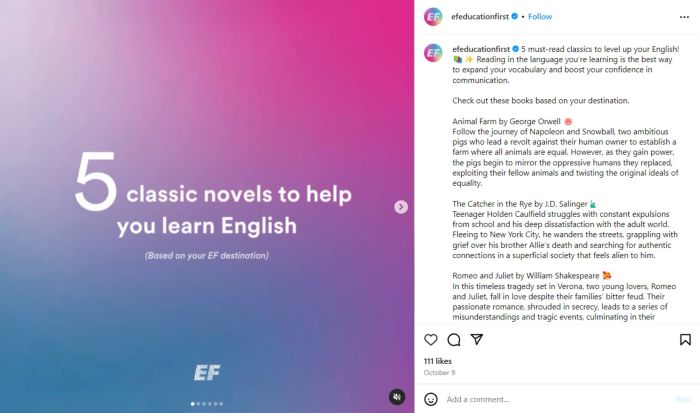
Example: Here, a leading language school, EF Education First uses Instagram to drive their organic traffic. In their post, they share valuable language acquisition tips, providing an English reading list for their students. Try using social media to share actionable language tips with your audience. This will drive engagement, boost your follower count, and broaden your digital reach.
Source: Instagram | EF Education First
Creating Culturally Relevant Ads to Reach Global Audiences
Language learning programs often attract an international audience, which means your digital ads must resonate across cultures. One way to do this is by crafting culturally relevant ads that speak directly to the experience of international students. The language and imagery used in ads should align with the cultural values of the target audience. For example, an ad targeting language students in the Asian market might highlight the importance of family and education, while an ad aimed at Latin American students might focus on community and connectivity.
Schools should also consider creating ads in multiple languages to appeal to global audiences. You may be wondering how to go about this. For example, Can you target by language on Google Ads? Yes! Google Ads allows advertisers to create campaigns that specifically target users based on the language settings of their browser or device. You can set up your ads to appear in multiple languages, ensuring that they reach potential students who speak those languages. Additionally, you can create language-specific ad copy and landing pages, enhancing the relevance of your campaigns.
Optimizing Paid Search Ads for Long-Tail Keywords
One of the most effective ways to drive qualified traffic to your website is through paid search advertising. Language schools can take advantage of this by focusing on long-tail keywords that are specific to language learning. While broad keywords like “learn English” may have high competition, phrases like “intensive French courses for business professionals in Paris” or “Spanish language classes for travelers” are more targeted and tend to attract a highly motivated audience.
Long-tail keywords may have lower search volumes, but they often result in higher conversion rates because they target users who already have a clear intent. This approach not only helps you to maximize your ad budgets but also ensures that the clicks you receive are more likely to turn into enrollments.
Source: Hutong School
Example: Here, Hutong School uses the long-tail keyword: Global Chinese language school in their metadata. This targeted keyword is designed to attract students who not only want to learn Chinese but also want to do so at a global institution that welcomes students from all over the world. Specificity in keywords ensures higher quality leads who are specifically looking for you.
Crafting Compelling Ad Copy That Speaks to Pain Points
Effective ads for language learning and education go beyond promotion and address the specific challenges that potential students face. Whether it’s the fear of not being left behind in class or the worry about balancing language learning with other responsibilities, successful ads speak directly to these concerns.
To craft compelling ad copy, start by identifying the pain points that your target audience experiences. Are they professionals concerned about fitting language classes into their busy schedules? Are they international students worried about mastering a new language before moving abroad? Once you’ve identified these challenges, your ads should provide solutions. Highlight the flexibility of your class schedules, emphasize the support systems you have in place for struggling students, or showcase how your programs help learners achieve fluency quickly.
Source: KCP International Japanese Language School
Example: Here, KCP addresses a very common pain point for language learners in their ad copy. Many fear that it’s ‘too late’ to learn a new language as the experience can be expensive and time-consuming. KCP positions itself as the solution to this barrier, ensuring its audience that as long as they meet four basic criteria, learning Japanese is within reach for them.
Using Retargeting to Capture Warm Leads
Retargeting is one of the most powerful tools in digital advertising, particularly for language schools where prospective students may need time before making an enrollment decision. Retargeting campaigns allow schools to stay top-of-mind by showing ads to users who have already visited the school’s website or engaged with its content.
Retargeting works particularly well for language learning programs because it targets individuals who are already interested in the subject but may not have been ready to commit when they first encountered the program. Your school can use this strategy to provide reminders about upcoming enrollment deadlines, promote special offers, or share new content that highlights the benefits of your courses.
For instance, if a visitor left your site after viewing the course offerings but didn’t sign up, retargeting ads can remind them of the benefits of joining your program. This approach can be particularly effective when combined with personalized messaging, such as offering tailored suggestions based on the courses they viewed.
Incorporating Video Content to Showcase Language Learning in Action
Video ads offer a dynamic and authentic way to showcase your school’s programs. HEM’s tailored video ad services help you stand out, whether promoting a specific course or building brand awareness. From high-energy hype videos to authentic student interviews, we create compelling visuals that maximize visibility and generate results. How does that affect you as a language learning institution?
Video content is a particularly effective tool for language schools, offering prospective students a glimpse into the real-life experience of learning a new language. Whether it’s a classroom setting, a student testimonial, or a tutorial on language pronunciation, videos create an emotional connection that static ads often lack.
To maximize the impact of your video content, ensure that it highlights the immersive, interactive nature of your language programs. Videos should showcase the benefits of learning in a dynamic environment where students can practice speaking in real-life scenarios. This builds excitement and helps prospective students visualize themselves succeeding in your program.
Additionally, video ads on platforms like YouTube or social media can target specific audience segments. Language schools can use these platforms to create ads tailored to different learner types, such as professionals looking to learn a language for work or students hoping to study abroad.
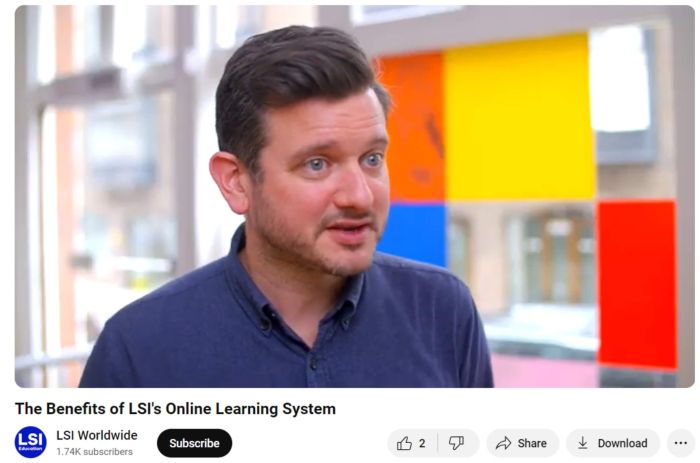
Source: LSI Worldwide | YouTube
Example: This promotional video presented by a school director highlights the unique selling points of their online learning system. The unique academic benefits of your programs are an excellent topic for your promotional videos – particularly when presented by a language expert within your faculty. What makes your instruction style unique?
Harnessing the Power of Influencer Marketing
Language schools can also benefit from partnering with influencers, especially those passionate about language learning or travel. Influencers offer access to a built-in audience that already trusts their recommendations. By working with influencers who align with your institution’s values, language schools can reach potential students who may not have been aware of your programs.
An effective influencer marketing campaign for a language school might include sponsored posts where the influencer shares their language learning journey, highlighting the value of enrolling in formal programs. Schools can also consider offering affiliate programs, allowing influencers to earn commissions for every student who enrolls through their recommendation.
Utilizing Data Analytics to Refine Advertising Campaigns
Data-driven decision-making is at the heart of successful digital advertising. Language schools must continually analyze their campaign’s performance to ensure they’re reaching the right audience and achieving optimal results. Tools like Google Analytics and Facebook Insights can provide valuable insights into which ads are performing well and which need to be adjusted.
For example, schools can track metrics like click-through rates, conversion rates, and the cost per lead to determine the effectiveness of their campaigns. By continuously monitoring these metrics, schools can make data-driven decisions that maximize their return on investment. Adjustments might include refining audience targeting, improving ad copy, or reallocating the budget to the platforms that yield the highest returns.
Offering Free Trials or Sample Lessons to Convert Prospects
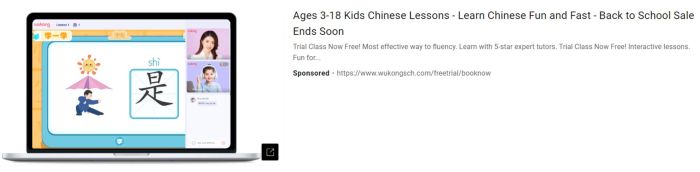
One of the most effective ways to convince prospective students to enroll in your language learning program is by offering a free trial or sample lesson. Language learning can be an intimidating prospect, and many students may hesitate to commit without knowing what to expect. By offering a no-obligation sample lesson, schools give potential students a taste of the learning experience, which can be enough to convert them into paying students.
This strategy works particularly well in digital advertising campaigns where schools can drive traffic to a landing page offering the free trial. Ads promoting a “try before you buy” approach can alleviate apprehension about committing to a full program.
Source: WuKong Education Online | YouTube
Example: WuKong Education Online offers a trial class to attract their prospects. Trials are an excellent way to convert leads and are particularly effective for online academies.
By implementing these language learning advertising strategies, your school can significantly enhance the effectiveness of your digital advertising campaigns. At Higher Education Marketing, we believe that understanding the unique needs of language learners, leveraging innovative tools, and continuously refining your approach is key to driving enrollment and building lasting connections with students.
Want to create successful ad campaigns?
Request a Free paid advertising consultation.
Frequently Asked Questions
Question: Can you target by language on Google Ads?
Answer: Yes! Google Ads allows advertisers to create campaigns that specifically target users based on the language settings of their browser or device. You can set up your ads to appear in multiple languages, ensuring that they reach potential students who speak those languages. Additionally, you can create language-specific ad copy and landing pages, enhancing the relevance of your campaigns.
Question: How does language impact advertising?
Answer: Simply put,An ad aimed at professionals wanting to learn English for business purposes should be crafted differently from one targeting students hoping to improve their French skills before an international exchange. This approach ensures the content resonates more deeply with potential students, increasing the chances of conversion.
As an educator, where do you go for advice on teaching? Perhaps it’s a book. Maybe it’s a social media channel of your choosing. But more often than not, faculty have turned to higher education podcasts as a way of gleaning fresh insights in a captivating, bite-sized format. It’s no secret that educators are stretched between teaching, grading and research commitments. So listening to a reputable guest share their best practices for improving equity, engagement and interaction in the classroom is a valuable faculty development and training exercise in of itself.
If you’re looking for the best higher education podcasts to explore, this post is for you. We’ve rounded up our favorite shows that speak to the good, the bad and the ugly within higher ed in our present moment. We also capture podcasts hosted by leaders who bring deep, discipline-specific expertise to their field. Most importantly, we’ve summarized shows that not only cover the latest trends but offer practical advice in an educational and entertaining way. So grab your earbuds and let’s dive into the top higher education podcasts of the year.
Ok, call us biased, but we think Higher Listenings from Top Hat is well worth a listen. Higher Listenings aims to engage and entertain educators with a look at the latest trends shaping the future of teaching and learning. In our first season, we offer practical advice to leave you feeling equipped and confident to tackle your next teaching challenge—whether boosting reading completion rates or embracing AI-powered learning. The first season offers an all star line up featuring some of the leading change makers in higher ed including Jesse Stommel (author of Ungrading: Why We Grade and How to Stop), José Antonio Bowen (author of Teaching with AI) and Terrell Strayhorn (leading expert on student belonging). Stay tuned for season two releasing in January 2025! In the meantime, catch up on our inaugural season by listening on Apple Podcasts or Spotify.
2. Teaching in Higher Ed by Bonni Stachowiak
As the most effective educators know, good teaching is both an art and a science. Dr. Bonni Stachowiak is a professor and Dean of Teaching and Learning at Vanguard University. As the host of the Teaching in Higher Ed podcast, Stachowiak serves up best practices across four key categories including: digital pedagogy, student life, work-life balance and teaching. Notable guests include Joshua Eyler (Director of the Center for Excellence in Teaching and Learning at the University of Mississippi) and Jenae Cohen (Executive Director at the Center for Teaching and Learning at the University of California, Berkeley). Whether you’re looking for strategies to grade more productively or need guidance on ed tech integration in higher education, Stachowiak’s impressive lineup will leave you feeling inspired. Listen to the latest episodes on Apple Podcasts or Spotify.
3. Intentional Teaching by Derek Bruff
Do you want to take your knowledge of foundational teaching practices to the next level? Dr. Derek Bruff will help you do just that. Bruff, Associate Director of the Center for Teaching Excellence at the University of Virginia and author of Intentional Tech, hosts the Intentional Teaching podcast geared towards college and university faculty. His goal is to leave listeners with actionable techniques to make their classrooms more inclusive, responsive to an AI-saturated world and ultimately, more engaging for every learner. Esteemed guests on his podcast include Thomas J. Tobin (Senior Teaching and Learning Developer at the University of Wisconsin-Madison) and Viji Sathy (Associate Dean for Evaluation and Assessment at the University of North Carolina, Chapel Hill). Check out Bruff’s star-studded episodes on Apple Podcasts or Spotify.
4. Tea for Teaching by John Kane and Rebecca Mushtare
If you’re looking for faculty development and training paired with emerging research in pedagogy, this higher education podcast will surely be your cup of tea. The Tea for Teaching show is produced by John Kane and Rebecca Mushtare, who run the Center for Excellence in Learning and Teaching at the State University of New York (SUNY) at Oswego. The producers wrestle with hot-button topics from upskilling in the age of AI to reducing bias in course evaluations. High-impact guests, who include Michelle Miller (Professor in the Department of Psychological Sciences at Northern Arizona University) and Anthony Abraham Jack (Faculty Director of the Boston University Newbury Center), are featured in weekly episodes. Grab your favorite warm beverage and a notebook and tune into this podcast on Apple Podcasts or Spotify.
5. Teach and Learn by D2L
Unsure about the direction that education is heading in? Then you’ll want to take note of D2L’s Teach & Learn podcast. Geared towards K-12 and higher ed faculty, the show is hosted by Dr. Christi Ford (Vice President of Academic Affairs at D2L) and Dr. Emma Zone (Senior Director of Academic Affairs at D2L). In candid discussions with educational experts, the hosts dive into issues affecting higher education institutions today. This timely higher education podcast offers practical advice such as how to put diversity, equity and inclusion at the forefront of your course and how to harness AI to improve student learning. Recent guests include Thomas Cavanagh (Vice Provost for Digital Learning at the University of Central Florida) and Karen Costa (Faculty Development Facilitator for the Online Learning Consortium). Leave with practical tips for your own course by listening on Apple Podcasts or Spotify.
Instagram has become one of the most powerful tools for schools to connect with students, parents, and alumni. It’s a platform full of potential to show off your school’s culture, achievements, and community in a highly visual and engaging way. However, your school will have to contend with a variety of challenges to stand out from the crowd.
If you’ve noticed your school’s Instagram page isn’t getting the kind of engagement or attention you were hoping for, you’re not alone. Many schools face similar difficulties when it comes to building a large and engaged Instagram following. So, what could be going wrong? Let’s take a deep dive into ten key reasons why your school’s Instagram page might not be performing well and how you can turn things around.
Struggling with enrollment?
Our expert digital marketing services can help you attract and enroll more students!
1. You’re Not Posting Consistently Enough
One of the most common reasons school Instagram pages fail to gain traction is inconsistent posting. When you’re not regularly sharing content, you risk losing your follower’s attention and missing engagement opportunities. Instagram’s algorithm favors active accounts, so if your school is posting sporadically or only during major events, you may struggle to stay visible in your audience’s feed.
The solution is simple but requires commitment: consistency. You need to create a posting schedule that ensures you’re sharing content at least a few times a week. Whether it’s showcasing student achievements, classroom activities, or campus events, your followers want to feel like they’re staying connected to the life of your school. By sticking to a reliable posting routine, you’ll increase your visibility and build a habit of engagement with your audience.
Have you been wondering “Why am I not getting likes on Instagram?” If you’re posting regularly but still not seeing much interaction, one likely reason that your school’s Instagram page is not performing well is that your content isn’t resonating with your audience. Are your posts inspiring comments, shares, or likes? Is your content inviting people to participate in discussions or take action? Too often, school Instagram pages fall into the trap of simply broadcasting information instead of engaging their audience.
To fix this, you must focus on creating engaging content that encourages conversation and interaction. Ask questions in captions, run polls in your Stories, or create fun challenges in which students and parents can participate.
Make your content relatable by featuring real people—students, teachers, and alumni—sharing their stories and experiences. By fostering a two-way conversation, your Instagram page can become a hub for your school community, rather than just a bulletin board of announcements.
Example:A great way to create engaging school Instagram posts is to follow trends and borrow ideas from one of the internet’s most engaging platforms: TikTok. Particularly as a school striving to attract Gen Z prospects, it’s essential to remember that there’s likely a significant crossover between Instagram and TikTok users who may be interested in attending your school. Here, King’s University College gets it right. They use a popular TikTok trend – a spoof on Gen-Z slang, in one of their Instagram posts to engage their audience. Based on the healthy number of likes and comments, this strategy seems to be working! Give it a try.
Source: King’s University College | Instagram
3. You’re Not Leveraging Instagram Stories and Reels
Instagram Stories and Reels are powerful tools to reach your audience creatively, but many schools underuse or ignore them altogether. If your school’s Instagram strategy relies solely on standard posts, you’re missing out on the more interactive and short-form content that Instagram is known for.
Stories and Reels not only provide a fun, behind-the-scenes look at your school, but they also have the potential to reach a wider audience due to Instagram’s algorithm, which prioritizes these features.
Start incorporating Stories and Reels into your strategy by showcasing day-in-the-life experiences of students, behind-the-scenes glimpses of school events, or quick educational tips from teachers.
Stories allow for casual, in-the-moment updates, while Reels offer the opportunity to create shareable, engaging videos that highlight the vibrancy of your school community. Use these features to diversify your content and engage your audience in new ways.
Example: Here, the University of Guelph posts an incredibly moving story in observance of World Mental Health Day. This timely story also showcases the school’s supportive and tight-knit community. When planning your Instagram story content, don’t forget to forge a connection with your audience in addition to sharing timely and valuable information.
Source: University of Guelph | Instagram
4. Your Captions Are Too Formal or Generic
While it’s tempting to keep things professional on your school’s Instagram page, overly formal or generic captions can come across as dull and uninviting. If you’re getting no likes on Instagram, it’s possible that you simply need to be more interesting.
You want your audience to feel a personal connection to your content, and that’s hard to achieve if your captions sound more like press releases than conversations. If you find your captions aren’t sparking engagement, it might be because they’re lacking personality.
The key to improving your captions is to make them more relatable and conversational. Speak to your audience as if you were having a face-to-face conversation with them. Show some personality—whether that means adding humor, warmth, or excitement, depending on the nature of the post.
Keep your captions concise but meaningful, and don’t hesitate to include a call-to-action that invites followers to respond, whether it’s by sharing their thoughts or tagging a friend.
Source: University of BC | Instagram
Example:This relatable caption reads: “Another scenario! Your prof asks you a question but you’re distracted. What are you going to do?” This caption is borrowed from the popular POV trend on TikTok which is likely widely known by Gen-Z university students and hopefuls. Captions like these are designed to be relatable, humorous, and resonate with your prospects’ sensibilities. When crafting an Instagram caption, think of what your audience has in their minds – What are their motivations? What are their pain points? What internet trends might appeal to them? Get creative!
5. You’re Not Using Hashtags Effectively
Hashtags are essential for expanding your reach on Instagram, but they’re often misused or overlooked. If you’re not using hashtags strategically, or if you’re using irrelevant or overly broad ones, your posts may never reach the intended audience.
Hashtags help categorize your content and make it discoverable to people interested in similar topics, but if you’re not thoughtful about how you use them, you could be missing out on a significant source of engagement.
The best way to optimize your hashtag usage is to research and use hashtags relevant to your school, community, and industry. Mix popular, trending hashtags with more niche or location-specific ones that your target audience is likely to search for.
For example, using tags like #schoollife or #education can help you reach a broader audience, while more specific hashtags like #YourCitySchool or #STEMAtYourSchool can connect you with a local or interest-driven audience. Don’t overdo it—stick to a mix of five to ten effective hashtags per post.
6. You’re Not Showcasing Student and Community Stories
At the heart of any school are the people who make it special—students, faculty, alumni, and community members. If your Instagram feed is focused on promotional content or school-wide updates, you’re missing the chance to tell the human stories that can build emotional connections with your followers.
Schools that fail to highlight personal stories and experiences often struggle to engage their audience on a deeper level. You can solve this by featuring student and community stories more prominently in your content strategy. Share student achievements, interviews with alumni, or profiles of staff members who are making a difference.
Consider starting a series where students take over the Instagram account for a day, giving your followers a first-hand look at what it’s like to be part of your school community. These personal, authentic stories draw people in and make your school’s Instagram page stand out.
Example:Here, The Clover School highlights a parent night that they recently held. When crafting your Instagram stories, remember to target different segments of your audience – Students, parents, alumni, and key stakeholders should be considered during the planning process. Here, The Clover School targets parents, highlighting the fact that parents regularly enjoy the opportunity to connect at events.
Source: The Clover School | Instagram
7. You’re Ignoring Analytics and Data
Many schools struggle with their Instagram performance simply because they’re not paying enough attention to the data. If you’re not regularly analyzing your Instagram Insights, you’re missing valuable information about what’s working and what’s not.
Without understanding your audience’s behavior, you can’t make informed decisions about the content to post, the best times to post, or how to optimize your engagement. To turn things around, you can start using Instagram’s built-in analytics tools to track key metrics like engagement rates, follower growth, and reach.
Pay attention to which posts are performing well and why. Is it the timing, the subject matter, or the format? Use this data to refine your strategy over time. If you notice that certain types of content resonate more with your audience, double down on those themes. If certain times of day get more engagement, adjust your posting schedule accordingly. Data-driven decisions will help you continually improve and keep your Instagram page performing at its best.
8. You’re Not Showcasing Diversity in Your Content
One reason your Instagram page might not be resonating with your audience is a lack of diverse representation in your posts. Today’s students and parents are looking for schools that celebrate diversity and inclusion, and your Instagram account should reflect that. If your feed showcases the same types of events, people, or perspectives, you may be unintentionally alienating parts of your community or future students.
To address this, make sure your content highlights the full spectrum of your school’s community. Feature stories from students with different backgrounds, cultures, and interests. Celebrate various events that showcase your school’s inclusivity, such as cultural fairs, diversity days, or guest speakers from a range of fields.
By presenting a more holistic view of your school’s community, you’ll create a space where everyone feels represented and valued. This not only strengthens your online presence but also shows potential students that your school is a place where they can truly belong.
Example: Here, the University of Western Ontario showcased its meaningful commitment to diversity. By uplifting the voices of their students attending the local Pride Parade, Western is celebrating the diversity within their community.
Source: University of Western Ontario | Instagram
9. You’re Focusing Too Much on Perfection
Instagram can feel like a platform where everything must look perfect, from flawless event photos to perfectly curated classrooms. However, an overly polished feed might be doing more harm than good. If your school is not getting Instagram likes, your posts may seem overly staged or lack authenticity, you may struggle to build meaningful connections with your audience. People are drawn to what feels real, and overly perfected content can come across as insincere.
The best way to solve this is by balancing your polished posts with more authentic, candid content. Let your audience see behind-the-scenes moments that aren’t perfectly scripted or planned—show the hustle of organizing an event or the genuine joy of students working on a group project.
Embrace imperfection by showcasing real-life moments, whether it’s students laughing between classes or teachers preparing for a lesson. Authenticity fosters trust and can dramatically boost engagement, as your followers will connect more with the human side of your school.
10. You’re Not Engaging With Your Audience
Even if you’re posting consistently and creating great content, you might still struggle to grow your Instagram presence if you’re not actively engaging with your audience. Instagram isn’t just about broadcasting—it’s a platform designed for interaction.
If you’re not responding to comments, liking posts from followers, or actively participating in discussions, you’re missing out on opportunities to build relationships with your community. To improve this, make engagement a core part of your Instagram strategy. Respond to comments on your posts, even if it’s just a simple thank-you or an emoji. Acknowledge students who share posts about your school by commenting or reposting them on your Stories.
By actively participating in conversations and showing appreciation for your audience, you’ll encourage more interaction and foster a sense of community. The more you engage with your followers, the more invested they’ll become in your school’s Instagram page—and your school overall.
Source: John Cabot University | Instagram
Example: Personalized responses such as the one pictured above are often enough to help build anticipation for prospects looking forward to the next step in their journey with you. Your responsiveness on Instagram also showcases your school’s desire to connect and assist. This is a selling point in and of itself.
If you’re not getting likes on Instagram, there’s no need to worry! Turning around the performance of your school’s Instagram page doesn’t require a complete overhaul, but it does require a thoughtful approach.
By identifying the areas where you may be falling short and implementing these practical solutions, you’ll be well on your way to creating an engaging, vibrant Instagram presence that truly reflects the spirit and energy of your school.
Whether it’s by posting consistently, creating more engaging content, or tapping into the power of Instagram Stories and Reels, there are plenty of ways to breathe new life into your school’s Instagram strategy. Remember, social media success doesn’t happen overnight, but with a bit of patience and persistence, you can turn things around and start seeing the results you’re aiming for.
Struggling with enrollment?
Our expert digital marketing services can help you attract and enroll more students!
FAQ
Why am I not getting likes on Instagram?
If you’re posting regularly but still not seeing much interaction, one likely reason that your school’s Instagram page is not performing well is that your content isn’t resonating with your audience.
Staying connected with parents and the wider school community has become more important than ever. For K-12 school administrators and marketers, email marketing offers an efficient, cost-effective, and personalized approach to keeping parents informed, engaged, and connected with the school.
In this blog, we’ll explore various effective school email marketing strategies designed to help you increase parent and community engagement. When you follow the essential tips, you’ll be better equipped to build trust, maintain transparency, and foster an active school community. Let’s explore!
Our targeted email marketing services can help you attract and enroll more students.
Discover how we can enhance your recruitment strategy today!
Understanding the Importance of Email Marketing for Schools
Email marketing for schools is powerful as it allows for direct communication with the people who matter most—parents, guardians, and the wider community. In an environment where parents expect real time information, personalized content, and streamlined communication, email is the go-to method that allows you to achieve all three effectively. Parents are eager to be involved in their child’s education.
By ensuring that parents are well-informed about upcoming events, school policies, and student progress, administrators can build stronger connections between the school and the families they serve.
The benefits of email marketing don’t stop there as pictured below, an effective school email marketing strategy can offer increased brand awareness, an avenue for promoting programs and content, a great way to generate new leads, a platform for guiding new prospects down the enrollment funnel, and build relationships. The key lies in using email marketing correctly, focusing on strategies that boost engagement and build lasting relationships.
Source: Higher Education Marketing
Defining Engagement-Based Email Marketing
For schools, engagement is arguably the most crucial metric of email marketing. The success of your campaign depends on your emails being opened, read, and prompting the desired action outlined in your message.
With this in mind, What is engagement-based email marketing? Engagement-based email marketing focuses on creating emails that grab attention and encourage people to interact with them, standing out from the many emails they receive daily.
Consistency is key in engagement-based email marketing. The more frequently you send relevant messages to the right people that encourage action, the more likely you are to turn them into loyal subscribers and active members of your school community over time.
Join us as we outline ten essential tactics for cultivating the engagement that your school needs to build a stronger relationship with parents, prospects, and your community.
1. Segment Your Email List for Personalized Communication
The first step in effective email marketing is creating segmented email lists. Not all parents and community members need the same information, and delivering relevant content to each group is critical for engagement.
Segmenting your email list allows you to target the right group of parents with messages specifically designed for them. This personalization ensures that the content you send out resonates more with the audience, resulting in better engagement rates.
Segmentation is central to the email marketing function of our open-source marketing automation platform, Mautic CRM. You can segment your contacts based on a multitude of criteria including admissions stage, program, and location, ensuring that each prospect receives the right message at the right time, inciting them to take the next desired action and move down the admissions funnel.
Example: Here, you can see how Mautic’s contact segmentation function allows you to track leads based on the language they speak, whether they’ve completed a registration form for any event you’re promoting, the nature of their relationship with your school, which of your school programs interests them, and more.
Source: Higher Education Marketing | Mautic
2. Craft Clear and Engaging Subject Lines
The subject line is the first thing parents see when they receive your email, and it plays a significant role in determining whether or not they open it. When crafting subject lines, keep them concise, informative, and engaging.
Highlight the key point of the email so parents immediately know what to expect. Personalization also works wonders in subject lines—try including the recipient’s name or their child’s class to make the email feel more personal and targeted.
Example: Here, Randolph-Macon Academy writes a clear, direct subject line in one of their emails. Long, meandering subject lines with no clear indication of what your email is about are more likely to be ignored so, always aim for short and snappy. Using a humorous tone when possible is also quite effective for catching readers’ attention through subject lines.
Source: Randolph-Macon Academy
3. Use a Mobile-Friendly Email Design
In today’s busy world where many parents lead an ‘on-the-go’ lifestyle, many parents will likely read your emails on their smartphones. Therefore, optimizing your email for mobile devices is crucial.
This means using a responsive email template that automatically adjusts to different screen sizes and keeping the content concise so parents don’t have to scroll endlessly. By making your email accessible on mobile, you’re ensuring busy parents can stay informed wherever they are.
Example: Pictured below are Mautic email templates. They are compatible with desktop and mobile devices allowing you to reach parents and community members wherever they are.
Source: Higher Education Marketing | Mautic
4. Include a Call to Action (CTA) That Encourages Engagement
Every email you send should have a clear purpose, and that’s where a strong CTA comes into play. Whether it’s asking parents to RSVP for an event, complete a survey, or check out the school’s latest blog post, the CTA should be easily identifiable and action-oriented.
Effective CTAs include:
“Sign Up for the PTA Meeting Here”
“Take Our School Climate Survey”
“Download Your Child’s Homework Schedule”
The CTA should also stand out visually—consider using a button with a contrasting color or a bold link to draw attention as pictured in the example below.
Source: Randolph-Macon Academy
5. Focus on Storytelling to Build Community
Emails that tell a story are much more likely to resonate with parents than those that only provide logistical information. Consider using email marketing as an opportunity to share stories about what’s happening at your school. Highlight student achievements, community events, and teacher spotlights. You can even share testimonials from parents or alumni to build trust and show the impact your school is making.
Storytelling humanizes your school, makes the content more engaging, and fosters a deeper connection between parents and the school community.
6. Set up an Automated Welcome Series for New Parents
New parents often feel overwhelmed when joining the school community and email can be a great way to make them feel welcome and informed. Create an automated welcome email series that introduces them to the school, provides helpful resources, and invites them to important upcoming events.
The welcome series can include:
A welcome message from the principal
Information about school policies and resources
Links to important documents (e.g., school calendar)
Invitations to join parent groups or sign up for the school newsletter
This helps new parents feel engaged and informed from the start, setting the tone for a positive relationship with the school. Automation isn’t only beneficial for sending welcome messages. Mautic enables you to save time and reach the right contact by automating any type of email interaction depending on various criteria.
Example: Mautic enables you to create emails that cater to specific segments within your contact list, send messages automatically, and time them perfectly depending on the nature of the interaction. See how simple the process is in the image below.
Source: Higher Education Marketing | Mautic
7. Share Important Updates and Reminders Consistently
Consistency is key when it comes to email marketing. Sending regular updates and reminders helps keep parents informed about important dates and events, such as school holidays, parent-teacher conferences, and extracurricular activities.
You don’t need to send emails every day—weekly or bi-weekly updates can suffice. Just make sure the frequency is enough to keep parents in the loop without overwhelming them. You can also create a predictable schedule so parents know when to expect updates (e.g., a weekly newsletter every Monday morning).
8. Use Analytics to Measure Engagement and Improve Content
One of the biggest advantages of email marketing is the ability to measure engagement through analytics. Most email marketing platforms provide metrics such as open rates, click-through rates, and conversion rates. Use these insights to understand what types of content resonate most with parents.
For example:
If your open rates are low, consider experimenting with different subject lines.
If parents aren’t clicking on your CTA, try adjusting its placement or wording.
Analyzing these metrics allows you to refine your email strategy over time, ensuring that you’re always improving engagement with parents.
Example: Use Mautic Campaign Statistics to track the engagement of each email and predict the behavior of your contacts.
Source: Higher Education Marketing| Mautic
9. Incorporate Visuals and Multimedia for a More Engaging Experience
Visual content— photos, videos, and infographics—tends to capture attention more effectively than text alone. Including multimedia in your emails can make them more engaging and visually appealing. Share pictures from recent school events, videos of students’ performances, or a short introduction from a teacher.
Multimedia doesn’t just make your emails more attractive; it also provides a way to showcase what’s happening at the school, allowing parents to feel more involved even if they can’t physically be there.
10. Foster Two-Way Communication Through Surveys and Feedback Forms
Email marketing shouldn’t just be about sending information to parents—it should also be a way to collect feedback and facilitate two-way communication. The result is a more actively engaged school community that offers a host of benefits to your school brand and the education of your students.
You may be wonderfing specifically how to increase engagement through email marketing. Tryusing your email campaigns to invite parents to share their thoughts and opinions on various aspects of school life. For example, include a link to a survey asking for feedback on recent events or ask parents what topics they’d like covered in future newsletters. This approach makes parents feel that their voice matters and fosters a sense of partnership between the school and the community.
Let’s Review: The Role of Email Marketing in Parent and Community Engagement
Email marketing is a powerful tool that, when used effectively, can drive meaningful engagement between schools, parents, and the wider community. At its core, email marketing is about building trust and fostering relationships.
Schools that use email to maintain transparency with parents—sharing successes and challenges—are more likely to create an environment where parents feel comfortable getting involved. When parents trust the school, they are more likely to attend events, support fundraising efforts, and engage in their child’s education.
Use your email campaigns to provide insight into what’s happening within the school, such as new initiatives, changes in policy, or upcoming projects. By sharing this information openly, you’re helping to build a sense of trust and shared responsibility with the entire community.
The key lies in crafting relevant, personalized, and engaging content that meets parents where they are—whether that’s on their phones, at their computers, or scrolling through their inbox on a busy day.
By following the ten tips we’ve discussed so far, school administrators and marketers can create email campaigns that foster a deeper connection with parents, build trust, and ultimately enhance the overall school experience for students and families alike.
Remember that email marketing is not just about disseminating information. Rather, it’s about telling the story of your school, involving parents in their child’s education, and building a community where everyone feels valued and heard.
As you refine your email marketing strategy, keep these tips in mind and focus on delivering content that adds value, fosters engagement, and builds a lasting connection between your school and the community it serves.
Our targeted email marketing services can help you attract and enroll more students.
Discover how we can enhance your recruitment strategy today!
Frequently Asked Questions
Question: What is engagement-based email marketing?
Answer: Engagement-based email marketing focuses on creating emails that grab attention and encourage people to interact with them, standing out from the many emails they receive daily.
Question: How to increase engagement through email marketing?
Answer: Tryusing your email campaigns to invite parents to share their thoughts and opinions on various aspects of school life.
Do you need more school advertising ideas? Today, we’re providing you with the inspiration you need. As a marketing agency with over 15 years of experience in educational marketing, we at HEM understand that school administrators and marketers face unique challenges when promoting their institutions. Traditional advertising methods may no longer yield the same results, and creative approaches are necessary to make a lasting impact.
Before we get the strategy, it’s important to define our goals. Though every institution has different objectives, generally, school advertising serves a unique purpose. What is the role of advertisement in education? Educational advertisements are crucial in creating awareness and attracting prospective students by effectively showcasing your educational institution’s unique features, values, and opportunities.
It helps your school to share your programs, campus life, and success stories, making you more accessible and appealing to a diverse audience. By utilizing targeted advertising strategies, you can reach students who align with your offerings, thus enhancing enrollment rates and fostering a more engaged student body. Additionally, advertising builds a school’s brand and reputation, helping to differentiate it from competitors in an increasingly crowded educational market. In this guide, we’ll walk you through five school advertising ideas, focusing on what works—and what to avoid—so that your marketing efforts are as effective as possible.
Looking to increase student enrollment?
Our inbound marketing services can help your school attract and enroll more students!
Idea 1: Virtual Campus Tours and Interactive Content
With the increasing reliance on online learning, offering prospective students a virtual tour of your campus has become a highly effective school advertising tactic. This strategy enables you to create an engaging experience that leaves a lasting impression. A static, pre-recorded tour might offer a different personal touch than students are looking for, so consider an interactive experience that allows them to explore your campus on their own terms.
Do make your virtual tour dynamic and customizable. It lets users choose their path, allowing them to click on different areas of the campus to explore further. This gives prospective students a sense of control and personalization, which is especially important if they cannot visit in person. You should also include interactive elements, like videos that feature current students or faculty members describing life on campus.
Example: Here, John Cabot University in Rome showcases its unique location and stunning campus in a virtual tour. Visitors can click on different parts of the campus, zoom in for a closer look, and zoom out for a view of the Eternal City.
Source: John Cabot University
However, pay attention to the importance of high-quality production. A virtual tour riddled with poor-quality video, muffled sound, or outdated visuals will do more harm than good. Investing in professional video production ensures the user experience is smooth and engaging. Also, make the tour shorter. Prospective students, especially younger ones, often have shorter attention spans, so aim to keep the tour concise but informative.
If you could use more school advertising ideas, contact HEM here!
Idea 2: Personalized Email Campaigns
Email marketing has long been a reliable channel for reaching potential students, but its effectiveness hinges on personalization. A well-crafted email that speaks directly to students’ interests can do wonders for engagement rates. The key is to use your collected data wisely and create highly targeted email campaigns that resonate with specific student personas.
Personalize your emails based on the prospective student’s interests, location, and stage in the admissions funnel. Use their first names, reference the programs they have shown interest in, and offer tailored information about how your school can meet their needs. You could include information about extracurricular activities, scholarships, or campus events that align with their interests. Personalization can also extend to automated follow-up emails, keeping your school top-of-mind for students who may not have decided.
Example: Here, MIT targets a warm lead – someone already interested in a specific program. It uses the prospect’s name, states their program of interest, and provides an attractive but time-sensitive call to action at the end. When creating personalized email campaigns, use segmentation to ensure each email goes to the right individual. Email segmentation is the process of dividing an email list into smaller, targeted groups based on specific criteria such as demographics, behavior, or interests. This allows for more personalized and relevant email marketing, improving engagement and overall campaign effectiveness.
Source: MIT | Gmail
On the other hand, don’t rely on generic, one-size-fits-all emails. Mass emailing without personalization is an outdated approach that can turn off prospective students, making them feel like just another number. Additionally, avoid sending too many emails too frequently.
Bombarding your prospects with irrelevant or repetitive content could cause them to unsubscribe or mark your emails as spam. Finding the right balance between engagement and oversaturation is key.
Idea 3: Social Media Takeovers and Student-Generated Content
Social media remains one of the most powerful platforms for schools to engage with prospective students, especially when using platforms like Instagram, TikTok, and LinkedIn for graduate programs. One creative way to leverage social media is through student takeovers. Handing over your social media channels to current students for a day or even a week can offer an authentic look at what life is like at your school. Prospective students are more likely to trust the words and experiences of their peers than a polished marketing message.
Encourage students to share genuine, unfiltered content that represents their daily lives, whether that’s a behind-the-scenes look at classes, clubs, or dorm life. User-generated content can also effectively highlight diverse voices and experiences, allowing prospective students from all walks of life to see themselves reflected in your school’s culture. User-generated content showing real students living out their passions and making the most of their education can be a powerful marketing tool.
Example: This student takeover by Oxford University showcases a unique aspect of the school’s culture – formals! Student takeovers are an excellent school advertisement tactic for targeting students who view their learning experience as an opportunity to earn new certifications and make memories.
Source: Oxford University English Faculty | Instagram
However, don’t lose control over your brand’s messaging. While student-generated content should be authentic, it’s important to provide guidelines so that the content stays in line with your school’s values and branding. Avoid situations where inappropriate or irrelevant content is on your official platforms. Striking the right balance between authenticity and professionalism is crucial for this strategy’s success.
Idea 4: Search Engine Marketing (SEM) with a Focus on Long-Tail Keywords
Search engine marketing (SEM) is another essential strategy when advertising for schools. While general keywords like “best universities” or “top colleges” are incredibly competitive and expensive, long-tail keywords can help your school reach a more specific audience. For example, keywords like “best nursing programs in Ontario” or “liberal arts colleges with study abroad options” are more likely to attract students who are already well-informed in their decision-making process.
Do optimize your campaigns by focusing on long-tail keywords that match the unique aspects of your school’s programs. Conduct thorough keyword research to identify phrases that align with what makes your institution special. Additionally, ensure that your ads lead to well-designed landing pages relevant to the search query. If prospective students click on an ad about your nursing program, for example, they should be taken directly to a page with information on that program, not a generic landing page.
Example: In the metadata of Randolph-Macon Academy’s blog, the title and meta description have been optimized using the long-tail keyword ‘military boarding school’. Be sure to use specific and relevant keywords that fit your target audience.
Source: Randolph-Macon Academy
But don’t overspend on highly competitive keywords unlikely to yield significant results. Budgeting for SEM can be tricky, especially for schools with limited resources, so avoid the temptation to compete with bigger institutions on broad, expensive terms. Also, don’t neglect mobile optimization. Many students will be researching schools on their phones, so your SEM efforts should consider mobile-friendly landing pages and a seamless user experience across devices.
Idea 5: Influencer Partnerships and Micro-Influencers
The rise of influencer marketing has opened up new opportunities for schools to reach younger audiences, particularly through platforms like Instagram, YouTube, and TikTok. While partnering with mega-influencers can be costly and may not yield the desired results, working with micro-influencers—those with a smaller but highly engaged following—can be an excellent way to build trust with prospective students. These influencers, often niche content creators or even current students, can offer authentic endorsements of your school.
Do choose micro-influencers who align closely with your school’s values and the interests of your target audience. For instance, if you’re promoting a nursing program, you might partner with a healthcare-related influencer who can speak authentically to the value of your school’s education. Establish clear objectives for the partnership, whether increasing applications, building brand awareness, or driving traffic to your website.
Example: This is an excellent example of influencer content your school can use to reach prospects organically. Particularly when it comes to colleges and universities, students worldwide use the experiences of creators like Lydia, who are both relatable and aspirational, providing honest, helpful information about academics and student life. A small audience like Lydia’s is more likely to be trusting and have a very specific or niche interest in various subjects related to your school. Lydia’s YouTube channel posts authentic vlogs of her experience at Yale University, making her content perfect for any student considering enrollment there. You can launch an organic, effective, and cost-efficient school advertising campaign by partnering up with an influencer like her.
Source: Lydia Choi | Youtube
However, don’t choose influencers solely based on follower count. Engagement rates and the influencer’s connection to your target audience matter much more. Also, avoid overly scripted partnerships that come off as inauthentic. The power of influencer marketing lies in its relatability, so the content produced should feel organic and aligned with the influencer’s usual style.
Effective school advertising is about blending traditional marketing methods with creative, student-focused approaches such as the digital marketing tactics we’ve explored. You may have heard plenty of buzz around digital marketing, but you may still wonder: Do schools need digital marketers? Schools benefit from digital marketers to effectively reach and engage prospective students online, leveraging platforms like social media, search engines, and email to attract the right audience. Digital marketers use targeted campaigns and data-driven strategies to boost enrollment, enhance the institution’s visibility, and build a positive brand image in an increasingly competitive education landscape.
Idea 6: Video Advertising for Maximum Engagement
Video content is one of the most powerful tools in advertising. When it comes to promoting educational institutions, it offers an engaging way to communicate your school’s values, culture, and opportunities. Platforms like YouTube, Instagram, and TikTok provide an ideal space for reaching prospective students, allowing you to tell compelling stories that resonate emotionally. A well-crafted video can showcase your school’s strengths, provide testimonials from current students, and highlight campus life in a way that static images simply cannot.
Do make use of authentic storytelling in your video ads. Feature real students and staff sharing their experiences, whether about academic achievements, extracurricular activities, or campus culture. A relatable story goes a long way in building a genuine connection with your audience. It’s also important to tailor the content to the platform—short, catchy videos work great on TikTok, while longer, more in-depth content can thrive on YouTube. Keep your audience engaged by adding subtitles since many users watch videos on mute.
Don’t create overly promotional or staged content. Today’s students can easily spot a scripted advertisement that lacks authenticity. Avoid focusing only on flashy visuals without providing meaningful information; remember, the goal is to attract students genuinely interested in what your school offers. Monitoring your campaigns and understanding which video styles or narratives resonate with your audience is also essential.
Source: Collège Villa Maria High School | Instagram
Example: Villa Maria High School uses an engaging video ad to share useful information regarding an open house. Use your advertising to guide prospects to the next desired outcome.
To help schools navigate the intricacies of video advertising and other digital campaigns, Higher Education Marketing offers specialized paid advertising services. Our team can help improve your school’s reach in crucial regions, target specific audiences effectively, and strategically remarket to existing leads. With a free consultation, we analyze your paid advertising strategy and identify areas for improvement, ensuring that you get the best return on your investment.
Whether you’re exploring virtual campus tours or into influencer partnerships, the key to success is connecting with your audience. Your school can stand out in a competitive market by focusing on high-quality, personalized, engaging content. Avoid pitfalls like impersonal messaging, poor production value, or misaligned partnerships. With these strategies, you’ll be well on your way to capturing the attention and interest of prospective students.
Looking to increase student enrollment?
Our inbound marketing services can help your school attract and enroll more students!
FAQs
What is the role of advertisement in education?
Educational advertisements are crucial in creating awareness and attracting prospective students by effectively showcasing your educational institution’s unique features, values, and opportunities.
Do schools need digital marketers?
Schools benefit from digital marketers to effectively reach and engage prospective students online, leveraging platforms like social media, search engines, and email to attract the right audience.