This blog was kindly authored by Dr. Ismini Vasileiou, Associate Professor at De Montfort University.
The UK Higher Education sector is at a crossroads. With the government’s skills agenda being reshaped, institutions under growing financial pressure, and the first-ever merger between two English universities announced, the landscape is shifting faster than many had anticipated. Into this mix comes Ofsted’s new Report Card for Further Education & Skills (September 2025), which introduces a sharper accountability framework for further education providers.
The report card grades institutions across areas such as Leadership & Governance, Inclusion, Safeguarding, and Contribution to Meeting Skills Needs. At programme level, it assesses Curriculum, Teaching & Training, Achievement, and Participation & Development against a tiered scale ranging from Exceptional to Urgent Improvement.
While this is designed for further education and skills providers, its arrival raises an uncomfortable but necessary question for universities: what if higher education were graded in the same way?
By contrast, the further education report card is direct. A parent, student, or employer can understand at a glance whether a provider is exceptional, strong, or in urgent need of improvement. Were higher education to adopt a similar model, judgments might cover:
Safeguarding/Wellbeing: provision for student welfare, mental health, harassment and misconduct.
Skills Contribution: alignment with regional economic needs, national priorities in AI and cybersecurity, and graduate employment outcomes.
At the programme level, Achievement and Participation could map onto retention, progression, and graduate success, offering students and employers a clear view of performance.
Risks and rewards for higher education
Of course, importing a schools-style accountability regime into higher education carries risks. Universities are not homogeneous, and reducing their diverse missions to a traffic-light system risks oversimplification. A specialist arts institution and a research-intensive university might both be rated ‘Needs Attention’ on skills contribution, despite playing very different roles in the national ecosystem.
There is also the danger of gaming the system: universities optimising for ratings rather than long-term innovation. And autonomy, long a cornerstone of higher education, would be at stake.
Yet there are potential rewards. Public trust in higher education has been under strain, with questions over value for money and financial viability dominating the narrative. Transparent, comprehensible reporting could rebuild confidence and demonstrate sector-wide commitment to accountability. It could also strengthen alignment with further education at a time when government is explicitly seeking a joined-up skills system.
A shifting policy landscape
The September 2025 government reshuffle underscores why this debate matters. The resignation of Angela Rayner triggered a wide Cabinet reorganisation, with skills responsibilities moving out of the Department for Education and into a new ‘growth’ portfolio under the Department for Work and Pensions, led by Pat McFadden. This shift signals that some elements of skills policy are now seen primarily through an economic and labour market lens.
For Higher Education, this presents both challenges and opportunities. As argued in Bridging the Skills Divide: Higher Education’s Role in Delivering the UK’s Plan for Change, universities must demonstrate that they are not just centres of academic excellence but engines of workforce development, innovation, and regional growth. A report-card style framework could make these contributions more visible, but only if universities are part of its design.
Structural Change: The Kent–Greenwich merger
The announcement that the Universities of Kent and Greenwich will merge in autumn 2026 to form the London and South East University Group is a watershed moment for the sector. It is the first merger of its kind in England, driven by financial pressures from declining international student enrolments, static domestic fees, and mounting operational costs.
The merged entity will serve around 28,000 undergraduates, retain the identities of both institutions, and be led by Greenwich Vice-Chancellor Professor Jane Harrington. Yet concerns remain. The University and College Union (UCU) has warned that ‘this isn’t a merger; it is a takeover’ and called for urgent reassurance on staff jobs and student provision.
In a system with Ofsted-style ratings, such a merger would be scrutinised not just for its financial logic but also for its impact on governance, inclusion, and skills contribution. A transparent rating system might reassure stakeholders that the merged institution is not only viable but also delivering quality and meeting regional needs.
Building on skills agendas
National initiatives like Skills England, the Digital Skills Partnership, and programmes such as CyberLocal demonstrate how higher education can contribute to workforce resilience at scale. The Ofsted report card reinforces this agenda. Its emphasis on contribution to meeting skills needs aligns directly with the notion that higher education must play a central role in the UK’s skills ecosystem, not only through degree provision but through continuous upskilling, regional collaboration, and adaptive curricula.
Shaping the framework before it shapes us
Ofsted’s further education report card is not just an accountability mechanism; it is a signal of where education policy is heading, toward clarity, comparability, and alignment with skills needs.
For higher education, the choice is stark. Resist the model and risk having it imposed in ways that do not fit the sector’s diversity. Or lead the design, shaping a framework that balances accountability with autonomy, and skills with scholarship.
As Universities confront financial pressures, policy reshuffles, and structural change, one thing is clear: the sector cannot afford to sit this debate out. The real question is not whether Higher Education should be graded, but what kind of grading system we would design if given the chance.
A new collection of essays, AI and the Future of Universitiespublished by HEPI and the University of Southampton, edited by Dr Giles Carden and Josh Freeman, brings together leading voices from universities, industry and policy. The collection comes at a point when Artificial Intelligence (AI) is projected to have a profound and transformative impact on virtually every sector of society and the economy, driving changes that are both beneficial and challenging. The various pieces look at how AI is reshaping higher education – from strategy, teaching and assessment to research and professional services.
You can read the press release and access the full report here.
As summer wraps up, education marketers everywhere know what’s next? The back-to-school rush. It’s that time when inboxes fill up, campaigns go live, and every message counts. This season isn’t just about new classes or fresh notebooks; it’s the start of a new student recruitment marketing cycle, a chance to re-engage current students, attract new ones, and build momentum for the year ahead.
In a competitive space like higher education, you can’t rely on luck. You need a clear, intentional strategy that speaks directly to your students and stands out in a noisy market. Whether you’re a career college, university, or language school, this is the chance is to set the tone and build lasting connections.
In this playbook, you’ll find practical, proven back-to-school marketing strategies for success. From personalized outreach and short-form video to smart content planning and accessible design, consider this your guide to an A+ marketing season.
Struggling with enrollment?
Our expert digital marketing services can help you attract and enroll more students!
Audit Last Year’s Campaigns and Set SMART Goals
Before launching any new campaign, take a breath and look back. What worked in your student recruitment marketing last year, and what didn’t? Pull up your analytics and dig deep into the data: conversion rates, click-through rates (CTR), engagement metrics, and ROI for every channel. If your online open house had strong attendance but few follow-up applications, ask why. If your email series saw above-average opens, figure out what made it work: was it timing, tone, or topic?
Use these insights to set SMART goals: Specific, Measurable, Achievable, Relevant, and Time-bound. Avoid vague aims like “increase applications.” Instead, go for something concrete, like “increase undergraduate application starts by 15% by the end of Q3.”
Why is it important for schools to audit previous marketing campaigns before launching new ones? Auditing past campaigns helps schools understand their previous recruitment efforts. By analyzing data such as click-through rates, conversion rates, and ROI, institutions can set SMART goals for the new academic year. This ensures resources are directed toward tactics that actually drive inquiries, applications, and enrollments instead of repeating ineffective strategies.
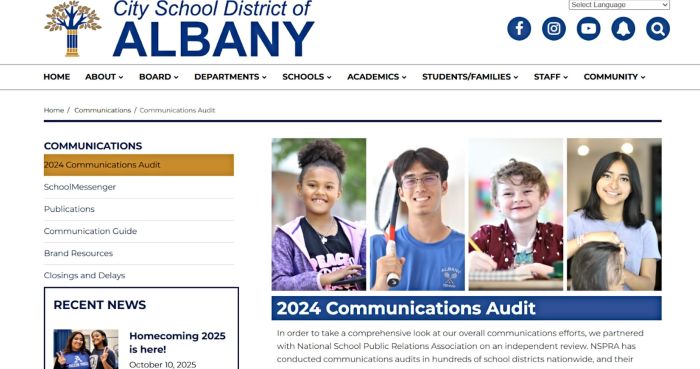
Example: City School District of Albany (NY) The district undertook a comprehensive communications audit with the National School Public Relations Association, reviewing all print and digital outreach. The 2024 audit report identified strengths and challenges and led to specific 2024–25 implementation goals, for example, hiring a new school communications specialist and streamlining internal communication protocols. These SMART goals were directly tied to audit recommendations, ensuring measurable improvements in engagement and consistency.
Tactical Tip: Create a simple scorecard or dashboard with last year’s metrics and this year’s goals. Track results on a weekly or monthly basis, and adjust tactics as needed. Data-driven agility is your best advantage.
Personalize Your Outreach to Prospective Students
Personalization should already be part of your strategy. Between 70 – 80% of students now expect it from schools. The back-to-school period is the perfect time to show you understand each prospect’s needs.
Start with your CRM data. Segment audiences by program, location, or funnel stage, then tailor messages accordingly. Send unfinished applicants a quick “deadline reminder” email, while offering current students a “Welcome Back” guide. Both feel personal and drive engagement.
Your website can do this too. Dynamic banners or content blocks that change by visitor type make a big impact. Tools like HubSpot, Slate, or Mautic by HEM help automate it all, even inserting names or programs into messages.
Example: University of Idaho. To personalize outreach at scale, U of I introduced AI-driven personalized video messages for prospective students during the 2024 recruitment cycle. Applicants received videos addressing them by name, hometown, and academic interest, creating a one-to-one connection. This individualized approach was added on top of existing personalized print and email campaigns. The results were impressive: emails containing the personalized video links saw a 45% open rate (versus 24% for standard emails), and the university reported higher application and admission rates across all student segments after launching over ten such video campaigns.
How can educational institutions use personalization to improve student engagement? Personalization allows schools to communicate directly to a student’s interests, program choices, and stage in the admissions funnel. Using CRM and marketing automation tools like Mautic by HEM, teams can segment audiences, send customized emails, and display dynamic website content based on visitor data. When prospective students receive tailored messages, like deadline reminders or personalized welcome guides, they’re more likely to respond, apply, and enroll.
Tactical Tip: Gather preferences early through short surveys (“What’s your dream career?”). Feed those insights into your campaigns, and when prospects see content that matches their interests, they’re far more likely to apply or enroll.
Engage Through Video and Social Media Content
Currently your audience is scrolling, and fast. Gen Z and Gen Alpha spend hours on TikTok, Instagram, and YouTube, where video dominates. In fact, video now makes up more than 80% of all internet traffic, so if it’s not central to your strategy, you’re already behind.
Show what campus life feels like. Create short videos that capture move-in day buzz, a lively lab session, or the roar of the first football game. Student testimonials and livestreamed Q&As work especially well because they’re authentic and emotional, two things today’s viewers respond to.
Your social media profiles are your school’s digital storefront. Keep them fresh with “Day in the Life” takeovers, campus challenges, and UGC that shows students’ real experiences. Repost their content (with credit) to build authenticity. Even micro-influencers (popular students or alumni) can amplify your reach organically.
Use social media to build community, too. Create incoming class groups groups on Facebook or Discord where students connect before arriving, or run quick Instagram polls (“What are you most excited about this fall?”) to boost engagement.
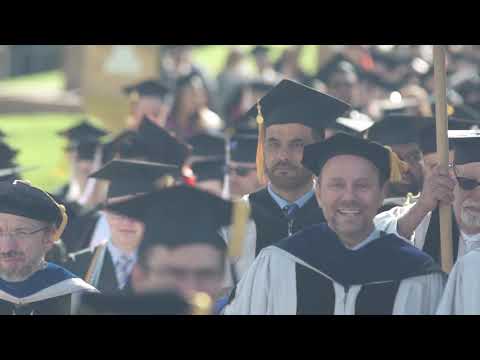
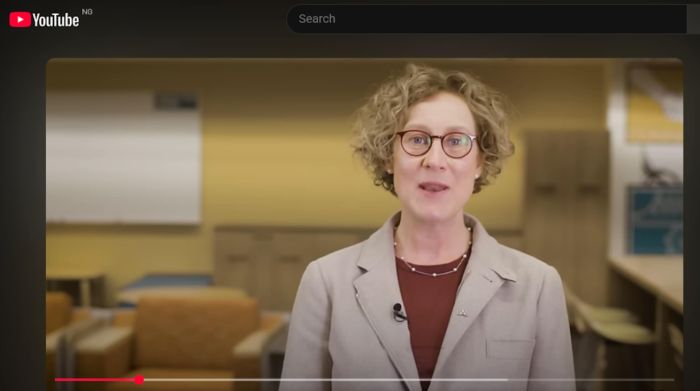
Example: University of Minnesota. The university kicked off the 2024 academic year with an energetic “Welcome Back to School 2024” video message from the new president, Dr. Rebecca Cunningham. Shared on the official UMN YouTube channel and social media, the video welcomes students and faculty to campus and sets an enthusiastic tone for the year. This engaging content, featuring the president and campus scenes, was used to boost school spirit online and was widely viewed and shared within the community.
What role do video and social media play in back-to-school marketing? Video and social media are now essential tools for reaching Gen Z and Gen Alpha students. Platforms like TikTok, Instagram, and YouTube are where prospective students spend most of their time, making short-form, authentic videos key to capturing attention. Schools can share move-in day highlights, “Day in the Life” student takeovers, or live Q&As to showcase campus life and build emotional connections with their audience before the academic year begins.
Tactical Tip: Format videos for each platform: vertical and under 60 seconds for TikTok or Reels, longer for YouTube. Post “move-in prep” content in August and “welcome week” highlights in September to match student timelines.
Visual Tip: Mix polished and raw footage. A sleek virtual tour pairs perfectly with a student’s unfiltered dorm vlog. That balance between professional and real builds trust and attention.
Plan an Integrated Content Calendar for the Academic Year
When you’re juggling multiple channels, such as email, social media, blogs, print, and events, it’s easy for campaigns to lose focus. A well-structured content calendar keeps everything aligned. It outlines what you’ll publish, when, and where, ensuring every platform supports the same strategy.
Start with a brainstorming session before fall begins. Identify monthly themes that match your recruitment cycle. August could highlight move-in and orientation, September might focus on study tips and student life, and October on deadlines and fall events. Include major dates like FAFSA deadlines, holidays, and open houses so nothing slips through the cracks.
For each theme, plan content across different stages of the funnel. During back-to-school, for instance, pair “slice of campus life” stories for awareness with targeted “why choose us” posts for decision-making prospects.
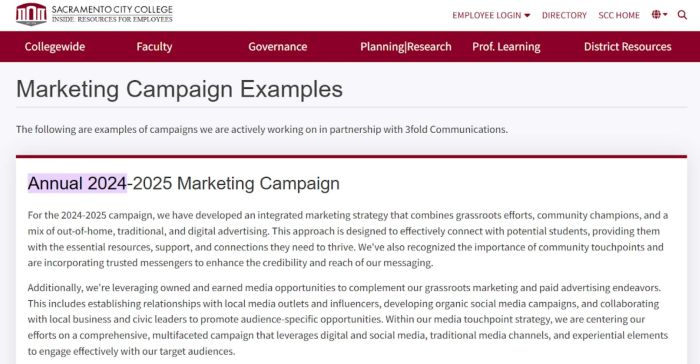
Example: Los Rios Community College District (CA). For the 2024–2025 recruitment cycle, Los Rios (a district of four colleges) developed an integrated marketing content strategy spanning grassroots outreach, traditional media, and digital channels. Their annual marketing campaign plan was managed through a central calendar and included coordinated content across platforms: social media posts, email campaigns, community events, billboards, and more.
Tactical Tip: Add columns in your calendar for audience, goal, and platform. Tools like Trello, Airtable, or even Google Sheets can help your team stay organized.
Pro Tip: Capture new assets early in the semester. Fresh photos, short videos, and student testimonials from those first lively weeks will fill your content library with authentic, high-energy material you can repurpose all year.
Maximize Reach With Targeted Digital Advertising
Even the strongest content needs help reaching the right audience. Digital advertising ensures your message gets in front of prospective students and their parents at the right time and place.
Begin by defining your audience and selecting the platforms that align with their habits. For high school seniors, Google Ads and Instagram are usually most effective. For local adult learners, Facebook or regional streaming ads may deliver better results. Match your spend to where your audience is most active.
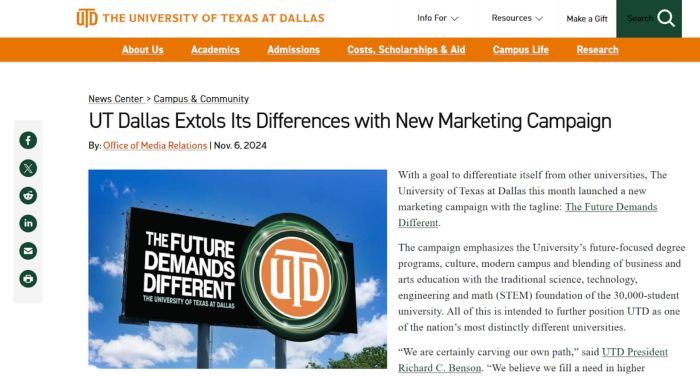
Example: University of Texas at Dallas. In late 2024, UT Dallas launched a new branding campaign, “The Future Demands Different,” which employed highly targeted digital and media advertising to recruit students. The campaign focused heavily on specific geographic markets: primarily North Texas, with select expansion into other Texas cities and neighboring Oklahoma, where the university offers special tuition rates. UTD produced its first-ever broadly distributed TV commercial featuring current students and placed these ads strategically on local television newscasts, streaming platforms, and even during NBA game broadcasts (Dallas Mavericks) to reach its target audience.
Next, focus on timing and relevance. Seasonal messages like “Apply by October 15” or “Start your future this fall” create urgency and keep your campaigns connected to the academic calendar. Pair them with engaging, authentic visuals that reflect campus life and excitement for the new year.
Retargeting is another essential tactic. Students who visit your website or start an application are warm leads. Remind them to take the next step with a clear, encouraging ad.
Tactical Tip: Track your campaigns closely. Test headlines, images, and calls to action to see what resonates, and refine your approach as data comes in. Ensure your landing pages are fast, mobile-friendly, and consistent with your ads. That seamless experience is what turns clicks into conversions.
Streamline Marketing with Automation and AI
The back-to-school season can feel like organized chaos, with hundreds of inquiries, events to manage, and deadlines everywhere. That’s why automation and AI are no longer nice-to-haves; they’re essential for keeping communications personal while giving your team room to breathe.
Start with a strong CRM connected to a marketing automation system. Platforms like Mautic by HEM, designed for education marketers, make it easy to automate email campaigns, social posts, and lead nurturing. For example, when a student downloads your course catalog, your system can automatically follow up the next day with a webinar invite. This keeps engagement flowing without constant manual effort.
Email automation is especially effective this time of year. Set up a simple three-step sequence: welcome, tips for applying, and a deadline reminder. Keep your design clean, concise, and mobile-friendly, as most students will read emails on their phones.
AI chatbots are another huge time-saver. Schools like Georgia State University have seen success with their chatbot “Pounce,” which helped reduce summer melt by answering student questions around the clock. You can deploy similar chat tools on your website or Facebook Messenger to guide prospects when staff aren’t available.
AI can also optimize your digital ads, test creative variations, and even suggest the best posting times on social media. Just keep a human eye on the outputs. AI should assist with the creation process, not replace, a real connection.
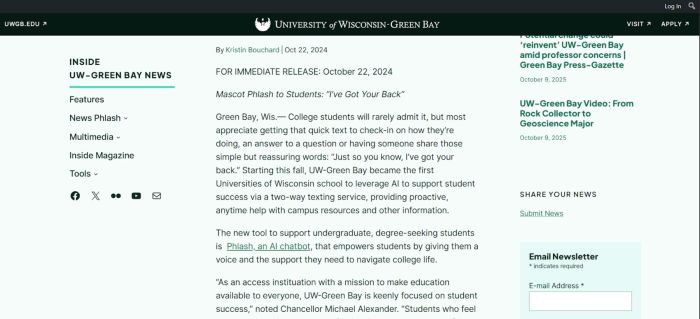
Example: University of Wisconsin–Green Bay. UW–Green Bay became the first in its state system to deploy an AI-driven chatbot for student outreach in Fall 2024. Nicknamed “Phlash,” the bot engages undergraduate students via two-way text messaging, providing 24/7 answers to common questions and proactively checking in on students’ well-being. For example, every 7–10 days, Phlash sends a brief text asking how the student is doing and offers guidance or resources based on their needs. In its first week, 96% of UWGB students opted in to receive messages from Phlash, and over 2,100 student replies were recorded within 24 hours of the first check-in text.
Tactical Tip: Use automation analytics to fine-tune your back-to-school marketing strategies. Track open rates, chatbot inquiries, and ad conversions. If you notice a drop-off, tweak timing or content. Over time, these insights will help you refine your approach and build smarter, more human campaigns.
Ensure Accessible and Inclusive Marketing Materials
When your campaigns are accessible and welcoming to everyone, you reach more prospective students and reflect the values your institution stands for.
Start with accessibility basics. Add descriptive alt text to all images so screen readers can describe visuals to users with vision impairments. Caption every video and provide transcripts. These help not only Deaf or hard-of-hearing students but also anyone watching on mute. Check color contrast, too: combinations like red on green can be hard to read for color-blind users. Use clear fonts, readable sizes, and designs that meet accessibility standards.
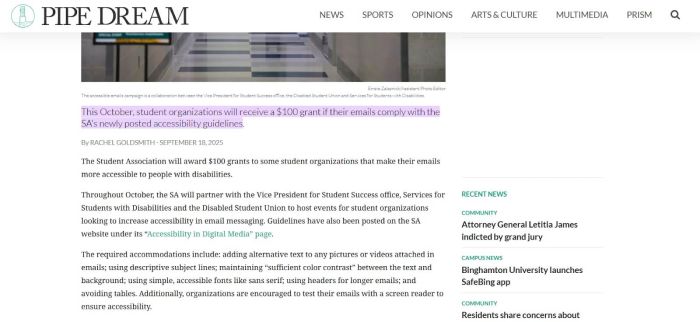
Example: Binghamton University (Student Association). At Binghamton, student leaders launched an “accessible emails” initiative in Fall 2025 to improve the inclusivity of campus communications. The Student Association (SA), in partnership with the campus disability services office, rolled out digital accessibility guidelines and challenged all student organizations to apply them in their back-to-school email newsletters. These guidelines included using alt text on images, high-contrast colors, readable fonts, and captions on videos, and simple adjustments to make emails and social posts readable by screen readers and accessible to those with disabilities. To incentivize adoption, the SA offered $100 grants (via a raffle) to clubs that complied with the new accessibility standards in their October emails.
Make sure your content works across all devices. Responsive, mobile-friendly emails and web pages prevent frustration and help more users complete inquiry forms or explore programs on their phones.
Representation matters as well. Feature students from diverse backgrounds and experiences, and consider multilingual or culturally inclusive content if you serve international audiences.
Tactical Tip: Run a quick accessibility audit using tools like WAVE or Axe to spot missing tags or low-contrast text. Train your marketing team on simple habits, like using CamelCase in hashtags (#FirstDayAtCampus), that make your content more inclusive. Small changes go a long way toward making every student feel seen and included.
Measure, Adapt, and Refine Your Strategy
Great marketing doesn’t stop at launch; it evolves. Once your back-to-school campaigns are live, monitor results closely and be ready to adjust. Use Google Analytics 4, CRM dashboards, such as HEMs Mautic, and other social insights to see what’s working. Focus on metrics that matter, like inquiries and applications.
Hold quick debriefs with your team after major pushes. Ask what content resonated, which channels drove engagement, and whether event turnout met expectations. Maybe your career-focused posts got strong traction, or your TikTok videos outperformed Facebook. Use that data to refine your next phase of content and budget allocation.
Flexibility is your biggest advantage. Test different formats, refine your messaging, and pivot when something isn’t working. Every campaign teaches you more about your audience.
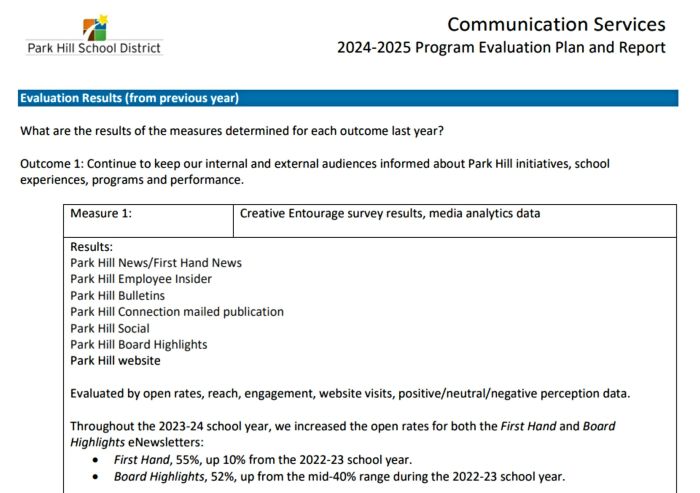
Example: Park Hill School District (MO). Park Hill’s communications department exemplifies a cycle of measurement and refinement in its marketing strategy. Each year, they collect detailed analytics on communication channels, email open rates, social media engagement, website traffic, and even advertising partnership revenue, and compare them to prior years’ benchmarks. In their 2023–24 report, for instance, the team noted improvements like an increase in the staff newsletter open rate from the mid-40% range up to 52%, and a jump in Facebook reach by 167% year-over-year. They also track outcomes of marketing initiatives (e.g., four years of in-house advertising brought in $148,800 in revenue in 2023–24) to evaluate ROI. These metrics inform mid-course corrections and the setting of new goals.
Tactical Tip: Keep communication open across teams. Marketing, admissions, and academics should share insights regularly. If your in-house resources are stretched, consider bringing in experts like HEM. Our team offers digital strategy, content, automation, and CRM support so you can scale campaigns efficiently and keep enrollment goals on track. Measure what matters, learn fast, and never stop improving.
Wrapping Up
The back-to-school season sets the tone for the entire year. When you combine strategy with creativity, the results speak for themselves. Reviewing last year’s data, setting SMART goals, personalizing outreach, producing engaging videos, organizing content calendars, and using automation or targeted ads all work together to move the needle. Add accessibility and inclusion, and your marketing becomes not just effective, but meaningful.
At the heart of it all is one principle: keep students front and center. Understand what drives them, where they spend time, and how your institution can meet their goals. That empathy fuels every great campaign.
Effective higher education marketing is a perfect blend of art and analysis. It’s about pairing strong storytelling with measurable outcomes. And when you need a partner to help balance both, Higher Education Marketing (HEM) is here. We specialize in data-driven strategy, automation, SEO, and social campaigns built to amplify your institution’s voice.
The new academic year is full of opportunities. With the right preparation and a willingness to adapt, your marketing can inspire action, drive enrollment, and welcome a new wave of students ready to thrive. Here’s to your most successful back-to-school season yet.
Struggling with enrollment?
Our expert digital marketing services can help you attract and enroll more students!
Frequently Asked Questions
Question: Why is it important for schools to audit previous marketing campaigns before launching new ones? Answer: Auditing past campaigns helps schools understand their previous recruitment efforts. By analyzing data such as click-through rates, conversion rates, and ROI, institutions can set SMART goals for the new academic year. This ensures resources are directed toward tactics that actually drive inquiries, applications, and enrollments instead of repeating ineffective strategies.
Question: How can educational institutions use personalization to improve student engagement? Answer: Personalization allows schools to communicate directly to a student’s interests, program choices, and stage in the admissions funnel. Using CRM and marketing automation tools like Mautic by HEM, teams can segment audiences, send customized emails, and display dynamic website content based on visitor data.
Question: What role do video and social media play in back-to-school marketing? Answer: Video and social media are now essential tools for reaching Gen Z and Gen Alpha students. Platforms like TikTok, Instagram, and YouTube are where prospective students spend most of their time, making short-form, authentic videos key to capturing attention.
The student-led evaluation of the University of Sheffield Ambition Programme, in which Grit was a delivery partner, tells us that this is not how working-class students see it at all. Funded by the Law Family Charitable Foundation, the programme aims to support the success of young men from pre-16 through to graduation and beyond.
For some, being at university is less about personal success, more about what it means for their family. Students interviewed by the evaluation team talked about how:
success is less about my career or actual achievements. It’s more about my family… guiding my younger siblings into higher education.
For others it’s about taking the opportunities that run alongside the academic experience:
At the end of the day a degree is a piece of paper to get to you into a field of work but the opportunities are what makes a degree… for me it’s definitely the wider opportunities.
Personal growth and personal satisfaction are also significant indicators of success. Success is:
Proving that I could do it. My parents didn’t expect me to go to uni. I wasn’t ever a person who was getting straight As or was the smartest in the class… no one ever thought I was going to go into higher education. Even I didn’t.
And it comes with
the process and the journey, what you learn from different situations and experiences.
Much of this mirrors what employers say about the priorities of new graduates in the workplace. As one student said:
Success is more about the satisfaction you feel at the end of the day, your work-life balance and just feeling like you’re making a difference rather than the financial (although obviously the financial has an impact).
But, once again, the evaluation of the Ambition programme suggests that this is not how working-class students see things. While the students freely acknowledge the struggles they have had with belonging, with imposter syndrome, with the stigma that comes with a working-class accent, they also describe making connections across the classes:
When you’re from a working-class background, you don’t really talk to people of different backgrounds, but the programme has provided a different approach. So now I speak with people who’ve had an upper-class background. I’ve got a lot of international student friends and I’ve learned a lot from them.
How they have found belonging:
I feel like I belong at uni more than I thought I would because in the programme I immediately met people with a similar background to me…
How they got past feelings of stigma:
I did feel a bit hesitant, especially coming from Rotherham… literally everyone I met sounds like the Queen’s English, that everyone’s quite posh except me… but once you get to know everyone, you change your opinion and perception of it.
Success for working-class students, then, does not have to mean a transformation of identity, rejecting who you are and where you have come from. It’s not about conforming to an alien aspiration. Success is a reframing, on each individual student’s own terms, of their expectations for themselves and their future lives. It can mean a myriad of different things, but success doesn’t have to mean leaving your old self, your family, your community behind.
In times when there are significant questions about whether young people will be as wealthy, healthy and happy as their parents, when there are increasing debates about the value of a university education, isn’t it time for universities to expand their definition of success to what feels right and true, rather than to what extent students conform to somebody else’s expectations?
So, for the working-class students on our programmes, success might be about the contribution they make to their community or the next generation (the relative values of the pay of teachers and academics has been eroded significantly in recent years but few would argue that these are not a socially valuable and important roles). It might be about their happiness, fulfilment, job satisfaction and quality of life. It might be about finding new ways to live in the world around them.
As the old economic certainties are called into question, universities need to find new ways of measuring success beyond those that focus on earning potential and social status. They could start by making more use of questions from Graduate Outcomes Survey around well being and satisfaction. And, rather than being simply a snapshot in time, the Survey could look at the broader graduate journey.
For example, alumni can give a much richer picture of what success means in the long term. Case studies and narratives of life journeys help us understand how success means different things at different times. Where success for working-class students means returning to or staying in the communities where they were brought up, instead of being part of the flight to the big cities, then we might capture the economic impact on the prosperity of a local area.
In our programmes, we have seen how, with the right mixture of support, challenge and encouragement, working-class students come to define success on their own terms. It becomes an experience rooted in their own selves. After all, whose success is it anyway?
This guest blog was kindly authored by Dr Charlotte Ryland, Director of the Translation Exchange.
‘Languages are not just a skillset, they’re a mindset.’
I still remember where I was when a teacher friend made this comment, a few years ago, because it highlighted something I’d been worrying at for a long time. I felt that languages education for young learners undervalued the process of language learning itself, by underrating what it means to be a linguist. That value needed to be completely reframed: to move far beyond the notion that language learning gives you a set of useful communicative skills – the ‘utility argument’ – towards a more holistic and ambitious vision of the linguist’s mindset.
Fast forward to this summer, and a HEPI report by Megan Bowler highlighted a programme that I co-founded as doing just that: ‘[Think Like a Linguist offers] 12-13 year olds clear demonstrations of the value of a linguistic “mindset” and its real-world applications’.
That notion of the ‘real-world application’ is essential to how we think and talk about language learning and needs unpicking. I founded a languages outreach and advocacy centre (based at The Queen’s College, Oxford) because I was frustrated by existing languages outreach mechanisms run by universities. This frustration came in part from what I perceived as an over-emphasis on precisely those ‘real-world applications’: the outreach programmes I encountered tended to rely heavily on imagined futures – Keep learning your vocab and practising your grammar, then you’ll see! A life of travel, international business careers, slightly higher salaries awaits you! Yet this approach did not seem to be working for the year groups whose minds needed to be changed.
The cliff-edge for languages – in England and Wales – is now GCSE options, with over 50% of pupils opting out at the age of 13/14, i.e. at their first opportunity to do so. Languages presents university outreach with a special case, then: with a need to engage much younger learners than has traditionally been the case. Ideally, we start at upper primary and focus on lower secondary school learners, before pupils begin to think seriously about their GCSE options. My approach to working with this demographic has been to take a ‘show, not tell’ approach – to involve learners from age 8 in rich, creative, cultural activities that enable them to experience first-hand the pleasure and purpose of being a linguist.
That focus on showing is key to how we should treat the real-world applications, too. It is not enough to give pupils a learning experience based solely on communicative skills, while trying to tell them that this education will secure them a good job in our competitive, AI-soaked 21st-century economy. They don’t buy it, and the uptake statistics for formal language learning bear this out. Instead, we need to show those learners how relevant and in-demand the ‘linguistic mindset’ they develop will be, by integrating into the learning experience the broadest conception of what it means to be a linguist.
Higher Education institutions can do this. And they’ll do so much more effectively if they work together. They have access to a huge community of language graduates, who have between them generations of experience in the widest range of professions. With this community, the broadest conception of the linguistic mindset becomes tangible. In my experience, it falls into your lap the minute you ask one of these graduates about the impact of their languages education on their career path and life experience.
A standard response runs like this: they move quickly through the frontline benefits around communication in other languages – taking them as a given – and light instead on what Bowler refers to as ‘the irreplaceable advantages of the “linguistic mindset”’. For a lawyer, it includes the capacity to cope with frustration, to tolerate and work through uncertainty; for a consultant, it is being able to build trusted relationships and read between the lines. A civil servant might reference their ability to synthesise and analyse a large amount of information, seeking out potential biases and multiple perspectives. The list goes on and is underlined by the striking words of a 13-year-old participant in Think Like a Linguist: ‘I learnt that there is more to languages than speaking and listening. It’s also about thinking in your own way.’
If we have access to a form of education that stands to raise a generation of individuals able to think for themselves, and to do so on the global stage, then what are we waiting for?
The readiness of languages graduates to share these insights is one of the sector’s greatest assets. We need a national conversation about the value of languages for individuals and for society, fuelled by these stories and taking full account of the challenges currently being set us by AI. Duolingo have set us on an excellent path, with evidence in their user statistics and polling that the UK is a country of languages enthusiasts. As Duolingo’s UK Director Michael Lynas notes in his introduction to Bowler’s report, we need not be dogged by the negativity that often frames conversations about languages: instead, we must build on the tangible positives.
For this national conversation to make an impact, collaboration will be key. Shared learning from effective university outreach programmes to date can provide a basis for this conversation. And The Languages Gateway, a new cross-sector initiative dedicated to collating resources and supporting strategic collaboration, can host it. Further backing for this national conversation from higher education institutions and central government will support the Gateway in its work to raise the national profile of languages to where it belongs: delivering ‘irreplaceable’ value to 21st-century global Britain.
This HEPI guest blog was kindly authored by Emma Roberts, Head of Law at the University of Salford.
New figures from the Office for National Statistics (ONS) show that student suicide rates in England and Wales for the period 2016 to 2023 remain stable – but stability is no cause for complacency. The age-adjusted suicide rate among higher education students stands at 6.9 deaths per 100,000, compared with 10.2 per 100,000 for the general population of the same age group. Over the seven years of data collection, there were 1,163 student deaths by suicide – that is around 160 lives lost every year.
The rate being lower than the wider population is encouraging and may reflect the investment the sector has made in recent years. Universities have developed more visible wellbeing services, invested in staff training and created stronger cultures of awareness around mental health. The relative stability in the data can be seen as evidence that these interventions matter. But stability is not a resolution. Each student suicide is a preventable tragedy. The data should therefore be read not as reassurance, but as a call to sustain momentum and prepare for the challenges that lie ahead.
What the ONS data tells us
The figures highlight some familiar patterns. Male students remain at significantly higher risk than female students, accounting for nearly two-thirds of all suicides. Undergraduate students are at greater risk than postgraduate students, while students living at home have the lowest suicide rate. The data also shows that rates among White students are higher than for Black or Asian students, though the sample sizes are small, so these figures may be less reliable.
In terms of trend, the highest rate was recorded in the 2019 academic year (8.8 per 100,000). Since then, the rate has fallen back but remains stubbornly consistent, with 155 deaths recorded in the most recent year. The ONS notes that these figures are subject to revision due to coroner delays, meaning even the latest year may be under-reported.
The key point is that the problem is not worsening, but it is also not going away.
A changing student demographic
This year’s recruitment trends have introduced a new variable. Several high-tariff providers (universities with the highest entry requirements) have reduced entry requirements in order to secure numbers. This can open up opportunities for students who might otherwise not have had access to selective institutions. But it does raise important questions about preparedness.
Students admitted through lower tariffs may bring with them different kinds of needs and pressures: greater financial precarity, additional academic transition challenges, or less familiarity with the social and cultural capital that selective universities sometimes assume. These are all recognised risk factors for stress, isolation and, in some cases, mental ill-health. Universities with little prior experience of supporting this demographic may find their existing systems under strain.
Building on progress, not standing still
Much good work is already being done. Many universities have strengthened their partnerships with local National Health Service (NHS) trusts, introduced proactive wellbeing campaigns and embedded support more visibly in the student journey. We should recognise and celebrate this progress.
At the same time, the ONS data is a reminder that now is not the moment to stand still. Stability in the numbers reflects the effort made – but it should also prompt us to ask whether our systems are sufficiently flexible and resilient to meet new pressures. The answer, for some institutions, may well be yes. For others, particularly those adapting to new student demographics, there is a real risk of being caught unprepared.
What needs to happen next
There are several constructive steps the sector can take:
Stress-test provision: Assess whether wellbeing and safeguarding structures are designed to support the needs of the current, not historic, intake.
Broaden staff capacity: Ensure that all staff, not just specialists, have the awareness and training to spot early warning signs so that distress does not go unnoticed.
Strengthen partnerships: Align more closely with local NHS and community services to prevent students falling between two in-demand systems.
Share practice sector-wide: Collectively learn across the sector. Good practice must be disseminated, not siloed.
These are not dramatic or expensive interventions. They are achievable and pragmatic steps that can reduce risk while broader debates about legal and regulatory reform continue.
Conclusion
The ONS data shows that student suicide is not escalating. But the rate remains concerningly consistent at a level that represents an unacceptable loss of life each year. The progress universities have made should be acknowledged, but the danger of complacency is real. As recruitment patterns shift and new student demographics emerge, the sector must ensure that safeguarding and wellbeing systems are ready to adapt.
Every statistic represents a life lost. Stability must not become complacency – it should be a call to action, a chance to consolidate progress, anticipate new challenges and keep the prevention of every avoidable death at the heart of institutional priorities.
This post was kindly written by Vincent Everett, who is head of languages in a comprehensive school and sixth form in Norfolk. He blogs as The Nice Man Who Teaches Languages.
In Part 1, I looked at how the low grades given at GCSE languages – up to a grade lower than in pupils’ other subjects – is a manufactured situation, easily solved at the stroke of a pen. The narrative around languages being harder is nothing to do with the content of the course or the difficulty of the exam. It is simply a historical anomaly of how the grades are allocated. There is also a false narrative that this unfair grading is due to pupils’ individual ability, the nation’s ability, or the quality of teaching. And I made a subtle plea for commentators to avoid reinforcing this narrative to push their own diagnosis or solutions.
In Part 2, I will consider what happens in post-16 language learning. This has also been the subject of reporting in the wake of A-Level results and the recent HEPI report. I am not going to deny that A-Level languages are in crisis. But the crisis in A-Level and the crisis of language learning post-16 are not one and the same.
There are specific problems with the current A-Level specification for languages. The amount of content to be studied, comprising recondite details of every aspect of the Spanish / French / German speaking world, is unmanageable. Worse, as this post explains, the content is out of kilter with the exam. All the encyclopaedic knowledge of politics, history, popular culture and high culture which takes up the bulk of the course, is ultimately only required for one question in just one part of the Speaking Exam. The difficulty of the course is compounded by the extremely high standards required, especially for students who have learned their language in the school context. I personally know of language teachers and college leaders who have discouraged their own children from taking A-Level languages in order not to jeopardise their grades for university application. It is getting to the point where I can no longer, in good conscience, let ambitious students embark on the course without warning them of the overwhelming workload and doubtful outcomes.
So A-Level could be improved. But as an academic course, it will always remain the domain of a tiny few. Similarly, specialist Philology degrees at university – the academic study of the language through the intersection of literary and textual criticism, linguistics and the history of the language – only attract a very small minority. Neither university language degrees, nor A-Level, are a mainstream language learning pathway.
It is a particularly British mentality to only value language learning if its intellectual heft is boosted by the inclusion of essays, abstruse grammar, linguistics, literature, politics, history, and a study of culture. In other words, philology. Philology is not the same as language learning.
Universities do offer language learning opportunities for students of other disciplines. However, in sixth form, because of the funding requirement to offer Level 3 courses, there are no mainstream language learning options available to the vast majority of students who do not study A-Level languages. We have a gap in 16-19 provision where colleges do not offer a mainstream language learning pathway.
This gap is fatal to language study. It means GCSE is seen as a dead-end. It means that universities have a tiny pool of students ready and able to take up language degrees or degrees with languages as a component.
The crisis is not one of how to channel more people into studying A-Level languages. It is a question of finding radical new ways of offering mainstream language learning post-16, and how to make this the norm. We know from the HEPI report that young people in the UK are among the most avid users of the online language learning app Duolingo. Young people are choosing to engage with language learning, but in terms of formal education, we are leaving a two-year gap between GCSE and the opportunities offered by universities.
If this hiatus in language learning is the problem, is there a solution? I have two suggestions. One of which is relatively easy, if we agree that action is needed. If universities genuinely believe that a language is an asset, then they could send a powerful message to potential applicants.
Going to university means joining an international organisation, including the possibility of studying abroad, using languages for research, engaging with other students from across the globe, and quite possibly taking a language course while at university. The British Academy reports that universities are calling for language skills across research disciplines, so I hope that they would be able to send a strong message to students in schools and colleges.
The message around applications and admissions could be that evidence of studying a language or languages post-16 is something that universities look for. At the very least, they could signal that an interest in self-directed language learning is something they would value.
I understand that most universities would stop short of making a qualification in a language a formal entry requirement, because they fear it could exclude many applicants, especially those from disadvantaged groups. But a strong message could help reverse the situation where language learning opportunities are currently denied to many under-privileged school pupils, who aren’t getting the message around the value of pursuing a language.
And my second, more difficult suggestion? Would it be possible to plug the two-year gap with a provision at sixth form or college? An app such as Duolingo has attractions. There is the flexibility and independence of study, as well as the focus on motivation by level of learning, hours of study or points scored. It is very difficult to imagine how a sixth form or college could provide language classes for their varied intake from schools, with different language learning experiences in different languages.
Is there scope here for a new Oak Academy to step in and create resources? Or for the government to commission resources from an educational technology provider? Is there a role for universities here? The inspiring Languages for All project shows what can happen when a university engages with local schools to identify and tackle obstacles to language learning. The pilot saw Royal Holloway University working with schools across Hounslow, to increase participation at A-Level in a mutually beneficial partnership. Many of the strategies could equally apply to more mainstream (non A-Level) language learning partnerships. These included strong messaging, co-ordinated collaboration between colleges, face-to-face sessions and events at the university, and deployment of university students as mentors.
The aim would be to transform the landscape. Currently we have a dead-end GCSE where unfair grading serves as a deterrent, and where there is no mainstream option to make continuing with language learning the norm. A strong message from universities, along with an end to unfair grading, could make a big difference to uptake at GCSE. A realisation that A-Level and specialist philology degrees are not sufficient for the language learning needs of the country could lead to alternative, imaginative and joined-up options post-16. It could also boost the provision or recognition of self-study of a language and may even lead to the reinvigoration of adult education or university outreach language classes. And it could even see a larger pool of candidates for philology degrees at university.
This guest blog was kindly authored by Dr Tabetha Newman, CEO and Senior Researcher at Timmus Research and Elizabeth Newall, Senior Sector Specialist at Jisc.
Transnational education (TNE) is the delivery of UK higher education qualifications in countries other than the UK, allowing students to study for a UK degree without relocating to the UK. It can take various forms, including distance learning, overseas branch campuses, joint degrees, and partnerships with local institutions.
In July, we asked a simple but pressing question in a HEPI blog: Who’s listening to the TNE student experience? With rising UK TNE student numbers and an increasingly competitive global education landscape, the quality of the TNE experience is central to the success of UK higher education abroad.
Over the past three years, Jisc has been listening. Our research has focused on better understanding the digital experience of both international students (those travelling to the UK to study), and TNE students (those who study for a UK Higher Education award overseas), along with the staff who teach them. What we’ve found challenges assumptions and highlights the complexity of delivering equitable learning experiences across digital borders.
The known challenges
In July, Jisc published its first TNE report, drawing on HESA’s most recent international and TNE student data, and describing four digital challenges to global education delivery that UK providers and sector leaders already recognise:
Connectivity and access to devices and technology.
Access to digital resources such as online platforms, software, e-books and e-journals.
Cultural differences in how digital is used to support teaching and learning.
The digital skills of students and staff.
These challenges are not new, but what’s been missing is a deeper understanding of how they present in real life, across different countries, contexts, and modes of delivery.
Listening to lived experience
This month Jisc launches its second TNE report, based on the feedback gathered in partnership with 19 UK higher education providers of over 5,000 students and staff in 51 instances of TNE in over 30 countries. Insights were gathered from all forms of teaching delivery, from fully online to classroom-based.
The report provides the sector with vital detail on lived experiences of students and staff in relation to the four known digital challenges listed above. They reveal not just the presence of digital challenges, but the nuances of how they’re experienced, and how they shape access and engagement. The feedback also identified:
Differences in connectivity and access by country and global region.
How digital is used to support teaching and learning in different learning course contexts.
Digital challenges as identified by fly-in, remote and host country staff, and what additional support and training is required
Feedback in relation to themes such as internationalising and localising curricula, assessment, and use of GenAI.
Rethinking Delivery
These insights prompt a difficult but necessary question: are global learners accessing UK TNE as intended?
The answer in many cases is no. UK qualifications retain global recognition, yet Jisc’s findings challenge us to rethink delivery: high-quality education loses impact if TNE students and staff are unable to access or engage with it as planned.
Key issues identified include:
Connectivity and availability of equipment: TNE students’ ability to study online is shaped, not just by when they want to learn, but when they can connect. Access to a reliable electricity supply; availability of free Wi-Fi; small versus large screen device use; and reliance on cellular data (at personal cost) varies significantly between countries and global areas.
Access to digital resources and learning materials: Global digital resource access is heavily influenced by publisher and software licensing restrictions, national regulations and infrastructure gaps which vary from country to country. Students frequently cite difficulties using online resources, and express frustration with time-limited access and high data costs.
Cultural differences in digital educational practice: Teaching practice differs between countries and cultures, notably in relation to expectations of independent study, feedback and collaboration. Students’ prior experience and expectations related to digital learning can vary as a result.
Digital skills and capabilities: Confidence in digital skills varies by learning mode, with online or distance learners receiving the least guidance. Unclear or conflicting guidance around the use of digital tools such as AI is identified as a concern for both students and staff.
What needs to change?
The report doesn’t just give voice to lived experiences, it provides practical recommendations for HE providers and policymakers. These are broken into topics including:
Digital resource planning with global access in mind.
Curriculum design and delivery for diverse learning contexts.
Communicating clearly with TNE students.
Staff training and support.
Digital capabilities development across all modes of delivery.
Importantly, the report responds to recent calls for greater transparency in TNE student experience data by providing a publicly accessible source of student voice – inviting the sector to engage, reflect, and act.
Sector voices
The response from sector leaders has been enthusiastic and deeply thoughtful.
Griff Ryan, Head of TNE at Universities UK International, welcomed the report, commenting:
Recent years have seen significant progress in understanding the experiences of TNE students, and this report continues that trend… With findings broken down by global region and mode of delivery, the report offers valuable guidance for universities and policymakers alike… This report is a timely and practical resource for institutions looking to strengthen their TNE offer. I’d like to thank Jisc and the 19 contributing universities for their work, and I look forward to the conversations and actions it will help to shape.
Professor Dibyesh Anand, Deputy Vice-Chancellor (Global Engagement and Employability), University of Westminster reminds us that:
Transnational education is meant to spread the benefits and cultures of internationalised education, and to an extent, ‘democratise’ it, around the world. Yet, this important report is a sobering reminder that inequities prevent a uniform experience with TNE. Therefore, universities need to be mindful about having understanding, resources, and processes to challenge inequities, provide consistency while accepting healthy differences, and encourage an inclusive education.
Professor David Carter, Dean of Teaching and Leaning at the University of Reading, and author of the November 2024 HEPI report The student experience of transnational education, highlights the importance of challenging our assumptions:
This is one of the largest and most comprehensive pieces of research into the student experience of UK transnational education. Behind the responses and the insights lies a huge variety of student and staff experience. The report brings several issues into much sharper focus. For UK providers, often the biggest challenge comes with our own assumptions. Things that we take for granted in the UK can be points of difference when it comes to TNE students. This includes everything, from how students access higher education to their attitudes to learning. A core skill for academic and professional staff who work in transnational education, therefore, is adaptability combined with respect for cultural differences. The recommendations in this report provide a useful toolkit for providers to use as they seek to expand TNE provision. It shows that there are clear gains to be made if UK providers work together to address common challenges.
What’s next?
Jisc’s TNE digital experience research is ongoing. We’ll continue working with providers to support more equitable digital learning and teaching, and we invite you to be part of that journey.
Marketing can make or break a private school’s success. Because even the best programs won’t fill classrooms if families don’t know what your school has to offer.
Private and independent schools that once relied on word-of-mouth or legacy reputation now compete in a vastly different environment. Families have more options, higher expectations, and greater access to information than ever before. The result? Schools must communicate not just what they offer, but why it matters.
The pandemic underscored this shift. While many private schools saw enrollment rise as families sought flexibility and a sense of community, sustaining that growth now depends on something deeper: a clear, consistent brand story and a modern marketing strategy that builds trust through every interaction.
This guide shows you how.
Drawing on 15+ years of HEM’s work with schools and colleges, we’ll clarify what private educational marketing means and why it’s now mission-critical for admissions and retention. Then we’ll move from strategy to execution, how to define your school’s positioning, understand the motivations of parents and students, and turn that insight into high-performing digital and word-of-mouth campaigns.
What you’ll learn:
How to differentiate your school with a compelling value proposition and proof points
The channels that actively move inquiries (website/SEO, social, email, paid)
Content and community tactics that convert interest into visits and applications
A step-by-step plan to build (or refresh) a coherent marketing strategy
We’ll weave in real examples, both client work and standout schools, to keep it practical and immediately usable.
Struggling with enrollment?
Our expert digital marketing services can help you attract and enroll more students!
What Is Marketing in Education?
Put simply, marketing in education is about connection. It’s understanding what families value and communicating how your school meets those needs with clarity and authenticity. It’s a strategic process of shaping perception, building relationships, and inspiring trust in your institution’s promise.
In practice, this means identifying what makes your school distinct, whether it’s academic excellence, small class sizes, or a values-driven community, and ensuring those strengths are reflected across every touchpoint: your website, social media, campus events, and everyday communication.
But here’s the key difference from corporate marketing: in education, the “product” is transformative. You’re not selling a service; you’re demonstrating outcomes like student growth, alumni success, and lifelong belonging.
That’s why leading independent schools now view marketing as a strategic discipline, not an afterthought. Many have dedicated teams managing branding, digital presence, and admissions communications, because in today’s landscape, great education needs great storytelling to thrive.
What Is the Role of Marketing in Schools?
Essentially, marketing in schools is about alignment; connecting what a school offers with what families seek. A strong marketing function doesn’t just fill seats; it sustains a mission. It ensures enrollment remains healthy, relationships stay strong, and the school continues to thrive long term. Here are a few key roles that marketing plays in a private or independent school:
Driving Enrollment and Retention: Effective private education marketing attracts new families and nurtures existing ones. From open house campaigns to parent newsletters that celebrate student success, it reassures families they’ve made the right choice, turning satisfaction into advocacy.
Building Brand and Reputation: Every message, photo, and interaction shapes how a school is perceived. Strong marketing clarifies the school’s value and ensures consistency across channels, building recognition and trust.
Fostering Community Engagement: Marketing also connects the internal community (students, parents, and alumni), transforming them into ambassadors whose stories amplify the school’s credibility and reach.
In essence, marketing is the strategic engine that sustains both mission and momentum.
How to Market Private Schools: Key Strategies
Marketing independent schools successfully starts with one word: focus. The most effective strategies combine digital innovation with human connection, reflecting both the school’s personality and the priorities of modern families. In this section, we explore key strategies and best practices for private education marketing. These will answer the big question: “How do we market our private or independent school to boost enrollment and stand out?”
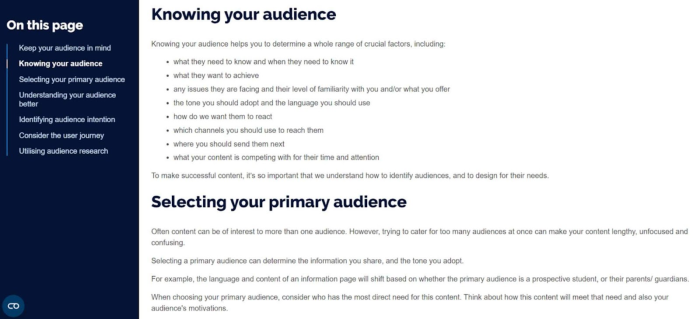
1. Understand Your Target Audience and Their Needs
Everything begins with insight. Parents and guardians are the primary decision-makers for K–12 education, so understanding what they value, whether it’s academic rigor, faith-based values, or community belonging, is essential. Avoid broad messaging that speaks to “everyone.” Instead, analyze your current families: Where do they live? What motivated their choice? What concerns drive their decision-making?
Many schools formalize this through personas, fictional yet data-driven profiles like “Concerned Parent Carol,” representing key audience segments. Surveys, interviews, and CRM data can help refine these personas to reveal motivations and needs.
Example: Newcastle University (UK). The university’s marketing team uses data and research to deeply understand prospective students. Newcastle’s internal content guide emphasizes identifying audience needs through methods like analytics, social media listening, surveys, and focus groups. This research informs content planning, ensuring communications solve audience problems and use the right tone and channels.
Once you know your audience, tailor your outreach accordingly. Working parents may prefer evening emails; international families may value multilingual content highlighting boarding life. Each message should reflect your school’s unique strengths and speak directly to what families care about most.
In short, marketing begins with knowing your families deeply and crafting messages that make them feel seen, understood, and inspired to choose your school.
2. Define and Promote Your School’s Unique Value Proposition
Once you know your audience, the next step is to define what truly makes your school stand out. In a competitive education landscape, clarity is power, and your Unique Value Proposition (UVP) is what helps families instantly understand why your school is the right choice.
Start by asking: “What do we offer that others don’t?” Your differentiators might be tangible (like an IB-accredited curriculum, advanced STEM facilities, or bilingual instruction) or emotional (a nurturing environment, strong moral foundation, or inclusive community). The key is to highlight the qualities that align with your audience’s values and can’t easily be replicated by competitors.
Look at what nearby schools emphasize, then find the white space. Finally, weave your UVP consistently through your website, tagline, visuals, and social media tone. A clear, authentic value proposition creates confidence and shows families not just what you offer, but why it matters.
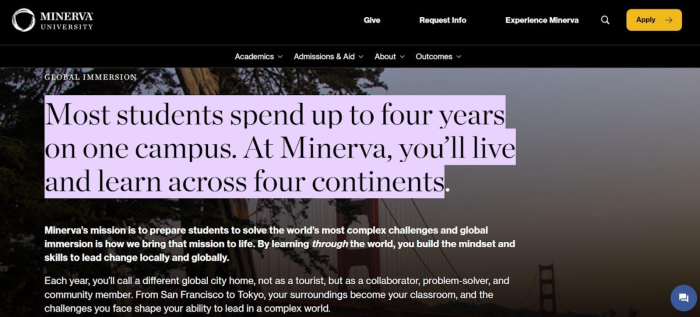
Example: Minerva University (USA). Minerva differentiates itself with a global immersion undergraduate program and an active learning model. The university clearly promotes this UVP: students live and study in seven cities on four continents over four years, rather than staying on one campus. Minerva’s website emphasizes that this global rotation and its innovative, seminar-based curriculum prepare students to solve complex global challenges. Each year in a new international city is not a travel experience but an integral part of academics, which Minerva markets as a unique offering in higher education.
3. Build a Robust Online Presence (Website, SEO, and Content)
Your school’s online presence is its digital front door, often the first impression prospective families have. A strong online foundation combines a polished website, smart SEO, and valuable content that informs, inspires, and converts.
Website Design & User Experience (UX) Your website should feel like a guided tour: beautiful, intuitive, and informative. Parents should quickly find essentials like admissions details, tuition, programs, and contact info. Use clean navigation, mobile-first design, and fast loading speeds to keep users engaged. High-quality visuals, such as campus photos, testimonial videos, or 360° virtual tours, bring your school to life. Consistent colors, logos, and tone across every page reinforce trust and ensure brand cohesion.
Search Engine Optimization (SEO) Even the best website can’t help if no one finds it. Use relevant keywords (e.g., “private school in Toronto,” “Catholic high school with IB program”) naturally in titles, headings, and meta descriptions. Create dedicated pages for programs and locations, optimize image alt text, and claim your Google Business profile to strengthen local SEO visibility.
Content Marketing Keep your site dynamic through regular updates via blog posts, student stories, and event recaps. Highlighting achievements and thought-leadership topics (like “How to Choose the Right Private School”) builds credibility and draws organic traffic.
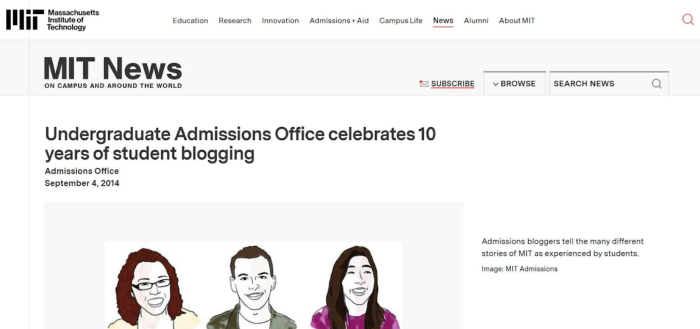
Example: Massachusetts Institute of Technology – MIT (USA): MIT’s Admissions Office hosts a famous student-written Admissions Blog that has become a pillar of its online presence. For over a decade, current MIT students have blogged candidly about campus life and academics, amassing thousands of posts read by prospective students worldwide. This blog strategy – focusing on transparency and real student voices – has paid off: the content generated millions of views, a robust engagement, and is often cited by applicants as influential in their college choice. MIT even curates a “Best of the Blogs” booklet and frequently analyzes blog traffic and feedback, using those insights to continually refine content and keep its website highly relevant to what prospective students want to know.
A well-designed, search-optimized, content-rich website isn’t just marketing; it’s proof of excellence.
4. Leverage Social Media and Digital Engagement
Social media is no longer optional. For private schools, it’s often the first place parents and students experience your community. Done right, it doesn’t just showcase your school; it builds lasting emotional connections.
Choose the Right Platforms Focus on where your audience spends time. For most schools, Facebook and Instagram are the anchors.
Facebook for community updates, parent groups, and event highlights.
Instagram for vibrant visuals and stories from daily campus life.
Schools serving older students or alumni can also explore TikTok, YouTube, or LinkedIn to reach new audiences.
Be Consistent and Purposeful Post regularly, at least a few times weekly, and plan around the school calendar. Use photos, short videos, or student/teacher takeovers to bring authenticity. Feature achievements, classroom moments, and cultural highlights to help families visualize their child’s experience.
Engage and Respond Social media is a dialogue, not a monologue. Reply promptly to comments, use polls or Q&As, and encourage user-generated content. Paid campaigns on Facebook and Instagram can further boost awareness, driving families to your website or open house events.
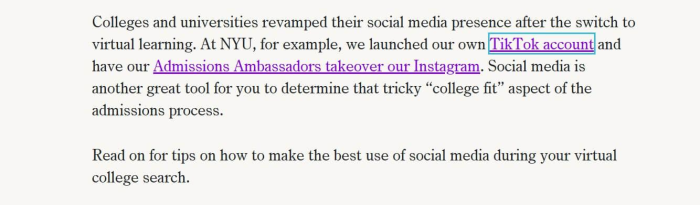
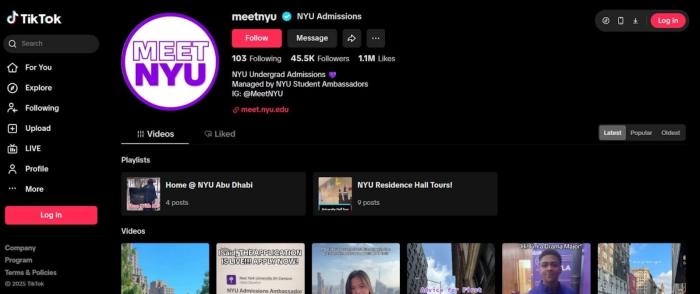
Example: New York University (USA). NYU’s admissions team expanded its digital reach by launching an official TikTok account and running student-led Instagram takeovers to showcase campus life. Current NYU students (Admissions Ambassadors) frequently create Instagram Stories and TikToks about dorm life, classes, and NYC activities, allowing prospects to see authentic student experiences. NYU actively encourages prospective students to engage – liking, commenting, or DMing questions – and monitors that feedback. This social strategy not only entertains (e.g., seniors doing TikTok dances) but also provides valuable peer-to-peer insights about “fit,” helping applicants feel more connected to the university culture.
A strong social presence humanizes your brand and turns followers into advocates.
5. Utilize Both Digital and Traditional Advertising Wisely
A balanced mix of digital and traditional advertising ensures your school reaches families online and in the local community. Each channel serves a distinct purpose.
Digital Advertising: Platforms like Google Ads and Facebook/Instagram Ads allow precise targeting by location, interests, and demographics. Search ads capture families actively looking for private schools (“private school near me”), while display and remarketing ads keep your brand visible even after visitors leave your site. For best results, pair strong ad copy with well-optimized landing pages. Email marketing is also a cost-effective channel for nurturing inquiries through newsletters and event updates.
Traditional Advertising: Local print ads, outdoor banners, and community events remain powerful for visibility. Direct mail campaigns and education fairs can connect you with parents in person, adding a personal touch that digital may lack. Track every campaign’s ROI and adjust accordingly.
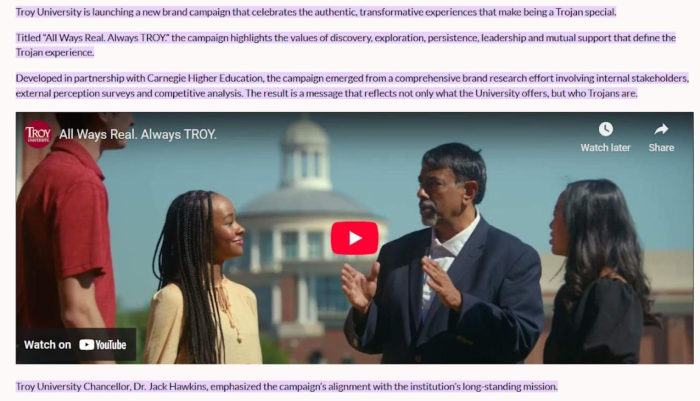
Example: In 2025, Troy University rolled out “All Ways Real. Always TROY,” a new brand campaign across a mix of traditional and digital channels. The integrated campaign includes a dynamic video commercial, print ads in publications, targeted online ads, extensive social media content, billboards in key markets, and even on-campus signage reinforcing the message. By deploying a cohesive theme on multiple platforms, Troy ensures its story of “authentic, career-focused” education reaches people wherever they are – whether scrolling online or driving past a billboard. (The campaign was informed by research and campus stakeholder input, and its multi-channel approach builds broad awareness while maintaining consistent branding.)
6. Emphasize Personal Connections: Tours, Open Houses, and Word-of-Mouth
Even in the digital age, enrollment decisions are deeply personal. Families may start online, but the final decision often comes down to how a school feels, its people, warmth, and community spirit. That’s why in-person experiences and authentic connections remain at the heart of private school marketing.
Tours and Open Houses: These events are your strongest conversion tools. Host open houses that showcase your facilities, programs, and culture. Include presentations, guided tours, and student or parent ambassadors to share authentic perspectives. Personal tours should be tailored to family interests, show relevant classrooms, introduce teachers, and follow up promptly afterward.
Word-of-Mouth and Community Engagement: Encourage satisfied parents, alumni, and students to share their experiences online and offline. Create ambassador programs or host informal meet-ups. Families trust real stories from peers more than polished ads, its important to nurture that organic advocacy.
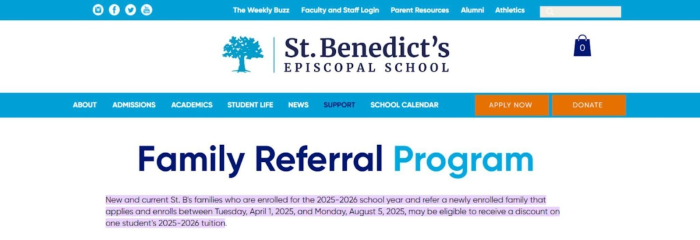
Example:St. Benedict’s Episcopal School (USA). This private school in Georgia leverages parent word-of-mouth through an organized Parent Ambassador Program. Enthusiastic current parents serve as school ambassadors – they attend open houses (in person or virtual) to welcome and mentor new families, display yard signs in their neighborhoods, bumper stickers on cars, and share school posts on their personal social media to spread the word. To further encourage referrals, St. Benedict’s even offers a Family Referral Program: current families receive a tuition discount (10–15% off one child’s tuition) if they refer a new family who enrolls. These personal recommendations and community events create a warm, trust-based marketing channel that no paid advertisement can replace.
7. Monitor, Measure, and Refine Your Marketing Efforts
Marketing is an evolving process of observation, analysis, and improvement. The best-performing private schools treat marketing as a cycle: plan, execute, measure, and refine.
Track and Analyze Performance: Use tools like Google Analytics, Meta Ads Manager, or your CRM to monitor how families engage with your campaigns and website. Track metrics such as page visits, inquiries, conversion rates, and the most effective traffic sources. For example, if your admissions page gets plenty of views but few form completions, it may need stronger calls to action or a simpler layout.
Define and Review KPIs: Set measurable goals, like inquiry volume, open house attendance, or enrollment yield, and review them monthly or quarterly. Data-driven insights allow you to invest more in what works and cut what doesn’t.
Iterate and Adapt: Marketing trends shift quickly. Regularly test your messaging, visuals, and targeting strategies. Even small A/B tests on ads or email subject lines can lead to significant improvements over time.
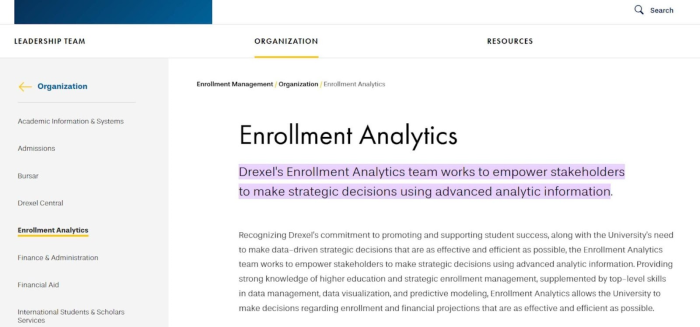
Example:Drexel University (USA). Drexel invests heavily in data analytics to continually refine its marketing and enrollment strategies. The university established an Enrollment Analytics team dedicated to measuring what’s working and advising adjustments. This team analyzes prospect and applicant data, builds dashboards and predictive models, and shares actionable insights with admissions and marketing units. By using data visualization and machine-learning models (for example, predicting which inquiries are most likely to apply), Drexel’s marketers can focus resources on high-yield activities and tweak messaging or outreach frequency based on evidence. The goal is to enable fully data-driven decisions – Drexel explicitly ties this analytic approach to improving efficiency and effectiveness in hitting enrollment goals.
How to Create a Marketing Strategy for a School (Step-by-Step)
We’ve explored what effective school marketing entails. Now let’s unpack how to build a plan that actually works.
How to create a marketing strategy for a school? To create a marketing strategy for a school, set clear goals, analyze your audience and competitors, define your unique value proposition, choose effective marketing channels, implement campaigns consistently, measure performance using data and feedback, and refine tactics regularly for continuous improvement and enrollment growth.
Whether you’re starting from scratch or optimizing an existing strategy, a clear, step-by-step framework helps you move from ideas to measurable impact.
Step 1: Determine Your Goals
Start by defining what success looks like for your school. Without clear goals, marketing becomes guesswork. Use the SMART framework: Specific, Measurable, Achievable, Relevant, and Time-bound, to make goals actionable.
For instance:
Increase Grade 9 applications by 15% for the next school year
Boost awareness in new neighborhoods to attract 10 students from that area
Enhance perception of our arts program through digital storytelling campaigns
Each goal should have a metric. If you aim to “increase inquiries,” specify how many, by when, and through which channels. Concrete targets create accountability and make it possible to assess ROI later.
Step 2: Conduct a Situation Analysis
Before planning tactics, understand your current position. Conduct a SWOT analysis (Strengths, Weaknesses, Opportunities, Threats) to evaluate both internal and external factors.
Internal Assessment:
What is your brand reputation in the community?
Are your social media channels active and engaging?
Does your website effectively communicate your strengths?
External Assessment:
Is the local school-age population growing or declining?
Who are your competitors, and what are they emphasizing?
What economic, demographic, or policy shifts could impact enrollment?
For example, a strength could be high university placement rates; a weakness might be outdated branding; an opportunity could be a new housing development nearby; a threat might be a competing school opening next year.
Review past marketing data, too. Which campaigns generated the most inquiries? Did your open house attendance meet expectations? Insights from past efforts shape a more effective plan moving forward.
Step 3: Define Your Value Proposition and Key Messages
Your Unique Value Proposition (UVP) is the heart of your marketing strategy. It defines what makes your school distinct and why families should choose you.
Once identified, craft three to five key supporting messages. Example:
UVP: “We provide a holistic education that develops intellect and character.”
Key Messages:
Dual-curriculum integrating academics and character education.
Small class sizes for individualized attention.
Safe, inclusive community environment.
Commitment to innovation and creativity.
Decades-long legacy of academic excellence.
These pillars should guide every piece of communication, from your homepage copy to your social media captions. Make sure they align with your audience’s priorities. Involving key stakeholders, teachers, admissions staff, parents, and alumni ensures authenticity and internal alignment.
Step 4: Select Your Marketing Channels and Tactics
With messaging established, identify how you’ll deliver it. The best school marketing strategies blend digital and traditional approaches, tailored to your budget and bandwidth.
Digital Channels:
Revamp and optimize your website for clarity, SEO, and mobile responsiveness.
Create a content calendar for blogs, newsletters, and video storytelling.
Maintain consistent posting on key social platforms (e.g., Instagram, Facebook, YouTube).
Run targeted Google Ads and Facebook campaigns for open house registrations.
Traditional Channels:
Host community events, sponsor local activities, or participate in school expos.
Distribute branded print materials like brochures and banners.
Leverage alumni and parent networks for referral-based outreach.
Outline timelines and assign responsibilities. For instance, if the admissions team handles social posts while a vendor manages SEO, document it clearly. Prioritize what’s realistic, for example, executing three channels effectively beats juggling six poorly.
Tip: Always make sure your digital foundation (especially your website) is strong before investing in high-cost advertising. A great ad can’t compensate for a poor landing page.
Step 5: Launch and Implement the Campaign
This is where planning meets execution. Roll out initiatives systematically and track everything from day one.
Develop a month-by-month marketing calendar tied to admissions milestones. For example:
August: Update website content, design new visuals, and optimize SEO.
September: Launch “Back-to-School” awareness campaign and host the first open house.
October–November: Run paid social ads and distribute direct mailers.
January: Promote application deadlines through retargeting and email follow-ups.
To maintain consistency, use automation tools (like HubSpot or Hootsuite) to schedule posts, emails, and reminders. However, ensure automation still feels human; personalized responses matter.
Coordinate closely with admissions and faculty teams so inquiries are promptly followed up on. A well-executed campaign can fail if responses are delayed. Always be ready to scale operationally when interest spikes.
Step 6: Evaluate and Refine
Once campaigns have run for a few months or after a full admissions cycle, analyze outcomes against your original goals.
Ask:
Did applications or inquiries increase as projected?
Which channels drove the most qualified leads?
Were conversion rates consistent across the funnel (inquiry → visit → enrollment)?
Review quantitative data (Google Analytics, CRM reports, ad dashboards) and qualitative feedback (from parent surveys, open house attendees, or declined applicants).
Then refine your strategy accordingly. Maybe your direct mail campaign underperformed while Instagram ads overdelivered. Next year, you’ll reallocate the budget. Or perhaps your messaging around “academic rigor” resonated more than “extracurricular excellence,” lean into what’s connecting emotionally.
Treat underperforming tactics not as failures but as opportunities to learn and adapt. The most successful schools are agile; they evolve messaging, visuals, and targeting as they collect new insights.
Step 7: Maintain and Innovate (Ongoing)
Marketing is cyclical. Each year, repeat the process of reassessing goals, refreshing creative assets, and incorporating new ideas.
Innovation keeps your brand vibrant. Test emerging platforms (like TikTok or Threads), experiment with storytelling formats (student podcasts, short documentaries), or integrate automation and AI for efficiency. Ensure each new initiative aligns with your mission and audience preferences.
Document everything in a concise marketing strategy brief: a one-page summary outlining:
Goals and KPIs
Target audience profiles
Key messages
Marketing channels and timeline
Budget and resource plan
Sharing this internally keeps admissions, communications, and leadership aligned.
Creating a marketing strategy for your school is about clarity, structure, and alignment. By defining goals, analyzing your position, articulating your value, choosing the right channels, and refining based on results, your school can build a sustainable and measurable marketing system.
At HEM, we’ve experienced how following this structured approach outperforms those relying on ad-hoc efforts. The difference? A strategy built on data, storytelling, and intentionality, turning marketing from a task into a powerful growth engine for your institution.
Wrapping Up
Marketing a private or independent school is both an art and a science. It blends the emotional connection of storytelling with the precision of data-driven strategy. The most successful schools understand their audiences deeply, communicate their value clearly, and use modern tools to bring those stories to life.
In today’s evolving landscape of private education marketing, technology has created new opportunities, from SEO and social media to virtual tours and AI chatbots, yet the heart of school marketing remains the same: authentic human connection. A well-placed digital ad may spark interest, but it’s the warmth of a personal tour or a parent’s heartfelt testimonial that inspires trust and enrollment.
If you’re just beginning, focus on the fundamentals: know your audience, tell your school’s story authentically, and ensure every touchpoint, online and offline, reflects your values. With consistent, strategic communication, your school can build visibility, strengthen relationships, and attract the right families.
And remember, you don’t have to do it alone. Partnering with education marketing experts like Higher Education Marketing can help transform your strategy into measurable enrollment success.
Do you need help developing a results-driven private education marketing plan for your institution?
Struggling with enrollment?
Our expert digital marketing services can help you attract and enroll more students!
Frequently Asked Questions
Question: What is the role of marketing in schools?
Answer: Essentially, marketing in schools is about alignment; connecting what a school offers with what families seek. A strong marketing function doesn’t just fill seats; it sustains a mission. It ensures enrollment remains healthy, relationships stay strong, and the school continues to thrive long term.
Question: How to create a marketing strategy for a school?
Answer: To create a marketing strategy for a school, set clear goals, analyze your audience and competitors, define your unique value proposition, choose effective marketing channels, implement campaigns consistently, measure performance using data and feedback, and refine tactics regularly for continuous improvement and enrollment growth.
Question: What is marketing in education?
Answer: Put simply, marketing in education is about connection. It’s understanding what families value and communicating how your school meets those needs with clarity and authenticity. It’s a strategic process of shaping perception, building relationships, and inspiring trust in your institution’s promise.
This blog was kindly authored by Sam Illingworth, Professor of Creative Pedagogies at Edinburgh Napier University.
Debates about Artificial Intelligence (AI) in higher education tend to fall into two extremes. On one side, the snake-oil salespeople promise it will save us: automated tutors, frictionless research, instant grading. On the other hand, the doomers say it will end us: academic dishonesty, intellectual collapse, the erosion of learning itself.
Neither view is adequate. AI use is not black and white. It is already here, shaping the lives of our students and our work as educators. The challenge now is to live with it well.
Beyond speed and efficiency
Most guidance to universities stresses speed. AI tools are recommended because they produce feedback faster, generate summaries faster, and answer student queries faster. Yet universities are not factories, and education is not a race.
Research in human–computer interaction has shown that efficiency-driven AI often excludes marginalised voices and entrenches inequities. A different approach is needed. Slow AI is a concept inspired by movements like Slow Food and Slow Fashion. Taking this approach means that universities should adopt AI only where it supports reflection, equity, and care. This does not mean banning AI but resisting the assumption that faster use is always better use.
How Slow AI can reshape practice
Slow AI is not a slogan. It can be operationalised in ways that strengthen teaching and learning:
Protecting academic integrity. Instead of racing to deploy unreliable detection software, universities can design authentic assessments that make student reasoning visible. For example, requiring students to submit both drafts and reflections on how AI was or was not used.
Supporting student agency. AI should not replace student judgement but prompt it. Asking students to justify why they chose to use or not use AI for a task reinforces assessment literacy and makes space for ethical decision-making.
Fostering meaningful reflection. Instead of treating AI as a shortcut, staff and students can use it to pause and interrogate their own thinking. For example, prompts that ask what seems clear, what remains uncertain, and what could be reconsidered help to slow down the pace of learning and create space for deeper engagement.
AI hides its gaps in fluency
One of the risks is that large language models never admit uncertainty. They will never say “I do not know” of their own volition. Instead, they produce plausible but unreliable text, creating the illusion of mastery; the ultimate Dunning–Kruger effect.
Both students and educators can counter this by using simple strategies:
Ask for three alternative answers. Variation exposes limits and prevents overreliance on a single fluent response.
Ask where the model is uncertain. Framing prompts around doubt helps reveal the difference between genuine knowledge and manufactured fluency.
Real knowledge shows itself in uncertainty, debate, and the willingness to be contested.
Towards a more reflective AI culture
A recent case study in Campana-Altamira, a marginalised community in Monterrey, Mexico, explored how Slow AI could support local engagement. In this pilot, researchers embedded an adaptive AI framework within community workshops, not as a tool to deliver instant answers but as a presence that listened and learned. Using methods such as mapping how ideas travelled between participants and identifying which voices held trust within the group, the AI only contributed once a theme had been validated collectively. Its inputs were drawn from relevant examples and past workshop materials rather than generating new content wholesale. Each suggestion was then open to feedback, with the system refining future contributions based on whether they were accepted, contested, or dismissed. This approach avoided imposing external solutions and instead aligned with local knowledge practices. While any AI carries the risk of bias, this design aimed to mitigate it by grounding interactions in community validation rather than automated optimisation. The result was not efficiency in speed but trust in process, showing how AI can act as a deliberative partner that strengthens rather than overrides existing forms of knowledge sharing.
Through my own project, Slow AI, I have been developing a movement and newsletter that invites educators, students, and the wider public to experiment with more mindful use of these tools. Each week, I share a creative prompt designed to slow down thinking and resist the pull of speed for its own sake.
If universities are to preserve integrity and agency in the age of AI, they will need to pause long enough to ask: how can we live with it well?
Three recommendations for practising Slow AI in higher education
To practise Slow AI, think of it like following a recipe. Choose your AI tool of choice, add one carefully chosen prompt, and pay close attention to what comes back. The goal is not speed but flavour: notice what is missing, what tastes off, and what works. Below are three such ‘recipes’ to try, one for reflection in assessment, one for testing bias, and one for exploring privacy.
For reflection in assessment Prompt: “Here is my draft essay on X. Tell me three things it suggests about how I think and learn. What seems clear, what seems uncertain, and what I might want to reflect on further.”
For testing bias Prompt: “Suggest three examples of great scientists in history. Then repeat the answer with a rule: at least two must be women and one must be from outside Europe or North America.”
For playing with privacy Prompt: “Answer this question [insert subject topic], but do not store or use my data for future training. Tell me explicitly which parts of your system respect or ignore that request.”
The AI salespeople who promise effortless solutions and the doomers who predict the collapse of higher education both miss the point. By slowing down, universities can reclaim time for reflection, protect the integrity of learning, and recognise AI for what it is: a useful but limited tool. Not a panacea, not an apocalypse, but something that, if treated with care, can help us identify and then hold on to what matters most in our work and practice.