Category: California

  • Will Trump Try to Ban Immigrants from Public Schools? – The 74

    Will Trump Try to Ban Immigrants from Public Schools? – The 74


    Get stories like this delivered straight to your inbox. Sign up for The 74 Newsletter

    This story was originally published by CalMatters. Sign up for their newsletters.

    Funding cuts. Raids near campuses. Exclusion from programs like Head Start and career training. For months, the Trump administration has been chipping away at the rights of students without legal status in public schools.

    Could the administration take away those students’ right to free public school entirely? Experts say that may be the next step.

    “People have worried about this for a couple decades, but this is different,” said Patricia Gándara, education professor and co-director of the Civil Rights Project at UCLA. “Right now we have to be extremely vigilant. These people will stop at nothing.”

    A 1982 U.S. Supreme Court ruling, Plyler v. Doe, guarantees all students, regardless of immigration status, the right to a free public education in K-12 schools. But last year the conservative Heritage Foundation called for the Supreme Court to overturn the ruling and for states to charge tuition to immigrant families, even if their children are U.S. citizens. The rationale is that schools spend billions of dollars educating those students — money that instead should be spent on students who, along with their parents, are native-born U.S. citizens.

    Project 2025, also published by the Heritage Foundation, echoes that vision.

    Such a policy would have an outsized impact in California, where nearly half of the state’s children have at least one immigrant parent, according to the Public Policy Institute of California.

    “This would have tremendous negative impacts,” said Megan Hopkins, chair of the education department at UC San Diego. “For starters, we’d have a less educated, less literate populace, which would affect the economy and nearly every other aspect of life in California.”

    Tuition for noncitizens

    Plyler v. Doe stemmed from a case in Texas in the early 1980s. The state had passed a law allowing schools to charge tuition to students who weren’t citizens. The Tyler Independent School District in Tyler, Texas, a small city about 100 miles southeast of Dallas, was among the districts that tried, triggering a lawsuit that eventually brought the case to the Supreme Court.

    The Supreme Court ruled in favor of the plaintiffs, arguing that children who aren’t citizens are entitled to equal protection under the law. Still, the ruling was close — 5 to 4 — even though the court was more liberal than it is today.

    Since then, the ruling has been mostly forgotten. But there have been occasional attempts to restrict immigrants in schools, in California and elsewhere. In 1994 California voters passed Proposition 187, which banned immigrants living illegally in the U.S. from receiving public benefits, including access to public schools. A federal court blocked it before it went into effect.

    In 2011, Alabama passed a law requiring schools to collect students’ immigration status. That law was later blocked by a federal court. In 2022, Texas Gov. Greg Abbott said he’d favor revisiting Plyler v. Doe and that states should not have to pay to educate students without legal status.

    Since the Heritage Foundation published its report, about a half-dozen states have attempted to pass laws that would allow schools to charge tuition to noncitizens. None passed last year, but advocates said they plan to keep trying.

    Route to Supreme Court

    They’re likely to have a sympathetic supporter in President Donald Trump, who’s so far followed many of the policies put forward by Project 2025. In the past few months, his administration has amped up immigration arrests and said it would no longer honor schools as safe havens from enforcement. It also cut (although later reinstated after states sued) funding for migrant students and barred students without legal status from Head Start, adult education and career and technical education.

    The issue could land before the Supreme Court in at least two ways. A state could pass a law allowing public schools to charge tuition, leading to a lawsuit which could end up before the Supreme Court. Or Trump could issue an executive order that could also trigger a lawsuit.

    Erwin Chemerinsky, dean of the UC Berkeley Law School, said some of Trump’s actions, such as barring children without legal status from Head Start, is already a violation of Plyler.

    “There’s no doubt that the Trump administration has increased pressure on Plyler,” Chemerinsky said. “Certainly, what Trump is doing could lead to cases that would get to the Supreme Court. Could this court overturn Plyler? Of course they could. … all it would take is five justices wanting to overrule it.”

    Even if it’s not overturned, the current policy shifts have had a chilling effect on schools and immigrant families, said Hopkins, at UC San Diego. School attendance has dropped in communities experiencing immigration crackdowns, which has caused academic repercussions for some students and widened the achievement gap between Latino students and other groups. A recent report by Policy Analysis for California Education found that Latino students and English learners fared worse in math and English in the wake of immigration arrests in their communities, and reported a significant increase in bullying at school.

    Hopkins also said the policies aren’t especially effective. If the goal is to encourage immigrants to return to their home countries voluntarily, research has shown that doesn’t often happen. After Alabama passed its anti-immigrant law in 2011, many families simply moved to Mississippi.

    ‘Our biggest fear’

    In Monterey County, the new policies have led to widespread fear and confusion among immigrant families, said Monterey County Office of Education Superintendent Deneen Guss. Attendance has dropped not only in schools, but at community events as well.

    To support families, schools have been hosting “Know Your Rights” information nights (in-person and virtually), encouraged parents to submit child care plans to schools in case a parent is arrested, given out booklets in Spanish on how to help children experiencing anxiety, and provided a wide array of legal and other resources.

    But when the Trump administration announced it was barring students without legal status from Head Start, “that gave me pause,” Guss said. “That made me think they really were going after Plyler. That’s our biggest fear.”

    She worries about the impact that would have on families, as well as school staff who would suddenly be responsible for checking students’ citizenship paperwork. Currently, schools don’t ask for students’ immigration status.

    “Educators’ jobs are hard enough,” Guss said. “Our job is to give children the best possible education. Don’t make us become immigration officers. It’s a position we do not want.”

    She’s been urging parents, and the public, to stay informed and speak out. Regardless of whether the Supreme Court overturns Plyler, anti-immigrant policies are almost certain to continue, with devastating consequences for students.

    “You can’t sit back and pretend everything is going to be OK,” Guss said. “People need to ensure their voices are heard. And we have to fight for our kids.”

    This article was originally published on CalMatters and was republished under the Creative Commons Attribution-NonCommercial-NoDerivatives license.


    Get stories like these delivered straight to your inbox. Sign up for The 74 Newsletter

    Source link

  • LA Preschool Teacher Closed Her Doors After Almost 20 Years. What It Says About the State of Childcare – The 74

    LA Preschool Teacher Closed Her Doors After Almost 20 Years. What It Says About the State of Childcare – The 74


    Get stories like this delivered straight to your inbox. Sign up for The 74 Newsletter
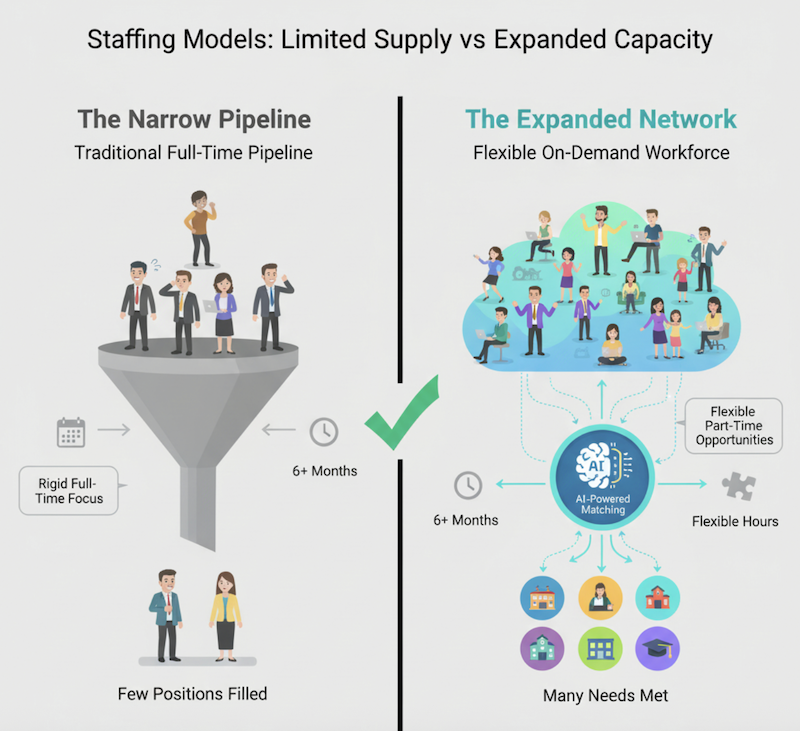
    After almost 20 years in business, Milestones Preschool in Inglewood closed its doors this month.

    It was a decision that preschool director Milena Bice had been putting off for years. She’d turned her family home into a small business, transforming the house on a quiet tree-lined street into a playground of childish delights, complete with a sand pit, fruit trees and even a brood of chicks waddling around a small pen.

    Bice loved her preschool. She loved the way it allowed her to care for her own kids when they were little, and how she could continue to apply therapeutic approaches to her work long after they’d outgrown preschool. Over the years, she developed a reputation for her care for children with neurological differences.

    But child care is no easy business. Margins were about as slim as can be. When parents couldn’t afford to pay full tuition, Bice felt it was her duty to keep caring for their kids anyway. The question of closing loomed over her as her business survived the ups and downs of the global economy: first, the 2008 recession, and the COVID-19 pandemic more than a decade later.

    But this month, Bice finally called it quits. She was sick of charging families high fees and still struggling to pay herself at the end of the month. And for the first time this year, she said her preschool didn’t have anyone on her waitlist. One reason is universal transitional kindergarten — or TK — no-cost public kindergarten that becomes an option for all California 4-year-olds this fall.

    “ I can’t compete with free,” she told LAist in a recent interview. “And in this economy, I think a lot of families are hurting.”

    Bice’s predicament mirrors a statewide challenge. As families sign their 4-year-olds up for TK, some childcare and preschool providers say they’re losing enrollment and it’s threatening their businesses. While teachers struggle to adjust, childcare remains an unaffordable and unmet need for many families across California, especially with very young children.

    Child care is still a major need for CA families

    Even as transitional kindergarten expands, there’s no shortage of need for child care. The California Budget & Policy Center estimates that just 19% of infants, toddlers and preschool-aged children who are eligible for state subsidized care are enrolled. The need is especially great for children age 2 or younger — the most expensive age group to care for.

    recent report from the Center for the Study of Child Care Employment found that most early education programs will need to pivot to younger kids to meet the need and stay in business, and that centers and home-based childcares are hurting from declined enrollment since the pandemic.

    Anna Powell, the lead author of that report, said early educators struggling to adapt to the changing landscape of their industry are a byproduct of the state’s massive investment in universal TK, but lack of similar investment in others.

    “ If one area, for example TK, receives a lot of resources to scale up to reach demand, in theory, that is positive,” she said. “What happens when you don’t invest in all the quadrants at the same time is that there can be these unintended consequences.”

    Transitioning to younger kids is a challenge

    Powell said that caring for younger kids requires a number of shifts in how child care programs operate. Teaching expertise is different for younger children, and staffing ratios are smaller. The time a provider might expect to have a child enrolled is also shorter, since kids are heading to the public school system earlier. This means early educators could face more turnover.

    There’s also the matter of teaching preferences. Caring for a 3- or 4-year-old is very different from taking care of a 1-year-old. In a survey of nearly 1,000 early educators, just 20% said they’d be interested in teaching infants and toddlers.

    David Frank, who runs a preschool in Culver City, told LAist in April that he’s also closing his doors this year. He said that 4-year-olds used to make up a third of the school’s students, and his enrollment was down from 34 to 13. His preschool already took 2 -year-olds, but he didn’t want to go any younger. One reason is it would require him to reconfigure the school to create a separate space for the youngest children.

    Frank said he’s not against TK, but he couldn’t keep making it work.

    “ I’m happy that children will have good, free education,” he said. “But as a person trying to run a business … it’s just no longer a viable plan to stay open anymore.”

    Advocates say even more investment is needed

    California’s transitional kindergarten is a plan years in the making, and, despite kinks, it has achieved a big goal: offering a free option for every family with a 4-year-old in the state.

    That program runs through the public school system, but child care and early education offerings for the state’s youngest children continue to be a patchwork of different types of care with no similar central system. The state funds a public preschool program for 2- to 5-year-olds for low-income families, which has received more money in recent years. Many private programs receive state subsidies for serving low-income families, and the state has increased the number of seats it funds in recent years.

    It also bumped up reimbursement rates for 3-year-olds to entice more providers to take younger kids.

    Gov. Gavin Newsom’s office pointed to these changes, telling LAist that it has invested heavily in a universal Pre-K program that extends beyond transitional kindergarten.

    Some advocates and childcare providers say still more game-changing investment is needed. The state has promised the childcare providers that receive its subsidies to overhaul its payment system to reflect the “true cost” of care, but this year deferred offering them pay bumps. The union representing those workers is currently bargaining with the state, saying providers can’t wait for a raise.

    Patricia Lozano, the executive director of advocacy organization Early Edge California, said TK’s ripple effect on early education programs shows that the state needs to do more to provide for its youngest children.

    “ TK was one of the key things we’ve been advocating since it was passed,” she said. “But that’s just one piece. I think the whole system itself is problematic. It’s underfunded.”

    Lozano pointed to New Mexico as a potential model for California. The state has boosted teacher pay and expanded eligibility for free care by directing gas and oil revenue to state childcare programs. She said this type of consistent source of money is especially important amid threats to federal funding and state budget cuts.

    “The  bottom line is we need to have that source of funding protected,” she said.

    In the meantime, Milena Bice’s preschool in Inglewood is closed. She’s not sure exactly what happens next. She can’t go work at a public school. Despite decades in the business, she doesn’t have a bachelor’s degree or teaching credential.

    While she debates the future, Bice is holding onto her childcare license. Who knows? Maybe she’ll want to reopen someday.


    Get stories like these delivered straight to your inbox. Sign up for The 74 Newsletter
    Source link

  • California Increased Paid Family Leave Payments. Now More Parents Are Taking Advantage – The 74

    California Increased Paid Family Leave Payments. Now More Parents Are Taking Advantage – The 74


    Get stories like this delivered straight to your inbox. Sign up for The 74 Newsletter
    More Californians are using paid family leave benefits to care for a child after a new state law that increased payments for parents went into effect in January, according to new state data.

    Claims in the first two quarters this year were up about 16%, compared with the same time period last year, according to data provided to LAist from the California Employment Development Department.

    Anne Chapuis, public information officer for EDD, said several factors contributed to the uptick.

    “The January 2025 benefit rate adjustment has led to higher benefit amounts for eligible customers. Also, we typically see a higher seasonal number of claims submitted near the end of each calendar year,” Chapuis said in an email.

    While claims tend to tick up at the beginning of every calendar year, the uptick in the first quarter of 2025 was nearly 25% higher than the same period last year.

    Before this year’s change, most workers got up to 60% of their income when they took time off to care for a new baby. Now, many workers can get up to 90% of their wages.

    The changes stemmed from legislation in 2022 that aimed to allow more families to be able to take leave, especially low-income workers. Prior analysis showed that higher-income workers were using paid family leave benefits at much higher rates than workers making less than $20,000 a year.

    For those making under $20,000, claims were up about 2%, while claims for those making under $60,000 were up 17%.

    How paid family leave works

    Currently, moms and dads can get up to eight weeks of paid family leave to bond with a new child. That’s in addition to the paid time off pregnant people get before and after giving birth to a child.

    The paid family leave program in California is funded through the State Disability Insurance program, which covers about 18 million employees in the state. Workers pay into this fund with 1.2% taken out of their paychecks (it usually shows up on paystubs as “CASDI”).

    Workers who make less than $63,000 a year can get up to 90% pay — workers who make above that get 70%.


    Get stories like these delivered straight to your inbox. Sign up for The 74 Newsletter
    Source link

  • PBLWorks Announces its 2025 Award Winners

    PBLWorks Announces its 2025 Award Winners

    Novato, CA – The Buck Institute for Education (dba PBLWorks), a national provider of professional development and curriculum for high-quality Project Based Learning (PBL), has announced the recipients of its 2025 PBL Champions and John Larmer “JL” Lifelong Learning Awards.

    The recipients were honored during the organization’s 2025 PBL World conference in Napa Valley, California.

    The 2025 PBL Champions

    The PBL Champions program recognizes an individual, a school, and a school district that have demonstrated a commitment to PBL; have done quality, lasting work; and have shown evidence of impact on students. The 2025 recipients are:

    • District PBL Champion: Lynn Public Schools in Lynn, Massachusetts

    This 16,000-student district is transforming teaching and learning through its implementation of PBL. In a little over a year, the team at Lynn established high-functioning district and school leadership teams and trained a cadre of educators who have designed more than 70 projects for students. The district has implemented PBL at all seven of its secondary schools with a goal of having all students participate in two or more high-quality PBL experiences per year by the end of the 2029-30 school year.

    • School PBL Champion: University Prep Academy (UPA) High School in Detroit, Michigan

    University Prep Schools (UPrep) stands among Detroit’s earliest and longest-running charter school networks. Known for its unwavering commitment to student success, UPrep (UPA) has proudly upheld its signature “90/90 promise”—ensuring that at least 90% of students graduate from high school and 90% of those graduates go on to enroll in college. UPA teachers and leaders have leveraged PBL as a way that empowers students to be a part of the future of their city – from working on keeping their unhoused population warm in the winter through a physics project on heat transfer, to urban gardens that allowed students to provide farm-to-table food to local food pantries and shelters. PBL has opened their eyes to the challenges students face, encouraged them to see and explore those challenges through the lens of solutionists, and has brought UPA closer to the community it serves.

    • Individual PBL Champion: Kim Mishkin, Head of School at the Hudson Lab School (HLS) in Hastings, New York

    Kim Mishkin has been instrumental in embedding Project Based Learning as the foundation of the school’s curriculum. As both an educator and school leader, she has built structures, cultivated partnerships, and championed interdisciplinary, real-world learning experiences that empower students and educators alike. Through her leadership, HLS has become a model for how schools can integrate PBL at every level, ensuring that learning is not just about content, it is about empowering students to be problem-solvers, leaders, and changemakers.

    The John Larmer “JL” Lifelong Learning Award

    The John Larmer “JL” Lifelong Learning Award, named after PBLWorks’ Senior Fellow John “JL” Larmer, recognizes educators who are impacting and expanding the work of Project Based Learning. A significant advocate and thought leader in the field, JL has dedicated decades to advancing high-quality PBL and is the author of several foundational books that have shaped how educators design and facilitate high-quality PBL. This award celebrates those who carry forward that legacy with passion, purpose, and an unwavering commitment to deeper learning. The 2025 recipients are:

    • Rue Graham, Project Based Learning lead advisor and coach at the Pagosa Peak Open School, Archuleta County School District in Pagosa Springs, Colorado
    • Stephanie Tuttle, fourth grade teacher at Fairfield Elementary School, Rockbridge County Public Schools in Rockbridge, Virginia

    “Project Based Learning is an incredibly powerful way to engage students and ignite their passion for learning – and it all starts with having administrators and teachers who are committed to its success,” said PBLWorks CEO Bob Lenz. “Our awards programs recognize the incredible passion and hard work demonstrated by schools, districts, and individuals in implementing PBL. Congratulations to our 2025 award recipients!”

    About PBLWorks

    The Buck Institute for Education/ PBLWorks believes that all students, especially Black and Brown students, should have access to high-quality Project Based Learning to deepen their learning and achieve success in college, career, and life. Its focus is on building the capacity of teachers to design and facilitate high-quality Project Based Learning, and on supporting school and system leaders in creating the conditions for these teachers to succeed with all students.

    eSchool News Staff
    Latest posts by eSchool News Staff (see all)

    Source link

  • Homeless Student Counts in California Are Up. Some Say That’s a Good Thing – The 74

    Homeless Student Counts in California Are Up. Some Say That’s a Good Thing – The 74


    Get stories like this delivered straight to your inbox. Sign up for The 74 Newsletter

    In Kern County, the first rule in counting homeless students is not saying “homeless.”

    Instead, school staff use phrases like “struggling with stable housing” or “families in transition.” The approach seems to have worked: More families are sharing their housing status with their children’s schools, which means more students are getting services.

    “There’s a lot of stigma attached to the word ‘homeless,’” said Curt Williams, director of homeless and foster youth services for the Kern County Office of Education. “When you remove that word, it all changes.”

    Largely as a result of better identification methods, Kern County saw its homeless student population jump 10% last year, to 7,200. Those students received transportation to and from school, free school supplies, tutoring and other services intended to help them stay in school. For the purposes of this data, the definition of homelessness is broader than the state’s point in time count.

    The trend is reflected statewide. In the latest state enrollment data released last month, California had 230,443 homeless students — a 9.3% increase from the previous year. Some of the increase is due to the state’s ongoing housing shortage, but most of the increase is because of better identification, advocates and school officials said.

    Homeless students face numerous obstacles in school. They have higher rates of discipline and absenteeism, and fare worse academically. Last year, only 16% of homeless students met the state’s math standard, some of the lowest scores of any student group.

    “Schools can’t solve homelessness, but they can ensure the students are safe in the classroom and getting the education they need to get out of homelessness,” said Barbara Duffield, executive director of Schoolhouse Connection, a national homeless youth advocacy group. “That starts with identifying the child who’s homeless.”

    Challenges of counting homeless students

    Under the federal McKinney-Vento Act, schools are required to count their homeless students throughout the school year and ensure they receive services. Homeless students also have the right to stay enrolled in their original school even if they move.

    For many years, schools struggled to identify homeless students. Under state law, schools must distribute forms at the beginning of the school year asking families where they live — in their own homes, in motels, doubled-up with other families, in shelters, cars or outdoors.

    Some schools were less-than-diligent about collecting the form, or reassuring families understood the importance. Often, homeless families were reluctant to submit the form because they were afraid the school might contact a child welfare agency. Immigrant families sometimes feared the school might notify immigration authorities. And some families didn’t realize that sharing quarters with another family — by far the most common living situation among homeless families – is technically defined as homeless, at least under McKinney-Vento.

    A 2021 bill by former Assemblymember Luz Rivas, a Democrat from Arleta in the San Fernando Valley, sought to fix that problem. The bill requires schools to train everyone who works with students — from bus drivers to cafeteria workers to teachers — on how to recognize potential signs of homelessness. That could include families who move frequently or don’t reply to school correspondence.

    The bill seems to have helped. Last year, the state identified 21,000 more homeless students than it had the previous year, even as overall enrollment dropped.

    Still, that’s probably an undercount, researchers said. The actual homeless student population is probably between 5% and10% of those students who qualify for free or reduced-price lunch, according to the National Center for Homeless Education. In California, that would be a shortfall of up to 138,713 students.

    Influx of funding

    Another boost for identifying homeless students came from the American Rescue Plan, the federal COVID-19 relief package. The plan included $800 million for schools to hire counselors or train existing staff to help homeless students. Nearly all schools in California received some money.

    About 120 districts in California won grant money through the McKinney-Vento Act, which last year dispersed about $15.9 million in California to pay for things like rides to school, backpacks, staff and other services. Districts are chosen on a competitive basis; not all districts that apply receive funds.

    But those funding sources are drying up. Most of the pandemic relief money has already been spent, and President Donald Trump’s recently approved budget does not include McKinney-Vento funding for 2026-27.

    The cuts come at a time when advocates expect steep increases in the number of homeless families over the next few years, due in part to national policy changes. Republican budget proposals include cuts to Medicaid, food assistance and other programs aimed at helping low-income families, while the immigration crackdown has left thousands of families afraid to seek assistance. For families living on tight budgets, those cuts could lead to a loss of housing.

    And in California, the shortage of affordable housing continues to be a hurdle for low-income families. Even Kern County, which has traditionally been a less pricey option for families, has seen a spike in housing costs as more residents move there from Los Angeles.

    Joseph Bishop, an education professor at UCLA and co-author of a recent report on homeless students nationwide, said the loss of government funding will be devastating for homeless students.

    “California is the epicenter of the homeless student crisis, and we need targeted, dedicated support,” Bishop said. “Folks should be extremely alarmed right now. Will these kids be getting the education they need and deserve?”

    Better food, cleaner bathrooms

    In Kern County, identification has only been one part of the effort to help homeless students thrive in school. Schools also try to pair them with tutors and mentors, give them school supplies and laundry tokens, and invite them to join a program called Student Voice Ambassadors. There, students can tour local colleges, learn leadership skills and explore career options.

    As part of the program, staff ask students what would make school more enticing — and then make sure the suggestions happen. At one school, students said they’d go to class if the bathrooms were cleaner. So staff improved the bathrooms. At another school, students wanted better food. They got it.

    Williams credits the program with reducing absenteeism among homeless students. Two years ago, 45% of Kern County’s homeless students were chronically absent. Last year, the number dropped to 39% – still too high, he said, but a significant improvement.

    “Without McKinney-Vento funds, the Student Voice Ambassador program would go away,” Williams said. “How will we keep it going? I don’t know.”

    This article was originally published on CalMatters and was republished under the Creative Commons Attribution-NonCommercial-NoDerivatives license.


    Get stories like these delivered straight to your inbox. Sign up for The 74 Newsletter
    Source link

  • Trump Wants to Cut Funding for California Schools Over One Trans Athlete. It’s Not So Easy – The 74

    Trump Wants to Cut Funding for California Schools Over One Trans Athlete. It’s Not So Easy – The 74


    Get stories like this delivered straight to your inbox. Sign up for The 74 Newsletter

    This story was originally published by CalMatters. Sign up for their newsletters.

    California’s schools and colleges receive billions in federal funding each year — money that President Donald Trump is threatening to terminate over the actions of one student. AB Hernandez, a junior from Jurupa Valley High School, is transgender, and on May 31 she won first- and second-place medals at the state track and field championship.

    “A Biological Male competed in California Girls State Finals, WINNING BIG, despite the fact that they were warned by me not to do so,” Trump said in a social media post last week. “As Governor Gavin Newscum (sic) fully understands, large scale fines will be imposed!!!”

    Despite this post and a similar threat a few days earlier to withhold “large-scale” federal funding from California, Trump lacks the authority to change the state’s policy toward transgender athletes without an act of Congress or a decision by the U.S. Supreme Court. And recent court cases suggest that Trump also may have a hard time withholding money from California.

    California state law explicitly allows transgender students in its K-12 school districts to compete on the team that matches their preferred gender, but the Trump administration has issued multiple directives that restrict access to girls’ sports, including a letter last week from the U.S. Department of Justice telling high schools to change their policies.

    On Monday, California Attorney General Rob Bonta sued the Justice Department over its letter, saying it had “no right to make such a demand.”

    “Let’s be clear: sending a letter does not change the law,” said State Superintendent of Public Instruction Tony Thurmond in a statement to school districts. “The DOJ’s letter to school districts does not announce any new federal law, and state law on this issue has remained unchanged since 2013.” On Monday, Thurmond sent his own letter to the Trump administration, refuting its legal argument.

    California receives over $2 billion each year for its low-income Title I schools, as well as over $1 billion for special education. At the college level, students receive billions in federal financial aid and federal loans. Even if Trump lacks the legal authority to change state law, he could still try to withhold funding from California, just like he tried with Maine. In February, Trump asked Maine Gov. Janet Mills if her state was going to comply with a presidential executive order — which is not a law — that directed schools to bar transgender girls from certain sports. Mills said she’d comply with “state and federal laws,” effectively rebuking the president.

    The Trump administration has since tried to withhold funding from Maine, but legal challenges have prevented it.

    The NCAA vs. California state law

    Trump made banning transgender youth athletes a centerpiece of his 2024 presidential campaign, and it’s remained a focal point for his administration this year. Nationally, Americans increasingly support restrictions on transgender athletes, according to surveys from the Pew Research Center. Gov. Gavin Newsom, who last year signed legislation supporting trans students, spoke out against transgender athletes in a podcast this March, saying it was “deeply unfair” to allow transgender girls to compete in girls’ sports.

    Female athletes with higher levels of testosterone or with masculine characteristics have long faced scrutiny, biological testing and disqualification. Debates about who gets to participate in girls’ or women’s sports predate the Trump administration — and Newsom — and policies vary depending on the athletic institution.

    In 2004, the International Olympic Committee officially allowed transgender athletes to compete in the sport that aligned with their gender identity, as long as the athlete had sex reassignment surgery, only to change that policy in 2015 and require hormone testing. In 2021, the committee changed the policy again, creating more inclusive guidelines but giving local athletic federations the power to create their own eligibility criteria.

    Across California, youth leagues, private sports leagues and other independent athletic associations all have their own policies. Some allow transgender women and men to participate; some restrict who can compete. Some require “confirmation” of a participant’s gender, such as a government ID or statements from health care professionals, while other associations take the athletes at their word.

    California’s colleges and universities are not allowed to discriminate against transgender students but state law doesn’t provide any guidance beyond that. After the presidential executive order in February, the National Collegiate Athletic Association (NCAA), which independently regulates college sports, changed its rules, prohibiting transgender women from competing and putting colleges in a bind. Roughly 60 California universities are part of the NCAA, including almost all of the UC and many Cal State campuses. Community colleges, which represent the bulk of the state’s undergraduates, are not part of the NCAA.

    “There’s a strong argument (the NCAA rules) could violate state law and federal equal protection,” said Elana Redfield, the federal policy director at UCLA’s Williams Institute, which studies LGBTQ+ issues.

    Amy Bentley-Smith, a spokesperson for the California State University system, declined to comment about how the NCAA policy conflicts with state and federal regulations. She said the Cal State campuses abide by the NCAA rules — preventing transgender athletes from competing — while still following state and federal non-discrimination laws regarding trans students.

    Stett Holbrook, a spokesperson for the University of California system, said the UC does not have a system-wide policy for transgender athletes. He did not respond to questions about whether the campuses abide by NCAA rules.

    Unlike the NCAA, the California Community College Athletic Association allows transgender athletes to compete. A spokesperson for the association, Mike Robles, said he’s aware of the NCAA rules and the Trump administration’s priorities but he did not say whether the association will modify its own policy.

    The U.S. Constitution is silent on trans students

    In February, just days after the president’s inauguration and the executive order regarding transgender athletes, the U.S. Department of Education launched an investigation into San Jose State after a women’s volleyball player outed her teammate as transgender. The education department has yet to provide an update on that investigation.

    With the Trump administration’s focus now on CA K-12 school districts, the legal debate has intensified. In its letter to the state’s public schools last week, Assistant U.S. Attorney General Harmeet Dhillon said allowing transgender girls to compete in girls’ sports is “in violation” of the Equal Protection Clause of the U.S. Constitution and asked schools to change their policies.

    But the U.S. Constitution doesn’t say anything about transgender athletes, at least not explicitly.

    Instead, Dhillon is offering an interpretation of the Constitution, “which doesn’t carry the full force of law,” Redfield said. The laws that do govern transgender athletes, such Title IX, aren’t clear about what schools should do, and the U.S. Supreme Court — the entity with the power to interpret federal law and the Constitution — has yet to decide on the matter.

    That said, many lower level judges have already weighed in on whether the Constitution or Title IX law protects transgender students or athletes.“The preponderance of cases are in favor of trans plaintiffs,” Redfield said. “The federal government is contradicting some pretty strong important precedent when they’re making these statements.”

    After Trump’s comments about AB Hernandez, the nonprofit entity that regulates high school sports, the California Interscholastic Federation, changed its policy, slightly. For the state’s track and field championship, the federation said it would implement a new process, whereby AB Hernandez would share her award with any “biological female” that she beat. All “biological female”  athletes below Hernandez would also move up in ranking.

    On May 31, Hernandez shared the first-place podium twice and the second-place podium once, each time with her competitors smiling supportively, the San Francisco Chronicle reported.

    A spokesperson for the governor, Izzy Gardon, said that approach is a “reasonable, respectful way to navigate a complex issue without compromising competitive fairness.”

    This article was originally published on CalMatters and was republished under the Creative Commons Attribution-NonCommercial-NoDerivatives license.


    Get stories like these delivered straight to your inbox. Sign up for The 74 Newsletter
    Source link

  • Corruption, Fraud and Scandal at Los Angeles Community College District, Part 2 (LACCD Whistleblower)

    Corruption, Fraud and Scandal at Los Angeles Community College District, Part 2 (LACCD Whistleblower)

    [Editor’s note: The first installment of Corruption, Fraud and Scandal at Los Angeles Community College District is here.]

    “HR has been weaponized against our faculty for speaking out and complaining about
    discrimination.” This was a public comment made by Los Angeles Community College District
    Academic Senate President Angela Echeverri at the March 2025 Meeting of the LACCD Board
    of Trustees.

    Echeverri’s remarks were not isolated either and were echoed by Deborah Harrington (California
    Community Colleges’ Success Network Executive Director), “Our HR leadership is not living up
    to the standards that we deserve. Our members remain quite frustrated.” More reporting can be
    read in Pierce College student newspaper ‘The RoundUp’ and LACCD Youtube Live-Streamed
    meetings.

    These accusations come three years after longtime administrator Annie G. Reed (Annie Goldman
    Reed) left her position as Omsbudsman/Associate Dean of Students at Los Angeles Valley
    College was promoted to Interim Dean of Employee and Labor Relations collecting an annual
    salary of $284,935.00 in pay and benefits in 2022 according to Transparent California last year of
    reporting.

    A survey of public records including news articles, lawsuits, accreditation complaints, and emails
    to show that Annie G. Reed has a long history of this sort of behavior across multiple LACCD
    campuses – going back to the 2000s. 

    In an October 27, 2010 article ‘Grade Grievances Give Students Voice’ by Lucas Thompson in
    ‘The Los Angeles Valley Star’ Annie G. Reed is quoted as cautioning students against using their
    rights to challenge unfair grades stating, “It’s worthwhile if a student really thinks they have the
    proof to forward with the process . . . It’s their right to, [but] we don’t encourage frivolous
    [cases], because that’s a waste of college resources.” 

    The article further quoted disgraced ex-College President Sue Carleo who left the institution in
    2013, with the College finances in the red and on Warning Status with the Accreditation
    Commission of Junior and Community Colleges. Carleo warned that students should simply
    view mis-grading as “Human Error.” (https://archive.org/details/cavgchm_002210/mode/2up?
    q=Annie+Reed+LAVC)

    When the ACJCC placed Los Angeles Valley College on Accreditation Warning it cited multiple
    standards violations and specifically;

    College Recommendation 5:

    To fully meet the Standards, the college should ensure that records of complaints are
    routinely maintained as required by the Policy on Student and Public Complaints Against
    Institutions
    (Standards II.B.2, II.B.2.c, II.B.3.a, II.B.4)

    This came after Annie G. Reed failed to have student records or complaints available for
    inspection to the visiting Accreditation Team.

     Three years later Reed was again in hot water when a student filed an Accreditation Complaint in
    June 2016, specifically documenting multiple faculty members in the Los Angeles Valley
    College Media Arts Department engaging in fraud and deceptive practices – supported by sixty
    pages of documentation.

    The complaint further stated that Reed refused to facilitate student complaints as was her role
    and threatened action for ‘disrupting the peace of the campus’ by making complaints. This was
    followed by a second accreditation complaint by another student regarding the same issues and a
    student Facebook Group discussing issues.

    Reed’s response was to suspend the first student running a smear campaign that he was potential
    active shooter citing the complaints he brought, suspend a thirty-year old single mother in the
    Facebook Group for Academic dishonesty after she forgot to have a college transcript from when
    she was eighteen-years old sent to LAVC, and then threatened the second student who brought an
    Accreditation Complaint for vandalizing school property.

    [Below: Text exchange between LACCD students alleging that administrator Annie Reed created a smear campaign against them.]

    Student 1 was suspended for a year (though not expelled by the Board of Trustees after
    investigation) a semester short of graduating. Student 1 would have earned six associate degrees
    and eight occupational certificates. Student 2, was ordered to pay a substantial amount of
    financial aid back to the college as “restitution.” Several months later, she was subjected to a
    reversal of hours by LAVC Grant Director Dan Watanabe in the Media Arts Department, for a
    campus job she worked and ordered to pay back several thousand dollars. Student 3 ended up
    going to Los Angeles City College to take final classes needed to graduate and was nearly
    refused graduation by Department Chair Eric Swelstad.

    These actions also happened right before and after LAVC Media Arts Faculty Eric Swelstad,
    Chad Sustin, Adrian Castillo, Dan Watanabe, and LAVC President Erika Endrijonas lobbied the
    LACCD Board of Trustees to approve construction of a new Media Arts Building that was later
    reported by The Los Angeles Times to be a massive racketeering scheme – Aug 4, 2022, Teresa
    Watanabe, ‘Corruption and fraud beset long-delayed L.A. Valley college theater project, lawsuit
    alleges.’ (https://www.latimes.com/california/story/2022-08-04/corruption-alleged-in-long
    delayed-la-valley-college-theater-project) 

    These actions mirrored the treatment of a student who sued LAVC’s Media Arts Department in
    2009, alleging the same type of fraud and misconduct by nearly all the same Department Faculty.

    Enrique Caraveo vs Los Angeles Valley College, Eric Swelstad, Joseph D’Accurso, Arantxia
    Rodriguez, Dennis J. Reed among others. Filing Date: 05/18/2009 (https://unicourt.com/case/ca
    la2-enrique-caraveo-vs-los-angeles-valley-college-et-al-621337)

    In that case, Caraveo stated:

    46. When plaintiff complained about the above referenced matters, Swelstad and other Valley
    College officials retaliated against plaintiff by refusing to grant him a Certificate and creating a
    hostile learning environment for him in class.

    47. On or around June 2007 plaintiff satisfied the requirements to get a Cinema Arts Production
    Certificate (“Certificate”) at Valley College.

    54. On or about October 2008, Swelstad denied plaintiff the certificate via a letter even though
    plaintiff has fulfilled the requirements to get the Certificate.

    55. On or about October 13, 2008, plaintiff notified Delahoussaye and Reed that plaintiff had
    fulfilled all requirements for the Certificate and that they should take care of the matter as soon
    as possible. On or about October 13, 2008, Yasmin Delahoussaye and Dennis Reed denied
    request.”

    Dennis Reed, was at the time the Dean over the Media Arts Department and the husband of
    Annie G. Reed. Dennis Reed was later profiled in LAist Magazine on April 27, 2016 article ‘Jerk
    Driver Who Ran Cyclists Off Glendale Road Charged With Assault, Lying To Police’ (https://
    laist.com/news/justice-delivered-almost)

     More to the point – Dennis Reed also oversaw a grant program at Los Angeles Valley College
    Media Arts Department known as IDEAS – Institute for Developing Entertainment Arts and
    Studies at LAVC. The Grant was run by Dan Watanabe. (https://archive.org/details/
    cavgchm_002241/mode/2up?q=Annie+Reed+LAVC)

     Watanabe was also named in the Accreditation Complaint for Wage Theft, Improper use of funds
    and fraud in the successor grant ICT Doing What Matters, due to the college receiving Grant
    Money but immediately eliminating the curriculum the grant application said they would provide
    and like Caraveo’s complaint not providing in class training or labs. The complaints to
    Accreditation and the LACCD Personnel Commission by students also questioned the legitimacy
    of a number of professional experts, including Robert Reber – who was listed as both a ‘student
    worker’ and ‘professional expert’ in 2008. Student 1 further provided evidence to both that Dan
    Watanabe had asked him to falsify his resume claiming fictitious jobs and cited an employee in
    the LAVC Payroll office as being behind it (that employee immediately denied it and Student 1
    refused).

    Dennis Reed had also spent years lobbying for the approval of the VACC building –
    unsuccessfully.

    In short, Annie G. Reed’s retaliation and cover-up in 2016, may have been to help realize her
    husband’s failed building project as well as preemptively shutdown any investigations or audits
    that might trigger further scrutiny regarding how the IDEAS Grant was administered under his
    time as area Dean.

    Reed’s behavior of covering up abusive behavior towards members of the LACCD Community
    was also not limited to retaliation against students.

    In 2017, then LACCD Board President Andra Hoffman accused former Board President Scott
    Svonkin of abusive behavior and demanded sanctions. According to an article in the Los Angeles
    Daily News, ‘LA Community College board postpones sanction hearing vote against former
    4
    president’ August 28, 2017, Annie G. Reed again inserted herself into the matter to cover-up for
    Svonkin.

    “The allegations do not strike me as related to governing and seem best suited for mediation,”
    said Annie Reed, a district employee for 22 years and a representative of Teamsters Local 911. “I
    don’t ever recall a time, or a place, where he has treated his colleagues poorly.”

    Others disagreed, including two former women board members who did not speak at the
    downtown meeting.

    They said Hoffman’s critics — who they said weren’t present during the abuse — had a tendency
    to blame the victim, while ignoring Svonkin’s allegedly brusque treatment of employees.”
    (https://www.dailynews.com/2017/07/13/la-community-college-board-postpones-sanction
    hearing-vote-against-former-president/)

    Her behavior is further documented in a series of lawsuits against the LACCD District. 

    Filed October 03, 2024 Dr. Christiana Baskaran (Plaintiff), Linda Silva; Dr. Ruth Dela Cruz,
    Dr. Adriana Portugal, vs LACCD (including defendant Annie Reed). (https://trellis.law/doc/
    219882998/complaint-filed-by-dr-christiana-baskaran-plaintiff-linda-silva-plaintiff-dr-ruth-dela
    cruz-plaintiff-et-al-as-to-los-angeles-community-college-district-defendant-board-trustees-los
    angeles-community-college-district-defendant-los-angeles-c)

    “[other defendants] Annie Reed to discriminate against female faculty and staff, refused to
    investigate immediately or to take preventative action. Then Defendants and EMPLOYER
    DEFENDANTS retaliated against PLAINTIFFS and others to try and prevent them from
    complaining to authorities. When PLAINTIFFS opposed these illegal practices, they continued
    to retaliate against them.”

    24. As set forth herein, ALL Defendants were officers, agents. Defendants and directly or
    indirectly used or attempt to use their official authority or influence for the purpose of
    intimidating, threatening, coercing, commanding, or attempting to intimidate, threaten, coerce, or
    command PLAINTIFF and others for the purpose of interfering with the right of that person to
    disclose to an official agent matters within the scope of this article. EMPLOYER
    DEFENDANTS aided and abetted MARY GALLAGHER, ARMANDO RIVERA-FIGUEROA,
    ANN HAMILTON, JAMES LANCASTER, JOCELYN SIMPSON, JIM LANCASTER, ANNIE
    REED and Victoria Friedman District Complaince Officer, Genie-Sarceda-Magruder Interim
    Director Office for Diversity, Equity and Inclusion, Rick Von Kolen to violate this statute.

    28. . . .Dr Hamilton admitted to other illegal activity such as planting drugs on employees to
    destroy their reputation and get them fired. Dr Silva filed a grievance against Dean Hamilton to
    try and get her to stop the illegal activity, the union did nothing. 

    32. Ms. Silva complained to Human Resources filed a title IX complaint, made a report to the
    police and was retaliated against.

    Filed October 19, 2023 Sara Adams, An Individual VS California Institute of Technology,
    California Corporation. (https://trellis.law/case/23stcv25556/sara-adams-an-individual-vs
    california-institute-technology-california-corporation)

    “21. On April 7, 2023, Mr. Wu continued to report the pay disparity to Annie Reed, Upon
    information and belief, Annie Reed is Caltech’s Employee and Organizational Development
    Consultant (Human Resources Department). 

    22. Annie Reed spoke about the report of pay disparity to Ofelia Velazquez-Perez, Caltech’s
    Senior Director, Total Rewards and Director of Employee and Organizational Development
    (Employee Relations).”

    Filed March 08, 2021, Mitra Hoshiar, an individual, Plaintiff, v. Los Angeles Community
    College District, (https://trellis.law/case/21stcv08950/mitra-hoshiar-vs-los-angeles-community
    college-district-an-unknown-entity)

    “28. On December 3, 2015, PLAINTIFF then filed a discrimination complaint against Sheri
    Berger (“Berger”), VP of Academic Affairs, and Fernando Oleas (“Oleas”), Pierce Union
    President. During PLAINTIFF meeting with Dean Barbara Anderson (“Anderson”) at
    Anderson’s office on June 10, 2015, Berger and Oleas stopped by and started making remarks of
    PLAINTIFF’s accent for reading the graduates’ names on the ceremony with a non-American
    accent.

    29. Thereafter, On December 11, 2015, in meeting with Dean Annie Reed in conjunction with the
    non-collegiality investigation Walsh, Union Grievance Rep and Oleas stopped by at
    PLAINTIFF’s office in order to prevent PLAINTIFF from Union Representation. They made
    PLAINTIFF to Barbara Anderson, whom was PLANTIFF’s chosen union rep and request for
    Anderson to not join the meeting because Walsh and Oleas had to choose who could be the union
    representation in the meeting.

    30. Based on what had transpired on December 11, 2015, on December 14, 2015, Plaintiff filed a
    Whistleblower/Retaliation Complaint at the District’s Complaint at the District’s Compliance
    Office against Walsh, Oleas, and McKeever (department and union delegate), and other members
    of her department. No action was taken by the Compliance Office.

    Annie G. Reed’s, current interim Dean of Labor and Employee Relations, has been involved in
    covering up wrongdoing in the Los Angeles Community College District for decades. Her targets
    have involved employees, students, faculty, and even a trustee. And so far has never been held
    accountable.

    Multiple stories were published on newswire IndyBay, the news outlet branch of the San
    Francisco Bay Area Independent Media Center between 2023 and 2024. They were then
    scrubbed (along with other stories) over the weekend of May 18, 2025.

    Recently, newly appointed Chancellor, Dr. Alberto J. Roman has been alerted to Ms. Reed’s
    disturbing history – it remains to be seen whether he will take corrective action, or continue to
    6
    keep around the same problematic individuals that resulted in his predecessor’s resignation after
    a vote of no-confidence by the LACCD Academic Senate.

    (To be continued…) 

    Source link

  • Trump deploys National Guard amid Los Angeles immigration protests (CNN)

    Trump deploys National Guard amid Los Angeles immigration protests (CNN)

    In a stunning escalation that has drawn comparisons to authoritarian crackdowns, former President Donald Trump has ordered 2,000 California National Guard troops into Los Angeles to quell protests sparked by ICE raids across the region. Despite opposition from California Governor Gavin Newsom and local officials, Trump bypassed state authority by invoking federal powers under Title 10 of the U.S. Code—stopping short of the more drastic Insurrection Act but still raising serious constitutional questions.

    The protests began after ICE agents detained dozens of individuals in workplace raids across South L.A. County. The response from the public was immediate and fierce, with large demonstrations erupting near ICE facilities and federal buildings. As tensions grew, federal officers deployed tear gas and non-lethal weapons against demonstrators, while arrests mounted and reports of detainee mistreatment surfaced.

    What makes this moment particularly alarming is the way Trump has redefined protest as “rebellion,” authorizing military support for federal law enforcement without a state request. Defense Secretary Pete Hegseth has even threatened to deploy active-duty Marines from Camp Pendleton—a move unseen since the 1992 Rodney King unrest. Legal experts and civil rights advocates have sounded the alarm, calling the federal takeover of California’s National Guard unprecedented and chilling.

    The implications for higher education, especially for undocumented and mixed-status students, are profound. Campuses in Southern California are already on edge, with many students fearing ICE presence and military escalation. Faculty and staff in sanctuary campuses and immigrant advocacy networks warn that the militarization of civil immigration enforcement could further chill free speech, academic freedom, and student organizing.

    Law professors like Erwin Chemerinsky have warned that Trump’s actions bypass both precedent and constitutional norms: “It is using the military domestically to stop dissent.” Georgetown’s Steve Vladeck noted that the National Guard’s role may technically be limited to support functions, but the symbolism and real-world consequences of armed troops on city streets are undeniable.

    Trump’s invocation of rebellion in response to protest mirrors earlier moments of U.S. history where power was used to silence dissent. But this time, it is playing out amid a polarized political landscape, weakened democratic institutions, and a rising authoritarian movement—with the academy, once again, caught in the crossfire.

    As protests continue, California’s colleges and universities—long sites of political activism—face renewed pressure. The presence of federal troops, surveillance, and threats of repression may signal a dangerous new phase in the government’s approach to dissent. What was once unthinkable is becoming reality: a nation where protesting immigration raids can be construed as rebellion, and soldiers patrol streets not in a time of war, but in a time of political theater.

    Source link

  • It’s Expensive to Become a Teacher in California. This Bill Would Pay Those Who Try – The 74

    It’s Expensive to Become a Teacher in California. This Bill Would Pay Those Who Try – The 74


    Get stories like this delivered straight to your inbox. Sign up for The 74 Newsletter

    This story was originally published by CalMatters. Sign up for their newsletters.

    When Brigitta Hunter started her teaching career, she had $20,000 in student loans and zero income – even though she was working nearly full time in the classroom.

    “We lived on my husband’s pathetic little paycheck. I don’t know how we did it,” Hunter said. “And we were lucky – he had a job and my loans weren’t that bad. It can be almost impossible for some people.”

    Each year, about 28,000 people in California work for free for about a year as teachers or classroom aides while they complete the requirements for their teaching credentials. That year without pay can be a dire hardship for many aspiring teachers, even deterring them from pursuing the profession.

    A new bill by Assemblymember Al Muratsuchi, a Democrat from Torrance, would set aside money for school districts to pay would-be teachers while they do their student teaching service. The goal is to help alleviate the teacher shortage and attract lower-income candidates to the profession.

    “Nothing makes a bigger difference in improving the quality of public education than getting highly qualified teachers in the classroom,” Muratsuchi said. “This bill helps remove some of the obstacles to that.”

    Big loans, low pay

    To be a K-12 public school teacher in California, candidates need a bachelor’s degree and a teaching credential, typically earned after completing a one-year program combining coursework and 600 hours of classroom experience. During that time, candidates work with veteran teachers or lead their own classes.

    Teacher credential programs cost between $20,000 and $40,000, depending on where a student enrolls and where they live. In 2020, about 60% of teachers borrowed money to finish their degrees, according to a recent study by the Learning Policy Institute, with loans averaging about $30,000 for a four-year bachelor’s degree and a credential program.

    Entering the profession with hefty student loans can be demoralizing and stressful, the report said, adding to the challenges new teachers face. The average starting teacher salary in California is $58,000, according to the National Education Association, among the highest in the country but still hard to live on in many parts of the state. It could take a decade or more for teachers to pay off their loans.

    Muratsuchi’s bill, AB 1128, passed the Assembly on Monday and now awaits a vote in the Senate. It would create a grant program for districts to pay student teachers the same amount they pay substitute teachers, which is roughly $140 a day. The overall cost would be up to $300 million a year, according to Assembly analysts, but Gov. Gavin Newsom has set aside $100 million for the program in his revised budget.

    Muratsuchi has another bill related to teacher pay, also working its way through the Legislature. Assembly bill 477, which passed the Assembly this week, would raise teacher salaries across the board.

    Paying teachers, saving money

    Christopher Carr, executive director of Aspire Public Schools in Los Angeles, a network of 11 charter schools, called the bill a potential “game changer.”

    Teacher candidates often have to work second jobs to make ends meet, and sometimes finish with debt of $70,000 or more, he said. That can be an insurmountable barrier for people with limited resources. Paying would-be teachers would attract more people to the teaching profession, especially Black and Latino candidates, he said.

    School districts around the state have been trying to diversify their teacher workforces, based on research showing that Black and Latino students tend to do better academically when they have at least one teacher of the same race.

    Carr’s schools pay their teachers-in-training through grants and a partnership with a local college, which has led to more of them staying on to teach full time after they receive their credentials, he said. That has saved the schools money by reducing turnover.

    “This could open doors and be a step toward racial justice,” Carr said. “California has a million spending priorities, but this will lead to better outcomes for students and ultimately save the state money.”

    Tyanthony Davis, chief executive director of Inner City Education Foundation, a charter school network in Los Angeles, put it this way: “If we have well paid, qualified, happy teachers, we’ll have happier classrooms.”

    No opposition, yet

    Muratusuchi’s bill has no formal opposition. The California Taxpayers Association has not taken a position. The California Teachers Association, the state’s largest teachers union, is a supporter.

    “This legislation comes at a critical time as we continue to face an educator recruitment and retention crisis,” said David Goldberg, the union president. “Providing new grants to compensate student teachers for important on-the-job training is a strong step forward in the right direction to strengthening public education.”

    Hunter survived her student-teaching experience and went on to teach fourth grade for 34 years, retiring last year from the Mark West Union School District in Santa Rosa. The last 15 years of her career she served as a mentor to aspiring teachers. She saw first-hand the stress that would-be teachers endure as they juggle coursework, long days in the classroom and often second jobs on nights and weekends.

    But paying student-teachers, she said, should only be the beginning. Novice teachers also need  smaller class sizes, more support from administrators and more help with enrichment activities, such as extra staff to lead lessons in art and physical education.

    “We definitely need more teachers, and paying student teachers is a good start,” Hunter said. “But there’s a lot more we can do to help them.”

    This article was originally published on CalMatters and was republished under the Creative Commons Attribution-NonCommercial-NoDerivatives license.


    Get stories like these delivered straight to your inbox. Sign up for The 74 Newsletter

    Source link

  • Another Casualty of Trump Research Cuts? California Students Who Want To Be Scientists – The 74

    Another Casualty of Trump Research Cuts? California Students Who Want To Be Scientists – The 74


    Get stories like this delivered straight to your inbox. Sign up for The 74 Newsletter

    This spring, the National Institutes of Health quietly began terminating programs at scores of colleges that prepared promising undergraduate and graduate students for doctoral degrees in the sciences.

    At least 24 University of California and California State University campuses lost training grants that provided their students with annual stipends of approximately $12,000 or more, as well as partial tuition waivers and travel funds to present research at science conferences. The number of affected programs is likely higher, as the NIH would not provide CalMatters a list of all the cancelled grants.

    Cal State San Marcos, a campus in north San Diego County with a high number of low-income learners, is losing four training grants worth about $1.8 million per year. One of the grants, now called U-RISE, had been awarded to San Marcos annually since 2001. San Marcos students with U-RISE stipends were often able to forgo part-time jobs, which allowed them to concentrate on research and building the skills needed for a doctoral degree.

    The cuts add to the hundreds of millions of dollars of grants the agency has cancelled since President Donald Trump took office for a second term.

    To find California campuses that lost training grants, CalMatters looked up known training grants in the NIH search tool to see if those grants were still active. If the grant’s award number leads to a broken link, that grant is dead, a notice on another NIH webpage says.

    The NIH web pages for the grants CalMatters looked up, including U-RISE, are no longer accessible. Some campuses, including San Marcos, Cal State Long Beach, Cal State Los Angeles and UC Davis, have updated their own websites to state that the NIH has ended doctoral pathway grants.

    “We’re losing an entire generation of scholars who wouldn’t have otherwise gone down these pathways without these types of programs,” said Richard Armenta, a professor of kinesiology at San Marcos and the associate director of the campus’s Center for Training, Research, and Educational Excellence that operates the training grants.

    At San Marcos, 60 students who were admitted into the center lost grants with stipends, partial tuition waivers and money to travel to scientific conferences to present their findings.

    From loving biology to wanting a doctoral degree

    Before the NIH terminations, Marisa Mendoza, a San Marcos undergraduate, received two training grants. As far back as middle school, Mendoza’s favorite subjects were biology and chemistry.

    To save money, she attended Palomar College, a nearby community college where she began to train as a nurse. She chose that major because it would allow her to focus on the science subjects she loved. But soon Mendoza realized she wanted to do research rather than treat patients.

    At Palomar, an anatomy professor introduced her to the NIH-funded Bridges to the Baccalaureate, a training grant for community college students to earn a bachelor’s and pursue advanced degrees in science and medicine.

    “I didn’t even know what grad school was at the time,” she said. Neither of her parents finished college.

    The Bridges program connected her to Cal State San Marcos, where she toured different labs to find the right fit. At the time she was in a microbiology course and found a lab focused on bacteria populations in the nearby coastal enclaves. The lab was putting into practice what she was learning in the abstract. She was hooked.

    “It just clicked, like me being able to do this, it came very easily to me, and it was just something that I came to be very passionate about as I was getting more responsibility in the lab,” Mendoza said.

    Marisa Mendoza, right, and Camila Valderrama-Martínez, left, get ready to demonstrate how they use lab equipment for their research work at Cal State San Marcos on May 6, 2025. Photo by Adriana Heldiz, CalMatters

    From Palomar she was admitted as a transfer student to San Marcos and more selective campuses, including UCLA and UC San Diego. She chose San Marcos, partly to live at home but also because she loved her lab and wanted to continue her research.

    She enrolled at San Marcos last fall and furthered her doctoral journey by receiving the U-RISE grant. It was supposed to fund her for two years. The NIH terminated the grant March 31, stripping funds from 20 students.

    For a school like San Marcos, where more than 40% of students are low-income enough to receive federal financial aid called Pell grants, the loss of the NIH training awards is a particular blow to the aspiring scientists.

    The current climate of doctoral admissions is “definitely at a point where one needs prior research experience to be able to be competitive for Ph.D. programs,” said Elinne Becket, a professor of biological sciences at Cal State San Marcos who runs the microbial ecology lab where Mendoza and other students hone their research for about 15 hours a week.

    San Marcos doesn’t have much money to replace its lost grants, which means current and future San Marcos students will “100%” have a harder time entering a doctoral program, Becket added. “It keeps me up at night.”

    Research is ‘a missing piece’

    In a typical week in Becket’s lab, Mendoza will drive to a nearby wetland or cove to retrieve water samples — part of an ongoing experiment to investigate how microbial changes in the ecosystem are indications of increased pollution in sea life and plants. Sometimes she’ll wear a wetsuit and wade into waters a meter deep.

    The next day she’ll extract the DNA from bacteria in her samples and load those into a sequencing machine. The sequencer, which resembles a small dishwasher, packs millions or billions of pieces of DNA onto a single chip that’s then run through a supercomputer a former graduate student built.

    “Once I found research, it was like a missing piece,” Mendoza, a Pell grant recipient, said through tears during an interview at Cal State Marcos. Research brought her joy and consumed her life “in the best way,” she added. “It’s really unfortunate that people who are so deserving of these opportunities don’t get to have these opportunities.”

    A side-view of a person looking down at a piece of tissue as tears stream down their face.
    Student Marisa Mendoza gets emotional while she speaks about her research at Cal State San Marcos on May 6, 2025. Photo by Adriana Heldiz, CalMatters

    The origins of the San Marcos training center date back to 2002. Through it, more than 160 students have either earned or are currently pursuing doctoral degrees at a U.S. university.

    The grant terminations have been emotionally wrenching. “There had been so many tears in my household that my husband got me a puppy,” said Denise Garcia, the director of the center and a professor of biological sciences.

    Garcia recalls that in March she was checking a digital chat group on Slack with many other directors of U-RISE grants when suddenly the message board lit up with updates that their grants were gone. At least 63 schools across the country lost their grants, NIH data show.

    In the past four years of its U-RISE grant the center has reported to the NIH that 83% of its students entered a doctoral program. That exceeds the campus’s grant goal, which was 65% entering doctoral programs.

    Mendoza is grateful: She was one of two students to win a campus scholarship that’ll defray much, but not all, of the costs of attending school after losing her NIH award. That, plus a job at a pharmacy on weekends, may provide enough money to complete her bachelor’s next year.

    Others are unsure how they’ll afford college while maintaining a focus on research in the next school year.

    Student Camila Valderrama-Martínez in a lab at Cal State San Marcos on May 6, 2025. Photo by Adriana Heldiz, CalMatters

    “You work so hard to put yourself in a position where you don’t have to worry, and then that’s taken away from you,” said Camila Valderrama-Martínez, a first-year graduate student at San Marcos who also earned her bachelor’s there and works in the same lab as Mendoza. She was in her first year of receiving the Bridges to the Doctorate grant meant for students in master’s programs who want to pursue a biomedical-focused doctoral degree. The grant came with a stipend of $26,000 annually for two years plus a tuition waiver of 60% and money to attend conferences.

    She can get a job, but that “takes away time from my research and my time in lab and focusing on my studies and my thesis.” She relies solely on federal financial aid to pay for school and a place to live. Getting loans, often anathema for students, seems like her only recourse. “It’s either that or not finish my degree,” she said.

    Terminated NIH grants in detail

    These grant cancellations are separate from other cuts at the NIH since Trump took office in January, including multi-million-dollar grants for vaccine and disease research. They’re also on top of an NIH plan to dramatically reduce how much universities receive from the agency to pay for maintaining labs, other infrastructure and labor costs that are essential for campus research. California’s attorney general has joined other states led by Democrats in suing the Trump administration to halt and reverse those cuts.

    In San Marcos’ case, the latest U-RISE grant lasted all five years, but it wasn’t renewed for funding, even though the application received a high score from an NIH grant committee.

    Armenta, the associate director at the Cal State San Marcos training center, recalled that his NIH program officer said that though nothing is certain, he and his team should be “cautiously optimistic that you would be funded again given your score.” That was in January. Weeks later, NIH discontinued the program.

    He and Garcia shared the cancellation letters they received from NIH. Most made vague references to changes in NIH’s priorities. However, one letter for a specific grant program cited a common reason why the agency has been cancelling funding: “It is the policy of NIH not to prioritize research programs related to Diversity (sic), equity, and inclusion.”

    That’s a departure from the agency’s emphasis on developing a diverse national cadre of scientists. As recently as February, the application page for that grant said “there are many benefits that flow from a diverse scientific workforce.”

    Future of doctoral programs unclear

    Josue Navarrete graduated this spring from Cal State San Marcos with a degree in computer science. Unlike the other students interviewed for this story, Navarrete, who uses they/them pronouns, was able to complete both years of their NIH training grant and worked in Becket’s lab.

    But because of the uncertain climate as the Trump administration attempts to slash funding, Vanderbilt University, which placed Navarrete on a waitlist for a doctoral program, ultimately denied them admission because the university program had to shrink its incoming class, they said. Later, Navarrete met a professor from Vanderbilt at a conference who agreed to review their application. The professor said in any other year, Navarrete would have been admitted.

    The setback was heartbreaking.

    A person -- with short black hair and wearing a black jacket and green shirt, leans against a light brown concrete column while looking straight into the camera.
    Josue Navarrete at the Cal State San Marcos campus on May 6, 2025. Photo by Adriana Heldiz, CalMatters

    “I’m gripping so hard to stay in research,” Navarrete said. With doctoral plans delayed, they received a job offer from Epic, a large medical software company, but turned it down. “They wanted me to be handling website design and mobile applications, and that’s cool. It’s not for me.”

    Valderrama-Martinez cited Navarrete’s story as she wondered whether doctoral programs at universities will have space for her next year. “I doubt in a year things are going to be better,” she said.

    She still looks forward to submitting her applications.

    So does Mendoza. She wants to study microbiology — the research bug that bit her initially and brought her to San Marcos. Eventually she hopes to land at a private biotech firm and work in drug development.

    “Of course I’m gonna get a Ph.D., because that just means I get to do research,” she said.

    This article was originally published on CalMatters and was republished under the Creative Commons Attribution-NonCommercial-NoDerivatives license.


    Get stories like these delivered straight to your inbox. Sign up for The 74 Newsletter

    Source link