Category: Campus

  • Student voices should shape how universities tackle harassment

    Student voices should shape how universities tackle harassment

    In the midst of a global crisis in social relations, spiralling levels of harassment, scapegoating and online and interpersonal hostility have become routine, especially for members of minoritised and stigmatised communities.

    As microcosms of wider society, university spaces are not immune to these social, cultural and political tensions. Yet the ways prejudices play out in higher education often go under-explored. As a result, many students feel unsafe and unsupported at a time when multiple points of crisis have exposed student communities to a heightened risk of harassment.

    In response to these mounting pressures, the OfS has emphasised the urgent need for action. From August 2025, new requirements will compel institutions to actively address harassment and sexual misconduct. However, current discussions too often overlook the full spectrum of harassment. Non-sexual forms of hostility—such as racist, disablist, homophobic, and transphobic harassment—frequently remain at the periphery of institutional priorities.

    Our current research, due to be completed in July 2027, addresses this gap. It takes an inclusive, victim-centred approach to examining all forms of harassment. By investigating the barriers students face in accessing effective support and understanding their lived experiences of violence, microaggressions, and exclusion, the study will generate critical insights to help universities create truly safe and supportive environments.

    The importance of self-definition

    A crucial aspect of this research is that harassment cannot, and should not, be narrowly defined by institutional standards or legislation alone. This is why allowing students to define what constitutes as harassment to them is so important.

    Self-definition acknowledges that students are best placed to interpret the behaviours that harm them, informed by their unique identities, cultural contexts, and lived experiences.

    This approach moves beyond rigid, exclusionary notions of who experiences harassment and in what form. It acknowledges the subjective and often complex nature of harassment and fosters empathy and inclusivity. For instance, a seemingly minor microaggression may carry significant emotional weight for a student facing intersecting disadvantages. Equally, behaviours such as online victimisation, sustained name-calling, or subtle exclusion may not fit traditional definitions of harassment, yet they can deeply impact an individual.

    Our 2020 pilot study at the University of Leicester embraced this framework of self-definition. Students identified more than a dozen identity characteristics as a motivating factor in their victimisation. Amongst some of the more often discussed identity characteristics, students spoke about how their political views, subcultural status, accent, dress and appearance, and their status as a mature student were also reasons they felt they were targeted.

    The emotional, behavioural and educational impacts of targeted harassment were diverse, far-reaching and profoundly damaging to their student experience.

    Self-definition does not mean abandoning clear policies or legal obligations. Instead, it complements existing frameworks by placing student voices at the centre of institutional responses. By understanding often ‘hidden’ and under-acknowledged forms of harassment, universities can build more holistic, evidence-based systems to support victims. For instance, reporting systems should allow students to disclose harassment that targets multiple aspects of their identity – for example, a student who is both Black and gay, or a student who is Muslim and disabled. Staff training can then focus on recognising these nuanced impacts, ensuring that responses are handled with cultural sensitivity and empathy.

    Working across institutions

    Sector-wide progress has been hindered by fear of reputational damage, a culture of conservatism, and, in some cases, a continued denial of the problem entirely. Where reliable research on harassment within HE exists, it generally focuses on one particular institution or just a single form of harassment. Our approach is different.

    We are working across five participating higher education institutions (HEIs) in England, purposefully selected for their very different geographical locations, student demographics and institutional profile. By working cross-institutionally and through our continued collaborations with OfS and Universities UK, we can maximise the impact of our findings and shift the narrative surrounding harassment and sexual misconduct. Rather than being perceived as an issue confined to a handful of “bad apple” universities, this approach acknowledges that such problems exist across the sector and require a unified response.

    This technique should also help to reduce fears of reputational damage, as it frames the issue as a systemic challenge rather than a localised failure. It also fosters a culture of accountability and continuous improvement, showing that universities are committed to addressing misconduct comprehensively rather than reacting defensively after incidents occur.

    Working with a range of HEIs in this way allows us to produce a suite of student-informed resources that can be tailored to individual HEIs. The insights gained from our research will not merely reflect existing challenges; they offer a roadmap for compliance with OfS conditions and for creating transformative, lasting change. By prioritising inclusivity and evidence, institutions can fulfil their obligations while fostering safer, more equitable spaces for all students.

    To find out more, please reach out to the research team at [email protected]

    Source link

  • Embed! How to save the civic agenda

    Embed! How to save the civic agenda

    The Civic University Commission was interesting, rigorous, and almost perfectly timed.

    Coming off the back of Brexit, on the heels of Covid, and foreshadowing a putative levelling up agenda, it gave shape to things universities had always done and permission to discuss more openly the things they had always wished to do.

    The civic university agreements were sometimes a fresh coat of paint on already ongoing work but undoubtedly provided new momentum to an old idea. There has been significant debate on how to define civic, the National Civic Impact Accelerator (NCIA) happens to have a very good framework, but this is less important than the interest that was generated which made the debate worth having.

    The civic movement – and whether it is a movement is also debatable – has given an intellectual hinterland to a set of disparate activities. It is the wrapper through which anything can be presented as being civic. The research project in the heritage centre, the outreach programmes with school, and employing people, are no longer just things universities do but they are part of a grander civic mission.

    It can also all feel a bit hollow. The shell of the strategies break open to reveal a kind of saccharine sweetness of advertisement and gross value added appraisals that tell the world what a university is doing, but tell us very little about what has been done differently thanks to their renewed civic approach.

    Commissioning

    The test of whether a civic approach is working can’t be whether a university is doing things that are labelled civic. Every single university that employs anyone locally, or puts students in the NHS, or does any kind of access scheme in their local area, is doing something civic. Universities have to geographically exist somewhere (mostly) and therefore they are lashed to the mast of their places.

    Recent work by NCIA talks about civic capitals. These are the deep internal resources that allow civic work to happen:

    Civic capitals are resources that exist in an organisation that enable it and the individuals who work within it to achieve their civic goals. They include day-to-day resources such as the budgets that pay for staff time and activities, and the resources such as skills and knowledge that are built up over time and that individuals and teams draw on to do their work.

    This is not the same as how these resources might be structured. As the UPP Foundation note in their recent report emerging from a series of roundtables with sector leaders:

    Participants highlighted that the civic role doesn’t fall under typical funding or strategic pillars, and has in the past been prone to being seen as a ‘nice-to-have’ extra, rather than a necessary function of the university, making it vulnerable to cuts in times of financial pressure. With the Government’s renewed attention on civic purpose, universities should embrace the chance to re-embed this ambition into their work and future-proof it for the coming decades.

    Put together, the fundamental weakness at the heart of the civic agenda is that at the point it becomes separate from other business in the university it becomes vulnerable. It becomes far too easy to cut or quietly put away.

    Incentives

    The people I speak to across the sector give a sense that programmes of work are being scaled back and posts that were once devoted to civic work are being quietly not filled. Last week’s report from the National Civic Impact Accelerator appears to agree with these conclusions.

    Aside from the roles that are distinctly labelled as civic there is definite pressure on activities that are civic in and of themselves. It is much harder for universities to be good employers, or run significant school interventions, or co-build research projects, when there is such acute financial pressure facing the sector.

    Outside of anything that universities can do to maintain their civic work there are a set of incentives that militate against their ambitions. Their primary financial incentive is to recruit students whose fees are uncapped above any consideration for the local labour market or local recruitment cold spots. Their major research incentives are about quality, their university environment, and impact – but impact does not have to be in their places. And while the access regime is tilting toward school engagement the business of raising educational standards is expensive, difficult, and often gets comparatively few students through the door.

    The secretary of state has called for universities to “to shape and deliver the economic and social change that is needed across skills, research and innovation,” but this is hard to do with a range of incentives working against them doing things in skills, research, and innovation.

    Give up?

    The fatal risk in all of this is not that universities stop doing civic work. Every university, to a lesser or greater extent, is civic. The risk is that universities try to salami slice their civic activity in the same way they might other funding pots. The widespread harm would potentially fatally damage the whole civic project.

    The work of being civic should be everyone’s business but aside from finances and national incentives there are substantive barriers.

    The main one is that civic work, done properly, is a long-term endeavour. Improving school attainment, or deploying research for local impact, or shared capital ambitions, and the litany of things which actually improve the economic fortunes of a place and the people that live in it take years, sometimes decades, not months. The things that actually move the dial on civic impact will often live well beyond the tenure of any one vice chancellor.

    The problem is that it is often the case that investing in long-term civic capacity comes at a distinct short-term cost. Universities could do more to support school improvement, there are lots of examples universities who are, but often this will come from the same funding pot used for bursaries for current students. Embedded research projects which meet a local need require deep listening, trust, and expertise that cannot easily be built over a single REF cycle.

    The irony is that being civic is usually used as a proxy for being “nice” but to do it properly means making some very hard decisions. The most crucial is whether the greatest civic impact is achieved through the cumulation of small wins within an institution or through the longer-term, less immediately rewarding, and very difficult, capacity building out in the town or city.

    Put bluntly, every pound spent on the students of today is a pound not spent on the students of tomorrow.

    Embed

    A strategy, no matter how well thought out and how popular, is not the same as doing civic work well. There is no lack of excellent ideas. There are significant and ambitious pieces of work with widespread support on getting in, getting on, and getting out of higher education. There are universities like LJMU that have thought deeply about the needs of their local businesses and places and built new partnerships and programmes off the back of their analysis.

    The impact of civicness is sometimes achieved through the big-bang initiatives but more often civic impact is mundane. For example, the University of Derby is doing a lot of excellent things – but crucially civic is one of their key organisational purposes. It is not this fluffy sense of doing good but a series of embedded work packages with targets, staff, and a shared responsibility throughout the organisation for doing civic good.

    This means not a dramatic moment of civic leadership but the slow tedious grind of looking at every single activity through a civic lens and supporting and rewarding staff members who do so. Analysing not just how many students can be recruited but how recruitment would have to change to support more local students into university. Targeting not only research income but how much research funding is redistributed to civic, business, and education partners. Engaging not only in on campus developments but considering how the university estate should be shared, expanded, or condensed, to meet the needs of a place.

    The prize

    The government has not lost sight of the civic agenda and while it might no longer be called levelling up the idea that universities should make their places better is embedded in every major education and research strategy, missive, and ministerial statement. The government may not save universities on their own terms but they may save places where universities are key to their economic success.

    The tragedy would be that just as a constellation of industrial strategies, new modes of qualifications, and new research funds become available, the sector steps away from the civic strategy. It may save some short-term income but in the long-term it would close doors to future income, harm the prospects of a place, and make everything a university does with their partners that much harder.

    Source link

  • Making space for commuter students

    Making space for commuter students

    Residential living at university has been prevalent since the 15th Century, originally as a way to instil discipline and promote a moral education amongst students.

    University College London’s founding in the 1820s as the first non-residential UK university disrupted this tradition. However, debates around the correct model of living have continued ever since.

    The Robbins Report in 1963 described the “educational and social advantages of living away from home” and it was often understood that the desire to live in halls was to emulate the “Oxbridge ideal.”

    The rise of 1960s plate glass universities, with new on-campus halls led the way for the expected “way of being” for university students.

    As recently as 2019 the Augar Report stated “leaving home to go to university is a deep-seated part of the English culture.”

    Clearly not much has changed.

    Across my time as a student and working in higher education, it was always apparent that space is crucial to the student experience for commuter students where they don’t have a residence on campus.

    Whilst the debate around commuter students has shifted in recent years with the introduction of commuters into the Equality of Opportunity Risk Register, more holistic support is needed.

    In fact, making space for commuter students is not just about their teaching and learning but it’s also about accommodating their extracurriculars and social lives.

    As rising numbers of commuter students challenge the historical ideas of what students should look like, how can institutions make space for commuters on campus?

    The rest of the student experience

    Arriving at university, it became clear I was one of two commuter students in my cohort of around 200 and that this was going to create problems for me.

    The extra curricular student experience was defined by student society socials and trips, socialising in halls and consuming alcohol on nights out.

    It was awkward when the first question I’d always get asked in first year was “what halls are you in?”

    Skip forward to my final year dissertation, I investigated the barriers to social engagement for commuter students at Leeds University.

    My research findings from six interviews with current commuter students found participation in social activities was difficult for many for financial, transport, religious and other reasons.

    We respectively think a lot about supporting commuter students’ experience of teaching and learning on and off campus but the student experience isn’t just limited to the classroom.

    Issues included last trains home being too early, spaces of engagement centred around halls, hidden costs to participate such as additional meals or transport and hygiene barriers (sleeping on sofas and not having their toiletries).

    Commuter students have often been invisible in the way institutions treated them, and we struggled to find each other due to the stigma, with constant questioning by peers “don’t you feel like you’re missing out?”

    Rush hour socials

    As a student, finding people to support the creation of the Leeds University Commuters’ Society was challenging.

    From my own experiences of imposter syndrome and othering, it was essential to create a society to address the needs of this group and advocate for further inclusion.

    I founded the Leeds University Commuters’ Society to find others with shared experiences, to share travel tips, support wellbeing and hold “rush hour” socials.

    Through my dissertation research, I also explored commuter students’ sense of belonging. I found commuter students who worked for the university in part-time roles, such as ambassadors, had a stronger sense of belonging and pride. The society also boosted feelings of belonging for the students, and some had found lifelong friends on their course who they didn’t realise were commuter students.

    Finding space

    The pandemic shifted working patterns for many staff, plus the opening of a new building on campus freed up space. The society campaigned for a common lounge for commuter students.

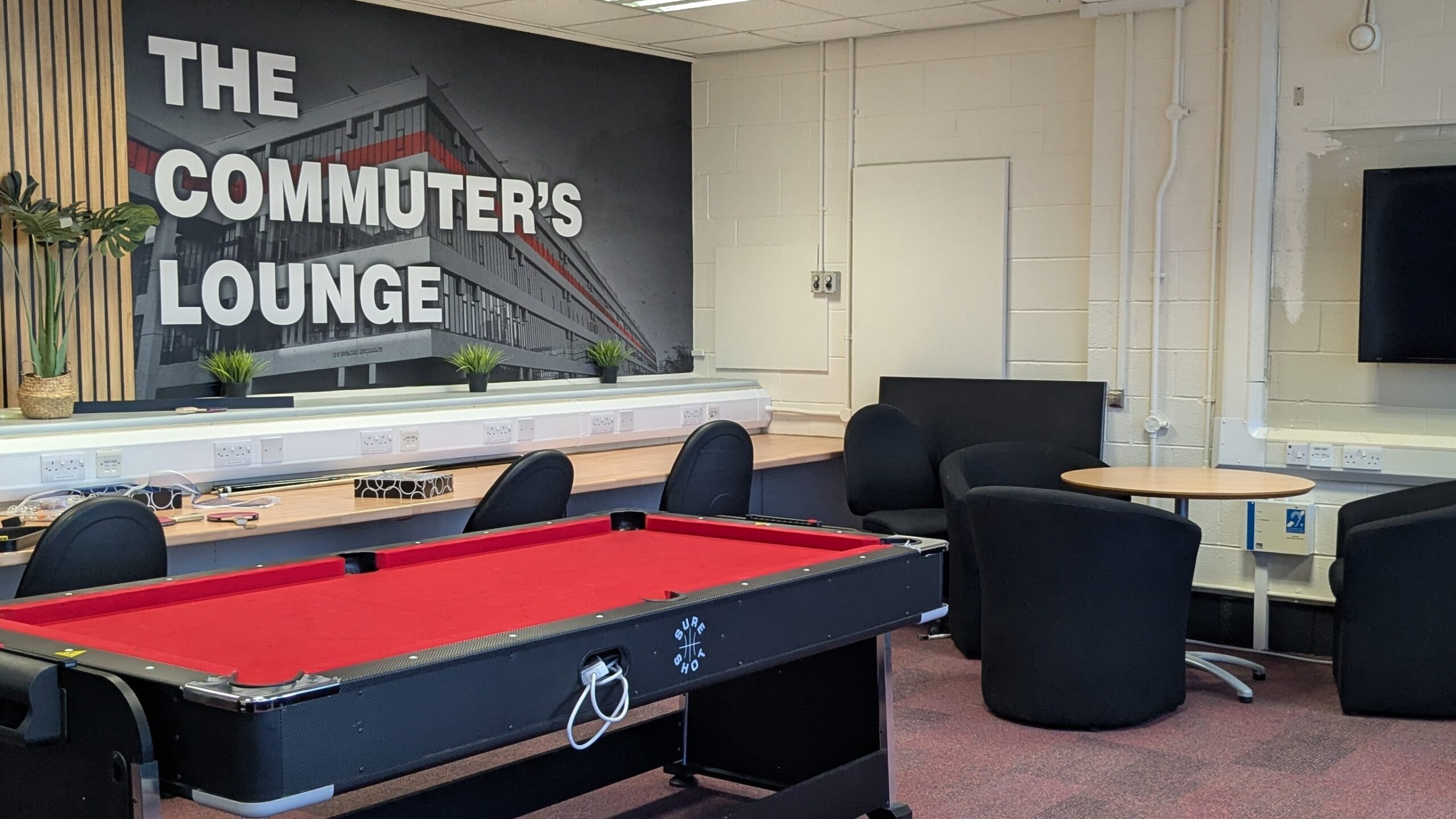
    The Student Ideas Fund granted us £5000 to create the lounge, originally on a two-year pilot basis. The lounge contains a refurbished social area with a games table, TV, kitchen, lockers and private study space.

    The kitchen offers students the opportunity to save money on lunches and evening meals, as students previously relied on eating out or consuming to feel comfortable in a cafe.

    The lounge is now a permanent feature of campus and is visited on campus tours and mentioned at open days.

    Where there’s space in residential halls, the University of Leeds team are consulting with commuter students about opening a commuter hotel, offering stays between 1-14 nights, at budget prices.

    Commuter students would then be able to participate in a range of activities like attending society socials, concerts, theatre, sports events, and staying the night before a morning exam.

    By giving commuter students a space, either a common room, lounge or even a temporary bed for a night in a hotel, it gives them autonomy and agency to fully participate in the wider student experience.

    They can participate in the things that make university enriching without being at a disadvantage.

    The narrative around commuter students has shifted significantly since the Robbins and Augar report with commuters being included in more Access and Participation Plans in England. However, cost of living pressures are pushing even more students to consider commuting and more still needs to be done.

    Making spaces on campus for commuter students is one way of enabling them to have a more enriching and wide-reaching student experience.

    Institutions could find spare spaces to give to commuter societies, advertise them as commuter lounges or utilise spare rooms to offer short stays for commuter students. Above all, listening to what commuter students want is the best way of including and further supporting this group.


    This blog is part of our series on commuter students. Click here to see the other articles in the series.

    Source link

  • We need to recognise the importance of maintenance too

    We need to recognise the importance of maintenance too

    The most obvious way that a university expresses what it values is what it chooses to pay for.

    At an institution level this might be about which kinds of jobs in which kinds of areas are funded. At a more personal level value is made clear by how people get in and get on in an institution.

    Promotion

    In reviewing promotion criteria of a number of universities, where it is not behind a login of some kind, one theme comes out time and time again. Promotion isn’t solely based on being consistently good at one thing. Promotion is about being able to be good at lots of things at once.

    Whether this is the hope that academics can be good researchers, teachers, and administrators all at once. The desire to find managers that can manage people as well as projects. And the forever quest for professional services that have innovative approaches of some kind.

    It isn’t fair to single out specific institutions as this is a sector wide phenomena but consider some of the language in the follow promotion criteria:

    • For a Grade 7 Assistant Professor “Evidence will be required of the ability to innovate and plan, and to execute plans competently”
    • For a Grade 9 lecturer role “Contributes to the planning, design and development of objectives and material, identifying areas for improvement and innovation.”
    • For a Grade 6 professional services role “You are involved in decisions that have an ongoing impact beyond your immediate team”
    • The job evaluation criteria for professional service staff “Will the role holder play an active part of any networks (connecting regularly with groups outside their team)? If so, please outline what these networks are, whether the role holder would be expected to establish the network, and the input they are expected to have”

    The thread between these criteria is the implication that doing a defined job to an agreed standard isn’t enough. Promotions, particularly to high grades, depend on creating new practices, integrating with other teams, and making an impact beyond the confines of a role. It is the things which aren’t in the job description, because the nature of innovation means they cannot be, that are as valuable as the actual job description.

    Innovation may be the goal but it comes at a cost.

    Consistency

    Every promotion criteria is a choice on what an institution values. The consistent message is that value is not purely about executing a single role consistently well. The choice that many universities have made is that there is value in working vertically, developing new practice within a role, and working horizontally, developing and sharing expertise across teams and departments.

    This choice means that there is less emphasis on maintenance and delivery. The slow grind of keeping the place running and doing a set of discreet things well over and over again.

    The result of this choice is that roles where there is less autonomy may be at a disadvantage. This is not to say there is not a role for innovation in all jobs but that innovation is structurally easier in some jobs than others. Take for example the jobs which are purely focussed on creating and interpreting new knowledge. In a previous role as a senior policy advisor I had great latitude to pursue institutional projects, look into problems and suggest new ways of working, and as a bonus my boss was the Vice Chancellor. It would have been an enormous failure of mine to have not been innovative.

    Conversely, the people our institutions rely on that work on the reception desks, maintain buildings, clean the offices, and do the things that actually make the entire place stay open clearly have less freedom to innovate in their work. They are managed on their ability to deliver a distinct service but promotion is often dependent on being able to move beyond maintaining performance. There therefore opens a gap in the possibility of getting promoted between those who work primarily in maintaining the institution and those who think about what the institution might do. This does not seem like an ideal incentive for institutions that rely on lots of people turning up, doing a defined role well, and being motivated to do so.

    Innovation for the sake of it

    The underpinning assumption is that innovation for its own sake is a good thing. There is even a league table for the most innovative universities in the world.

    This is because the university bureaucracy demands feeding with new ideas. It is a more machine. It needs more papers, more ideas, more meetings, more service innovation, more approaches, more evaluation, and ultimately more with less. The current more is innovating in service delivery with less resource to do it. It is rare to see a university with few ideas. It is much more common to see an institution with too few people to deliver them.

    The prizing of the new is tempting because it’s interesting but it’s a tool for a limited set of purposes. Innovation is the tool through which new ideas, services, processes, and products can emerge. Maintenance, the kind of reusing, fixing, and keeping things consistent, is the tool to ensure the good keeps going. They both have their place but one is not more inherently valuable than the other.

    In their influential essay on the topic Andrew Russell and Lee Vinsel write that:

    Entire societies have come to talk about innovation as if it were an inherently desirable value, like love, fraternity, courage, beauty, dignity, or responsibility. Innovation-speak worships at the altar of change, but it rarely asks who benefits, to what end? A focus on maintenance provides opportunities to ask questions about what we really want out of technologies. What do we really care about? What kind of society do we want to live in? Will this help get us there?

    To believe entirely in innovation as an unalloyed good is to fundamentally believe that newness is better. It is by extension a surrender of agency to say the promise of the future is better than the material of the present. Once the innovation happens more maintenance is needed. Once innovation overtakes maintenance, leaving no capacity to keep the new thing working,  the realm of innovation for innovation sake is entered.

    However, the alternative is not to go entirely the other way and focus on consolidation. As Russell and Vinsel point out in their own country

    What a shame it would be if American society matured to the point where the shallowness of the innovation concept became clear, but the most prominent response was an equally superficial fascination with golf balls, refrigerators, and remote controls.

    It is a question of balance and in a multi-layered bureaucracy like a university it requires balance across numerous domains.

    At a human level, there should be clear progression pathways for people that want to be experts and keeping things going. The reward does not have to be management responsibility (why make people who are good at delivering do less delivery?) but recognition of their domain specialisms.

    Culturally, it is about language that reflects the shared contribution of skills toward a common goal. And institutionally, it is a question of how maintenance becomes a key strategy component, and is therefore recognised. For example, the extent to which sustainability strategies are built on innovative idea vs the extent to which they are about keeping the old going.

    Our institutions depend on the people that literally keep the lights on, the machines working, and the services delivered. Let’s let the maintainers maintain and reward them for doing so. Let’s also keep innovating, maybe just not on everything all of the time.

    Source link