Category: Careers in Nursing

  • One Company’s Quest to Simplify Healthcare Staffing

    One Company’s Quest to Simplify Healthcare Staffing

    Hiring and job searching are difficult in many industries, but among the most challenging is healthcare.

    Healthcare jobs are specialized, and they generally tend to be highly competitive to get. Plus, salaries aren’t always listed, and some jobs posted may be fake. What’s more, most healthcare professionals are already working demanding roles so their time to search for a new job is limited.

    Sheldon Arora saw a need — and the potential — for a better way to connect healthcare job seekers with employers.

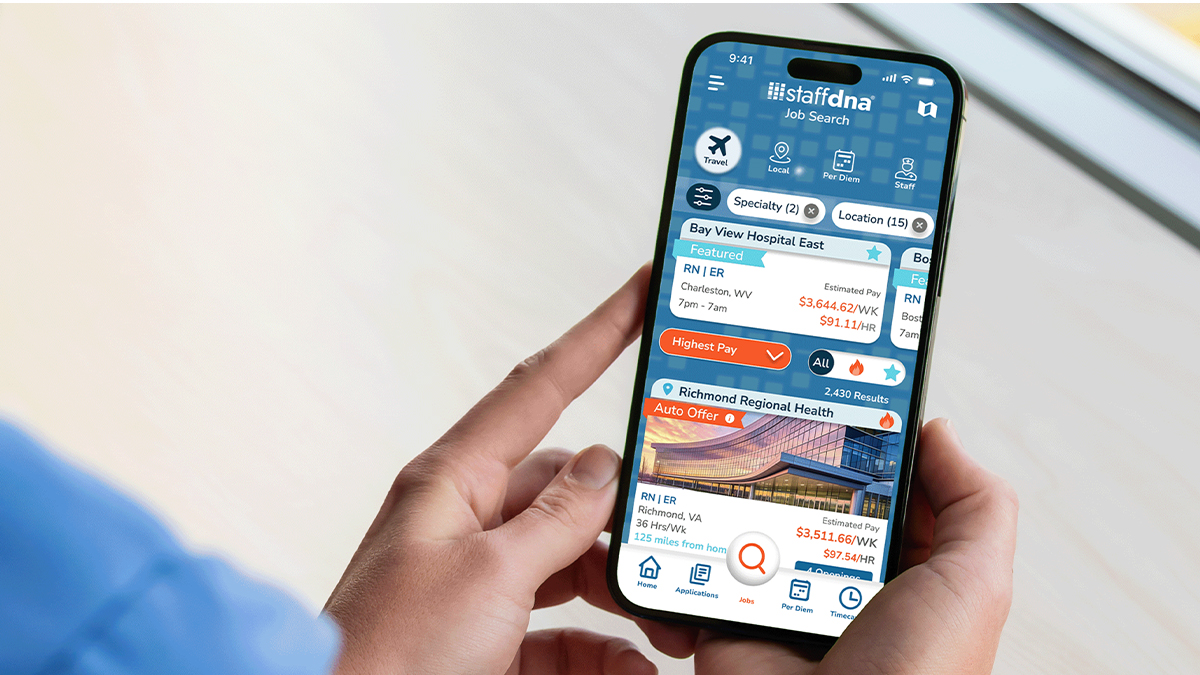
    That’s why Arora designed StaffDNA, a mobile app that helps facilitate filling healthcare roles, benefitting employers and job seekers alike. 

    StaffDNA is available to download for free on the Apple Store and Google Play.

    Meeting a need

    Sheldon Arora

    Founder and CEO, StaffDNA

    Arora, the CEO of StaffDNA, realized early in his career that hiring was an inefficient process. As a tech entrepreneur, he started companies that helped solve the most challenging aspects of matching employees with the right role at the right time. The industry he noticed had the most inefficient hiring process and could benefit the most from the right technology was healthcare.

    “We were looking for ways to make the hiring process in healthcare more efficient for a long time,” Arora said. “We saw that facilities needed on-demand access to healthcare professionals, and healthcare professionals needed more options and transparency in their job searches.”

    The resource combines a self-service app with a search platform for various needs for healthcare in all professions, specialties, job types, and settings.

    “We built a platform where job seekers and facility hiring managers could connect in real time, and we removed many layers and obstacles that stood in the way of connecting people looking to find the jobs they loved. We knew we wanted to improve the entire process, so we did just that,” said Arora, who launched the app about one month before the start of the COVID-19 pandemic, when healthcare jobs were needed most. Downloads skyrocketed.

    How it works

    “The StaffDNA marketplace is the only platform where all stakeholders in the hiring process, including hospitals, vendors, suppliers, and job seekers, can come together to address the healthcare staffing issue once and for all,” said Arora, adding that candidates can search, apply, and get hired all within the StaffDNA app. “We’re tying together all the participants in healthcare hiring and giving them the platform they need to efficiently get people hired in the right roles.”

    In the StaffDNA app, all jobs, specialties, and locations, as well as job descriptions and compensation, are shown up front. “Everything they need can be found directly in the app, from employment in their area to facility details, and even the color of scrubs they’ll need to wear,” Arora noted. “We also give candidates the ability to customize pay packages based on housing and benefit needs so they can have a better idea of what their take-home pay will be.”

    Helpful features

    Two new features of the StaffDNA app — DNAVault™ and DNAInsights™ — make the app even more beneficial for job seekers and hiring professionals.

    DNAVault allows anyone — job seekers, students, or professionals in any industry — to securely store sensitive documents, including licenses and credentials. The app makes it easy and convenient to keep these materials safely in one place, and applicants can send these items directly to their employer, school, or anyone through DNAVault’s secure online storage. DNAVault will also notify users when their documents are about to expire so they know when to renew them.

    “The inspiration for DNAVault came from my daughter, Madison, who is in medical school,” Arora said. “She was explaining how many documents and certifications she needed to keep track of and how they were required to access them from anywhere.”

    DNAInsights was created for healthcare facilities. It offers data on the number of job openings  within a given radius, along with competitive pay rates, which are critical resources for hospital hiring managers. StaffDNA is  the first company to provide healthcare facilities with real-time job data for all per-diem, travel, local, and staff positions  — for free.  “Until now, hiring managers in healthcare have had no tools to gauge pay rates in their markets,” Arora said. “So, we built the technology to support how hospitals and facilities determine pay rates when hiring.”
    Making a difference

    StaffDNA has been downloaded 2 million times and counting, and Arora has heard from users about its real-life impacts, including candidates taking dream vacations due to high-paying assignments or exploring the country through travel assignments they’ve picked up through the app.

    Arora shared that he was attending a healthcare industry conference in Las Vegas when a nurse told him she got a pay raise thanks to StaffDNA. “She said she was working at a hospital and saw a job opening in her profession, which paid more than what she was currently earning,” he said. “She used the data to request an hourly pay raise, and she got it. She thanked me for helping her earn a better income. It was exciting to hear her story.”

    Arora is hopeful the app has a broader impact, too — that is, not only on the people using the app but public health as a whole.

    “Through StaffDNA, healthcare professionals are empowered to find jobs they love, and hiring facilities can hire the right people for the right roles,” Arora said. “When these two things come together, we know ultimately patient care is improved and communities thrive.”


    Click here to download the StaffDNA app

    Source link

  • The University of New Hampshire Teaches the Future of Nursing

    The University of New Hampshire Teaches the Future of Nursing

    nursing-students-school-research

    Where hands-on learning meets visionary research in healthcare

    The University of New Hampshire is home to the School of Nursing, where students can help shape the future of healthcare through real-world clinical experience and innovative research opportunities.

    UNH’s status as an R1 research institution and its proximity to some of the nation’s premier medical centers provide you with unmatched clinical learning and nursing research opportunities—empowering you to make an impact in healthcare from day one.

    Building on 60 years of nursing education excellence at UNH, the newly launched School of Nursing offers programs from pre-licensure through clinical doctorate, both in-person on the Durham campus and online, creating flexible pathways that meet you where you are in your journey toward meaningful impact in healthcare.

    Explore different paths in nursing

    At UNH’s School of Nursing, you’ll find your perfect fit among bachelor’s, master’s, and doctoral degree options designed to match your goals and aspirations.

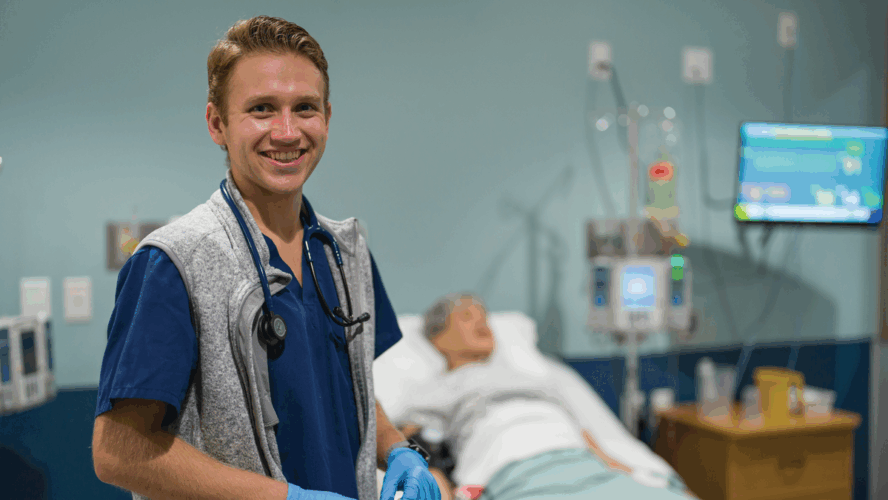
    Charles Adler discovered his passion through UNH’s hands-on approach. After earning his bachelor’s in nursing and a master’s as a clinical nurse leader, he’s now enrolled in the Family Nurse Practitioner (FNP) program, which offers the flexibility he needs.

    “I love the clinical environment, whether it’s a pediatrician’s office or a primary care or hospital setting—that’s where things started to click for me,” Adler said.

    The real-world experience that defines UNH’s approach has shaped his entire career trajectory. His senior practicum led directly to a job in an ICU, which opened doors to experience as a travel nurse, clinical nurse leader, and finally to his current role as an FNP.

    “I wouldn’t have been able to have the experiences I’ve had if it weren’t for UNH nursing,” Adler reflects.

    Where knowledge meets practice

    At UNH, you don’t have to choose between rigorous academic learning and real-world practical skills; you get both. Our commitment to hands-on learning means you’ll graduate not just with depth of knowledge and a degree, but with the practical skills and forward-thinking approach that healthcare needs.

    Ready to pursue meaningful impact in healthcare? If you’re drawn to a field where you can make a real difference, UNH’s one-of-a-kind School of Nursing offers clinical learning to propel you to exceptional career opportunities that make an impact.


    To learn more about the University of New Hampshire’s School of Nursing and to apply, visit chhs.unh.edu/nursingtoday


    Source link

  • Vessi: A Waterproof and Comfortable Shoe, Perfect for in and out of the Hospital

    Vessi: A Waterproof and Comfortable Shoe, Perfect for in and out of the Hospital

    Home » Careers in Nursing » Vessi: A Waterproof and Comfortable Shoe, Perfect for in and out of the Hospital

    Anyone who works in healthcare knows these jobs can be hard on the body — especially the feet.

    That’s why high-quality footwear is key.

    Enter Vessi, a waterproof footwear brand praised by healthcare workers, including nurses, for their foot health support and other features that make them practical for work and beyond.

    “These are comfortable and reliable for working 10-hour shifts as a nurse. Great shock absorbers that get me through my shift easily,” said Vessi customer Althea R., in one of many testimonials endorsing Vessis.

    Practical features

    Vessis are an ideal choice for nurses and other healthcare workers because they’re:

    • Comfortable: Healthcare workers work notoriously long shifts — sometimes upwards of 12 hours at a time. Pain in areas of the body including the feet, legs, and back can happen if proper footwear is foregone. The good news is that Vessis are built to support 8- to 12-hour days of standing, and their cloud-like cushioning midsole keeps you comfortable from first step to last.
    • 100% waterproof: Messes happen, especially in a healthcare setting. Vessis are designed to endure the worst of them with their patented Dyma-tex® waterproof knit, which enables water, spills, and unexpected messes to bead right off. Unlike other waterproof materials, Dyma-tex® is lightweight, breathable, and flexible.

    “As a nurse and mom, they can be used for waterproof safety at births or walking to school in the rain!” said Vessi customer Angela B.V.

    • Easy to care for: If your Vessis need a refresh — whether from a messier shift at work or from routine wear — simply toss them into the washing machine. Some Vessis are machine washable, meaning that keeping them hygienic (and appearing in tip-top shape) is a cinch.
    • Stylish: Not only can you wear Vessis at work, but you can sport them before and afterward. Consider them your handy, work-to-life (and vice versa!) shoe.
    • Simple to slip on and off: Yes, this is good for convenience, but it also reduces the transfer of germs — which is key when you work in healthcare.
    • Discounted for healthcare workers: Nurses and other healthcare workers receive 20% off sitewide with ID.me verification.
    Vessi’s Weekend shoe

    Fan-favorite styles from Vessi include the Weekend and Pacific collections.

    The Weekend Collection is available for men and women, as well as kids. They come with lightweight, cushioned midsoles and an upper portion that is crafted in a breathable knit. Color options range from classic white and neutral tones, including beige to pastels, and brights like green and pink. What’s more, shoes in this collection include sneakers as well as a Chelsea boot style.

    Vessi calls its Pacific Sneakers “the most versatile shoe ever,” which means they can handle your long-haul travels as well as everyday errands closer to home. Whether you’re wearing them to bike to work, during the big meeting (and throughout your shift), or walking the dog before bed, the Pacific Sneaker is truly made for everyday and everything. Like those in the Weekend Collection, these shoes have a lightweight cushioning midsole and a breathable upper knit. Available for men and women, the Pacific Sneaker offers shoes in classic neutrals, such as white and black, as well as limited edition hues like the grey-green Grotto colorway.

    If the insoles offered in your Vessis don’t work for your health needs, simply swap them out (they’re easy to remove) for your preferred insoles or orthotics.

    With Vessis, versatility is the name of the game, helping healthcare workers check off their to-do lists in functional waterproof kicks that are also comfortable while on — and off — the clock.


    To learn more and shop the full line of Vessis, visit vessi.com


    Source link

  • When Emergency Departments Are Waiting Rooms, Patients Suffer

    When Emergency Departments Are Waiting Rooms, Patients Suffer

    Home » Careers in Nursing » When Emergency Departments Are Also Waiting Rooms, Patients and Providers Suffer

    Emergency department boarding — when stabilized patients wait hours or days for transfers to other departments — is a growing crisis.

    Ryan Oglesby, Ph.D., M.H.A., RN, CEN, CFRN, NEA-BC

    President, Emergency Nurses Association

    An elderly woman arrives in the emergency department with a fractured hip. Nurses and doctors assess and stabilize her, and the decision is made to admit her for additional treatment.

    The patient waits.

    An adolescent experiencing a mental health crisis arrives, is assessed and stabilized, but needs to be transferred to a psychiatric hospital for further care.

    The patient waits.

    Every day, patients in similar situations wait in emergency departments not equipped for extended inpatient-level care until they can be moved to a bed elsewhere in the hospital or to another facility.

    The Emergency Department Benchmark Alliance reports the median waiting time, called ED boarding, is approximately three hours. However, many patients wait much longer, sometimes days or even weeks, and the effects are far-reaching. It has a profound impact on emergency department resources and emergency nurses’ ability to provide safe, quality patient care. 

    Negatives for patients and providers

    When admitted patients remain in the emergency department (ED), nurses juggle inpatient-level care with acute emergencies, leading to heavier and more intense workloads. Although ED nurses are highly adaptable, adjustments to their care approach create further disruptions in what most nurses would already describe as the controlled chaos of the emergency department, where no patient can be turned away.

    Research has shown that admitted patients who board in the emergency department have longer overall length of stays and less-than-optimal outcomes compared to those who are not boarded. 

    Boarding can also exacerbate patient frustration and family concerns about wait times, emotions that often escalate into physical violence against healthcare workers.

    Over time, all of these factors increasingly lead emergency nurses to burn out, while the entire emergency care team’s efficiency and morale erode.

    Many departments adjust processes, staff roles, and use of space to better tend to their boarded patients, but these are not long-term solutions. Boarding is a whole-hospital challenge, not simply one for the emergency department to figure out.

    Recommendations for change

    In 2024, Emergency Nurses Association (ENA) representatives were among the contributors to the Agency for Healthcare Research and Quality summit. The event’s findings point to a need for a collaboration between hospital and health system CEOs and providers, as well as regulation and research to establish standards and best practices.

    ENA also supports passage of the federal Addressing Boarding and Crowding in the Emergency Department Act (H.R. 2936/S. 1974). The ABC-ED Act would provide opportunities for improving patient flow and hospital capacity by modernizing hospital bed tracking systems, implementing Medicare pilot programs to improve care transitions for those with acute psychiatric needs and the elderly, and evaluating best practices to more rapidly implement successful strategies that minimize boarding.

    Boarding is a problem affecting emergency departments, large and small, around the world, but the solutions need to involve decision-makers at the top of the hospital and healthcare systems, as well as front-line healthcare workers who see this crisis firsthand.

    Most importantly, those solutions must focus on doing everything to ensure each patient receives the absolute best care possible in ways that also protect the precious health and well-being of emergency nurses and all staff.

    Source link

  • Operational Efficiency in Hospitals: Impact on Neonatal Nurses

    Operational Efficiency in Hospitals: Impact on Neonatal Nurses

    Home » Careers in Nursing » Operational Efficiency in U.S. Hospitals: Impact on Neonatal Nurses, Patient Safety, and Outcomes

    Operational efficiency in hospitals — the streamlining of staffing, workflows, and resource use — is essential to delivering safe and high-quality care. 

    Taryn M. Edwards, M.S.N., APRN, NNP-BC

    President, National Association of Neonatal Nurses

    At its core, operational efficiency helps reduce delays, minimize risks, and improve patient safety. Nowhere is this more critical than in neonatal intensive care units (NICUs), where even small disruptions can affect outcomes for the most fragile patients. From preventing infections to reducing medical errors, efficient operations are directly linked to patient safety and nurse effectiveness.

    In NICUs, nurse-to-patient ratios and timely task completion are directly tied to patient safety. Studies show that many U.S. NICUs regularly fall short of national staffing recommendations, particularly for high-acuity infants. These shortfalls are linked to increased infection rates and higher mortality among very low-birth-weight babies, some experiencing a nearly 40% greater risk of hospital-associated infections due to inadequate staffing.

    In such high-stakes environments, missed care isn’t just a workflow issue; it’s a safety hazard. Neonatal nurses manage hundreds of tasks per shift, including medication administration, monitoring, and family education. When units are understaffed or systems are inefficient, essential safety checks can be delayed or missed. In fact, up to 40% of NICU nurses report regularly omitting care tasks due to time constraints.

    Improving NICU care

    Efficient operational systems support safety in tangible ways. Structured communication protocols, such as standardized discharge checklists and safety huddles, reduce handoff errors and ensure continuity of care. One NICU improved its early discharge rate from just 9% to over 50% using such tools, enhancing caregiver readiness and parental satisfaction while decreasing length of stay.

    Work environments also matter. NICUs with strong professional nursing cultures and transparent data-sharing practices report fewer safety events and higher overall care quality. Nurses in these units are up to 80% less likely to report poor safety conditions, even when controlling for staffing levels.

    Finally, operational efficiency safeguards nurses themselves. By reducing unnecessary interruptions and missed tasks, it protects against burnout, a key contributor to turnover and medical error. Retaining experienced neonatal nurses is itself a vital safety strategy, ensuring continuity of care and institutional knowledge.

    Ultimately, operational efficiency is a foundation for patient safety, clinical excellence, and workforce sustainability. For neonatal nurses, it creates the conditions to provide thorough, attentive care. For the tiniest patients, it can mean shorter stays, fewer complications, and stronger chances for a healthy start.

    Source link

  • Ciara Miller on Communication & Self-Care in ICU Nursing

    Ciara Miller on Communication & Self-Care in ICU Nursing

    Ciara Miller | Photo by Brooke Nipar

    Reality TV star Ciara Miller, also a traveling ICU nurse, discusses how honest communication, supportive colleagues, and personal routines can help nurses manage burnout.


    What does the word “strength” mean to you when you think of nurses?

    Strength, to me, is the quiet resilience nurses carry every day. It’s not just physical — being on your feet for 12+ hours — it’s emotional. It’s being there for people on their hardest days and still showing up with empathy. That kind of strength is deep. It’s unspoken, but it’s so powerful.

    What message would you share with nurses who may be feeling burnt out or unseen, especially when mental health isn’t openly talked about?

    I’ve been there. Honestly, burnout is real, and it’s okay to say you’re not okay. You’re not weak for feeling exhausted; you’re human. I’d say to find your support system, whether that’s therapy, a trusted friend, or just a coworker who gets it. You deserve care, too. You can’t pour from an empty cup, and it’s not selfish to protect your peace.

    Can you share a personal experience where communication, with either a patient or a coworker, made a real difference in your day?

    I remember a shift where everything was chaotic — understaffed, high acuity. One of my coworkers pulled me aside and just said, “I’ve got your back. What do you need?” That moment changed the tone of my entire day. It reminded me I wasn’t alone, and we were in it together. That one check-in made a huge difference.

    What are some small things that help you feel good and stay comfortable, even on tough days?

    Skincare after a shift is my ritual. It sounds small, but it’s grounding for me. Music on the drive home, comfy clothes, and a moment of silence before bed. Also, I try to remind myself that I did the best I could that day. That mindset — grace over perfection — keeps me sane.

    What role do you think communication plays in building strong, supportive teams in healthcare settings?

    It’s everything. Honest, respectful communication creates trust. When people feel heard, they feel valued. That’s how you build a team that supports each other, where it’s okay to speak up, ask for help, or say, “I’m not okay today.” It’s what makes the difference between surviving and thriving at work.

    Source link

  • Securing Nursing’s Future Amid Shortages

    Securing Nursing’s Future Amid Shortages

    The stubborn shortage of nurses has created abundant job opportunities, but barriers to entry and declining job satisfaction threaten efforts to improve recruitment and retention. What can nurses do for themselves and, in the process, help secure a better future for nursing?

    Beverly Malone, Ph.D., RN, FAAN

    President and CEO, National League for Nursing

    With the stubborn nursing shortage, it is no wonder that job opportunities are abundant for anyone with a passion for healing to join America’s most trusted healthcare professionals. 

    How abundant? The Bureau of Labor Statistics projects an average of 194,500 job openings for registered nurses each year through 2033, a 6% growth rate, which exceeds the national average for all occupations. The wage outlook for RNs is also bright, with a median annual pay in May 2024 of $93,600, compared with $49,500 for all U.S. workers.

    Yet, for so many of us who have long championed the rewards of nursing, barriers to entry and workplace challenges thwart the best efforts of nursing leadership and public policy experts to recruit and retain a diverse, competent nursing workforce. The resulting shortage in nursing occupations is expected to continue at least through 2036, according to the latest findings by the Health Resources & Services Administration.

    Dismantling barriers to entry

    We must find ways to reverse the biggest barrier to entry: a nurse faculty shortage that strains the capacity of nursing education programs to admit more qualified applicants. With a master’s degree required to teach, 17% of applicants to M.S.N. programs were denied entry in 2023, according to the National League for Nursing’s Annual Survey of Schools of Nursing. 

    That same study revealed that 15% of qualified applicants to B.S.N. programs were turned away, as were 19% of qualified applicants to associate degree in nursing programs. At the same time, a shrinking number of clinical nurse educators in teaching hospitals, plus budget cuts to academic medical centers, have decreased the placement sites for nursing students to complete clinical requirements for their degrees and licensure. 

    Along with taking steps to address the gaps in the pipeline, we must improve retention by focusing attention on the issues that impede job satisfaction and accelerate retirements, which place even greater pressure on the nurses who remain. 

    Key to improving the work environment must be a serious commitment to empowering nurses with strategies and resources to battle conditions like burnout, bullying and violence, unacceptable staff-to-patient ratios, and communications breakdowns — all factors that nurses have cited as reasons for leaving the workforce.  

    Making legislative change

    Another strong avenue for change exists through legislative channels. Nurses at every level of experience can tap into the power of their voices by contacting federal and state lawmakers to influence public health and budgetary policies that support nursing workforce development. In our outreach to lawmakers, we can seek to help them craft bills that address nursing’s most pressing needs.

    In fact, the Title VIII Nursing Workforce Reauthorization Act of 2025 is just such a bill. This legislation would extend the federal programs that provide most of the financial support for the recruitment, education, and retention of nurses and nurse faculty. Reauthorizing these programs is vital to strengthening nursing education programs and preparing the next generation of nurses.

    Also, a year ago, a pair of bills was introduced in the House of Representatives aimed at curbing the nursing shortage. One sought to increase the number of visas available to foreign nurses who would be assigned to rural and other underserved communities throughout the country, where shortages are most acute. The other bill, the Stop Nurse Shortage Act, was designed to expand BA/BS to BSN programs, facilitating an accelerated pathway into nursing for college graduates.

    While both bills failed to gain passage into law in the last Congressional session, they could be reintroduced or included in other legislation in the future. Nurses must remain persistent and vigilant in pursuit of our vision for nursing’s future.

    Source link

  • Nurse Blake on Finding Strength and Humor in the Life of a Nurse

    Nurse Blake on Finding Strength and Humor in the Life of a Nurse

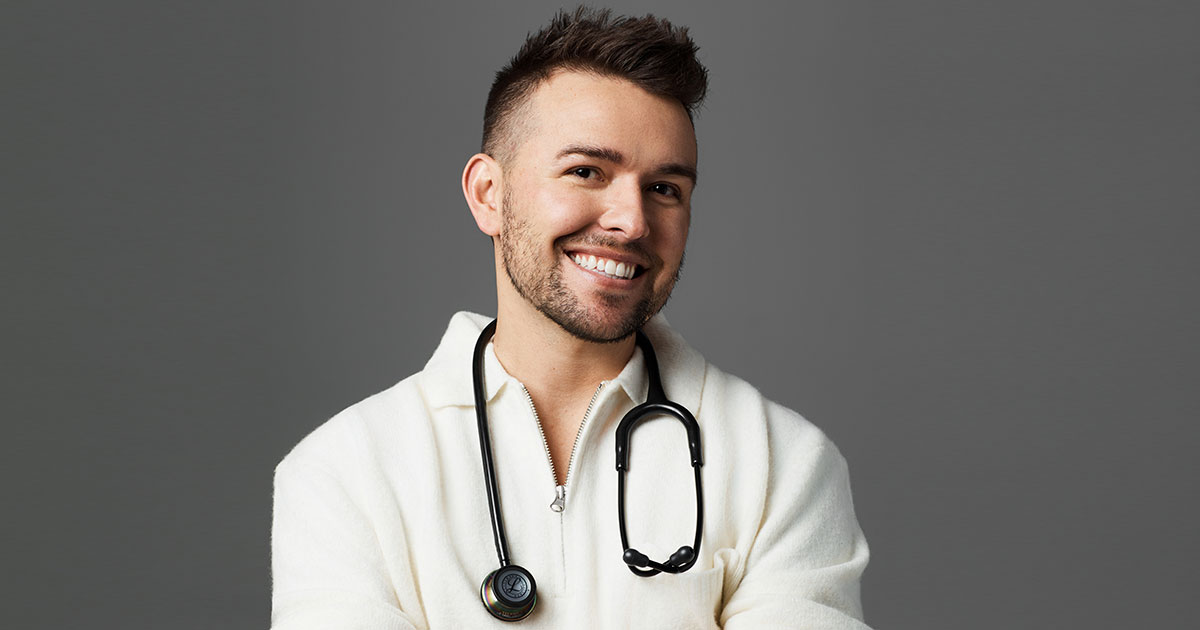
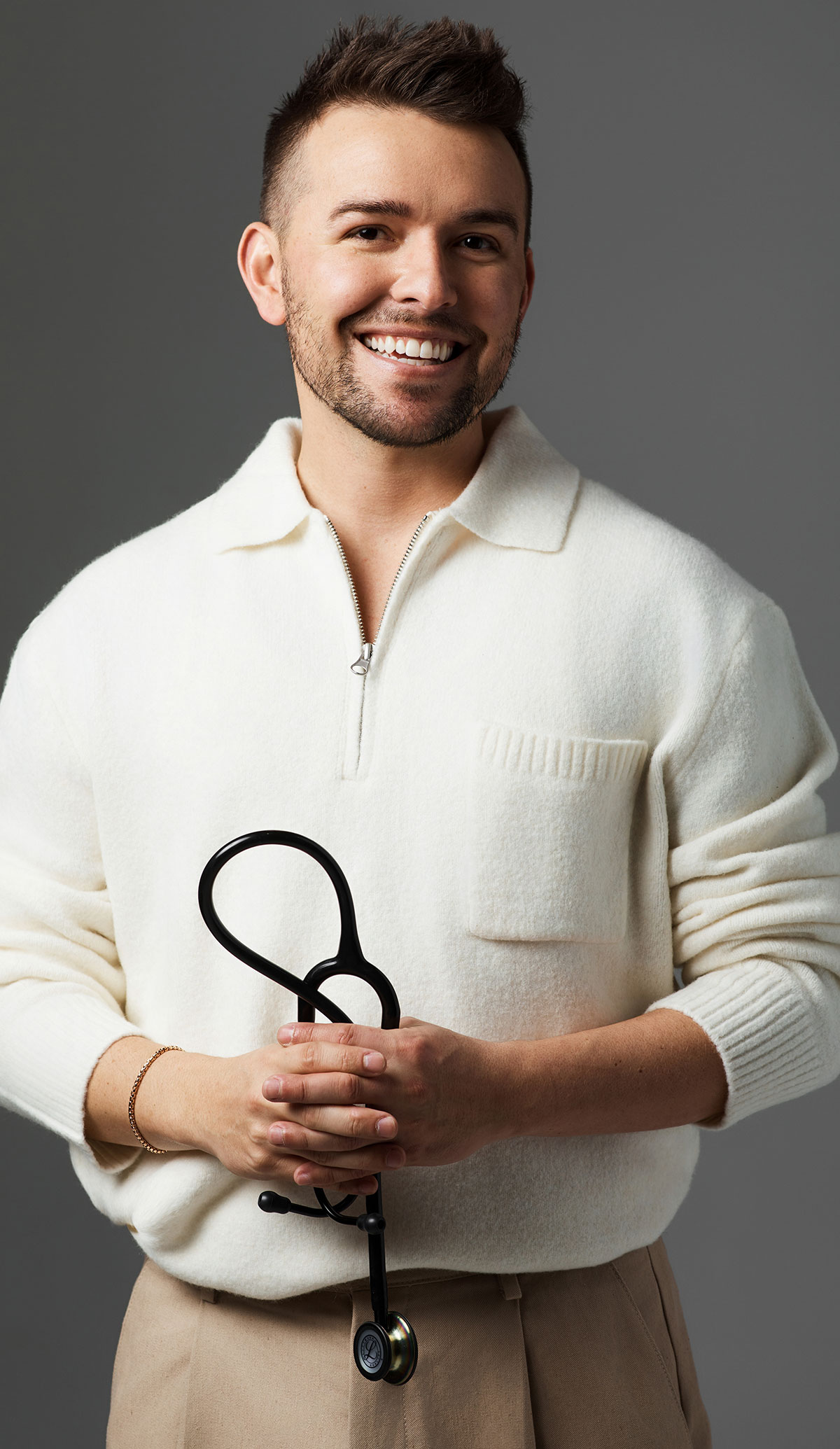
    Creator and comedian Nurse Blake shares how personal hardships, humor, and a commitment to patient connection shaped his approach to healthcare.


    What made you want to become a nurse, and what keeps you passionate about it today?

    When I was younger, in my teens, I went through gay conversion therapy from 15 to 18. I didn’t get a lot of love and a lot of care. I think because of that experience, I wanted to show love and care to other people. That definitely is something that got me interested in healthcare and nursing. My dad is a respiratory therapist, so he also got me into healthcare. Nursing does provide a little more opportunity than respiratory, so I thought it would be a great route for me to go. I’ve just always been interested in trauma, specifically adult trauma, and I like the adrenaline rush.

    You’ve talked about the importance of laughter. Can you share a funny or memorable moment that helped get you through a hard shift?

    I love to integrate humor into my practice. I like to be very personal, very real, very raw with my patients. I feel like it helps break down that barrier. At the end of the day, I’m a person too, and I’m here to care for you and laugh with you. 

    I remember one patient; she had been on the unit for quite a few months, waiting for a liver transplant. I was working in Houston, Texas, in the liver transplant ICU, and she wanted to go outside. She hadn’t been outside in months. I was like, “You know what, I’m going to take you outside.” When a person’s hooked up to so many machines and medications, it’s very hard, so it took the team and I two hours to get her ready to transport her outside. Y’all, by the time we got outside, she was out there for maybe three minutes, and she was like, “It’s too hot out here.” She looked at me, I looked at her, and we just started laughing so hard. She felt so bad that we finally got her outside, but she was so happy to see the sun for a little bit. That little moment of real, raw honesty was definitely needed for both of us.

    What advice do you have for nurses thinking about going back to school or getting an advanced degree?

    Know that you really want it. A lot of people say that they want to do something different and go back to school without really realizing or thinking fully about what the role is. I know a lot of nurse practitioners who were overwhelmed at the bedside, went back to school, took on more loans, became nurse practitioners, and then didn’t realize what nurse practitioners really do. It’s a lot of charting, a lot of bureaucracy. Now they’re a burnt-out nurse practitioner with more student loans. 

    If you want to do it, do it. I highly recommend it. I’m a huge advocate for advancing your education and your career, but make sure you really, really want it. If you’re burnt out in your role right now, there are so many other jobs in nursing and healthcare you can get before going back to school. These colleges are a business, right? Right when we graduate with our associate’s or bachelor’s, it’s like, “When are you going back to school?” Why can’t being a staff nurse at the bedside be enough? It’s always this chase of having more letters behind your name. Take a deep breath and really think about it. Is this really what you want? Is there not another role you could switch to with the education you have now?

    I want to see nurses happy. Every nurse deserves a job that makes them feel fulfilled, a job that’s safe — physically, emotionally, mentally, spiritually — and safe on their license. They deserve to be happy.

    Long shifts are tough. What are some things that help you stay comfortable and energized?

    Always be prepared to not be able to take a break. There aren’t even laws for nurses to get lunches. Some hospitals make us clock out and clock back in, even if we didn’t actually take a lunch. We’ll get in trouble for not clocking out, even if we had no time for breaks because we’re so short-staffed. Bring snacks. Take care of yourself when you’re off the clock so you can be on your A-game when you’re on the clock. Make sure you’re getting enough sleep and eating right when you’re off work, because when you’re at work, it’s really hard to eat right.

    No matter how hard your day gets, know you’re not going to get it all done. Nurses always want to be perfect, but there’s no such thing as a perfect nurse, so shake that off. Just do as much as you can for your patients in the time you have.

    Breathe. A lot of times, we forget to breathe. As someone who has panic attacks and anxiety, I know that when I forget to breathe, that’s when my mental health gets worse. I just put myself in the supply closet or the med room and breathe for a second.

    If you’re overwhelmed, your patients probably are too, so take a break with them. Pull up a chair, even if it’s for a minute, just to connect. That has always helped me get through the really hard times. Laugh a little bit and tell a joke.

    What’s one thing you wish hospitals or nurse leaders did to better support their teams?

    It’s time for hospitals to listen to the nurses. If anyone knows what’s going on in the hospital that’s affecting patients and staff, it’s the nurses. We are with the patients the most. There’s the Nurses Association, and there’s also a big hospital association — CEOs and leaders at hospitals — they have their own lobby and stuff. A lot of times, the hospital association will fight against the Nurses Association. With this big, beautiful bill that’s getting passed, the hospital association is freaking out. It just goes to show that hospitals need to stick with their nurses a lot more. We know what’s going on, and we’d have so much more power if we worked together instead of against each other. Hospitals need to treat their staff the same way they expect staff to treat patients. They need to fight for us. At the end of the day, it affects our communities, and it affects us too, because we’re also members of the community. Even the executives and leaders — you are members. You may be a patient one day. Your family is going to need high-quality, safe care. 

    Source link

  • Resilience in Healthcare: A New Approach to Combatting Burnout

    Resilience in Healthcare: A New Approach to Combatting Burnout

    Burnout among nurses is reaching significant levels, making self-care, boundaries, and mental health support essential for sustaining a healthy workforce.

    Valerie J. Fuller, Ph.D., D.N.P.

    President, American Association of Nurse Practitioners

    If I had a dollar for every time someone answered “stressed” when I asked how they’re doing, I’d have a full jar. And as nurses, we’d probably add our own dollars to it. While we are working tirelessly for our patients, it’s important to recognize we are not immune to the stressors around us and must share strategies to help each other and our patients.

    Nurse practitioners and nurses enter health care with a passion to make patients’ lives better. Between work deadlines, family responsibilities, health concerns and the constant buzz of phones , the stress of our everyday lives can be compounding. It’s incumbent upon all of us to recognize that managing stress is an important component to our overall health and well-being. Drawing on our experience and clinical education, we know the value of recognition and understand how to best manage stress to prevent burnout.

    Know the signs

    Stress can also sneak up: tension, poor sleep, irritability, fatigue, appetite changes, headaches, or loss of joy.

    What you can do

    Even in the middle of a packed day, there are things you can do to promote wellbeing and prevent burnout:

    1. Take time for yourself — Whether it’s 10 minutes of quiet, a walk, or your favorite show, it counts.
    2. Set boundaries — Set realistic expectations and boundaries with work, with family and even with yourself.
    3. Schedule time for joy —Add it to your calendar like any other appointment.
    4. Ask for help —Getting support doesn’t mean you’re failing. It’s a path to better health.
    5. Rest — Real, uninterrupted rest is vital to your health.

    When to reach out

    As healthcare providers and industry leaders, we need to apply our knowledge to ensure the provider workforce is better supported to prevent burnout. While stress is a part of life, it shouldn’t take over your life. Let’s stop glorifying burnout and start normalizing rest, boundaries and asking for what we need.

    The future of healthcare depends on a healthy, supported workforce. By addressing burnout with compassion and strategy, we are ensuring that NPs remain exactly where patients need us: present, focused and ready to provide the very best care.

    Source link

  • How Jennifer Stone Finds Purpose and Calm in Nursing

    How Jennifer Stone Finds Purpose and Calm in Nursing

    Jennifer Stone | Photos by Leah Huebner

    Actress and ER nurse Jennifer Stone shares how small acts of care, teamwork, and personal routines help nurses stay grounded and effective.


    Can you share a moment from your career that reminded you why you chose nursing?

    I had a doctor once tell me, “If you can really touch one person a shift, it’s been very successful, and that’s a good shift.” As a nurse, you’re always rushing around; it’s very fast-paced, especially in the ER, so it’s about the moments of stillness with somebody who just needs comfort or somebody to care for them. Whether it’s an older person who doesn’t have anybody and just wants to talk, or if it’s somebody who’s really scared, you can just try to make time, stop a little, and be like, “Hey, you’re okay. You’re in the best possible place, and we’ve got you.” It’s those moments of being a sense of certainty for someone in a time of uncertainty that remind me why I do what I do.

    What’s one piece of technology or equipment that’s made your work as a nurse more efficient or effective?

    That’s a great question. A great piece of technology that has made nursing more effective is, I hate to say, the PureWick. We have a lot of non-ambulatory patients, so the PureWick, a condom catheter, helps patients stay more comfortable without using something like a bedpan, which can feel kind of demeaning or uncomfortable or cause bedsores. Also, things like ultrasound machines for hard-stick IVs. Those are game changers. Also, updated charting systems. Having good shorthand to be able to chart efficiently and get back to one-on-one patient care is great.

    Has there been a time when strong communication, with either a patient or teammate, made a big difference in your day?

    I didn’t anticipate that there would be so many parallels between acting and nursing, but one of my favorite things about both is the collaboration.

    Whenever I have a nurse that’s in my team — whether they jump in when I’m stuck in another room with a patient or I do the same for them — it’s that shorthand of seeing that a nurse has a need and collaborating. We’re all on the same team. We’re all trying to accomplish the same thing — better patient outcomes. When I have a nurse who, without me even asking, will jump in and help me with the patient, that makes me feel like we’re all collaborating on this together for a common goal. That’s something that just means the world to me — when nurses will help each other out.

    What advice would you give to a nurse who’s feeling overwhelmed or underappreciated right now?

    Focus on what you can control. I’ll be very honest. For me, I know sometimes, especially in the earlier years, I would get very angry at things that were very out of my control. Whether it was issues with the healthcare system, or the way the system was set up and falling short, I would find myself getting very angry and discouraged. What’s helped me is to focus on the things that I can control. Yes, they may be on a smaller scale, but I can control how I respond to negativity at work or positivity at work. I can control how I talk to patients. I can control what I let in and what I don’t. Especially in an ER environment, or any healthcare bedside environment, there can be a lot of negativity, unfortunately, and it’s within your control what you let in.

    I’ll be honest: Some days I win, and some days I lose and allow things in, for sure. There are shifts I ended where I was like, “Alright, this shift beat me.” But I try to make it so I am in control of how I respond to the healthcare industry, and to know that it’s all a choice. Although some days it’s harder than others.

    What daily habits or small routines help you stay grounded and feel good during long or stressful shifts?

    Getting outside, to be honest. Time stands still when you’re on a 12-hour shift, so I carve out time if I can — and not every shift allows for it — but when I can, I carve out time to just get outside, get some vitamin D, and look at some nature. It’s something to remind you that the entire world isn’t those fluorescent lights. It’s just sort of reconnecting with life outside of the hospital.

    Source link