Category: Charters

  • Universal vouchers have public schools worried about market share

    Universal vouchers have public schools worried about market share

    by Laura Pappano, The Hechinger Report
    November 6, 2025

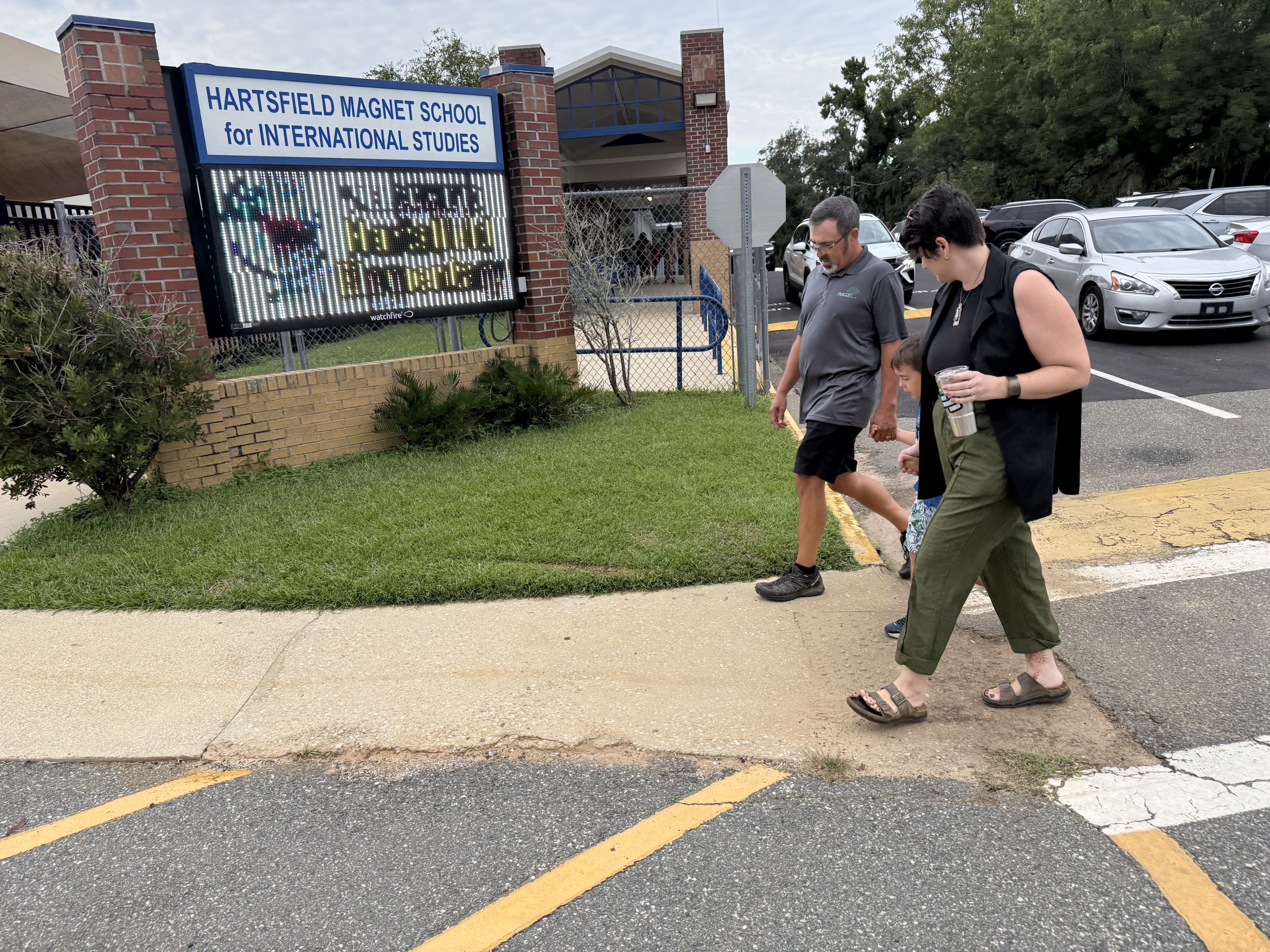
    TALLAHASSEE, Fla. — As principal of Hartsfield Elementary School in the Leon County School District, John Olson is not just the lead educator, but in this era of fast-expanding school choice, also its chief salesperson.

    He works to drum up enrollment by speaking to parent and church groups, offering private tours and giving Hartsfield parents his cell phone number. He fields calls on nights, weekends and holidays. With the building at just 61 percent capacity, Olson is frank about the hustle required: “Customer service is key.”

    It’s no secret that many public schools are in a battle for students. As school started in Florida this August, large districts, including Hillsborough, Miami-Dade and Orange, reported thousands fewer students, representing drops of more than 3 percent year over year. In Leon County, enrollment was down 8 percent from the end of last year.

    Part of the issue is the decline in the number of school-age children, both here and across the country. But there’s also the growing popularity of school choice in Florida and elsewhere — and what that means for school budgets. Leon County’s leaders anticipate cutting about $6 million next year unless the state increases its budget, which could mean reduced services for students and even school closures

    Other Florida school districts are also trimming budgets, and some have closed schools. As districts scramble for students, some are hiring consulting firms to help recruit, and also trying to sell seats in existing classes to homeschoolers. There is also the instability of students frequently switching schools — and of new charter or voucher schools that open and then shut down, or never open at all as promised. 

    Two years after the Florida Legislature expanded eligibility for school vouchers to all students, regardless of family income, nearly 500,000 kids in the state now receive vouchers worth about $8,000 each to spend on private or home education, according to Step Up For Students, the nonprofit that administers the bulk of the scholarships. And Florida’s Tax Credit Scholarship, created in 2001 to allow corporations to make contributions to private school tuition, is the model for the new federal school voucher program, passed this summer as part of Republicans’ “one big, beautiful bill.” The program, which will go into effect in 2027, lets individuals in participating states contribute up to $1,700 per year to help qualifying families pay for private school in exchange for a 1:1 tax credit.

    “We are in that next phase of public education,” said Keith Jacobs of Step Up For Students, who recruits public school districts to offer up their services and classes on its educational marketplace. “Gone are the days when a government institution or your zoned neighborhood school had the authority to assign a child to that school.”

    Related: Become a lifelong learner. Subscribe to our free weekly newsletter featuring the most important stories in education. 

    That’s a problem for Leon County Schools, which boasts a solid “B” rating from the state and five high schools in the top 20 percent of U.S. News’ national rankings. The district, located in the Florida panhandle, serves a population of around 30,000 students, 44 percent of whom are Black, 43 percent white and 6 percent Hispanic.

    “There’s just not enough money to fund two parallel programs, one for public schools and one for private schools,” said Rocky Hanna, the Leon County Schools superintendent. 

    Over the past few years, the Legislature has increased state and local funding for charter schools and created new rules to encourage more to open. (Charter schools are public schools that are independently operated; the Trump administration recently announced a $60 million increase in charter school funding this year, along with additional competitive grants.)

    But vouchers are the big disrupter. The nonprofit Florida Policy Institute projects annual voucher spending in Florida will hit $5 billion this year. In Leon County, money redirected from district school budgets to vouchers has ballooned from $3.2 million in 2020-21 to nearly $38 million this academic year, according to state and district figures. Enrollment in local charter schools has also ticked up, as has state per-pupil money directed to them, from $12 million to $15 million over that time.

    As a mark of how the landscape is shifting, Step Up For Students is now helping districts market in-person classes to homeschoolers on the group’s Amazon-like marketplace to fill seats and capture some money. Jacobs said Osceola County put its entire K-12 course catalog on the site. A year of math at a Miami elementary school? It’s $1,028.16. And just $514.08 for science, writing or P.E.

    “A student can come take a class for nine weeks, for a semester, for a year,” said Jacobs, adding that 30 districts have signed on. They are thinking, he said, “if we can’t have them full-time, we have them part-time.”

    Leon County is considering signing on, said Hanna, “to basically offer our courses à la carte.” It could be a recruitment tool, said Marcus Nicolas, vice chair of the county’s school board. “If we give them an opportunity to sniff the culture of the school and they like it, it could potentially bring that kid back full-time.”

    Related: Federal school vouchers: 10 things to know 

    Because of his shrinking budget, Hanna is looking at cuts to IT, athletics, arts, counselors, social workers and special tutors for struggling students, along with exploring school closings or consolidations

    Another challenge: With more school options, a growing number of students are leaving charters or private schools and enrolling in the district mid-year. Yet state allocations are based on October and February enrollment counts.

    Last year, 2,513 students — about 8 percent of Leon County’s district enrollment — entered after February. “Those are 2,500 students we don’t receive any money for,” Hanna said at an August school board meeting.

    Public schools do a lot well, but have been slow to share that, said Nicolas. “We got lazy, and we got complacent, and we took for granted that people would choose us because we’re the neighborhood school,” he said.

    Even as more parents choose private voucher schools, it’s not necessarily easy for them to determine if those schools are performing well. Although Florida State University evaluates the state’s Tax Credit Scholarship program, its report lags by about two years. It includes an appendix with voucher schools’ test scores, but there is no consequence for low performance. And scores cannot be compared, because even though schools must test students in grades 3 to 10, the schools pick which test to give.

    The result, said Carolyn Herrington, director of the Education Policy Center at Florida State University, who has written some of the evaluation reports, is that “the only real metric here is parent satisfaction,” which she said “is not sufficient.” 

    Yet many parents like the idea of school choice. According to a poll released last month by EdChoice, a school choice advocacy group, just over half of all Americans and 62 percent of parents broadly favor school vouchers.

    Related: Florida just expanded school vouchers — again. What does that really mean? 

    Mother Carrie Gaudio, who attended the local charter school her parents helped to found, was surprised when her son Ross visited Hartsfield Elementary, a Title I school that serves a high percentage of low-income households — and loved it.

    Before enrolling him, however, she and her husband, Ben Boyter, studied the enrollment situation. The school was under capacity, but they noticed more students coming each year.

    “We felt like if they ended up having to close a school it wouldn’t be one that’s had continual increases in enrollment,” she said, and added, “it’s a real bummer that you have to consider that, that you can’t just consider, ‘Are these people kind? Is my kid comfortable here? Do we feel safe here?’”

    Indeed, a school that a parent chooses one year may close the next.

    That’s what happened last year to Kenia Martinez. Since fall 2022, her two sons had attended a charter school run by Charter Schools USA, among the largest for-profit charter operators in the state. Last spring, she learned from a teacher that the school, Renaissance Academy, was shutting down. 

    Previously named Governor’s Charter Academy, Renaissance recently received a “D” grade, and saw enrollment fall from 420 students in 2020-21 to 220 last year. It also ran deficits, with a negative net position of $1.9 million at the end of the 2023-24 school year, according to the most recent state audit report. It closed last May.

    The school building was to re-open as Tallahassee Preparatory Academy — a private school — which was advertised on its website as a STEM school for “advanced learners” that would charge a fee, ranging from $1,500 to $3,200, in addition to the money paid through a voucher. 

    The school was to be run not by Charter Schools USA but by Discovery Science Schools, which operates several STEM charter schools in the state. The deal revealed a possible exit strategy for faltering charters: conversion to a private voucher school that gets state money, but without the requirement of state tests, grades or certified teachers — in other words, without accountability. 

    Yet as this school year began, the building remained dark. The parking lot was vacant. There was no response to the doorbell, or to emails or phone calls made to the contact information on the new school’s website. Discovery Science Schools’ phone number and email were not in service, and emails to founder Yalcin Akin and board president David Fortna went unanswered. A Charter Schools USA spokesperson, Colleen Reynolds, wrote in an email that “CUSA is not involved with the building located where the former Renaissance Academy Building stands” and did not provide additional clarification on why state audit reports indicate otherwise. 

    The Leon County School Board fiercely debated whether to sue Charter Schools USA for access to the building and its contents, which had been funded with taxpayer dollars. But school board members dropped the idea after learning that the building had a large lien, the result of how financing was crafted through Red Apple Development, the real estate arm of Charter Schools USA. Hanna was frustrated that for-profit companies benefited from taxpayer dollars — but still owned the assets.

    Related: Inside Florida’s ‘underground lab’ for far-right education policies

    When Renaissance announced it was closing, a friend of Martinez’s suggested her family apply for vouchers, which covered the full cost of attendance for her two sons at the Avant Schools of Excellence, a private Christian school with campuses in Tallahassee and Florida City. 

    The school takes vouchers (along with a school scholarship) as full payment, although its website lists tuition and fees at $22,775 per year. Martinez liked that the school is Christian, and small. None of their friends from Renaissance Academy are there. Martinez drives them 30 minutes each way, every day.

    The Tallahassee building that houses Avant was previously home to at least two charter schools. (One lasted a month.) Since the campus opened three years ago, said Donald Ravenell, who co-founded Avant with his wife, enrollment has jumped from 55 to 175.

    Ravenell, who on a recent weekday wore a red and blue tie (school colors are red, white and blue), attributed the school’s success to a focus on faith (“We talk about God all the time”) and the aim of preparing each student to be “a successful citizen and person.” 

    Like Olson at Hartsfield, he well understands this is a competitive marketplace. He wants his school to be known for offering a quality product, which he underscored by drawing a comparison to fried chicken.

    “I have nothing against Chester’s Chicken,” said Ravenell, referring to the quick-service chain sold in gas stations and rest stops. But he expects Avant to reach for more: “We want to be Chick-fil-A.”

    Contact editor Caroline Preston at 212-870-8965, via Signal at CarolineP.83 or on email at [email protected]

    This story about school vouchers was produced by The Hechinger Report, a nonprofit, independent news organization focused on inequality and innovation in education. Sign up for the Hechinger newsletter.

    This <a target=”_blank” href=”https://hechingerreport.org/universal-vouchers-have-public-schools-worried-about-something-new-market-share/”>article</a> first appeared on <a target=”_blank” href=”https://hechingerreport.org”>The Hechinger Report</a> and is republished here under a <a target=”_blank” href=”https://creativecommons.org/licenses/by-nc-nd/4.0/”>Creative Commons Attribution-NonCommercial-NoDerivatives 4.0 International License</a>.<img src=”https://i0.wp.com/hechingerreport.org/wp-content/uploads/2018/06/cropped-favicon.jpg?fit=150%2C150&amp;ssl=1″ style=”width:1em;height:1em;margin-left:10px;”>

    <img id=”republication-tracker-tool-source” src=”https://hechingerreport.org/?republication-pixel=true&post=113229&amp;ga4=G-03KPHXDF3H” style=”width:1px;height:1px;”><script> PARSELY = { autotrack: false, onload: function() { PARSELY.beacon.trackPageView({ url: “https://hechingerreport.org/universal-vouchers-have-public-schools-worried-about-something-new-market-share/”, urlref: window.location.href }); } } </script> <script id=”parsely-cfg” src=”//cdn.parsely.com/keys/hechingerreport.org/p.js”></script>
    Source link

  • How no-strings cash changed the lives of teens

    How no-strings cash changed the lives of teens

    NEW ORLEANS — Kapri Clark used the $50 to help pay for her braces. Lyrik Grant saved half of it, and used the rest for dance classes. Kevin Jackson said he squandered the cash on wings, ride shares for dates and some DJ equipment he later tossed.

    For the past five years, Clark, Grant, Jackson and hundreds of high schoolers in New Orleans have shopped — or saved — as part of a project to explore what happens if you give cash directly to young people, no strings attached.

    “That was the most helpful thing ever,” said Clark, now a student at the University of Louisiana at Lafayette, who said she could still use that extra cash.

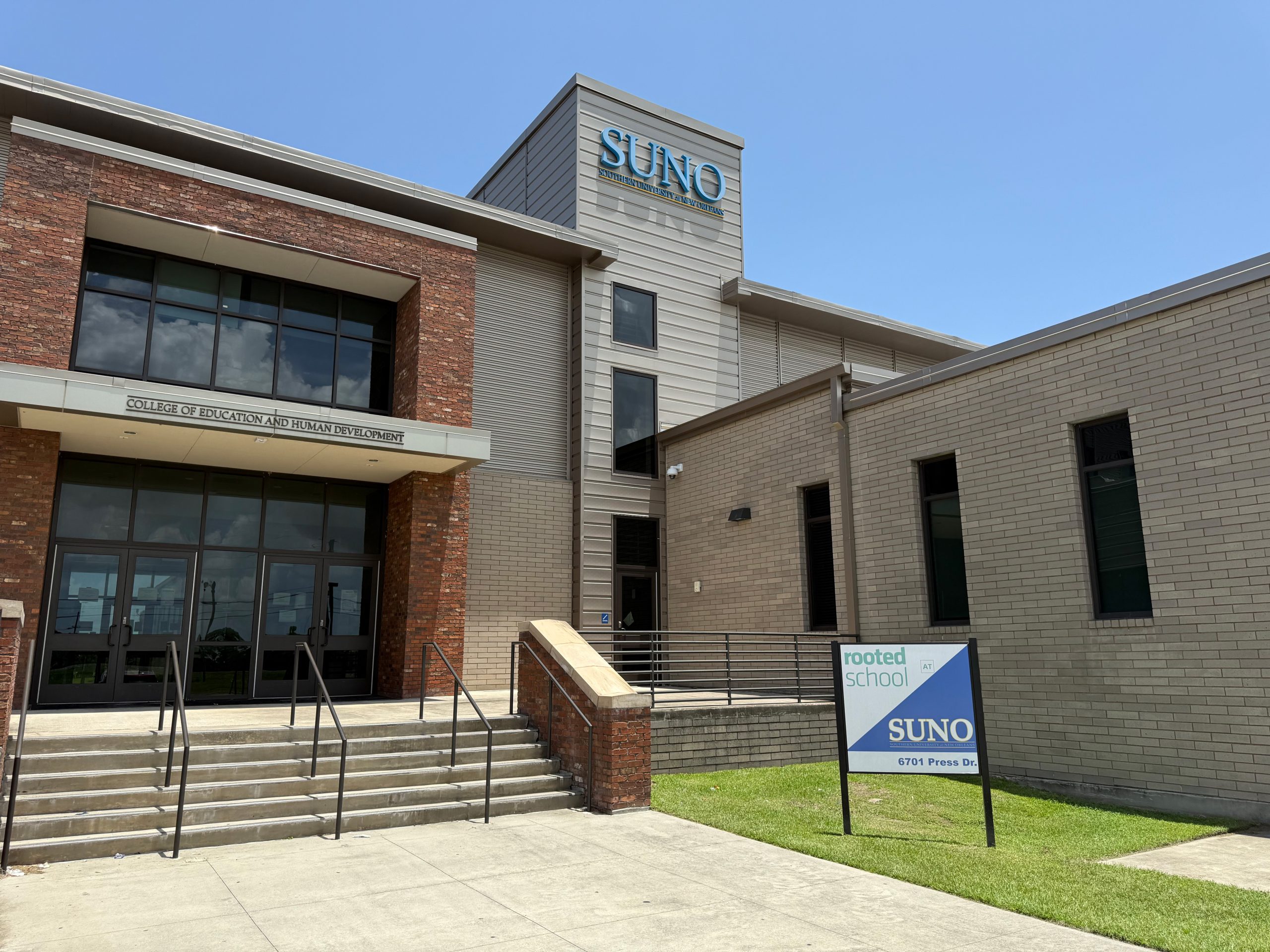
    “The $50 study,” as it’s known, began at Rooted School, a local charter school, as an experiment to increase attendance. The study has since grown to eight other high schools in the city, as well as Rooted’s sister campus in Indianapolis, with students randomly selected to receive $50 every week for 40 weeks, or $2,000 total. By comparing their spending and savings habits to a larger control group, researchers wanted to figure out whether the money improved a teen’s financial capability and perception of themselves. They also wanted to know: Could the cash boost their grade-point averages and reading scores?

    Now, as the experiment expands to Washington, D.C., and perhaps Texas, a final report of the $50 study suggests a little bit of spending cash can make a difference in young people’s lives.

    The report, released Tuesday, shows students who received the cash payments were slightly more likely to attend school than those who didn’t. Academic performance did not differ between the groups. But financially, the extra cash helped students acquire stronger long-term planning skills and familiarity with savings accounts and other financial products. They ended the study, on average, with $300 saved away — a 15 percent savings rate, triple the national average for American adults.

    “When young people are given the opportunity to manage money in low-stakes environments, they build the habits that shape long-term financial health,” said Stacia West, an associate professor at the University of Tennessee, Knoxville and co-founder of the Center for Guaranteed Income Research, which partnered with the Rooted School Foundation to run the study. “The short-term habits we’re seeing are laying the foundation for lifelong financial capability.”

    Related: A lot goes on in classrooms from kindergarten to high school. Keep up with our free weekly newsletter on K-12 education.

    Across the United States and the globe, hundreds of communities have tinkered with some form of universal basic income, or UBI, a social welfare program that provides people with regular cash payments to meet their needs. Direct cash transfer programs like the $50 study or the child tax credit for families are similar, but they often provide smaller amounts and target specific populations to boost a person’s income. Many studies have linked UBI to financial stability and better employment and health outcomes.

    In the U.S. and Canada, researchers have found links between cash transfer pilots that focus on low-income families and better test scores and graduation rates for their kids. So far, though, few experiments have targeted young people or examined how the programs influence their lives specifically.

    Talia Livneh, senior director of programs at the Rooted School in New Orleans, poses for a portrait on the school grounds. Credit: Daniella Zalcman for The Hechinger Report

    “There’s a deep, deep distrust that we adults have of young people,” said Jonathan Johnson, CEO of the Rooted School Foundation, which operates the network’s four charter schools. “That distrust is to their detriment.”

    In New Orleans, roughly 4 in 5 of Rooted students come from economically disadvantaged families, and during the pandemic, many struggled to prioritize school. Some students skipped class to provide child care for their working parents, or because they needed to work themselves, according to Johnson. With some seed funding from a local education nonprofit, Rooted started a “micropilot” to test whether cash could help students make ends meet and get themselves to school.

    The original cohort included 20 students, half of whom received the $50 payment. In that micropilot, those receiving the cash saw their material wellbeing improve, meaning their family could more easily afford rent or utilities, and they gained skills around setting financial goals.  Rooted added students from its Indianapolis campus and another high school in New Orleans, G.W. Carver. And for their final report released this week, researchers sifted through the spending and survey data from 170 students who received the cash payments and 210 students who did not.

    The two-year report found students in the treatment group attended 1.23 more days of school, and  spent close to half their funds on essentials like food and groceries. The report also noted that 70 percent of all students at the participating schools qualify for subsidized meals, suggesting “this spending may reflect efforts to meet immediate nutritional needs.” One 12th grader in a survey mentioned using the money to feed their siblings.

    Kapri Clark recalled waiting every Wednesday morning for the $50 deposit to appear in her banking app. And every Wednesday afternoon, during her senior year at Carver High School, she put that money toward her $200 bill for braces she covered out of pocket.

    She braided hair to cover the rest, and still books clients when she has time in between her studies to become a nurse at the Lafayette campus. Even in college, Clark can see the need for some supplemental income for herself and her peers.

    “I make enough to take care of myself, but I watch every dollar,” said Clark. “There’s a lot of people struggling in life to eat, to live. Think if they got kids.”

    Read Irvin, chief of staff for Collegiate Academies in New Orleans, a network of five charter high schools that includes Carver High, said the $2,000 had provided the extra incentive a few students needed to stick it out until graduation. “That’s incredibly impactful for their life trajectories,” she said.

    Related: How to help young kids: Give their parents cash

    In January 2024, the city of New Orleans invested $1 million to bankroll another extension of the study, as part of an economic mobility initiative that tapped federal Covid relief funding. During the pandemic, a skyrocketing murder rate and spike in overall crime had convinced the city to help more residents, especially young people, find stability.

    “Research shows that people who are economically stable are less likely to commit crime,” said Courtney Wong, the city’s deputy director of economic development.

    The city funding not only expanded the $50 study to nine high schools, it also set a longer timeline for the research: About 800 seniors who participate will have their data tracked for 18 months after their graduation.

    A former high school teacher and administrator, Wong said $50 could have made a difference in the lives of many of her former students.

    “This targets young people in that perfect moment,” she said. “They’re in the right spot where even a little amount of help could have big, positive impacts before issues of crime or unemployment or things like that even come up.”

    Researchers also found students who received the $50 reported greater agency. They felt more control over their finances and more confidence about making long-term financial decisions. Students, according to the report, aligned their spending to future goals such as college prep classes and getting a driver’s license.

    Lyrik Grant, a rising junior at Carver High School, is the second-youngest of six kids with two working parents. She could ask them for help, but the $50 allowed Grant to afford the tights and tops she needed for dance class on her own. The money helped cover a college entrance exam, which she aced, and Grant wants to learn how to drive soon.

    “My first thought was: What am I going to do with all this money?” Grant said, adding that the cash helped some of her classmates find financial stability. “Children don’t always want to spend their parent’s money, and some parents don’t always have money to give them.”

    Still, for some students, the money wasn’t exactly life-changing. Irvin of Collegiate Academies said many used the cash to “just be teenagers.”

    That was true for Kevin Jackson, a rising junior at Rooted School New Orleans.

    “It’s cool to get free money,” he said. “I was spending it on the TikTok shop: posters, keyboards, lights — stuff I liked, not stuff I actually needed.”

    Related: All-charter no more: New Orleans opens its first traditional school in nearly two decades

    Despite the studies that show a positive impact from UBI, many Americans appear skeptical of the idea of a federal program that gives unconditional financial support to people. Aditi Vasan, a pediatrician and researcher at PolicyLab at the Children’s Hospital of Philadelphia, said skeptics often worry about recipients using public dollars for drug use or other illicit behavior, even though the data does not support that.

    Still, that fear will likely keep any large-scale cash transfer program from being adopted in the United States any time soon, she said.

    “That concern exists certainly for cash transfers in general but might be particularly magnified for teens,” Vasan said. “We’ve not seen that play out in the evidence from the quality studies that have been done.”

    Next year, in Washington, D.C., the nonprofit Education Forward will fund a pilot of the $50 study with 40 high schoolers. The Rooted school network resumed talks, meanwhile, to take the study to neighboring Texas, after state lawmakers earlier this year failed to pass legislation that threatened to ban local governments from adopting guaranteed income programs.

    Talia Livneh, senior director of programs for the Rooted School Foundation, said the politics may need to catch up to the research.

    “I don’t think what we’re doing is so radical. I believe this just works,” she said. “Kids don’t lack character. They lack cash,” Livneh added. “They deserve deep, deep trust that students and people know what’s best for them.”

    It’s been four years since Vernell Cheneau III received the $50 for 40 weeks while a student at Rooted in New Orleans, and his economic life isn’t easy. He struggled for months to find part-time work in his hometown. But on a recent summer morning, the same day he finally received a job offer, Cheneau recalled what he learned from the study.

    Vernell Cheneau III (left) with two other students who participated in the cash transfer program at Rooted School, in New Orleans.
    Credit: Courtesy of Rooted School

    “You learn that money goes fast, especially if it’s free,” said Cheneau, 22.

    As a student, he tried to use the money to build some credit history. Since then, he’s learned the full cost of being an adult in America: health care, fuel and maintenance for his car, getting your hair done before a new job. Cheneau has also spent that time trying to convince friends and family to support UBI.

    Most oppose giving “free” money to people, he said. “How much does it cost to feed children? Get to work? We can’t just allow people to drown.”

    “Everything costs something,” Cheneau added. “If you’re stuck in a rut, it’s expensive to restart. In this country, it’s expensive to be poor.”

    Contact staff writer Neal Morton at 212-678-8247, on Signal at nealmorton.99, or via email at [email protected].

    This story about cash transfer programs was produced by The Hechinger Report, a nonprofit, independent news organization focused on inequality and innovation in education. Sign up for the Hechinger newsletter.

    The Hechinger Report provides in-depth, fact-based, unbiased reporting on education that is free to all readers. But that doesn’t mean it’s free to produce. Our work keeps educators and the public informed about pressing issues at schools and on campuses throughout the country. We tell the whole story, even when the details are inconvenient. Help us keep doing that.

    Join us today.

    Source link

  • Supreme Court takes education cases that could challenge the separation of church and state

    Supreme Court takes education cases that could challenge the separation of church and state

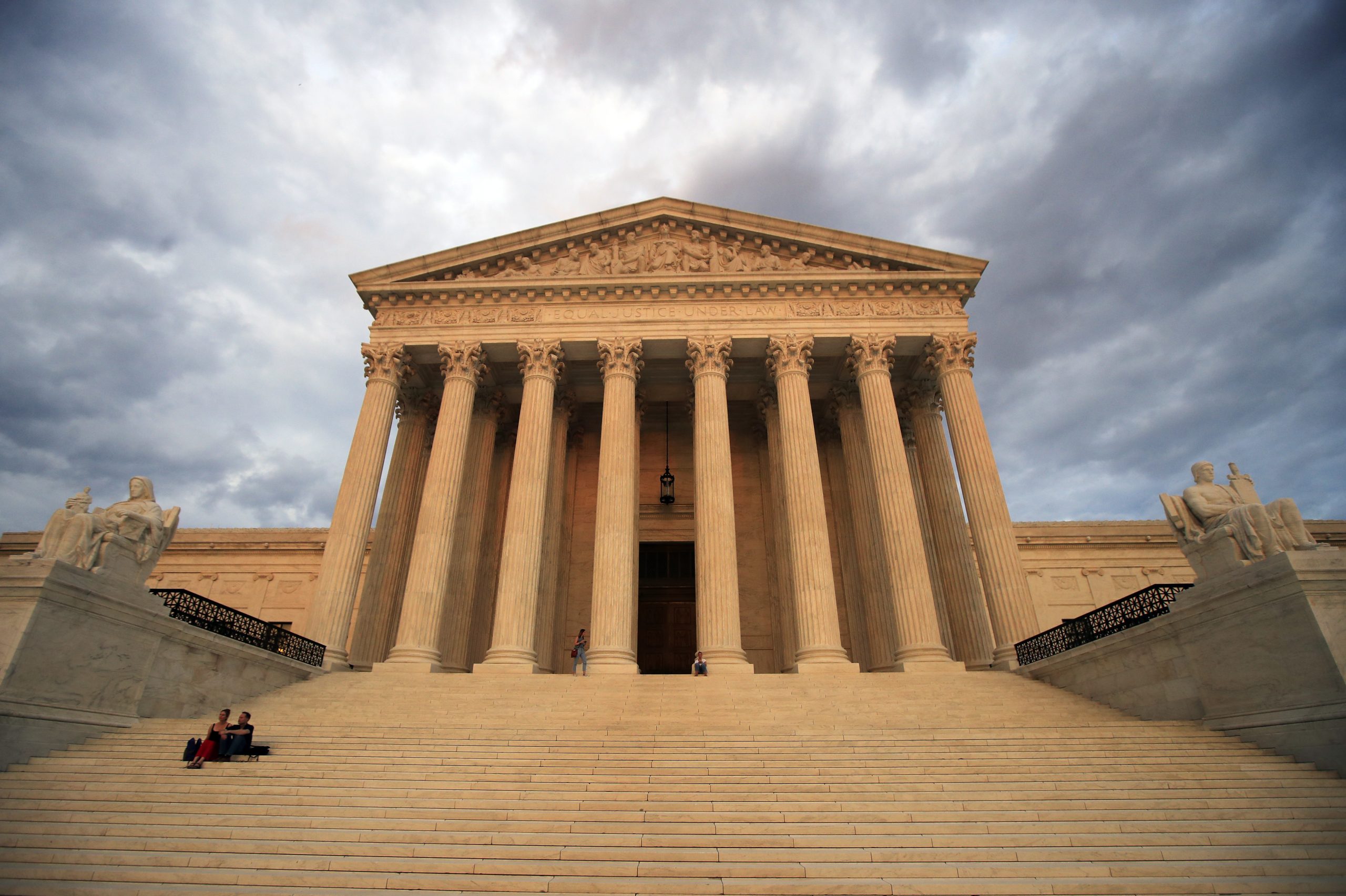
    The Supreme Court over the next two weeks will hear two cases that have the potential to erode the separation of church and state and create a seismic shift in public education.

    Mahmoud v. Taylor, which goes before the court on April 22, pits Muslim, Roman Catholic and Ukrainian Orthodox families, as well as those of other faiths, against the Montgomery County school system in Maryland. The parents argue that the school system violated their First Amendment right of free exercise of religion by refusing to let them opt their children out of lessons using LGBTQ+ books. The content of the books, the parents say, goes against their religious beliefs.

    Oklahoma Statewide Charter School Board v. Drummond, which will be argued on April 30, addresses whether the St. Isidore of Seville Virtual Charter School should be allowed to exist as a public charter school in Oklahoma. The Archdiocese of Oklahoma City and the Diocese of Tulsa had won approval for the charter school from the state charter board despite acknowledging that St. Isidore would participate “in the evangelizing mission of the Church.”

    The state’s attorney general, Gentner Drummond, later overruled the approval, saying the school could not be a charter because charter schools must be public and nonsectarian. The petitioners sued and ultimately appealed to the Supreme Court, claiming Drummond violated the First Amendment’s free exercise clause by prohibiting a religious entity from participating in a public program.

    Teachers unions, parents groups and organizations advocating for the separation of church and state have said that rulings in favor of the plaintiffs could open the door for all types of religious programs to become part of public schooling and give parents veto rights on what is taught. In the most extreme scenario, they say, the rulings could lead to the dismantling of public education and essentially allow public schools to be Sunday schools.

    Related: A lot goes on in classrooms from kindergarten to high school. Keep up with our free weekly newsletter on K-12 education.

    At issue in both cases is the question of whether the First Amendment rights of parents and religious institutions to the free exercise of religion can supersede the other part of the amendment, the establishment clause, which calls for the separation of church and state.

    “I think a chill wind is blowing, and public education as we know it is in extreme jeopardy of becoming religious education and ceasing to exist,” said Rachel Laser, president of Americans United for Separation of Church and State, an advocacy organization that has filed an amicus brief in the St. Isidore case. “The whole idea is to have churches take control of education for American children. It’s about money and power.”

    For some conservative lawmakers, evangelical Christian groups and law firms lobbying for more religiosity in the public square, decisions in the petitioners’ favor would mean religious parents get what they have long been owed — the option of sending their children to publicly funded religious schools and the right to opt out of instruction that clashes with their religious beliefs.

    “If we win this case, it opens up school choice across the country,” said Mathew Staver, founder of Liberty Counsel, an Orlando, Florida-based conservative Christian legal firm that has filed a brief supporting the petitioners in both cases. “I see school choice as a reaction to the failed system in the public schools, which is failing both in academia but also failing in the sense they are pushing ideology that undermines the parents and their relationship with their children.”

    By taking the cases, the Supreme Court once again inserts itself in ongoing culture wars in the nation, which have been elevated by presidential orders threatening to take away funding if schools push diversity, equity and inclusion initiatives and state laws banning teaching on various controversial subjects. Legal scholars predict that the Supreme Court will lean toward allowing St. Isidore and the opt-outs for parents because of how the justices ruled in three cases between 2017 and 2022. In each case, the justices decided that states could not discriminate against giving funds or resources to a program because it was religious.

    Related: How Oklahoma’s superintendent set off a holy war in classrooms

    Of the two cases, St. Isidore likely could have the greatest impact because it is attempting to change the very definition of a public school, say opponents of the school’s bid for charter status. Since charter schools first started in the 1990s, they have been defined as public and nonsectarian in each of the 46 state statutes allowing them, according to officials at the National Alliance for Public Charter Schools. Today, charter schools operate in 44 states, Guam, Puerto Rico and Washington, D.C., and serve roughly 7.6 percent of all public school students.

    “It would be a huge sea change if the court were to hold they were private entities and not public schools bound by the U.S. Constitution’s establishment clause,” said Rob Reed, the alliance’s vice president of legal affairs.

    A victory for St. Isidore could lead to religious-based programs seeping into several aspects of public schooling, said Steven Green, a professor of both law and history and religious studies at Willamette University in Salem, Oregon.

    “The ramification is that every single time a school district does some kind of contracting for any kind of service or curricular issues, you’re going to find religious providers who will make the claim, ‘You have to give me an opportunity, too,’” Green said.

    St. Isidore’s appeal to the Supreme Court is part of an increasing push by the religious right to use public funds for religious education, said Josh Cowen, a professor of education policy at Michigan State University and author of a 2024 book on school vouchers. Because of previous court decisions, several voucher programs across the country already allow parents to use public money to send their children to religious schools, he said.

    “What’s going to happen if the court says a public school can be run by a religious provider?” Cowen asked. “It almost turns 180 degrees the rule that voucher systems play by right now. Right now, they’re just taking a check. They’re not public entities.”

    The effect of a St. Isidore victory could be devastating, he added. “It would be one more slippery slope to really kicking down the wall between church and state,” Cowen said.

    Related: Inside the Christian legal campaign to return prayer to public schools

    Jim Campbell, chief legal counsel for Alliance Defending Freedom, which is representing St. Isidore’s bid to become a charter, discounted the idea that a St. Isidore win would fundamentally change public schools. Like Staver, he views St. Isidore as simply providing another parental option. “We’re not asking the state to run a religious school,” Campbell said. “These are private entities that run the schools. This is a private organization participating in a publicly funded program.”

    Opponents of religious charter schools question whether St. Isidore would have to play by the same rules as public schools.

    “How are they going to handle it when there’s a teacher who has a lifestyle that doesn’t align with Catholic school teaching? They’re talking out of both sides of the mouth,” said Erika Wright, an Oklahoma parent and plaintiff in a lawsuit protesting a Bible in the classroom mandate by Oklahoma’s state superintendent of instruction. She also joined an amicus brief against St. Isidore’s formation.

    “As a taxpayer, I should not be forced to fund religious instruction, whether it’s through a religious charter school or a Bible mandate,” Wright said. “I shouldn’t be forced to fund religious indoctrination that doesn’t align with my family’s personal beliefs.”

    Notably, in the Montgomery County parents’ case going before the court, parents use similar reasoning to support their right to opt out of instruction. “A school ‘burdens’ parents’ religious beliefs when it forces their children to undergo classroom instruction about gender and sexuality at odds with their religious convictions,” the parents’ brief said.

    The school district in 2022 adopted several books with LGBTQ+ themes and characters as part of the elementary language arts curriculum. Initially, families were allowed to opt out. But then the school system reversed its policy, saying too many students were absent during the lessons and keeping track of the opt-outs was too cumbersome. The reversal led to the lawsuit.

    Historically, school districts have given limited opt-outs to parents who, for example, do not want their child to read a particular book, but the Montgomery County parents’ request is broader, said Charles C. Haynes, a First Amendment expert and senior fellow for religious liberty at the Freedom Forum in Washington, D.C. The parents are asking to exclude their children from significant parts of the curriculum for religious reasons.

    “If the court sides with the parents, I think the next day, you’re going to have parents across the country saying, ‘I want my kids to opt out of all the references to fill-in-the-blank.’ … It would change the dynamic between public schools and parents overnight,” Haynes said.

    Related: Tracking Trump: His actions to abolish the Education Department, and more

    Sarah Brannen, author of “Uncle Bobby’s Wedding,” one of the LGBTQ+ books Montgomery County schools adopted, sees major logistical issues if the school system loses. “Allowing parents to interfere in the minutia of the curriculum would make their already difficult jobs impossible,” she said.

    Colten Stanberry, a lawyer with the Becket Fund for Religious Liberty representing the Montgomery County parents, disagreed. School systems manage to balance different student needs all the time, he said.

    A triumph for the Montgomery County families and St. Isidore would cause much more than logistical issues, said Becky Pringle, president of the National Education Association. It could lead to a public education system where parents can pick a school based on religious beliefs or try to change a traditional public school’s curriculum by opting out of lessons in droves.

    “For us to be a strong democracy, then we necessarily need to learn about all of us. To separate us flies in the face of why we were founded,” Pringle said.

    This story about church and state was produced by The Hechinger Report, a nonprofit, independent news organization focused on inequality and innovation in education. Sign up for the Hechinger newsletter.

    The Hechinger Report provides in-depth, fact-based, unbiased reporting on education that is free to all readers. But that doesn’t mean it’s free to produce. Our work keeps educators and the public informed about pressing issues at schools and on campuses throughout the country. We tell the whole story, even when the details are inconvenient. Help us keep doing that.

    Join us today.

    Source link

  • How Oklahoma’s Superintendent Set Off a Holy War in Classrooms

    How Oklahoma’s Superintendent Set Off a Holy War in Classrooms

    NORMAN, Okla. — Sometimes, Jakob Topper teaches his Christian faith to his 6-year-old daughter using children’s Bible stories illustrated with teddy bears. Other days, he might use her kid-friendly Bible featuring Precious Moments figures as characters. One thing he knows for sure: The King James version is not on the reading list, given some of its adult themes of sexual assault and incest. 

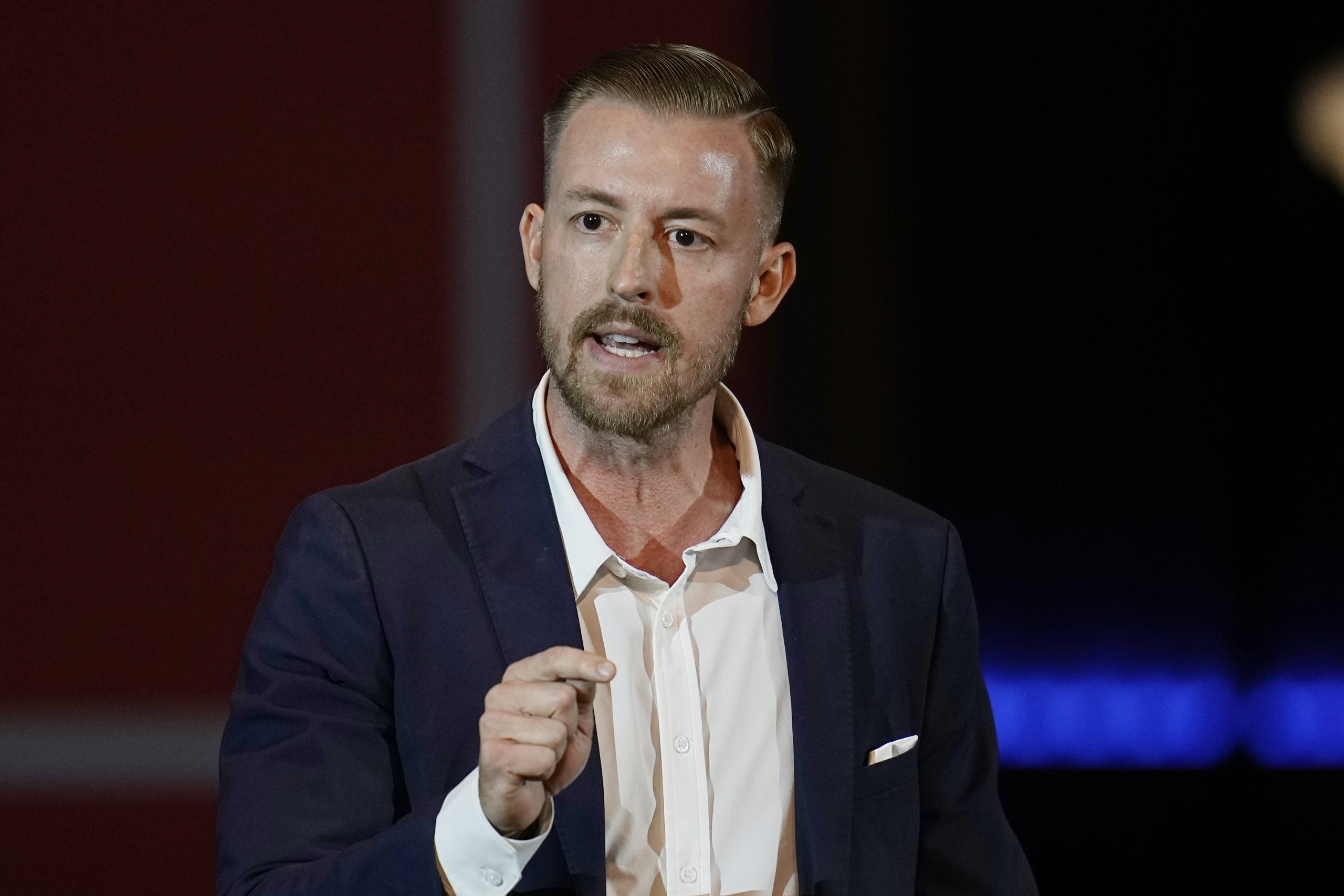
    As a parent and a Baptist pastor, Topper opposes Oklahoma’s state superintendent of public instruction’s mandate to put a King James Version Bible in every grade 5–12 classroom. The father of three is also not keen on the state’s newly proposed social studies standards that would require biblical lessons starting in first grade. 

    “I want the Bible taught to my daughter, and I want to be the one who chooses how that’s done,” said Topper, who also has a 1-year-old and a 3-year-old and is pastor of NorthHaven Church in Norman, a university town. “If we’re talking about parental choice, that’s my choice. I don’t want it to be farmed out to anyone else.”

    Norman, a central Oklahoman city of about 130,000, is an epicenter of resistance to the Bible mandate that the state superintendent of public instruction, Ryan Walters, announced last June. Opposition here has come from pastors, religion professors, students, parents, teachers, school board members and the school district superintendent, among others. The prevailing philosophy among Norman residents, who are predominantly Christian, is that they do not want the state — and namely, Walters — mandating how children should be taught scriptures. They want their children to learn from holy books at home or in church. 

    Pastor Jakob Topper, of NorthHaven Church, says he prefers to teach his children about the Bible rather than placing that responsibility on teachers. Credit: Mike Simmons for The Hechinger Report

    Many residents see Walters’s pitch as a play for national attention, given his abundance of social media posts praising Donald Trump, who campaigned on returning prayer to schools and as president has established a White House Faith Office and a task force to root out “anti-Christian bias.” In September, Walters proposed spending $3 million to buy 55,000 copies of the Bible that has been endorsed by the president and for which he receives royalties. More recently, Walters — who in February clashed with his state’s governor for proposing that public schools track students’ immigration statuses — made media lists as a possible candidate for Trump’s education secretary. He was not picked. 

    But beyond Walter’s national aspirations, the Bible mandate also seems like an attempt at one-upmanship, with other states angling to infuse Christianity into public schools. Louisiana, for instance, is in a court battle over its push for Ten Commandments posters in schools. Texas fought off Democratic opposition to approve an optional Bible-infused curriculum and financial incentives for school districts that use the materials. A slew of states have passed or promoted similar measures, including ones allowing chaplains to act as counselors in schools. Unsurprisingly, Walters, too, has advocated for displaying the Ten Commandments in every classroom and also has backed the conversion of a private virtual Catholic school into a charter school; the Supreme Court plans to hear oral arguments on the case on April 30.  

    It goes without saying that Walters’s crusade is multifaceted. But fundamentally, all of his efforts amount to teaching the Bible “in inappropriate ways in public schools,” said Amanda Tyler, author of “How to End Christian Nationalism” and executive director of the Baptist Joint Committee for Religious Liberty, a Washington, DC–based organization of attorneys, ministers, and others who advocate for religious freedom. “He’s saying you can’t be a good American citizen if you don’t understand the Bible,” she added. “It’s this merger of American and Christian identities, the idea that only Christians are true Americans.” 

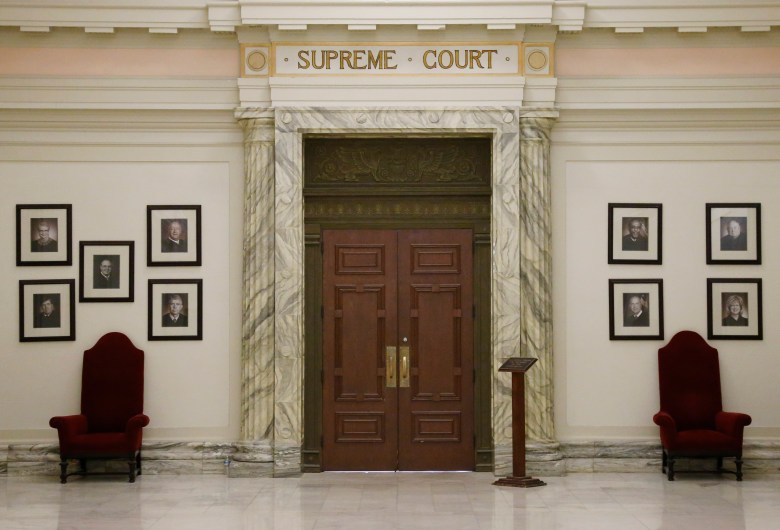
    On March 10, the Oklahoma Supreme Court dealt a blow to Walters’s plans: It issued a temporary stay prohibiting the state’s department of education from purchasing 55,000 Bibles with certain characteristics and from buying Bible-infused lessons and material for elementary schools. 

    The stay stems from a lawsuit led by Americans United for Separation of Church and State on behalf of 32 plaintiffs, including parents, clergy, students and teachers. The group, which is suing Walters, claims the Bible mandate violated the state’s prohibition against using state funds for religious purposes and the state’s own statutes allowing local district control over curriculum.

    As of now, until the court issues a final ruling, its decision marks a victory in Americans United’s attempt to stop Walters, said Alex Luchenitser, the organization’s associate legal director: “It protects the separation of church and state. It protects the religious freedom of students.” Speaking about the court’s stay, Walters, through spokeswoman Grace Kim, said in a statement: “The Bible has been a cornerstone of our nation’s history and education for generations. We will continue fighting to ensure students have access to this foundational text in the classroom.”

    Oklahoma Supreme Court, pictured in the state Capitol building, in March issued a stay that would prohibit the state education department from purchasing Bibles and Bible-infused lessons for elementary students. Credit: Sue Ogrocki/ Associated Press

    Meanwhile, Walters was also sued separately last summer by a parent in Locust Grove who contended the mandate violated the state and federal constitutions. The state education department has denied the claims of both suits and contended in legal briefs that using the Bible for its secular value does not violate the state’s constitution.

    Walters’s mandate has also sparked concern because of the proposed social studies standards that followed. The standards, which were initially released in December and would require legislative approval, mention the Bible and its historical impact more than 40 times. Several of the standards attempt to erroneously frame the Bible, and specifically the Ten Commandments, as the foundation of American law. Biblical scholars from the University of Oklahoma and elsewhere believe these standards promote the long-standing trope of Christian nationalism, which is premised in part on the false idea that the nation’s founding documents stemmed from the Bible. (The founders were Bible readers, but not necessarily fans of the same versions or holy texts in general. In fact, Thomas Jefferson cut up pages of the Bible to remove mention of miracles or the supernatural.)

    For example, Walters’s standards would require students in first grade to learn about David and Goliath, as well as Moses and the Ten Commandments, because the standards cite them as influences on the American colonists and others. Second graders would be asked to “identify stories from Christianity that influenced the American colonists, Founders, and culture, including the teachings of Jesus the Nazareth (e.g. the ‘Golden Rule,’ the Sermon on the Mount).” 

    Related: Inside the Christian legal campaign to return prayer to public schools

    “These new standards,” said a news release from the state department of education, “reflect what the people of Oklahoma — and all across America — have long been demanding of their public schools: a return to education curricula that upholds pro-family, pro-American values.” (Walters’s press office, despite repeated requests, did not make the state superintendent available for an interview.)

    Critics in Oklahoma and elsewhere see Walters’s Bible mandate as part of a broader Christian nationalist movement. “I think Oklahoma is the test case for the nation,” said Dawn Brockman, a Norman school board member.

    Walters, though, has been steadfast in his belief that the mandate is legal and critical for the education of Oklahomans. In the fall, after Americans United sued, Walters wrote on X: “The simple fact is that understanding how the Bible has impacted our nation, in its proper historical and literary context, was the norm in America until the 1960s and its removal has coincided with a precipitous decline in American schools.”

    But nothing is simple about the history of the Bible in America’s schools. When public schools started to open in the 1800s, some required regular Bible readings. From the beginning, that practice was controversial: Schools typically favored the King James Version, pitting Protestants against Catholics, and riots over school Bible readings broke out from the 1840s into the 1870s, said Mark Chancey, a professor of religious studies at Southern Methodist University in Dallas. By 1930, 36 states allowed Bible reading to be a requirement or an option, but another dozen banned such activities.

    A few decades later, a Pennsylvania family sued their school district for heeding the state’s 1949 law requiring the reading of 10 Bible verses and the recitation of prayers at the start of each school day. In 1963, just a year after a similar opinion, the Supreme Court ruled that requiring in-school Bible readings and prayers was unconstitutional. After those rulings, daily teaching from the Bible, for the most part, was halted, Chancey said, but backlash continued, with critics charging that removing prayer and Bible readings from schools had led to a decline in the morality of schoolchildren. 

    Related: Teachers struggle to teach the Holocaust without running afoul of new ‘divisive concepts’ laws

    In subsequent decades, the Supreme Court ruled against clergy-led prayer and prayer over the loudspeakers at football games in several school-related cases. But in a seeming reversal, in 2022, the high court ruled in favor of allowing a football coach to conduct midfield, postgame prayers, shifting the legal landscape. The majority’s opinion on the football coach’s prayer has prompted politicians and states to further test the limits of the separation of church and state. In February, lawmakers in Idaho and Texas even proposed measures to allow daily Bible readings in public schools again. 

    Darcy Pippins, who teaches Spanish at Norman High School, said she doesn’t feel qualified to teach about the Bible. Credit: Mike Simmons for The Hechinger Report

    In Norman, many teachers reacted to news of the Bible mandate with concern and fear. Spanish teacher Darcy Pippins, who is in her 27th year at Norman High, said she sometimes teaches about Catholicism because it is the religion of the Spanish-speaking world. But putting a Bible in every classroom and teaching from it is different. “I just don’t feel comfortable,” said Pippins, also a parent. “I’m not qualified to teach and to incorporate the Bible into what I teach.’’ 

    Other teachers, said Brockman, the school board member, worried about professional repercussions were they not to follow the mandate, given that Walters had already targeted at least one Norman teacher in the past for objecting to bans on particular books. 

    Nick Migliorino, the public school system’s superintendent since 2017, was the first superintendent in the state to publicly oppose the Bible mandate. When asked about it in a July interview with a local paper, he responded: “I’m just going to cut to the chase on that. Norman Public Schools is not going to have Bibles in our classrooms, and we are not going to require our teachers to teach from the Bible.”

    Other superintendents followed, and by late July, at least 17 school district leaders said they had no plans to change curriculum in response to the Bible mandate, according to a report by StateImpact Oklahoma.

    In an interview at his district’s headquarters, Migliorino emphasized that his school system already teaches how different religions affect history. Bibles, he noted, are accessible to students through the library. Migliorino added that the state superintendent had no authority to make school districts follow the mandate and that it would result in pushing Christianity on students. 

    “It’s a captive audience, and that is not our role to push things onto kids,” he said. “Our role is to educate them and to create thinkers.”

    Oklahoma already has a 2010 measure allowing school districts to offer elective Bible classes and to give students the latitude to pick the biblical text they prefer to use. But unlike Walters’s mandate, it allows for different biblical perspectives, said Alan Levenson, chair of Judaic history at the University of Oklahoma and a biblical scholar. Even still, there has never been widespread interest in a Bible elective in Norman, said Jane Purcell, the school system’s social studies coordinator. Nor was there much interest in such a class when she taught in Florida. Since 2006, at least a dozen states have passed laws promoting elective Bible classes.

    This may be, in part, because educators worry about potential issues with teaching Bible courses, said Purcell: “It’s very easy for it to appear to be proselytizing.”

    Related: How one district has diversified its advanced math classes — without the controversy

    Walters, for his part, has not taken any of this pushback in stride. At a July 31 state board of education meeting, he lashed out against “rogue administrators” who opposed him, saying of the left: “They might be offended by it, but they cannot rewrite our history and lie to our kids.”

    After the public schools superintendent publicly rejected Walters’s mandate, community members and teachers in Norman expressed relief. Meg Moulton, a realtor and mother of three, came to a July board meeting to thank the superintendent in person. “I’m a Christian mama,” she said. “I love teaching my kids about God. I love going to church.” 

    But, she added, “Ryan Walters’s mandate makes it so that teachers and students who may not be Christians…[or] who may believe something different, are going to be essentially forced to learn something that they may not believe in.” 

    Students and others I met with at a popular Norman coffee shop said they were concerned about how Walters’s mandate could affect religious minorities, women, and members of the LGBTQ+ community. “What Ryan Walters is trying to push goes in line with a lot of trends of kind of pushing back against LGBTQ,” said Isandro Moreno, a 17-year-old senior at Norman High. 

    Phoebe Risch, a 17-year-old senior at Norman North, the town’s other public high school, said Walters’s mandate was part of what motivated her to restart her high school’s Young Democrats club and recruit roughly 30 members. Risch, already upset about her state’s readiness to ban abortion following the Supreme Court’s overturn of Roe v. Wade, fears that requiring Bible-based instruction could lead to the promotion of the idea that women are submissive. “As a young woman, the implications of implementing religion into our schools is a little scary,” she said, “especially because Oklahoma is already a very conservative state.”

    Among the half dozen teens attending a confirmation class in December at Oklahoma City Reform temple B’nai Israel, most opposed the mandate, except for one. She said she supported it as long as the classroom teacher was careful and encouraged critical thinking. 

    One teen recounted tearily how, during class the previous week, a friend had drawn a swastika on her paper as a taunt. “Stuff like that is so normalized,” she said. “It’s antisemitism. If that’s so normalized, normalizing Christianity further, it’s just worse.”

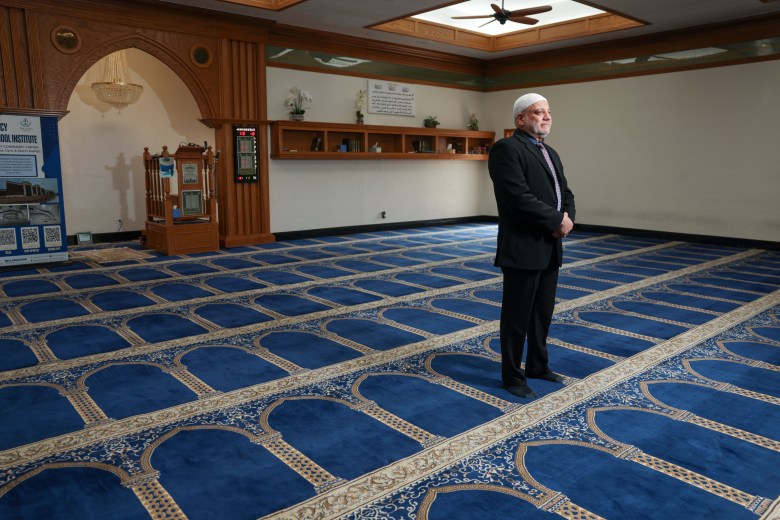
    Imad Enchassi, an imam who oversees an Oklahoma City mosque and also chairs the Islamic Studies department at Oklahoma City University, said he worries that Superintendent Ryan Walter’s policies will further isolate Muslim children. Credit: Mike Simmons for The Hechinger Report

    Imad Enchassi, an imam who oversees an Oklahoma City mosque and serves as chair of Islamic studies at Oklahoma City University, echoed similar fears for the Muslim community. “We’re already experiencing Islamophobia. Muslim kids who wear the headscarf already have been told they’re going to hell because they don’t believe in the Bible or they don’t believe in Jesus,” he said. “When curriculum mandates one religion over the other, that will further isolate our children.”

    Some Oklahomans, though, do support the mandate. And at one of the state board of education meetings where Walters touted it, three residents expressed support for the idea — during public comment — as did at least one board member. That board member said he thought biblical literacy was important, while other supporters see the Bible mandate as a way to instill morality in the public schools. Ann Jayne, a 62-year-old resident of Edmond, about 15 miles north of Oklahoma City, makes a point of letting Walters know on his Facebook page that she’s praying for him, because she believes public schools need to instill Christian values. “I think we need church in the state,” she said. “I don’t see a problem with God being back in the school. Nobody is forcing them to become a Christian.”

    Since last summer, Walters’s efforts to push Christianity have only become bolder. In mid-November, he announced the opening of the Office of Religious Liberty and Patriotism, which would, among other things, investigate alleged abuses against religious freedom and patriotic displays. Two days later, he announced that he was sending 500 Bibles to Advanced Placement government classes. He also emailed superintendents around the state with the order to show their students a one-minute-and-24-second video announcing the religious liberty office and praying for newly elected President Trump.

    At a Christmas parade in Norman in early December, some residents called the video embarrassing, with many superintendents, including Norman’s, having declined to show it. However, while many residents seem to abhor the Bible mandate, they do not agree on how religion should be handled in public life. Despite some religious diversity and some liberal leanings common in a university town, Norman skews religiously conservative. That dichotomy means many residents see the Bible as so sacrosanct that they don’t want it taught in schools, yet they see no problem with other Christian-oriented school activities.

    In some cases, residents like school board member Brockman, who is also a former teacher and lawyer with training on the First Amendment, have objected to school promotion of the religious aspects of Christmas. When she was a teacher at one of Norman’s two high schools, she asked to stop the playing of overtly religious Christmas songs in the halls during passing periods. She saw it as a “gentle reminder that the Supreme Court says we need to remain neutral on religion.” Her wish was granted. “They took it down with some consternation and played the Grinch in my honor.”

    Related: Teaching global warming in a charged political climate

    Residents have also quibbled over what to call the parade featuring Santa each December. Should it be called the Norman holiday or Christmas parade? It’s now known as the Norman Christmas Holiday Parade. In early December, the city’s mix of liberal and conservative influences shone through the glitz during the parade. The Knights of Columbus float had a sign that said “Merry CHRISTmas.” Norman’s Pride organization participated, with its human angels wearing wings lit up in rainbow colors.

    Tracey Langford, watching the parade from the back of her SUV, was dressed in a red stocking cap and a red sweatshirt that read “Santa, define good,” a jab at the fact that she is a lawyer who cares about legal definitions. To her, the Bible mandate is a clear violation of separation of church and state.“Every home here has a Bible…. We don’t need to spend a dollar to get a Bible in every classroom,” said Langford, a lawyer at the University of Oklahoma and a parent of a first grader in Norman schools and a 15-year-old in a private school. 

    Traci Jones, a parent of both a Norman sixth grader and fifth grader, likewise asked, “Who’s supposed to be teaching these kids the Bible? Is it just a random person? What if it’s an atheist or someone who has totally different beliefs than me?” As a nondenominational Christian, she added, “I think it’s wack to ask these poor teachers to teach that.”

    What happens next may ultimately be decided in a courtroom. There is no sign yet when final opinions may be issued in either lawsuit.

    State lawmakers at recent appropriation hearings said they were worried about the directive’s constitutionality, and in fact, in March, the Senate Appropriations’ Education Subcommittee  said it did not consider Walters’s $3 million request to purchase Bibles. The next day Walters announced he was launching a national campaign with a country singer to get Bibles donated to Oklahoma schools. (The legislature gets the final word on the Bible purchases, a line item in the education budget, and the standards, which the state board of education approved in late February.) Meanwhile, the fate of religion’s place in public schools on a national level likely will rest with the Supreme Court, with various lawsuits against state measures promoting Christianity making their way through the court system.  

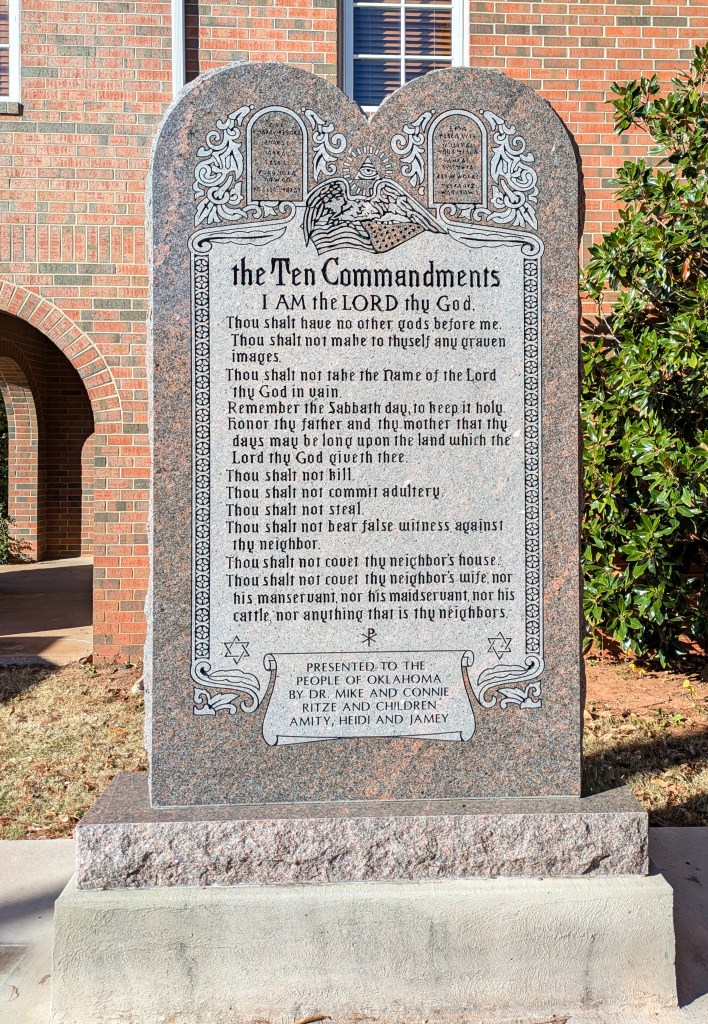
    A Ten Commandments monument that sat on Oklahoma State Capitol grounds until the state Supreme Court ruled its presence violated the separation of church and state. It now is at the headquarters of a conservative lobbying group. Credit: Linda K. Wertheimer for The Hechinger Report

    In Norman, Jakob Topper, Kyle Tubbs and other Baptist pastors I met with at the headquarters of a statewide Baptist church organization were increasingly aghast at Walters’s mixing of religion and politics. Rick Anthony, pastor of Grace Fellowship, a Baptist church, centered his November 17 sermon on such concerns. “Almost comically, we’ve heard this week about a video made that was ordered to be shown to all children in the public schools and then sent to their parents,” he said. “Our question is…where are our voices as our political leaders cozy up to faith leaders, all the while destroying our faith institutions?” 

    Kaily Tubbs, Tubbs’s wife and a fifth grade teacher in Norman schools, said the mandate conflicts with her personal belief on how faith should be handled in schools. She spoke also as a mother of a kindergartener and a third grader, both in Norman schools. “Our faith is really important to us,” she said. “I don’t want it to be used as a prop in a classroom.”

    Topper said that at his church, the majority of his congregation believes in separation of church and state. He said he is aware of the religious diversity that exists in his town, too, and has both Muslim and Jewish neighbors. Like Anthony, he spoke with his congregation about Walters’s mandate, though in an informal weeknight meeting at his church, rather than as part of a formal sermon. “I wish,” he said, “that Jesus was left out of schools and left for the religious realm.”

    Contact editor Caroline Preston at 212-870-8965, via Signal at CarolineP.83 or on email at [email protected].

    This story about Bibles in schools was produced by The Hechinger Report, a nonprofit, independent news organization focused on inequality and innovation in education. Sign up for the Hechinger newsletter.

    The Hechinger Report provides in-depth, fact-based, unbiased reporting on education that is free to all readers. But that doesn’t mean it’s free to produce. Our work keeps educators and the public informed about pressing issues at schools and on campuses throughout the country. We tell the whole story, even when the details are inconvenient. Help us keep doing that.

    Join us today.

    Source link