Category: China

  • The Emperor Has No Clothes

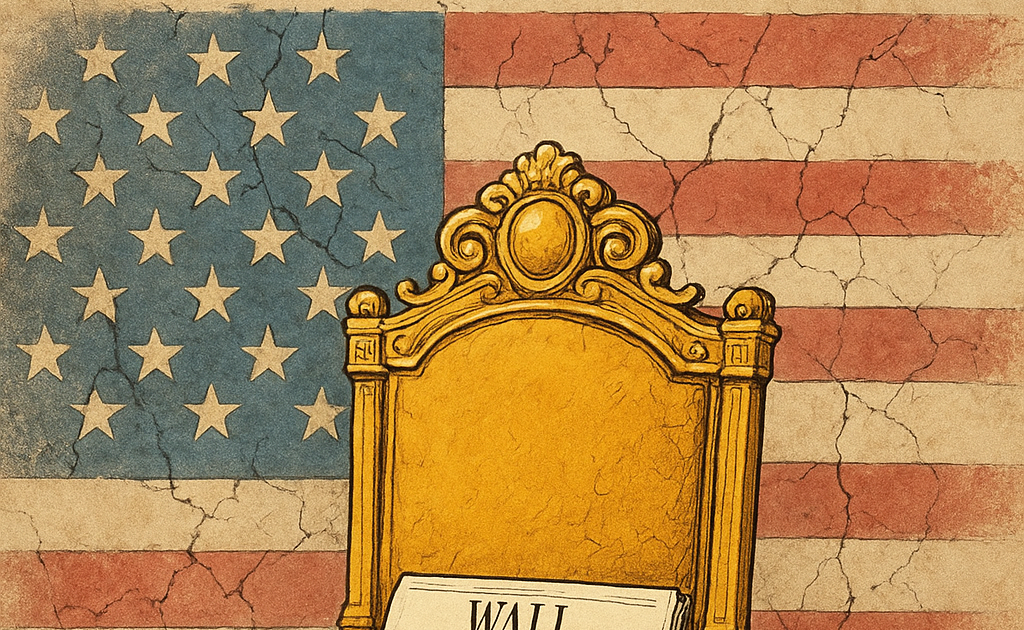
    The Emperor Has No Clothes

    President Donald Trump calls himself a master of deals and a builder of wealth. But a closer look at his economic record shows otherwise. What passes as Trumpenomics is not a coherent strategy but a dangerous cocktail of trickle-down economics, tariffs, authoritarian force, and outright deception. The emperor struts confidently, yet his economic clothes are invisible.

    Trickle-Down Economics with Tariffs

    Trump’s policies leaned heavily on Arthur Laffer’s supply-side theories, promising that tax cuts for corporations and the wealthy would lift all boats. The 2017 Tax Cuts and Jobs Act slashed the corporate tax rate from 35% to 21%, showering disproportionate benefits on the top 1%. The Congressional Budget Office found that by 2025, households making under $30,000 would actually see tax increases, while millionaires reaped permanent benefits.

    At the same time, Trump imposed tariffs on China and other trade partners—despite claiming to be a free-market champion. Tariffs raised consumer prices at home, effectively acting as a hidden tax on working families. The Federal Reserve estimated that U.S. consumers and businesses bore nearly the full cost of Trump’s tariffs, with average households paying hundreds of dollars more each year for basic goods.

    Demanding Tributes from Other Nations

    Trump approached international trade less as economic policy and more as a tribute system. Nations that purchased U.S. arms, invested in Trump-friendly industries, or flattered his ego received preferential treatment. Those who did not were threatened with tariffs, sanctions, or military abandonment. His decision to reduce funding to NATO while deepening ties with Saudi Arabia, Qatar, and the UAE reflected this transactional worldview.

    Altering Economic Data and Scapegoating the Poor

    Trump consistently attempted to alter or spin economic data. When unemployment spiked during COVID-19, his administration pressured agencies to downplay the crisis. In some cases, career economists reported being silenced or reassigned for refusing to misrepresent figures.

    When numbers could not be manipulated, scapegoats were manufactured. Trump blamed immigrants, people of color, and the poor for economic stagnation, while targeting Medicaid recipients and the homeless as symbols of “decay.” Instead of addressing structural problems, his rhetoric diverted public anger downward, away from billionaires and corporations.

    Lie, Cheat, Steal

    Lawsuits and corruption have always been central to Trump’s business empire, and they carried over into his economic governance. From funneling taxpayer money into Trump-owned properties to bending trade policy for donors, his approach blurred the line between public service and private gain. The New York Times documented that Trump paid just $750 in federal income tax in 2016 and 2017, even as he claimed to be a champion of the American worker.

    Fourth Generation Warfare, AI, and Taiwan

    Trump’s economic worldview also bleeds into Fourth Generation Warfare (4GW)—the mixing of political, economic, and psychological operations. His chaotic handling of AI development, threats over Taiwan, and erratic China policy destabilized global markets. Uncertainty became a feature, not a bug: allies and rivals alike never knew if Trump’s economic positions were bargaining tools, retaliations, or improvisations.

    Authoritarianism at Home and Abroad

    At home, Trumpenomics relied on force and intimidation. He threatened to deploy the National Guard against protesters, treating dissent as an economic threat to be neutralized. Abroad, he backed Netanyahu’s expansionist policies while cutting aid to Europe, effectively reshaping U.S. alliances around authoritarian partners willing to pay for loyalty.

    Hostility Toward Higher Education

    Trump also targeted higher education, cutting research funding, undermining student protections, and ridiculing universities as bastions of “elitism.” The move was both political and economic: by weakening critical institutions, he expanded the space for propaganda and disinformation to thrive.

    The Emperor’s New Clothes

    Beneath the spectacle, Trumpenomics have left the US more unequal, more indebted, and more divided. The federal deficit ballooned by nearly $7.8 trillion during his first term—before COVID-19 relief spending. Inequality widened: by 2020, the richest 1% controlled more than 30% of the nation’s wealth, while median household income gains evaporated. Tariffs have raised costs, tax cuts hollowed out revenues, and corruption flourished.

    Trump’s economy was not built on strength but on illusion. Like the emperor in Hans Christian Andersen’s fable, Trump strutted in garments only his loyalists claimed to see. For everyone else, the truth was painfully visible: the emperor had no clothes.


    Sources

    • Congressional Budget Office, “The Distributional Effects of the 2017 Tax Cuts” (2018)

    • Federal Reserve Board, “Effects of Tariffs on U.S. Consumers” (2019)

    • The New York Times, “Trump’s Taxes Show Chronic Losses and Years of Income Tax Avoidance” (Sept. 27, 2020)

    • David Cay Johnston, It’s Even Worse Than You Think: What the Trump Administration Is Doing to America (2018)

    • Joseph Stiglitz, “Trump’s Economic Nonsense,” Project Syndicate (2019)

    Source link

  • Jin Huang, Higher Education’s Harry Houdini

    Jin Huang, Higher Education’s Harry Houdini

    Ambow CEO Has Repeatedly Slipped Through the Fingers of Shareholders and Regulators

    In the opaque world of for-profit higher education, few figures have evoked the mixture of fascination and alarm generated by Jin Huang, CEO—and at times interim CFO and Board Chair—of Ambow Education Holding Ltd. Huang has repeatedly navigated financial crises, regulatory scrutiny, and institutional collapse with a Houdini-like flair. Yet the institutions under her control—most notably Bay State College and NewSchool of Architecture & Design—tell a far more troubling story.


    Ambow’s Financial Labyrinth

    Ambow, headquartered in the Cayman Islands with historic ties to Beijing (former address: No. 11 Xinyuanli, Chaoyang District, Beijing, China), has endured years of financial instability. As early as 2010, the company pursued ambitious acquisitions in the U.S. education market, including NewSchool and eventually Bay State College, often relying on opaque financing and cross-border investments.

    By 2013, allegations of sham transactions and kickbacks forced Ambow into liquidation and reorganization. Yet the company repeatedly avoided delisting and collapse. Financial reports reveal a recurring pattern: near-catastrophe followed by minimal recovery. In 2023, net revenue fell 37.8% to $9.2 million with a $4.3 million operating loss. By 2024, Ambow reported a modest $0.3 million net income, narrowly avoiding another financial crisis. 


    Early Years: 2010–2015

    From 2010 to 2015, Ambow aggressively pursued U.S. acquisitions and technology projects while expanding its presence in China. The company leveraged offshore corporate structures and relied heavily on PRC-linked investors. Huang’s leadership style during this period prioritized expansion and publicity over sustainable governance, leaving institutions financially vulnerable.

    Despite claims of educational innovation, Ambow’s track record in these years included multiple warnings from U.S. regulators and questionable accounting practices that would later contribute to shareholder lawsuits and delisting from the NYSE in 2014.


    Bay State College: Closed Doors, Open Wounds

    Acquired in 2017, Bay State College in Boston once enrolled over 1,200 students. By 2021, enrollment had collapsed, despite millions in federal COVID-era relief. In 2022, the Massachusetts Attorney General secured a $1.1 million settlement over misleading marketing, telemarketing violations, and inflated job-placement claims.

    Accreditation probation followed, culminating in NECHE’s withdrawal of accreditation in January 2023. Eviction proceedings for over $720,000 in unpaid rent preceded the college’s permanent closure in August 2023. Bay State’s demise exemplifies the consequences of Ambow’s pattern: the CEO escapes, the institution collapses, and students and faculty are left in the lurch.


    NewSchool of Architecture & Design: Stabilization in San Diego

    NewSchool, Ambow’s other U.S. acquisition, has faced persistent challenges. Enrollment has dropped below 300 students, and the school remains on the U.S. Department of Education’s Heightened Cash Monitoring list. Leadership instability has been chronic: five presidents since 2020, with resignations reportedly tied to unpaid salaries and operational dysfunction.

    As of 2025, lawsuits with Art Block Investors, LLC have been settled, and NewSchool is now housed in three floors of the WeWork building in downtown San Diego. Despite receiving a Notice of Concern from regional accreditor WSCUC, the college remains operational but financially precarious.


    Questionable Credentials and Leadership Transparency

    Huang has claimed to hold a PhD from the University of California, but investigation reveals no record of degree completion. This raises further concerns about leadership credibility and transparency. Ambow’s consolidated executive structure—Huang serving simultaneously as CEO, CFO, and Board Chair—exacerbates governance risks.

    While headquartered in Cupertino, California, Ambow continues to operate with ties to Chinese interests. SEC filings from the PRC era acknowledged that the Chinese government exerted significant influence on the company’s business operations. Ambow has also expressed interest in projects in Morocco and Tunisia involving Chinese-affiliated partners.


    HybriU and the EdTech Hype

    In 2024, Ambow launched HybriU, a hybrid learning platform promoted at CES and the ASU+GSV conference. Marketing materials claim a 5-in-1 AI-integrated solution for teaching, learning, connectivity, recording, and management, including immersive 3D classroom projections.

    Yet there is no verifiable evidence of HybriU’s use in actual classrooms. A $1.3 million licensing deal with a recently formed Singapore company, Inspiring Futures, is the only reported commercial transaction. Photos on the platform’s website have been traced to stock images, and the “OOOK” (One-on-One Knowledge) technology introduced in China in 2021 has not demonstrated measurable results in U.S. education settings.

    Reports suggest that Ambow may be in preliminary talks with Colorado State University (CSU) to implement HybriU. HEI has not confirmed any formal partnership, and CSU has not publicly acknowledged engagement with the platform. Any potential relationship remains unverified, raising questions about the legitimacy and scope of Ambow’s outreach to U.S. universities.

    Ambow’s 2025 press release promotes HybriU as a transformative global learning network, but HEI’s review finds no verified partnerships with accredited U.S. universities, no independent validation, and continued opacity regarding student outcomes or data security.


    Financial Oversight and Auditor Concerns

    Ambow commissioned a favorable report from Argus Research, but its research and development spending remains minimal—$100,000 per quarter. Prouden CPA, the current auditor based in China, is new to the company’s books and has limited experience auditing U.S. education operations. This raises questions about the reliability of Ambow’s financial reporting and governance practices.


    Conclusion: The Illusion of Rescue

    Jin Huang’s repeated escapes from regulatory and financial peril have earned her a reputation akin to Harry Houdini. But the cost of each act is borne not by the CEO, but by institutions, faculty, and students. Bay State College is closed. NewSchool remains operational in a WeWork facility but teeters on financial fragility. HybriU promises innovation but offers no proof.

    Ambow’s trajectory demonstrates that a company can survive on hype, foreign influence, and minimal governance, while leaving the real consequences behind. Any unconfirmed talks with CSU highlight the ongoing risks for U.S. institutions considering engagement with Ambow. For regulators, students, and higher education stakeholders, Huang’s Houdini act is less a marvel than a warning.


    Sources

    • Higher Education Inquirer. “Ambow Education Facing NYSE Delisting.” May 2022.

    • Higher Education Inquirer. “Ambow Education and NewSchool of Architecture and Design.” October 2023.

    • Higher Education Inquirer. “NewSchool of Architecture and Design Lawsuits.” March 2025.

    • Boston Globe. “Bay State College Faces Uncertain Future.” January 3, 2023.

    • Inside Higher Ed. “Two Colleges Flounder Under Opaque For-Profit Owners.” October 18, 2022.

    • Inside Higher Ed. “Bay State College Loses Accreditation Appeal.” March 21, 2023.

    • GlobeNewswire. “Ambow Education Announces Full-Year 2024 Results.” March 28, 2025.

    • Ambow Education Press Releases and SEC Filings

    • Wikipedia. “Bay State College.” Accessed August 2025.

    • Wikipedia. “NewSchool of Architecture and Design.” Accessed August 2025.

    Source link

  • Higher Education Inquirer’s International Influence

    Higher Education Inquirer’s International Influence

    The Higher Education Inquirer has gained a strong international influence.  Here are the viewership numbers for the last 24 hours.   

    Source link

  • Designed in California but made … all over the world

    Designed in California but made … all over the world

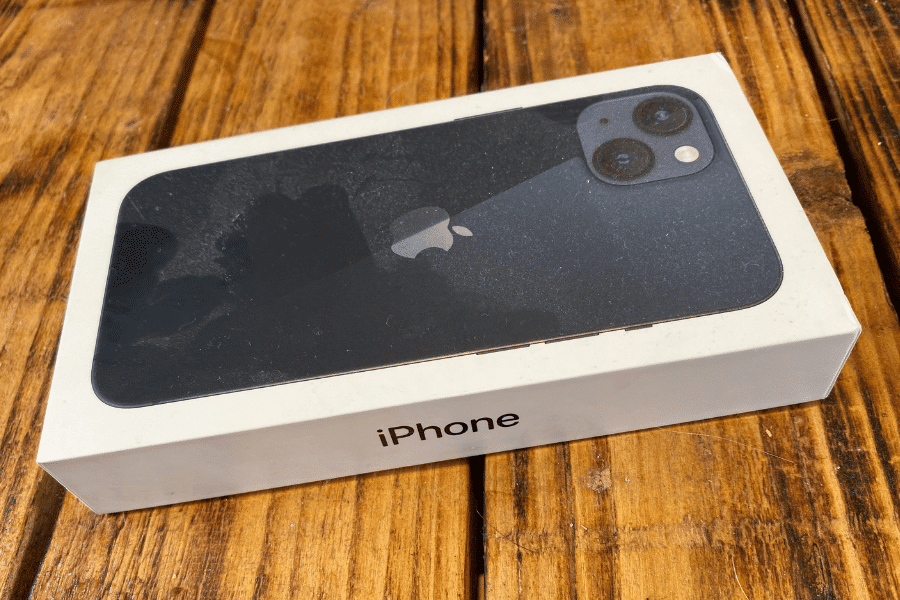
    Most of us spend a good part of our lives glued to our iPhone or other similar devices. It seems as if we cannot survive without being connected to cyberspace.

    It turns out that Apple, a U.S.-based company which makes the iPhone and depends on its sale, cannot survive without being connected to China, which is a key partner in the production of most every iPhone that people use. And that puts the iPhone at the center of the great power struggle underway between the United States and China.

    One of the earliest insights into iPhone production came along in 2010 thanks to research by economists Yuqing Xing and Neal Detert. They lifted the veil off the mystery behind the iPhone label “Designed by Apple in California, Assembled in China”.

    The iPhone model 3G was indeed designed in Cupertino, California, by Apple. But the vast majority of components were sourced from Japan, South Korea, Germany and elsewhere in the United States.  All iPhone components were then shipped for assembly to Foxconn, a Taiwanese contract manufacturer based in Shenzhen, China.

    Less than 4% of the iPhone manufacturing value came from the assembly in China.

    Manufacturing capability

    The iPhone was only first launched in 2007, and iPhones were not sold in China until late 2009. At the time, there was no production of Chinese smartphones. Since those days, the iPhone and other smartphones have become ubiquitous in modern life. Apple now sells 230 million iPhones annually, each one of which has one thousand components and about 90% of them are produced in China.

    Financial Times journalist Patrick McGee, in his recent book “Apple in China“, explained how Apple began assembling iPhones in China for its cheap labour costs but that came with a different cost: China’s labour was not of high quality.

    In contrast to the general impression, China does not have great vocational training systems. So Apple became China’s vocational school.

    Although Apple did not own any factories, it assumed close control over the factories of Foxconn and other companies to ensure its traditional perfectionist quality control. This included sending over planeloads of high-level engineers from the United States to train Chinese workers and investing in machinery for production lines.

    Further, while components from foreign companies are still used in Apple products, these companies are now increasingly based in China. Over time Chinese companies have played a growing role in the production of the iPhone and other devices. Workers from all these companies have also been trained by Apple engineers.

    Over the past decade, Apple invested some $55 billion a year for staff training and machinery. Since 2008, 28 million Chinese have received training from Apple — a figure larger than the workforce of California.

    Human capital

    But there is more to China’s human capital than training offered by Apple. A key element has been China’s investment in human capital more generally, notably education and health.

    Chinese students participating in the OECD’s Programme for International Student Assessment — from Beijing, Shanghai, Jiangsu and Zhejiang, collectively home to nearly 200 million people — have outperformed the majority of students from other education systems, including the United States.

    China has also made extraordinary progress in lifting its life expectancy, which is now the same as that of the United States at 78 years, even though the gross domestic product per capita in the United States  — a key measure of the economic health of a country — at $83,000, is more than six times that of China. For the first time, China has overtaken the United States in healthy life expectancy at birth,  according to World Health Organization data.

    Apple CEO Tim Cook has said that there is a popular conception that companies come to China because of low labour cost. Cook argues that the truth is China stopped being a low labor cost country many years ago.

    He insists that Apple is motivated by the quantity and type of skill that China offers. For example, while it requires really advanced tooling engineers, Cook is not sure the United States could fill a room with such engineers, while in China you could fill multiple football fields. Such vocational expertise is now very, very deep in China.

    India and the United States

    U.S. President Donald Trump insists that Apple must “reshore” its production to the United States. This is not realistic. The United States does not have the capacity to produce Apple’s products at scale and at competitive cost. It most certainly does not have the same competitive cost, well-trained engineering workforce as China, which has some three million people working in Apple’s supply chain.

    Under Trump 1.0, Apple made a commitment to build “three big, beautiful factories” (in Trump’s words) in the United States. But that was just hot air, as none were built. Now, Trump has threatened to impose a 25% tariff on iPhones if they are not made in the United States.

    In response, Apple said that phones sold there would be labelled “Made in India” (although this is unacceptable for Trump), and has pledged to invest $500 billion in the United States. What this pledge means in reality is still unclear. Apple may ultimately need to build a token factory or two, with limited production functions, to pander to Trump.

    Many commentators are suggesting India as an alternative production base for Apple. And some assembly functions are indeed being shifted to India. But these are just the very final assembly phase of production, which are sufficient to justify attaching an “Assembled in India” label.

    All the pre-assembly activities remain in China. At this stage, India is not a viable option for replacing China because of deficiencies in human capital, infrastructure and logistics systems.

    A close partnership

    In many ways, modern China and Apple have made each other.

    Technology and knowledge transfer have underpinned China’s growing contribution to the iPhone and other Apple products — as well as the Chinese smartphone brands like Huawei, Xiaomi and Oppo, which now dominate world markets. Moreover, Chinese engineers are capable of building all sorts of electronic products, some of which could be used in military conflicts.

    In sum, Apple has made a major contribution to the rise of China as a technological powerhouse. China has been a key factor in the rise of Apple as one of the world’s most successful companies. Apple has a Chinese system for producing the iPhone and other products that works like a song.

    No other country has the human capital, and production and logistics systems for producing Apple products at scale and at a competitive cost. Thus, Apple is in a way now trapped in China, which makes it vulnerable to coercion from China’s authoritarian government.

    It should try to make greater efforts to de-risk itself from China, although that is not easy and might provoke the ire of the Chinese authorities.

    Apple now finds itself caught between a rock and a hard place — meaning President Xi and President Trump.


    Questions to consider:

    1. Where is the iPhone made?

    2. What would make a device that is made outside the United States more expensive to buy in the United States?

    3. Should people be able to buy anything from anywhere without any extra costs from governments? Why?


    Source link

  • 7 new and engaging virtual field trips

    7 new and engaging virtual field trips

    Key points:

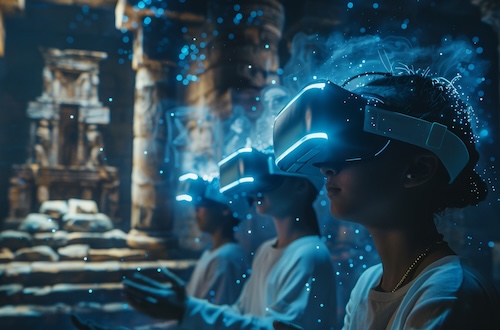
    Virtual field trips have emerged as an engaging resource, offering students immersive experiences and allowing them to explore global landmarks, museums, and natural wonders without leaving their classrooms.​

    Virtual field trips connect students to places that, due to funding, geography, or other logistical challenges, they may not otherwise have a chance to visit or experience.

    These trips promote active engagement, critical thinking, and cater to diverse learning styles. For instance, students can virtually visit the Great Wall of China or delve into the depths of the ocean, fostering a deeper understanding of subjects ranging from history to science.

    If you’re looking for a new virtual field trip to bring to your classroom, here are a few to investigate:

    Giant Panda Cam at the Smithsonian National Zoo: Watch Bao Li and Qing Bao–the two new Giant Pandas at Smithsonian’s National Zoo–as they explore their indoor and outdoor habitats at the David M. Rubenstein Family Giant Panda Habitat. The Giant Panda Cam is live from 7 a.m. to 7 p.m. ET daily. After 7 p.m., the cam feed will switch to a pre-recorded view of the last 12 hours.  

    The Superpower of Story: A Virtual Field Trip to Warner Bros. Studios: Students will go behind the scenes on an exclusive virtual field trip to DC Comics headquarters at Warner Bros. Studios in Burbank, California!.They’ll step into the world of legendary superheroes and blockbuster films, uncovering the secrets of how stories evolve from bold ideas to iconic comics to jaw-dropping live-action spectacles on the big screen. Along the way, they’ll hear from the creative minds who shape the DC Universe and get an insider’s look at the magic that brings their favorite characters to life.

    Mount Vernon: Students can enter different buildings and click on highlighted items or areas for explanations about their significance or what they were used for.

    Arctic Adventures: Polar Bears at Play Virtual Field Trip: Do polar bears play? The LEGO Group’s sustainability team, Polar Bears International, and Discovery Education travel to Churchill Manitoba and the Polar Frontier habitat at the Columbus Zoo and Aquarium in search of polar bears at play. Students will meet polar bears and play experts and uncover how arctic animals use play to learn just like humans, while inspiring students to use their voice to change their planet for the better.

    The Manhattan Project: Join The National WWII Museum for a cross-country virtual expedition to discover the science, sites, and stories of the creation of the atomic bomb. Student reporters examine the revolutionary science of nuclear energy in the Museum’s exhibits and the race to produce an atomic weapon in complete secrecy. 

    The Anne Frank House in VR: Explore the hiding place of Anne Frank and her family in virtual reality using the Anne Frank House VR app. The app provides a very special view into the Secret Annex where Anne Frank and the seven other people hid during WWII. In the VR app, all of the rooms in the Secret Annex are furnished according to how it was when occupied by the group in hiding, between 1942 and 1944. 

    Night Navigators: Build for Bats Virtual Field Trip: Join Discovery Education, the LEGO Group’s Social Responsibility Team, and Bat Conservation International as we travel across Texas and Florida in search of bat habitats. Students will meet play experts as they explore how these nighttime pollinators use play to learn and discover the critical role of bats in protecting farmers’ crops from pests and what we can do to help bats thrive.

    Laura Ascione
    Latest posts by Laura Ascione (see all)

    Source link

  • China-U.S. animosity goes way back

    China-U.S. animosity goes way back

    The United States and China are increasingly at each other’s throats because of deep-seated distrust, a growing range of disputes and festering wounds from the 19th Century. The current deterioration in bilateral relations risks jeopardizing the global economy and could presage a new chapter in post-1945 great-power competition.

    Their mutual antagonism has not been deeper since U.S. President Richard Nixon embarked on a landmark trip to “Red China” in 1972 to pave the way to normalized relations.

    Ahead of the U.S. presidential election on November 3, disputes have flared over the handling of the coronavirus pandemic, Taiwan, the South China Sea, digital security, trade, journalist expulsions and human rights in Xinjiang, Hong Kong and Tibet.

    Some experts describe the rancor as verging on a “new Cold War”, with the potential to disrupt bilateral cooperation in the fight against COVID-19, climate change, terrorism and the spread of nuclear weapons.

    U.S. President Nixon in China

    Nixon traveled to China during the Cold War struggle between the United States and the former Soviet Union. The start of formal ties between China and the United States was a game-changer: the two had been on opposite sides during the Vietnam War, but each was at odds with Moscow.

    The trip set the stage for an effort to shape China’s strategic choices after the upheaval spurred by Chinese Communist Party Chairman Mao Zedong. Mao had sought to instill the spirit of China’s revolution in the younger generation during his tumultuous last decade in power (1966-76).

    Mindful that the two countries’ systems were radically at odds, Nixon said in his 1972 icebreaking toast in Beijing: “If we can find common ground to work together, the chance of world peace is immeasurably increased.”

    Nearly 50 years later, the relationship lies largely in tatters. Tensions have risen in recent days over self-ruled, U.S.-armed Taiwan, which China deems a breakaway province that must return to the fold. Taiwan scrambled fighter jets last week after Chinese aircraft buzzed the island in response to a visit by the highest-level U.S. State Department official in four decades.

    Washington and Beijing have entered into a fundamentally new phase of their relationship, and that strategic distrust between them is likely to intensify regardless of who wins this November’s presidential election,” Kurt Campbell, a former U.S. assistant secretary of state for East Asian and Pacific Affairs, and Ali Wyne of the Atlantic Council’s Scowcroft Center for Strategy and Security, wrote recently.

    Trump and Xi

    Analysts attribute the mounting friction to a more confrontational U.S. administration under U.S. President Donald Trump and a more assertive China under President Xi Jinping.

    Xi became General Secretary of the Chinese Communist Party in 2012 and added the state presidency in March 2013. Later in 2013, China began building military outposts in the contested South China Sea, and Xi launched the Belt and Road Initiative, a vast plan to build infrastructure links — and increase China’s influence — across the globe.

    The China-U.S. rift could put pressure on some nations to choose sides, as during the 1947-91 Cold War, or to tweak the hedging strategies that some have adopted to remain neutral.

    The path to warmer China-U.S. ties is very narrow, “as the required compromises go against the instincts of both countries’ current leaders,” Carnegie Asia research program’s Yukon Huang, a former World Bank country director for China, wrote this month in an analysis.

    Both Xi and Trump came to power with strong populist agendas, each vowing to return their countries to some vision of past greatness. Seeking reelection, Trump has accused his Democratic opponent, former Vice President Joe Biden, of being soft on China.

    “If Joe Biden becomes president, China will own the United States,” Trump said last month.

    COVID provocations

    Referring to COVID-19 by turns as “the China virus,” “Wuhan virus” and “Kung Flu,” Trump has faulted China for “secrecy, deceptions, and cover-up” in its handling of the disease that emerged in the central Chinese city of Wuhan late last year.

    “We must hold accountable the nation which unleashed this plague onto the world, China,” Trump said in taped remarks delivered to the United Nations General Assembly this week. More than 200,000 Americans have died from COVID-19, more than in any other country.

    Xi, in his address to the General Assembly, called for enhanced cooperation over the pandemic and said China had no intention of fighting “either a Cold War or a hot war with any country.”

    At home, Xi cannot afford to appear weak in the face of foreign demands, and he is bound to his signature “Great Chinese dream,” a drive for greater prosperity for the 1.3 billion Chinese, a larger role on the world stage and international respect consistent with China’s military, financial and economic influence.

    Beijing is angry over what it calls foreign provocations, including protests in Hong Kong it claims were stirred by outsiders, growing U.S. arms sales to Taiwan, visits by senior U.S. officials to Taipei and U.S. moves against Chinese companies including telecom giant Huawei and social media apps TikTok and WeChat.

    Hostility in diplomacy

    U.S. Secretary of State Mike Pompeo has stepped up criticism of the ruling Communist Party of China, which he says is seeking global hegemony.

    We must admit a hard truth that should guide us in the years and decades to come,” he said in a July 23 speech at Nixon’s boyhood home and library at Yorba Linda, California.

    “That if we want to have a free 21st century, and not the Chinese century of which Xi Jinping dreams, the old paradigm of blind engagement with China simply won’t get it done. We must not continue it and we must not return to it,” he said.

    Alluding to the 90 million-plus member Chinese Communist party, Pompeo added: “We must also engage and empower the Chinese people – a dynamic, freedom-loving people who are completely distinct from the Chinese Communist Party.”

    In Beijing’s eyes, the Trump administration has been meddling in Chinese internal affairs, threatening its core interests and leading efforts to contain China, which still smarts from what it calls “a century of humiliation,” largely at Western hands.

    “Century of National Humiliation”

    The “long century” of 110 years was marked by carve-ups of Chinese territory by Britain, the United States and other Western powers, as well as by Russia and Japan, from 1839 to 1949, when Mao’s Communist Party seized power after a five-year civil war.

    A trade war that roiled the world in 1839 pitted Britain against China’s Qing Dynasty. Britain had been buying silks, porcelain and tea from China. But Chinese consumers had scant interest in British-made goods, and Britain started running a significant trade deficit with China.

    To address the trade imbalance, British firms began illegally smuggling in Indian-grown opium, fueling drug addiction in China. The balance of trade soon turned in Britain’s favor, but a Chinese crackdown led to the first Opium War between Britain and China from 1839 to 1842.

    After defeating the Chinese in a series of naval conflicts, the British put a series of demands to the weaker Qing Government in what became the Anglo-Chinese Treaty of Nanjing. Not to be outdone, U.S. negotiators sought to conclude a similar treaty with the Chinese to guarantee the United States many of the favorable terms awarded the British, according to “Milestones in the History of U.S. Foreign Relations,” a U.S. State Department publication.

    Long underpinning the Chinese Communist Party’s hold on power have been inequitable treaties, lingering resentment over the earlier era’s losses and extraterritorial laws imposed on China.

    China learnt its lessons from this period of time,” Lu Jingxian, deputy editor of the state-controlled Global Times tabloid, wrote in a column last year. “Lagging leaves you vulnerable to bullying.”

    “Chinese people have walked out of the pathos of century of humiliation, though the West seemingly wants its century of bullying to continue,” he said.

    Meteoric rise

    China stunned the world with the depth and breadth of its economic growth after embracing market-based reforms in 1978, just before formal relations with the United States began in January 1979.

    It is now projected to supplant the United States as the world’s biggest economy by 2030 or 2040. Scholars consider the bilateral relationship to be the 21st Century’s most consequential for the international order.

    China’s meteoric rise began under Deng Xiaoping, who gradually rose to power after Mao’s death and earned the reputation as the architect of modern China. His market-oriented policies transformed one of the world’s oldest civilizations from crushing poverty to a modern powerhouse in military matters, finance, technology and manufacturing.

    China has become the world’s largest manufacturer, merchandise trader, holder of foreign exchange reserves, energy consumer and emitter of greenhouse gases.

    It became the world’s largest economy on a purchasing power parity basis in 2014, according to the McKinsey Global Institute.

    With economic growth averaging almost 10% a year since 1978, China has doubled its Gross Domestic Product every eight years and lifted an estimated 850 million people out of poverty, according to the World Bank.

    China is the largest foreign holder of U.S. Treasury securities, which help fund U.S. federal debt and keep U.S. interest rates low — reflecting the interdependence of the two economies.

    South China Sea

    Since Trump was elected in 2016, tensions have risen in the disputed, resource-rich South China Sea (SCS).

    They spiked in mid-July when the U.S. State Department for the first time formally opposed China’s claim to almost all of these waters, calling it “completely unlawful, as is its campaign of bullying to control them.”

    The United States will keep up the pace of its freedom of navigation operations in the SCS, which hit an all-time high last year, U.S. Defense Secretary Mark Esper said at the time.

    Four Southeast Asian states — Brunei, Malaysia, the Philippines and Vietnam — have maritime claims that conflict with China’s, as does Taiwan. An estimated $3.37 trillion worth of global trade passes through the SCS annually, which accounts for as much as a third of global maritime trade.

    Over the next 18 months, “a let-up in tensions is unlikely,” Ian Storey, co-editor of Contemporary Southeast Asia at Singapore’s ISEAS Yusof Ishak Institute, wrote in a recent survey of the dispute.

    “China and the United States will increase their military activities in the South China Sea, raising the risk of a confrontation,” regardless of who wins the U.S. presidential election, he said.

    Beijing’s actions in the region have strengthened a conviction on the part of some U.S. strategists that Beijing is seeking control of an area of strategic, political and economic importance to the United States and its allies.

    Taiwan

    The future of Taiwan, an island democracy of 23.6 million people, is a core concern for Beijing.

    Taiwan has been ruled separately since Chiang Kai-shek’s Nationalists fled there after losing the Chinese civil war in 1949. Beijing views Taiwan as sovereign territory that must eventually be unified with the mainland.

    Last month, Alex Azar, the U.S. Secretary of Health and Human Services, met President Tsai Ing-wen of Taiwan in the highest-level visit by a U.S. official since Washington cut formal ties to the island in 1979. As a condition for establishing bilateral relations with Beijing at the time, the United States committed to maintaining only unofficial relations with Taiwan.

    In a further poke at Beijing, a senior State Department official traveled to the island this month in another high-profile visit. The decision to send Keith Krach, Under Secretary of State for Economic Growth, Energy and the Environment, amounted to a rebuke of China’s efforts to isolate Taiwan.

    Chinese military drills off Taiwan’s southwest coast this month were a “necessary action” to protect China’s sovereignty, Beijing said on September 16, after Taiwan complained about large-scale Chinese air and naval drills.

    Hong Kong, Xinjiang

    Another rub has involved Hong Kong, a former British colony and a world financial center that was guaranteed a measure of autonomy by China as part of negotiations for its 1997 return from Britain.

    In May, Trump said he was taking steps to end Hong Kong’s preferential trading status with the United States after China enacted a harsh new security law. The law in effect rolls back the semiautonomous status that had been promised to Hong Kong by Beijing under the mantle of “one country, two systems.”

    In June, Beijing threatened retaliation after Trump signed legislation calling for sanctions against those responsible for repression of ethnic Uighurs and other Muslims in western China’s Xinjiang region. The U.S. State Department has accused Chinese officials of subjecting Muslims to torture, abuse and “trying to basically erase their culture and their religion.”

    Trump did not hold a ceremony to mark his signing of the legislation, which came as newspapers published excerpts from a new book by Trump’s former national security adviser John Bolton. Among other allegations, Bolton said Trump sought Xi’s help to win reelection during a closed-door 2019 meeting and that Trump said Xi should go ahead with building camps in Xinjiang.

    Trump and Xi have refrained so far from ad hominem personal attacks on each other, leaving a door ajar for possible one-on-one efforts to halt the deterioration in ties.


    Three questions to consider:

    1. Why have Chinese-U.S. relations spiraled downward?

    2. What are the main concerns of each country?

    3. What are the implications of the situation for the world?



    Source link

  • How market shifts are impacting Chinese agencies

    How market shifts are impacting Chinese agencies

    Since the pandemic, China has experienced a surge in new study abroad companies, particularly in Tier 2 and Tier 3 cities. Consultancies such as Bonard and Sunrise have each confirmed a notable increase in new agency incorporation these past several years.

    However, the total number of students has not recovered as expected post-Covid. This, coupled with the emergence of international education programs in the market, such as foundation courses and 2+2 programs in the public and private sector, has meant that many established study abroad agents are struggling to survive due to rising management costs.

    Consequently, the market looks challenging, increasing the difficulty of student recruitment for foreign institutions that traditionally rely on agencies.

    Challenges for established agencies

    This rapid market expansion has presented challenges for even well-established agencies. Many are struggling to adapt to the changing dynamics. For instance, a prominent agency reported that many of their counsellors are earning minimal salaries due to declining client numbers and difficulties in securing new business. This highlights the increasing pressure on agencies to remain competitive in this rapidly evolving market.

    Fundamentally, the challenges for established agencies arise from cost and revenue pressures. Costs include tax, venue, human resources, and promotions, with human resources and promotion being the most critical.

    Agencies need professional personnel to maintain service standards and capacity in the labour-intensive study abroad industry. Promotion methods have changed rapidly in the past five years. Social media platforms and short-form video platforms have gained prominence, often becoming more important than search engines and other traditional methods.

    Fundamentally, the challenges for established agencies arise from cost and revenue pressure

    Furthermore, these new marketing channels tend to favour personal profiles over organisational accounts. This is largely due to the platforms’ recommendation algorithms. Moreover, many counsellors are not comfortable appearing on camera, despite possessing extensive experience and professional knowledge, they lack the skills and topics to capture audience attention.

    On the revenue side, acquiring customers is even more difficult than in the pre-Covid period. Customers are becoming more price-sensitive and are increasingly willing to work with smaller study abroad studios for personalised services.

    The impact of enhanced information accessibility

    The rise of digital platforms has fundamentally altered the information landscape for prospective students. With readily available information on social media platforms such as WeChat, Redbook, and TikTok, students and parents are now empowered to conduct independent research on universities, read reviews, and even connect with current students.

    This increased access to information has lessened the reliance on traditional agency channels. In some cases, agents also find themselves competing with university marketing and recruitment teams who support students directly.

    The rise of master agents and aggregators

    In response to these market shifts, many established agencies have transitioned to the “master agent” or “aggregator” model. This involves acting as intermediaries between universities and smaller agencies, facilitating student recruitment while generating additional revenue streams. However, this model presents challenges for universities, particularly those with lower rankings.

    Mingze Sang clarifies” “I would refer to aggregators as international university resource-holders or platforms.” Aggregators have existed in China for a while. However, the “risen” aggregators are often new agencies with strong connections to some foreign educators, enabling them to offer special programs. Some aggregators take the stance: “Every university is welcome on my platform. It’s up to you whether you can attract students.”

    The number of agencies and agents is increasing, while the number of students is not growing at the same rate. Therefore, the market is transforming into a resource-driven one.

    Aggregators have existed in China for a while. However, the “risen” aggregators are often new agencies with strong connections to some foreign educators, enabling them to offer special programs

    Currently, many parents and students in China are seeking the best outcomes with the least investment. Consequently, those with strong connections to well-ranking universities and who can provide special programs to students are highly sought after. Regarding the traditional aggregators in China, who have been present for at least 15 years, the competition is even more fierce than among agencies. They are struggling with issues such as commission percentages and counselling services, and are focused on survival rather than growth.

    Evolving student and parent priorities

    The priorities of Chinese students and parents have also undergone significant evolution. While university rankings were once the primary determinant, factors such as career prospects, student experience, and the quality of life in the chosen city are now gaining greater importance. This necessitates a more nuanced and student-centric approach to recruitment.

    Sang observes that the priorities of parents and students are employment after graduation. University rankings remain a key factor influencing their employment decisions. With foreign enterprises departing China and private companies facing challenges, parents often favour employers “in the system,” such as state-owned enterprises, hospitals, and universities. University ranking is crucial for standing out in a competitive job market. Furthermore, parents increasingly inquire about graduation requirements and the difficulty level of graduation.

    Student motivations

    Economic factors are influencing student choices in China. Post-Covid economic challenges have increased demand for international courses offered locally. These programs, offering global qualifications without the necessity of overseas travel, are attractive to many. Transnational education (TNE) programs are becoming more selective, enhancing their reputation and attracting students seeking high-quality international education experiences.

    As Sang notes: “Excellent students are seeking top universities with specialised majors. Average students are seeking top universities regardless of majors. Below average students are seeking degrees, prefer to go abroad as late as possible, and desire special, safe, and affordable services.”

    How universities can navigate the market

    Foreign institutions hoping to maintain a strong presence in China must evolve with the market. The traditional reliance on agencies is no longer sufficient. Instead, universities must:

    • Explore new opportunities beyond agency recruitment, diversifying their approach to attract Chinese students through multiple channels.
    • Invest in TNE partnerships, including 2+2 programs, foundation courses, and collaborations with Chinese universities, which provide direct access to students without heavy reliance on agencies.
    • Develop strong institutional collaborations with international schools in China, positioning themselves as trusted higher education pathways for students already enrolled in globally focused secondary education.
    • Leverage digital spaces effectively by producing compelling, authentic content that speaks directly to students and parents.
    • Enhance student experiences to attract and retain international talent.
    • Embrace innovation through virtual campus tours, interactive Q&A sessions, and personalised communication.

    Sang concludes: “For those well-ranking universities, such as the Australian Group of Eight, focus on ranking, maintain reasonable commissions, and be strict on graduation but not overly harsh on enrolment.

    “For those lower-ranking universities, spend more time engaging with Chinese colleges and universities; as there are thousands of them in China, be flexible when dealing with universities, and rely on a bit of luck.”

    Source link