

Category: choose

  • Do screens help or hurt K-8 learning? Lessons from the UK’s OPAL program

    Do screens help or hurt K-8 learning? Lessons from the UK’s OPAL program

    Key points:

    When our leadership team at Firthmoor Primary met with an OPAL (Outdoor Play and Learning) representative, one message came through clearly: “Play isn’t a break from learning, it is learning.”

    As she flipped through slides, we saw examples from other schools where playgrounds were transformed into hubs of creativity. There were “play stations” where children could build, imagine, and collaborate. One that stood out for me was the simple addition of a music station, where children could dance to songs during break time, turning recess into an outlet for joy, self-expression, and community.

    The OPAL program is not about giving children “more time off.” It’s about making play purposeful, inclusive, and developmental. At Firthmoor, our head teacher has made OPAL part of the long-term school plan, ensuring that playtime builds creativity, resilience, and social skills just as much as lessons in the classroom.

    After seeing these OPAL examples, I couldn’t help but think about how different this vision is from what dominates the conversation in so many schools: technology. While OPAL emphasizes unstructured play, movement, and creativity, most education systems, both in the UK and abroad, are under pressure to adopt more edtech. The argument is that early access to screens helps children personalize their learning, build digital fluency, and prepare for a future where tech skills are essential.

    But what happens when those two philosophies collide?

    On one side, programs like OPAL remind us that children need hands-on experiences, imagination, and social connection–skills that can’t be replaced by a tablet. On the other, schools around the world are racing to keep pace with the digital age.

    Even in Silicon Valley, where tech innovation is born, schools like the Waldorf School of the Peninsula have chosen to go screen-free in early years. Their reasoning echoes OPAL’s ethos: Creativity and deep human interaction lay stronger cognitive and emotional foundations than any app can provide.

    Research supports this caution. The Royal College of Paediatrics and Child Health advises parents and schools to carefully balance screen use with physical activity, sleep, and family interaction. And in 2023, UNESCO warned that “not all edtech improves learning outcomes, and some displace play and social interaction.” Similarly, the OECD’s 2021 report found that heavy screen use among 10-year-olds correlated with lower well-being scores, highlighting the risks of relying too heavily on devices in the early years.

    As a governor, I see both sides: the enthusiasm for digital tools that promise engagement and efficiency, and the concern for children’s well-being and readiness for lifelong learning. OPAL has made me think about what kind of foundations we want to lay before layering on technology.

    So where does this leave us? For me, the OPAL initiative at Firthmoor is a powerful reminder that education doesn’t have to be an either/or choice between tech and tradition. The real challenge is balance.

    This raises important questions for all of us in education:

    • When is the right time to introduce technology?
    • How do we balance digital fluency with the need for deep, human-centered learning?
    • Where do we draw the line between screens and play, and who gets to decide?

    This is a conversation not just for educators, but for parents, policymakers, and communities. How do we want the next generation to learn, play, and thrive?

    Latest posts by eSchool Media Contributors (see all)

    Source link

  • Almost 2,000 Schools and Districts Choose Lexia® English Language Development™ to Support Emergent Bilingual Students’ English Language Acquisition

    Almost 2,000 Schools and Districts Choose Lexia® English Language Development™ to Support Emergent Bilingual Students’ English Language Acquisition

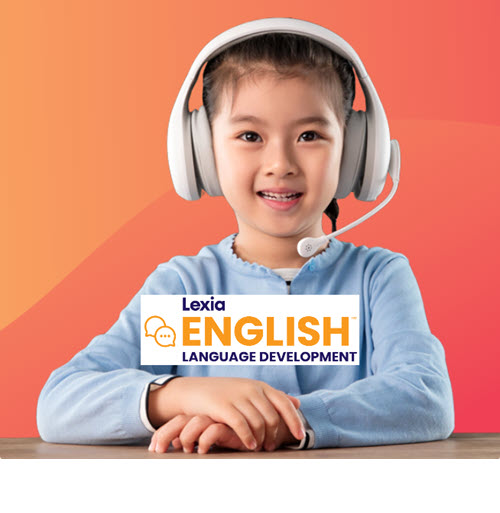
    BOSTON (March 31, 2025) – In recent months, almost 2,000 schools and districts have purchased or renewed licenses for Lexia English Language Development (Lexia English) from Lexia, a Cambium Learning Group brand. Using powerful speech recognition technology, the program supports students in grades K-6 to build their linguistic confidence in academic English.

    “More than 162,000 students and 77,000 educators at 7,400 schools used the program during the 2024 school year. In addition, those students practiced academic conversations 4.3 million times in the program,” said Lexia President, Nick Gaehde. “The numbers show just how much students and educators have needed access to a culturally responsive language learning solution.”

    One of those educators who used the program is Lynmara Colón, the director of Student Opportunity and Multilingual Services at Prince William County Schools in Virginia. After a pilot, the district has allowed individual middle and elementary schools to purchase Lexia English during the 2024-2025 school year. Prince William County Schools serves more than 20,000 English learners who speak 140 languages. “We are the 10th most diverse district in the nation,” Colón said. “But when I try to find tools for diverse students, there’s not a lot that meets the specific needs of the student population we serve.”

    Colón noted that the program had boosted student growth to the point of reducing her worries about providing staff with a high-quality tool focused on helping Emergent Bilingual students. She expressed appreciation for the way the program helps her forecast and make sense of language acquisition data. “With Lexia, I can have visibility into how they’re doing with language comprehension,” she said. “I always know to expect the best from our Lexia partners. I have high expectations, and they never disappoint.”

    Lexia English’s approach to English language learning is to empower emergent bilinguals by honoring their heritage languages and offering culturally responsive, adaptive learning pathways to foster academic and linguistic growth. Seventeen characters with diverse backgrounds help students practice speaking skills by engaging with content in academic subjects such as math, science, social studies, and general knowledge.

    Gaehde concluded, “With Lexia English, educators can celebrate multilingualism in the classroom, providing students with the tools to succeed in both English language development and overall academic achievement.”

    About Lexia

    Lexia®, a Cambium Learning® Group brand, is transforming literacy education, driving change in 1 of every 3 school districts across the United States. For more than 40 years, Lexia has been a thought leader in literacy education, delivering award-winning, research-based solutions grounded in the science of reading. With a full spectrum of offerings, including professional learning, curriculum, and embedded assessment tools, Lexia provides educators with Structured Literacy solutions that are proven effective and designed to drive meaningful literacy outcomes. By empowering educators with unparalleled ease of use and the knowledge and tools they need, Lexia helps more students unlock their potential to read, write, and speak with confidence. For more information, visit lexialearning.com.

    About Cambium Learning Group

    Cambium Learning Group is the education essentials company, providing award-winning education technology and services for K-12 educators and students. With an intentional collection of respected global brands, Cambium serves as a leader, helping millions of educators and students feel more seen, valued, and supported every day. In everything it does, the company focuses on the elements that are most essential to the success of education, delivering simpler, more certain solutions that make a meaningful difference right now.

    To learn more, visit www.cambiumlearning.com or follow Cambium on Facebook, LinkedIn, and X. The Cambium family of brands includes: Cambium Assessment®, Lexia®, Learning A-Z®, ExploreLearning®, and Time4Learning®.

    eSchool News Staff
    Latest posts by eSchool News Staff (see all)


    Source link