
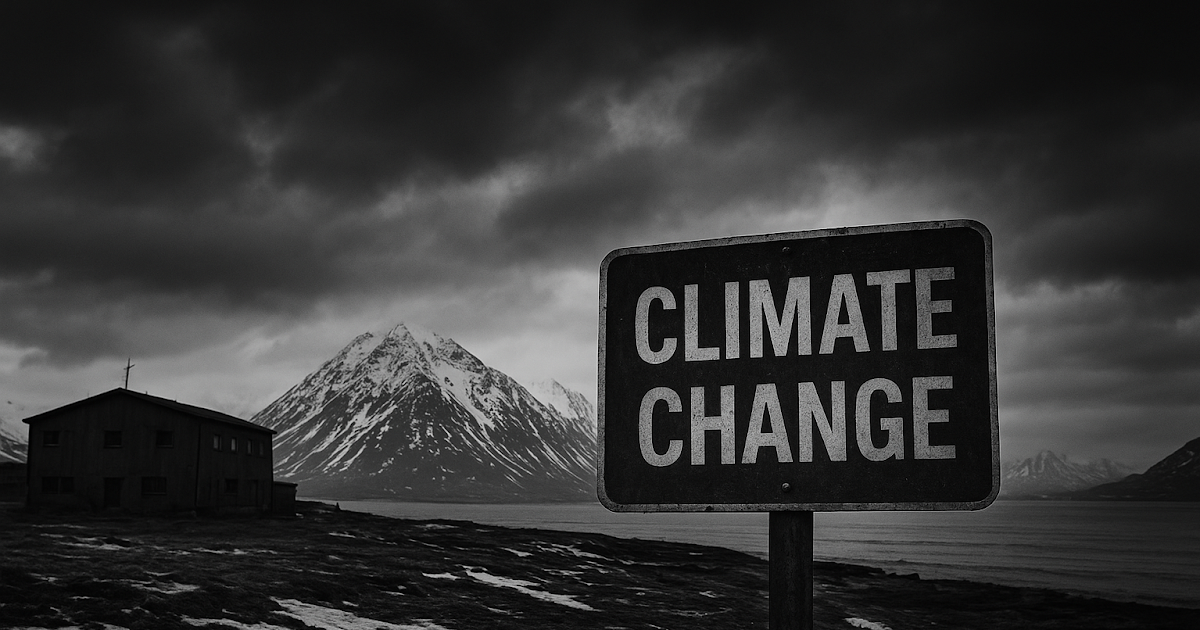
Alaska’s higher-ed story is a preview of the national “College Meltdown,” only starker. The University of Alaska (UA) system—Anchorage, Fairbanks, and Southeast—has endured a decade of enrollment erosion and austerity politics, punctuated by a 2019 budget crisis that forced regents to declare financial exigency and consider consolidations. The immediate trigger was a proposed $130+ million state cut, later converted into a three-year reduction compact; the long tail is a weakened public research engine in the very state where climate change is moving fastest.
In 2025 the vise tightened again from Washington. UA’s president told regents that more than $50 million in grants had been frozen or canceled under the Trump administration, warning of staff cuts and program impacts if funds failed to materialize. Those freezes were part of a broader chill: federal agencies stepping back from research that even references climate change, just as the Arctic’s transformation accelerates.
This is not an abstract loss. Alaska is the frontline laboratory of global warming: thawing permafrost, vanishing sea ice, collapsing coastal bluffs. UA’s scientists have documented these trends in successive “Alaska’s Changing Environment” assessments; the 2024 update underscores rapid, measurable shifts across temperature, sea ice, wildfire, hydrology, and ecosystems. When the main public research institution loses people and projects, the United States loses the data and know-how it needs to respond.
Climate denial collides with national security
The contradiction at the heart of federal policy is glaring. On one hand, the Trump administration has proposed opening vast swaths of Alaska’s National Petroleum Reserve to drilling and reversing environmental protections—signaling a bet on fossil expansion in a region already warming at double the global rate. On the other hand, the same administration is curtailing climate and Arctic science, even as military planners warn that the Arctic is becoming a contested theater. You can’t secure what you refuse to measure.
The security stakes are real. Russia has spent the past decade refurbishing Soviet-era bases, deploying ice-capable vessels, and leveraging energy projects along the Northern Sea Route (NSR). China has declared itself a “near-Arctic” power and partnered with Moscow on patrols and infrastructure. Meanwhile, the U.S. remains short on icebreakers and Arctic domain awareness—even as traffic through high-latitude passages grows more plausible in low-ice summers. Analysts project that a meaningful share of global shipping could shift north by mid-century, and recent reporting shows the region is already a strategic flashpoint.
That makes UA’s expertise more than a local asset; it’s a pillar of U.S. national security. The University of Alaska Fairbanks hosts the Center for Arctic Security and Resilience (CASR) and degree pathways that fuse climate, emergency management, and security studies—exactly the interdisciplinary skill set defense, Coast Guard, and civil authorities will need as sea lanes open and storms, fires, and thaw-related failures multiply. Undercut these programs, and you undercut America’s ability to see, interpret, and act in the Arctic.
The costs of disinvestment
The 2019 state-level cuts did immediate damage—hiring freezes, program reviews, and fears of accreditation changes—but their larger effect was to signal instability to students, faculty, and funders. Austerity invites a spiral: as programs and personnel disappear, grant competitiveness slips; as labs lose continuity, agencies look elsewhere; as uncertainty grows, students choose out-of-state options. UA leadership has tried to reverse course—prioritizing enrollment, retention, and workforce alignment in recent budgets—but it’s difficult to rebuild a research reputation once the pipeline of projects and people is disrupted.
The 2025 federal freezes amplify that spiral by hitting precisely the projects that matter most: those with “climate” in the title. Researchers report program cancellations and re-scoped solicitations across agencies. That kind of ideological filter doesn’t just reduce funding—it distorts the evidence base that communities, tribal governments, and emergency planners depend on for everything from permafrost-safe housing to coastal relocation plans. It also weakens U.S. credibility in Arctic diplomacy at a time when the Arctic Council is strained and cooperation with Russia is largely stalled.
Why this matters beyond Alaska
Think of UA as America’s northern early-warning system. Its glaciologists, sea-ice modelers, fire scientists, and social scientists collect the longitudinal datasets that turn anecdotes into policy-relevant knowledge. Lose continuity, and you lose the ability to detect regime shifts—abrupt ecosystem changes, cascading infrastructure failures from thaw, new navigation windows that alter shipping economics and risk. Those changes feed directly into maritime safety, domain awareness, and the rules-of-the-road that will govern the NSR and other passages.
Meanwhile, federal moves to expand Arctic drilling create additional operational burdens for emergency response and environmental monitoring—burdens that fall on the same universities being told to do more with less. Opening the door to long-lived oil projects while throttling climate and environmental research is a recipe for higher spill risk, poorer oversight, and costlier disasters.
A pragmatic way forward
Three steps could stabilize UA and, by extension, America’s Arctic posture:
-
Firewall climate science from political interference. Agencies should fund Arctic research on merit, not language policing. Reinstating paused grants and re-issuing climate-related solicitations would immediately restore capacity in labs and field stations.
-
Treat UA as critical national infrastructure. Just as the U.S. is racing to modernize radar and add icebreakers, it should invest in Arctic science and workforce pipelines at UA—scholarships tied to Coast Guard and NOAA service, ship time for sea-ice and fisheries research, and support for Indigenous knowledge partnerships that improve on-the-ground resilience.
-
Align energy decisions with security reality. Every new Arctic extraction project increases environmental and emergency-response exposure in a region where capacity is thin. If policymakers proceed, they owe UA and Alaska communities the monitoring, baseline studies, and response investments that only a healthy public research university can sustain.
The paradox of the College Meltdown is that it hits hardest where public knowledge is most needed. In the Lower 48, that might mean fewer nurses or teachers. In Alaska, it means flying blind in a rapidly changing theater where Russia and China are already maneuvering and where coastlines, sea ice, and permafrost are literally moving under our feet. The University of Alaska is not a nice-to-have. It is how the United States knows what is happening in the Arctic—and how it prepares for what’s next. Weakening it in the name of budget discipline or culture-war messaging is not just shortsighted. It’s a security risk.
Sources
-
University of Alaska Office of the President, FY2020 budget overview (state veto and reductions).
-
University of Alaska Public Affairs timeline (2019 exigency and consolidation actions).
-
Alaska Department of Administration, Dunleavy–UA three-year compact (2019).
-
Anchorage Daily News, “$50M in grants frozen under Trump administration” (May 28, 2025).
-
The Guardian, “Outcry as Trump withdraws support for research that mentions ‘climate’” (Feb. 21, 2025).
-
UA/ACCAP, Alaska’s Changing Environment 2.0 (2024 update).
-
UAF Center for Arctic Security and Resilience (programs and mission).
-
Empower Alaska: UA Arctic expertise overview.
-
Wall Street Journal, Russia/China Arctic power projection and U.S. capability gaps (Feb. 2025).
-
The Arctic Institute, shipping projections for the Northern Sea Route.
-
Arctic Review on Law and Politics, vulnerabilities and governance challenges on the NSR.
-
The Guardian, rollback of protections in the National Petroleum Reserve–Alaska (Aug. 2025).
-
Alaska Public Media, uneven cuts to Arctic research under Trump (Apr. 2025).

.jpg)