Category: climate change

  • Saying goodbye to our glaciers

    Saying goodbye to our glaciers

    Across the world two billion people — around a quarter of the world’s population — depend on glaciers for water to irrigate fields for agriculture, provide drinking water and to generate electricity.

    But these glaciers are melting before our eyes.

    Consider that 10% of Iceland is covered by glaciers but that is 1% less than a decade ago. That percentage will continue to decrease as the rate of change due to global warming has become dramatic.

    Glaciers are so iconic in Iceland that when one collapses, people hold a funeral. 

    It’s a ceremony created for humans to make people aware about the urgency of global warming. And it’s a poetic way of marking the end of one of nature’s most inspiring creations.

    A land where ice is prized

    The first funeral for a glacier took place in 2019. It was for Okjökull glacier, the smallest glacier in a land that is dominated by ice and snow. 

    Okjökull glacier, popularly known as Ok, was only a modest 15 square kilometres big and had been shrinking for decades. Icelanders regarded diminutive Ok with affection, even making it a character in children’s book. 

    So the emotional impact of watching Ok vanish was felt not only by the locals who had grown up with the glacier, but across Iceland. Icelanders are brought up learning songs and sagas about their spectacular island. The snowpack of their glaciers creates the wild rolling rivers and massive waterfalls throughout the island before the flow tumbles into the stormy North Atlantic.

    Now on the hill which had been covered by Okjökull is a rock with a brass plate with urgent words from Icelandic poet Andri Snær Magnason.

    A LETTER TO THE FUTURE

    Vatnajökull ice cap and parts of Hofsjökull ice cap, Iceland in September 2022. (Credit: Pierre Markuse via Wikimedia Commons)

    Ok is the first Icelandic glacier to lose its status as a glacier. In the next 200 years all our glaciers are expected to follow the same path.
    This monument is to acknowledge that we know
    what is happening and what needs to be done.
    Only you will know if we did it.

    Ice loss in Iceland

    Tiny Okjökull was nothing compared to the largest glacier in Iceland — and in Europe — the Vatnajökull ice cap.

    Despite its mass, scientists estimate that nine million litres of Vatnajökull’s glacial ice are being turned into water every minute. 

    The lakes and ice lagoons downstream of Vatnajökull, filled by meltwater, are bigger every year as the glacier itself shrinks.

    So should there be funerals for glaciers?

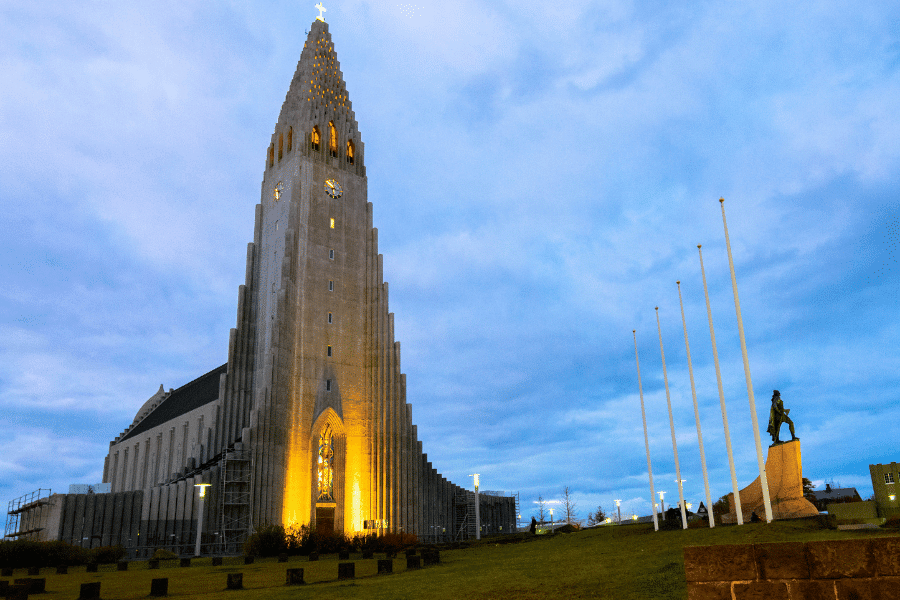
    Sigurdur Arni Thordarson, the pastor of Hallgrímskirkja Church in Iceland thinks so. His church was built to resemble the mountains and glaciers of Iceland and dominates the Reykjavík skyline.

    “For humans, the loss of a glacier is a real loss,” Thordarson said. “People who have a deep understanding and awareness of interconnectedness of life really feel the necessity of expressing the grief.”

    Snow melt in the Alps

    It seems a widespread sentiment. A few months after the ceremony in Iceland, hikers, many dressed in black, gathered on Pizol glacier in the Swiss Alps to listen as a priest gave a funeral service. 

    Another ceremony followed in 2020 for Clark Glacier in Oregon and soon after on a Mexican glacier named Ayoloco by the Aztecs. The Mexican geologists and ecologists who marked the day used the words written by Andri Snær Magnason that commemorate Okjökull.

    Crossing into another culture, Buddhists monks in Nepal held an ‘ice funeral’ in the Himalayas in May 2025 for Yala Glacier which had shrunk by two thirds in the past several decades. Attended by locals and climate scientists they gathered under traditional prayer flags across from the last visible ice. Even Yala’s altitude over 5,000 metres was no protection against deglaciation

    Two granite stones now mark the spot of the ceremony. One with the words of Magnason from Iceland, the other with an inscription from Nepali poet Manjushree Thapa:

    Hallgrimskirkja Church

    Hallgrímskirkja Church in Reykjavík, Iceland. (Credit: Mattias Hill via Wikimedia Commons)

    Yala, where the gods dream high in the mountains, where the cold is divine.
    Dream of life in rock, sediment, and snow, in the pulverizing ofice and earth, in meltwater pools the colour of sky. 
    Dream. Dream of a glacier and the civilizations downstream.

    In all these commemorations, Magnason’s alarm from Iceland have been echoed:

    …We know what is happening and what needs to be done. Only you will know if we did it.

    The Third Pole

    The glaciers in the Himalayas are sometimes called the ‘Third Pole’ because they account for the most ice after the Arctic and Antarctica. 

    Around the world glaciers are melting faster than ever recorded but the Himalayas are warming at a higher rate than the global average, up to 65% faster. The Himalaya glaciers feed some of the great rivers of Asia — the Ganges, Indus, Brahmaputra and Yangtze rivers which flow through some of the most populated areas on the planet. 

    The consequences of disappearing glaciers are starting to be felt. Mexican climate scientists who attended the Ayoloco ceremony pointed out that “without large ice masses on mountain peaks temperatures will increase.”

    All of our planet was created by massive geologic forces. Those forces are more easily observable in Iceland, being one of the newest land masses to be created on Earth. It is an island nation that was created by volcanoes but sculpted and defined by glaciers. It may be fitting that, in addition to the first glacier funeral ever held, the first Glacier Graveyard was created in 2024, to mark extinct glaciers and provide a reminder of what is at stake. 

    The glaciers remembered were taken from the first Global Glacier Casualty List. Soon after, the United Nations declared 2025 the International Year of Glacier Preservation. Now, all fifteen tombstones carved from ice to mark those vanished glaciers have melted.


    Questions to consider: 

    1. Should glaciers, like some rivers which have been granted legal rights, be regarded as living creatures?

    2. Does a ceremony like a funeral provide an inspiration for climate activism?

    3. What natural formations or environmental places are important to you? 


    Source link

  • Is climate change carcinogenic?

    Is climate change carcinogenic?

    A study in California this year found that cancer patients were much more likely to die from the disease if they breathed in air pollution from wildfires a year after their diagnosis. 

    In 2020, flooding in Spain caused by Storm Gloria forced 118 cancer patients to cancel their radiotherapy treatment. And in 2019, researchers from the University of Michigan found a higher death rate among adult cancer patients who were affected by Hurricane Katrina. 

    It turns out that in many ways, climate change affects our health. We can see this directly when looking at cancer — something that affects one in five people around the world directly, and just about everyone else connected to those people indirectly.

    I know this first hand. Four years ago a close family member was diagnosed with cancer. It made me wonder: What could we have done to prevent it? Was it something they ate? Their amount of exercise? 

    At the time, we were living in South Korea, a country notorious for its heavy air pollution days, and I couldn’t help but wonder if that might have had an impact on the diagnosis. 

    Then, as I watched them go through multiple recurrences of cancer, the question gradually evolved into this: How can you ensure successful cancer treatment? And subsequently, how can you ensure that everyone has access to safe cancer treatment?

    Supply chain disruptions

    It turns out that air pollution isn’t the only problem. Extreme weather events caused by climate change can disrupt supply chains which results in shortages of critical medical supplies.

    In 2017, an intravenous fluid manufacturing company in Puerto Rico, for example, was destroyed by Hurricane Maria. The company was a major supplier of IV fluids for hospitals in the United States and the destruction led to a shortage in essential IV fluids. 

    In an attempt to investigate further, I contacted Dr. Kishan Gupta, a specialist in comprehensive ophthalmology, cornea and external diseases, at the Kaiser Downey Medical Center in California. Over a WhatsApp chat, he told me that Hurricane Maria not only led to major disruptions in eye drop manufacturing but also in IV saline for surgery and intraoperative anesthetics at his hospital. 

    Dr. David Kim, an orthopedic surgeon at the Worcester Medical Center in the U.S. state of Massachusetts, then told me that when IV supplies are disrupted, all surgeries that require such fluids are delayed — anything from hand and hip replacement surgeries to the removal of cancer tumors.

    IV saline and intraoperative anesthetics are crucial for cancer patients, especially IV saline, which helps to dilute toxic fluids and dehydration as a result of chemotherapy.

    Medical needs not met

    Crucially, climate change-induced extreme weather events damage infrastructure, preventing important medical equipment and supplies from reaching destined locations at an appropriate time.

    On the note of promptness, one of cancer’s most threatening characteristics is its fast, uncontrolled growth. In the field of medicine, this means that cancer treatment must be administered at the correct time, with the correct steps. 

    After Hurricane Maria in Puerto Rico, a 70% cancel rate was observed for brachytherapy, a form of radiation therapy. In Mexico after the 2017 earthquake, cancer surgeries were canceled with a median delay of 22.5 days

    During natural disasters, transportation networks and electrical systems break down. This means that people are unable to get to their hospital for treatment, and additionally, treatments like radiation which depend on electricity, can’t be administered.

    The COVID-19 pandemic, while not a climate change-induced event, showed what happens when supply chains break down. Needed supplies of everything from towels to anti-septic solutions became unavailable and as a result, people died.

    Lack of blood donors

    Of course, cancer isn’t the only health concern related to climate change. Rising temperatures and more frequent natural disasters can create favorable conditions for insects such as ticks and mosquitoes that transmit harmful pathogens. 

    Hurricanes, tornados and other extreme weather events also discourage people from traveling and that can cause a consequent lack in blood donations at hospitals, according to Dr. Sung Eun Yang at the Kaiser Panorama City Medical Center in California. “Blood and blood products are a limited precious resource,” Dr Yang said. “Donor turn out may be dependent on the weather. I recall in Boston we had a terrible winter storm with no donor turn out and experienced significant shortages in blood products.”

    In the United States, roughly 25% of blood donations in the United States go to cancer treatments. 

    Furthermore, it turns out that severe heat and humidity can affect medications — how they operate or their very properties. A number of common cancer medications are highly heat-sensitive. This means that as the Earth’ s climate warms, cancer patients who live in hot places will have a more difficult time storing and accessing safe medication, particularly in economically poor areas that can’t invest in energy-consuming storage. But even those in wealthier, cooler countries will be affected if they import products from those regions. 

    Finally, because of climate change, we are also seeing an increase in wildfires due to extreme and sustained drought conditions and wildfires too, ultimately leading to increases in cancer. 

    For instance, cancer is the number one cause of death in the fire fighting industry, accounting for 70% of all deaths.  

    Where there’s smoke, there’s cancer?

    Harvard University researcher Mary Johnson told the publication E&E News this year that potentially harmful chemicals are released every time a structure burns.

    “Plumbing has copper and lead in it,” she stated. “Paint has toxic chemicals. Electronics, plastics have really nasty stuff in them. All these chemicals we don’t think of occurring in a wildland fire are now part of the smoke.”

    So what can we do? 

    In preparation for all potential disasters, hospitals could have a disaster plan to help ensure that patients receive any and all important data during a future disaster. For example, the United States Department of Health and Human services has released a study on the efficacy of electronic health records during disasters. If a storm is forecasted in a region, an electronic emergency chart could be made for each patient. This plan could also come in the form of new infrastructure or mechanisms meant to keep the hospital safe from floods or fires. 

    Patients should also be provided with alternate ways to access healthcare information in order to connect with local healthcare teams, and the American Association of Colleges of Nursing recently added climate change education to the list of required skills for nursing education programs. 

    Finally, past cancer survivors of disasters have suggested that countries like Puerto Rico can be more prepared and adaptable in terms of exploring alternatives like renewable energy, that aren’t as susceptible to power outages from storms. 

    As the climate deteriorates, our responsibility in pushing back against the climate crisis will expand in multiple ways. 

    Our health and the health of the people we love will depend on the health of our planet. That means that it is our responsibility to protect ourselves, our loved ones and all of those currently battling cancer from climate change.


    Questions to consider:

    1. What connection is there between climate change and cancer rates?

    2. What can be done to keep people from dying of climate-change related cancer?

    3. What, if anything, can you do to help cool down our planet?


    Source link

  • Alaska’s Colleges at the Meltdown’s Edge—Just as the Arctic Heats Up

    Alaska’s Colleges at the Meltdown’s Edge—Just as the Arctic Heats Up

    Alaska’s higher-ed story is a preview of the national “College Meltdown,” only starker. The University of Alaska (UA) system—Anchorage, Fairbanks, and Southeast—has endured a decade of enrollment erosion and austerity politics, punctuated by a 2019 budget crisis that forced regents to declare financial exigency and consider consolidations. The immediate trigger was a proposed $130+ million state cut, later converted into a three-year reduction compact; the long tail is a weakened public research engine in the very state where climate change is moving fastest.

    In 2025 the vise tightened again from Washington. UA’s president told regents that more than $50 million in grants had been frozen or canceled under the Trump administration, warning of staff cuts and program impacts if funds failed to materialize. Those freezes were part of a broader chill: federal agencies stepping back from research that even references climate change, just as the Arctic’s transformation accelerates.

    This is not an abstract loss. Alaska is the frontline laboratory of global warming: thawing permafrost, vanishing sea ice, collapsing coastal bluffs. UA’s scientists have documented these trends in successive “Alaska’s Changing Environment” assessments; the 2024 update underscores rapid, measurable shifts across temperature, sea ice, wildfire, hydrology, and ecosystems. When the main public research institution loses people and projects, the United States loses the data and know-how it needs to respond.

    Climate denial collides with national security

    The contradiction at the heart of federal policy is glaring. On one hand, the Trump administration has proposed opening vast swaths of Alaska’s National Petroleum Reserve to drilling and reversing environmental protections—signaling a bet on fossil expansion in a region already warming at double the global rate. On the other hand, the same administration is curtailing climate and Arctic science, even as military planners warn that the Arctic is becoming a contested theater. You can’t secure what you refuse to measure.

    The security stakes are real. Russia has spent the past decade refurbishing Soviet-era bases, deploying ice-capable vessels, and leveraging energy projects along the Northern Sea Route (NSR). China has declared itself a “near-Arctic” power and partnered with Moscow on patrols and infrastructure. Meanwhile, the U.S. remains short on icebreakers and Arctic domain awareness—even as traffic through high-latitude passages grows more plausible in low-ice summers. Analysts project that a meaningful share of global shipping could shift north by mid-century, and recent reporting shows the region is already a strategic flashpoint.

    That makes UA’s expertise more than a local asset; it’s a pillar of U.S. national security. The University of Alaska Fairbanks hosts the Center for Arctic Security and Resilience (CASR) and degree pathways that fuse climate, emergency management, and security studies—exactly the interdisciplinary skill set defense, Coast Guard, and civil authorities will need as sea lanes open and storms, fires, and thaw-related failures multiply. Undercut these programs, and you undercut America’s ability to see, interpret, and act in the Arctic.

    The costs of disinvestment

    The 2019 state-level cuts did immediate damage—hiring freezes, program reviews, and fears of accreditation changes—but their larger effect was to signal instability to students, faculty, and funders. Austerity invites a spiral: as programs and personnel disappear, grant competitiveness slips; as labs lose continuity, agencies look elsewhere; as uncertainty grows, students choose out-of-state options. UA leadership has tried to reverse course—prioritizing enrollment, retention, and workforce alignment in recent budgets—but it’s difficult to rebuild a research reputation once the pipeline of projects and people is disrupted.

    The 2025 federal freezes amplify that spiral by hitting precisely the projects that matter most: those with “climate” in the title. Researchers report program cancellations and re-scoped solicitations across agencies. That kind of ideological filter doesn’t just reduce funding—it distorts the evidence base that communities, tribal governments, and emergency planners depend on for everything from permafrost-safe housing to coastal relocation plans. It also weakens U.S. credibility in Arctic diplomacy at a time when the Arctic Council is strained and cooperation with Russia is largely stalled.

    Why this matters beyond Alaska

    Think of UA as America’s northern early-warning system. Its glaciologists, sea-ice modelers, fire scientists, and social scientists collect the longitudinal datasets that turn anecdotes into policy-relevant knowledge. Lose continuity, and you lose the ability to detect regime shifts—abrupt ecosystem changes, cascading infrastructure failures from thaw, new navigation windows that alter shipping economics and risk. Those changes feed directly into maritime safety, domain awareness, and the rules-of-the-road that will govern the NSR and other passages.

    Meanwhile, federal moves to expand Arctic drilling create additional operational burdens for emergency response and environmental monitoring—burdens that fall on the same universities being told to do more with less. Opening the door to long-lived oil projects while throttling climate and environmental research is a recipe for higher spill risk, poorer oversight, and costlier disasters.

    A pragmatic way forward

    Three steps could stabilize UA and, by extension, America’s Arctic posture:

    1. Firewall climate science from political interference. Agencies should fund Arctic research on merit, not language policing. Reinstating paused grants and re-issuing climate-related solicitations would immediately restore capacity in labs and field stations.

    2. Treat UA as critical national infrastructure. Just as the U.S. is racing to modernize radar and add icebreakers, it should invest in Arctic science and workforce pipelines at UA—scholarships tied to Coast Guard and NOAA service, ship time for sea-ice and fisheries research, and support for Indigenous knowledge partnerships that improve on-the-ground resilience.

    3. Align energy decisions with security reality. Every new Arctic extraction project increases environmental and emergency-response exposure in a region where capacity is thin. If policymakers proceed, they owe UA and Alaska communities the monitoring, baseline studies, and response investments that only a healthy public research university can sustain.

    The paradox of the College Meltdown is that it hits hardest where public knowledge is most needed. In the Lower 48, that might mean fewer nurses or teachers. In Alaska, it means flying blind in a rapidly changing theater where Russia and China are already maneuvering and where coastlines, sea ice, and permafrost are literally moving under our feet. The University of Alaska is not a nice-to-have. It is how the United States knows what is happening in the Arctic—and how it prepares for what’s next. Weakening it in the name of budget discipline or culture-war messaging is not just shortsighted. It’s a security risk.


    Sources

    • University of Alaska Office of the President, FY2020 budget overview (state veto and reductions).

    • University of Alaska Public Affairs timeline (2019 exigency and consolidation actions).

    • Alaska Department of Administration, Dunleavy–UA three-year compact (2019).

    • Anchorage Daily News, “$50M in grants frozen under Trump administration” (May 28, 2025).

    • The Guardian, “Outcry as Trump withdraws support for research that mentions ‘climate’” (Feb. 21, 2025).

    • UA/ACCAP, Alaska’s Changing Environment 2.0 (2024 update).

    • UAF Center for Arctic Security and Resilience (programs and mission).

    • Empower Alaska: UA Arctic expertise overview.

    • Wall Street Journal, Russia/China Arctic power projection and U.S. capability gaps (Feb. 2025).

    • The Arctic Institute, shipping projections for the Northern Sea Route.

    • Arctic Review on Law and Politics, vulnerabilities and governance challenges on the NSR.

    • The Guardian, rollback of protections in the National Petroleum Reserve–Alaska (Aug. 2025).

    • Alaska Public Media, uneven cuts to Arctic research under Trump (Apr. 2025).

    Source link

  • The urgent need to facilitate environmental justice learning in HE institutions

    The urgent need to facilitate environmental justice learning in HE institutions

    by Sally Beckenham

    The crises we are facing globally, from climate change and climate change dispossession to drought and food insecurity, are intersecting social and environmental issues, which need to be recognized and addressed accordingly through integrated and holistic measures. This can only be achieved by eschewing the tendency of existing governance and economic systems to silo social and environmental problems, as if they are separate concerns that can be managed – and prioritised – hierarchically. Much of this requires a better understanding of environmental injustice – the ways in which poor, racialised, indigenous and other marginalized communities are overlooked and/or othered in this power hierarchy, such that they must face a disproportionate burden of environmental harm.

    This is happening with disconcerting regularity around the world, often going under the radar but sometimes making headlines, as for example in May this year, when institutionalised environmental racism in the U.S. manifested in the placement of a copper mine on land inhabited by and sacred to the Apache indigenous group (Sherman, 2025). With limited political power to challenge it they are left to face dispossession, loss of livelihood and physical and mental health ill-effects (Morton-Ninomiya et al, 2023). We have seen this making headlines closer to home recently too, with evidence suggesting that toxic air in the UK is killing 500 people a week and most affecting those in socioeconomically disadvantaged areas (Gregory, 2025). An environmental problem (such as air pollution) cannot be disentangled from its social causes and effects. Or to put it another way, violence done to the environment is violence done to a particular group of people.

    A transformative response to our global challenges that re-centres environmental justice will require a paradigm shift in the ways that we govern, construct our societies, build our communities, run our economies, design our technologies and engage with the non-human world. The role of higher education will be critical to even a modest move in this direction. This is because, as they are probably tired of hearing, this generation of students will shape our collective futures, so it matters that they are literate in the deep entanglement of environmental and social justice challenges. Moreover, as Stickney and Skilbeck caution, “it is inconceivable that we will meet drastic carbon reduction targets without massive coordinated efforts, involving policymakers and educators working in concert at all levels of our governments and education systems (Stickney and Skilbeck, 2020).

    In Ruth Irwin’s article ‘Climate Change and Education’ she alerts us to Heidegger’s treatise in Being and Time (1962) that the effectiveness of a tool’s readiness is ‘hidden’ – only revealed when it ceases to function. Climate might be viewed as a heretofore ‘hidden’ tool, in that it affords opportunities for human action; it has “smoothly enabled our existence without conscious consideration” (Irwin, 2019). Yet its dynamic quality is now an overt, striking, looming spectre threatening the existence of all life on earth; the ‘environment’ writ large is revealing itself through ecological and social breakdown, surfacing our essential reliance upon it as natural beings. Thus unless higher education is competent in dealing with the issues of environmental crisis at all of its registers – social, environmental, political and ecological – the institution of education will be unable to fulfil its fundamental task of knowledge transfer for what is a clear public good (Irwin, 2019). Put another way, “HEIs have a responsibility to develop their educational provision in ways that will support the social transformation needed to mitigate the worst effects of the environmental crisis.” (Owens et al, 2023).

    Indeed, HE requires a paradigm shift in itself given that these realities are unfolding alongside widespread scrutiny of higher education institutions; including about decolonising the academy (Jivraj, 2020; Mintz, 2021), free speech on university campuses and how they are preparing students to meet these pressing issues (Woodgates, 2025). To keep pace with these changes and meet such challenges, educators from across disciplines will need to commit to embedding environmental justice education more widely across programme curricula, session design and teaching practices. It must be recognised as a vital – rather than token – component of environmental education. Doing so fully and effectively also requires us to recognise that environmental justice education encompasses not only subject matter but pedagogical practice. This is the case for all academic disciplines – including those that might seem peripheral to the teaching of environmental issues.

    EJE in HE is a developing area of scholarship and field of study that has gathered pace only over the last decade. Much of the research to date has been focused on the US, where studies have shown that environmental justice remains marginal to or excluded from the curricular offerings of most environmental studies programmes – let alone those not directly related to environmental education (Garibay et al, 2016). A report by the North American Association for Environmental Education (NAAEE), which studied the policies of 230 public U.S. HE institutions and 36 state boards of higher education, found that only 6% of institutions with climate change content in their policies referred to climate justice issues and indigenous knowledge practices (MECCE Project & NAAEE, 2023). Other work has shown that STEM education has tended to frame questions around exploitation of natural resources or technological development as disconnected from social and economic inequalities, though this is starting to be challenged (Greenberg et al, 2024).

    Emerging research into EJ in HE encompasses pedagogical approaches (Rabe, 2024; Moore, 2024); classroom and teaching practices (Walsh et al, 2022; Cachelin & Nicolosi, 2022; D’Arcangelis & Sarathy, 2015), the relationship between sustainability and climate justice education (Haluza-DeLay, 2013; Kinol et al, 2023) and curriculum development (Garibay et al, 2016). In identifying what EJE looks like these studies foreground the importance of community-engaged learning (CEL), providing students with the opportunity to learn about a socio-environmental problem from those with lived experience; critical thinking with regards to positionality, power structures and (especially indigenous) knowledge systems, and a deep concern with place. These critical components are crucial because tackling an act or acts of environmental injustice against marginalised populations often cannot be achieved without addressing systemic power imbalances.

    What also links these studies is an acknowledgement of the complexity of EJE. It is a difficult subject and practice to grapple with for several reasons. Firstly, it means exposing students (and educators) to “an onslaught of bad news,” (Cachelin & Nicolosi, 2022) which can elicit feelings of hopelessness and helplessness, so it is little wonder that expressions of anxiety and alarm are growing within these cohorts (Wallace, Greenburg & Clark, 2020) and that needs to be borne in mind. Secondly EJE requires us to find a way to meaningfully connect with philosophical, discursive, historical and practical questions about power, ethics and the relationship between human beings and the natural environment, within the disciplinary parameters of a specific curricula. This means doing difficult work not only to change current systems and processes (Forsythe et al, 2023) but also to make transformative rather than piecemeal efforts. For example, this might mean actively absorbing students into a community partner’s work in an engaged rather than service-learning model, or moving beyond a simple ‘guest lecture’ format to invite more in-depth input into modules or programmes from a community partner.

    This is a challenge that we shouldn’t understate for many academics and institutions already coping with high workloads (Smith, 2023), stress (Kinman et al, 2019) and job insecurity across a beleaguered sector (The Independent, 2024; The Guardian, 2025). Through this emerging EJE scholarship literature, we are starting to see that, “promoting opportunities for HE educators to develop and enact critical and transformative environmental pedagogy… is a complex business mediated by a variety of (personal, material and social) factors. It involves negotiating conflict, and understanding and confronting entrenched structures of power, from the local and institutional to the national and global.” (Owens et al, 2023). 

    A third (though by no means final) challenge in teaching and learning EJ in higher education is in finding and making space for it in a landscape that is strongly oriented towards sustainability education. Although there is certainly overlap – for example to the extent that the liberal logic underpinning the latter also informs distributive justice – sustainability education has different intellectual and ideological origins to EJ scholarship. Both are valuable, but we should be questioning whether we can justify a lack of explicit EJ practice and framing simply because we are already having sustainability conversations, and instead find space for both. It can be easy to (inadvertently) depoliticise environmental education by avoiding the perceived messiness and complexity of justice in favour of the more technocratic and measurable ‘sustainability’ (Haluza-DeLay, 2013).

    My research seeks to develop a better understanding of the state of environmental justice education in the HE landscape, beginning by mapping its development in the UK. This will reveal the extent and means by which EJE is being incorporated across programme curricula, session design and teaching practices in the UK HE context. In doing so we can identify the intersections of EJE with other dominant pedagogies, including sustainability education and solutions-focused approaches. To pursue a provincialising agenda and avoid the parochial perspective that EJE is the preserve of HEIs in the global North, there is also much value in exploring what EJE looks like in HEIs in the global South, and where cross-cultural lessons can be shared. The questions we need to be asking are:

    • How is environmental justice being taught and learnt and where do we go from here?
    • How are educators overcoming the challenges involved in engaging with EJE?
    • What best practices could we champion?

    Sharing methods, strategies and pedagogical approaches for EJE cross-institutionally and cross-culturally will be a step towards helping us build a better collective, collaborative response to the urgency of our intersecting socio-environmental crises.

    Dr Sally Beckenham is Lecturer in Human Geography and Programme Lead and Admissions Tutor for the BA Human Geography & Environment in the Department of Environment & Geography, University of York. She is also Chair of the Teaching Development Pool and member of the Interdisciplinary Global Development Centre (IGDC). She is an interdisciplinary political geographer with degrees in Modern History, International Politics and International Relations, and welcomes collaboration. Email: [email protected] Bluesky: @sallybeckenham.bsky.social.

    Author: SRHE News Blog

    An international learned society, concerned with supporting research and researchers into Higher Education

    Source link

  • This college campus may be literally underwater sooner than you think

    This college campus may be literally underwater sooner than you think

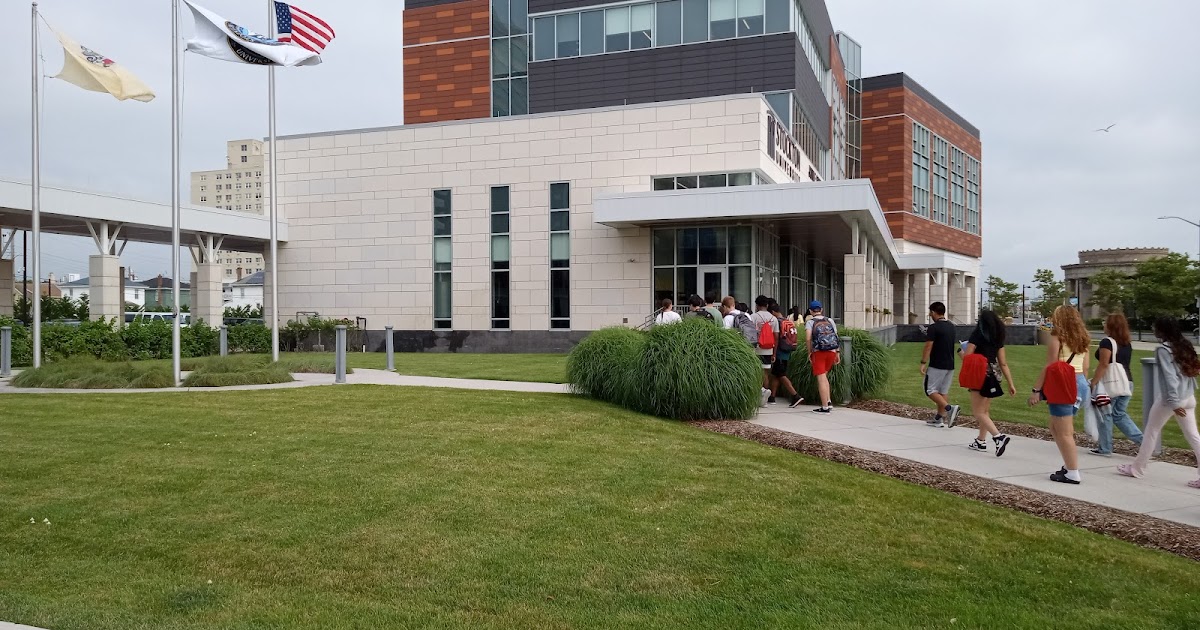
    Stockton University’s Atlantic City campus may be treading water—literally and figuratively. Built in 2018 on a stretch of reclaimed land in the South Inlet neighborhood, the coastal satellite of Stockton University sits just a few hundred feet from the Atlantic Ocean. With scenic views and beachfront access, it was marketed as a fresh vision for higher education: experiential learning by the sea.

    But according to Rutgers University’s Climate Impact Lab and corroborated by NOAA sea level rise projections, that vision may be short-lived. In less than 50 years, large portions of the campus could be underwater—possibly permanently. In fact, with high tide flooding already happening more frequently in Atlantic City and sea levels expected to rise 2 to 5 feet by 2100 depending on emissions, climate change poses an existential threat not just to Stockton’s Atlantic City facilities, but to the broader idea of oceanfront higher education.

    The Science: Rutgers’ Stark Warning

    Rutgers’ 2021 “New Jersey Science and Technical Advisory Panel Report” projected sea level rise in the state could exceed 2.1 feet by 2050 and 5.1 feet by 2100 under high emissions scenarios. Even under moderate mitigation efforts, the sea is projected to rise 1.4 to 3.1 feet by 2070, placing critical infrastructure—including roads, utility networks, and public buildings—at risk. Stockton’s coastal campus is among them.

    A Teachable Crisis

    For students and faculty in environmental science, public policy, and urban planning, Stockton’s Atlantic City campus is both classroom and case study. Professors can point to flooding events just blocks away as real-time lessons in sea level rise, coastal erosion, and infrastructure vulnerability. Students witness firsthand the tension between development and environmental limits.

    Yet these lived experiences also raise ethical questions. Is the university preparing students for the reality of climate displacement—or is it merely weathering the storm until the next round of state funding? Are public institutions being honest about the long-term risks students will face, not just as residents but as debt-burdened alumni?

    In many ways, Stockton’s presence in Atlantic City epitomizes the “climate denial by development” that characterizes so much U.S. urban planning: Build now, mitigate later, and leave tomorrow’s collapse for someone else to manage.

    No Easy Retreat

    Climate adaptation strategies in Atlantic City have been slow-moving, expensive, and often controversial. Proposed solutions—such as sea walls, elevating roads, and managed retreat—require enormous financial and political capital. There’s also no consensus on how to preserve equity in a shrinking, sinking city.

    For Stockton University, retreating from the Atlantic City campus would be politically and financially damaging. The expansion was celebrated with ribbon-cuttings and bipartisan support. Pulling back now would mean acknowledging a costly miscalculation. Yet failing to plan for relocation or phased withdrawal could leave students and taxpayers on the hook for an underwater investment.

    According to the New Jersey Coastal Resilience Plan, Atlantic County—home to Stockton’s main and satellite campuses—is one of the most climate-exposed counties in the state. And Stockton isn’t just sitting in the floodplain; it’s training the very people who will be tasked with managing these emergencies. It has both a responsibility and an opportunity to lead, not just in mitigation but in public reckoning.

    Lessons for Higher Ed

    Stockton is hardly the only university caught between mission and market. Across the U.S., colleges and universities are pouring resources into branding campaigns and capital projects that ignore—or actively obscure—the long-term environmental risks. Climate change is often treated as a course offering, not an existential threat.

    In Universities on Fire, Bryan Alexander outlines how climate change will fundamentally reshape the higher education landscape—from facilities planning to enrollment, from energy consumption to curriculum design. He warns that campuses, particularly those located near coasts or in extreme heat zones, face not just infrastructural threats but institutional crises. Rising waters, wildfires, hurricanes, and population shifts will force universities to rethink their physical footprints, economic models, and public obligations.

    Yet few accreditors or bond-rating agencies have accounted for climate risk in their evaluations. Endowments continue to fund construction in flood-prone areas. Boards of trustees prioritize expansion over retreat. And students, many of whom are first-generation or low-income, are seldom told what climate vulnerability could mean for the real value of their degrees—or the safety of their dormitories.

    As sea levels rise and climate models grow more precise, Stockton’s Atlantic City campus may become a symbol—not just of poor urban planning, but of an education system unprepared for the world it claims to be shaping.

    What Comes Next?

    For now, Stockton continues to expand its Atlantic City footprint, even as new reports suggest that this part of the Jersey Shore may be uninhabitable or cost-prohibitive to protect in a few decades. The university has proposed additional student housing and even a new coastal research center. But each new building reinforces the same flawed logic: that short-term gains outweigh long-term collapse.

    At some point, Stockton University—and many other coastal institutions—will have to decide whether to keep investing in property that’s literally slipping into the sea, or to model the kind of resilience and foresight they claim to teach.

    Because this is not just a sustainability issue. It’s a justice issue. It’s a debt issue. It’s a survival issue.

    And it’s happening now.

    Sources

    Bryan Alexander. Universities on Fire: Higher Education in the Climate Crisis. Johns Hopkins University Press, 2023.

    NJ Department of Environmental Protection. Resilient NJ: Statewide Coastal Resilience Plan. 2020.

    Rutgers University. New Jersey Climate Change Resource Center.

    U.S. Army Corps of Engineers. Back Bay Study – New Jersey.

    New Jersey Future. “Climate Risks and Infrastructure in Atlantic County.”

    Stockton University. Strategic Plan 2025: Choosing Our Path.

    NOAA. State of High Tide Flooding and Sea Level Rise 2023 Technical Report.

    Source link

  • A government climate website teachers rely on is in peril

    A government climate website teachers rely on is in peril

    For the last 15 years, science teacher Jeff Grant has used information on climate change from the federal website Climate.gov to create lesson plans, prepare students for Advanced Placement tests and educate fellow teachers. Now, Grant says, he is “grabbing what [he] can” from the site run by the National Oceanic and Atmospheric Administration’s Climate Program Office, amid concerns that the Trump administration is mothballing it as part of a broader effort to undermine climate science and education.

    “It’s just one more thing stifling science education,” said Grant, who teaches at Downers Grove North High School in the Chicago suburbs. 

    Since early May, all 10 editorial contributors to Climate.gov have lost their jobs, and the organization that produces its education resources will soon run out of money. On June 24, the site’s homepage was redirected to NOAA.gov, a change NOAA said was made to comply with an earlier executive order on “restoring gold standard science.” Those steps follow many others the president has made to dismantle federal efforts to fight climate change, which his administration refers to as the “new green scam.”

    Former employees of Climate.gov and other educators say they fear that the site, which will no longer produce new content, could be transformed into a platform for disinformation. 

    “It will make it harder for teachers to do a good job in educating their students about climate change,” said Glenn Branch, deputy director of the nonprofit National Center for Science Education. “Previously, they could rely on the federal government to provide free, up-to-date, accurate resources on climate change that were aimed at helping educators in particular, and they won’t be able to do so if some of these more dire predictions come to pass.”

    Such concerns have some foundation. For example, Covid.gov, which during the Biden administration offered health information and access to Covid-19 tests, has been revamped to promote the controversial theory that the coronavirus was created in a lab. The administration has also moved aggressively to delete from government sites other terms that are currently out of favor, such as references to transgender people that were once on the National Park Service website of the Stonewall National Memorial, honoring a major milestone in the fight for LGBTQ+ rights.

    Kim Doster, director of NOAA’s office of communications, declined to answer specific questions but shared a version of the statement posted on the NOAA website when Climate.gov was transferred. “In compliance with Executive Order 14303, Restoring Gold Standard Science, NOAA is relocating all research products from Climate.gov to NOAA.gov in an effort to centralize and consolidate resources,” it says.  

    Related: Want to read more about how climate change is shaping education? Subscribe to our free newsletter.

    Climate.gov, founded in 2010 to support earth science instruction in schools, had become a go-to site for educators and the general public for news and information about temperature, sea level rise and other indicators of global warming.

    For many educators, it has served a particularly key role. Because its resources are free, they are vital in schools that lack resources and funding, teachers and experts say. 

    Rebecca Lindsey, Climate.gov’s lead editor and writer, was one of several hundred NOAA probationary employees fired in February, then rehired and put on administrative leave, before being terminated again in March. The rest of the content production team — which included a meteorologist, a graphic artist and data visualizers — lost their jobs in mid-May. Only the site’s two web developers still have their jobs. 

    A screenshot of the Sea Level Rise Viewer, an interactive NOAA that’s listed as a resource on Climate.gov, a government climate website. Credit: NOAA Office for Coastal Management

    Lindsey said she worries that the government “intended to keep the site up and use it to spread climate misinformation, because they were keeping the web developers and getting rid of the content team.”

    In addition, the Climate Literacy and Energy Awareness Network, the official content provider for the education section of the site, has not received the latest installment of its three-year grant and expects its funds to run out in August. 

    “We won’t have funding to provide updates, fix hyperlinks and make sure that new resources are being added, or help teachers manage or address or use the resources,” said Anne Gold, CLEAN’s principal investigator. “It’s going to start deteriorating in quality.” 

    CLEAN, whose website is hosted by Carleton College, is now searching for other sources of money to continue its work, Gold said. 

    With the June 24 change redirecting visitors from Climate.gov to NOAA.gov/climate, the website  for the first time falls under the purview of a political appointee: Doster. Its previous leader, David Herring, is a science writer and educator.

    Melissa Lau, an AP environmental science teacher in Piedmont, Oklahoma, said the relocated site was “really difficult to navigate.”

    As someone who lives in Tornado Alley, Lau said, she frequented CLEAN and NOAA sites to show her students localized, real-time data on storm seasons. She said she is concerned that teachers won’t have time to track down information that was shifted in the website’s move and, as a result, may opt not to teach climate change. 

    The executive order on “restoring gold standard science” that appears to have triggered the shift gives political appointees the authority to decide what science information needs to be modified to align with its tenets. 

    While the disclaimer posted to NOAA.gov seems to imply that Climate.gov did not meet this requirement, educators and researchers said that the site and its CLEAN education resources were the epitome of a gold standard.

    “I want to stress that the reason why CLEAN is considered the gold standard is because we have such high standards for scientific accuracy, classroom readiness and maintenance,” Gold said. “We all know that knowledge is power, and power gives hope. … [Losing funding] is going to be a huge loss to classrooms and to students and the next generation.”

    Related: One state mandates teaching climate change in almost all subjects — even PE

    This is only the latest attack by the Trump administration on education around climate change. This month, the U.S. Global Change Research Program’s website, GlobalChange.gov, was shut down by the administration, after the program was defunded in April. The website once hosted an extensive climate literacy guide, along with all five iterations of the National Climate Assessment — a congressionally required report that informed the public about the effects and risks of climate change, along with local, actionable responses. 

    The Department of Commerce, which oversees NOAA, has cut other federal funding for climate research, including at Princeton University, arguing that these climate grant awards promoted “exaggerated and implausible climate threats, contributing to a phenomenon known as ‘climate anxiety,’ which has increased significantly among America’s youth.” 

    Studies, though, suggest that if young people have a greater understanding of why weather is changing and how to take action, they are less likely to feel anxious. 

    “The more you know [about climate change], the more it’s not a scary monster in the closet,” said Lauren Madden, professor of elementary science education at the College of New Jersey. “It’s a thing you can react to.” She added, “We’re going to have more storms, we’re going to have more fires, we’re going to have more droughts. There are things we can do to help slow this. … I think that quells anxiety, that doesn’t spark it.”

    And climate education has broad public support — about 3 in 4 registered voters say schools should teach children about global warming, according to a 2024 report from the Yale Program on Climate Change Communication. Similarly, 77 percent of Americans regard it as very or somewhat important for elementary and secondary school students to learn about climate change, according to a 2019 study. And all but five states have adopted science standards that incorporate at least some instruction on climate change.

    Yet few teachers have received training on climate change. There is also not much professional development for climate educators, and textbooks tend to downplay the effects of climate change

    As a result, many science teachers rely on federal tools and embed them in their curriculum. They are worried that the information will no longer be relevant, or disappear entirely, according to Lori Henrickson, former climate integration specialist for Washington state’s education department. Henrickson, who lost her job this June as the result of state budget cuts, was in charge of integrating climate education across content areas in the state, from language arts to physical education.

    The .gov top-level domain connotes credibility and accessibility, according to Branch: “It is also easier for teachers facing or fearing climate change denial backlash to cite a reliable, free source from the federal government.”

    Related: How Trump is disrupting efforts by schools and colleges to combat climate change

    With Climate.gov’s future uncertain, educators are looking to other resources, like university websites and tools from other countries. 

    “I’m sure there will continue to be tools, and there will be enough people who will be willing to pay to access them,” Madden said. But, she added, “they probably won’t be as comprehensive, and it won’t feel like it’s a democratic process. It’ll feel like: If you or your employer are willing to chip in for it, then you’ll have access.”

    Madden, along with many other educators, frequently used the Environmental Protection Agency’s environmental justice toolkit, but the site was taken down earlier this year. 

    “I feel like with all the federal websites, I’m constantly checking to see what’s still up and what’s not,” Madden said. 

    Bertha Vazquez, education director for the Center of Inquiry, an organization that works to preserve science and critical thinking, said she worried that the disappearance of climate information could leave U.S. students behind. 

    “The future of the American economy is not in oil, the future of the American economy is in solar and wind and geothermal. And if we’re going to keep up with the international economy, we need to go in that direction,” she said. But while the U.S. should be leading the way in scientific discovery, Vazquez said, such work will now be left to other countries.

    Lau said she felt helpless and frustrated about Climate.gov’s shutdown and about the “attack on American science in general.” 

    “I don’t know what to do. I can contact my legislators, but my legislators from my state are not going to be really open to my concerns,” she said. “If students next year are asking me questions about [science research and funding], I have to tell them, ‘I do not know,’ and just have to leave it at that.”

    Contact editor Caroline Preston at 212-870-8965, via Signal at CarolineP.83 or on email at [email protected].

    This story about the government climate website was produced by The Hechinger Report, a nonprofit, independent news organization focused on inequality and innovation in education. Sign up for the Hechinger climate and education newsletter.

    The Hechinger Report provides in-depth, fact-based, unbiased reporting on education that is free to all readers. But that doesn’t mean it’s free to produce. Our work keeps educators and the public informed about pressing issues at schools and on campuses throughout the country. We tell the whole story, even when the details are inconvenient. Help us keep doing that.

    Join us today.

    Source link

  • High school sleuths search fish guts for clues to plastic pollution

    High school sleuths search fish guts for clues to plastic pollution

    NEW YORK — The fish, glassy-eyed and inert, had been dead for decades. Yet its belly held possible clues to an environmental crisis unfolding in real time.   

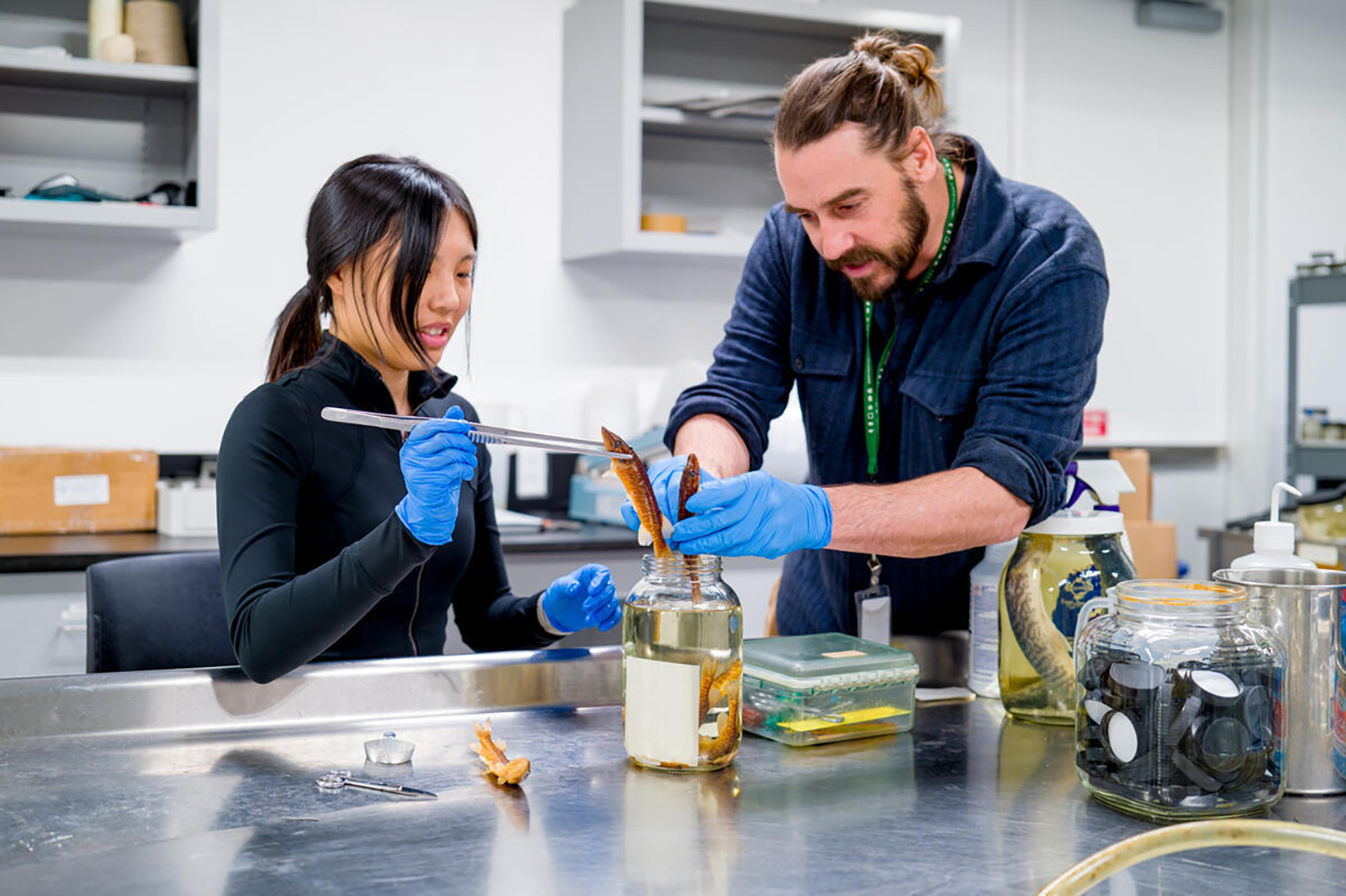
    Forceps in hand, Mia Fricano, a high school junior, was about to investigate. She turned over the fish, a bluegill, and slid in a blade, before extracting its gastrointestinal tract. Then, she carried the fish innards to a beaker filled with a solution that would dissolve the biological material, revealing if there were any tiny particles of plastic — known as microplastics — inside.

    Mia and two other high schoolers working alongside her in a lab this spring were part of a program at the American Museum of Natural History designed to give young people hands-on experience in professional science. Called the Science Research Mentoring Program, or SRMP (pronounced “shrimp”), the program enrolls roughly 60 high school juniors and seniors each year who collaborate with scientists on a research project. 

    Mia and her peers were matched with Ryan Thoni, an ichthyologist and curatorial associate in the museum’s division of vertebrate zoology. Thoni’s project to gather information on when and how microplastics began to enter the environment relied on the museum’s vast collection of fish specimens dating from more than a century ago — some 3.2 million in total.

    Concern about the tiny pieces of plastic debris has grown in the last few years, along with early-stage research on the health risks they pose. The particles are found in human blood, breast milk and even the brain — and in animals, including, as it turned out, nearly all the fish in Thoni’s lab.    

    “It was kind of shocking to see just how many we did find,” Mia said later. “We weren’t expecting to find more than two to three per fish but in some fish, we would find over 15.” Specimens from the 1970s or earlier were less likely to contain high levels of microplastic, more than three or so pieces, and fish near urban centers seemed to have more of the plastics, on average, than fish from less populated areas. 

    “It really does make you realize just how much the environment has been affected,” said Mia. “There hasn’t been a lot of research on it yet,” she added. “Our project might be able to help future people who are also doing research on microplastics.”  

    Related: Want to read more about how climate change is shaping education? Subscribe to our free newsletter.

    SRMP, started in 2009, is operating at a time when the federal government is eliminating fellowships and other support for early career scientists, and defunding scientific research broadly. That both amplifies the need for, and complicates the work of, programs like this one, said Amanda Townley, executive director of the nonprofit National Center for Science Education. Over the last 15 years in particular, such programs have played a big role in giving students a chance to do the kind of applied science that is rarely available in K-12 classrooms because of money and time constraints, she said. 

    “Museums, university extensions, sometimes libraries, have really done this tremendous job of creating spaces for high school and younger students to engage with scientists doing science,” said Townley. “Those museums, libraries and universities are all under attack.” She added: “We’re going to see a generational impact.” 

    While the American Museum of Natural History has received some federal government funding, the SRMP program’s money comes from private foundations and individual donors, with additional support from the New York City Council. Students in SRMP participate in a summer institute in August, when they learn basics like how to investigate research questions. Then they spend two afternoons a week during the school year on their projects. 

    Each student receives a stipend, $2,500 over the course of the year. “It’s really important for high school students to know their time is valuable,” said Maria Strangas, the museum’s assistant director of science research experiences. “They are doing something here that is really useful for the researchers; it’s an education program, but they aren’t the only ones who are benefiting.” 

    Students from New York City schools that partner with the museum can apply, as well as those who have participated in programs with the museum in the past. SRMP has also spawned a network of about 30 similar programs across the city, with institutions including Brooklyn College, Bronx River Alliance and many others participating. 

    In the lab on the sixth floor of the museum, Mia, who attends the New York City Museum School, cleaned out a beaker, while Yuki Chen, a senior at Central Park East High School, sat at a metal table, dissecting a pike. Thoni inserted a slide containing material harvested from one of the fish under a microscope, and pointed out a few microplastics, which looked like threads. 

    Ryan Thoni of the American Museum of Natural History, right, with high schoolers Mia Fricano (center) and Freyalise Matasar. Credit: Caroline Preston/The Hechinger Report

    Freyalise Matasar, a junior at the Ethical Culture Fieldston School in the Bronx, plucked a white sucker fish from a jar. She said SRMP had altered her career trajectory. Before the program, she was considering studying journalism in college, but her experience this year persuaded her to focus on engineering and data science instead. 

    “I have totally fallen in love with science,” she said. “It’s been an amazing experience to see what professional science looks like — and more than just see it, to be a part of it.”

    Freyalise said she wanted to build those skills in order to help fight climate change, perhaps by working on weather models to predict climate risks and ideally spur people to action. “It’s the biggest problem faced by our generation. It’s inescapable and unignorable, no matter how much people try,” she said. “It’s everyone’s responsibility to do what they can to fight it.”   

    Related: So much for saving the planet. Science careers, and many others, evaporate for class of 2025

    Microplastics contribute to climate change in several ways, including by potentially disrupting oceans’ ability to sequester carbon and by directly emitting greenhouse gases.

    Interest in climate science among young people is growing, even as the federal government tries to zero out funding for it. Other climate-related topics SRMP students explored this year included the climate on exoplanets, the ecology of sea anemones and aquatic wildlife conservation in New York City.

    Sometimes the fish dissections were gross: Mia, who plans to study biology and machine learning in college, sliced into one large fish to find poorly preserved, rotten innards — and a major stink. Sometimes they provided a lesson beyond pollution: Yuki identified a small pickerel inside a larger one. (Pickerels prey even on members of their own species, the students learned.) 

    The scientists in the program, most of whom are postdoctoral fellows, are trained on how to be effective mentors. “Scientists are often not trained in mentorship; it’s something that people pick up organically seeing good or bad examples in their own lives,” said Strangas. “A lot of it comes down to: ‘Think about the impact you want to have, think about the impact you don’t want to have, think about the power dynamic at play, and what this student in front of you wants to get out of it.’”  

    Thoni earned rave reviews from the students, who said he ensured they understood each step of the research process without being patronizing. 

    Thoni’s next steps include working to publish the microplastics research, which could earn the students their first co-authorship in a scientific journal. “Aside from forgetting to put on gloves,” he said in a playful jab at one student, “they can operate this machine on their own. They do science.”

    Contact editor Caroline Preston at 212-870-8965, via Signal at CarolineP.83 or on email at [email protected]

    This story about science careers was produced by The Hechinger Report, a nonprofit, independent news organization focused on inequality and innovation in education. Sign up for the Hechinger newsletter on climate and education.

    The Hechinger Report provides in-depth, fact-based, unbiased reporting on education that is free to all readers. But that doesn’t mean it’s free to produce. Our work keeps educators and the public informed about pressing issues at schools and on campuses throughout the country. We tell the whole story, even when the details are inconvenient. Help us keep doing that.

    Join us today.

    Source link

  • With no warning

    With no warning

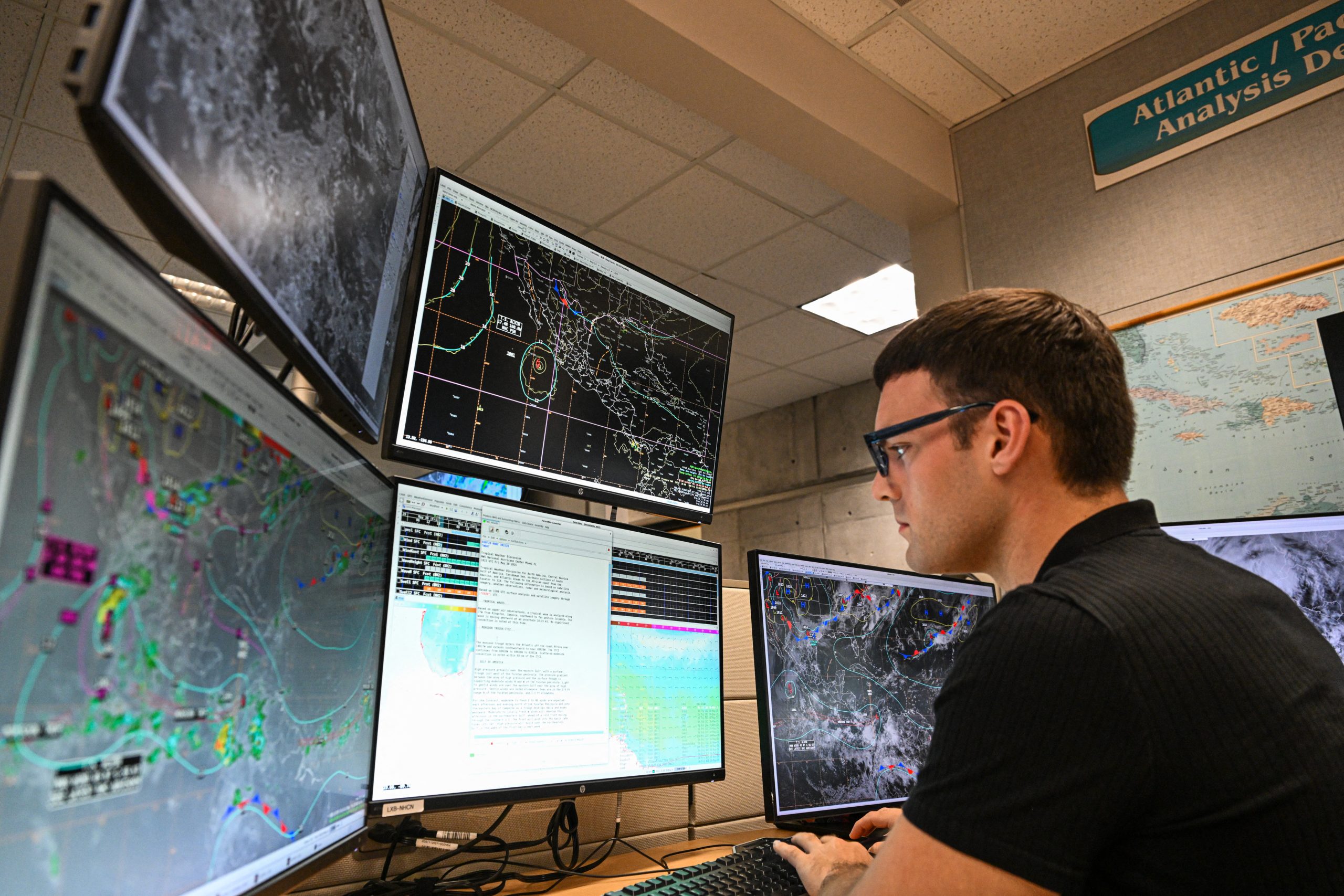
    The term ‘observations’ comes from the days trained weather observers recorded standard meteorological information. Now observations from radiosondes — attached to weather balloons rising to the upper stratosphere — collect data on temperature, humidity, air pressure and wind. 

    Automated surface-observing systems on land provide real-time data and satellites gather imagery and more data which is fed into supercomputers to provide forecasts.

    So what are the benefits of accurate weather forecasts?

    Staying prepared for the worst

    Evan Thompson, the director of the Meteorological Service in Jamaica, has seen his island hit by extreme weather events as seasonal hurricanes have become more severe.

    Thompson said that people need to know how to protect themselves from extreme weather such as tropical storms and hurricanes.

    “Whether it means moving to higher ground in the moment or at least ensuring you don’t take chances crossing flooded roadways that are with waters moving fast, or rivers,” he said.

    Thompson wants his country to be prepared for severe weather. “More data always means better observations which in turn leads to better forecasts.”

    Over the last decades, the accuracy of weather forecasting in the United States has vastly increased what is known as storm resiliency, helped airlines reroute flights, farmers to plant crops at the optimal times and power companies to deal with demand from their customers.

    Climate change intensifies weather.

    Elsewhere, the World Meteorological Organisation (WMO) and the World Environmental Programme (WEP) have targeted the need for more observation stations in countries across the Middle East, Africa, South America and Pacific Island states, countries which are at risk of seeing economic progress wiped out by increasing impacts of climate change. 

    The WMO target is for weather observation to reach the levels of countries in Europe and the United States. But it may not be citing the United States as a model in the future. Since January, the United States has been reducing its capacity to provide weather data.

    The cuts come at a time when the intensity and frequency of extreme weather events have increased due to climate change linked to human induced warming according to the Intergovernmental Panel on Climate Change report of August 2021. However, the Trump administration has taken a decision to eliminate the term “climate change” from federal websites. 

    Especially dependent on accurate forecasts are the construction industry, agriculture, power companies and aviation. 

    Fabio Venuti of the European Centre for Medium-Range Weather Forecasts inputs weather data into a supercomputer. “Global weather forecasting like ours can assimilate data then produce high resolution local forecasts for each country,” he said. “They can be more prepared.”

    Information farmers can rely on

    Fabio said that the ability to forecast rain and drought can help farmers and governments plan food crops. And it can help public health officials prepare for and lessen the spread of diseases, such as malaria, that are affected by environmental factors as insects transported by winds. 

    Thompson in Jamaica said that the policies and plans that governments take are affected by weather forecasting. “For example, building codes can be adjusted because we recognise more severe downpours in areas that don’t normally have flooding,” he said. 

    In the United States, the National Oceanic and Atmospheric Administration (NOAA), the parent agency of the National Weather Service, is tasked with daily weather forecasts, severe storm warnings and climate monitoring. In 2025 NOAA has already lost 800 employees and a further 500 have been offered buyouts.

    According to the former heads of the National Weather Service, the proposed cuts of close to 30% for NOAA would essentially eliminate NOAA’s research function for weather.

    Inger Anderson, executive director of the UN Environment Programme, said that accurate weather forecasting pays off in many ways — lives saved, improved disaster management, protecting livelihoods, biodiversity, food security, water supply and economic growth. 

    Besides cutting staffing, the Trump administration has also cut back on funds used to record tidal predictions and weather disasters such as heat waves, hurricanes, tornados, floods and wildfires. The U.S. National Centers for Environmental Information, the agency that collates historical meteorological records, will cease to update its Billion-Dollar Weather and Climate Disasters database beyond 2024. Previous records will be archived. 

    Jeff Masters, a meteorologist for Yale Climate Connections says the database is the “gold standard” used to evaluate the costs of extreme weather. “It’s a major loss, since it comes at a time when we need to better understand how much climate change is increasing disaster losses,” he said.

    Weather forecasting can tell us more than whether to carry an umbrella, when to plan a picnic or plant flowers in the gardens. Accurate forecasting can save your life, your home and your livelihood. 


    Questions to consider:

    1. How do you use weather forecasts?

    2. Should politicians work more closely with scientists?

    3. Have you experienced a severe weather event?


    Source link

  • Clean energy workforce training hub a ‘gamechanger’ in this struggling factor town

    Clean energy workforce training hub a ‘gamechanger’ in this struggling factor town

    Decatur, Illinois, has been losing factory jobs for years. A training program at a local community college promises renewal and provides training for students from disenfranchised communities

    This story is part of a collaboration between the Institute for Nonprofit News’ Rural News Network and Canary Media, South Dakota News WatchCardinal News, The Mendocino Voice and The Maine Monitor, with support from Ascendium Education Group. It is reprinted with permission. 

    DECATUR, IL. — A fistfight at a high school football game nearly defined Shawn Honorable’s life.

    It was 1999 when he and a group of teen boys were expelled and faced criminal charges over the incident. The story of the “Decatur Seven” drew national headlines and protests led by the Rev. Jesse Jackson, who framed their harsh treatment as blatant racism. The governor eventually intervened, and the students were allowed to attend alternative schools.

    Honorable, now 41, was encouraged by support “from around the world,” but he said the incident was traumatizing and he continued to struggle academically and socially. Over the years, he dabbled in illegal activity and was incarcerated, most recently after a 2017 conviction for accepting a large amount of marijuana sent through the mail.

    Today, Honorable is ready to start a new chapter, having graduated with honors last week from a clean energy workforce training program at Richland Community College, located in the Central Illinois city of Decatur. He would eventually like to own or manage a solar company, but he has more immediate plans to start a solar-powered mobile hot dog stand. He’s already chosen the name: Buns on the Run.

    “By me going back to school and doing this, it shows my nephews and my little cousins and nieces that it is good to have education,” Honorable said. “I know this is going to be the new way of life with solar panels. So I’ll have a step up on everyone. When it comes, I will already be aware of what’s going on with this clean energy thing.”

    Shawn Honorable graduated with honors last week from Richland Community College’s clean energy workforce training program in Decatur, Illinois, part of a network of hubs funded by the state’s 2021 Climate and Equitable Jobs Act. Credit: Lloyd DeGrane/Canary Media

    After decades of layoffs and factory closings, the community of Decatur is also looking to clean energy as a potential springboard.

    Located amid soybean fields a three-hour drive from Chicago, the city was long known for its Caterpillar, Firestone Tire, and massive corn-syrup factories. Industrial jobs have been in decline for decades, though, and high rates of gun violence, child poverty, unemployment, and incarceration were among the reasons the city was named a clean energy workforce hub funded under Illinois’ 2021 Climate and Equitable Jobs Act (CEJA).

    Decatur’s hub, based at Richland Community College, is arguably the most developed and successful of the dozen or so established statewide. That’s thanks in part to TCCI Manufacturing, a local, family-owned factory that makes electric vehicle compressors. TCCI is expanding its operations with a state-of-the-art testing facility and an on-site campus where Richland students will take classes adjacent to the manufacturing floor. The electric truck company Rivian also has a factory 50 miles away.

    “The pieces are all coming together,” Kara Demirjian, senior vice president of TCCI Manufacturing, said by email. “What makes this region unique is that it’s not just about one company or one product line. It’s about building an entire clean energy ecosystem. The future of EV manufacturing leadership won’t just be on the coasts — it’s being built right here in the Midwest.”

    Powering Rural Futures: Clean energy is creating new jobs in rural America, generating opportunities for people who install solar panels, build wind turbines, weatherize homes and more. This five-part series from the Rural News Network explores how industry, state governments and education systems are training this growing workforce.

    Related: Want to read more about how climate change is shaping education? Subscribe to our free newsletter.

    The Decatur CEJA program has also flourished because it was grafted onto a preexisting initiative, EnRich, that helps formerly incarcerated or otherwise disenfranchised people gain new skills and employment. The program is overseen by the Rev. Courtney Carson, a childhood friend of Honorable and another member of the Decatur Seven.

    “So many of us suffer significantly from our unmet needs, our unhealed traumas,” said Carson, who was jailed as a young man for gun possession and later drag racing. With the help of mentors including Rev. Jackson and a college basketball coach, he parlayed his past into leadership, becoming associate pastor at a renowned church, leading a highway construction class at Richland, and in 2017 being elected to the same school board that had expelled him.

    Carson, now vice president of external relations at the community college, tapped his own experience to shape EnRich as a trauma-informed approach, with wraparound services to help students overcome barriers — from lack of childcare to PTSD to a criminal record. Carson has faith that students can overcome such challenges to build more promising futures, like Decatur itself has done.

    “We have all these new opportunities coming in, and there’s a lot of excitement in the city,” Carson said. “That’s magnificent. So what has to happen is these individuals who suffered from closures, they have to be reminded that there is hope.”

    Richland Community College’s clean energy jobs training starts with an eight-week life skills course that has long been central to the larger EnRich program. The course uses a Circle of Courage practice inspired by Indigenous communities and helps students prepare to handle stressful workplace situations like being disrespected or even called a racial slur.

    “Being called the N-word, couldn’t that make you want to fight somebody? But now you lose your job,” said Carson. “We really dive deep into what’s motivating their attitude and those traumas that have significantly impacted their body to make them respond to situations either the right way or the wrong way.”

    The training addresses other dynamics that might be unfamiliar to some students — for example, some male students might not be prepared to be supervised by a woman, Carson noted, or others might not be comfortable with LGBTQ+ coworkers.

    Karl Evans instructs Richland Community College students on the inner workings of a gas furnace. Credit: Lloyd DeGrane/Canary Media

    Life skills are followed by a construction math course crucial to many clean energy and other trades jobs. During a recent class, 24-year-old Brylan Hodges joked with the teacher while converting fractions to decimals and percentages on the whiteboard. He explained that he moved from St. Louis to Decatur in search of opportunity, and he hopes to become a property manager overseeing solar panel installation and energy-efficiency upgrades on buildings.

    Students take an eight-hour primer in clean energy fields including electric vehicles, solar, HVAC, and home energy auditing. Then they choose a clean energy track to pursue, leading to professional certifications as well as a chance to continue at Richland for an associate degree. Under the state-funded program, students are paid for their time attending classes.

    Related: Students partnered with an EV battery factory to train students and ignite the economy. Trump’s clean energy war complicates their plans

    Marcus James was part of the first cohort to start the program last October, just days after his release from prison.

    He was an 18-year-old living in Memphis, Tennessee, when someone shot at him, as he describes it, and he fired back, with fatal consequences. He was convicted of murder and spent 12 years behind bars. After his release he made his way to Decatur, looking for a safer place to raise his kids. Adjusting to life on the outside wasn’t easy, and he ended up back in prison for a year and a half on DUI and drug possession charges.

    Following his release, he was determined to turn his life around.

    “After I brought my kids up here, I end up going back to prison. But at that moment, I realized, man, I had to change,” James told a crowd at an event celebrating the clean jobs program in March.

    The Rev. Courtney Carson, vice president of external relations at the community college. Credit: Lloyd DeGrane/Canary Media

    James said that at first, he showed up late to every class. But soon the lessons sank in, and he was never late again. He always paid attention when people talked, and he gained new confidence.

    “As long as I put my mind to it, I can do it,” said James, who would like to work as a home energy auditor. Richland partners with the energy utility Ameren to place trainees in such positions.

    “I like being out in the field, learning new stuff, dealing with homes, helping people,” James said, noting he made energy-efficiency improvements to his own home after the course.

    Related: To fill ‘education deserts,’ more states want community colleges to offer bachelor’s degrees

    Illinois’ 2017 Future Energy Jobs Act (FEJA) launched the state’s clean energy transition, baking in equity goals that prioritize opportunities for people who benefited least and were harmed most by the fossil fuel economy. It created programs to deploy solar arrays and provide job training in marginalized and environmental justice communities.

    FEJA’s rollout was rocky. Funding for equity-focused solar installations went unspent while workforce programs struggled to recruit trainees and connect them with jobs. The pandemic didn’t help. The follow-up legislation, CEJA, expanded workforce training programs and remedied snafus in the original law.

    Melissa Gombar is principal director of workforce development programs for Elevate, a Chicago-based national nonprofit organization that oversaw FEJA job training and subcontracts for a Chicago-area CEJA hub. Gombar said many community organizations tasked with running FEJA training programs were relatively small and grassroots, so they had to scramble to build new financial and human resources infrastructure.

    “They have to have certain policies in place for hiring and procurement. The influx of grant money might have doubled their budget,” Gombar said. Meanwhile, the state employees tasked with helping the groups “are really talented and skilled, trying their best, but they’re overburdened because of the large lift.”

    CEJA, by contrast, tapped community colleges like Richland, which already had robust infrastructure and staffing. CEJA also funds community organizations to serve as “navigators,” using the trust and credibility they’ve developed in communities to recruit trainees.

    Richland Community College received $2.6 million from April 2024 through June 2025, and the Community Foundation of Macon County, the hub’s navigator, received $440,000 for the same time period. The other hubs similarly received between $1 million and $3.3 million for the past year, and state officials have said the same level of funding will be allocated for each of the next two years, according to the Illinois Clean Jobs Coalition.

    CEJA hubs also include social service providers that connect trainees with wraparound support; businesses like TCCI that offer jobs; and affiliated entrepreneur incubators that help people start their own clean energy businesses. CEJA also funded apprenticeship and pre-apprenticeship programs with labor unions, which are often a prerequisite for employment in utility-scale solar and wind.

    “The sum of the parts is greater than the whole,” said Drew Keiser, TCCI vice president of global human resources. “The navigator is saying, ‘Hey, I’ve connected with this portion of the population that’s been overlooked or underserved.’ OK, once you get them trained, send their resumes to me, and I’ll get them interviewed. We’re seeing a real pipeline into careers.”

    The hub partners go to great lengths to aid students — for example, coordinating and often paying for transportation, childcare, or even car repairs.

    “If you need some help, they always there for you,” James said.

    Related: Losing faith: Rural, religious colleges are among the most endangered

    In 1984, TCCI began making vehicle compressors in a Decatur plant formerly used to build Sherman tanks during World War II. A few decades later, the company began producing compressors for electric vehicles, which are much more elaborate and sensitive than those for internal combustion engines.

    In August 2023, Gov. JB Pritzker joined TCCI President Richard Demirjian, the Decatur mayor, and college officials for the groundbreaking of an Electric Vehicle Innovation Hub, which will include a climatic research facility — basically a high-tech wind tunnel where companies and researchers from across the world can send EV chargers, batteries, compressors, and other components for testing in extreme temperatures, rain, and wind.

    A $21.3 million capital grant and a $2.2 million electric vehicle incentive from the state are funding the wind tunnel and the new facilities where Richland classes will be held. In 2022, Pritzker announced these investments as furthering the state goal of 1 million EVs on the road by 2030.

    Far from the gritty industrial environs that likely characterized Decatur workplaces of the past, the classrooms at TCCI feature colorful decor, comfortable armchairs, and bright, airy spaces adjacent to pristine high-tech manufacturing floors lined with machines.

    “This hub is a game changer,” said Keiser, noting the need for trained tradespeople. “As a country, we place a lot of emphasis on kids going to college, and maybe we’ve kind of overlooked getting tangible skills in the hands of folks.”

    A marketing firm founded by Kara Demirjian – Richard Demirjian’s sister – and located on-site with TCCI also received clean energy hub funds to promote the training program. This has been crucial to the hub’s success, according to Ariana Bennick, account executive at the firm, DCC Marketing. Its team has developed, tested, and deployed digital billboards, mailers, ads, Facebook events, and other approaches to attract trainees and business partners.

    “Being a part of something here in Decatur that’s really leading the nation in this clean energy initiative is exciting,” Bennick said. “It can be done here in the middle of the cornfields. We want to show people a framework that they can take and scale in other places.”

    With graduation behind him, Honorable is planning the types of hot dogs and sausages he’ll sell at Buns on the Run. He said Tamika Thomas, director of the CEJA program at Richland, has also encouraged him to consider teaching so he can share the clean energy skills he’s learned with others. The world seems wide open with possibilities.

    “A little at a time — I’m going to focus on the tasks in front of me that I’m passionate about, and then see what’s next,” Honorable said. He invoked a favorite scene from the cartoon TV series “The Flintstones,” in which the characters’ leg power, rather than wheels and batteries, propelled vehicles: “Like Fred and Barney, I’ll be up and running.”

    The Hechinger Report provides in-depth, fact-based, unbiased reporting on education that is free to all readers. But that doesn’t mean it’s free to produce. Our work keeps educators and the public informed about pressing issues at schools and on campuses throughout the country. We tell the whole story, even when the details are inconvenient. Help us keep doing that.

    Join us today.

    Source link

  • Can the sea’s rise be a language’s demise?

    Can the sea’s rise be a language’s demise?

    A language is not merely a collection of words; it is a symphony of memories, a melody that holds the heartbeat of a nation. It is a living chronicle of history, breathed across the ages, inscribed on the rhythms of life and sung by the winds that dance upon the sacred lands.

    Picture a serene village cradled among ancient mountains, where elders speak a tongue as timeless as the rocks beneath their feet. Each syllable is a thread, knitted into a rich tapestry of legends, lore and traditions that bind them to the soil they call home.  

    But what becomes of this language when the land itself starts to crumble? When the waves rise to consume coasts, or parched earth splits under a blistering sun, does the song fall silent? Today, as the planet warms, it is not only ice caps and forests that vanish — but languages, and with them, entire ways of perceiving the world.

    Around the globe, ancient languages — the essence of human history — are vanishing. Climate change, a tenacious force reshaping landscapes, frays the delicate cultural threads that root communities to their identity. Rising seas engulf islands where indigenous tongues blossom like rare flowers. Wildfires sweep away more than homes, reducing sacred spaces and oral histories to ash. Each vanished habitat is a stilled voice, an erased library of metaphors, idioms and songs that offered a unique lens on life.

    Language extinction

    According to a 2021 report by the UN Permanent Forum on Indigenous Issues, more than 40% of the world’s estimated 7,000 languages are at risk of disappearing. “When a language dies,” said linguist K. David Harrison, “a unique vision of the world is lost.”

    While globalisation and modernisation are often blamed for the erosion of ancient languages, environmental destruction plays an even more insidious role, quietly displacing communities and severing their linguistic roots. When climatic disasters scatter people, they do not only lose their home — they lose the vessel of their shared soul. Dispersed and assimilating, their words, their tales, their melodies — once carried across centuries — fade into echoes long forgotten.

    Today, nearly half of all languages spoken globally are endangered. According to UNESCO, one language disappears every two weeks — a rhythm of loss as steady as the ticking of a clock. In this tide of vanishing voices, climate change surges as an unrecognised adversary, disrupting the habitats where these languages are rooted.

    Consider the small island nations of the Pacific — Tuvalu, Kiribati, the Marshall Islands — where languages are inseparable from the ocean’s ebb and flow. As seas rise up to threaten these vulnerable islands, the inhabitants must depart, and with them, their distinct vision of the world drifts away. Words that once named the tides, the winds, the colour of the sky before monsoon, these vanish as the speakers are displaced.

    Likewise, in the Arctic, the Sámi and Inuit communities confront an ugly truth: their languages, like their frozen lands, are melting under the pressure of a warming world. The vocabulary used to describe different types of snow, hunting rituals or the behaviour of migrating herds holds ancestral wisdom. As the landscape changes, the words that once matched its rhythms no longer apply — and are slowly lost.

    Worldviews and wisdom

    When languages are lost, they take with them entire worldviews and centuries of wisdom encoded in words. The knowledge of forests, of skies, of seas — how to farm to the beat of nature, how to heal using the plants that grow in secret groves — is lost.

    For instance, in the Amazon rainforest, indigenous languages such as Kayapo contain the secrets of life-abundant ecosystems. According to Survival International and linguistic researchers, these languages encode unique ecological wisdom that cannot be translated. Each word is a secret to decoding the harmony of nature and each lost language shelves an irreplaceable piece of the puzzle.

    In the Philippines, the Agta people hold oral traditions that teach sustainable fishing and forest stewardship. Their language contains knowledge passed down through chants and stories that teach children when to harvest, what to leave behind and how to give back. Without their land, without their rituals, such teachings dissolve.

    In Vanuatu, where the rising tide of the ocean promises to wash away land and language, communities are in a mad dash to record their heritage. Elders and linguists collaborate, transcribing words into digital platforms, preserving the poetry of their world for future generations. Stories once passed from mouth to ear around firelight are now finding their way into apps, audio archives and cloud storage — fragile vessels carrying ancient truths.

    A fading past and uncertain future

    Technology, too, becomes a bridge between the fading past and an uncertain future. Apps like Duolingo and platforms like Google’s Endangered Languages Project breathe new life into ancient words, making them accessible to the young and curious.

    Augmented reality and virtual storytelling spaces are beginning to preserve not just the language, but the experience of being immersed in it. But technology alone cannot carry the weight of this preservation. It must be paired with policies that protect the vulnerable — giving displaced communities a voice not only in language preservation but in shaping climate action itself.

    Governments must go beyond digitisation and invest in cultural resilience. Language must be taught in schools, inscribed in constitutions, spoken on airwaves and celebrated in ceremonies. We need climate policies that understand that saving ecosystems and saving languages are part of the same struggle. Both are about preserving what makes us human.

    In the end, saving a language is an act of defiance against the erasure of identity. It is a way to honour the past while forging a path to a sustainable future. These languages do not merely recount history — they carry the wisdom of living in harmony with the Earth. In their poetry and proverbs, in their songs and silences, they have answers to questions we have not even thought to ask yet.

    To preserve these voices, we must become their echoes. We must act before it’s too late. Before the last storytellers fall silent. Before the rivers can no longer remember the songs they once inspired. To save a language is to save a piece of ourselves — the spirit of who we are, where we’ve been and the dreams of where we might go.

    When we lose a language, we don’t just lose words — we lose the Earth’s voice itself. If these voices vanish, who will remember the names of the stars? Who will tell us how the mountains mourned or the forests sang? The Earth is listening and its languages are calling. 

    Let us not forget how to answer.


    Questions to consider:

    1. Why are languages at risk of extinction due to climate change?

    2. How are preservation of language connected to whole cultures?

    3. Why might someone want to master a language that is not widely spoken?


    Source link