
Category: College to careers

  • As men stop going to college, women have now overtaken them in graduate and professional degrees

    As men stop going to college, women have now overtaken them in graduate and professional degrees

    by Jon Marcus, The Hechinger Report
    January 20, 2026

    WATERTOWN, Mass. — Amanda Leef remembers thinking for the first time about becoming a veterinarian when she was 4 and found a garter snake in her Michigan backyard.

    “I think every girl goes through a phase of wanting to be a vet,” Leef said.

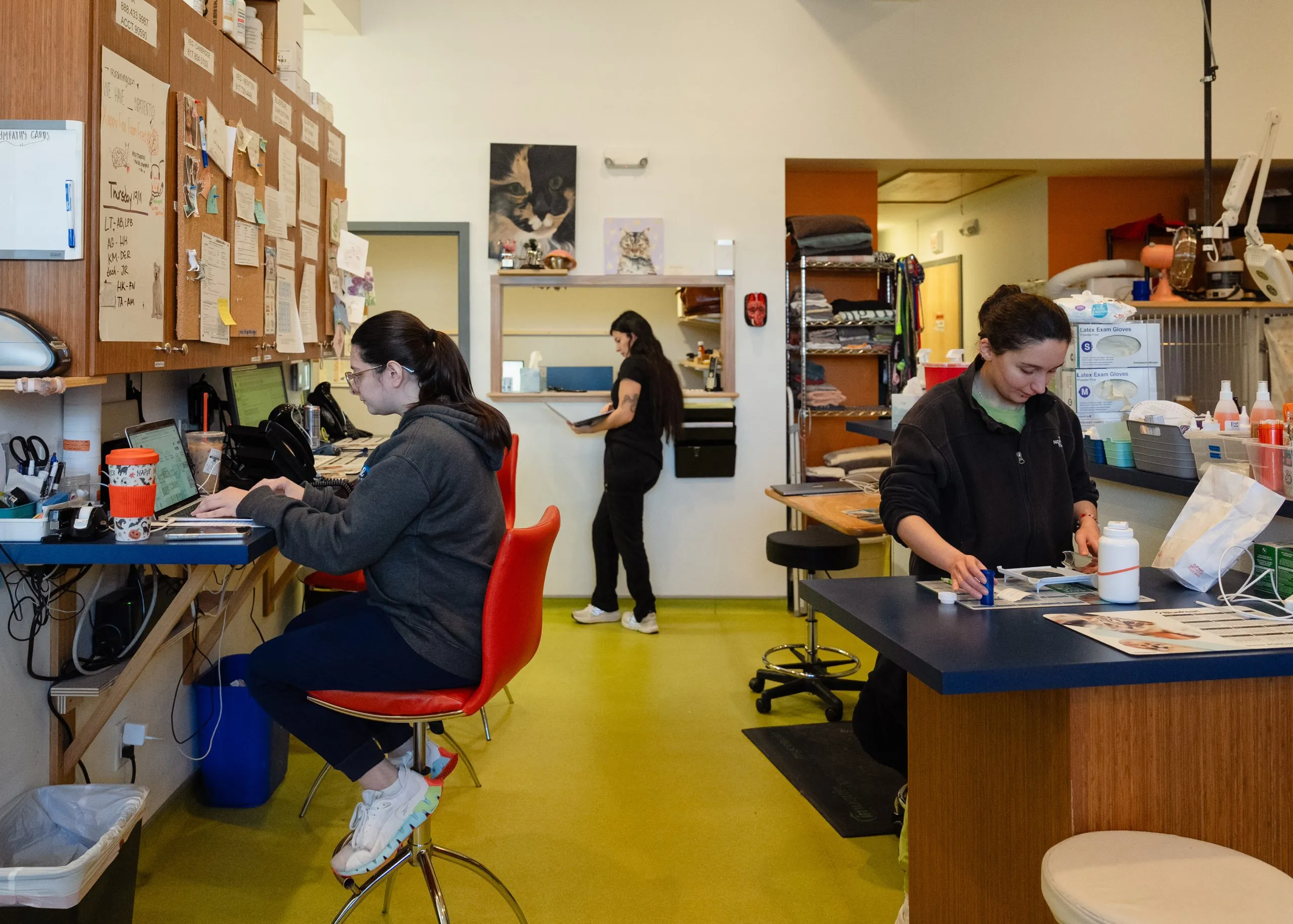
    For her, it wasn’t just a phase. Now, at 48, she co-owns her own bustling veterinary practice, Heal Veterinary Clinic, in this Boston suburb. 

    All seven veterinarians here are women. So is the large team of vet techs, and the entire rest of the 22-member medical staff.

    “In really broad generalities, I think women are more interested in the emotional and empathetic side of things than men are,” Leef said, sitting on the floor of an examination room with one of her patients, an affectionate, white-furred golden retriever named Cypress.

    For that and other reasons, women studying veterinary medicine now outnumber men by four to one

    It’s not just veterinary school. The number of women has surpassed the number of men in law school, medical school, pharmacy school, optometry school and dental school.

    Women in the United States now earn 40 percent more doctoral degrees overall, and nearly twice as many master’s degrees, as men, according to the U.S. Department of Education — a trend transforming high-end work. 

    This is no longer some distant statistical abstraction. Americans can see it when they take their pets to the vet or their kids to the dentist, need a lawyer or an eye exam, see a therapist or pick up a prescription.

    The dramatic shift in who is being trained for these fields is partly because more women are going into them. But it’s also the result of a steady slide in the number of men enrolling in graduate and professional schools. And while that may be elevating women, it’s affecting the nation’s economic competitiveness and even the point at which people get married and have children.

    “Having all students represented and engaged in graduate study ensures that we have healthy communities and families and a vital economy,” said Chevelle Newsome, president of the Council of Graduate Schools.

    Related: Interested in innovations in higher education? Subscribe to our free biweekly higher education newsletter.

    Graduate schools — including the 460 Newsome represents — have their own motive for wanting more men to enroll. They’re facing new threats from declining international enrollment, impending federal borrowing limits for graduate study and a public backlash against the high cost and uneven returns of graduate degrees.

    The main reason women have overtaken men in graduate school, however, is that more women than men are earning the undergraduate degrees required to go on to advanced study. 

    “Women certainly still see education in terms of upward mobility,” said Lisa Greenhill, chief organizational health officer at the American Association of Veterinary Medical Colleges, whose job includes trying to diversify veterinary medicine. “Men have a lot more options. They feel like they don’t have to go to a four-year program or a graduate program.”

    The number of men enrolled as undergraduates in college nationwide has dropped by nearly a quarter of a million, or 4 percent, just since 2020, the National Student Clearinghouse Research Center reports. 

    Women now account for about 60 percent of undergraduate enrollment. Nearly half of women aged 25 to 34 have bachelor’s degrees, compared to 37 percent of men, according to the Pew Research Center.

    “Men aren’t seeing higher education as valuable,” said Newsome. Many go into the trades or take other jobs straight out of high school to begin immediately earning a wage, forgoing the need to spend time in or money on college. Even men who do get undergraduate degrees may not see the value in continuing beyond them, she said.

    The effects of this have been stark and swift.

    The number of women earning law degrees passed the number of men in 2019, figures from the American Bar Association, or ABA, show; while only four of the law schools ranked among the 20 most prestigious by U.S. News & World Report had more women than men in 2016, women now outnumber men at 18 of them, according to the nonprofit law student news site JURIST. 

    Related: Trump’s attacks on DEI may hurt men in college admission

    That’s already having a real-world impact. By 2020, the ABA says, the majority of general lawyers working for the federal government were women, and by 2023, the majority of associates at law firms were.

    In medical schools, the number of women also overtook the number of men in 2019. Today, 55 percent of future doctors are women, up from 48 percent in 2015, according to the Association of American Medical Colleges, or AAMC.

    Women already make up significantly larger proportions of residents in specialties including endocrinology, pediatrics, obstetrics and gynecology, family medicine and psychiatry.

    Women also outnumber men by three to one in doctoral programs in psychology, and by nearly four to one in master’s programs, the American Psychological Association reports. They make up 55 percent of graduates of dental schools, and 72 percent in pediatric dentistry, according to the American Dental Association. 

    More than seven out of 10 students in schools of optometry are women, the Association of Schools and Colleges of Optometry says. And at pharmacy schools, women constitute two-thirds of students working toward master’s degrees and 56 percent of those seeking doctorates, statistics from the American Association of Colleges of Pharmacy show.

    There are still more men than women in doctoral and master’s degree programs in business, engineering, math and the physical sciences. But women make up substantial majorities of graduate enrollment in health sciences, public administration, education, social and behavioral sciences and biological and agricultural sciences, according to the Council of Graduate Schools.

    While this represents impressive progress for women, the declining number of men enrolling in graduate programs is bad news for universities and colleges that offer them, for some patients in the health care system and for the economy.

    That’s because the growing number of women going to graduate and professional schools can’t continue forever to outpace the decline in the number of men. Total graduate enrollment at private, nonprofit colleges and universities was already down this fall, the Clearinghouse reports. 

    Related: Football fantasy: Colleges add sports to bring men, but it doesn’t always work

    That’s a problem made worse by visa restrictions and cuts to federal research funding, which have helped reduce the number of international students coming to the United States for graduate study by 12 percent, according to the Institute of International Education. 

    New federal loan limits scheduled to take effect next year are widely expected to further eat into graduate school enrollment. The changes will cap borrowing at $100,000 for graduate students and $200,000 for those in professional programs. That’s much less than the $408,150 the AAMC says it costs to get a medical degree from a private, nonprofit university or the $297,745 from a public one. The association of medical colleges projects a national shortage of as many as 124,000 physicians by 2034.

    The price of getting a graduate degree has more than tripled since 2000, according to the Georgetown University Center on Education and the Workforce. Graduate degrees have become a critical revenue source for universities, which take in about $20 billion a year from master’s programs alone, a separate analysis, by the right-leaning think tank the American Enterprise Institute, calculates.

    Students of all genders are increasingly questioning the return on that investment. Nearly 40 percent of prospective graduate students say graduate programs that cost more than $10,000 a year are too expensive, a new survey by the enrollment management consulting firm EAB finds. Payoffs vary widely, making some graduate degrees “a potentially high-risk investment,” the Georgetown Center on Education and the Workforce has concluded. 

    The proportion of Americans 25 and older with master’s degrees or higher has fallen since 2000, from first in the world to 24th, according to the World Bank, while the percentage of those with doctoral degrees has dropped during that period from first to seventh.

    “That is a huge concern, when you think about where economies are going,” said Claudia Buchmann, an Ohio State University sociologist who studies this issue and is coauthor of the book “The Rise of Women.” “If we’re trying to compete on a global level, the fact that men’s college-going rates are so stagnant means we can’t fix this problem until we get more men.”

    Related: Even as women outpace men in graduating from college, their earnings remain stuck

    Men are, after all, half the nation’s labor force. And while some graduate degrees may not pay off, many of them do, substantially. People with advanced degrees are also much less likely to be unemployed.

    “When you think about global economic competitiveness for the United States — despite the skepticism that’s out there — education and training are still the keys to good jobs,” Buchmann said. Falling behind by that measure “is doing damage to men in this country.”

    But experts worry that the gender shift is self-perpetuating. Men may be put off by what they see as the “feminization” of professions in which they now are the minority, research by the veterinary medical colleges association concluded. 

    “I’m not seeing a national effort to say we need to change this,” Buchmann said. “If anything, the opposite is true.” 

    Graduate school leaders say the most effective efforts at reversing this trend are at the undergraduate level. “A lot of the effort from the graduate community has been to reach down and support those projects,” said Newsome, who was formerly dean of graduate studies at California State University, Sacramento. Universities also are encouraging employers to sponsor graduate education for male employees, she said.

    The effects of this widening gender divide are not just economic. New studies show that growing gender disparities in education can affect relationships. Marriage rates have fallen as levels of education rise, according to research from Iowa State University; each additional year of schooling reduces by about 4 percentage points the likelihood that someone between 25 and 34 is married. The proportion of Americans in that age bracket who are married has declined from 80 percent in 1970 to 38 percent today.

    Related: Universities and colleges search for ways to reverse the decline in the ranks of male students

    “When folks are looking for partners, there’s a desire to find someone economically comparable,” said Greenhill, of the veterinary medical colleges association. Added Buchmann, at Ohio State: “A lot of masculine norms are about being the breadwinner of the family. If the woman is the principal breadwinner, that presents not just economic challenges, but challenges to make marriages work.”

    More-educated women are also more likely to delay or forgo having children, according to separate research from the Wharton School of Business at the University of Pennsylvania.

    Back at her veterinary clinic, Amanda Leef makes the rounds, checking in on a dog getting his teeth cleaned and a pair of kittens waiting to be adopted. 

    Only one male veterinarian has ever applied to work there, Leef said. He was hired, but eventually left to go into research.

    “It does change the personality of a clinic” to be made up of only women, she said. “A staff that’s diverse is more accessible to a broader range of people. I just think the world is better with greater gender diversity.”

    Contact writer Jon Marcus at 212-678-7556, [email protected] or jpm.82 on Signal.

    This story about higher education and men was produced by The Hechinger Report, a nonprofit, independent news organization focused on inequality and innovation in education. Sign up for our higher education newsletter. Listen to our higher education podcast.

    This <a target=”_blank” href=”https://hechingerreport.org/women-far-outnumber-men-in-law-school-med-school-vet-school-and-other-professional-programs/”>article</a> first appeared on <a target=”_blank” href=”https://hechingerreport.org”>The Hechinger Report</a> and is republished here under a <a target=”_blank” href=”https://creativecommons.org/licenses/by-nc-nd/4.0/”>Creative Commons Attribution-NonCommercial-NoDerivatives 4.0 International License</a>.<img src=”https://i0.wp.com/hechingerreport.org/wp-content/uploads/2018/06/cropped-favicon.jpg?fit=150%2C150&amp;ssl=1″ style=”width:1em;height:1em;margin-left:10px;”>

    <img id=”republication-tracker-tool-source” src=”https://hechingerreport.org/?republication-pixel=true&post=114073&amp;ga4=G-03KPHXDF3H” style=”width:1px;height:1px;”><script> PARSELY = { autotrack: false, onload: function() { PARSELY.beacon.trackPageView({ url: “https://hechingerreport.org/women-far-outnumber-men-in-law-school-med-school-vet-school-and-other-professional-programs/”, urlref: window.location.href }); } } </script> <script id=”parsely-cfg” src=”//cdn.parsely.com/keys/hechingerreport.org/p.js”></script>

    Source link

  • The time to prepare young people for a future shaped by computer science is during middle school

    The time to prepare young people for a future shaped by computer science is during middle school

    by Jim Ryan, The Hechinger Report
    January 19, 2026

    The future of work will demand fluency in both science and technology. From addressing climate change to designing ethical AI systems, tomorrow’s challenges will require interdisciplinary thinkers who can navigate complex systems and harness the power of computation. 

    And that is why we can’t wait until high school or college to integrate computer science into general science. 

    The time to begin is during middle school, that formative period when students begin to shape their identities, interests and aspirations. If schools want to prepare young people for a future shaped by technology, they must act now to ensure that computer science is not a privilege for a few but a foundation for all. 

    The U.S. Bureau of Labor Statistics forecasts more than 300,000 computer science job openings every year through 2034 — a rate of growth that far outpaces most other sectors. Yet despite this demand, in 2024, only about 37 percent of public middle schools reported offering computer science coursework. 

    This gap is more than a statistic — it’s a warning sign that the U.S. technology sector will be starved for the workforce it needs to thrive.  

    Related: A lot goes on in classrooms from kindergarten to high school. Keep up with our free weekly newsletter on K-12 education. 

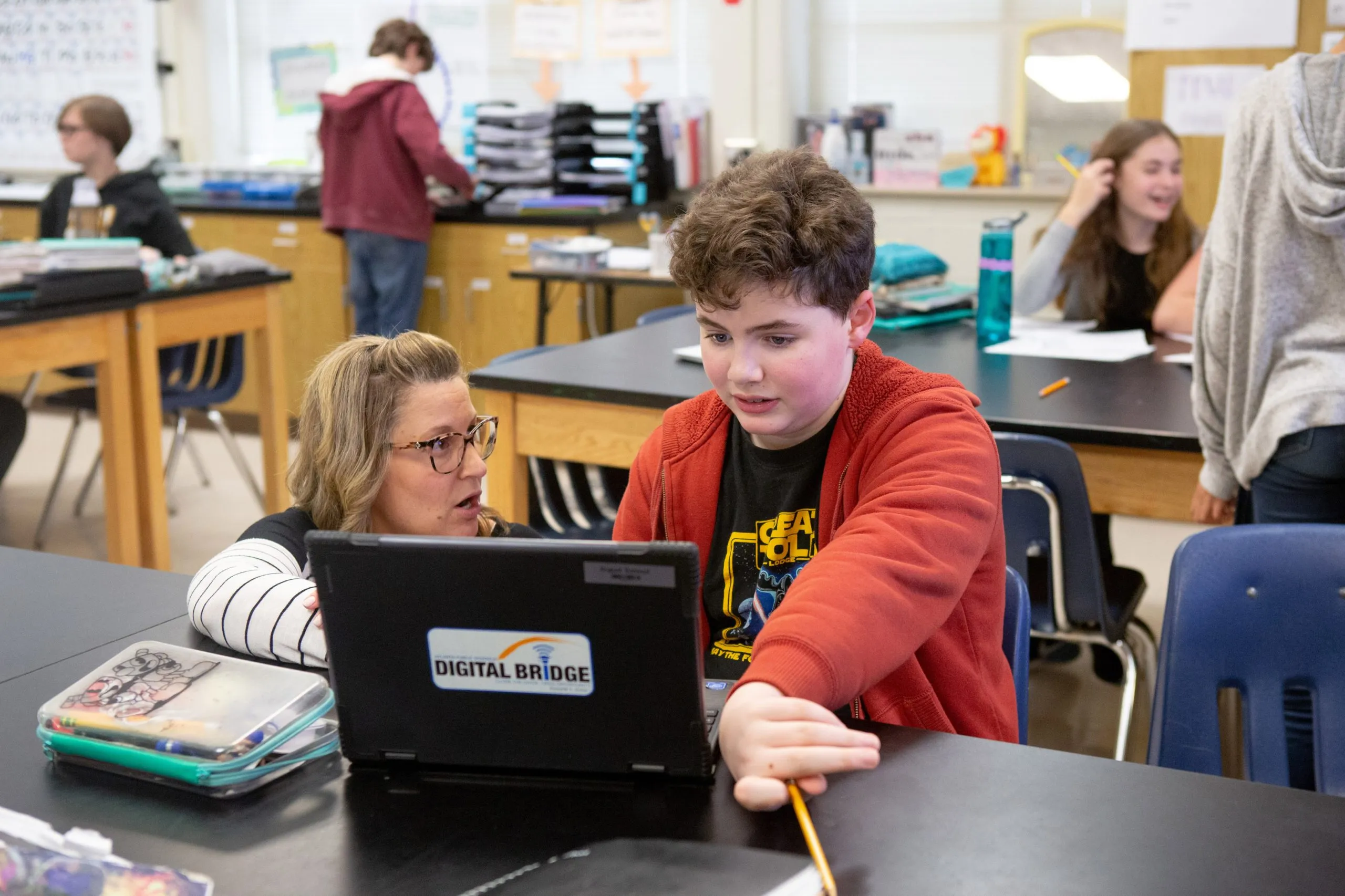
    One innovative way to close this gap is by integrating computer science into the general science curriculum at every middle school. This approach doesn’t require additional class periods or separate electives. Instead — by using computational thinking and digital tools to develop student understanding of real-world scientific phenomena — it reimagines how we teach science. 

    Science and computer science are already deeply interconnected in the real world. Scientists use computational models to simulate climate systems, analyze genetic data and design experiments. And computer scientists often draw inspiration from biology, physics and chemistry to develop algorithms and solve complex problems, such as by modeling neural networks after the brain’s architecture and simulating quantum systems for cryptography. 

    Teaching these disciplines together helps students see how both science and computer science are applicable and relevant to their lives and society.  

    Integrating computer science into middle school science instruction also addresses long-standing equity issues. When computer science is offered only as a separate elective, access often depends on prior exposure, school funding and parental advocacy. This creates barriers for students from underrepresented backgrounds, who may never get the chance to discover their interests or talents in computing.  

    Embedding computer science into core science classes helps to ensure that every student — regardless of zip code, race or gender — can build foundational skills in computing and see themselves as empowered problem-solvers. 

    Teachers must be provided the tools and support to make this a reality. Namely, schools should have access to middle school science curriculums that have computer science concepts directly embedded in the instruction. Such units don’t teach coding in isolation — they invite students to customize the sensors that collect data, simulate systems and design coded solutions to real-world problems. 

    For example, students can use computer science to investigate the question: “Why does contact between objects sometimes but not always cause damage, and how can we protect against damage?”  

    Students can also use sensors and programming to develop solutions to measure the forces of severe weather. In doing so, they’re not just learning science and computer science — they’re learning how to think like scientists and engineers. 

    Related: The path to a career could start in middle school 

    Integrating general science with computer science doesn’t require more instructional time. It simply requires us to consider how we can use computer science to efficiently investigate the science all students already study. 

    Rather than treating computer science as an add-on, we can weave it into the fabric of how students investigate, analyze and design.  

    This approach will not only deepen their understanding of scientific concepts but also build transferable skills in logic, creativity and collaboration. 

    Students need to start learning computer science earlier in their education, and we need to start in the science classroom by teaching these skills in middle school. To ensure that today’s students grow into tomorrow’s innovators and problem-solvers, we must treat computer science as foundational, not optional. 

    Jim Ryan is the executive director of OpenSciEd. 

    Contact the opinion editor at [email protected]. 

    This story about computer science in middle school was produced by The Hechinger Report, a nonprofit, independent news organization focused on inequality and innovation in education. Sign up for Hechinger’s weekly newsletter. 

    This <a target=”_blank” href=”https://hechingerreport.org/high-school-college-computer-science-lessons/”>article</a> first appeared on <a target=”_blank” href=”https://hechingerreport.org”>The Hechinger Report</a> and is republished here under a <a target=”_blank” href=”https://creativecommons.org/licenses/by-nc-nd/4.0/”>Creative Commons Attribution-NonCommercial-NoDerivatives 4.0 International License</a>.<img src=”https://i0.wp.com/hechingerreport.org/wp-content/uploads/2018/06/cropped-favicon.jpg?fit=150%2C150&amp;ssl=1″ style=”width:1em;height:1em;margin-left:10px;”>

    <img id=”republication-tracker-tool-source” src=”https://hechingerreport.org/?republication-pixel=true&post=114382&amp;ga4=G-03KPHXDF3H” style=”width:1px;height:1px;”><script> PARSELY = { autotrack: false, onload: function() { PARSELY.beacon.trackPageView({ url: “https://hechingerreport.org/high-school-college-computer-science-lessons/”, urlref: window.location.href }); } } </script> <script id=”parsely-cfg” src=”//cdn.parsely.com/keys/hechingerreport.org/p.js”></script>

    Source link

  • 5 years after transcript withholding bans began, college students face fewer obstacles but advocates worry about enforcement

    5 years after transcript withholding bans began, college students face fewer obstacles but advocates worry about enforcement

    by Felicia Mello, The Hechinger Report
    December 23, 2025

    OAKLAND — In 2020, California led the nation in outlawing transcript-withholding, a debt collection practice that sometimes kept low-income college students from getting jobs or advanced degrees. Five years later, 24 of the state’s 115 community colleges still said on their websites that students with unpaid balances could lose access to their transcripts, according to a recent UC Merced survey. 

    The communications failure has been misleading, student advocates said, although overall, the state’s students have benefited from the law.  

    It “raises questions about what actual institutional practices are at colleges and the extent to which colleges know the law and are fully compliant with the law,” said Charlie Eaton, a UC Merced sociology professor who led the research team that conducted the survey in October. 

    California community colleges say they are following the law, which prohibits them from refusing to release the grades of a student who owes money to the school — anywhere from a $25 library fine to unpaid tuition. The misinformation on some college websites is a clerical problem that campuses have been asked to update,  the California Community Colleges chancellor’s office said in an emailed statement.   

    Without an official transcript, students can’t prove they’ve earned college credits to admissions offices elsewhere or to potential employers. Millions of students nationwide have lost access to their transcripts because of unpaid fees, according to estimates from the higher education consulting firm Ithaka S+R.  

    Student advocates argued that the practice made little money for colleges, while costing graduates opportunities that could help them pay back their debts. 

    California lawmakers agreed; in 2019, they passed legislation that took effect on Jan. 1 2020, barring colleges from using transcript holds to collect debts. 

    At least 12 other states have followed California’s lead, passing laws limiting or banning colleges from withholding transcripts. 

    A similar but less stringent federal rule approved during the Biden administration took effect last year. 

    The new rules have raised awareness about colleges’ debt collection practices and inspired some to find ways to help their students avoid falling behind on their payments in the first place or to pay off what they owe — including by forgiving their debts.

    Related: Interested in innovations in higher education? Subscribe to our free biweekly higher education newsletter.

    Transcript withholding was never an especially effective collection tool, researchers have found. One 2018 study estimated that Ohio’s public colleges only netted only $127 for each transcript they withheld.

    Colleges and universities, however, argued that withholding transcripts was one of the few ways they had to prevent students from bouncing among institutions and leaving unpaid bills in their wake. Some use another tactic, blocking them from registering for new courses until bills are paid. 

    When colleges choose to withhold transcripts, the burden falls more heavily on low-income students and students of color, according to the American Association of Collegiate Registrars and Admissions Officers. Often those students accrue debts when they withdraw partway through a course, leading the college to return part of their financial aid to the federal government and charge the bill to the student. 

    In states with laws limiting transcript withholding, many colleges have begun communicating earlier and more often with students about their debts and offering flexible payment plans, said Elizabeth Looker, a senior program manager at Ithaka S+R. Some have added financial literacy training or required students with unpaid bills to meet with counselors. 

    Eight public colleges and universities in Ohio went further, offering a deal to former students with unpaid balances: Reenroll at any of the eight, and get up to $5,000 of the outstanding debt forgiven. Called the Ohio College Comeback Compact, the program, which began in 2002 and concludes this fall, was open to former students who had at least a 2.0 GPA and had been out of school a year or more.

    The program was designed to give a second chance to students whose educations stalled because of events outside their control, such as losing a job in the middle of the semester, said Steve McKellips, vice president for enrollment management at the University of Akron.

    Since the Ohio College Compact’s inception, 79 students have returned to the university under the program, at a cost to the state of $54,174 in debt forgiven. The university netted five times that, or $271,924, in additional tuition, McKellips said. More than 700 students have used the compact to reenroll, according to Ithaka S+R, which helped coordinate the program and is studying the results.

    “I think sometimes people have this image of somebody walking away from a tuition bill because they just don’t care,” McKellips said. “But sometimes there’s just a boulder in the way and somebody needs to move it. Once the boulder was moved and they could move forward, we’re finding them continuing happily along the way they always intended to.”

    Related: City University of New York reverses its policy on withholding transcripts over unpaid bills 

    Another California bill, introduced this year, would have given students a one-time pass to register for courses, even if they owed a debt. It failed after the University of California, Cal State and many private colleges and universities opposed it. 

    The University of California cited expected cuts to federal and state funding as one reason it opposed the bill. “UC believes that maintaining the ability to hold registration is essential for its ability to reasonably secure unpaid student debt,” UC legislative director Jessica Duong wrote to lawmakers.

    Cal State spokesperson Amy Bentley-Smith said that Cal State wanted a flexible approach to debt collection and that campuses had started eliminating registration holds for minor debts such as parking tickets and lost library books. 

    “Students are able to move forward with their enrollment even with institutional debts in the low hundreds to the low thousands of dollars, depending upon the university,” she said.

    Supporters of the failed bill — which also would have barred colleges from reporting a student’s institutional debt to credit agencies — said curbing aggressive debt collection doesn’t just help low-income students; it speeds up the training of workers in industries crucial to the state’s economy.

    “Schools think about these institutional debts in a way that is very penny-wise and pound-foolish, and it’s preventing people from participating in the economy,” said Mike Pierce, executive director of Protect Borrowers.

    Related: Colleges fight attempts to stop them from withholding transcripts over unpaid bills

    Annette Ayala of Simi Valley, hoping to become a registered nurse,  took her for-profit college to court to force it to comply with California’s debt collection law.  

    She had earned her vocational nursing license from the school, the Professional Medical Careers Institute, and wanted to continue her studies to become a registered nurse. But the college refused to release her transcript —  citing a $7,500 debt that Ayala argued in court records she did not owe — and without the transcript she could not apply to other colleges. 

    In her case, California’s Bureau for Private Postsecondary Education, which regulates for-profit colleges under the state’s Department of Consumer Affairs, cited her former school for violating the state’s transcript-withholding law.

    The college was fined $1,000 and ordered to update its enrollment agreement. The school forgave the debt it said Ayala owed. It’s the only case in which a school has been cited for withholding a transcript since the bureau started monitoring compliance with the law more closely two years ago, said Monica Vargas, a spokesperson for consumer affairs. 

    School officials had been unaware of the California law at the time Ayala sued, the school’s controller, Joshua Taylor, said, and have since updated their catalog to comply with it.

    With her vocational nursing license, Ayala has been working in home health care. Now that she has her transcript, she’s applying for RN programs, and said her salary would roughly double once she has the new degree, allowing her to save for the future and help her son pay for college.

    “You’ve got to give people the chance to get through their program and pay their debts as they’re working,” she said. “You can’t hold them back from being able to make top dollar with their abilities to pay back these loans.”

    Contact editor Lawrie Mifflin at 212-678-4078 or [email protected]

    This story about student debt and transcript withholding was produced by The Hechinger Report, a nonprofit, independent news organization focused on inequality and innovation in education. Sign up for our higher education newsletter. Listen to ourhigher education podcast.

    This <a target=”_blank” href=”https://hechingerreport.org/5-years-after-california-banned-holding-college-students-transcripts-hostage-for-unpaid-debt-some-colleges-neglect-the-law/”>article</a> first appeared on <a target=”_blank” href=”https://hechingerreport.org”>The Hechinger Report</a> and is republished here under a <a target=”_blank” href=”https://creativecommons.org/licenses/by-nc-nd/4.0/”>Creative Commons Attribution-NonCommercial-NoDerivatives 4.0 International License</a>.<img src=”https://i0.wp.com/hechingerreport.org/wp-content/uploads/2018/06/cropped-favicon.jpg?fit=150%2C150&amp;ssl=1″ style=”width:1em;height:1em;margin-left:10px;”>

    <img id=”republication-tracker-tool-source” src=”https://hechingerreport.org/?republication-pixel=true&post=114067&amp;ga4=G-03KPHXDF3H” style=”width:1px;height:1px;”><script> PARSELY = { autotrack: false, onload: function() { PARSELY.beacon.trackPageView({ url: “https://hechingerreport.org/5-years-after-california-banned-holding-college-students-transcripts-hostage-for-unpaid-debt-some-colleges-neglect-the-law/”, urlref: window.location.href }); } } </script> <script id=”parsely-cfg” src=”//cdn.parsely.com/keys/hechingerreport.org/p.js”></script>
    Source link

  • The Trump administration’s biggest impact on education in 2025 

    The Trump administration’s biggest impact on education in 2025 

    by Nirvi Shah, The Hechinger Report
    December 18, 2025

    Even with a conservative think tank’s blueprint detailing how the second Trump administration should reimagine the federal government’s role in education, few might have predicted what actually materialized this year for America’s schools and colleges. 

    Or what might be yet to come. 

    “2025 will go down as a banner year for education: the year we restored merit in higher education, rooted out waste, fraud and abuse, and began in earnest returning education to the states,” Education Secretary Linda McMahon told The Hechinger Report. She listed canceling K-12 grants she called wasteful, investing more in charter schools, ending college admissions that consider race or anything beyond academic achievement and making college more affordable as some of the year’s accomplishments. 

    “Best of all,” she said, “we’ve begun breaking up the federal education bureaucracy and returning education control to parents and local communities. These are reforms conservatives have championed for decades — and in just 12 months, we’ve made them a reality.” 

    Related: Become a lifelong learner. Subscribe to our free weekly newsletter featuring the most important stories in education. 

    McMahon’s characterization of the year is hardly universal. Earlier this month, Senate Democrats, led by independent Sen. Bernie Sanders, called out some of the administration’s actions this year. They labeled federal changes, especially plans to divide the Education Department’s duties across the federal government, dangerous and likely to cause chaos for schools and colleges. 

    “Already, this administration has cancelled billions of dollars in education programs, illegally withheld nearly $7 billion in formula funds, and proposed to fully eliminate many of the programs included in the latest transfer,” the senators wrote in a letter to Republican Sen. Bill Cassidy, chair of the committee that oversees education. “In our minds, that is unacceptable.” 

    So, what really happened to education this year? It was almost impossible for the average observer to keep track of the array of changes across colleges and universities, K-12 schools, early education and education research — and what it has all meant. This is a look back at how the education world was transformed. 

    Related: Tracking Trump: How he’s dismantling the Education Department and more 

    Higher education

    The administration was especially forceful in the higher education arena. It used measures including antidiscrimination law to quickly freeze billions of dollars in higher education research funding, interrupting years-long medical studies and coercing Columbia, Brown, Northwestern and other institutions into handing over multimillion-dollar payments and agreeing to policy changes demanded by the administration.

    A more widespread “compact” promising preference for federal funding to universities that agreed to largely ideological principles had almost no takers. But in the face of government threats, universities and colleges scrapped diversity, equity and inclusion, or DEI, programs that provided support based on race and other characteristics, and banned transgender athletes from competing on teams corresponding to genders other than the ones they were assigned at birth.

    As the administration unleashed its set of edicts, Republicans in Congress also expanded taxes on college and university endowments. And the One Big Beautiful Bill Act made other big changes to higher education, such as limiting graduate student borrowing and eliminating certain loan forgiveness programs. That includes public service loan forgiveness for graduates who take jobs with organizations the administration designated as having a “substantial illegal purpose” because they help refugees or transgender youth. In response, states, cities, labor unions and nonprofits immediately filed suit, arguing that the rule violated the First Amendment. 

    The administration has criticized universities, colleges and liberal students for curbing the speech of conservatives by shouting them down or blocking their appearances on campuses. However, it proceeded to revoke the visas of and begin deportation proceedings against international students who joined protests or wrote opinions criticizing Israeli actions in Gaza and U.S. government policy there.  

    Meanwhile, emboldened legislatures and governors in red states pushed back on what faculty could say in classrooms. College presidents including James Ryan at the University of Virginia and Mark Welsh III at Texas A&M were forced out in the aftermath of controversies over these issues. — Jon Marcus

    Related: How Trump 2.0 upended education research and statistics in one year  

    K-12 education

    Since Donald Trump returned to office earlier this year, K-12 schools have lost millions of dollars in sweeping cuts to federal grants, including money that helped schools serve students who are deaf or blind, grants that bolstered the dwindling rural teacher workforce and funding for Wi-Fi hotspots

    Last summer, the Trump administration briefly froze billions of dollars in federal funding for schools on June 30, one day before districts would typically apply to receive it. Although the money was restored in late July, some school leaders said they no longer felt confident they’ll receive all expected federal funds next year. And they are braced for more cuts to federal budgets as the U.S. Department of Education is dismembered.

    That process, as well as the end goal of returning the department’s responsibilities to the states, has raised uncertainty about whether federal money will continue to be earmarked for the same purposes. If the state of Illinois is in charge of federal funding for every school in the state, said Todd Dugan, superintendent of a rural Illinois district, will rural schools still get money to boost student achievement or will the state decide there are more pressing needs?  

    As part of layoffs at the Education Department during the government shutdown in the fall, the Trump administration cut loose almost everyone who works in the Office of Special Education Programs, alarming many parents and advocates. About 7.5 million children ages 3 to 21 are served under federal law protecting students with disabilities, and the office had already lost staffers after the Trump administration dismissed nearly half the Education Department’s staff in March. Some worry this additional round of layoffs is a big step toward moving oversight of how states treat students with disabilities to the Department of Health and Human Services.

    Even as the Trump administration attempts to push more control over education to the states, it has aggressively expanded federal power over school choice and transgender student rights in public schools. The One Big Beautiful Bill Act will create a federal school voucher program, allowing taxpayers to donate up to $1,700 for scholarships that families can use to pay for private school. The program won’t start until 2027, and states can choose whether to participate — setting up potentially divisive fights over new money for education in Democratic-controlled states. 

    Already, some Democratic-led states have come to the defense of schools in funding and legal fights with the federal government over transgender athletes participating in sports. The U.S. departments of Education and Justice launched a special investigations team to look into complaints of Title IX violations, targeting school districts and states that don’t restrict accommodations or civil rights protections for transgender students. Legal experts expect the U.S. Supreme Court to ultimately decide how Title IX — a federal law that prohibits sex discrimination in education — applies to public schools.

    The federal government directly runs just two systems of schools — one for military families and the other for children of tribal nations. In an executive order signed in January, the president directed both systems to offer parents a portion of federal funding allocated to their children to attend private, religious or charter schools. 

    And as part of the dismantling of the federal Education Department, the Interior Department — which oversees 183 tribal schools across nearly two dozen states — will assume greater control of Indian education programs. In addition to rolling out school choice at its campuses, the department will take over Indian education grants to public schools across the country, Native language programs, Alaska Native and Native Hawaiian programs, tribally controlled colleges and universities, and many other institutions. — Ariel Gilreath and Neal Morton

    Related: Trump administration makes good on many Project 2025 education goals

    Early education

    Early education was not at the top of Trump’s agenda when he returned to office. On the campaign trail, when asked if he would support legislation to make child care affordable, he gave an unfocused answer, suggesting tariff revenue could be tapped to bring down costs. Asked a similar question, Vice President JD Vance suggested that care by family members was one potential solution to child care shortages. 

    However, many of the administration’s actions, including cuts to the government workforce and grants, have affected children who depend on federal support. In April, the administration abruptly closed five of 10 regional offices supporting Head Start, the free, federally funded early childhood program for children from low-income families. Head Start program managers worried they would be caught up in a freeze on grant funding that affected all agencies. Even though administration officials said funds would keep flowing to Head Start, some centers reported having problems drawing down their money. The prolonged government shutdown, which ended Nov. 12 after 43 days, also forced some Head Start programs to temporarily close

    Though the shutdown is over, Head Start advocates are still worried. Many of the administration’s actions have been guided by the Project 2025 policy document created by the conservative Heritage Foundation. Project 2025 calls for eliminating Head Start, which serves about 715,000 children from birth to age 5, for a savings of about $12 billion a year. 

    The One Big Beautiful Bill Act contained some perks for parents, including an increase in the child tax credit from $2,000 to $2,200. The bill also created a new program called Trump accounts: Families can contribute up to $5,000 each year until a child turns 18, at which point the Trump account will turn into an individual retirement account. For children born between Jan. 1, 2025, and Dec. 31, 2028, the government will provide a $1,000 bonus. Billionaires Michael and Susan Dell have also promised to contribute $250 to the account of each child ages 10 and under who lives in a ZIP code with a median household income of $150,000 or less. 

    That program will launch in summer 2026. — Christina A. Samuels

    Contact staff writer Nirvi Shah at 212-678-3445, on Signal at NirviShah.14 or [email protected].   

    This story about the Trump administration’s impact on education was produced by The Hechinger Report, a nonprofit, independent news organization focused on inequality and innovation in education. Sign up for the Hechinger newsletter.

    This <a target=”_blank” href=”https://hechingerreport.org/how-education-changed-in-one-year-under-trump/”>article</a> first appeared on <a target=”_blank” href=”https://hechingerreport.org”>The Hechinger Report</a> and is republished here under a <a target=”_blank” href=”https://creativecommons.org/licenses/by-nc-nd/4.0/”>Creative Commons Attribution-NonCommercial-NoDerivatives 4.0 International License</a>.<img src=”https://i0.wp.com/hechingerreport.org/wp-content/uploads/2018/06/cropped-favicon.jpg?fit=150%2C150&amp;ssl=1″ style=”width:1em;height:1em;margin-left:10px;”>

    <img id=”republication-tracker-tool-source” src=”https://hechingerreport.org/?republication-pixel=true&post=113955&amp;ga4=G-03KPHXDF3H” style=”width:1px;height:1px;”><script> PARSELY = { autotrack: false, onload: function() { PARSELY.beacon.trackPageView({ url: “https://hechingerreport.org/how-education-changed-in-one-year-under-trump/”, urlref: window.location.href }); } } </script> <script id=”parsely-cfg” src=”//cdn.parsely.com/keys/hechingerreport.org/p.js”></script>

    Source link

  • OPINION: Workforce Pell can lead to good jobs for students if they get the support needed for long-term success

    OPINION: Workforce Pell can lead to good jobs for students if they get the support needed for long-term success

    by Alexander Mayer, The Hechinger Report
    December 16, 2025

    Ohio resident Megan Cutright lost her hospitality job during the pandemic. At her daughter’s urging, she found her way to Lorain County Community College in Ohio and onto a new career path.  

    Community colleges will soon have a new opportunity to help more students like Megan achieve their career goals. Starting next summer, federal funds will be available through a program known as Workforce Pell, which extends federal aid to career-focused education and training programs that last between eight and 15 weeks. 

    Members of Congress advocating for Pell Grants to cover shorter programs have consistently highlighted Workforce Pell’s potential, noting that the extension will lead to “good-paying jobs.”  

    That could happen. But it will only happen if states and colleges thoughtfully consider the supports students need for success.  

    This is important, because helping students pay for workforce programs is not enough. They also need support and wraparound services, much like the kind Megan was offered at Lorain, where her program followed an evidence-based model known as ASAP that assigns each student a career adviser. 

    Related: Interested in innovations in higher education? Subscribe to our free biweekly higher education newsletter. 

    Megan’s adviser “helped me from day one,” she said, in a story posted on the college’s website. “I told her I was interested in the radiologic technology program but that I had no idea where to start. We just did everything together.”  

    Megan went on to secure a job as an assistant in the radiology department at her local hospital, where she had interned as a student. She knew what steps she needed to take because her community college supported and advised her, using an evidence-backed practice, illustrating something we have learned from the experience of the community colleges that use the ASAP model: Support is invaluable.  

    Megan also knew that her path to a full-time position in radiologic technology required her to pass a licensure test — scheduled for four days after graduation.  

    The students who will enroll in Workforce Pell programs deserve the same careful attention. To ensure that Workforce Pell is effective for students, we should follow the same three critical steps that helped drive the expansion of ASAP and brought it to Megan’s college: (1) experiment to see what works, (2) collect and follow the data and (3) ensure that colleges learn from each other to apply what works. 

    Before ASAP was developed, the higher education community had some ideas about what might work to help students complete their degrees and get good jobs. When colleges and researchers worked together to test these ideas and gathered reliable data, though, they learned that those strategies only helped students at the margins. 

    There was no solid evidence about what worked to make big, lasting improvements in college completion until the City University of New York (CUNY) worked with researchers at MDRC to test ASAP and its combination of longer-lasting strategies. They kept a close eye on the data and learned that while some strategies didn’t produce big effects on their own, the combined ASAP approach resulted in significant improvements in student outcomes, nearly doubling the three-year college completion rate.  

    CUNY and MDRC shared what they learned with higher education leaders and policymakers, inspiring other community colleges to try out the model. Those colleges started seeing results too, and the model kept spreading. Today, ASAP is used in more than 50 colleges in seven states. And it’s paying off — in Ohio, for example, students who received ASAP services ended up earning significantly more than those who did not. 

    That same experimentation and learning mindset will be needed for Workforce Pell, because while short-term training can lead to good careers, it’s far from guaranteed.  

    For example, phlebotomy technician programs are popular, but without additional training or credentials they often don’t lead to jobs that pay well. Similarly, students who complete short-term programs in information technology, welding and construction-related skills can continue to acquire stackable credentials that substantially increase their earning potential, although that also doesn’t happen automatically. The complexity of the credentialing marketplace can make it impossible for students and families to assess programs and make good decisions without help.  

    Related: OPINION: Too many college graduates are stranded before their careers can even begin. We can’t let that happen 

    A big question for Workforce Pell will be how to make sure students understand how to get onto a career path and continue advancing their wider career aspirations. Workforce Pell grants are designed to help students with low incomes overcome financial barriers, but these same students often face other barriers.  

    That’s why colleges should experiment with supports like career advising to help students identify stepping-stones to a good career, along with placement services to help them navigate the job market. In addition, states must expand their data collection efforts to formally include noncredit programs. Some, including Iowa, Louisiana and Virginia, have already made considerable progress linking their education and workforce systems.  

    Offering student support services and setting up data systems requires resources, but Workforce Pell will bring new funds to states and colleges that are currently financing job training programs. Philanthropy can also help by providing resources to test out what works best to get students through short-term programs and onto solid career paths.  

    Sharing what works — and what doesn’t — will be critical to the success of Workforce Pell in the long-term. The same spirit of learning that fueled innovation around the ASAP model should be embedded in Workforce Pell from the start.  

    Alexander Mayer is director of postsecondary education at MDRC, the nonprofit research association. 

    Contact the opinion editor at [email protected]. 

    This story about Workforce Pell was produced by The Hechinger Report, a nonprofit, independent news organization focused on inequality and innovation in education. Sign up for Hechinger’s weekly newsletter. 

    This <a target=”_blank” href=”https://hechingerreport.org/opinion-workforce-pell-can-lead-to-good-jobs-for-students-if-they-get-the-support-needed-for-long-term-success/”>article</a> first appeared on <a target=”_blank” href=”https://hechingerreport.org”>The Hechinger Report</a> and is republished here under a <a target=”_blank” href=”https://creativecommons.org/licenses/by-nc-nd/4.0/”>Creative Commons Attribution-NonCommercial-NoDerivatives 4.0 International License</a>.<img src=”https://i0.wp.com/hechingerreport.org/wp-content/uploads/2018/06/cropped-favicon.jpg?fit=150%2C150&amp;ssl=1″ style=”width:1em;height:1em;margin-left:10px;”>

    <img id=”republication-tracker-tool-source” src=”https://hechingerreport.org/?republication-pixel=true&post=113877&amp;ga4=G-03KPHXDF3H” style=”width:1px;height:1px;”><script> PARSELY = { autotrack: false, onload: function() { PARSELY.beacon.trackPageView({ url: “https://hechingerreport.org/opinion-workforce-pell-can-lead-to-good-jobs-for-students-if-they-get-the-support-needed-for-long-term-success/”, urlref: window.location.href }); } } </script> <script id=”parsely-cfg” src=”//cdn.parsely.com/keys/hechingerreport.org/p.js”></script>
    Source link

  • As the job market tightens, workers without degrees could hit a ‘paper ceiling’

    As the job market tightens, workers without degrees could hit a ‘paper ceiling’

    by Lawrence Lanahan, The Hechinger Report
    December 2, 2025

    DENVER — On a bus headed downtown, Cherri McKinney opened a compact mirror and — even as the vehicle rattled and blinding morning sun filled the window — skillfully applied eyeliner.

    McKinney is a licensed aesthetician. She went into bookkeeping after graduating from high school in 1992, then ran a waxing salon for years. Later she shifted into human resources at a homeless shelter. But stepping off the bus, she started her work day as a benefits and leave administrator for Colorado’s Department of Labor and Employment.

    She wouldn’t have made it past some hiring managers.

    “My background is kind of all over the place,” McKinney said. “You might have looked at my résumé and thought, ‘Wow, this girl doesn’t have a college education.’”

    In fact, Colorado’s state government was looking for workers just like her. In 2022, Gov. Jared Polis signed an executive order directing state agencies to embrace “skills-based hiring” — evaluating job seekers based on abilities rather than education level — and to open more positions to applicants without college diplomas. When McKinney interviewed with the state in the summer of 2024, she said, she was asked practical questions about topics like the Family Medical Leave Act, not about her academic background.

    For a decade, workforce organizations, researchers and public officials have pushed employers to stop requiring bachelor’s degrees for jobs that don’t need them. That’s a response to a hiring trend that began during the Great Recession, when job seekers vastly outnumbered open positions and employers increased their use of bachelor’s degree requirements for many jobs — like administrative assistants, construction supervisors and insurance claims clerks — that people without college diplomas had capably handled. The so-called “paper ceiling,” advocates say, locks skilled workers without degrees out of good-paying jobs. Degree requirements hurt employers, too, advocates argue, by screening out valuable talent.

    Related: Interested in more news about colleges and universities? Subscribe to our free biweekly higher education newsletter.

    In recent years, at least 26 states, along with private companies like IBM and Accenture, began stripping degree requirements and focusing hiring practices on applicants’ skills. A job seeker’s market after Covid, plus labor shortages in the public sector, boosted momentum. Seven states showed double-digit percentage increases in job listings without a degree requirement between 2019 and 2024, according to the National Governors Association. A 2022 report from labor analytics firm Burning Glass (recently renamed Lightcast) found degree requirements disappearing from private sector listings too.

    But less evidence has emerged of employers actually hiring nondegreed job seekers in substantial numbers, and a crumbling economic outlook could stall momentum. Last year, Burning Glass and Harvard Business School found that less than 1 in 700 hires in 2023 benefited from the shift to skills-based hiring. Federal layoffs and other cuts pushing more workers with degrees into the job hunt could tempt employers to return to using the bachelor’s as a filtering mechanism.

    “I think it’s a sort of do-or-die moment” for skills-based hiring, said Amanda Winters, who advises state governments on skills-based hiring at the nonprofit National Governors Association.

    Winters said the shift to hiring for skills requires time-consuming structural changes. Human resource departments must rewrite job descriptions, and hiring managers must be trained to change their approach to interviewing to assess candidates for skills, among other steps. And even then, said Winters, there’s no reason for managers not to prefer applicants with college degrees if they indeed have the skills.

    Related: Students worried about getting jobs are adding extra majors

    Colorado is trying to push employers, both public and private, to make this shift. Polis’ 2022 order devoted $700,000 and three staffers to institutionalizing skills-based hiring in state government. According to a case study by the National Governors Association and the nonprofit Opportunity@Work, the state is working with human resources departments at individual agencies, training them to rewrite job descriptions to spell out skills (for example, “active listening and interpersonal skills”). When posting a job, hiring managers are encouraged to click a box that reads: “I have considered removing the degree requirement for this role.” 

    Polis’ team also built a dashboard to track progress toward “Wildly Important Goals” related to skills-based hiring — like boosting the share of job applicants without a bachelor’s degree by 5 percent by summer 2026. State officials say about 80 percent of job classifications (categories of jobs with specific pay scales and responsibilities — for example, Human Resources Specialist III or Accountant I) now emphasize skills over degrees.

    All told, the state says, 25 percent of hires within those job classifications in 2024 — 1,588 in total — were people without degrees, roughly the same share as in 2023, when the state began collecting this information. Similar data from other states on their success in hiring skilled, nondegreed workers is scarce. State officials from Maryland and Pennsylvania, two of the first states with executive orders dropping degree requirements, said they track education levels of applicants but not of new hires. 

    To spark skills-based hiring in the private sector, the Colorado Workforce Development Council, a quasi-governmental group appointed by the governor, encourages local workforce boards to help assess employers’ needs and job seekers’ skills.

    One of those boards — Pikes Peak Workforce Center in Colorado Springs — conducts workshops for local businesses on skills-based hiring and helps them write job descriptions that emphasize skills. When a company registers for a job fair, said CEO Traci Marques, the center asks both what positions are open and which skills are needed for them.

    The center also teaches job seekers to identify their skills and show employers how they apply in different fields. A recent high school graduate who served on student council, Marques said, might discuss what that role taught them about time management, conflict resolution and event planning.

    The goal is for skills to become the lingua franca between employers and job seekers. “It’s really that matchmaking where we fit in,” Marques said.

    One new matchmaking tool is learning and employment records, or LERs. These digital records allow job seekers to verify their degrees, credentials and skills with former schools and workplaces and then share them with potential employers. Two years ago, a philanthropic coalition granted the Colorado Workforce Development Council $1.4 million to create LER systems.

    LERs are still in the early stages of development, but advocates say they could eventually allow more precise matching of employers’ needs with job seekers’ skills.

    Once nondegreed workers get in the door, employers can also see payoffs, said Cole Napper, vice president of research, innovation and talent insights at Lightcast. His research shows that workers hired for skills get promoted at almost the same rate as education-based hires and stay at their jobs longer.

    But as the labor market cools, the question now is whether people without four-year degrees will get in the door in the first place. Nationally, job growth has slowed. Maryland and Colorado froze hiring this summer for state positions.

    At a recent job fair at Pikes Peak, single mother Yvette Stanton made her way around the tables, some featuring placards that read “Skills-Based Hiring.” After a few months at a sober living facility, Stanton had lined up day care and was ready to work. She clutched a green folder with a résumé documenting certifications vouching for her skills in phlebotomy and medication administration. “When you have more certifications, there are better job opportunities,” said Stanton.

    She approached a table for the Colorado Department of Corrections. Human resources specialist Jack Zeller told her that prisons do need workers with medical certifications, and he said she could also apply to be a corrections officer. But, he said — holding out his phone to show her the job application site — she should wait until Jan. 1.

    “If the hiring freeze ends like it’s supposed to,” he said, “there’s gonna be a billion jobs going up on the website.”

    Related: Apprenticeships for high schoolers are touted as the next big thing. One state leads the way      

    Colorado works not just on the demand side, pushing employers to seek out workers based on their skills, but also on the supply side, to arm people who might not choose college with marketable skills and help them find jobs in in-demand industries.

    The Polis administration encourages high schools and community colleges to make available industry-recognized credentials — including certified nursing assistant, certified associate in project management and the CompTIA cybersecurity certification— that can earn students credits while giving them skills for better-paying jobs. The governor is also making a big bet on work-based learning opportunities in high school and community college, especially apprenticeships.

    If employers meet talented workers who lack degrees, they’ll grow more comfortable hiring for skills, said Sarah Heath, who directs career and technical education for the Colorado Community College System. “You’ve got to prove it to people to get them to buy into it,” she said.

    At Red Rocks Community College in Lakewood, a suburb of Denver, President Landon Pirius has set a goal of eventually providing a work-based learning experience to every graduate. Earlier this year, the college hired a work-based learning coordinator and an apprenticeship coordinator, and it partners with Northrop Grumman on a registered apprenticeship that lets cybersecurity students earn money while getting technical instruction and on-the-job learning.

    In his frequent discussions with regional employers, Pirius said, “the message is consistently skill-based hiring.” He added: “Our manufacturers are like, ‘I don’t even care about a degree. I just want to know that they can do X, Y, Z skills. So when you’re teaching our students, make sure you teach them these things.’”

    Colorado community colleges also see opportunities to equip students with skills in fields like aerospace, quantum computing, behavioral addiction treatment and mental health counseling, where there’s a growing demand for workers and some jobs can be handled without a four-year degree. In 2022, Colorado gave its community college system $15 million to create pathways to behavioral health careers that don’t require a Master of Social Work degree or even a B.A.

    Related: ‘Not waiting for people to save us’: 9 school districts combine forces to help students

    Colorado’s skill-based talent pipeline extends to high school. In a “Computer Science and Cybersecurity” class at Warren Tech, a high school in Lakewood, Zachary Flower teaches in-demand “soft skills” like problem solving, teamwork and communication.

    “The people who get hired are more often the ones who are better communicators,” said Flower, a software developer who was a director of software engineering and hiring manager for a travel company before he started teaching. Communication skills are half of the grade in Flower’s capstone project: Students communicate independently throughout the year with local industry sponsors, and at the end they present to a panel of engineers and developers.

    Despite the emphasis on skills-based hiring, a 2023 study projected that more than 4 in 10 job openings in Colorado from 2021 through 2031 would require at least a bachelor’s degree — the second-highest proportion of any state in the country — because many industries there, like engineering, health care and business services, require higher education, according to Georgetown University’s Center on Education and the Workforce.“But there’s still a significant amount of opportunity for people with less than a bachelor’s degree,” said Nicole Smith, chief economist at the center.

    People, in other words, like Cherri McKinney, who couldn’t afford college and didn’t want to spend four years finding her path. McKinney plans to stay in state government, where she believes she can develop more skills and advance without a college degree. Indeed, a 2023 executive order demanded that every state agency develop at least two work-based learning programs by the end of this year.

    Gov. Polis, who championed workers like McKinney, ends his second term in January 2027 and cannot run for reelection. State budgets are fragile in the Trump era. McKinney’s colleagues call often, nervous about their benefits in a time of hiring freezes and government shutdowns.

    McKinney isn’t worried.

    “When I made my first career switch from bookkeeping to aesthetics, what I realized was I am the eye of this storm,” she said. “Things swirl around me, and if I bring myself in my way that I do to my jobs, that’s what is going to create the stability for me.”

    Contact editor Caroline Preston at 212-870-8965, via Signal at CarolineP.83 or on email at [email protected].

    This story about job skills was produced by The Hechinger Report, a nonprofit, independent news organization focused on inequality and innovation in education. Sign up for the Hechinger newsletter.

    This <a target=”_blank” href=”https://hechingerreport.org/no-college-degree-no-problem-not-so-fast/”>article</a> first appeared on <a target=”_blank” href=”https://hechingerreport.org”>The Hechinger Report</a> and is republished here under a <a target=”_blank” href=”https://creativecommons.org/licenses/by-nc-nd/4.0/”>Creative Commons Attribution-NonCommercial-NoDerivatives 4.0 International License</a>.<img src=”https://i0.wp.com/hechingerreport.org/wp-content/uploads/2018/06/cropped-favicon.jpg?fit=150%2C150&amp;ssl=1″ style=”width:1em;height:1em;margin-left:10px;”>

    <img id=”republication-tracker-tool-source” src=”https://hechingerreport.org/?republication-pixel=true&post=113525&amp;ga4=G-03KPHXDF3H” style=”width:1px;height:1px;”><script> PARSELY = { autotrack: false, onload: function() { PARSELY.beacon.trackPageView({ url: “https://hechingerreport.org/no-college-degree-no-problem-not-so-fast/”, urlref: window.location.href }); } } </script> <script id=”parsely-cfg” src=”//cdn.parsely.com/keys/hechingerreport.org/p.js”></script>

    Source link

  • We must help the next generation get from classrooms to careers with real guidance, not guesswork

    We must help the next generation get from classrooms to careers with real guidance, not guesswork

    by Jason Joseph, The Hechinger Report
    December 2, 2025

    Too many high school graduates are unsure how their education connects to their future. Even the most driven face a maze of options, with little guidance on how classroom experiences connect to real-world careers. 

    It’s no wonder that fewer than 30 percent of high school students feel “very prepared” to make life-after-graduation decisions, according to a recent study. 

    This isn’t just an education gap; it’s an economic fault line. During this period of significant economic transition, when the labor market is demanding specialized skills and adaptability, students must be prepared for what comes next. 

    And yet they are not, in part because our job market is increasingly opaque to those without established networks. Many jobs are filled through networking and referrals. But few young people have access to such resources, and the result is a generation attempting to launch careers through guesswork instead of guidance. This lack of access is hindering not only the repopulation of America’s workforce but also American competitiveness on the world stage. 

    Related: A lot goes on in classrooms from kindergarten to high school. Keep up with our free weekly newsletter on K-12 education.  

    Consider this: Some 45 percent of employers struggle to fill entry-level roles — often because applicants lack the skills they need, a 2023 McKinsey survey found. Yet nearly half of recent college graduates end up underemployed, Higher Ed Dive reports, providing clear evidence of a disconnect between degrees earned and jobs available. 

    At the same time, many young people’s post-pandemic disengagement and companies’ growing interest in skills-based hiring and increasing automation have altered the employment landscape forever. 

    So let’s be clear — we need a top-to-bottom shift from reactive hiring to the pragmatic creation of more intentional pathways. Bipartisan voices are calling for better alignment between K-12 education and workforce needs. Attempting to improve this alignment, in turn, offers critical opportunities to invest in career navigation and employer engagement systems.  

    Some states are already demonstrating what’s possible. In South Carolina, SC STEM Signing Day honors students from every county who choose career paths in STEM, regardless of whether they’re attending a four-year college, a two-year program or starting a skilled apprenticeship.  

    This initiative reflects a broader truth: Higher education is one of many valuable pathways, but not the only one.  

    Initiatives such as SC Future Makers have facilitated tens of thousands of virtual conversations between students and professionals, helping young people understand real-world connections between classroom skills and career outcomes.  

    This model, which pairs digital scale with local relevance, offers a replicable playbook. And it’s working elsewhere. Tallo, a career development platform, powers dozens of virtual employer events and digital campaigns each year, from regional showcases to national hiring days. In partnership with AVID and SME, Tallo has helped young people secure job interviews, land internships and earn recognized credentials. 

    States like Indiana and Tennessee are also finding new ways to connect degrees to jobs. Through programs like Next Level Jobs and Tennessee Pathways, these states incentivize employer engagement in high school career navigation and align funding to skills-based training.  

    Related: What happened when a South Carolina city embraced career education for all its students 

    All these models emphasize scalable, bipartisan approaches, and they are not only much needed and possible — they’re already in motion. 

    The consequences of career misalignment extend beyond personal frustration — they ripple across the economy. Youth disconnection cost American taxpayers billions of dollars in government expenditures and in tax revenue lost.  

    Closing this gap is thus both a moral imperative and an economic strategy. Technology is ultimately playing a growing role in helping students make more informed decisions about their future. 

    Of course, real obstacles remain: resource constraints, outdated mindsets and legacy policies often slow progress. Yet successful states, communities and technological platforms are proving that it’s possible to build flexible, sustainable models when schools, employers and local leaders align around shared goals: coordinated investment, public-private alignment and bold leadership to move from promising pockets to national progress.  

    The stakes could not be higher. We need career pathways to succeed. 

    This is a generation ready to act if we give them the tools. That means better data, stronger networks and clearer paths forward.  

    Let’s replace chance with strategy and replace confusion with opportunity. 

    With smarter systems and stronger collaboration, we can help more young people build meaningful careers and meet the needs of a changing economy. 

    Jason Joseph is corporate chief of staff at Stride Inc., a leading education company that has served more than two million students nationwide. 

    Contact the opinion editor at [email protected]. 

    This story about career education was produced by The Hechinger Report, a nonprofit, independent news organization focused on inequality and innovation in education. Sign up for Hechinger’s weekly newsletter. 

    This <a target=”_blank” href=”https://hechingerreport.org/opinion-we-must-help-the-next-generation-get-from-classrooms-to-careers-with-real-guidance-not-guesswork/”>article</a> first appeared on <a target=”_blank” href=”https://hechingerreport.org”>The Hechinger Report</a> and is republished here under a <a target=”_blank” href=”https://creativecommons.org/licenses/by-nc-nd/4.0/”>Creative Commons Attribution-NonCommercial-NoDerivatives 4.0 International License</a>.<img src=”https://i0.wp.com/hechingerreport.org/wp-content/uploads/2018/06/cropped-favicon.jpg?fit=150%2C150&amp;ssl=1″ style=”width:1em;height:1em;margin-left:10px;”>

    <img id=”republication-tracker-tool-source” src=”https://hechingerreport.org/?republication-pixel=true&post=113600&amp;ga4=G-03KPHXDF3H” style=”width:1px;height:1px;”><script> PARSELY = { autotrack: false, onload: function() { PARSELY.beacon.trackPageView({ url: “https://hechingerreport.org/opinion-we-must-help-the-next-generation-get-from-classrooms-to-careers-with-real-guidance-not-guesswork/”, urlref: window.location.href }); } } </script> <script id=”parsely-cfg” src=”//cdn.parsely.com/keys/hechingerreport.org/p.js”></script>
    Source link

  • I earned my associate degree while still in high school, and it changed my life

    I earned my associate degree while still in high school, and it changed my life

    by Maxwell Fjeld, The Hechinger Report
    December 1, 2025

    Earning an associate degree alongside my high school diploma was an ambitious goal that turned into a positive high school experience for me. By taking on the responsibilities of a college student, I further prepared myself for life after high school.  

    I needed to plan out my own days. I needed to keep myself on task. I needed to learn how to monitor and juggle due dates, lecture times and exams while ensuring that my extracurricular activities did not create conflicts. 

    All of this was life-changing for a rural Minnesota high school student. Dual enrollment through Minnesota’s PSEO program saved me time and money and helped me explore my interests and narrow my focus to business management. After three years of earning dual credits as a high school student, I graduated from community college and was the student speaker at the commencement earlier this year in May — one month before graduating from high school. 

    As a student earning college credits while still in high school, I gained exposure to different career fields and developed a passion for civic engagement. At the beginning of my senior year, while taking courses at the local community and technical college, I was elected to serve as that school’s first cross-campus student body president. 

    Related: A lot goes on in classrooms from kindergarten to high school. Keep up with our free weekly newsletter on K-12 education.  

    While most states have dual-enrollment programs, Minnesota’s support for its PSEO students stands out. As policymakers consider legislative and funding initiatives to strengthen dual enrollment in other states, I believe that three features of our program could provide a blueprint for states that want to do more. 

    First, the college credits I earned are transferable and meet degree requirements.  

    Second, the PSEO program permitted me to take enough credits each semester to earn my associate degree. While the number of dual-enrollment credits high school students can earn varies by state and program, when strict limitations are set on those numbers, the program can become a barrier to higher education instead of an alternate pathway.  

    Third, Minnesota’s PSEO program limits the cost burden placed on students. With rising costs and logistical challenges to pursuing higher education credentials, the head start that students can create for themselves via loosened restrictions on dual-enrollment credits can make a real financial impact, especially for students like me from small towns. 

    Dual-enrollment costs vary significantly from state to state, with some programs charging for tuition, fees, textbooks and other college costs. In Minnesota, those costs are covered by the Department of Education. In addition, if families meet income requirements, the expenses incurred by students for education-related transportation are also covered.  

    If I did not have state support, I would not have been able to participate in the program. Financial support is a crucial component to being a successful dual-enrollment student. When the barrier of cost is removed, American families benefit, especially students from low-income, rural and farming backgrounds.  

    Early exposure to college helped me choose my major by taking college classes to experiment — for free. When I first started, I was interested in computer science as a major. After taking a computer science class and then an economics class the following semester, I chose business as my major.  

    The ability to explore different fields of study was cost-saving and game-changing for me and is an opportunity that could be just as beneficial for other students. 

    Targeted investments in programs like this have benefited many students, including my father in the 1990s. His dual-enrollment experience allowed him to get a head start on his education and gain valuable life skills at a young age and is a great example of dual enrollment’s potential generational impact. 

    Related: STUDENT VOICE: I’m thriving in my dual-enrollment program, but it could be a whole lot better 

    When dual-enrollment students receive guidance and support, it can be transformational. Early exposure to college introduced me to college-level opportunities. As student government president, I went to Washington, D.C., to attend a national student summit. I was able to meet with congressional office staffers and advocate for today’s students and for federal investment in dual-enrollment programs, explaining my story and raising awareness. 

    The daily life of high school is draining for some and can be devastating for others. I had many friends who came to believe that the bullying, peer-pressure and culture they experienced in high school would continue in college, so they deemed higher education “not worth it.” 

    Through dual enrollment, I saw the difference in culture; students who face burnout from daily high school life can refocus and feel good about their futures again. 

    Congress can help state legislatures by establishing strong dual-enrollment programs nationwide. With adequate government support, dual-enrollment programs can help students from all walks of life and increase college graduation rates. If all states offer access to the same opportunities that I had in high school, our next generation will be better prepared for the workforce and more successful. 

    Maxwell Fjeld is pursuing his bachelor’s degree at the University of Minnesota Twin Cities’ Carlson School of Management after earning an associate degree upon high school graduation through dual enrollment. He is also a student ambassador fellow at Today’s Students Coalition. 

    Contact the opinion editor at [email protected]. 

    This story about dual-enrollment programs was produced by The Hechinger Report, a nonprofit, independent news organization focused on inequality and innovation in education. Sign up for Hechinger’s weekly newsletter. 

    This <a target=”_blank” href=”https://hechingerreport.org/student-voice-i-earned-my-associate-degree-while-still-in-high-school-and-it-changed-my-life/”>article</a> first appeared on <a target=”_blank” href=”https://hechingerreport.org”>The Hechinger Report</a> and is republished here under a <a target=”_blank” href=”https://creativecommons.org/licenses/by-nc-nd/4.0/”>Creative Commons Attribution-NonCommercial-NoDerivatives 4.0 International License</a>.<img src=”https://i0.wp.com/hechingerreport.org/wp-content/uploads/2018/06/cropped-favicon.jpg?fit=150%2C150&amp;ssl=1″ style=”width:1em;height:1em;margin-left:10px;”>

    <img id=”republication-tracker-tool-source” src=”https://hechingerreport.org/?republication-pixel=true&post=113590&amp;ga4=G-03KPHXDF3H” style=”width:1px;height:1px;”><script> PARSELY = { autotrack: false, onload: function() { PARSELY.beacon.trackPageView({ url: “https://hechingerreport.org/student-voice-i-earned-my-associate-degree-while-still-in-high-school-and-it-changed-my-life/”, urlref: window.location.href }); } } </script> <script id=”parsely-cfg” src=”//cdn.parsely.com/keys/hechingerreport.org/p.js”></script>
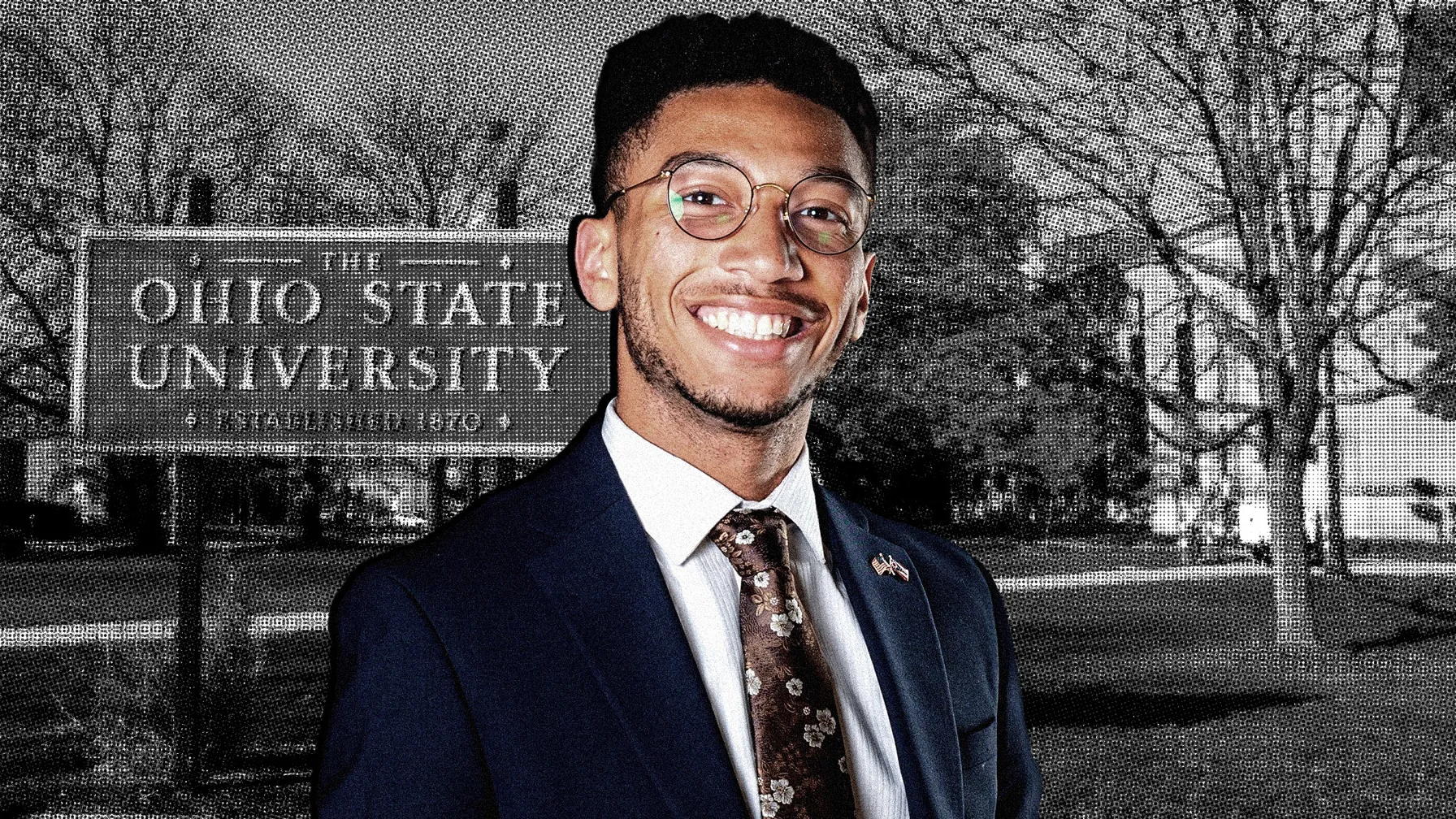
    Source link

  • Funding high-quality teacher preparation programs should be the highest priority for policymakers

    Funding high-quality teacher preparation programs should be the highest priority for policymakers

    by Sharif El-Mekki and Heather Kirkpatrick, The Hechinger Report
    November 25, 2025

    By dismantling the Department of Education, the Trump administration claims to be returning control of education to the states. 

    And while states and local school districts are doing their best to understand the new environments they are working in, they have an opportunity amidst the chaos to focus on what is most essential and prioritize how education dollars are spent.  

    That means recruiting and retaining more well-prepared teachers with their new budget autonomy. Myriad factors affect student learning, but research shows that the primary variable within a school’s control is the teacher. Other than parents, teachers are the adults who spend the most time with our children. Good teachers have been shown to singularly motivate students.  

    And that’s why, amidst the chaos of our current education politics, there is great opportunity. 

    Until recently, recruiting, preparing and retaining enough great teachers has not been a priority in policy or funding choices. That has been a mistake, because attracting additional teachers and preparing them to be truly excellent is arguably the single biggest lever policymakers can use to demonstrate their commitment to high-quality public schools. 

    Related: Interested in innovations in higher education? Subscribe to our free biweekly higher education newsletter. 

    Great teachers, especially whole schools full of great teachers, do not just happen. We develop them through quality preparation and meaningful opportunities to practice the profession. When teachers are well-prepared, students thrive. Rigorous teacher preparation translates into stronger instruction, higher K-12 student achievement and a more resilient, equitable education system

    Teachers, like firefighters and police officers, are public servants. We rightly invest public dollars to train firefighters and police officers because their service is essential to the safety and well-being of our communities. Yet teachers — who shape our future through our kids — are too often asked to shoulder the costs of their own preparation. 

    Funding high-quality teacher preparation should be as nonnegotiable as funding other vital public service professions, especially because we face a teacher shortage — particularly in STEM fields, special education and rural and urban schools.  

    This is in no small part because many potential teaching candidates cannot afford the necessary education and credentialing. 

    Our current workforce systems were not built for today’s teaching candidates. They were not designed to support students who are financially vulnerable, part-time or first-generation, or those with caregiving responsibilities.  

    Yet the majority of tomorrow’s education workforce will likely come from these groups, all of whom have faced systemic barriers in accumulating the generational wealth needed to pursue degrees in higher education. 

    Some states have responded to this need by developing strong teacher development pathways. For example, California has committed hundreds of millions to growing the teacher pipeline through targeted residency programs and preparation initiatives, and its policies have enabled it to recruit and support more future teachers, including greater numbers of educators from historically underrepresented communities. 

    Pennsylvania has created more pathways into the education field with expedited credentialing and apprenticeships for high school students, and is investing millions of dollars in stipends for student teachers. 

    It has had success bringing more Black candidates into the teaching profession, which will likely improve student outcomes: Black boys from low-income families who have a Black teacher in third through fifth grades are 18 percent more interested in pursuing college and 29 percent less likely to drop out of high school, research shows. Pennsylvania also passed a senate bill﷟HYPERLINK “https://www.senatorhughes.com/big-win-in-harrisburg-creating-the-teacher-diversity-pipeline/” that paved the way for students who complete high school courses on education and teaching to be eligible for career and technical education credits. 

    At least half a dozen other states also provide various degrees of financial support for would-be teachers, including stipends, tuition assistance and fee waivers for credentialing.  

    One example is a one-year teacher residency program model, which recruits and prepares people in historically underserved communities to earn a mster’s degree and teaching credential.  

    Related: Federal policies risk worsening an already dire rural teacher shortage 

    Opening new pathways to teaching by providing financial support has two dramatic effects. First, when teachers stay in education, these earnings compound over time as alumni become mentor teachers and administrators, earning more each year.  

    Second, these new pathways can also improve student achievement, thanks to policies that support new teachers in rigorous teacher education programs

    For example, the Teaching Academy model, which operates in several states, including Pennsylvania, New York and Michigan, attracts, cultivates and supports high school students on the path to becoming educators, giving schools and districts an opportunity to build robust education programs that serve as strong foundations for meaningful and long-term careers in education, and providing aspiring educators a head start to becoming great teachers. Participants in the program are eligible for college scholarships, professional coaching and retention bonuses.  

    California, Pennsylvania and these other states have begun this work. We hope to encourage other state lawmakers to seize the opportunities arising from recent federal changes and use their power to invest in what matters most to student achievement —teachers and teacher preparation pathways. 

    Sharif El-Mekki is founder & CEO of the Center for Black Educator Development in Pennsylvania. Heather Kirkpatrick is president and CEO Alder Graduate School in California. 

    Contact the opinion editor at [email protected]. 

    This story about teacher preparation programs was produced by The Hechinger Report, a nonprofit, independent news organization focused on inequality and innovation in education. Sign up for Hechinger’s weekly newsletter. 

    This <a target=”_blank” href=”https://hechingerreport.org/opinion-funding-high-quality-teacher-preparation-programs-should-be-the-highest-priority-for-policymakers/”>article</a> first appeared on <a target=”_blank” href=”https://hechingerreport.org”>The Hechinger Report</a> and is republished here under a <a target=”_blank” href=”https://creativecommons.org/licenses/by-nc-nd/4.0/”>Creative Commons Attribution-NonCommercial-NoDerivatives 4.0 International License</a>.<img src=”https://i0.wp.com/hechingerreport.org/wp-content/uploads/2018/06/cropped-favicon.jpg?fit=150%2C150&amp;ssl=1″ style=”width:1em;height:1em;margin-left:10px;”>

    <img id=”republication-tracker-tool-source” src=”https://hechingerreport.org/?republication-pixel=true&post=113500&amp;ga4=G-03KPHXDF3H” style=”width:1px;height:1px;”><script> PARSELY = { autotrack: false, onload: function() { PARSELY.beacon.trackPageView({ url: “https://hechingerreport.org/opinion-funding-high-quality-teacher-preparation-programs-should-be-the-highest-priority-for-policymakers/”, urlref: window.location.href }); } } </script> <script id=”parsely-cfg” src=”//cdn.parsely.com/keys/hechingerreport.org/p.js”></script>

    Source link

  • Trump administration cuts canceled this college student’s career start in politics

    Trump administration cuts canceled this college student’s career start in politics

    This story was produced in partnership with Teen Vogue and reprinted with permission. 

    Christopher Cade wants to be president someday. His inspiration largely comes from family members, who have been involved in local politics and activism since long before he was born. But policies from the Trump administration and the Ohio Legislature are complicating his college experience — and his plans to become a politician.

    Cade is a student at Ohio State University double-majoring in public policy analysis and political science with a focus on American political theory. He recalls his maternal grandmother, Maude Hill — who had a large hand in raising him — talking to him about her involvement in the Civil Rights Movement. She also worked at Columbus, Ohio-based affordable housing development nonprofit, Homeport, and has gone to Capitol Hill to speak with the state delegation multiple times. His dad is the senior vice president of the housing choice voucher program at the Columbus Metropolitan Housing Authority, and his older brother has a degree in political science and is interested in social justice advocacy work, Cade said. Last fall, his first on campus, Cade began applying to opportunities to bolster his resume for a future career in politics.

    The now 19-year-old secured an internship with the U.S. Department of Transportation and a work-study job on campus in the university’s Office of Diversity and Inclusion. But the federal opportunity was scrapped when the Trump administration imposed a hiring freeze and budget cuts. His campus job ended when the university announced it would “sunset” the diversity office in response to federal and state anti-diversity, equity and inclusion orders and actions, according to Cade.

    Related: Become a lifelong learner. Subscribe to our free weekly newsletter featuring the most important stories in education. 

    The work-study position was with the university’s Bell National Resource Center on the African American Male, which was founded to support Black men to stay in college. It’s a cause he was excited about. 

    “I would help order food or speak with students or do interviews,” said Cade. “I developed a good 20 different programs for the next year.” 

    In February, when the university announced it was closing the office, “I was like, ‘Well, so six months of work just for no reason,’” he said.

    OSU President Ted Carter released a statement on Feb. 27 saying the closure of the Office of Diversity and Inclusion was a response to both state and federal actions regarding DEI in public education. The move eliminated 17 staff positions, not including student roles, the university said. Programming and services provided by the Office of Student Life’s Center for Belonging and Social Change were also scrapped. 

    The change came before the Trump administration’s initial deadline for complying with a memo that threatened to cut funding for public colleges and universities, as well as K-12 schools, that offer DEI programs and initiatives. In March, the administration announced that OSU was one of roughly 50 universities under federal investigation for allegedly discriminating against white and Asian students in graduate admissions. Additionally, Ohio Gov. Mike DeWine signed legislation in March banning DEI programs in the state’s public colleges and universities. The legislation went into effect in June.

    Before the DEI office closed, Cade said, “I felt so heard and seen.” He’d attended a private, predominantly white, Catholic high school, he said. “It was not a place that supported me culturally and helped me understand more about who I am and my Blackness,” he recalled. At the university, though, “the programming we had throughout the year [was] about how to change the narrative on who a Black man is and what it means when you go out here and interact with people.

    “And then for them to close down all these programs, that essentially told me that I wasn’t cared about.”

    After the February announcement, students pushed back, organizing protests and a sit-in at the student union. But eventually, those efforts quieted.

    Cade says students felt like there was a “cloud of darkness” hanging over them. But he also thought of his Office of Diversity and Inclusion coworkers, some of whom had spent decades working there, helping students. In particular he thought of his former colleague Chila Thomas, who celebrated her fifth anniversary last year as the executive director of the Young Scholars Program. That program, which helps low-income aspiring first-generation college students get to and through college, was one of several of the office’s programs that will continue. The day after Carter’s announcement, she and others in the office spent time giving students space to talk through their feelings, despite the uncertainties surrounding their own employment, Cade said. 

    Related: A case study of what’s ahead with Trump DEI crackdowns: Utah has already cut public college DEI initiatives 

    Since the university crackdown on DEI, Cade said he’s experienced more discomfort on campus, even outright racism. He says he was approached by a white person who said, “I’m so glad they’re getting rid of DEI” and spit on his shoe and used a racial slur.  

    “I don’t know how that could ever be acceptable to anyone, but that was [when] a flip switched in my head,” Cade said. “I couldn’t sit down and be sad and silent. I had to stand up and make change.”

    In March, he traveled with other students to Washington, D.C., as part of the Undergraduate Student Government’s Governmental Relations Committee. They met with Ohio Rep. Troy Balderson and an aide, along with staffers from the offices of fellow Ohio lawmakers Sen. Bernie Moreno and Rep. Joyce Beatty, to discuss college affordability, DEI policies and the federal hiring freeze. Cade says he described how he was affected by the U.S. Department of Transportation canceling his internship.

    In Carter’s announcement, he stated that all student employees would be “offered alternative jobs at the university,” but Cade said during a meeting with Office of Diversity and Inclusion student employees, an OSU dean clarified that they would have to apply for new opportunities. With the policy changes meaning there were fewer work-study roles and more students in need of jobs, Cade saw the market as increasingly competitive, and he began to job hunt elsewhere. This summer he secured work with the Ohio Department of Transportation as a communications and policy intern. In October he began an intake assistant role in the Office of Civil Rights Compliance at the university. (Ohio State Director of Media and PR Chris Booker told Teen Vogue that the school could not comment on the experiences of individual students but that “all student employees and graduate associates impacted by these program changes were offered the opportunity to pursue transitioning into alternative positions at the university, as well as support in navigating that change.”)

    Although he was drawn to OSU for the John Glenn College of Public Affairs’ master’s program, Cade says he might have reconsidered schools had he known that the university would bend to lawmakers’ anti-DEI efforts. While he’s concerned about how education-related legislation and policies may continue to affect his college experience, he worries most about some of his peers. College is already so hard to navigate for so many young people, said Cade. “And this is just another thing that says, ‘Oh yeah, this isn’t for me.’”

    This story was published in partnership with Teen Vogue.

    The Hechinger Report provides in-depth, fact-based, unbiased reporting on education that is free to all readers. But that doesn’t mean it’s free to produce. Our work keeps educators and the public informed about pressing issues at schools and on campuses throughout the country. We tell the whole story, even when the details are inconvenient. Help us keep doing that.

    Join us today.

    Source link