Category: College to careers

  • Alabama high school requirements now allow students to trade chemistry for carpentry

    Alabama high school requirements now allow students to trade chemistry for carpentry

    BIRMINGHAM, Ala. — In a corner of Huffman High School, the sounds of popping nail guns and whirring table saws fill the architecture and construction classroom.

    Down the hall, culinary students chop and saute in the school’s commercial kitchen, and in another room, cosmetology students snip mannequin hair to prepare for the state’s natural hair stylist license.

    Starting this fall, Alabama high school students can choose to take these classes — or any other state-approved career and technical education courses — in place of upper level math and science, such as Algebra 2 or chemistry.

    Alabama state law previously required students to take at least four years each of English, math, science and social studies to graduate from high school. The state is now calling that track the “Option A” diploma. The new “Option B” workforce diploma allows students to replace two math and two science classes with a sequence of three CTE courses of their choosing. The CTE courses do not have to be related to math or science, but they do have to be in the same career cluster. Already, more than 70 percent of Alabama high school students take at least one CTE class, according to the state’s Office of Career and Technical Education/Workforce Development.

    The workforce diploma will give students more opportunities to get the kind of skills that can lead to jobs right after high school, legislators said. But there’s a cost: Many universities, including the state’s flagship University of Alabama, require at least three math credits for admission. The workforce diploma would make it more difficult for students on that track to get into those colleges.

    The law passed in 2024 alongside a spate of bills aimed at boosting the state’s labor participation rate, which at 58 percent as of January remained below the national rate of 63 percent. Simply put, Alabama wants to get more of its residents working.

    Alabama is giving high school students a new pathway to a high school diploma: fewer math and science classes in exchange for more career and technical education courses. Credit: Tamika Moore for The Hechinger Report

    The new diploma option also comes at a time when public perception of college is souring: Only 36 percent of U.S. adults have a lot of confidence in higher education, according to a 2024 Gallup poll. Just 43 percent of Alabama high schoolers who graduated in 2023 enrolled in one of the state’s public colleges the following fall.

    “The world of higher education is at a crossroads,” said Amy Lloyd, executive director of the education advocacy nonprofit All4Ed and former assistant secretary for the Office of Career, Technical, and Adult Education at the U.S. Department of Education. “Americans are questioning the value of the return on their investment: Is it worth my money? Is it worth my time?”

    Related: A lot goes on in classrooms from kindergarten to high school. Keep up with our free newsletter on K-12 education.

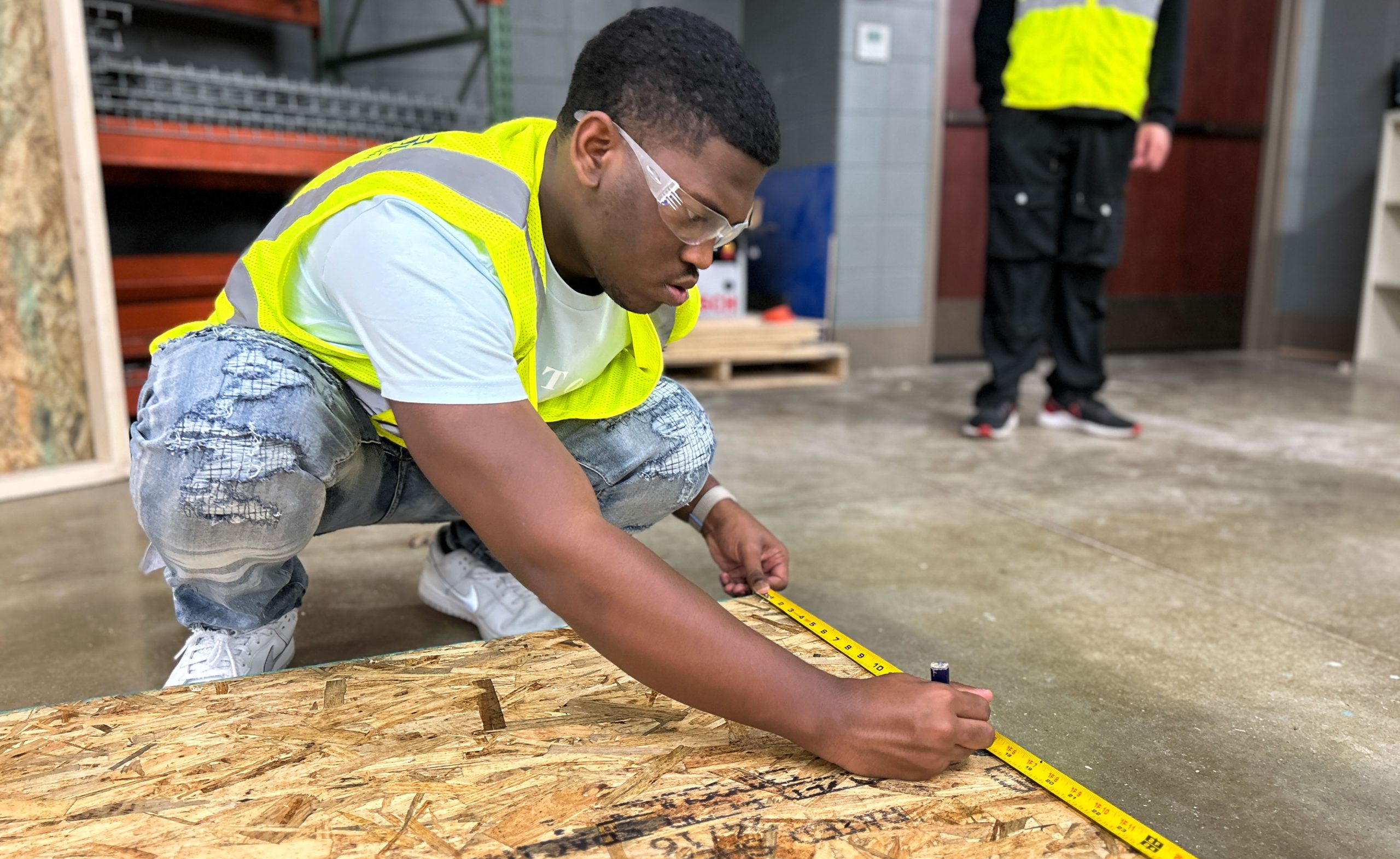
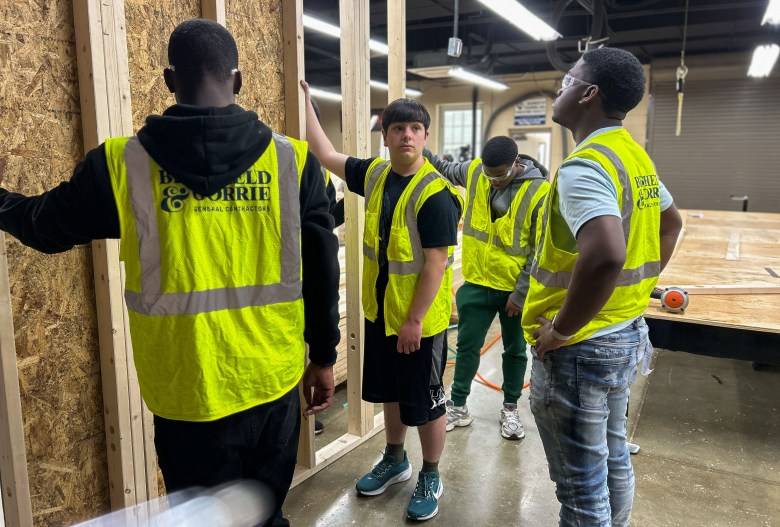
    One recent afternoon in Huffman High School’s architecture class, a few students in bright yellow safety vests were measuring a wall they had built. At the end of the semester, the project will culminate in a tiny home.

    Lucas Giles, a senior, started taking architecture his sophomore year as a way to “be able to fix things around the home without having to call other people,” he said. The new workforce diploma option won’t apply to him since he’s graduating this year, but he said he likely would have opted for it to fit more architecture classes into his schedule — that is, until he learned it would make it harder for him to attend college and study engineering.

    “I wouldn’t have the credits,” Giles realized.

    Students who earn a workforce diploma and end up wanting to go to college after all can enroll in community colleges, or aim for state colleges that have less stringent admissions requirements, said Alabama education chief Eric Mackey. The key to the new diploma will be ensuring school counselors are properly advising students, he added.

    “That’s where the counselor comes in and says, ‘If you want to be a nurse, then yes, you need the practical stuff at the career tech center — taking blood pressure and trauma support — but you also need to be taking biology, physiology, chemistry and all those things, too,’” Mackey said.

    Because the diploma only makes sense for a specific subset of students — those who do not plan to go to a four-year college that requires more math or science and who cannot otherwise fit CTE classes in their schedule — counselors have a huge role to play in guiding students. As of 2023, there were 405 students for every counselor in Alabama’s public schools, well over the recommended ratio of 250 to 1.

    Mackey said the state added career coaches in recent years to ease the counseling workload, but in many districts there is just a single coach, who rotates among schools.

    Samantha Williams, executive director of the nonprofit Birmingham Promise, fears the workforce diploma may shut off students’ options too early. Birmingham Promise helps students in Birmingham City Schools pay college tuition and connects them to internship opportunities while in high school.

    “Do you really think that all of our school districts are preparing students to know what they want to do” by the time they’re in high school, Williams asked.

    Williams also worries that lower-performing students might be steered to this diploma option in order to boost their schools’ rankings.

    Students who opt for the workforce diploma will not have their ACT test scores included in their schools’ public reports. Legislators decided that schools should not have to report standardized test scores for students who did not have to take the requisite math and science classes.

    “The concern a lot of people voiced was ‘Hey, isn’t everyone just going to place the kids who are underperforming in the workforce diploma so their ACT scores don’t bring down the whole?’” Williams said. “There’s a strong perverse incentive for people to do that.”

    Speaking to the state’s Board of Education last fall, Mackey warned the “furor of the state superintendent will come down on” anyone who tries to redirect students toward the workforce diploma because of low ACT scores.

    Related: What happened when a South Carolina city embraced career education for all its students

    At Headland High School in rural Henry County, Alabama, every student takes at least one CTE course, according to Principal Brent Maloy. The most popular classes, he said, are financial management and family consumer science.

    “We don’t force them in — everybody registers themselves, they pick their own classes,” Maloy said. “But there’s just about a zero percent chance that a kid’s not going to have a career tech class when they graduate.”

    The school has hosted information sessions for parents and students about the new diploma option ahead of next school year. In a poll of rising juniors and seniors, 20 percent said they would like to pursue a workforce diploma, and another 30 percent said they might be interested. Maloy is anticipating about 25 percent of students will actually opt in to the pathway.

    Most graduates of Headland enroll in a two-year school after graduation anyway, Maloy said, and the workforce diploma won’t hinder that. But the high school has only one counselor for its 450 students, and making sure students fully understand this diploma pathway — and its limitations — is likely to add pressure and extra responsibilities on counselors with heavy workloads.

    Students hold up the wall of a tiny home they’re building in a career and tech architecture class at Huffman High School in Birmingham, Alabama. Credit: Ariel Gilreath/The Hechinger Report

    “There’s so much pressure on our secondary counselors already just to make sure that all of the boxes are checked before graduation. It’s going to put an extra box for them to check,” Maloy said.

    Ultimately, state businesses and industries want this change, said Mackey, who started his career as a middle and high school science teacher.

    “They were saying, ‘We really need students with skills over, say, calculus,’” Mackey said. “That doesn’t mean some students don’t need calculus — we want to still offer those higher math courses and higher science courses.”

    But, reflecting on his own experience as a high school science teacher, “I can tell you that every student doesn’t need high school chemistry,” Mackey said.

    The chamber of commerce in Mobile, Alabama, is one group that advocated for the workforce diploma. Career tech classes are a good way for students to better learn what they want to do before graduating high school, and they are also an avenue for students to get skills in high wage industries prevalent in Alabama, said Kellie Snodgrass, vice president of workforce development at the Mobile Chamber.

    Less than half of high school graduates in the region end up enrolling in college after graduation, Snodgrass said, and only 20 percent of high-wage jobs in Mobile require a college degree. A large chunk of jobs in the state, and in Mobile in particular, are in manufacturing.

    “It’s terrible when a student goes away to college and comes back and can’t find a job, when we have thousands of open jobs here,” Snodgrass said.

    In an emailed statement, Trevor Sutton, the vice president of economic development at the Birmingham Business Alliance, said the diploma option was a “win for the state of Alabama” that would allow students a chance to learn both “hard and soft skills like communication and time management.”

    Related: States bet big on career education, but struggle to show it works

    At least 11 states have embraced policies that give students flexibility to use career tech courses for core academic credits, according to a review from the Education Commission of the States.

    Like Alabama, Indiana also made changes to its diploma requirements in 2024. After more than a year of public debate, the state created three graduation pathways that are meant to lead to college admissions, the workforce, or enlistment in the military. Those changes will be effective for students in the class of 2029, or current eighth graders.

    Having industry buy-in on career tech programs is important, said Lloyd with All4Ed, because most students will need either an industry or post-secondary credential to land a job with a comfortable wage.

    “The reality is a high school diploma is not enough in today’s labor market to have a guaranteed ticket to the middle class,” Lloyd said.

    The problem, Lloyd said, is most K-12 industry credentials have little use to employers. Only 18 percent of CTE credentials earned by K-12 students in the U.S. were in demand by employers, according to a 2020 report from the Burning Glass Institute.

    The key in Alabama will be ensuring students are going into career pathways that line up with job demand, Snodgrass said. Out of the more than 33,000 CTE credentials Alabama high school students earned in 2023, only 2 percent were in manufacturing, which is one of the state’s highest need areas.

    Still, attitudes toward high school CTE courses — once largely thought of as classes for students who struggled academically — have improved significantly over the years. And many schools offer CTE programs like aerospace, robotics or conservation that could help students get into high-demand undergraduate programs at universities.

    “We’re increasingly blurring the lines between what has been historically siloed in people’s minds in terms of career education versus academic education,” Lloyd said. “Those are very often one and the same.”

    Contact staff writer Ariel Gilreath at [email protected]

    This story about Alabama high school requirements was produced by The Hechinger Report, a nonprofit, independent news organization focused on inequality and innovation in education. Sign up for the Hechinger newsletter

    The Hechinger Report provides in-depth, fact-based, unbiased reporting on education that is free to all readers. But that doesn’t mean it’s free to produce. Our work keeps educators and the public informed about pressing issues at schools and on campuses throughout the country. We tell the whole story, even when the details are inconvenient. Help us keep doing that.

    Join us today.

    Source link

  • Community colleges are providing new opportunities for learning on the job in logging and oystering

    Community colleges are providing new opportunities for learning on the job in logging and oystering

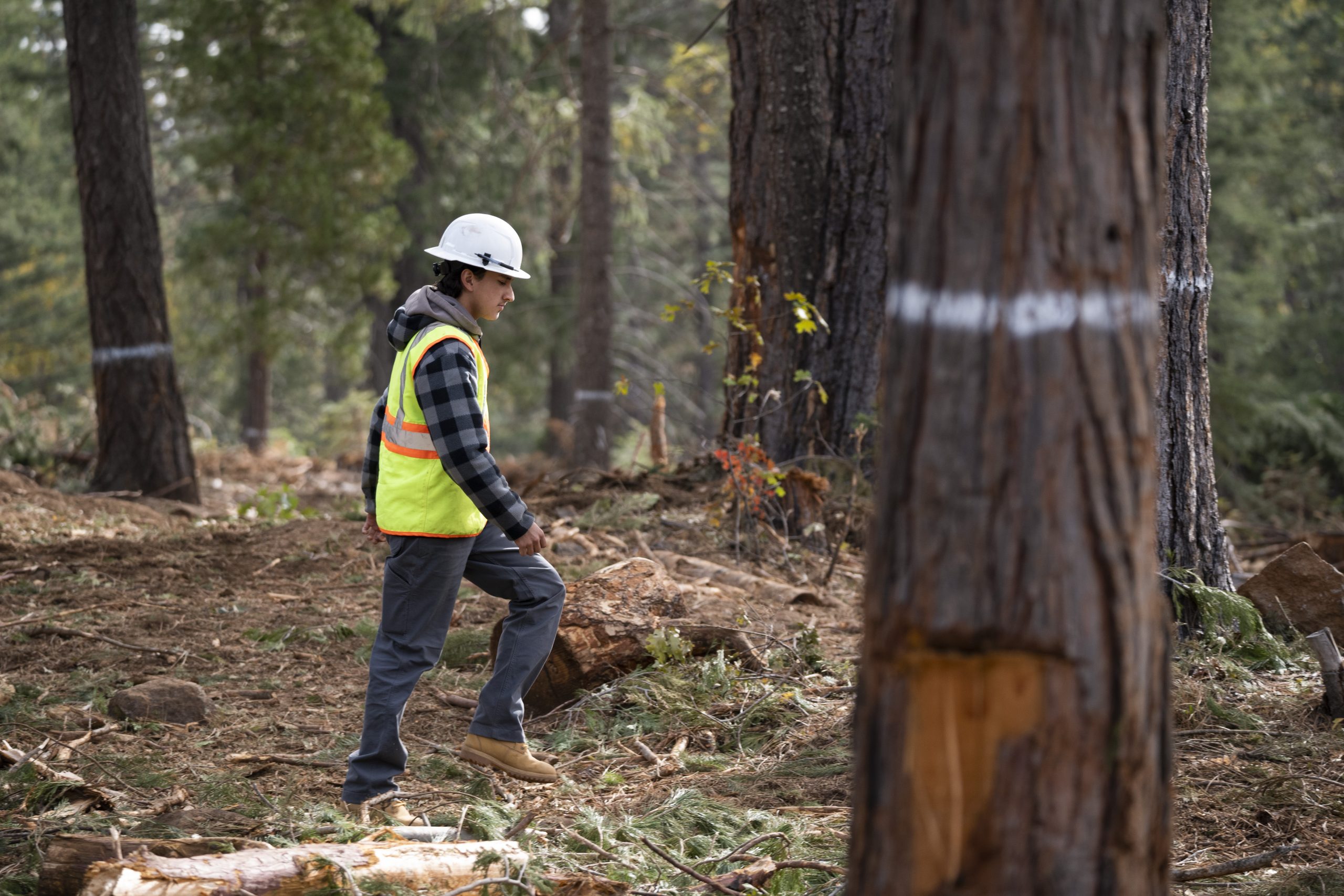
    SHINGLETOWN, Calif. — On a cold morning in October, the sun shone weakly through tall sugar pines and cedars in Shingletown, a small Northern California outpost whose name is a reminder of its history as a logging camp in the 1800s. Up a gravel road banked with iron-rich red soil, Dylan Knight took a break from stacking logs.

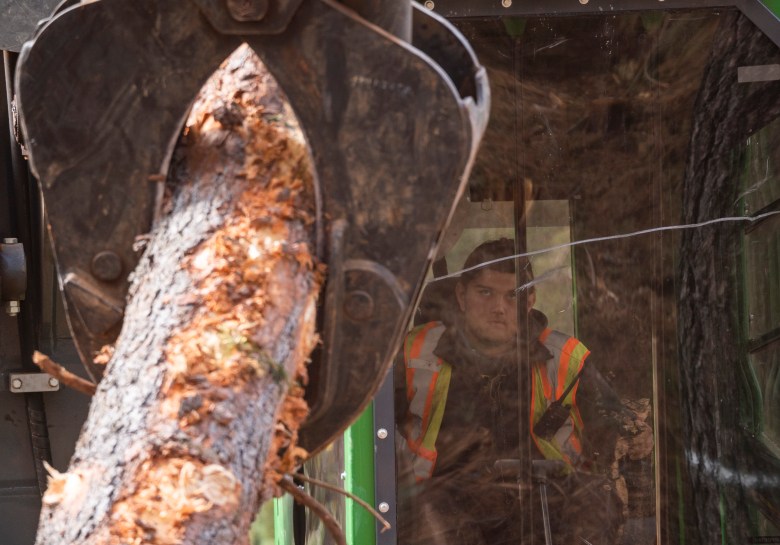
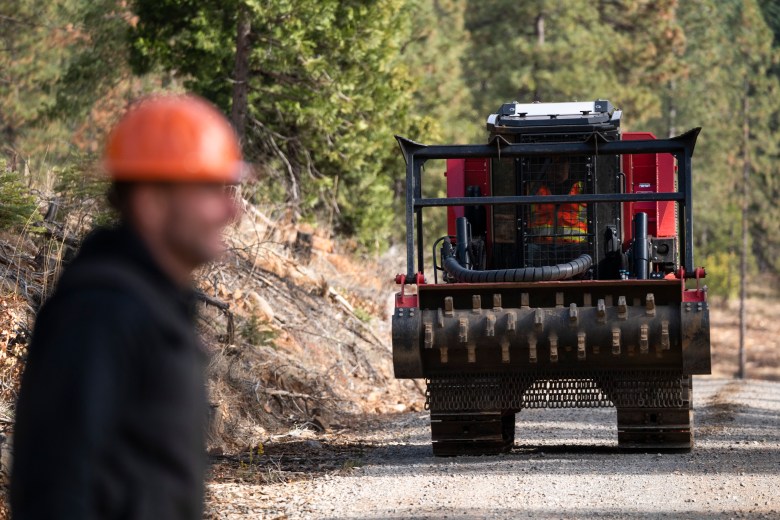
    Knight is one of 10 student loggers at Shasta College training to operate the heavy equipment required for modern-day logging: processors to remove limbs from logs that have just been cut, skidders to pull logs out of the cutting site, loaders to stack and sort the logs by species and masticators to mulch up debris.

    For centuries, logging was a seasonal, learn-on-the-job trade passed down from father to son. But as climate change and innovations in the industry have changed logging into a year-round business, there aren’t always enough workers to fill jobs.

    “Our workforce was dying,” said Delbert Gannon, owner of Creekside Logging. “You couldn’t even pick from the bottom of the barrel. It was affecting our production and our ability to haul logs. We felt we had to do something.”

    Related: Interested in innovations in higher education? Subscribe to our free biweekly higher education newsletter.

    Around the country, community colleges are stepping in to run apprenticeship programs for heritage industries, such as logging and aquaculture, which are too small to run. These partnerships help colleges expand the workforce development programs central to their mission. The partnerships also help keep small businesses in small industries alive by managing state and federal grants and providing the equipment, courses and staff to train workers.

    As industries go, logging is small, and it’s struggling. In 2023 there were only about 50,000 logging jobs in the U.S., but the number of logging companies has been on the decline for several years. Most loggers are over 50, according to industry data, and older generations are retiring, contributing to more than 6,000 vacant positions every year on average. The median annual salary for loggers is about $50,000.

    Student logger Bryce Shannon operates a wood chipper at a logging site as part of his instruction at Shasta College in Redding, Calif. Credit: Minh Connors for The Hechinger Report

    Retirements have hit Creekside Logging hard. In 2018 Gannon’s company had jobs to do, and the machines to do them, but nobody to do the work. He reached out to Shasta College, which offers certificates and degrees in forestry and heavy equipment operation, to see if there might be a student who could help.

    That conversation led to a formal partnership between the college and 19 timber companies to create a pre-apprenticeship course in Heavy Equipment Logging Operations. Soon after, they formed the California Registered Apprenticeship Forest Training program. Shasta College used $3.5 million in grant funds to buy the equipment pre-apprentices use.

    Related: Apprenticeships are a trending alternative to college but theres a hitch

    Logging instruction takes place on land owned by Sierra Pacific Industries lumber company — which does not employ its own loggers and so relies on companies like Creekside Lumber to fell and transport logs to mills.

    Each semester, 10 student loggers like Knight take the pre-apprenticeship course at Shasta College. Nearly all are hired upon completion. Once employed, they continue their work as apprentices in the forest training program, which Shasta College runs in partnership with employers like Gannon. State apprenticeship funds help employers offset the cost of training new workers, as well as the lost productivity of on-the-job mentors.

    For Creekside Logging — a 22-person company — working with Shasta College makes participation in the apprenticeship program possible.Gannon’s company often trained new loggers, only to have them back out of the job months later. It can cost tens of thousands of dollars to train a new worker, and Creekside couldn’t afford to keep taking the financial risk. Now Gannon has a steady flow of committed employees, trained at the college rather than on his payroll. Workers who complete the pre-apprenticeship know what they’re getting into — working outdoors in the cold all day, driving big machines and cutting down trees.

    Workers who complete the apprenticeship, Gannon said, are generally looking for a career and not just a seasonal job.

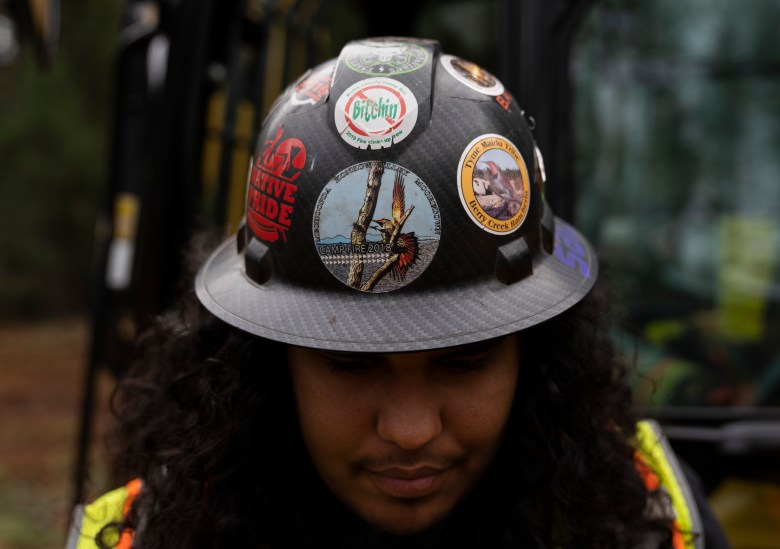
    Talon Gramps-Green, a student logger at Shasta College in Redding, Calif., shows off stickers on his safety helmet. Credit: Minh Connors for The Hechinger Report

    “You get folks that are going to show up every day,” Gannon said. “They got to test drive the career and know they like heavy equipment. They want to work in the woods. The college has solved that for us.”

    Apprentices benefit too. Workers who didn’t grow up around a trade can try it out, which for some means tracking down an elusive pathway into the work. Kyra Lierly grew up in Redding, about 30 miles west of Shingletown, and previously worked for the California Department of Forestry as a firefighter. She’s used to hard work, but when she looked into getting a job as a logger she couldn’t find a way in. Some companies had no office phone or website, she says. Jobs were given out casually, by word of mouth.

    “A lot of logging outfits are sketchy, and I wanted to work somewhere safe,” said Lierly, 25. She worked as an apprentice with Creekside Lumber but is taking a break while she completes an internship at Sierra Pacific Industries, a lumber producer, and gets a certificate in natural resources at Shasta College.

    “The apprenticeship made forestry less intimidating because the college isn’t going to partner with any company that isn’t reputable,” Lierly said.

    Related: In spite of a growing shortage in male-dominated vocations, women still aren’t showing up

    Apprenticeships, with their combination of hands-on and classroom learning, are found in many union halls but, until now, was not known to be common practice in the forested sites of logging crews.

    State and federally registered apprenticeships have gained popularity in recent years as training tools in health care, cybersecurity and telecommunications.

    Federal funding grew steadily from $145 million in 2018 to more than $244 million  during the last years of the Biden administration. That money was used to support apprenticeships in traditional building trades as well as industries that don’t traditionally offer registered apprenticeships, including teaching and nursing.

    The investment aims to address the shortage of skilled workers. The number of working adults in the U.S. doesn’t align with the number of skilled jobs, a disparity that is only slowly recovering after the pandemic.

    Labor shortages hit especially hard in rural areas, where trades like logging have an outsized impact on their local economies. For regional heritage trades like logging, just a few apprentices can make the difference between staying in business and shutting down.

    Lucas Licea, a student logger at Shasta College in Redding, Calif., operates a loader. Credit: Minh Connors for The Hechinger Report

    “There’s a common misconception of registered apprentices that they’re only in the building trades when most are in a variety of sectors,” said Manny Lamarre, who served as deputy assistant secretary for employment and training with the Labor Department during the Biden administration. More than 5,000 new occupations have registered with the department to offer apprenticeships since 2021, he said. “We can specifically support unique small occupations in rural communities where a lot of people are retiring.”

    Education Secretary Linda McMahon, who was confirmed earlier this month, said in her confirmation hearing that she supports apprenticeships. But ongoing cuts make it unclear what the new federal role will be in supporting such programs.

    However, “sharing the capacity has been an important way to get apprenticeships into rural and small employers,” said Vanessa Bennett, director at the Center for Apprenticeship and Work-Based Learning at the nonprofit Jobs for the Future. It’s helpful when employers partner with a nonprofit or community college that can sponsor an apprenticeship program, as Shasta College does, Bennett said. 

    Once Knight, the student logger, completes the heavy equipment pre-apprenticeship, he plans to return to his hometown of Oroville, about 100 miles south of Shingletown. His tribe — the Berry Creek Rancheria of Tyme Maidu Indians — is starting its own logging crew, and Knight will be one of only two members trained to use some of the most challenging pieces of logging equipment.

    “This program is awesome,” said Knight, 24. “It’s really hands-on. You learn as you go and it helps to have a great instructor.”

    Student logger Dylan Knight drives a masticator, which grinds wood into chips, as Shasta College instructor Chris Hockenberry looks on. Credit: Minh Connors for The Hechinger Report

    Across the country in Maine, a community college is helping to train apprentices for jobs at heritage oyster, mussel and kelp farms that have struggled to find enough workers to meet the growing demand for shellfish. Often classified as seasonal work, aquaculture jobs can become year-round careers for workers trained in both harvesting shellfish and planning for future seasons.

    “I love the farm work and I feel confident that I will be able to make a full-length career out of this,” said Gabe Chlebowski, who completed a year-long apprenticeship with Muscongus Bay Aquaculture, which harvests in Damariscotta, Maine. A farm boy from rural Pennsylvania, Chlebowski worked in construction and stone masonry after high school. When his parents moved to Maine, he realized that he wanted a job on the water. With no prior experience, he applied for an oyster farming apprenticeship and was accepted.

    “I was the youngest by five years and the only person who’d never worked on water,” said Chlebowski, 22. “I grew up in a landlocked state surrounded by corn fields. I had the work ethic and no idea what I was doing in boats.”

    Related: Modern apprenticeships offer path to career — and college

    The apprenticeship program was launched in 2023 by the Gulf of Maine Research Institute, which joined with the Maine Aquaculture Association and Educate Maine to create a yearlong apprenticeship with Southern Maine Community College. Apprentices take classes in shellfish biology, water safety, skiff driving and basic boat maintenance. Grants helped pay for the boots, jackets and fishing bibs apprentices needed.

    “The workforce here was a bottleneck,” said Carissa Maurin, aquaculture program manager for GMRI. New workers with degrees in marine biology were changing their minds after starting training at aquaculture farms. “Farms were wasting time and money on employees that didn’t want to be there.”

    Chlebowski completed the apprenticeship at Muscongus Bay in September. He learned how to repair a Yamaha outdoor motor, how to grade oysters and how to work on a 24-foot, flat-bottom skiff. He stayed on as an employee, working at the farm on the Damariscotta River — the oyster capital of New England. The company is known for two varieties of oysters: Dodge Cove Pemaquid and Wawenauk.

    Oyster farming generates local pride, Chlebowski said. The Shuck Station in downtown Damariscotta gives oyster farmers a free drink when they come in and there’s an annual summer shucking festival. But the company is trying to provide careers, Chlebowski said, not just high-season jobs.

    “It can be hard to make a career out of farming, but it’s like any trade,” he said, adding that there is work to do year-round. “Welding and HVAC have trade schools and apprenticeships. Why shouldn’t aquaculture?”

    Chlebowski’s apprenticeship turned into a career. Back in Shingletown, students in the logging program hope for the same result when they finish. 

    Until then, they spend Mondays, Wednesdays and Fridays in the woods learning how to operate and maintain equipment. Tuesdays and Thursdays are spent on Shasta College’s Redding campus, where the apprentices take three classes: construction equipment operation, introduction to forestry and wood products and milling.

    At the end of the semester, students demonstrate their skills at a showcase in the Shingletown woods. Logging company representatives will attend and scout for workers. Students typically get offers at the showcase. So far, 50 students have completed the pre-apprenticeship program and most transitioned into full apprenticeships. Fifteen people have completed the full apprenticeship program and now earn from $40,000 to $90,000 a year as loggers.

    Related: Some people going into the trades wonder why their classmates stick with college

    Mentorship is at the heart of apprenticeships. On the job, new workers are paired with more experienced loggers who pass on knowledge and supervise the rookies as they complete tasks. Pre-apprentices at Shasta College learn from Jonas Lindblom, the program’s heavy equipment and logging operations instructor.

    At the logging site, Lindblom watches as a tall sugar pine slowly falls and thuds to the ground. Lindblom’s father, grandfathers and great-grandfather all drove trucks for logging companies in Northern California.

    An axe sticks out of a freshly cut tree at a logging site used to train student loggers enrolled at Shasta College in Redding, Calif. Credit: Minh Connors for The Hechinger Report

    This is a good area for apprentices to “just be able to learn at their pace,” he said. “They’re not pushed and they can get comfortable in the machines without developing bad habits along the way.” 

    Lindblom, who studied agriculture education at Chico State University, spent all his breaks during college working as a logger. He works closely with the logging companies that partner with the program to make sure he’s teaching up-to-date practices. It’s better for new loggers to learn in this outdoor classroom, he said, than on the job.

    “The majority of these students did not grow up in logging families,” he said. “This is a great opportunity to pass on this knowledge and share where the industry is going.”

    Contact editor Christina A. Samuels at 212-678-3635 or [email protected].

    This story about learning on the job was produced by The Hechinger Report, a nonprofit, independent news organization focused on inequality and innovation in education. Sign up for the Hechinger newsletter.

    The Hechinger Report provides in-depth, fact-based, unbiased reporting on education that is free to all readers. But that doesn't mean it's free to produce. Our work keeps educators and the public informed about pressing issues at schools and on campuses throughout the country. We tell the whole story, even when the details are inconvenient. Help us keep doing that.

    Join us today.


    Source link

  • OPINION: Here’s why we cannot permit America’s partnership with higher education to weaken or dissolve

    OPINION: Here’s why we cannot permit America’s partnership with higher education to weaken or dissolve

    Abrupt cuts in federal funding for life saving medical research. Confusing and misleading new guidance about campus diversity programs. Cancellation, without due process, of hundreds of millions of dollars in federal grants and contracts held by a major university. Mass layoffs at the Education Department, undermining crucial programs such as federal student aid.

    All of this, and more, in the opening weeks of the second Trump administration.

    The president has made clear that colleges and universities face a moment of unprecedented challenge. The partnership the federal government forged with American higher education long ago, which for generations has paid off spectacularly for our country’s civic health, economic well-being and national security, appears in the eyes of many to be suddenly vulnerable.

    America must not permit this partnership to weaken or dissolve. No nation has ever built up its people by tearing down its schools. Higher education builds America — and together, we will fight to ensure it continues to do so.  

    Related: Tracking Trump: his actions on education    

    Some wonder why more college and university presidents aren’t speaking out. The truth is, many of them fear their institutions could be targeted next.

    They are also juggling immense financial pressures and striving to fulfill commitments to teaching and research.

    But the American Council on Education, which I lead, has always stood up for higher education. We have done it for more than a century, and we are doing it now. We will use every tool possible — including litigation, advocacy and coalition-building — to advance the cause.

    ACE is the major coordinating body for colleges and universities. We represent institutions of all kinds — public and private, large and small, rural and urban — with a mission of helping our members best serve their students and communities.

    Let me be clear: We welcome scrutiny and accountability for the public funds supporting student aid and research. Our institutions are subject to state and federal laws and must not tolerate any form of discrimination, even as they uphold freedom of expression and the right to robust but civil protest. 

    We also know we have much work to do to raise public confidence in higher education and the value of a degree.

    However, we cannot allow unwarranted attacks on higher education to occur without a vigorous and proactive response.

    When the National Institutes of Health announced on Feb. 7 a huge cut in funding that supports medical and health research, ACE joined with the Association of American Universities, the Association of Public and Land-grant Universities and a number of affected universities in a lawsuit to stop this action.

    ACE has almost never been a plaintiff in a lawsuit against the federal government, but the moment demanded it. We are pleased that a federal judge has issued a nationwide preliminary injunction to preserve the NIH funding.

    When the Education Department issued a “Dear Colleague” letter Feb. 14 that raised questions about whether campus programs related to diversity, equity      and inclusion would be permissible under federal law, ACE organized a coalition of more than 70 higher education groups calling for the department to rescind the letter.      

    We raised concerns about the confusion the letter was causing. We pointed out that the majority opinion from Chief Justice John Roberts in the Students for Fair Admissions case acknowledged that diversity-related goals in higher education are “commendable” and “plainly worthy.”    

     We invited the department to engage with the higher education community to promote inclusive and welcoming educational environments for all students, regardless of race or ethnicity or any other factors. We remain eager to work with the department. 

    Related: Fewer scholarships and a new climate of fear follow      the end of affirmative action

    Unfortunately, in recent days the administration has taken further steps we find alarming.

    ACE denounced the arbitrary cancellation of $400 million in federal grants and contracts with Columbia University. Administration officials claimed their action was a response to failures to adequately address antisemitism at Columbia, though it bypassed well-established procedures for investigating such allegations. (The Hechinger Report is an independent unit of Teachers College, Columbia University.)

    Ultimately, this action will eviscerate academic and research activities, to the detriment of students, faculty, medical patients and others.

    Make no mistake: Combating campus antisemitism is a matter of utmost priority for us. Our organization, along with Hillel International and the American Jewish Committee, organized two summits on this topic in 2022 and 2024, fostering important dialogue with dozens of college and university presidents.

    We also are deeply concerned about the letter the Trump administration sent to Columbia late last week that makes certain demands of the university, including a leadership change for one of its academic departments. To my mind, the letter obliterated the boundary between institutional autonomy and federal control. That boundary is essential. Without it, academic freedom is at risk.

    Meanwhile, layoffs and other measures slashing the Education Department’s workforce by as much as half will cause chaos and harm to financial aid and other programs that support millions of students from low- and middle-income families. We strongly urge the administration to change course and Congress to step in if it does not.

    Despite all that has happened in the past several weeks, we want President Trump and his administration to know this: Higher education is here for America, and ready to keep building. Colleges and universities have long worked with the government in countless ways to strengthen our economy, democracy, health and security. We cannot abandon that partnership. We must fortify it. 

    Ted Mitchell is president of the American Council of Education in Washington, D.C.

    Contact the opinion editor at [email protected].

    This story about academic freedom was produced by The Hechinger Report, a nonprofit, independent news organization focused on inequality and innovation in education. Sign up for Hechinger’s weekly newsletter.

    The Hechinger Report provides in-depth, fact-based, unbiased reporting on education that is free to all readers. But that doesn’t mean it’s free to produce. Our work keeps educators and the public informed about pressing issues at schools and on campuses throughout the country. We tell the whole story, even when the details are inconvenient. Help us keep doing that.

    Join us today.

    Source link

  • OPINION: The demographic cliff in higher education should be seen as an opportunity, not a crisis

    OPINION: The demographic cliff in higher education should be seen as an opportunity, not a crisis

    This spring, the number of high school graduates in the United States is expected to hit its peak. Starting in the fall, enrollment will likely enter a period of decline that could last a decade or more.

    This looming “demographic cliff” has been on the minds of education leaders for nearly two decades, dating back to the start of the Great Recession. A raft of college closures over the past five years, exacerbated by the pandemic, has for many observers been the canary in the coal mine.

    In the years to come, schools at all levels — reliant on per-pupil funding for K-12 and on tuition dollars for colleges and universities — will begin feeling the squeeze.

    The question now is whether to treat the cliff as a crisis or an opportunity.

    Related: Interested in innovations in the field of higher education? Subscribe to our free biweekly Higher Education newsletter.

    As they prepare for enrollment shortfalls, superintendents and college presidents are primarily focused on crisis management. With good reason, they’re spending the bulk of their time on the hard short-term decisions of cutting programs and personnel to meet looming budget shortfalls.

    In the precious few years before the situation becomes even more dire, the question is whether schools should just continue bracing for impact — or if they can think bigger in ways that could be transformative not just for the landscape of education, but for the economy more broadly. In my view, they should think about what it would look like to make a moment of crisis a real opportunity.

    Here are some ideas about how that could happen. The first involves blurring the lines between high school and college.

    Colleges today feel immense pressure because there aren’t enough high school graduates. High schools feel similar pressure because there are fewer young people around to enroll each year — not to mention the chronic absenteeism and disengagement that has persisted since the pandemic.

    What if the two worked more closely together — in ways that helped high schools keep students engaged while enabling colleges to reach a broader range of students?

    In many states, this is already happening. At last count, 2.5 million high schoolers took at least one dual-enrollment course from a college or university. But it’s not enough to just create tighter connections between one educational experience and another. Today’s students — and today’s economy — also demand clearer pathways from education to careers. It makes sense to blur the lines between high schools, colleges and work.

    So imagine taking these changes even further — to a world in which instead of jumping from high school to college, students in their late teens entered entirely new institutions that paid them for work-based learning experiences that would lead them to a degree and eventually a career.

    That’s a lofty goal. But it’s the kind of big thinking that both high schools and colleges may need to reinvent themselves for the country’s shifting demographics.

    Colleges have an opportunity right now to double down on creating and expanding job-relevant programs — and to think even bigger about who they serve. That could include expanding opportunities for adult learners who have gained skills outside the classroom through credit for prior learning and competency-based learning. It could also mean speeding up the development of industry-relevant coursework to better align with the needs of the labor market and leaning into short-form training programs to upskill incumbent workers.

    Related: The number of 18-year-olds is about to drop sharply, packing a wallop for colleges — and the economy

    Not every student is ready to invest four years of time and money to earn a bachelor’s degree. But they shouldn’t have to be — and colleges have a chance to expand their offerings in ways that give students more pathways into today’s fast-changing economy and further education if they so choose.

    Part of the problem with the current trajectory from high school to college is that the wrong things get incentivized. Both K-12 schools and colleges get money and support based on the number of students they enroll and (sometimes) the number of people who graduate — not on how well they do at helping people gain the skills to effectively participate in the economy.

    That’s not anyone’s fault. But it often boils down to a matter of policy. Which means that changing policy can create new incentives to tighten the connections between high school, college and work.

    States like Colorado are already taking the lead on this shift. Colorado’s “Big Blur” task force put out a report with recommendations on how to integrate learning and work, including by creating a statewide data system to track the outcomes of educational programs and updating the state’s accountability systems to better reflect “the importance of learners graduating ready for jobs and additional training.”

    If schools and policymakers stay the course in the decade to come, they already know what’s ahead: declining enrollment, decreased funding and the exacerbation of all the challenges that they’ve already begun to face in recent years.

    It’s not the job of the education system to turn the tide of demographic change. But the system does have a unique, and urgent, opportunity to respond to this changing landscape in ways that benefit not only students but the economy as a whole. The question now is whether education leaders and policymakers can seize that opportunity before it’s too late.

    Joel Vargas is vice-president of education practice at Jobs for the Future.

    Contact the opinion editor at [email protected].

    This story about demographic cliff in higher education was produced by The Hechinger Report, a nonprofit, independent news organization focused on inequality and innovation in education. Sign up for Hechinger’s weekly newsletter.

    The Hechinger Report provides in-depth, fact-based, unbiased reporting on education that is free to all readers. But that doesn’t mean it’s free to produce. Our work keeps educators and the public informed about pressing issues at schools and on campuses throughout the country. We tell the whole story, even when the details are inconvenient. Help us keep doing that.

    Join us today.

    Source link

  • Math can be a path to success after prison

    Math can be a path to success after prison

    Hancy Maxis spent 17 years incarcerated in New York prisons. He knew that he needed to have a plan for when he got out.

    “Once I am back in New York City, once I am back in the economy, how will I be marketable?” he said. “For me, math was that pathway.”

    In 2015, Maxis completed a bachelor’s degree in math through the Bard Prison Initiative, an accredited college-in-prison program. He wrote his senior project about how to use game theory to advance health care equity, after observing the disjointed care his mom received when she was diagnosed with breast cancer. (She’s now recovered.)

    When he was released in 2018, Maxis immediately applied for a master’s program at Columbia University’s Mailman School of Public Health. He graduated and now works as the assistant director of operations at Montefiore Medical Center in the Bronx. He helped guide the hospital’s response to Covid.

    Maxis is one of many people I’ve spoken to in recent years while reporting on the role that learning math can play in the lives of those who are incarcerated. Math literacy often contributes to economic success: A 2021 study of more than 5,500 adults found that participants made $4,062 more per year for each correct answer on an eight-question math test.

    While there don’t appear to be any studies specifically on the effect of math education for people in prison, a pile of research shows that prison education programs lower recidivism rates among participants and increase their chances of employment after they’re released.

    Hancy Maxis spent 17 years incarcerated in New York prisons. He now works as the assistant director of operations at Montefiore Medical Center in the Bronx. Credit: Yunuen Bonaparte for The Hechinger Report

    Plus, math — and education in general — can be empowering. A 2022 study found that women in prison education programs reported higher self-esteem, a greater sense of belonging and more hope for the future than women who had never been incarcerated and had not completed post-secondary education.

    Yet many people who enter prison have limited math skills and have had poor relationships with math in school. More than half (52 percent) of those incarcerated in U.S. prisons lack basic numeracy skills, such as the ability to do multiplication with larger numbers, long division or interpret simple graphs, according to the most recent numbers from the National Center for Educational Statistics. The absence of these basic skills is even more pronounced among Black and Hispanic people in prison, who make up more than half of those incarcerated in federal prisons.

    In my reporting, I discovered that there are few programs offering math instruction in prison, and those that do exist typically include few participants. Bard’s highly competitive program, for example, is supported primarily through private donations, and is limited to seven of New York’s 42 prisons. The recent expansion of federal Pell Grants to individuals who are incarcerated presents an opportunity for more people in prison to get these basic skills and better their chances for employment after release.

    Alyssa Knight, executive director of the Freedom Education Project Puget Sound, which she co-founded while incarcerated, said that for years, educational opportunities in prison were created primarily by people who were incarcerated, who wrote to professors and educators to ask if they might send materials or teach inside the prison. But public recognition of the value of prison education, including math, is rising, and the Pell Grant expansion and state-level legislation have made it easier for colleges to set up programs for people serving time. Now, Knight said, “Colleges are seeking prisons.”

    Related: Interested in innovations in higher education? Subscribe to our free biweekly higher education newsletter.

    Jeffrey Abramowitz understands firsthand how math can help someone after prison. After completing a five-year stint in a federal prison, his first post-prison job was teaching math to adults who were preparing to take the GED exam.

    Fast forward nearly a decade, and Abramowitz is now the CEO of The Petey Greene Program, an organization that provides one-on-one tutoring, educational supports and programs in reading, writing and now math, to help people in prison and who have left prison receive the necessary education requirements for a high school diploma, college acceptance or career credentials.

    The average Petey Greene student’s math skills are at a fourth- or fifth-grade level, according to Abramowitz, which is in line with the average for “justice-impacted” learners; the students tend to struggle with basic math such as addition and multiplication.

    “You can’t be successful within most industries without being able to read, write and do basic math,” Abramowitz said. “We’re starting to see more blended programs that help people find a career pathway when they come home — and the center of all this is math and reading.”

    Abramowitz and his team noticed this lack of math skills particularly among students  in vocational training programs, such as carpentry, heating and cooling and commercial driving. To qualify to work in these fields, these students often need to pass a licensing test, requiring math and reading knowledge.

    The nonprofit offers “integrated education training” to help  students learn the relevant math for their professions. For instance, a carpentry teacher will teach students how to use a saw in or near a classroom where a math teacher explains fractions and how they relate to the measurements needed to cut a piece of wood.

    “They may be able to do the task fine, but they can’t pass the test because they don’t know the math,” Abramowitz said.

    Math helped Paul Morton after he left prison, he told me. When he began his 10.5 years in prison, he only could do GED-level math. After coming across an introductory physics book in the third year of his time in prison, he realized he didn’t have the math skills needed for the science described in it.

    He asked his family to send him math textbooks and, over the seven years until his release, taught himself algebra and calculus.

    The recent expansion of federal Pell Grants to individuals who are incarcerated presents an opportunity for more people in prison to get these basic skills and better their chances for employment after release. Credit: Helen H. Richardson/The Denver Post via Getty Images

    “I relentlessly spent six hours on one problem one day,” he said. “I was determined to do it, to get it right.”

    I met Morton through the organization the Prison Mathematics Project, which helped him develop his math knowledge inside prison by connecting him with an outside mathematician. After his release from a New York prison in 2023, he moved to Rochester, New York, and is hoping to take the actuarial exam, which requires a lot of math. He continues to study differential equations on his own.

    Related: It used to be a notoriously violent prison. Now it’s home to a first-of-its-kind higher education program

    The Prison Mathematics Project delivers math materials and programs to people in prison, and connects them with mathematicians as mentors. (It also brings math professors, educators and enthusiasts to meet program participants through “Pi Day” events; I attended one such event in 2023 when I produced a podcast episode about the program, and the organization paid for my travel and accommodations.)

    The organization was started in 2015 by Christopher Havens, who was then incarcerated at Washington State Penitentiary in Walla Walla. Havens’ interest in math puzzles, and then in algebra, calculus and other areas of mathematics, was ignited early in his 25-year- term when a prison volunteer slid some sudoku puzzles under his door.

    “I had noticed all these changes happening inside of me,” Havens told me. “My whole life, I was searching for that beauty through drugs and social acceptance … When I found real beauty [in math], it got me to practice introspection.”

    As he fell in love with math, he started corresponding with mathematicians to help him solve problems, and talking to other men at the prison to get them interested too. He created a network of math resources for people in prisons, which became the Prison Mathematics Project.

    The group’s website says it helps people in prison use math to help with “rebuilding their lives both during and after their incarceration.”

    Related: How Danielle Metz got an education after incarceration

    But Ben Jeffers, its executive director, has noticed that the message doesn’t connect with everyone in prison. Among the 299 Prison Mathematics Project participants on whom the program has data, the majority — 56 percent — are white, he told me, while 25 percent are Black, 10 percent are Hispanic, 2 percent are Asian and 6 percent are another race or identity. Ninety-three percent of project participants are male.

    Yet just 30 percent of the U.S. prison population is white, while 35 percent of those incarcerated are Black, 31 percent are Hispanic and 4 percent are of other races, according to the United State Sentencing Commission. (The racial makeup of the program’s 18 female participants at women’s facilities is much more in line with that of the prison population at large.)

    “[It’s] the same issues that you have like in any classroom in higher education,” said Jeffers, who is finishing his master’s in math in Italy. “At the university level and beyond, every single class is majority white male.”

    He noted that anxiety about math tends to be more acute among women and people of any gender who are Black, Hispanic, or from other underrepresented groups, and may keep them from signing up for the program. 

    Sherry Smith understands that kind of anxiety. She didn’t even want to step foot into a math class. When she arrived at Southern Maine Women’s Reentry Center in December 2021, she was 51, had left high school when she was 16, and had only attended two weeks of a ninth grade math class.

    “I was embarrassed that I had dropped out,” she said. “I hated to disclose that to people.”

    Related: ‘Revolutionary’ housing: How colleges aim to support a growing number of formerly incarcerated students 

    Smith decided to enroll in the prison’s GED program because she could do the classes one-on-one with a friendly and patient teacher. “It was my time,” she said. “Nobody else was listening, I could ask any question I needed.”

    In just five months, Smith completed her GED math class. She said she cried on her last day. Since 2022, she’s been pursuing an associate’s degree in human services — from prison — through a remote program with Washington County Community College.

    In Washington, Prison Mathematics Project founder Havens is finishing his sentence and continuing to study math. (Havens has been granted a clemency hearing and may be released as early as this year.) Since 2020, he has published four academic papers: three in math and one in sociology. He works remotely from prison as a staff research associate in cryptography at the University of California, Los Angeles, and wrote a math textbook about continued fractions.

    Havens is still involved in the Prison Mathematics Project, but handed leadership of the program over to Jeffers in October 2023. Now run from outside the prison, it is easier for the program to bring resources and mentorship to incarcerated students.

    “For 25 years of my life, I can learn something that I wouldn’t have the opportunity to learn in any other circumstances,” Havens said. “So I decided that I would, for the rest of my life, study mathematics.”

    Contact editor Caroline Preston at 212-870-8965 or [email protected].

    This story about math in prison was produced by The Hechinger Report, a nonprofit, independent news organization focused on inequality and innovation in education. Sign up for the Hechinger higher education newsletter.

    The Hechinger Report provides in-depth, fact-based, unbiased reporting on education that is free to all readers. But that doesn’t mean it’s free to produce. Our work keeps educators and the public informed about pressing issues at schools and on campuses throughout the country. We tell the whole story, even when the details are inconvenient. Help us keep doing that.

    Join us today.

    Source link

  • STUDENT VOICE: The path to health equity begins in K-12 classrooms

    STUDENT VOICE: The path to health equity begins in K-12 classrooms

    Imagine a classroom in which young students are excitedly discussing their future aspirations and a career in medicine feels like a tangible goal rather than a distant dream. Now, imagine that most of the students come from historically marginalized communities — Black, Hispanic and Indigenous populations — that disproportionately face higher rates of chronic illness, shorter life expectancies and poorer health outcomes.

    We know that these disparities can shrink when patients are cared for by doctors who share their cultural backgrounds and lived experiences. The problem? Our health care workforce remains overwhelmingly unrepresentative of the communities it serves.

    For many students from underrepresented backgrounds, a medical career feels out of reach. The path to becoming a doctor is daunting, full of obstacles like financial hardship, lack of mentorship and systemic inequities in education. Many students are sidelined long before they consider medical school, while those who persist face an uphill battle competing against peers with far more resources and support.

    To mitigate these disparities, we must look beyond our hospitals and medical schools and into the places where young minds are shaped: our K-12 classrooms. Early exposure to health care careers can ignite curiosity and show students that they belong in places where they have historically been excluded.

    Related: Become a lifelong learner. Subscribe to our free weekly newsletter to receive our comprehensive reporting directly in your inbox.

    Organizations like the Florida State University College of Medicine, with its “Science Students Together Reaching Instructional Diversity and Excellence” (SSTRIDE) program, are leading the way in breaking down barriers to medical careers for underrepresented students. SSTRIDE introduces middle and high school students to real-world medical environments, giving them firsthand exposure to health care settings that might otherwise feel distant or inaccessible. Then, the program threads together long-term mentorship, academic enrichment and extracurricular opportunities to build the confidence and skills students need to reach medical school.

    The 15 White Coats program in Louisiana takes a complementary but equally meaningful approach: transforming classroom environments by introducing culturally relevant imagery and literature that reflect the diversity of the medical profession. For many students, seeing doctors who look like them — featured in posters or books — can challenge internalized doubts and dismantle societal messages that suggest they don’t belong in medicine. Through fundraising efforts and scholarships, other initiatives from 15 White Coats tackle the financial barriers that disproportionately hinder “minority physician aspirants” from pursuing medical careers.

    The impact of these programs can be profound. Research shows that students exposed to careers in science or medicine at an early age are far more likely to pursue these fields later in life. And medical students who belong to underrepresented groups are the most likely to return to underserved communities to practice. Their presence can improve communication, foster patient trust and drive innovation in addressing health challenges unique to those communities.

    These programs can even have a ripple effect on families and entire communities. When young people pursue careers in medicine, they become role models for siblings, friends and neighbors. This creates a culture of aspiration in which success feels both possible and accessible, shifting societal perceptions and inspiring future generations to aim higher.

    But programs like 15 White Coats and SSTRIDE cannot thrive without sustained investment. We need personal and financial commitments to dismantle the systemic barriers that prevent students from underrepresented groups from entering medicine.

    Policymakers and educators must step up. Federal and state educational funding should prioritize grants for schools that partner with hospitals, medical schools and health care organizations. These partnerships should offer hands-on experiences like shadowing programs, medical summer camps and health care-focused career fairs. Medical professionals also have a role to play — they can volunteer as mentors or guest speakers, offering valuable guidance and demystifying the path to a medical career.

    Related: The ‘Fauci effect’: Inspired by front-line health care workers, record numbers apply to medical schools

    As a medical student, I know how transformative these experiences can be. They can inspire students to envision themselves in roles they might never have imagined and gain the confidence to pursue dreams that once seemed out of reach.

    Let’s be clear, representation in medicine is not about optics. It’s about improving health outcomes and driving meaningful change. Building a stronger, more diverse pipeline to the medical profession is not just an educational priority. It’s a public health imperative.

    An investment in young minds today is an investment in a health care system that represents, understands and serves everyone. Equity in health care starts long before a patient walks into a doctor’s office. It begins in the classroom.

    Surya Pulukuri is a member of the class of 2027 at Harvard Medical School.

    Contact the opinion editor at [email protected].

    This story about health equity was produced by The Hechinger Report, a nonprofit, independent news organization focused on inequality and innovation in education. Sign up for Hechinger’s weekly newsletter.

    The Hechinger Report provides in-depth, fact-based, unbiased reporting on education that is free to all readers. But that doesn’t mean it’s free to produce. Our work keeps educators and the public informed about pressing issues at schools and on campuses throughout the country. We tell the whole story, even when the details are inconvenient. Help us keep doing that.

    Join us today.

    Source link