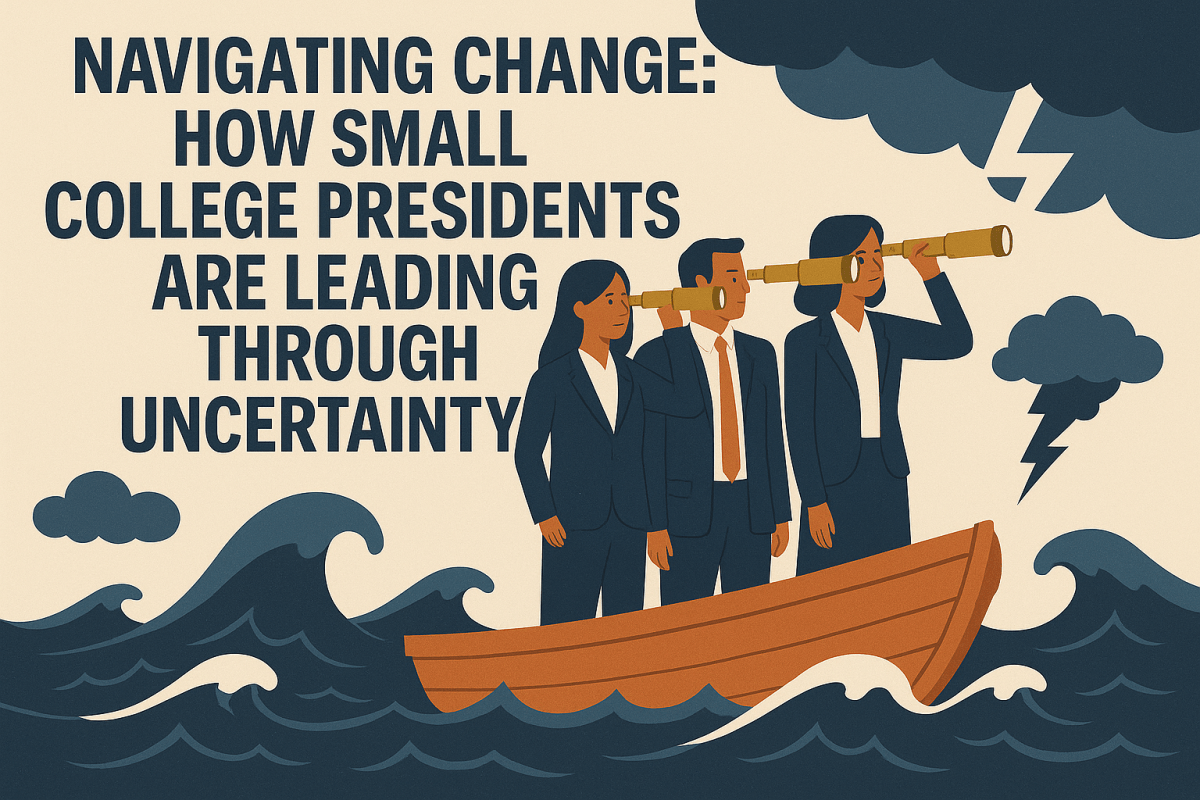
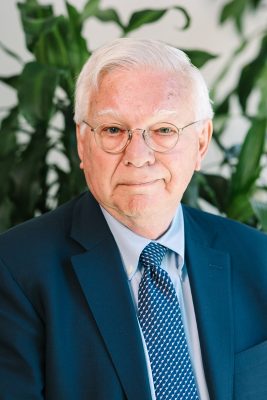
October 27, 2025, By Dean Hoke—As many of you know, I am deeply committed to helping small and mid-sized colleges find sustainable paths forward. That’s why I’m proud to announce the launch of the Edu Alliance Group Center for College Partnerships and Alliances, dedicated to helping institutions explore partnerships, mergers, and strategic alliances that strengthen their mission and impact.
The Center will be led by newly appointed partners Dr. Chet Haskell and Dr. Barry Ryan, two distinguished higher education leaders with deep experience in governance, accreditation, and institutional transformation. Together, they bring a wealth of expertise in guiding colleges and universities through complex transitions while preserving mission integrity and academic excellence.
The Center’s framework draws on insights presented in “A Guide to College Partnerships, Mergers, and Strategic Alliances for Boards and Leadership:From Awareness to Implementation,” authored by Dr. Chet Haskell, Dr. Barry Ryan, and Edu Alliance Managing Partner Dean Hoke. The guide outlines a five-stage model: Recognize, Assess, Explore, Negotiate, and Implement. It emphasizes mission integrity, transparency, and trust as the foundation for success.
“Our goal is to help college leaders and boards move from awareness to action with clarity, confidence, and compassion,” said Dr. Haskell. “Partnerships and alliances can preserve institutional identity while creating new opportunities for students and communities.”
“Edu Alliance has long supported institutions navigating change,” added Dean Hoke, Co-Founder and Managing Partner. “With the launch of the Center, we’re expanding our ability to help presidents and boards design solutions that are both visionary and pragmatic.”
About the Leadership
Dr. Chester (Chet) Haskell recently completed six and a half years as Vice Chancellor for Academic Affairs and University Provost at Antioch University, where he played key roles in integrating the institution academically and structurally, as well as in creating the Coalition for the Common Good with Otterbein University, where he was Vice President for Graduate Programs. He previously held senior positions at Harvard University—including Associate Dean of the Kennedy School of Government—and later served as Dean of the College at Simmons College (Boston). Dr. Haskell went on to serve as President of both the Monterey Institute of International Studies (now part of Middlebury College) and Cogswell Polytechnical College, leading both institutions through successful mergers. He holds DPA and MPA degrees from the University of Southern California, an MA from the University of Virginia, and an AB cum laude from Harvard University.
Dr. Barry Ryan has served as President of five universities and as Provost and Chief of Staff at three others, spanning state, private nonprofit, and private for-profit institutions. A Supreme Court Fellow in the chambers of Chief Justice William H. Rehnquist, Dr. Ryan is a member of several federal and state bars and has held two terms as Commissioner for WASC (WSCUC). He has led institutions through mergers, acquisitions, and affiliations that preserved academic quality, expanded access, and strengthened long-term viability. His leadership is characterized by transparency, shared governance, and a deep commitment to stakeholder engagement. Dr. Ryan earned his Ph.D. from the University of California, Santa Barbara, his J.D. from the University of California, Berkeley, and a Dipl.GB in international business from the University of Oxford.
You’ll often hear two words come up in advising sessions as students look ahead to college: match and fit. They sound interchangeable, but they’re not.
Match refers to what colleges are looking for from students. It’s mostly determined by admissions requirements such as GPA and test scores, and in some cases, other criteria like auditions, portfolios, or athletic ability. Fit is more of an art than a science; it refers to what the student is looking for in a college, including personal preferences, social and cultural environment, financial factors, and academic offerings. When we talk to students about college fit, it’s an opportunity for them to ask themselves whether they like what a certain institution offers beyond being admitted.
In the college admissions process, both terms matter. A strong match without a good fit can leave a student disengaged and negatively affect their chances of graduating from college. Nearly a quarter of undergraduate freshmen drop out before their second year, and it seems likely to me that a lot of these cases boil down to bad fits. On the other hand, a great fit that isn’t a match could be difficult for admission in the first place, and if a student is admitted anyway, the rigorous coursework they encounter might be more than they’re ready for. To maximize postsecondary success, advisors, families, and students alike should fully understand the difference between match and fit and know how to approach conversations about each of them.
Match: Reach, target, and solid
As I’ve worked with advisors over the years, one of the best ways we’ve found to guide students on match is using the categories of “Reach,” “Target,” and “Solid” schools. We can determine which schools belong to what category using the data that colleges share about the average incoming GPAs and test scores of admitted classes. Typically, they report weighted GPAs and composite test scores from the middle 50 percent of accepted applicants, i.e., from the students who fall anywhere from the 25th to 75th percentile of those admitted.
Reach: These are schools where admission is less likely, either because a student’s test scores and GPA are below the middle 50 percent or because the school traditionally admits only a small percentage of eligible applicants.
Target: These are schools where either GPA or test scores fall in the middle 50 percent of admitted students.
Solid: These are schools where students are well within the middle 50 percent for both GPA and test scores.
Building a balanced college list across these categories is essential in the college planning process. Often, I see high-achieving students over-index on too many Reach schools, which may make it hard for them to get accepted anywhere on their list, simply because their preferred schools are ultra-selective. Meanwhile, parents and guardians may focus heavily on fit and overlook whether the student actually meets the college’s admission criteria. Advisors play a key role in keeping these data-informed conversations grounded with the goal of a balanced list of college options for students to pursue.
The importance of early planning
Timing matters. In general, if you meet with students early enough, conversations about fit are productive, but if you’re meeting with students for the first time in their senior year, the utmost priority should be helping them build a balanced list. Ideally, we want to avoid a situation where a student thinks they’re going to get into the most competitive colleges in the country on the strength of their GPA and test scores, only to find out that it’s not that easy. If advisors wait until senior year to address match, students and families may already have unrealistic expectations, leading to difficult conversations when options are limited.
On the other hand, we would stress that although GPA is the factor given the most weight by admissions offices, there are ways to overcome match deficits with other elements of a college application. For instance, if a student worked part-time to support their family or participated in co-curricular activities, colleges using holistic review may see this as part of the student’s story, helping to balance a GPA that falls outside the typical range. These experiences highlight a student’s passions and potential contributions to their chosen major and campus community. We don’t want students to have unrealistic expectations, but we also shouldn’t limit them based on numbers alone.
In any case, advisors should introduce both match and fit concepts as early as 9th grade. If students have a specific college in mind, they need to be aware of the match requirements from the first day of freshman year of high school. This allows students to plan and track academic progress against requirements and lets families begin exploring what kind of environment, resources, and financial realities would make for the right fit.
Fit: A personal process
Once match is established, the next step is making sure students ask: “What do I want in my college experience?” The answers will involve a wide range of factors:
Institutional type: Public or private? Small liberal arts college or large research university?
Academic considerations: What majors are offered? Are there study abroad programs? Internship opportunities?
Student life: What is the student body like? What kind of extracurriculars, sports, and support services are offered? Are there fraternities and sororities? What is the campus culture?
Affordability: What financial aid or scholarships can I expect? What is the true net cost of attendance?
Outcomes: What a student hopes to gain from their postsecondary experience, including specific degrees or credentials, career preparation, financial benefits, personal growth, and skill development.
Fit also requires conversations within families. I’ve found that open communication can reveal misunderstandings that would otherwise falsely limit students’ options. Sometimes students assume their parents want them close to home, when in fact, parents just want them to find the right environment. Other times, families discover affordability looks very different once they use tools like free cost calculators. Ongoing dialogue about these topics between advisors, students, and families during the high school years helps prepare for better decisions in the end.
Bringing it all together
With more than 4,000 colleges and universities in the U.S. alone, every student can find a college or university that aligns with their goals and abilities. Doing so, however, is both an art and a science. Advisors who help families focus on both dimensions, and start the conversation early, set students up to receive those treasured acceptance letters and to thrive once they arrive on campus.
For school districts developing their proficiency in postsecondary readiness factors, like advising, there is an increasing amount of support available. For one, TexasCCMR.org, has free guidance resources to strengthen advising programs and other aspects of college and career readiness. While Texas-focused, many of the insights and tools on the site can be helpful for districts across the country in building their teams’ capabilities.
Donald Kamentz, Contigo Ed
Donald Kamentz is a skilled facilitator and education consultant utilizing his diverse experiences in both non-profit management and K-12 education to help organizations best serve all student populations. As the Founder and CEO of Contigo Ed, Donald Kamentz brings his over 30+ years of diverse experiences and passion for working in the postsecondary access and success arenas. He has been a member of both the National Association of College Admission Counseling (NACAC) and the Texas Association for College Admission Counseling (TACAC) since 1999.
Latest posts by eSchool Media Contributors (see all)
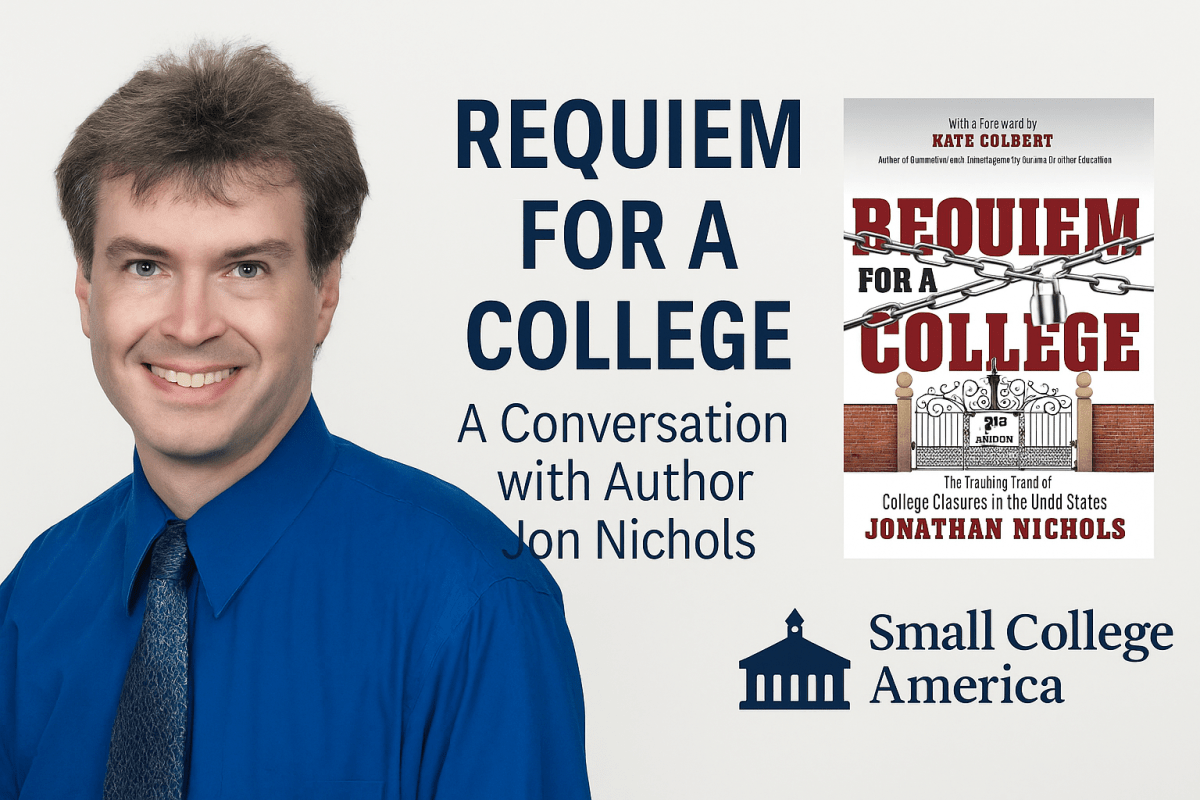
In the newest episode of Small College America, my co-host Kent Barnds and I speak with Jon Nichols, author of Requiem for a College: The Troubling Trend of College Closures in the United States. Nichols’ book offers a deeply personal and reflective look at the 2017 closure of Saint Joseph’s College, an institution intertwined with his family for three generations—his father, Dr. John Nichols, taught there for five decades, and his brother Michael continues to teach at Purdue University.
The Story of Saint Joseph’s College
Founded in 1889 by the Missionaries of the Precious Blood, Saint Joseph’s College in Rensselaer, Indiana, was a small Catholic liberal arts institution known for its close-knit community, rigorous Core Curriculum, and dedication to service. For more than a century, it served as both an educational and cultural anchor for Rensselaer and surrounding Jasper County, educating generations of teachers, business leaders, and clergy. At its peak in the 1970s, the college enrolled more than 1,500 students and earned national recognition for its innovative Core Program, which blended history, philosophy, and theology in an interdisciplinary approach to learning.
Despite its enduring mission and loyal alumni base, Saint Joseph’s faced mounting financial pressures and declining enrollment, leading to the suspension of operations in 2017. By that year, the college’s enrollment had declined to about 900 students, a sharp drop from its earlier decades of strength. The closure reverberated throughout the region, symbolizing a growing crisis among small, tuition-dependent private colleges across the United States.
About Jon Nichols
Jon Nichols is an author, educator, and observer of the changing higher education landscape. A graduate of Saint Joseph’s College and longtime member of its academic community, Nichols witnessed firsthand the personal and institutional struggles that informed Requiem for a College: The Troubling Trend of College Closures in the United States. His work combines narrative storytelling with research and reflection, capturing both the emotional and systemic dimensions of college closures. Today, Nichols teaches English at Waubonsee Community College in Illinois, where he continues to write and speak about the sustainability challenges facing small colleges and the communities they serve.
Nichols captures the profound emotional and social toll of a college closure—on faculty, students, alumni, and the surrounding town. His narrative reminds readers that when a college closes, it is not just an institution that disappears, but a community, a sense of purpose, and a shared legacy.
Our conversation explores a range of topics, including the warning signs that should have been taken more seriously—both at Saint Joseph’s and across higher education—and how his book captures not only institutional failure but also human loss: the erasure of identity, community, and legacy. Nichols also reflects on what sustainable models of higher education might look like in the years ahead and what long-term effects the closure has had on former students, faculty, and the Rensselaer community.
Small College America is a podcast series that shines a spotlight on the powerful impact of small colleges across the nation. Hosted by Dean Hoke and Kent Barnds, the podcast brings listeners inside the world of small colleges through candid conversations with higher education leaders, policy experts, and innovators. Each episode explores how these institutions are adapting, thriving, and continuing to deliver a personal, high-quality education.
As the vice president of academic affairs and a member of the admissions committee at SSP International (SSPI), a nonprofit organization offering immersive scientific experiences, I review hundreds of applications each year from rising seniors for our flagship program, Summer Science Program. What we’ve learned is that many of our bright and talented students are navigating their academic careers without access to the same supports as similarly high-achieving students.
Where other Summer Science Program applicants might benefit from private tutors, college consultants, or guidance from parents familiar with the college application process and the high stress of today’s competitive college market, these students rise to the top of the applicant pool without leaning on the same resources as their peers.
This is especially true for first-generation students who will be the first in their families to graduate from high school, go through the college admissions process, apply for financial aid, and enroll in college. Not only do they need to be more resourceful and self-reliant without the support of their personal networks, but they also often take on the responsibility of guiding their parents through these processes, rather than the other way around.
School counselor shortage
For many students who are underrepresented in academia, their exposure to different colleges, careers, and networks comes from their school counselors. While the American School Counselor Association (ASCA) recommends a minimum student-to-school counselor ratio of 250:1, the nationwide shortage of counselors led to a national average ratio of 385:1 between 2020-2023. That is a lot of strain on counselors who already serve as jacks of all trades–needing to keep up with evolving college admissions processes, understand the financial circumstances of hundreds of families, provide emotional support, and stay on top of the job market to advise accordingly. This ultimately affects the level of personalized counseling students receive.
Making the college admissions process accessible
In 2020, SSPI launched College Link, a mentorship program offering Summer Science Program alumni access to one-on-one or group mentoring. Mentors support students during their transition from high school to college through guidance on financial aid, early decision/early action processes, college applications, personal essay writing, resume workshopping, and more. To date, College Link has served over 650 mentees and recruited over 580 mentors sourced from SSPI’s 4,200 alumni network.
This mentorship network comprises individuals from various backgrounds, leading successful and diverse careers in academia and STEM. Mentors like Dr. Emma Louden, an astrophysicist, strategist, and youth advocate who also helped develop the program, provided SSPI’s recent alumni with insights from their real-world professional experiences. This helps them explore a variety of careers within the STEM field beyond what they learn about in the classroom.
Demographic data from last year’s Summer Science Program cohort showed that 37 percent of participants had parents with no higher education degree. That is why College Link prioritizes one-on-one mentoring for first-generation college alumni who need more personalized guidance when navigating the complexities of the college application and admission process.
College Link also offers group mentoring for non-first-generation students, who receive the same services from several mentors bringing great expertise on the varying topics highlighted from week to week.
With the support of College Link, nearly one hundred percent of Summer Science Program alumni have gone on to attend college, including MIT, Stanford, Harvard, Caltech and other prestigious institutions.
Using College Link as a blueprint
As the U.S. continues to face a counselor shortage, schools can further support students, especially first-generation students, through the college admissions process by creating mentorship networks using the College Link model. Schools can tap into their alumni network and identify successful role models who are ready to mentor younger generations and guide them beyond the admissions process. With the widespread implementation of Zoom in our everyday lives, it is now easier than ever to build networks virtually.
Mentorship networks in schools can provide additional support systems for high school students and alleviate the pressures school counselors experience daily during college admissions season. Let’s continue to ensure the college admissions process is accessible to all students.
Dr. Mike Manzella, SSP International
Dr. Mike Manzella is the VP of Academic Affairs at SSP International, where he oversees all academic aspects of SSPI’s new and existing STEM research programs and SSPI’s Summer Science Program faculty recruiting efforts. Mike holds a B.S. in Biotechnology from the Rochester Institute of Technology and a PhD in Microbiology and Molecular Genetics from Michigan State University.
Latest posts by eSchool Media Contributors (see all)
By Dean Hoke, October 13, 2025 – In the small towns of America, where factories have closed and downtowns often stand half-empty, a small college can be the heartbeat that keeps a community alive. These institutions—sometimes enrolling only a few hundred students—serve as economic anchors, cultural centers, and symbols of hope for regions that might otherwise face decline.
From the farmlands of Indiana to the mountain towns of Appalachia, small colleges generate economic energy far beyond their campus gates. They attract students, faculty, and visitors, stimulate local business, and provide the trained workforce that rural economies desperately need. They also embody something deeper: a sense of identity and connection that sustains civic life.
Economic Impact: Anchors in Fragile Economies
Small colleges are powerful, if often overlooked, economic engines. Their presence is felt in every paycheck, every restaurant filled with students and parents, and every local business that relies on their purchasing power.
Across the United States, nearly half of all public four-year colleges, over half of all public two-year colleges, and a third of private four-year colleges make up the 1,100 rural-serving institutions as identified by the Alliance for Research on Regional Colleges (ARRC). These colleges educate 1.6 million students, accounting for more than a quarter of total U.S. enrollments. Yet their role extends far beyond classrooms and degrees.
Rural-serving institutions are frequently among the largest employers in their counties, especially where other industries have faded. In areas where 35% or more of working-age adults are unemployed, 83% of local colleges are rural-serving, making them pillars of economic stability. Unlike large universities in metropolitan areas, their spending is highly localized—on utilities, food service, maintenance, and partnerships with small vendors.
Economic models underscore their importance. The Brookings Institution found that high-performing four-year colleges contribute roughly $265,000 more per student to local economies than lower-performing institutions, while two-year colleges add about $184,000. In many rural towns, every institutional dollar recirculates multiple times, magnifying its effect.
Beyond direct payroll and procurement, small colleges attract outside dollars. Students and visitors rent housing, dine locally, and shop downtown. Athletic events, alumni weekends, and summer programs bring tourists who fill hotels and restaurants. The IMPLAN consulting group estimated that when a college closes, the average regional loss equals 265 jobs, $14 million in labor income, and $32 million in total economic output—a devastating hit in thin rural economies.
Human Capital and Workforce Development
If small colleges are the economic engines of rural communities, they are also the primary producers of human capital. They educate the teachers, nurses, business owners, and civic leaders who sustain local life.
The Federal Reserve Bank of Richmond describes community colleges as “anchor institutions” that shape regional labor markets. Many partner with local employers to design training programs that meet specific workforce needs—often at minimal cost to businesses. In one case study, a rural college collaborated with an advanced manufacturing firm to tailor instruction for machine technicians, ensuring a steady local labor supply and convincing the company to expand rather than relocate.
Rural-serving colleges are also critical in addressing educational disparities. Only 22% of rural adults hold a bachelor’s degree, compared with 37% of non-rural Americans. This gap translates directly into income inequality: according to the U.S. Department of Agriculture’s Economic Research Service, nonmetro workers with a bachelor’s degree earned a median of $52,837 in 2023, compared with substantially higher earnings for their urban counterparts. In states such as Indiana, Ohio, and Pennsylvania, rural degree attainment lags 10 to 15 percentage points behind state averages.
Beyond Economics: RSIs as Equity Infrastructure
Rural-serving institutions are more than economic engines—they are critical equity infrastructure, often providing the only realistic pathway to higher education for students the system has historically marginalized.
RSIs enroll far higher proportions of high-need students than their urban counterparts. Nearly 50% of undergraduates at RSIs receive Pell Grants, compared to 34% nationally. These institutions also serve disproportionate numbers of first-generation students, working adults, and students from underrepresented communities who lack access to flagship universities.
For many rural students, the local college isn’t a choice—it’s the only option. Geographic isolation, family obligations, and financial constraints make residential college attendance impossible. Research shows that every ten miles from the nearest college reduces enrollment probability by several percentage points. For students without transportation, without broadband for online learning, or without family support to relocate, the local institution is existential.
When rural colleges close, equity suffers most. Displaced students, if they re-enroll at all, face higher debt burdens and lower completion rates. Wealthier students can transfer to distant institutions; low-income students stop out. Communities of color, already underserved, lose ground.
Policymakers often evaluate colleges through narrow metrics: completion rates and graduate earnings. But this ignores mission differentiation. RSIs serve students that flagship universities would never admit, in places that for-profit colleges would never enter, at prices that private colleges could never match. Investing in rural-serving institutions isn’t charity—it’s infrastructure investment in equity, ensuring every region has pathways to economic mobility. If America is serious about educational equity, it must recognize RSIs as essential public infrastructure, not discretionary spending.
Despite these barriers, rural institutions remain lifelines for upward mobility. They offer affordable tuition, flexible programs for working adults, and pathways for first-generation students who might otherwise forgo higher education.
However, the pressures are real. Rural students face tighter finances, higher borrowing costs, and fewer grant opportunities. Nearly half of rural undergraduates receive Pell Grants, but average aid remains lower than that at urban institutions. Many graduates leave rural areas to find higher-paying jobs, a “brain drain” that weakens local economies. Yet for those who stay—or return later—their impact is outsized, driving new business formation, civic leadership, and generational stability.
Example: Goshen College and Elkhart County, Indiana — A Model of Mutual Benefit
The following example illustrates the positive interdependence of a small college and its surrounding community—how shared growth, service, and opportunity can strengthen both the institution and the region it calls home.
Few examples better demonstrate this relationship than Goshen College in northern Indiana. Founded in 1894 by the Mennonite Church, Goshen sits in Elkhart County, a region best known for its manufacturing and recreational vehicle industries. While the area has long been an economic hub, its continued success depends heavily on education and workforce development—both areas where Goshen College has quietly excelled for more than a century.
Goshen employs more than 300 full-time and part-time faculty and staff, making it one of the city’s largest private employers. Its local purchasing—from food services to maintenance and printing—injects millions of dollars annually into the county’s economy. The student body, drawn from across the Midwest and around the world, supports rental housing, restaurants, and small businesses throughout the region.
According to the 2024 Independent Colleges of Indiana Economic Impact Study, Goshen College contributes roughly $33 million each year to the regional economy through employment, operations, and visitor spending. Beyond the numbers, the college enriches community life. The Goshen College Music Center and Merry Lea Environmental Learning Center are regional treasures, hosting performances, lectures, and research programs that attract thousands of visitors annually. During the COVID-19 pandemic, the college partnered with local health officials to serve as a testing and vaccination site—further demonstrating its civic commitment. Its nursing, environmental studies, and teacher preparation programs continue to meet critical workforce needs across Elkhart County and beyond.
Goshen College stands as a model of how a small private college and its community can thrive together. Its example underscores a broader truth: when rural colleges remain strong, the benefits extend far beyond campus—bolstering jobs, sustaining income, and enriching the civic and cultural life that define their regions.
Social and Cultural Role: The Heart of Civic Life
Beyond numbers, the social and cultural influence of rural colleges may be their most irreplaceable contribution. In many counties, the college auditorium doubles as the performing arts center, the gym as the public gathering space, and the library as a community hub.
Rural colleges host art shows, festivals, lectures, and athletics that bring people together across generations. They sponsor service projects, tutoring programs, and food drives that connect students with their neighbors. For residents who might otherwise feel isolated or overlooked, the local college provides a sense of belonging and civic pride.
Research from the National Endowment for the Arts underscores that local arts participation strengthens community bonds and well-being. Rural colleges amplify that effect by providing both venues and expertise. Their faculty often lead community theater, music ensembles, or public workshops—bringing culture to places that might otherwise lack access.
The COVID-19 pandemic vividly demonstrated this social bond. While large universities shifted to remote learning with relative ease, small rural colleges had to improvise with limited broadband access and fewer resources. Yet many became essential service providers—hosting testing centers, distributing food, and maintaining human contact in otherwise isolated communities.
In these moments, small colleges revealed what they have always been: not just educators, but neighbors and caretakers.
Challenges: Fragility and the Risk of Decline
Despite their immense value, small rural colleges operate under fragile conditions. Their scale limits efficiency, their funding sources are volatile, and demographic shifts threaten their enrollment base.
Enrollment Declines and Demographic Pressures.
A steep decline in traditional-age students is projected to start by 2026, with the number of new high school graduates expected to fall by about 13 percent by 2041, according to The Chronicle of Higher Education, March 3, 2025, article “What is the Demographic Cliff”. For rural colleges already competing for a shrinking pool of students, this decline threatens their enrollment base and financial viability. Many have already experienced double-digit enrollment drops since the Great Recession. Rural public bachelor’s/master’s institutions enroll 5% fewer students today than in 2005, while community colleges struggle to recover from pandemic-era losses.
Financial Constraints. Small colleges rely heavily on tuition revenue and relatively modest endowments. According to the Urban Institute, the median private nonprofit four-year college holds about $33,000 in endowment assets per student, compared with hundreds of thousands of dollars per student at elite universities such as Amherst or Princeton. For many rural private colleges, endowment resources are often well below this national median. Their financial models depend heavily on tuition and auxiliary income, leaving them vulnerable when enrollment softens. Fundraising capacity is also limited: alumni bases are smaller and often less affluent than those of major research universities, making sustained growth in endowment and annual giving more difficult to achieve.
Operational Challenges. Compliance, accreditation, and technology costs weigh disproportionately on small staffs. Many rural colleges lack the personnel to pursue major grants or expand programs quickly. Geographic isolation compounds difficulties in recruiting faculty and attracting external partnerships.
Brain Drain and Opportunity Gaps. Even when colleges succeed in educating local students, retaining them can be difficult. Many leave for urban areas with higher wages and broader opportunities. The irony is painful: the better a rural college fulfills its mission of empowerment, the more likely it may lose its graduates.
Closures and Community Fallout. When a small college shuts its doors, the ripple effects are severe. Studies estimate average regional losses of over $20 million in GDP and hundreds of jobs per closure. Local businesses—cafés, landlords, bookstores—suffer immediately. Housing markets soften, municipal tax revenues drop, and cultural life diminishes. It can take a decade or more for a community to recover, if it ever does.
Reversing the Talent Flow: Retention Strategies That Work
The brain drain challenge is not insurmountable. Several states and institutions have pioneered retention strategies that show measurable results.
Loan forgiveness programs specifically targeting rural retention have gained traction. Kansas’s Rural Opportunity Zones offer up to $15,000 in student loan repayment for graduates who relocate to designated counties. Maine provides annual tax credits up to $2,500 for graduates who live and work in-state. Early data suggests these programs can shift settlement patterns, particularly in high-demand fields like nursing and teaching.
The most effective models involve tri-party partnerships: colleges provide education and career counseling, employers offer competitive wages and loan assistance, and municipalities contribute housing support or tax relief. In one Ohio example, a regional hospital, community college, and county government created a “stay local” nursing pathway that reduced turnover by 40% over five years.
Place-based scholarships are also emerging as retention tools. “Hometown Scholarships” provide enhanced aid for students from surrounding counties who commit to working regionally after graduation. When paired with community-engaged learning and local internships throughout the curriculum, these programs cultivate regional identity—shifting the narrative from “I have to leave to succeed” to “I can build a meaningful career here.”
Federal policy could amplify these efforts. A Rural Talent Corps modeled on the National Health Service Corps could leverage student loan forgiveness to address workforce shortages while stabilizing rural economies. The brain drain will never disappear entirely, but intentional investment can shift the calculus from inevitable loss to manageable flow.
Policy Pathways and Strategies for Resilience
Sustaining small colleges—and the communities they support—requires creativity, collaboration, and policy attention.
1. Deepen Local Partnerships. Rural colleges thrive when they align closely with regional needs. Employer partnerships, dual-enrollment programs, and apprenticeships can connect education directly to local labor markets. In Indiana and Ohio, several colleges now co-design health care and manufacturing programs with regional employers, ensuring steady pipelines of skilled workers.
2. Form Regional Alliances. Small institutions can collaborate rather than compete. Shared academic programs, cross-registration, and joint purchasing agreements can reduce costs and expand offerings. Examples such as the New England Small College Innovation Consortium show how collective action can extend capacity and visibility.
3. Diversify Revenue and Mission. Rural colleges can strengthen financial resilience by expanding adult education, microcredentials, and workforce training. Many are converting underused buildings into community hubs, co-working spaces, or conference centers. Others are developing online and hybrid programs to reach place-bound learners in neighboring counties.
4. Increase State and Federal Support. Federal recognition of Rural-Serving Institutions within the Higher Education Act could unlock targeted funding similar to programs for Minority-Serving Institutions. States should adapt funding formulas to reflect mission-based outcomes—rewarding colleges that serve low-income, first-generation, and local students rather than penalizing them for small scale.
5. Encourage Philanthropic Investment. Foundations and donors have historically overlooked rural institutions in favor of urban flagships. Increasing awareness of their impact could mobilize new giving streams, particularly from community foundations and regional philanthropists.
6. Invest in Infrastructure. Broadband access, housing, and transportation are essential to sustaining rural higher education. Expanding digital infrastructure allows colleges to deliver online learning, attract remote faculty, and connect to global markets.
Looking Ahead: The Role of Small Colleges in Rural Renewal
As rural America seeks to reinvent itself in the 21st century, small colleges are uniquely positioned to lead that renewal. They combine local trust with national expertise, and they possess the physical, intellectual, and moral infrastructure to drive change from within.
Their future will depend on adaptability. Colleges that align programs with regional industries, embrace digital learning, and form strategic alliances can thrive despite demographic headwinds. Institutions that cling to older models may struggle.
Yet the measure of success should not be enrollment size alone. A rural college’s value lies in its multiplier effect—on jobs, community life, and civic identity. For many counties, it is the last remaining institution still rooted in the public good.
Conclusion: Investing in Irreplaceable Infrastructure
Small colleges in rural America are far more than schools. They are community builders, employers, cultural anchors, and symbols of local resilience. Their closure can hollow out a county; their success can revive one.
The rural-serving institutions identified by ARRC represent a quarter of U.S. enrollments but touch nearly half the nation’s geography. They serve regions facing population loss, persistent poverty, and limited opportunity—yet they continue to educate, employ, and inspire.
The choice facing policymakers, philanthropists, and citizens is simple: either we invest in these engines of opportunity, or we risk watching the lights go out in hundreds of rural towns.
The question is no longer whether we can afford to support small rural colleges but whether America can afford not to.
Sources and References
Alliance for Research on Regional Colleges (ARRC).Identifying Rural-Serving Institutions in the United States (2022).
Brookings Institution.The Value of Higher Education to Local Economies (2021).
Federal Reserve Bank of Richmond.Community Colleges as Anchor Institutions: A Regional Development Perspective (2020).
National Student Clearinghouse Research Center.High School Benchmarks 2022: National College Progression Rates.
National Endowment for the Arts.Rural Arts, Design, and Innovation in America (2017).
Lumina Foundation.Stronger Nation: Learning Beyond High School Builds American Talent (2024).
National Skills Coalition.Building a Skilled Workforce for Rural America (2021).
IMPLAN Group, LLC.Measuring the Economic Impact of Higher Education Institutions (2023).
U.S. Census Bureau.Educational Attainment in the United States: 2023 (American Community Survey Tables).
Bureau of Labor Statistics.Employment and Earnings by Educational Attainment, 2023.
Goshen College.Economic Impact Report 2022 and institutional data from the Office of Institutional Research.
Dean Hoke is Managing Partner of Edu Alliance Group, a higher education consultancy, and a Senior Fellow for the Sagamore Institute located in Indianapolis, Indiana. He formerly served as President/CEO of the American Association of University Administrators (AAUA). Dean is a champion for small colleges in the US. and is committed to celebrating their successes, highlighting their distinctions and reinforcing how important they are to the higher education ecosystem in the US. Dean is the creator and co-host for the podcast series Small College America.
Webinar December 3, 2025 | 1:00 PM (Eastern) Presented by Small College America with support from Edu Alliance and the American Association of University Administrators
We Need Your Questions: To make this conversation meaningful, we need your perspective. We’re asking higher education leaders to take five minutes to complete a short, confidential survey before the event. WEBINAR SURVEY LINK
By Dean Hoke, October 6, 2025: Mergers and closures are not new to higher education. In the 1970s alone, nearly 225 institutions either closed or merged—roughly 7% of all degree-granting institutions at the time. I experienced this personally when my alma mater permanently closed in 2020. Like thousands of alumni, I grieved the loss of a place that had shaped my life. But I also understood something many did not: this wasn’t an isolated tragedy—it was part of a larger historical cycle of growth, contraction, and reinvention.
In the early 1990s, I was directly involved as President of a public television station that merged with a local public radio station. The process was emotional and complex, requiring open communication, transparency, and leadership from every level. As of today, both of these stations exist within one organization and are doing well. Those lessons stayed with me throughout my career in higher education.
During my tenure as President/CEO of the American Association of University Administrators (AAUA), it became evident that higher education was entering a new era of financial strain and demographic pressure. Colleges were being forced to explore collaboration and consolidation not as strategic options—but as survival imperatives.
At the AAUA national conference, we hosted two candid conversations about this reality:
A four-hour off-the-record roundtable session titled “Mergers and Acquisitions: Navigating Higher Ed’s Complex Landscape,” which included two leading higher education attorneys, the head of an acquisition firm specializing in higher education, and the Provost of a university that was being merged.
A public session featuring Dr. Chet Haskell (Antioch University) and Dr. Wendy Heckler (Otterbein University), who shared their groundbreaking work on the Coalition for the Common Good.
Why This Webinar Matters
According to Inside Higher Education’s 2025 Survey of College and University Presidents, one in three presidents at private nonprofit institutions report that their boards and senior leadership teams have had serious discussions about merging or consolidating. Even more telling:
17% believe a merger or acquisition involving their institution is somewhat or very likely in the next five years.
33% expect they may acquire another institution during that same period.
These numbers underscore a critical truth: every institution should be preparing for the possibility of structural change—even those that appear stable today.
That’s why this conversation matters now. It’s not about predicting which colleges will survive. It’s about helping leaders understand how to respond when the discussion moves from theoretical to real—when preservation of mission and identity must be balanced with financial reality.
The Upcoming Webinar
Against this backdrop, Small College America, with the support of Edu Alliance and AAUA, will host a live 90-minute webinar:
“Navigating Higher Education’s Existential Challenges: From Partnerships and Mergers to Reinvention”Tuesday, December 3, 2025 | 1:00 PM Eastern
This will not be another PowerPoint presentation filled with charts and trends. Instead, a panel of leaders who have lived through mergers, partnerships, and reinvention will share what they learned from the inside.
Panelists include:
Dr. Chet Haskell, Former Provost, Antioch University, and key architect of the Coalition for the Common Good
Dr. Barry Ryan, Retired President, Woodbury University, who recently led his institution through a merger with University of Redlands
AJ Prager, Managing Director at Hilltop Securities, specializing in Higher Education Mergers & Acquisitions and Strategic Partnerships
Higher education legal expert to be announced
Dean Hoke and Kent Barnds, co-hosts of Small College America, will moderate the conversation. Our focus is on the human side of institutional transformation—the conversations that happen behind closed doors, the decisions that test leadership resolve, and the strategies that allow communities to emerge stronger.
Registration for this free webinar will begin on November 3rd.
Who Should Attend
This webinar is designed for:
Presidents, provosts, and trustees facing questions of sustainability or succession.
CFOs and senior administrators managing budget pressures or enrollment cliffs.
Board members and advisors preparing for strategic decision-making.
If you’ve heard phrases like “structural deficit,” “strategic alternatives,” or “path to viability” in your recent meetings, this discussion is for you.
Why We Need Your Voice
To make this conversation meaningful, we need your perspective. We’re asking higher education leaders to take five minutes to complete a short, confidential survey before the event. Your input will directly shape the webinar by:
Identifying the most urgent questions institutions are facing.
Prioritizing real-world concerns rather than theoretical discussions.
Allowing panelists to address the issues keeping leaders awake at night.
This is your opportunity to ensure that the session reflects the realities of your campus—not assumptions from the outside. Your identity will remain anonymous; our goal is to understand the questions, not who’s asking them.
Survey closes November 29 to allow time for integration into the program.
Students from the class of 2024 had historically low scores on a major national test administered just months before they graduated.
Results from the National Assessment of Educational Progress, or NAEP, released September 9, show scores for 12th graders declined in math and reading for all but the highest performing students, as well as widening gaps between high and low performers in math. More than half of these students reported being accepted into a four-year college, but the test results indicate that many of them are not academically prepared for college, officials said.
“This means these students are taking their next steps in life with fewer skills and less knowledge in core academics than their predecessors a decade ago, and this is happening at a time when rapid advancements in technology and society demand more of future workers and citizens, not less,” said Lesley Muldoon, executive director of the National Assessment Governing Board. “We have seen progress before on NAEP, including greater percentages of students meeting the NAEP proficient level. We cannot lose sight of what is possible when we use valuable data like NAEP to drive change and improve learning in U.S. schools.”
In a statement, Education Secretary Linda McMahon said the results show that federal involvement has not improved education, and that states should take more control.
“If America is going to remain globally competitive, students must be able to read proficiently, think critically, and graduate equipped to solve complex problems,” she said. “We owe it to them to do better.”
The students who took this test were in eighth grade in March of 2020 and experienced a highly disrupted freshman year of high school because of the pandemic. Those who went to college would now be entering their sophomore year.
Roughly 19,300 students took the math test and 24,300 students took the reading test between January and March of 2024.
The math test measures students’ knowledge in four areas: number properties and operations; measurement and geometry; data analysis, statistics, and probability; and algebra. The average score was the lowest it has been since 2005, and 45% of students scored below the NAEP Basic level, even as fewer students scored at NAEP Proficient or above.
NAEP Proficient typically represents a higher bar than grade-level proficiency as measured on state- and district-level standardized tests. A student scoring in the proficient range might be able to pick the correct algebraic formula for a particular scenario or solve a two-dimensional geometric problem. A student scoring at the basic level likely would be able to determine probability from a simple table or find the population of an area when given the population density.
Only students in the 90th percentile — the highest achieving students — didn’t see a decline, and the gap between high- and low-performing students in math was higher than on all previous assessments.
This gap between high and low performers appeared before the pandemic, but has widened in most grade levels and subject areas since. The causes are not entirely clear but might reflect changes in how schools approach teaching as well as challenges outside the classroom.
Testing officials estimate that 33% of students from the class of 2024 were ready for college-level math, down from 37% in 2019, even as more students said they intended to go to college.
In reading, students similarly posted lower average scores than on any previous assessment, with only the highest performing students not seeing a decline.
The reading test measures students’ comprehension of both literary and informational texts and requires students to interpret texts and demonstrate critical thinking skills, as well as understand the plain meaning of the words.
A student scoring at the basic level likely would understand the purpose of a persuasive essay, for example, or the reaction of a potential audience, while a students scoring at the proficient level would be able to describe why the author made certain rhetorical choices.
Roughly 32% of students scored below NAEP Basic, 12 percentage points higher than students in 1992, while fewer students scored above NAEP Proficient. An estimated 35% of students were ready for college-level work, down from 37% in 2019.
In a survey attached to the test, students in 2024 were more likely to report having missed three or more days of school in the previous month than their counterparts in 2019. Students who miss more school typically score lower on NAEP and other tests. Higher performing students were more likely to say they missed no days of school in the previous month.
Students in 2024 were less likely to report taking pre-calculus, though the rates of students taking both calculus and algebra II were similar in 2019 and 2024. Students reported less confidence in their math abilities than their 2019 counterparts, though students in 2024 were actually less likely to say they didn’t enjoy math.
Students also reported lower confidence in their reading abilities. At the same time, higher percentages of students than in 2024 reported that their teachers asked them to do more sophisticated tasks, such as identifying evidence in a piece of persuasive writing, and fewer students reported a low interest in reading.
Chalkbeat is a nonprofit news site covering educational change in public schools.
September 8, 2025, by Dr. Chet Haskell: It is well known that many small American private non-profit academic institutions face serious financial pressures. Typically defined as having 3000 or fewer students, more than 170 of these have been forced to close in the past two decades. Numerous others have entered into various mergers or acquisitions, often with well-documented negative impacts on students, faculty, staff, alumni and local communities. Of the more than 1100 such institutions, at least 900 continue to be a risk.
The basic problems responsible for this trend are also well-known. Most institutions lack significant endowments and are thus almost totally dependent on tuition and fee revenues from enrolled students. Only 60 such small institutions have per student endowments in excess of $200,000. The remainder have far less.
The only additional potential source of revenue – gifts and donations –is generally neither large nor consistent enough to offset enrollment-related declines. While the occasional donation or bequest in the millions of dollars garners attention, most institutions raise much smaller amounts regularly.
Enrollment declines are the existential threat to many of these smaller colleges and universities. These declines are also well-documented. There simply will be fewer high school graduates in the US in the coming decade or more. This reality creates a highly competitive environment, especially in regions with many of these institutions.
Demographic worries are augmented by broad concerns about the cost of higher education and the imputed return on such an investment by students and families. Governmental policies such as limitations on international students or restrictions on immigration further add to the problem. Also, these institutions not only compete with each other for students, but they also compete with colleges and universities of the public sector and a growing number of for-profit entities.
Most of these 900 or so institutions have high quality programs, often described under the term “liberal arts”. Many are differentiated by a specialization or an emphasis. However, at their core they are very similar. The basic concept of a personal scale four-year undergraduate educational experience provided in a residential campus setting has a long history and is highly valued by many students and faculty alike. These institutions have lengthy, strong histories, loyal alumni and important roles in their local communities.
The fact is that it is difficult to differentiate among many of these institutions. Not only their scale or their general model of personalized undergraduate education are similar, but many of their basic messages sound the same. A review of the websites of these schools results in striking consistencies of stated “unique” missions, programs, facilities, faculty and even marketing materials.
Their approaches to financial challenges are also similar. There is considerable competition on price. Most of these institutions discount their formal tuition rates by 50% or more. Initiatives to grow enrollments support an industry of educational consultants whose recommended initiatives are themselves similar and, even if successful, are quickly copied, thus reducing advantages.
Some have tried to compete by raising money for new, attractive facilities through dipping into limited endowments, borrowing or securing external major gifts. These shiny new buildings – athletic facilities, science centers, student centers – are assumed to provide an edge in student recruitment. In some cases, this works. However, in many others the new facilities do not come with long term maintenance and eventually add to increased on-going institutional expense. The end result is often another demonstration of similarity.
Some institutions have tried to branch out into selected graduate programs, perhaps based on a strong group of undergraduate faculty. Success is often limited for multiple reasons. Graduate students in commonly introduced professional fields such as business or nursing do not naturally align with an undergraduate in-person academic calendar. Older students, especially those in careers, are reluctant to come to a campus for class twice a week. Even if there is sufficient interest in such a program, it is difficult to increase in scale because of the limits of distance and geography. And most of these institutions lack significant expertise and technology do conduct effective on-line operations.
Their institutional similarities extend to their governance. Typically, there is a Board of Trustees, all of whom are volunteers, often with heavy alumni representation. These boards generally lack expertise or perspective on the challenges of higher education and thus are dependent on the appointed executive leadership. They often take a short-term perspective and lack strategic foresight that may be most valuable in times of uncertainty and external changes.
Even when trustees have financial experience from other fields, their common approach to small institutions is to bemoan any lack of enrollments. Most do not make significant personal financial contributions, particularly if they think the institution is struggling to survive. The assumed budget goal is basically a balanced budget and when one does not control revenues, one focuses on the more controllable expense side, trying to balance budgets solely on cuts. Board members serve because they want to support the institution, but many are risk adverse. For example, a fear of being associated with an institution that might generate possible legal liability for the board member means a first concern usually involves whether there is sufficient insurance.
While every institution is indeed different in its own way, they also are very similar. What explains this?
One possible way of explanation is provided by the organizational theorists Walter Powell and Paul DiMaggio who in 1983 (updated in 1991) published a seminal piece on what they called ”institutional isomorphism and collective rationality.” [1]They argued that ”institutions in the same field become more homogenous over time without become more efficient or more successful” and identified three basic reasons for such a tendency.
Coercive isomorphism – similarities imposed externally on the institutions. In higher education, good examples would be Federal government policies around student financial aid or the requirements of both regional and specialized accreditors. Every institution operates within a web of regulation and financial incentives that impose requirements on all and work to limit innovation.
Mimetic processes – similarities that arise because of standard responses to uncertainty. Prime examples in higher education are the increasingly common responses to the quest for enrollment growth. As noted, numerous consultants purport to improve enrollments, but the gains typically are limited, as other institutions mimic the same approach. In another example, recent surveys show that almost all institutions expect to be users of artificial intelligence models to promote marketing in the service of admissions, as if this is a “magic wand”. If one institution makes strides in this area, others will follow. The result will be more similarity, not less. It is a bit like the Ukrainian-Russian war, where Ukraine originally had clear advantages using drone technology until that technology was matched by the Russians, leading to a form of stalemate. As DiMaggio and Powell note, ”organizations tend to model themselves after similar organizations in their field that they perceive as more legitimate or successful.”[2]
Normative pressures – similarities that arise from common “professional” expectations. The authors identify two important aspects of professionalization: the common basis of higher education credentials and the legitimation produced by these credentials and “the growth and elaboration of professional networks.” Examples include common faculty and senior administrator qualification requirements. Another would be so-called “best practices” in support areas like student affairs. “Such mechanisms create a pool of almost interchangeable individuals who occupy similar positions.”[3] Recently, Hollis Robbins pointed out the commonalities in paths to academic leadership positions, likening these to the Soviet nomenklatura process through which a leader progresses in one’s career.[4] Evidence of this is obvious through a cursory review of the qualifications and desired qualities posted in searches for college and university presidents or other senior administrators. Most searches end up looking for and hiring individuals with very similar qualifications and experience.
The implications of such pressures and processes are several. With common values and similar personnel, “best practices” do not lead to essential changes. Innovation is quickly copied. Indeed, it becomes increasing difficult to differentiate an institution from competitors. Common regulatory structures, declining student pools, increased competition and a lack of resources for investment all combine to enhance similarity over difference. In some sense, it is almost a form of commodification where price does in fact matter, but the “product” basically the same, especially in the minds of the larger population of potential students and families.
What is to be done?
Leadership Must Confront Their Institution’s Reality
Confronting reality has many aspects, but the leaders of every institution must be clear-eyed and unsentimental about where it stands and where it is headed. This is an essential role for boards and executive leadership.
First and foremost, the mission of the institution must be understood in realistic and practical ways. What is the institution’s purpose and what is required to fulfill that purpose? Institutional mission is central as it should drive an appreciation for the current situation of the institution, provide clarity regarding longer term goals and bringing into focus the necessary means to move forward.
With clarity of mission must come a full understanding the of institution’s financial situation, its opportunities and the longer term needs required to achieve mission goals. Building multi-year mission-oriented budgets based on surpluses (positive margins) is key. Sometimes restructuring and cuts are necessary and thus leadership must make sure all faculty and staff have a clear understanding of reality and the strategy for addressing it.
A clear understanding by all of the marginal results (positive and negative) of major components is also critical. Some elements or units return significant positive margins. Others less so. And some return negative margins, often year after year. Yet, some of these less financially productive elements may be essential to mission and must be balanced or subsidized by other elements. At the end of the day, it is the margin of the entire institution that matters. And, as the saying goes, “no margin, no mission.” However, the opposite is also true. Institutions that are unclear about their mission will be challenged to attract and motivate students, faculty, staff or major donations.
Every institution must worry about enrollments as the largest source of revenue. Declining enrollments force expense restraints. Every institution must also be concerned about growing enrollments as a key prerequisite of financial stability. Institutions operating on thin or negative margins cannot hope to achieve their mission goals without some form of growth, including having the resources to invest in growth. Without some forms of growth, an institution will either be at risk or will have to make sometimes radical changes in order to continue to pursue mission goals. The only real alternative is to amend the mission and the definition of its success.
The other important point is that all institutions are subject to unexpected external pressures that they cannot control. Examples would be 9/11, the 2008-09 Great Recession, the COVID pandemic or the advent new government policies, such as those confronting all institutions today. Coping with such events requires having some financial resiliency, strong leadership and creativity.
Yet, the combination of external pressures and the realities of small-scale institutions operating on thin margins in the face of extensive competition may mean that even the best managed and led organizations will confront existential risk.
For many institutions, merging or partnering with another institution may be the only realistic path. While there often is reluctance to cede independence to another institution, mergers are hardly new, as consolidation in US higher education is hardly a new phenomenon. There are several hundred examples of mergers, many going back a century or more. Washington and Jefferson College in Pennsylvania in 1865 is the result of such an arrangement, as is Case Western Reserve University in Ohio a century later. In addition to these mergers, hundreds of other institutions have simply closed, including at least 170 in the past twenty years.
Additionally, may institutions may be placed to take advantage of consortium relationships with other institutions. Again, there are numerous examples of institutions seeking to improve their situations through this form of collaboration. Participating institutions collaborate on such things as sharing costs or providing a wider range of student options, while remaining independent. However, this model, while valuable in many ways, rarely provides major financial advantages except at the margins. And successful consortia require a certain degree of independent sustainability for each member.
Still others may be able find opportunity in growth through symbiosis. The recent Coalition for the Common Good begun by Antioch and Otterbein universities is an example. Other variants are possible. However, again such middle ground models also assume a basic stability of the members. As stated by Coalition president, John Comerford, “we are looking for a sweet spot of resources. This is not a way to save a school on death’s door. It’s also probably not useful to a school with billions in their endowment. Institutions in the big middle ground both need to look at new business models and likely have some flexibility to invest in them.” This type of model will not work in many cases.
The point is that many of these small college will continue to be at risk as long as they are tuition dependent within a shrinking pool of potential students and insufficient external support. Fewer and fewer small institutions will be able to survive independently simply because of the financial challenges inherent in their small-scale model.
Small undergraduate institutions represent the highest ideals of higher education. They are a key source for graduate students and future professors. They are central to their communities. Their strengthening and preservation as a class is an essential element of the American higher education ecosystem with its wide range of institutional models and opportunities. But this does not mean all can survive.
The leaders of every institution need to have a clear and practical plan for the maintenance of their independence, while also being open to careful consideration of alternatives, exploring potential alternatives well before they face a crisis.
Notes:
DiMaggio, Paul and Powell, Walter, The Iron Cage Revisited: Institutional Isomorphism and Collective Rationality in Organizational Fields in DiMaggio and Powell, The New Institutionalism in Organizational Analysis, University of Chicago Press, 1991. (pp.63-82)
Ibid. p. 70
Ibid. p. 71
Hollis Robbins, The Higher Ed Nomenklatura? Inside Higher Education, May 12, 2025
The next essay in this series will examine in some detail the steps in a process that begins with acknowledging the possible need for a partner and hopefully results in an agreement that is implemented.
Dr. Chet Haskell is Senior Consultant and Higher Education Strategist at Edu Alliance Group. He brings over four decades of leadership and consulting experience in higher education, with a career spanning the U.S., Europe, Latin America, and Asia. He has held senior roles, including President of the Monterey Institute of International Studies and Cogswell Polytechnical College, Dean and de facto Provost at Simmons College, and 13 years of leadership positions at Harvard University and five years in senior administrative roles at the University of Southern California.
As Provost and Chief Academic Officer of Antioch University, he helped lead the creation of the Coalition for the Common Good, a groundbreaking alliance with Otterbein University. Internationally, Dr. Haskell has advised universities in Mexico, Spain, Holland, and Brazil and served as a consultant to the Council for Higher Education Accreditation (CHEA), the Western Association of Schools and Colleges (WASC) and the Council on International Quality Group. A respected accreditation expert, he has served as a WSCUC peer reviewer and as an international advisor to ANECA (Spain) and ACAP (Madrid). He is a frequent speaker at global conferences and meetings.
Insights from three post-COVID presidents on enrollment, financial sustainability, and strategic innovation
September 3, 2025, by Dean Hoke: Small colleges across America face an unprecedented convergence of challenges—demographic shifts, federal policy changes, evolving student expectations, and the lingering effects of COVID-19. In an August 27th Small College America webinar hosted by Dean Hoke and Kent Barnds, three presidents shared how they are navigating these pressures with fresh strategies and resilient leadership: Dr. Anita Gustafson of Presbyterian College, Dr. Andrea Talentino of Augustana College, and Dr. Tarek Sobh of Lawrence Technological University.
Their conversation revealed that while the obstacles are significant, thoughtful leadership and adaptive strategies can position small colleges to not just survive but thrive.
The Enrollment and Financial Sustainability Imperative
Finding Opportunity in Transfers
For Presbyterian College, located in growing South Carolina, President Gustafson has found opportunity amid challenge. “About 60% of our students come from South Carolina, and the state is growing, which helps us,” she noted. However, rather than relying solely on traditional recruitment, the college has pivoted to focus on transfer students—a population they hadn’t previously targeted.
This strategic shift required significant cultural change. “We have very robust general education requirements, and we are working with our faculty to be more transfer-friendly,” Gustafson explained. The result has been a notable enrollment bump, demonstrating how institutional flexibility can open new pathways to growth.
The Four R’s Framework
At Augustana College in Illinois—a state that isn’t growing—President Talentino has developed what she calls the “four R’s” approach: recruitment, retention, revenue, and results. This framework drives their strategic planning and helps the entire campus community understand how their work connects to institutional sustainability.
“We budget actually 11 years out,” Talentino shared, acknowledging that “it’s a little bit like the weather—once you get past day three or four, it could rain when it’s supposed to be sunny.” This long-term perspective allows the college to anticipate challenges and make gradual adjustments rather than reactive cuts.
Both presidents emphasize conservative budgeting practices. As Gustafson put it: “When we build our budget, we build it on conservative numbers so that we’re not trying to overextend our budget. I think that’s really key to sustainability—making sure you’re being realistic.”
Confronting Federal Policy and International Student Challenges
The STEM Advantage and Vulnerability
Lawrence Technological University’s focus on STEM education has provided both advantages and vulnerabilities in the current environment. President Sobh noted that domestic demand for technologically trained professionals has driven significant interest in their programs. “Our programming, given the surge and the need for technological education, has been serving us well from a domestic growth point of view,” he explained.
However, like many engineering-focused institutions, Lawrence Tech has experienced a decline in international student enrollment. Sobh emphasized that this challenge extends beyond individual institutions: “The same statement would probably be true of every single one of the universities in the country that is home to a college of engineering.”
International Student Success Stories
Despite broader challenges, Augustana College achieved remarkable success with international student recruitment. President Talentino reported that they expect to bring in close to 85% of their original international student goal, “probably one of the few places in the country where we’re going to come that close.”
This success resulted from intensive, hands-on communication and their focus on undergraduate rather than graduate international students, who faced fewer visa complications. About 20% of Augustana’s student body consists of international students, making this achievement particularly significant for their financial sustainability.
Managing Financial Aid Changes
The recent changes to federal financial aid programs have created additional complexity. Talentino noted that Augustana has some protection through a generous alumnus who funds a program meeting 100% of the needs of high-achieving, high-need students. However, she acknowledged ongoing challenges: “There’s a lot of folks in the middle where parent loans are being squeezed and caps on borrowing are being squeezed.”
Strategic Technology Investment and AI Integration
The Liberal Arts Approach to AI
President Gustafson acknowledged the challenge of staying current with AI developments at a liberal arts institution. Presbyterian College has taken a pragmatic approach, partnering with external agencies for micro-credentialing programs that will eventually extend to alumni.
“Our graduates need to understand AI. They need to know how to use it in order to be competitive in the job market,” Gustafson emphasized. The college has also established a technology committee with campus-wide representation to develop long-term budgeting strategies for technology infrastructure.
AI as an Institutional Efficiency Tool
At Lawrence Tech, President Sobh described AI integration as both natural and transformative. Beyond curriculum integration, the university has embraced AI for business processes. “Our marketing, branding, and public relations departments are using AI for the development of marketing campaigns, which is 100 times more efficient, faster, cheaper, and more productive than not using AI,” he noted.
This efficiency extends across departments, from budget management to communications, though Sobh acknowledged that implementation remains “work in progress” for non-academic staff who need training and support.
Evolving Student Experience and Support
Becoming “Student Ready”
President Talentino introduced the concept of institutions becoming “student ready” rather than expecting students to be “college ready.” This perspective shift has driven comprehensive changes at Augustana, from streamlining onboarding processes to reconsidering when and how students want to engage with services.
“We can’t take things that we used to take for granted,” Talentino observed, noting that students today have different expectations and needs than previous generations. The college has revamped peer mentor programs, developed success teams for every student, and created specialized support centers like their new STEM center.
Supporting First-Generation Students
Presbyterian College’s focus on first-generation students—about one-third of its population—has led to innovative programming. Their “PresbyFirst Plus” program brings first-gen students to campus two days early and has earned recognition as a “first-gen forward network champion.”
This targeted support reflects broader changes in student demographics. As Gustafson noted: “Students of today don’t have the reading skills and the math skills that previous generations have had.” This reality has required faculty to adapt their approaches, sometimes focusing on foundational skills before advancing to advanced content.
Bold Strategic Moves
Creating New Academic Pathways
Lawrence Tech’s establishment of a fifth college—the College of Health Sciences—represents a significant strategic pivot for the 95-year-old institution. “It was quite a bold move to establish a new college 50 years or so after the last one had been established,” President Sobh noted.
This expansion into health sciences aligns with the growing demand for technologically trained healthcare professionals. The college now offers programs in nursing, physician assistant studies, and cardiovascular perfusion, and more programs are planned.
Community Development as Institutional Strategy
Perhaps the most innovative approach comes from Augustana College’s creation of a community development corporation (CDC). President Talentino explained that the condition of the surrounding neighborhood had become a recruiting challenge, with prospective students and families expressing concerns about the area.
Rather than simply hoping for external improvement, Augustana committed to an active partnership with the city of Rock Island. The CDC purchases and renovates properties to create mixed-use developments with retail on the first floor and housing above. “We really committed to putting our money where our mouth is,” Talentino said.
This initiative aligns with Lutheran principles of service to neighbor while addressing a practical institutional need. The city has become an enthusiastic partner, and the project has energized both campus and community.
Leadership Principles for Uncertain Times
Transparency and Partnership
President Gustafson’s leadership philosophy centers on transparency and symbiotic relationships. Her first-year theme, “Symbiosis—stronger together,” emphasized that the academic community functions best when operating collaboratively rather than in silos.
Her second-year pivot to “don’t panic, navigate”—borrowed from the National Association of Independent Colleges and Universities—has helped the leadership team manage multiple simultaneous challenges. This approach emphasizes thoughtful response over reactive decision-making.
Cultural Understanding and Patience
President Sobh, who transitioned from provost to president at the same institution, emphasized the importance of cultural understanding. Despite the temptation to implement changes quickly, he spent his first semester meeting with every colleague on campus—”literally hundreds” of people—to understand institutional culture and aspirations.
“The tendency of leaders to effect changes immediately is, in my opinion, the wrong decision,” Sobh reflected. “Waiting and listening to the culture of the institution, understanding the aspiration and history, and how my own interests can be integrated into that vision is absolutely worthwhile.”
Institutional vs. Individual Focus
President Talentino identified a key leadership challenge: helping people understand institutional needs beyond their individual or departmental perspectives. She noted that this represents one of her biggest adjustments from faculty and provost roles to the presidency.
“Focus on self and focus on own department rather than institutional-wide awareness was a little bit of a surprise to me,” she admitted, “but I guess that’s what makes it challenging and never boring.”
The Value Proposition Message
All three presidents emphasized the importance of clearly articulating their institutions’ value propositions to various constituencies. President Sobh stressed the power of concrete outcomes: “Being able to say 97% of my students continue on and are employed at this level and they are guaranteed a job and 85% live locally—that’s an incredibly powerful statement.”
President Gustafson focused on framing liberal arts education in terms of workforce development and democratic leadership: “All of us are important contributors to workforce development. If we can shape our message around workforce development, economic development, and providing leaders for a democratic society, that’s very helpful.”
Looking Forward
These three presidents demonstrate that successful leadership during uncertain times requires a combination of strategic thinking, cultural sensitivity, and adaptive capacity. Their approaches vary based on institutional type and regional context, but common themes emerge: the importance of transparency, the need for long-term planning with short-term flexibility, and the value of viewing challenges as opportunities for innovation.
As small colleges continue to navigate demographic shifts, policy changes, and evolving student needs, these leadership insights offer practical guidance for presidents, boards, and stakeholders committed to the distinctive mission of small college education.
The conversation reveals that while the challenges facing small colleges are significant, innovative leadership and strategic adaptation can position these institutions not just to survive, but to thrive in serving their communities and students.
Small College America is a podcast series that presents critical discussions at the forefront by interviewing small college higher education leaders, policy experts, and innovators. The podcast will delve into the evolving role of small colleges, their economic impact, innovative strategies for sustainability, and how they can continue to provide a highly personalized educational experience. The series is co-hosted by Dean Hoke and Kent Barnds.
Six out of 10 parents hope their child will attend college, according to a new survey by Gallup and the Lumina Foundation.
The survey, conducted in June, comes out at a time when the value of a college degree is the subject of public debate.
“We hear all this skepticism of higher education,” said Courtney Brown, vice president of impact and planning for the Lumina Foundation, which advocates for opportunities for learning beyond high school available to all. “We hear the narrative that people don’t value it.”
Just last month, the results of a Gallup poll showed that confidence in higher education among Americans has been falling over the last decade.
But the results of actually asking what parents want for their own children, Brown said, are striking. This is the first survey that Gallup has specifically asked parents for their views on the topic.
“When it comes down to it, it’s pretty clear that parents hope their children get a college degree,” Brown said.
Brown has found that parents’ biggest concerns about higher education tend to be the cost, whether it leads to a job, or increasingly, whether it is political.
This may explain why community colleges were a popular option among parents who responded. Community colleges tend to have a much lower sticker price than four-year colleges, and there is a greater emphasis on job credentials. Roughly 1 out of 5 parents of varying backgrounds said that they would like to see their child enroll at a community college.
But there were some notable differences in the survey among parents, depending on their own level of education, but especially their political orientation.
The strongest narratives against higher education come from the Republican Party. That is reflected in the responses, Brown noted.
Greater differences emerged around whether students should enroll in a four-year college immediately after high school; 58% of college graduates and 53% of Democrats preferred sending their children straight to a four-year college, compared to 27% of Republicans and 30% of parents without a college degree.
Republicans are more likely to say that their children should go straight into the workforce or job training or certification, followed by independents and those without a college degree. Other options include taking time off or joining the military.
But overall, 4 out of 10 parents want to see their child attend a four-year college or university, making it the most popular option by far. This is something that comes up repeatedly in surveys about higher education.
“We see that people value four-year [degrees],” Brown said. “We see that people have trouble accessing it and have some concerns about the system, but they do greatly value it.”
The survey also measured the preferences of non-parents. It asked respondents to think about a child in their life, whether a nephew or niece, grandchild or family friend under 18 who has not graduated from high school. Responses were remarkably similar: 55% said they wanted this child to attend either a four-year or two-year college, compared to 59% of parents.