Exam scores always seem to go up. Whether it’s the SAT when applying for college or an AP score to earn college credit, competitive scores seem to be creeping up. While faculty are invaluable, students who recently completed classes or exams offer insight that bridges the gap between the curriculum and the exam. I believe students who recently excelled in a course should be allowed and encouraged to serve as teaching assistants in high school.
Often, poor preparation contributes to students’ disappointing exam performance. This could be from not understanding content, being unfamiliar with the layout, or preparing the wrong material. Many times, in courses at all levels, educators emphasize information that will not show up on a standardized test or, in some cases, in their own material. This is a massive issue in many schools, as every professor has their own pet project they like to prioritize. For example, a microbiology professor in a medical school may have an entire lecture on a rare microbe because they research it, but nothing about it will be tested on the national board exams, or even their course final exams. This was a common theme in high school, with history teachers loving to share niche facts, or in college, when physics professors loved to ask trick questions. By including these things in your teaching, is it really benefiting the pupil? Are students even being tested correctly over the material if, say, 10 percent of your exam questions are on information that is superfluous?
Universities can get around this issue by employing teaching assistants (TAs) to help with some of the confusion. Largely, their responsibilities are grading papers, presenting the occasional lecture, and holding office hours. The lesser-known benefit of having and speaking with TAs is the ability to tell you how to prioritize your studying. These are often older students who have been previously successful in the course, and as a result, they can give a student a much better idea of what will be included on an exam than the professor.
When I was a TA as an undergrad, we were required to hold exam prep sessions the week of a big test. During these sessions, students answered practice questions about concepts similar to what would show up on the exam. All the students who showed up to my sessions performed extremely well on the tests, and they performed well because they were prepared for the exam and knew the concepts being tested. As a result, they would finish the course with a much higher grade because they knew what they should be studying. It is much more effective to give a student a practice question that uses similar concepts to what will be on their exam than it is for a professor to give a list of topics that are covered on a test. For example, studying for a math test is more impactful when answering 50 practice questions versus a teacher handing you a list of general concepts to study, such as: “Be able to manipulate inequalities and understand the order of operations.”
Universities seem to know that professors might not provide the best advice, or at the least, they have used TAs as a decent solution to the problem. It is my opinion that having this style of assistance in high school would be beneficial to student outcomes. Having, say, a senior help in a junior-level class may work wonders. Teachers would have a decrease in their responsibilities based on what they trust their TA to do. They could help grade, run review sessions, and make and provide exam prep materials. In essence, all the unseen work in teaching that great teachers do could be done more efficiently with a TA. Every student has had an amazing teacher who provides an excellent study guide that is almost identical to the test, making them confident going into test day. In my experience, those guides are not completed for a grade or a course outcome, and effectively become extra work for the educator, all to help the students who are willing to use them effectively. Having a TA would ease that burden–it would encourage students to consider teaching as a profession in a time when there is a shortage of educators.
There are many ways to teach and learn, but by far the best way to be prepared for a test is by talking to someone who has recently taken it. Universities understand that courses are easier for students when they can talk to someone who has taken it. It is my opinion that high schools would be able to adopt this practice and reduce teacher workload while increasing the student outcomes.
Samuel M. Baule, U.S. Army & Marian University
Sam Baule is a third-year medical student at Marian University and a lieutenant in the U.S. Army. He graduated in May 2023 with a bachelor’s degree in biomedical engineering from the University of Iowa.
Latest posts by eSchool Media Contributors (see all)
First in Leadership Series by Barry Ryan, PhD, JD August 11, 2025
It is hard to think of a time when higher education was swimming in a pool filled with a greater number of shark-like threats than at present.
Some of these were predictable (in hindsight), some not so much. Let’s set aside blame, however, on either an institutional level or on a more global basis. The vital thing now is for genuine leaders to help chart courses that will lead higher education, not just to mere survival, but to new and meaningful purposes that will benefit this generation and the next.
When situations are “normal,” we may be tempted to imagine that we need leadership that can keep the legacy intact, turn the crank, not rock the boat. But normal no longer exists, does it?
I remember a senior university leader, who admonished me, as I began a new presidency: “everything’s going great—just don’t mess it up” (using slightly more colorful language). One year later, seismic changes in higher ed created an unexpected crisis and necessitated major changes in the institution. Almost everything that had contributed to its prior success turned, overnight, into a liability.
There is, of course, more than one crisis in which higher ed is being buffeted. The sheer number of colleges and universities that have ceased to exist at all, or have been merged to various extents with others, or are currently teetering on the brink, appears in news stories almost every day. The root causes are legion and often woven together: financial shortfalls, a shrinking number of students, reductions in state and federal support, the disappearance of many international students, families, and prospective students increasingly unable to justify the cost of a degree, the “value” of which is seriously questioned. The list goes on.
Of the three large “types” of higher education in the United States—public (state) colleges and universities, private not-for-profit colleges and universities, and for-profit entities—the vast majority are struggling in meaningful ways.
If you find yourself in a leadership role in this age of crisis, what are some key things you can do to keep becoming a better leader and more effectively serve your institution and your colleagues? Here are three suggestions that you may find helpful.
First, don’t panic.
And even if you do feel panic welling up inside you, do your best to keep it from becoming obvious. Phil Slott, who was involved in the Dry Idea marketing campaign in the 1980s, seems to have coined a relevant phrase: “Never let them see you sweat.” It just stresses you out more and does little to inspire confidence in those who are looking to you for leadership.
Once you’ve steadied yourself, the next critical realization is that leadership in crisis cannot be solitary work.
Second, remember every day, you can’t do this alone.
A 19th-century lawyer by the name of Abe Lincoln is credited with the adage: “A person who represents himself in court has a fool for a client.” That rings true for any leader who tries to do everything and assumes they have sufficient knowledge (or wisdom or experience or insight) to solve every problem on their own. No one does—no matter how experienced.
So where do you turn for help? The answer is two-fold: internally and externally. You need to draw on both circles and find confidential, experienced, and reliable counsel.
Choose very carefully with whom you share the issues internally. Depending on the nature of the problem you’re trying to address, success might well be thwarted if there is a lapse of absolute confidentiality. At the starting point of the process, you need to be able to rely on one other person, or perhaps a very small circle, with which you will be able to expand bit by bit as the timeline moves along.
There are difficult audiences and stakeholders in the life of an academic institution, and ultimately, all must be included in the process of working through a crisis. The sequencing of sharing information and inviting input, though, must be very carefully structured. If you’re a president, oftentimes the first person you seek is a senior member of the administration—a provost, vice president, or someone in a similar position. At times, it could be the chair of the board or a wise and thoughtful alum. But whoever the person(s) may be, the timing of sharing the situation and seeking input for solutions is everything.
It’s very important not to neglect external assistance as well. It is all but impossible to generate a sufficient perspective on a crisis from only one (your) vantage point, or even from that of your small, trustworthy group. You’re very likely not the first institution to face these problems, and consulting with trusted external leaders can provide not only perspective but also ideas you may not have thought of on your own.
Some of these leaders may be in academic institutions, but not necessarily. It is always helpful to have relationships with leaders in other professional fields as well, who may be particularly helpful in providing fresh perspectives and ideas. For example, in my own experience, I’ve found such people in leadership of non-profit organizations or boards, key corporate positions, government at various levels, and experienced friends with whom I served long ago, and could provide input on both my institution’s situation and also my own strengths and weaknesses. In addition, external folks don’t have the same emotional investment as someone internal, so the chances of a more neutral observation point are increased significantly.
There is a temptation—and often a prudent one—to seek external input from lawyers. There are, of course, a fair number of attorneys and firms with expertise in higher education, which can be a plus. Higher education is a very specialized field, and, frankly, most lawyers have a huge knowledge deficit in terms of the operational realities of a college or university. Their tendency is to think, “Well, I know higher ed—after all, I went to college and law school” (or maybe even taught a course or two). Beware the well-intentioned lawyer who does not have directly relevant practice experience.
This, of course, does not at all preclude seeking competent legal advice for certain aspects of the problems you may be facing. For example, most institutions have or will need counsel in employment matters. Even if not the center of your challenge, these issues will likely arise as part of the need for a solution to your challenges. If it appears you will have to make difficult financial decisions that might impact faculty or staff, you should seek excellent employment counsel much sooner rather than later. With students, Title IX requirements, for example, may dictate the need for specialized counsel, as might certain types of accreditation issues.
Third, leadership is not “one size fits all.”
Every leader has different abilities and personalities. Even though many institutions experience similar types of crises, the circumstances of each call for a bespoke solution.
However, some very important leadership characteristics can increase the probability of success in these situations. In part two, we’ll examine these and how to cultivate them.
Dr. Barry Ryan invested the first half of his career in higher education in teaching and the second half in administration. During that same timeframe, he pursued a parallel career in law and legal education. He served as the Supreme Court Fellow in the chambers of Chief Justice William H. Rehnquist and is a member of numerous federal and state bars. He has been appointed as the president of five universities and provost and chief of staff at three others. Among the institutions he served have been state, private non-profit, and private for-profit universities. Included in his academic experience were two terms as a Commissioner of the regional accreditor WASC (WSCUC).
He has been appointed as the president of five universities and provost and chief of staff at three others. Among the institutions he served have been state, private non-profit, and private for-profit universities. Included in his academic experience were two terms as a Commissioner of the regional accreditor WASC (WSCUC). Dr. Ryan has led institutions through mergers, acquisitions, and affiliations that have preserved academic quality, expanded access, and strengthened long-term viability. His leadership has been marked by transparency, shared governance, and a commitment to stakeholder engagement at every stage of these processes.
He earned his Ph.D. from the University of California, Santa Barbara, his J.D. from the University of California, Berkeley, and his Dipl.GB in international business from the University of Oxford.
Edu Alliance Journal provides expert commentary and practical insights on U.S. and international higher education, focusing on innovation, policy, and institutional growth. Published by Edu Alliance, a consulting firm with offices in the United States and the United Arab Emirates, the Journal reflects the organization’s mission to help colleges, universities, and educational organizations achieve sustainable success through strategic partnerships, market intelligence, and program development.
July 28, 2025, by Dr. Chet Haskell: The headlines are full of uncertainty for American higher education. “Crisis” is a common descriptor. Federal investigations of major institutions are underway. Severe cuts to university research funding have been announced. The elimination of the Department of Education is moving ahead. Revisions to accreditation processes are being floated. Reductions in student support for educational grants and loans are now law. International students are being restricted.
These uncertainties and pressures affect all higher education, not just targeted elite institutions. In particular, they are likely to exacerbate the fragility of smaller, independent non-profit institutions already under enormous stress. Such institutions, some well-known, others known only locally, will be hard hit particularly hard by the combination of Trump Administration pressures and the developing national demographic decline for traditional-age students.(https://www.highereddive.com/news/decline-high-school-graduates-demographic-cliff-wiche-charts/738281/) These small colleges have been a key element of the American higher education scene, as well as for numerous local communities, for many decades.
It is widely understood that the vibrancy of American higher education comes, in part, from the diversity of its institutions and educational goals. The rich mixture of American colleges and universities is a strength that many other nations lack. Students have opportunities to start and stop their educations, to change directions and academic goals, to move among different types of institutions.
Smaller undergraduate colleges play important roles in this non-systemic system. They provide focused educational opportunities for younger adults, where they can build their lives on broad principles. Impressively large percentages of small college graduates go on to graduate education for various professions. Small colleges provide large numbers of graduates who enter PhD programs and eventually enter the professorate.
There are approximately 1179 accredited private institutions with enrollments of fewer than 3000 students. Of these, 185 have between 3000 and 2000 students. Another 329 have enrollments below 2000 but above 1000. A final 650 institutions have enrollments below 1000. These 1179 institutions students include few wealthy colleges such as Williams, Amherst, Carleton or Pomona, as well as numerous struggling, relatively unknowns.
A basic problem is one of scale. In the absence of significant endowments or other external support, it is very difficult to manage small institutions in a cost effective manner. Institutions with enrollments below 1000 are particularly challenged in this regard. The fundamental economics of small institutions are always challenging, as most are almost completely dependent on student enrollments, a situation getting worse with the coming decline of traditional college age students. There are limited options available to offset this decline. Renewed attention to student retention is one. Another is adding limited graduate programs. However, both take investment, appropriate faculty and staff capacity and time, all of which are often scarce.
These institutions have small endowments measured either in total or per student value. Of the 1179. There are only 80 with total endowments in excess of $200 million. While a handful have per student endowments that rival the largest private universities, (Williams, Amherst and Pomona all have per student endowments in excess of $1.8 million), the vast majority have per student endowments in the $40,000 range and many far less.
Most of these schools have high tuition discount rates, often over 50%, so their net tuition revenue is a fraction of posted expense. They are all limited by size – economies of scale are difficult to achieve. And most operate in highly competitive markets, where the competition is not only other small schools, but also a range of public institutions.
So, what is the underendowed, under resourced small college to do?
The most common initiatives designed to address these sorts of challenges are consortia, collaborative arrangements among institutions designed to increase student options and to share expenses. There are numerous such arrangements, examples being the Colleges of the Fenway in Boston, the Five Colleges of Western Massachusetts, the Washington DC Metropolitan Area Consortium, and the Claremont Colleges in California, among others.
The particulars of each of these groups differ, but there are commonalities. Most are geographically oriented, seeking to take advantage from being near each other. Typically, these groups want to provide more opportunities for students through allowing cross-registrations, sharing certain academic programs or joint student activities. They usually have arrangements for cost-sharing or cost reductions through shared services for costs like security services, IT, HR, risk management options, pooled purchasing and the like. In other cases (like the Claremont Consortium) they may share libraries or student athletic facilities. Done well, these arrangements can indeed reduce costs while also attracting potential students through wider access to academic options.
However, it is unlikely that such initiatives, no matter how successful, can fundamentally change the basic financial situation of an independent small college. Such shared services savings are necessary and useful, but usually not sufficient to offset the basic enrollment challenge. The financial impact of most consortia is at the margins.
Furthermore, participating institutions have to be on a solid enough financial basis to take part in the first place. Indeed, a consortium like Claremont is based on financial strength. Two of the members have endowments in excess of $1.2 billion (Pomona’s is $2.8 billion.) The endowments of the others range from a low of $67 million (Keck Graduate with 617 students) to Scripps with $460 million for 1100 students.) The Consortium is of clear value to its members, but none of these institutions is on the brink of failure. Rather, all have strong reputations, a fact that provides another important enrollment advantage.
One important factor in these consortia arrangements is that the participating institutions do not have to give up their independence or modify their missions. Their finances, alumni and accreditation are separate. And while the nature of the arrangement indicates certain levels of compromise and collaboration, their governance remains basically unchanged with independent fiduciary boards.
At the other end of the spectrum are two radically different situations. One is merging with or being acquired by another institution. Prep Scholar counts 33 such events since 2015. (https://blog.prepscholar.com/permanently-closed-colleges-list). Lacking the resources for financial sustainability, many colleges have had no choice but to take such steps.
Merging or being acquired by a financially stronger institution has many advantages. Faculty and staff jobs may be protected. Students can continue with their studies. The institution being acquired may be able to provide continuity in some fashion within the care of the new owner. Endowed funds may continue. The institution’s name may continue as part of an “institute” or “center” within the new owner’s structure. Alumni records can be maintained. Real estate can be transferred. Debts may be paid off and so forth. There are multiple examples of the acquiring institution doing everything possible along these lines.
But some things end. Independent governance and accreditation cease as those functions are subsumed by the acquiring institution. Administrative and admissions staffs are integrated and some programs, people and activities are shed. Operational leadership changes. And over time, what was once a beloved independent institution may well fade away.
The end of a college is a very sad thing for all involved and, indeed, for society in general. Often a college is an anchor institution in a small community and the loss is felt widely. The closure of a college is akin to the closure of a local factory. As Dean Hoke and others have noted, this is a particular problem for rural communities.
Are there other possible avenues, something between a consortium and a merger or outright closure?
One relatively new model has been organized by two quite different independent institutions, Otterbein University and Antioch University, that came together in 2022 to create the Coalition for the Common Good. Designed to be more than a simple bilateral partnership, the vision of the Coalition is eventually to include several institutions in different locations linked by a common mission and the capacity to grow collective enrollments.
At its core, the Coalition is based on academic symbiosis. Otterbein is a good example of the high-quality traditional undergraduate residential liberal arts institution. It has been well-run and has modest financial resources. Facing the demographic challenges noted earlier (in a state like Ohio that boasts dozens of such institutions), it developed a set of well-regarded graduate programs, notably in nursing and health-related fields, along with locally based teacher education programs and an MBA. However, despite modest success, they faced the limitations of adult programs largely offered in an on-campus model. Regardless of quality, they lacked the capacity to expand such programs beyond Central Ohio.
Antioch University, originally based in Ohio, had evolved over the past 40 years into a more national institution with locations in California, Washington State and New Hampshire offering a set of graduate professional programs to older adults mostly through distance modalities in hybrid or low-residency forms. Antioch, however, was hampered by limited resources including a very small endowment. It had demonstrated the capacity to offer new programs in different areas and fields but lacked the funds necessary for investment to do so.
Within the Coalition, the fundamental arrangement is for Antioch to take over Otterbein’s graduate programs and, with Otterbein financial support, to expand them in other parts of the country. The goal is significant aggregate enrollment growth and sharing of new revenues. While they plan a shared services operation to improve efficiencies and organizational effectiveness, their primary objective is growth. Antioch seeks to build on Otterbein’s successes, particularly with nursing programs. It already has considerable experience in managing academic programs at a distance, a fact that will be central as it develops the Otterbein nursing and health care programs in a new Antioch Graduate School of Nursing and Health Professions.
It is assumed that additional new members of the Coalition will resemble Otterbein in form, thus further increasing opportunities for growth through enhanced reach and greater scale. New members in other geographic locations will provide additional opportunities for expansion. One early success of the Coalition has been the capacity to offer existing Antioch programs in Central Ohio, including joint partnerships with local organizations, health care and educational systems. Crucially, both institutions remain separately accredited with separate governance and leadership under a Coalition joint “umbrella” structure.
This is not to assert that this model would work for many other institutions. First, many schools with limited graduate programs will be reluctant to “give up” some or all these programs to another partner in the same fashion as Otterbein has with Antioch. Others may not fit geographically, being too remote for expansion of existing programs. Still others may not wish to join a group with an avowed social justice mission. Finally, as with some consortia, the Coalition arrangement assumes a certain degree of institutional financial stability – it cannot work for institutions on the brink of financial disaster, lest the weakest institution drag down the others.
Are there other organizational variants that are more integrated than consortia, but allow the retention of their independence in ways impossible in a merger or acquisition model? What can be learned from the Coalition initiative that might help others? How might such middle-ground collaboration models be encouraged and supported?
How can philanthropy help?
This is an opportunity for the segments of the philanthropic world to consider possible new initiatives to support the small college elements of the education sector. While there will always be efforts to gain foundation support for individual colleges, there will never be enough money to buttress even a small portion of deserving institutions that face the financial troubles discussed above
Philanthropy should take a sectoral perspective. One key goal should be to find ways to support smaller institutions in general. Instead of focusing on gifts to particular institutions, those interested in supporting higher education should look at the multiple opportunities for forms of collaborative or collective action. Central to this effort should be exploration of ways of supporting diverse collaborative initiatives. One example would be to provide sufficient backing to a struggling HBCU or women’s college to enable it to be sufficiently stable to participate in a multi-institutional partnership.
As noted, institutional consortia are well established as one avenue for such collaboration. Consortia have existed for many years. There are consortia-based associations that encourage and support consortia efforts. However, every consortium is unique in its own ways, as participating institutions have crafted a specific initiative of a general model to meet their particular situations and need. Consortia can be important structures for many institutions and should be encouraged.
But there is a large middle ground between consortia arrangements and mergers and acquisitions. The Coalition for the Common Good is but one such arrangement and it is still in its early stages. What has been learned from the experience thus far that might be of use to other institutions and groups? How might this middle ground be explored further for the benefit of other institutions?
One thing learned from the Coalition is the complexity of developing a new model for collective action. Antioch and Otterbein separately pursued individual explorations of options for two or more years before determining that their partnership together should move forward. It then took a full year to get to the point of announcing their plans and another year to complete negotiations and sign completed legal documents and to obtain the necessary accreditor, regulator and Department of Education approvals. The actual implementation of their plans is still in a relatively early stage. In short, it takes time.
It also takes tremendous effort by leadership on both sides, as they must work closely together while continuing to address the daily challenges of their separate institutions. Everyone ends up with at least two major jobs. Communication is vital. Boards must continue to be supportive. The engagement of faculty and staff takes time and can be costly.
What is often referred to as “fit” – the melding of cultures and attitudes at both the institutional and individual levels – is essential. People must be able to work together for shared goals. The burdens of accreditation, while necessary, are time-consuming and multifaceted. There are many things that can go wrong. Indeed, there are examples of planned and announced mergers or collaborations that fall apart before completion.
Philanthropic institutions could support this work in numerous ways, first for specific initiatives and then for the sector, by providing funding and expertise to facilitate new forms of coalitions. These could include:
Providing financial support for the collaborative entity. While participating institutions eventually share the costs of creating the new arrangement, modest dedicated support funding could be immensely useful for mitigating the impact of legal expenses, due diligence requirements, initial management of shared efforts and expanded websites.
Providing support for expert advice. The leaders of two institutions seeking partnership need objective counsel on matters financial, legal, organizational, accreditation and more. Provision of expertise for distance education models is often a high priority, since many small colleges have limited experience with these.
Funding research. There are multiple opportunities for research and its dissemination. What works? What does not? How can lessons learned by disseminated?
Supporting communication through publications, workshops, conferences and other venues.
Developing training workshops for boards, leadership, staff and faculty in institutions considering collaborations.
Crafting a series of institutional incentives through seed grant awards to provide support for institutions just beginning to consider these options.
These types of initiatives might be separate, or they might be clustered into a national center to support and promote collaboration.
These and other ideas could be most helpful to many institutions exploring collaboration. Above all, it is important to undertake such explorations before it is too late, before the financial situation becomes so dire that there are few, if any, choices.
Conclusions
This middle ground is not a panacea. The harsh reality is that not all institutions can be saved. It takes a certain degree of stability and a sufficient financial base to even consider consortia or middle ground arrangements like the Coalition for the Common Good. Merging with or being acquired by stronger institutions is not a worst-case scenario – there are often plenty of reasons, not just financial, that this form of change makes great sense for a smaller, weaker institution.
It is also important for almost all institutions, even those with significant endowment resources, to be thinking about possible options. The stronger the institution, the stronger the resistance to such perspectives is likely to be. There are examples of wealthy undergraduate institutions with $1 billion endowments that are losing significant sums annually in their operating budgets. Such endowments often act like a giant pillow, absorbing the institutional challenges and preventing boards and leaders from facing difficult decisions until it may be too late. Every board should be considering possible future options.
In the face of likely government rollbacks of support, the ongoing demographic challenges for smaller institutions and the general uncertainties in some circle about the importance of higher education itself, independent private higher education must be more creative and assertive about its future. Also, it is essential to remember that the existential financial challenges facing these institutions predate the current Presidential Administration and certainly will remain once it has passed into history.
Just trying to compete more effectively for enrollments will not be sufficient. Neither will simply reducing expense budgets. New collaborative models are needed. Consortia have roles to play. The example of the Coalition for the Common Good may show new directions forward. Anyone who supports the diversity of American higher education institutions should work to find new ways of assuring financial stability while adhering to academic principles and core missions.
Chet Haskell is an independent higher education consultant. Most recently, he was Vice Chancellor for Academic Affairs and University Provost at Antioch University and Vice President for Graduate Programs of the Coalition for the Common Good.
I know that there is a lot of emotion going on around the new legislation that was passed last week, so I thought I would take the perilously dangerous step of letting folks know some of the facts on the Medicaid changes, no matter which side of the political spectrum you are on.
The program currently costs more than $900 billion a year, more than two-thirds of which is paid by the federal government.
The cost of Medicaid has grown rapidly, more than 130% in 10 years, and is paid for by each taxpayer.
Semi-Annual Eligibility Verification This takes effect in October 2027 Medicaid is intended for low-income people, so annual income certification is currently required. This will now be done every six months and includes providing proof of citizenship.
Community Engagement Requirements This takes effect after January 2027 In order to maintain eligibility, some Medicaid enrollees would be required to spend 20 hours per week in employment, educational activities, training, or community service. Adults who are disabled or are responsible for caring for children or other dependents are not affected.
Cost-Sharing This will take effect in October 2028 Primary care, mental health and substance abuse treatment, and emergency care provided in a hospital emergency department are exempt from this requirement. The bill requires states to set cost-sharing amounts to be paid by some Medicaid recipients. The cost will be determined by the State but cannot exceed $35. It applies only to patients covered under the Medicaid expansion who earn between 100 percent and 138 percent of the federal poverty level. Currently, prescription drugs have a mandatory cost share of $1 to $4 and remains there.
Reduction of Medicaid Provider Taxes Currently, 49 states have a legal maneuver that double dips without providing additional services to Medicaid beneficiaries. This will be reduced and will be phased in incrementally from 2028 through 2032. This results in federal taxpayers having to pay $1.67 for every dollar provided in the states. This system allows the states to increase their Medicaid revenue at the expense of the federal government. The bill reduces the maximum tax states can levy on Medicaid providers from 6 percent to 3.5 percent in states that expanded Medicaid under the Affordable Care Act. Ten states that didn’t expand their programs will see no changes.
Rural Hospital Fund States have grown used to the revenue from the provider tax, which allows them to increase reimbursement to some providers, including in rural areas. In order to not have a negative effect on rural hospitals, the bill provides for a stabilization fund for these hospitals of $50 billion. The funds are allotted at $10 billion per year from 2026 through 2030.
If you would like to discuss your financial plans going forward, feel free to contact me and we can set up a time to meet or talk – either in person or via Zoom. Kind regards, Dave
This material is designed to provide accurate and authoritative information on the subjects covered. It is not, however, intended to provide specific legal, tax, or other professional advice. For specific personal assistance, the services of an appropriate professional should be sought. A diversified portfolio does not assure a profit or protect against loss in a declining market.
June 8, 2025, by Dean Hoke: Intercollegiate athletics occupy a powerful and unique place in American higher education—something unmatched in any other country. From the massive media contracts of Division I football to the community pride surrounding NAIA and NJCAA basketball, college sports are a defining feature of the American academic landscape. Unlike most nations, where elite athletic development happens in clubs or academies, the U.S. integrates competitive sports directly into its college campuses.
This model is more than tradition; it’s an engine of opportunity. For many high school students—especially those from underserved backgrounds—the chance to play college sports shapes where they apply, enroll, and succeed. According to the NCAA, 35% of high school athletes say the ability to participate in athletics is a key factor in their college decision [1]. It’s not just about scholarships; it’s about identity, community, and believing their talents matter.
At smaller colleges and two-year institutions, athletics often serves as a key enrollment driver and differentiator in a crowded marketplace. International students, too, are drawn to the American system for its academic-athletic fusion, contributing tuition revenue and global prestige. Undermining this model through sweeping changes to federal financial aid, without considering the downstream effects, risks more than athletic participation. It threatens a distinctively American approach to education, access, and aspiration.
A New Threshold with Big Impacts
Currently, students taking 12 credit hours per semester are considered full-time and eligible for the maximum Pell Grant, which stands at $7,395 for 2024-25 [2]. The proposed House budget raises this threshold to 15 credit hours per semester. For student-athletes, whose schedules are already packed with training, competition, and travel, this shift could be devastating.
NCAA academic standards require student-athletes to maintain full-time enrollment (typically 12 hours) and make satisfactory academic progress [3]. Adding another three credit hours per term may force many to choose between academic integrity, athletic eligibility, and physical well-being. In sports like basketball, where teams frequently travel for games, or in demanding STEM majors, completing 15 credit hours consistently can be a formidable challenge.
Financial Impact on Student-Athletes
Key Proposed Changes Affecting Student-Athletes:
Pell Grant Reductions: The proposed budget aims to cut the maximum Pell Grant by $1,685, reducing it to $5,710 for the 2026–27 academic year. Additionally, eligibility criteria would become more stringent, requiring students to enroll in at least 15 credit hours per semester to qualify for full-time awards. These changes could result in approximately 700,000 students losing Pell Grant eligibility [4].
Elimination of Subsidized Loans: The budget proposes eliminating subsidized federal student loans, which currently do not accrue interest while a student is in school. This change would force students to rely more on unsubsidized loans or private lending options, potentially increasing their debt burden [5].
Cuts to Work-Study and SEOG Programs: The Federal Work-Study program and Supplemental Educational Opportunity Grants (SEOG) are slated for significant reductions or elimination. These programs provide essential financial support to low-income students, and their removal could affect over 1.6 million students [6].
Institutional Risk-Sharing: A new provision would require colleges to repay a portion of defaulted student loans, introducing a financial penalty for institutions with high default rates. This could strain budgets, especially at smaller colleges with limited resources [7].
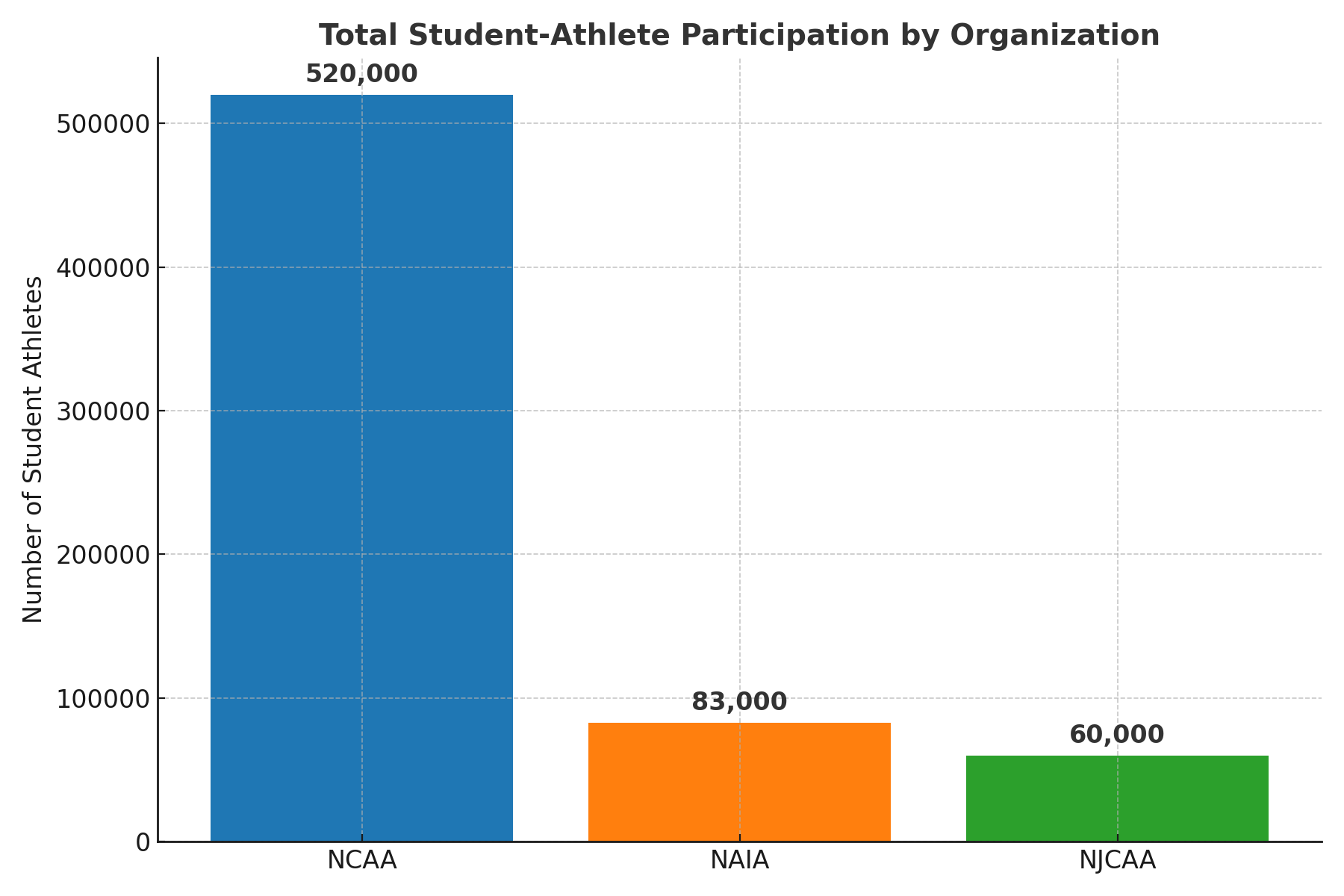
Figure 1: Total student-athletes by national athletic organization (NCAA, NAIA, NJCAA).
While Figure 1 highlights the total number of student-athletes in each organization, Figure 2 illustrates how deeply athletics is embedded in different types of institutions. NAIA colleges have the highest ratio, with student-athletes comprising 39% of undergraduate enrollment. Division III institutions follow at approximately 8.42%, and the NJCAA—serving mostly commuter and low-income students—relies on athletics for 8.58% of its total student base [8].
Even Division I, with its large student populations, includes a meaningful share (2.49%) of student-athletes. These proportions underscore how vital athletics are to institutional identity, especially in small colleges and two-year schools where athletes often make up a significant portion of campus life, retention strategy, and tuition revenue.
Figure 2: Percentage of student-athletes among total undergraduate enrollment by organization (NCAA Divisions I–III, NAIA, NJCAA).
The Pell Grant Profile: Who’s Affected
Pell Grants support students with the greatest financial need. According to a 2018 report, approximately 31.3% of Division I scholarship athletes receive Pell Grants. At individual institutions like Ohio State, the share is even higher: 47% of football players and over 50% of women’s basketball players. In the broader NCAA system, over 48% of athletes received some form of federal need-based aid in recent years [9].
There are approximately 665,000 student-athletes attending college. The NCAA reports that more than 520,000 student-athletes currently participate in championship-level intercollegiate athletics across Divisions I, II, and III [10]. The National Association of Intercollegiate Athletics (NAIA) oversees approximately 83,000 student-athletes [11], while the National Junior College Athletic Association (NJCAA) supports around 60,000 student-athletes at two-year colleges [12].
The NAIA and NJCAA systems, which serve many first-generation, low-income, and minority students, also have a high reliance on Pell Grant support. However, exact figures are less widely published.
The proposed redefinition of “full-time” means many of these students could lose up to $1,479 per year in aid, based on projections from policy experts [13]. For low-income students, this gap often determines whether they can afford to continue their education.
Fewer Credits, Fewer Dollars: Academic and Athletic Risks
Another major concern is how aid calculations based on “completed” credit hours will penalize students who drop a class mid-semester or fail a course. Even if a student-athlete enrolls in 15 credits, failing or withdrawing from a single 3-credit course could drop their award amount [14]. This adds pressure to persist in academically unsuitable courses, potentially hurting long-term academic outcomes.
Athletic departments, already burdened by compliance and recruitment pressures, may face added strain. Advisors will need to help students navigate increasingly complex eligibility and aid requirements, shifting focus from performance and development to credit-hour management.
Disproportionate Effects on Small Colleges and Non-Revenue Sports
The brunt of these changes will fall hardest on small, tuition-dependent institutions in the NCAA Division II, Division III, NAIA, and NJCAA. These colleges often use intercollegiate athletics as a strategic enrollment tool. At some NAIA schools, student-athletes comprise 40% to 60% of the undergraduate population [8].
Unlike large Division I schools that benefit from lucrative media contracts and booster networks, these institutions rely on a patchwork of tuition, modest athletic scholarships, and federal aid to keep programs running. A reduction in Pell eligibility could drive enrollment declines, lead to cuts in athletic offerings, and even force some colleges to close sports programs or entire campuses.
Already, schools like San Francisco State University, Cleveland State, and Mississippi College have recently announced program eliminations, citing budgetary constraints [15]. NJCAA institutions—the two-year colleges serving over 85,000 student-athletes—also face a precarious future under this proposed budget.
Economic Importance by Division
Division I: Athletics departments generated nearly $17.5 billion in total revenue in 2022, with $11.2 billion self-generated and $6.3 billion subsidized by institutional/government support or student fees [16]. Many Power Five schools are financially resilient, with revenue from TV contracts, merchandise, and ticket sales.
Division II: Median revenue for schools with football was around $6.9 million, but generated athletic revenue averaged only $528,000, leading to significant deficits subsidized by institutional funds [17].
Division III: Division III schools operate on leaner budgets, with no athletic scholarships and total athletics budgets often under $3 million per school. These programs are typically funded like other academic departments [18].
NAIA and NJCAA: These schools rely heavily on student-athlete enrollment to sustain their institutions. Athletics are not profit centers but recruitment and retention tools. Without Pell Grants, many of these athletes cannot afford to enroll [11][12].
Figure 3: Estimated number of NAIA, Division III, and NJCAA programs by state.
Unintended Tradeoffs: Equity and Resource Redistribution
Attempting to offset lost federal aid by reallocating institutional grants could result in aid being shifted away from non-athletes. This risks eroding equity goals, as well as provoking internal tension on campuses where athletes are perceived to receive preferential treatment.
Without new revenue sources, institutions may also raise tuition or increase tuition discounting, potentially compromising their financial stability. In essence, colleges may be forced to choose who gets to stay in school.
The High-Stakes Gamble for Student-Athletes
Figure 4: Estimated impact of Pell Grant changes on student-athletes, including projected dropouts and loan default rates.
For many student-athletes, especially those from low-income backgrounds, the Pell Grant is not just helpful—it’s essential. It makes the dream of attending college, competing in athletics, and earning a degree financially feasible. If the proposed changes to Pell eligibility become law, an estimated 50,000 student-athletes could be forced to drop out, unable to meet the new credit-hour requirements or fill the funding gap [19]. Those who remain may have no choice but to take on additional loans, risking long-term debt for a degree they may never complete. The reality is sobering: Pell recipients already face long-term student loan default rates as high as 27%, and for those who drop out, that figure climbs above 40% [20]. Stripping away vital support will almost certainly drive those numbers higher. The consequences won’t stop with individual students. Colleges—particularly smaller, tuition-dependent institutions where athletes make up a significant share of enrollment—stand to lose not just revenue, but the very programs and communities that give purpose to their campuses.
Colleges, athletic associations, policymakers, and communities must work together to safeguard opportunity. Student-athletes should never be forced to choose between academic success and financial survival. Preserving access to both education and athletics isn’t just about individual futures—it’s about upholding a uniquely American pathway to achievement and equity.
Dean Hoke is Managing Partner of Edu Alliance Group, a higher education consultancy. He formerly served as President/CEO of the American Association of University Administrators (AAUA). With decades of experience in higher education leadership, consulting, and institutional strategy, he brings a wealth of knowledge on small colleges’ challenges and opportunities. Dean is the Executive Producer and co-host for the podcast series Small College America.
Congressional Budget Office. (2025). Reconciliation Recommendations of the House Committee on Education and the Workforce. Retrieved from https://www.cbo.gov/publication/61412
NJCAA, NAIA, and NCAA. (2023). Student-Athlete Participation Reports.
June 2, 2025, by Dean Hoke: In the ongoing debate about the future of higher education, small colleges are often overlooked—yet they are indispensable. On May 21st, Higher Education Digest published my article, “Small Colleges Are Essential to American Higher Education,” in which I make the case for why these institutions remain vital to our national educational fabric.
Small colleges may not grab headlines, but they provide transformative experiences, especially for first-generation students, rural communities, and those seeking a deeply personal education. As financial pressures mount and demographic shifts continue, it’s easy to underestimate the impact of these campuses—but doing so comes at a cost. These schools are not only educators; they are regional economic engines, community partners, and laboratories for innovation.
In the article, I outline key reasons why we need to support and strengthen small colleges, including their unique role in economic development, workforce provider, and civic engagement. I also explore the consequences of neglecting this sector and what we can do about it.
I hope you’ll take a few minutes to read the whole piece and share it with your colleagues and networks. Read the article here.
As always, I welcome your thoughts and reflections.
Dean Hoke is Managing Partner of Edu Alliance Group, a higher education consultancy. He formerly served as President/CEO of the American Association of University Administrators (AAUA). With decades of experience in higher education leadership, consulting, and institutional strategy, he brings a wealth of knowledge on small colleges’ challenges and opportunities. Dean is the Executive Producer and co-host for the podcast series Small College America.
Old pair of sneakers but still got some life in them? Hoodie that doesn’t fit anymore? Headphones in the back of your drawer collecting dust? Perfume you bought but actually…hate?
Sell it! It’s like they say, “one person’s trash is another person’s treasure”. So put an eye patch on and slap a parrot on your shoulder. Here are some hot tips to help you secure the gold bag!
Step 1: List Your Item Online
Channel your inner photographer 📸
No one likes a blurry photo and no one likes just one photo. Providing multiple photos from different angles will more likely influence buyers to message. Videos also work wonders, especially for electronics to prove that they work!
Create your listing 🛍️
Facebook Marketplace, Karrot, and Kijiji are the most popular platforms. They are all relatively the same, so explore the app/site and familiarize yourself with how it works. On Facebook, you can also join local groups to increase your odds of selling to someone close by.
Be honest, hon 💯
Don’t lie about the condition of the item. If it’s used, mention that it is used. Playing off an item as ‘new’ will only make the exchange awkward and, in the worst case scenario, they leave without buying it. Include the condition of the item in your listing description with clear photos showing any defects. Honesty is the best policy, bestie. Price accordingly. A half-used bottle of perfume should not be going close to retail price. But hey, cleaning a dirty item so you can price it slightly higher is totally valid. Include the size and measures where applicable!
Be a smarty pants with that price 🤑
Do your research. Search your item on the platform and see what it’s going for. If you live in an urban city, there might be a higher demand. Price your item around the same price or slightly lower if you want to sell it faster. Take the condition of the item into your pricing decision. If it’s BNIB (brand new in box), it should definitely go closer to retail price. Conversely, if it’s looking a little rough, knock 10-25% off what people are selling it for. If you’re offering to drop off, be transparent and add the cost of commute, gas and travel into the price (and the listing). You can also upcharge $10-20 on purpose to counter lowballers (so you end up selling for the price you want!)
Step 2: Exchange Details
Communicate clearly 🗣️
When you’ve received a message from a potential buyer, answer any questions they might have. They may bargain with you, so decide if you’re willing to give that discount to sell the item quicker. Remind them of any defects or imperfections (a lot of people don’t actually read the listing description). Decide and agree on a meetup date and location, and check in on the day of. Exchange numbers only if you’re comfortable. If they are long-winded and not securing the deal, move on!
Cash is king/queen 💵
Deal with cash only and have some pocket change ready when trading. Make a note in your listing that you only accept cash and confirm it (with the item cost) in chat when discussing meetup details. It’s possible that they want an additional discount during the trade. Stand your ground and sell at the price you set. Frankly, the likelihood of them leaving just because they can’t get an additional $5 off is slim.
E-vade e-transfers 🙅🏻♀️
E-transfers can take up to 30 minutes to process and sometimes even longer if auto-deposit is on. You don’t want to hand over the item unless the money is with you already. Plus, you also won’t need to share any personal info like your email address! The one exception will be if you’re offering to drop off the item, then have them e-transfer and deposit the money first before making the commitment. Nothing worse than a flake after you’ve made the distance!
Step 3: The Trade
Let’s meet there 📍
At the end of the day, it’s a stranger and taking stranger danger precautions is smart. Meet up in a populated public area like a Tim Hortons at a major intersection or a subway station. Ask a friend to come with you for strength in numbers (especially if you’re dropping off a trade). For safety reasons, it’s best to avoid giving your home address for pickup.
5 stars, thumbs up, would trade again ⭐
When trading, be friendly. It’s normal if they want to have a look at the item thoroughly. If it’s a BNIB, don’t let them open it unless you accept the money first. After the trade is done, give them a friendly reminder to give you a positive review. The more positive reviews on your profile, the more likely you’ll sell more in the future.
Don’t give up 💪🏻
“Hi, I’m interested in purchasing. Is it available?” … Then silence after you reply. You’re more likely to get non-responsive flakes than serious buying inquiries. Don’t give up, some items could take months to sell! But hey, you only have to post it once. The item can go back into storage until a trade happens. Lower the price once in a while if you’re not getting any bites.
Hopefully, these tips will help you get started! But remember, no amount of reselling will help if you’re overspending. Budgeting and making smart financial decisions will always be important. Starting healthy finance habits as a student is the way to go! Check out some budgeting tips from our friends at CIBC here.
Student Life Network
Student Life Network is your resource hub for all things school. We help you improve your grades, find the right school, reduce your debt, and line up your dream job.
May 19, 2025, by Dean Hoke: In my recent blog series and podcast, Small College America, I’ve highlighted the essential role small colleges play in the fabric of U.S. higher education. These institutions serve as academic homes to students who often desire alternatives to larger universities, and as cultural and economic anchors, especially in rural and small-town America, where, according to IPEDS, 324 private nonprofit colleges operate. Many are deeply embedded in the towns they serve, providing jobs, educational access, cultural life, and long-term economic opportunity.
Unfortunately, a wave of proposed federal budget cuts may further severely compromise these institutions’ ability to function—and in some cases, survive. Without intervention, the ripple effects could devastate entire communities.
Understanding the DOE and USDA Budget Cuts
The proposed reductions to the U.S. Department of Education (DOE) and U.S. Department of Agriculture (USDA) budgets present a two-pronged threat to small colleges, particularly those in rural areas or serving low-income student populations.
Department of Education (DOE)
The most significant concerns center on proposed changes to Pell Grants, a vital financial resource for low-income students. One House proposal would redefine full-time enrollment from 12 to 15 credit hours per semester. If enacted, this change would reduce the average Pell Grant by approximately $1,479 for students taking 12 credits. Students enrolled less than half-time could become ineligible entirely.
Additionally, the Federal Work-Study (FWS) and Supplemental Educational Opportunity Grants (SEOG) programs face serious threats. The House Appropriations Subcommittee has proposed eliminating both programs, which together provide over $2 billion annually in aid to low-income students.
Programs like TRIO and GEAR UP, which support first-generation, low-income, and underrepresented students, have been targeted in previous proposals; however, current budget drafts maintain level funding. Nonetheless, their future remains uncertain as negotiations continue.
The Title III Strengthening Institutions Program, which funds academic support services, infrastructure, and student retention efforts at under-resourced colleges, received a proposed funding increase in the FY 2024 President’s Budget, though congressional appropriations may differ.
Department of Agriculture (USDA)
The USDA’s impact on small colleges, while less direct, is nonetheless critical. Discretionary funding was reduced by more than $380 million in FY 2024, reflecting a general pullback in rural investment.
Programs like the Community Facilities Direct Loan & Grant Program, which supports broadband access, healthcare facilities, and community infrastructure, were level-funded at $2.8 billion. These investments often benefit rural colleges directly or indirectly by enhancing the communities in which they operate.
While some funding has been maintained, the broader trend suggests tighter resources for rural development in the years ahead. For small colleges embedded in these communities, the consequences could be substantial: delayed infrastructure upgrades, reduced student access to services, and weakened town-gown partnerships.
Why Small Colleges Are Particularly Vulnerable
Small private nonprofit colleges—typically enrolling fewer than 3,000 students—operate on thin margins. Many are tuition-dependent, with over 80% of their operating revenue derived from tuition and fees. They lack the substantial endowments or large alumni donor bases that buoy more prominent institutions during hard times.
What exacerbates their vulnerability is the student profile they serve. Small colleges disproportionately enroll Pell-eligible, first-generation, and minority students. Reductions in federal financial aid and student support programs have a direct impact on student enrollment and retention. If students can’t afford to enroll—or stay enrolled—colleges see revenue declines, leading to cuts in academic offerings, faculty, and student services.
Additionally, small colleges are often located in areas experiencing population decline. The so-called “demographic cliff”—a projected 13% drop in the number of high school graduates from 2025 to 2041 will affect 38 states and is expected to hit rural and non-urban regions the hardest. This compounds the enrollment challenges many small colleges are already facing.
Economic and Social Impact on Rural Towns
The closure of a small college doesn’t just mean the loss of a school; it signifies a seismic shift in a community’s economic and social structure. Colleges often rank among the top employers in their towns. When a college closes, hundreds of jobs disappear—faculty, staff, groundskeepers, maintenance, food services, IT professionals, and more.
Consider Mount Pleasant, Iowa, where the closure of Iowa Wesleyan University in 2023 cost the local economy an estimated $55 million annually. Businesses that relied on student and faculty patronage—restaurants, barbershops, bookstores, and even landlords—felt the immediate impact. Community organizations lost vital volunteers. Town officials were left scrambling to figure out what to do with a sprawling, empty campus in the heart of their city.
Colleges also provide cultural enrichment that is often otherwise absent in small towns. Lectures, concerts, art exhibitions, and sporting events bring together diverse groups and add vibrancy to the local culture. Many offer healthcare clinics, counseling centers, or continuing education for adults—services that disappear with a campus closure.
USDA investments in these communities are often tied to colleges, whether in the form of shared infrastructure, grant-funded development projects, or broadband expansions to support online learning. As these federal investments diminish, so too does a town’s ability to attract and retain both residents and employers.
Real-Life Implications and Stories
The headlines tell one story, but the real impact is felt in the lives of students, faculty, and the surrounding communities.
Presentation College in Aberdeen, South Dakota, ceased operations on October 31, 2023, after citing unsustainable financial and enrollment challenges. Hundreds of students, many drawn to its affordability, rural location, and nursing programs, were forced to reconsider their futures. The college quickly arranged teach-out agreements with over 30 institutions, including Northern State University and St. Ambrose University, which offered pathways for students to complete their degrees. The Presentation Sisters, the founding order, are now seeking a buyer for the campus aligned with their values, while local officials explore transforming the site into a technical education hub to continue serving the community.
Birmingham-Southern College in Alabama, a 168-year-old institution, closed its doors on May 31, 2024, after a $30 million state-backed loan request was ultimately rejected despite initial legislative support. The college had a $128 million annual economic impact on Birmingham and maintained partnerships with K–12 schools, correctional institutions, and nonprofits. The closure triggered the transfer of over 150 students to nearby colleges like Samford University, but left faculty, staff, and the broader community facing economic and cultural losses. A proposed sale of the campus to Miles College fell through, leaving the site’s future in limbo.
Even college leaders who have weathered the past decade worry they’re nearing a breaking point. Rachel Burns of the State Higher Education Executive Officers Association (SHEEO) has tracked dozens of recent closures and warns that many institutions remain at serious risk, despite their best efforts. “They just can’t rebound enrollment,” she says, noting that pandemic aid only temporarily masked deeper structural vulnerabilities.
Potential Closures and Projections
College closures are accelerating across the United States. According to the State Higher Education Executive Officers Association (SHEEO), 467 institutions closed between 2004 and 2020—over 20% of them private, nonprofit four-year colleges. Since 2020, at least 75 more nonprofit colleges have shut down, and many experts believe this pace is quickening.
A 2023 analysis by EY-Parthenon warned that 1 in 10 four-year institutions—roughly 200 to 230 colleges—are currently in financial jeopardy. These schools are often small, private, rural, and tuition-dependent, serving large numbers of first-generation and Pell-eligible students. Even a modest drop of 5–10% in tuition revenue can be catastrophic for colleges already operating on razor-thin margins.
Compounding the challenge, the Federal Reserve Bank of Philadelphia released a 2024 predictive model forecasting that as many as 80 additional colleges could close by 2034 under sustained enrollment decline driven by demographic shifts. This figure accounts for closures only—not mergers—and spans public, private nonprofit, and for-profit sectors.
Layered onto these economic and demographic vulnerabilities are the potential impacts of proposed federal education funding cuts. The Trump administration’s FY 2026 budget blueprint once again targets student aid programs, proposing the elimination or severe reduction of subsidized student loans, TRIO, GEAR UP, Federal Work-Study, and the Supplemental Educational Opportunity Grant (SEOG). Although similar proposals from Trump’s first term (FY 2018–2021) were rejected by Congress, the renewed push signals ongoing political pressure to curtail support for low-income and first-generation students.
To assess the potential impact of these policy shifts, a policy stress test was applied to both the Philadelphia Fed model and the historical closure trend. The analysis suggests that if these cuts were enacted, an additional 50 to 70 closures could occur by 2034.
Philadelphia Fed model baseline: 80 projected closures
With policy cuts: Up to 130 closures
Historical average trend (2020–2024): ~14 closures/year
10-year projection (status quo): ~140 closures
With policy cuts: Up to 210 closures
In short, depending on the scenario, anywhere from 130 to 210 additional college closures may occur by 2034. Institutions most at risk are those that serve the very populations these federal programs are designed to support. Without intervention—through policy, partnerships, or funding—the number of closures could rise sharply in the years ahead.
These scenario-based projections are summarized in the chart below.
Why Should Congress Care
According to the National Association of Independent Colleges and Universities (NAICU), a private, nonprofit college or university is located in 395 of the 435 congressional districts. These institutions are not only centers of learning but also powerful economic engines that generate:
$591.5 billion in national economic impact
$77.6 billion in combined local, state, and federal tax revenue
3.4 million jobs supported or sustained
1.1 million people are directly employed in private nonprofit higher education
1.1 million graduates are entering the workforce each year
As such, the fate of small private colleges is not just a higher education issue—it is a national economic and workforce development issue that should command bipartisan attention.
Strategies for Resilience and Policy Recommendations
There are clear, actionable strategies to reduce the risk of widespread college closures:
Consortium and shared governance models: Small colleges can boost efficiency and sustainability by sharing administrative functions, faculty, academic programs, technology infrastructure, and enrollment services. This allows institutions to reduce operational costs while maintaining their distinct missions and brands. In some cases, these arrangements evolve into formal mergers. An emerging example is the Coalition for the Common Good, a new model of mission-aligned institutions that maintain individual identities but operate under shared governance. This structure offers long-term financial stability without sacrificing institutional purpose or community impact.
Strategic partnerships: Collaborations with community colleges, online education providers, regional employers, and nonprofit organizations can expand reach, enhance curricular offerings, and improve student outcomes. These partnerships can support 2+2 transfer pipelines, workforce-aligned certificate programs, and hybrid learning models that meet the needs of adult learners and working professionals, often underserved by traditional residential colleges.
State action: States should establish stabilization grant programs and offer targeted incentive funding to support mergers, consortium participation, and regional collaboration. Policies that protect institutional access in rural and underserved areas are especially urgent, as closures can leave entire regions without viable higher education options. States can also play a role in convening institutions to plan for shared services and long-term viability.
Federal investment: Continued and expanded funding for Pell Grants, TRIO, SEOG, Title III and V, and USDA rural development programs is essential to sustaining the institutions that serve low-income, first-generation, and rural students. These investments should be treated as critical infrastructure, not discretionary spending, given their role in expanding educational equity, enhancing workforce readiness, and promoting rural economic development. Consistent federal support can help stabilize small colleges and enable long-term planning.
College leaders, local governments, and community groups must advocate in unison. The conversation should move beyond institutional survival to one of community survival. As the saying goes, when a college dies, the town begins to die with it.
Conclusion
Small colleges are not expendable. They are vital threads in the educational, economic, and cultural fabric of America, especially in rural and underserved communities. The proposed federal budget cuts across the Departments of Education and Agriculture represent a direct threat not only to these institutions but to the communities that depend on them.
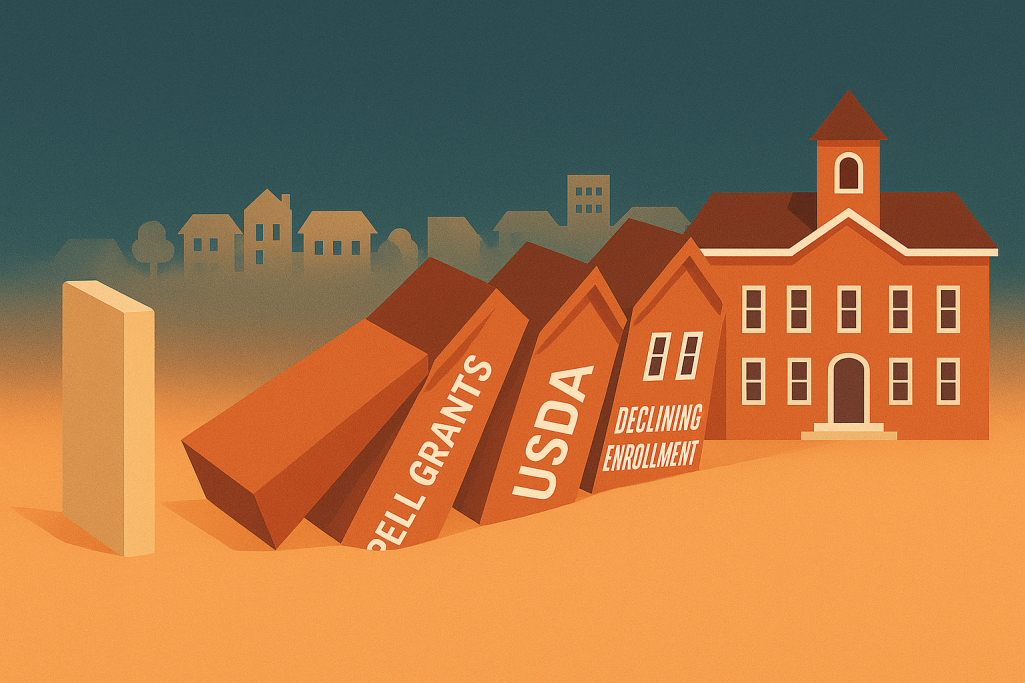
If policymakers fail to act, the consequences will be widespread and enduring. The domino effect is real: reduced funding leads to fewer students, tighter budgets, staff layoffs, program cuts, and eventually, campus closures. And when those campuses close, entire towns are left to absorb the fallout—economically, socially, and spiritually.
We have a choice. We can invest in the future of small colleges and the communities they anchor, or we can stand by as they vanish—along with the promise they hold for millions of students and the towns they call home.
References
U.S. Department of Education, FY 2025 Budget Summary and Justifications
National Association of Student Financial Aid Administrators (NASFAA), Analysis of Proposed Pell Grant and Campus-Based Aid Reductions
State Higher Education Executive Officers Association (SHEEO) and Higher Ed Dive, Data on College Closures and Institutional Viability Trends
Fitch Ratings, Reports on Financial Pressures in U.S. Higher Education Institutions
Iowa Public Radio and The Hechinger Report, Case Studies on Rural College Closures and Community Impact
Council for Opportunity in Education (COE), Statements and Data on TRIO Program Reach and Effectiveness
Federal Reserve Bank of Philadelphia, Predictive Modeling of U.S. College Closures (2024)
EY-Parthenon, 2023 Report on Financial Vulnerability Among Four-Year Institutions
U.S. Department of Agriculture (USDA), Rural Development and Community Facilities Loan & Grant Program Summaries
Interviews and commentary from institutional leaders, TRIO program directors, and SHEEO policy staff
Integrated Postsecondary Education Data System (IPEDS), Data on Enrollment, Institution Type, and Geographic Distribution
Dean Hoke is Managing Partner of Edu Alliance Group, a higher education consultancy. He formerly served as President/CEO of the American Association of University Administrators (AAUA). With decades of experience in higher education leadership, consulting, and institutional strategy, he brings a wealth of knowledge on small colleges’ challenges and opportunities. Dean is the Executive Producer and co-host for the podcast series Small College America.
Miami –Achieve Miami, a nonprofit dedicated to equalizing educational opportunities for students throughout Miami-Dade County, has received $2.4 million from multiple philanthropic organizations and leaders, including a leadership gift of $2 million from Kenneth C. Griffin, founder and CEO of Citadel and founder of Griffin Catalyst. The funding, awarded over the past year, will further expand Achieve Miami’s transformative programs, reaching thousands of K-12 students through initiatives including Achieve Scholars, which prepares high schoolers for college success; Achieve Summer, a dynamic program combating learning loss through hands-on academics and enrichment; and the Teacher Accelerator Program (TAP), a groundbreaking effort to address Miami-Dade’s urgent teacher shortage.
Kenneth C. Griffin’s $2 million leadership gift is specifically focused on supporting TAP in creating a pipeline of talent for the teaching profession through recruiting, preparing, and mentoring aspiring educators, including those who had not previously considered a career in education. This gift builds on Griffin’s $3.5 million gift to TAP in 2022, further strengthening Achieve Miami’s efforts to recruit and train qualified educators to teach in public, private and charter schools across Miami-Dade and close learning gaps in the city’s schools. Griffin has a longstanding commitment to improving education and has contributed more than $900 million to providing greater access to a high-quality education and pathways to success for students in Florida and across the country.
Additional grants include:
$200,000 from the Bezos Family Foundation, which is a director’s gift supporting early and adolescent learning through grants and programs that advance the science of learning.
$100,000 from the Panera Bread Foundation, as part of its national initiative to support nonprofits that provide educational access to underserved youth.
$65,000 from Morgan Stanley, in support of Achieve Miami’s financial literacy and career readiness programs, which equip students in the organization’s Achieve Scholars program with essential money management skills for financial independence and future success. As part of its commitment, a team of Morgan Stanley employees guide students through financial literacy sessions across ten Miami-Dade County public schools, providing essential lessons on topics like budgeting, investing, entrepreneurship, savings, and credit.
$50,000 from City National Bank of Florida, as part of its long-term partnership with Achieve Miami in support of the Achieve Scholars program. City National Bank is planning financial literacy programming for students over the summer.
“Every student deserves access to resources, mentors, and opportunities that can set them up for success,” said Leslie Miller Saiontz, Founder of Achieve Miami. “These generous grants, led by Ken Griffin, will enable us to expand our reach, empower more educators, and bridge opportunity gaps that are prevalent in Miami. By investing in students and teachers, we are building a stronger future for our community.”
“Each of us has a story of how a teacher has changed our lives,” said Ken Griffin in February 2023 alongside his initial gift to Achieve Miami. “I care deeply about bringing more high-quality educators into Miami classrooms to help ensure the children of Miami will continue to enjoy the impact of life-changing teachers.”
Despite being one of the fastest-growing states with the nation’s fourth-largest economy, Florida ranks #21 in per capita education funding. Achieve Miami’s initiatives aim to eliminate educational disparities by equipping students with the tools and support needed for success with a variety of diverse enrichment programs such as Achieve Scholars, Achieve Saturdays, and Achieve Music.
Achieve Miami’s impact to-date includes support for over 10,000 Miami-Dade County students, college and career readiness programming for Achieve Scholars across ten high school sites, providing internet access to over 106,000 homes through Miami Connected, and the recruitment and training of nearly 200 new teachers through the Teacher Accelerator Program (TAP) since the initiative’s launch in 2023.
ABOUT ACHIEVE MIAMI
Achieve Miami is a nonprofit organization that is dedicated to fostering a transformational education ecosystem in Miami. Since its founding in 2015, the organization has supported over 10,000 K-12 students, bolstered programming for 60+ local schools, and engaged thousands of volunteers. Together with partners from the public and private sector, Achieve Miami designs and manages programs that bring together members from various parts of the community to extend learning opportunities for students, teachers, and community leaders. Learn more at www.achievemiami.org.
ABOUT THE TEACHER ACCELERATOR PROGRAM
Teacher Accelerator Program (TAP) is a non-profit organization creating a pipeline of talent for the teaching profession through recruiting, preparing, and mentoring aspiring educators. TAP’s comprehensive and streamlined program equips college students and career changers with the skills, knowledge, and certification necessary to excel in the classroom. TAP addresses the nationwide teacher shortage crisis by providing a built-in path to teaching, inspiring a new generation of educators.
TAP participants take a one-semester course, followed by a six-week paid summer internship, earn a certificate to teach, and begin instructing in a Miami-Dade County public, private, or charter school classroom. TAP is an initiative of Achieve Miami, supported by Teach for America Miami-Dade, and is offered by the University of Miami, Florida International University and Miami-Dade College. Learn more at www.teacheraccelerator.org.
eSchool Media staff cover education technology in all its aspects–from legislation and litigation, to best practices, to lessons learned and new products. First published in March of 1998 as a monthly print and digital newspaper, eSchool Media provides the news and information necessary to help K-20 decision-makers successfully use technology and innovation to transform schools and colleges and achieve their educational goals.
The VERY BEST Financial Gift we could give our kids is to not be dependent on them financially later in our lives, while they are trying to raise and educate their kids.
Most parents love their kids dearly and would die for them. My question is always – “Should We?” Here are some decisions that start out with good intentions but could actually end up having bad consequences for our loved ones.
Getting a Parent PLUS loan that the student has to pay.
There is a reason that there is a limit on how much the government will lend to your student in their name. It’s because they should not have a massive burden coming out of college, and most students coming out of college cannot afford to pay more than the federal lending limit to them.
Many parents are struggling to fund college AND save for retirement at the same time. If you don’t have enough money to do both, then it is probably unwise to expect your children to pay back Parent Plus Loans that you have signed for.
Remember that if we have not saved enough for retirement and have depended on Parent loans to get the kids through college, then we might be reliant on help from our kids when we age. Is this what we really intended? Thanks a lot Dad!
Whole life insurance (The wrong type)
Whole Life insurance could be a great product if structured properly, but on the PARENTS. I have seen some policies purchased with kids insured, from the same company that they buy baby food from. These are horribly inefficient policies and, in most cases, a bad idea. Most times, insurance on young kids is much more expensive than insurance for parents.
Firstly, we should consider what the purpose of the insurance is. If we purchase with the kids as the insured, it only pay out if the child dies, which means it is pays out for your future grandchildren 2 generations away! Is that what we meant to happen? We should consider who we want to protect?
Typically, we would want to insure the parent who is the main breadwinner, so that if something happened to them, their spouse and children would not have to face devastating financial consequences. That way they would be leaving a positive legacy for the family and not a burden.
I STRONGLY advocate for good insurance, and personally practice what I preach so feel free to give me a call if you would like to see what is wise for your family.
If you want to purchase timeshare, do it for yourself, and accept the long-term consequences, but don’t burden your kids with it.
Here is something to think about:
* The Internal Revenue Service values your timeshare, and all timeshares, as worthless. * No legitimate charity wants your donated timeshare. Period.
If so, why would we think that our timeshare has any value. It has to be paid for each year and most people cannot GIVE their timeshare away. Don’t burden your kids by buying timeshare for them. With technology today and Airbnb we have so much more flexibility without the burden.
Champagne Taste on a Beer Budget
If our children leave our house with the expectation that everyone can go to a private school, vacation in Hawaii or France every year, shop at expensive stores and drive expensive cars, then we have probably done them a disservice.
Their first shock comes when they see their first paycheck, wonder why so much of it has gone to taxes and other deductions, and the realization that they have to pay for their own car and place to live. Sometimes we love to spoil our kids too much, but it ends up hurting them in the long run. The worst is when they realize that we cannot retire because we didn’t teach them.
Parent Financial Insecurity –I have saved the toughest one for last.
Remember the lecture we always get when we fly? “In the unlikely case of an emergency, put your own mask on before you help your children” This is the way it should be with our finances.
I speak to families all the time who have parents who are not financially stable, who could not control their spending, who did not save enough for retirement, or didn’t have life insurance when needed or Long Term Care, who are in such bad financial shape that their children spend their nights worrying about their parents.
One of the most wonderful financial gifts that we can give to our kids is our own financial security. That way we can be a blessing to our kids and not drag on their lives.
As a counter to the perhaps perceived negative connotation of what we should perhaps NOT be doing, here are some things that we might think of that we SHOULD be doing.
Five smart financial habits to teach our children early in life – can set them up for a future of success.
Someone told me once – the way to teach our kids the value of money, borrow some from them
The miracle of compounding – the earlier the better – As parents, we often wish we knew this
We Value What We Earn, Not What We Are Given
Allowances – Given or Earned? Allowances are not just about money, but what lessons we could teach our kids in the process. Humans learn a lot when we earn things because of effort and dedication, rather than just being given something. My daughter once worked really hard to earn a surfboard by walking around our neighborhood selling cookie dough for her school. I will never forget when I asked her how many people said “No” to her, she told me “I don’t know dad, I was just focused on getting 75 people to say “Yes”
It is a valuable lesson to see firsthand how effort translates into earnings and this in turn translates into the behaviors to become an “earner” in life.
Teach Your Kids How to Lose Money
Yes, lose money. You see, no matter what courses they take in high school or college around personal finance, there is no greater teacher for all of us in life on what NOT to do with our money until we experience losing some money.
No matter which custodian we help them set up a brokerage account with, perhaps we could get them started saving into some type of investment and sit down quarterly with them to track it and teach them how their investment is performing.
Have them pick one stock of their favorite company and even if they lose money, they win in the long-term gaining interest on how investments work and how to make good investment decisions.
Spending – Questions to ask first
Do I want it?
Do I need it?
Can I afford it?
If the answer to any of these is “No”, then probably think twice about it.
Only once we have SAVED money, should we use it for our WANTS
One thing that I learned in life is that giving early when you don’t make much, is really helpful rather than trying to start giving when you are making a lot. It just seems such a lot to get going when the number is high, but when it grows incrementally it becomes a great and rewarding habit.
I go back to my first statement – Most parents love their kids dearly and would die for them. My question is always – “Should We?”
If you would like to discuss how you can make wise decisions for Retirement Planning and College Planning for your family? Please don’t hesitate to contact Dave Coen to set up a no-cost consultation.
You can see more about my role as a Financial Advisor with SageView Advisory HERE