
Category: College

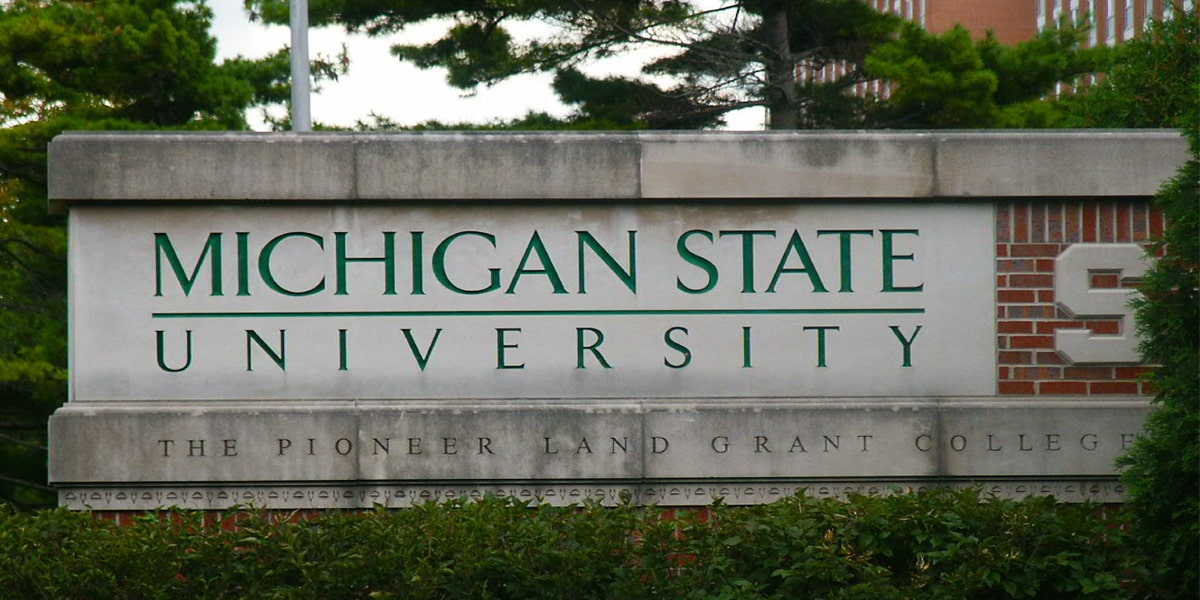
  • Recent Tour at Michigan State University, East Lansing, Michigan.

    Recent Tour at Michigan State University, East Lansing, Michigan.

    By Lisa Schmidt LPC, NCC, College Planning Counselor at Parros College Planning LLC.

    Living and working just an hour from East Lansing, we felt pretty confident that we understood what Michigan State University had to offer to our students. However, on our recent campus tour, with a group of Independent Educational Consultants, we discovered there was still much more to learn about the large state university in our backyard.

    The facilities were top-notch, but the brand new STEM building blew us away. MSU transformed a 70-year-old power plant into a “student-ready maker and collaboration space. Old silos are now conference rooms, and a 1946 limestone entrance welcomes students. Original steam boilers and mechanical hardware are art installations.” The cool urban design includes high-tech classrooms, a dining area, and cozy study spots containing the latest technology needed to complete group projects and coursework.

    A short walk from here is the brand new music building. It is a beautiful spot for students to attend class and work on their musical skills. All of the MSU bands and orchestras have competitive auditions to gain entry, but all students, no matter their major or skill level, have the opportunity to try out. Also, the community music school offers lessons for a small fee to non-music majors.

    Another highlight was getting to understand the Residential Colleges better. We feel these smaller communities within the large university may be the perfect fit for many students. “The residential colleges at MSU offer the best of both worlds: the finest qualities of small liberal arts colleges combined with the energy and resources of a large research university. Three living-learning communities unite students with similar interests in designated residence halls on the campus. This assists in creating distinctive educational atmospheres. They are:

    • James Madison is where students share a common goal of addressing and examining the major political, legal, social, and economic issues affecting our world.
    • Lyman Briggs empowers students to change the world by understanding science and math in society.
    • Residential College in the Arts and Humanities is for students passionate about the arts, humanities, and community engagement.

    The majority of the consultants we traveled with were not Michigan residents, and they were not disappointed by their first trip to MSU. Here is some of what they had to say:

    “This was my first visit and tour of Michigan State University. I was impressed with the beauty of the campus, the sincerity and energy of the staff members we had the pleasure of meeting throughout the day, and the consistent message that was shared at every department/college we visited of a desire to help every student find their place and be successful at MSU.”


    “After years of suggesting MSU as an option to my students, I am so much better informed on the fantastic offerings. I have a much better understanding of the residential college system (James Madison, Lyman Briggs, and ARCAH), which is very appealing to many of my students.”


    “I especially enjoyed eating at Thrive, an allergen-free dining hall. Thrive is committed to being sesame-conscious and free of the Big 8 allergens (milk, eggs, soy, wheat, peanuts, tree nuts, fish, and shellfish) plus gluten. Another dining highlight was the unlimited swipes so students with meal plans can eat anywhere on campus as often as possible. A snack can be picked up at one hall and then a meal at another.”

    In regards to major areas of study, most students list their intended major on the application but are not admitted to the specific program until after they complete their first year of college. For example:

    • Engineering – students interested in engineering take 28 prerequisite credits the first year and are automatically admitted to engineering if they have over a 3.0 GPA.
    • Business – students interested in business must apply after taking 28 credits. Admission is competitive. A select few students will be accepted directly to the Broad School of Business from high school.
    • Nursing – is a VERY competitive program, only admitting about 100 students each year through the application process after students take the required 28 prerequisite credits. A 3.9 GPA is generally needed to be competitive.

    After the tour, we were all very excited to look at our client list and match some of our students with MSU. We appreciated the red carpet that the admissions team at MSU rolled out to us, and we had a fantastic tour! Please reach out to us to schedule your complimentary consultation so that we can help you in the college application process!
    Source link

  • Why You Should Be A Member of the American Association of University Administrators – Edu Alliance Journal

    Why You Should Be A Member of the American Association of University Administrators – Edu Alliance Journal

    April 11, 2020 by Dean Hoke – When I came back to the United States in 2017-18 I wanted to re-engage with the US university community. I joined NAFSA primarily due to my work in International Higher Education but I also wanted to be a part of a smaller organization where I could get to know the people better and attend conferences that would continue my professional development. I decided to join in 2018 The American Association of University Administrators (AAUA).

    Who is AAUA

    AAUA is a non-profit professional organization founded in 1970 for higher education leaders and administrative personnel. It is the only professional association for individuals who are interested in the entire range of higher education management (from department chair/unit director through president) in the entire diverse set of American colleges and universities (two- and four-year; public, private non-profit, private for-profit; comprehensive, research-focused, special mission).

    Membership in AAUA helps support the association’s mission. In addition, membership provides—for those members who have an interest—opportunities for professional networking and leadership. In addition to enrolling and serving a significant complement of administrators at the most senior levels, the association is also interested in assisting early-career practitioner administrators build/enhance their leadership portfolios by providing leadership opportunities through service on association committees, boards, and taskforces. Opportunities to collaborate on offering professional development services are available as well.

    Professional Development Opportunities

    Annual Leadership Seminar: In particular this is my favorite because of the networking and the presentations. The 50th Leadership Seminar of the American Association of University Administrators is scheduled for June 9-10, 2022. It will be held as a hybrid event, with in-person sessions meeting at the Marriott Stanton South Beach Hotel (Miami, Florida). In-person sessions are planned for June 9 (morning and evening) and June 10 (morning). On-line sessions will be held on the afternoon of June 9th. I will be attending in person.

    AAUA Professional Development Fellows Program : The Fellows Program is an individually designed, year-long, mentored professional development experience during which the candidate uses his/her day to-day responsibilities as the spring board for improving a set of self-identified professional skills to enhance his/her administrative competence.

    Cross-Institution Visits : Recognizing the value of learning from administrative peers at other institutions (both similar in nature and of radically different structure or purpose), AAUA facilitates short-term (one to three week) cross institution visits between like-role administrators. The association also occasionally organizes and conducts small group (6-10 people) two- and three-day visits to clusters of institutions for the purpose of learning about notable or unique programs.

    So What is the Cost of Membership?

    There are two types of memberships. One is Individual and the other is Institutional

    Individual: An active Membership (Open to any person interested in the administration of higher education) is $100. The Student (Open to any graduate student enrolled in an institution of higher education who is interested in the field of higher education administration. is $35.

    Institutional: Any college/university or any other organization/firm may sponsor the membership of individuals on the following basis:

    • 1-6 Supported Members – Total membership dues rate: $500
    • 7-15 Supported Memberships – Total membership dues rate: $1,000
    • 16-24 Supported Memberships – Total membership dues rate: $1,500
    • 25 or more Supported Memberships: $2,000

    I would encourage you to consider becoming a member of the AAUA. I have found the people you get to know are outstanding, the conferences educational and enjoyable and the cost of membership is well worth the value.

    If you have questions or wish to join feel free to contact me or better yet contact:

    Dan L. King, Ed.D., President, and Chief Executive Officer
    American Association of University Administrators
    1 Ralph Marsh Drive, Glen Mills, Pennsylvania 19342 (USA)Phone: 814-460-6498
    Email: [email protected]

    Dean Hoke is a Managing Partner of Edu Alliance Group in the United States and Co-Founder of Edu Alliance Ltd. in the United Arab Emirates. Dean has decades of progressively responsible and visionary leadership roles in higher education, communications & online learning. He has led numerous initiatives that have created innovation & positive change in the higher education & non-profit sector. 

    Dean began his career in 1975 with Bellarmine University working in various roles, including admissions and external relations. In 1983 he entered the broadcasting field, serving as a senior executive for Public Broadcasting System stations and a cable network. In 1998 he co-founded The Connected Learning Network, a full-service online learning company. In 2009 accepted an invitation to move to the United Arab Emirates serving in senior positions at Higher Colleges of Technology & Khalifa University.

    He participates in numerous advisory & consulting projects in the fields of international education, branding, business intelligence, and online learning. He is an active speaker and writer in the field of global higher education and distance learning. Dean has presented and written worldwide on leadership, higher education, and distance learning. Dean is a member of the Board of the American Association of University Administrators, the Franklin University School of Education Advisory Board, and a member of NAFSA. Mr. Hoke has a B. A from Urbana University, an M.S from the University of Louisville, and a Certificate in Executive Management from the University of Pennsylvania Wharton School.

    Source link