Key Takeaways:
- Community colleges play a vital role in addressing enrollment barriers, offering tailored support to first-generation and working students.
- Proactive strategies, such as early communication, community outreach, and wraparound services like food assistance and mental health support, help students navigate challenges and stay engaged.
- Leveraging technology like CRM systems and AI tools simplifies the student enrollment process and enhances conversion rates.
- Measuring success through metrics such as conversion rates, re-enrollment, and first-semester engagement lets colleges refine their strategies and better support student persistence and retention.
The enrollment journey at community colleges can be far from straightforward, as many students face barriers beyond academics—from concerns over affordability to balancing family and work responsibilities and navigating financial aid. For example, nearly 75% of public two-year college students work while enrolled, including 46% working full time, and two-thirds of people enrolled in community colleges are first-generation students, who often do not receive the guidance and support that other students might receive from within their support systems.
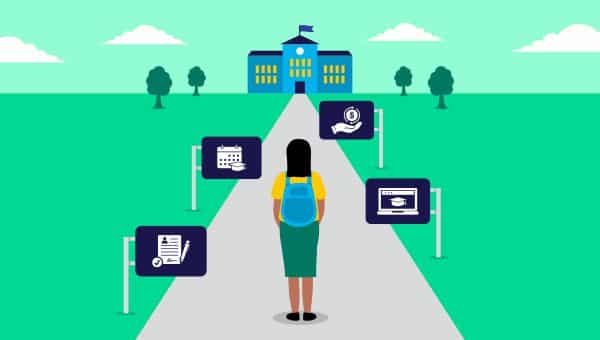
Community colleges are uniquely positioned to open doors for these students who might otherwise never step foot into higher education. By breaking down enrollment barriers, fostering early communication, and utilizing technology, community colleges can create an enrollment experience that meets students where they are. In turn, they can build pathways that lead to success, one student at a time.
Identifying Enrollment Barriers
For students new to the world of higher education, the student enrollment process can feel daunting. While community colleges are open-access institutions, this does not always translate to an easy path. Many students come from communities where attending college is not the norm, and some face resistance from family members or struggle with time constraints due to family responsibilities. Financial aid is also a common sticking point. Some students worry about taking on debt, while others have families unwilling to fill out the FAFSA due to privacy concerns, which adds to the complexity of obtaining financial assistance.
Community colleges that proactively identify these barriers can uncover solutions tailored to each student’s situation. For instance, understanding the unique financial, familial, or community pressures facing students can inform how colleges offer support. Identifying opportunities to become more transparent, such as having standardized institutional aid packages that allow students to see how much aid they would receive, exemplifies this shift toward recognizing and removing institutional barriers. By locating obstacles early, colleges can guide students more effectively throughout the enrollment process, keeping them on track and engaged.
Strategies for Eliminating Barriers in the Student Enrollment Process
Addressing these challenges often requires creative solutions that reach beyond academic support. A critical strategy lies in educating students—and, when possible, their communities—on the value of a college education. Many students find themselves questioning the worth of a degree, particularly in communities where traditional college education may be seen as unnecessary. To address this, some colleges have begun integrating community outreach programs that outline the tangible benefits of a college education, from career advancement to personal growth. Tracking college enrollment trends also offers insight into where additional guidance might be needed, ensuring that community colleges can adapt and refine their programs.
Community colleges can better aid students by offering wraparound services, such as food assistance, mental health counseling, transportation services, and financial literacy courses. Food insecurity, for example, is a widespread problem affecting 23% of community college students. Liaison’s IMPACT Grant, which champions initiatives such as on-campus food pantries, is an excellent example of how colleges can tackle this barrier head-on. By promoting awareness of available resources, colleges make sure students know where to find the support they need, allowing them to focus on their studies rather than their next meal or car troubles.
Free community college programs, now offered in 36 states, also alleviate the financial strain of pursuing a credential by removing student debt as a barrier to entry. As more colleges promote these programs, the cost of higher education becomes less intimidating, particularly for first-generation and low-income students who might otherwise forgo college due to cost concerns.
The Critical Role of Early Communication
Community colleges often enter the higher education conversation with prospective students later than four-year institutions, missing critical opportunities to provide guidance. While some universities engage students as early as their freshman year of high school, community colleges might not start outreach until a student’s senior year. This timing can make a significant difference: earlier communication lets students weigh all their options without feeling pressured by high tuition at traditional four-year colleges. It also opens up time to explore scholarships, grants, and other options.
Reaching students sooner can reduce enrollment anxiety, allowing them to explore programs that align with their financial needs and career goals. By actively promoting programs and resources through social media, local events, and high school partnerships, community colleges can position themselves as accessible, affordable, and valuable options for higher education.
Leveraging Technology to Support Enrollment Journeys
Innovative technology, such as CRM systems and AI-driven tools, plays a transformative role in simplifying the enrollment process. Liaison’s TargetX and Outcomes CRMs, for example, provide tailored platforms for managing student engagement and application processing. With tools for omnichannel marketing, application management, and progress tracking, these platforms allow students to communicate with advisors and gain clear guidance throughout the admissions process. As a result, institutions are able to improve conversion rates and enroll more best-fit students.
AI-powered chatbots, now integrated into these CRMs, also assist students in navigating questions and concerns in real-time. This technology offers immediate, practical support that keeps students on track toward enrollment and reduces logistical barriers.
Measuring Enrollment Success
To understand the impact of their enrollment strategies, community colleges must look at specific metrics that reflect student progress and satisfaction. Identifying conversion rates at each enrollment stage offers insight into where students might drop off and allows administrators to refine support systems accordingly. Once students are on campus, tracking their first-semester engagement—particularly through the crucial first four weeks—can highlight early challenges and help colleges design interventions to boost retention as well as persistence after the first year.
Examining re-enrollment rates from semester to semester is another key indicator of success. Demonstrating steady improvements in these areas reflects well on the effectiveness of a school’s holistic support and technology. Such data can also indicate how effectively institutions are offsetting the rate of community college enrollment decline, a pressing issue for those seeking to sustain their missions.
Community colleges serve as the best opportunity to access higher education for many students. By removing enrollment barriers, actively communicating early and often, and leveraging technology to simplify the admissions process, community colleges can create pathways that lead students to fulfilling educational journeys. The more colleges embrace these strategies, the more efficient and successful the enrollment journey becomes for all students, leading to an increasingly inclusive and accessible higher education landscape.
Liaison is committed to helping community colleges streamline admissions and improve student outcomes. Contact us today to learn more about our products and services.